Archive

Tag Archives: travel

Books

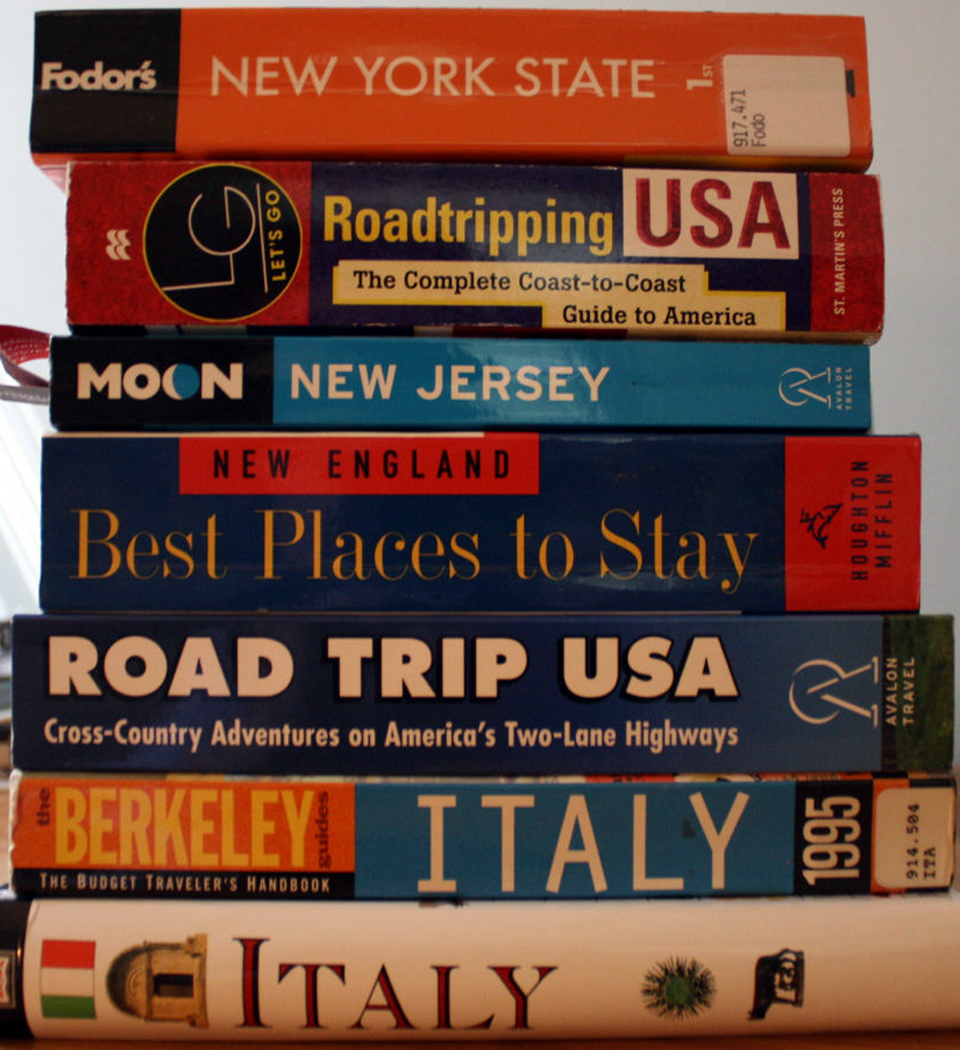
I love travel, and next to that, reading about it. But most of what I read leaves me flat; most travel writers upholster their pages with supposedly useful bits of information meant to lead me to a favorite hotel or a great nude beach where I can buy the killer margarita.

Most travel writing is in essence consumer news, and consumerism is both shallow and boring. That is not what I seek when I open up a book. I want to be transported to the place the author writes about; if I cannot afford the airfare, I want the words on the page to vanish, leaving me underneath the palm trees or on the mountain crest. I want to feel the moist tropical breeze on my cheek.

The best writing is not about four-star restaurants, but about the experience of the place, whether hotel or Irish bog. I have found that happens most often not in the works of so-called travel writers, but in the works of those who are writers first, travelers only by happenstance.
Lawrence

Lawrence

That is because, ultimately, the travel experience happens not on the ground, but in the head. It is the digestive sensibility of a great writer that can suck the marrow out of an experience and present it to us for our own understanding and enjoyment.

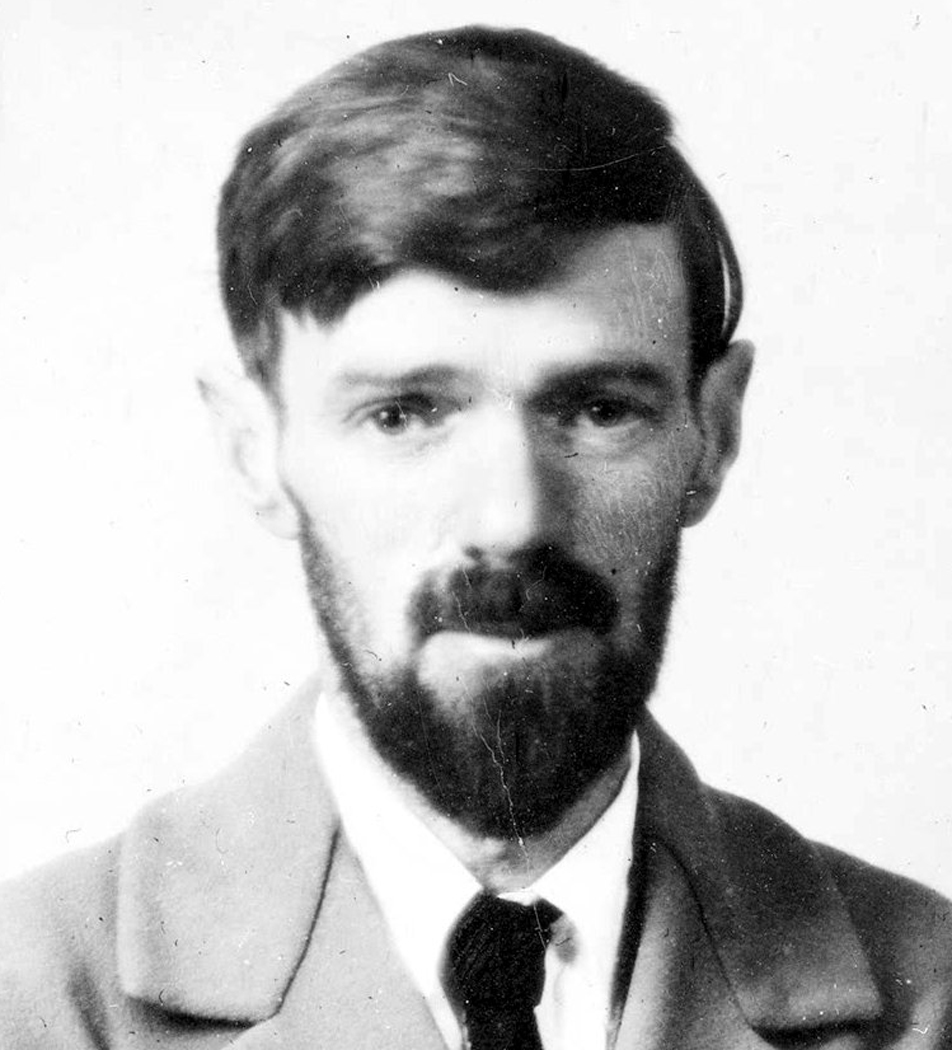
”One says Mexico: One means, after all, one little town away south in the Republic,” wrote D.H. Lawrence in Corasmin and the Parrots. ”And in this little town, one rather crumbly adobe house built round two sides of a garden patio; and of this house, one spot on the deep shady veranda facing inwards to the trees, where there are an onyx table and three rocking-chairs and one little wooden chair, a pot with carnations, and a person with a pen.”

Now that puts you in a place. And a very particular place, seen through very particular eyes.
Miller

Miller

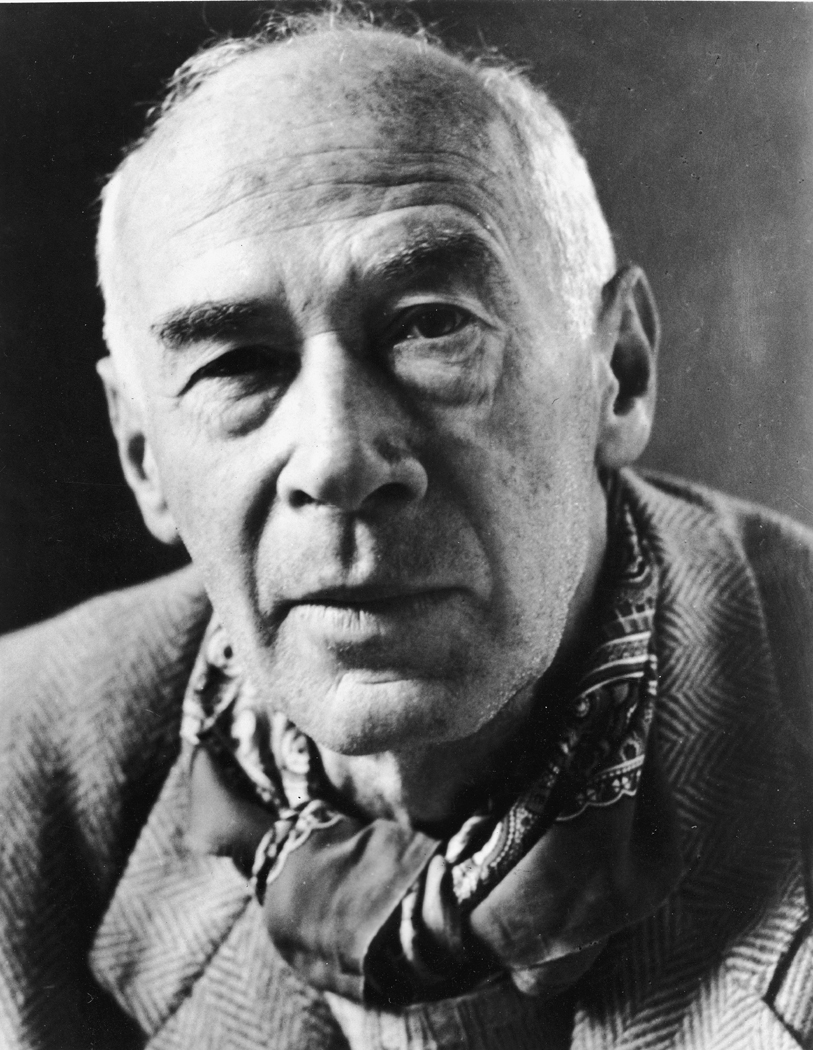
Henry Miller opens up his wonderful travel book, The Colossus of Maroussi, saying, ”I would never have gone to Greece had it not been for a girl named Betty Ryan who lived in the same house with me in Paris. One evening, over a glass of white wine, she began to talk of her experiences in roaming about the world. I always listened to her with great attention, not only because her experiences were strange, but because when she talked about her wanderings, she seemed to paint them: Everything she described remained in my head like finished canvases by a master. It was a peculiar conversation that evening: We began by talking about China and the Chinese language, which she had begun to study. Soon we were in North Africa, in the desert among people I had never heard of before. And then suddenly she was all alone, walking beside a river, and the light was intense and I was following her as best I could in the blinding sun, but she got lost and I found myself wandering about in a strange land listening to a language I had never heard before. She is not exactly a story teller, this girl, but she is an artist of some sort, because nobody has ever given me the ambience of a place so thoroughly as she did that of Greece.”

Miller then turns that favor over to us in his book. It is not just about a place, but about how a particular and intelligent sensibility interacts with a place.

Sometimes that happens in a novel, such as Jack Kerouac’s On the Road or Herman Melville’s Typee. These give us such a strong sense of being there that the plot sometimes seems little more than an excuse to travel to a new place to feel unfamiliar weather and sunlight.

But it is on their books specifically about travel that I mean to write. I’m sure you have your favorites, just as I have mine. Try some of these out next time you can’t afford two weeks in Tahiti:

1. Sea and Sardinia, by D.H. Lawrence. ”Comes over one an absolute necessity to move. And what is more, to move in some particular direction.” His other travel books are just as direct, just as full of the feeling of life and energy, populated with odd and compelling personalities. Mornings in Mexico, Twilight in Italy, Etruscan Places — if I were to name the single best travel writer, it would be Lawrence. colossus cover

2. The Colossus of Maroussi, by Henry Miller. Forget the four-letter Miller of the Paris gutter. His vision of Greece, uncorrupted by pious Classicism, is all about location, location, location. His American travel books, The Air-Conditioned Nightmare and Remember to Remember, are more episodic, but still among his best work.

3. The Encantadas, by Herman Melville. ”Take five-and-twenty heaps of cinders dumped here and there in an outside city lot; imagine some of them magnified into mountains, and the vacant lot the sea; and you will have a fit idea of the general aspect of the Encantadas, or Enchanted Isles.” Melville takes us to the Galapagos Islands and gives us all we know of them outside of Darwin.

4. The Narrow Road to the Deep North, by Matsuo Basho. The greatest writer of Japanese Haiku takes us on a walking tour of the northern portions of Edo-period Japan. ”Days and months are travelers of eternity. So are the years that pass by. Those who steer a boat across the sea, or drive a horse over the earth till they succumb to the weight of years, spend every minute of their lives traveling.”

5. The Desert, by John C. Van Dyke. One of the most peculiar books ever written, it is the love letter of an obsessed stalker to his beloved Southwest deserts. Written in 1901, it is full of the most effulgent language ever put to paper. And it would be pure breathless kitsch if every word weren’t the most truthful and accurate observation of the land.

”The reds are always salmon-colored, terra-cotta or Indian red; the greens are olive-hued, plum-colored, sage-green; the yellows are as pallid as the leaves of yellow roses. Fresh breaks in the wall of rock may show brighter colors that have not yet been weather-worn, or they may reveal the oxidation of various minerals. Often long strata and beds, and even whole mountain tops show blue and green with copper, or orange with iron, or purple with slates, or white with quartz. But the tones soon become subdued. A mountain wall may be dark red within, but it is weather-stained and lichen-covered without; long-reaching shafts of granite that loom upward from a peak may be yellow at heart but they are silver-gray on the surface. The colors have undergone years of ‘toning down’ until they blend and run together like the faded tints of an Eastern rug.”
Bartram

Bartram

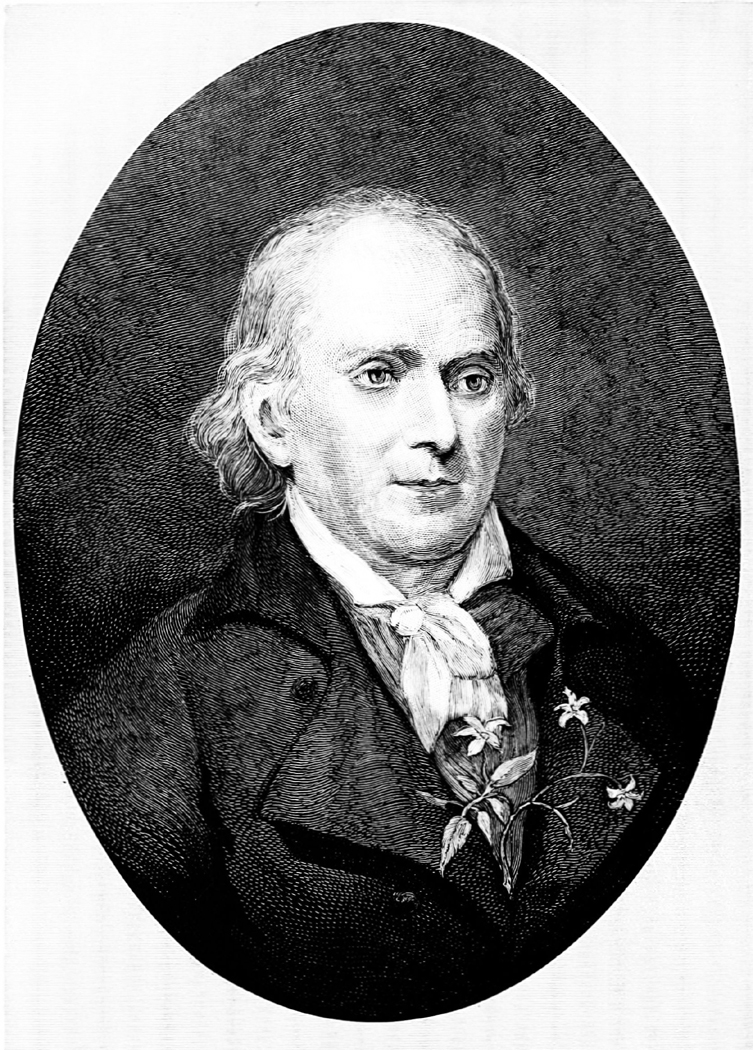
6. Travels, by William Bartram. The full title gives us the wonderful 18th-century flavor of the book: Travels through North and South Carolina, Georgia, East and West Florida, the Cherokee Country, the Extensive Territories of the Muscogulges, or the Creek Confederacy, and the Country of the Chactaws; Containing An Account of the Soil and Natural Productions of Those Regions, Together With Observations on the Manners of the Indians, Published in Philadelphia, 1791.

It is my favorite of any number of similar books that follow the author through what was at the time unknown and miraculous new territories. Jonathan Carver’s Travels through North America, from 1778, or William Dampier’s A New Voyage Around the World, from 1697, are full of ”travelers’ tales.”

Later, the journals of Lewis and Clark and of John James Audubon are full of the same sense of being there.

7. Life on the Mississippi, by Mark Twain. Such a classic, it hardly needs touting, but there is no more completely compelling vision of a river and the life that survives because of it.

8. California and the West, by Charis Wilson Weston. The reason most people pick up this book is for the historic photographs by Edward Weston. But the stories his wife, Charis, tells about their travels while making the photographs are a complete delight and present a picture of America between the wars with dusty roads, bad food and cheesy tourist traps.

9. Italian Journey, by Johann Wolfgang von Goethe. The great German writer and natural philosopher managed to get into the spirit of Europe’s sunny south by meeting a bunch of Germans in Rome and rhapsodizing about Classical civilization. It is a funny, moving and infectious memoir, and I can’t put it down.
Thoreau

Thoreau


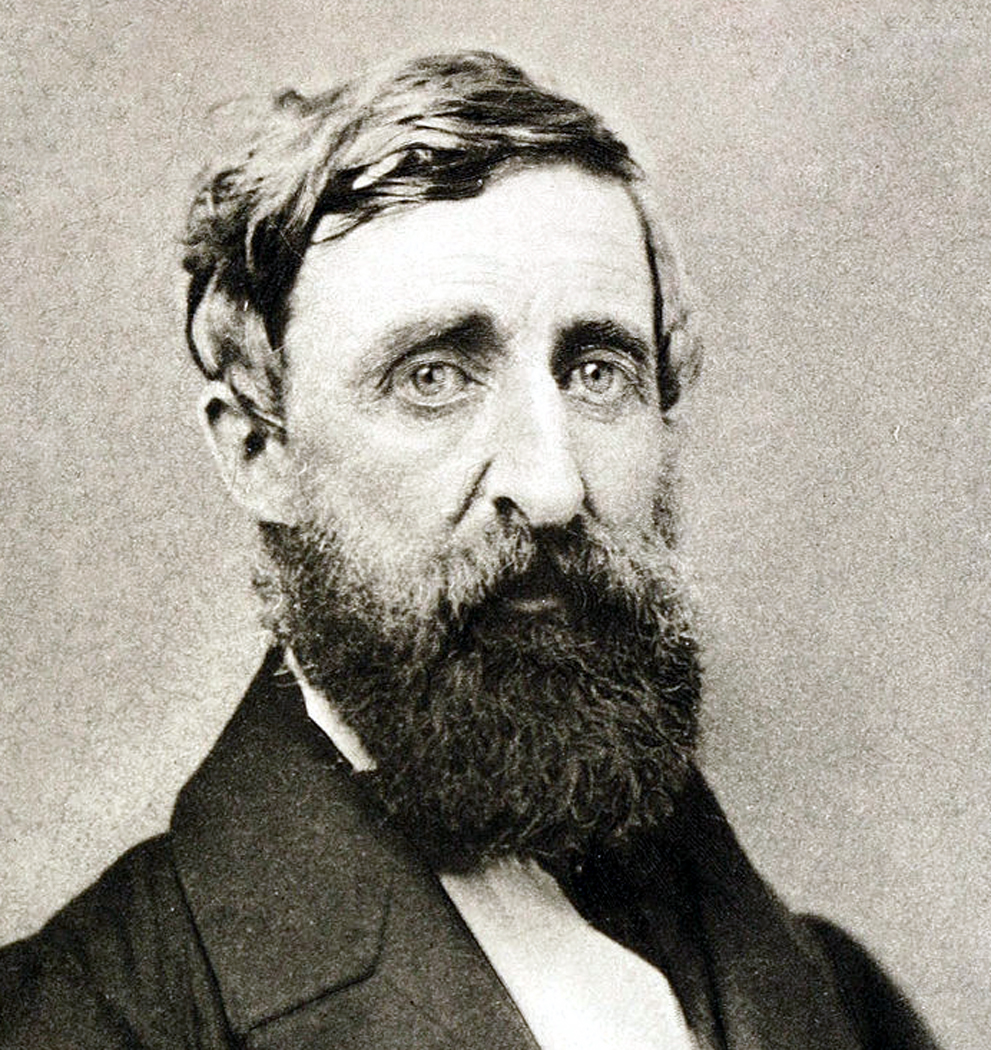
10. A Week on the Concord and Merrimack Rivers, by Henry David Thoreau. This is only one of several quirky and idiosyncratic travel books by the Transcendentalist author. You could as well choose The Maine Woods, Cape Cod or A Yankee in Canada. How idiosyncratic? ”I fear I have not got much to say about Canada, not having seen much; what I got by going to Canada was a cold,” he writes. He also lies. He has got much to write about Canada.
Dawn, Grand Canyon National Park

Dawn, Grand Canyon National Park

It’s nice to be reminded every once in a while that we live on a planet.

That we are lodged on a wet rock spinning in cold, black, empty space and hurtling through the void, down through time like water into a storm drain.

You are not likely to notice this while waiting at a red light downtown although sometimes waiting for the thing to change will get you a glimpse of eternity. Nor are you likely to notice it on the recliner, tuning in to American Idol. Or waiting for a table at the IHOP.

Consumer culture and all of our measly daily scratching conspires to hide from us the fact that the ground under our feet is really a large bolting asteroid.

But there are places you cannot avoid the sensation.

For me, driving long distances on the prairies of Saskatchewan or Alberta will do the trick. You watch the grain elevators rise up on the horizon in front of you like the sails on a clipper ship, and watch them lower down behind you after you pass: You know you are on a sphere and every direction falls off downhill around you.

You recognize it on an airplane, too, watching miles pass under your seat like so many inches, seeing at one time Lake Superior to your aft and Lake Michigan afore. You can take in a significant arc of the planet’s circumference at 30,000 feet.

But each of these epiphanies requires that you be traveling: the moving point on a geologic ordinate and abscissa.

If you want to have the planetary feeling without racing around the globe, you can get it standing still in Arizona: with your feet planted at the edge of the Grand Canyon. In that case, you stand stock-still and let the planet do the moving.

The first time I saw sunrise at the Grand Canyon, my wife and I were camping on the North Rim outside the National Park. We had arrived with the naive assumption we could wander in late in the afternoon and get a room at the lodge. Or failing that, we could get a slot at the campgrounds.

The desk clerk took pity on us and explained that although they were completely booked, lodge and campground, for the foreseeable future, we could find a dirt road just outside the park that would take us to a place in the National Forest where people often camped.

It was dark by the time we got to that road, and when we turned into an open place where two or three other tents were set up, it was already night.

North Rim, Grand Canyon

North Rim, Grand Canyon

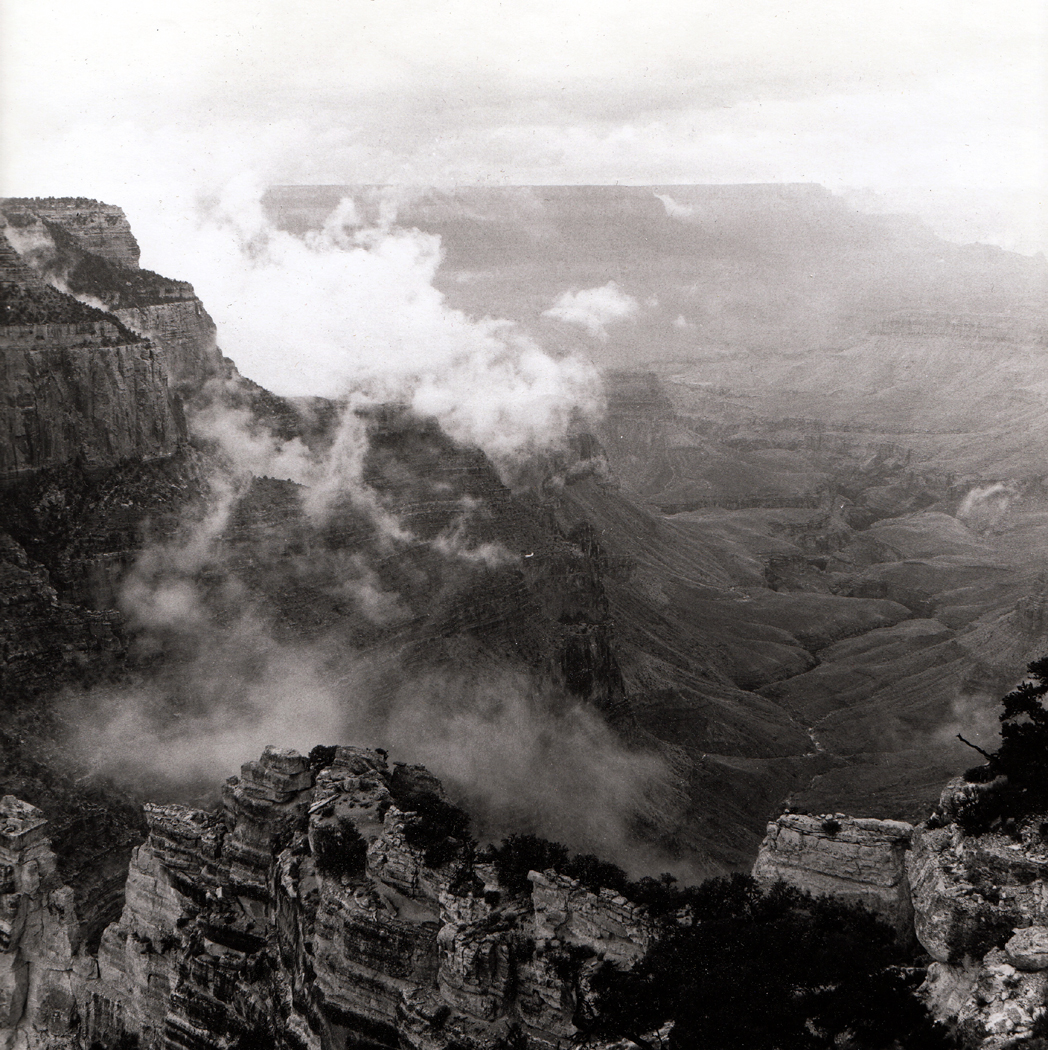
We slept, we dreamed, and we woke before sunrise, when the earliest glow floated in through our tent flap. And when we got out to stretch and start up the camp stove, we gasped: We were about 15 feet from the rim of the canyon. It dropped out of sight below us.

If we had pulled forward just a little farther the night before in the blackness, it would have been Thelma-and-Louise time for us. We were hard on the edge.

But more impressive, the humid late-July weather had left the entire canyon as a gigantic dish of cotton. The clouds filled in the canyon-hollow like apples in a fruit bowl. A 215-mile long fruit bowl.

The mists swirled and wisped below us, over precipices and down canyonlets, in constant motion, rising and subsiding as the new-hatched sun warmed patches of the air the mist rode upon and the breezes wafted the veils.

The Classical writer, Longinus, said that we enjoy the day-to-day things of our lives, but when it comes to awe, we get that only from the sublime. Hearth fires, he said, were nice, but erupting volcanoes make us consider a planet and cosmos larger than we are and well beyond our control. The sublime is beautiful, but it is also scary: It is the source of religious feeling.

You cannot avoid that at the Grand Canyon, with its stony layers of eons piled upon each other. The Canyon is a great wound in the Earth into which we can look and see its organs pulsating at a rate so slow as to make all of human history a mere blip on its EKG.

Sunrise is always a magic time. For me, all the more magic for how seldom I see it, being a night person and late-riser during every time of the year except vacation. Familiarity has not had a chance to dull the morning’s effect for me: Every dawn I witness is a rebirth.

The following summer, we came to the Canyon again, to the South Rim. We camped outside the park once more, and got up at 3 in the morning to drive to the rim to see the whole process of sunrise.

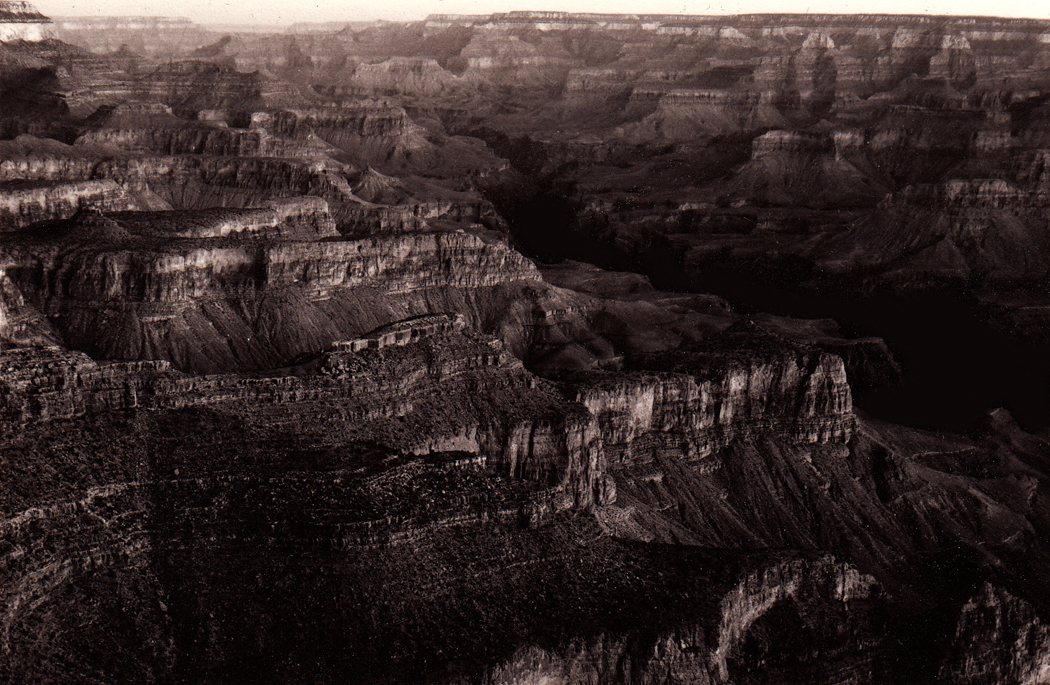
Even in July, it was cold in the dark. We parked at Lipan Point, where we would be able to see northeast into the canyon, where the sun should pop up. With a flashlight, I set up my 4X5 camera, with its bellows and tripod, and pointed it down into the blackness below.

By 4 a.m., the glow on the horizon widened into a band of dull brightness. I managed to focus the camera on the now-visible horizon line, and then pointed it back down into the ink.

A minivan pulled into the turnout and a few people got out, looked around at the black hole, and deciding there was nothing to see, got back in and drove off.

I moved the camera over the restraining fence and out onto a rocky knob with an unhindered view. My wife fretted I might slip off the cliff and down into the hard centuries of geology below: A very physical way to meet eternity.

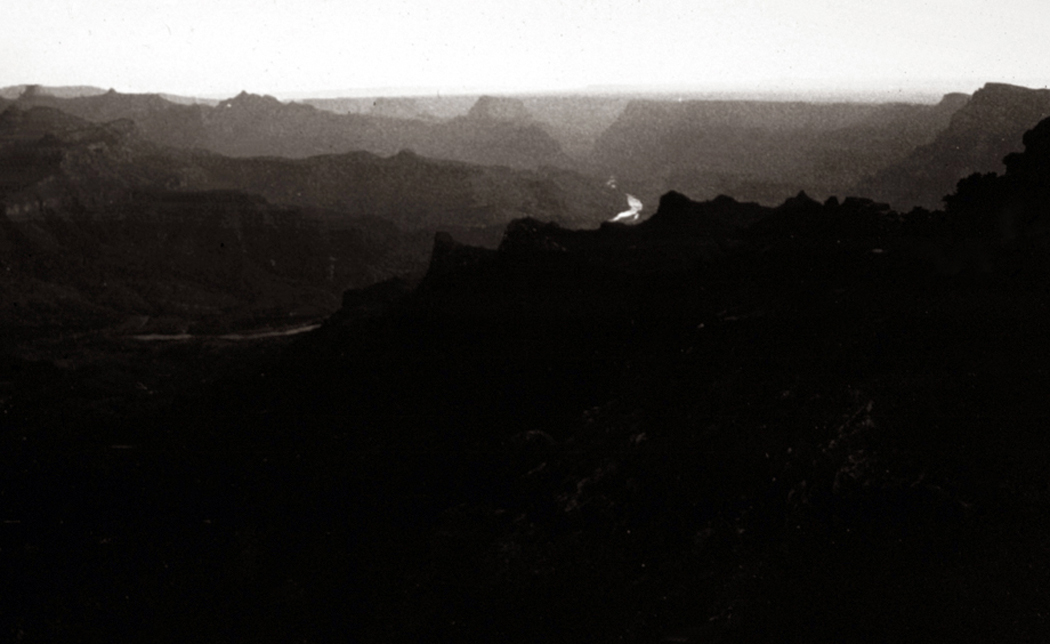
By the time I got the camera set, the glow from the horizon had made the rock below us seem less like the river Styx and more like a darkened charcoal drawing. It was beginning to take on detail. I made an exposure of five minutes or so, to try to get some of the charcoal registered on my film. Dawn, Grand Canyon with river

The river below us began to reflect the lightening sky and became a glowing white streak in the sooty rock. It pointed in one direction northeast directly at the place the sun would arise, in the other direction, it curved around the coal-colored cliffs and disappeared.

The moment the sun broke the horizon, though, was the moment we realized we were sitting on a spinning round rock: The effect is unsettling and eerie.

I’ve had this happen a few rare times in my life. When the sun is still in contact with the horizon, its motion is quite noticeable. You can actually see it move.

But at that moment, the sun stopped moving, just as if Joshua had commanded it. And as the sun stopped, the Earth like a giant machine, whirring its gears began rotating forward in front of us, lurching from under our feet. An earthquake wouldn’t have felt more tactile.

It was as if we were coming over the top of some giant Ferris wheel. The still sun made our motion all the more apparent. It was Einstein in action: relativity made palpable. A shift in frame of reference.

The rock we were reeling on, trying to keep our balance, was pulling forward toward the sunrise.

”Whew! What was that?”

It didn’t take long, though, after the disc of the sun broke free from the horizon, all that motion ceased. The common light of day had re-inaned the world. We would eat breakfast, talk about baseball, read the newspaper all the quotidian fuss of our lives and rejoin the society where the search for a good five-cent cigar seems important.

A friend was telling me once about the trouble he has been having with his insurance company. He had run into a bureaucratic Catch-22 in which he needed an official letter before the insurance would take effect, but couldn’t get the letter until the insurance was working.

”Sometimes, I don’t know how the world keeps turning,” he said.

As we fight rush-hour traffic, heat up our Pop Tarts, pay our bills, worry if our taxes will devour our raise or if Congress will ever become more than monkeys squabbling over a banana;

As we worry if our daughters will safely negotiate the pitfalls of adolescence, if the rebuilt transmission can last another 30,000 miles, and we put a few more dollars into an IRA;

As we submerge ourselves once again into the inclarity of what we call our lives, it’s good to remember that there is something larger out there, with a wider frame of reference.

We need to be reminded every once in a while that we live on a planet.

olana

Everyone likes a home with a view. If you are rich enough, you can afford to buy such a property, and if you are an artist, you can design such a house.

Frederic Edwin Church was both of these things, and the estate he created, Olana, is now a state park near Hudson, N.Y., where it sits on the top of a hill overlooking the Hudson River and the Catskill Mountains. catskills from olana

Church worked obsessively on the house and grounds from 1860 until age and arthritis forced him to give management of the estate to his son in 1891. Always, Church’s goal was to create natural landscape views from every turn of road on the 250-acre estate and from every window in the house. And he knew something about landscape views.

Church was one of the most famous of American painters of the previous century. His work commanded the highest prices of any American art when it was new, and inexpensive prints made from them were sold by the thousands to his middle-class audience.

Niagara Falls

Niagara Falls

He found in the New World apt subject matter: the American landscape, from Niagara Falls to the volcanoes of South America. The land he painted was vast, romantic and sublime. It told of a new Eden, almost a new covenant for which America was the herald.

The Heart of the Andes

The Heart of the Andes

Frederic Edwin Church

Frederic Edwin Church

From the 1850s through the next two decades, Church’s paintings glorified America’s vision of itself and the Manifest Destiny that was the root of the vision.

Others painted the same subjects. What made Church distinct was his scale and detail: His paintings were big enough to be exhibited like movies, in their own venues with an admission charge, and they didn’t generalize or idealize their flora and fauna, but instead painted them in Peterson field-guide detail. You can name the plants in a Church painting; you can almost name the week and month by their stage of development.

Rainy Season in the Tropics

Rainy Season in the Tropics

The same kind of obsessive detail marks his house, too. Church couldn’t stand an empty wall or a broad expanse of window. Victorian houses are often chock-a-block with bric-a-brac, but Church is notable even by these standards.

The house was originally intended to be a French chateau-style building. But when Church and his wife toured the Middle East in 1869-70, they became infatuated with what they called ”Persian” architecture. It was actually a little closer to the Arabian Nights style Hollywood eventually adopted for its version of Baghdad. olana front hall

They called it Olana after an ancient treasure-fort in Persia. olana studio

Inside, Church displayed all of his many souvenirs. Most look like they’re straight from Pier One Imports. One lesson to be learned: Being an important artist doesn’t automatically confer good taste.

One room avoids the Scheherazade look. The dining room instead mimics a Medieval castle. And on its walls are the paintings Church called his ”Old Masters.” In fact, they are old, dusty souvenirs of Europe, sans provenance, sans signatures, sans anything else but an old look. If a painting was too bright for his taste, Church himself dimmed it in brown varnish.

The dining room is also one of the few places in the house without a view. Everywhere else, each window or balustrade frames what could as well be a painting. view from olana

In 1884, one visitor wrote about her trip to Olana: ”Mrs. Church met me at the Hudson and we drove up here, several miles, through thick woods, like the ascent to the Alhambra. In fact, Olana is placed somewhat like that, on the top of a cone-like height commanding the Hudson. The house is large and all open on the lower floor, with wide doors and windows a daux battants, so that everywhere you look through vistas to shining oak boughs at hand, and dim, blue hills far beyond, middle distance omitted because so far below.”

The Icebergs

The Icebergs

The house stayed in the Church family until 1966, when it was purchased and later donated to the state of New York. It had fallen into a bad state of repair, but renovation has brought the property up to code and turned it into a beautiful place to spend a day.

Fall color reflected in surface of Walden Pond, Concord, Mass.

Fall color reflected in surface of Walden Pond, Concord, Mass.

Four seasons may seem like enough. Maybe for a resort hotel. It is the conventional way to divvy  up the annual circumambulation of the sun. But four is an arbitrary number. In some places, two seasons are all there is, rainy season and dry season, or in Arizona: unbearable heat, and respite from unbearable heat.

And even in those climes where the traditional four account for our calendar, there are really any number of discernible seasons: Indian summer, midwinter spring, mud season. In Maine, there’s black fly season; there’s tourist season at the Jersey shore. Many places have their annual infestations.

Some of the most interesting moments of the annual cycle are those that fall between the seasons, those moments that are neither quite winter nor quite spring, or neither summer nor fall.

Of these, my favorite has always been that slip in time between autumn and the harder breath of winter — when the color has passed from the cheeks of the trees but not all the leaves have dropped to gather in soft, brittle piles on the ground.

It was like that near the end of October at Walden Pond in Massachusetts, about 30 miles west of Boston. The Canada geese were flying south in droves across the crisp sky, the alders at water’s edge were naked except for the tiny seed cone at the tip of each branch. The pond water was beginning to chill, but not so much that the fish lost their will to bite the hook.

Walden Pond is a small kettle pond, left in place just south of Concord by the glaciers that covered the land 10,000 years ago. It is essentially a dimple left in the ground by the weight of the ice. When the ice melted, the water remained in the depression.

Around the pond, the land rises up in places something like 20 feet above the water level in formations the geologists call ”eskers,” which are the loose junk left behind by the ice. The twin tracks of the railroad run along the back side of the pond.

On the October morning, before the sun arises, the temperature is in the low 40s and desert-dry. You can see the light catch in the tops of the trees along the heights of the eskers and slowly descend into the water as the morning progresses. walden pond aerial view

Walden is an oblong stretch of lake, with one shallow bubble along its northeastern side. A bit of the lake is cordoned off by a footpath causeway, leaving a shallow lagoon trapped in the backwater.

Most of the trees’ leaves have dropped, leaving only the maroon of the red maple and the bright tan of the beech tree still hanging. A huge number of the leaves have collected on the surface of the lagoon, making it look as if it were paved in tree droppings.

On the water, about 50 yards out, I can see four ducks buzzing along, with their necks held flat on the water and their faces half-submerged as they wiggled their heads back and forth, gleaning a meal from the detritus of the pond. As they swam this way and that, moving like feathered zambonis, each left a wake behind it cleared of leaves.

Immediately, what had seemed a randomly mottled pond surface of tree-junk took on order and meaning as the old ”contrails” remained, leaving the water scratched with a history of duck dinners. Their names may have been ”writ in water,” as Keats had it, but those signatures had persistence.

I crouched down at the mucky edge of the water and waited. Patience pays off. The ducks slowly swam my way. Twenty minutes later, they were so close I could have stroked their slick, waterproof feathers. One started and flew off, leaving two females and a single male mallard. They scooted in circles, clapping their bills through the jetsam. One of the females came up to the water’s edge where I knelt down and began poking her beak into the mud. She found something to eat and continued.

A small boy approached on the path, calling back to his mother. I looked at him, put my finger to my lips to hush him and pointed at the birds. He looked briefly and walked right past. I wondered what he could have been racing to find that wasn’t right here: three ducks in arm’s reach.

It was early on a Sunday morning and the path around Walden Pond had perhaps 10 hikers on it. It is about a mile and a half to circumambulate the pond, so it never seemed crowded.

In addition, there were a dozen or so fishermen standing at the western and southern ends of the pond with their poles anchored in the sand and bobbing weights hanging like goiters from the poles.

”What do you catch?” I asked one.

”Trout. Rainbows and brookies,” he said in that dodgy Boston accent. ”This is our second time out this year” — said as “yee-ah” — “and we haven’t caught anything yet. There’s a fellow down the way there who pulled in a couple of them this morning.”

When I got to him, he had them strung on a line and submerged back in the water about three feet out. Each was about a foot long, one was speckled.

”Mighty good eating,” was all he said.

By the time I made it all the way around the pond, the sun was up and the temperature had climbed into the upper 50s. The light gleamed on the bark of the tree trunks and glared on the remaining leaves.

A century and a half ago, when Walden Pond first became known to a wider public, it was a quiet place, a few miles outside of town, where only the muskrats and crows came for recreation.

The silence was shattered only momentarily when the train to Fitchburg came through. Nowadays, a road passes right by the pond, and a divided highway sits only a quarter-mile away.

The sound as you walk across the far shore of the pond is a constant but subdued roar of whizzing cars, mixed with an occasional jet airplane and the same railroad commotion.

Oddly, though, as you walk around to the edge of the pond nearest the highway, its noise becomes blocked by the esker and the pond seems quiet once more.

Journalism is a funny profession, because its readers read about what happened yesterday and its reporters are writing what will be published tomorrow. It has little use for today.

But a day as distinct as this one on Walden Pond, in the cusp between the seasons, speaks only of the deliberate now, the specific and incandescent moment, as thin and sensuous as the membrane of the water’s surface as you stick your arm through it to pick a pebble from the pond’s bottom.

inez fishing

I have a problem with aquariums. I love them and visit every one I can possibly find, but I can’t look at all those fish swimming around without getting hungry. All the fish look so darn tasty. Whether it’s the salmon, silver as Boeing jets, at the Seattle Aquarium, or catfish in New Orleans, which I fantasize wearing corn meal suits, I imagine all those finny beasts on my platter.

So, you might think I was a big fisherman. Catch my own dinner, hold up the sea bass for a photo, scale and gut it and fry it up in butter and white wine. But I have only been fishing three times in my life. I consider it one of my character flaws that I never became an angler; it’s a missed opportunity. But growing up in New Jersey did not nourish the outdoorsman in me. I knew a lot more about discount malls than I did about trout.

The first time I went fishing, I went out on a half-day boat with my uncle when I was a teenager, off the Jersey shore. We caught flounder and sea robin — certainly one of the ugliest of Providence’s creations — and the grown-ups drank beer the whole time. I figured that fishing, like TV football, was really just an excuse to lubricate the church key.

The second time I went fishing was some 20 years later when my wife and I were invited to a North Carolina pig pickin’, and were encouraged to fish in the trout ponds that our host had built near his house in the Blue Ridge Mountains. I fished with cheese balls on my hook and caught a half-dozen rainbows and browns. They were good eating.

Norris Allen

Norris Allen

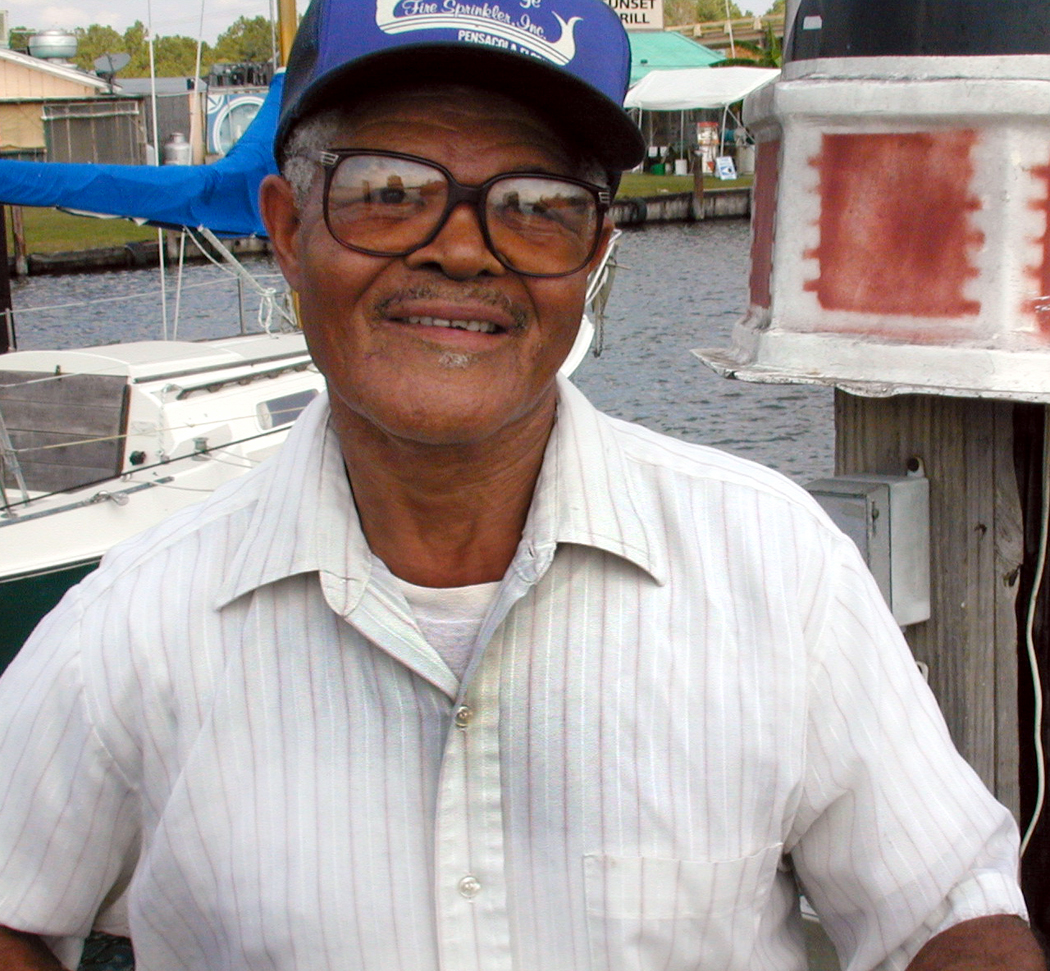
The third time, though, I went with my daughter in Alabama. We went out on a pier in Weeks Bay, off Mobile Bay, with Norris and Inez Allen. Inez was my daughter’s nanny for her twin daughters. In the South, a nanny is more than an employee; when you hire a nanny, you are starting a lifelong relationship. It’s more like hiring an aunt or an extra grandma for your babies.

We spent the day in October on the dock, casting and reeling in our bait. Norris caught some pinfish with our boughten bait, and immediately started cutting them up into little pieces, so we wouldn’t have to pay for any more chum. The fishing trip was really an excuse to picnic and gab.

It was a social event for my daughter, her twins, the Allens and my wife and me. Inez sat in an aluminum folding chair under the shade of a broad straw hat. She held a fishing pole over the side, but never paid much attention to it. Norris, though, was a dedicated angler.

Norris cutting chum

Norris cutting chum

“I like to go out at least once a week,” he said. “But I’ve had a problem recently, so it’s been a while. I got to go to the doctor again tomorrow.”

Norris was in his 70s and as lean as Inez was not. Norris caught the most fish, but I caught the biggest.

“What is it?” I asked him.

“That’s a white trout,” he answered.

It was about 10 inches long and weighed about two pounds. Most of what we caught were pinfish, three or four inches long, silvery discs in the hazy sunlight. But we caught a few white trout, too, long and torpedo shaped. They fought harder and splashed water angrily as we hauled them out of the bay.

White trout

White trout

I mention all this because of two things. The first is that we ate the best fish dinner that night I have ever tasted. I was in ecstasy. My wife can attest. I ate pinfish and white trout, fried in cornmeal the proper Southern way, and I nearly cried when I was too full to finish off any more fish.

The second is that the following day I went to the Weeks Bay Natural Resource Center, about a hundred yards from the dock where we fished, to talk to a park ranger and ask about the fish we caught. I wanted to find out more about our worthy opponents.

“What were they?” she asked me.

“Norris said they were pinfish and white trout, but I don’t know what their scientific names are.”

“Well, there’s no such thing as a white trout,” she told me.

(There really is, it’s scientific name is Cynoscion arenarius, and it is one of the weakfish family, not really a trout, but who cares?)

“No such thing,” she repeated.

“That’s too bad. It was the best tasting fish I ever ate. For that matter so were the pinfish.”

“Pinfish?” She seemed confused. “No one eats pinfish.”

Pinfish

Pinfish

“No? They were delicious,” I said.

“No. No one eats pinfish.” She repeated that mantra several times in our conversation as if that settled the matter, as we looked through several reference books trying to match up what we ate with the pictures and IDs.

It was one of those oblique demonstrations of the differences over race in America. The ranger was a White woman in her late 20s, obviously college educated, and just as obviously oblivious to the culture around her.

Black Alabamans eat pinfish with relish, but apparently the ranger’s well-to-do White family thought pinfish beneath comestibility. This wasn’t a case of overt racism, but an illustration of the profound breach between cultures, which is magnified in the American Deep South.

And I can guarantee, after eating a bellyful of pinfish, that it is White America that is cheating itself.

psycho showerhead

At the end of our travels, how often we long to be home.

“I miss my own bed,” we say, and think of the comfort of familiarity.

But, it isn’t really the bed we miss. In my experience, hotel beds are not all that bad, as a rule, and the linens are always clean. Or almost always; I can tell you a few stories.

No, it isn’t the mattress or the blanket we miss. What we miss is elsewhere in the house: It is the shower. When I’m coming home after being away, I cannot wait to hit the showers.

And that is because: Hotel showers are a horror. Psycho (1960) Directed by Alfred Hitchcock Shown: Janet Leigh (as Marion Crane)

Many have “water saver” nozzles that limit the amount of water they spray to below the threshold needed to rinse off soap. It’s like standing under a restaurant mister. You sense the humidity, but cannot actually get wet.

Conversely, I don’t remember how many Motel 6 showers that have made attempts on my life with nozzles that so lethally concentrate the jet as to become like wet lasers attempting to slice my body in half. It makes me want to give away state secrets; there I am, some James Bond captured by Dr. No. “No, Mr. Bond, I don’t expect you to talk; I expect you to die!”

For such showers, you need to measure their muzzle velocity. You can see the knife of water so depress the skin down into the flesh as to threaten to punch through. One shouldn’t require stitches after a morning shower.

It isn’t only the flow rate that can be a problem. We have all come across water so soft that the rinse is even slimier than the soap. You rinse and rinse and cannot escape the slipperiness.

The worst was in a small town in South Dakota where the water came out of the showerhead with the mephitic smell of dead mammals. I couldn’t shake that stench from my nostrils for days.

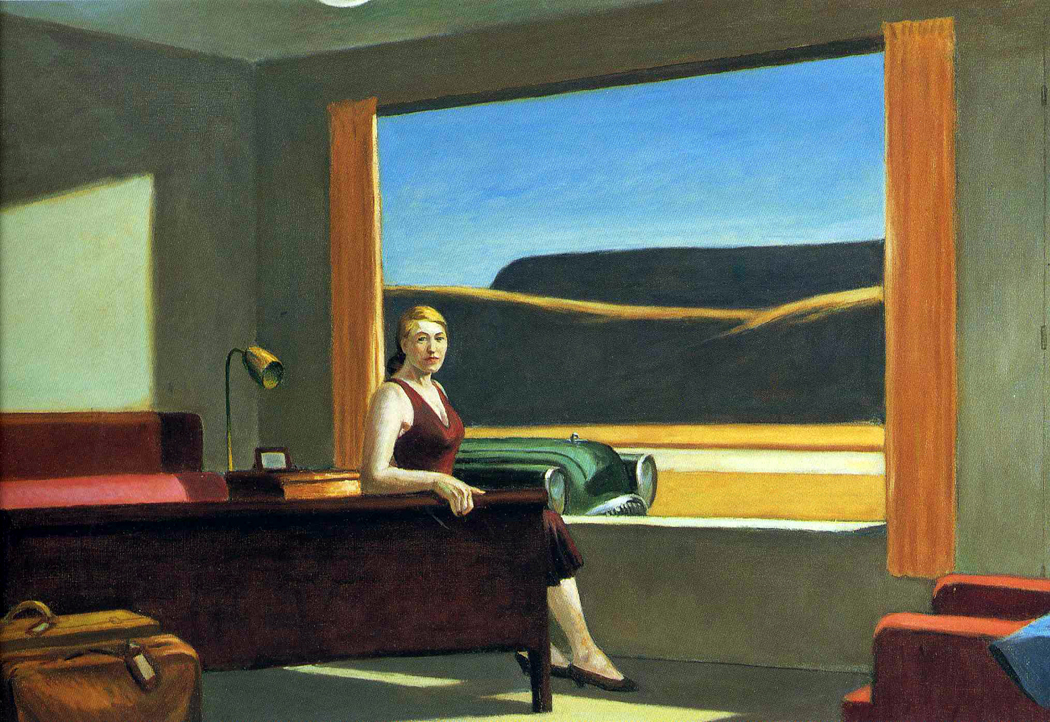
Admittedly, when I travel I tend to stay visit out-of-the-way places that don’t always have Holiday Inns, so I wind up staying at some dubious hostelries. western motel ed hopper

I remember a motel in Shamrock, Texas, which had worn-out shag rug not only on the floors but halfway up the walls, like wainscotting. That was tasteful. The carpet also ran up the side of the bed, like a high tide threatening to sweep us away.

Or the motel in Forrest City, Ark., that came with fleas, and when we looked in the bathroom and saw the “sanitized for your protection” paper loop on the toilet seat, underneath a wet, crushed cigarette butt was floating in the water. mirror tourist court

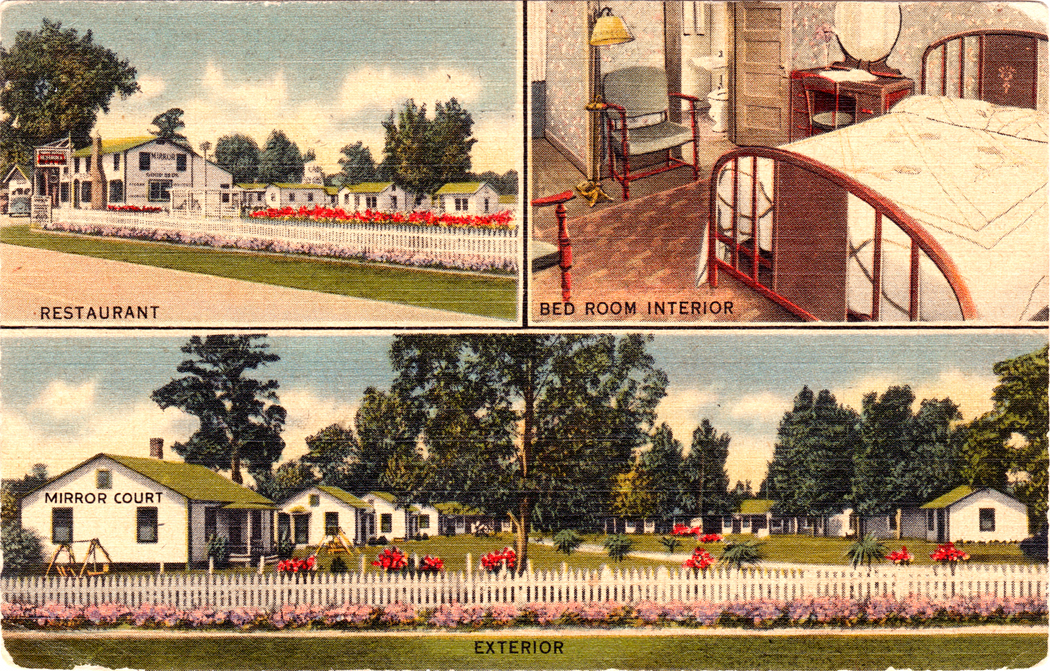
I must admit, I have a soft spot in my heart for the old-fashioned motor court, with its separate cottages along a loop driveway. There is something nostalgic about those linoleum floors, so cold under your feet in the morning. Something about the squeaky iron bedsteads with their chipped paint, about the slightly musty smell — as familiar in its way as the aroma of clean wet moss. It smells natural, rather than the chemical cleaner scent of the chain motels. shower head

I prefer those old motor courts to the corporate disengagement of your standard franchise hotel, the uniform blandness that implies not that you have traveled somewhere new and different, but rather have somehow popped out of the dimension of real experience and into a kind of Disney parallel universe, a free zone, with no connection to anything. As if you were spending the night in a neutral corner.

But whether I have gone to a motel with enough layers of wallpaper to make the walls look upholstered, or to a Hyatt where, when I wake up in the morning I can’t remember if I’m in Boston or Calcutta, I can know that the shower will disappoint me.

And I cannot wait to get home to the water I know.


This blog reflects a correction sent to me by Pat Price, for which I express thanks. 

ontario goofy splice1

There must be something in these northern Ontario winters that drives a man to fill his world with giant concrete animals.

It isn’t just animals, of course, and it’s not all concrete, but in the 400-mile stretch of Canada 11 from Cochrane to Thunder Bay, there are quite a number of oddball statues by the side of the road.

It begins in Cochrane with the famous giant white concrete polar bear, named ”Chimo,” that marks the place where the Polar Bear Express excursion train leaves the station for Moosonee, 186 miles to the north on the edge of James Bay.

But it isn’t too much farther west, in the tiny but clean community of Moonbeam, that the local Chamber of Commerce office is decorated with an 18-foot-wide flying saucer made of Space Age plastics, on a tripod fabricated from playground swing-set pipes.

When I asked the woman at the information desk, she just told me the town was named for the beautiful moonbeams you can see there at night, and residents thought the flying saucer would remind them.

No, it doesn’t make sense to me, either. Perhaps it is a problem of translation. This section of Ontario is primarily Francophone, and the woman spoke English as a second language. Perhaps in French, it makes sense. It seems that when you speak French, a lot of things make sense that everyone else in the world scratches their heads over. Think of Jerry Lewis.

A local newspaper story lets on that there was controversy over the construction of the saucer, part of a $300,000 community revitalization program. Some residents wanted a giant beaver instead.

”The flying saucer won’t attract many jobs, like the beaver would have,” said local UFO critic Butch Bouchard.

Leaving the 25th century of Buck Rogers, we find ourselves back in the age of dinosaurs: In Mattice, the town’s only motel sits next to, and rather under, a giant freckled-concrete Tyrannosaurus rex, whose teeth have been further graced with a line of Christmas tree lights. Beside him sits a concrete stegosaur with a look on his face of a contented cow.

There is no mention of the dinosaurs in tourist literature; neither is there any reasonable connection with the motel. But there they stand, no more commented on than a couple of trees, with a few yapping dogs chasing each other around the lawn.

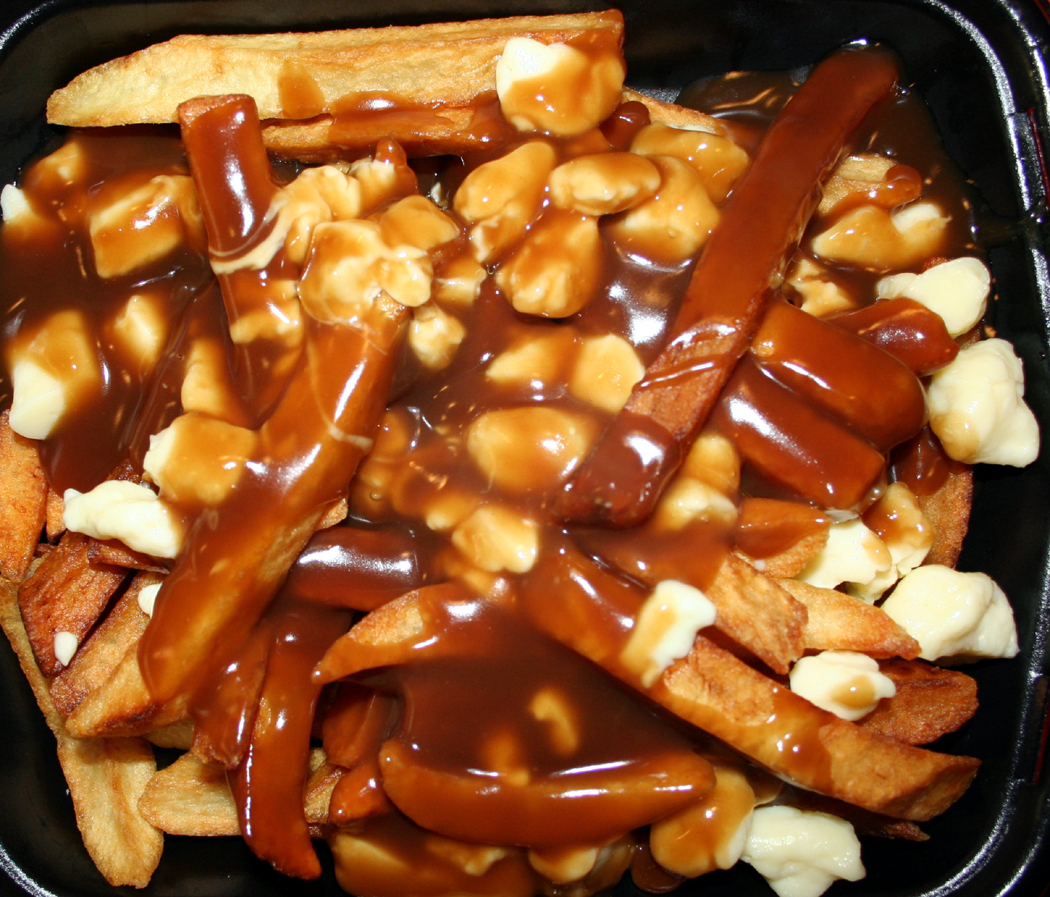
The community of Hearst is a mill town where almost everyone speaks French. Poutine1

One of the things that make sense to them is poutine, a local delicacy made from french fries covered in beef gravy and cheese curds. It’s what they serve at the local McDonalds: ”Do you want poutine with that?”

It’s not as bad as it sounds, but neither is it health food — a triple whammy of grease and enough cholesterol to clog the Chunnel.

Hearst is also the heart of moose country, so the local tourist office has a giant bronze moose out front. In comparison with the other animals, it is rather staid and conventional.

After Hearst, there is a long, long stretch of road with nothing to see but the walls of trees on either side of a straight two-lane road. Occasionally, the forest breaks open for a crystal river or waterfall.

But then, at Beardmore, a tiny village of Nipigon Indians, there is a 40-foot plywood snowman. It is, with the exception of an abandoned hotel, the biggest structure in town, and it wears a silly grin beneath eyes that look as if they come from a Hindu idol.

Next to it is one of those plywood paintings with circles cut out where you can put your head through and have a picture taken of yourself, in this instance, looking like a snowman. Perhaps this all makes better sense in the winter, when skiing becomes the regional passion.

And when Canada 11 meets Canada 17 to wind down to Thunder Bay, there is a small motel next to a 6-foot concrete trout. I should have expected it.

What I couldn’t have expected was a few miles on, standing in front of an auto-parts store: a 15-foot-tall Bigfoot chomping a cigar like a theatrical agent and giving a big thumbs up to passing motorists.

In Dorian, we stopped for the night. We could tell we had left the French area because we ate pirogis as heavy as einsteinium that sat in our bellies and weighed us down under the drowning pull of sleep.

We had a choice of two rooms at the Dorian Inn. One on the ground floor with two queen beds for $55 or one on the second floor above the bar for $26. I’m no fool. I paid the premium.

okeeffe landscape cross

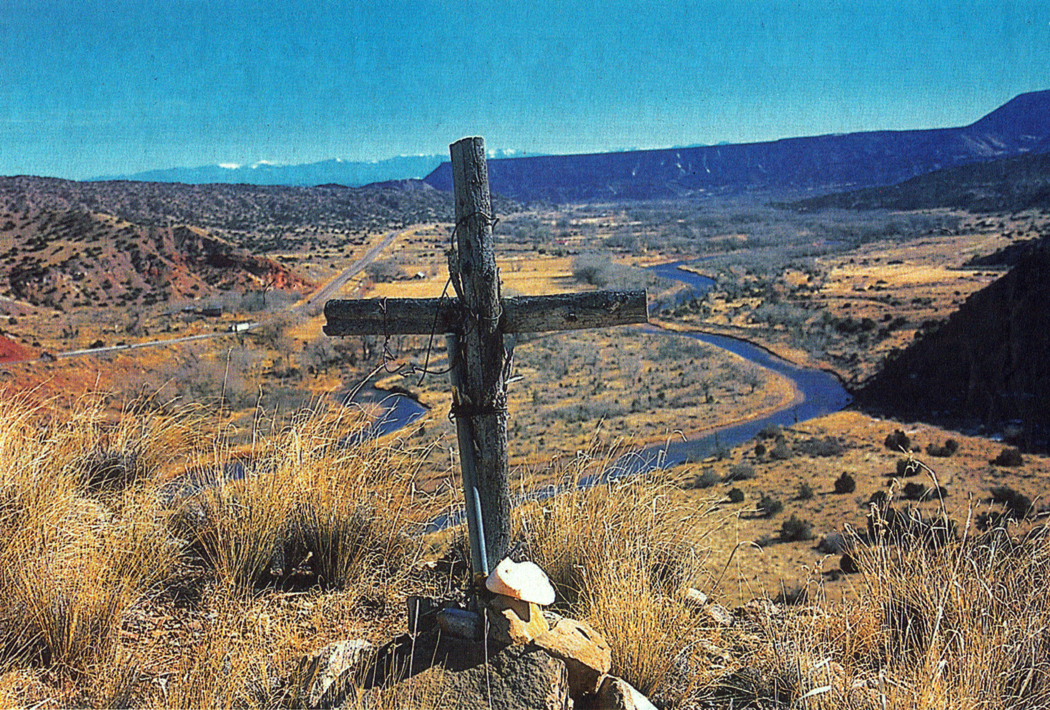
You can’t drive up the Chama River Valley in northern New Mexico and not feel the snap of recognition.

It doesn’t matter whether you’ve ever been there before, it looks familiar. The reason is not hard to guess.

It is this area north of Santa Fe that painter Georgia O’Keeffe recorded in her work, beginning in 1929, when she first started to visit the state with regularity.

”This is wonderful,” O’Keeffe said on first seeing the sage and sandstone landscape. ”No one told me it was like this.” okeeffe san jose church copy

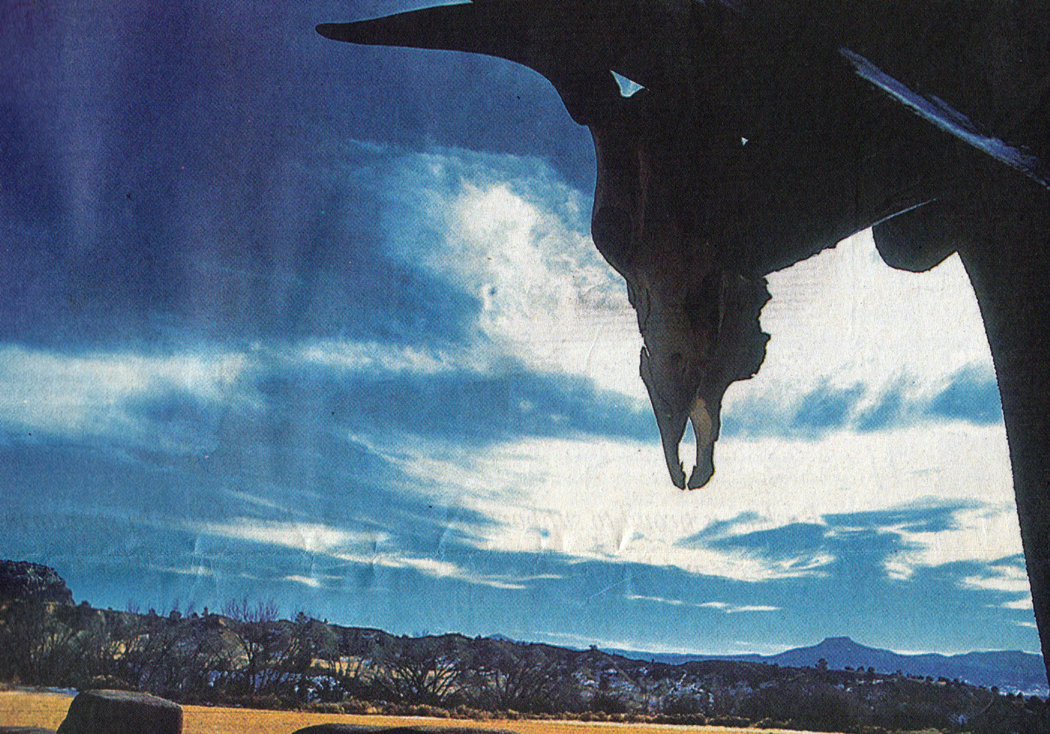
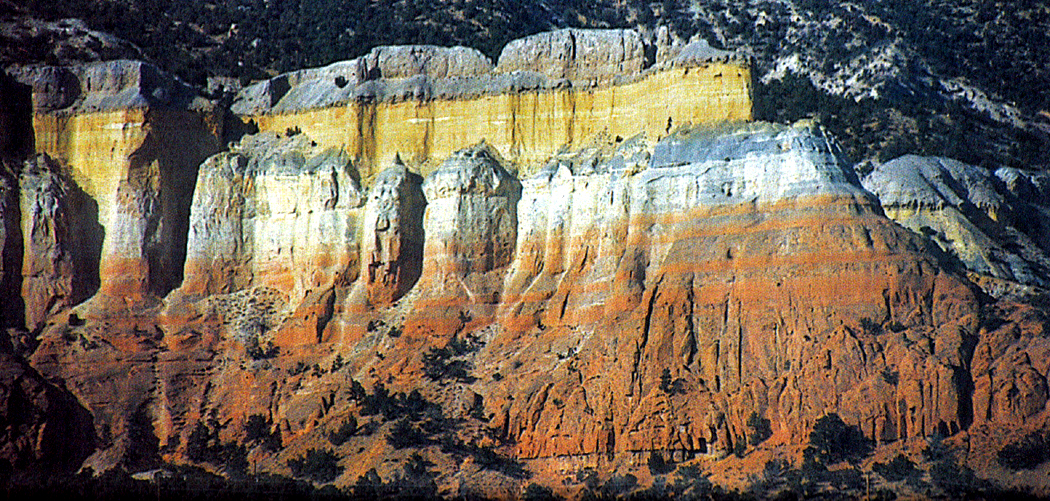
The surprising thing is that so little seems to have changed. You can still see the adobe churches, the penitente crosses, the occasional cow skull with its corkscrew horns. All of which became familiar icons in O’Keeffes paintings. okeeffe ghost house at ghost ranch copy

In fact, a drive up U.S. 84 from Espanola to Abiquiu is as close as you will ever get to driving through an O’Keeffe painting. It is all around you.

Although O’Keeffe is permanently associated with New Mexico, she was born in Wisconsin in 1887. Her family moved to Virginia when she was 14 and she later studied art in Chicago and New York.

She didn’t see New Mexico until she was 30, and then only briefly. She didn’t move to the state permanently until she was 62.

She first achieved note as a painter in New York at the art gallery run by Alfred Stieglitz, who later became her husband.

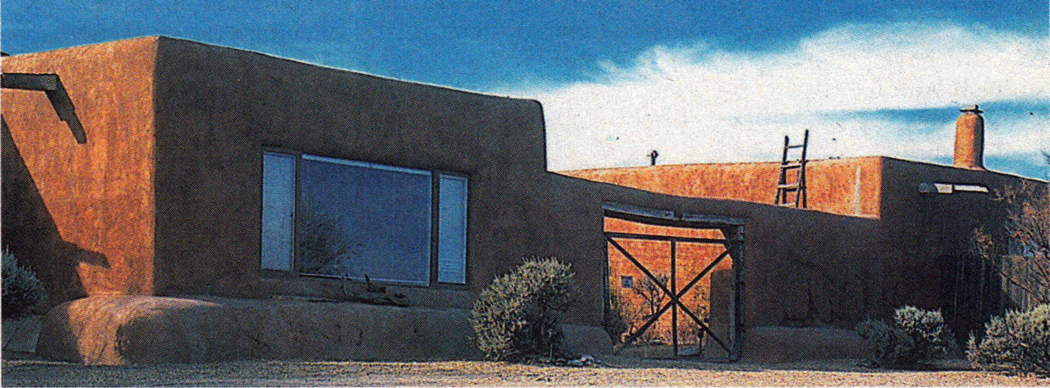
She took solo vacations to the West for many years, leaving Stieglitz behind and renting and then buying property, first at a dude ranch called the Ghost Ranch about 65 miles north of Santa Fe, and later in the tiny village of Abiquiu (Aba-cue) about 15 miles south of that. okeeffe abiquiu home copy

Her paintings, which simplified and mythologized the land around her, have become iconic for both Americans in general and women in particular she was one of the first women whose work was taken seriously in the ”man’s world” of art. okeeffe church golden NM copy

The stretch of U.S. 84 from Espanola to the Echo Amphitheater, north of the Ghost Ranch, offers the most insight into O’Keeffes work. You can see just how she translated what she called her ”back yard” into paint. okeeffe echo canyon copy

”I wish you could see what I see out the window,” she wrote to a friend in 1942. ”The earth pink and yellow cliffs to the north the full pale moon about to go down in an early morning lavender sky behind a very long beautiful tree-covered mesa to the west pink and purple hills in front and the scrubby fine dull green cedars and a feeling of much space It is a very beautiful world.” okeeffe ladder ghost ranch copy

O’Keeffe was a stubborn woman, and she stubbornly refused to leave this life until she was a few months short of turning 99.

”When I think of death,” she wrote, ”I only regret that I will not be able to see this beautiful country anymore … unless the Indians are right and my spirit will walk here after I’m gone.” okeeffe tesuque pueblo copy

No one driving along the Chama River can doubt the presence of O’Keeffe’s redoubtable spirit. okeeffe skull on eave

point roberts shoreline

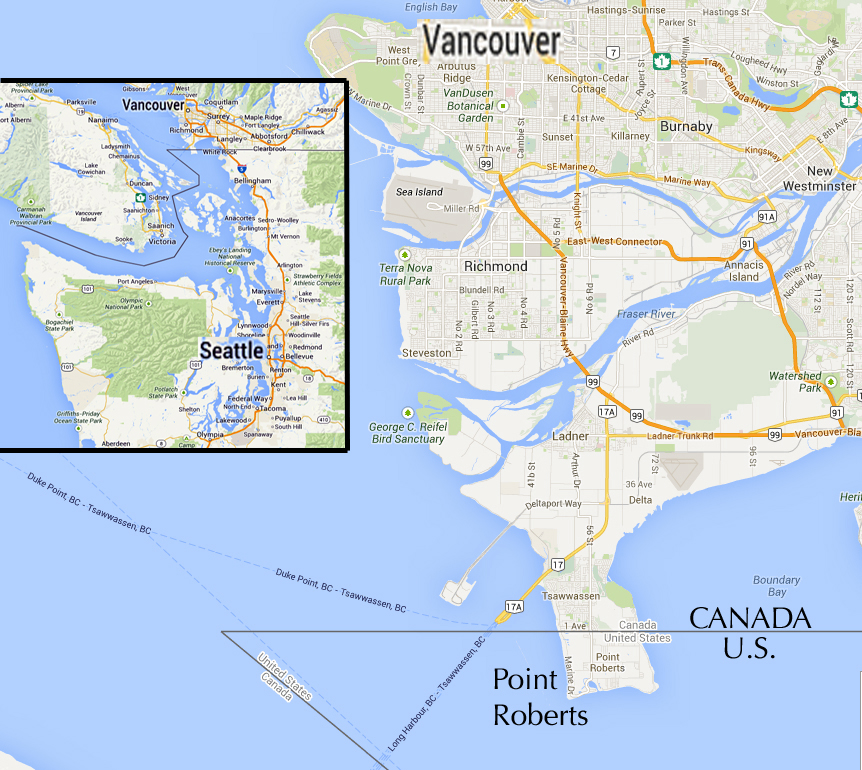
Point Roberts is one of those funny little anomalies you spot on the map and wonder about. It is an exclave — a place that cannot be reached by land without leaving the country to which it belongs. Like the Northwest Angle on Lake of the Woods in Minnesota, that tiny bump in the U.S.-Canadian border.

It is a tiny community on the end of a small peninsula that sticks down from British Columbia like a uvula into the Straits of Georgia south of Vancouver. But by a historical oversight, Point Roberts is not in Canada, but in the United States — the county of Whatcom in the state of Washington.

When the border between Canada and the United States finally was agreed upon in the 1846 Treaty of Washington — brokered, by the way, by that 19th-century Henry Kissinger, Kaiser Wilhelm I — and the 49th Parallel became the official boundary line, it cut across the Tsawwassen Peninsula, slicing off a teensy 4.9 square miles at its end, leaving the tip accidentally in the United States. Point Roberts map

Now, Point Roberts might as well be an island. It is surrounded by water on three sides, with the Canadian border on the fourth. It is a 23-mile drive through British Columbia to get from Point Roberts to the rest of Washington.

It has made life interesting for the 950 people who live there.

For one thing, all electrical power and telephones have to be contracted from Canadian companies; yet when there is a repair problem, American companies are responsible.

And when a crime is committed — admittedly not a common occurrence — the miscreant must be helicoptered or boated back to the mainland; he cannot be squired by road through Canada and back into the United States.

The police blotter of Point Roberts is worth mentioning.

In the four months from August through November, as reported in the All Point Bulletin, the local newspaper, the majority of reports were of three types: drunkenness and drunken driving; trying to cross the border with marijuana; and burglar alarms that went off accidentally. Sometimes a power surge is blamed.

There are also a few nasty tales of domestic violence: A daughter got into a fight with her mother and ”knocked a bunch of books off some shelves,” and a girlfriend threw a brush at her boyfriend.

But amongst the reports are a few worth quoting whole.

”Sept. 20: An individual reported that Camp Ruth Morton had been broken into and three fire extinguishers were stolen and recovered on the property empty. Fingerprints were taken. Case under investigation.”

”Sept. 21: A park manager in the 1400 block of Gulf Road reported that after having a dispute with a tenant, the tenant exposed his buttocks to him and his young children. The manager wished the information to be documented and the tenant contacted. Tenant denied any wrongdoing.”

”Sept. 22: A 46-year-old Vancouver, B.C., man was arrested for assault in the fourth degree after police, who had been called to the residence in the 1500 block of Panorama Drive for a possible domestic dispute, witnessed the man jerking a female by the collar and would not allow her to get up. The man was escorted back to Canada.”

U.S.-Canadian border

U.S.-Canadian border

”Sept. 29: An individual in the 100 block of Monte Road reported that his next-door neighbor had plugged a travel trailer into his house without asking. The individual does not know how long it had been plugged in. A note was left for the neighbor who had said no note was found. A summons will be sent to the neighbor for theft in the third degree.”

”Oct. 1: An individual advised that around the first of August, an unknown subject entered the U.S. from Canada and requested political asylum. The subject was Canadian and did not meet any requirements. The subject ran back to Canada leaving a bicycle and has not returned.”

So, you see, life is not uneventful in Point Roberts, especially in late September.

Point Roberts was named in 1792 by Captain George Vancouver after his longtime friend Captain Henry Roberts. Point_Roberts guard sign

It was settled by Icelanders, who scraped out a living by fishing and farming, although the soil is some of the worst in Canada. Later, canneries opened up to process the haul of fish from traps set into shallow Boundary Bay. Point Roberts reached the apogee of its fame during Prohibition, when the community was a hotbed of rumrunning.

Tables turned after the repeal of the Volstead Act, when Canadians began to come to Point Roberts on Sundays to drink. At the time, it was illegal to serve alcohol on Sundays in Canada. A thriving saloon business began that survives to this day, with the addition of bingo, although the bars advertise it as ”gambling,” because bingo just doesn’t sound illicit enough.
Things begin hopping in Point Roberts in the summer, when vacationers from Vancouver swarm the place, quadrupling the population. A marina is the central attraction. boundary obelisk

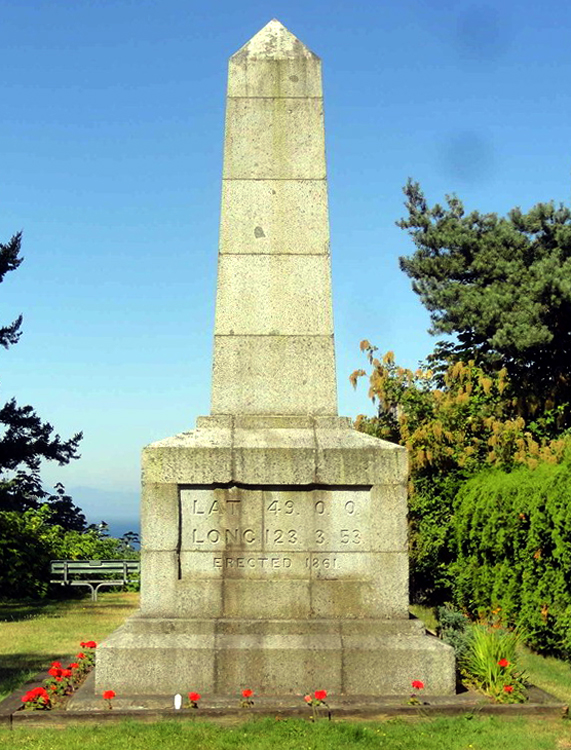
But hidden in the northwest corner of the enclave, along Roosevelt Way, is a monument of historical importance: the westernmost boundary marker along the 49th Parallel. It is a worn, lichen-crusted stone obelisk marking latitude 49 degrees north and longitude 123 degrees, 3 minutes and 53 seconds west. The surveyors who fixed the border started from this point and worked their way east.

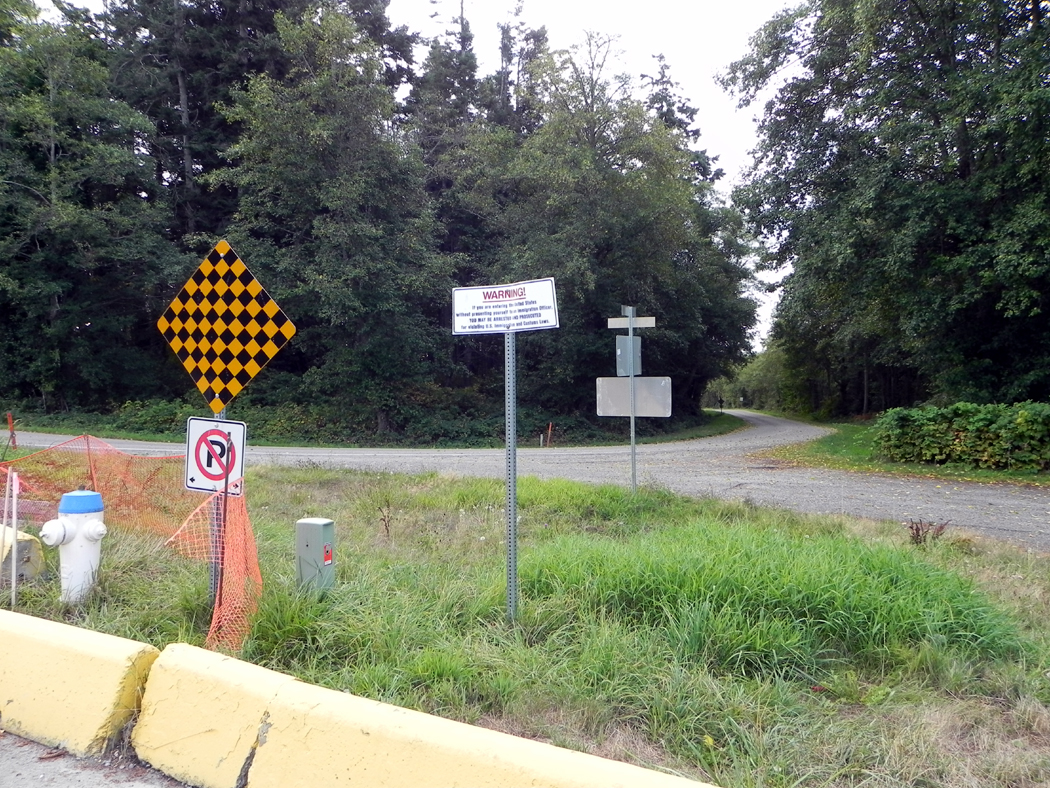
Small customs offices are on both sides of the border on Tyee Drive. The Canadian office is newer and slightly larger. But the United States, not to be outdone, has built a new $5 million facility to replace the old one.

In the basement is a jail, needed to hold criminals until the boat can take them to the mainland.


This brings to an end the series of entries for “California and the West,” chronicling the drive from Tijuana, Mexico to Vancouver, Canada.

seattle aquarium rainy day

It is one of the unexpected symmetries of nature that the tropics should spawn the zillions of exotic flowers and vines that are its trademark, but that the abundance of ocean life grows where the water is cold. Puget Sound is cold year round.
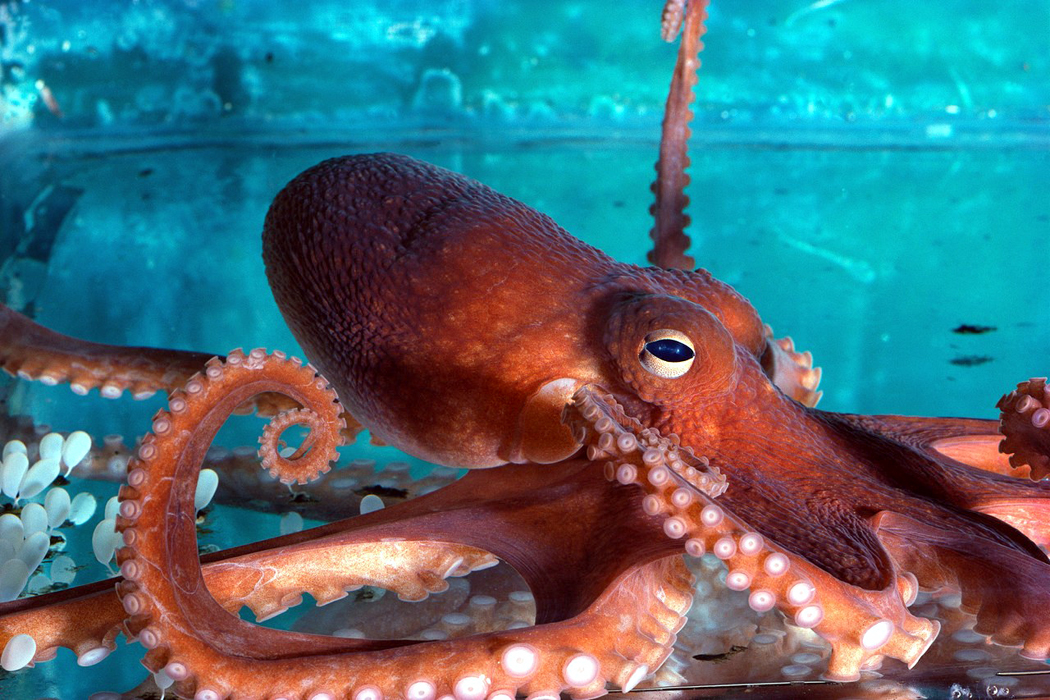
A short list. Puget Sound has: 50 species of sponge; 200 species of annelids; 20 species of anemone; 70 species of shrimp; 25 species of hermit crab; 20 species of seastars; 36 species of sculpin; 24 species of rockfish; 16 species of limpet; and four species of octopus, including the world’s largest at up to 20 feet across and over 100 lbs., the Octopus dofleini.

And the animals of the Sound are often as exotic and lurid as any humid liana or dripping orchid.sea pen 2

There is, for instance, the Ptilosarcus gurneyi, or seapen. This has nothing to do with the spiny bivalve of the East Coast. It is not even a bivalve. It is an aquatic plume with its nib in an inkwell, buried in the sandy bottom of the Sound. It is bright orange with a fringed plumage that stretches up to a foot long. It is luminescent and produces a bright green light when stroked.

Seapens belong to the same general group of Cnidarians as the sea anemones, but the fact that their polyps are small and organized into a featherlike colony obscures that relationship somewhat.

What binds most of the invertebrates of the Sound together is color. The richness of the colors on the seabed shame the peacock. There are the three sea urchins each a different lascivious hue. Stongylocentrotus purpuratus is dayglo purple; S. droebackiensis is forest green; and S. franciscanus is 6 to 8 inches across and bright red and purple. It is a basketball among urchins.

The white sea cucumber is white as milkglass with electric orange thorns along its length. starfish pile

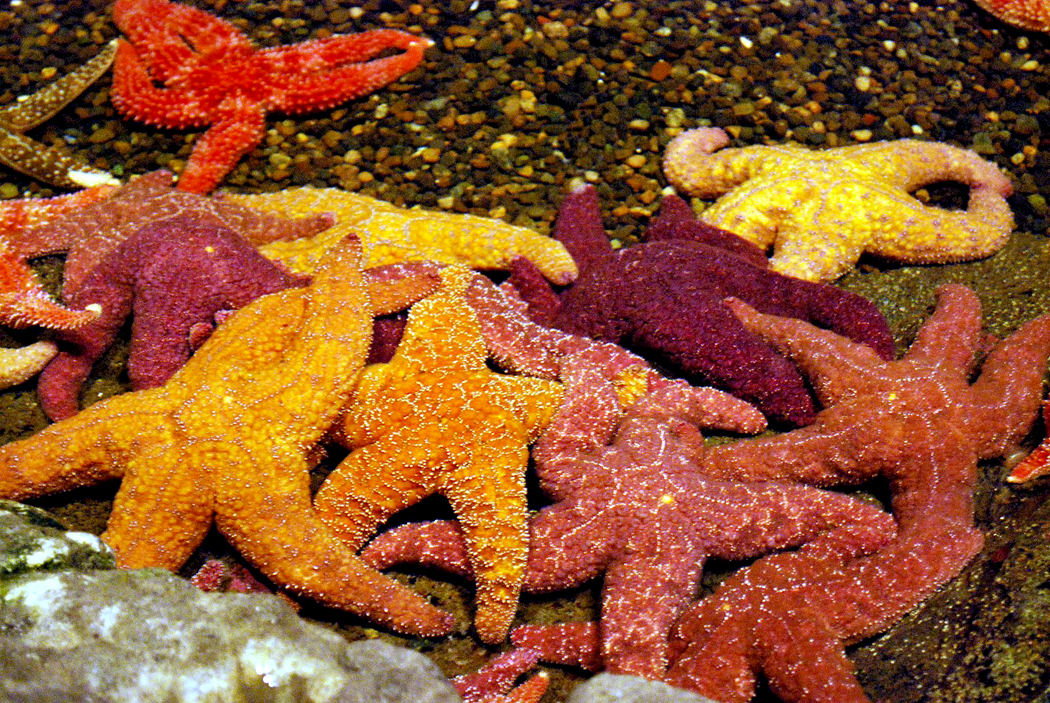
The starfish were manufactured by Binney and Smith. The Solaster stimsonii has 10 legs and each is striped with blue showing brightly against the field of ocher. The bloodstar is blood red; the rose star is pink; and Leptasterias hexactus has six legs and shows the color of a pomegranate.blood star

The sunflower star has up to 24 fat legs and is a dull yellow with bright orange rays.

The sea lemon is a 7-inch long nudibranch that is lemon yellow — a translucent yellow back with amorphous scores of lacy tubefeet. Puget Sound has more kinds of echinoderms than anywhere else in the world.

There are lavander abelones; 8-inch-long gumboot chitons; light blue filaments on algaed rocks that are an annelid, Thelepus crispus; crimson anemones; giant barnacles (Balanus nubilus) that are over 3 inches across; red-tissued scallops with rock colored shells and dozens of black eyes peering through the feathery antennae around the seems of the shell; gordian-knotted basket stars; warty, transparent, hairy sea squirts and sea pork; a red and pink anemone that is 12 to 15 inches across its waving tentacles.Green anemone

There is the edible pride of the Sound, the Panope generosa, or geoduck clam (pronounced as “gooey-duck.”) It is a bivalve that weighs up to 20 lbs. and, with its oversize siphon, looks like a bratwurst on a sliced kaiser roll. The meaty parts of the geoduck are so large that it cannot close its shell.geoduck

The other edible wonder is the sweet-meated Dungeness crab. Others may brag on their Alaskan king crab, but to those who have tasted the Dungeness, so much bragging on a thing merely because it is large is gauche, fit only for a Texan. The Dungeness makes the AKC seem like a can of tunafish.

So far, I have barely mentioned any fish. But they are as abundant and varied as the invertebrates. There are prickleback, gunnels, tubesnouts, pipefish, sea horses, sculpins, clingfish, and spiny lumpsuckers among the odder finny wonders.striped greenling

The painted greenling has zebra-stripes of cobalt blue on a salmon field with random purple and white spots. The Gobiesox, a clingfish, is round and fat with a flat head and a sucker on his bottom and is tan, netted with purple and with white spots or freckles. One tubesnout, Aulorhynchus flavidus, is translucent and yellow-green. It is 3 or 4 inches long, but narrow as a drinking straw and one can see his organs twitching on his insides.

By far the best place to see these zoological delights is the Seattle Aquarium. It is the best aquarium I have ever seen, making even the Coney Island show look bush league.

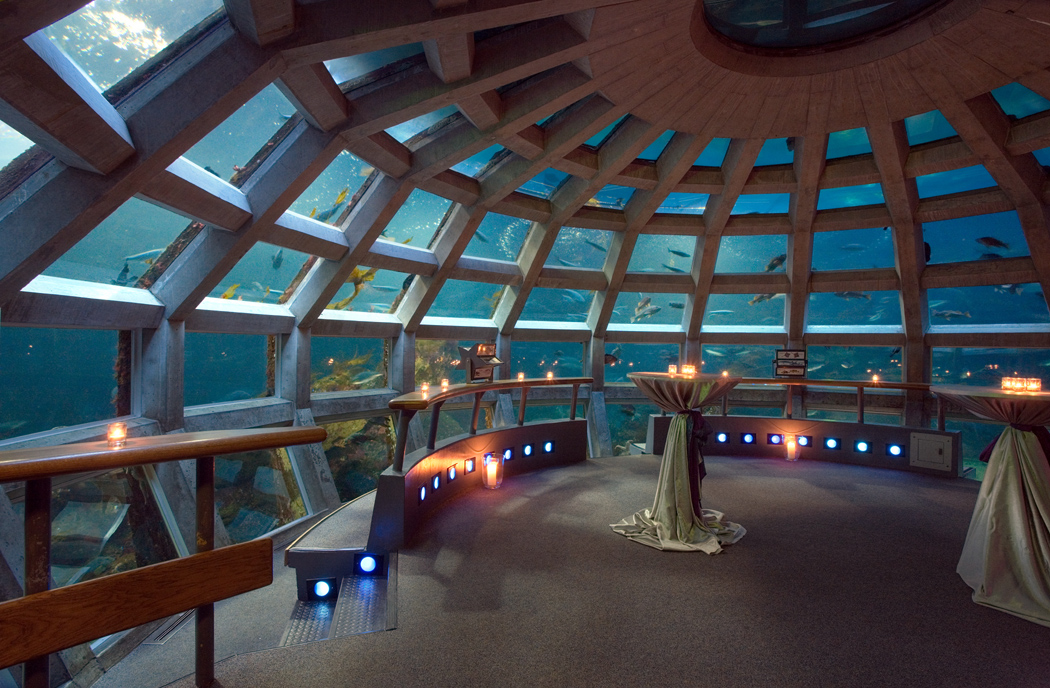
And the most wonderful feature of the Seattle Aquarium is the dome.Aquarium big room

Inside a huge tank of seawater, there is a many-windowed dome looking up and into the fish-filled water. The tank is decked out to look like the bottom of the Sound, one side complete with harbor pilings to gather barnacles, and the other strewn with rocks and sand. And swimming around are many of the aquadynamic shapes common to Puget Sound.

The sides of the tank scintillate with the wavering colors of sunlight broken up by the prisms of the waves on the tank surface. Through the spectrum swim trout, tomcod, salmon and catfish. The silvery salmon look like something manufactured by Boeing, like unpainted airplanes with scales for rivets. The glint of sun runs from nose to tail as the fish whips its body, propelling itself through the fluid.

The brown trout show an irridescent green when the sunlight hits.octopus 2

Huge scrotal octopods, all valves, siphons and tentacles, are strangely graceful.

A lime-white seastar rests on the sandand over it a flounder, like some Arabian magic carpet, flies, wavering its Persian body.

There are tomcod with supernumerary fins and charcoal gray dogfish with white-limned fins.

Looking sleepy among the rocks is a wolf eel with its prizefighter’s prognathous face. He is metallic blue with black coindots in bands across his body. He slithers around the floor boulders prehistorically.wolf eel 2

A sculpin stares straight at me from behind the glass with two Japanese fans for fins. A round, flattened seaperch floats slowly past the window. He has neon blue skin showing through rows of brown scales. Fom a distance he just looks brown, but up close, he is a vision.

Near me on one of the seats (church pews, I almost wrote) were four children, kicking their legs back and forth, ready to move on to whatever was next along the wall, and their shepherd, an older woman who must have been an aunt, asked almost of no one, but talking to the kids, “Isn’t it restful to watch them swim?”

But it is only restful to the adult, who has need of it. The children cannot yet understand the longing for such things.