Archive

Tag Archives: travel

Linville Falls
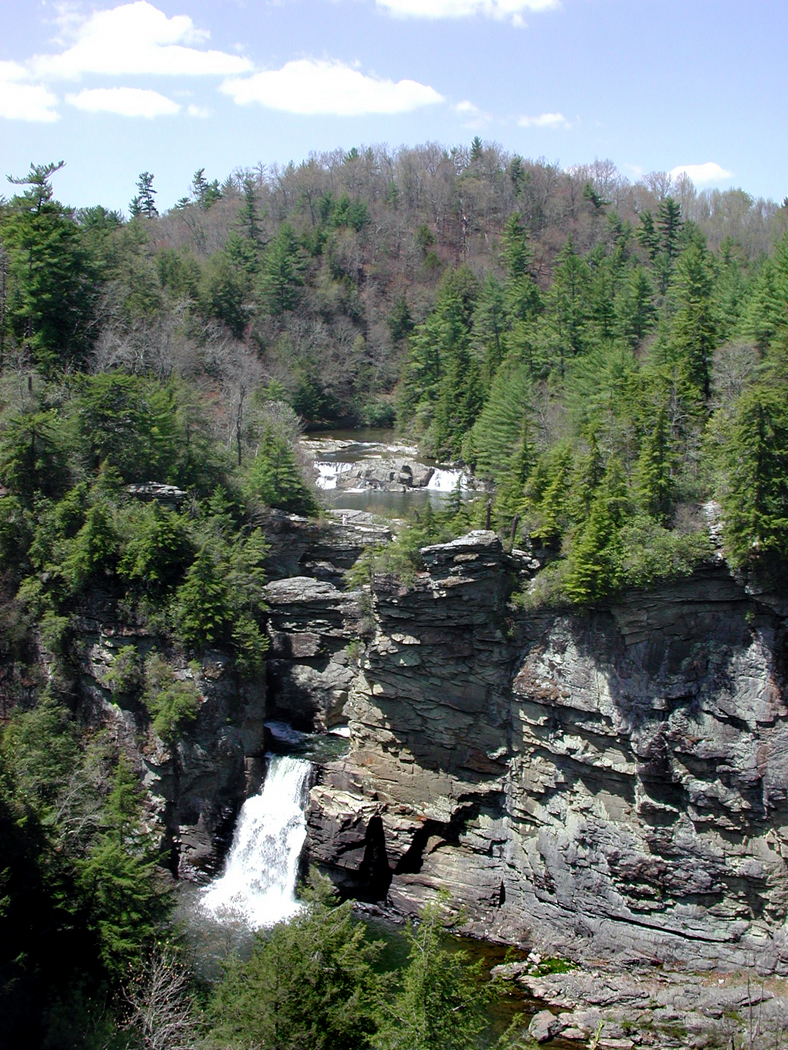
It has been nearly 50 years since I first saw Linville Falls in the Blue Ridge Mountains of North Carolina. Back then, getting there meant finding an unmarked gravel road and an unmarked dirt parking lot — really just a thicker place in the road to pull over into.Linville Falls 03

Then we followed a spongy, loamy footpath under the hickories and oaks toward the distant roar of the waterfall on North Carolina’s Linville River. No one was there but us and we picnicked on the rocks over the crashing water. The upper falls are a broad, shallow drop, but at the lower falls, the quartzite pulls tight, constricting the river and forcing it down a spiraling chute that drops over the edge of the cliff and down 75 feet to the river and Linville Gorge.Linville upper falls

It is an impressive torrent with a basso profundo roar, and nothing will ever change the way it seemed to me that day, as I leaped over rocks, crossing the white water to the other shore so I could climb on the gnarled rock to see down the waterway.

Leaping from rock to rock across the cataract could easily have got me killed, swept over the precipice, but I was young, and therefore, an idiot.

I’ve been back many times over the years. The National Park Service built a paved road from the Blue Ridge Parkway, making it easier to find. Then they paved the parking lot and built a pedestrian bridge over the river upstream from the falls.Linville Falls from above

The last time I went back, there was a visitor’s center and a souvenir shop and a parade of vacationers trotting down the path to the fenced-in overlook. The falls are just as impressive, but the experience isn’t.

If I speed up those five decades in my head like time-lapse photography, I can see time take shape. It builds and it destroys in a constant rise and fall like an ocean tide.

And what comes in, ebbs.

A few years ago, my wife and I visited another familiar site, on Old Route 16, a dirt road that drops down the side of the Blue Ridge from Ashe County towards North Wilkesboro. When we lived in the mountains, we used to visit an abandoned farmsite along the road, halfway down the mountain face.

There was a clearing in the wood and an old wooden house with a broad porch that looked out over the steep valley below. Above us was the spot ominously known as the “Jumpin’-Off Place.”

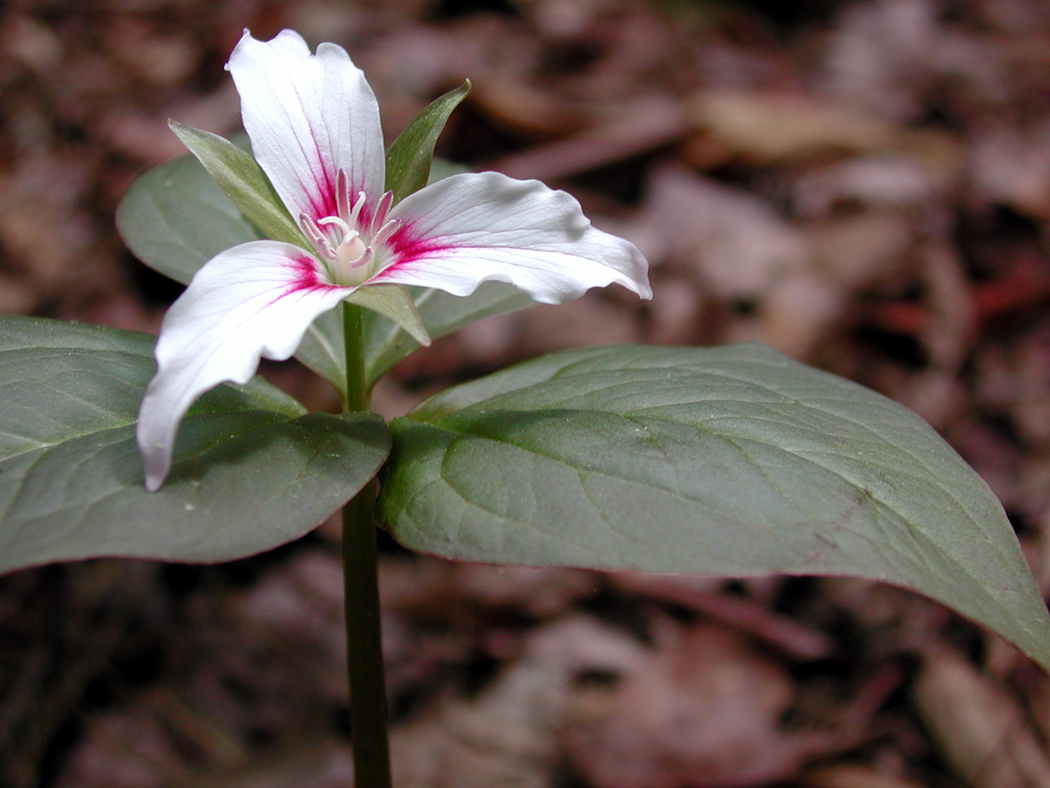
We could picnic on the porch with the bluebird and tanager singing in front of us, the buzz of insects all around and the gentle breeze rattling the grass in the field.Linville trillium

It had been 20 years since we visited that farmhouse and we thought we should see what had become of it.

About three miles down the old dirt road, we passed where it should have been, but there was no break in the forest, no open field. We couldn’t find the house. We kept driving, hoping we’d find something that looked familiar, but we didn’t. Finally we stopped the car where the farm should have been and walked deep into the woods.

Buried a hundred yards into the tangle of maple trees was a naked standing chimney, completely eaten up by brush and undergrowth.

When I climbed down the hill towards it, I discovered the forest floor was spongy with rotten boards, completely collapsed in on themselves, with a few nailheads still showing.

In the years since we last visited, the old house had been completely digested by the woods, leaving only the indigestible brickwork of the twin-sided chimney.OLYMPUS DIGITAL CAMERA

And the once-glorious view of the declivity was now completely obscured by trees and brush. Instead of a vacant field overgrown, the house was survived only by complete woods.

In just those few years.

Nature can reclaim an entire farm in 20 years and leave nothing behind but the masonry. And that won’t last much longer.


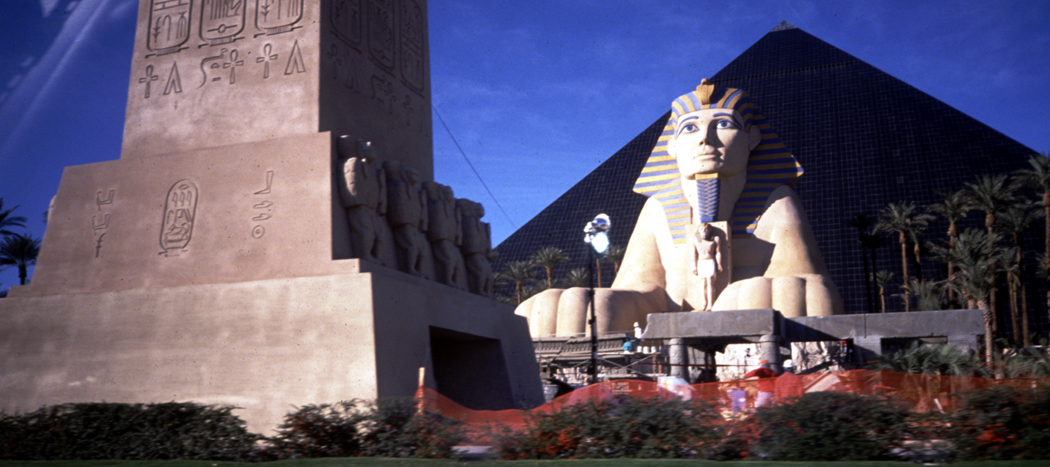
vegas pyramidI know my idea of hell: eternity in Las Vegas. Heck, even a weekend.

Now, I am aware that many people love Vegas, and I’m not here to quarrel with them: De gustibus non est disputandum, as they say. You can’t argue about tastes.

However, I have been to Vegas once too often and my skin shrivels at the thought of the place.

There once was a certain Sodom-and-Gomorrah charm to it when it seemed to be run by the Mob, back when Frank Sinatra, Dean Martin and Sammy Davis Jr. turned the city into a glamorous, empty metaphor of high-hat cymbals, scotch on the rocks and gleaming silk tuxedos. Back then, gambling wasn’t something that retirees wearing plaid pants with white belts and matching brogans did on organized bus tours. It actually had the edge of transgression. It was bookies, hookers, cigarette smoke and more incandescent light and neon than in all of France.

However, the city no longer has the Mob feel. It’s much worse: Now it’s run by corporations.

This isn’t just a question of good and bad taste. Bad taste has its appeal, and the old Vegas was a monument to bad taste. Bad taste can be fun.

Certainly, there is a great deal of bad taste in Tijuana, for instance. But it is a wonderful place to visit. In Tijuana, the bad taste is — excuse the term — life affirming. The bad taste comes from poverty and its attempt to enrich life with gaudy colors and garish extravagance.

In Vegas, the bad taste comes not from poverty, but from excess of money, which is deadening. Its spectacle does not enrich life, but gluts our senses so we no longer see, no longer hear. Vegas makes zombies.

On the hotel-room TV, there is a channel that promotes the hotel’s attractions. It features pictures of bubbly families enjoying themselves with the reckless grins of a chewing gum commercial. But when I go down to the casinos, I don’t see those people.

Instead, I see aging women in teardrop eyeglasses and stretched-to-the-limit polyester sitting in front of the electronic slot machines with not a muscle flexed in their flaccid faces and their eyes turned to pig iron, hypnotized by the whirring of the dials.

A constant, mechanical drop of coin, pull of lever, spin of wheel, clang of bells, drop of coin, pull of lever, etc., for hours on end. No expression on the faces and an ash-tipped cigarette hanging on their dry, creased lips. It is just such scenes that make me think of Dante.

Children, of course, are not permitted in the casinos. They have their own computer screens to stare into in the video-game arcades that are hardly more than training wheels for the real thing downstairs.

Adult or offspring, they have put their lives on hold in order to partake of a droning synthetic reality that has no meaningful connection to them.

Everything in that town is synthetic, from the phony castles in Excalibur, to the “hologram” of Celine Dion, singing a duet with herself, to the surgically enhanced hood ornaments of the chorus girls. There is not a genuine experience to be had, with the possible exception of the pleasure one gets at seeing just how seedy and run-down the old parts of town have become. In their dusty storefronts and cheesy wedding chapels, there is a patina of reality that invades the fantasy.

The new Vegas of phony pyramids, skyscrapers and medieval castles has no reality. It lets you kill time without enriching your life. It is to life what Twinkies are to fresh, homemade bread.

In that, it is a concentrated dose of what America is becoming.

And that is why I hate Las Vegas all the more: The real experiences of life are being supplanted by the plastic-fruit version — the difference between going fishing and playing computer fishing games — and we aren’t complaining about it loudly enough. Quite the contrary, we are flocking to this city in the desert to experience ersatz New York and theme-park reality, simplified, repeatable, soulless — dulled down and tarted up at the same time.

You can see the same thing happening in our political campaigns, our publishing industry, our corporate-slogan clothes.

We are presented with a kind of corporate parallel universe, where everything has a brand name and a price. We are seduced into forgetting the messier, chaotic and infinitely more rewarding world we were born into.

It’s the modern version of the Faustian bargain, and we’re losing more than our money.

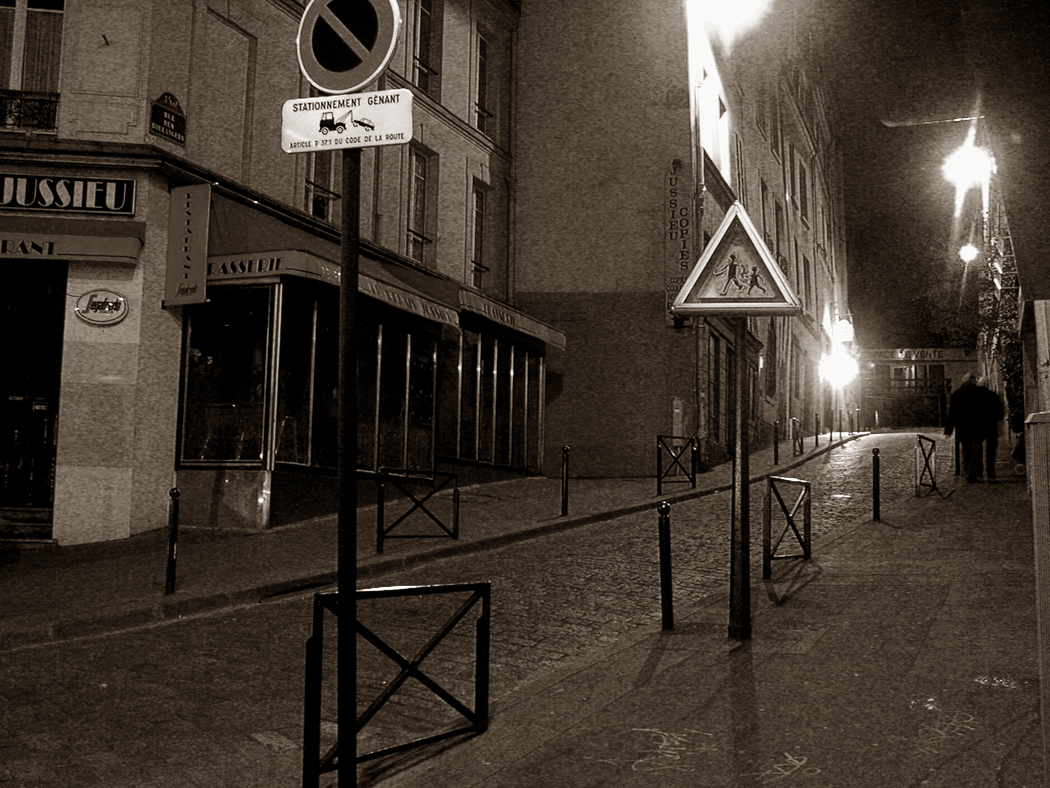
paris night 01jpgThe first time my wife remembers being aware of the night was when she was a little girl and thought the darkness was a liquid, a flood tide overtaking the world.

“I was afraid I would drown in it,” she says.

If she wasn’t careful, it might seep under the window sash and fill her bedroom while she slept.paris night 02x

My experience was different. I grew up outside New York City, and for me, night was an empty container to fill with light. It wasn’t night that flowed, but rather the lights that were like opened faucets draining into the darkness, to be diluted by it. The view of the Manhattan skyline at night, seen from the New Jersey Palisades, was the most beautiful thing I knew. It glowed like embers. paris night 03x

Either way, night was something poetic, although we would never have used the term. When you are a kid, when everything is new, and everything is poetic, there is no humdrum, no banality, against which the poetic, the beautiful, can be offset. It is just the way things are.

Now, as a grown up, chastened and wary, night is the black velvet on which we place the emerald ring, to show off its brilliance. And night is the time that gives the day its mythic resonance. We do our work during the day, so that night can work on us. paris night 04x

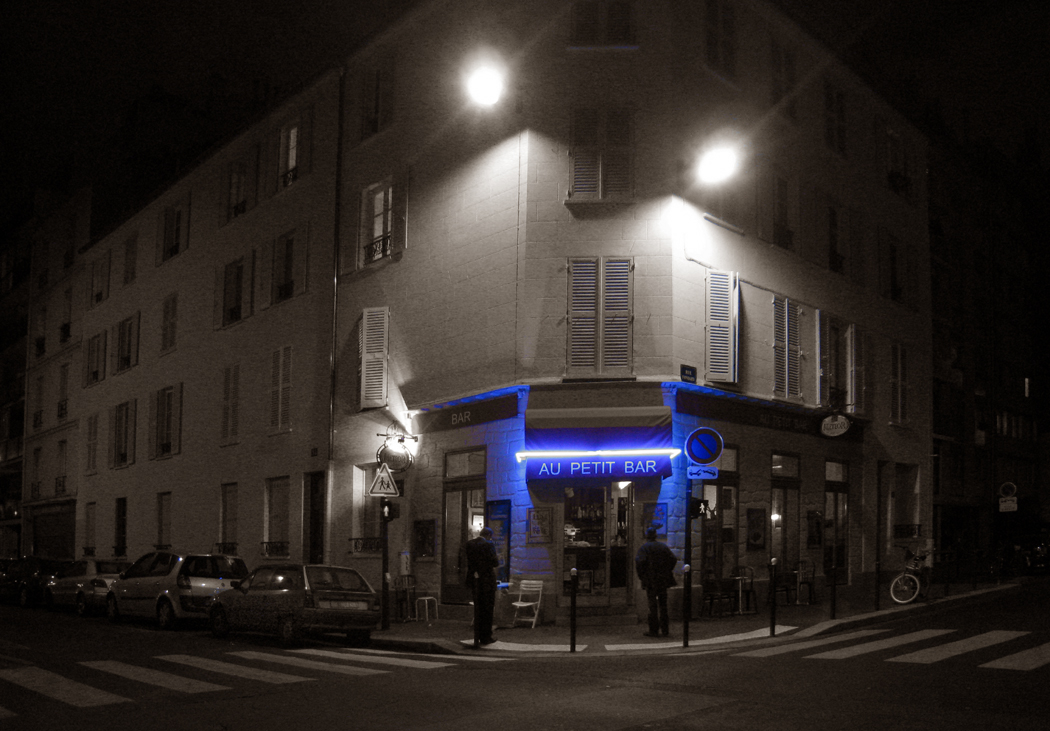
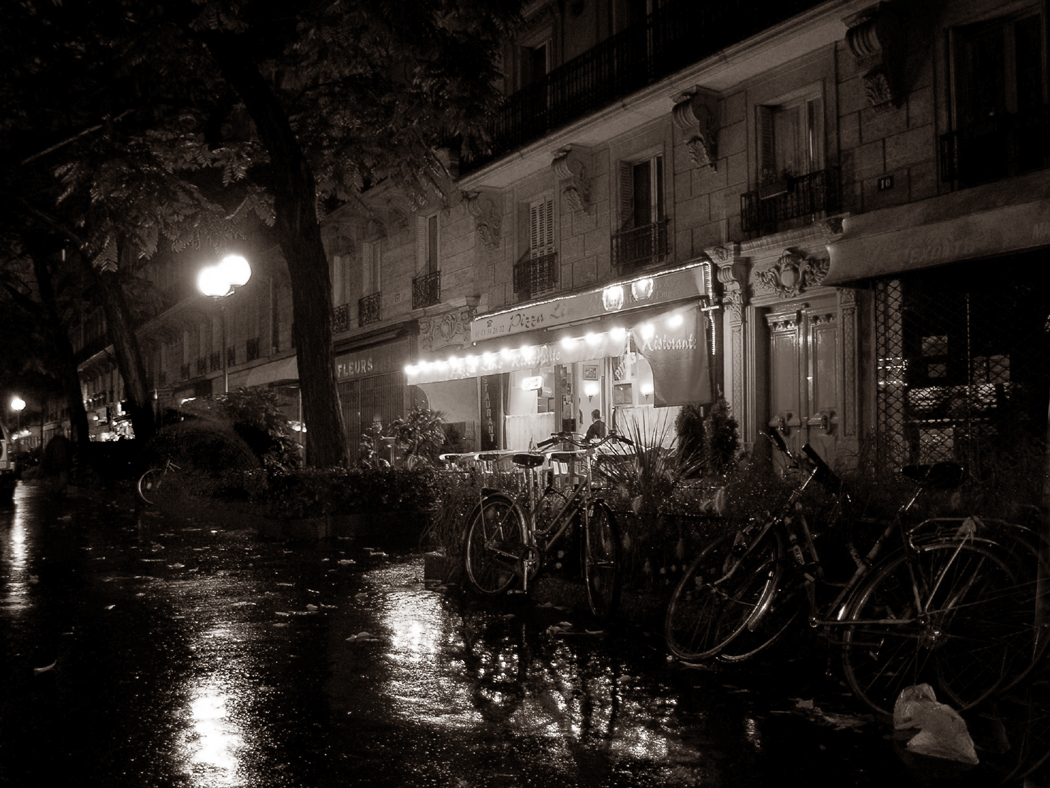
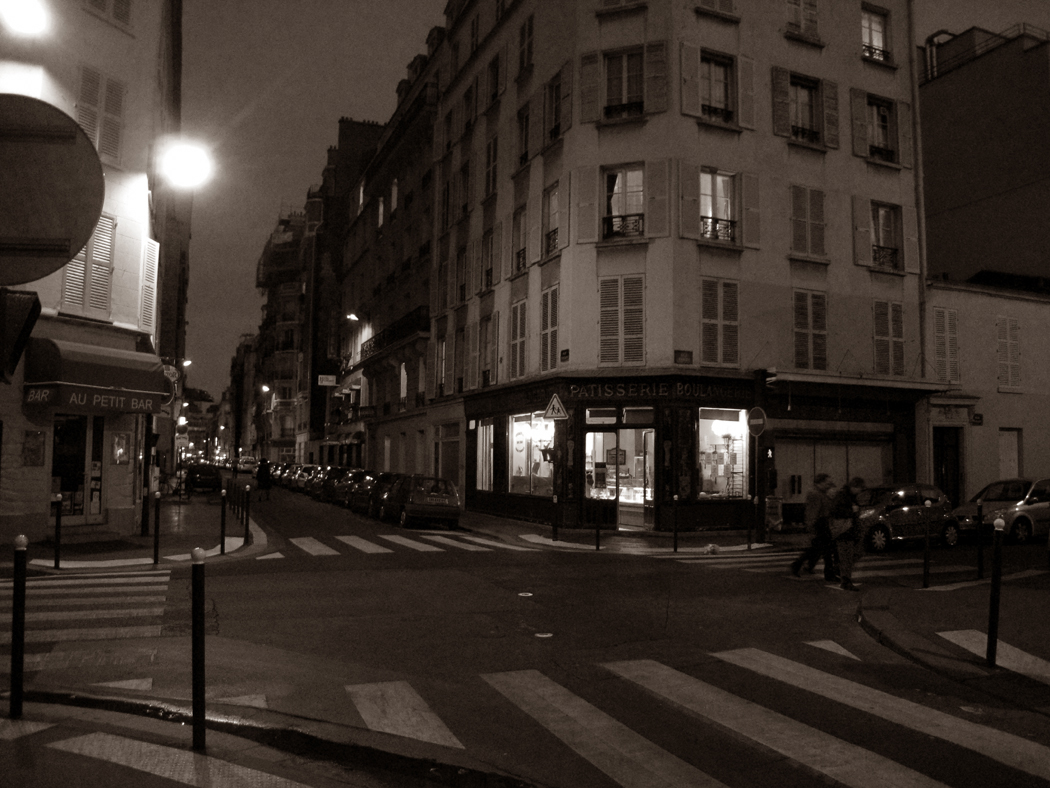
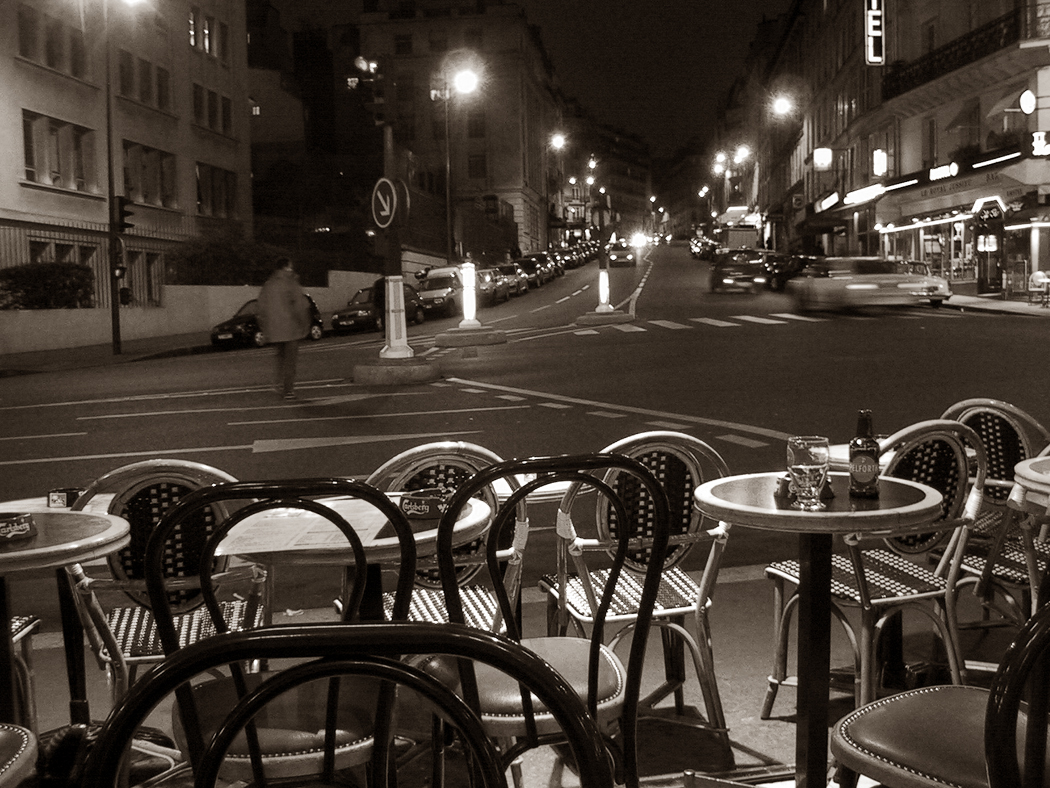
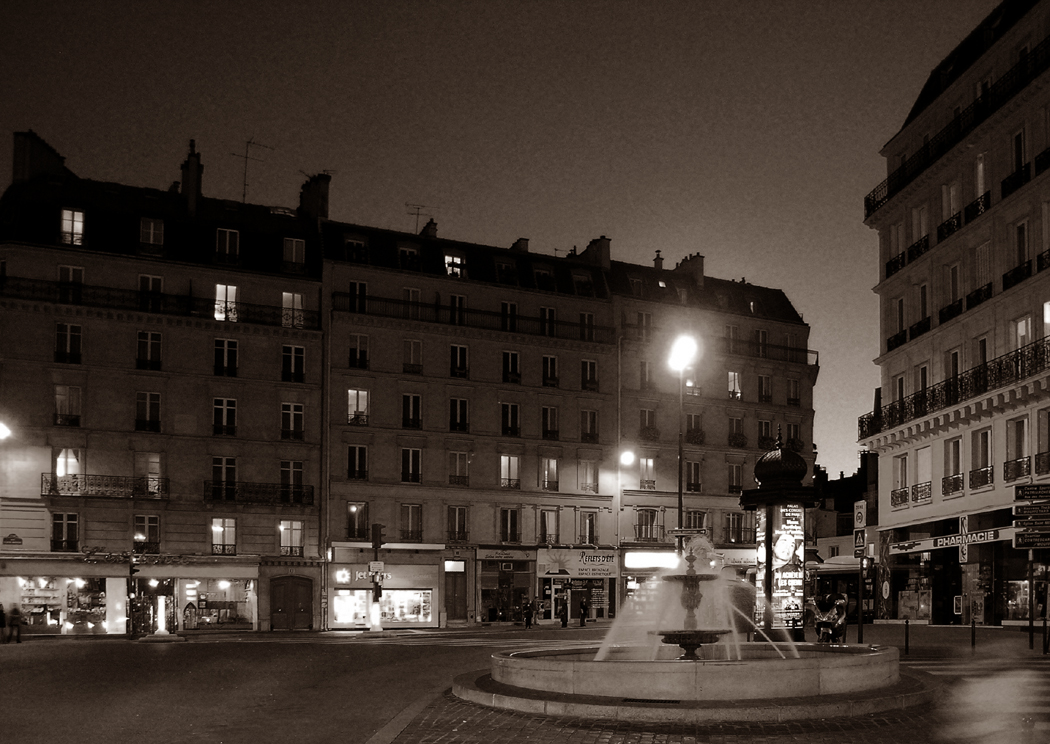
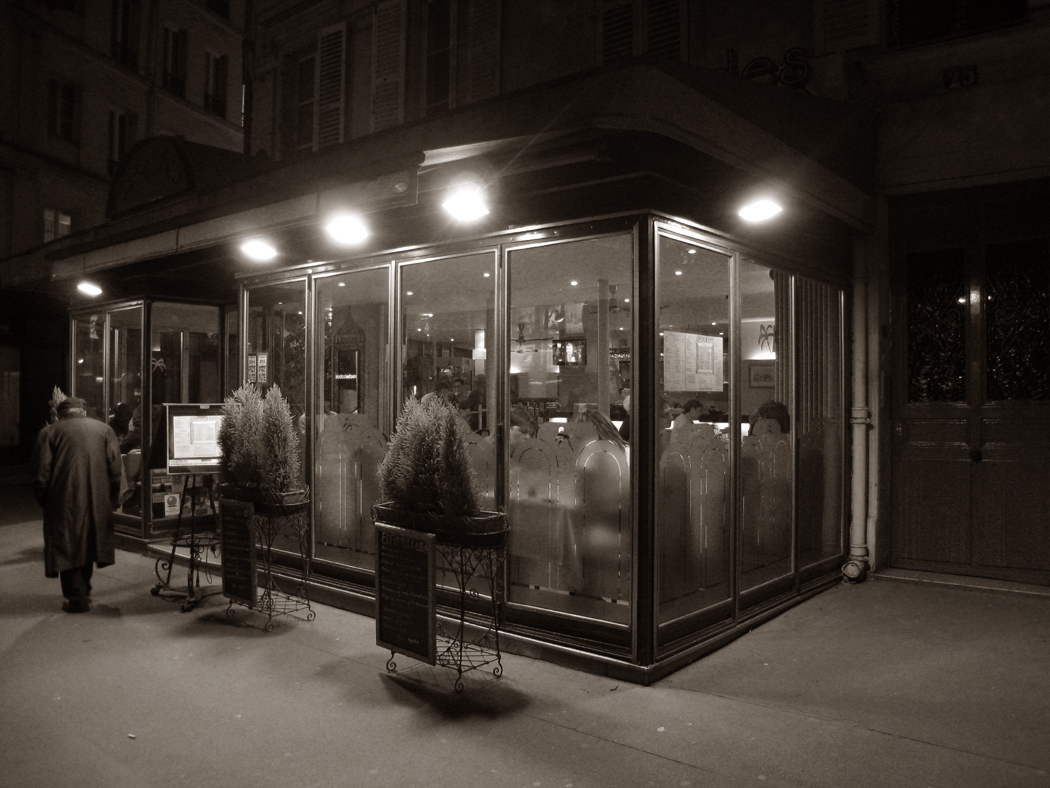
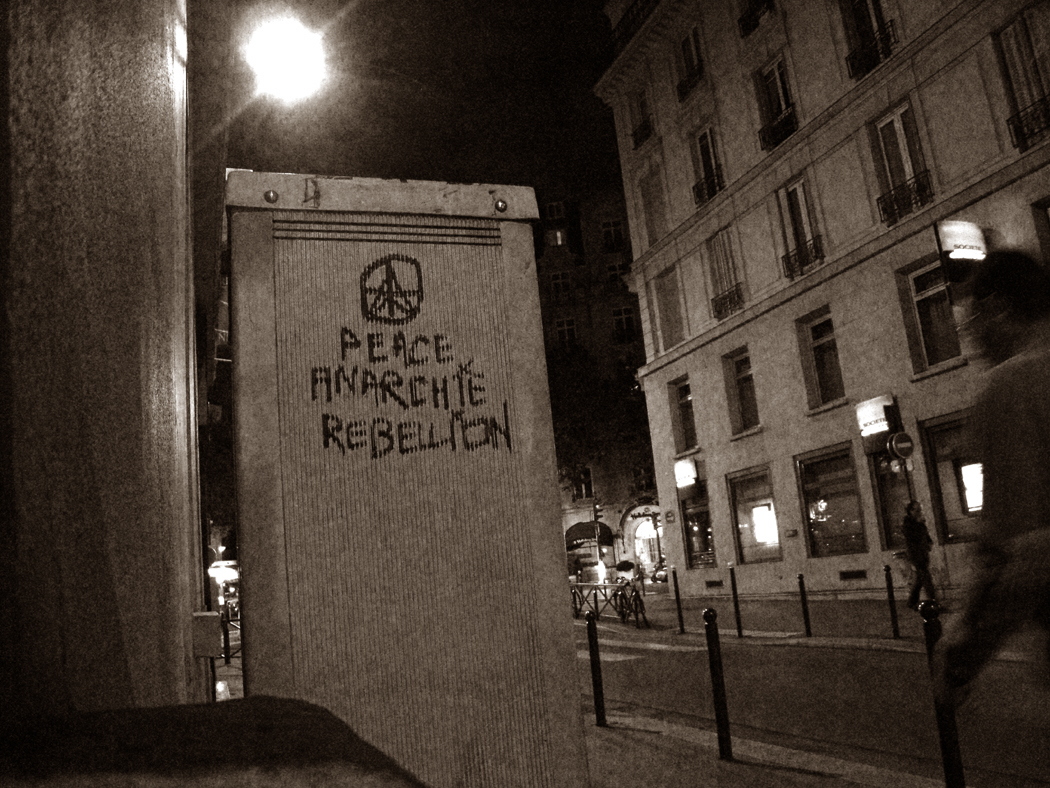
I go walking in Paris at night, because that is when I feel most completely there. Paris becomes itself when the streets are dark, with storefront windows and the streetlamps pour forth their fluid light, diluted on the curbs and parked cars. I am washed in that thin light. paris night 05x

One feels most deeply the difference between Paris and New York. At night, Manhattan seems just as busy as it was earlier. Traffic is dense, pedestrians fill the streets. You can ride the subway at 2 in the morning and still see a car full of faces.paris night 06x

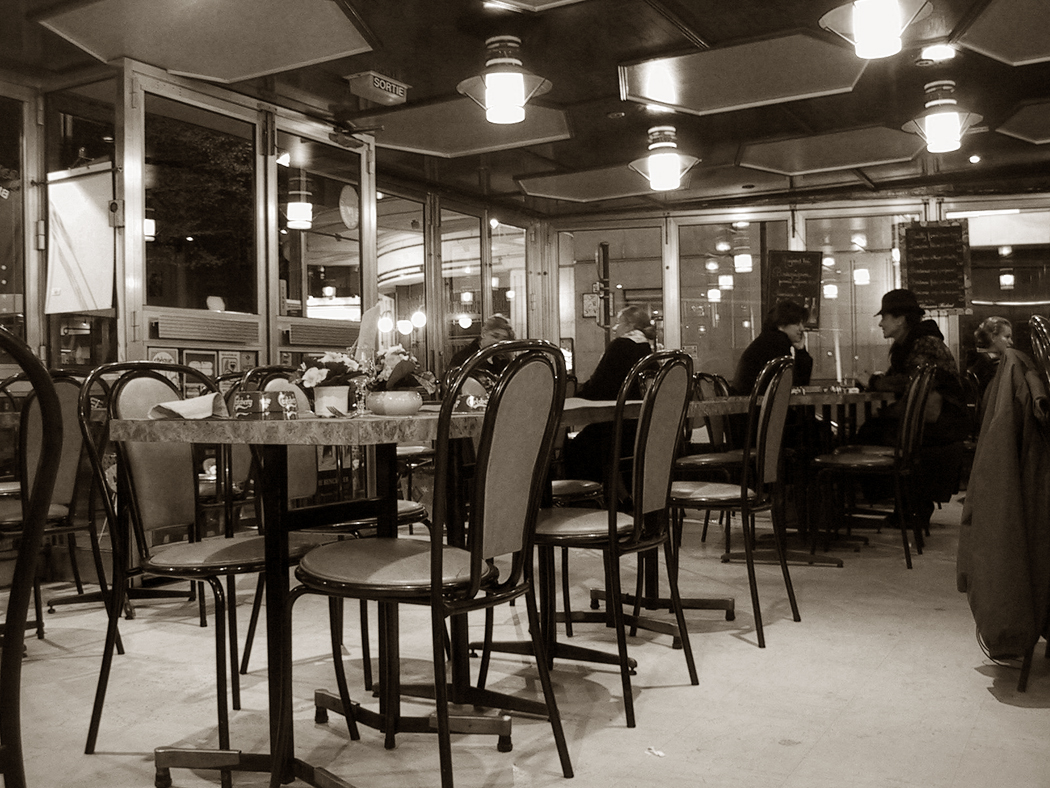
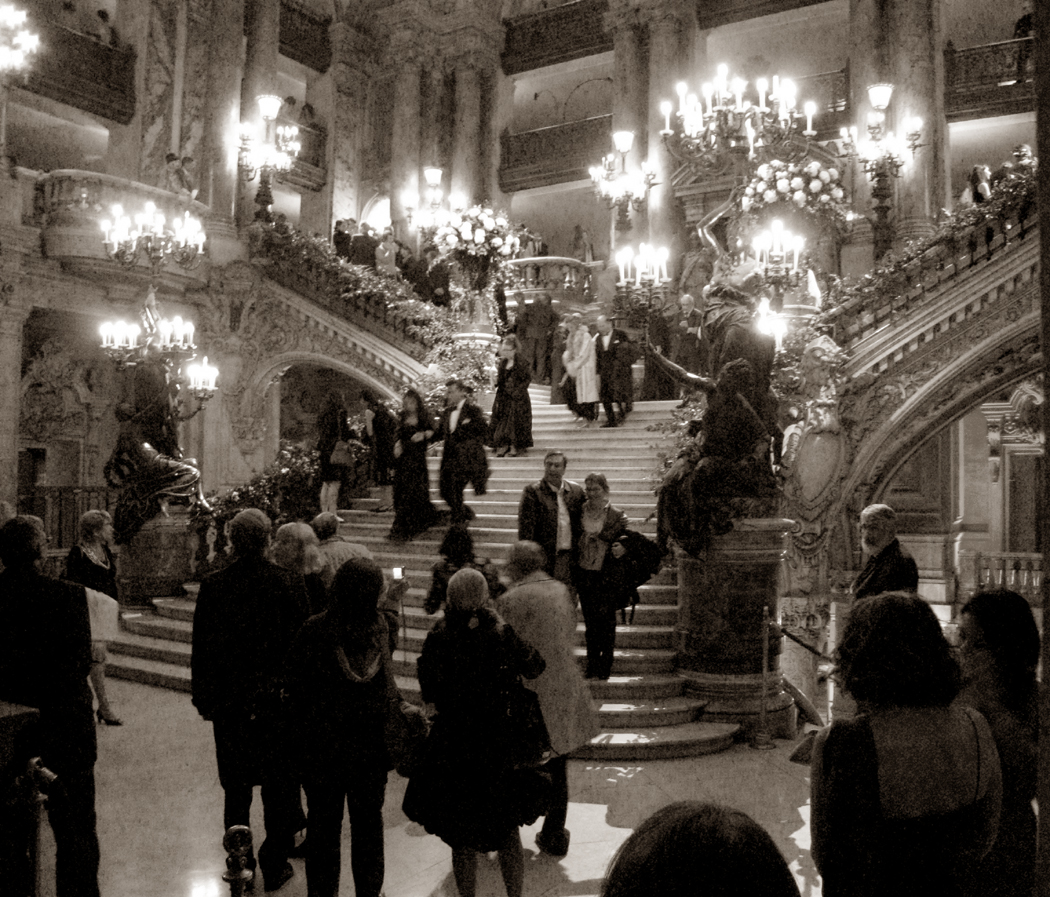
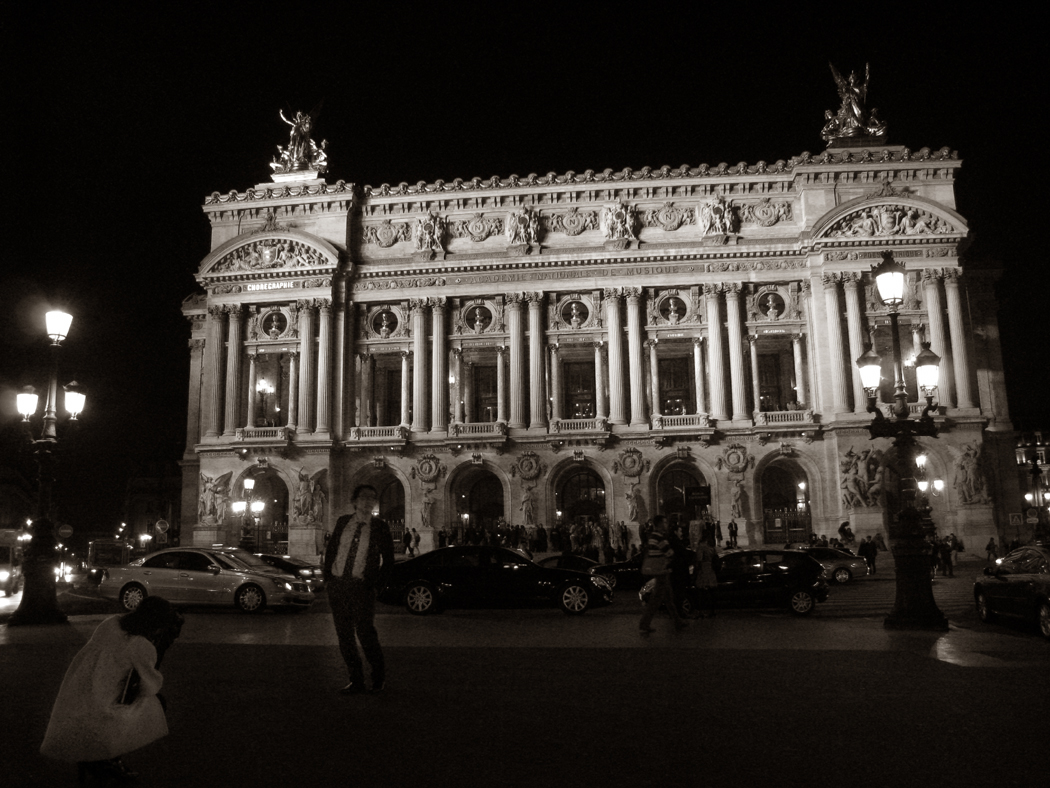
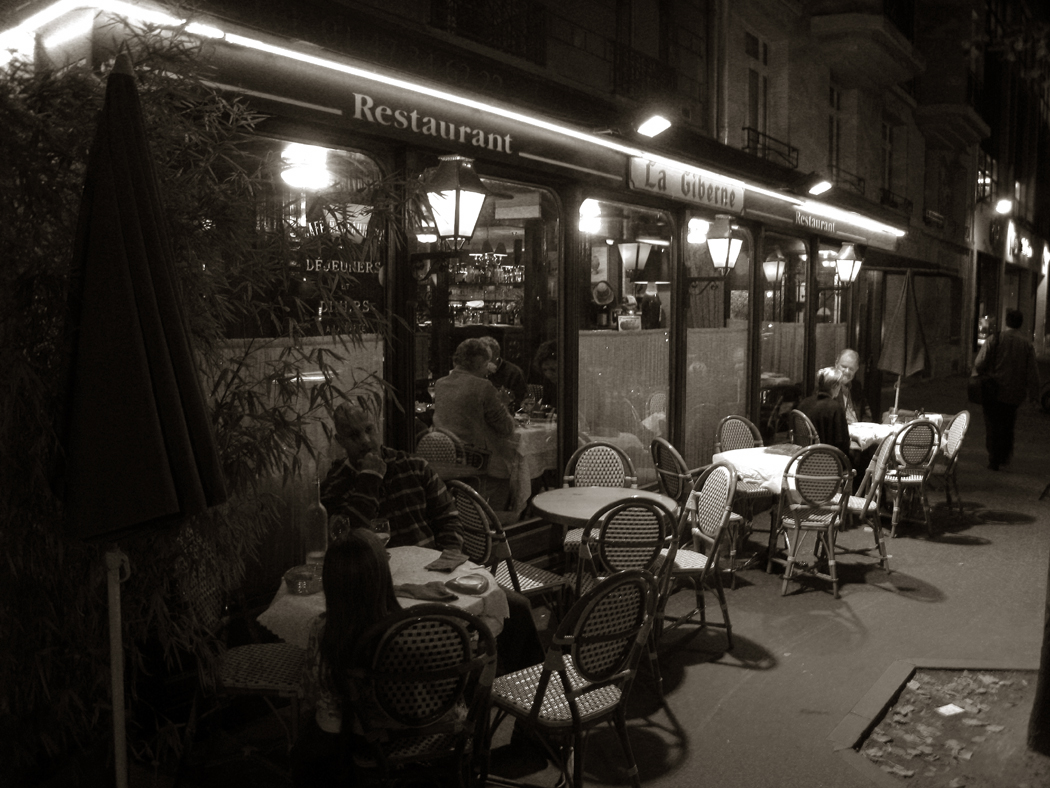
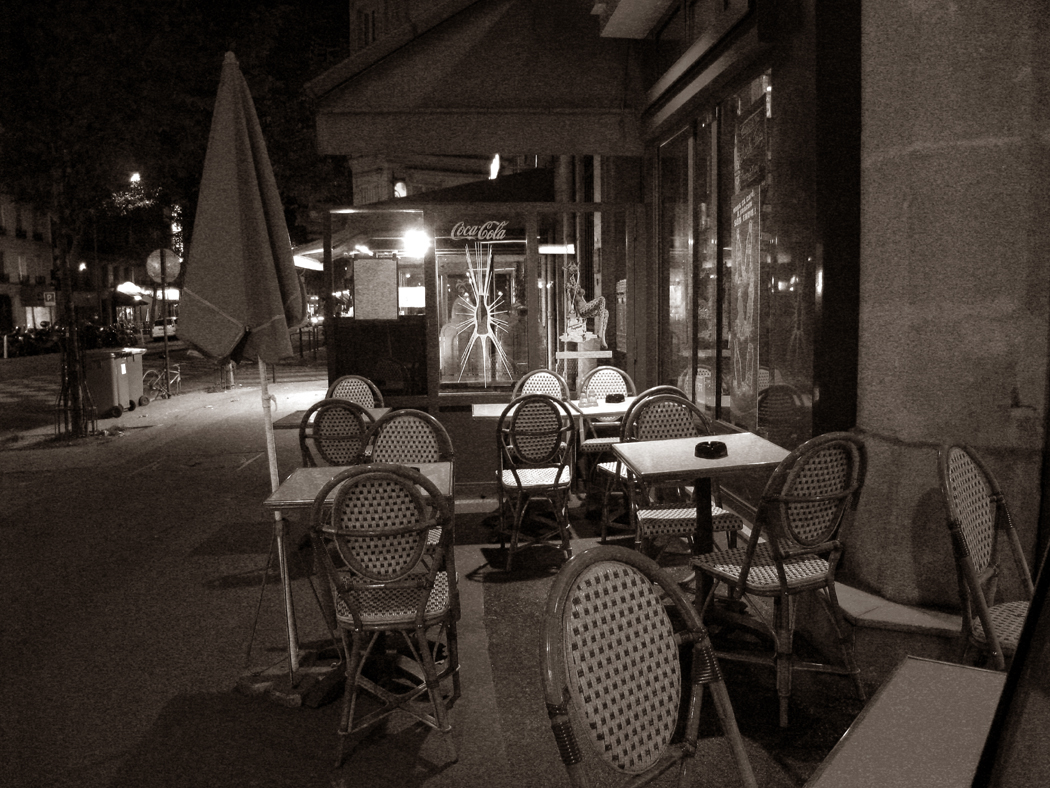
But, Paris at night is oddly empty, and what people you see are clustered around the steamed windows of cafes and bistros, or on the front steps of the opera house as it lets out, or waiting to get into the disco. It is almost as if these were the campfires that draw the bodies turned from the darkness. paris night 07x

You can walk down the streets and peer into the shop windows, with their wares lit and forgotten, as if the Rapture had occurred last week, and left behind the kitchen furnishings, or the bicycles, or books, and behind the glass, there is a humanless simulacrum of the world we know. paris night 08x

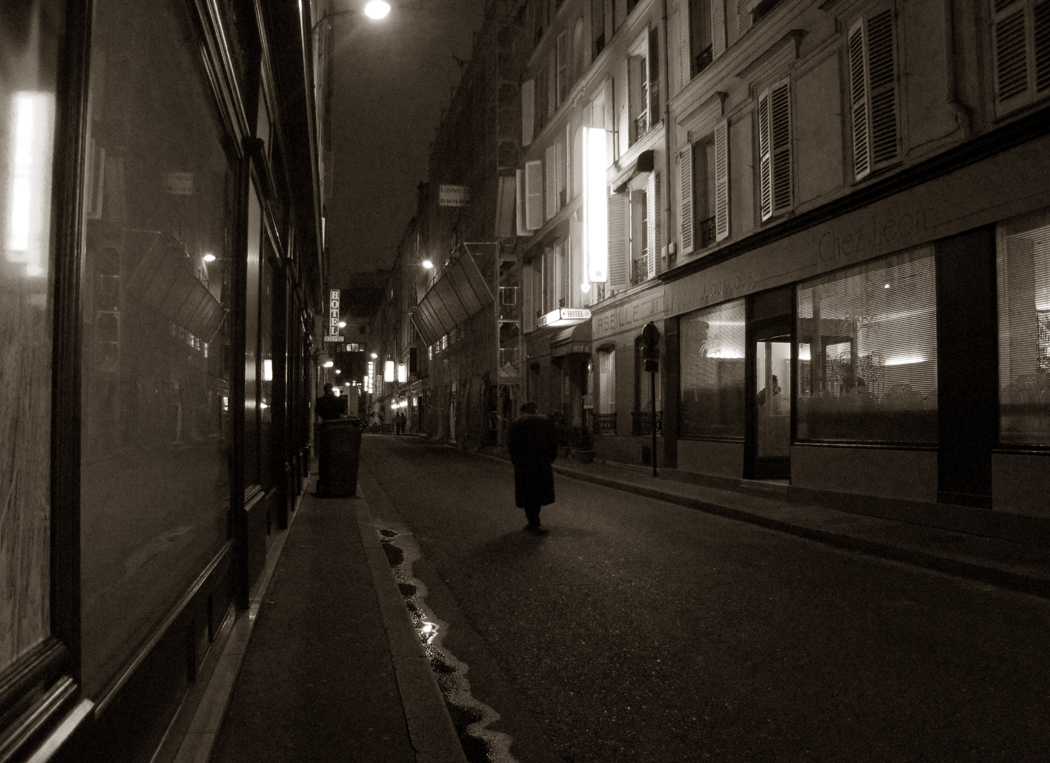
Or you follow some old man in a long coat as he turns the corner and walks down a dark street toward the next streetlight.

Paris is made more magical by the night. In October there is the slight bite to the air, and the rain makes pointillist mirrors of the pavement, redoubling all that dissipating light.paris night 09x

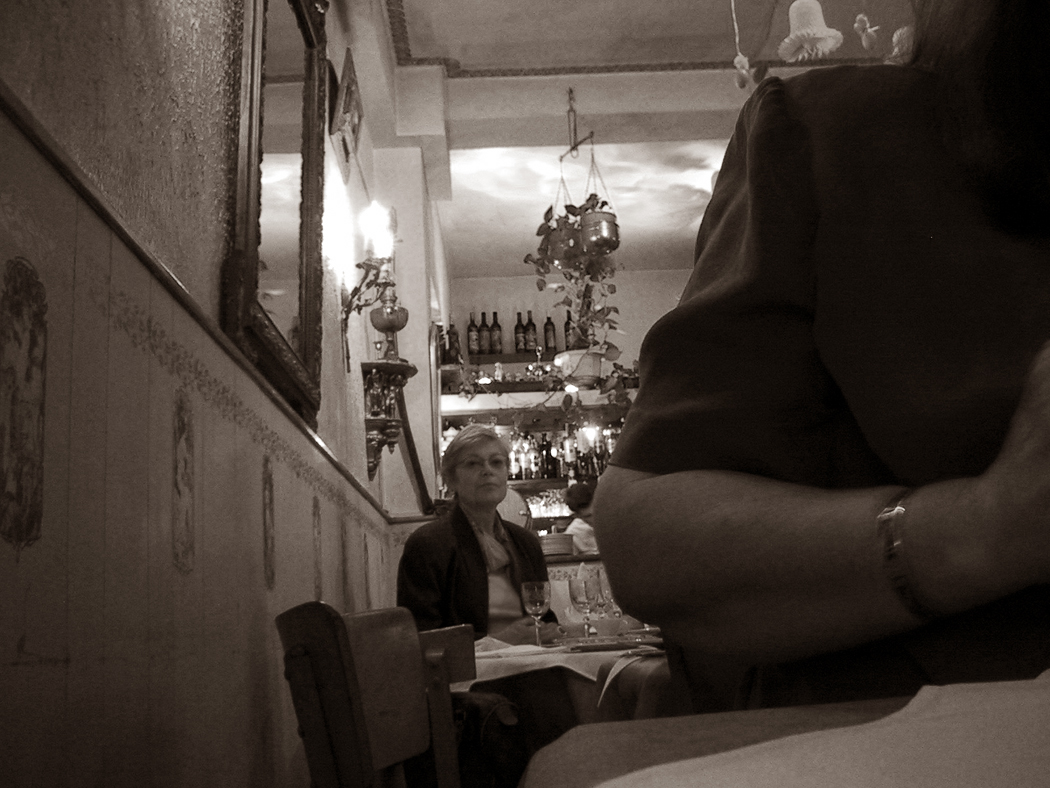
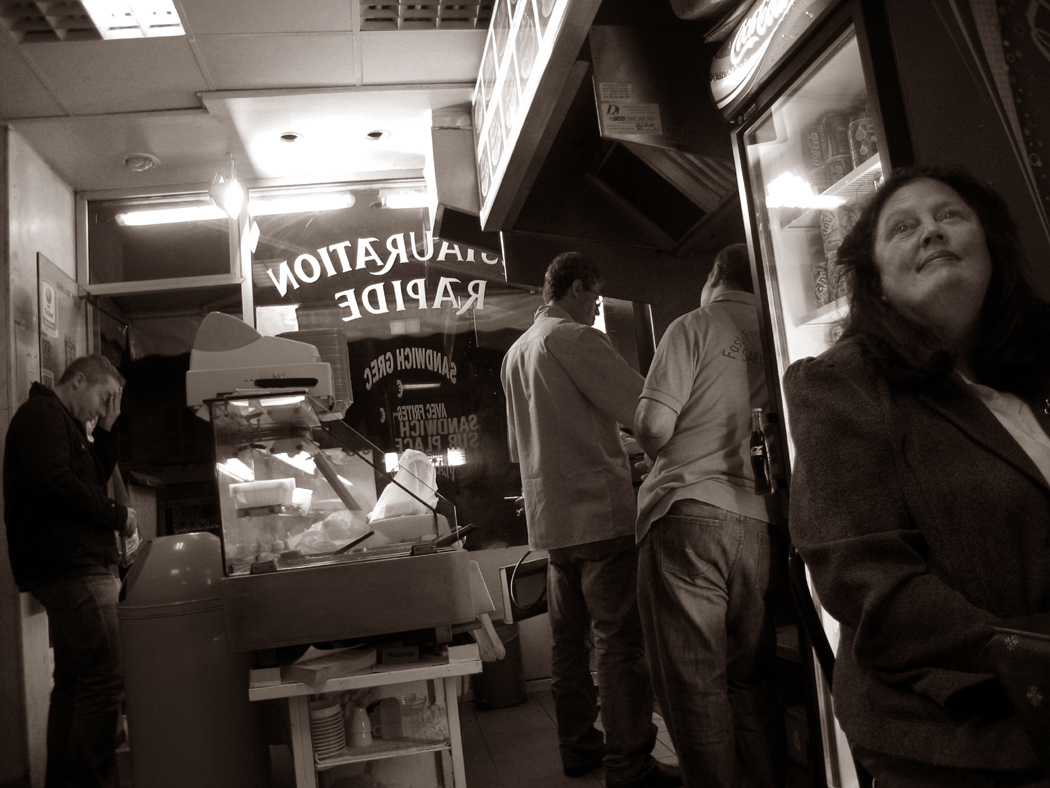
You wander into a Turkish souvlaki restaurant, a cheap storefront halfway down the street, and the man behind the counter is on the phone speaking some language you don’t know — it isn’t French — and he smiles at you as you sit on the molded plastic chair with the rocking table between you and your wife. The wall is bright yellow behind the glass counter, with garish purple writing offering the usual fare, lit with a glare. Gyros, souvlaki, pilaf. It is warm inside, and humid and the food is comforting.paris night 10x

Even the sound is different at night. Like the campfire, the sound is huddled, localized. In this restaurant, the sound is held in by the walls and front window. Outside it is silent once again.paris night 11x

There is cheer in the contact, and when you leave, there is an alive aloneness in the night street. paris night 12x

When I think of Paris, I think of it at night. I hear the voices and see the maitre pulling the Stella Artois from the tap. Most of the seat are empty and those filled are on the way home after a night at the cinema or theater. They may stop at the 8 a Huit for a pack of cigarettes. (Say it like “wee-a-wee,” it is the French equivalent of a 7-Eleven, only tighter packed and with one wall covered with wine bottles. The man sitting by the cash register is Algerian and tired after spending 12 hours in his shop.)paris night 13x

Compared to anything American, Paris is small. You can walk almost anywhere inside the Peripherique, and all the familiar signposts of the city are visible — Montmartre lit by floodlights on the hill, the Eiffel Tower turned into a fireworks display, the Palais Garnier pinned down by its own lights in the darkened city. paris night 14x

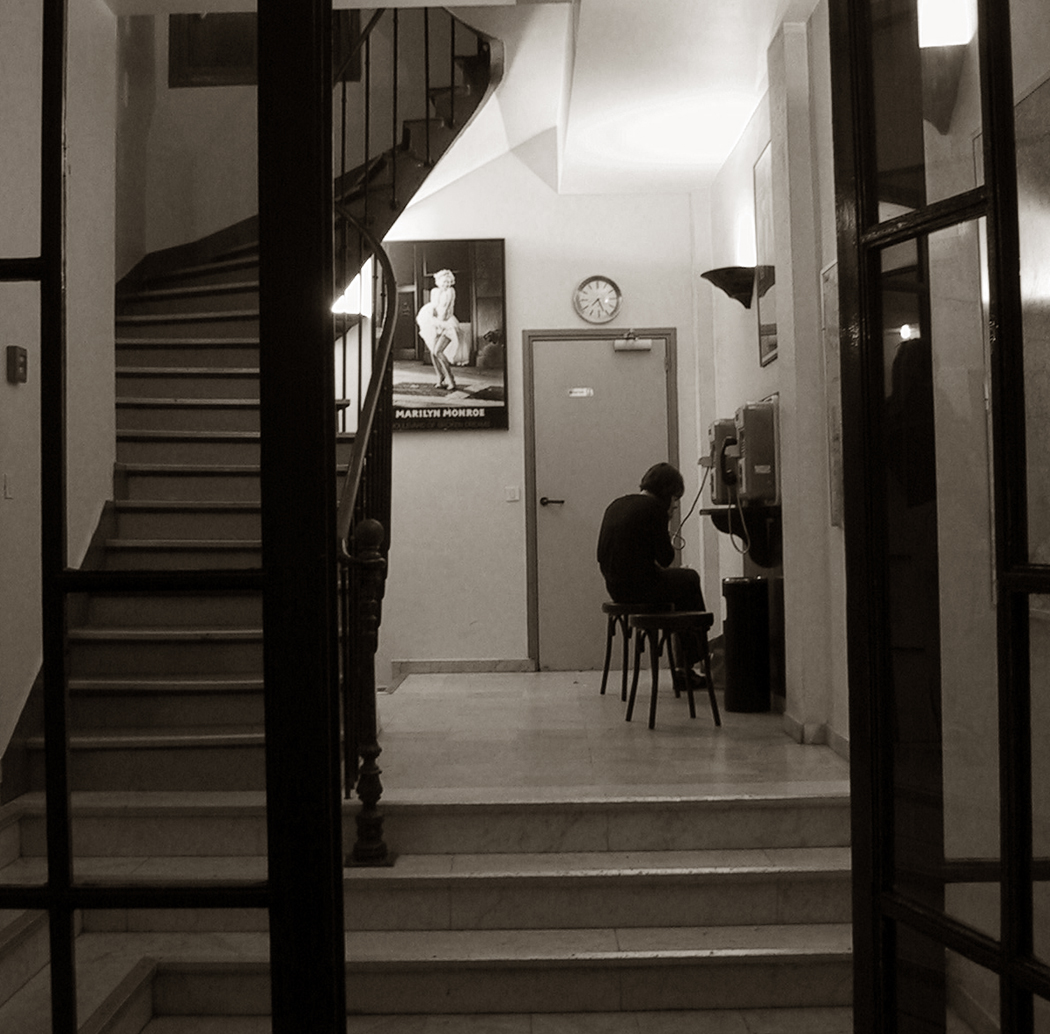
I love to get out into that night, and walk those streets, nodding to the proprietor of the flower shop as he stands by the door, stopping by the patisserie for the last pain au chocolate of the day, and finally passing the concierge of my hotel as he sits behind the desk, reading an Arab newspaper and drinking a small glass of Kirsch, not noticing me as I go through the lobby. Up the elevator, hardly bigger than a phone booth, and flipping on the timed hall light that busts open the darkness on my way to my room. paris night 17x

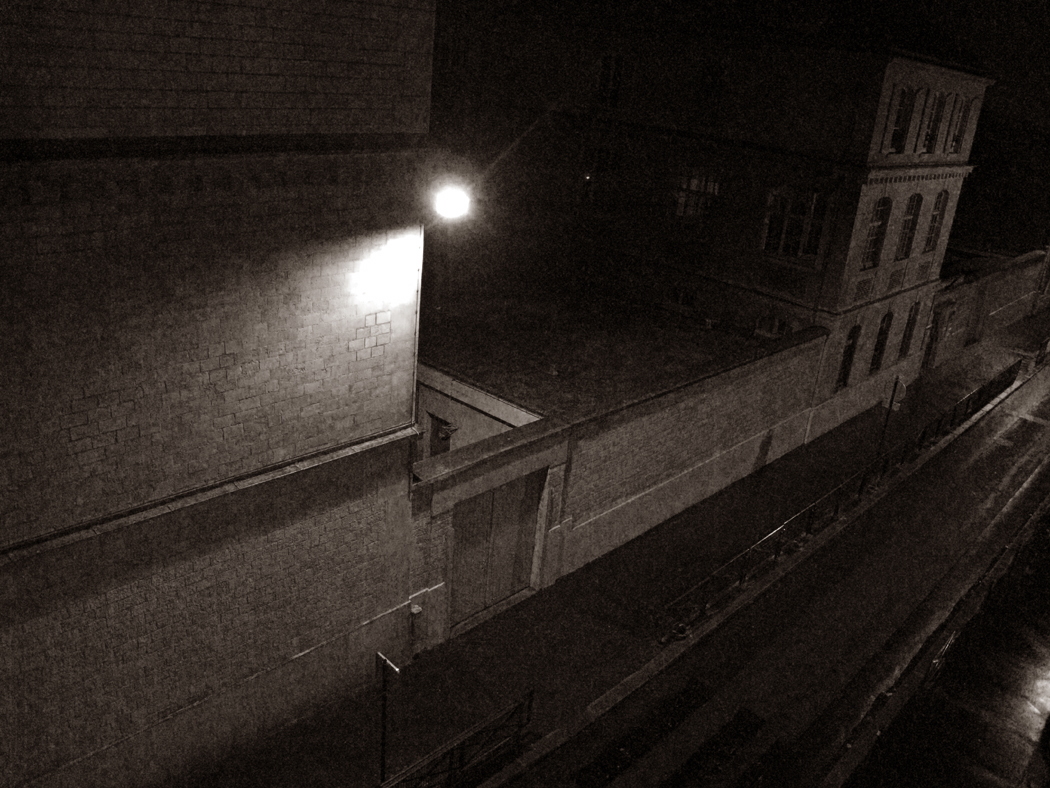
Out the window when I draw back the curtain, the city street is black, with highlights drawn by the lamps and the trees beneath my room shimmer in the light. paris night 18x


paris night 20x
paris night 21x
paris night 22x
paris night 23x
paris night 24x
paris night 25x
paris night 27x
paris night 28x
paris night 29x
paris night 30x
paris night 31x
paris night 32x
paris night 33x
paris night 34x

paris night 35x


paris night 36x


paris night 26x

paris night 37x
paris night 38x


paris night 39x

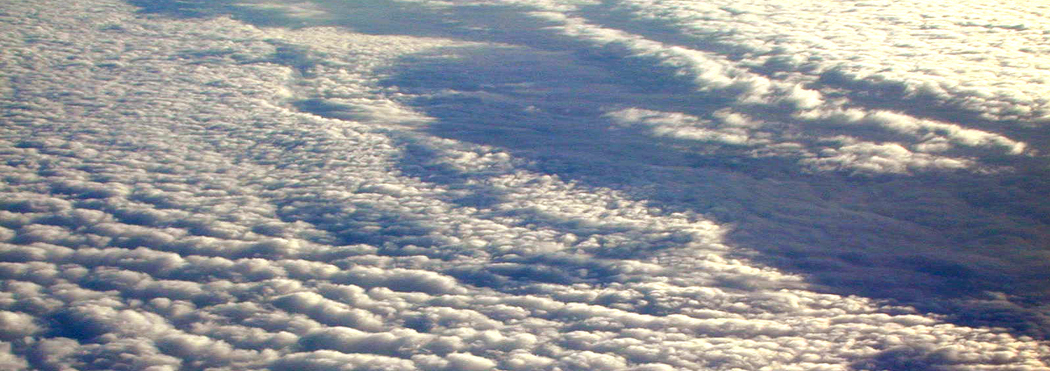
State Line tex-NMTo see the world, you fly around it; to learn about your neighborhood, you walk through it; but to appreciate something about the country you live in, there is nothing better than an automobile.Clouds from plane

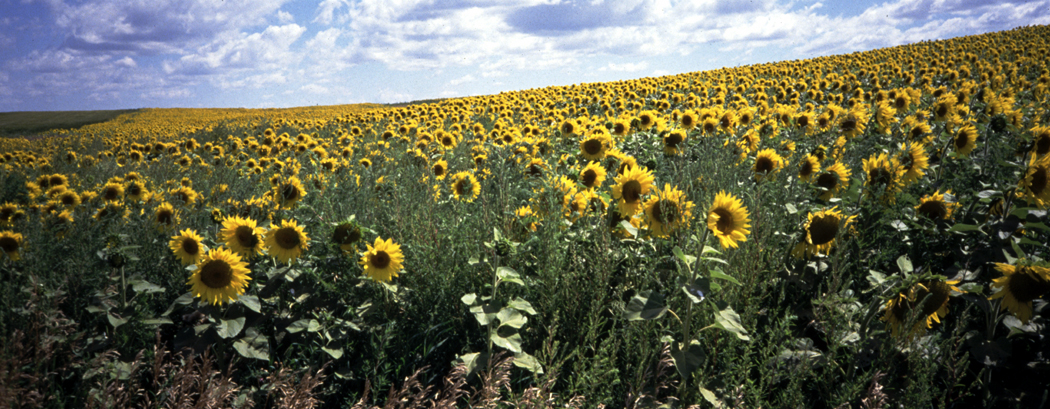
A jet flies too high and fast to take in any detail. The country is too big to slog through on foot. A car is the perfect compromise, letting you pass over a significant portion of the nation each day, but allowing you the leisure to stop and sniff the magnolias in Mississippi, the rank ecstatic yellow sunflowers in North Dakota — and the lingering odor of peanut butter at Graceland.

It’s summer again, and once more, I open up another brand-new Rand McNally road atlas and begin planning a drive around the North American continent.Sunflowers North Dakota

In the past 15 years, I’ve made the round-trip across the United States at least a dozen times. I feel like Magellan when I start once more on the circumvehiculation of America.

I’ve done it alone and with my wife. I’ve done it camping and in motels. I’ve done it in summer and in winter. I’ve done it in as long as two months and as short as two weeks. Last year, I made it from Phoenix to North Carolina over a weekend, but I’m not likely to repeat that butt-numbing feat.

Yet I am planning another road trip this spring.

Friends tell me I am nuts, a masochist torturing myself or a sadist torturing my wife, but I keep setting out.

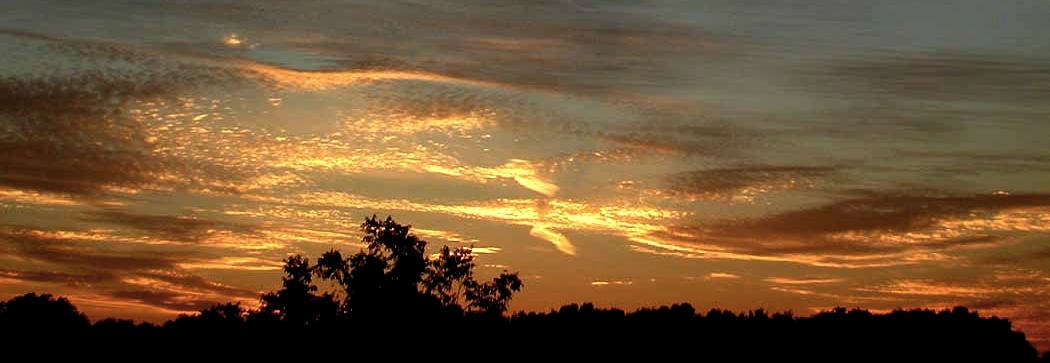
There is always something new to see, or some old friend to revisit: I’ve been to North Carolina’s Outer Banks something like 40 times, and I’m beginning to develop the same relationship with Maine’s Down East. When I have lived in the East, I couldn’t wait to visit New Mexico again.Baldwin Co. Ala. sunset

There are soft-shelled crabs to be eaten in Virginia, salmon in Seattle. There are pirogis in Wisconsin and scrapple in Philadelphia. You can only get pizza in New Jersey, you can only get barbecue in eastern North Carolina, or a real Cuban sandwich in Miami.

Barns in Pennsylvania have stone foundations; in Georgia, they rest lumber right on the ground. In Wisconsin, the barns are red; in North Carolina, it’s the dirt that’s red; the gray, weathered barns aren’t painted at all.

I remember passing through Iowa and being astonished to see a farmfield filled with hogs and each animal had its private home, looking like a Levittown of doghouses.

In southern Arizona, I passed something very similar, but it was for fighting roosters.Bear Mtn Bridge

American regionalism is alive, despite network television and corporate advertising. America hasn’t yet been completely turned into one great food court of McDonald’s and Arby’s.

If you think you have only a choice between Pepsi and Coke, wait till you pop the top of a Double Cola in Reidsville, N.C.

Try one at the Sanitary Cafe, where calf’s brains are the breakfast special.Cadillac Ranch Amarillo Texas

I’ve been to most of those landmark places you’ve heard of: International Falls, Minn.; Walla-Walla, Wash.; Langtry, Texas; Cairo, Ill.; Appomattox, Va.; Intercourse, Pa.; West Point, N.Y.

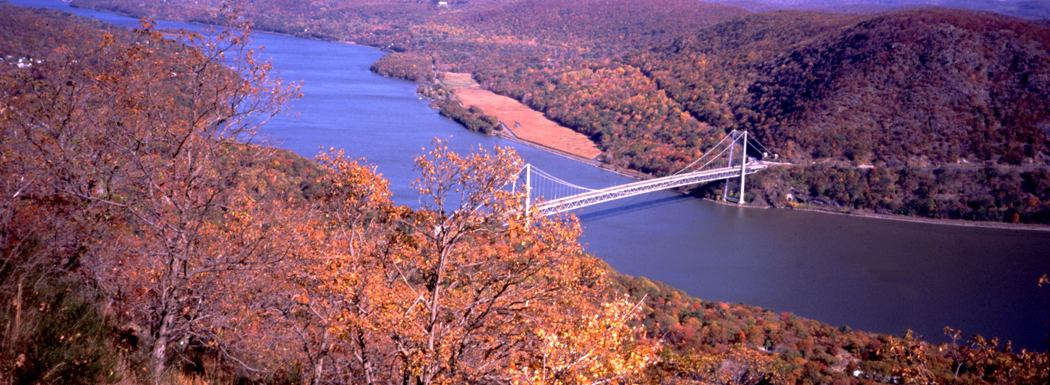
There are some great old iron bridges across the Susquehanna River in Pennsylvania, some great concrete bridges in central New Jersey that speak of the the great age of American highway building in the 1930s.

I’ve been up Pikes Peak in Colorado and up Mt. Washington in New Hampshire.

I’ve been over Lake Ponchartrain in Louisiana and across the floating bridge over the Hood Canal in Puget Sound north of Seattle.Columbia River Gorge Oregon-Washington

It helps if you love to drive, and I know not everyone has that passion. My brother hates driving, for instance. He views an automobile vacation like a two weeks stuck in an elevator. He can’t wait for his floor to arrive so he can get the heck out.

But most elevators don’t have windows.

As I watch the landscape pass across my windshield, like a travelog on a movie screen, I get a sense of the whole elephant, not just his trunk or tail.

Of course, we are talking here about a two-lane blacktop trip, not a bland rush down an interstate highway, where one stretch of concrete pavement can be distinguished from another only by the names on the exit signs.factory, trees, Lowell, Mass

It is a particular kind of travel and has nothing in common with the destination-vacation of the tourism industry. I have no interest in waiting on Disney World lines for thrill rides or Lake Winnibigoshish for a week of trout fishing. You can have your three days lounging on the sands of Bimini or your Love Boat cruise.

Instead, I get to travel an arc of the planet, get to feel in my bones the curvature of the earth and the roughness of its skin. It is through driving across its surface that I get some body-feel for the size of the globe: It is roughly 10 times the distance I drive to get from Phoenix to New York City. New OrleansThat’s not some numbers on some mileage chart, but a distance I know by the seat of my pants.

It’s also a lot smaller than the world seemed before I began driving.

In those years, my wife and I have been to each of the 48 contiguous state at least twice and most more frequently; we have been to all but one of the Canadian provinces; and even skirted into Mexico a little bit.

And each of those trips could have produced a Blue Highways, a book-length summation of what we saw and learned.Frosty dawn Wisconsin

Part 2

Over the past decade and a half, I’ve put enough vacation miles on the cars I’ve owned to equal driving around the world 2 1/2 times. You don’t drive that much without learning a few things.

The first is, of course, to stay off the interstates. You may get there faster, but not by much, and you’ll be bored the whole drowsy way. And in much of the country — and especially in the West — speed limits on smaller highways is not much lower than on the four-lanes, and with less traffic.Golden Gate Bridge SF Calif

Have a rough itinerary and plan how many miles per day you are willing to drive. This is more important for a passenger: Driving will keep you occupied, but your partner may go stir crazy sitting in a seat while going across some of the flatter places in Texas; Don’t overdo it. Marriages hang in the balance.

But never make your itinerary too rigid. You will discover unexpected things along the way; let yourself enjoy them.Gorilla, Am Mus Nat Hist04 copy

We never reserve motel rooms, so we never feel forced to get somewhere by nightfall. There are enough motels along the way. Even national parks, with their crowds, often have last minute cancellations. We’ve pulled into the Grand Canyon and into Yellowstone and gotten a room. But have a contingency plan.

One year, we hit South Dakota the week of the Sturgis Motorcycle Rally and there were no vacancies for 200 miles around. We had to drive into the next state to find a room. But that brings up the next lesson:

Don’t be afraid of mishaps and adventures. They may be uncomfortable during the trip, but they will be the best stories you tell your friends. No matter how bad it gets, it will provide the most vivid memory.Imperial Dunes California

Don’t drive every day; take some time to spend in a single spot. Three days we spent in a cabin on Daicey Pond in Maine’s Baxter State Park were three of the best days we ever spent — hiking, canoeing, watching moose and listening to loons at the base of Mount Katahdin. Not once did we start the car. When we finally left, we were ready for more miles.

There are things you should always have in your car: water, a blanket, Fig Newtons, a road atlas, your address book with phone numbers. Forest Lawn cemetery LAI also carry an entrenching tool — one of those small folding shovels you can buy at army surplus stores — for digging out when I get the car stuck in sand or mud.

Don’t be afraid of dirt roads. There are some amazing rewards at the end of a bit of gravel.

We also always carry a small library of Peterson nature guides, two pairs of binoculars, camera equipment and twice the amount of film I think I can possibly shoot.

And finally, my nomination for the greatest invention of the 20th century: cruise control. It keeps your right foot from cramping up on the gas pedal. I was 45 before I ever tried it and I’ll never be that stupid again.pacific coast highway California

Part 3

What makes for good driving?

I don’t know about others, but for me, optimum driving conditions include:

–Little or no traffic for infinite miles ahead, with no stoplights.

–Interesting and varied weather; I don’t want incessant sunshine any more than I want endless rain. A front moving through gives me a constantly changing cloud show.Greylock Mt from Melville home Mass

–An old road with a history. Route 66 is the most famous, but not the only one. I especially enjoy roads that follow geology: along a mountain range or river, so that the road seems to belong to the earth, rather than denying it.

–Occasional side roads, preferably gravel, for a change of pace.

–Periodic change of landscape, such as when you drive from the Plains to the Rocky Mountains, or from the white sands of the Atlantic Coastal Plain into the hilly interior of the Piedmont.

— A regional food specialty you haven’t tried yet and no chain restaurants.leo carillo st beach california

— A few museums and a few national parks. I gotta have both.

— A used book store in every town.

— A pile of Haydn symphonies on CD to run through the dashboard player.

–A clean windshield. This last must be renewed frequently. Bugs bust on the glass.Mississippi barge

Part 4

The dozen most scenic drives in the 48 states:

1. Beartooth Highway, U.S. 212 from Red Lodge, Mont., to Yellowstone National Park.

2. The Pacific Coast Highway, Calif. 1, from San Luis Obispo to Leggett, Calif..

3. Blue Ridge Parkway, from Waynesboro, Va. to Smoky Mountains National Park, N.C.

4. N.C. 12 from Nags Head to Okracoke, N.C.

5. Ariz. 264 from Ganado to Tuba City, Ariz.

6. U.S. 1 from Miami to Key West, Fla.

7. La. 82 from Perry, La., to Port Arthur, Texas.

8. U.S. 1 from Ellsworth to Calais, Maine.

9. Kancamagus Highway, N.H. 112, from Conway to Lincoln, N.H.

10. Tex. 170 from Presidio, Texas, to Big Bend National Park.

11. Utah 12 from Red Canyon to Torrey, Utah.

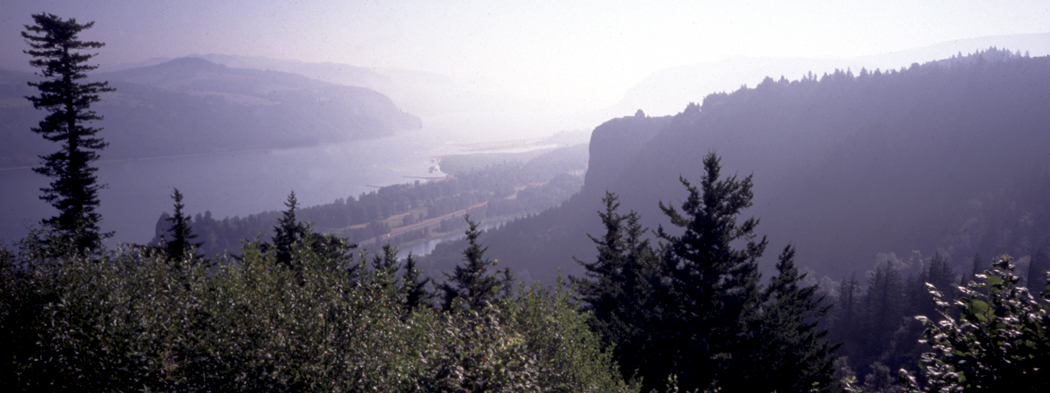
12. Wash. 14 though the Columbia River Gorge from Camas to Plymouth, Wash.Niagara Falls

Part 5

It isn’t just the flashy, famous places that draw the true driver. In fact, commercial destinations, such as Disney World or Las Vegas, are probably best gotten to by airplane and shuttle bus, so you can give over all your time to waiting in lines.

No, in a car, some of the best experiences come by rolling through the kind of places that fall through the cracks of marketing. Places “below the radar,” so to speak, of commercial development.mobile bay point clear

The small towns, endless farms, mountain ranges, Indian reservations — these are the places you have the opportunity to discover things for yourself. In the big theme parks, you get a uniform experience, developed through marketing research. The ride you take is the same ride millions of others take.

But when you talk to the harried but chummy waitress in Doumar’s, an original ’50s style drive-in on Monticello Ave. in Norfolk, Va., you are talking to a real person, a one-on-one experience that is particular and individual. You get a flavor of place, of culture, of people, of individuals.Page Dam Arizona

To say nothing of the flavor of ice cream, in a cone as close to identical as possible to the original waffled cone Abe Doumar is credited with inventing in 1904. They still make them on the same old wheezy portable machine. If your lucky, they’ll be making them while you eat.

Likewise, there is nothing predictable about the starfish you find in an Oregon tidepool, or the bears in the Smoky Mountains. You get to experience the infinite variety of real life.Sierra Nevada Mts California

Of course, I have my favorites.

Among the 48 states, I can never find the end of either California or North Carolina. They are both richly varied.

California seems to have everything from the world-navel of pop culture to the most remote wilderness. It has more than any other single state.Thunder hole Acadia NP Maine

But North Carolina is nearly as varied geographically, and it has B&G fried pies, the most soul-satisfying food in the world. North Carolina also has the Blue Ridge Mountains and the Outer Banks.

And I cannot get enough of the great, grassy, rolling middle of America. When I tell people I love driving through Nebraska, they look at me like I just said I was born on the Hale-Bopp Comet. But just pull into one of those one-street towns with the grain elevator towering over the single railroad track and have lunch in the cafe where the farmers eat.Yellowstone Nat Park Wyoming

Or imagine the wagonloads of immigrants trudging along the Platte River, with Scotts Bluff on the horizon.

The pace is slower, more humane in Nebraska.

Humankind developed on the grasslands of Africa, and Nebraska, especially, seems to call atavistically to me, reawakening my genetic love of savannas.Monument Valley Arizona

It’s easy to love the broad vistas of the West. Southern Utah doesn’t seem to have a square inch that isn’t photogenic, and the Grand Tetons of Wyoming are mountains right out of central casting: They are to other mountains what Cary Grant is to most men.

But I also love the Mid-Atlantic states. Sometimes, a Western forest is too much of the same thing. You can walk for miles in the Cascades of Washington and see only two kinds of trees: Douglas fir and Western redcedar.Zabriskie Point Death Valley Calif

It’s different in Pennsylvania or Tennessee. In the great Appalachian mountain chain of the East, there are more species of plant life than in all of Europe. The variety is blinding: Redbud in spring, Tulip tree in summer. White pine, pin oak, red maple, sweetgum, sycamore, witch hazel, horse chestnut — and hundreds more.

And there is something humanizing about the landscape. This is land which has been lived in for hundreds of years. It is still wild, but it has made peace with the humans who live there and send smoke up their stony winter chimneys.Zion National Park Utah

In the past, I avoided cities the way I avoid Justin Bieber songs. The noise, nuisance, dirt and traffic were everything I was trying to avoid by getting on the road.

But I have come to terms with them, also. After all, it is in Chicago, Philadelphia, New York and Boston that you find the symphony orchestras, natural history museums, ethnic foods and imposing architecture.Mississippi River Hannibal Missouri

The greatest city for driving is Los Angeles. It may be the home of the cultural antichrist, but it is also a great fermenting, creative pot, with lots of roads that take you past inventively loopy buildings: The Tail ’o the Pup hot dog stand, the downtown Coca-Cola bottling plant in the form of an ocean liner.

In LA, you can’t get anywhere without wheels. It is the perfect American city.mobile bay

There are two states that I have to admit I don’t particularly enjoy: New Jersey, probably because I grew up there and don’t feel much urge to go back; and Florida, which is supposed to be a Southern state, but it has been given over to graceless Yankees. But even in Florida, I have to admit I love the Cubano culture of Miami and the Everglades, proving that there is always something of worth.

west texas road
Two things about Texas: It’s big and it’s empty.

For most of us, crossing Texas along the interstate, it is two days of tedium, flatness and gravel, waiting to get from the desert West to the humid East.

But there is another way to eliminate the tedium of the unavoidable crossing of the world’s largest vacant lot: Slow down, take your time and enjoy it.

That is what I decided to do when faced with yet another transcontinental automobile trip. I stayed off the interstate and took the back roads from El Paso to Beaumont, passing great views, interesting topography, peculiar history and even more peculiar people.

Mile 0 is the boundary between New Mexico and Texas, entering the state at Anthony. I drove through in the early morning, with the sun just sitting on the horizon, the Franklin Mountains to the east looking the color and texture of gray suede. The dew had raised the smell of the creosote bush.trans mountain expressway franklin mts

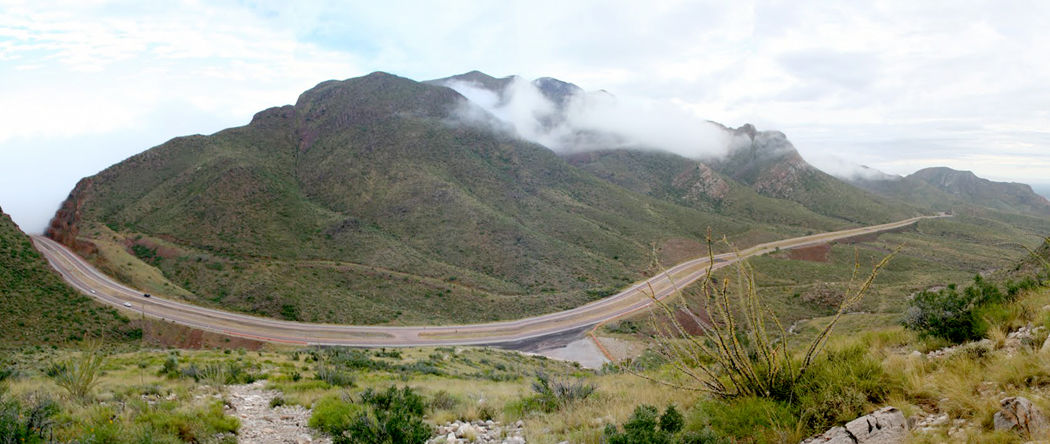
The first real chance to get off I-10 comes with the Trans-Mountain Expressway, that lifts you up and over the mountains and into Fort Bliss, just north of El Paso. As you descend, you pass the U.S. Border Patrol Museum and the streets of the military Bomarc missilereservation named for out of date missiles: Minuteman and Bomarc.

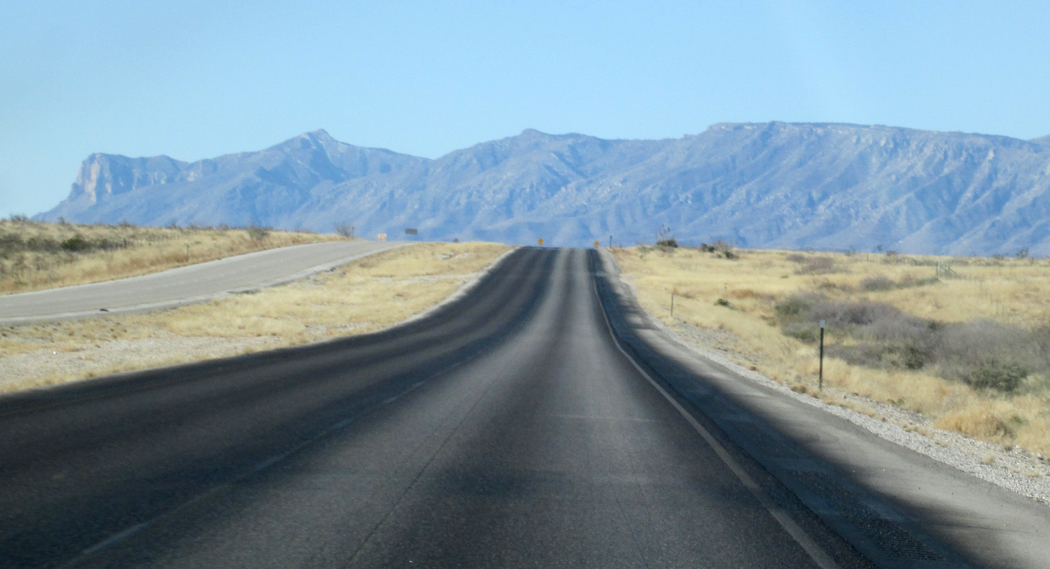
The next goal is the Hueco Mountains along U.S. 62. As you get to the top, at mile 56, you can spot the Guadalupe Mountains, highest point in the state, some 75 miles in the future.

The road passes along the dry regions of western Texas, with few people and even fewer gas stations. The first is at Cornudas, a one-time Butterfield State stop, now a dilapidated gas station and cafe, with souvenirs.cornudas texas

The sign outside reads, “Welcome to beautiful downtown Cornudas, pop. 5 or 6.”

Inside, the cafe is covered from head to foot in collectibles: old hubcaps, old postcards, things written on old napkins, old license plates, old photos and newspaper clippings. The ceiling is hung with things, including souvenir ballcaps, each individually wrapped in clear plastic.

The tables, too, are loaded down with writings, some printed, some hand-written, then covered with plastic. The table legs are wrapped in blue-jeans legs and bottomed with cowboy boots.

And on every table, along with menu and salt and pepper shakers, are copies of Lyndon LaRoushe’s wack-o New Federalist newsletters. This is a cafe with a political point of view.

And one table, near the cash register, sit two or three aging, potbellied “cowboys,” dressed in overalls and scratchy with whiskers. They look up at me as I enter, as if I were a spy come to undo their righteous cabal.

Nevertheless, I have a wonderful breakfast, which I recommend to all, a good Spanish omelet, toast and sliced fried potatoes.

When I finish, I ask if I can get gas.

“Sorry, we’re all out,” the waitress tells me. “But you can get some up about 15 miles at Route 1111.”

Paying the bill, I say to the nice woman behind the counter, “You sure are a far piece from civilization,” and she said with a smile that was only slightly ominous, “That just the way we want to keep it.”salt flat texas

Unfortunately, the gas station at the crossroads is closed. But another 15 miles down the way, at Salt Flat, there is another. Actually, it is a pile of corrugated tin and stucco buildings surrounded with cyclone fence. I pull in, amble up to the office and find it is locked, despite the “Open” sign in the window.

A dog barks, then another, then a few more. Behind the fence they are howling. A house sits across the dirt lot from the pump. Its door is closed. No one stirs. The sun is beating down. I honk my horn. I ring the doorbell. Nothing. Silence, except for the dry, angry barking of junkyard dogs.

West Texas is a very empty place. The air is desiccated, the ground is sandy, the mountains are heated stones, even in October.

It is not surprising that this group of shanties in Salt Flat seems like a set for one of those cheap made-for-TV stalker films. The area was also the site of the 1877 El Paso Salt Wars, when private industry bought the land and began charging for the salt that had previously been collected free by Indians and Mexicans. Many lives were lost.road to guadalupe mts

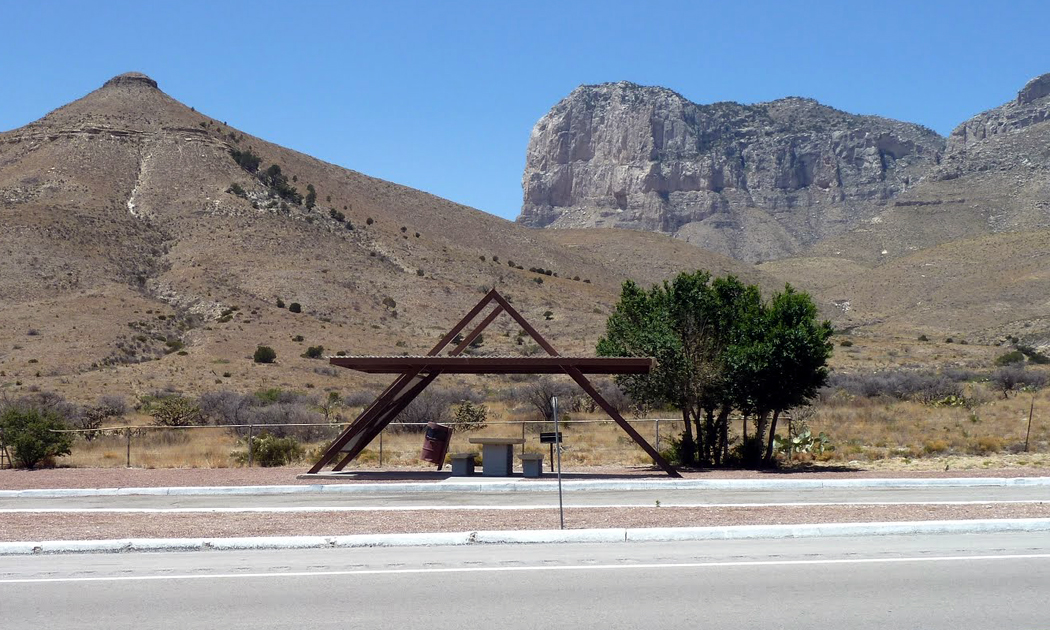
The road curls just south of El Capitan, the prominent peak at the head of the Guadalupe Mountains and one of Texas’ national parks.

To the east at mile 105, the Delaware Mountains are lined with some 65 electricity-generating windmills.

el capitan guadalupe mountains

But it is the Guadalupes that dominate. In their wrinkled canyons are trees and streams. There is birdlife and butterflies. At the visitor center little yellow butterflies wink in the butterfly weed.

“We had fall color here last week,” the ranger tells me. “But we had a 90-mile-an-hour wind come through and we don’t have any fall color anymore.”

They also don’t have any gas. The nearest is in the next state, 35 miles to the north at White City, N.M., near Carlsbad Caverns.

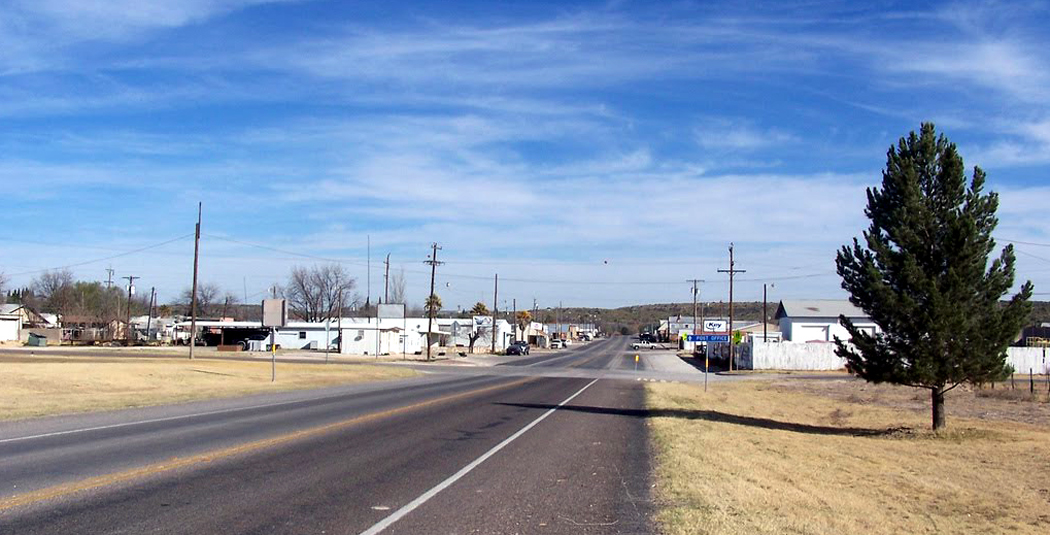
But I take the turn southeast to Orla. At mile 145, I enter the Central Time Zone, but time is certainly meaningless here among the cows and chaparral.Orla Texas

At the Orla Grocery, mile 185, the sign says, “It’s a long way to anywhere from Orla Grocery.”

The town is made up of a few sagging shacks, some tilted all the way over. There is also a yard filled with oil-drilling machinery, marking a change in geography. From here to the Hill Country, there is oil.

Reeves County, which includes both Orla and Pecos, is a flat, arid grassy land. In Pecos, the historical marker tells about the Pecos cantaloupe:

“Nationally famed melon, originated in this city. Residents from 1880s grew melons in gardens, noting sun and soil imparted a distinctive flavor.”

It goes on to say, “Famed lecturer Helen Keller, Presidents Eisenhower and Johnson, and many other distinguished persons have ordered and appreciated Pecos cantaloupes.”iraan roadcut

But it is oil that is most apparent, especially as you enter the rocky hill country near Iraan.

The town is named for Ira G. Yates and his wife, Ann. It was under his ranch that the Marathon Oil Company — then Ohio Oil — discovered the biggest oil field in Texas and one of the biggest in the world.iraan 1Previously, oil experts had agreed, “You won’t find oil west of the Pecos River.” But they did. Within a year of the first well, struck in 1926, the Yates field had 100 wells dug. It now has more than 600.Alley Oop

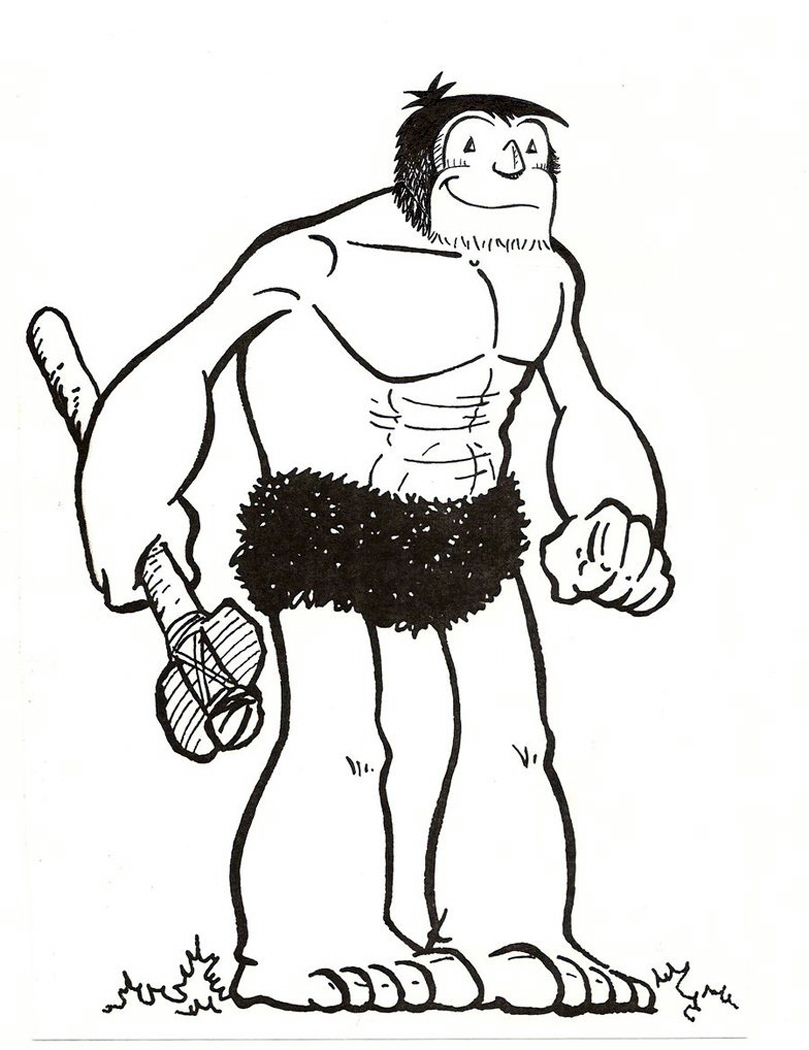
Iraan is also the birthplace of the comic strip, “Alley Oop.” It was created by V.T. Hamlin while he lived here. Giant statues at the town playground immortalize Oop, his girl friend Ooola and his dinosaur, a 65-foot-long Dinny.

In the middle of town, the school sports a sign that says, “Iraan Braves, 1996 Double-A State Football Champs. 16-0.”

It is a long draw — some 90 miles — to the next town, Eldorado. The road, U.S. 190, passes some of the most beautiful scenery in Texas, with mesas and buttes, trees and scrub.

But at the halfway point through the state, at Brady and mile 507, is the geographical center of Texas. Or so the town claims.Brady texas sign

As the crow flies, it is 437 miles to the state’s westernmost point, 341miles from the most easterly point, 401 miles from the most southerly point and 412 miles from the most northerly.

“Enclosed within the 4,137-mile perimeter of the state are 267,339 square miles or 7.4 percent of the nation’s total area,” says the historical marker. “Fifteen of the 50 states could be readily accommodated within Texas’ borders — with more than 1,000 square miles left over.”Brady texas

It isn’t only the land that changes as I head into the eastern half of the state. The humidity rises, so that when I wake up the next morning after a night in the motel at Brady, the streets are so wet with dew, it looks as if it had rained in the night.

The heavy dew also brings out the smell of the grass and the dirt.

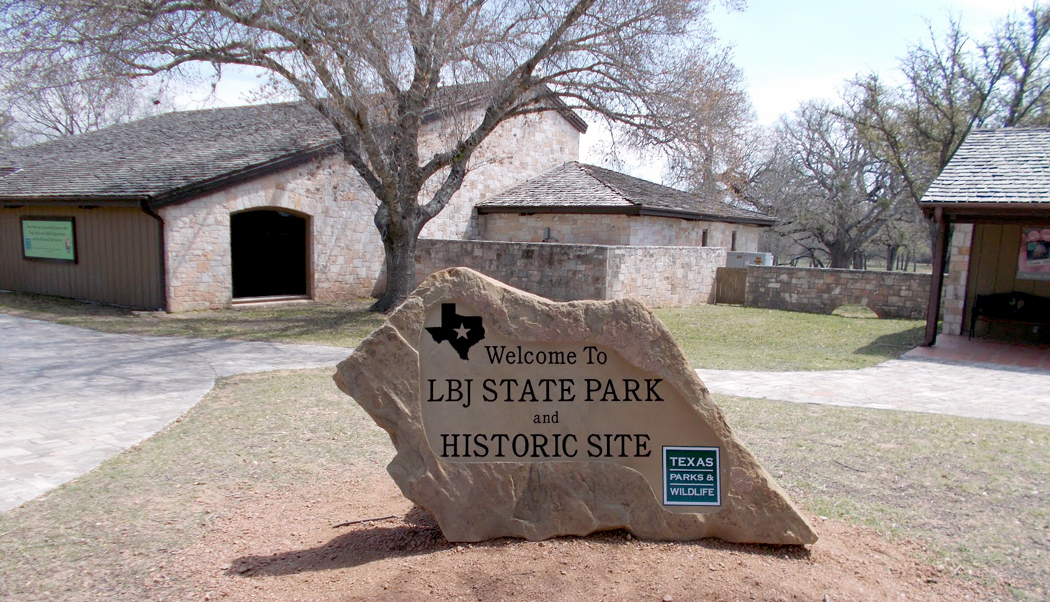
South of Brady, U.S. 87 enters the Texas Hill Country, an bubble of limestone that rises in the center of the state and continues north from the Balcones Escarpment. It is an oasis in the monotony of Texas landscape, with streams, forests, lakes and the former home of former President Lyndon Johnson.lbj state park entry sign

It comes as a shock to me how incredibly beautiful the LBJ Ranch actually is. And it is also a shock to hear Johnson, in old TV footage shown at the visitor center, talk about his love of the land.

I grew up at a time when Johnson was demonized for his policy on the Vietnam War. I never thought of him as anything but a power-mad monomaniac. But the LBJ Ranch, mile 592, humanizes him considerably.lbj ranch house 2

On the TV footage, he talks about watching deer jump the fence on the farm, about watching a yearling fawn, about raising the cattle and sheep. He speaks with genuine affection and without any of the boilerplate rhetoric that was his signature.

And I realized how Southern he must have been, how much the land meant to him, despite anything he did in the “halls of power.”lbj ranch pedernales river

I walk around the property on the edges of the Pedernales River, along Williams Creek that empties into the river.

There is the tannic smell of autumn leaves on the ground; there is hackberry and post oak and Virginia creeper along the fenceposts.

The creek is filled with bluegill sunfish, Texas softshell turtle, minnows, yellow mudturtles, bullfrogs, Rocky Mountain toads, crayfish, Rio Grande leopard frogs and the blotched water snake.

It is nature full of its variety. The river itself has kingfishers, mallards, Texas sliders, coots, largemouth bass, red sunfish and catfish.Pedernales River

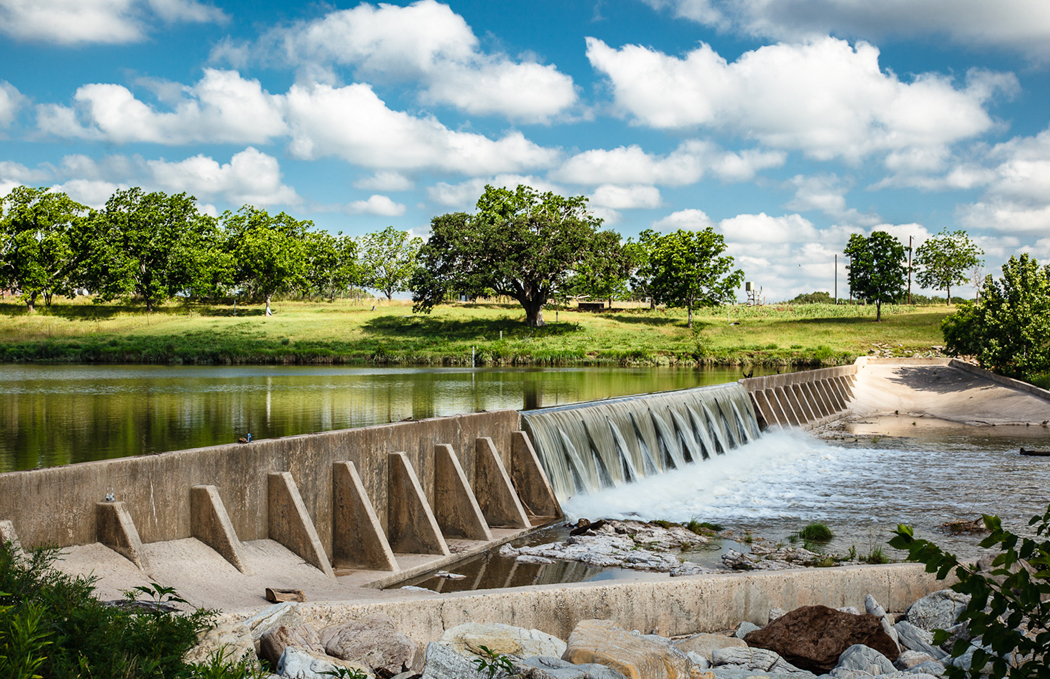
As I stand on the bank of the river, under a pecan tree, hundreds of years old, a black anhinga flies up over the small dam that creates a cascade in the river, and four white geese try to cross the dam from the opposite shore. No, it’s five.

A nature trail winds around a fenced in deer enclosure and one of them comes up to nibble some grass I hold out for it.lbj ranch farmstead1

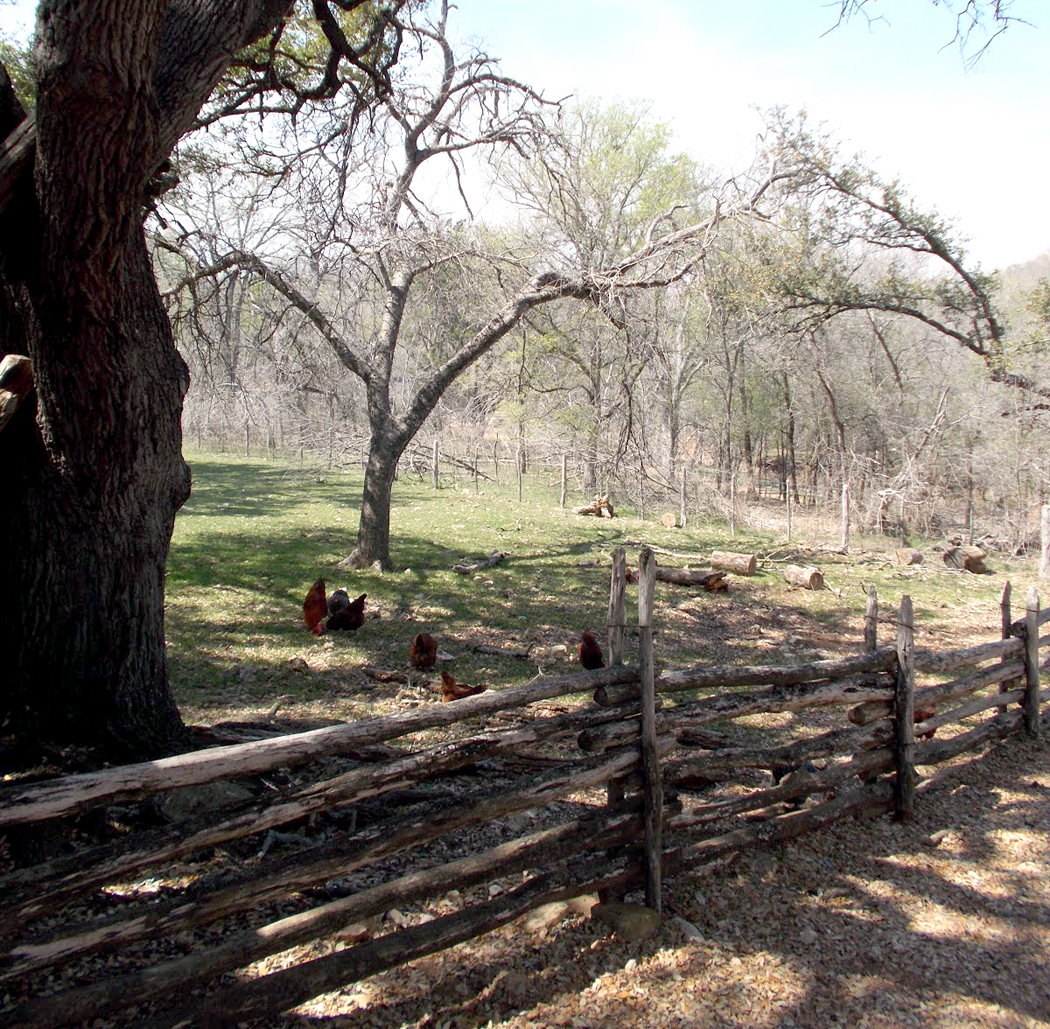
The trail continues into a small demonstration farm, typical of those in the area when Johnson was young. Five sheep and two little lambs are resting and sleeping. One of the lambs is curled up in a ball next to the woodpile. lbj ranch farmstead2Uncounted chickens run around the yard under the shade of post oaks and sumac and one big old live oak.

A few feet on, I spot a newborn lamb, just a few months old, his ears sticking straight out, catching the sun from behind. He is looking right at me.

Over my head, I can’t quite see him in the sunlight, but I hear him tapping: It is a flicker.

And over the very top, there is a hawk flying, soaring over the top of the farm. The little lamb shakes his head and flaps his ears.

The ranch is a paradise, an Eden, and I want to stay here.

From the ranch to the Louisiana boundary, Texas becomes increasingly Southern rather than Western. The landscape becomes more forested, the towns closer together and the traffic thicker. And the humidity becomes intense.dripping springs texas

I pass Dripping Springs at mile 629, Ledbetter at mile 728. At mile 766, I cross the Brazos River. It is still full from last summer’s heavy rains.

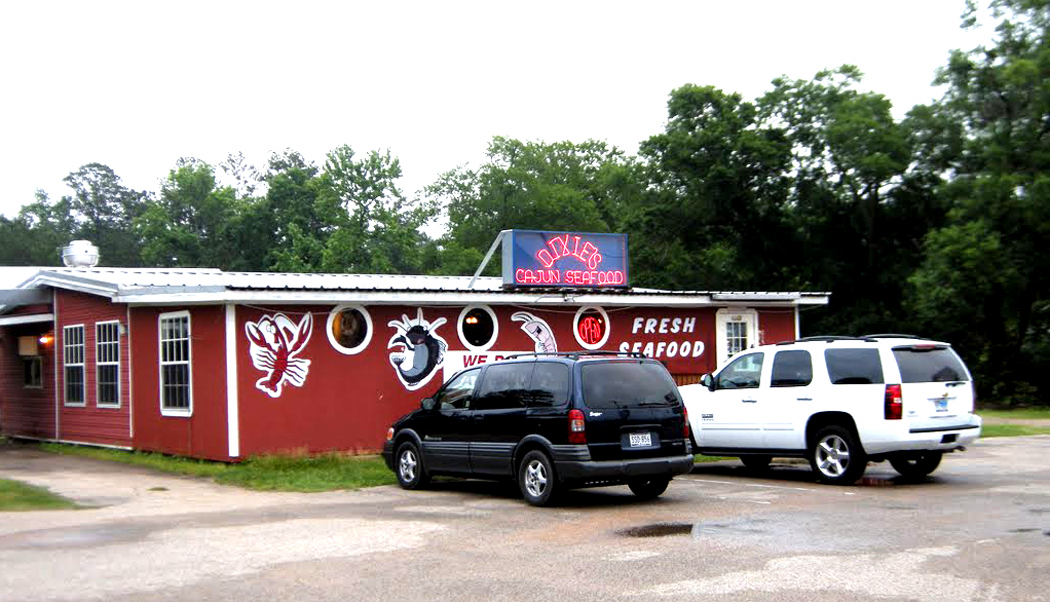
At mile 803, I see my first mention of the word “Cajun,” and I know I am near the end of the state.dixie's cajun seafood

At mile 823, I enter Cut and Shoot, a town more memorable in name than substance. It is just another junked up Southern town, filled with pickup trucks and Carol Sue’s Country Kitchen: “Dine in, Carry out, We deliver, Barbecue and fixin’s.”

After the dryness of western Texas, it is frightening to see the Trinity River in flood, swollen way over the woods on each side of its banks. The adjoining farm fields are lakes, with a few old cornstalks sticking up through the surface. The river water is still moving with a swiftness that looks as if it could wash away a town.20120106-OC-AMW-0698

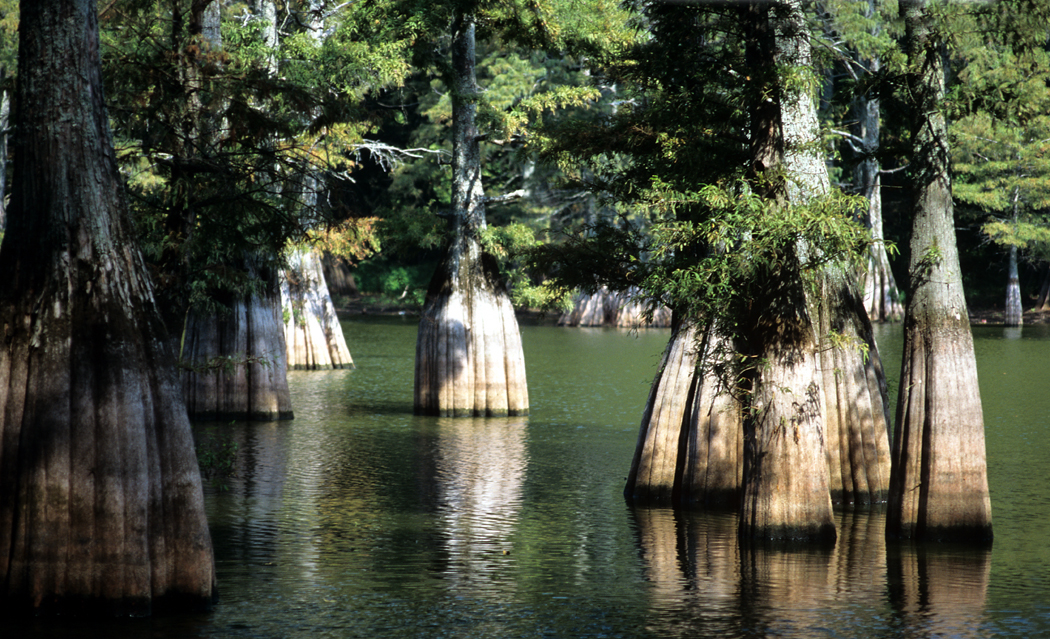
And north of Sour Lake, the many sections of Big Thicket National Preserve looks as if it might as well be Louisiana, with its cypress sloughs and dense forests of beech, magnolia and loblolly pine.sabine river 2

I join I-10 once again in Beaumont, mile 905, and it will be interstate from here on. And I cross the Sabine River into Louisiana at mile 933. The interstate mile marker reads 881, which means I have only added 52 miles by taking the back roads.

But I have seen, heard, smelled and tasted so much more.

house
The Seine  river loops northwest out of Paris into the rich, green French countryside of Normandy. The river is contained by low parallel ridges of hills on either side that form a kind of geologic sluice guiding the flow of the river toward Le Havre  and the ocean.

Some 50  miles from Paris, near the provincial town of Vernon,  the River Epte joins the Seine, although to call the Epte a river is to exaggerate.

It is hardly more than a creek.

Nothing would make one notice this tiny riverine junction, if it were not that Claude Monet chose this area to live, to paint, and to create one of the most celebrated gardens in the world.path

The great Impressionist painter moved to the hamlet of Giverny (Zhee-vair-nee) in 1883, and from then until his death in 1926,  he cultivated the kind of garden that made his home a modern Eden. Even now it is as much pilgrimage destination as tourist attraction.giverny village street

“Once settled, I hope to produce masterpieces,” Monet wrote his dealer when he first came to Giverny, “because I like the countryside very much.”

Monet settled on a two-acre parcel of land that sloped from the center of the village down toward the small branch of the Epte that runs parallel to the road. There he set up house with his second wife, Alice Hoschedé, and their combined brood. It was a bustling bourgeois home, full of bustles and lace, children and cakes.flower 1

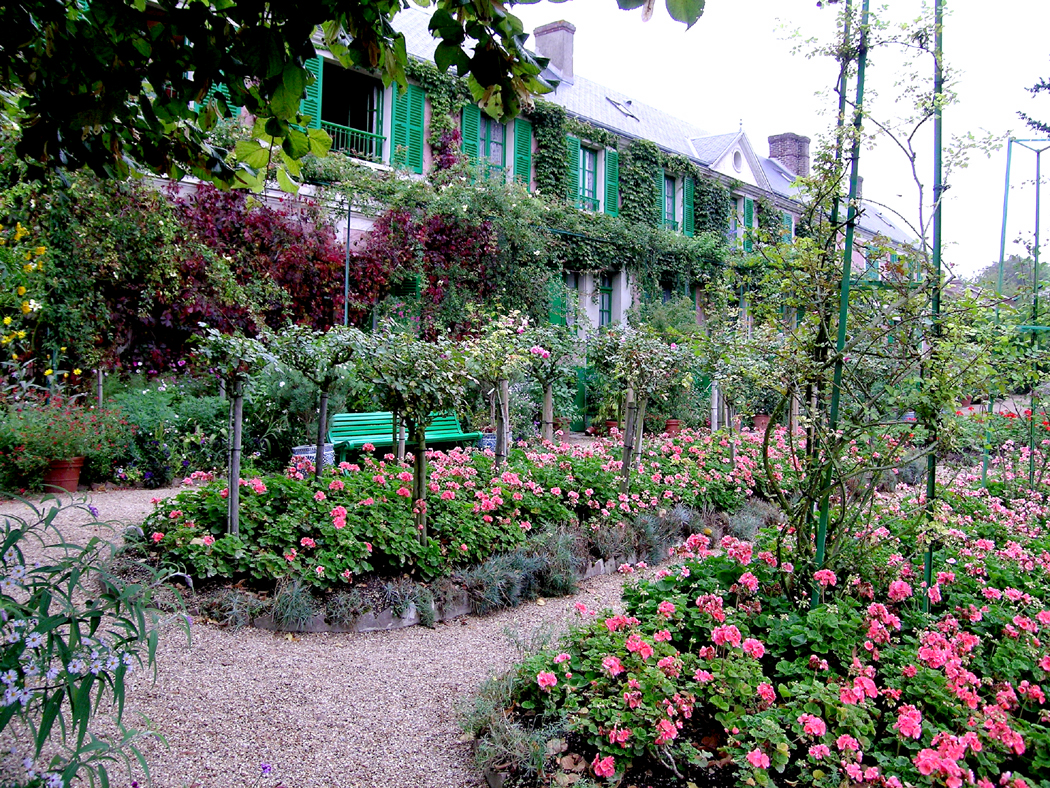
The house still exists: an odd old farmhouse, it is only one room wide and long as a barn, made of pink stucco, with forest green shutters and doors.

Each room is painted in its special color – the kitchen is blue and the dining room is brilliant yellow. Monet had little use for beige.clos normande from window

Outside is the “clos Normand,”  or the Norman enclosure, where Monet immediately began planting his garden, “so that there would be flowers to paint on rainy days,” he wrote.

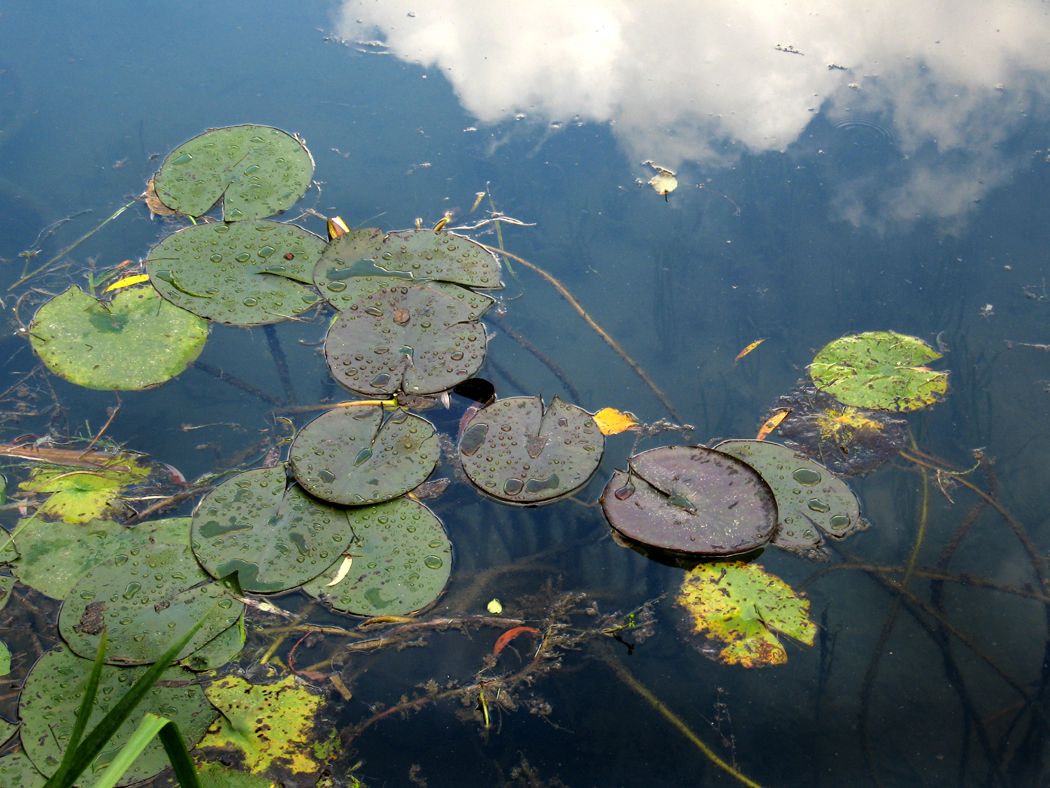
But the garden took over. By the time he set to work on the great waterlily paintings that he gave to the nation as a gift, he had six gardeners on his staff.flower 2

Thousands each year make the pilgrimage to Giverny. They want to see where Monet worked; they want to see the waterlilies that he made into icons of art. But the gardens still retain their independence: There are those who visit not because of the painter, but because of the flowers themselves.

Monet’s property has become one of the greatest gardens in the world.

In the summer, the place is crowded, but in the spring and fall, the tourists fade away and you can have the grounds to yourself, or nearly so.flowers against wall

One would think that in the middle of October, when the rains are already cold on your skin, the flowers would have died away, but it is not true.

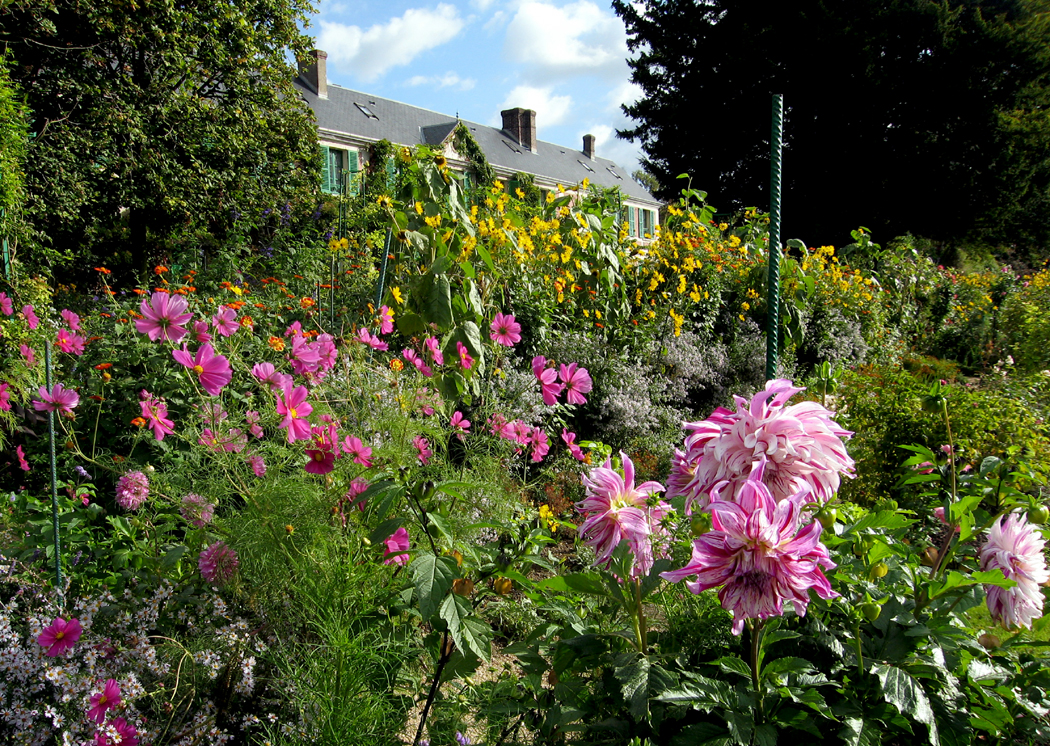
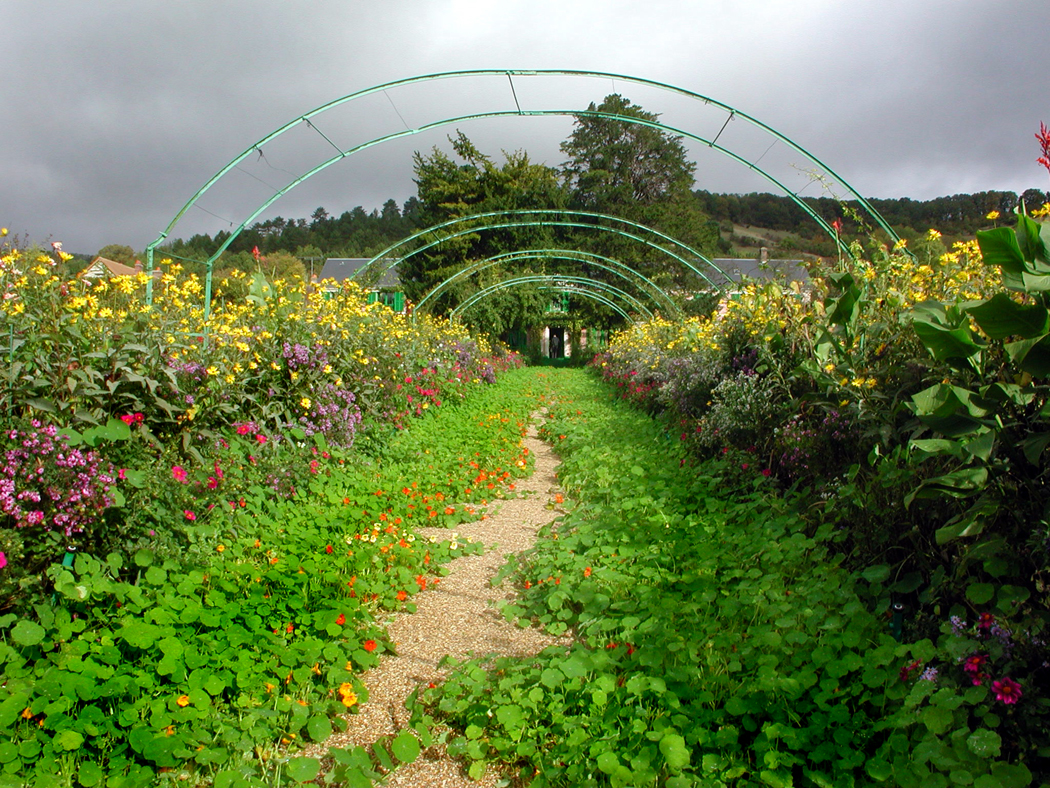
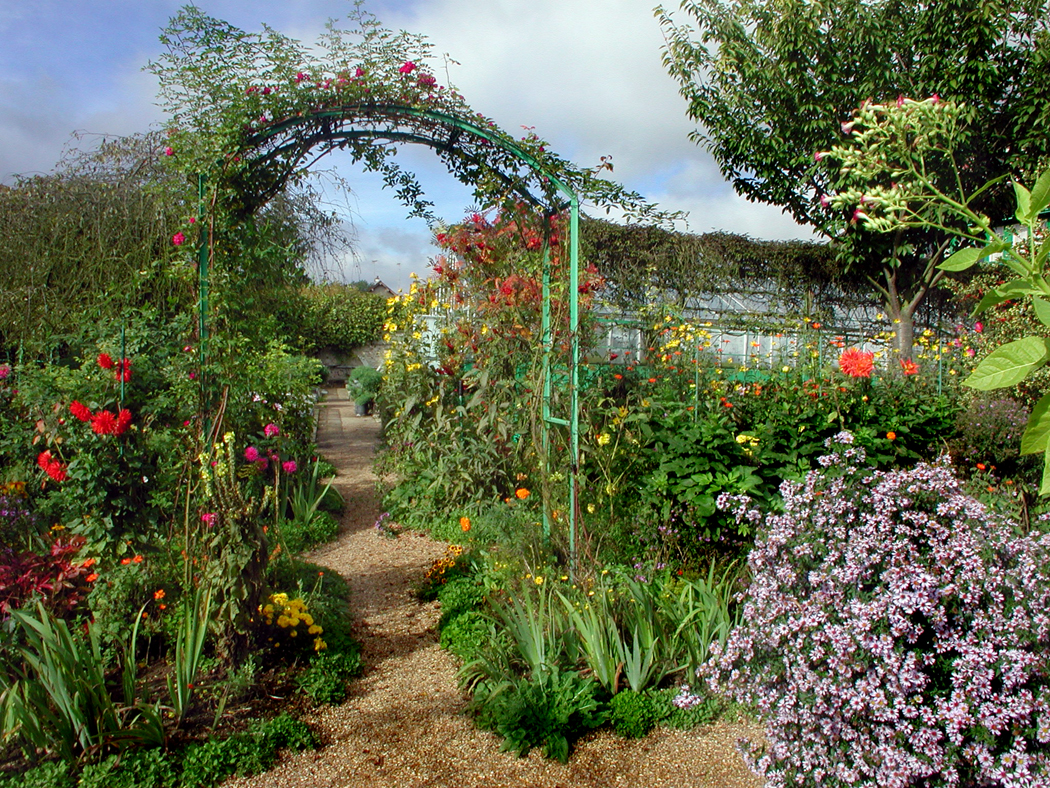
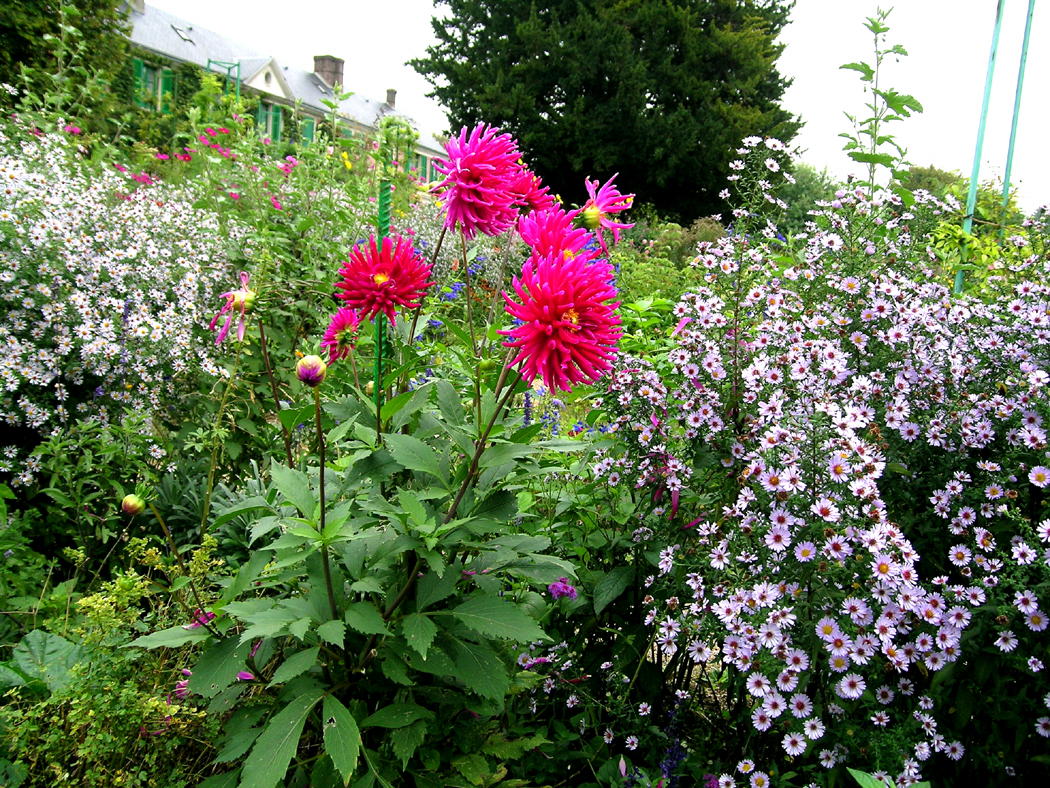
Even then, the clos Normand is riot with the yellows of sunflowers, the reds of dahlias, the blues of asters and the pinks of cosmos. The garden paths are choked with flowers.clos normande

It was an effect that Monet sought: that weedy nature should take over the place, luxuriant in growth.

The formal French garden, as you find it in Versailles or the Tuileries, is orderly and tamed. Square and round plots, with a grid of garden path between. Every flower marches in rank and file, as if their gardeners were drill sergeants.clutter

In distinction, the English garden gives us a different vision of nature.

There, the meandering forest paths take us past informally planted shrubbery and flower beds, to provide the illusion that we are not in a garden at all, but rather walking through some especially lush bit of wildness.flower 3

Monet’s garden is a hybrid of these: The paths are rectilinear and formal, but the plants have taken over, spreading out over the footways, up into the air and intertwined with each other. There is a formal layout, but a rich chaos of growth defeating the formality. It creates the illusion of a patch of garden left untended so the flowers grow rampant.

The effect is still overpowering. Instead of looking down at patches of roses or dahlia, they instead grow up to nose-height, so they force their aroma into your nostrils. They rise to eye level as you walk the paths.

They hang overhead and dangle down at you.greenhouse

One cannot help but recall the stanza by Andrew Marvell:

“What wondrous life is this I lead!

Ripe apples drop about my head;

The luscious clusters of the vine

Upon my mouth do crush their wine;

The nectarine and curious peach

Into my hands themselves do reach;

Stumbling on melons as I pass,

Insnared  with flowers, I fall on grass.”flower 4

The present gardens are a miracle. After Monet’s death, his family dispersed and eventually left the old homestead to ruin. The gardens fell untended, the house sprung leaks.

As the great art critic John Rewald  wrote, “Rodents – as undernourished as the local inhabitants (at the end of World War II) – had gnawed away the roots of the plants in and around the pond. The waters had stopped flowing – it was a dried-out, devastated, heartbreaking site. Nothing was left but the memory of past glories and the paintings of Monet, of which quite a few were still in the house and others in the studios, where some of the skylights were broken.”house 2

The artist’s son, Michel,  hadn’t lived there for decades and showed little interest in keeping the place up. When he died, in 1966,  he bequeathed both estate and paintings to the French Academy of Fine Arts.  The grounds were slowly restored and the gardens replanted, taking as their guides the many paintings and photographs that had documented the place.flower 5

And in 1980,  the gardens were opened to the public, nearly 100 years after Monet first started planting bulbs.

Modern visitors find a large parking lot south of the gardens, within easy walking distance. The entrance to the garden takes them first through the large studio Monet had built to paint his large waterlilies in. It is now also the gift shop. Through that and into the clos Normand, you get your first view of the long shotgun house, covered in vines and flowers.red flowers

The clos is gridded with pathways, skied-in with trellises and arches and splattered with the petal-dots of color.bridge 2

As Monet himself wrote of them, “The overall effect is endlessly varied.

Not just from one season to the next, but from one minute to the next, for rather than making up the whole spectacle, the flowers are only the accompaniment to it.”waterlilies

In the water garden across the road, he noted, “the heart of everything is the reflecting mirror of the water, whose appearance fluctuates endlessly according as it catches the teeming life and movement of the every-changing sky. A passing cloud, a freshening breeze, a squall that looms then strikes, the gale that comes without warning, the light that fades then intensifies anew – all these things transform the color and texture.”Bingo

“How could such sweet and wholesome hours/Be reckoned but with herbs and flowers?”

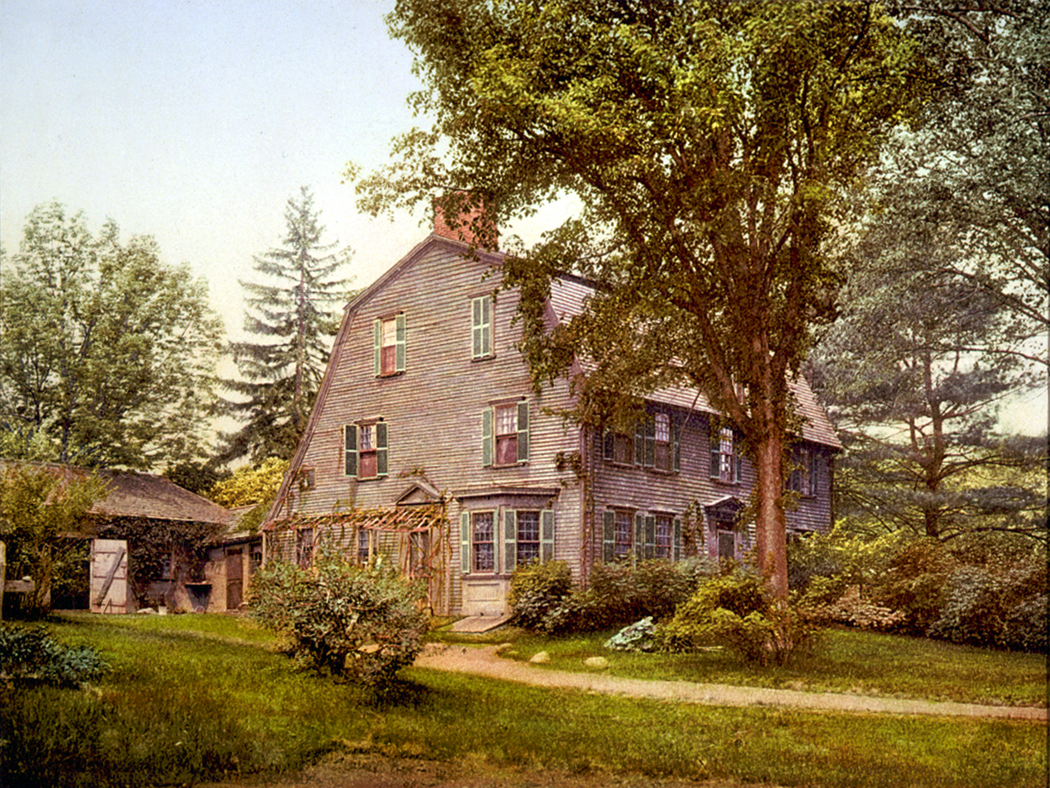
old manse with wallThe Old Manse is one of the most extraordinary houses in America. It saw the birth of two revolutions and was lived in by a string of some of the most exceptional Americans every to grace a town noted for exceptional people.
rw emerson

Concord is that town, a small, suburban Massachussets community, only 15 miles west of Boston. There is a grassy town square with its monument, a hillside cemetery, a single street lined with shops and several venerable old churches with  white, pointy steeples.

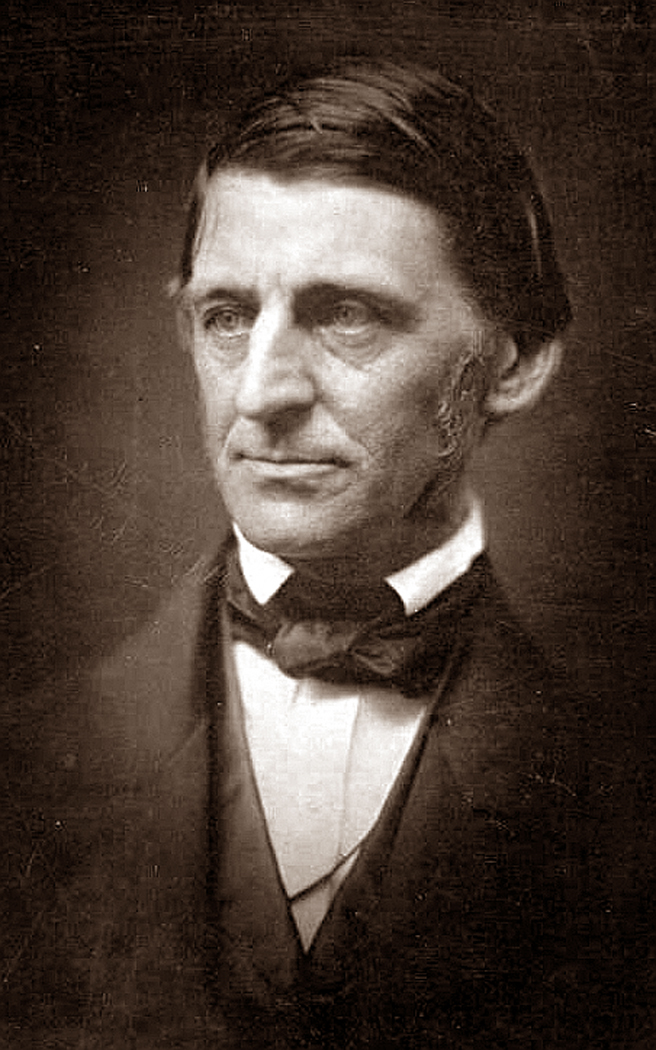
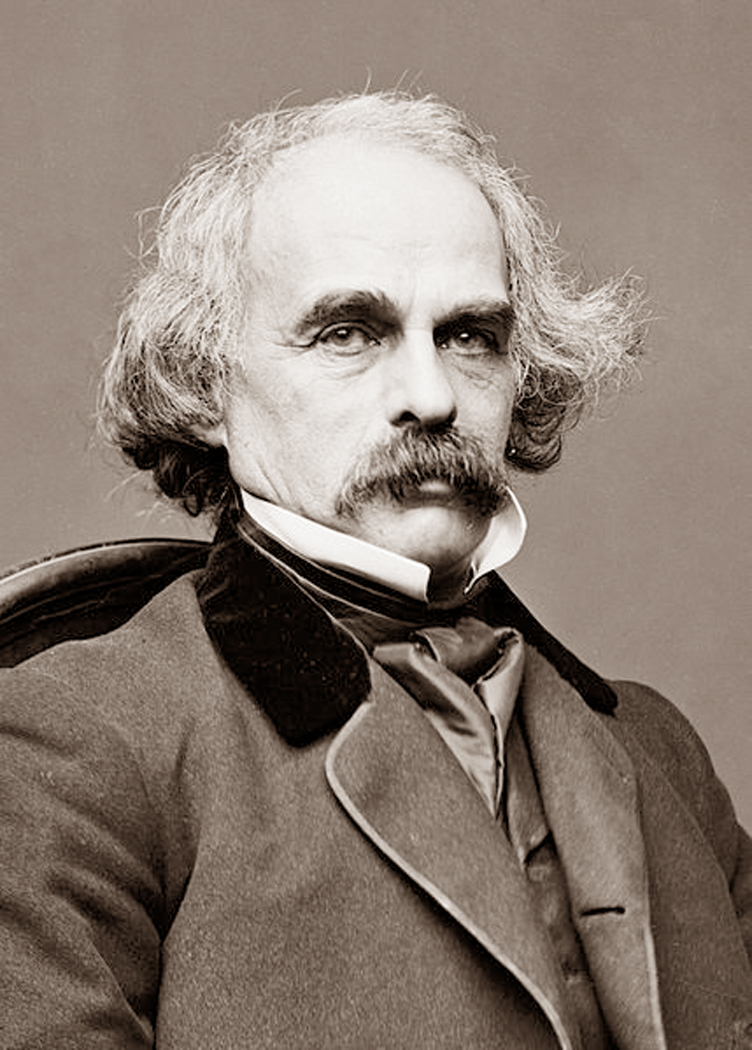
Concord was also, for a time in the center of the last century, the intellectual center of the young nation. Among its residents were writers, preachers, lecturers, editors and abolitionists. Some of their names are still current: Ralph Waldo Emerson, Henry David Thoreau, Louisa May Alcott, Daniel Chester French — sometimes it seems you have to have three names to live in Concord — and Nathaniel Hawthorne, who broke the three-name rule. Others were once as eminent, but are now remembered mostly by scholars and readers of history books: Amos Bronson Alcott, William Ellery Channing the younger, and Ezra Ripley among them.old manse 1930s

The Manse sits on a wooded rise on Monument Street north of the town center. It is a two story wood frame, gambrel center-entrance twin chimney Colonial house, now with gable windows in the roof and most of its paint gone, leaving a gray, old weathered building in the arbor of trees and vines. It is notable for its many tiny rooms, unusual for an eminent house of that time.old north bridge from manse

Its back yard slopes off toward the Concord River and the Old North Bridge, where American Minutemen fought British regulars on April 19, 1775 and “fired the shot heard round the world.”

That was the first revolution the house presided over.

Mary Moody Emerson, who was an infant at the time, used to say that she, too was “in arms” that day, because she was held up by her mother to the second-floor window of the Old Manse to witness the battle.

Her father, Reverend William Emerson, built the Manse in 1770.

“It was all mother’s fault that the Manse was cut up into so many small rooms,” she later wrote. “My father built it just according to her ideas and she used to say, ‘she was tired of great barns of rooms’ so he had all the rooms little boxes to please her.”ezra ripley silhouette

When William Emerson died in 1776, from disease contracted at Fort Ticonderoga, his widow tried to carry on by herself, but then, in 1780, she married the formidable Reverend Ezra Ripley. He preached up a thunder for 63 years as minister of Concord.

Ripley’s step-grandson, Ralph Waldo Emerson, remembered him this way: “Dr. Ripley prays for rain with great explicitness on Sunday, and on Monday the showers fell. When I spoke of the speed with which his prayers were answered, the good man looked modest.”

And when he died, he was laid out “Majestic and noble,” recalled Ralph’s older sister, Ellen.

“Waldo, taken to see him, walked round and round the couch and at last asked, ‘Why don’t they keep him for a statue?’ ”

Mary Moody Emerson became an eccentric, herself. She was witty, bright and well-read and was Ralph Waldo’s favorite aunt. “For years,” he wrote, “she had her bed made in the form of a coffin. … She made up her shroud, and death still refusing to come, and she thinking it a pity to let it die idle, wore it as a night-gown, or a day-gown, nay, went out to ride in it, on horseback, in her mountain roads, until it was worn out. Then she had another made up. …. I believe she wore out a great many.”old manse dining room

Ralph Waldo only lived at the Manse for a single year, but it was for him and important year. It was at the Manse that he wrote his first, and most influential essay, “Nature,” which spelled out the tenets of Transcendentalism.

That was the second revolution. It altered the intellectual direction of the country and was the first genuinely American philosophical venture. Its effects can still be seen in American culture, from the photographs of Ansel Adams to the American national park system.sophia peabody 2

In July 1842, Nathaniel Hawthorne and his bride, Sophia Peabody (that’s “So-FYE-uh PEEB-iddy”), became tenants at the Old Manse. They stayed three years “in Eden,” he wrote.

He wrote many of his best known short stories in the Old Manse and also the introductory essay for the volume of stories known as Mosses from an Old Manse.

Ralph Waldo, recently married and removed to his own house, had suggested the Old Manse to Hawthorne. Henry Thoreau became Hawthorne’s gardener. The couple was transcendently happy.nathaniel hawthorne

“We seem to have been translated to the other state of being, without having passed through death,” he wrote.

The house had always before reflected the dour Puritan esthetic of its builder, but the young couple redecorated it, brightening it up and modernizing.

“It required some energy of imagination to conceive the idea of transforming this musty edifice, where the good old minister had been writing sleepy sermons for more than a half-century, into a comfortable modern residence,” he wrote. By the aid of cheerful paint and (wall)paper, a gladsome carpet, pictures and engravings, new furniture, bijouterie and a daily supply of flowers, it has become one of the prettiest and pleasantest rooms in the whole world.”

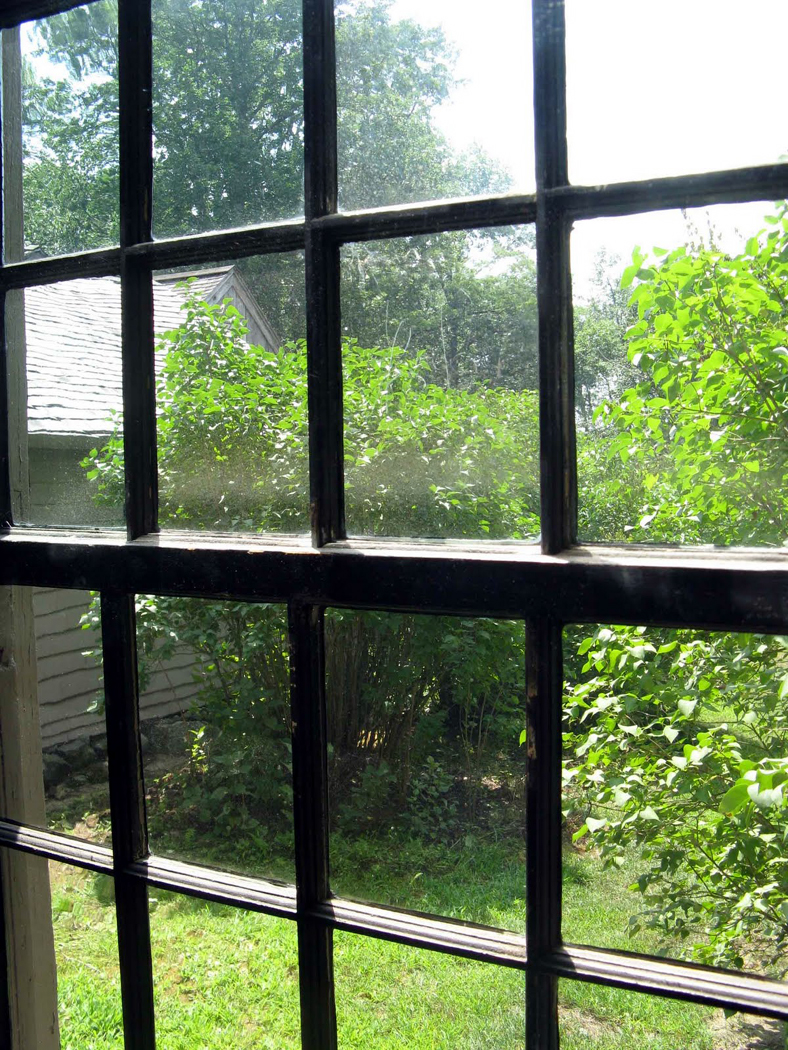
In the north window of the upstairs study, Hawthorne and his wife scribed sweet nothings into the glass.old manse window

“Man’s accidents are God’s purposes. Sophia A. Hawthorne, 1843.”

“Nathaniel Hawthorne. This is his study, 1843.”

“The smallest twig leans clear against the sky.”

“Composed by my wife and written with her diamond.”

“Inscribed by my husband at sunset, April 3, 1843. On the gold light. S.A.H.”

The scratchings are still there to be seen. We think them immeasurably romantic. Their landlord looked at it something more like vandalism and they were asked to move out.sarah ripley

Samuel Ripley and his wife, Sarah, then moved in.

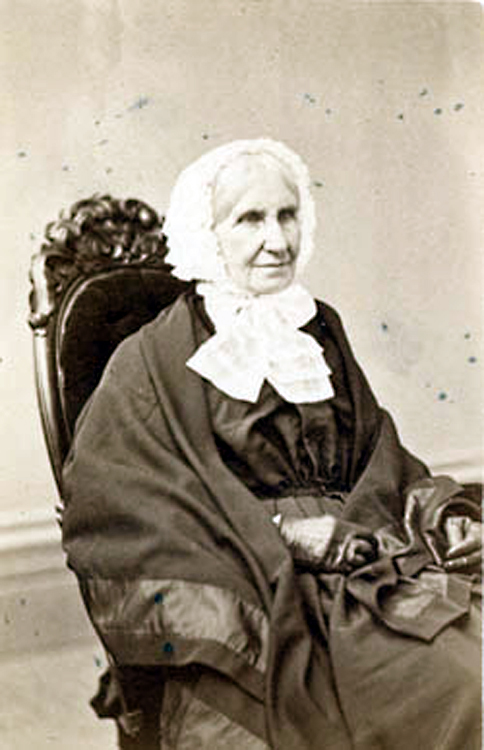
Sarah was perhaps the brightest light ever to live in the Old Manse. She was exceptional in any age, and a miracle in her own.

With only a year and a half of formal schooling, Sarah went on to teach herself botony, calculus, Greek, Latin, and most modern European languages. When she was in her 60s, she took up Sanskrit.

She apologized to one visitor that she still needed a Sanskrit dictionary to help her, implying that she could read the Odyssey or the Aeneid the way some people read the daily newspaper.

She sighed, “I cannot think in Sanskrit,” recalls her grandson, Edward Simmons.

Another visitor records a trip to the Old Manse and seeing Sarah rock the cradle with one leg while cooking dinner with her hands and tutoring one student in German and another in geometry.

Ralph Waldo wrote of her, “Mrs. Ripley is superior to all she knows. She reminds one of a steam-mill of great activity and power which must be fed, and she grinds German, Italian, Greek, Chemistry, Metaphysics, Theology, with utter indifference which, — something she must have to keep the machine from tearing itself.”old manse kitchen

The Manse remained in the Emerson-Ripley-Ames family until 1939, when the family transferred the property to the Trustees of Reservations, a non-profit organization that maintains historic properties in Massachussets.

“The Concord literati are gone,” wrote Simmons, “the town has completely changed, but the Old Manse is still there, holding many secrets.”

skull heartTen years ago, the Paris police discovered an outlaw movie theater, complete with bar and restaurant, hidden in a sealed-off old quarry tunnel under the 16th Arrondissement, just across the Seine from the Eiffel Tower.

“The whole thing ran off a professionally installed electricity system and there were at least three phone lines down there,” police were reported to say.

Three days later, when they came back to dismantle the illegal theater, it had all been packed up and shipped out, leaving only a single note for the police: “Do not try to find us.”

Every city has an underground.

But in Paris, the underground is literal. Ten percent  of the city is built above underground caves, tunnels and medieval limestone quarries. When building foundations are constructed, the tunnels have to be taken into account, and since no one in Paris has a complete and accurate map of the tunnels, it sometimes becomes a problem.

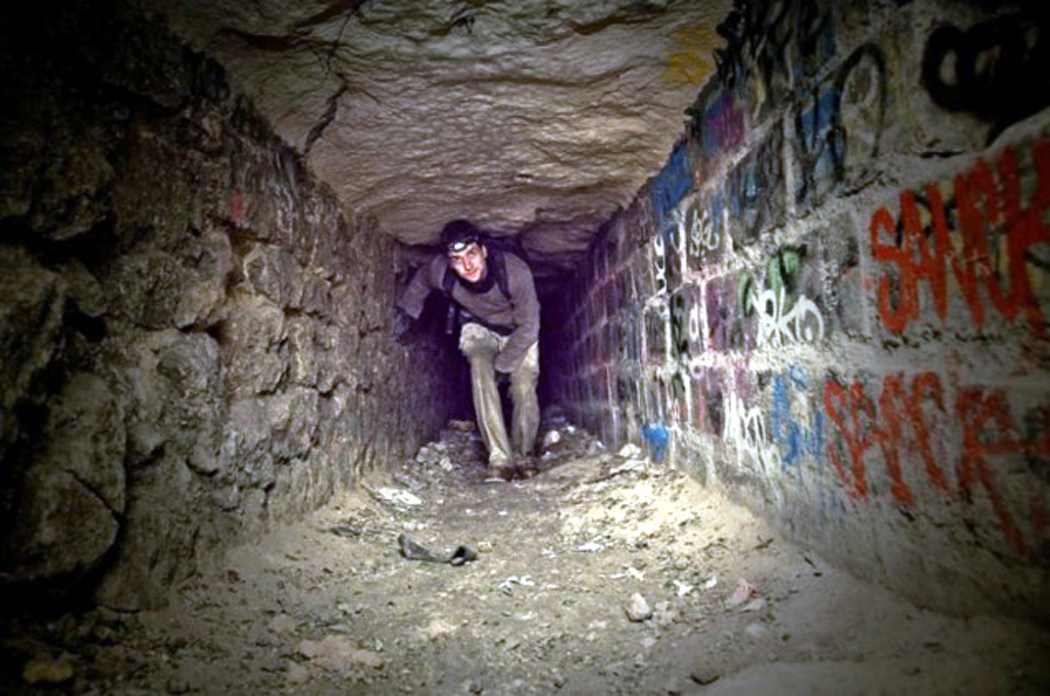
It is estimated that there are some 180 miles  of tunnel beneath the streets of Paris – and that’s not counting the 1,300 miles of sewers or 125 miles  of subways.old paris tunnel

Access to most of the tunnels has been illegal for civilians since 1955, but hordes of young people have been using them for recreation – of various sorts – since they were constructed. Even now, everything from rock concerts to picnics are held in the limestone tunnels by those called “cataphiles,” after the catacombs of the city. Less innocently, they are also the site of many drug deals and other underworld activity.

During World War II, the tunnels provided shelter for the Resistance. In the 1950s, there were underground jazz clubs. A fascination with the underworld is hardly a new thing.

From Ulysses to Dante, we have been deeply curious about a world that seems mysterious and dark, dangerous and illicit. And even for some tourists, a visit to the sunless portions of a city is an irresistible draw.

Luckily, there are legal ways to visit the subterranean Paris.

catacombs 1

CATACOMBS

When Paris was young and the Romans gave the orders, many of its important buildings were constructed of limestone quarried in the local hills. As the city grew, the quarries dug deeper into the hills, and the beige limestone city overtook its suburbs and their quarries, which now honeycomb the hills of Montparnasse and Montmartre.

By 1786,  Paris had grown to more than a half-million people, and there was need for fresh real estate. The city council decided it could empty out the cemeteries and use the land to build on, and so, from 1786 to 1860, graveyards were dug up and their bones transported to the tunnels under Montparnasse. In all, more than 5 million bodies made the move.

They are an eerie sight in the dark. All that death, all those bones, all that underworld, Avernus, Chiron, Cerberus.

The trip through the catacombs is long and arduous, with stairs going down six stories into the bedrock of Paris, then a good half mile of twisting narrow tunnels before you ever even get to the bones.catacombs halt sign

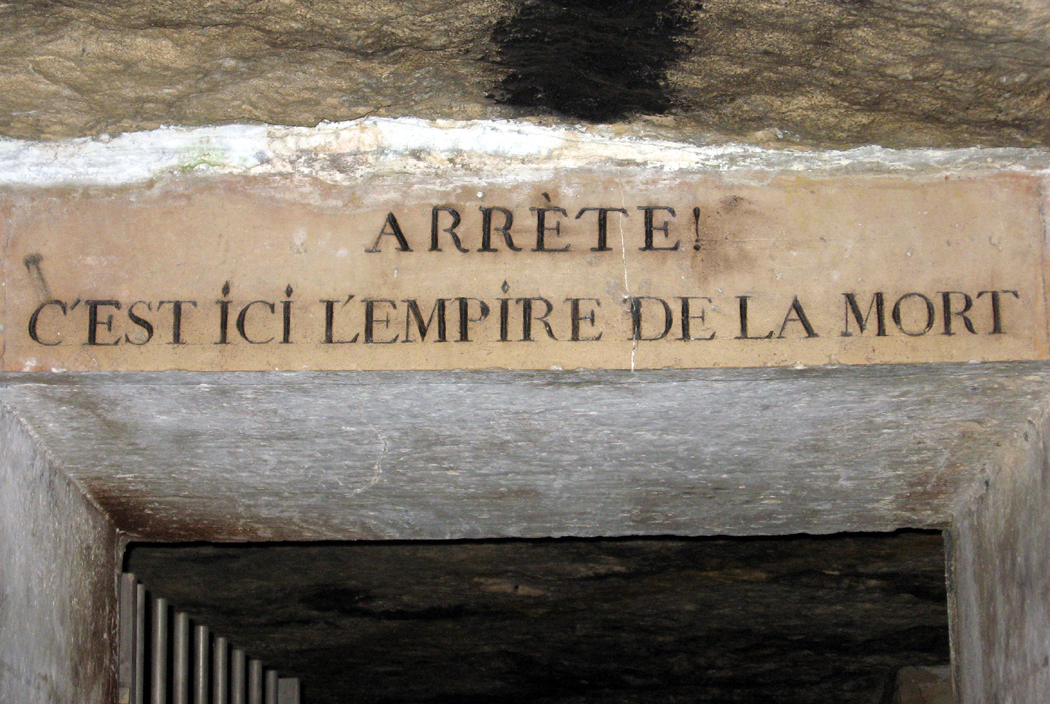
“Stop!” said the sign above the final door. “You are entering the empire of the dead.”

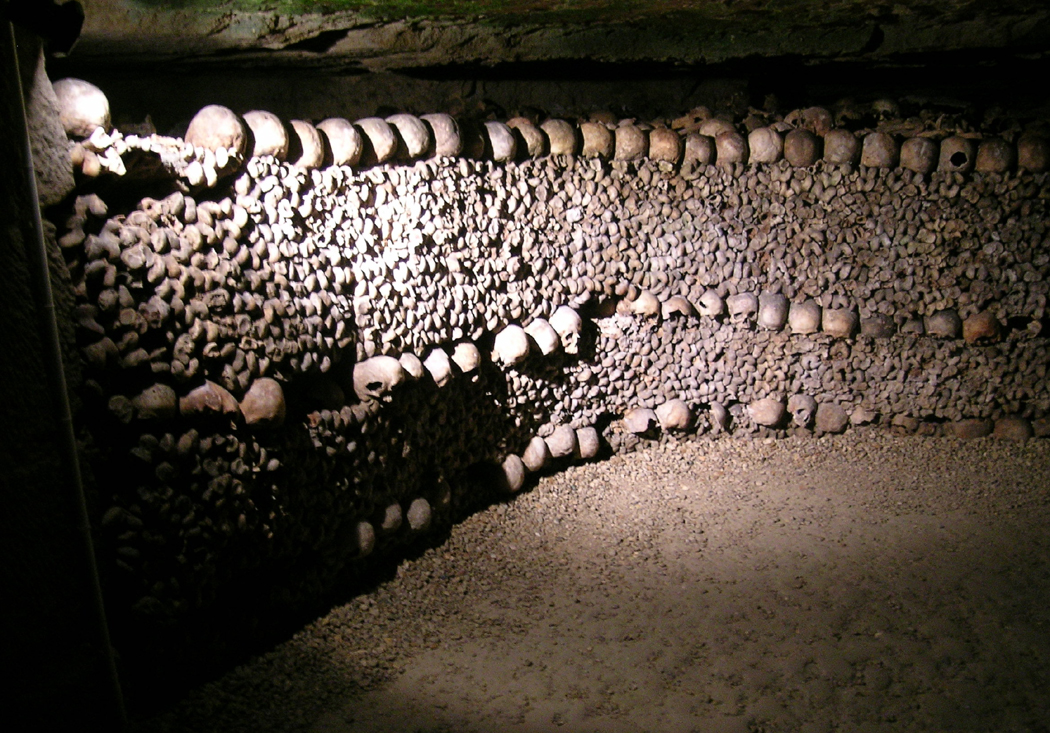
The tunnel contorts around in the underworld, with niches to right and left piled with the bones torn up from Paris graveyards.catacombs 2 - skulls

Millions of the dead from Paris’s past are piled here, with a wall of tibias and skulls making a kind of bone-dike, holding the remaining body parts behind it. Usually, the bones are assembled almost like masonry, with the knob-ends of the tibia bones left end out, and a line of skulls across them, like strata in rocks, or ornament in brickwork.

The tunnels are never higher than about 6-feet and maybe 2 inches high, and only one person wide. Their floors are often damp or wet with cave-drizzle.

Electric lights are placed on the walls every 10 or 15 feet, but with fairly low wattage bulbs.

catacomb cornerSigns were left with the bones describing what cemetery they were disinterred from, almost like regimental monuments in a battlefield.

After snaking through the underworld for perhaps a mile, you came to an even narrower spiral stone staircase with 84 steps, as the sign says, bringing you those six stories up from Hades, and you open out into a side street from a nondescript stone building-front with no markings to warn anyone this is the exit from Tartarus.

The trip is a genuine experience, an encounter with history.

Going through the tunnels is a completely alimentary experience. The bowels of the earth. Expelled into sunlight.

paris sewer 5

THE SEWERS

The sewer system of Paris is one of the world’s wonders. If straightened out, they could run from Paris to Istanbul.

They have a place in fable and lore far exceeding that of any other sewer system in the world: They are the tunnels through which Jean Valjean carried the wounded Marius in Les Miserables.

“By degrees, we will admit, a certain horror seized upon him. The gloom which enveloped him penetrated his spirit. He walked in an enigma. … How was he to get out? Would he find an exit? Would he find it in time? Would that colossal subterranean sponge with its stone cavities, allow itself to be penetrated and pierced? …Would they end by both getting lost, and by furnishing two skeletons in a nook of that night? He did not know. He put all these questions to himself without replying to them. The intestines of Paris form a precipice. Like the prophet, he was in the belly of the monster.”

The “intestines,” is the right word. They are called in French, Des Egouts — the “guts.”paris sewer 9

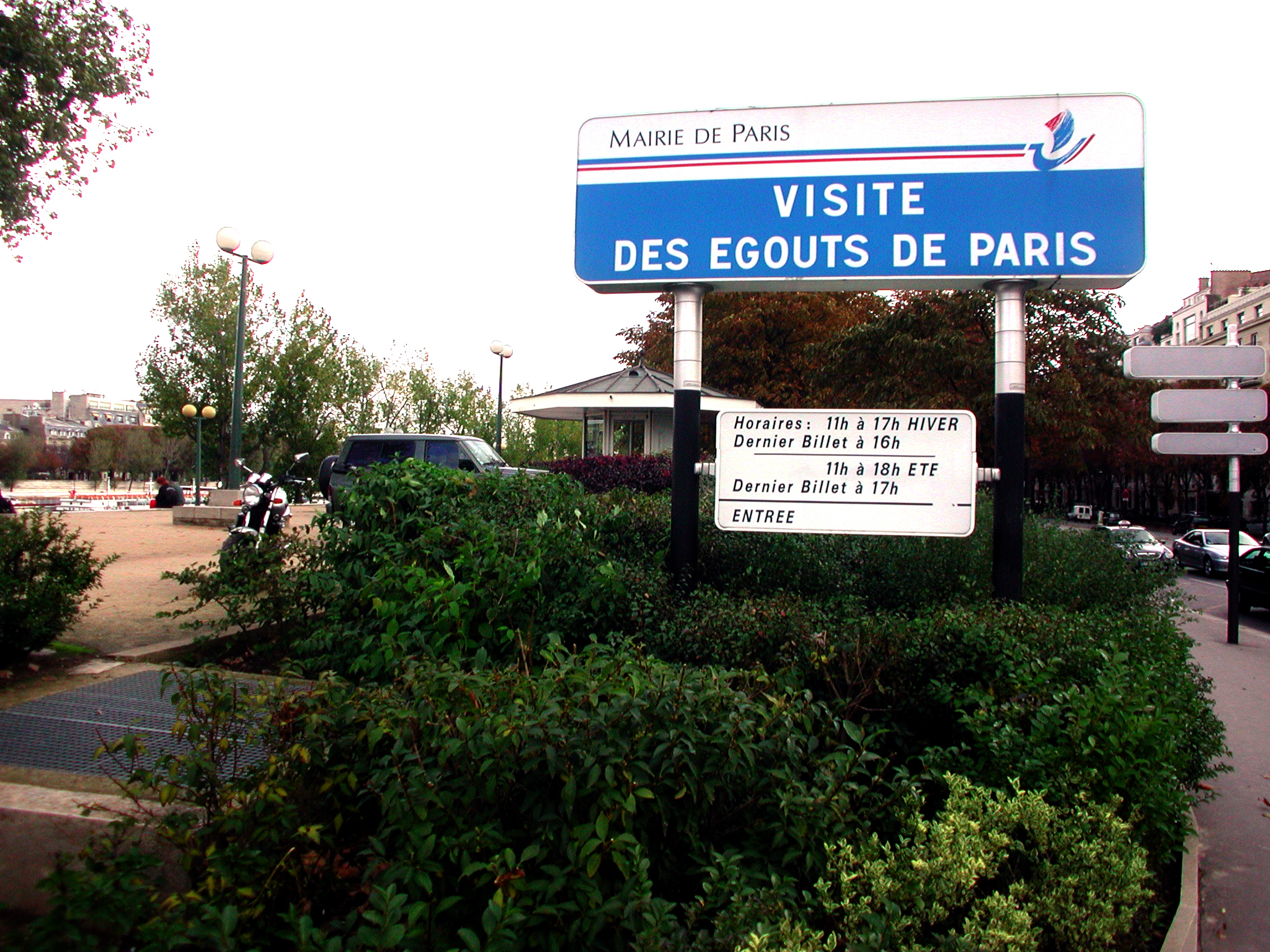
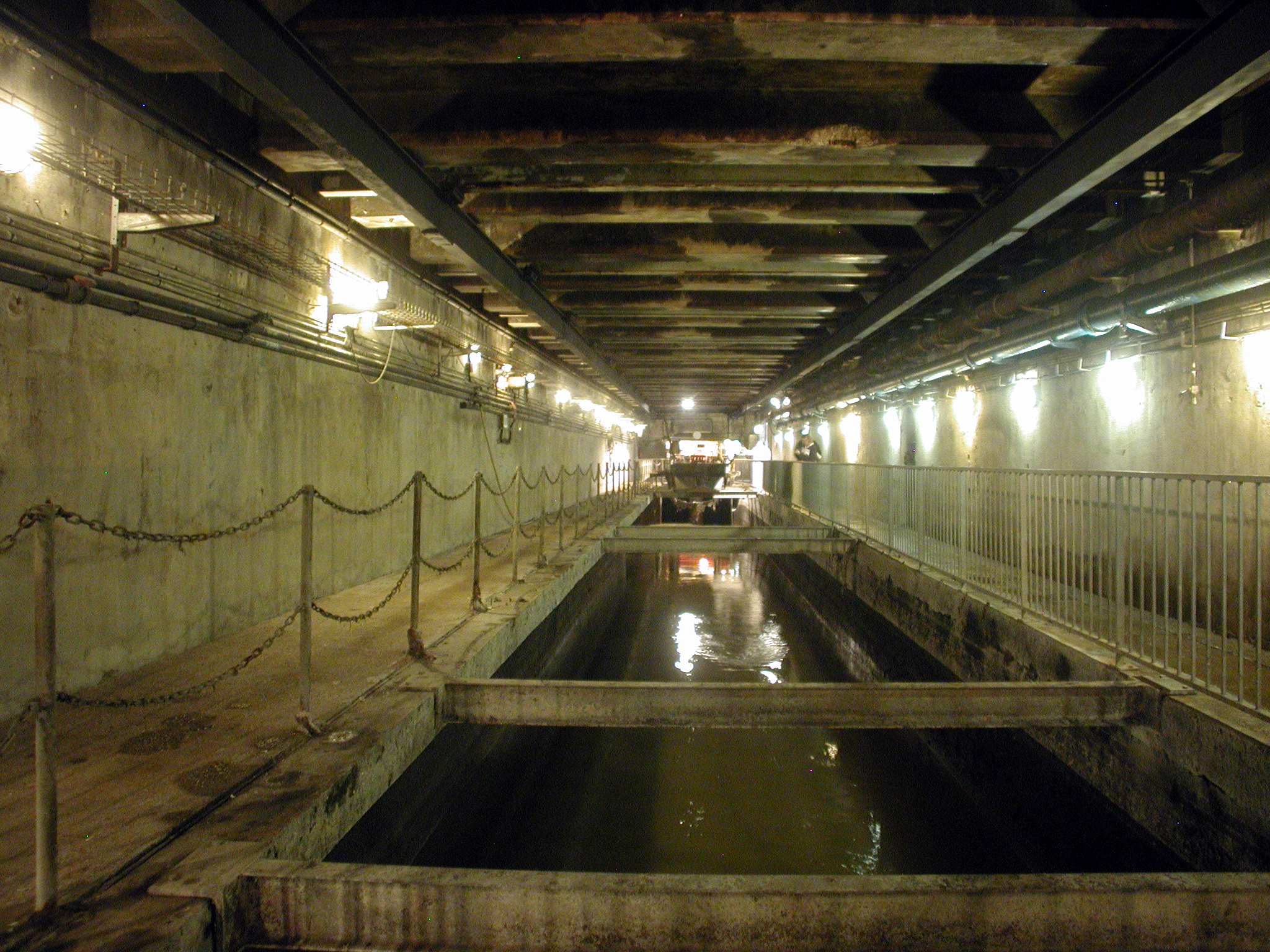
The entrance to the portion open to the public is like a tiny lemonade stand beside the bridge over the Seine. You buy tickets and descend into the depths, where a very faint odor of sewage wafts up — so faint that in a few moments, you no longer notice it.

What first hits you in the darkness of the sewer tunnels is the sound, the thunderous sound of water, like a torrent over a waterfall. Part of this is the sound amplification of the tunnels, but most is the enormous quantity of water passing through the system. As you walk down one wide tunnel – more like an extended garage — the water passes underneath you as you walk over a steel mesh walkway.paris sewer 3

There are signs along the way explaining not only the sewers, but the history of the sewers, beginning in Roman times. The current system is a gift of Baron Haussmann from his city rebuilding plan of the mid 1800s.

There is a kind of pulse, or bloodflow, that the system implies, a circulation system for the city.

One looks at a city from above ground and sees the traffic, the shops, the restaurants, the pedestrians, the apartments above the stores, the metro stations, the statuary and monuments, but they are all just the skin of the city.

Under it run the subways, the catacombs, the sewers, the remains of hundreds of years of quarrying, the abandoned tunnels of previous water and sewer lines, abandoned subway tunnels, and millions of miles of cable.

And, of course, the people milling around on the surface, drinking their cafe cremes, could not exist in the city without the subsurface infrastructure.

cimetiere montparnasse

THE CEMETERIES

It says something about Charles Baudelaire that he is buried in a grave listed under his despised step-father’s name. It is odd, that someone as famous and accomplished as the poet was, of course, baudelaire 1someone’s son, and part of a family, and all the wretched dynamics that implies: Charles was Petit Charles  to his mom and step-dad, and even after he grew up, he seemed to remain their little boy, so that, unlike other more pompous and be-medalled Frenchmen, with their giant sepulture, with statues and trumpeting angels, he gets second billing on a plain headstone in the cimetiere Montparnasse, with his mother — who outlived him by two or three years — billed third.

It is her revenge on her wayward child.

There are three large cemeteries in Paris, and they each have their celebrity tombs.

Most famous is the grave of Jim Morrison of The Doors at the cimetiere du Pere-Lachaise near Montmartre.

There, you can also discover Apollinaire, Balzac, Beaumarchais, Sarah Bernhardt and Frederic Chopin.

At the cimetiere de Passy you find Debussy, Manet and Joan of Arc.three graves

Visiting the cimetiere Montparnasse leads one to discover things about personages that one might not have guessed: Henri Langlois, who ran the Cinémathèque Française, has a gravestone filled with publicity photos from scores of movies; Jean-Paul Sartre and Simone de Beauvoir share a headstone with only their names and dates; actress Jean Seberg has a simple flat stone grave with a tiny headstone with her name in a badly written script, as though done by an amateur. Many small stones had been left on the sarcophagus lid.

It is no surprise that composer Camille Saint-Saens has a sepulcher with sculpture carved inside. He was an honored figure from the French intelligentsia, but all his pomp doesn’t say as much as the one grave, with no name, and the only thing written on it, in elegant letters is “Le paradis c’est Paris.”le paradis c'est paris

Paradise, but also the underworld.

road into hills BW
In 1997, I took an epic road trip north along the 100th longitudinal meridian from Laredo, Texas, to the Canadian border. The previous blog entries covered Texas and the Central Plains. This final installment brings the Northern Plains and the end of the trip.

wounded knee 2

Mile 1294, Wounded Knee, S.D.

Most of the action by the U.S. against the Indians in the past century was reprehensible at best. The list of atrocities is nothing to be proud of, from Sand Creek to Washita River. But one of these massacres bothers me more than the others.

It is the photographs that make the difference.

On Dec. 29, 1890, a Lakota elder named Big Foot and more than 200 of his band were gunned down by soldiers at Wounded Knee, S.D.

The Indians had obeyed Federal orders to come to the reservation and had obeyed orders to give up their rifles. Big Foot was deathly sick and coughing up blood.

But the soldiers didn’t believe the Sioux had given up all their guns. One remained, and as it was being turned in, a gun somewhere went off and the army went crazy, gunning down not only the Indians, but up to 30 of their own men. The Indians, wearing “ghost shirts” they thought would protect them, fought back as well as they could with knives, hatchets and a few pistols. But most of those killed were women and children.

Of the battle, one is reminded of My Lai in Vietnam. Writer Herbert Welsh, who saw the battle site soon after, wrote, “From the fact that so many women and children were killed, and that their bodies were found far from the scene of action, and as though they were shot down while flying, it would look as though blind rage had been at work.”

It isn’t the stupidity or the injustice that gets to me — there are many examples, not only in the so-called “Indian Wars,” but pretty much in all of history. Humans have not been good to other humans anywhere on the globe.

No, what gets to me are the photographs.

big foot corpse

Taken three days after the massacre, they show the frozen, contorted body of Big Foot, with his hands knotted up arthritically and his body bent up out of the snow in frozen rigor. He is isolated against the blank, white background of the snow, and all the more symbolic for that isolation. A few soldiers stand off in the background talking and a horse puts his nose to the ground for some grass sticking through the snow.

Another shows a line of soldiers standing behind a mass grave. James Mooney, who wrote the first definitive account of the Ghost Dance phenomenon and the Sioux uprising of 1890, wrote:

“A long trench was dug and into it were thrown all the bodies, piled one upon the other like so much cordwood, until the pit was full, when the earth was heaped over them and the funeral was complete. Many of the bodies were stripped by the whites, who went out in order to get the ‘ghost shirts,’ and the frozen bodies were thrown into the trench stiff and naked.

“They were only dead Indians,” he added, with an accusatory dose of irony.

There is another set of photographs that come to mind — the emaciated, contorted bodies being bulldozed into mass graves at Dachau and Buchenwald.

For many, the Indian Wars are just cowboys and Indians stuff from a long ago history. But for me, they sing of a continuity of outrage. The “Final Solution” of one century mirrors that of its predecessor.

So, I have wanted to visit the site at Wounded Knee and when I got there, was surprised to find it barely marked at all. Perhaps both sides feel shame over it. The whites for the evil they don’t like to recognize in themselves, the Indians for the humiliation.Pine Ridge Reservation square

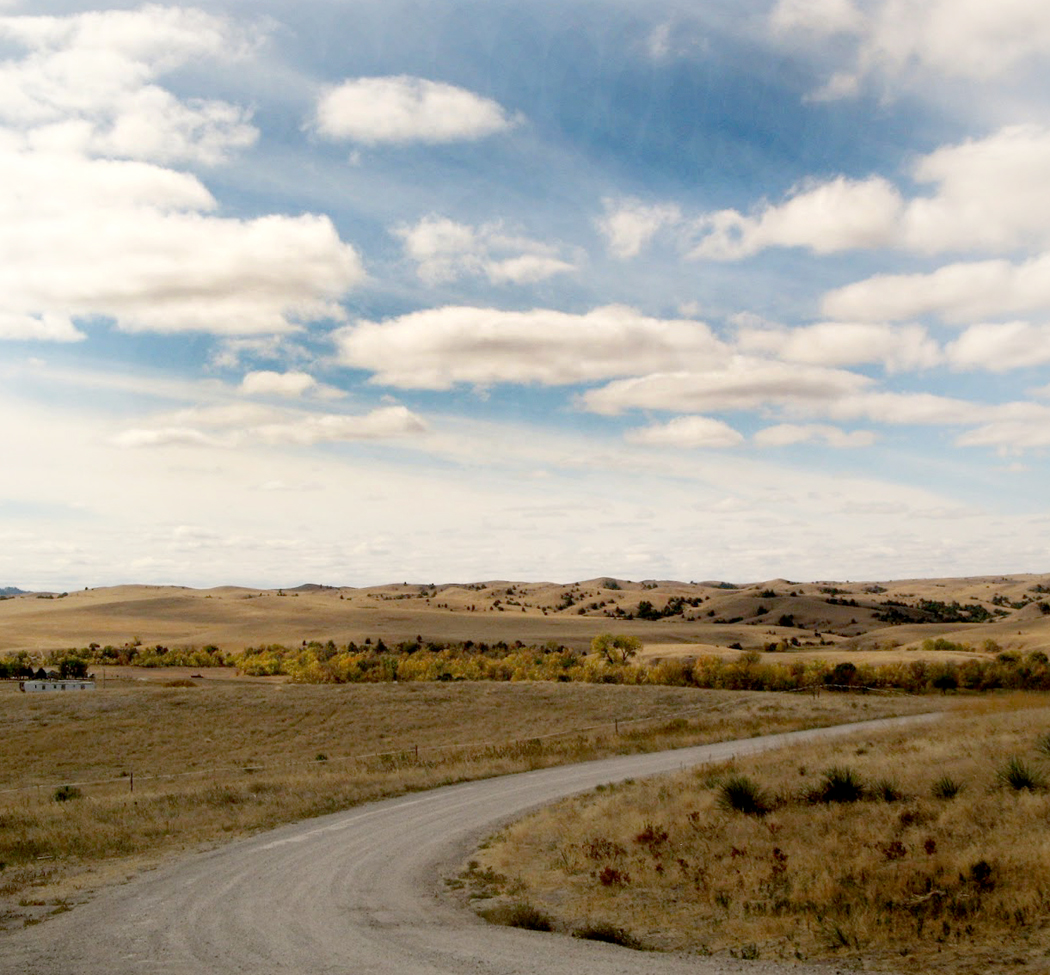
The Pine Ridge Reservation in southern South Dakota is more beautiful than it has been described, with grassy hills and cedar trees dotting the plains. While it is true that poverty is endemic, it is not the fault of the landscape, which is better than some of the grasslands I passed through in Nebraska on my way north.

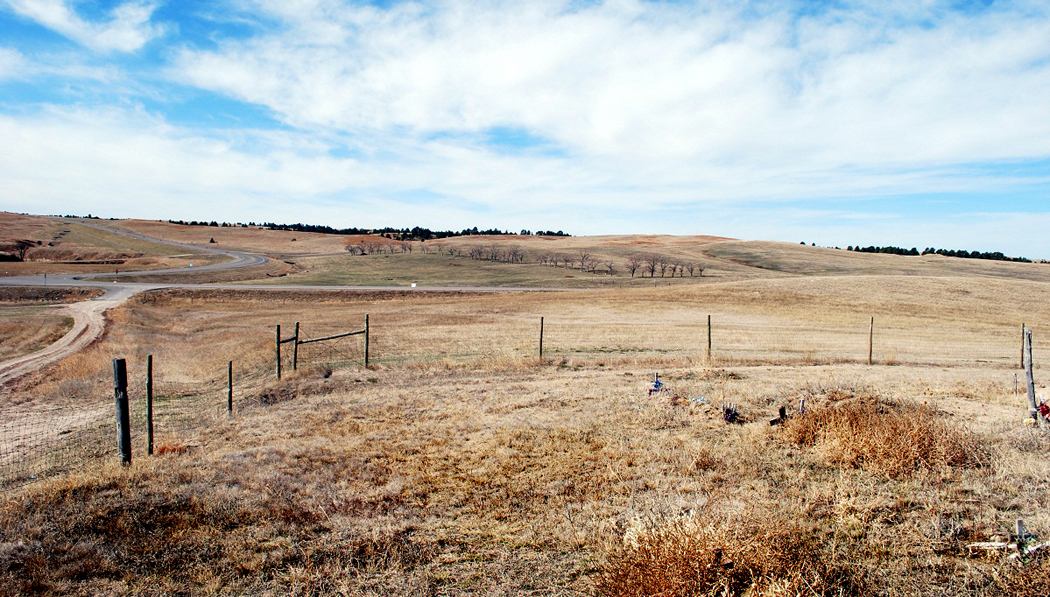
But the actual massacre site is little more than a spot in the road. There is a hand-lettered wooden sign that describes the event, but there are no official markers, no commemoration, no visitors center, no rangers ripe with interpretation.

wounded knee gulley

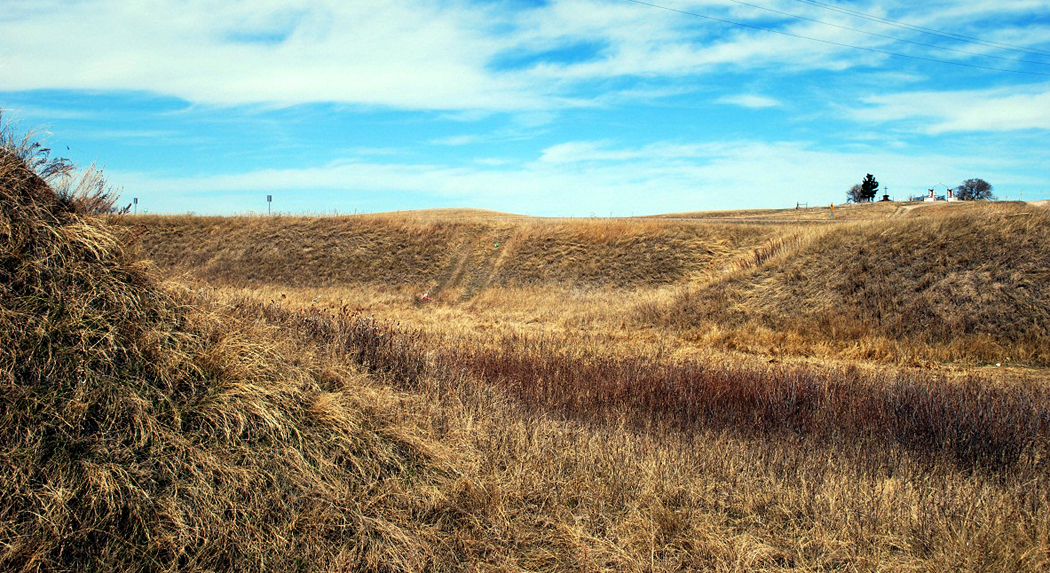
The dusty ground at Wounded Knee is a gully with the bridge on one side of the road, and a hill with the Indian graves on the other. During the battle, troops had placed cannons on the hill and lobbed exploding shells down the slope at the Indians.

There are also a few ramadas. In the summer, there are booths selling Indian crafts. In October, most were empty, although there were two young Lakota girls with a clothesline strung with dreamcatchers.

I stopped and asked them if this was the massacre site and they said yes.

“Where did it happen here?” I asked.

“All around.”

The older was about 12, the younger, 8. We talked about being Indian, about the effect of history and about the price of dreamcatchers.

“We need to sell them. Our sister is in the hospital and needs our help,” said the elder, in an ages old play for sympathy. I wondered who had taught her to scam me. If I had any doubts over whether it was a scam or not, they dissipated  when I said: “I’m sorry to hear that. What does she have?”

The girl looked caught out and gave me a distressed look, as if she hadn’t anticipated the conversation getting this far.

“Why is she in the hospital?,” I repeated.

A wait of two beats: “She’s sick.” It was almost a question.

I felt more sorry for her being caught in a lie than I did for her probably imaginary sister, so I bought one.

badlands 1

Mile 1379, Badlands National Park, S.D.

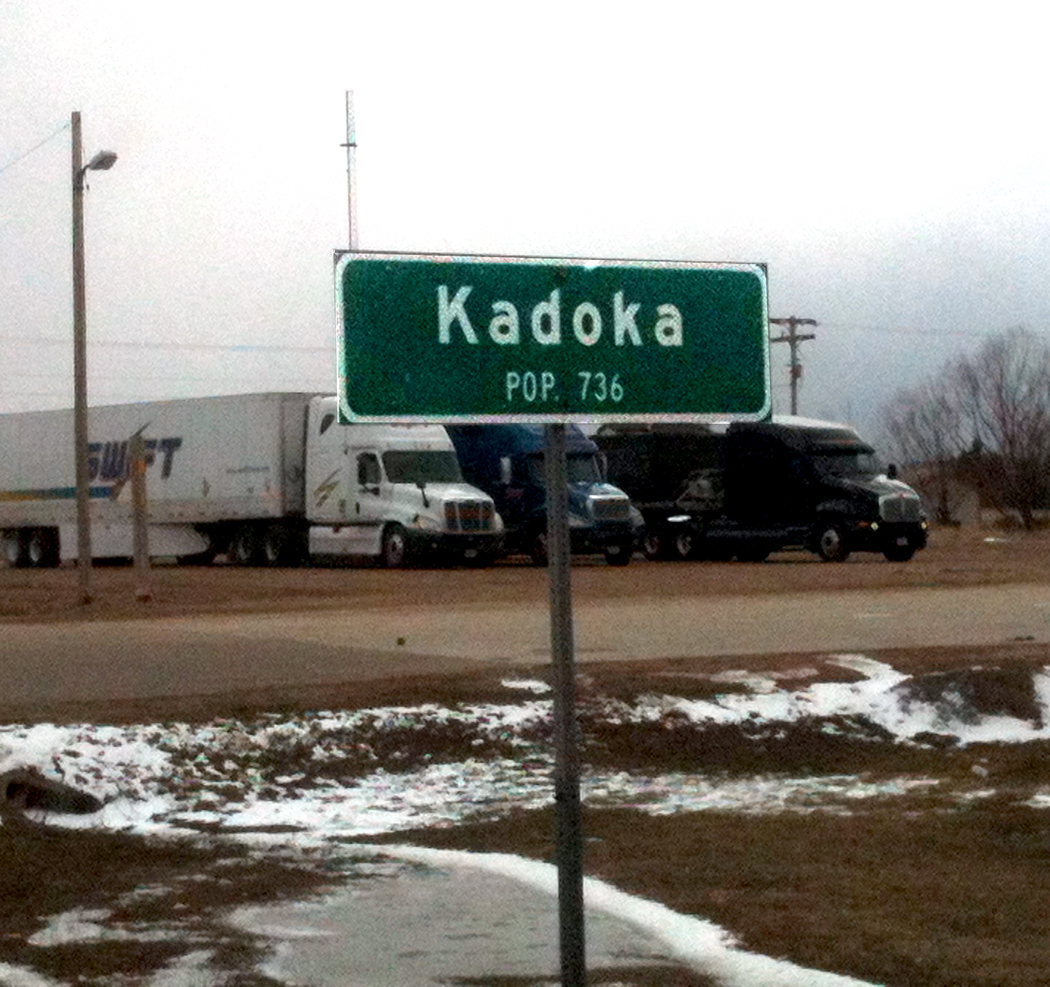
Near Kadoka, S.D., the rolling grass of the plains is cut through by erosion, sculpted into spiky, spooky mazes of canyons and hills. They were called by the early French trappers, “les mauvaises terres a traverser,” or “bads lands to cross.” And they certainly would be, if it were not for the smooth roads of the National Park Service.Kadoka sign

The Badlands National Park is a long, gangly loop of lands lodged in the corners of the Buffalo Gap National Grassland and the Pine Ridge Indian Reservation. In places, the park is less than a mile wide, although if you walked from one extreme to the other along its length, you would hike a semicircle of something like 60 miles.

Most of it is flatland. As you drive along S.D. 44 from Scenic to Interior, the badlands themselves are a whitish line of crenelated hills on the northern horizon.

Only when you get close to them, near the Ben Reifel Visitor Center at its eastern end, can you really appreciate the blasted, washed out, weathered exhaustion of them.

blizzard headlights

Mile 1707, Bismarck, N.D.

A freak October blizzard blew across the Dakotas. One day, I was in Pierre, S.D., and it was 80 degrees; by the time I pulled into Bismarck, N.D., the next day, a front had barreled through and the thermometer had dropped into the 30s. With winds at a steady 50 mph, the wind-chill was more than a TV weatherman’s conceit: It could mean frostbite.

During the overnight, a line of powerful thunderstorms had run from Texas to Manitoba along a cold front that moved east with the speed of a freight train. Tornado warnings were issued for the whole length of the front.

One day the Prairie population was talking about their tomatoes lasting so late into the season, the next day, they are scraping windshields with parkas pulled tight around their cheeks.bismarck night snow downtown

Just before the blizzard moved in, I wandered through the streets of Bismarck, looking up at the sky that was turning ever more slatey and frigid.

To get in out of the cold, I wandered into several downtown stores, including one antiques shop. The woman behind the counter also does home interiors: One side of the shop is given over to fabrics, the rest to consignment antiques.

The proprietor was a bubbly woman of about 50, who praised the plainness of the  Prairie people.

“Even the politicians are ordinary people,” she said. “The governor is a regular customer and his wife says she’d come here more often except that she has to clean the house.”

But there are cosmopolitan Bismarckians and those who are less so.

“I ask my customers if they’ve ever been out of North Dakota,” she said. “If they have, I know they’ll go for the weird things, some of the more tasteful and unusual treatments.” She fingers one of the fabrics that is tightly gathered with pleats.

“If they’ve never been outside North Dakota, well, I bring out the J.C. Penney catalog. They’re really conservative.”

I told her that I take it to be an inborn modesty they seem to have in the Plains Midwest, a desire not to appear more fashionable than they are.

“But it’s not quite modesty, either,” she says, “almost a kind of lowered expectation.”

Like Pierre, S.D., whose tourism brochure proudly claims it is the “tenth best small town in America.”

Or the High Plains Museum in McCook, Neb., whose billboard promises only that it is “interesting and free.”snow tractor bismark

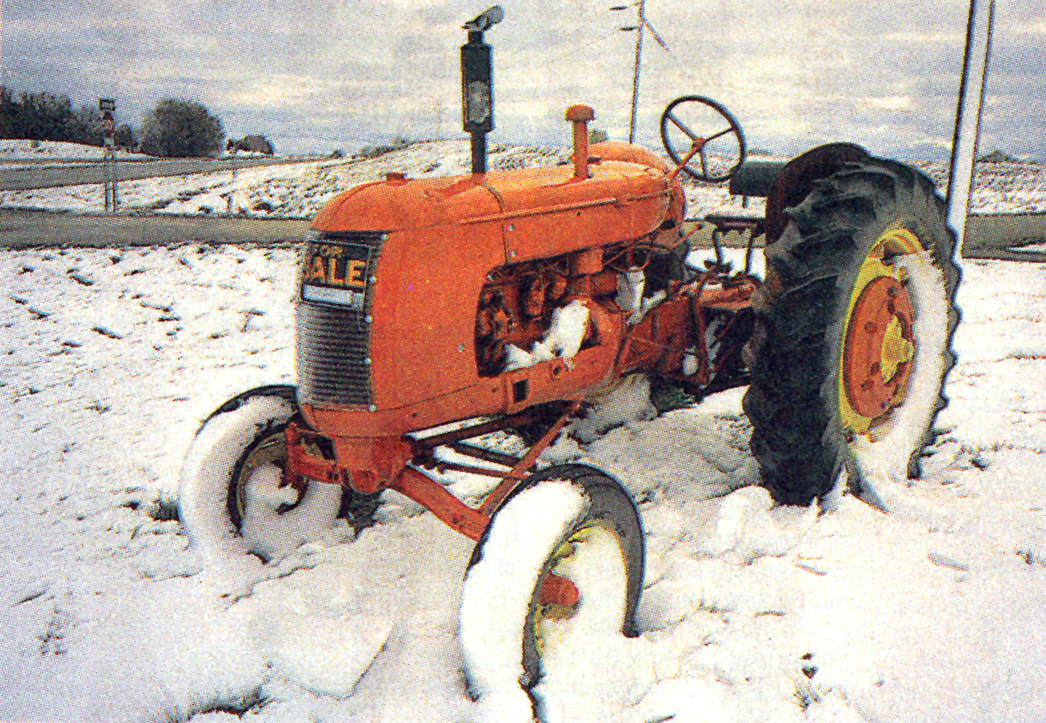
As I begin driving again, the skies have begun flaking and the crystals blow around the pavement like sand blown across the beach in a storm.

What are predicted are snow showers and snow squalls, but by the time I’m 100 miles out of Bismarck, it is a full-scale blizzard.

Luckily, the roads are still warm enough that nothing is sticking to them, although the farm fields are speckled with white, catching in the furrows making a scumble of white and black.

It is a tailwind, so as I drive, I hardly notice it, except to see the grasses bent sideways and vibrating on the shoulders. And the snow dances on the pavement in front of me like some sort of fairy mist, swirling and shifting. I can see the flakes bobbing around in front of the windshield.

But when I stop at a rest area and step out of the car, I can see that the snow is rushing past me horizontally. I can barely put my foot down where I intend as I walk through the gale.

Visibility is reduced at one point to less than a tenth of a mile; the world is whited out and the windbreak trees at the other side of the cornfield are faint ghosts.

Contending with weather like this, I decide, must make you modest. You are not likely to believe the hype of the American media siren when you know a pair of jumper cables can save your life.

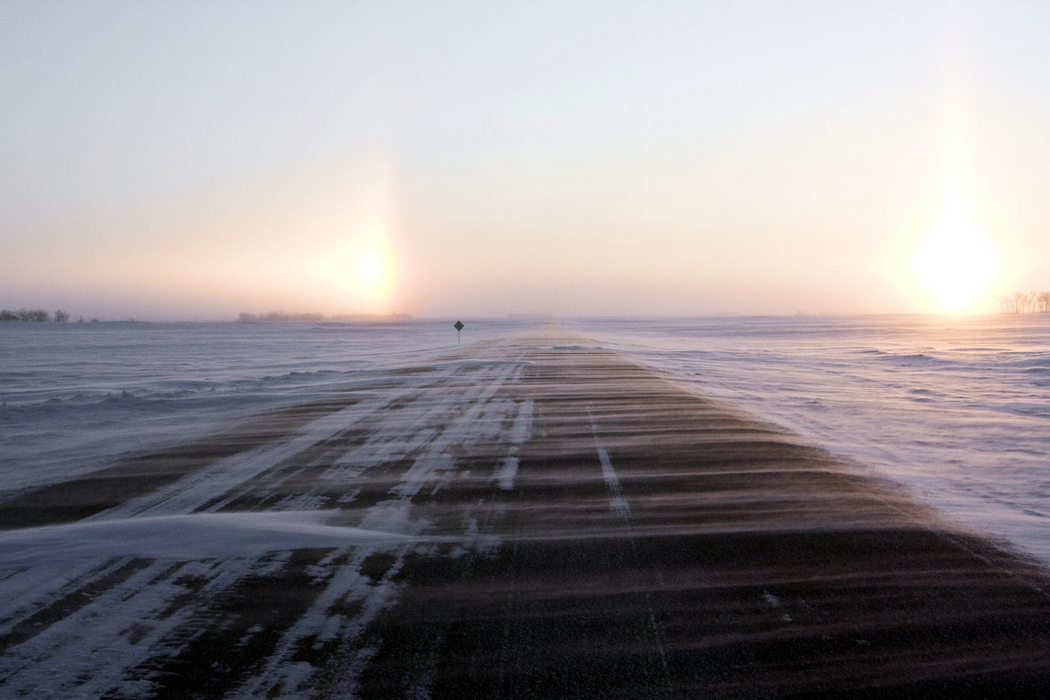
By the next morning, the wind has died down, although the snow flurries continued. When I set out again, the landscape is white and astonishing.

snowdrift on highway

Mile 1869, Canadian border, N.D.

It seems as if there is nobody left on earth. The hills are empty of buildings and if it were not for the tractor paths through the fields, you might actually believe that the acres and acres of sunflowers grew there naturally.

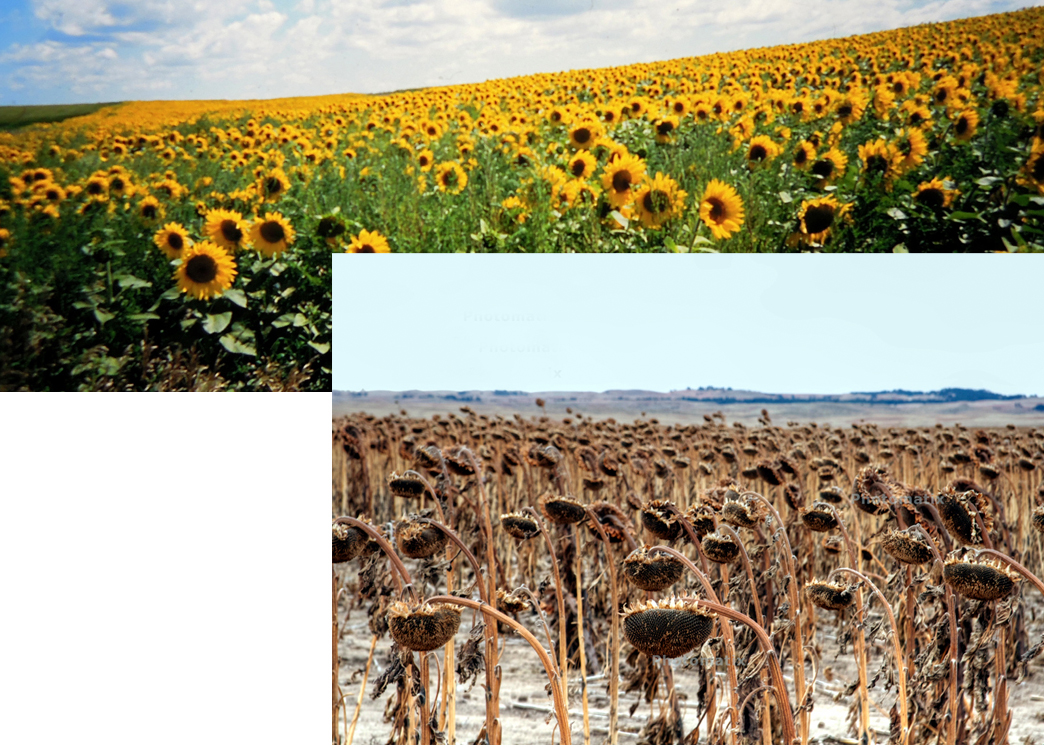
In the summertime, the expanse of yellow is astonishing. I have driven through North Dakota when the sunflower crop is as brilliant as trumpet music.

In October, though, the color is gone and all the heavy seedheads, browned and dried, bend over like so many showerheads — and all facing east.

Sunflowers in two seasons

These giant flowers should not be confused with the roadside sunflowers that cover the Great Plains. Those, with their ten or a dozen three-inch flowers per stalk, swaying in the breeze, are delicate and lacy compared with the commercial variety that grows in the fields.

Each of those grows a single giant flower on a woody shoulder-high stalk with a central disk crammed with the sunflower seeds we nibble on at ball games. But it isn’t as snacks these fields are filled, but for their oil, used in food processing.

You can see them in the summer, armies of them, over the rolling hills, cut through only by the two-lane blacktop and, every few miles, a farmhouse surrounded with its outbuildings, fences and a couple of pickup trucks parked in the gravel driveway.

I first came through North Dakota on a train, some 20 years ago, and I was fascinated by the lonesomeness of the land. Neighbors are miles apart; the only way you know you are on an inhabited planet in the winter is to see the smoke from a distant chimney coming over the snowy rise.

It is this country that Gertrude Stein meant when she said that, “In the United States there is more space where nobody is than where anybody is. That is what makes America what it is.”

And it seems to me, as I finish my odyssey up the 100th Meridian, that it is this Heartland that seems the most American to me. It is this country of Thomas Hart Benton paintings and Hamlin Garland books that seems to hold the nugget of Americanism.

New England may have been the intellectual center of the growing nation and the twin coasts may have driven the commercial development. But it is this central axis, furry with grass, that has been and remains the heart of our country.

It is the Plains that spread out in front of the wagonloads of pioneers and gave them the epic sense of continental expansion.

It is the Plains that separated the Atlantic and Pacific, as guts fill the space inside our skin.

It is the Plains that gave the country its defining metaphors, whether cowboy, Indian, sodbuster, religious migrant, long stretching miles of highway or landscape that must be tamed. We learned self-reliance and cooperation, we learned how to adapt when we must and how to maintain tradition when we could.hundredth meridian sign ND

It is the Plains and the Indian Wars that provided us — second only to slavery in the South — with the guilt that gives emotional complexity to our national naiveté and, when we don’t deny the sin, our depth as a people.

In the cities of East and West, we can pretend that society is paramount and that human beings have charge of the world. It is in cities that theories are propounded.

But in the Plains and prairies, we are forced nakedly into the realization that we live on a planet, with the racing sky above and the blackbirds dotting the snow beneath.

It gives us perspective.

road ribbon

In 1997, I took an epic road trip north along the 100th longitudinal meridian from Laredo, Texas, to the Canadian border. Previously, I covered the part of the trip in Texas. This second part covers the Central Plains. Next will come the Northern Plains and the end of the trip.

cheyenne okla

Mile 631, Cheyenne, Okla.

One cannot forget the Native American presence in the Great Plains. The sense of the Plains, with the Cheyenne and Lakota riding horses across it, looking for buffalo, still is felt in every little corner not yet given over to corn and sorghum.

And one sad reminder of the history of Indians is the Washita River, near Cheyenne, where George Custer and his troops slaughtered a band of friendly Cheyenne Indians who were camped in the snow along the banks of the creek in late November, 1868.

The band, under the leadership of Black Kettle, attempted to remind the army over and over that it intended to remain peaceful.

“We want peace,” he said. “I would move all my people down this way. I could then keep them all quietly near camp.”Washita woodcut
But Custer and his superior, Gen. Philip Sheridan, decided to “make battle.”

In the cold of Nov. 27, Custer divided his troops up into four parties, just as  he would do eight years later at the Little Bighorn. But there was no Native army lying in wait at Washita. Just a village filled with families.

When Black Kettle realized what was going on, he fired his rifle in the air to alert the rest of his band that they should flee for their lives. Black Kettle had seen this sort of thing before: He had lived through the massacre at Sand Creek, Colo., in 1864 and knew what was coming.

But it was too late, the army had already descended on the encampment. Black Kettle was one of the first to be killed, with a bullet ripping through his belly. His wife was killed at the same time.

After the action, Custer reported that he had won a great battle and had killed 130 warriors. A later counts run from as few as 11 warriors and 19 women and children to around 100, mostly women and children.washita battlefield
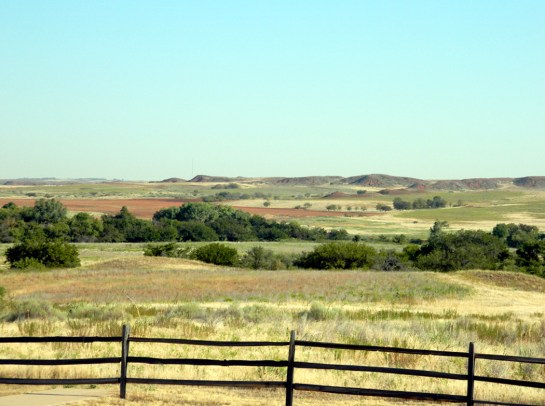
The site of the battle is in a coulee a mile west of town. Most of the countryside around it is farmland and grazing land, but down in the wedge, along the stream is a dark line of trees where the Cheyenne camped. It is a lonely place among the lonesomeness of the Plains.

woodward downtown 1

Mile 705, Woodward, Okla.

County historical museums exist in almost every small town in the Plains. And there is a peculiar sameness to them.

They all seem to have the identical items on view, but gathered from their different locations. After wandering through a few of them, you come to know what an old-time dentist chair looks like, or the old telephone switchboard, or the pigeonholes from the old post office.

There are white-enamel ladles, wagon wheels, butter churns and moldboard plows. There are “Old Flo” blue china sets, cornucopia-topped Victrolas and immense oaken bankers’ desks.

But it is the sameness that is important. For, north of Texas, the Great Plains is surprisingly homogenous culturally.

Whether it is Oklahoma or North Dakota, the same rugged immigrants plowed the land. German here and Irish there, but otherwise, the same.woodward museum
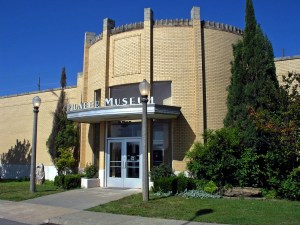
Like the land itself, the variation is slight.

One of the best tended and displayed of these museums is the Plains Indian and Pioneers Museum in Woodward, Okla. It tells the familiar history: a land occupied by Native Americans; incursions by whites; a growing cattle industry on the open range and cows replace buffalo; the raising of fences and the building of farms.

In this portion of Oklahoma, the white invasion began in earnest in on Sept. 16, 1893, when northwest Oklahoma was opened to permanent white settlement in the third great land run in the state. Some 100,000 homeseekers carved the prairie into 160-acre homesteads in a single day. Almost overnight, towns popped up — first as tent cities — as land offices registered homestead claims.

Woodward itself sprouted 500 buildings in its first three months of existence. The railroad came through.kansas sod house
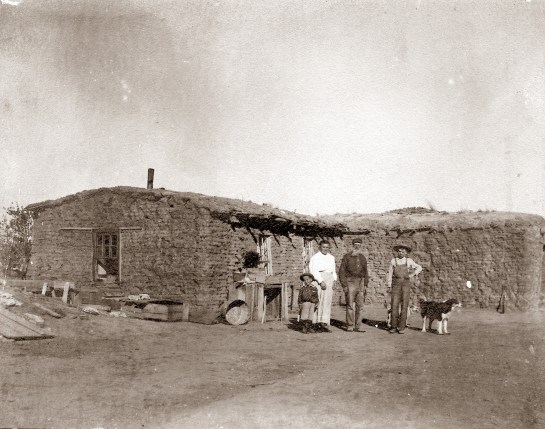
Outside the towns, however, buildings were hard to come by. Many settlers made their homes in dug out hills. Others built up “soddies,” or sod homes made of dirt bricks spaded from the turf. In those dusty, buggy, leaky homes, they set up their lives, cooking, sleeping and freezing their way through winters with nothing to burn in their stoves but buffalo chips or cowpies, and sharing that warmth with mice.

Yet, they made the best of it, usually whitewashing the mud walls, tamping down the dirt floors, bringing in their sideboards and pianos.

If they succeeded in busting through the soil knotted with grass roots, planting and harvesting their potatoes, wheat or corn, they may eventually have built a lumber house.

But much of the farm life of the Plains was disrupted in the 1930s by drought and the blowing dust. They had to adapt, and those who didn’t move away, did.

The “dusters” sometimes blackened the daytime sky for a week at a time, stuffing sand under the doorjambs and blowing the precious topsoil to Virginia and New York.

Now, the crops are mostly forage corn and milo, mixed with wheat. Cattle still take up a lot of the land, but there is a change in the wind — literally and none too pleasantly.

“There is a pig boom going on in Oklahoma,” explains Louise B. James, director of the museum. Huge hog farms are being built across the Plains, to make pork intended to pick up the slack in beef sales.hog snout
“They make pork chops and Spam, yes,” says James, “but I’m boycotting them. It doesn’t seem to be doing any good, though.”

Runoff from the farms is seriously polluting streams and groundwater.

“It’s real touchy stuff. A lot of people really hate the pigs. This is cattle country, but many people look to the hogs as salvation.”

Meanwhile a law is slowly working through the state legislature that would control the size of the hog farms.

dodge city

Mile 747, Dodge City, Kan.

I took up life as a pedestrian in Dodge City.

This wasn’t a state I would have chosen for myself; it was brought to me when my rental car coughed, wheezed and then decided to take a nap in the turn lane of Wyatt Earp Boulevard, which is both Main Street and Motel Row in this Kansas cattle town.

The problem, I was told, was not really bad and could be quickly fixed, if they could find the part they needed. Unfortunately, the nearest part turned out to exist in Oklahoma City.

“We can have it here tomorrow,” they said.

Which was going to leave me on foot. First they drove me back to my motel so I  could arrange for the room. The man who drove me was 83.

“I came to Dodge City in 1921 in a covered wagon,” he tells me.

“We came from Colorado. My father worked for the government.”

I asked him what had changed over the years.

“It’s all changed,” he answered. “There used to be a livery stable on this corner and over there,” he motioned to a vacant lot, “that used to be City Hall.”

The railroad tracks run through town, paralleling Wyatt Earp Boulevard.boot hill

“That used to be Front Street,” he says. Now Front Street is a tourist trap behind a chain link fence where you pay $5 to see “Boot Hill” and a streetfront of Hollywood-set buildings where you can get a sarsaparilla at the “Long Branch” saloon or pay to have the printer work up a wanted poster with your name on it.

“Is that the way Dodge City used to be,” I ask.

“Hell, no,” he says. “That’s just for tourists.”

He has lived in Dodge for most of his life.

“Do you like it here?”

“Yes.”

“Why?”

“I don’t know nothing else, I guess.”

For the rest of the day, I walk. It wasn’t a first choice, but Dodge  City is light on public transportation. There are no buses and when I call the taxi company, I get a recorded message that asks me to leave my name and number and they’ll “get back to me.”

So, I head off in the direction of downtown, following the Atchison, Topeka and Santa Fe rail line (or more accurately, in this age of railroad megamergers, the BNSF rail line). On the other side of the tracks are green fields and old houses.

Grasshoppers jump under my feet like popcorn.dodge city grain elevator

The gigantic grain elevator roars with cooling fans and a train pulls by me, squealing and humming.

After so many days of driving, it is a revelation to be on my legs once more. When the wind shifts, I can smell the feedlots on the edge of town.

Wyatt Earp is lined with Taco Bells and Burger Kings. It looks like every generic “Miracle Mile” in the West.

The Dodge City most people think of from Gunsmoke reruns is a flat town surrounded by the Hollywood version of the West, full of woods, deserts and mountains.

There are no mountains anywhere near Dodge City, but surprisingly, the downtown is built on one of the few hills in the area. Walking through it means climbing steep streets paved with bricks.

The Chamber of Commerce plays up the “Old West” angle and everywhere you see come-ons that tout the “gunslingers” and saloon girls.

The prize, though, must go the the Gunfighter’s Wax Museum, which is even cheesier than it sounds. Taking up the second floor of the Kansas Schoolteachers Hall of Fame, it’s dark corridors are filled with cartoonish murals lit with blacklight. There’s Jesse James and Davy Crockett, although I never heard of Crockett called a gunfighter before.

But then, John F. Kennedy wasn’t a gunfighter, either and he’s here, along with LBJ and Dracula.dodge city bull statue

A gigantic bronze longhorn steer acts as official greeter for the town: It is the first thing you see when you reach downtown.

It commemorates the hundreds of thousands of “beeves” that were herded to Dodge City in its prime, to be shipped on the railroad back to markets in the East.

As I walked back to my motel after dinner, I saw a cloud of about 2,000 or more blackbirds trail across the sky like a river, slowly filling the sky channel from one horizon to the other, then the first birdstream was joined by a second, running right beside it, with its own several thousand birds.

It was a monumental Western sight, a Milky Way of black stars spread out over the twilight. When the first herds rode through, a third followed and after they left, a fourth: a sky with something like 10,000 blackbirds, twisting and skittering like sparks from a fire.

oakley kansas sign

Mile 880, Oakley, Kan.

Vi Fick couldn’t stop collecting shark’s teeth. She collected so many in the fossil beds near Monument Rocks in western Kansas that she didn’t seem to know what to do with them.

So she wound up giving them to the tiny community of Oakley, Kan., providing, she said, that they erect a building for the collection, which included not only the 11,000 teeth, but dinosaur bones, mammoth teeth and the hysterical paintings she created with them. The museum opened in 1972.fick museum exterior

For Vi Fick had something of the crazy folk artist about her. She painted oil paintings in the learn-to-paint-from-the-TV-painter school, but she added a touch of her own with bits of seashells, bones and shark’s teeth.

The Fick Fossil and History Museum is one of the must-see stops in northwest Kansas. Not only will you find her bones and her pictures, but a decent local history museum, with its usual collection of old Victrolas, antique dentistry tools and antediluvian flour canisters.

The fossil collection is genuinely impressive and scientifically identified. Some of the fossils are from Fick, others from the collection of paleontologist George F. Sternberg, including a 15-foot Portheus molossus, a kind of huge prehistoric fish.

But you have seen fossils before, I’m sure. What you probably haven’t seen is a painting of the American flag with sharks’ teeth for all the stars and the stripes covered in more teeth, pointed one way for the red and the reverse way for the white.

Nor have you likely seen an entire wall lined with 2-foot tall oval picture frames — 30 of them — each filled with neat, symmetrical arrangements of sharks’ teeth.vi fick art

There are also the great seals of the U.S. and Kansas, outlined in the teeth.

There is a photograph of Vi Fick in the museum. You can tell from her modest dress, set with a cameo pin at the collar, and from her well-scrubbed face that she was a hard-working, pioneer-stock God-fearing woman.

But you can likewise tell from the pile of tight white-haired curls, gathered in a football-shaped pompadour over her head and rivaling it for size, that she wasn’t completely in control of herself.

If you have any doubts, just look at her eyes, wider than any normal person feels comfortable holding them and staring out at you with the intensity of thumbtacks.

It may be true that the obsessive dedication Vi Fick felt toward her sharks’ teeth and her wacky paintings is the very dedication needed to make a successful life on the farm in the Great Plains, where everything in the natural world conspires against you.

oberlin kansas 2

Mile 942, Oberlin, Kan.

The wind blows across the plains the way it blows across the ocean, ceaselessly, raising great waves in the grasses and grains that cover the great sea-swell of the hills.

It is not possible, once you have been here, to imagine the plains without the blow. Spiny tumbleweeds barrel across the road in front of you and if you look in your rear-view mirror, you may very well see one caught in the grille of the  car behind you.

Near Oberlin, Kan., I saw the biggest tumbleweed I have ever seen, and the darkest. Usually, they are a kind of straw-yellow and a foot or two in diameter. The one that blew straight northward with me on U.S. 83 was about four feet in diameter, rotating on its edge like a wheel. It sped along in a 40-mile-per-hour gale, turning top over keel for a hundred yards down the highway.tumbleweed 1

When I passed it, it was still following me till I lost sight of it in the back window as I drove up over a rise. For all I know, it made it to Nebraska just behind me.

The wind rattles the windows at night and if it gets under your house, can seem to be in immediate danger of lifting it in the air like a kite.

The worst winds, in terms of consistent blow, are found in the panhandles of Texas and Oklahoma, and western Kansas and Nebraska, where the average hourly wind velocity climbs to 12 and 14 miles per hour.

As I drive through, the wind runs a constant 40 mph, gusting to 50. When I step out of my car, the wind rips my shirt clean out of my trousers.

When I ask in North Platte about the winds, an old town resident thinks carefully and tells me, “On Aug. 13, 1947, we had a calm day. I remember it well.”

bailey yard 2

Mile 1039, North Platte, Neb.

Union Pacific’s Bailey Yard in North Platte, Neb., is the largest railroad classification yard in the world. Every day, 10,000 railroad cars in 120 trains run through on the 260 miles of track telescoped into a yard 8 miles long.

It runs through the city and out for miles to the west, where an observation tower is built for trainwatchers.

But, when I drive through North Platte in October, the yard is also something of a problem.

This fall has brought one of the best harvests ever to the Great Plains and there is concern that there are not enough railroad cars to transport all the grain, corn, sorghum, milo and beets.

“North Platte is reportedly one of five railroad ‘bottlenecks’ in the Union Pacific system that are causing disruption to business and industry across the country,” I read in the North Platte Telegraph.

The problem is the merger between Union Pacific and Southern Pacific railways. Bookkeeping and bureaucratic snafus have tied up some 10,000 railroad cars in limbo and there are not enough locomotives to redistribute the needed cars.

Senator Bob Kerry (D., Neb.) expressed his concern about “delays in grain car deliveries, pick ups and system gridlock,” an article reads.

“These shortages and backlogs are especially troubling since the harvest season has barely begun,” the senator said.north platte grain elevator
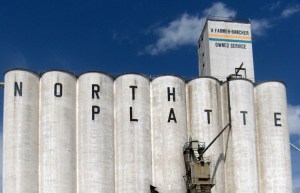
Nebraska beef producers were running out of molasses, which they mix into their cattle feed.

Concern has been expressed for the health of Nebraska cattle. UP delivers entire train cars of molasses that beef producers use to make feed more appealing to their cattle.

Trucks have been hired to move the molasses, but a business spokesman said that trucking “can’t continue to handle loads of this magnitude.”

“We have a plan in place to fix (the problem),” said UP Chairman and Chief Executive Officer Dick Davidson.

The company said it had purchased 288 new higher-horsepower locomotives this year and would buy another 229 next year. To help with the short-term situation, Davidson said, 214 locomotives have been leased during the past few months.sandhills square
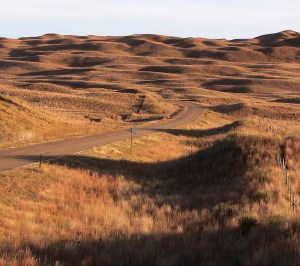
North of the town, the Sand Hills spread out like a lunar landscape, if they grew grass on the moon. Ducks fly west along the Platte River so low I can see their eyes.

And when I reach Thedford, at the edge of the Nebraska National Forest, the wind is blowing at 30 mph, with gusts up to 50 and there are people out on the golf course, playing.

Next: The Northern Plains