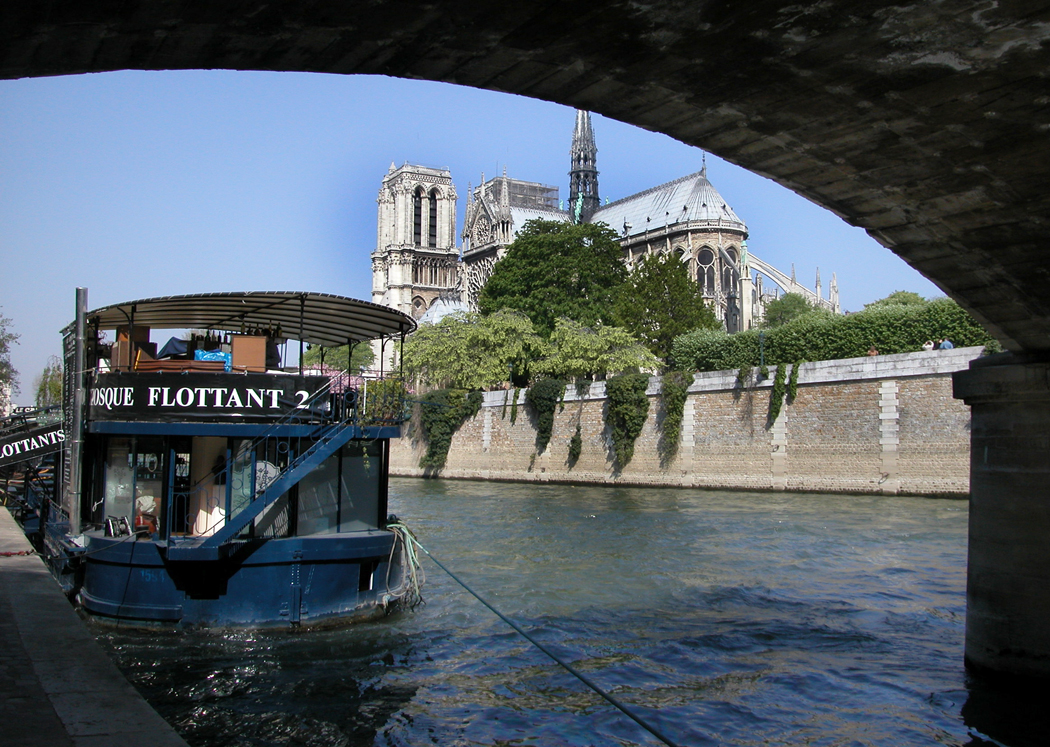
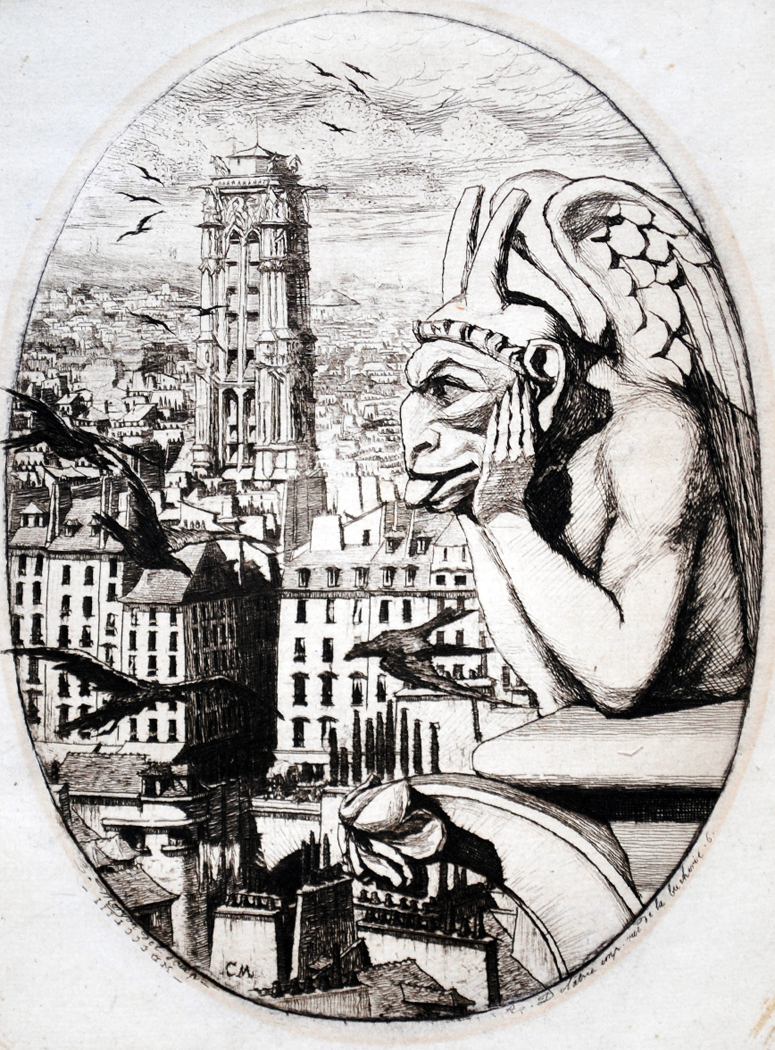
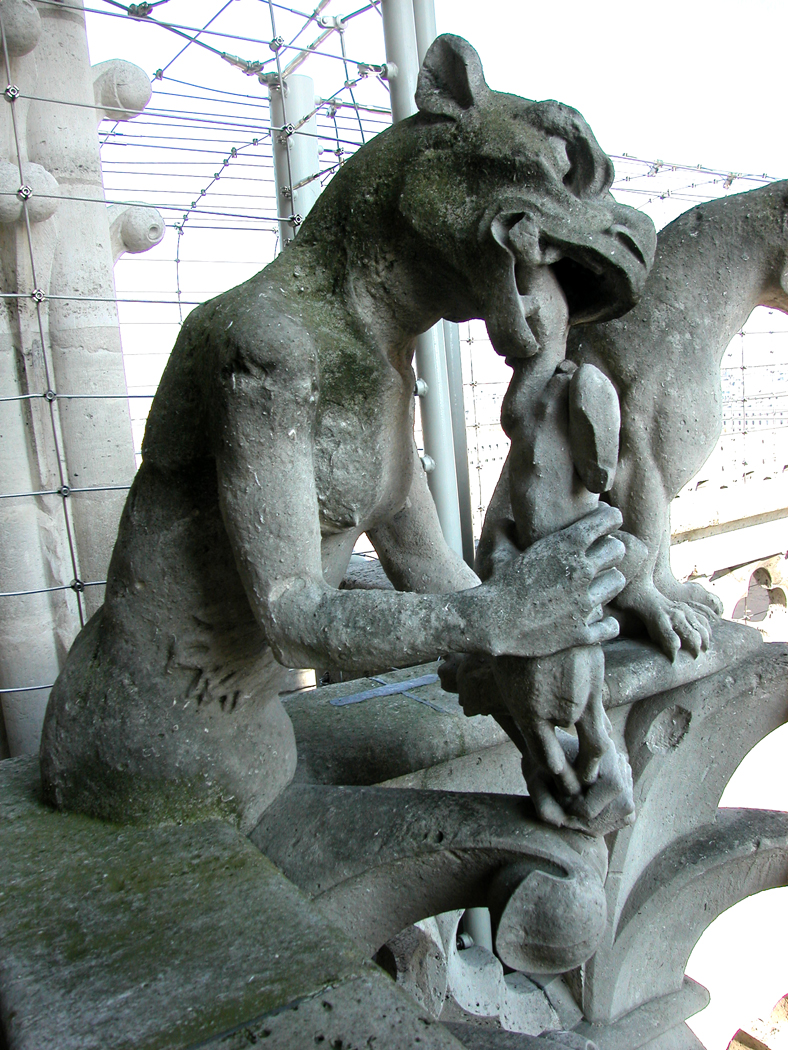
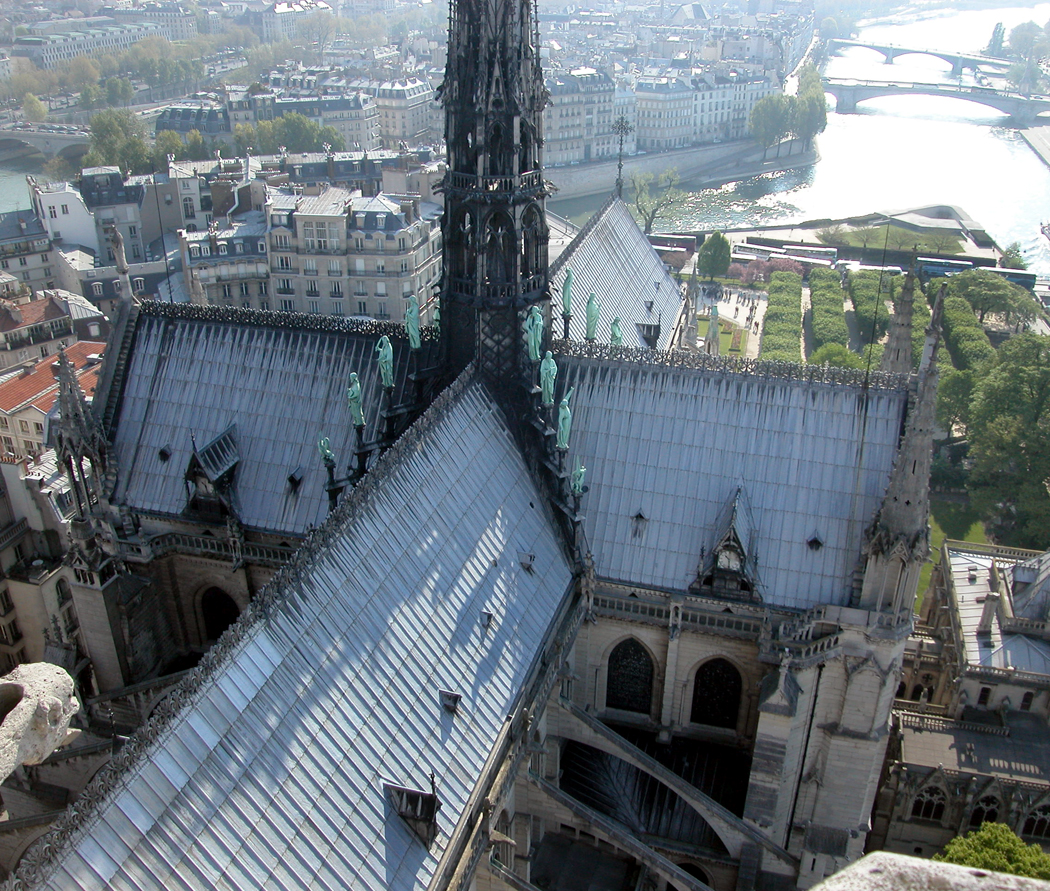
Archive

Tag Archives: travel

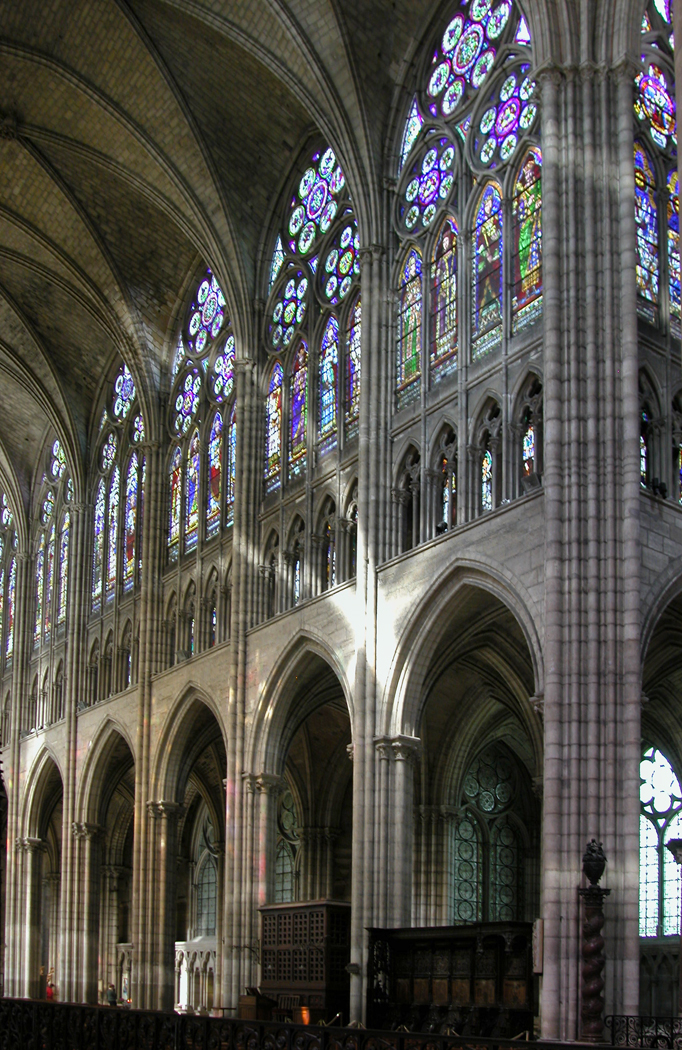
We have now been to Chartres three times, and I pray we may get back there yet again. There are a few places on this planet that impress themselves into your experience so profoundly they define the joints and hinges of your biography, just as a marriage, birth or death can. Among those for me have been seeing the cave paintings from 30,000 years ago in the Vézère valley of France, standing in the breeze-twisted grasses of the Cape of Good Hope in South Africa, dawn at the Grand Canyon in Arizona — and Chartres Cathedral, some 60 miles southwest of Paris. looking into apse
 
Chartres is the archetype of northern Gothic cathedrals, and the one perhaps least touched by time and remodeling. Entering the cave feels like spelunking: it is a cave, huge, dark, cool, chthonic. On our first visit, in 2002, I was admittedly unprepared for it. As you will read in these notes, I was slightly underwhelmed; I must have been expecting something different. But in each subsequent visit, I have become more and more moved. For our first visit, the sky was a bit hazy, the temperature touching on the raw, and the interior of the cathedral was darker than it has been on our revisits. We made a trip in 2006 that made the rounds of the cathedrals in northern France, from Paris to St. Denis to Chartres to Amiens to Beauvais to Laon to Noyon to Rheims, and seeing them all has given Chartres pride of place. It is not just the architecture, not the sculpture or the stained glass — there is something singular about the site, as if it were the champion, having taken on all challengers and knows it has nothing left to prove. It was built by businessmen to advertise their market — the way cities now build NFL stadiums — but it has captured something sublime, something that speaks to the magnum misterium. If I were not an atheist, I might call it spiritual, but that word is so overused, it no longer has any real meaning. Suffice it to say, a day in Chartres cathedral lifts you out of the quotidian and places you among the stars. I am embarrassed that I was so thick-brained on first seeing it, that it could not penetrate.

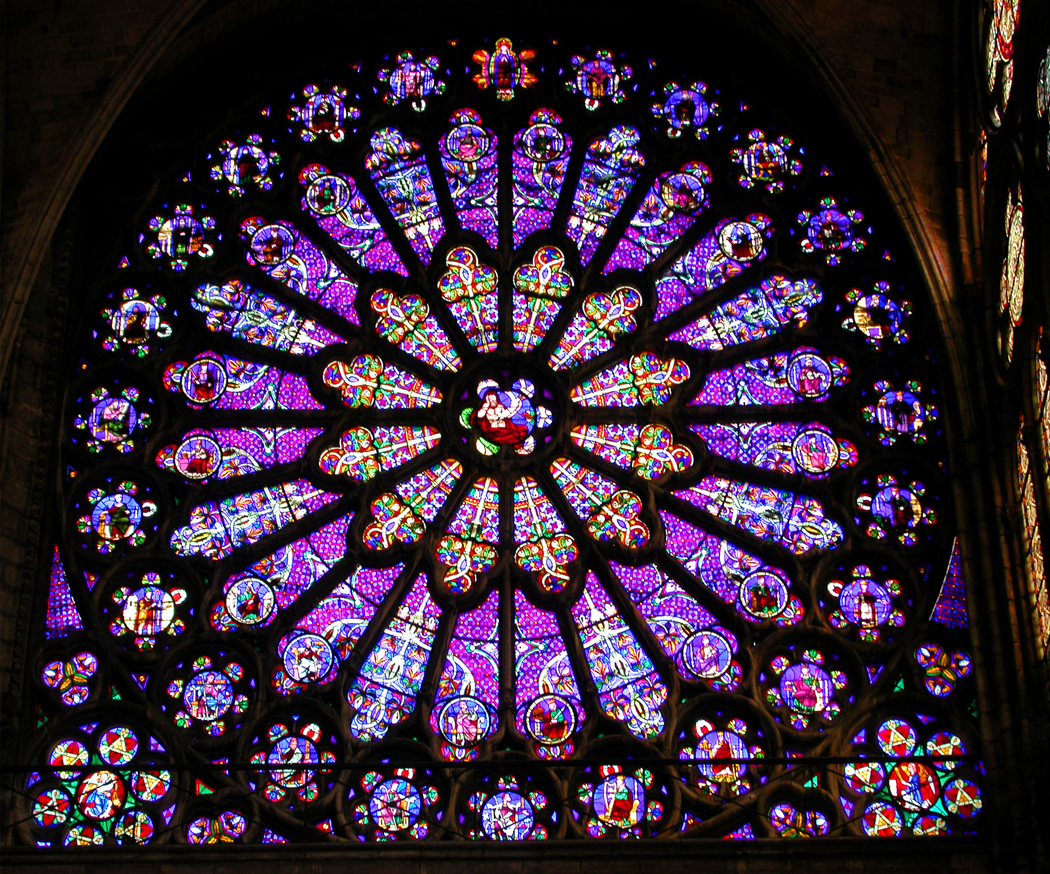
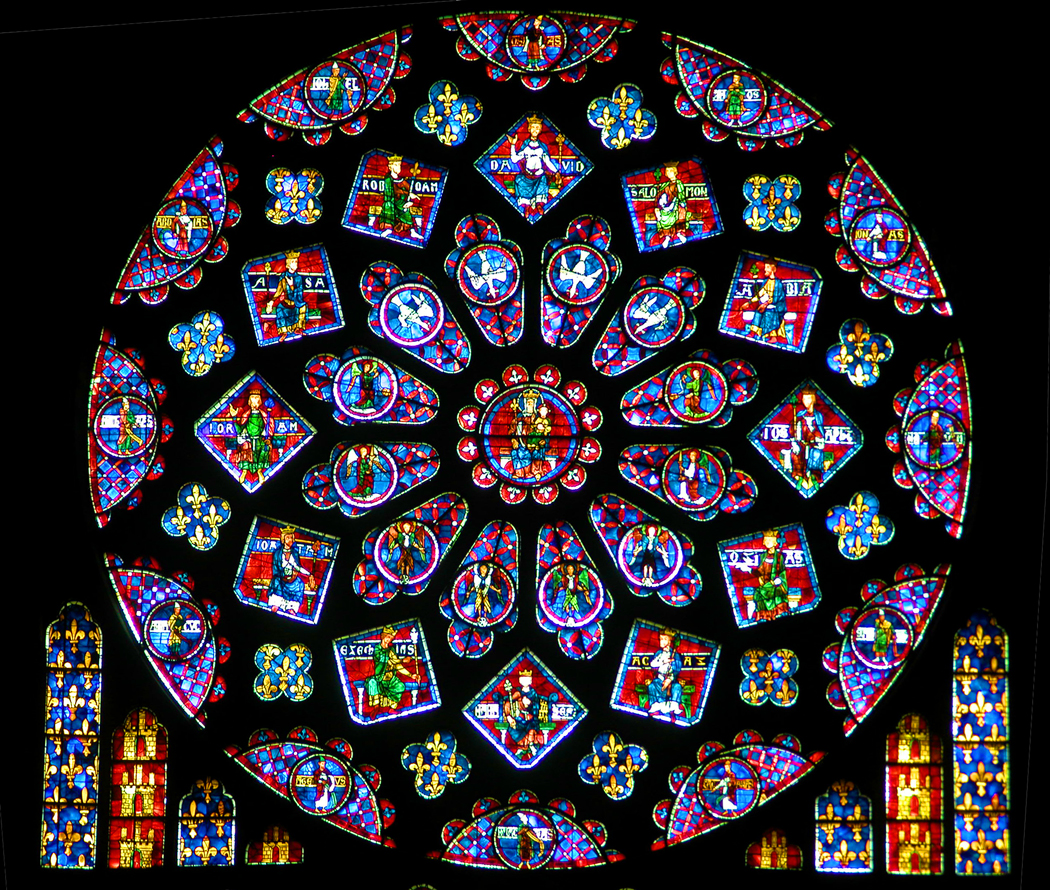
The north rose window remains the single most beautiful man-made thing I have ever seen — ever experienced.

There will be more photos with this entry than normal; click on any of them to enlarge.

row of saints horiz
Chartres
Tuesday, April 2

As they say about football: That’s why they play the game.

west facade fullYou can never know what an experience will be like until you have it. You can read about Chartres and see the photos. And you can visit other cathedrals, as we have on this trip. But you have to be there, at Chartres to see how it is different.

This is not a panegyric to Chartres. Others have written them. My reaction is a bit different. I was surprised to see how sparse the cathedral is. After Notre Dame de Paris, I was expecting something a little more crenelated, more decked out, more flamboyant.

After all, Notre Dame de Paris was an early example of Gothic architecture. Chartres is considered High Gothic. It was followed by Rayonnant and Flamboyant styles, each increasingly geegawed up.

But Chartres is a veritable Spartan of cathedrals. Her west facade, for instance, is spare in the extreme, with only a few decorations, not counting the portals and their sculpture. royal portalBut those portals are rather small and restrained, unlike their cousins in Paris. You almost get the idea of a facade that isn’t finished, that is waiting for someone to come along and add the finials, Hebrew kings, garlands of trefoils and quatrefoils.

Instead, it almost looks like the Gothic cathedral equivalent of plywood.

We walked first around the building, from the facade to the south transept, around the apse and treasury, along the north transept and back to the front.nave

Yes, the portals of the transepts are splendid, rich with sculpture. But the walls of the building are generally plain.

And when we went inside, we were blinded by the dark. It is a dimly lit nave — again contrasting with the brightness of Paris, to say nothing of Saint-Chapelle.

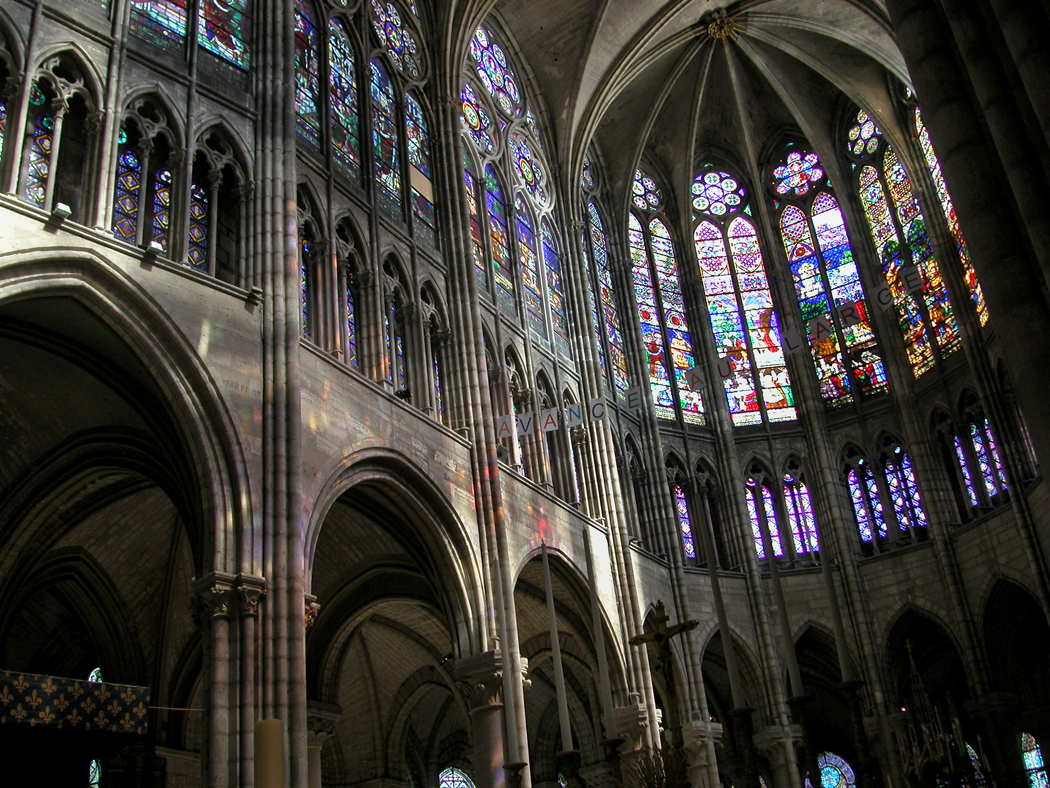
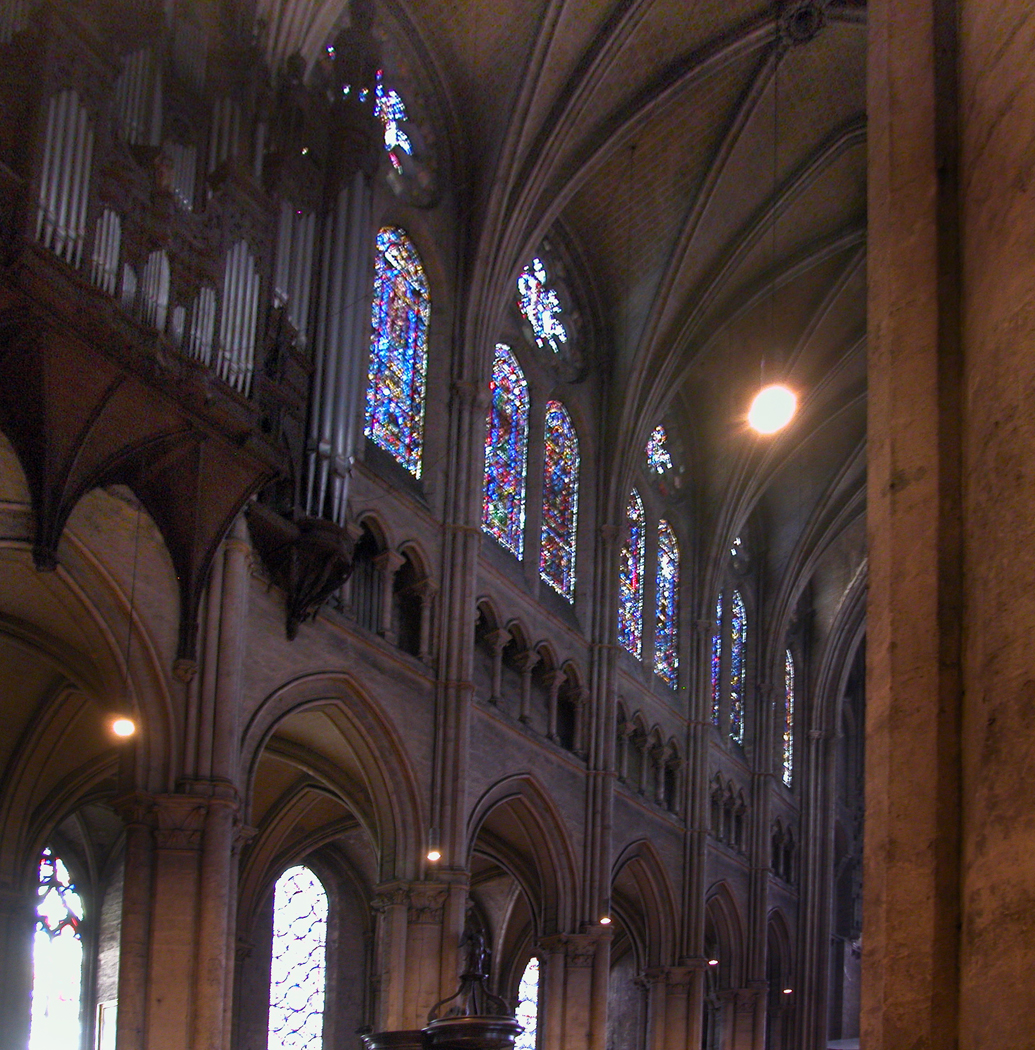
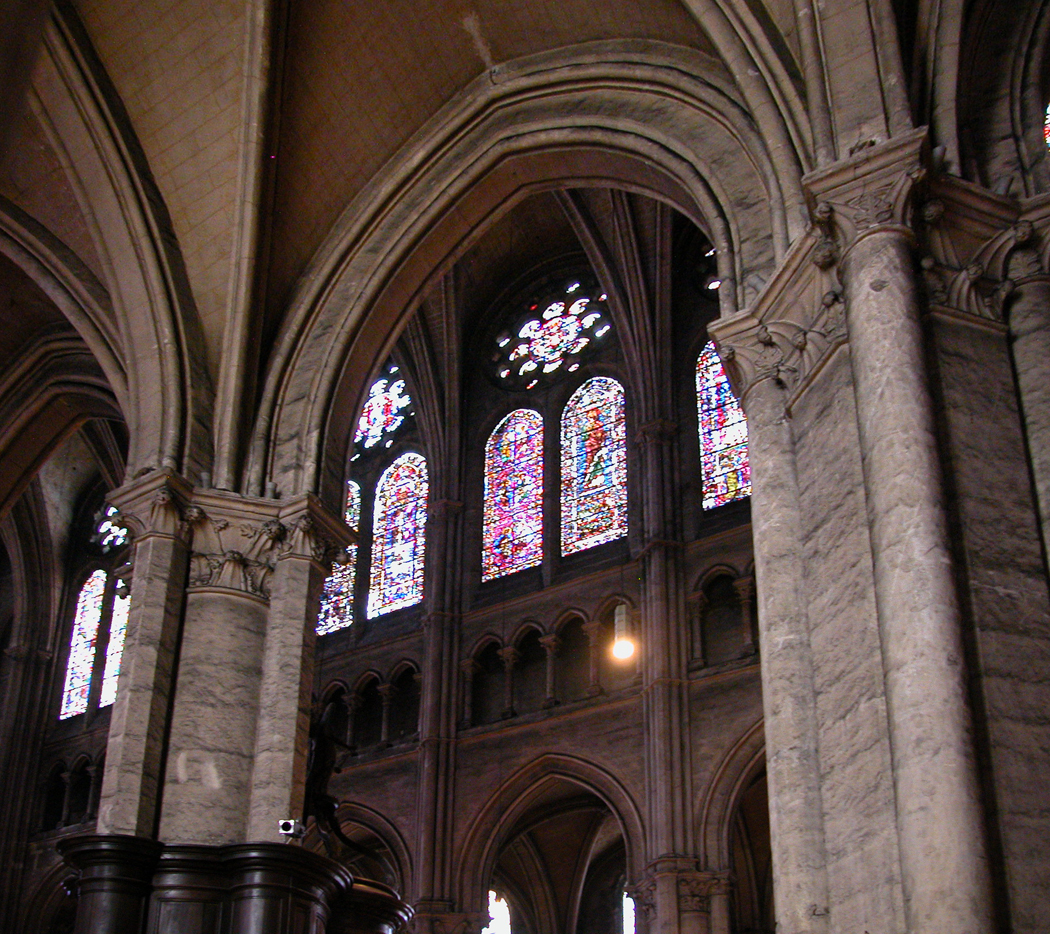
The proportions of the nave seem almost primitive. The large aisle arcades take up almost half the height of the nave. The small triforium leaves room for a rather scaled down clerestory. The result of these odd proportions is that not much light drifts down to the nave floor. It takes quite a while for your eyes to adjust.worn floor maze

When they do, there is a good deal of wear to be seen. Not only is the stone floor worn wobbly, but the vaulting in places is peeled or exfoliated, showing some brickwork behind the stone.

The rose windows are also smaller in proportion to their settings than those of Paris.

The west rose window, in particular, is at least half stone. The tracery is heavy and dense, leaving only small patches of glass to shine. Unlike the Paris rose windows, this one seems almost a crude, early attempt at constructing one.west rose window exterior

The north and south rose windows are more elaborate, but even they are small in comparison with the space of the transept walls. They could easily have been made 20 percent or 30 percent larger without overwhelming their setting.

The interior almost gives you the feeling of an empty apartment, after someone has moved out. Where are the paintings, the furniture, the curtains? In Chartres, where are the windows, the interior carving, the elaborate bosses in the vaulting?north rose window

Of course, we didn’t see Chartres in operation, as we did Paris. Perhaps it has the same awe inspiring grandeur when a mass is being said.cathedral on the hill

And you cannot fault its setting, on the hill above the town. From miles around, you can see the twin towers looming. It was the first thing we could see from the train arriving in the morning: Those towers poking up out of the countryside.statues 2

One of the reasons Chartres is so highly prized is because so much of it is original. The statuary at Paris is cleaner and more neatly featured. But then, it is only 150 years old, having been restored by Viollet le Duc in the 19th century. Viollet le Duc was a magnificent man, and his restoration work at Paris is convincingly original looking. You don’t sense much of the 19th century in it.

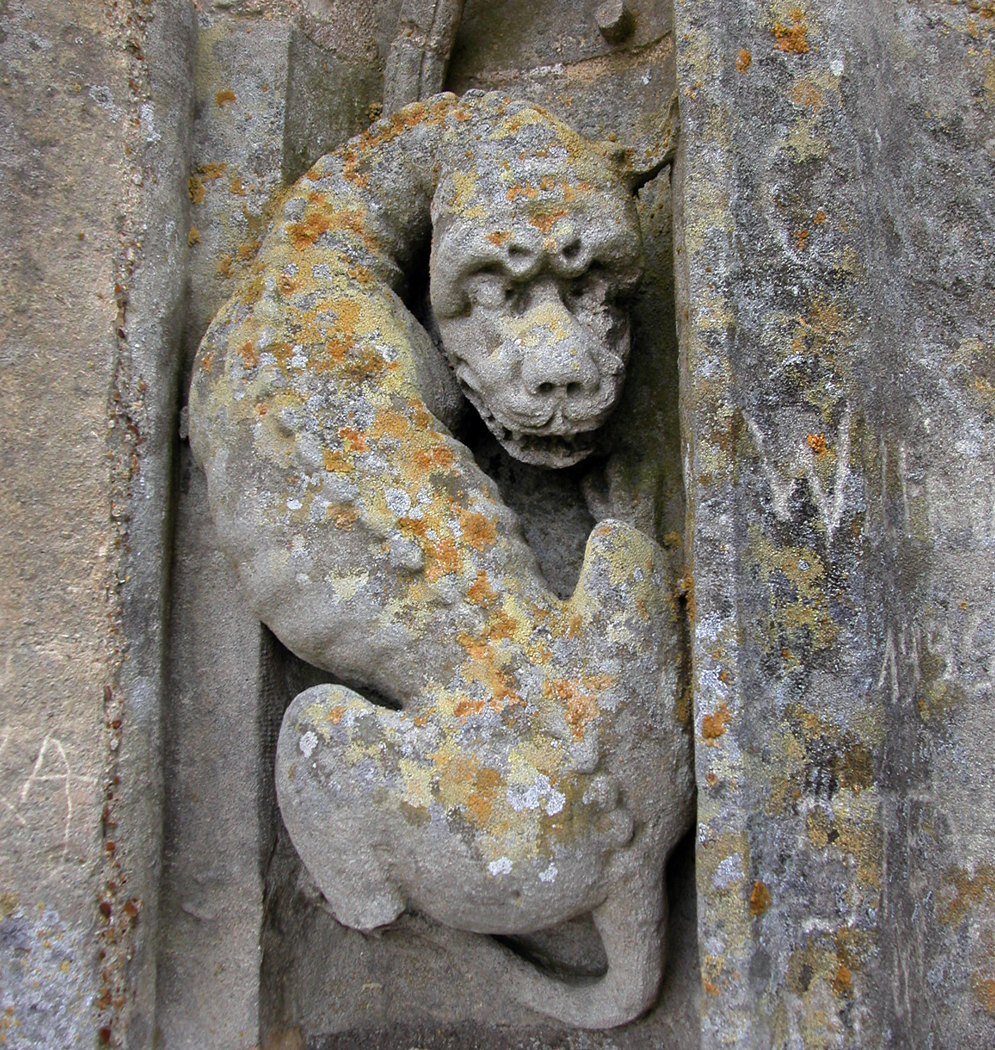
But it is still pristine. At Chartres, the statuary is weathered. You can see the lichen growing on the stone.

Even the walls of the cathedral sport tufts of daisies high up, in unlikely places, growing straight out of the masonry.north transept from roof

The limestone is mossy, lichened and eroded. Paris has only recently been sandblasted. Its stone seems newer — although there is plenty of erosion to go around there, too.

But Viollet le Duc’s restoration has made Paris look fresher than her matronly cousin in Chartres.

Don’t get me wrong. I don’t mean to pooh-pooh Chartres. It is glorious. And it is the very prototype of the high Gothic. But there was a certain musty odor in the nave; Paris smelled more urban, more used.

If I sound disappointed, I don’t mean to. This was one of the true high points of our travels. We spent 12 hours from the time we left the hotel in the morning till the time we returned. With an hour each way on the train, and time out for breakfast and lunch, that left a good 9 hours spent with Our Lady of Chartres. We spent that time feverishly. I photographed every one of the main sculptures of the portals, and a good deal else beside.south fleche

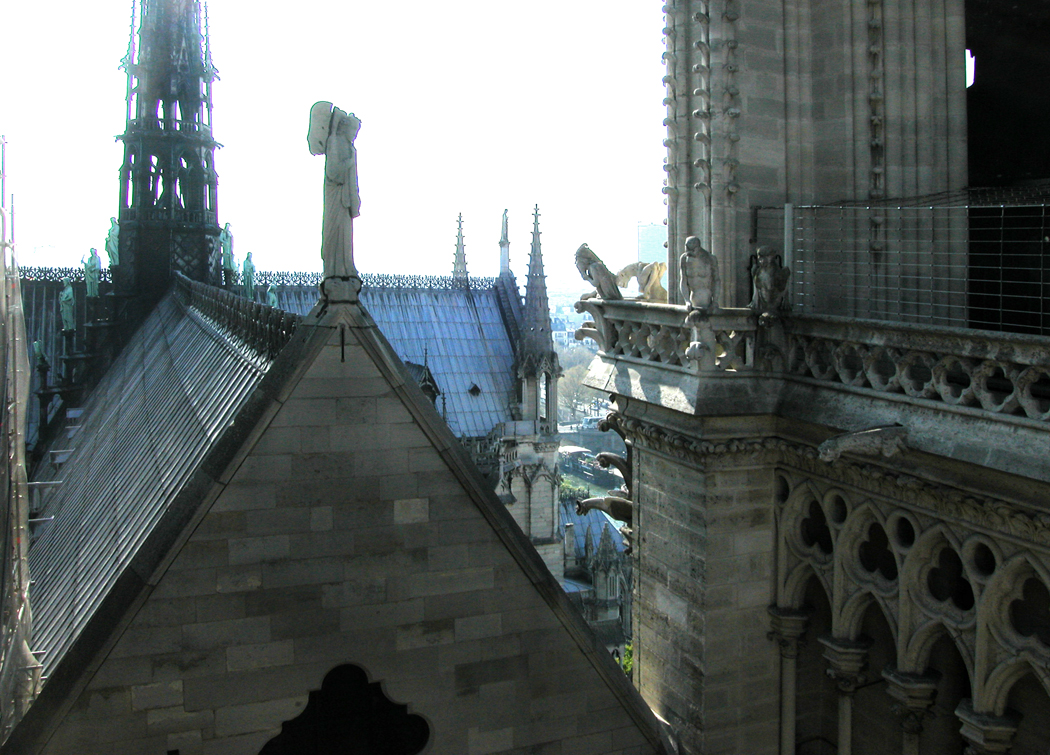
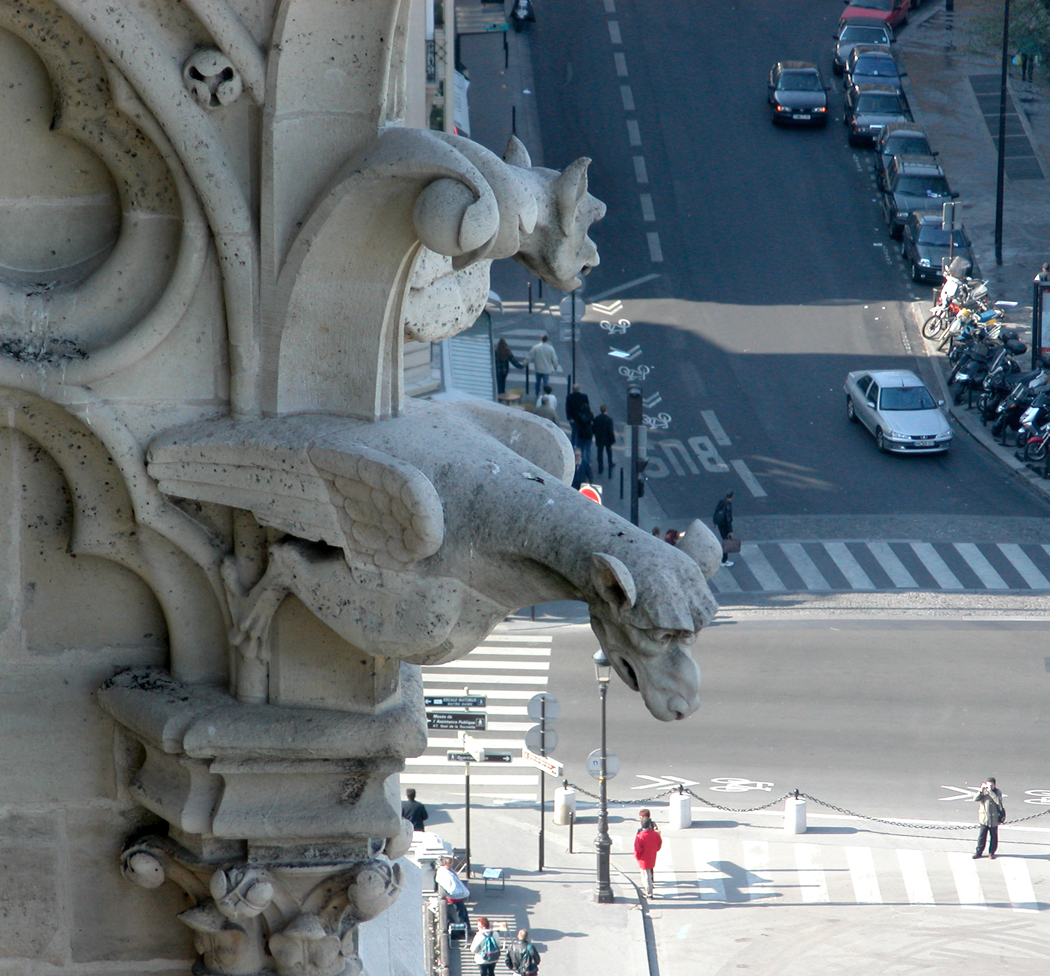
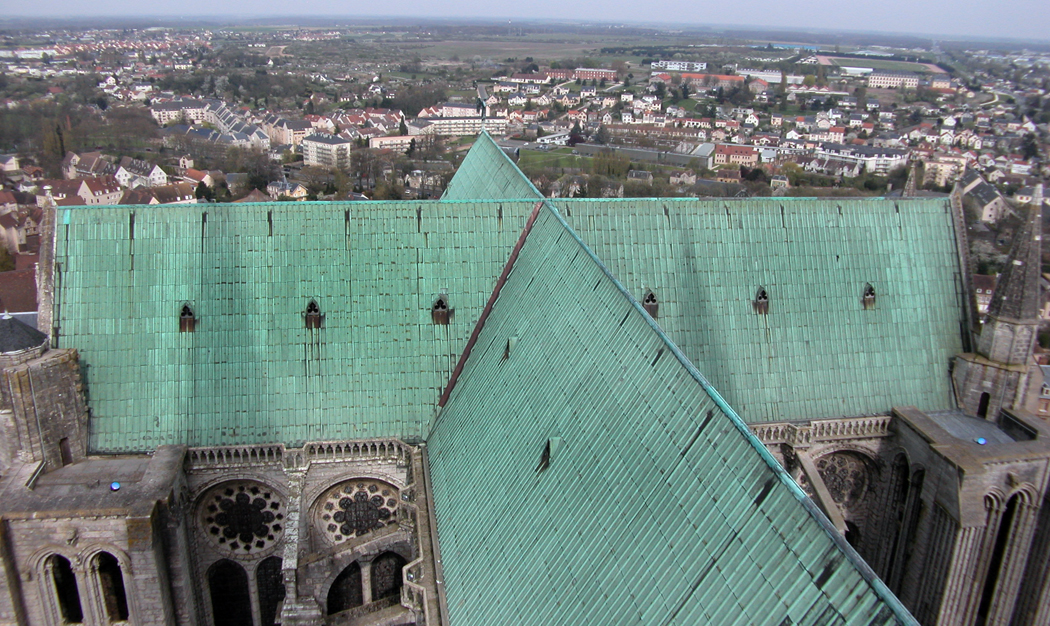
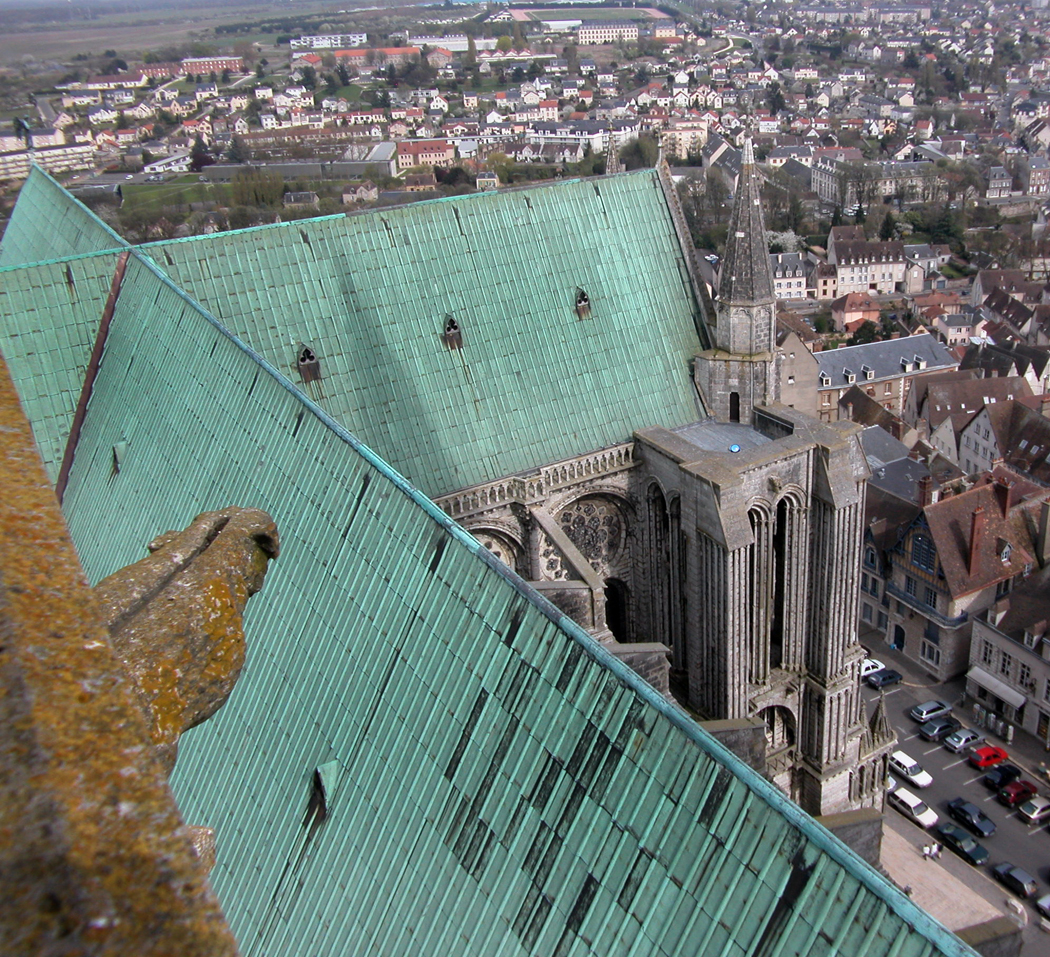
I walked the eleventy-hundred stairs up the north tower and dangled acrophobically over the roof, the bell and the south tower, taking photos of gargoyles, tracery and stone foliage. gargoyle pairLiability laws must be quite different in France. In the U.S., they would never allow anyone to climb up grotesquethose stairs, let alone hang out over the precipitous drop, with its low balustrades and that steady breeze that must often become a wind.

Visiting Chartres was one of the highlights of our lives.

Now we have experienced it, have it in our blood. This is very different from ID-ing the photos in the art history textbook.

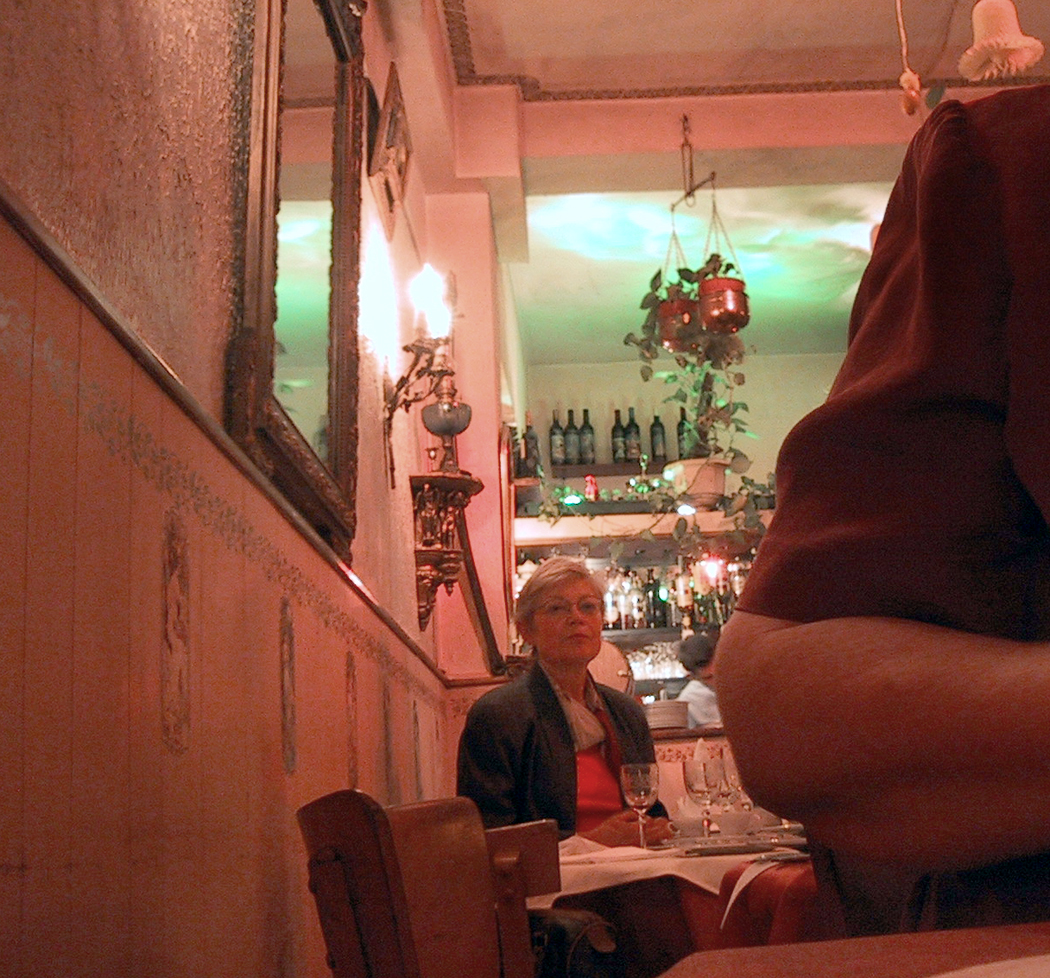
For lunch — because we have to mention such lowly things among the lofty ones of the cathedral — we had a pot au feu at the Cathedral Bistro, just across the courtyard from the south nave exterior. As we sat eating our boiled beef, potatoes and turnips, restaurant interior with tablewe could see the masonry through the plate glass window of the restaurant front.

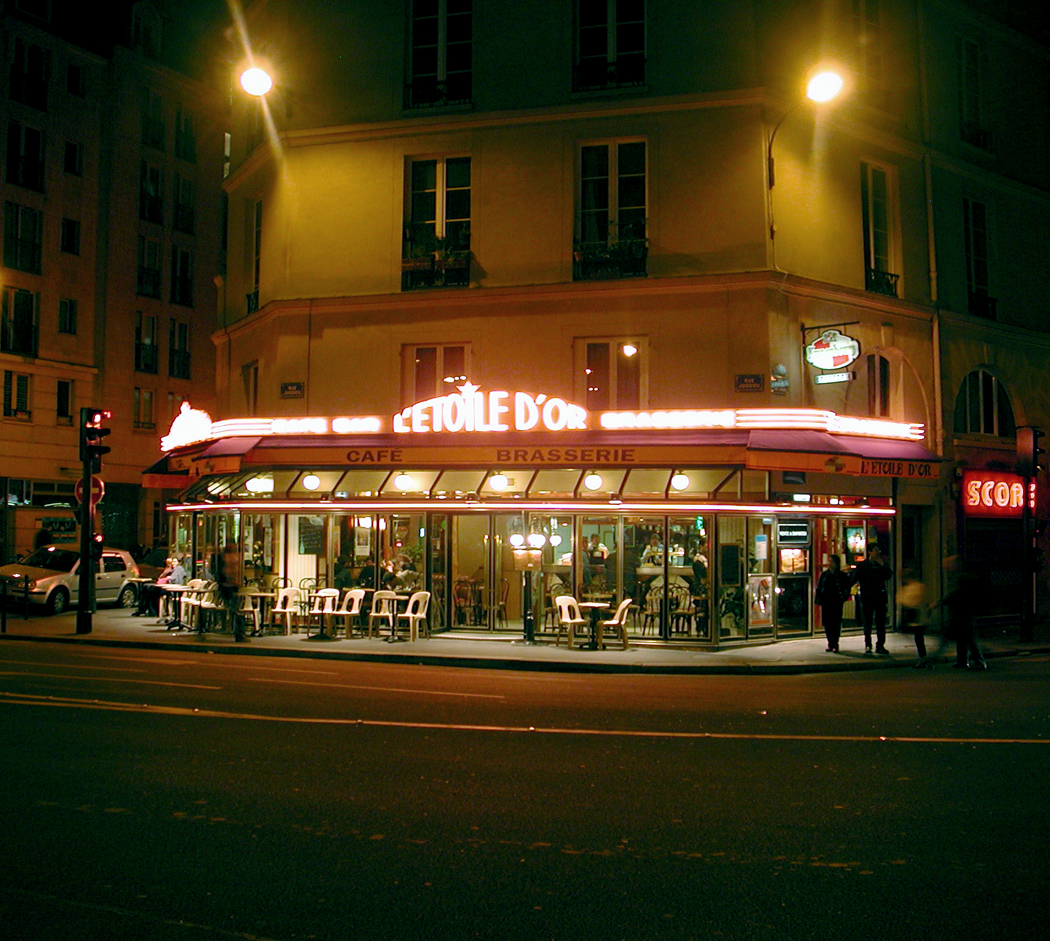
And when we finally got back to Paris, we went down to L’Etoile d’Or and had a cassoulet with duck and sausage. C’est magnifique.

Carole’s highlights from Chartres:

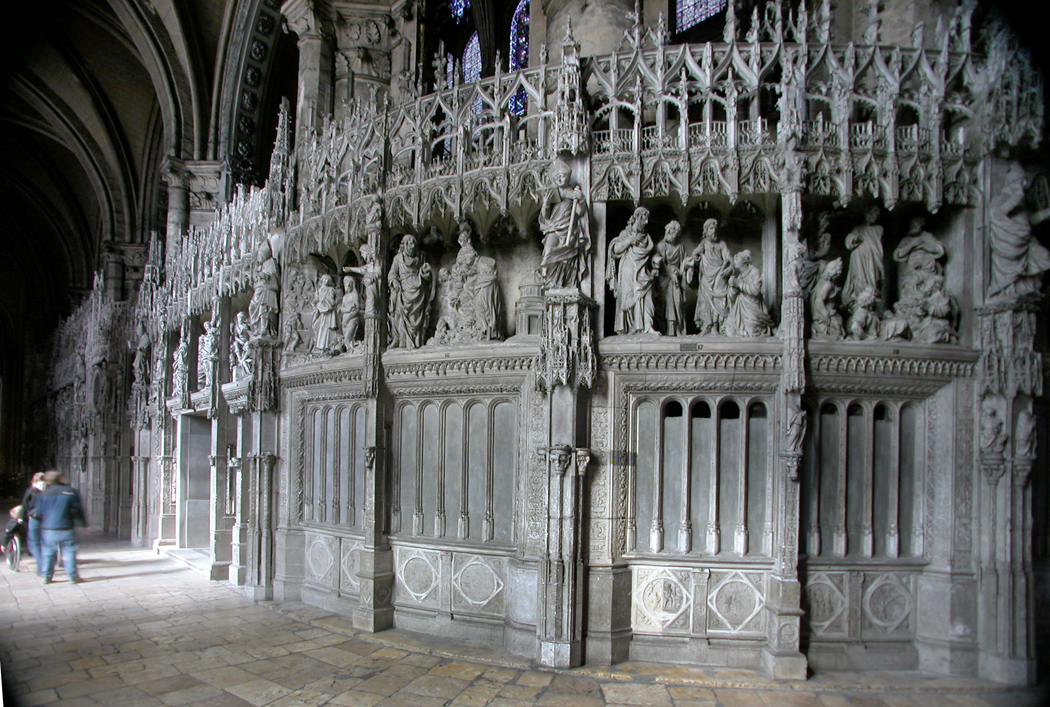
I loved the ride on the train. I loved the white flowering trees by the train tracks, and loved watching the men come out and work in their little back yard gardens. The sculpture outside the cathedral and the windows inside. Inside the cathedral, in the chapels, one of those had a statue of Mary and draped on her was what looked lancetlike a very old white silk garment encrusted with pearls and there was a little group of people sitting there and there were five or six fresh floral arrangements, and every time I walked past it I could feel the heat of the candles on my face. I walked by five or six times just to feel the heat. That was very nice. While R. was photographing outside, I walked around and around the carved stone rood screen pretending I was there in the Middle Ages and I was reading the stories from the statues; and the statues worked great. There was this really remarkable carpet at the altar in the center of the cathedral and it was tapestry work and it was blue and red and as a carpet it was made in the form of a cross, so it draped down all four sets of steps of the altar. It had 8 large medallions and each was different. One had roses another had wheat. Oh, and one of the things I liked best was the floral arrangement at the altar. It was branches of those white flowering trees with birds of paradise and orange day lilies. I spent a lot of time looking for a spot on the floor that looked like nobody had ever stepped on it, but I couldn’t find even an inch in a corner that wasn’t worn. I loved knowing R was happy all day.

Richard’s greatest hits:

south rose window exterior detailThere is no way to break it down: It is the sum total of Chartres cathedral, including its architecture, stained glass, sculpture, setting, the town around it and the people in it. If there was one event that stood out, it was the climbing of the north tower. It was a trial, but there were several stops along the way that I had all to myself and could sit in the air above the roof of the cathedral, contemplating the whole thing. The train ride was also good, through forests and past villages with old stone houses covered in vines and lichen. When we finally got back to Paris, there was a cassoulet with my name on it at L’Etoile d’Or.

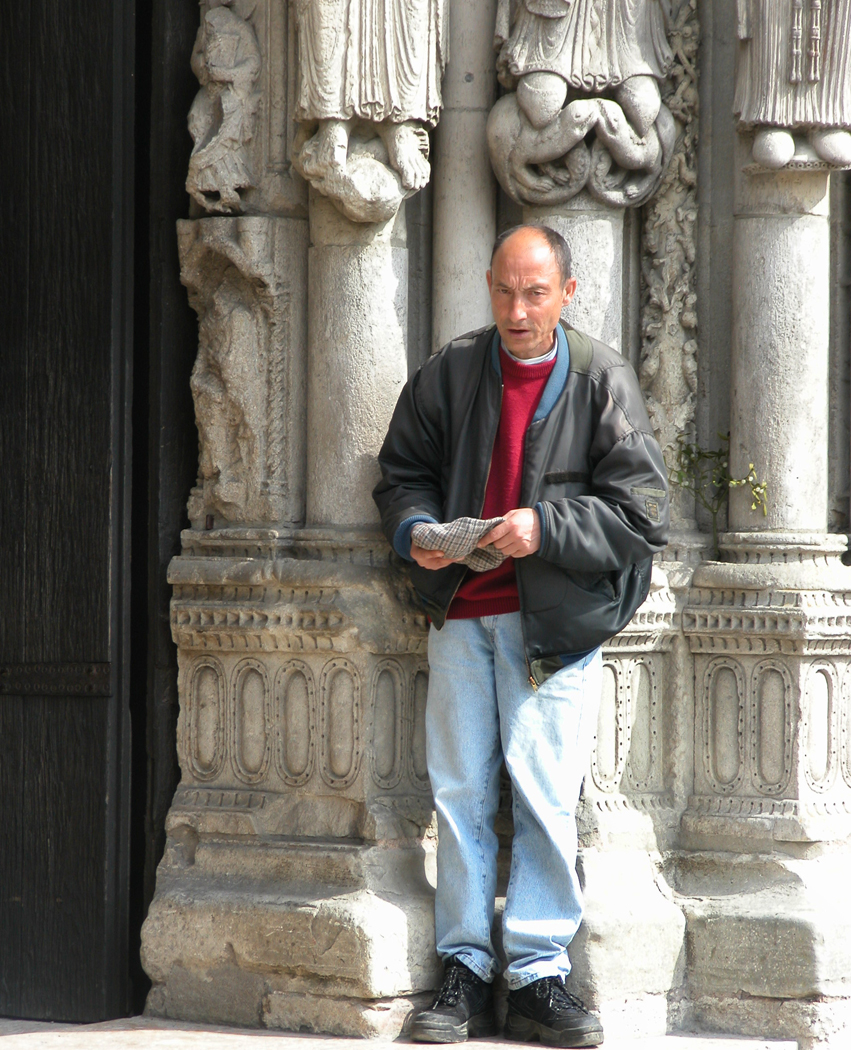
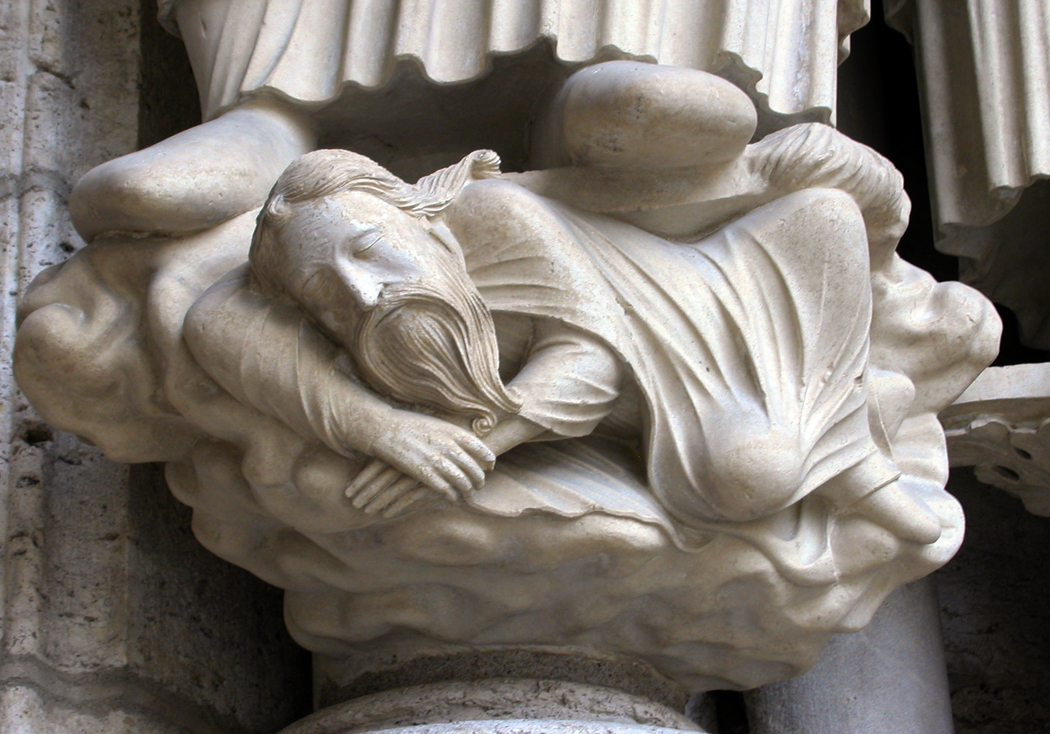
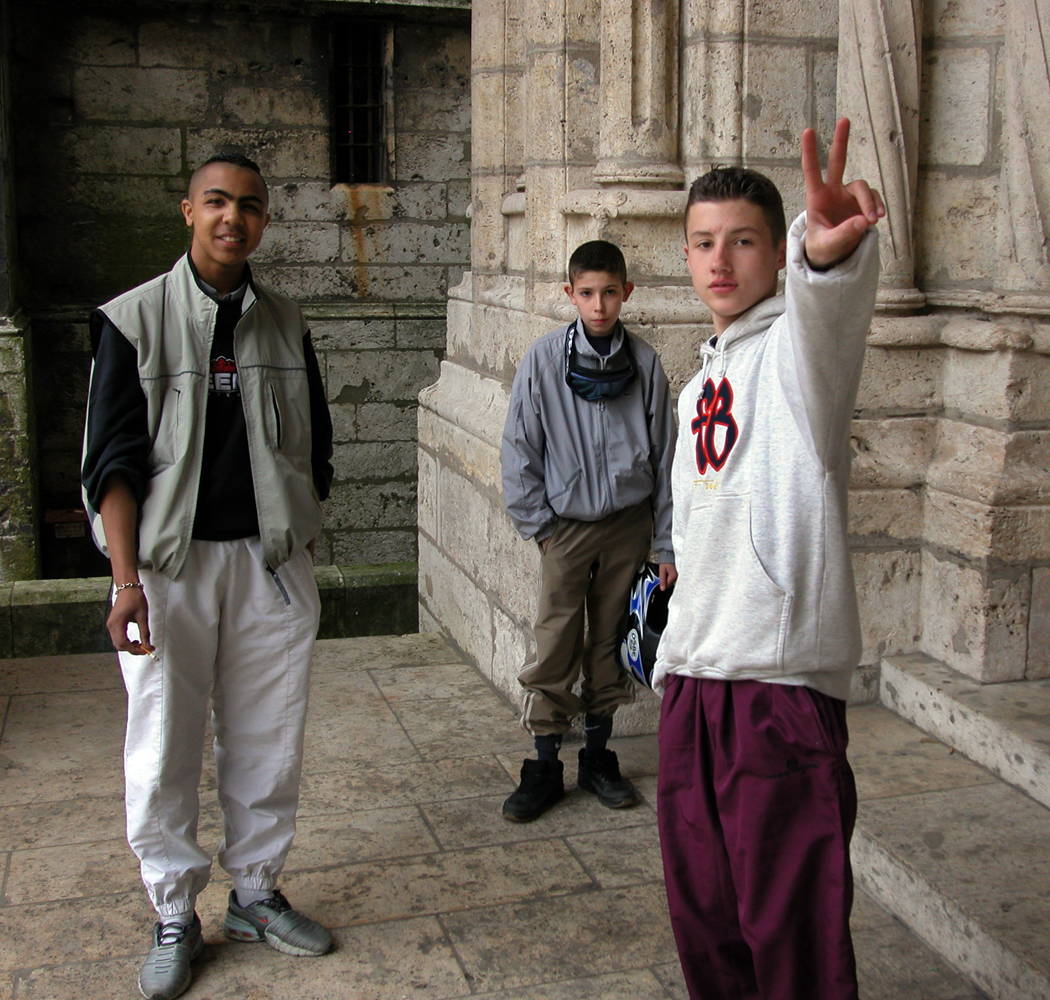
west facade 1west facade central portal tympanummary detailclerestory from navevaulting and organsouthside with treeroofroof and south transeptrood screen and ambulatorydreamer statue basebegger at the doorkids

When we first came to Paris, we didn’t know what we were doing, and because of that, we did everything right. We didn’t know where the best hotels would be, and we wound up in an unremarkable neighborhood along the rue Monge. Because it was unremarkable, it was the perfect location to discover a Paris where people work and live, rather than the part where businesses are set up to tap the passing tourist for his Euro. We didn’t know when to go, and so we wound up seeing Easter mass in the cathedral. We didn’t know that Parisians were supposed to be rude, and we had nothing but the friendliest and warmest interactions with the people we met. April in Paris.

Click on any photo to enlarge.

Petit Cardinal

Tout de Paris c’est ferme
Monday, April 1

We came to Paris to find out what the city is like. Instead of hopping on a tour bus or hitting all the usual suspects, we planted ourselves in a small hotel in an out-of-the-way neighborhood and took to walking around the streets.

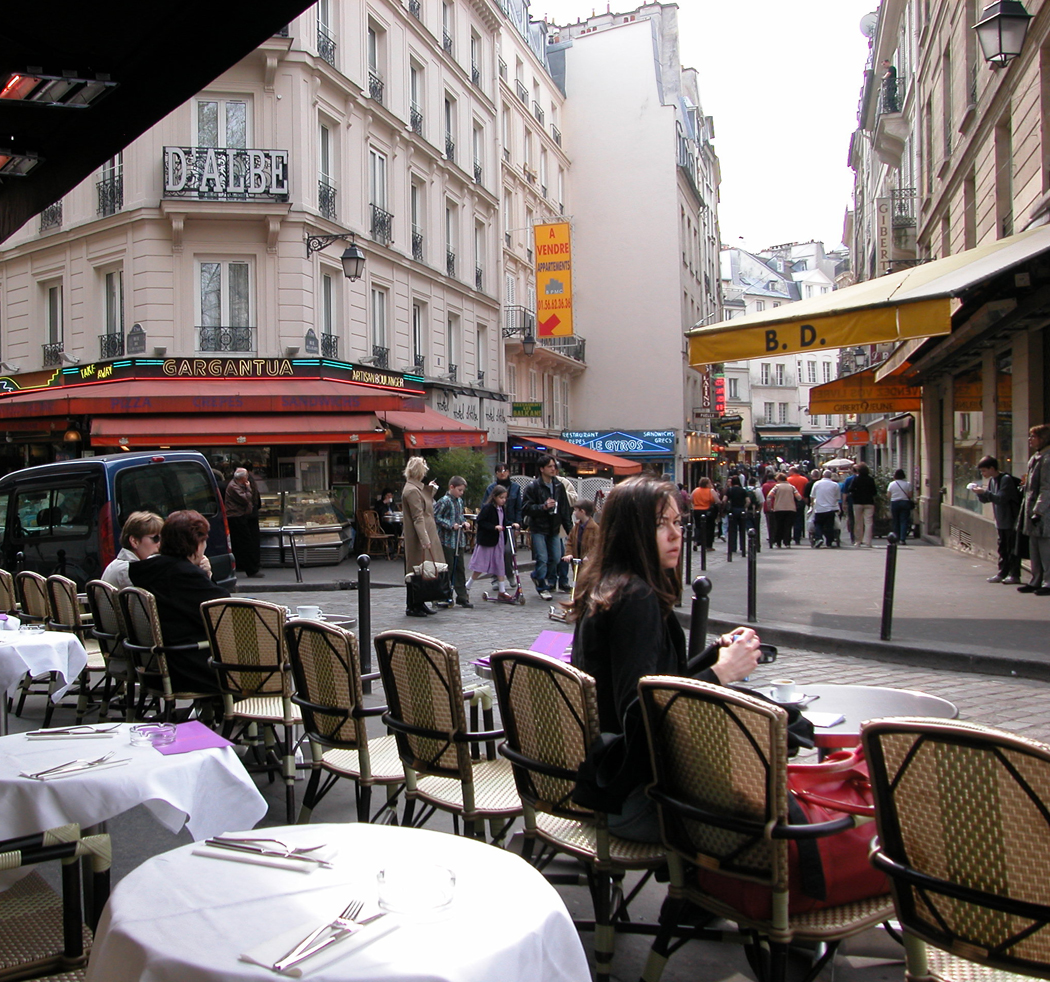
One bonus of this strategy is coming to be known by the people in the neighborhood. This one, at the corner of Rue Monge and Rue Cardinal Lemoine, is at the edge of a student district, below the Pantheon and about 500m south of Notre Dame. It is filled with little grocery stores — alimentation generales — a few green-cross pharmacies, a computer game store, a couple of flower shops and a sprinkling of bookstores. As mortar, there are the brasseries and cafes, the restaurants and creperies.carole at petit cardinal

The woman who works mornings at Le Petit Cardinal knows our regular breakfast order; she smiles and says “Bon jour,” and asks if we want “deux pain au chocolates, un cafe au lait et un chocolate chaud.” We do.

This morning, she talked to Carole about how to make the cafe au lait. She hissed the steam tube in the espresso machine for us, showed us the stainless steel decanter that holds the milk, and explained how to use a whisk to foam the milk if we didn’t have an espresso machine. She is very pleasant.night scene 7

But so is the older man, with short bristly gray hair and a wrinkled nose, who waits at L’Etoile d’Or at the bottom of the hill. He recognizes us, too, and usually makes a joke about what we had last time we were there.

Despite its reputation for rudeness and smugness, we have found Paris to be friendly and cheerful. Certainly, there is a good deal of opportunism and grubbing in the tourist zones around Notre Dame. But here around the metro stop called Cardinal Lemoine, everyone — with the possible exception of our concierge, who merely seems constitutionally surly — has been a delight.mona lisait

The man at the Mona Lisait bookstore knows us by now, too. He refrained from closing up shop tonight at the usual hour, just to make us feel comfortable browsing. We were only browsing this time, but his kindness will certainly bring us back with money the next time.

I mention all this about the neighborhood because there wasn’t much else to write about today. Tout de Paris c’est ferme. It’s Easter Monday and nearly everything is closed.

We had planned to shop at Le Samaritaine today, picking up keepsakes for friends. But when we got there, it was all shut down.cat in a corset

We walked the quai along the right bank — a few of the book stalls were open — and Carole bought a small “cute” print of a cat wearing a corset for Susie.

Earlier in the morning, we took the metro to Montparnasse to scope out the Gare Montparnasse, check the timetable for trains to Chartres and take the elevator to the 56th floor of the Tour Montparnasse.

“It’s smarter to use this panorama,” I said, “than to climb the Eiffel Tower. From here, you can see the Eiffel Tower; from the Eiffel Tower, you can’t, and then Paris just looks like a city.”paris jumble horiz

Well, that’s not really true. Paris has a look all its own. Even from the air — or the observation deck of a giant office tower. First, Paris streets never go anywhere. With a few notable exceptions, all of the streets in Paris run for a short distance and then give out.  It’s rare to find a street that continues for as much as a half mile.

And even if it does, chances are it does not have the same name at one end as at the other. Over and over, streets run a few blocks and then change names, changing yet again in another four or five blocks. It is disconcerting, and makes finding places by their addresses a nightmare.

The Tour Montparnasse (Montparnasse Tower) is a nondescript office building above the gare, or train station. It is considered by many the ugliest building in the city, but to anyone who grew up in any American city of size, it would simply be invisible — it would fade into the background as white noise.paris jumble square

On its top floor — the 56th — there is an observation deck from which you can see all of Paris spread out like a carpet below. Parisians say it is the best view in Paris because “from there, you cannot see the Tour Montparnasse.”

From the top, you can see those streets, a maze with no plan, grown like a crystal structure, or like the frost on a window, filling in here and there, but always cut off by a larger road at the end of a short run. You can get on the boulevard, too, and in a short while, it is an alley ending in a church and a no-parking zone.

From the air, you can see the architectural result of this helter-skelter urban planning — and I use the word “planning” ironically. triangle blockJust as it is rare to find a through street, so is it rare to find a rectangular building. Blocks tend to be triangles or trapezoids, and the buildings follow suit. Usually, they look perfectly normal from the street, but from above, you can see how their back yards are skewed, backed up to another building, nothing square, nothing even.

Just as the back of our hotel, which abuts two other buildings and leaves a “courtyard” in between — a kind of donut hole — but is not square, not oblong, not anything recognizable. Right angles might as well have been legally banned.

Perhaps that is what makes the people so accommodating. Their philosophy is “tres systematique” because their lives are not. The dissonance gives them a knowing tolerance.Paris floweriste

After the tour of the tower, and the frustration of a closed magasin, we came back to our hotel, which I have inadvertently begun calling “home.” Carole wasn’t feeling too well. Perhaps we overdid it yesterday, but she took a nap in the afternoon and was pretty well dead to the world.

I went for a short walk, brought “home” some groceries, including a couple of apples for Carole.

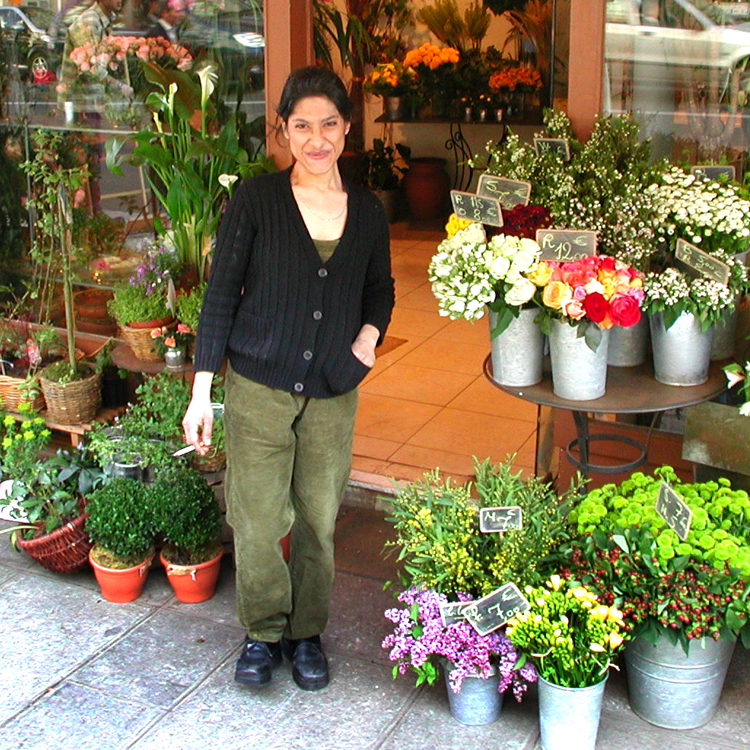
As I passed the flower shop on the rue Monge, the proprietor smiled and asked where my wife was. I told her she was feeling low and resting at the hotel.making crepes 2

About 6 p.m., we went for another walk in the hood, stopped at Mona Lisait, walked up to the old Roman arena, stopped to photograph the fountain honoring Cuvier, made goo-goo eyes at a few babies and finally stopped at Le Mitra for crepes. Mine was gooey with cheese, salty with ham and enriched with mushrooms. Carole asked for banana, and when the crepereuse asked if she wanted chocolate, you could see Carole’s face light up, as if she had recognized the inevitability of it all.

We sat on a bench and finished our wrapped-up dinner, came back to the hotel, got our key from surly joe, and plopped down for the night.

Even when you have a blah day in Paris, it seems a little more alive.

Carole’s highlights, such as they were:

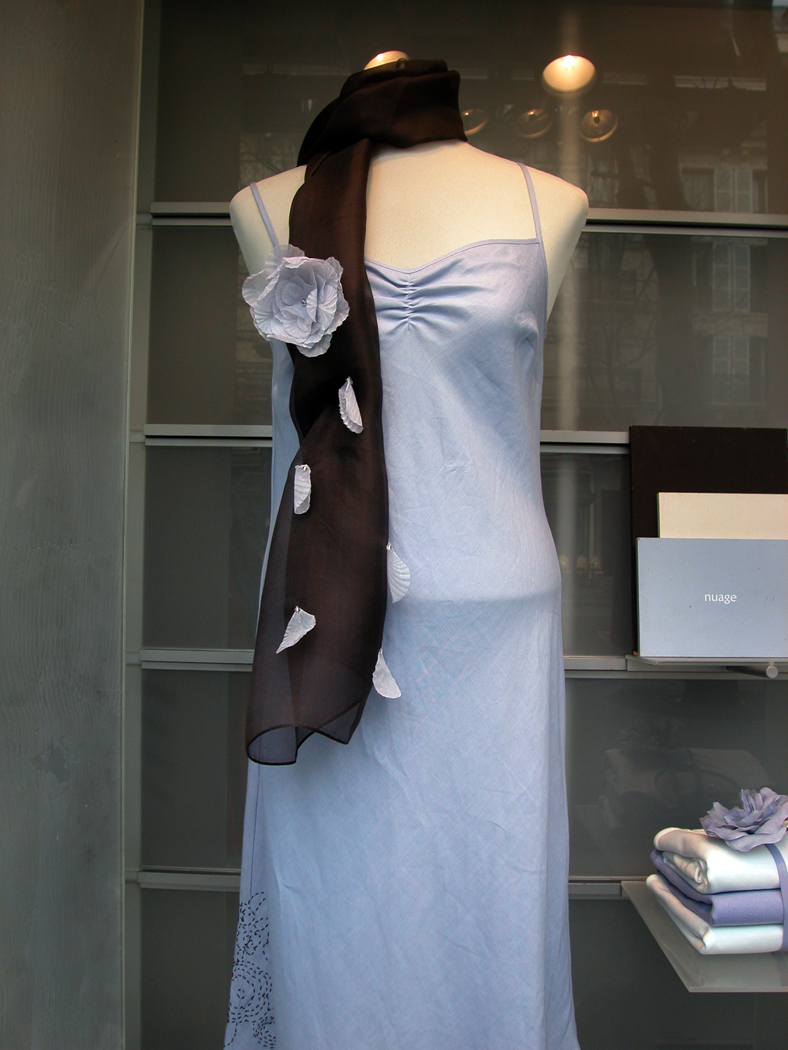
dress in windowThe cafe au lait and pain au chocolate at Petit Cardinal. I saw a young lady walking down the street with a flowering lily of the valley in a tin can. And I saw the latest French fashions in the store windows and they were chiffon slip dresses with spaghetti straps and little embroidery on one side of the skirt. And they were worn with chiffon scarves at the neck on which silk flowers were sewn. I liked the sculptures of animal heads at the Cuvier fountain at the gate of the Jardin des plantes. And today we saw many flower stalls. And one with blue roses, in the metro. Found a cat-in-a-corset print for Susie in one of the stalls along the quai on the Seine. Saw Notre Dame from a distance and that was wonderful. Tonight I was standing at a book store window looking at children’s books and a little boy was standing there, about two years old, and he was naming all the animals he could. Today I did not feel well. The woman at the Petit Cardinal told me how to make cafe au lait at home without an espresso machine.

Richard’s high points:patisserie window

It was a day of few magnificences, but there was the Indian lunch with the chicken korma and spinach, at a restaurant called Chez Gandhi. And the buckwheat crepe filled with cheese, ham and mushrooms that stood in for supper. As usual, the food in Paris comes through for us.

Stories rise to climaxes, and our first trip to Paris reached that point on Sunday, when we accidentally stumbled into one of the most profound experiences of my life: seeing the Gothic cathedral in full tilt, with all its bells and whistles sounding. Later trips to France would be focused on the many cathedrals and churches built centuries ago across northern France.

Click any photo to enlarge.

NDP horiz with seine

Notre Dame: 2nd round
Sunday, March 30: Easter

A machine is always more beautiful when it is running.

A cathedral, as Carole said, is a machine to take you someplace.

Today, we saw that machine with all its gears rotating and its cylinders pumping.

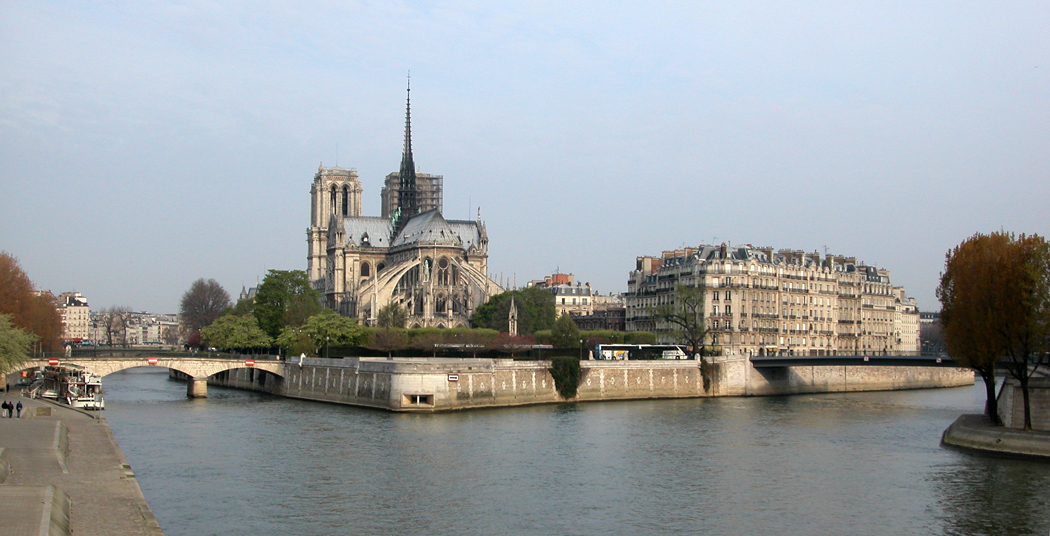
Not that we expected it when we left in the morning. We were just going to walk along the river, on the Ile St. Louis. We had a petit dejeuner at L’Etoile d’Or down the street, and wandered over the Pont de la Tournelle and along the Quai d’Orleans, to get a good photo of the cathedral of Notre Dame de Paris on its island.

NDP gargoylesAs we crossed over to Ile de la Cite, we noticed hordes of people, tour buses and commotion.

“Sunday,” I thought. Must bring out more tourists. They were everywhere.

We walked around the north side of the cathedral, to photograph details and gargoyles. But as we passed the transept portal, we noticed that, for the first time, the doors were open. Why not wander in and see.

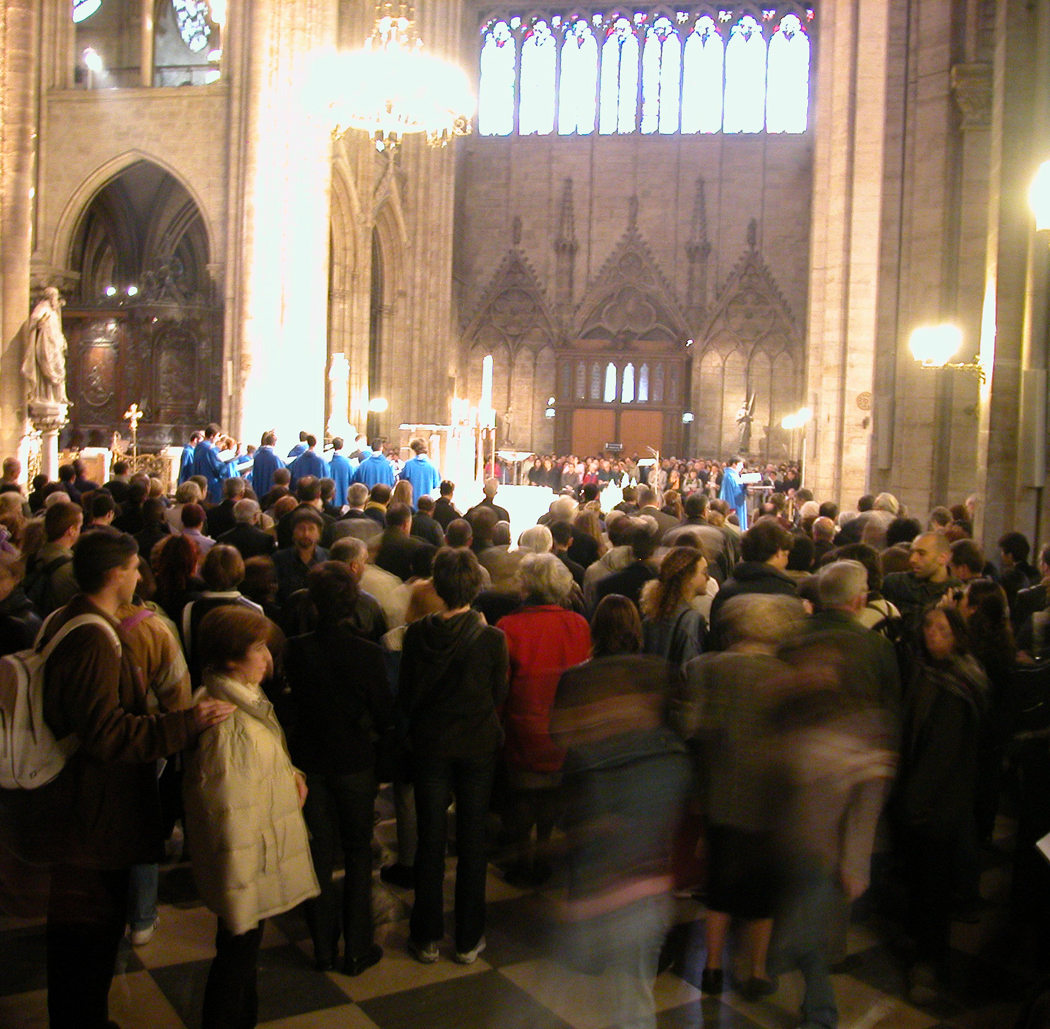
Well, we should have realized, with the bells pealing all morning, that it was Easter. Not our religion, but still, we should have known.NDP Easter crowd

Inside, the big Easter mass was being celebrated. The church was packed. Most of the visitors were celebrants, but a good number around the edges were just tourists.

But at the altar, spotlighted like a good stage, there were priests and a choir, which was chanting plainsong that echoed through the building like surf.

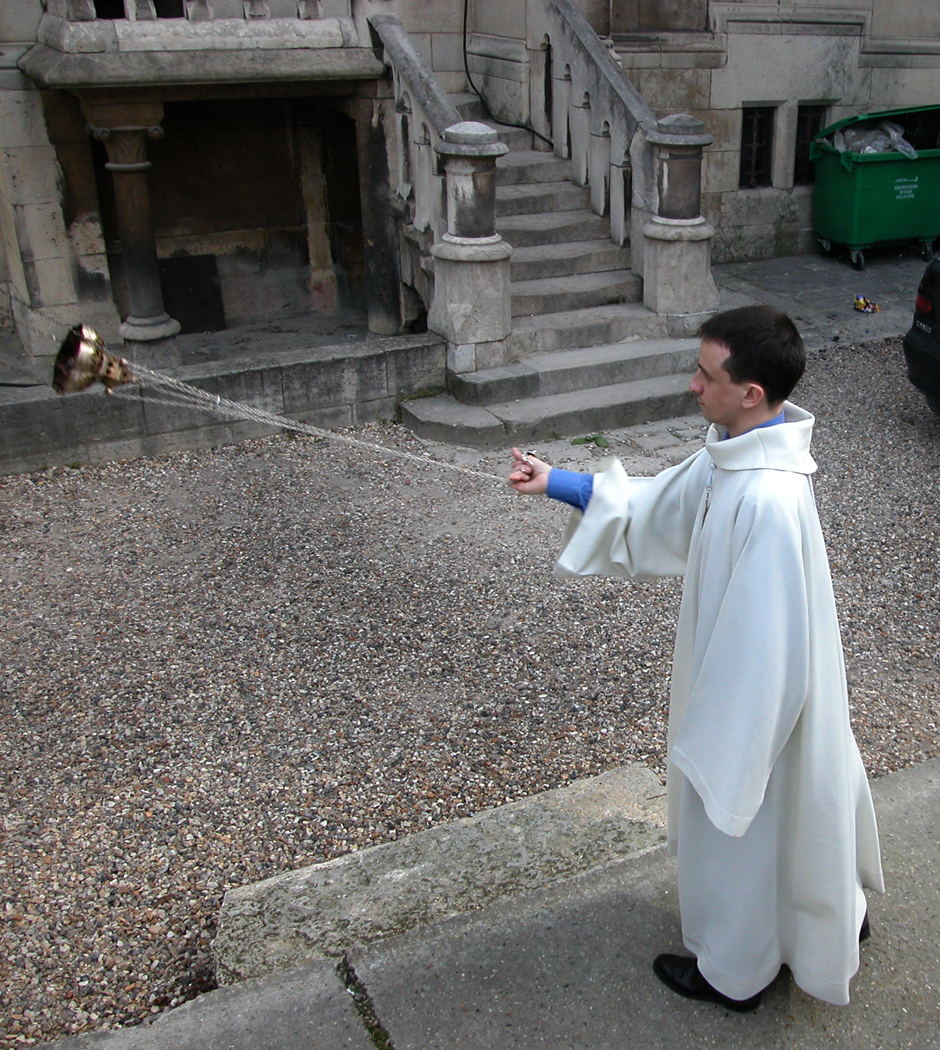
A priest was swinging a censer around the altar, spreading smoke through the crossing of the transept.

It took a while to get past the “gee whiz, what did we stumble into?” But soon we recognized the beauty and theater of the ceremony. It was intoxicating to hear the chant, melismatically floating like the censer smoke, under the brilliant blues and reds of the Rose Window, high above.

NDP bishop presidingOne doesn’t have to be a believer to appreciate how the mass, spoken and sung in the space built for it, 700 years ago, addresses the magnum misterium. Both Carole and I were soon caught up in it.

The vaulting, the lights, the stained glass, the church, spread out in its cruciform, that is also the diagrammatic shape of my body and your body, with the vast ceiling which is metaphorical of the inner dome of the skull — we could see how the priest at the crossing of the transept — the place that counts as the heart of the cruciform homunculus — was casting us out into the cosmos, out into the mystery, out into an intense beauty we only rarely let ourselves be aware of.NDP priest swinging censer

I was shaken. I believe Carole was, too. One listened to the choir, now taking on a later music, a descant from the 15th or 16th century, with the soprano floating her melos out over an altos lower harmony, and looked up, and on raising eyes, one sees the axis of the rose window, with all the light pouring through the interstices in the tracery, very like the angels dancing around the divine center of Dante’s mystical rose.

The vastness of the cathedral interior became the vastness of the universe, the singing became the music of the spheres.

The particular music split between soprano and alto was early enough that it did not participate in the tonic-dominant of classical music, but instead flowed endlessly in shifting concord, opening into landini cadences here and there to redirect the tonality.

And I heard in that melisma something completely separate from an esthetic event. It became the closest thing I have ever heard to the human equivalent of a bird’s song, a sound beautiful beyond its need to be beautiful, uttered out of instinct and joy. Shelley’s skylark, perhaps.

I don’t want to trivialize the event with frivolous hyperbole. But I swelled inside, and tears broke onto my cheek.NDP doorpost temptation

The doctrine simply didn’t matter. The metaphor behind the doctrine — the metaphor truer than the sometimes unknowing doctrine — took over.

We were privileged to witness the building doing what it was designed to do, like driving a Maserati across the countryside, or seeing the dynamos at Hoover Dam spin out electrical power.

I’ve often talked about the “business end” of the cathedral — the choir and apse — in a kind of jocular way, but now I have experienced just what a meaningful business it is.NDP through tree lace horiz

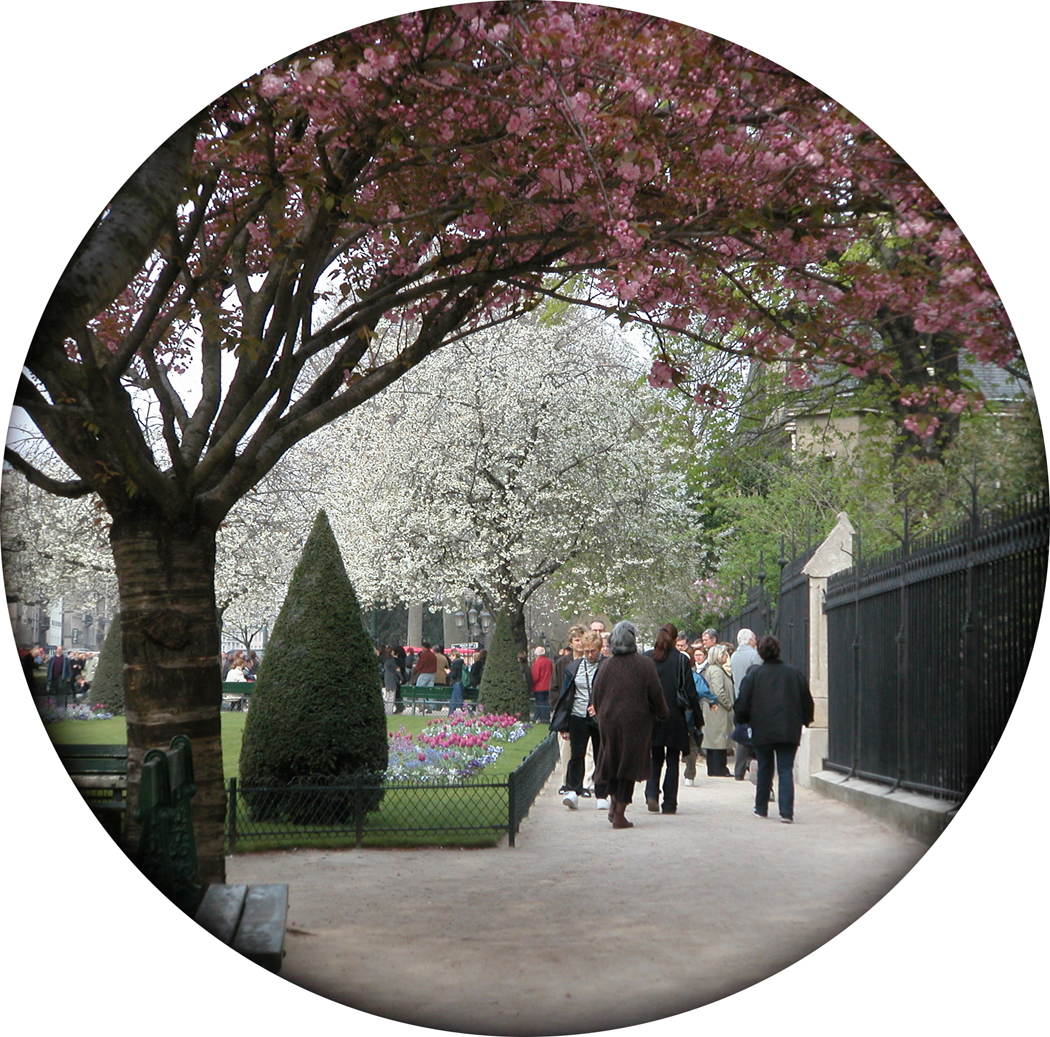
We stepped out of the church after about a half hour. The bells were pealing all over town. Easter morning bells, not only from Notre Dame de Paris, but from every small church and chapel.

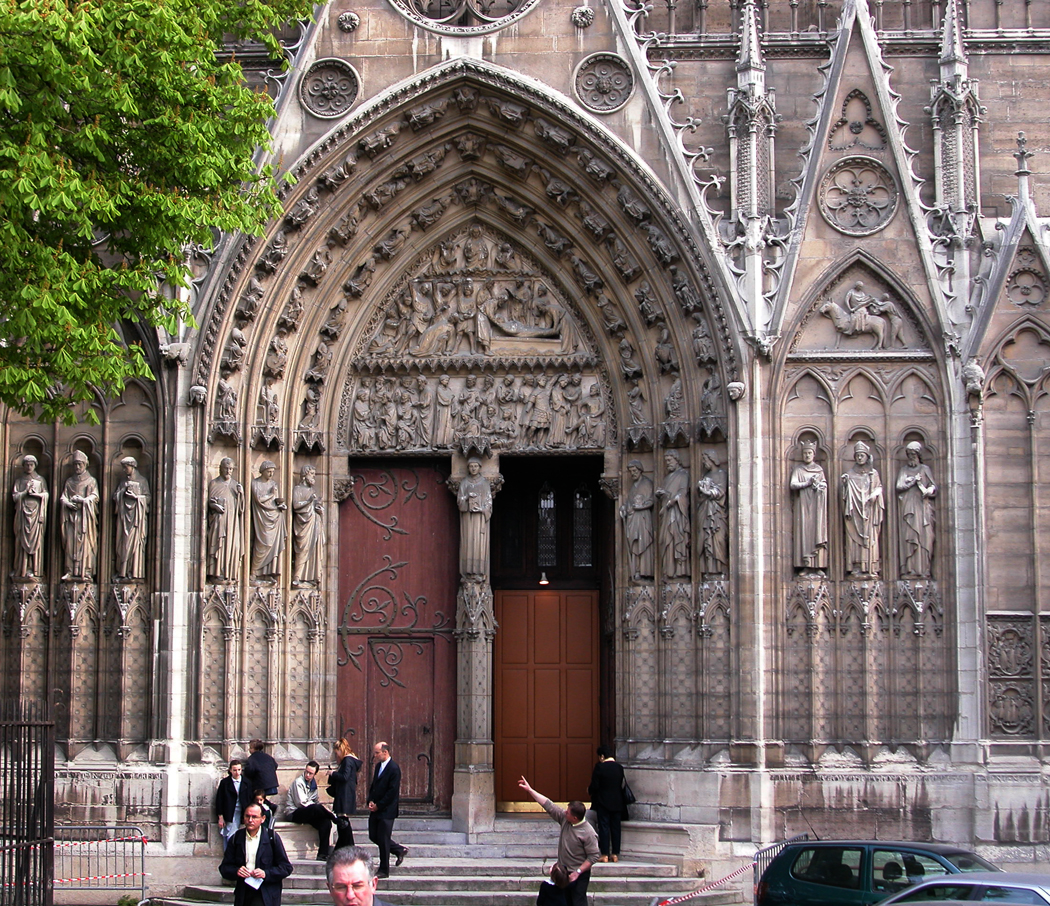
NDP north portalI continued making the photographs I had come to make, getting all the details of the West Facade, the sculptures and portals. While moving from point to point, I left Carole waiting in the crowded plaza so she wouldn’t have to keep up with me while I jumped around.

Then, I reentered the cathedral through the West door. I thought I’d see what the service was like looking down the spine of the nave. The choir was silent, but the organ was playing some Messaien. I could hardly believe it: The French composer was being taken seriously enough to play at an event as important as this. And the music was transformed by the place and event, too.

It was no longer an esthetic construct. Messaien is a joy, rich as pastry, if you have the ears to stand it. But Messaien didn’t write music — especially his organ music — so his listeners could get their jollies. No, he wrote it out of religious devotion to serve a function.

And it, like the cathedral itself, became a machine to take you somewhere. It couldn’t have been designed to be more perfect for its job.NDP church garden tondo

Bach organ music is great for a Lutheran service, but that deep, familiar tonic-dominant drive of the fugues and passacaglias would have seemed all out of place in the middle of Catholic mass. The Messaien is as powerful a music as Bach’s on the organ, but it is built on another schema, one that doesn’t give you an expectation and fulfills it. No, it is much more like the mystery, going into unexpected places and finding awe, finding sublimity.

To see the mass, hear the choir and the organ, on an Easter morning, in a 13th Century cathedral, Gothic to the core, with those windows, that color, that light, that theater: It is one of the highlights, not of this trip, but of my life. I was overwhelmed, which is the only appropriate response to the Great Mystery.

Addendum: The martyrdom of St. Denis

NDP st Denis with angelsThe exterior of Notre Dame de Paris is covered with the tall, attenuated statues of saints. Most of the sculpture there today is the work of Eugène Viollet-le Duc, who restored the worn, weathered and often insulted cathedral in the middle of the 19th century. (After the French Revolution, the deconsecrated structure was used as a barn to store grain.) His work on Notre Dame, like his work elsewhere, freshened the architecture and sculpture. No one knows for sure who each of the saints are. Some are obvious from the symbolism, others are obscure. But St. Denis (Dionysius) is clear as can be: The third century saint was beheaded during the persecutions of the Emperor Decius, and he stands at the cathedral in stone, holding his head in his hands. According to Butler’s Lives of the Saints, after he was decapitated, he picked up his head and walked six miles north from Montmartre, where he was executed, to what is now the banlieu of St. Denis, where the basilica bearing his name was later built, and where so many of the kings of France are entombed.

luxembourg garden horizLuxembourg Gardens

We wandered through the crowds along the river, gazing at the bookstalls, walked up Boulevard St. Michel to the Luxembourg Gardens.rue de huchette

As profound as the cathedral is, the area around it in Paris is a tourist sewer. Even the bookstalls are geared to moving merchandise to a herd of passing tourists. The awful Rue de Huchette is clogged with places to separate you from your lucre, and sell you “naughty” French postcards or mass-produced “original” paintings of the cathedral or the Eiffel Tower.

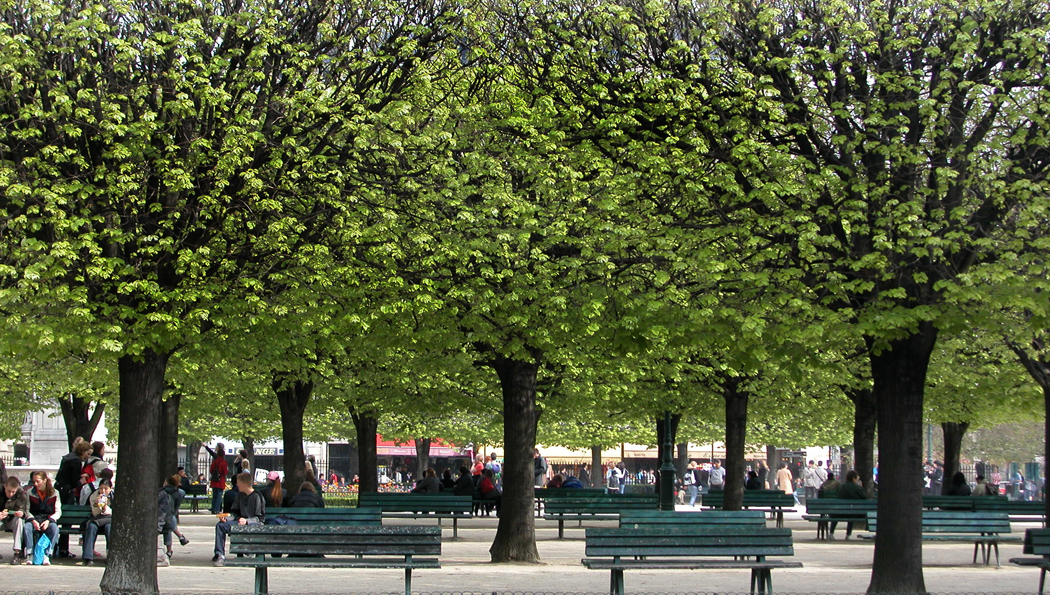
But as we moved up the hill toward the Luxembourg Gardens, Paris reasserted itself and the tourists disappeared. We walked through the gardens, among the statues and horsechestnut trees and were in the middle, once more, of a living city. People all around were walking dogs, sitting under trees and reading, or cuddling or smoking. Teenagers rolled past on their inline skates and joggers puffed around corners. All I heard was French.jardin de luxembourg horiz

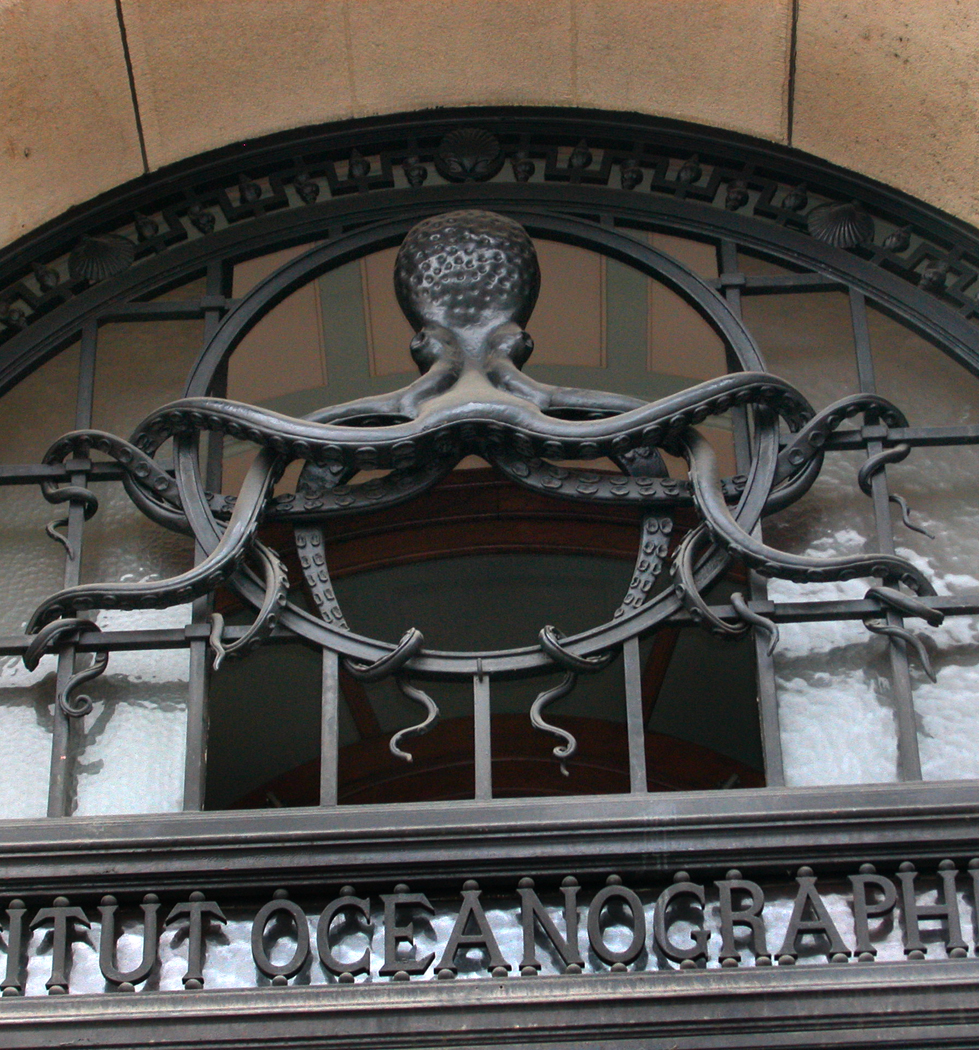
As we walked back from the gardens, we passed an older section of town (if that isn’t redundant in this ancient city) and had fun spotting all the sculptured apartment facades. octopusThere were not only the usual satyr faces and acanthus leaves, but giant elephant heads and lions. The Institute of Maritime Science had a great wrought iron octopus above its door.

Passing back around the Pantheon — an ungainly building — we came down the hill on Rue de Cardinal Lemoine and home territory. We stopped at l’Etoile d’Or again for a late lunch of Boeuf Bourgignon. Carole had a creme brulee and told the waiter that the crystalized caramelized sugar on the top of the custard was “like the glass in the windows of the cathedral.”

He laughed and appreciated the comment. Later we heard him telling the chef what she said, and the chef said simply, “Vrai.”

When we got back to the hotel, it rained a good clean rain.

Carole’s response:

NDP mary doorpostI had the sensation of being pulled up and up and up. First my eyes and then my body and then my soul. And I don’t know how to say this, but it makes you want to be better. Being inside that building appeals to the best part of you. The incense really worked: It appealed to my sense of smell. I was “smelling in a sacred manner.” And when we left the cathedral I carried some of that incense in my hair for a long time. It smelled a little like cloves, but more like the resin of some wonderful tree. Outside, when we saw some of the members of the choir, they were really young, laughing and being lighthearted, and just a moment before they had been angels. It reminded me of Bergman’s Magic Flute, the way the characters are also regular people and also in the play.
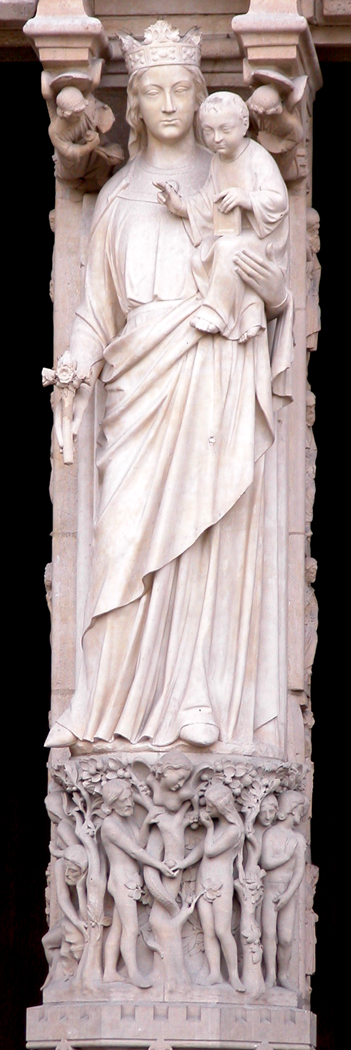
I loved seeing the statue of Mary, and she was wearing a crown and holding the infant Jesus, but she didn’t seem sacred to me because she was the mother of God, she looked sacred to me because she was a sweet little mother with her baby.

For as often as we’ve been to France, we still have never been to the Eiffel Tower. We’ve walked past it — and were nearly hustled by a team of pickpockets. The first, meant to distract us, walked quickly past us from behind, leaned over to pick up a shiny object from the sidewalk in front of us, and asked “Is this yours?” Meanwhile, his confederates, leaning against a wall to our left began to stir and move toward us. We had been warned of this scam, so I pointed at the youth meant to distract us and said, “Voleur.” He didn’t object or even react, but simply turned quickly to find another mark. But we’ve been to many places normal tourists don’t find: out-of-the-way streets, the guignol puppet show on the Champs de Mars, and the parenthetical “forests” — the Bois de Boulogne and the Bois de Vincennes, one on the east and one on the west of the city. And we’ve eaten our way across the town, trying everything from Indian food to Chinese to a McDonalds (just to see the difference).

Click on any picture to enlarge

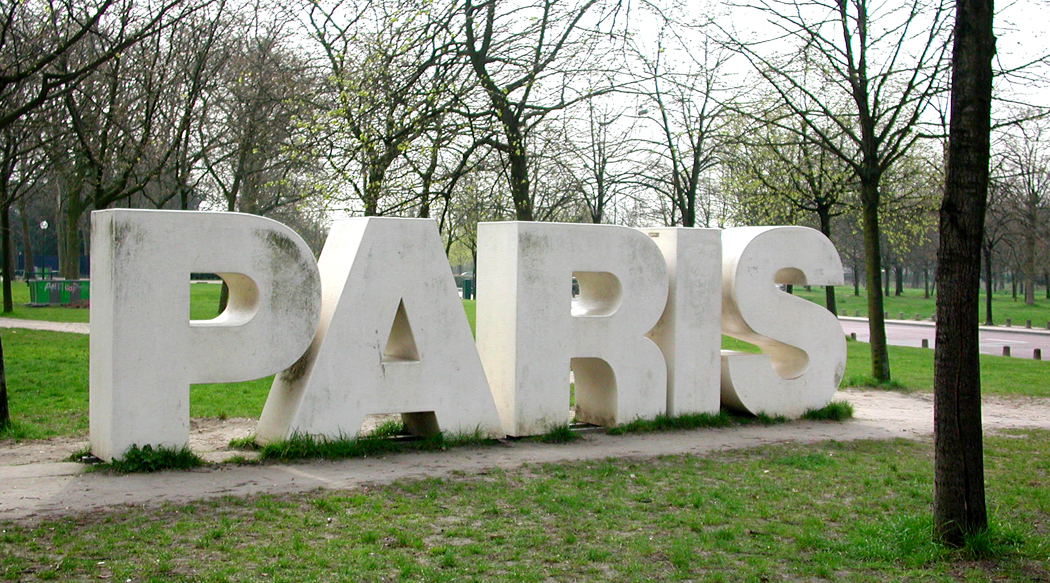
paris sign at bois
Saturday, March 30

Paris is a city of heads.

doorhead 1It seems over every door, or at the corner of every cornice is a head. Sometimes a Pan head, sometimes a kingly head, sometimes, as at the Opera, the Palais Garnier, it is the head of every mediocrity who ever composed an opera: Halevy, Spontini, Adam, and a dozen others. Yes, they have Beethoven and Mozart, too, but they seem to be there only to provide caché for the hacks.

We took the metro up to the opera because I thought I might be able to find the street and hotel I stayed at in 1965. But it was futile. Nothing looked right. Perhaps I stayed near some other opera house. Or maybe it was a railway station. It’s hard to tell the difference here: All the official windowhead femalearchitecture is monumental and any of it built before Francois Mitterand seems to be Baroque or Beaux Arts, and covered with rocaille, stone wreaths, volutes, acanthus and — most of all — heads.

Just walking down the street, apartment buildings have volutes supporting the cornices of their doorways, and often a medallion just above the lintel with the head of a grotesque or a muse.

And it isn’t only heads. There are caryatids and bas-reliefs, usually with some mythological import. Ovid seems so much more alive here than you would ever know in America. At home, no one under the age of 50 knows what the Metamorphoses is, or who its author was, but in Paris, when you go to the grocery store, there is Daphne or Syrinx staring at you from above the door.

Further, when it isn’t a definable character — a muse or an Olympian — it is one of those ever-repeating European stereotypes: the satyr, the putto, the nymph.

The Classical world cannot be easily forgotten in Paris, with so much architecture to keep it alive.door carving elephant

In America, we are used to statues only on New England town squares, opposite the white-steepled church, or scattered through Washington, D.C., or at Civil War battlegrounds. Statues are not part of the everyday experience of most of us. But in Paris, they are everywhere. Every park is full of classical Neptunes or Junos or Napoleonic generals. There are fountains with water nymphs and curlicue fish spouting water from their mouths.opera pigeon

It means, among other things, that art is not just something you go to the museum to see, but rather, a way to give directions: “Turn left at the statue of Leon Blum.” The statuary means that the ordinary Parisian (as if there were such a thing) lives in a world in which antiquity is not only still alive, it is the visual language of everyday. If the American eye is trained on commercial signage and corporate logos, the French eye is trained on the muscles of Theseus, the helmet of Ulysses, the straight nose of Artemis, the bust of Venus. There are putti galore, and wistful angels, of both genders, and flaming swords of St. Michael. It is all a great stew of history, art, religion and tradition.vincennes 1

Bois de Vincennes

We took the RER to the Bois de Vincennes, but the day, which had been gloriously overcast, broke out in dappling sunlight and ruined any possibility I had of photographing the trees. There was the Parc Floral, though, and it was filled with blossoms, even at this early point in the year.vincennes mille fleur

Carole noticed — and she is certainly correct — that the lawns are filled with little flowers in exactly the same way that the tapestries are filled in their millefleur designs. One place, in particular, was a slope, reducing the effect of perspective, so that the flowers, spotted evenly across the grass, was even more like the textiles. It was uncanny, and reminds us once again, how naturalistic — in their way — were the Gothic designers and artists.

I had trouble reading a legend on our subway map and Carole hailed a passing woman for help. Her name turned out to be Marie Ifrah and she might as well be a lifelong friend now.

She is Spanish, living in Paris and couldn’t have been more friendly and open. I mentioned that everyone we had met in Paris has been “tres amical,” but was surprised, because she says that Parisians are not always to open to outsiders.

vincennes astersWe talked for nearly an hour, in a macaronic melange of English, French and Spanish. Oddly, when we couldn’t understand a word, or she couldn’t remember one, Spanish became our lingua franca, and I was surprised to discover how comfortable I felt in Spanish. French is still a trial for me, though I’m getting better — speaking it, that is; understanding it is tough. But Spanish almost felt like a home tongue.

We agreed that Americans are naive as a people, but disagreed about whether that is a good thing. She felt it is, that it is America’s naivete that is its salvation.

At any rate, she couldn’t help us with the map, but we became fast friends, in a macaronic way, and planned to phone each other “sometime” to arrange a trip in her car to Montmartre, which she tells us is wonderful.

“Where all the peinteurs are, not the good ones, but the ones selling souvenir to the tourists.”

She also pointed out that the French are steeped in culture. That the opera, the theater and such, are as bread and butter. Not like the Americans, she said. She didn’t want to insult us, so she pussyfooted around the issue, but America is all cuisine rapide, she hinted, and bang-bang movies.

Les Americaines lack the discipline, she said. There are things she disapproves of in the French, but she admires their discipline.cafe with author in corner

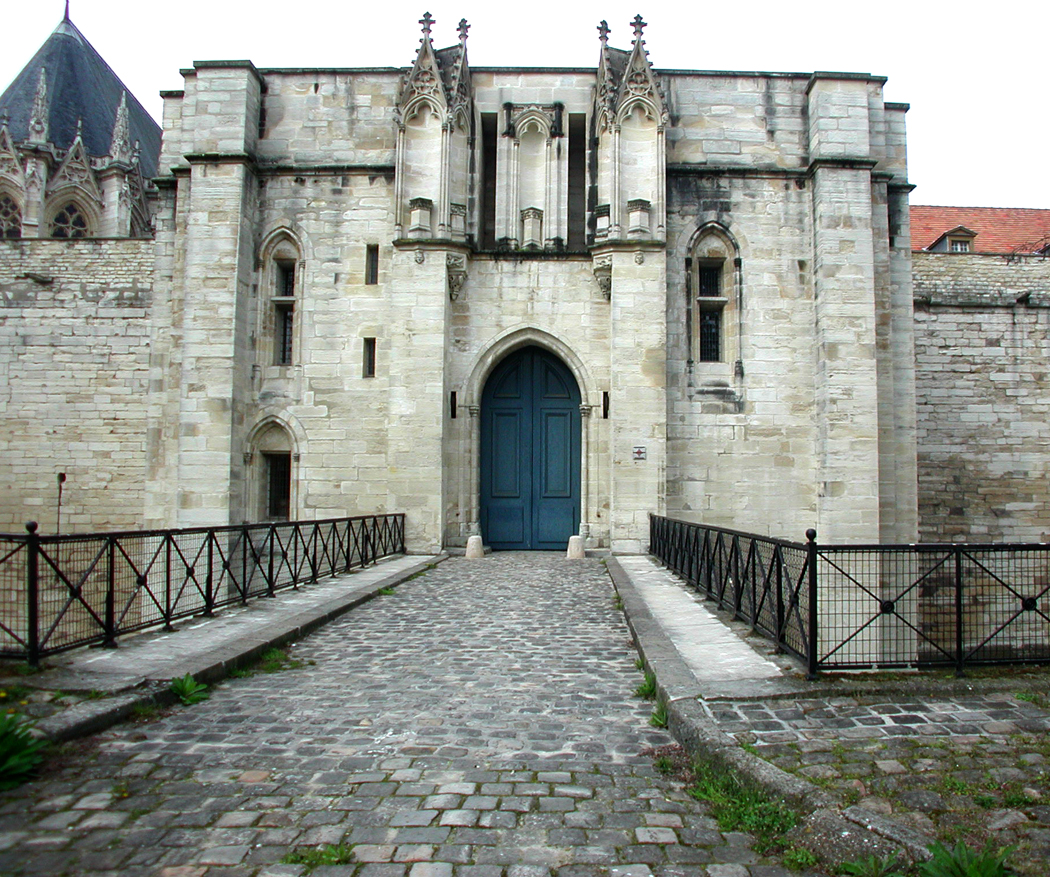
We didn’t expect the chateau at Vincennes; we came for woods. The palace was a surprise. But it is extensive and old. We walked through the grounds, but didn’t get into any of the buildings. Many are closed for restoration, and others were only open for tour groups and at hours that were inconvenient for us.vincennes chapel and wall

But the Sainte-Chapelle there was a delight of Gothique flamboyant, with a huge Rose window, all out of proportion to its width.

Because we had to walk all the way around the chateau grounds — and they are extensive — we had a late dejeuner, but it was worth it. We tried a little Italian restaurant in Vincennes, and had le menu, with an entree, plat and dessert.

I had the mortadella, which Carole called “the world’s best bologna,” but she had several bites and seemed to enjoy it. Her own entree was the oeufes mayonnaise.

We both had the lasagne boulognese, and it was rich with cheese.big billboard

Carole called the maitre d’ over and said, in halting French with a North Carolina accent, “This is the best lasagne I’ve ever had, in my entire life.”

He seemed pleased.

It only got better with the chocolate mousse that was so dusky you could have parked a truck on it.

It is 11 p.m. as I write this and lunch is still with us, but in a good way.
It feels silly writing about our food every day, but it is truly a highlight. Paris is a city where your lunchtime conversation is likely to be about where you will eat dinner.

In the evening, I took a walk around the neighborhood to snap out of a drowse fit. Took beaucoup photos and stopped at the supermarket for a loaf of bread and some confiture so Carole wouldn’t have to take her medicine on an empty stomach.

Carole’s bests:

vincennes castle entranceSo enlightening and thrilling to look at the grass and wildflowers and see that the millefleurs are real, truthful expressions of the ground here. The flowers I saw that are precisely the ones in the tapestries are the little daisies, violets, and a little plant I call rabbit plant, but I think it’s plantain, and a little pink flower I recognized. I loved seeing the castle because it was like the white castles in the books of hours I’ve seen before. And I loved walking in the woods in the places where the horses feet fell when the king went hunting. I found a flint arrowhead and wonder if it is one and is from the stone age. In the courtyard at the palace, it was easy to picture all the royalty there coming in on horses or in carriages. Seeing all these ACTUAL places and scenes that were only conceptual to me before; now they seem real human. Also, I’d like to know why the church was so important to the king that he had such a huge and fancy chapel there at the palace. The lasagne was incredible, with bechamel sauce in it. The chocolate mousse was actually a religious experience. The wonderful lady we met, Marie. The poissonerie, with all the fish.  I am surprised that the women here do not have coiffures; they all seem to have medium short hair pulled back with a rubber band or clasp. But even so, they look chic, and almost every woman is wearing a dress-length fitted black coat. But no curls.

And today, I got a rose.

Richard’s picks:

night scene 5It was a quiet day in Lake Woebegone, which leaves lunch as the high point of the day, with the mortadella entree, tres riches lasagne and the chocolate mousse. For the second day, we didn’t eat supper because the lunch was so overwhelming. The Bois de Vincennes was disappointing because the sun was out, making too many shadows for good photography, but the flowers were ecstatic. Walking around the neighborhood after dark was good, too.

In a corner of the Fifth Arrondissement, next to the Gare d’Austerlitz, is a public garden that has come to be one of our touchstones of a visit to France. We go back each time. It is not one of the tourist hotspots, like the Eiffel Tower or the Louvre, but because we found it on our own during our first trip to Paris, it has become an old friend.
The Jardin des Plantes was built in the 17th century as the king’s garden, and initially grew medicinal and kitchen herbs, but later became one of those demonstration gardens in which pioneering botanists planted samples of vegetation they had collected on voyages around the globe.
Around the periphery of the garden are a zoo and several museums of natural history. Some are so old they practically grow fungus; one has been updated to become a sight-seeing draw — at least for the thousands of school children who bus there daily on class trips.
As we visited in 2002, it seems I was caught up again in the conundrum of the opposing French tendencies to formalize and regularize nature, as in its famous gardens, and to see nature as something red in tooth and claw: the opposing tendencies of classicism and romanticism.

Again, click on any photo to enlarge.

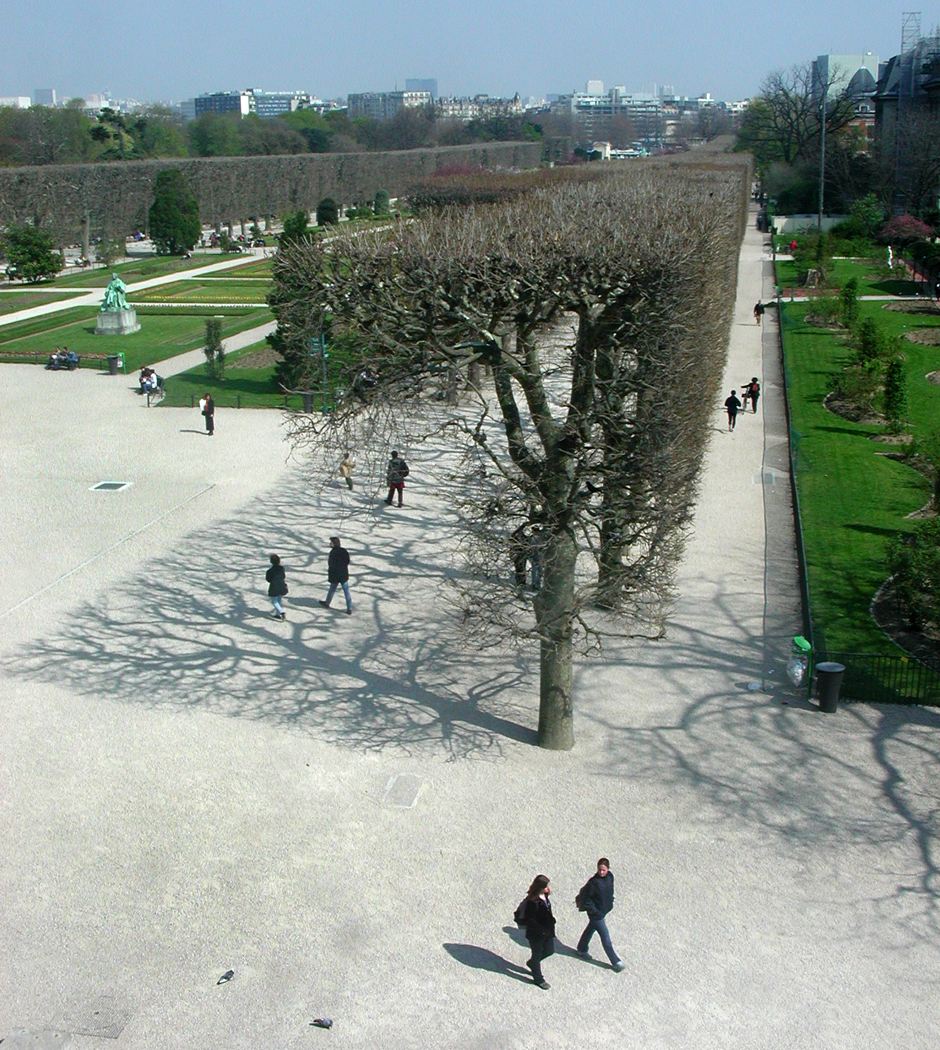
jardin main walkway

Friday, March 29
Jardin des Plantes

The Jardin des Plantes is a collection of odds and ends — various gardens, a small zoo, a bunch of superannuated museums, some sooperwhoopie new attractions and lots of old, old trees.jardin natural history facade

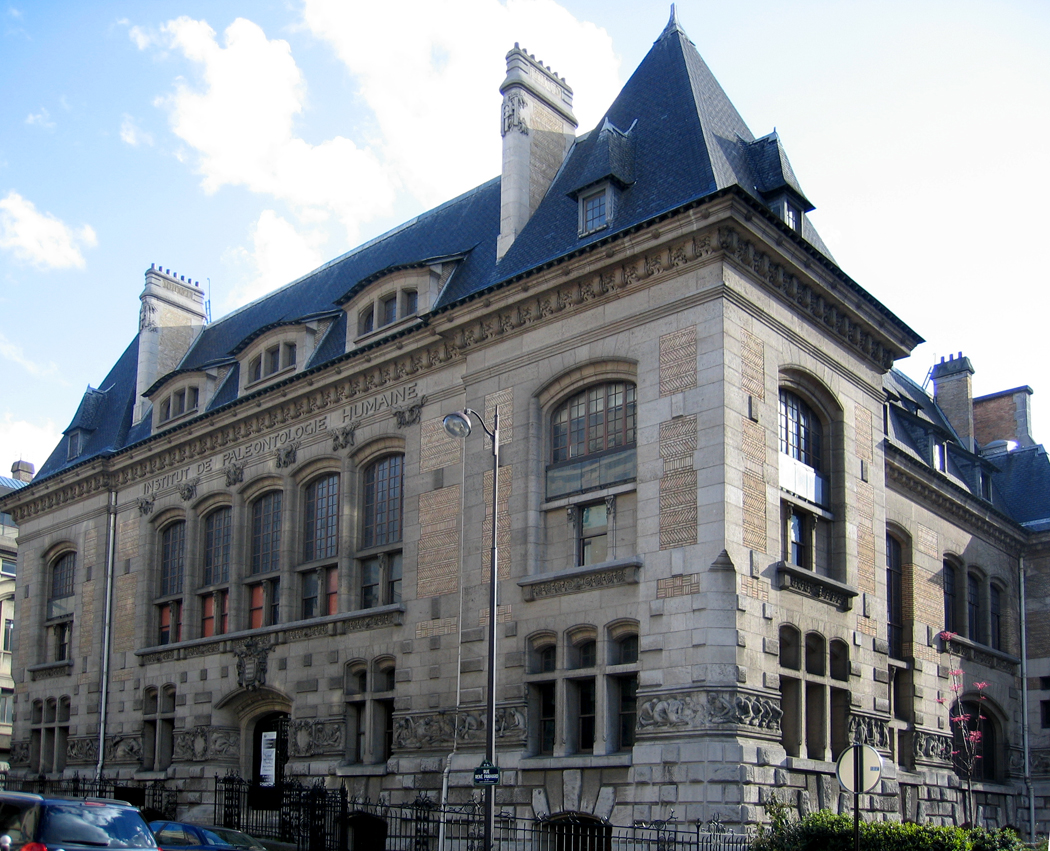
At the far end is one of the true treasures of France, although I’m not sure anyone here knows it. The Galerie de paléontologie et d’anatomie comparée is one of those Beaux Arts buildings, the kind with the names of noted scientists carved around the frieze, that are so common in the old museum world.

It is a long, thin building, two stories tall. From the side, you can see in the windows that there are “wonderful things,” as Howard Carter once said: the long spiny backbone of a whale, skeletons of prehistoric mammals and birds.jardin natural history eagle

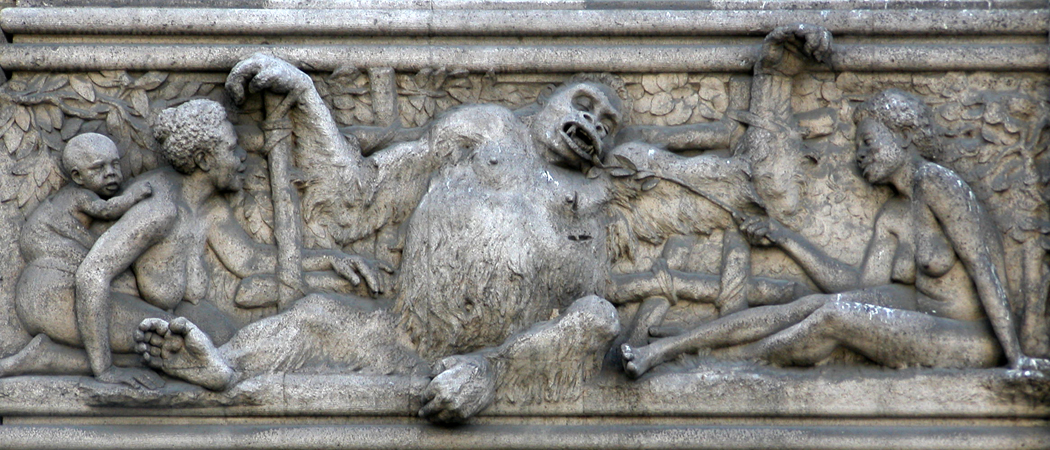
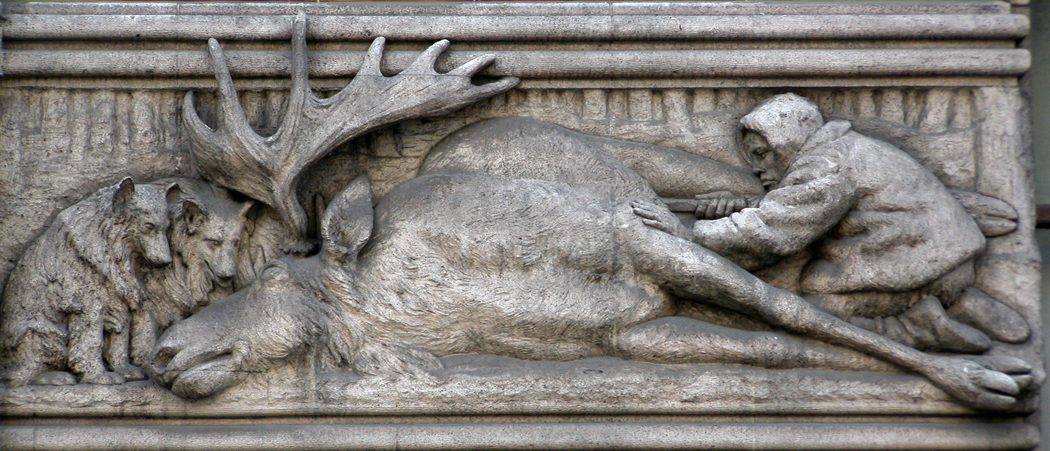
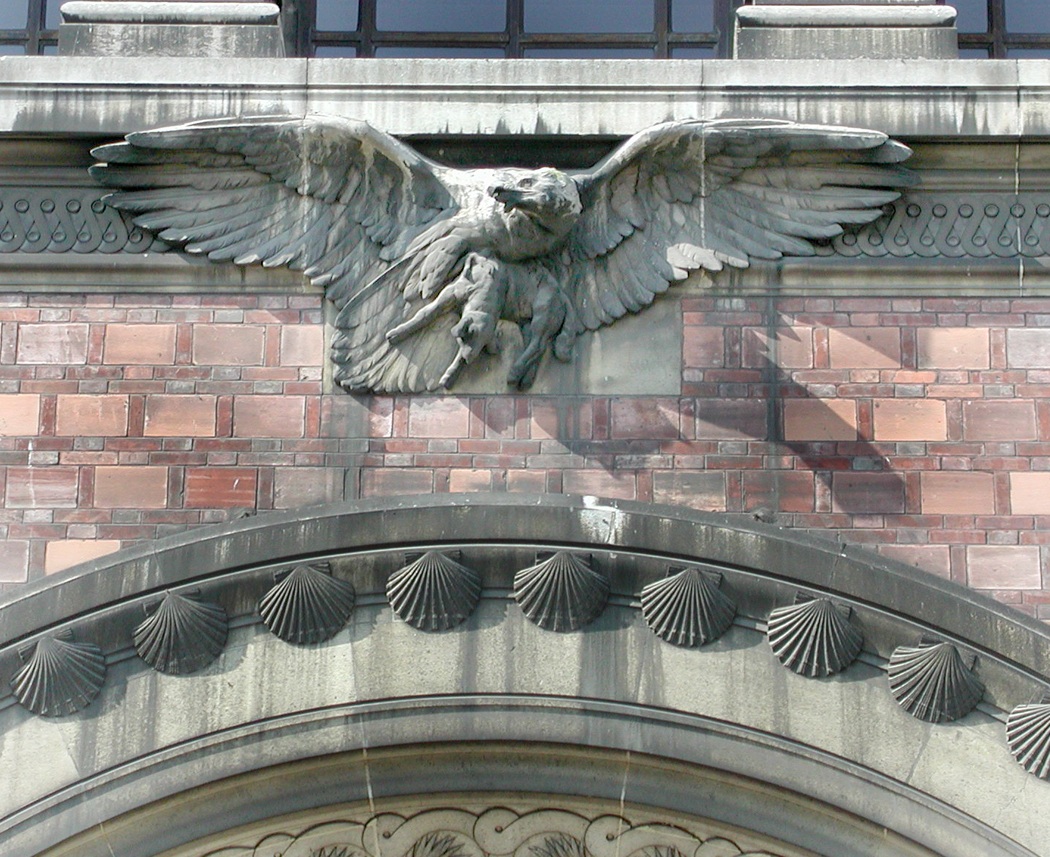
But the building itself is notable. It is decorated on all sides with the most beautiful and decorative sculpture of the natural world. As an underpinning to window sills there are lobsters, hermit crabs, birds. In panels along the side of the building are giant wolves and lions. Above the entrance is a great eagle holding a lamb. A frieze completely bands the building with alternating scallop and vollute shells. Another panel on the west side has a beaver. Yet another has a scene with a man grappling with a bear cub over the dead body of its mother. Another had two men stealing young eaglets, having killed one adult, but with a second adult attacking the men.Orang and Indian

It was a 19th Century version of the Gothic love of nature.

But there is also a clue to the essential French character. As we entered the museum, on the queue for the tickets, there was a grand marble statue of a crazed adult orangutan strangling a prostrate nude Indian. It was a horrible struggle, with the man wounded, a gaping slash in his forearm, and the ape with his long arms extended down, holding the neck and head of the man flat, with his eyes bulging.

This is a version of nature with long teeth, a vision of nature as both beautiful and vicious, a kind of sublime: awesome in its seductive danger.

There is a dichotomy in French culture. One is first made aware of it in the Gothic cathedrals. There, nature is everywhere, and not a storybook nature, but an experienced one, a familiar one. If the church preached a contemptus mundi, it failed to gain traction, at least on first go-around. You can sense the love of the natural world that invests every carving, every Gothic tapestry.jardin walkway with pollard trees

That classicism that I mentioned yesterday, that stylizes and sublimated grubby nature is the other French impulse. And I see a kind of continuous war between the love of nature and the fear of it. Classicism is on one level a kind of defanging of nature.

But the French seem always aware, underneath, of the tooth and claw. So, in the Gallery of Paleontology and Comparative Anatomy, the orang is seizing man, elsewhere, man is seizing the eaglet and bear cub. It is “man against nature, nature against man, god against man, man against god. Very funny religion.”jardin from above

Perhaps the perpetual French classicizing derives not from a separation of humankind and nature, but rather from a constant awareness — and wariness — of the natural world.

The need to create, as at the Jardin des plantes, of a “jardin systematique,” or to display, as at the Gallery of Paleontology, all those gory skeletons of Siamese twins, and cats’ brains in formaldehyde, comes from that fascination with nature that is akin to a fascination with death, violent, bloody death.

I had never before understood — or thought I understood — this classicizing impulse in French culture, but today’s visit to the natural history museum has given me a clue.

Americans think of nature as vast and sublime. For Germans, nature is a place to exercise briskly. English nature tends to be bucolic: a cottage, a few sheep and a porringer. French nature is all tentacles and talons.jardin tree

O'keeffe Lawrence TreeAside from all this theorizing, the Jardin was a wonderful place. There is a huge tree, a cedar of Lebanon, planted here in 1743. It’s feathery canopy spreads out like Yggdrasil. I made a photo of it in imitation of Georgia O’Keeffe’s “Lawrence Tree.”

The Grande Galerie de l’Évolution — also at the Jardin des plantes — is as modern as the paleontology museum is musty. A shining example of modern museology, it houses an old collection of taxidermy and gives it a new spin, assembling the old stuffed animals in new arrangements, with dramatic lighting and display.jardin interior

On four floors — although to call them floors is an injustice, for they are really a series of catwalks and mezzanines hanging over a four-story cavity, filled with glass elevator shafts. Meanwhile, a parade of animals, as if marching to Noah’s boat, weaves through the central second floor.jardin elephant

It was a great plan to modernize what was once a dusty old display of vitrines and taxidermy.

But the final highlight of the day came next door at the great 19th century greenhouse and conservatory, Les Grandes Serres. The three-story-high greenhouse, like a long loaf of glass, was filled with tropical and exotic plants, dripping with moisture. At one end of the interior, a two-story waterfall has been built of concrete, with vines hanging down, dripping water.

My eyes turned on and I began making photos, in a way it only happens when my eyes are on. Made nearly 200 pictures. Another in the series of garden photos.grand serre 1

grand serre 4grand serre banana treegrand serre displaySpent from that, we began walking home. Carole got a cassis ice cream cone, purple and sharp.jardin ice cream stand

We got back to the room and dropped off to sleep, missing dinner.

Carole’s picks of the day:

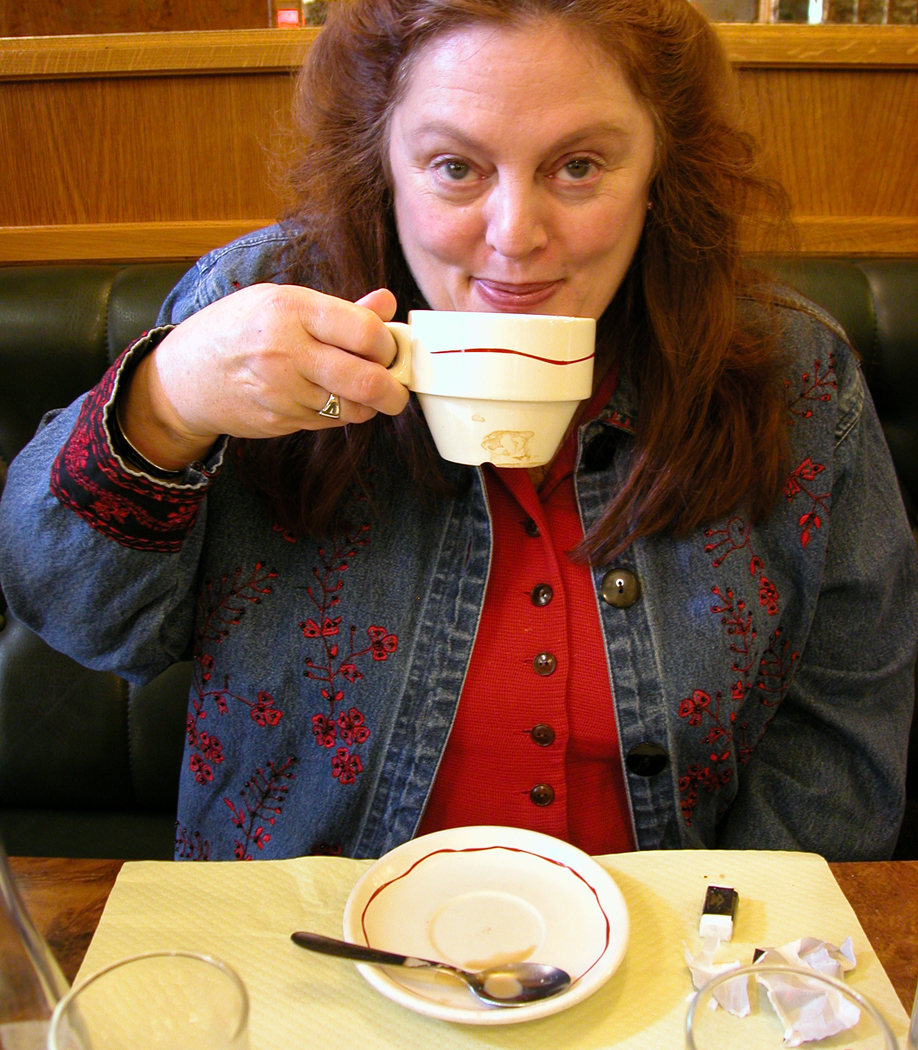
carole and coffeeThat cafe au lait and the croissant. The one I had today was even better than the one I had before. I enjoyed being able to communicate in French. The images of the images at Ste. Chapelle keep coming back to me. I loved the statue of the orangutan strangling the Indian. The parade of animals at the museum of evolution (like a Disney Noah’s ark). The plants in the garden systematique. My favorite thing was the female lions on the front of the museum of natural history. All the wonderful sculptures of animals there: lobsters on windowsills, hermit crabs. Those wonderful animals. Oh, the croque monsieur was incredible. Sliced bread with very thin ham and bechemal sauce and some kind of white cheese, then fried, perhaps dipped in egg batter first. Oh, and finding the wonderful little wooden toys for the grandbabies. Oh, and the Redoute rose and lily book. Richard looked so serious about the grandbabies. Seeing Richard’s joy in the greenhouse.

Richard’s faves:

grand serre 5The sculptural decor on the Galerie de paléontologie et d’anatomie comparée was unforgettable. All those rich animal designs crusted on the masonry. I’m sure I don’t know why they don’t sell a catalogue raisonee of the carvings. It’s a treasure. Inside, the Orang attacking the Indian was a hoot. The hoard of skeletons inside was breathtaking (photographie interdite). The Jardins des plantes in general was special, but when we entered the greenhouse, I went buggy: My eyes turned on and I went nuts with the camera. All that vegetal variety, all that green fecundity, all that sinuous vinosity and verdant threat. It was the mille fleurs and Gothic acanthus leaves come to life.

When we visited Paris for the first time in 2002, we felt like yokels: Everything was new and we gawked. Now that we have been there often enough to feel at home on its boulevards, and have visited its most familiar sites enough times that the Musee d’Orsay can feel “old hat,” these initial  notes, written at the end of each day on that trip, can still bring back that feeling, that sense of excitement at seeing the world through a different culture, and with a wholly different sense of history. These notes and photos are from that virgin trip. Click any photo to enlarge. 

Thursday March 28

ste chapelle clerestory

Sainte Chapelle

There is no denying the beauty of Sainte Chapelle, with its two floors of chapel: a lower floor for the servants and the brilliantly lit upper floor for the king. But one can see a creeping French classicism overtaking the richness of the earlier Gothic. At Notre Dame de Paris, every pier is different, every capital, every boss in the vaulting. At Ste. Chapelle, there is greater unity: only two styles of pier, alternating along the nave walls. The bosses are uniform. The fleur-de-lis motif crops up everywhere, further unifying the decor of the building.ste chapelle exterior from street

Even in the 13th century, you can see Poussin coming, and Racine. There is a fecundity to the earlier Gothic. Metaphorically, the buildings mimic the variety of nature. One senses in Notre Dame, for instance, a connection with the earth, the seasons, the stars, the animals. At Ste. Chapelle, nature has become an ensignia for royal power and wealth.

No one at Ste. Chapelle, you feel, has ever shoveled manure.

The difference, as Carole stated it, is that Notre Dame feels like a machine meant to take you somewhere, like a traveling machine for the universe, or a time machine. You know, in Notre Dame, that something is happening to you.ste chapelle interior

At Ste. Chapelle, you admire the decor, recognize the royal taste — the gout royale — and it something you observe, look at, admire, rather than participate in. That doesn’t mean it isn’t astonishingly beautiful.

Ste. Chapelle, of course, is late Gothic, le style flamboyant, with neither aisles nor triforium. The windows hang like banners down the walls from just above head level to the top, at over 50 feet. Ste. Chapelle is filled with light in a way Notre Dame isn’t. There is nothing murky about Ste. Chapelle. It is brilliant.

There are two stories, in both senses of the word. Upstairs is reserved for royalty.

The first floor is a low chapel for servants and burgers. Its ceiling is blue and gold, and anyone using it must have felt privileged indeed, with all that gold leaf and those gilt vaults. (Granted, they are 19th century restorations and only approximate what must originally have been there.)ste chapelle downstairs

There is a tiny circular stone staircase that leads up to the main event on the second floor. Because of its two tier nature, Ste. Chapelle looks oddly gangly and tall. Because its foundation is hid from the street, the chapel looks as if it is built on a small hill, above the surrounding buildings. But there is no hill on the Ile de la Cite. The church is just jacked up a full story on its servant chapel, leaving the King’s chapel floating in the stratosphere.ste chapelle rose window, stained glass, ceiling

ste chapelle downstairs ceilingWhen the sun breaks out, as it doesn’t often do in Paris, the stained glass projects color on the floor, in blues, reds and a little yellow.

We spent a couple of hours in St. Chapelle, trying to see everything and absorb it. Every inch of the place is either gilt or painted or sculpted. There is little resting place for the eye. Perhaps that contributes to the sense that Ste. Chapelle doesn’t function as Notre Dame does.

It is something that allows Louis IX to show off, nearly 800 years after his death. He would have liked that, I’m sure.

Cluny winemaking taperstry

Musee de Moyen Age, Cluny

At the Musee Cluny, we began to wear down. We saw the first dozen rooms just fine, and had time to linger over the many tapestries, but eventually, our muscles and bones — to say nothing of our fried brains — made the last part of the museum a mad dash to get through. Which is a shame, because there is so much to enjoy.Musee Cluny exterior

The Middle Ages speaks to me in a deep and profound way: I am simpatico with its sense of multiplicity, and its sense of particularity.
“To generalize is to be an idiot,” said William Blake, and with that, he dismissed all of English neoclassicism.millefleur

But I feel as he does: Every flower, every tree on the mille fleur tapestries is identifiable. There is a daisy, there an iris. It might as well be a Peterson guide.

For me, the Gothic evidences a genuine love for the things of the world. The various classicisms that follow seem infatuated with ideas rather than things.

But you cannot rub an idea between your fingers, hold it to your nose and smell the camphor, as you can in an herb in a garden.Cluny column leaves

Yes, I admire the rigor of the classicisms. Poussin is no slouch: You have to respect the intellectual energy expended in regularizing the universe.

But in my heart of hearts, it seems like a kind of avoidance. The real world, with its real textures, real smells, real colors, real tactility, real sounds — seem so much more satisfying than the concepts that underlie classicism.

So, the Gothic world dug its arms up to the elbows in the soil, sniffing the moisture in the loam. You see it in the illuminated manuscripts, with their love of the seasons; you see it in the architecture, with its leafy pier capitals; you see it in the tapestries, with their mille fleur horror vacuii.Cluny stainded glass angel with flower tondo

The classical worlds that followed — and in France, even the Baroque is classical — it is all turned into ideas. Even French Romanticism seems wordy and literary.

So, you have to go back past the 13th century, to the early Medieval world, before you find such quiddity in French culture.

Adam Gopnik, in his book, talks about the French love of “theory.” Theory to them, is paramount: Without a solid logic in your theory, your conclusions are suspect.

But theory can be a dread evil. It is just such ideas that, twisted and mangled, turn into fascism, Stalinism, Maoism. No room for goats in such worlds.

When we finally got back to the hotel, we were destroyed. Could barely move. Slept for several hours before supper.

But then, we walked down the street to a little glass-fronted brasserie for some onion soup and apple tart. Quel marvelleuse!Cluny animal ivory tiles

ste chapelle floor lionsCarole’s favorites, day three:

Windows at Ste. Chapelle; Cafe au lait while walking to subway, and the pain au chocolat; learning about Ste. Chapelle from Richard as my own private teacher; I liked the servants’ chapel very much. Really really enjoyed was the cut on the fold animal patterns inlaid on floor at Ste. Chapelle; there were hounds, boars, vultures, wolves; At Cluny, saw some little metal pots that were children’s play dishes; saw some little metal whistles in the form of animal heads that were children’s whistles. I thought the combs were very interesting. The second most wonderful thing, after Ste. Chapelle stained glass, was Medieval garden at Musee Cluny. Saw some blue violets blooming.

Cluny gold rose 2Richard’s favorites, day three:

The Omelette Emental for lunch, which was heaven. The stained glass at Ste. Chapelle, although it was too overwhelming to see in detail. The fleur-de-lis stars on the vaulting of the lower level of St. Chapelle. The tapestries, in general, at Musee Cluny. There was a gold rose there, too.

PARIS 2002
Days 1-3

Along the Seine

The Flight

In the spring of 2002, my wife, Carole, and I went to Paris for the first time. Some friends had just got back from Rome and waxed effusive over the experience and they encouraged us to follow their example and travel. We thought about it but decided that the north felt more simpatico than the sunny Mediterranean, and so finally decided on France. On March 25, we flew from Phoenix to London and on to the City of Light.

We left the house in Phoenix, Ariz., at 4:15 on Monday and got to our hotel in Paris at 4 p.m. the next day. It isn’t as bad as it sounds: With the 9 hour time difference, we were only in transit 15 hours. Well, it is as bad as it sounds. The time waiting in airports, cramped on airplanes, and riding around town adds up to one great pain in the ass.

And while British Airways is much to be preferred to most American airlines, that is still faint praise. The seats were sardined, the hours tedious, and the food bland. The flight from Phoenix to London was bad enough, but the short hop from London to Paris was a nightmare. The plane loaded up with Scottish soccer fans, all dressed in kilts, with tam-o-shanters and beer guts, and they yammered and yelled for the whole flight, making it more like a school bus than a jet plane.

“Hey, laddie, when you gonna take a rest,” yelled a Scot from one end of the plane to another. “Aye, and I suppose you are, too,” said his buddy at the back. And they all laughed at the joke, which was mute to the rest of us. It was like that the whole way.

One minor note: On the short leg, they fed us only drinks and snacks, which were “Pfeiffers’s Bread Sticks with Worcester Sauce Flavour.” Truly a bizarre taste. Little pegs of dry bread, about 3/4 inch long with the sharp taste of worcestershire sauce, coated as a dry powder on the surface.

Worse: the note on the back of the pack. “Best before Sep 02 2059.”

Now that’s a shelf life.

The following notes are from the daily journal I kept of the journey, day by day, excising some of the more quotidian bits. The photographs were all taken on the day described in the journal, even if better examples might be had on revisits. Click on any photo to enlarge. Each entry ends with a short summation, one each by me and by Carole. The first three days get kind of garbled together. That’s the way it felt with the jet lag.

Hotel Vendome horiz

The Hotel
March 27, 2002

Paris airshaftWe stayed at the Hotel Vendome St. Germain, which is a hole in the wall place off the Rue Monge in the Quartier Latin. We got a room on the sixth floor, the top floor, looking into the courtyard. At the bottom, there are a few potted plants that serve as the “jardin,” of which the hotel website promises a “view.”

The hotel couldn’t be more Parisian, as far as we could tell. It is old, with peeling paint on the exterior — although the interior was nice enough.
The rooms are tiny, just room for a double bed, a small desk and closet. But it has a bathroom — even tinier — right off the room.Through window

As night descended, we could see the people in the rooms across the “view,” apparently in apartments, cooking their suppers and sitting down to eat.

I could practically hear accordion music. Ou est Jacques Tati?

We were so exhausted from our flight that we collapsed in the bed without supper and fell asleep. Which sleep proved fitful at best, with both of us waking up about hourly, and trying to get back to slumberland.

By 6 a.m., we gave up trying to sleep and got up to start our first day in Paris.

Seine with tower
WEDNESDAY

Breakfast

Breakfast in the hotel cafe — really just a room in the basement where they stack up a bunch of croissants and baguettes with some rolled ham, yogurt, butter, Laughing Cow cheese and confiture (jam).

The coffee machine hissed and spumed, and the hotel maid, doing morning cafe service, brought out the cafe au lait.

To say the least, even this modest petit déjeuner was a revelation.
The croissant was flaky and buttery. But that we expected. The coffee was marvelous. But that Carole expected, too.selling strawberries

“The butter is too rich for me,” she said, after spreading a little on the croissant. I pointed out that it wasn’t butter, but cheese in a package that said, “la Vache qui Rit.”

The real butter was from Normandy: ice cold and fresh, and was as tasty a spread as you could put on a bread.

But the real champ was the baguette. Who knew bread could taste this good. With a shattering crust and a light interior, it had that kind of browned, crusty flavor you can only imagine.

I remembered growing up on Wonder Bread. American white bread. Wretched stuff. I could never understand, as a kid, why people would call bread the “staff of life.” Uncle Tony loved bread. And food writers wrote panegyrics to the stuff. But the bread I knew — and the ONLY bread I had any experience of — was banal, pasty, tasteless, or when not completely devoid of flavor, redolent of the stale air of the grocery store.

I hated bread as a kid. I hated sandwiches, which only wasted good filling between slices of inanity.

That isn’t this French bread.

Now, I’m not a complete tyro. Certainly in my adult years I got over my childish hate of bread. I make my own, which is wonderful hot out of the oven. And local bakeries make baguettes that are a pleasure to eat.

But I wasn’t prepared for the difference between even good American French-bread and plain, ordinary old French French-bread. This was bread to give you orgasms. Flavor — no, flavors — that rang from lip to pharynx with a medley of sensations, and those sensations were as physical as they were chemical. The initial crunch led to a repertoire of smaller crunches inside the closed mouth, and then the teeth broke through the crust into the heart of the bread and felt the giving elasticity of the gluten.

This was no bread to erase errant pencil lines with. This is bread to build an altar to.

Notre Dame west facade

Notre Dame de Paris

After our repast, we walked up the rue Monge toward the Seine. We could see the spire of Notre Dame at the end of the road, less than a half-mile off. Along the way, we past a billion cafes, bistros, tea bars and restaurants. In between were shops, fruit stands, book stores and churches.Notre Dame interior

A lot of churches. Anything built after 1700 is hardly worth mentioning, but there are plenty built before then, and you can enter them at any time, gaze up the nave toward the apse and see the sunlight throw color from the south clerestory onto the stone of the north triforium.

We got to Notre Dame, crossed the river to the Ile de la Cite and walked along the southern edge of the building, around the apse and along the north side, taking the exterior measure of the place.

Carole became fascinated with the scores of gargoyles. Some are truly spooky.Notre Dame exterior

The building’s age is obvious. Many of the stone blocks are so eroded they look “texturized.” The difference between the weathered old masonry from the 12th century, and the tighter, cleaner restoration of Viollet-le-Duc in the 19th century is quite apparent. And although he tried his best to match his restoration work with the original Gothic, there is still a kind of Romantic sensibility to it.

That is fits right in with the original work is another proof of the kinship between the Gothic and the 19th century Romantic.

When we came around to the West side of the cathedral, which is all a tawny white since the sandblasting of the 1960s, when they cleaned the place, and walked inside.

Notre Dame de Paris is not the biggest of the famous Gothic cathedrals. Nor is it the most beautiful, either by reputation or by the photos I have studied. And much is defaced by either restoration or careless modernization. A tres moderne altar is greatly out of place.

But none of that matters, as the building moves its visitors. Turn one way and the light breaks through the clerestory. Turn another and you can see the great rose windows. Walk past the crossing and you see the choir screen.

At every turn, there is something pure, beautiful, unconcerned with profit and loss. Something meant to awe its visitors. Something which does awe its visitors.Notre Dame north Rose Window

The north and south transepts are shallow, but that hardly matters, given the splendor of the two rose windows. Carole and I had the same response: being overwhelmed.

It’s one thing to see pictures in books. It’s quite another to experience the flesh. The windows are huge, colorful, intricate. They serve as metaphors for the same thing as Dante’s mystic rose at the end of the Paradiso. Radiant, radiating, they speak — no they sing — of a divine order, a shape and meaning to the universe. You can practically hear a great C-major chord sung by a Mormon Tabernacle Choir, or more apt, like the great C-major chord in Haydn’s Creation at the moment they chorus sings, “And there was …. LIGHT!!!!!”

As a well-known atheist, I don’t believe in anything like the theology of this masonry, yet, I cannot help being moved deeply by the spiritual metaphor. Ranks of angels, rotating as they sing, like some ethereal Busby Berkeley choreography, singing in 8-part polyphony to elaborate harmonies, sliding from suspension to suspension — dissonance, resolution, all headed for that great C-major.

“When you see this,” I said to Carole, “it kind of makes you laugh when they call some pop star an ‘artist.’ “

Whoever made the great rose windows knew what real art was, and how difficult it is, and what ambition it takes, and how impossible it is to be satisfied with less.

I nearly broke out in sobs.

We will return to Notre Dame later to spend more time and do the tower tour, or “tour de la tour.”

Toupary horiz

Lunch

We walked along the Ile de la Cite, past flower stands on the north side of the island, past the horologue, the city jail, and on to Sainte  Chapelle. Unfortunately, by that time, the crowds had assembled, and the line to the church was down the street. We decided to wait until tomorrow and try to get there early, before the throngs.

We continued down the south side of the island to its very end, under the Pont Neuf. The current of the Seine is surprisingly strong, causing standing waves across its surfaced.

When we consider what makes Paris different from Phoenix — well, there are many things — but one that is not often noted is that the river, with its current, gives a kind of physical yet metaphorical pulse to the city, serving as its aorta, shooting blood and life through it. In comparison, Town Lake is a clogged artery of stagnant algae.Samaritaine

Just north of the Ile, we could see the great Samaritaine department store and I remembered that there was a restaurant at its top with a legendary view.

When we got there, the fifth floor restaurant, Toupary, was not yet open for lunch. It was about 11:15, and it opens at 11:45. So we toured the store first. It is stunning with its Art Nouveau details, its glass roof, five floor escalators running like a “canyon” down the center of the building, and the peacock murals across the top floor of the store.

The Toupary is the kind of restaurant where they don’t look at you standing there until 11:45 sharp. You are invisible. Suddenly, as if a bell went off, the hostess suddenly has her eyesight back and asks if there are two for dejeuner. She seats us near a window out which we can see the Seine, and off in the distance, the Eiffel Tower.

There is a crisp linen tablecloth, linen napkins, plates engraved with the name of the restaurant.

A young man brings the cartes and asks us if we want wine or water. We opt for water. We order the Lambchop grille aux herbes de Provence avec pommes sautees Provencales.

When it comes, it is artistically presented on the plate, with the lambchop symmetrically cut and dropped on top of the diced potatoes and garnished with some spring greens.

I put the fork in the potatoes and raise it to my mouth and I realize we have entered heaven. With a garlic and wine sauce, but not too much of either, the potatoes are divine.

The meat and salad followed suit, and we recognized that gastronomically, Paris is already a success, a triumph, a coup de brilliance.

St Germain Aucerrois nave

Afternoon

After lunch we drop into the St. Germain Auxerrois, the Gothic church next door to the department store. Miniscule compared with the cathedral, it is nevertheless beautiful.

What makes all these ancient churches so compelling is the way their history is composted on their faces, a palimpsest, a pentimento, with each age remaking a part of the past in its image, so that a 17th century door gets spliced onto a 14th century transept, or a 19th century stained glass replaces a missing earlier scene.St Severin 1

A Neoclassic church cannot stand this tampering: the effect is ruined. But the Gothic style screams out for such fecundity. It is a style rooted in the variety and richness of the world, and its strength is in that stylistic midden. It also makes us all the more aware of the age of the edifice.

We stopped also at St. Severin to see the sunlight on the nave walls.

We walked back toward the hotel by a different route, through the worst of the tourist section of the Latin Quarter, past endless little restaurants and souvenir stands, although there were also all those book stalls along the river.

And Carole found a place that sells crepes, and bought a chocolate one. It was a tiny storefront, with a shelf along the street lined with colored decanters, presumably flavoring agents. Through the door and inside, Carole ordered a crepe de chocolate.

The young woman, who seemed to be an apprentice, dropped a load of batter on a large round hotplate, using a special device somewhat like a flour sifter, but with a funnel shape that dropped the batter out the small end. She then took a squeegee and dragged the batter out on the hot surface to cook. Before it was completely done, she turned part of it over with a long metal spatula onto itself, then turned the whole thing over to finish cooking, ladled some chocolate sauce on the upraised surface, smoothing it out with the ladle bottom.

Then she very neatly folded half of the crepe back on itself, forming a line in the middle, then folded the other side, making a seam in the middle.

Then, wrapping the whole thing in wax paper, she handed it to Carole, who joined the angels for a polka around the divinity.

Carole said it reminded her of the Hopis making piki.

We passed by some exceptional architecture on the way. Paris is an oddly layered city, with the newest on the bottom and the oldest above. Almost every building houses some modern shop on the ground floor, with neon lights, plate glass and corporate logo. While from the second floor upwards, you see the old wrought iron balconies to the small casement windows, peeling paint, rotting plaster or concrete, and surmounted by a gaggle of chimneys, each with a half dozen flues poking out the top.

How they got those modern shops underneath the old apartments, I don’t know. It looks like they jacked the buildings up and constructed a shopping mall underneath.

We got back to the hotel about 3 p.m. and rested a bit.

About 7 p.m. we went out for dinner, wandered around the neighborhood looking at all the bistros and Turkish restaurants. We finally decided on a Afghan restaurant, called Kootchi, and had a grand saebzi chalow.

Carole’s highlights of the day:

Mary standing on a demon, the roots on the wall at Notre Dame, the rose window. The chocolate crepe, the cafe au lait in the morning. All the pink jasmine I saw for sale on the sidewalk. The tree just budding with the sparrows mating in it under the Pont Neuf. And all the bridges over the Seine. The gargoyle with the human face. Learning about Notre Dame from Richard while standing in it. Oh, and finding out that I can communicate a little bit in French.St Germaine light on floor

There is some gray area when deciding whether the biggest event of the day was Notre Dame de Paris or the chocolate crepe.

Richard’s highlights of the day:

The baguettes at breakfast. The rose windows of the north and south transepts at Notre Dame. The current of the Seine. The smaller churches of St. Germain Auxerrois and St. Severin, and most particularly, the colored sunlight filtered through the stained glass at St. Germain Auxerrois and hitting the wall of the chapel of the apse, and spreading across the checkered floor.

Eiffel TowerI am not watching Downton Abbey. I reached my quotient of British TV drama with Upstairs, Downstairs 40 years ago. Since then, it has been rehash on rehash, and I no longer feel any connection.

It is a widely held truism that American intelligentsia is divided between Anglophiles and Francophiles. The one portion watches Masterpiece Theatre on PBS and cannot get enough of Edwardian melodrama. They swoon over Merchant-Ivory films and generally rate Henry James as readable.Books

The other half reads Camus, loves Montaigne, adores Truffaut.

The one side grieved the death of Princess Di; the other the death of Claude Levi-Strauss.

It is a divide as solid as red-state, blue-state: In one corner, you have Sherlock Holmes, in the other, Inspector Maigret.

The English sleuth, cool, rational, friendless; the Frenchman, intuitive, patient, uxorious and with a small glass of pastis in one hand.

When the English talk of logic, you know a tweedy lecture is in the offing. When the French talk of logique, you know something as baroque as an 18-car pile-up will follow.Palais Garnier - putti

Just as psychologists can divide personalities into types: introvert vs. extrovert — so, too, can we divide Americans into those who identify with the island or the continent.

This is, of course, a divide entirely set amongst the reading, thinking public.  Outside of the library, Americans are suspicious of anything foreign, and especially anything European.

Which is why Americans so much love to despise France. It is hard to understand this, given the history of our two countries, from the time of the American Revolution onwards.

“Cheese-eating surrender monkeys,” we say. Which shows how little we Americans understand about French history. Doesn’t exactly describe Napoleon or his army. And who was it, after all, who won the American Revolution for us? Ah, yes, Admiral de Grasse. And Lafayette was no monkey of any sort.

But back to the bookish Yankee: Perhaps this divide became palpable in 1789. Many Englishman at first applauded the French Revolution, but even most of them eventually grew horrified at the excesses of the Terror.Rabbitshangingmarche

It left England with a slowly dwindling monarchy, and gave France a fresh, if confused start. It has never really comfortably settled, the current Republic being the Fifth, merely five decades old.

The English much earlier had their own paroxysm, but that one ended with the restoration of the monarchy, and an inbred conservatism that has lasted to this day, and I believe, is what so appeals to that brand of American college-educated reader who would rather watch The English Patient.

Or perhaps it is the British Protestant history vs. the lingering Catholicism of France. America is more at ease with the strict, moralistic Puritanism it inherited from its English forebears. There is something suspect about the theatrical exuberance of the Roman religion that is the cultural inheritance of even French atheists.

England says, No, or at least, Not Now. France says Yes, or at least Let’s Try. It is why English food is the butt of jokes, while French food is the world’s standard for gustation. The English do not believe they should enjoy their food.Bayeux store window

For the English, anything of which you partake should be good for you, that is, make you a better person. For the French, it is the same with this difference: Something that excites the senses is good for you and does make you a better person.

The Puritan influence in America wishes to outlaw foie gras.

Well, I love foie gras. It is the most intense flavor I can remember eating,  sunburst of umami, with the cloak of saccharine provided by the onion confiture and finally washed with an excellent fruity sauterne — not the cheap sugary drink Americans buy by that name.

Which means I fall into the camp of Francophiles. I love everything about the country, even their craziness.Rouen Lingerie shop window

I love that the French Revolution elevated reason above all other virtues, and proceeded to get all unreasonable about it. I love that they have a theory for everything, and will argue for an hour on a TV talk show, not about whether a speaker has his facts right, but whether he has his theory right. There is a kind of divine looniness in it all.

In contrast, the British can suck the life out of any proposition. While we can agree that Adam Smith was a genius, have you ever actually tried to read him? Or David Hume? Not bloody likely.

So, you can have your boiled joint and your suet pudding, I will always go for the cassoulet and the moules Normande. There is nothing better tasting than a properly prepared magret de canard. You can keep your English goose.Driving France

When I am in France, I feel at home in a way that is irrational. I do not speak the language; I can never dress as stylishly; I can barely read Le Monde or Figaro. But somehow the culture feels familiar. There is an easy fit, a comfortable tolerance, in the engineer’s sense, you have room to rattle around.
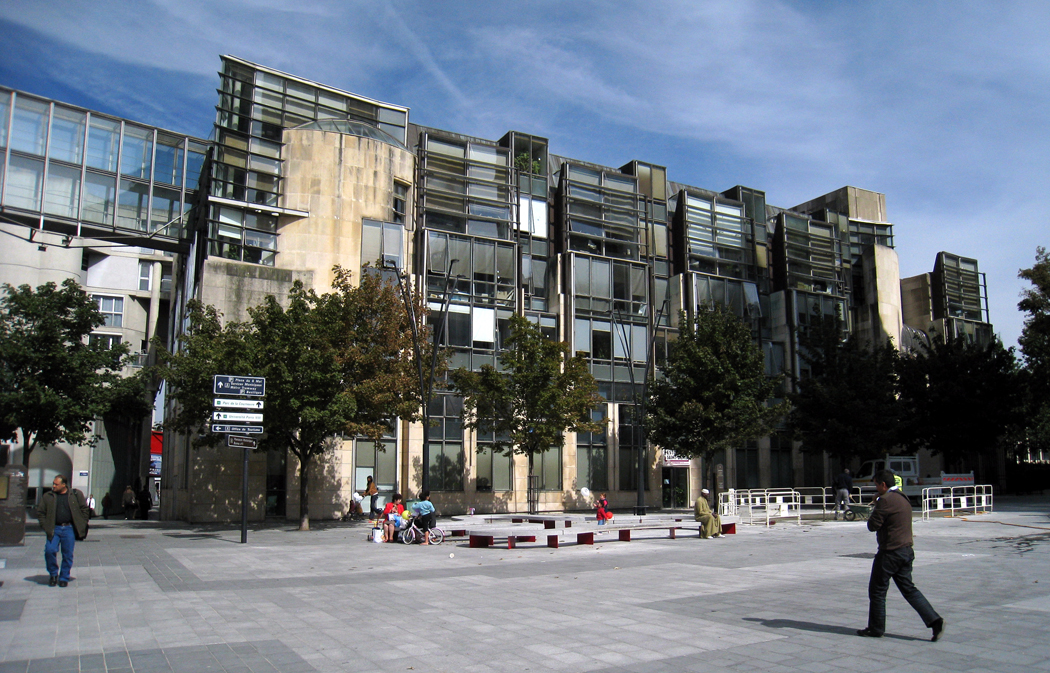
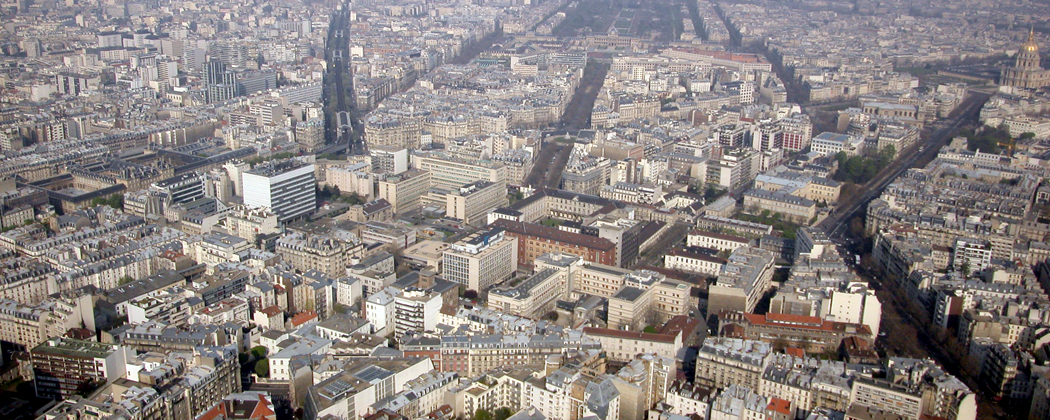
Even the landscape is home. The trees of Verdun, the mountains of the Vosges, the beaches of Normandy, the craggy peaks of the Massif Central, the caves of the Perigord, the waves of the Mediterranean, the 2,000 year history of Arles, the white hills of Aix.Forests of Verdun
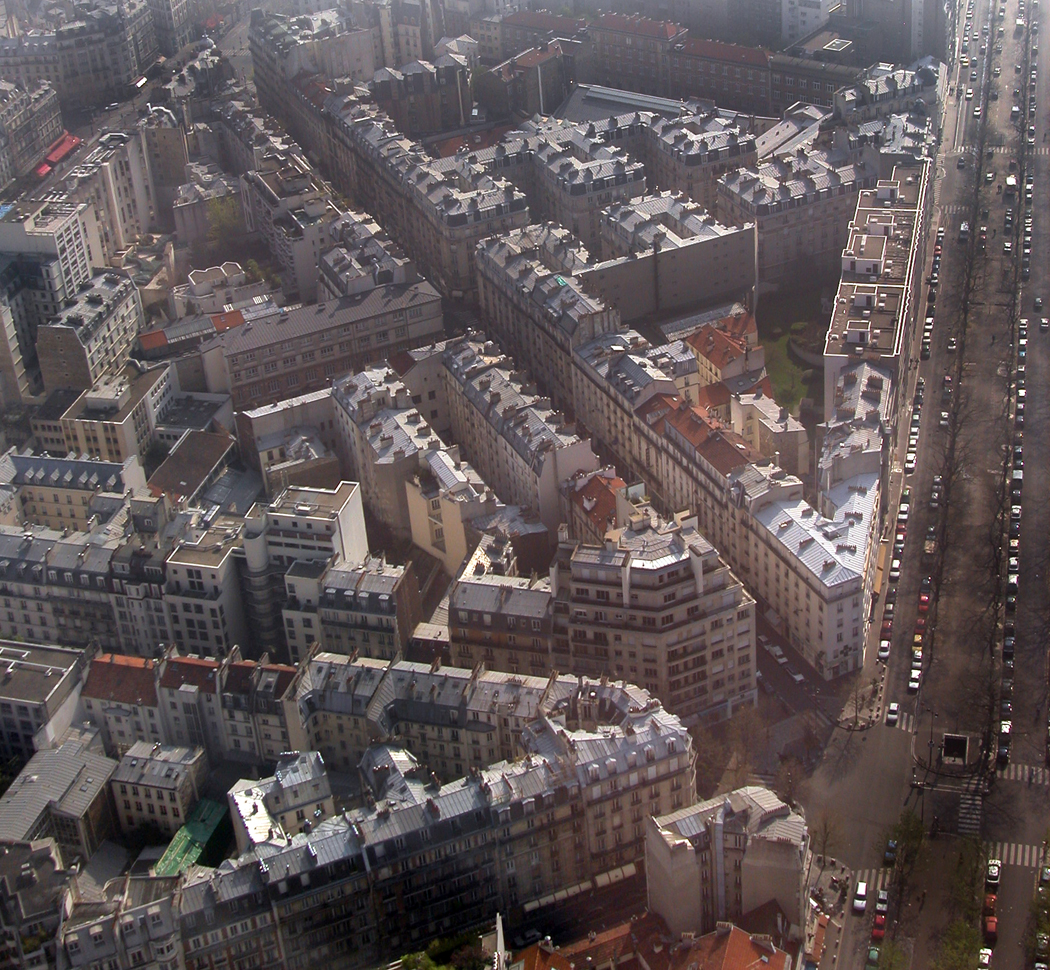
And finally, and most importantly, the small, highway-ringed city of Paris, where the girl in the flower shop asks how your wife is doing when you pass in the afternoon and your wife is resting in the hotel room.

I find it all so inviting, so warm, friendly and comfortable. Paris is a city you can negotiate, where every corner — every one of its 20 arrondissements spiraling out from the Ile de la Cité — is as familiar as a classmate from school, and just as distinct.

It is the Berber faces, the Jews of the Marais, the Asians running the butcher shop, the Turks selling pizza, the line each morning and evening at the boulangerie for baguettes, the sculptured heads over the doors, the fountains, the public statues, the warren of roads changing names every few blocks. The squalid suburbs, the train stations, the Bois de Vincennes, the violinist echoing through the tunnels of the Metro, the fromage blanc at the Chinese restaurant, the old men playing pétanque in the flat dust of the Tuileries.Blvd de l'Hopital

There is nothing wrong if you prefer London. If you like bad food and dirty streets, boring television and infuriating politeness.

À chacun ses goûts.

My wife and I have been to France many times and cannot wait to get back. I recently came across the diary I kept on our first trip there, in 2002 (I had visited much earlier — in 1966) and I will be sharing portions of it over the next several blog entries. I don’t know if I can persuade any of you to give up your Downton Abbey for the French version of Inspector Maigret (with Bruno Cremer), but perhaps I can suggest why we find the nation so compelling.

BBQIn this week’s New Yorker, Calvin Trillin writes about North Carolina barbecue and the efforts by the only slightly facetious Campaign for Real Barbecue to maintain the traditional standards for the iconic pork product.

He makes allowances for the Great Divide — between Lexington-style and Halifax-style barbecue, that is, between western Carolina barbecue, made with pork shoulder and seasoned with a tomato-based sauce, and eastern ‘cue, made with the whole hog and doused with vinegar and hot pepper. hog snout 2005

At the outset, I should lay my cards on the table: As a Yankee moved to the South, I came late to the game, but because my first official wife came from Scotland Neck, way out east of Raleigh and Tarboro, I first came to love the stuff the eastern way. (Tarboro, by the way, was home to Ed Weeks, famous in the 1970s for growing record-size vegetables, including a 39 lb. canteloupe and a peanut 3 ½ inches long.) When I ate at Stamey’s Barbecue in Greensboro, I was put off by the sweetish tomato sauce. And without the whole pig roasting on the hickory ash and embers, you miss a good deal of the pleasures of barbecue. I should admit that for those adherents of Lexington-style, the product is more uniform. Only the best and most succulent parts of the animal are used. And for many, that is a plus. But for those of us going whole hog, we miss the bits of gristle we must occasionally spit out; we miss the odd globules of pigfat; and most importantly, the crispy burned bits that are the prize in the Cracker Jack box. “Please ma’am, more crispy bits.”

But I am not here to talk about barbecue, but about its sidekick, the hushpuppy.  We all lament the passing of those things we remember most fondly from our childhood, and I’m afraid that hushpuppies just aren’t what they used to be. cornbread 1

I the South, there are several kinds of cornbread. There is the traditional risen cornbread, made from white cornmeal — usually a self-rising mix, like Martha White’s — made with an egg, some oil and buttermilk and poured into a black-iron fry pan heated to 450 degrees and coated with a layer of scorching bacon grease. The batter sizzles in the grease and when it cooks up, in 20 minutes or so, there is a salty brown crust around the cornbread. You cut it into wedges and butter them up for eating.

My late father-in-law’s favorite meal was cornbread crumbled into buttermilk. cornbread cakes

There are also cornbread cakes, in which the batter is fried up on a griddle, like pancakes. Those of us who prize cornbread believe this is the ultimate — more exterior crust, less interior crumb. Butter them up and eat. Great with a mess of pintos.

More humbly, there is pone. This is cornbread without the fancy leavening and seasonings. My first official mother-in-law, from Scotland Neck in Halifax County, used to make the best version, which she called “dog bread.” You have white corn meal, some salt and water to make a thick, doughy batter, dump it into a pan of hot bacon grease and bake it in the oven. I comes out with a great bacon-y crust and an interior texture that can only be compared with a fudge brownie, only savory. You cut it into squares and the luckiest person gets the corner pieces, with extra crispies. You cannot imagine the perfection of dog bread with cooked greens.

Yet, it is the hushpuppy that wins pride of place. You cannot really be said to have eaten barbecue if it isn’t accompanied by hushpuppies. These are deep-fried cornbread tubules, brown and crunchy on the outside, hot and steamy on the inside.

The problem is that tastes change with time and the humble hushpuppy I first knew when I moved to North Carolina in the late 1960s has morphed into some sort of fast food that I hardly recognize.

The original was cornmeal and salt, like dogbread, deep fried. Nowadays, you are hard pressed to find a hushpuppy not sweetened up with sugar and with diced onion added. The old flavor is now closer to a kid’s breakfast cereal.

But this is only part of the problem. Hushpuppies used to be made by gathering up some of the dough on a large cooking spoon and flicking off bits into the boiling fat with the back of a tablespoon. The result was not uniform, but each tapered puppy had ridges along its length that fried up extra crispy. Now, almost every barbecue restaurant has an “extruder” that squeezes out uniform, round-sided football shaped hushpuppies, or worse, has one of those “squirters” like a showerhead that eject a rather loose batter into the fat. You wind up with something more akin to an unformed funnel cake. hushpuppies now

One has to recognize that foods — even so-called traditional foods — evolve, just as language or shoe styles evolve. And it is the Southern taste, defined by customer preference, that has given us the sweetened, oniony, turd-shaped hushpuppy. It seems to be what the people want. But one can nevertheless lament what is lost. And I miss the old, unsweetened, humble, crusty hushpuppy that I first came to love.

It is this way with many of our foods: The barbecue we get in North Carolina — even in eastern North Carolina — is now often made from pork shoulder instead of the whole pig and often it is cooked in an electric or gass oven and not on ashes (although they might throw some soaked hickory chips in for “added flavor.”)

And this devolution isn’t only Carolina or the South. There are people in New Jersey who can countenance Pizza Hut pizza. I don’t know how or why, but they do. And even in Arizona, one can find a line at the Taco Bell. Some people choose that over the taqueria down the street where you can get a real taco de lengua.  You can find Mexican barbacoa, but most people just want chimichangas and ground beef tacos.  It is a certain uniformity and loss of regional preference that has crept into our cuisine and I lament it.

Mais ou sont les neiges d’antan?

MapI have lived in the four corners of the U.S. I was born in the Northeast, lived in the South, the Southwest and the Pacific Northwest. And yet it is somehow the vast middle of the nation that most draws me to it.

In the Northeast, there are cities and woods, the Hudson River slicing up New York State, the “bare and bended arm” of Massachusetts jutting out into the cod-waters of the cold Atlantic. There are the great curved ridges of the Alleghenies forcing highways into what look like Golgi bodies on the gas-station maps. This is the land of salt-rust on the undercarriage of family cars; Of hillside cemeteries bordered by brick apartment buildings. Warehouse districts and tract housing; turnpikes and wharves; glacial till and the stone walls the till makes both possible and necessary — and the fallen ruins of those walls making forgotten property boundaries in second- and third-growth forests. Swimming holes from abandoned quarries and the ever-present nose dust of bus fumes.New York 3

I look back on these things and a wave of nostalgia warms me. Manhattan in the winter, with the Con-Ed grates pouring steam into the air; the periodic burst of warm air blowing up from the sidewalk as the subway train rumbles in the Stygian underground. People in vast tides walking with purpose up Fifth Avenue. The smell of coffee and pie at the Horn and Hardart.

But I left the Northeast at just about the same time as the Horn and Hardart began fading away. I moved to the South, where I became accustomed to slower talking, slower walking and human interactions that were not based on efficiency and gain. It was a land of pine trees grown for paper pulp, a coastline of sea oats and dunes on barrier islands, cities of fewer restaurants, and what there were served meatloaf and fried chicken. When I moved there, the single Chinese restaurant in Greensboro, N.C. pretty much restricted its menu to chop suey and egg foo yung with pot roast gravy.red maple

I have lived in the South now longer than I have lived anywhere else, although I have not been faithful, and have moved elsewhere, yet I seem always to return. There are pinxter flowers dripping with rain along the Appalachian Trail; there are bass-filled man-made lakes where small towns used to be; there are old lawyers in worn suits who meet every morning in the coffee shop to talk about the day’s events while sipping hot coffee cooled by pouring it out into its saucer slurp by slurp. When I moved to the South, the Klan was still common — in both senses of the word — and otherwise perfectly decent white folk made a sincere case for not changing things too precipitously. Every town had its black community, usually on the other side of the railroad tracks that had once provided the reason for the town’s existence and formed the terminator as clearly as if there were the lit and dark sides of the moon.

There were cotton warehouses and tobacco barns; men actually used spitoons — and if they didn’t have one, they might have an empty tin can into which to spit the brown excess saliva from their chaw. I know of one old reprobate who actually died when he passed out drunk and rolled off his couch, cutting his throat on the jagged edge of his spit can.

If, in the North, people had little time for each other, always in a rush to get somewhere and do something, in the South, everything revolved around relationships, around talking and with that talk establishing social rank and responsibility and anyone you knew, you also knew who their daddy was. People talked endlessly, about weather, business, politics, gossip, taxes, planting, hunting, dogs and church meetings. Even now, so many decades later, when I made my first visit to the local barber, one of the things he asked, making small talk, was what church did I go to. He wasn’t being nosy nor was he proselytizing, he was merely establishing a relationship.nc church jesus saves

A good deal has changed in the South since I first got there four decades ago. Accents that used to define hierarchy have begun flattening out: You can walk through whole blocks of Atlanta and hear the same language you might hear in Allentown, Pennsylvania. Fine dining is now possible if your city or town is now large enough. Your mayor has at least a 50-50 chance of being African-American. When I got there, every white Southerner was a Democrat; now, they are all Republicans.barista

I moved to Seattle in the late ’70s, before half of California swept north, and before every streetcorner had baristas pouring white swirls into the foam of a latte. The railroad switchers shunted cars from dock to dock along Alaskan Way where homeless men in dirty coats and black watchcaps clutched brown paper bags while sleeping in industrial doorways. The ferry moved out of its pier in the morning light to make its way to Winslow on Bainbridge Island or to Bremerton. Although it rained most days during the three non-summer seasons, it was mostly a drizzle and few people even thought it counted as rain and no one I saw ever carried an umbrella.

From my house on Phinney Ridge, across from the Woodland Park Zoo, you could see the snow-capped Olympic Mountains to the west and the snow-capped Cascade Mountains to the east. To the south was the biggest permanent, unmoving white cloud you ever saw — on those days you could actually see it for the weather — and it was called Mt. Rainier, which was pronounced, unlike the sovereign of Monaco, as if it described the precipitation in the Puget Sound: rainier. Certainly rainier than Arizona, where I moved later.Seattle docks

There was Olympia beer and Rainier beer, and I could hardly believe it to see pedestrians stop at the “don’t walk” lights, even at 2 in the morning when there were no cars on the road. No New Yorker would do that; I had friends who otherwise had a cavalier attitude toward authority who would stop me from jaywalking, as if the Stasi were keeping files.

When I got out of the city, the forests were populated with douglas fir and western redcedar. Nothing else. Endless miles of the stuff, climbing up the sides of mountain ranges and with downed logs greened over with moss, and the path a spongy loam under your feet.Hurricane Ridge, Olympic NP, Wash

I think that is what finally drove me to move back to the South: The sense of homesickness for a forest with scores, even hundreds of varieties of tree. The sameness of the Northwestern forest seemed unnatural to me, as if I shouldn’t be there.

There is much I loved in the Northwest. The moist air, the cool summer, the planked salmon and Ivar’s Acres of Clams. I knew a bunch of bicycle messengers, known as “Buckies,” and enjoyed the friendship they provided. There was a political progressiveness that was nearly universal; one could shop at the co-op grocery, the Public Market at Pike Place. Stop off at a bar and have a beer like a real person.Badger Creek Ariz

Finally, there is the American Southwest, as dry as Seattle was moist. One can see for 20 miles at a glance, taking in a meaningful quadrant of the earth circumference. The Southwest mean space. At least outside the city of Phoenix, where we settled — and we got out of the city as often as we could — the desert was intense, sharp and beautiful. Before a rain, the humidity made the creosote bushes smell like spicy cologne. The saguaro cactus stood vertical above the thorny undergrowth. Jack rabbits, roadrunners, the occasional javalina or rattlesnake darted in and out of view. The air was dry; sweat evaporated before you even knew it had escaped your pores. The sun bleached the landscape and radiated heat like an open oven door.

There were three different experiences of Arizona. The most common one was the urban experience of Phoenix.

My wife and I moved there because we had traveled summers across the country and thought it might be pleasant to live in the West for a few short years. I’m sure we were thinking of Flagstaff or Santa Fe. We wound up in Phoenix. We were thinking of having a little adobe house with a white picket fence and perhaps a butte in the background and a few pinto horses grazing in the pasture.  We wound up on Seventh Street, the busiest thoroughfare in the city, with traffic noise like endless surf crashing outside the house, and exhaust soot collecting in the cooling ducts of the house.

The street grid was punctuated by Circle Ks and 7-Elevens. The right-angle network of streets were broken in places by the eruption of mountains: Camelback, Squaw Peak, South Mountain. Enthusiasts climbed them to get a view of the city below, which spread out like a plaid tablecloth, divided into square patches. You could hardly get lost in this checkerboard of roads; you were either driving north-south or east-west, and the city’s mountains provided easy landmarks. You always knew where you were.camelback mountainSaguaro NP Ariz

Outside the city, the land was split between northern and southern Arizona. To the south, there were greasewood flats, saguaro cactus and stony mountains catching the sun late in the day to demarcate the rosy lit areas from the bluish shadows. Dry lake beds hovered in the distance, white salt pans, and the taller mountains caught snow in the winter.

To the north was the Colorado Plateau, Flagstaff, the Navajo and Hopi reservations and the Grand Canyon. The air was noticeably thinner and cleaner — no Phoenix, no Tucson to fill the valleys up with yellow smog. Roads unrolled in long ribbon streams ahead of you heading to the horizon bounded by mesas and buttes. The landscape painted tawny, ruddy, sooty, whitish and blue by streaks, the sky larger than you have seen it anywhere, and most likely uniform blue, only darker toward the zenith.

At First Mesa on the Hopi reservation, you can hardly tell the blocks of stone making up the hillside from the stone houses built atop. You drive endless miles across grassy plains to the next habitation. Streams are marked by slight empty depressions that only fill up in the rare rains that come, mainly in late summer as thunderstorms and mid-winter as constant frontal drizzles. They can become roiling mud rivers almost instantly. Cars will be washed away in the flow. You can always tell the newbies in the desert; they think they can drive through the flooded washes. They fill the nightly news and we see the cars floating downstream, their owners on the roof waiting for rescue.

We spent one Christmas day with friends in Walpi. We brought apples and oranges, coffee and sugar. They gave us cookies they were baking. It snowed on First Mesa; the fire in the stove heated the low stone house.

What you are never quite prepared for is the sense that the canyons are not, like mountains, something that rise from the level, but rather are gigantic holes in the ground you don’t see until you are right on top of them. The stratigraphy is a geological story that is told, part by part, as you move from one part of the state to another. The same layers, in the same order hundred of miles apart, although they might be covered by yet more layers in one place, and rest on the surface elsewhere. You could, like a good geologist, anthologize the landscape to tell a continuous saga.

When we left Arizona, we immediately became homesick for the Plateau and the desert. I cannot say, however, that we missed the city. I used to call it “Cleveland in the desert.” I loved my job there, and my colleagues and friends, and my wife loved her job and her colleagues and friends, but the city itself is rather charmless. The South called us back.

And so, we returned — for me it was my third homecoming. Now we live in the Blue Ridge Mountains of North Carolina and I am constantly amazed, as a Yankee, at just how open and friendly the people are — so much so, it sometimes creeps me out.

But as I was saying at the head of this periplus, I have lived and absorbed the people and land in the four corners of the country, but somehow, there is a gravitational pull to the middle I have always felt, to the place I have never managed to live, the vast gut of the continent.Chicago, Ill

For me, there are two emotionally resonant attractions to the middle. First, there is the rustbelt city, the factories, the immigrant populations, the train yards and highway junctions that all spoke of the industrious rise of the nation from the late 19th century through the Second World War. It is where so many of our great writers came from. It is the home of pirogis and deep fried ravioli, sausages and red cabbage. I have loved taking the train across the lower shores of the Great Lakes past Cleveland and Toledo to Chicago. There is a Midwest that is populated. What is not industry is farm. And there is corn and wheat, silos and tractors. The land tends to lie flat. You could play billiards on the ground in places in western Indiana.Joes Colo haystacks

But there is the second middle of the country that calls to me even more insistently: It is further west than the prairies; it is the Great Plains. Driving through North Dakota or Nebraska, eastern Colorado or eastern Montana — there you feel more than anyplace else in the 48 states that you live on a planet. On the coasts, it used to be proof of the roundness of the earth that you could see the ships and their masts slowly dip below the horizon; on the plains, you see the next grain elevator rise from the same horizon in front of you as you drive and later drop again behind you. You are always on the high point of a dome; the earth falls away from you in all directions. And on this dome, the grasses curl like whitecaps on the ocean.

It is this sense that Melville captures so well in his late story and poem (or is it poem and prose prologue) John Marr. “Blank stillness would for hours reign unbroken on this prairie. ‘It is the bed of a dried-up sea,’ said the companionless sailor — no geologist — to himself, musing at twilight upon the fixed undulations of that immense alluvial expanse bounded only by the horizon, and missing there the stir that, to alert eyes and ears, animates at all times the apparent solitudes of the deep.” The landscape between the Mississippi River and the Rocky Mountains  was “hooped round by a level rim, the prairie was to John Marr a reminder of ocean.”

There is little in this expanse that can count as a city. Much that seems uninhabited. Moving across the Dakotas and into Montana, you find that neighbors count their separation not by fences but by miles. The land rises and falls like sea swell, and from the top of any ridge, you can see the land spread off in grassy waves.

Why this landscape should call to me so seductively is a mystery, even to me. I have wondered if it is some atavistic genetic memory of the Indo-European origins in the Caucasus, the Trans-Oxiana, where the grass continues unabated for a thousand miles, that Scythian homeland of my peoples, or at least of my language.Pawnee Buttes 5

Or perhaps, even further back, it is the imprinted memory of the African savannah where even before the global diaspora, we hairless monkeys were born. Why should I feel a homesickness for the grasslands that I have never actually lived in, unless there be some tick in my chromosomes that was molded there?

Whatever the cause, I feel it strongly. I feel it also in Manitoba and Saskatchewan, and eastern Alberta. The grasses swirl in the breeze, like animated hair whorls on an infant’s head; you can see the breeze moving through the grass in waves, the way a man in a sailboat sees the fretting of the lake surface as the gust approaches.

I am old now, and it is unlikely that I will dot the center of a quincunx of habitations by finally moving to the continental center. I will stay fixed in the North Carolina mountains. The Northeast, Southeast, Southwest and Northwest are part of my past. The spindle around which they all turn will remain a psychic locus, not an actual one for me. And the gust that frets the water a hundred yards off is the final one.