I have always avoided writing about politics in this blog. In fact, I wrote, many years ago, that I believed that “politics answers no question worth asking.” It cannot provide meaning in life; it cannot answer the big questions. It can attempt to ameliorate the problems it has itself caused, by trying to fix its mistakes, although every repair just causes newer problems. It can reduce suffering, although, in practice, it more often causes it. You nail a patch over a hole causing a leak in the boat, but the nails just cause more holes.
But the big issues of life are not addressed by politics, and especially not by party politics. Yet, we are stuck with it. We work within the system we have inherited, or sometimes, we attempt to overturn that system and build something better. The report card on those attempts is rather dismal.
I have no faith in any system; every system is a simplification of the infinite complexity of what we assume to be reality. And worst of all, anything with an “ism” at the end of it. It will ignore much in order to make sense of the fraction that is left. While granting there will always be a system of one sort or another to organize the practical relations among peoples, no system encompasses the whole of experience. It is a scribbled shorthand.
I am an old man now, but once was a young man committed to justice and reform. I came of age during the Vietnam War and spent angry hours protesting that war. I attended a Quaker college and became a convinced pacifist in the 1960s. Now, I am less sure of myself; more willing to accept that I don’t have answers. But that only leads me to believe no one else does, either.
Meaning in life comes from many things. I find it in art, literature, music, but more importantly, in relationships, family, grandchildren. I find it in kindness and in helping others when I can. Being useful. I realize that others also find it in faith, or belonging to a group. We each have our ways.
Our son, Lars, came for a visit, driving up from Austin, Texas, for a few days. We had intense conversations deep into the night, which only underlined the difference in generations that divides us. At 55, Lars remains a kind of embittered idealist, who imagines a better world, while ol’ stick-in-the-mud me just remembers the lines from Yeats, “And when they know what old books tell/ And that no better can be had,/ Know why an old man should be mad.” An attitude Lars ascribes to Boomer complacency.
He talks of anarcho-syndicalism. As he explained his version of it, it sounded to me very like Brook Farm. I remember how that went. I am suspicious of any kind of utopianism.
I had my green days of idealism, too, when I thought my generation was going to fix all the problems that our elders had created. We were going to end war, end racism, end sexism and a glorious new age would be born. Everything that has transpired since then knocks the wind out of me, and I now have more modest hopes — not that we will perfect the world, but that a certain boring normality will descend, with all its faults, imprecisions and piecemeal improvements.
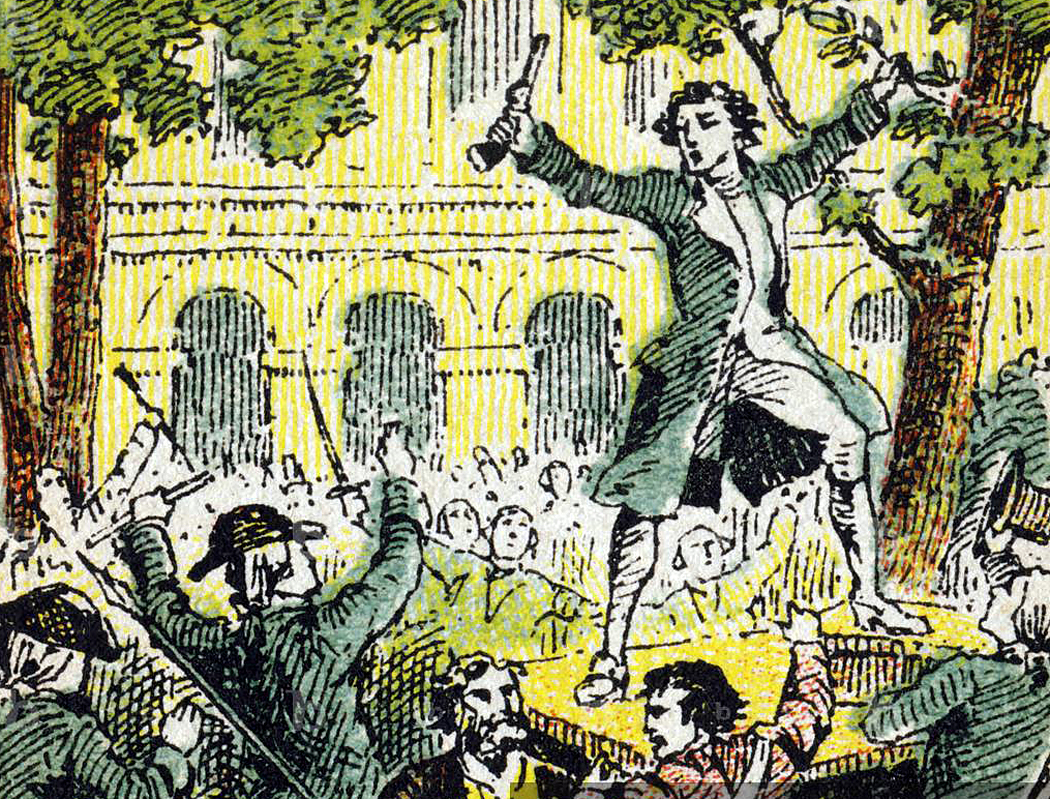
While Lars believes in radical action, with perhaps rolling heads, I remind him that all the idealism of Robespierre left rather a horrifying lot of rolling heads — including his own — and if they got rid of a monarch, they merely wound up with Napoleon. Know why an old man should be mad.
My generation’s idealism, after all, did help end the Vietnam war — without stopping recurrence in Iraq and now Iran — incrementally reduced racism — certainly not enough, but a smidgeon and even that now being lost — and it was women of my age who shouldered their way into chipping out bits of patriarchal misogyny. Again, with a frightening recent recidivism.
But I have to admit that a certain Boomer exhaustion may well contribute to what looks to the young as complacency. We leave the trenches to those who still have the energy and the working knees.
We failed, our fathers’ generation failed before us, our children’s generation is already failing, and whoever takes over next can only fail in turn. That doesn’t mean we shouldn’t keep trying, but should maintain a certain humility about what is actually possible. Hence my desire for something more normal than the current insanity, bigotry, and incompetence. And my fear that nothing better can be had.