Archive

Monthly Archives: July 2026

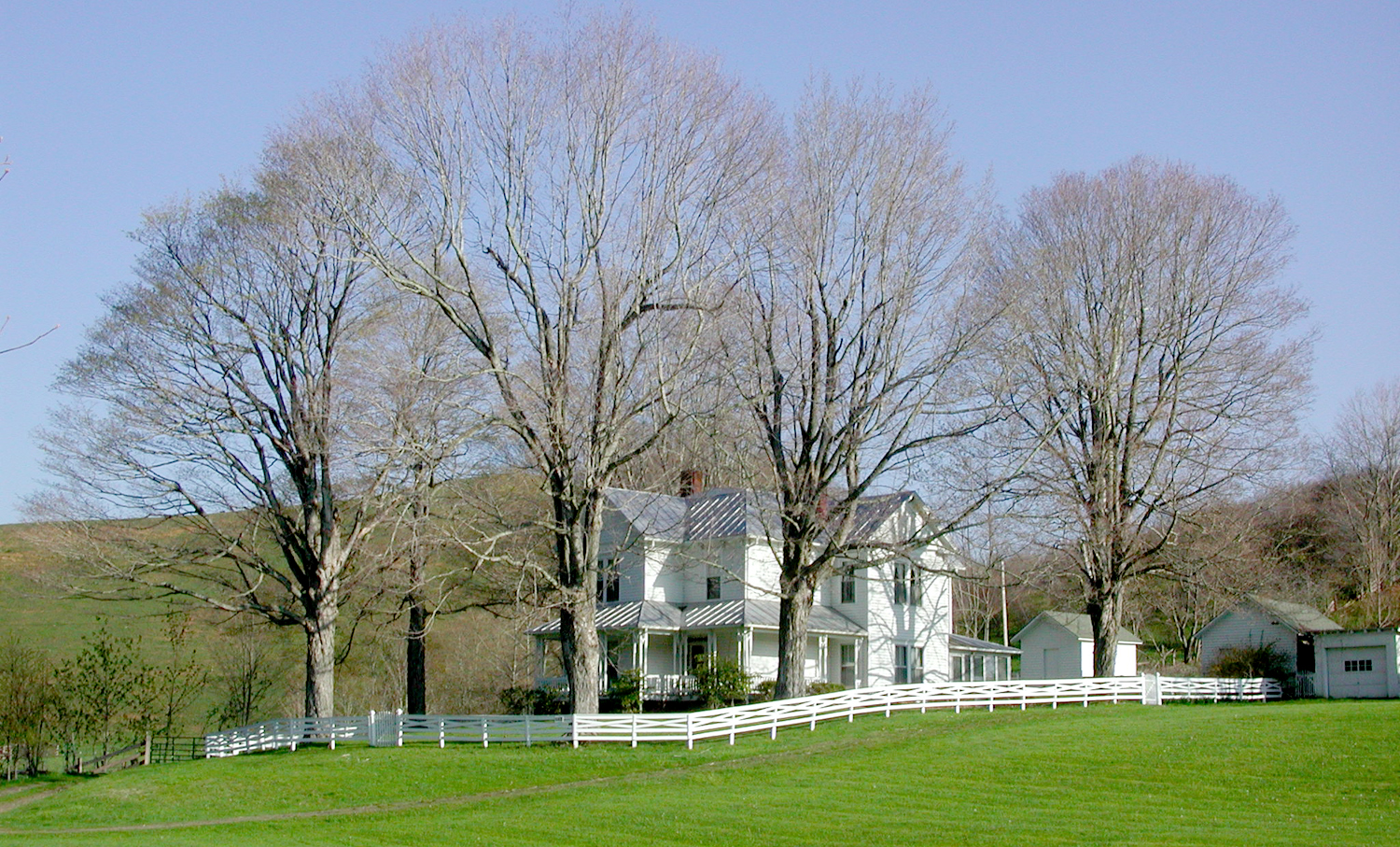
Am I Southern? I have lived in the American South for most of my life. I am comfortable with most of the culture and folkways of the region. Both my marriages have been to Southern women and this is the place I choose to live. But I was not born here. Worse, I came from New Jersey. 

If there is anything more un-Southern than Bergen County, just off the George Washington Bridge, I would be hard pressed to name it. Even the wilds of Afghanistan has more in common with life in the South than I had growing up. That sense of tribal identity — of living in the hardscrabble land, of having kinship with the soil, the bona fides of regional identity — that is more Southern than life along the Turnpike. I don’t remember anyone I grew up with pounding their chests with pride saying “I’m from New Jersey.” No one cared. My family didn’t go back five generations there.  

It is true that the South has changed, become more cosmopolitan. Not everyone’s a farmer growing tobacco or sorghum. Interstate migration has diluted the percentage of homegrown folk, and cities such as Atlanta or Houston have radically altered the demographics. Even the accent and vocabulary have begun evening out. 

Yet, there is still that sense of Southernness. It may be less clannish than it used to be, but it is still layered in to the psyche of anyone who grew up here. 

I first arrived in 1966, entering college in central North Carolina. There was then still a strong backlash — even a mainstream backlash — against the Civil Rights movement. Jesse Helms spewed his racist venom on the radio waves, and was soon elected to the U.S. Senate. His campaign, against Democrat Nick Galifianakis, preyed on bigotry and that suspicious foreign-sounding name: “Vote for Jesse; he’s one of us.” The Klan was still in business. If schools were legally desegregated, most communities still had a Black side of town. 

No one now takes a second notice of a Black family sitting at the Red Lobster. I’m not claiming racism is over; it is not. But the norms have shifted. Black newscasters on TV or a Black state trooper are hardly noted. 

One thing I noticed as soon as I got here: There is and was a countervailing sense of manners that didn’t play out in the same way back in New Jersey. Some of it struck me as odd, initially, and even worse, some seemed absolutely hypocritical. I didn’t understand. 

I remember a perfect example of how this works in the South, and why I have come to understand the brilliance of it. Many years ago, my wife’s teenage cousins (“cousin” is a loosely-defined concept in the South) had bought some new tires for their car. When one of the tires had a blow-out, their father, a Yankee transplant from Massachusetts, drove to the tire-store and screamed at the man there, “You goddamn kid killer! Someone coulda died! — why’d you sell those rotten tires?” He demanded an apology and satisfaction. All he accomplished was to raise the hackles of the tire salesman. Ineffective strategy. Made sense in Boston, but not in North Carolina. Luckily, cooler heads intervened. 

Their Southern-born mom intervened and had a long conversation with the salesman, after first apologizing for her husband. “You have some really nice tires here.” “Thank you ma’am. We try.” “I know. But sometimes something slips through, and I know you would never, ever want to let that happen.” “Well, no, ma’am.” “I’m afraid, I don’t know why, but one of the new tires my daughter bought had a little blow-out. Brand-new, you understand.” “I’m very sorry to hear that.” “Well, I’d hate to inconvenience you, but I know you would want to make things right.” “Of course, ma’am.” I believe there was also a bit of discussion about the salesman’s son, who went to the same high school as the girls, and probably a bit, too, about whose aunt had known whose aunt and a recipe for a good coconut cake. Things resolved amicably and no one was further accused of anything nefarious. 

This is a culture, after all, where the gravest insult comes in the form of “Bless your heart.” 

  I know full well that since I wasn’t born here, I can never truly be Southern. And I also have been reminded constantly by my wives that I’m a Yankee. Even if they haven’t held it against me, the fact is always there. I grew up with bagels and saurkraut, not with biscuits and slaw. 

My ex-wife asks if it even matters if I’m Southern or not. Why should I care? “There’s no court you have to prove it to,” she says. “Yes there is,” I say. “There’s in-laws.”

As the years slid by, I have become increasingly acculturated, so that I now lift four fingers off the steering wheel in salute of drivers headed the other way. I talk slower than I used to (part of that, I admit, is age). I am no longer surprised by ham hocks in my beans (which, of course, I now call “pintos”), and I find myself saying “sir” and “ma’am” in a way that would have made my New Jersey relatives look at me like I was an alien. Up there, it was closer to “Hey, Mack…” 
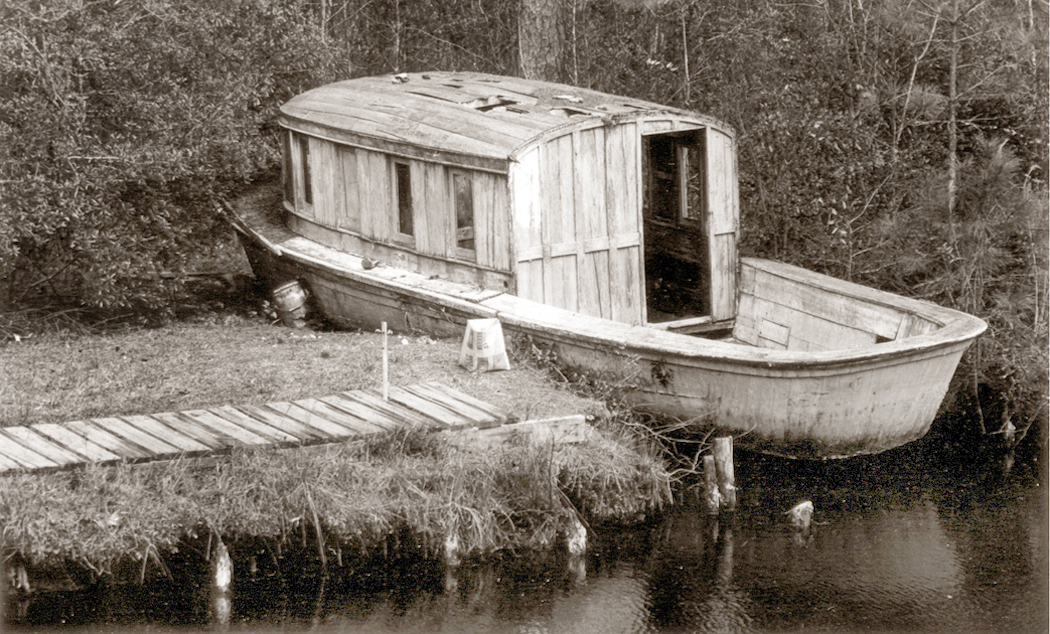
I would say the transformation is roughly 80 percent complete. I still love pickled herring in sour cream, bagels with a schmear, and cannot yet bring myself to accept the local pizza. I have been ruined by the New Jersey version, perfection in every aspect. 

And when I open a tin of King Oscar kippers for a sandwich, Anne will call from the other room, “What is that stink?” And I cannot get used to sweet tea. Curls my tongue. I take mine unsweetened. 

I love Eastern North Carolina barbecue and hushpuppies. And I now understand that the dried-out Shake’n’Bake chicken I had growing up (more wood plank than comestible) has absolutely nothing to do with fried chicken. I grant your fried chicken balances my pizza. 

It has taken me longer to accept boiled greens, but I have gotten there. I had spinach growing up, but collards stewed with sidemeat until it turned to something akin to road tar — well, that took a little longer. And, to be fair, even most Southerners now let their turnip greens keep a resemblance to its original form as plant life. I now am able to add them to my plate sprinkled with some vinegar. 

One one side of the ledger, I’ve now fired rifles and pistols recreationally; I wait for pedestrians crossing the road in front of me (that was a hard one for me: where I came from efficiency was the rule — who could get out of the way faster, and it was usually the car); I automatically walk on the traffic side of the sidewalk when with my wife; I make small talk with the checkout staff at the grocery store (and I now call it a grocery store instead of a supermarket). 

On the other side of the ledger, I’m told I talk too fast; I have no interest in college football; I don’t listen to country music, and Anne tells me “you’re still unsound on black-eyed peas.” On my first trip to the barber, making small talk, he asked which church I attend. “I’m not a believer,” was the nicest way I could answer, and the subject changed. 

If there is something that draws a line I cannot cross, it is probably Robert E. Lee. My late wife, Carole, kept a portrait of Bobby Lee in the china cupboard. I was never allowed to say nary a  word ’gainst his sainthood, and in converse, she would bring the hammer of heaven down upon my head if I ever said anything temperate about Wm. Tecumseh Sherman. “Villain!!!” 
My vocabulary has shifted, too. Southern expressions fall out of my mouth without my even being aware of them. I say “Y’all” unconsciously, and even “all y’all.” I am fixin’ to do something. “Cattywampus” and “plumb” — as in “plumb outa Crisco” — I hardly note as I say them. “Reckon” is now in my regular speech, as is “poke,” as in where I lodge my vittles when I haul’em from the grocery store. I have been known to call my jeans “britches,” and my suspenders “galluses.” But that is more mountain talk than just Southern.

I asked Anne how I’ve changed over the years. “You’re not as obnoxious as you used to be,” she says. 

I have been well trained by a series of serious-minded women, among them wives, girlfriends and mothers-in-law. With an emphasis for the last on “law.” I know my place.
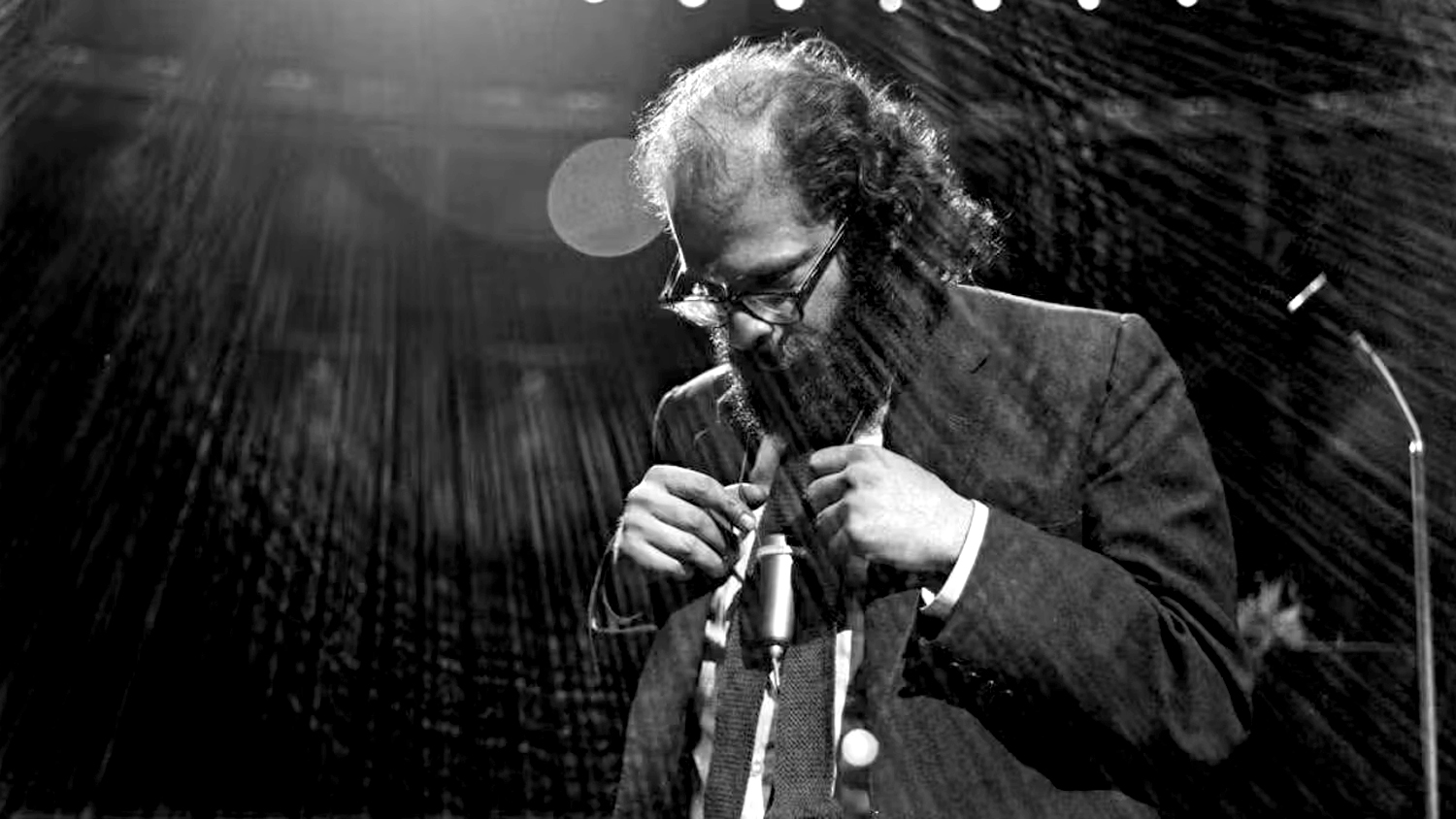
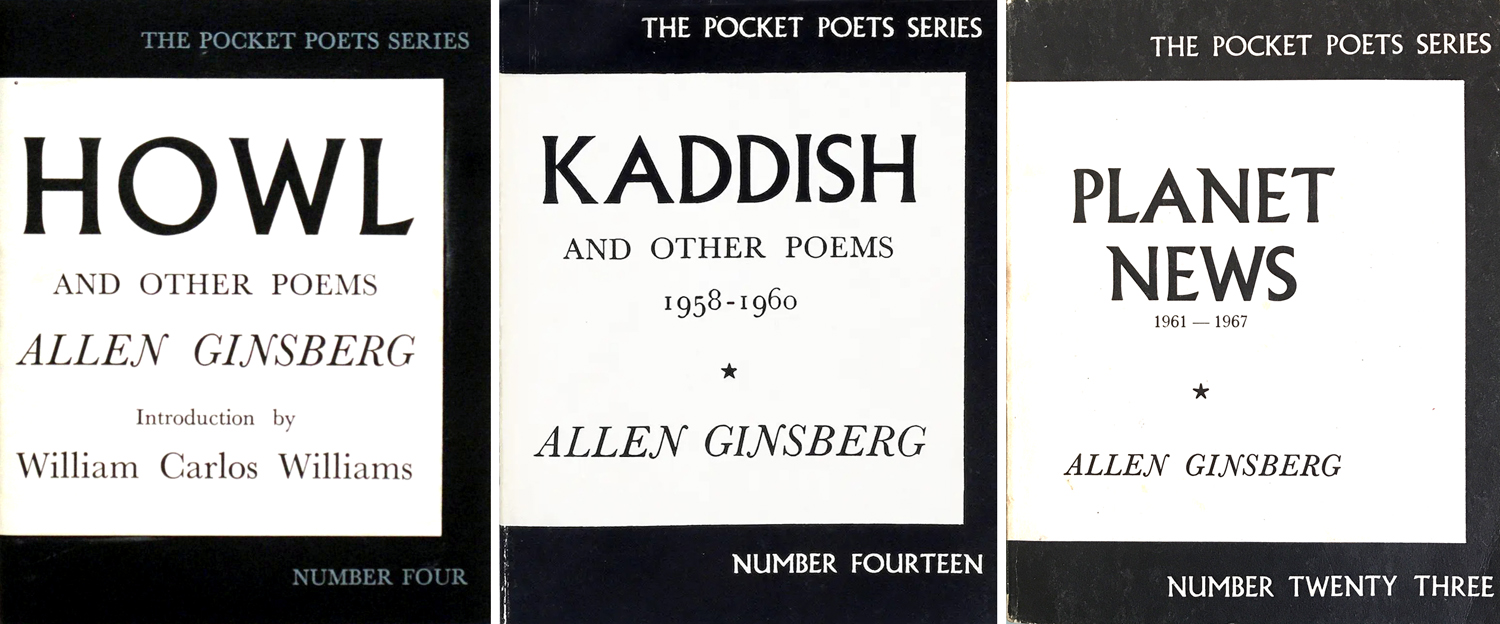
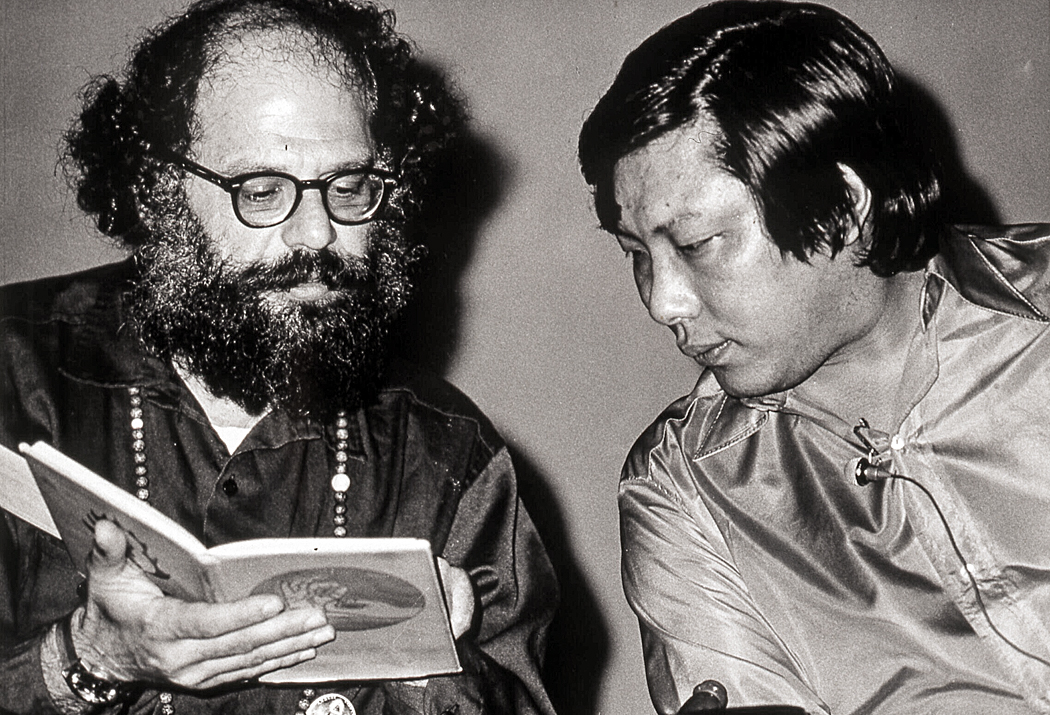
I heard Allen Ginsberg say one of the stupidest things I’ve ever heard. He had come to town to talk about a work he had collaborated on with Philip Glass, Hydrogen Jukebox. It was a powerful piece, which I first heard live, performed in Tucson. 

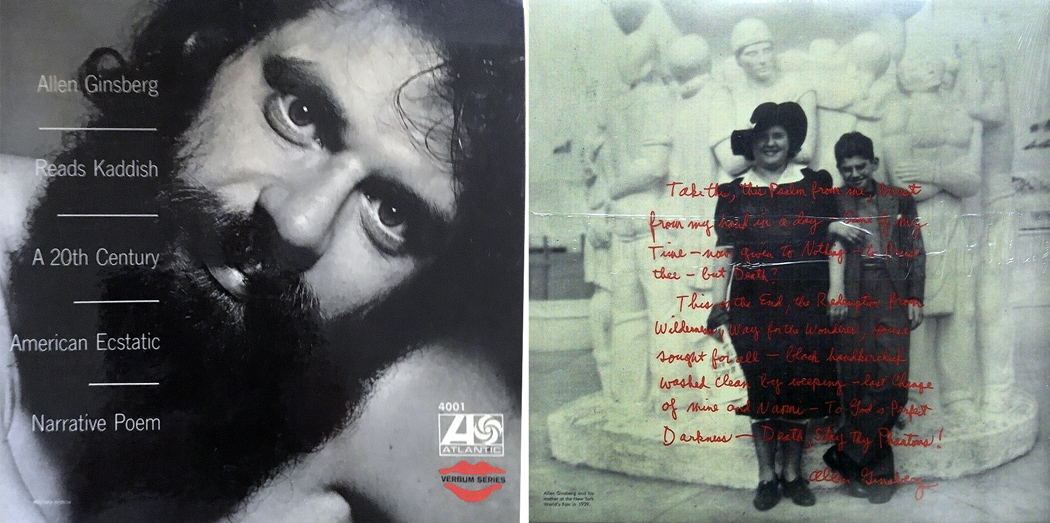
I have always loved Ginsberg’s poetry, from the first, when I read Howl in that tiny, squarish paperback published by City Lights Books. It is one of the great poems of the 20th century. I eventually collected his later books, including Kaddish, Planet News, Reality Sandwiches, although it was clear that not all his writing was up to the level of Howl. He was a very spotty writer, and the older he got, the less interesting the spots. 

He sat on the stage that evening, in Scottsdale, talking about his work and making a case for his then-motto: “First thought, best thought.” How the version an idea comes to you spontaneously will always be better than it will be if you fuss over it and refashion it. Revision always dilutes the inspiration, he said. “First thought, best thought.

As a writer myself, my first best thought was: “Bullshit.” The man has deluded himself with his own bunkum. Most writers will tell you, honestly, that the first draft is always improved by reshaping, clarifying, expansion or excision. Writing is rewriting. 

That doesn’t mean that the initial idea is worthless, but it needs refining, and especially, it needs to have the really dumb parts taken out. 

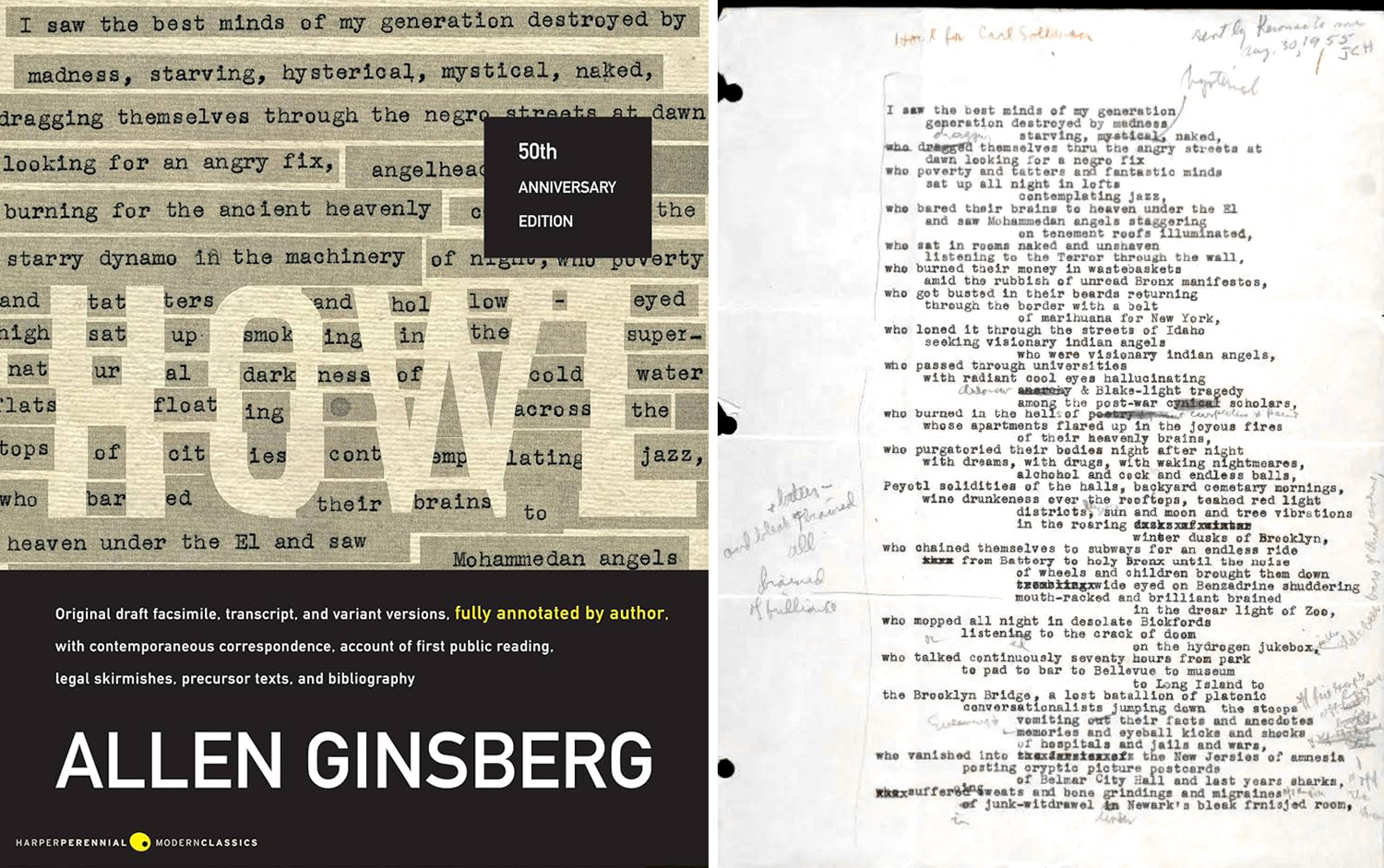
The proof of this comes from Ginsberg himself, to be seen in Harper Perennial’s 50th anniversary edition of Howl, the original draft facsimile. His best poem, considered such by almost anyone’s account, was heavily reworked and refined, honed to a sparkle. 

First thought: “I saw the best mind angel-headed hipsters damned./ What consciousness in oblivion, Joan?” Written in August, 1955. A week later, in the original draft of Howl, it became: “I saw the best minds of my generation destroyed by madness, starving mystical naked,/ who dragged themselves through the angry streets at dawn looking for a negro fix,/who poverty and tatters and fantastic minds sat up all night in lofts contemplating jazz”

Doesn’t have quite the inevitable ring and resonance of the published version: “I saw the best minds of my generation destroyed by madness, starving hysterical naked,/ dragging themselves through the negro streets at dawn looking for an angry fix,/ Angel-headed hipsters burning for the ancient heavenly connection/ to the starry dynamo in the machinery of night” 

That’s quite an upgrade, from “poverty and tatters” and “fantastic minds” to “starry dynamo in the machinery of night.” Prose to poetry. 

Do I think Ginsberg was a hypocrite for his espoused faith of “first thought, best thought”? I think less hypocrite and more that he was drinking his own Kool-Aid. He and his fellow writers — the Beat writers — became fascinated with Buddhism and stories of Zen spontaneity, of Haiku masters whipping up an instant 17 syllables of enigmatic profundity. Most likely, these tales of Basho and Buson are legends and myths, conjured years later. I rather imagine them counting syllables on their fingertips and honing the verse in their minds before committing them to their mouths. Careful craftsmanship. 

The Beat version of Buddhism, and the accouterments of Chinese and Japanese culture are a fantasy. In a way, it might be hinted, this was the Beat version of what Edward Said called “orientalism,” and the hypnotic attraction of exoticism. 

I remember visiting the Naropa Institute in Boulder, Colo., to visit an old college buddy, who had joined the group. As we wandered through the campus, we passed a classroom, where Ginsberg was teaching. The students were chanting, along with the poet, a monotonous phrase in Tibetan — “Om mani padme hung” — over and over, so the noise coming through the open door sounded more like the insect buzz of a summer evening. 

This was part of the Jack Kerouac School of Disembodied Poetics, which Ginsberg had co-founded. And I have no doubt that chanting the mantra may have helped some students focus their minds. I practice a form of meditation, myself, although I don’t call it that — mostly I call it sitting on the back patio looking at the trees and clouds and trying to think no thoughts at all. So, I am not making fun of them. I don’t doubt their sincerity. But I do worry that importing portions of an exotic culture, without having grown up immersed in it, may be charged with being a version of cultural tourism. Yellow robes do not a Buddhist make. 

But Ginsberg has enriched our trove of poetry. In addition to Howl, there is Kaddish (especially moving in the audio version with the poet reciting his own words), and shorter poems such as Kral Majales. You learn to separate the wheat from the chaff. 

I reread Howl periodically. It gives me great pleasure, the way certain poems do, for me, such as Wordsworth’s “Intimations Ode,” Whitman’s Out of the Cradle Endlessly Rocking, Arnold’s Dover Beach, Conrad Aiken’s Tetélestai, or Dylan Thomas’ Fern Hill. Poems that dig deep and remain buried in the psyche. They refresh my sense of language and of being alive. 

It is also true, as with Ginsberg, that a good portion of Wordsworth is banal and prosaic, a boatload of Whitman is blather, most of Arnold’s poetry is forgettable, and, let’s face it, Aiken doesn’t make most anthologies of the best American verse. But each has been capable of magic, and I read these poems over and over, the way you listen to favorite tunes.

In his best work, Ginsberg fussed and reworked and licked the bear-whelp into something infinitely quotable and meaningful. If he had stuck to his first thought, no one would still be reading it. 

When Wolfgang Mozart was three, he was already picking out notes on a keyboard. His father recognized the potential earnings potential and trotted young Wolfie around as a prodigy, showing off to wealthy patrons for their gratuities. I’m no Mozart, and my talent was of an infinitely smaller order, but I remember when I was three and my father showed me off, too. 

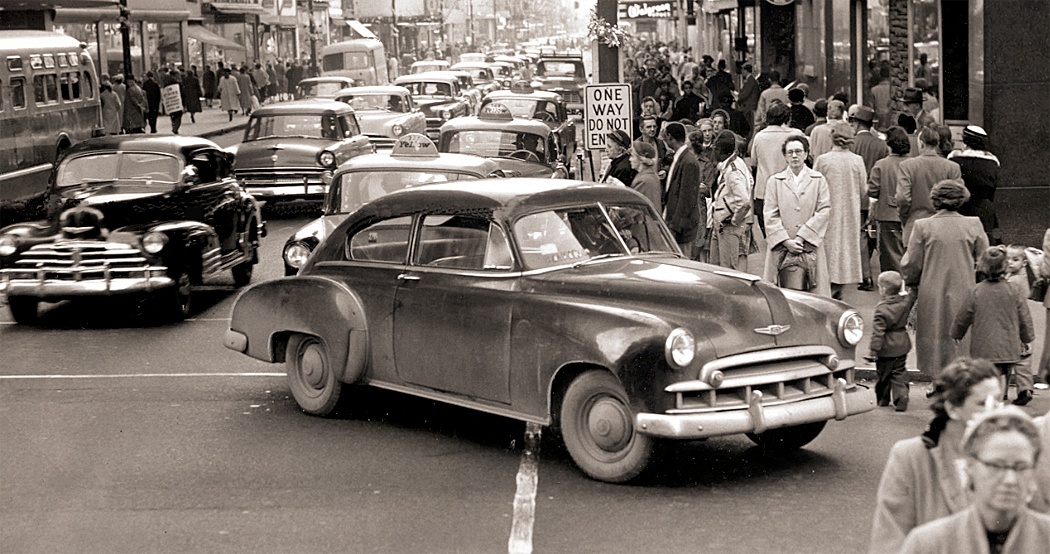
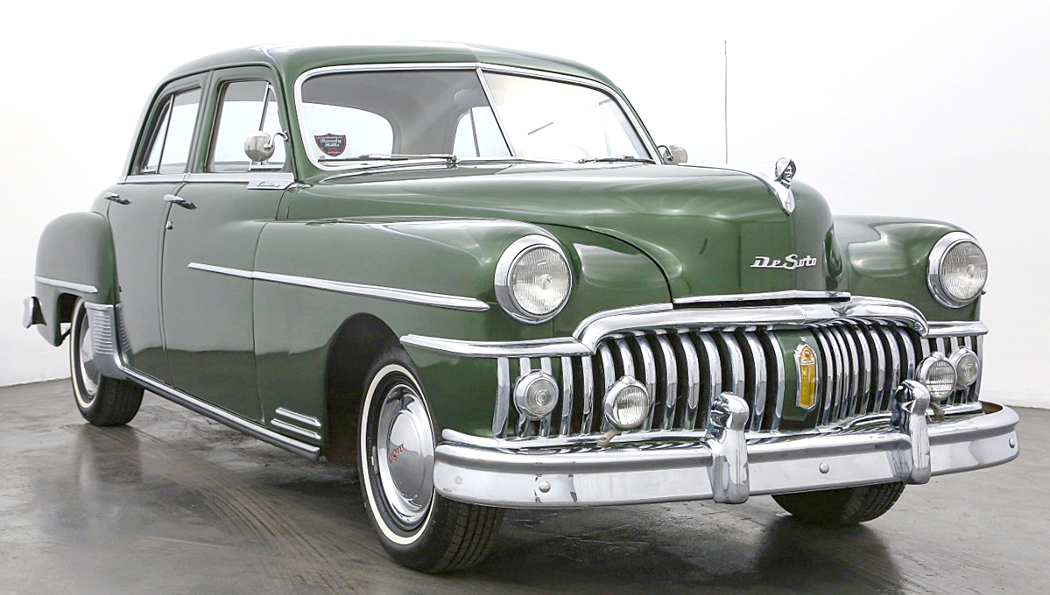
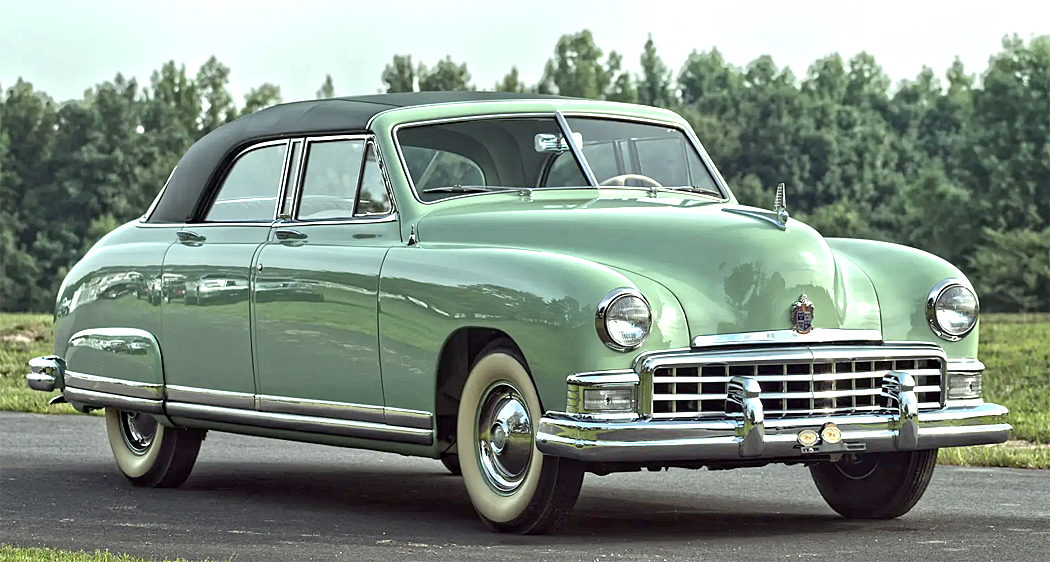
At that tender age, I had learned to recognize all the cars that passed on the street in front of our house in Teaneck, N.J. I would sit on the front stoop and call out names as they drove by. That would have been in 1951, and the cars were quite distinct. There were Packards and DeSotos; there were Mercuries and Studebakers — each with their characteristic shapes, grills, ornaments and sizes. 

DeSoto

It was only a few years since the war ended, and many older cars remained on the road, like the LaSalles or the pre-war Fords. Our next door neighbor even had a car with a rumble seat. (They were comically called “mother-in-law seats,” although I can’t believe many could had clambered up to get in.)

1939 Plymouth with rumble seat

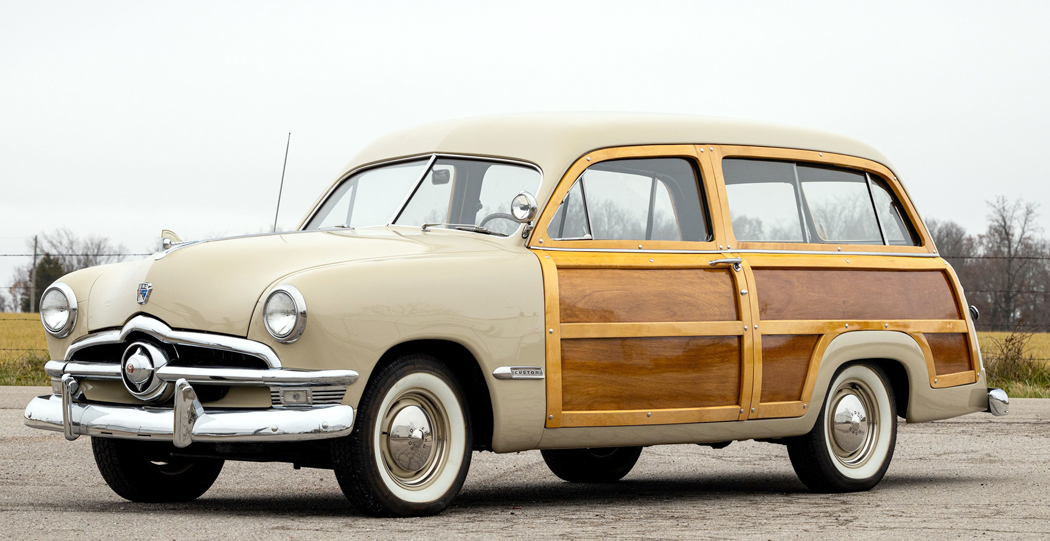
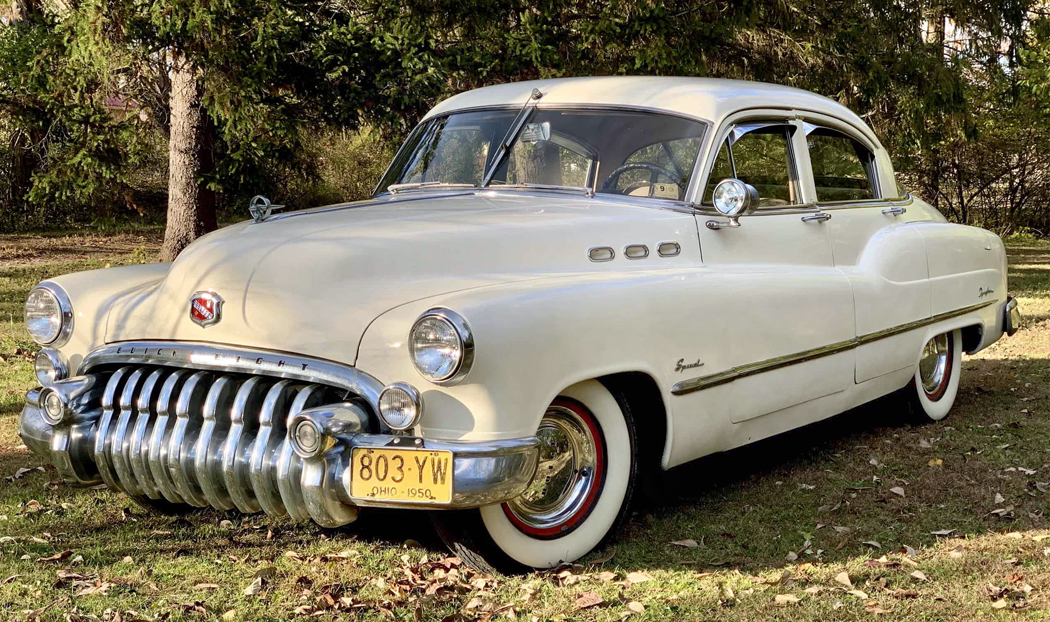
At three, I knew the Pontiac had three chrome stripes on its hood; the Buick had its portholes; the Ford had its bullet-grill; the Hudson seemed as broad as the river I thought it was named for. Many station wagons had wood paneling. I had them all down pat. 

1950 Ford station wagon

And on July 4 that year, when I was three-and-a-half years old, the family drove down the hill to watch the fireworks over the Hackensack River. There was a crowd gathered. The gravel parking lot was full, with people lining the banks of the river to catch the display. I sat on the hood of Dad’s black 1950 Chevrolet and not much liking the noise. Two of my uncles were there, too, with their families. And Dad decided to show me off. And so, with uncles in tow, and a few of their friends, too, we trooped up and down the lot with me announcing the names of every car we passed, all to the astonishment of the grown-ups. Hudsons, Studebakers, Packards, to say nothing of the Fords, Oldsmobiles, Buicks, and Nashes. I felt so proud showing off. I don’t know if Dad actually took wagers or not, but he clearly enjoyed bragging on his son. 

1950 Frazer

Through the 1960s, cars designs remained distinct, especially with the absurdly growing tail fins — or the Edsel, described as “a Ford sucking a lemon.” The also grew to be great barges of the road, rolling with wobbly suspensions (which you can’t help notice on old TV reruns when those leviathans turn corners). But cars have since been growing more generic. 

1950 Buick Special Deluxe Jumbo

Oddly, as I became a teenager, when most of my buddies were swooning over 400 horsepower behemoths and zero-to-sixty ratings, I had no real interest in car culture. I have always loved driving, but never much cared which car I was driving in. But something of that original car-naming from my preschool days survived. 

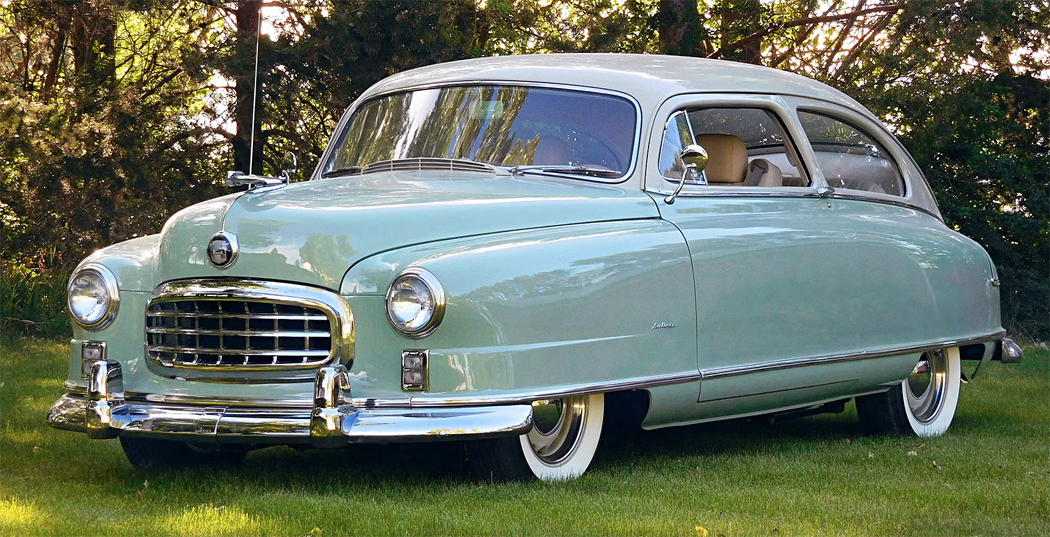
1950 Nash Airflyte

As I grew up and went to school, the habit of learning and naming classes of things continued. In the third grade, it was dinosaurs; in fourth grade, it was whales; fifth grade brought ships. On it went. Later, with birdwatching, or the naming of wildflowers. Most recently, I compiled a list of the names of British comedians I recognized on sight; it had 127 names on it. I guess you never get over it. It’s a form of acquisition, and all adds to the trove of knowledge and experience. A hunger for knowing. 

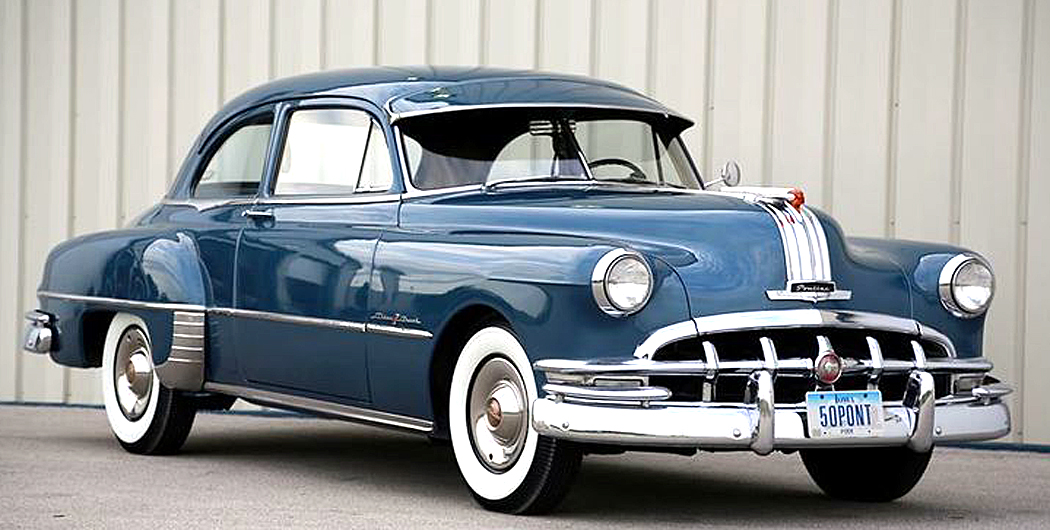
1950 Pontiac Chieftan

There is a streak that mainly boys seem have: learning and naming. I don’t remember schoolgirls having anything like the habit. Maybe they did and I just didn’t notice. To boys at that age, between the ages of maybe five and the advent of puberty, girls are, if not the enemy, at least utterly foreign. 

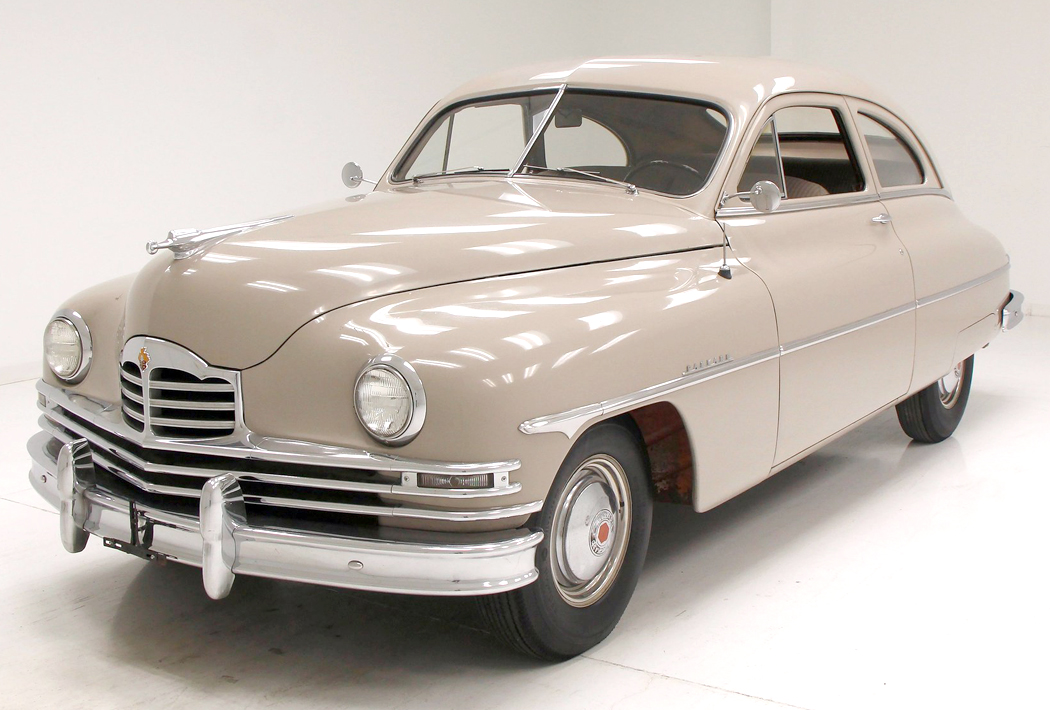
1949 Packard 23 Series club sedan

Many boys never outgrow this naming quirk. Often a concern with regalia properly sorted. When I was an art critic in Phoenix, the museum had an annual show of Cowboy Art, with lots of paintings of shoot-em-ups, horse wrangling; cow-punching and war parties. All kinds of Western movie tropes, but with the serious, almost solemn belief in “historical accuracy.” No one would picture a Montana cowboy riding the kind of saddle popular in Texas, or show a sheriff holding a gun in 1882 that wasn’t manufactured until 1893. They could be quite persnickety about such things. Women’s hair-dos, though, not so much care in that, but then, women didn’t much figure in their mythologies. When I wrote a review that made fun of such things, I wound up being hanged in effigy in a cartoon in Western Horseman magazine. 

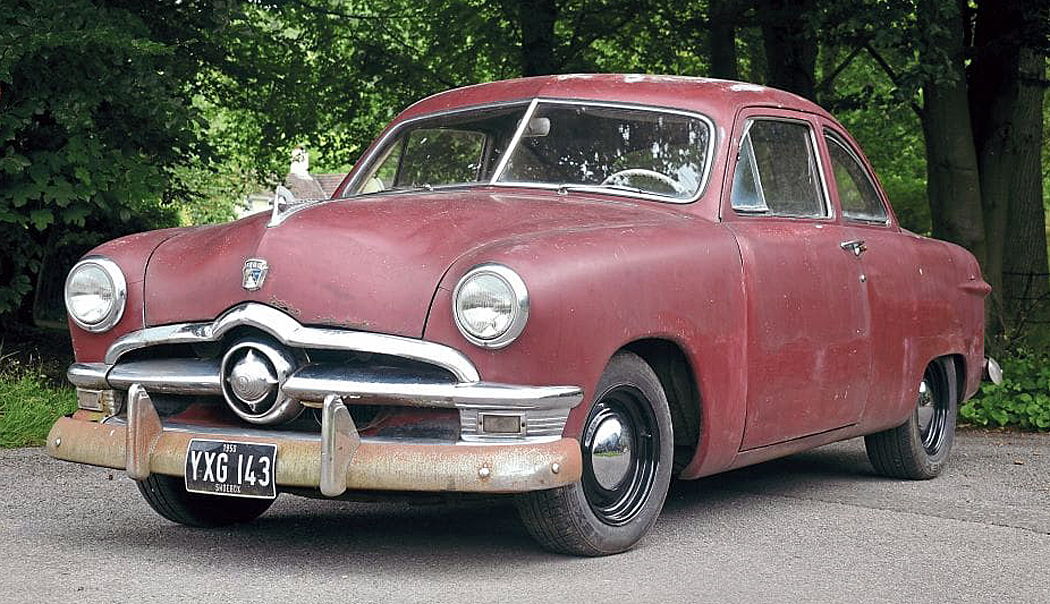
1950 Ford Custom Club coupe

All this came back to me the other day as I sat at a red light and noticed the flood of cross traffic. I could see vehicle after vehicle pour across the intersection with monotonous sameness. There is no way I could tell anymore a Honda from a Kia.  

Three seemed to be only three kinds of vehicles, each sharing a sameness with others in its class: First, the SUVs, bigger than they need to be — the bullies of the highway; second, the small sedans — they used to be derided as “European jogging shoes” — that are faceless as store mannequins; and finally, the pickup trucks. This last may be more prominent in the South, where I live, but the cars crossing in front of me seemed about equally divided into these three. The only punctuation in this repetitive tune was the public transit bus. 

The only way to discover the difference was if you could see the logo on the trunk. What was once the personalities of their manufacturers have become mere brand names, no more different than yogurt brands or actual jogging shoes. 

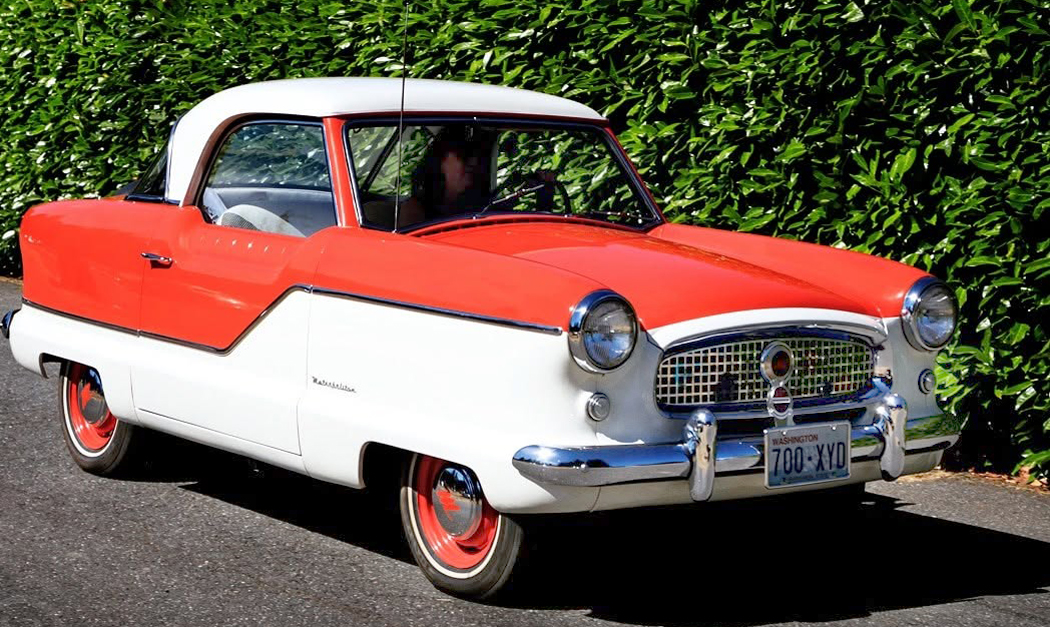
1957 Nash Rambler Metropolitan

How different from when I was three or four and naming the cars (with a certain amount of joy in their esthetics, and pride in my ability to name them). They were very distinct designs. “We had faces then,” as Gloria Swanson says in Sunset Boulevard. (actually, I looked it up and misremembered. She actually said, “We didn’t need dialog; we had faces.” But same thing, right?) Car manufacturers used their special designs to sell the cars and create identity. Hence the broad Packard and the Studebaker, with its pooched “mouth.”  

1950 Studebaker Commander

I don’t know why there is such a paucity of interesting design among cars. When I was little, they really did have faces.

I’m now 78 and I’ve done a few things in my life. Probably most people have. Things they can list that few others have managed. Places visited; people who have impacted their lives; adventures to recount to grandchildren. 

And so I think back to recount my own experiences, those particular to my own past. Maybe others have similar lists. This is mine. 

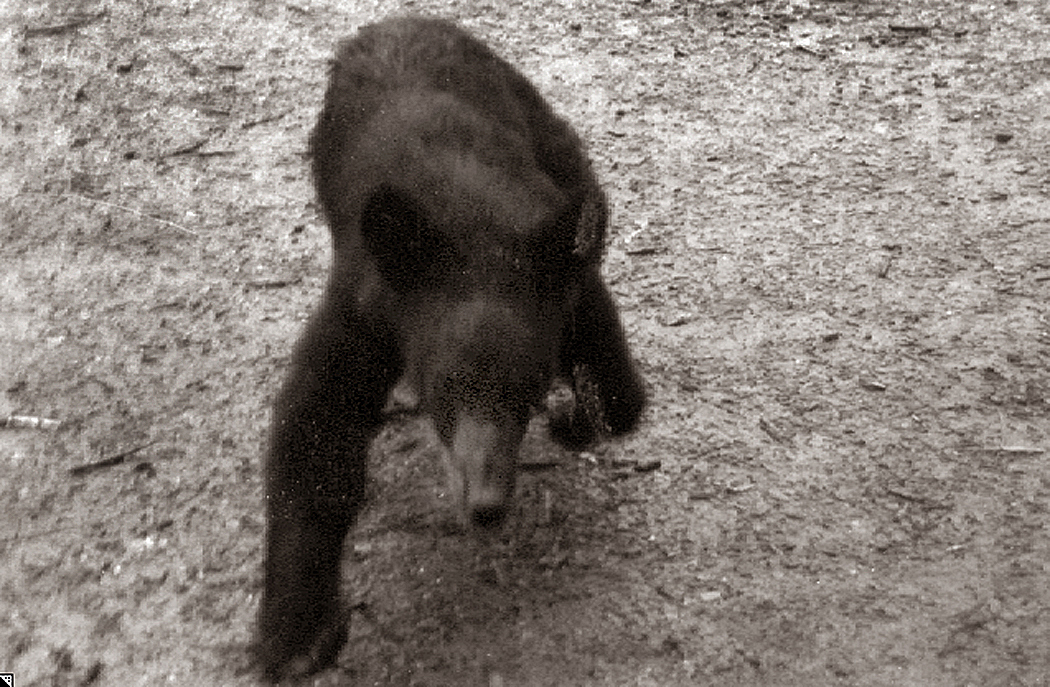
I’ve been charged by a bear, for instance. How many people can say that? I was hiking the Appalachian Trail in Smoky Mountain National Park with a few friends. By late afternoon, we reached a lean-to shelter and I walked out onto the path with my camera, when a black bear — maybe two or three years old — crossed the trail about 30 feet from me, spotted me, didn’t like what he saw and turned and charged at me. He was no more than five feet away when he veered off to my right and chugged off into the woods. I was stupid enough that while he came at me, instead of running back to the shelter, I took photos, so at least now, I have the evidence. If it’s a tad fuzzy, I’m sure you can understand. 

Certainly the bear makes my list. But I tried remembering other things that would make the list of things peculiar to my life, that few people are unlikely to have shared.

Almost no one now crosses the Atlantic on an ocean liner. I did, in 1966 aboard the MS Oslofjord from New York to Norway, when I accompanied my grandmother to the Old Country where she was born. I was a high-school student at the time, and I remember standing on the ship’s deck watching the Orkney Island lights at midnight, bright points on the black horizon as we sailed past. 

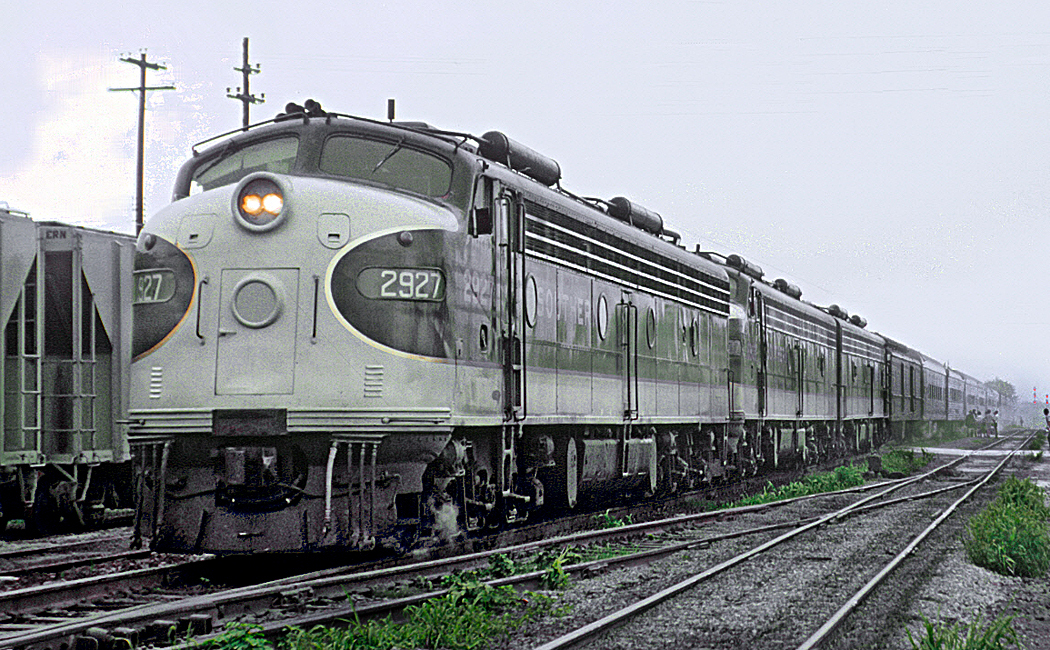
There’s a lot of travel in my past. I’ve crossed the U.S. twice by train. Once when I moved from North Carolina to Seattle, taking the Southern Crescent from Greensboro to New York, the Twentieth Century Limited from NY to Chicago and the Empire Builder from Chicago to Seattle. 

The Southern Crescent

I recall the dreamlike lights of Toledo factories as we passed after midnight; the 10-below zero air when I stretched my legs at the station in Minneapolis; the vast empty spaces between farmhouses in South Dakota; and the track-side elk watching the train pass by near Yakima, Wash. 

The second time was more luxurious: Working for the Phoenix newspaper, I was assigned to write a story about the then newly-launched Sunset Limited route from LA to Miami that passed through Phoenix, bringing the first rail service to the city in decades. 

The paper flew me to Los Angeles where I boarded, and flew me back from Miami when finished. In between, I had a sleeper compartment and ate my meals in the dining car, which Amtrak had fitted out initially with a first-class galley and real chefs. That didn’t last long after my trip, before cost-cutting turned steak into saran-wrapped bologna sandwiches. 

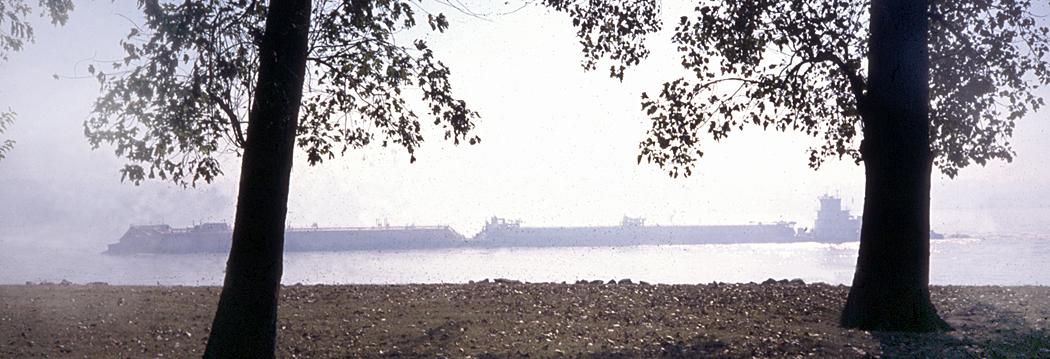
Mississippi at Cairo, Ill. 

One of my beats at the newspaper was as a travel writer and I got to choose many of my subjects. I have driven the length of the Mississippi River from its source at Lake Itasca in Minnesota to its end in the Gulf of Mexico. So, I’m one of the few people who have ever visited Cairo, Ill., which is a largely deserted town, at the tip of the state where the Ohio River pairs with the grandfather of all American waters. 

I have also driven the Pacific Coast Highway from Tijuana, Mexico to Vancouver, British Columbia. And as part of that trip, I got to stop off at Point Roberts, that tiny exclave of the U.S. that can only be reached overland by driving through parts of Canada. Virtually nobody visits there, because there is nothing to be seen or done, and the only reason to go there is to be able to say you had done so. 

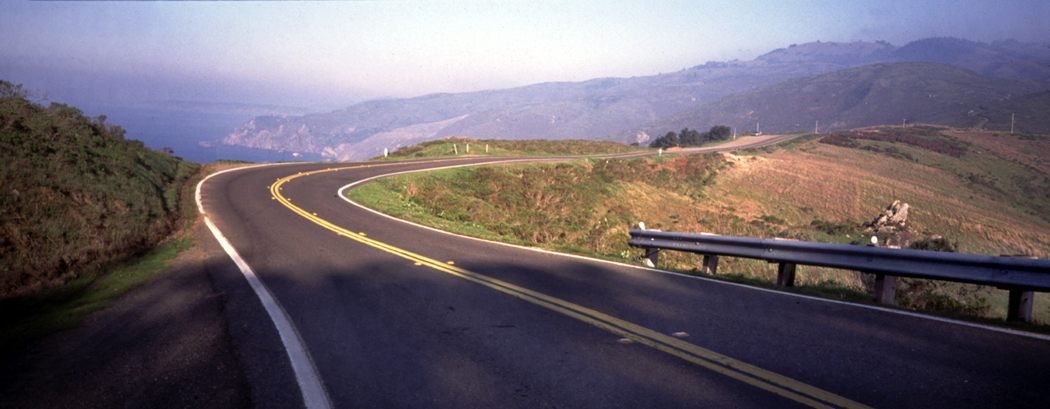
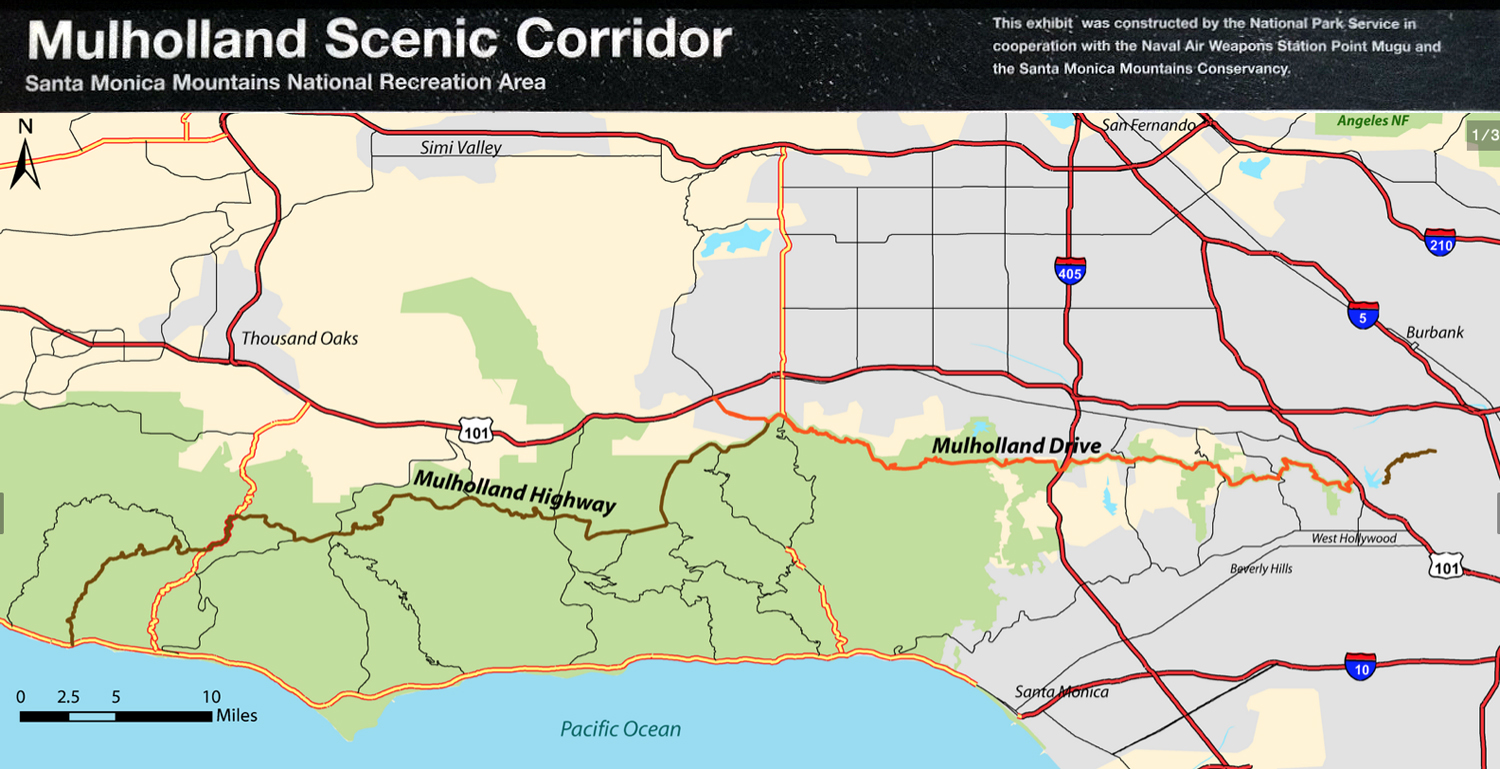
Back before the wilder parts of the road were closed to traffic, I drove the length of Mulholland Drive and Highway, across the crest of the Santa Monica Mountains, from its beginning at the Hollywood Freeway over Cahuenga Pass, past all the film stars’ extravagant homes into the brushland wilderness, with its dirt roads, and finally down to the Pacific Coast Highway at Leo Carillo State Beach, some 55 miles later. 

I pitched a story to my editor about the Hundredth Meridian that traditionally divided the East of the country from the West — the line that separated the land that got more than 20 inches of rain per year, from that which got under that amount. I drove from Laredo, Texas to the Canadian border, writing stories the whole way. And when I got back, I conspired with a page designer to take over an entire Sunday travel section with my pieces — all without telling my editor. “If you had told me, I would never have permitted it,” she said. “But I’m glad you did it. I looks great.” Easier to ask forgiveness than permission.

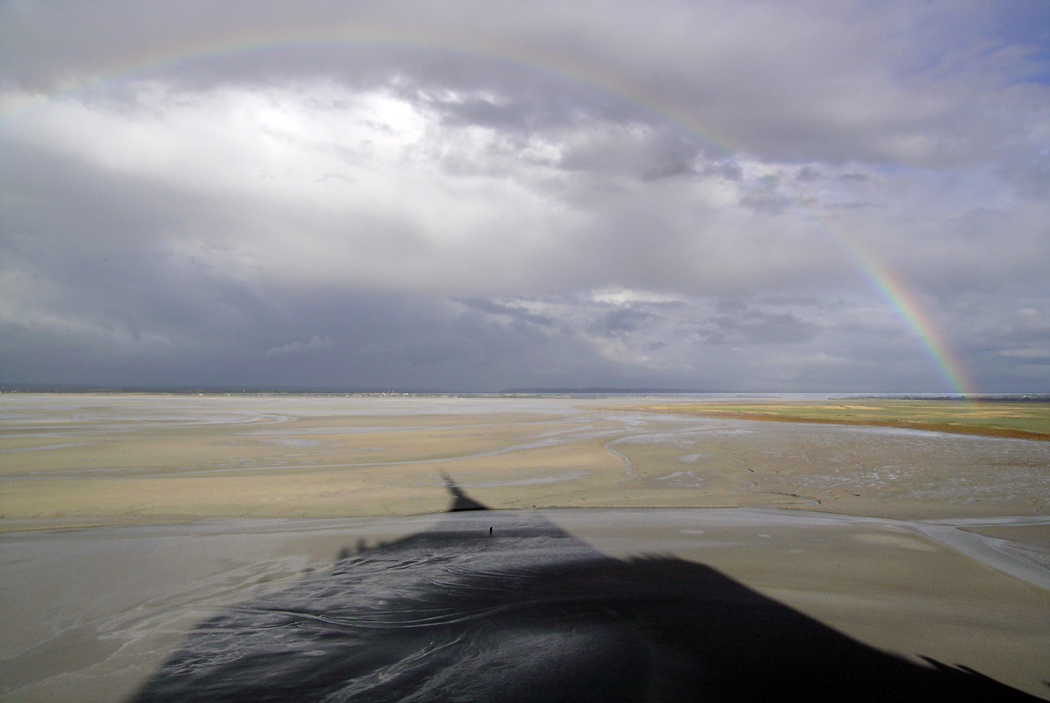
Clearing storm, Mont St. Michel

I have been many places in my life. I’ve been to Mont Saint-Michel in France, that island abbey on the coast of Normandy, where the tides come in at such a speed that anyone walking on the mud flats at low tide is in danger of drowning. I’ve been to see the Bayeux Tapestry in its current home. I’ve listened to the organist at Notre Dame de Paris play a recital of Messiaen. 

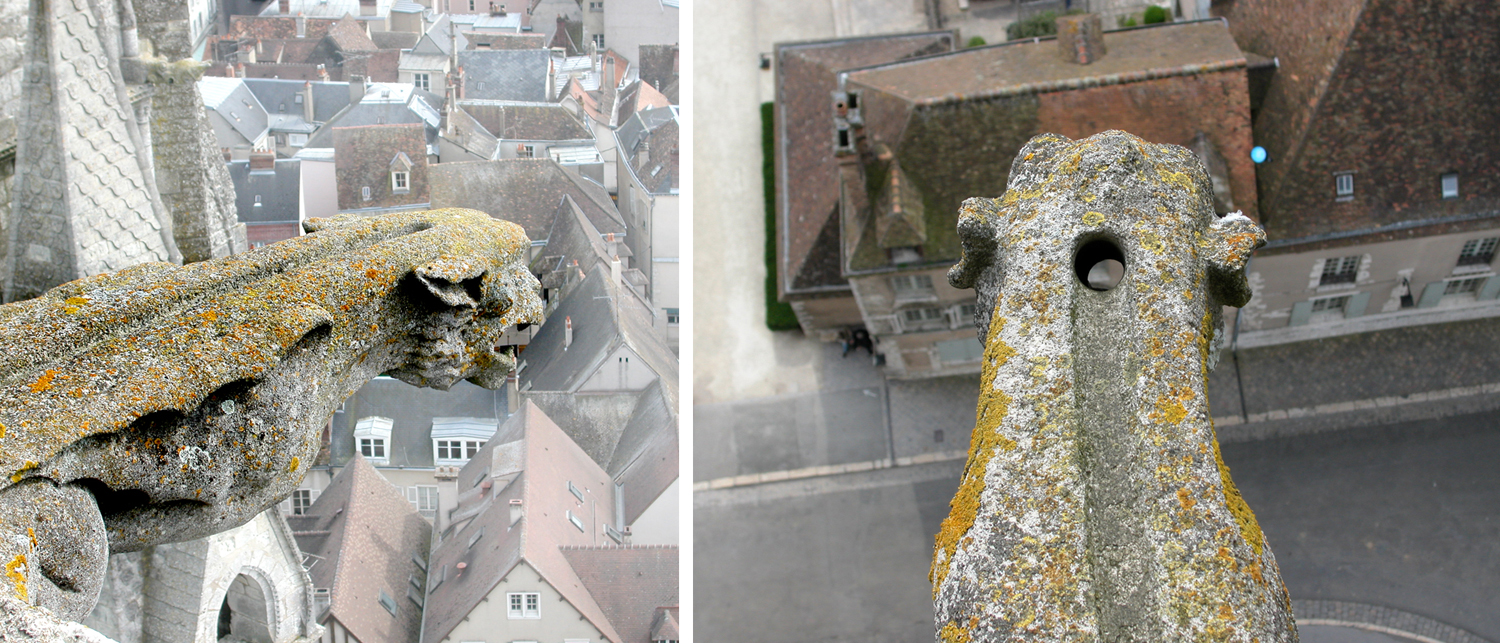
Two views of gargoyle rainspout at Chartres Cathedral

I’ve climbed to the top of Chartres Cathedral, where I could look down at the gargoyle rainwater drains and see their channels and spouts. For that matter, I’ve visited most of the major gothic churches of northern France. 

I stood at night on the banks of the Rhine River in Dusseldorf, German, where the composer Robert Schumann had lived and written his deeply romantic Rhenish Symphony. The rushing current of the mile-wide river, catching moonlight in its waves, seemed the essence and power of  nature. 

Cape of Good Hope, South Africa

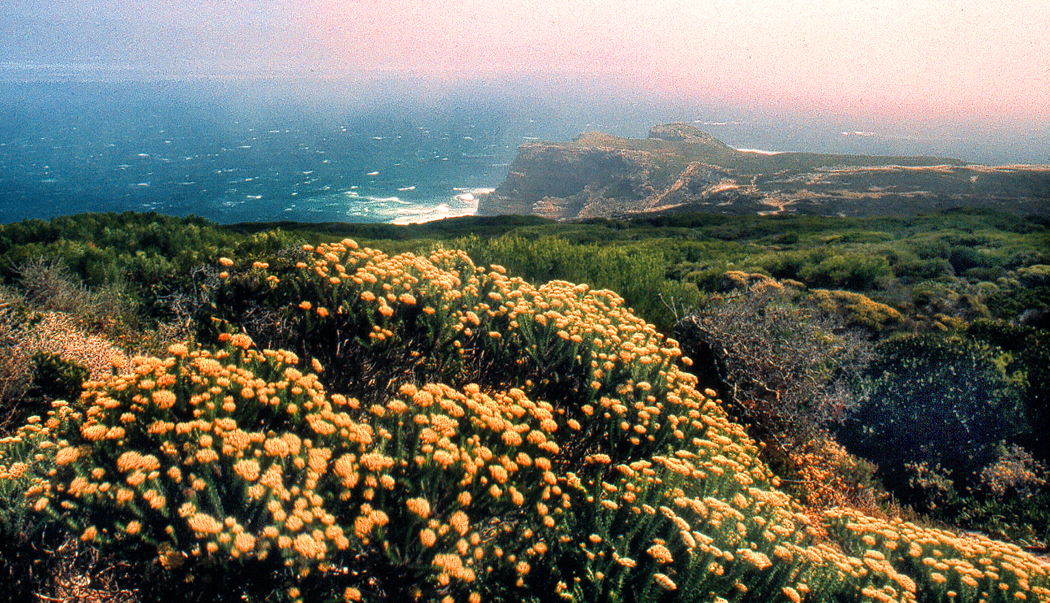
I had always had an interest in the remote and isolated places in the world, and I got to visit the Cape of Good Hope in South Africa, which is as remote and isolated as you can pretty much get. While in that country, I also got to taste grilled mopane worms. Few Americans have managed that, or would care to. 

I’ve been to Hudson Bay in Canada, to Percé Rock on the Gaspe Peninsula, to Glacier Bay in Alaska, to the Yukon, and to the Cape Verde Islands (although that one hardly counts, since it was a layover on the flight to Africa; I didn’t get to see much; bragging rights only). 

I have been to all 48 contiguous states many times. I used to say “I’ve been everywhere, man, I’ve been everywhere.” And indeed, I can bore my wife when watching some film on TV and I recognize locations I’ve been. “I’ve been there,” I say. She gives me the side-eye. 

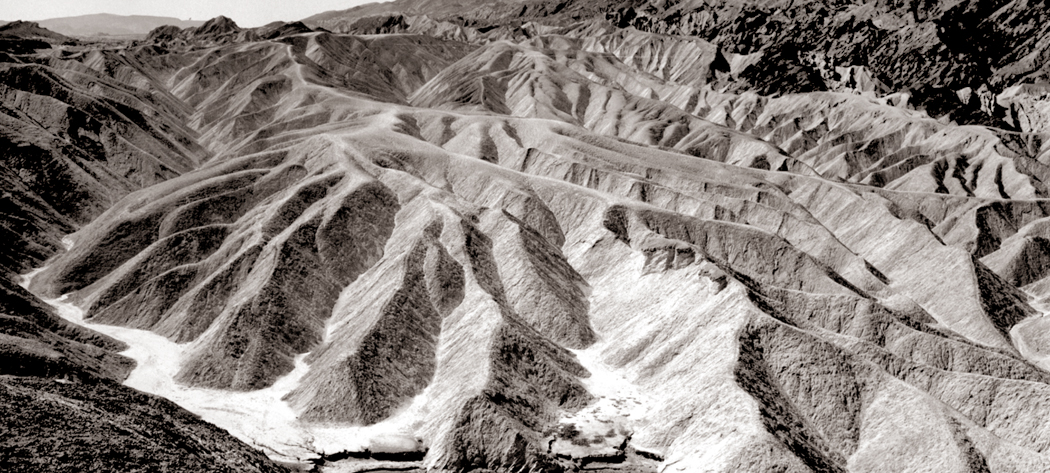
I’ve canoed with alligators in the Okefenokee Swamp. Driven through Death Valley in July in a car with no air-conditioning — nearly collapsed from dehydration and had to drink a full gallon of water to revive.  

Zabriskie Point, Death Valley, Calif. 

I have driven the length of the Blue Ridge Parkway I don’t know how many times, and the continuing Skyline Drive, also. There are notable roads, often over mountain peaks, such as the Going-to-the-Sun Road in Montana’s Glacier National Park, the Beartooth Highway from Montana into Wyoming (we drove in the summer, but it still snowed in flurries), the Tioga Road over the Sierra Nevada. Or the roads in the East like the Kancamagus Highway in New Hampshire, the Natchez Trace from Mississippi to Tennessee, and the Colonial Parkway that runs from Jamestown to Yorktown in Virginia. Many more with no special names.

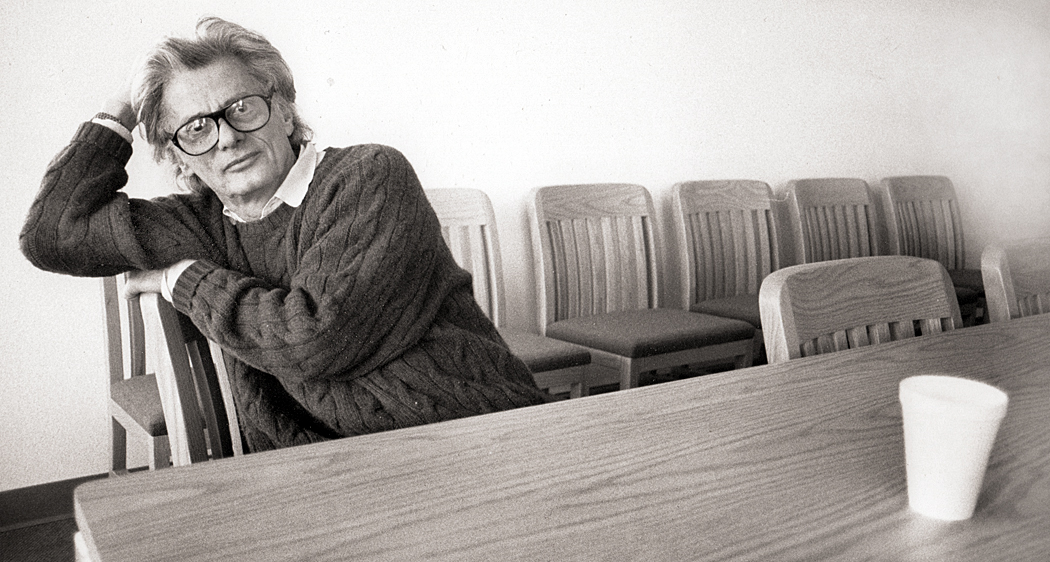
Richard Avedon

I took photographer Richard Avedon out to lunch at my favorite  Salvadoran restaurant in Phoenix. I interviewed Duke Ellington’s son, Mercer, when he brought the band to play in Phoenix. I talked to him only about his own music (sure that he was tired of repeating all the chestnuts about his old man), and at the concert, he dedicated a performance of his  Blue Serge to me, saying the band hadn’t played it in 20 years, but they brought it out and spiffied it up just for me. I knew Frederick Sommer, the reclusive Surrealist photographer who lived in Prescott, Ariz., and visited his home several times, where we talked about things that would have made no sense to anyone listening in. 

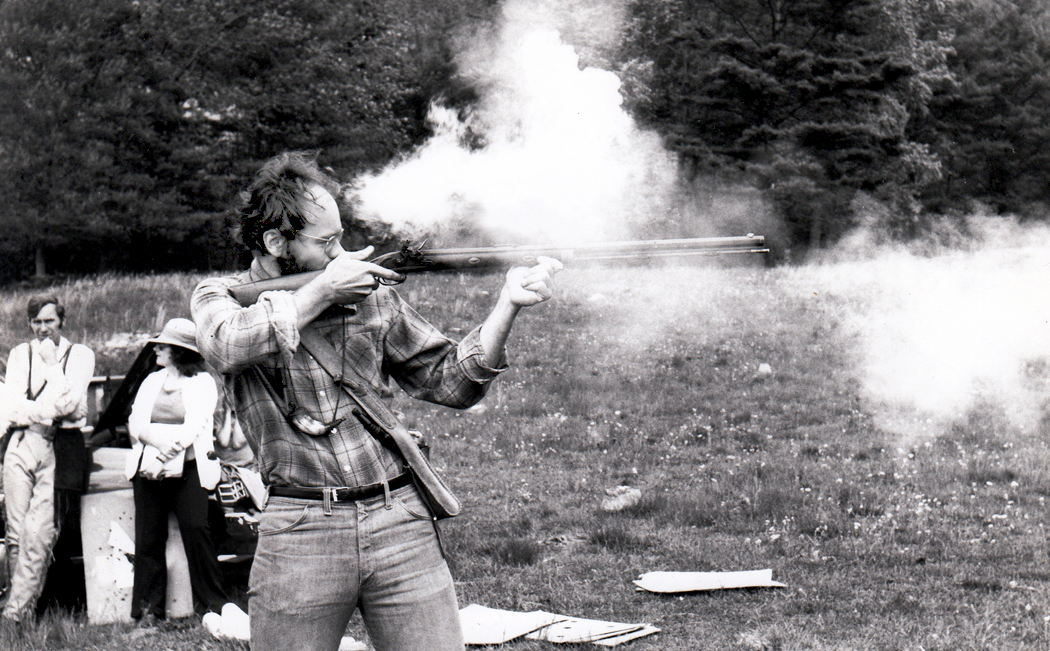
I’ve fired guns a few times over the years, once when I was training to be a security guard (a low point in my career), and several times at black-powder gatherings. My wife had a flintlock carbine that I had the pleasure of firing. A lot of smoke and a loud, brusque “whoosh” rather than a cracking “bang,” and a .50 caliber ball blew out the barrel at the target. 

Yes, that’s me, ca. 1981

I worked at the zoo in Seattle, and most days, when the place closed for the public, I would accompany the bear keeper to the back alleys behind the exhibits and feed leftover food-stand hot dogs to the grizzly bears. We were behind the enclosure, about 20 feet above the bears. They would stand up, open their maws and we would toss the franks down their gullets. No swallowing, just straight down the chute to the stomach. 

Behind them was the back entrance to the tiger cage, with a small barred door to get in when the keeper needed to clean up. When a tiger came to the door, I saw what felt like the most enormous thing I had ever seen, its giant head, bigger than my imagination could hold, and when he “purred” the ground shook. I would rank that the single most impressive thing I’ve ever encountered. 

That zookeeper was my friend, and he once commented to me about the crowds, “You see all those kids, don’tcha just want to run them all over?” 

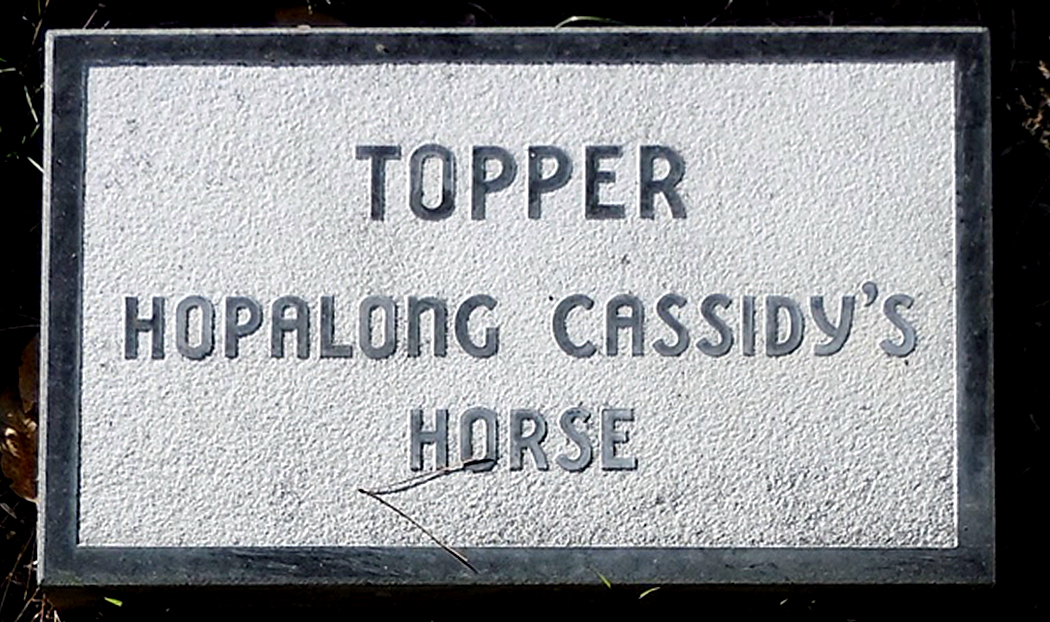
There were many more zoo stories, but most are not suitable for family reading. But more animals: I once had a six-foot boa constrictor wrapped around my neck. I visited the grave of Hopalong Cassidy’s horse, Topper, at the Los Angeles Pet Memorial Park in Calabasas, where you can also find Rudolph Valentino’s dog, Kaber, Petey, the ring-eyed dog from the “Our Gang” comedies, and Tarzan’s chimp Cheetah (real name Jiggs). 

I might also mention driving to Maine in 1963 to see the total eclipse of the sun, or having crossed the equator twice, and in Africa, seeing the Southern Cross and the constellation Orion in the night sky standing on his head, with his sword pointing straight up. 

Which reminds me of the night camping in the Outer Banks of North Carolina with my friend Sandro, and discovering that someone had forgotten to close and lock the door to the Hatteras lighthouse, and so we snuck in, climbed to the top, heard the roar, and watched the black surf below us catch the light. 

Or the time I climbed Roden Crater in Arizona with artist James Turrell, who was reshaping the extinct volcano to make an earthwork piece of art from the mountain. We were standing at the top as the sun set. “People talk of nightfall,” he said to me. “But they should call it nightrise, like sunrise.” Because, he pointed out, the night doesn’t descend, but rises, as a mass of dark sky climbs from the horizon in the east up into the sky, eating away the dusk. You can actually see the borderline as it rises, until all is dissolved in the general night. It is a startling effect that we don’t notice, because our horizons are generally blocked by trees or buildings. The phenomenon is a stunning revelation. I have looked for it — and seen it — many times since then. We walked down the mountain in the gathering dark. 

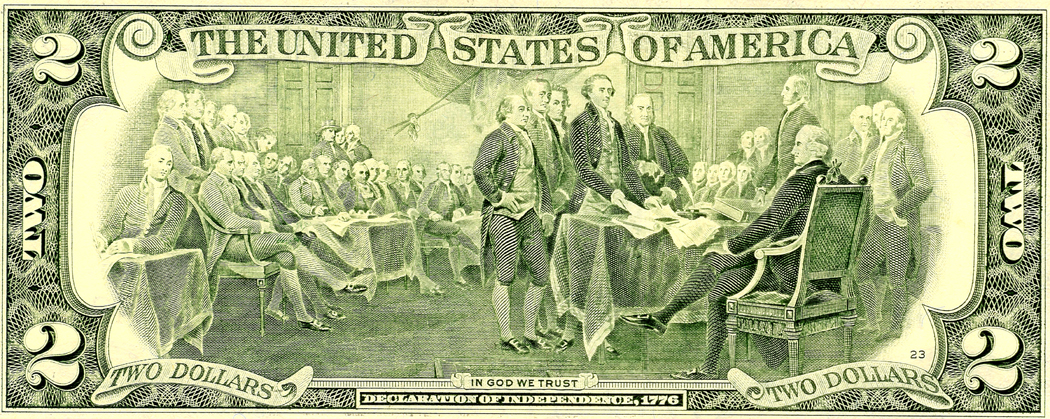
I am reposting an earlier piece, about the Declaration of Independence, on this Fourth of July. It seems appropriate in this age when Enlightenment values are under siege. 

Perhaps the most peculiar thing about the Declaration of Independence is that the portion of it that seemed commonplace when it was written now seems revolutionary, and the part that seemed to its framers as most central, to us seems trivial, even whiny.

As a piece of rhetoric, it begins in generalities, narrows to specifics, and ends in a course of action. It couldn’t be more concisely structured. The committee charged with drafting it in the summer of 1776 chose wisely when it asked Thomas Jefferson to write the first version. Jefferson’s prose is a model of late 18th-century style: precise, lucid and syllogistic.

But the only part of the Declaration that most people can recall, outside the opening, “When in the course of human events,” is the second paragraph. That second stanza contains the seed of every revolution that followed, from the bloody French to the bloody Russian. It is a statement of belief that is the foundation of American society, and almost every government created since 1776.

It states baldly and without argument or support, that all men are born equal, have certain rights by virtue solely of being born, and that when a government fails egregiously to effect the safety and happiness of the people, it is their right to replace it.

But Jefferson didn’t invent its ideas whole cloth. In fact, as Jefferson wrote years later, the purpose of his stirring words was “not to find out new principles, or new arguments, never before thought of, but to place before mankind the common sense of the subject, in terms so plain and firm as to command their assent, and to justify ourselves in the independent stand we are compelled to take.”

Much of the remainder of the Declaration is given over to a litany of complaints the colonies had about British governance. Some of these complaints still seem legitimate; many seem trivial, even trumped up. “The King did this” and “The King did that.”

He has plundered our seas, ravaged our coasts, burnt our towns and destroyed the lives of our people,” it says. Pure hyperbole.

These complaints were the part of the Declaration that was “news” in 1776. They constituted what made the document inflammatory.

Few can read through the whole of the Declaration of Independence now without a sense of fatigue: Those complaints were the issues of 1776, not of today.

It is the second paragraph that seems told to all people at all times, and remains news to us in the 21st century.

Bridge between ages

But to follow those ideas from the century before the Declaration into the ink on its page shows just how important its year of birth was. It was born in the cusp between two great ages, two overriding sensibilities, and partakes of both.

The period from about 1750 to about 1825 is one of the richest in humankind’s history, fertile, even febrile. It is in many ways, the hinge between the past and the modern, between the classically minded 18th century and the Romantic 19th. From an age of Reason to one of Sentiment — as it was called at the time. In Europe, it was the age of Goethe and Rousseau.

And no figure in the American experiment better demonstrates that shift of sensibilities than Jefferson.

On one hand, he epitomized the faith in science and logic of the Enlightenment; on the other, he shared with the revolutionary Rousseau the belief in the nobility of humanity and its drive to social improvement.

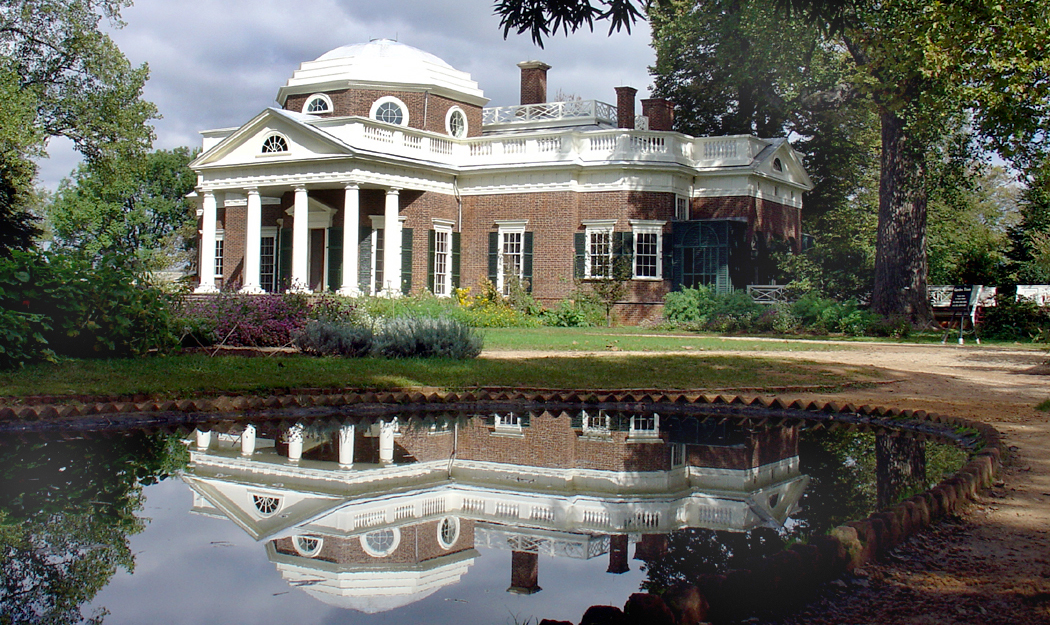
You can hardly fail to notice this point when you visit Jefferson’s home in Virginia.

Monticello is a mirror of its maker. Jefferson built a model of Palladian proportion and filled it with moose antlers. The outside lines of the house are clean and mathematically rational. The inside is a warren of peculiar and unnerving spaces.

Jefferson never fully reconciled these two aspects of his personality. He was a slave owner who sings of the dignity of the free man. How much more conflicted than that can you be?

The Declaration of Independence speaks to us now, in large part, because of this clash of sensibilities in Jefferson.

On the one hand, you have the ideas of the Enlightenment, that brilliant flame of philosophy and science that sprang up in Europe in the 17th and 18th centuries.

On the other hand, you have the growth of the individual as a thinking and feeling person.

The Enlightenment preached rationality and temperance, tolerance and universal principals. One of its most influential writers was John Locke, who, in his Second Treatise on Civil Government, from 1690, wrote that all human beings have natural rights and that these included “life, liberty and the pursuit of property.”

It was an idea that took hold and flourished.

By the time of the American Revolution, the idea was commonplace. It shows up in George Mason’s Virginia Declaration of Rights in June 1776, in slightly altered form:
“That all men are by nature equally free and independent and have certain inherent rights, of which, when they enter into a state of society, they cannot by any compact, deprive or divest their posterity; namely, the enjoyment of life and liberty, with the means of acquiring and possessing property, and pursuing and obtaining happiness and safety.”

When you compare that with what Jefferson first wrote, you can see how much better a writer Jefferson was. He only needed 31 words to say what Mason required 57 for, and say it more forcefully and memorably.

An economy of words

Jefferson’s first take on this was considerably more sonorous, but still not quite there:

“We hold these truths to be sacred, that all men are endowed by their Creator with certain unalienable rights, and that among these are life, liberty and the pursuit of property.”

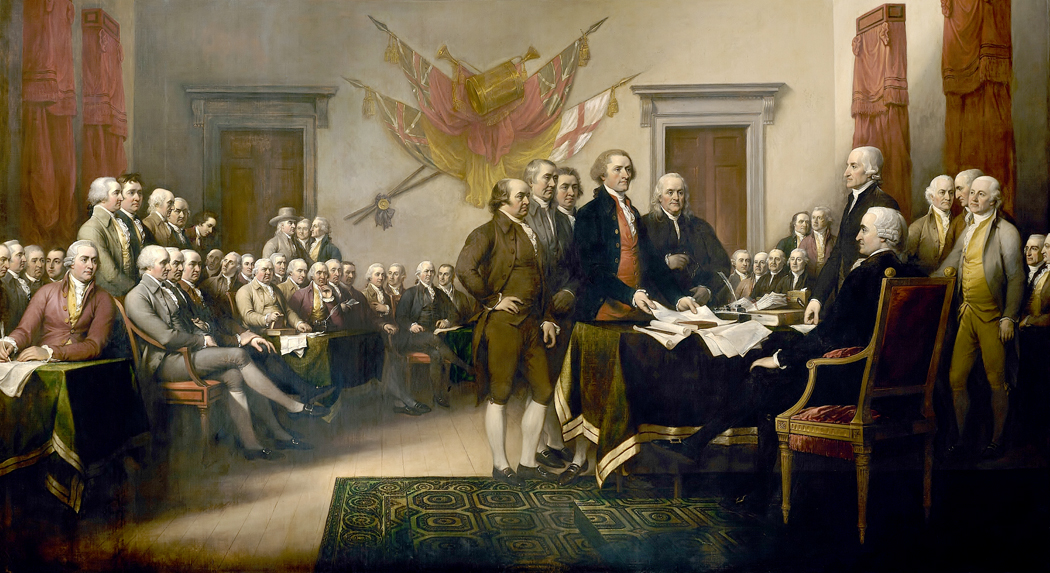
It was a committee of five, delegated by the Second Continental Congress, that were given the responsibility to draw up the Declaration. Jefferson wrote that first draft, but Benjamin Franklin, also on the committee, struck out “sacred” and replaced it with “self-evident.”

By 18th-century reasoning, self-evidence was universal, while sacredness could be construed as sectarian. Franklin wanted to emphasize the universal truth of the proposition.

And Jefferson himself changed “property” to “happiness,” and with that stroke made the Declaration jump from the past into the future.

The past was Thomas Hobbes, with his sense of the nastiness, brutishness and shortness of life, and a belief that the natural order of mankind was greed, rapine and thievery. Only strong central government, he wrote, could possibly control the natural impulses of humankind.
The future was Rousseau’s perfectibility of man, his belief in the nobility of those uncorrupted by society and government, the “natural man.”

The middle was Jefferson, perfectly if perilously balanced between.

The right of life remained pretty much the same looking forward and back, but the other two rights changed meaning over the cusp of 1800.

Locke believed that all humans coveted was property; Jefferson realized that there were many routes besides ownership to humanity’s true goal, individual happiness. Hence, the change in language.

Liberty is the word that has changed the most. In the 18th century, it meant being left alone, basically. Your government let you be: Taxes shouldn’t be too onerous and armies shouldn’t be quartered in your home at the whim of the commandant.

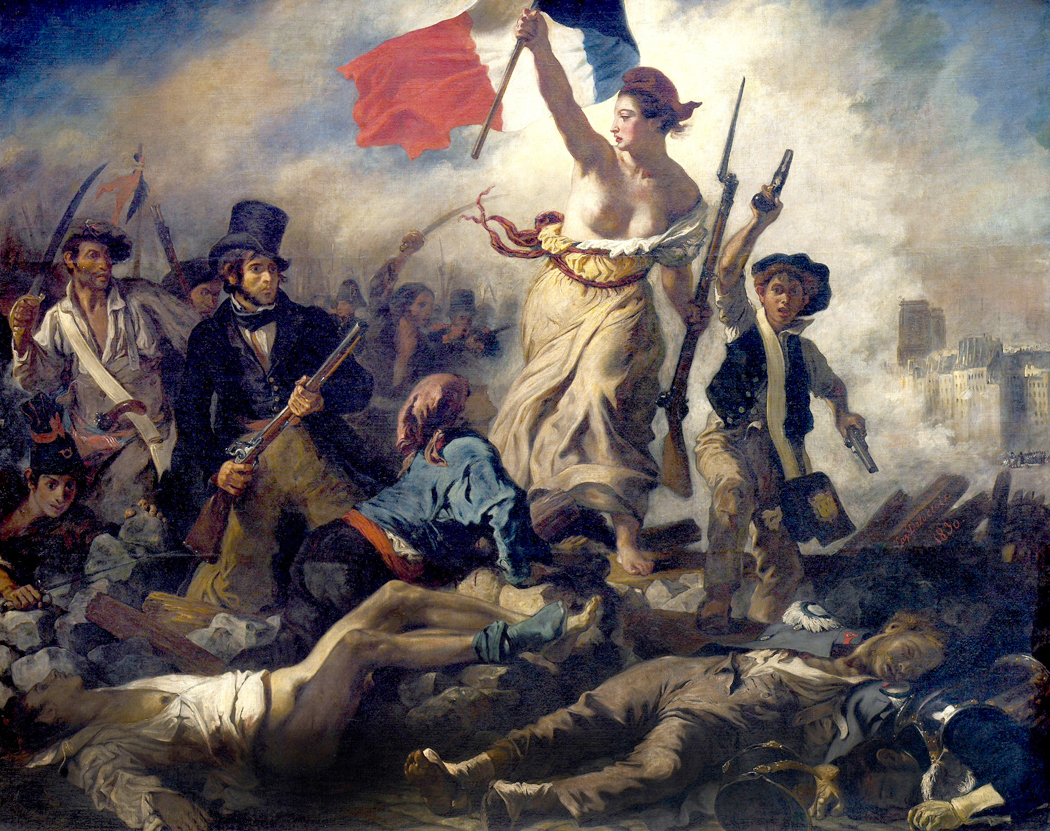
But by the 19th century, liberty took on a more revolutionary turn: Romantic writers saw liberty as the antidote to repressive regimes around the world and one read poems to Count Egmont, the Prisoner of Chillon and Nat Turner. It fueled popular movements all across Europe and led to a crisis year in 1848. Liberty meant revolt — a very different thing from what John Locke had in mind.

(And it makes almost comic the confusion of the two versions of liberty conflated by contemporary anti-tax factions and the paranoid fringe looking for the black helicopters that we can get all belligerent and militant about “tyranny” in Washington, when compared to what is happening in Syria, Turkey, Russia or North Korea, we remain among the most liberty-ridden people on earth. Admittedly, the Declaration of Independence itself is full of the same sort of inflated rhetoric.)

“Life, liberty and the pursuit of happiness.”

This meant that the Declaration could speak, Janus-like, forward and backward. The fulcrum of modern history. The Enlightenment is emerging from its chrysalis into the age of Romanticism.