Stop-The-War-Coalition

There is so much twaddle written about politics – and even more of it shouted on cable TV – that perhaps it’s time to slow down, take a breath and cast a cold eye.

You listen to both sides of the acrid political squabbles of the past few decades, and you’d swear the survival of civilization hangs in the balance.

In part, this is only the standard-issue partisan politics. No different now between Republicans and Democrats than it was between Federalists and Jeffersonians, between the Girondists and Montagnards or between factions at any time through history.

Today, the two sides are called conservative and liberal: conflicting ideologies.

The problem is, they aren’t really ideologies. They pretend to be fully-formed reasoned arguments on each side, but in fact, they are really just personality traits.

Calling them ideologies makes them seem impersonal and rational, but in fact, they are purely emotional responses to the world.

That is, the essential emotional approach one takes to living in the world.

Some people are by nature conservative, which means they mistrust change and cling to what they already know. Others are by nature adventurous and see only benefit coming from trying out new stuff.

This, more than political theory, defines the two sides. The ideology follows, not precedes.

It is why we could talk about Kremlin conservatives wanting to preserve Communism, or Chinese liberals wanting to open up the market economy. The stance isn’t ideology, but inclination.

Neither inclination is by itself good or bad. Or rather, they are both both.

Conservatism seeks to preserve the status quo. “Whatever is, is right,” said poet Alexander Pope.

Unfortunately, the historical record of conservatives has quite a bit to answer for. It was conservatives who fought civil rights tooth and nail. It was an ugly time, and their use of an argument in favor of states’ rights to cover a craven racism has forever destroyed the utility of the states’ rights argument.

Perhaps that is why conservatives now don’t seem to notice the contradiction when they oppose state laws allowing same-sex marriage, medical marijuana or assisted suicide.

It’s not an ideological argument, but a desire to keep things the way they have “always been,” although that usually means the way they were when the speaker grew up.

The call for small government is the same: We want the government off our backs, unless it comes to abortion or homosexuality.

That is because, the real watch-spring of conservatism isn’t anything so high-flown as principle, but rather, a constitutional disinclination to try anything different. There is comfort in the familiar.

Yet, that mistrust of the new may sometimes be quite healthy. And sometimes, the tried-and-true is worth keeping. Not everything new is good.

Sometimes it is a fad, sometimes it is truly misguided.

For liberals have a lot to answer for, also. “I have seen the future and it works,” said liberal American writer Lincoln Steffens on visiting the Soviet Union in 1921. He was referring to Lenin’s Soviet Union, where, during the time Steffens was visiting, some 280,000 people were killed in the government-sponsored “Red Terror.” To say nothing of the between 3 million and 10 million peasants who died of starvation that year, due in part to government policy.

Talk about backing the wrong horse!

The fact is, with all this talk about ideology, we have forgotten the basic truth: Politics isn’t about ideology.

It might be hard to remember that when listening to the yammering heads on Fox News or MSNBC, each side so convinced of the purity of its views.

Politics is now, has always been, and always will be the contention of conflicting interests, and the necessary accommodations that must be made, depending on the temper of the times, the political – or physical – strength of the contending sides, the willingness to compromise, the moral persuasiveness of one side or another on an issue, and the confluence of historical forces.

We each have things we want: core beliefs, economic desires, the wish not to have a new freeway cut our neighborhood in half, or to avoid paying taxes. Some of these we’re willing to trade away, if we gain something we want more.

But one person’s wasteful government spending is another person’s crop subsidy and yet another’s government cheese.

Politics, whether local, national or international, is always a competition of interests.

It is not a fight between good and evil, pace Rush Limbaugh. In fact, there are almost always not two sides to an issue, but a dozen or more, each with something to lose or gain. We can see this multifariousness in the current splintering of the Republican party among its many factions.

If there is an evil, it is ideology, itself. It is the true Great Satan. It is ideology that builds gulags, ideology that carpet bombs, ideology that gasses Jews and exterminates Indians, blows up Iraqi markets or Hindu temples. It makes Robespierres, Bin Ladens, Father Coughlins.

Robespierre2

Ideology is the enemy of politics: It is the great conversation stopper.

And ideology is always mistaken. Always. It cannot be otherwise.

The reason is that every ideology is based on a synoptic description of the world, a limited model of the way things are. That model, whether it is the right-wing model of nationalism, privatized economy, traditional marriage and organized religion, or the left-wing model of fair distribution of wealth, cultural tolerance, the evils of a class system and mistrust of big business – that model is always too simplistic, too limited, too rationalized, too coherent, to encompass the vast, unwieldy, incoherent, and imponderable experience of being alive.

No ideology can grasp the shifting variety of the world: When we look for the particle, we find the wave; when we look for the wave, we find the particle.

The fact is, the world is way too diverse to be summarized in a party platform.

Ideology also posits a static, teleological end of history: When we have finally achieved everything we set out to, the world will be perfect, will run forever on the principles we have set down. That was true for Marxism, and for the National Review. Well, unfortunately, things change, time moves on. Something that may have worked in 1787 may no longer make sense (the “three-fifths rule,” or the mechanism for electing vice presidents, say), and both science and technology create new problems along with new solutions. New political processes will be needed for them. Ideology is a strait-jacket.

Panta rei,” as Heraclitus said: “Everything flows.”

That is why that politics in practice, if not in theory, will always be sausage-making. This is not a fault, but a strength of politics.

Academy of the Overrated

In Woody Allen’s Manhattan, Mary (Diane Keaton) and Yale (Michael Murphy) devise what they call the “Academy of the Overrated” for such notables as Gustav Mahler, Scott Fitzgerald, Isak Dinesen and Carl Jung.

“Lenny Bruce, Can’t forget him, can we?”

“How about Norman Mailer?”

“I think those people are all terrific,” Woody argues back.
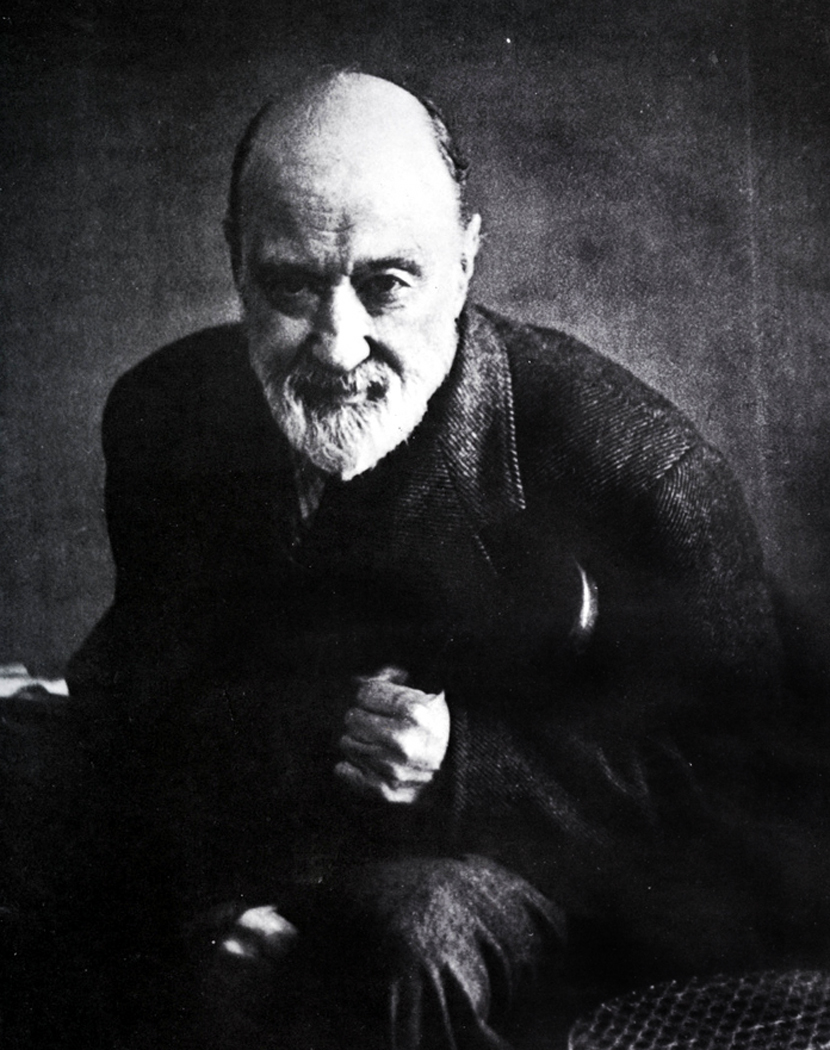
They go on to name Heinrich Boll, Vincent Van Gogh and Ingmar Bergman.

“Gee, what about Mozart?” says Woody. “You guys don’t wanna leave out Mozart.”

Suffice it to say, none of these artists is overrated. Reputations come and go, and sometimes an artist lauded in one generation is ignored in the next. But real work by real artists, sweating blood, can never be simply “overrated.”

Some may be overexposed, however. There is a problem in hearing a piece of music too often, or seeing a painting or a play too many times, so that familiarity breeds contempt.

Take Beethoven’s Fifth Symphony. Can anyone actually hear it anymore? It has been so overplayed for the past 200 years, that it no longer astonishes us, but rather fits into the comfortable, velvet-lined depression we have made for it in the jewel case of classical music. It is too well known to be heard.

Or Michelangelo’s Creation of Adam from the Sistine Chapel ceiling. How many angels support the Creator in his cloud of flowing robes? Without checking, you don’t know, because the picture has been largely reduced to our recognition of the electric spark that invisibly pops between the two mated fingers at the center of the scene. The picture as a whole doesn’t much count: The only thing that we think about is the punchline.

Michelangelo Creaton of adam

Or maybe the snigger we pretend not to snig at the tiny peanut between Adam’s immense, muscular thighs.

These things are not “overrated” any more than their creators are. They are simply overexposed.

Of course, the symphony a great piece of music – one of the greatest – but heard so often, we cannot absorb it anymore. It is nothing but “dah-dah-dah-DUMB” now.

It is a problem many things face in life: Too much of a good thing and we become vaccinated against it.

Pachelbel’s Canon, Ravel’s Bolero, Tchaikovsky’s 1812 Overture. They are all overexposed.

The Nutcracker is a fine ballet, with great music, but when it’s performed 23 times every December, it wears out its welcome for the dance aficionado. It becomes Muzak.

The eye-rolling is a response that many things get, and not just in opera and classical music.

— In pop music, Led Zeppelin’s anthem, Stairway to Heaven, is now a joke, and ripe for snarky parody. Bruce Springsteen’s Born in the U.S.A. has been ground into the dust by overuse, and usually for reasons at odds with the song’s actual content.

— The TV show, M*A*S*H, has been in reruns for so long, that the thought of another 30 minutes with Alan Alda can drive us to emigrate to Siberia – where they probably run it dubbed into Russian or Yakut.

— Robert Frost’s Road Not Taken, or Stopping by the Woods on a Snowy Evening are turned into one-dimensional parodies of their author. Both are subtle poems with equivocal readings, but not in the popular mind.

There are others:

— Ingmar Bergman’s Seventh Seal or Orson Welles’ Citizen Kane.

— The Seagram’s Building in Manhattan. It has come to stand for all the bland steel-and-glass International Style architecture that followed, but there’s elegance, proportion and detail there.

seagram's building

The Beethoven’s Fifth dilemma even extends to typefaces. Everyone’s computer comes with the Helvetica font installed. It’s everywhere, to the point one designer always calls it the “dread Helvetica.”

But it is an exceptionally well designed typeface, which is exactly why it is so miserably overused.

And more:

— Ahi tuna.

— The New York Yankees.

— The Mona Lisa.

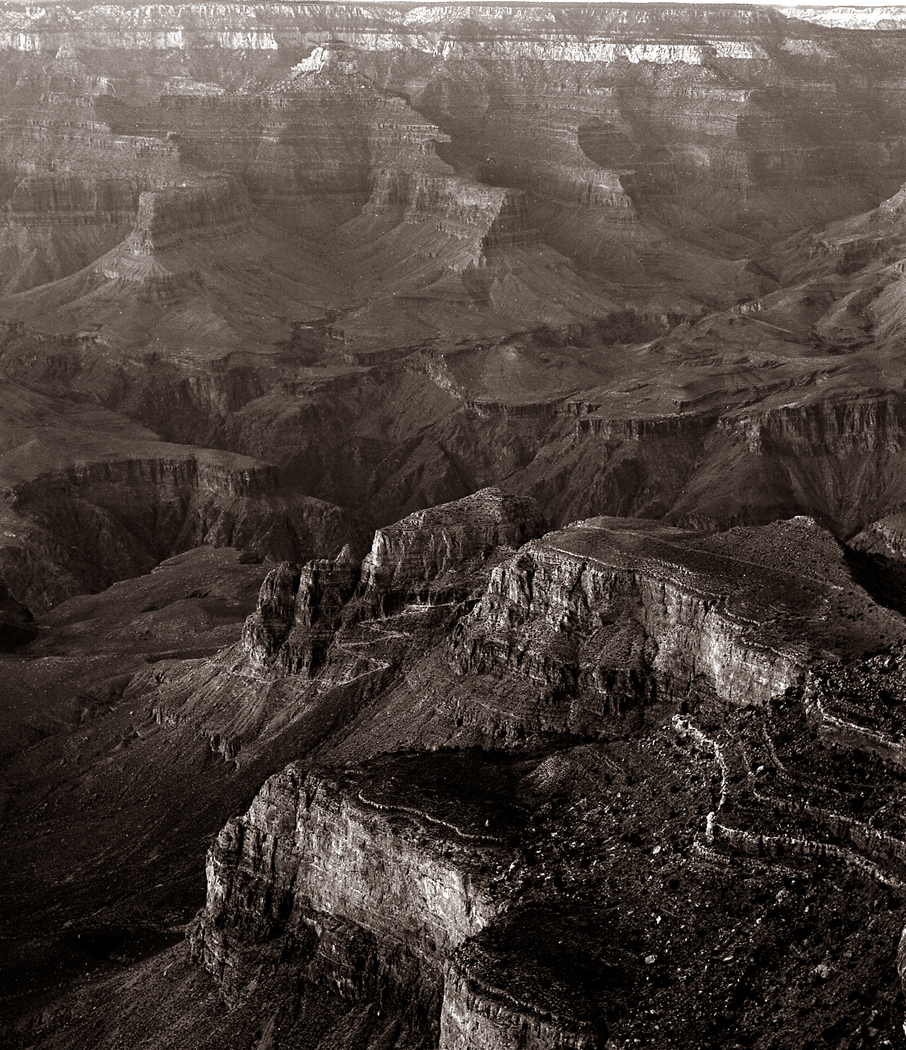
— The Grand Canyon.

The problem is that it isn’t just that familiarity breeds contempt, but that it breeds invisibility. Overexposure itself wouldn’t be a big problem – we could just refrain from programming such things for a while – but something else happens: Wide dispersal of anything in popular culture transmutes it from an experience to a reference. All you have to do is refer to the Hallelujah Chorus and your audience “gets it.”And so, God’s creation of Adam turns into a potato chip ad.

Creation potato chips

It keeps us skimming along the surface of things.

You have to pay attention, to react deeply enough to get the most out of a poem. Otherwise it becomes possible that The Road Not Taken, or Sylvia Plath’s Daddy become completely so decontextualized that we can refer to a phenomenon without registering the emotions, or understanding its complexity.

Another way of putting it is that the familiar work becomes a shorthand. When we want sad, we go to Samuel Barber’s Adagio for Strings, when we want momentous, we go to Strauss’s Also Sprach Zarathustra. Never mind that the originals are complex and layered.

They become a shorthand for “funny music,” or “dramatic music,” or “ironic music.”

When referencing or quoting these things, it’s not about the original anymore, but about a new meaning that’s been given to it. Some of these things – which we may only know as a catch-phrase, joke or a snatch of music – are never considered on their own terms and we forget the quality of the original.

The Godfather, a sprawling multi-part epic, gets reduced to Marlon Brando mumbling. And the image of Marlon Brando mumbling now means something else – a cultural stereotype of the Italian Mafia or the promise and perils of method acting.

So, Beethoven’s Fifth becomes a shorthand of: 1. Classical (i.e. “longhair”) music in general; 2. “Fate knocking at the door;” 3. The granitic monumentality of “Great Art” (and conversely, its ponderousness, compared with pop culture); 4. the triumph of the finale over the hardships of the beginning movement, and a template for symphonies to come for the next hundred years; 5. The morse-code ensign for Victory in WWII (to the point that it even becomes, in altered form, the wartime fanfare at the beginning of Fox films).

It is also the theme song to OCD. (In the seven or so minutes of the symphony’s first movement, you hear the four-note rhythm 382 times.)

So, can we actually hear the damn thing anymore? It takes a concerted effort of will to listen to it “again for the first time.”

But to hear, or see, how good something it is, it has to be more than a tic in the cultural compost pile. You have to actively pay attention. You have to engage. Art is not a warm bath.

Certainly, this is one of the wellsprings of any contemporary art: the need to make art new, fresh and meaningful, to break through the cliches that the older art has become. We need to keep making it new.

Sometimes, that comes in the form of a new performance practice for the older music, as when a Roger Norrington or John Eliot Gardiner takes up the Beethoven Fifth and plays it at race-course speed, glossing over the speed bumps that its composer put there. It gives us a fresh take on an golden oldie.

But is that enough? Perhaps Gardiner misses something essential from the original by tossing out the 200 years of tradition behind it.

There will come a day when the new, zippier performances of 19th-century classics becomes so old hat, a new generation will discover the depth in performances by Wilhelm Furtwangler or Willem Mengelberg. And what now seems old will be fresh once again.

beer creation

TOP 10 BEETHOVEN FIFTHS

Beethoven’s Fifth – A number of Fifth Symphonies could make this list: Tchaikovsky’s, Sibelius’s, even Mahler’s – at least the Adagietto. But Beethoven’s is the champ, so familiar it is almost impossible to hear anymore.

‘Also Sprach Zarathustra’ – The opening “Sunrise” section has become the de facto theme song of any momentous introduction, most famously in Stanley Kubrick’s 2001: A Space Odyssey, but also for former professional wrestler Ric Flair’s entry into the ring.

‘Nessun Dorma’ – This tenor showpiece from Puccini’s Turandot shows up everywhere from car commercials to the theme song of the 1990 FIFA World Soccer Cup and in so many films: The Killing Fields, and Bend It Like Beckham. Aretha Franklin even sang it for the Grammies.

Pachelbel’s Canon – The bane of classical music radio stations everywhere. When satirist Peter Schickele made up his mock radio station for his PDQ Bach series, he called it WTWP – “Wall-to-Wall Pachelbel.”

‘O Fortuna’ from ‘Carmina Burana’ – The powerful choral piece once expressed Medieval violence in movies such as Excalibur, and the torments of drug addiction in Oliver Stone’s The Doors. Now it sells Gatorade and Old Spice after-shave. It’s everywhere.

Vivaldi’s ‘Four Seasons’ – There are 220 CDs available currently: Everyone with a fiddle has recorded it, and there’s even a version for Japanese kotos and another for pennywhistle. Dude, he wrote 600 other concertos. They’re good, too.

Bach’s Toccata and Fugue in D-minor – Bach wrote this improvisatory organ work to test new organs; now it tests our patience. It shows up anytime you need “spooky” music in a haunted house, and it is also the “inspiration” for much of the faux-organ music in Phantom of the Opera.

Ravel’s ‘Bolero’ – The most demoniacal offender: Not only has Bolero been repeated endlessly in movies, TV commercials and ice-dancing routines, it repeats endlessly in any performance: The one tune over and over till it drives you nuts. The New York Times suggests Ravel was in early stages of frontotemporal dementia when he wrote it. We give it a “10.”

Hallelujah Chorus – Another movie cliché: When the hero or heroine finally understands, or opens the door to discover something unexpected, cue the Hallelujah Chorus.

‘Adagio for Strings’ – Once voted the “saddest classical” work ever, it has become the movie cliché of all times, giving emotional weight to Platoon, The Elephant Man, Amelie, Lorenzo’s Oil, S1m0ne, and even Michael Moore’s Sicko. The Internet Movie Database lists its use 26 times.

tools

Don’t get me wrong: I believe America should adopt the metric system. There is no good reason for us to go our own way in a world where otherwise a single system of weights and measures works fine for everyone else. America’s failure to metrify costs us a good deal of money in international trade, despite the “soft metrification” that goes on under our noses. (Two-liter Coke, anyone?)

But when it comes to the arguments for adoption, I demur. No, the metric system is not “more logical” than the so-called English system. And in many ways, it simply fails the test for logic, at least if by logic you mean usefulness.

I admit that when it comes to particle physics and engineering, the fact that you can do a good deal of your math by simply moving a decimal point has a lot in its favor. For the very large and the very small: for astrophysicists and nano-technologists, the 10-based metric system is the logical choice.

But I resent the patronizing tone so many pedants take toward the older system, as if it made no sense at all — when in fact, it makes a great deal of sense. There is a logic to the English system, and one that makes our lives easier — and more human.

Just start with the thermometer. When  Daniel Gabriel Fahrenheit invented the mercury thermometer in 1714, he devised his system of measuring temperature in very human terms. Zero degrees was a cold as he make brine before it froze, and 100 degrees was (he was a little off) body temperature.

And using the Fahrenheit thermometer, when it is 0 degrees F, you know it is cold, and when it hits 100 in the shade, you know you’re hot.

The Celsius, or centigrade system that is used in metric nations, is based on the boiling and freezing points of fresh water. Sounds logical, perhaps, but I’m not water, I’m human. Why should it be considered logical to base your thermometer on water?

Anders Celsius

Anders Celsius

To make it all just a little more goofy, when Anders Celsius devised his centigrade system, he put the boiling point of water at 0 degrees, and the freezing point at 100 degrees. Yes, that’s right.  That was later reversed to the standard Centigrade (now called Celsius) scale.

The scale, however, is just not geared to the human experience. Is ”in the 30s” in Celsius comfortable or not? In the constricted Celsius scale, the difference from 30 to 39 degrees is the difference between a warm springtime comfort and sweltering summer heat: It spans 86 F to 102 F. In Fahrenheit, it means something to say that the temperature is in the 80s. In Celsius, you don’t know whether to bring a sweater or a bathing suit.

The range of comfort-index for Fahrenheit runs from 0-100. That’s the “centigrade” — or hundred degrees — that counts. That same range in Celsius runs from approximately minus 18 to 38 degrees C. Numbers that do not relate to human experience in any meaningful way.

And it is human experience that is behind other units of measurement in the English system. And the logic behind most of it is found in the ratio of doubles and halves.

If we start with a body part, like a foot or a knuckle, we wind up with length measurements such as the foot or inch. There are 12 inches in a foot, and the division into 12 makes it easy for a carpenter to half that length, or to take a half or quarter inch, or for that matter, a 32nd of an inch.

eyesaver

Yes, you can divide a meter into tenths, but how often do you need a tenth of something, or ten times something, compared to how often you half or double, say, a recipe. Doubling and halving works for things in everyday life.

Sometimes it looks as if there is no logic to the English measuring system, but that is usually because some former measurement has simply dropped out of common usage.

Take liquid measurement. Two cups make a pint; two pints make a quart, but four quarts make a gallon. That seems discontinuous, but there is a missing piece: The pottle. Two quarts make a pottle, two pottles make a gallon.

In fact, the system begins, just as distance, with the human body: the mouthful, which is (or was, when it was used) ½ ounce. (The same was also called a tablespoonful.)

Two mouthfuls (or 2 Tbs) equal a pony; two ponies equal a jack; two jacks a gill, and so forth, doubling through the cup (8 ounces or 16 mouthfuls), pint, quart, pottle, gallon, peck, kenning, bushel, strike, coomb, hogshead and butt. You remember Shakespeare’s “butt of malmsey” from Richard III, the final resting place of the Duke of Clarence? That would be 128 gallons of sweet Madeira wine, surely enough to pickle the offending traitor quite comfortably.

doubles and halves

It is true that when you look at the many weights and measures in common usage in England from the time of the Norman invasion till the adoption of the metric system, there is a lot of overlap, discrepancy and contradiction. Some doubles and halves are based on units of 12, like the foot, others on units of 16, like the pound.

Then you’ve got fathoms, chains, furlongs, drams, grains and scruples. There is no question but the old system could use a bit of regularization. It’s just that decimalization isn’t a very practical answer, at least for ordinary people in everyday situations.

For that, we have doubles and halves. Every time you half a decimal number, you add to its complexity: .5, .25, .125, .0625, etc. For cooking, metric units are a pain in the butt, with no malmsey to compensate.

So, to those who say that decimalization is more “logical,” I say, you are stuck in a provincialism. There are more things in heaven and earth, as they say, and more than one way of logic.

And if I wanted to reverse the direction of the calumny visited upon the old system, all I need to is remind you of the great comedy of the creation of the metric system. It came from a people so blinded by a desire to be “rational,” they came flat up against common sense and the wheels of creation.

It was the “Age of Reason,” and it devolved into bloodshed, terror and ideology. It was the French Revolution, and the revolutionaries were so convinced they had the handle on truth, they were willing to let heads roll like marbles on the schoolyard ground.

One of their reforms was that of weights and measures. It was a preoccupation of the 18th century.

International commerce was expanding exponentially and keeping contracts straight was a problem when the seller was dealing in 12 oz. pounds and the buyer was expecting 16 oz. pounds.

There were some reasonable people: Thomas Jefferson came up with a plan that used a metal pendulum. Since the period of a pendulum’s swing depends on its length, he figured a bar that took exactly one second to swing back and forth would be a dependable standard, with repeatable results. It was an elegant solution. He even suggested calling this new unit a “meter.”

But in France, in the middle of the muddle of the French Revolution, and all its insanity — with an attempt to make the whole world rational — including 10-hour days and 10-day weeks — they came up with their own meter.

In the middle of war with Prussia and Austria, the French revolutionary government hired three surveyors to map the quadrant of the earth from the North Pole to the Equator through Paris. These surveyors were arrested more than once, and by both sides, as suspected spies, as they wandered the war-torn countryside with their transits.

They then decided to take one ten-millionth of that measured distance and call it a meter.

Whenever someone tells me how sensible the metric system is, I laugh, because its origin is as loony as it gets.

Take that 10-hour day, with its 100-minute hours and 100-second minutes. OK. But how about a 10-day week, and a 10 month year? Doesn’t quite match up with the motions of the celestial bodies. Do we repeal the solar year?

When the 10-month year (compromised with 3-week months) didn’t add up to the proper number of days, they capitulated to a 12 month year, with months of three 10-day weeks, leaving the year a little short. The interval between the “logical” calendar and the irrational heavens, was filled with a national religious ceremony celebrating the triumph of Reason.  Parades and ceremonies to the goddess of reason were held.

Fête de la Raison2

They also tried to make priesthood in the Catholic Church an elective office.

You simply cannot impose regularity on an irregular universe, and doubles and halves works at the higher mathematical principle of ratios, not of arbitrary measurements. The great cathedrals were built by geometers, working in ratios, not in arithmeticians, working with rulers and yardsticks.

The graces of living come in ratios, not uniformities. Like music: It is the ratios of notes that make rhythm, not their exact durations.

So, is 10 the most logical base? Just imagine music on the metric system. No quarter notes, no eighth notes. Only whole notes, tenth notes and hundredth notes. Talk about white people not having a sense of rhythm.

Loon

Who is America’s greatest painter?

There are many who could be named, from Eakins to Homer to Whistler to Pollock, but the name I would like to place in nomination is John James Audubon.

That comes as a surprise to me as well. I once knew him, as most Americans do, as the author of a book of overly familiar colored engravings of birds.

But the original watercolor paintings reveal him to be a soul of great emotional power, even moral force. An exhibition of many of them is currently on view at the New York Historical Society, through May 19, and changing shows continue through 2015, until all of the 474 originals for his book have been displayed. (A stunning book, “Audubon’s Aviary,” is also available through the NYHS or Amazon).

Audubon — America’s most famous Haitian immigrant — was born there in 1785 as the illegitimate son of a French merchant and slave trader. He moved to France with his father when he was 5, and to the United States when he was 18.

He went through a series of disastrous business ventures, making and losing several fortunes and wound up, at 35, as a part-time taxidermist and portrait painter.

It was then he conceived a plan to publish a book about American birds with his paintings as illustrations. Audubon had been a nature lover since boyhood and had often drawn the birds he loved. It came to him that these drawings could be supplemented to illustrate all the bird species then known in America. It was an ambitious plan.

John_James_Audubon_1826

Too ambitious

Too ambitious, as it turned out, to interest any American publisher, so he wound up in England, where he found Robert Havell Jr., an engraver with the perfect talent match for Audubon’s drawings.

The book they published in installments over a dozen years beginning in 1827 was the ”double-elephant edition,” named after the page size: 29 1/2 by 39 1/2 inches, with engravings by Havell made from the paintings of Audubon and hand-colored by apprentices.

They sold by subscription for $1,000, an astronomical sum in those days. It is hard to compare dollars over centuries, but at the time, the average laborer made the proverbial dollar a day, so it would not be out of line to say they sold for the equivalent of about $30,000.

In Dec., 2010, a complete first edition of “The Birds of America” sold at Sotheby’s in London for $11.5 million — a record for the most expensive printed book ever sold at auction.

Over three decades, Audubon tracked down, studied, shot, drew and painted more than 400 of the country’s bird species, with the paintings turned into a book that would document them for the first time, and eventually make its author’s name synonymous with nature and conservation.

And he did so with a commitment so intense that he became one with his subject. In some sense, every bird he painted is a self-portrait.

More than anything else, it is for this reason they rise above documentary art to become among the greatest art ever made by an American.

But it was the book Audubon meant us to see, not the watercolors. They were painted only as studies for the engravings that illustrate the book.

And so, Audubon felt comfortable doing things he would never do for a display picture. He mixed media like crazy, using ink, watercolor, gouache, pencil, even collaging birds scissored from earlier drawings.

He used each of these techniques to particular expressive ends that could not always survive the engraving transformation. In the case of the Magnificent Frigatebird, for instance, he used the sheen of his graphite pencil over the top of watercolor to imitate the iridescent effect of the bird’s plumage.

Magnificent Frigatebird

Magnificent Frigatebird

Still, the very first thing that wallops you as you enter the Audubon show at the Art Institute is the monumental size of the paintings.

Everybody knows what Audubon’s bird pictures look like, or at least they think they do. But seeing poor reproductions in books will not prepare you for the real thing.

What we are used to seeing are small reproductions of large engravings that are themselves reproductions of Audubon’s original paintings. Each painting is about 2 by 3 feet. Poster size, not postage-stamp size.

In that giant space, Audubon places all his birds. It was his intention to paint every bird life-size, whether hummingbird or eagle.

It meant that very large birds, such as flamingoes or condors, had to be contorted to fit into the space.

Total involvement

Yet it isn’t mere exigency that causes Audubon’s animals to be so animated. More than anything else, it is his total body identification. He is one of the world’s most haptic artists.

Over and over, you sense that Audubon felt his own muscles and sinews moving in sympathy with the birds he drew.

Time after time, you can see the intense life reflected in the eyes of his birds. They are never mere circles, but always pools of living awareness.

One of his secrets may be that he remained always a child in his direct response to nature.

”Every child is an artist,” Picasso said. ”The problem is how to remain an artist once he grows up.”

It was a problem Audubon solved.

Look at his poses. The competency of the drawing is a different level from a child’s but the poses are straight out of first or second grade. The animal is always moving and live.

Naturalists have always carped that the Audubon bird prints are not as realistic as those of Louis Agassiz Fuertes or Roger Tory Peterson. They cavil that Audubon poses his birds in exaggerated positions that are unnatural for the real bird when alive.

But these people are not letting Audubon be Audubon. While it is true that he was on some level making identification pictures, it isn’t that level that rises to greatness. It isn’t as a field guide he is to be judged.

Audubon watched his birds with the minute carefulness of a mother bird, and recognized in every bird action an analogous human emotion. He then projected the human back into his avian. Like the leader strike of lightning that makes a path for the great burst of electricity back in the opposite direction.

A human element

Audubon’s birds function metaphorically as symbols of human affective states.

Fuertes is more useful scientifically precisely because he treats his birds as an ”it.” Audubon treats them as a ”thou.”

Detail, Chuck-Will's Widow

Detail, Chuck-Will’s Widow

You can see it in his Chuck-Will’s-Widow with its giant gaping mouth, the essence of appetite. In the uxorial affection of his Passenger Pigeons, which almost seem to kiss as the one feeds the other. In his nesting Barn Swallows, where the one shields the other with his upraised wing.

Ultimately, Audubon’s paintings are not about birds, but about human beings. Where Bach or Beethoven uses a series of notes to convey a human emotion, Audubon used a picture of a bird. And more than anything, it was that Audubon felt the importance of paying attention.

It isn’t that his paintings are so detailed, but that he paid attention to that detail with an urgency that approached love.

”To be awake is to be alive,” wrote Henry Thoreau. ”I have never yet met a man who was quite awake. How could I have looked him in the face?”

But to see the preliminary studies Audubon made for his “Birds of North America” is to see the work of a man wide awake and with his abilities at full throttle.

Drama recon - Neanderthals had big faces and big teeth.

There is a seemingly endless assembly line on basic cable TV that produces documentaries about prehistoric humans. We have most of them on DVD: My wife is a sucker for anything on cave men. (If she had her druthers, she’d be one. She loves to imagine herself living in a “state of nature.” “Humans went bad as soon as they invented agriculture,” she says.)

But she also has a complaint, which she repeats with every viewing and reviewing: “Why do they always show cavemen with such unkempt hair?”

She contends, and I believe rightly, that even prehistoric humans took a concern for their appearance, or at the very least, for keeping their hair out of their joint of meat.

But whether it’s “The Rise of Man,” or “Walking with Cavemen,” or “Journey to 10,000 BC,” the people — whether actors in cave drag or computer animation — have such bad personal hygiene they look like soot-faced refugees from some Hollywood cinematic apocalypse.

homosapiensdvd box

It’s a question, even if you just think about other animals. Where do you see anything else in the animal world like that? Ever seen a cat with anything but a sleek coat? Mice, marmots, horses, terriers, squirrels, deer, otters, goats or tapirs. Not a hobo among them. Even chimpanzees, our closest living relative, has reasonably regular hair.

Why, then, should our cave brothers suffer the eternal bad hair day?

One makes the distinction between the fur of animals, which reaches a determined length and then stops growing — hence remaining groomed and neat — and human hair, which keeps growing and eventually becomes unruly. But since we have no fossil records for hair on early hominins, we don’t know exactly when longer head hair entered the genetic signature of the genus Homo. Perhaps Australopithicenes  had “fur” rather than hair. Perhaps even Neanderthals had neat hair. We don’t know. We don’t know for Homo habilis or Homo erectus, either. We only know for sure that Homo sapiens has continuously growing head hair, and hence, the possibility of bad hair days.

So, where did television art directors get the idea for disheveled anthropoids? Perhaps from contemporary peoples we call primitive?

There are two problems with that idea.  We should not assume that surviving neolithic people have not also evolved culturally and therefore, as different from those prehistoric ancestors as we are — just along very different lines of development.

So, taking the Mek of New Guinea or the Yanomami of the Amazon as representative of what cave men looked like or how they behaved, is nothing but supposition.

And the second issue is that even there, coiffure is a significant part of the culture. The Yanomami have very distinctive haircuts.

yanomami man

And consider North American Indians. The squashblossom hairdos of unmarried Hopi women, or the care with which Wolf Robe — a Cheyenne man from the 1909 photograph — braids and wraps his hair in otter fur.

Hop squashblossom hairstyle and Wolf Robe

Hop squashblossom hairstyle and Wolf Robe

Hair has had such a significant role in myth and superstition, that if we draw from surviving neolithic cultures for our model, we should probably assume that prehistoric peoples did some pretty inventive things with their hair. Just letting it hang out there, ragged and dirty, is likely not one of them.

If current paleoanthropology and archeology tell us anything, it is that primitive peoples were less primitive than we used to think. Toolmaking goes back at least to the Australopithicenes, so does fire.

Seeing European cave paintings, Picasso remarked that “we have invented nothing.”

Altamira

Each new archeological find moves dates back further, and we learn that early people were far more advanced and sophisticated than we had previously thought.

Take Gobekle Tepe in Turkey, some 9,000 years ago, and not that far removed from the cave paintings, and you see a centralized cultural life, sophisticated three-dimensional sculpture and a road system leading from scattered villages to the central religious site. These people lived in rooms.

gobekletepe carving

So, where did this trope come from? Blame the Victorians, I say. (I like to blame them for anything I can.) In the popular 19th century version of evolution, each adaptation was a step on a ladder of progress, ever better and more perfect. Modern humans (and especially modern English industrial humans) were the pinnacle of creation, the end target of the process. They are the people who gave us the concept of “primitive.” They gave us the first bestial images of what the early humans must have looked like.

victorian neanderthal

They projected their racial fears into the cave men they imagined. And just as bigots tend to see the “other” as dirty and slow, whether that is applied to the Irish, the Italians, Jews or Africans, so, they imagined their ancient forebears to be of the “lower order.”

I wait to see a Discovery Channel documentary on those who painted such wonderful paintings on the cave walls of Europe as just as smart and sophisticated as us, using all that is at hand to make their lives as graceful and comfortable as they could. They were no dummies.

River

The RIVER

Probably everyone has a river in his life.

I suppose it needn’t be a river; for some it is a mountain. For others it is the ocean, that great river that circles the known world.

But it is an image of the larger picture of life: the flowing from one point to another; the sense that nature was here before us and will be here after we’re gone.

For Mark Twain, it was the Mississippi, for Henry Thoreau it was the Concord. You have yours: the Colorado through the Grand Canyon or the Columbia past the wheat fields of eastern Washington. For me, it is the Hudson.

From Battery Park north to Albany and beyond, the 315-mile-long Hudson is broad, gray and dignified, three miles wide at its broadest point, the Tappan Zee.

It was for me, as I was growing up, the single very definition of what a river should be. When I later lived in North Carolina and would cross the Deep River or the Yadkin, I had to laugh. They were little more than creeks.

Even more preposterous are the rivers of the Southwest, flowing with dust and gravel. There is the story of the old Arizonan who visited Manhattan. When he got back, his friend asked him if he had seen the Hudson River. “Yep.” “What did it look like?” “Couldn’t tell, it was covered in water.”

Adding to the river’s stateliness is its history.

The Hudson passes underneath the steep basalt cliffs of the Palisades, where George Washington beat a hasty retreat from the British troops when leaving Manhattan in 1776. It runs past the tiny town of Tappan where the spy John Andre was hanged. The river circles Bear Mountain just south of West Point, where Benedict Arnold tried to sell out the rebel nation.

All of these places are still there for the traveler to see.

And so are the earlier historic spots, leftover from the Dutch colonization of the area. There are old stone houses with Mansard roofs along the river and places with names made famous by Washington Irving in his stories, The Legend of Sleepy Hollow and Rip Van Winkle.

That Dutch presence is still felt in many place names: High Tor, the Spuyten Duyvil, Yonkers, Sparkill.

What isn’t still there are many of the landmarks I knew as a boy. The “Mothball Fleet” of hundreds of World War II liberty ships are no longer lined up north of Haverstraw in a crook in the river. The white-knuckle stretch of U.S. 9W around Storm King has been straightened and tamed. The Yonkers ferry long ago ceased running from the base of the Palisades to what was then a quiet, middle-class suburb of New York City.

But that is part of the mythology of the river: You can’t step into the same moment of history twice, either. It is all one great flowing.

At least 9W is still there, and it still the best way to see the river and its countryside. From the George Washington Bridge, it travels up the West Shore of the river until it rejoins its eastern branch, U.S. 9, at Albany.

Along the way, you pass Harriman State Park, with its scenic Seven Lakes Drive; you pass Bear Mountain, with its winter ski jumping; you pass West Point, Newburgh, Kingston. You pass tiny West Park, where the famous 19th Century nature writer John Burroughs had his rustic cabin in the woods.

Further north, you skirt the Catskills, where America’s first great assembly of painters called themselves the “Hudson River School.” Asher Durand’s painting, Kindred Spirits, shows the school’s founder, Thomas Cole, meeting with the poet William Cullen Bryant in the “Cathedral of Nature.”

The Catskills were later the home to many plush resort hotels, such as Grossingers, where Jewish comedians honed their acts in a circuit known as the “Borscht Belt.”

The river flows down from the north through the mountains, which rise on both sides. The Catskills on the west, the Taconics on the east.

It is through them that I left the Hudson Valley many years ago on the Twentieth Century Limited which rode the tracks on the east of the river past Sing Sing Prison and Peekskill on the way to Chicago, where I caught the Empire Builder to Seattle.

I felt a little removed, seeing the familiar landscape on the Western Shore from the unfamiliar perspective of the opposite river bank. But I couldn’t help respond to the gentle green curves of the mountains and the hundreds of ducks that shivered the water that November morning as the train spooked them.

In some way, the Hudson River is who I am. That’s what rivers are for.

GWB cables

The BRIDGE

The best way to enter any great city is across a great bridge, and there is neither city nor bridge greater than the George Washington Bridge and Manhattan.

And the best way to cross the bridge is neither by bus nor car, but by foot. Park by a meter on Kelby Street in Fort Lee, N.J. — you don’t really want to drive in New York City anyway — and begin walking toward the noise. You can’t miss it.

On the way, notice the broad expanse of green where the Port Authority, which operates the bridge, decided to beautify the cement by painting it the color of grass.

The GWB is a monument to pre-war design and engineering. With its lower deck, added in 1962, it handles a total of 14 lanes of traffic, all spewing fumes and rumbling geologically: The noise shakes the ground underneath your feet.

The bridge approach cuts through a rise of raw basalt, leaping out past the cliff-face of the Palisades and flying high over the Hudson River, 200 feet below.

You walk under the graffiti-sprayed rock of the approach, and pass Brobdingagian air vents that clear exhaust from the lower road level tunneling under you. And then you see the cable anchors, with the main steel cables like twin pipes, each three feet in diameter, angling up from the ground toward the top of the first of the Erector Set towers.

Looking almost as delicate as spider web from the distance, twined iron cables descend from these main tubes and support the weight of the roadway. If you touch these vertical cables, you can feel them vibrate and hum sympathetically with the noise of trucks and buses.

As you step out onto the bridge proper, the view opens up. If you are lucky and the air is clear — a rare but glorious occurrence — you can see all the way from 178th Street, where the bridge connects with the island, down to the lower harbor to the south and Rockland County in the north. Most of Manhattan spreads before you, from the Spuyten Duyvil to about 30th Street, where the river bends around the south part of the island. Boat traffic moves below you in poetic slow motion.

More often, the city disappears in a whitish haze by about 145th Street. The smog can be choking, to say nothing of the diesel fumes from the Red and Tan buses passing a few feet from you on the roadway.

There is wind, there is traffic roar and their is the smell of exhaust. It is all exhilarating.

The bridge was opened in 1931 and its criss-cross of iron girders has been painted so many times the silver-gray has built up like cake frosting over the rivets and joints. Each upper surface is further highlighted in a dusting of grimy soot.

The concrete sidewalk makes a detour around the outer edge of the tower, which rises to the height of a 60-story building. From there, you can look back and see the apartment buildings at the top of the cliff where Palisades Amusement Park and its roller coaster used to be. At the bottom of the cliff, Henry Hudson Drive meanders through Palisades Interstate Park. You can see families on outings alongside the drive below you, looking like ants at their own picnic.

The first half of the mile-long walk across the bridge is slightly uphill. At the peak, where the giant cables loop down close to the roadway, there is a sign marking the boundary between the two states. And from there, it is all downhill into the city.

But as you approach the second steel-lattice tower, you should look down over the handrail. On the rocks at the base of the tower is the little red lighthouse of the children’s book. It is still there, but looking rusty and scribbled on with spray paint.

little red lighthouse

You’ll pass a few hardy joggers and a bicycle or two, but for most of the walk, you’ll have the bridge to yourself.

Once in Manhattan, you take a descending spiral walkway down to Cabrini Boulevard and walk up 178th Street toward the bus terminal, which was designed by Pier Luigi Nervi and opened in 1962.

cabrini blvd

From their, you catch the A-Train.

I take this walk each time I visit New York. I do this in part because it is such an invigorating hike, but it is also a pilgrimage.

My grandfather worked as an engineer during the construction of the bridge, from 1927 until his death of tuberculosis in 1930; my mother was six years old.

So although I never knew him, I feel through him a kind of inheritance, an ownership of the regal old bridge.

And like some English lord whose castle is now part of the public trust, I like sharing the experience of my bridge with others.

Kong over city

The original King Kong, released in 1933, is a movie classic in spite of itself.

Few movies have dug themselves deeper into the public subconscious, yet, by any objective standard, few movies are as badly made: Its writing is infantile, its acting wooden. Even the special effects, so innovative in the day, are now the f/x equivalent of a stagecoach.

King Kong may be the worst-made great movie of all time.

Just consider such dialogue as: “I’ve never known it to fail. Some big hard-boiled egg gets a look at a pretty face and — bang — he cracks up and goes sappy.”

It can make you cringe.

Yet the film does keep us transfixed: It may be a badly written film on purely cinematic terms, but it’s a great movie nonetheless. Great enough to be No. 43 on the American Film Institute’s list of the 100 greatest American movies of all time.

And the fact we’re still watching the original, now on DVD — to say nothing of remaking it over and over — proves that the first giant-monkey movie had legs like few others. One wonders whether Peter Jackson’s slicker 2005 version will last as long or be as deeply loved.

The foggy gray and dangling lianas are the inner tangles of our brains, in 1933.

The foggy gray and dangling lianas are the inner tangles of our brains, in 1933.

in 2005, there is a clarity to the visuals that diminish the Longinian sublime. Better? Maybe.

in 2005, there is a clarity to the visuals that diminish the Longinian sublime. Better? Maybe.


The answer will come not from how well the film is made, nor how good its acting is or its special effects, but rather from whether the film engages us on a subconscious level: What is the movie really about?

The original Kong has supported as many interpretations as it has had viewers. The movie itself makes a case for its being a modern Beauty and the Beast.

“That’s it. Play up that angle,” moviemaker Carl Denham (Robert Armstrong) tells reporters in the original film. “Beauty and the Beast. Kong could have stayed safe where we’d never have got him, but he couldn’t stay away from Beauty. That’s your story, boys.”

But that’s only one subtext.

For many young men who first saw the film on TV when they were adolescents, Kong is the personification of their own inchoate and newly hairy urges and unrequited loves. Kong as the great id.

To paraphrase Walt Kelly: We have seen King Kong and he is us.

There is also the Christ image of Kong onstage, crucified and manacled.

But there are other meanings: For some, the movie is an allegory of slavery. The powerful king of the island trapped and brought to the New World in chains.

Kong first look

For another camp — at least many years ago in the American South — Kong was a depiction of the threat to White womanhood by what they called the unbridled “Negro lust.”

(There is much that is racist in the film, and much to cringe over, with the minstrel-show islanders with their coconut brassieres and bone-tied hairdos. We have to overlook a lot to enjoy the film now.)

Yet, we do enjoy the film. If Kong survives in our collective consciousness, it’s because of these more dreamlike realities, these irrational and atavistic persistences, and not because of its scant dramaturgical elegances.

It speaks to our unconscious. Not our rational selves, but our dream selves.

Kong speaks to us as myth.

“Ladies and gentlemen, look at Kong! The Eighth Wonder of the World!”

The impresario stands onstage in front of the giant ape. The poor beast, in his “chrome steel” chains, is both humiliated and confused.

It is the fulcrum — the central point of the original movie between two unbalanced halves: the first in the jungle and the second, shorter half in the city.

Two opposed halves with their different mythologies. Two different versions of nature that have been in conflict throughout history.

One myth of nature is that of violence and survival. Nature, red in tooth and claw, where men venture at their peril. This is nature as the Big Thing, inside of which humankind is the little thing. Nature that inspires fear. Jaws.

Kong on beach

But at odds with this, in the old King Kong, is Rousseau’s vision of nature as innocent and pure, caught in a world made corrupt by the machinations of human beings. In this version, nature is the source of the unsullied good; human society the source of all that is evil.

Kong is paradoxically both these visions at once: the powerful force of nature, but also the innocent caught in a world not of his making.

It is not likely that Kong’s original makers, Merian C. Cooper, Edgar Wallace, Ernest Shoedsack or Willis O’Brien, ever had anything so profound in mind. They almost certainly just wanted to make a “swell picture” that would scare the willies out of us and make lots of money for RKO.

But art is often better than its makers intended, and Kong is Exhibit A.

This conflicted myth is the central power of the movie. The film manages to fuse both visions of man and nature into a single tragic image.

King Kong didn’t invent the basic plot: The silent film Lost World set the paradigm. But it, with its great unthinking dinosaur captured and brought to London, doesn’t give its beast the humanity that Kong gave the great ape.

And the many followups, from The Giant Behemoth (ever seen a small behemoth?) or Gorgo don’t maintain the wattage of their ancestor. The bottom of the barrel may be Reptilicus.

No, wait. That honor goes to the Dino De Laurentiis abomination, the 1976 remake of King Kong. The less said of it, the better.

Jackson’s remake is infinitely more cinematic than either the original or the De Laurentiis monster, and Naomi Watts, in particular, is no-contest a better actress than Fay Wray. The newest film has its points. But it is too knowing, and can never quite scratch the mythological itch that Cooper and Schoedsack did.

Godzilla

The only respectable colleague of the 1933 King Kong is the Japanese version of Godzilla (Gojira), which hits those low, plummy mythological notes, and maybe hits them a little closer to home, especially for those Japanese civilians who lived through the Second World War. As metaphor, Godzilla, with its brilliant, depressed score by Akira Ifukube, is as direct as parable. Everyone should see the original, sans Raymond Burr.

The two films, Kong and Godzilla, show the power that may reside in popular entertainment that embodies deep myth. Modern filmmakers have it all over for style. But style isn’t what ultimately counts. Even badly made films can hit the bullseye. For that, the original is still king, and no pretender can claim the throne.


Barbarella group

Forty-five years  ago, Jane Fonda  got naked in outer space.

That zero-G striptease is all that most people know about Barbarella,  a movie that opened in October 1968  and was seen at the time as the worst kind of cheese.

“A mix of poor special effects and the Marquis de Sade,” one reviewer said.

And that is the reputation it has been saddled with ever since.

But the movie, directed by French Svengali Roger Vadim  and made for a pittance, has an odd staying power: Many of its scenes are memorable the way a Mozart melody is. Whether it is Pygar the blind angel, the eye-patch Evil Queen — the “Great Tyrant” —  or the psychedelic “Mathmos”  — a kind of molten id-lava that flows under the city — the film sticks in the mind like a particularly disturbing dream.

English and original French comic book versions of "Barbarella" with scene from film.

English and original French comic book versions of “Barbarella” with scene from film.

“A dream we dreamt with our eyes open,” as Fellini  says.

If you look at it purely objectively, Barbarella is a really bad movie. The dialog is campy. The acting is either wooden or, if you are feeling generous, stylized. The plot wouldn’t hold a Flash Gordon  serial together.

The costumes are polyester and scanty. Even the sets are comically shoddy: Barbarella’s space ship is covered up the walls with orange shag carpeting and even the exteriors, like the Forests and Lakes of Weir,  or the Labyrinth of the City of Evil,  have the claustrophobia of a cheap soundstage. Special effects are not much more advanced than a lava lamp.

The Mathmos

The Mathmos

Yet, none of that ultimately matters. Like a small cache of sister films, Barbarella transcends its tawdry birth because it gives us dream-memorable scenes. The parts are greater than the whole.

“A film is a ribbon of dreams,” Orson Welles  said. “The camera … is a medium via which messages reach us from another world that is not ours and that brings us to the heart of a great secret.”

One shouldn’t be too portentous about such things, but the history of cinema is littered with bad movies that are too memorable to die. Like advertising jingles you can’t stop hearing in your head, they just stick.

Think of King Kong (1933).  Its acting is wooden, its writing jejune, yet it is one of Hollywood’s greatest classics. On any objective level, the movie is awful – every time Bruce Cabot  opens his mouth, you cringe – yet those scenes with the big monkey have buried themselves in our collective unconscious. The movie is great not because it is a finished work of art, but because it connects directly to our psyches like a dream you can’t understand, but know is meaningful.

The majority of great bad movies are science fiction or horror films. This shouldn’t be surprising, after all fear has a more driven imagination than hope.

It is what makes 1950s’ monster films such an instantly recognizable genre.

Our fear of nuclear annihilation is given vent in fighting giant ants, spiders or iguanas; our fear of the Soviet Union shows in the number of Martian invaders.

But the list isn’t limited to Them!The Angry Red PlanetThe Crawling Eye  or Things to Come. For it isn’t only a B-movie thing. Mainstream Hollywood schlock can lodge in our collective brains, too, like the Statue of Liberty at the end of Planet of the Apes  or the spinning head of Linda Blair,  spewing invective and vomit in The Exorcist.

The value of such films is not in their thin plots and narrative contrivances, but in those brief scenes that traumatize us. They are straight from our id and are burned into our memory like a cattle brand.

Think of Freddie Krueger  pushing the girl around the ceiling in Nightmare on Elm Street,  or the flaming Plymouth chasing the teenager down the road in Christine.

Or Rae Dawn Chong  teaching the missionary position to the Neanderthal in Quest for Fire.

All of them have left the confines of their movies to become part of our common mythic inheritance.

Barbarella is full of such mental peanut butter to stick to the roof of our brains. Before Barbarella, did you know that angels built nests? That flying manta rays could pull sleds? That you could be killed by a mechanically induced excess of pleasure? That the mathmos could rise and devour us all in a colorful burp of lava lamp?


Durand Durand (Milo O'Shea) tries to kill Barbarella in the "Excessive Machine."

Durand Durand (Milo O’Shea) tries to kill Barbarella in the “Excessive Machine.”

Despite its candy-color design scheme and its stretched polyethylene see-through sets, Barbarella overflows with unforgettable detail. But that isn’t all it has.

Barbarella has one claim to uniqueness. It is a camp film all the way.

Writer Susan Sontag defined camp in a famous 1964 essay as a style that emphasizes artifice, frivolity, and shocking excess, among other things.

You couldn’t find a better description of Barbarella.

More important, she said, “You can’t do camp on purpose.” It cannot be made to order; it bubbles up from the sincerity of lesser talent. Camp cannot know it is camp.

Yet Barbarella may be the exception that proves the rule. By all appearances, it was meant to be read as camp, and yet, it still functions well as camp, unlike all the other films from the era that tried so hard to be hip and with-it, but now only seem as dated as bell bottoms.

The reason must be found with its maker, Roger Vadim.  A minor-league filmmaker, Vadim was the creator of Brigitte Bardot,  whose most famous film, And God Created Woman (1956),  managed to transform her into a “sex kitten,” the neotonic French Marilyn Monroe. Vadim’s Bardot films are filled with memorable scenes, mostly coy and erotic, but none rises to the level of great cinema. When he was done with her, he tried his star-making power on Jane Fonda;  he also married her. Their films together, including her 1964  remake of the great Arthur Schnitzler  play, La Ronde,  were entertaining, but mediocre at best.

But sometimes, when you put a mediocre mind to work on a mediocre idea, something clicks. With Barbarella, Vadim could create a camp world sincerely, because he believed in it, but without the self-consciousness that ruins most trendy films of the time. His esthetic level and the camp level meet perfectly, with neither aspiration nor condescension to upset the balance.

Perhaps that is why the proposed remake of Barbarella, by super-hip cinemaker  Robert Rodriguez,  went nowhere. Rodriguez is too knowing a filmmaker. Barbarella works on the thin, slippery edge between sincerity and irony, a place too small for a large talent like Rodriguez to find foothold.

Worse, he proposed to use Rose McGowan in the title role, and she is prima facie the wrong actress to play the part: too smart, too sophisticated, too knowing. All wrong.

Other actresses run up the flagpole include Scarlett Johansen, Carey Mulligan and Anne Hathaway. You have to scratch your heads.

When Rodriguez gave up on it, the rights were bought by Dino de Laurentiis, before his death in 2010. His widow is now set to produce the new version. The de Laurentiis name on a film is the kiss of death. Remember King Kong of 1976?

Fay Wray (1933) and Jessica Lange (1976), best forgotten.

Fay Wray (1933) and Jessica Lange (1976), best forgotten.

The new Barbarella would ostensibly be a TV series, perhaps for French TV, perhaps in English.

Don’t hold your breath. Like the original King Kong, it was done right the first time.

Sarah Palin and Joe the Plumber

Sarah Palin and Joe the Plumber

I had always assumed that as I got older, I would eventually turn conservative. It seemed as inevitable as wrinkles, paunch and hair loss.

Radicalism, after all, is an affliction of the young: Too little life experience to know that existence cannot be better than it is; too full of oneself to recognize the limitations of our agency in making the world a different and better place; too full of books and pretty thoughts to realize that theory always falls short of the unpredictable and slippery ice of life.

And the harrumph of the jowly elder speaks of long life lived through disappointment and lowered expectations. The reality bulldozes the hope. A sense of realism settles in like joint pain.

It’s how all those New Deal liberals turned into Bush-era Neo-Cons.

So, I waited to become a curmudgeon, to become my own father. I knew it was coming; I expected it. But over six decades, it hasn’t happened.

I blame conservatives for this.

What was once an intellectual movement, even cosmopolitan in its outlook, with its elders educated at Yale, and able to pun in Latin, has decayed into a kind of anti-intellectual populism built on a foundation of bumper stickers. You elect someone you’d like to have a beer with; you get your political endorsement from an unlicensed plumber.

I do not suspect that Sarah Palin or Todd Akin has ever read Edmund Burke, Leo Strauss or even heard of them. So, I roll my eyes heavenward, twiddle my thumbs, whistle unobtrusively and back slowly away. I cannot sign on.

What has replaced the ideas is a low, rumbling fear of the rest of the world. One thinks of a badger hunkering in its burrow baring its teeth at any by-passers.

badger

The issues that engage conservatism may change over time and circumstance. But at bottom, what is unchanging is its fear of change. Doesn’t matter if it’s our fear of losing our capitalism to a supposed creeping socialism, or Russia’s fear of losing its Communism to creeping oligarchic anarchy. Hardline conservatives everywhere want to keep what they have.

Unfortunately, in the U.S., that means holding down the 15th place in the United Nation’s Human Development Index (a sort of standard-of-living measurement). If we were not so stubborn, we might learn from others, even those that conservatives fear despite their higher standards of living: Scandinavia, France, Canada.

That fear of others is diametrically opposed to the lessons I have learned in my six decades of life: Instead, I’ve discovered that intelligence and ignorance – and virtue – are pretty well equally salted across the globe. America has no monopoly on any of it.

“We’re Number One!” It’s one of the silliest things I’ve heard.

The U.S. is only 16th in its poverty rate, 17th in literacy, 30th in life expectancy, 33rd in infant mortality, and does not even make the list of top-20 nations in student performance in math, science or reading. Yeah, let’s keep on doing more of that.

Worse, you cannot forget that in the past, conservatives defended some pretty indefensible things, like segregation and the Vietnam War. The current fear of gays, or women in the military, or immigrants is just more of the same. Anti-science, anti-education, anti-evolution. “Whatever it is,” sang Rufus T. Firefly, “I’m against it.”

Outside this sad history of bigotry, I had once come to believe the possibility that conservatives had a firmer grasp on fiscal matters than their opposites. I knew I didn’t understand money – other than earning it and spending it – but I assumed someone did.

Perhaps I was wrong. It has been conservatives Reagan and Bush who blasted the roof off the federal deficit. It was the supposedly liberal Clinton who balanced the budget.

Now, conservatives seem to think the answer to anything is tax cuts. Economy good: reason to cut taxes; economy bad: reason to cut taxes. I scratch my head. I’m looking for complex answers to complex problems, not simple-minded and self-interested cure-alls.

Taxes may be a necessary evil, but conservatives have forgotten the “necessary” part of it. After all, when you live in a country club, you have to pay the dues. Fear of taxes is our national neurosis.

Then, too, I once believed that the conservative view of national defense was more realistic than the “ban-the-bomb” attitude of the anti-war demonstrators (of which I was one in the ’60s).

I know that there are people out there, across oceans, who would like to harm us, either from zealotry or rising national interest. The world is certainly nasty, brutal and doing its best to make our life short.

But, the conservative suspicion of other peoples’ motives and other nations’ motives was once based on a belief that human nature was self-interested, and that others’ interests may be inimical to our own. It was a question of survival. If we were smart, we could use their self interest to further our own. But that would require learning something about them, and what their interests are.

Nowadays, too often the conservative sees the world through Manichean lenses: Our American motives are good, even altruistic; “they” are all evil. White hats, black hats. “Axis of evil.” Such miserable lack of self-awareness is never a good way to build policy. And worse, it is patently sentimental. Sentimentality used to be a vice of the liberals.

Teddy Roosevelt – America’s arch-colonialist and hardly a darling of the Left – said “Speak softly but carry a big stick.” Conservatives seem to have forgotten the “speak softly” part, and prefer a great deal of unproductive saber rattling. We really don’t have to do that: The world knows we have the bombs and airplanes. It is our trump card, and shouldn’t be our opening gambit.

And the conservative’s insistence on self-reliance also used to ring true, although the actions of their avatars – Republicans in government – give lie to their convictions as they seem to believe in self-reliance for the poor and government hand-outs for cronies.

I should make it clear, though, that I am not making my point against Republicans, per se. Party politics has almost nothing to do with political philosophy; it is a dog-eat-dog struggle for raw, bloody-clawed power. Either party will toss its convictions into the fire in a wink if it thinks it can gain an advantage over its opponent. One thinks of a scrum of sled dogs snarling in the snow over a chunk of meat.

This partisan game of “king of the hill” is so discouraging that Americans of all stripes now throw up their hands in disgust.

So, it isn’t just Republicans. It is conservatism. There is its undercurrent of tribalism that is ugly and intolerant. People who don’t look like us, or share our beliefs, or worship our god, are proscribed.

The world is full of different kinds of people, and most have something to offer. It would be better to learn from them. As China and India gain on us, we can see they learned a lot by watching us.

And finally, the anti-environmentalism of lumpen conservatives makes me wonder. They seem to think it is a fight between endangered snails and The American Way of Life. Somehow they forget that the first conservationists were conservatives.

One hears the argument that global warming isn’t real, and forgets that it hardly matters: Civilized people don’t shit in their own nests. It shouldn’t take environmental Armageddon to make you realize it isn’t good to pump your waste into the water and air. It should be common sense.

Oh, there is something small and parochial about contemporary conservatism; it should be large and worldly. As I age, I hope I’ve grown; modern conservatism seems to have regressed into a kind of infantilism.

Please, conservatives, show me where I’m wrong, so I can sign up. Harrumph.

accordion lady

Time, said Alfred Hitchcock, was meant to be stretched and squeezed like an accordion. Sometimes, you need to cover a lot of ground quickly; sometimes you need to slow the ticking clock to drag out the tension.

Joan Fontaine is eating dinner with her wealthy family in Hitchcock’s Suspicion and she is called to the phone. She rises slowly and anxiously and walks through a door, down an endless hall and off screen to the right, and we follow her with our eyes, a long, slow aggravating wait with suspense for the possibly distressing news the call will bring.

It’s a typical moment in a movie by the master of suspense. What happens next may be even more typical for Hitchcock. After the suspense is drained, Fontaine puts the phone down, takes two steps toward us and eases quickly back into her seat.

joan fontaine

What happened to the hallway? The door? The slow steps?

It’s the time accordion. Hitchcock was its virtuoso.

Movies and time:

One small experimental film I’ve seen takes 90 minutes to cover the events of 10 minutes. Terrence Mallick’s Tree of Life apparently covers 12 billion years in its two hours.

But time, in America, is money, and we have little of it to waste: We want our rewards now. We don’t want to work for it; we don’t want to linger.

One-Hour Photo? Takes too long. Digital is instant.

Minute Rice? Who has the time? You can buy a pre-made pilaf at the grocery store on the way home from work.

Instant tea? Why, when you can buy it in a bottle?

Let’s face it: Do you actually have the time to read this story?

Or are you conference-calling on the cellphone while driving 75 mph down the freeway on your way to drop off a package at FedEx?

In America today, not only has time speeded up, but we demand it be so.

There is little patience for anything slow. Especially in our movies. Fast editing, short, punchy dialog, and lots of things blowing up, without too much exposition in between the ignitions. Fuses, thus, must be short: We cannot wait for the boom.

I remember coming out of one recent art film and overhearing a fellow audience member saying, “I just spent the last two weeks at the theater watching that movie. Maybe it was two hours that just seemed like two weeks.”

But people go to the movies for different reasons. If it’s action you want, or a good plot, Hollywood has a vast menu of tapas, quick hits. Even most Indie films — the butt of many a complaint about sluggishness in film — move like arrows through the air compared to some of filmdom’s real glaciers.

There are films – and filmmakers – who do their best to slow the viewer down, make him pause and ponder, to consider the smaller issues, or the details that normally go past us unnoticed. They are the Bruckner symphonies of the cinema.

They want to to notice what’s hanging on the walls of the bedroom, what the weather is like outside the window, what emotional color the lighting is.

Such art movies are aimed at a different audience from those usually found at the multiplex. Such films are difficult. Some are nearly unwatchable.

But they are great art nonetheless, and true classics.

Those of us who appreciate glaciers on film don’t just want to “get” the story, to move the plot along, but rather, we want to live in the world the filmmaker has created, so savor its flavors, scents and sensations. We engage with that world even as we compare it with our own to find the congruences and divagations. Some of the greatest films ever made are long, slow and trying.

Here is my list of the Top 5 Unwatchable Gold-plated Classic Films:


La belle Noiseuse

La belle Noiseuse

Number 5: La Belle Noiseuse (1991)  – Director Jacques Rivette  spends a good deal of this 4-hour  film showing us an artist drawing. He’s drawing a naked Emmanuelle Béart,  so it’s not all tough going, but we watch endless moments of pen-scrawl on paper as the fictional artist who is the film’s hero, tries to recapture his earlier genius.

The Sorrow and the Pity

The Sorrow and the Pity

No. 4: The Sorrow and the Pity (1969)  – This is four hours plus  of talking heads, discussing the collaboration with the Nazi government during the Vichy years of France, and the excuses otherwise good people make for acceding to evil. By director Marcel Ophuls.


Andrei Rublev

Andrei Rublev

No. 3: Andrei Rublev (1969)  – Spend 3 ½ hours  in medieval Russia with Andrei Tarkovsky’s  truly glacial moodpiece about a 15th-century  monk and artist who created religious ikons.  Utterly hypnotic, it is also opaque: We don’t always know what’s going on, but it is almost mystical.


L'Avventura

L’Avventura

No. 2: L’Avventura (1960)  – A young woman goes missing on a rocky island in the Mediterranean in Michelangelo Antonioni’s  ur-existentialist rumination, and her lover and her friend spend the rest of the film looking for her. Hint: They never find her. One of the most beautiful films of all times, it also drives many viewers crazy with impatience.


And the No. 1 Unwatchable Gold-plated Classic Film of all time:


Last Year at Marienbad

Last Year at Marienbad

Last Year at Marienbad (1961)  – The poster child for artsy-fartsy films, Alain Resnais  notorious L’Année dernière è Marienbad  is the most self-conscious film of all time. You never know – and never find out – exactly what is happening, or if it is happening, or if it happened, or maybe it will happen. This is the supreme test of the artfilm lover. You have to check to make sure you are still breathing by the end.


Of course, there are lots of candidates for such a list. If we forgot your “favorite,” well, here are a bunch more of the movies that give art film a bad name. Nevertheless, they are all great films. Just not for the multiplex.


Hiroshima Mon Amour (1959, Renais)

Heart of Glass (1976, Werner Herzog)  (He actually had the actors hypnotized for their performances)

Woman of the Dunes (1964, Hiroshi Teshigahara)

Solaris (1972, Tarkovsky)

The Passion of Joan of Arc (1928, Carl Theodore Dreyer)

Dogville (2003, Lars von Trier)

Hour of the Wolf (1968, Ingmar Bergman)

Arabian Nights (1974, Pier Paolo Pasolini)

Zabriskie Point (1970, Antonioni)

The Thin Red Line (1998, Terrence Mallick)

The Pillow Book (1996, Peter Greenaway)  (Actually, anything by Greenaway counts. He’s the current king of the pretentious.)


Pillow Book

Pillow Book

You probably have your own nominees: But for this list, it only counts if you also think they are great films: Bad tedium remains bad tedium.