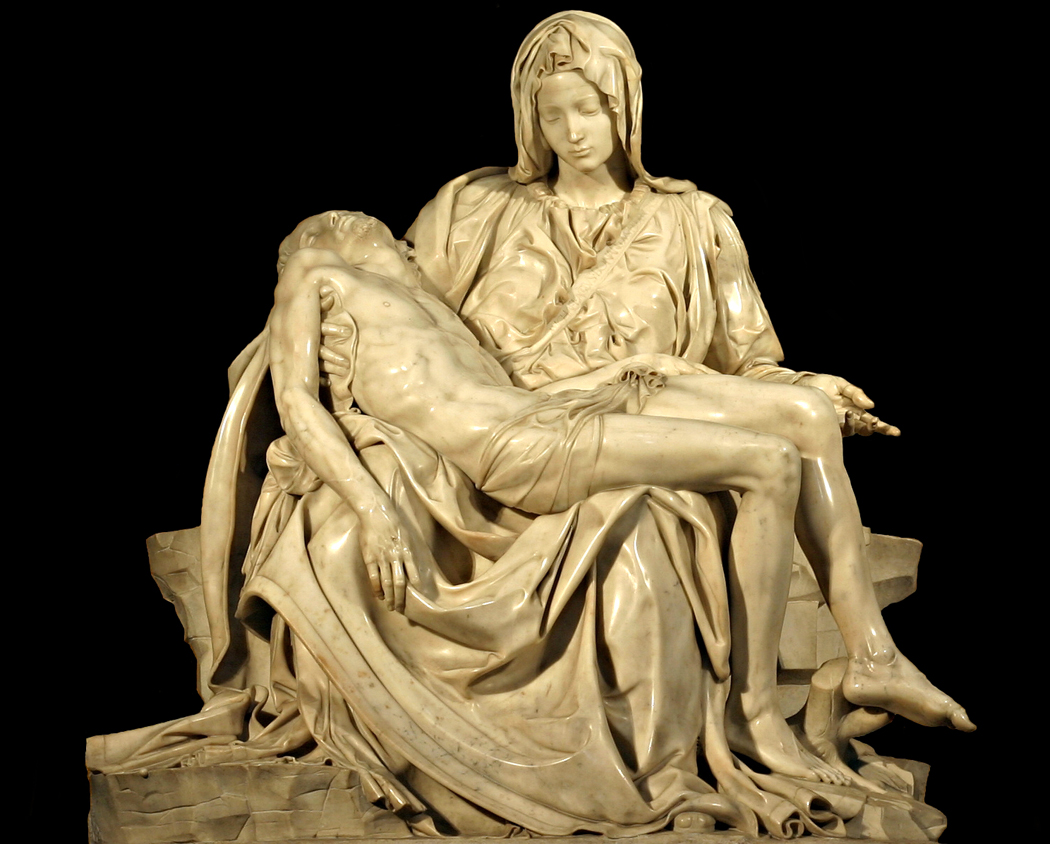
Archive

Tag Archives: art history

kenneth clark

Without the cosmos, there would have been no civilization.

But, without Civilisation, there would have been no Cosmos.

Bettany Hughes

Bettany Hughes

And probably no Civil War or Jazz. And no jobs for all those BBC presenters, from Bettany Hughes to Michael Wood.

And Michael Palin would have been merely another retired Python.

Sir Kenneth Clark’s 1969 BBC television series is the granddaddy of all BBC and PBS high-culture series, where an engaging personality teaches us history or art from a personal point of view. For anyone who remembers seeing Civilisation when it was first broadcast in the United States in 1970, seeing it again, now on DVD, will be a revelation.

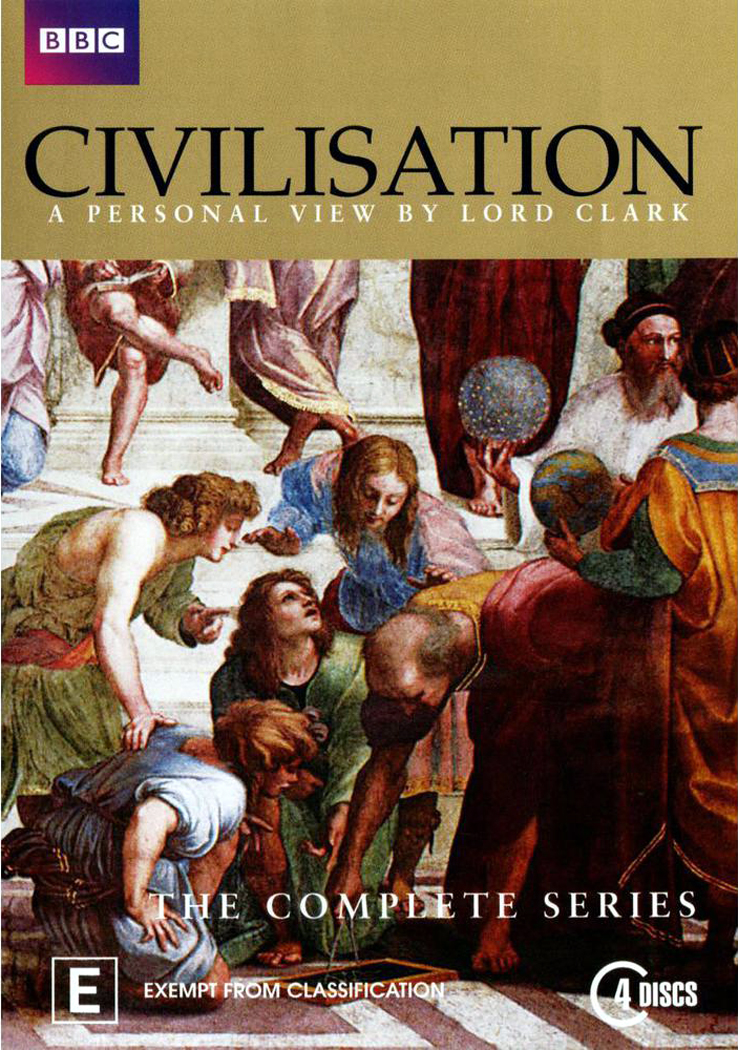
First of all, the film quality is excellent. Unlike other old series, presented in grainy, contrasty aged versions, Civilisation looks mahvelous, just as crisp and bright as when it was first broadcast. civilisation dvd cover

The series was initially filmed in color, and on 35mm stock, making it visually stunning. The BBC has remastered the original films onto HD and they are now available on Blu-Ray, at least in Europe. (One hopes that an American Blu-Ray version is soon in the offing).

Second, it is a much better, more nuanced view of its subject than you probably remember. If you recall it as Clark, with the British public-school back-palate drawl, talking about the “great masterpieces” as if he were an Oxfordian tour bus guide, you will be in for a surprise: His view is much more subtle than that.

Certainly, since the series was made, the general view of art and history has broadened, and the view of Western civilization as the be-all and end-all of human existence has been tossed out on the rubbish heap of ideas. Deconstructionists have shown us how our aggrandization of certain fetish items of cultural history has merely served to legitimize a particular ruling elite.

Yeah, yeah, yeah — we know that. But Clark’s view isn’t so simple. It is true that he exemplifies an old-fashioned “great man” view of history, and for that we have to listen to him with a grain or two of sodium chloride, but he is not merely the smug purveyor of status quo. He makes a serious attempt to discover just what civilization might be, and uses the past 500 years of European history to make his discovery.

“Writers and politicians may come out with all sorts of edifying sentiments,” he says in the series, “but they are what is known as declarations of intent. If I had to say which was telling the truth about society, a speech by a minister of housing or the actual buildings put up in his time, I should believe the buildings.”

And look at the buildings, we do. That is a third surprise in the series: Clark’s willingness to shut up for long periods of time while the camera shows us the art, the building or the landscape, so we may discover it for ourselves and not just take Clark’s word for it. He is more interested in sharing something with us than pounding us with his point of view.

We could do worse than consider his point of view, for it isn’t just about justifying power, but about seeing the results of how we view ourselves and our culture.

Civilization, Clark says, is energetic above all, always making something new. It is aware of the past and supremely confident and willing to plan for a future that will extend beyond our lifetimes, and therefore has a belief in permanence. It also has a firm belief in self-doubt. It fosters compassion and is willing to consider other points of view.

It is this last that the current wave of deconstructionists has failed to notice: Deconstruction itself depends on one of the supreme ideals of Western culture.

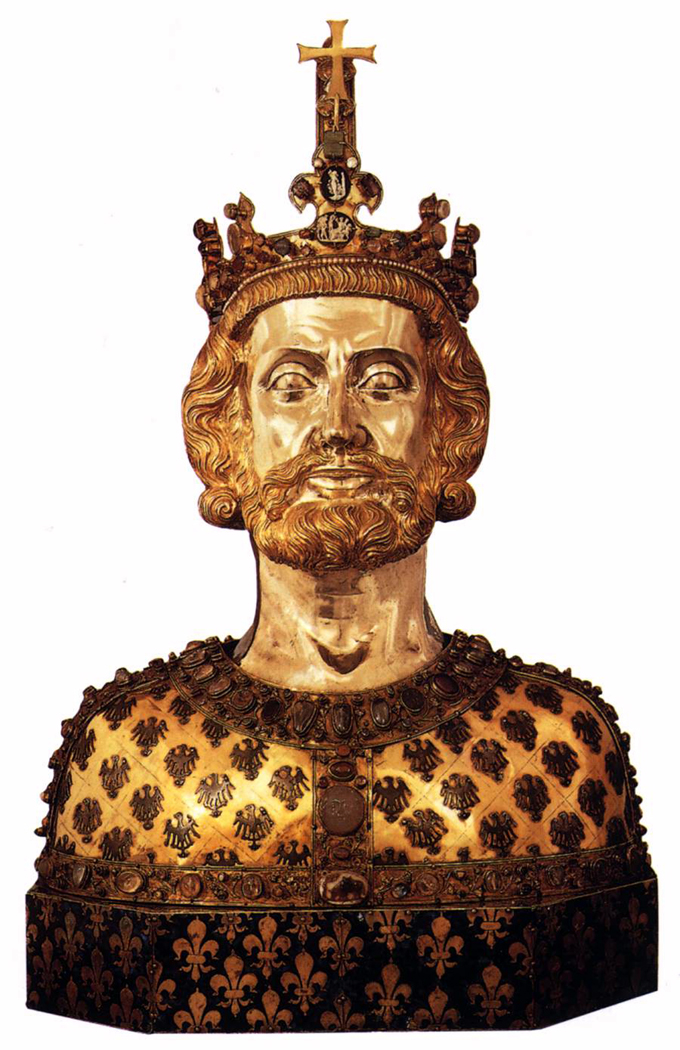
Charlemagne reliquary

Charlemagne reliquary

The full title of the series, with its British spelling, is Civilisation: A Personal View, and we should never forget — and Clark never forgets — that it is a single take on the subject. It is an opening statement in a conversation, not a final word to close off discussion.

And carping critics who complain that Western civilization — and post-Classical civilization at that — is hardly the be-all and end-all of civilizations in the world — well, Clark admits he has enough on his plate to cover Charlemagne to Monet. We wait for his counterpart to give us a similar personal overview of China, India, Africa or the New World. Clark has given us the template. Have at it.

The BBC took a chance when it made its first full-color TV series. It ultimately proved so popular that it was followed by Jacob Bronowsky’s The Ascent of Man and a host of others, from James Burke’s Connections to Ken Burns’ Civil War. It has proved a durable genre, but this release shows the first of its type remains one of the best of its type.

lascaux horse and sign

Seventeen-thousand years ago, a group of people very much like us descended into a cave in Magdalenian Europe and began painting animals on the walls. We can hardly know what drove them, although we enjoy pondering their motives.

Click to enlarge

Click to enlarge

Caves, like the one at Lascaux, had been decorated at least since 30,000 years ago — as at Chauvet caves to the east of Lascaux — but it is Lascaux that has most captured the world’s imagination. Tourists came by the thousands to walk through the galleries and be awestruck. That is, until their very enthusiasm began to endanger the drawings. Now, tourists come to see the replica of the caves at an attraction called Lascaux II.

My wife and I had been to France many times. We had visited most of the great cathedrals of northern Europe, from Amiens to Rheims, and had made pilgrimages to sites like Mont St. Michel and the Impressionist Eden where Claude Monet painted at Giverny. We had gained a profound education in the long line of history and culture that informs who we are today.

Carole likes to look into the old family photographs to see the physiognomic evidence of her genes, dating back to her great-grandfather, Rowan, who fought (on the losing side) in the American Civil War. She searches old genealogical records to carry that family history back further into time, at least back to the 18th century. For her, as an artist, looking at the bulls and horses of Lascaux is very like seeing the ultimate and oldest family photographs.

Click to enlarge

Click to enlarge

This is where our histories began, or at least, where they were first recorded, in the cave paintings along the Vezere valley from Montignac to Les Eyzies.

And, although Lascaux II is a reproduction, and not the original, it can carry the same potency that a reproduced family photograph can have. It is the pith of the image that carries the wallop and not its provenance. Seeing the imitation still gives us something that images in a book cannot convey: the size, the architecture, the surface. And it gives us a fighting chance to imagine ourselves in the caves before the development of writing, governments or digital watches. We can feel in our hearts the atavistic rumblings. That this is an act of imagination rather than a literal case is not only not a detriment, it is a positive improvement: Imagination is the source of everything here and that has come after. We would hardly be human without it.

We found the billeterie and bought our tickets for Lascaux II and were told there was an English language tour at 11:30 a.m. Lascaux II is about a kilometer out of town, up a narrow road and a narrower driveway, with lots of cinder parking lots at the top.

We waited where we were told to wait, and about 20 others joined us until a young man with balding hair and a flashlight came out and welcomed us in English with a characteristic French accent.

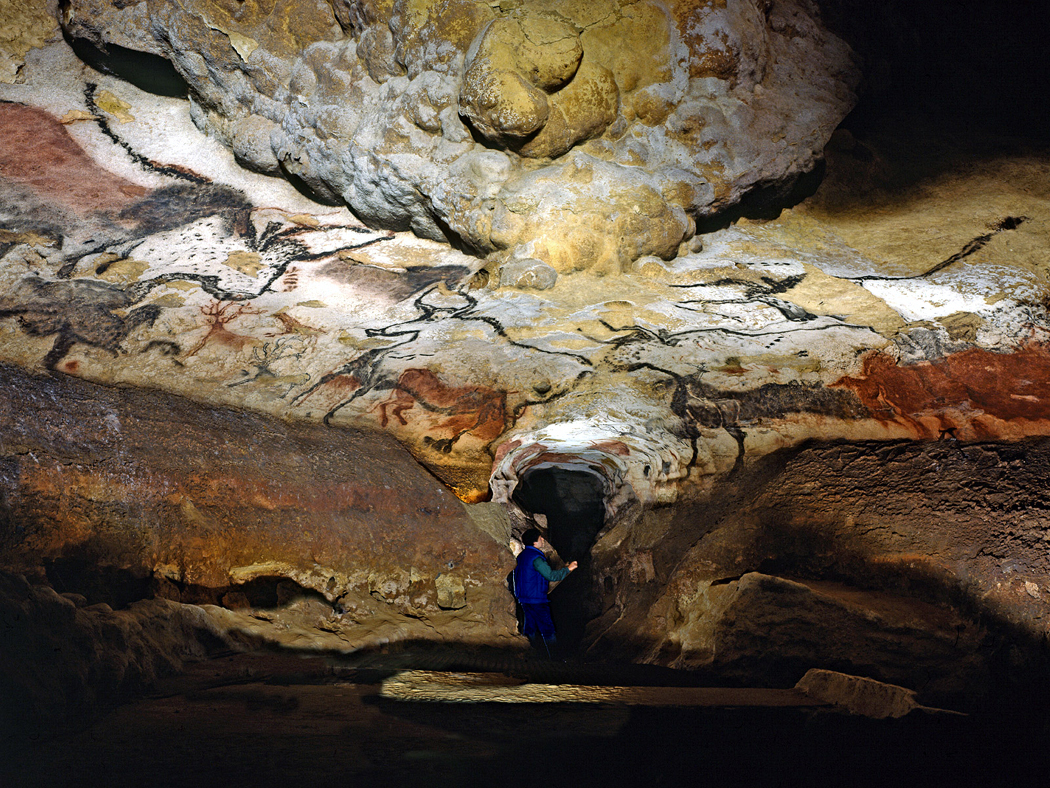
We walked down a flight of stairs into an underground chamber that had a dozen or so museum-style exhibits describing how the cave was discovered, how it was formed geologically, and how visitorship had damaged the original caves, and so a new reproduction was created for visitors, out of concrete, measured, millimeter by millimeter from the original. Two of the largest galleries were recreated in Lascaux II, including about 80 percent of the best animal drawings in the cave.lascaux ii

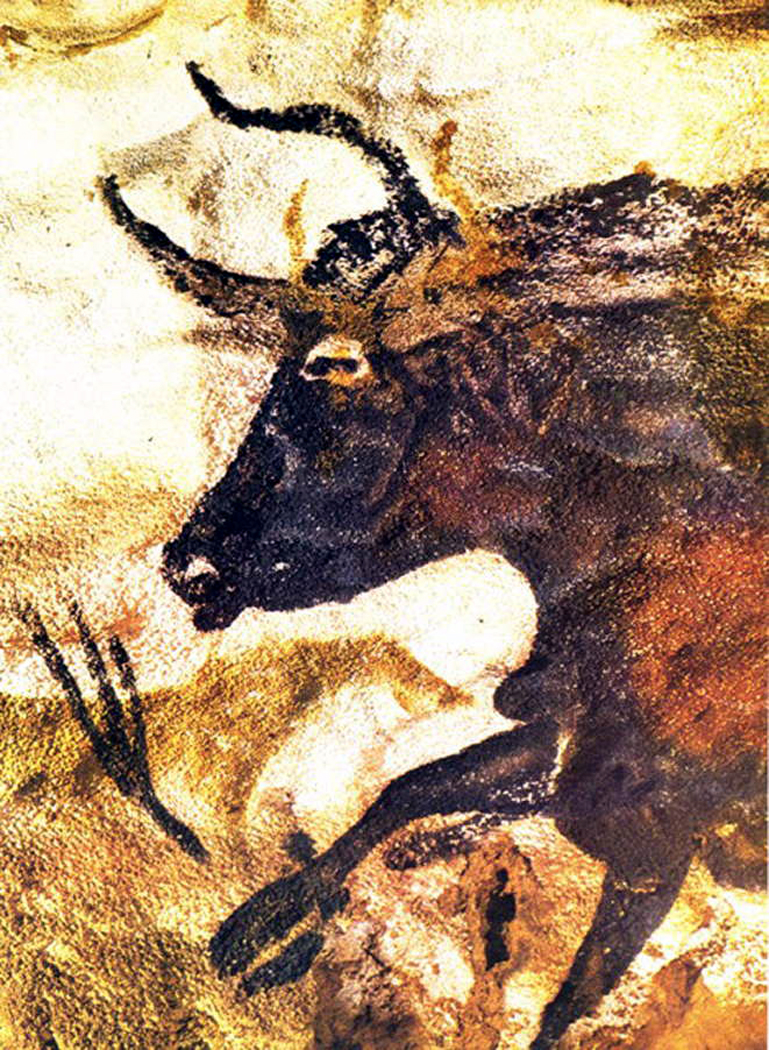
He led us into a darkened cavern the size of an auditorium and on both walls we saw animals, beautiful animals drawn, some smaller than lifesize, some, like the great 18-foot-long taurus, larger than life.

The bottom of the cave was “wainscotted” with clay, and no drawings were made on the clay.

“You cannot paint on clay,” our guide said.aurochs and horses lascaux1947

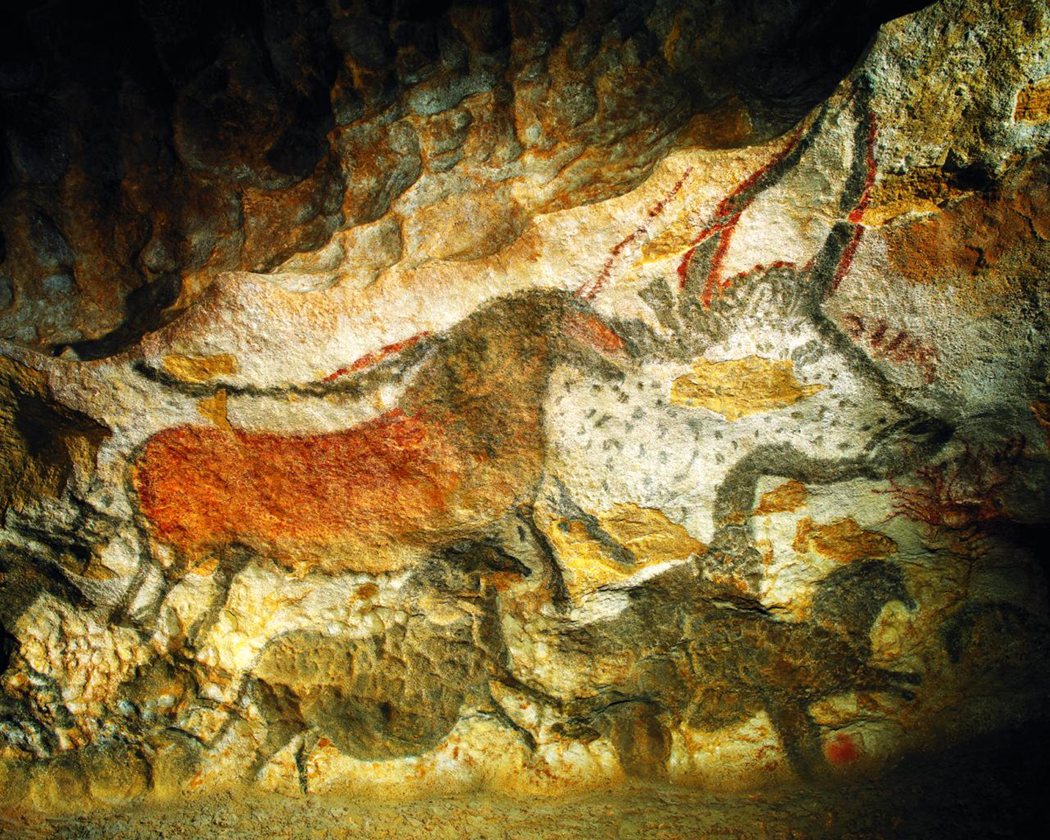
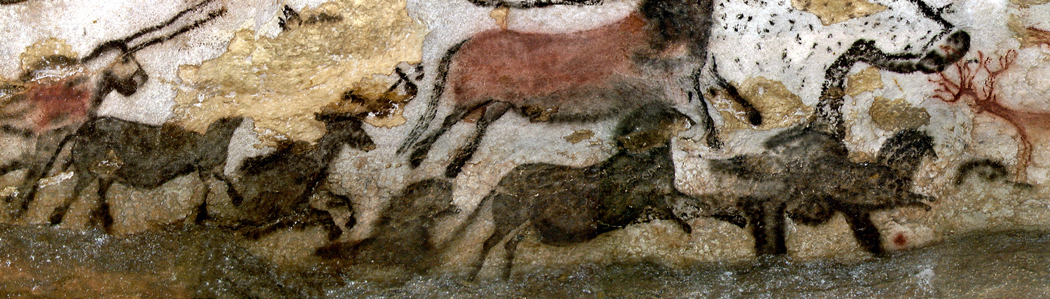
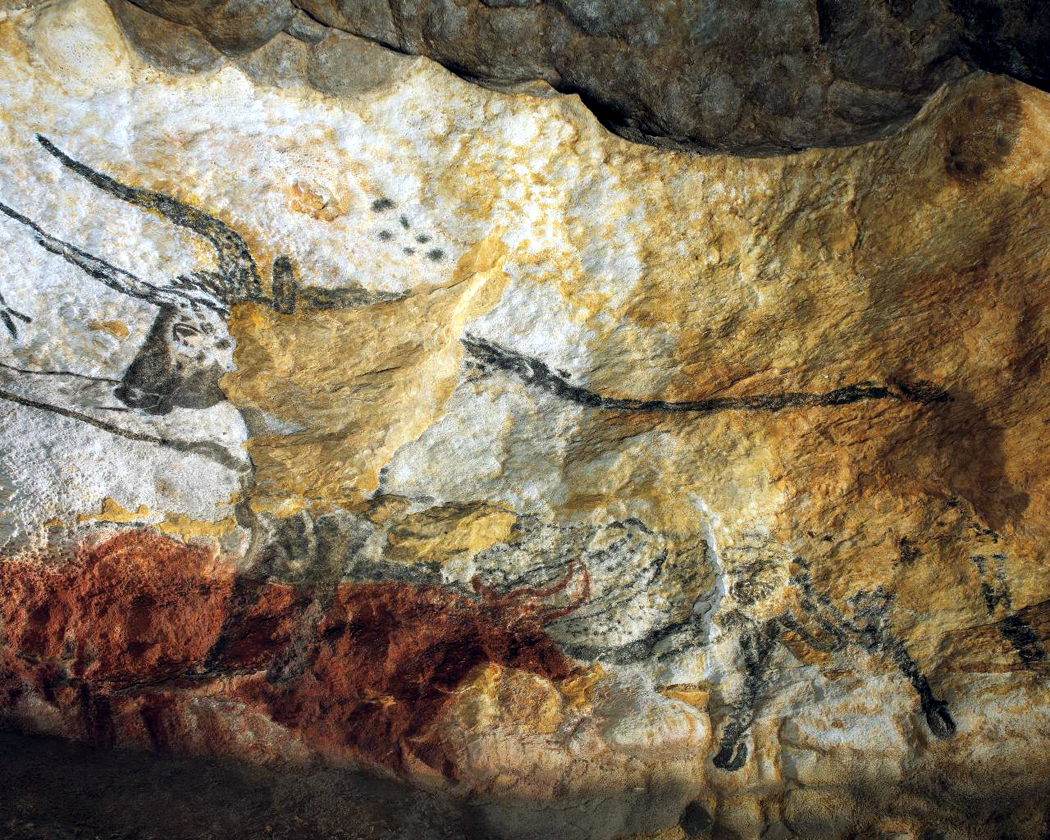
But on the limestone above were a ring of horses overdrawn with a larger ring of bulls, as if a horse cult had made an altar for equines, and maybe centuries, or millennia later, a bull cult came in and made their altar for their bulls. The bulls were all bigger than the horses, and tended to be in outline form, while the horses tended to be filled in with color. (This was not universally true, but is the tendency.)

There was also a figure the guide called a “unicorn” at the very entrance of the cave, although why it was called a unicorn, I don’t know, since it clearly had two horns blazing out of what seemed like a lion’s head.lascaux unicorn

Carole immediately spotted it as a shaman wearing an animal hide and carrying two sticks, like the African deer dancers we have seen pictures of.

“The first figure, as we entered the bull room, was not the most impressive — the big bulls were — but the first figure is something you work your way back to after recognizing what the other figures are,” she said.

“The first figure is mysterious and it isn’t drawn with the same confidence as the bulls and horses. There are not the same strong completely informed curves. The first figure looks like a man with black legs whose back and head might be covered with a lion skin. In place of his head is a lion’s head, with what looks like two long, straight horns protruding from the temples. I think those two prongs were not horns, but were sticks the man was carrying. It looked like the sides of an animal skin were hanging down on both sides from the man’s torso, if he was a man.

“Our guide showed us what he called a ‘hump of fat’ on the man’s back, like the hump of a bull, or maybe a grizzly, but I thought it was the lion’s mane. It wouldn’t have been practical to make something there like a lump of fat, if the man were wearing a costume.

Because the man was right there, and drawn smaller than most of the other figures, he did not seem to represent his own importance; he seemed to be driving the animals. His placement puzzles me. I don’t know what these paintings were for, but I do know what they are, and I think that is joy.”

click to enlarge

click to enlarge

Perhaps he was driving the animals in the cave in a kind of cattle drive.

The animals, especially the horses, tended to be drawn in series, and at least one series — “like a musical phrase,” Carole says — shows them advancing from a standing horse, through a walking horse to running horses.Lascaux II bull and horse

The horses were finely seen, with astonishing attention to anatomical detail, allowing for a certain amount of distortion, like the distended bellies on several of the horses, and legs rather shorter than their bodies would have had. Still, the attention to joints, hocks and fetlocks was surprising.

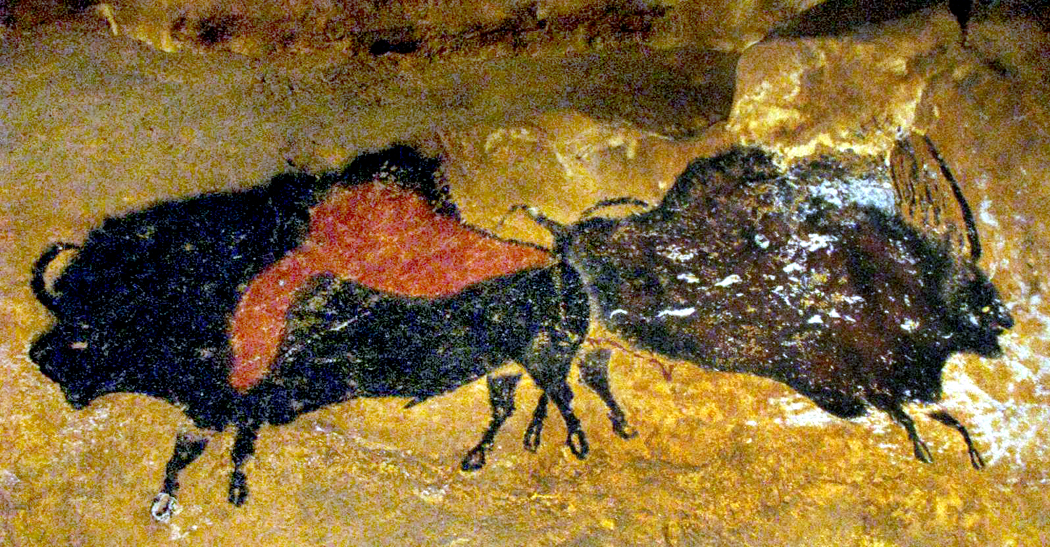
The bulls, much larger and drawn above and overlapping the horses, were often just heads and shoulders. Some had the curved backs and bellies and jaunty forelimbs racing out front. But although they also showed keen attention to anatomy, they clearly were meant to impress with size and energy.megaloceros room

The second room we entered was called the Axial Gallery and contained many more wonderful drawings, including a group on the ceiling, leading some to call it the “Sistine Chapel of prehistory.”black bull 2

You can see why they might say so, for the animals, all drawn with care for detail and expression, were everywhere.

“Our guide gave a running commentary and explanation of what we were looking at, but I tried not to hear him and tried to pretend that I had accidentally found it, so I could feel it only visually,” Carole said.

“I had a great feeling of joy and definitely a feeling of inspiration and gratitude. It felt just like a cathedral and I think I said out loud, ‘It is a cathedral, Richard.’

“I thought the most beautiful drawings and paintings were the bulls. They had wonderful curved horns, like Picasso’s bulls, but their heads were more prominent and really beautiful. Beautifully shaped and beautifully drawn. On at least one bull’s face, the detail of the nostril and the mouth were indicated by negative space against a black muzzle.

“If I had been alone, and obeying my instincts, I think I would have skipped and danced and clapped my hands, in a circle, round and round and round in the round room, just happy because of the bright contrast and the strength of the animals, and the joyous beauty of them running together, overlapped and contained within.lascaux II panorama 2

“There were little runs of horses like musical phrases.

“After seeing all these paintings and drawings, bulls, horses, reindeer, it becomes hard to believe they could have been anything but religious objects, icons or totems for clan worship.”

Despite being so realistic in so many ways, they are also somewhat stereotyped: the same horse shape from the same side angle. The same bull head over and over.

But there was one exception: At the end of the chamber, in a darkened corner where the passageway was bifurcated and narrowed, there was what looked at first like an upside down horse.falling horse

“Perhaps they thought it was Australian,” joked our guide.

“Or perhaps it had been killed and was dead,” he said.

But a dead horse is not upside down like a cockroach, but flat on its side.

No, this horse seemed to be dust-bathing, rolling back and forth on its back, almost playing. Alone of all the paintings we had seen in the Lascaux II galleries, it seemed to be an artistic rendering of something the artist had seen in the real world and was drawn not because of its totemic meaning, but simply for the pleasure of rendering experience, of seeing the world.

Lascaux II was a decidedly more satisfying experience than the Font-de-Gaume paintings: The animals were better drawn and they could be seen with a clarity missing in the other cave. There was a joy to the energy of the animals racing and jumping; you could hardly fail to be exhilarated by them.Big Bull Lascaux II

And seeing them in situ — even in a reproduced situ — gave you a much deeper understanding of them compared merely to seeing the photos in a book. Some of them are giant, like the 18-foot bull, a scale you can’t reproduce in a halftone.

They are some of the most astonishing drawings I’ve ever seen, even if they are 17,000 years old.

For Carole, as always, they hit with a more personal note.

“Maybe one reason I love these paintings and this experience so much is that I’ve made this paint myself, many times, beginning when I was about six or seven years old, in my back yard. There was plenty of iron oxide red dirt, plenty of yellow ocher clay and always charcoal from the place where we used to build a fire and roast oysters.

Notice the overlapped hindquarters

Notice the overlapped hindquarters

“I regularly made mud pies out of the red dirt and yellow clay and set them out on the back steps to dry for my playhouse bakery. The stain that the red mudpies left on the steps would not come off, no matter how much I washed it. So when Daddy had the men in his plumbing shop paint the back of our house white, I couldn’t wait for the white paint to dry; I pestered my parents about when the paint was going to be dry and unfortunately, they didn’t think to ask me why I was so interested. As soon as it was dry, I mixed up a bucket of red dirt and water and got a window sash brush. I used the step ladder and painted everything I knew how to draw all across the back of the house, as large as I could and I signed it with my name.

“I asked Mother and Daddy to come out and take a look at the wonderful thing I’d done. Daddy was not pleased and I was sent back up the stepladder with the same bucket and soapy water, but it never came off. Eventually, we painted the back of the house white again, but some of the red still bled through.

“And all I really learned from this was that that red dirt must be one of the most powerful things in the world. It made me love it more.

“I’ve written a lot of poems about that red dirt. When I went barefoot, it used to stain my feet. The red water it made in the bottom of the bathtub was beautiful, running toward the drain.

“Then, when I was in my 30s, I had a house that had a fireplace and I always had pieces of charred wood. From the time I was little, I would try to draw with pieces of charred wood, because I thought Abraham Lincoln did his homework with such a thing. On this day, I used charred wood on paper to make a large drawing of the sun’s face. I drew the outline and the features with black and I made yellow ocher paint and red iron oxide paint from the dirt in my yard in Greensboro. I hung it on the wall above the fireplace, where it hung for six years. I called it ‘Abraxas, the god of change.’Lascaux II bull paintings

“I still love the range of contrast that you get from this velvety black, strong iron red and buttery yellow ocher. There were cows the color of yellow ocher that used to sleep in the grass on the river road past our house. When the grass in those fields turned lion colored, the cows were camouflaged. In the summertime, thousands of orange day lilies filled the same pastures.

“So, actually, when I was in the cave, I experienced the pictures in my body, with my hands and memory of mixing those paints myself, and feeling like a hero making pictures with the paint.”lascaux panorama

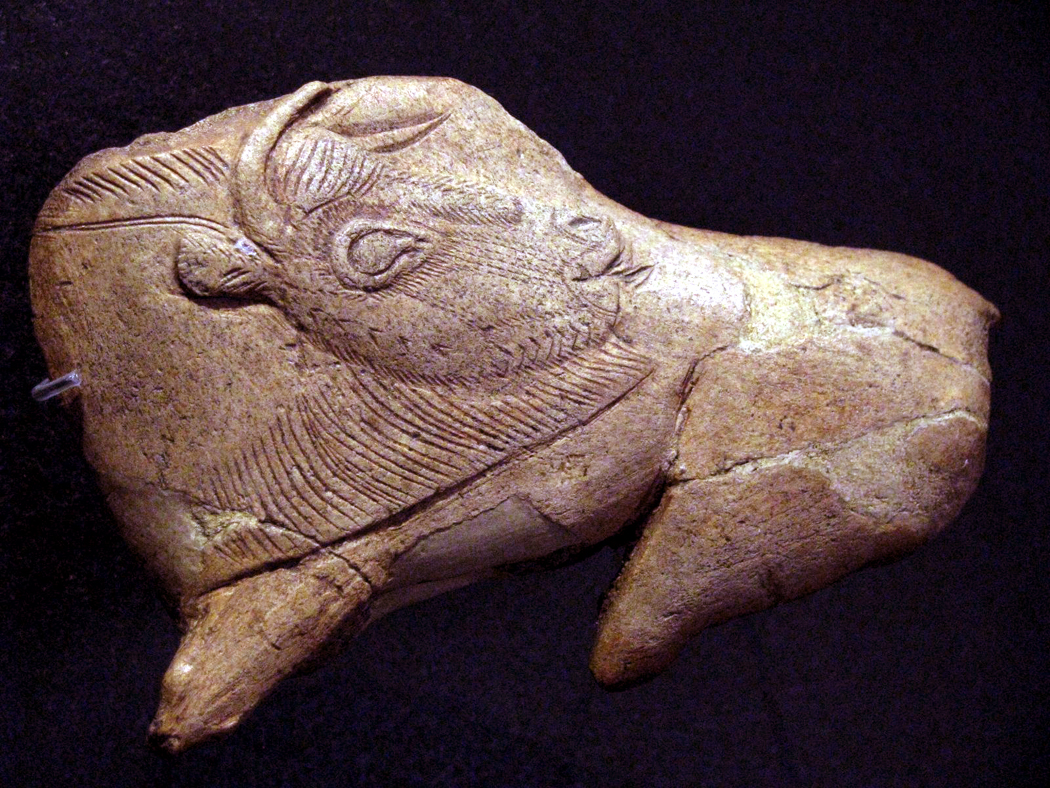
les eyzies bison carving

Open a bottle of champagne and leave it out, and by morning it is flat and stale.

Opening up a prehistoric cave can be like that. Lascaux caves in France, with its menagerie of animal paintings, lasted for nearly 20,000 years intact. It was discovered (or more properly, rediscovered) in 1940 and after the war, was opened to tourists. It was soon apparent that the cave was beginning to be degraded. Lichens were starting to grow on the walls, and the huge jump in carbon dioxide levels, from the breath of all those making the pilgrimage through the caves, was joining with the calcium in the limestone to form a layer of calcite that would soon cover and blur all the imagery.

It was that, like the Heisenberg uncertainty principle, the act of observation changed what was being observed. When you open up the box with Schrodinger’s cat inside, sometimes what you find is not quote so pleasant.

The caves were closed to the public. In 1983, a simulation — a copy of the original caves — was opened as Lascaux II, and tourism heated up again. Tour guides led groups through the ersatz caverns and let us see a simulacrum of the original experience. They assure us over and over that the copy is precise down to the millimeter.

Lascaux II

Lascaux II

Yet.

I’m a naturally suspicious person. When a shopkeeper is friendly, I allow she may indeed be very nice, but I recognize she also has a self-interest in making customers feel good.

And when I see the great cathedrals of northern France, I question whether I’m getting the vision of the master builder and his sculptors, or am getting the Viollet le Duc version and a 19th century stylization of the Gothic art and architecture. They rarely let you know what parts of a church are original and what parts have been restored. Sometimes it is easy to tell, but much of the time, it is not.

Whether it is Sir Arthur Evans at the Palace of Knossos, or reconstructed pyramids at Chichen Itza or the Carnac alignments, the work, even of dedicated and honest archeologists, is suspect.

Entrance to Lascaux II

Entrance to Lascaux II

And when we visit Lascaux II in Montignac, Perigord, France, I am suspicious of the recreation of the original paintings by a 20th century artist, no matter how well meaning.

I’m not saying I don’t believe what I see is accurate, but that I harbor a constant suspicion that it may not be.

The problem is that the reproduced paintings are so much clearer and more contrasty than the genuine paintings we saw at Font-de-Gaume.

When I asked the tour guide about it, his answer was not satisfactory, and somewhat off point.

“These paintings were drawn from accurate photographs of the originals,” he said. “And they don’t vary as much as a millimeter from the real ones.”lascaux II panorama 2

But it isn’t the size that I was questioning, but that the photographs taken of the real cave may very likely have had their contrast boosted to make the images more legible, and I wondered if the artist who created the facsimile might have unconsciously reproduced jiggered-up photos.

Did he visit the original cave under the same lighting conditions he painted in, and did he compare his results, not with the photograph, but with the real paintings? This is not an academic question.

Our own biases secretly creep in whenever we look at the past. It cannot be otherwise. Even the most scrupulous “reproduction” is an interpretation.

It isn’t the honesty of the reproductions that I worry about. But I remember how easily fooled art experts were by Han van Meegeren’s forged Vermeers, and how shocked I was when I first saw them, with the gift of several decades between them and me, that anyone could ever have been fooled by them. Or even the Minuet by Paderewski, that he pawned off as a long-lost dance by Mozart. In the 19th century, it sounded genuinely like Mozart to their ears, but our ears can not be fooled: It is pure Victorian kitsch.

Abbe Breuil

Abbe Breuil

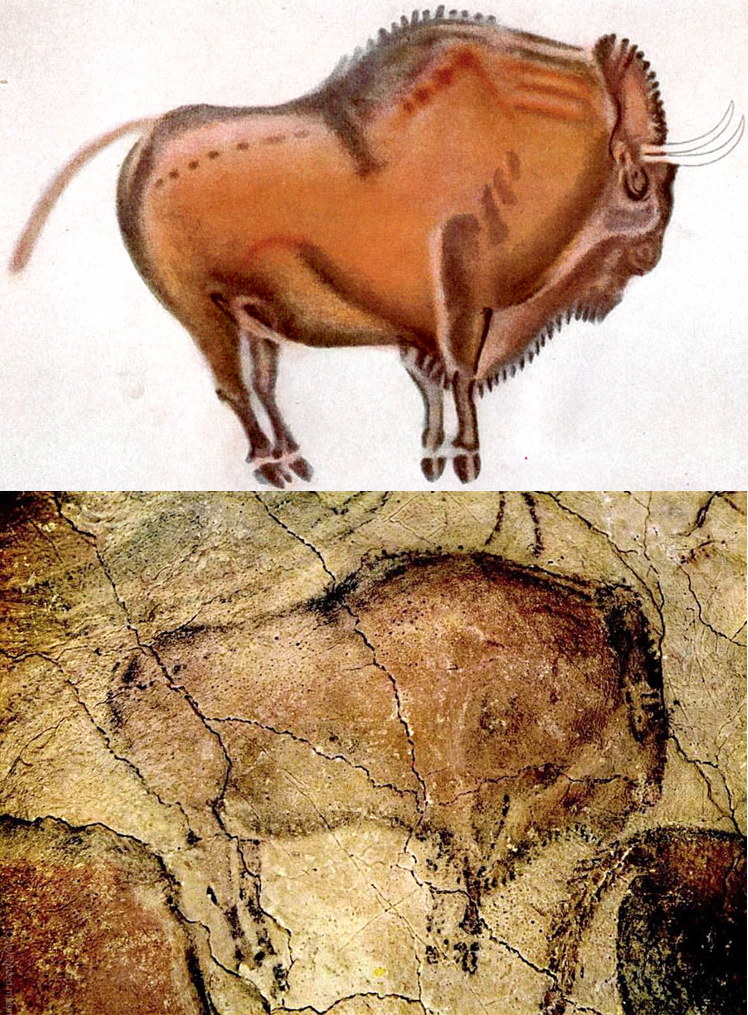
Often, in books, the images we see of cave paintings are not photographs of the original, but reproductions of drawings made of them. Abbe Henri Breuil, for instance, made many of them. He was one of the first and most influential archeologists to study the many cave paintings in France and northern Spain. But his drawings often make the originals clearer and of higher contrast. And we cannot always know if he has given us a perfect copy, or a modern interpretation.altamira bison pair

Consider his famous drawing of a bison from the caves at Altamira in Spain. He has added the horns and has made clear what is obscure — or has made guesses at what its original makers would have wanted us to understand.

He made a famous drawing of a supposed “sorcerer” from Caves of Trois-Frères, but a simple comparison of the drawing with a photo of the original makes one skeptical of all such attempts to reproduce the cave paintings.sorcerer pair

It is our own time and culture that colors what we pick from the welter of confused sense data that we see before us. We need to make sense of it, and invariably make a kind of sense that works in the confines of the culture we have been born into.

The air we breathe is invisible to us, the culture we absorb is odorless and tasteless. Only later can the habits and prejudices of one age be clearly spotted by its successor.

(It is easier these days to spot the cultural accretions from the Romantic 19th century, less easy to spot our own. One scratches one’s head at Beethoven’s Ninth Symphony, comparing when on one hand, he declares “alle menschen werden bruder” — all men will be brothers — with the “Hogan’s Heroes” march where the tenor tells us that joy is like the hero after victorious battle. Who has he battled, if all men are brothers? Clearly, the Romantics had a different, and mythic vision of war than we can ever sustain after the Somme, the bombing of Dresden or slaughter at Stalingrad. Beethoven and Schiller were certainly blind to this irony. We can never be.)

It isn’t that I think we should be allowed to visit the original Lascaux: It is clear that visitation destroys them, and I’m all for preserving them.

But I asked if scholars are allowed to visit the original and the guide said, “No. Not even scholars are allowed in. There is a keeper of the cave and he ventures in on a strict schedule to monitor the air, the humidity and the temperature, but no one else may enter.”

So, I wonder if all the latest scholarship is based on inaccurate reproductions.

Because at Font-de-Gaume, the paintings, while beautifully drawn, were noticeably low contrast, often barely legible on the walls. You had, in many cases, to acclimate your eyes to make out the bull or his eye or his horns.

In some cases, animals we were shown may be more like the fanciful shapes people make out of stalactites and stalagmites in tourist caves — “Here is the ‘ham and eggs,’” or “Can you see the elephant here?”

Our Lascaux guide assured us that the originals at Lascaux look “just like the reproductions, and are very clear,” and I have to say they look bright and legible in the photographs in the books.

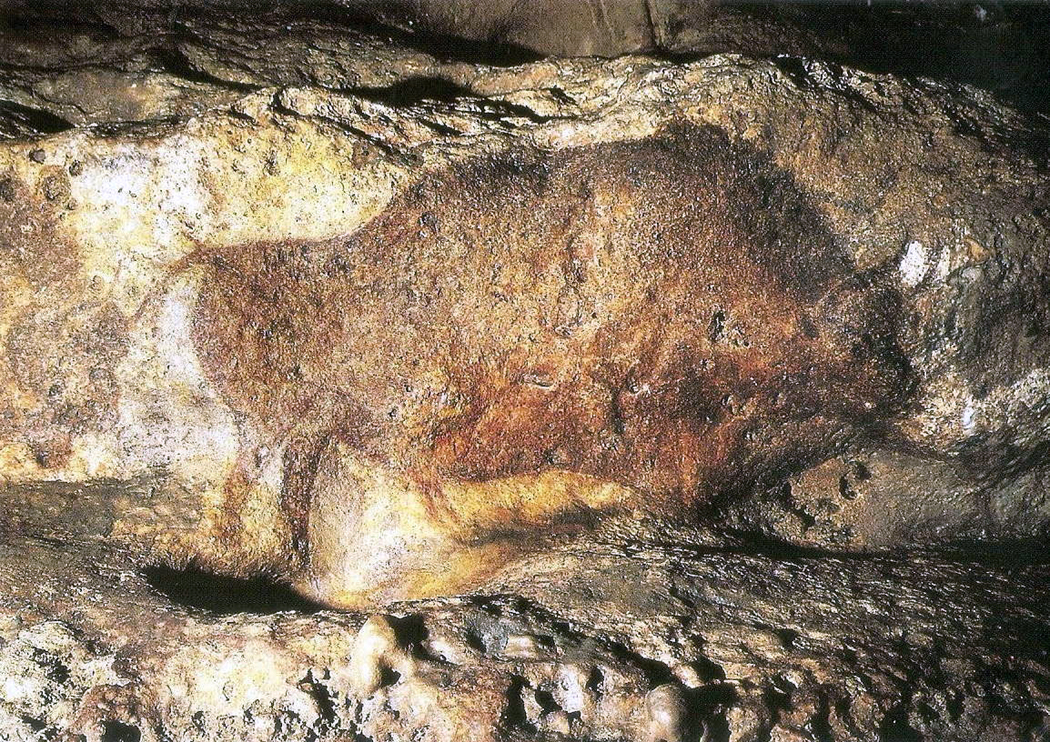
In vintage photographs, the paintings look clear and contrasty.

In vintage photographs, the paintings look clear and contrasty.

“Font-de-Gaume was made something like 4000 years after the Lascaux paintings,” he said. “They were not the same culture.”

And he implied that the Font-de-Gaume artists were inferior and less able to articulate their animals and less able to make their contrast ring out.

So, when our guide tells us the Lascaux facsimiles are accurate, I am inclined to believe him, and when Carole tells me that the shopkeeper was really nice and loved talking with her, I tend to believe Carole knows it is so. Yet, I also remember that the shopkeeper does a better business by being friendly.

NEXT: Visiting Lascaux II 

font de gaume drawing

On every continent, save Antarctica, early humans have left their mark on rock faces. Whether Australia or southern Africa or Asia, there is rock art left behind. The most famous and most familiar, of course, are the cave paintings of Europe. Dating from 30,000 years ago to roughly 10,000 years ago, they are the starting point from which we begin every survey course in art history.

The most famous caves are Altamira in Spain and Lascaux in France, but there are hundreds of others, including the recently famous Chauvet cave in southern France.

I have taught some of those survey courses, but I had never seen any of the actual caves: I had only seen reproductions in my Janson or Gombrich. Several visits now to Europe have given my wife and me the chance to see some of the cultural monuments we had only dreamed of seeing: Chartres, Giverny, the Louvre — and the cave paintings.

You come to think of yourself as an adult, and that you have seen pretty much everything — in general if not in particular — and you develop a skin of insouciance. It is children whose eyes widen, not adults. We measure and compare, we add some small dram of new experience to the old and hold all in emotional proportion.

That ceases to be possible when staring at the bison, aurochs and horses scratched, drawn and painted in the inner recesses of inaccessible caverns, with a palpable lacuna of 20,000 to 30,000 years in between ourselves and the clearly living and breathing — and thinking and feeling — people who left this evidence on the limestone walls.
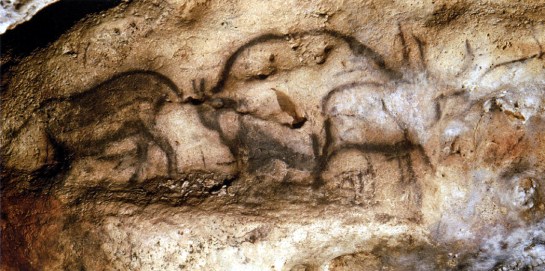
Bison, Font-de-Gaume

Bison, Font-de-Gaume

And we fall in awe that those people we depict as “primitive” cave dwellers could be so artistically advanced, so visually sophisticated. Yet, there is also a kind of glass wall between us and them. We have no idea why they painted and scratched these images; we have no idea what the images meant to them. We are left to guess.

Those guesses fall into two large categories: On one hand, a group of modern people assume the prehistoric people were decidedly primitive, unlike us in so many ways beyond merely not having smart phones; on the other hand, there are those who make the empathetic leap and recognize that the Cro-Magnon human is exactly the same species as we are, with exactly the same brain power, same potential for neuroses, same skills, and that if we had been in their position, we would perform exactly as they did, and so perhaps the cave paintings are not something alien and other, perhaps they can be understood, not as Alley Oop, the cave man, but as mon frere, ma soeur.

The first art we saw is 17,000 years old, on a cave wall in the Vezere river valley of the Perigord region of France. There were bison, reindeer and horses, drawn with an anatomical awareness that European artists didn’t seem to recapture until the Renaissance.

We had planned first to go to Lascaux in Montignac, but the roads are not always well marked in France and we wound up instead in Les Eyzies at the other end of the Vezere valley.

And it all came to us by accident.

The plan was to drive from Angouleme to Montignac to see the Lascaux II reproductions of the cave art of the original, now closed Lascaux caves.

The road wound through green valleys, up over wooded hillsides and over streams. Eventually, we got to Les Eyzies without ever seeing Montignac.
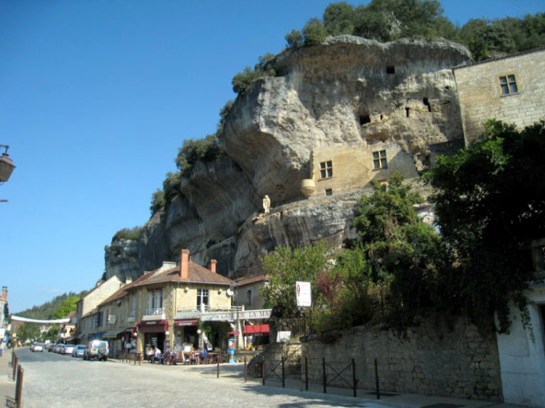
Les Eyzies de Tayac

Les Eyzies de Tayac

Turns out, that was a good thing.

Les Eyzies is a small village, made up mostly of cafes and souvenir shops, all along a single street below a tall yellow limestone cliff. These bluffs line the river valley. In them are dozens of caves, and many of those have prehistoric art in them.

Lascaux, further north just outside Montignac, is, of course, much more famous. But the cave has been closed for decades; a substitute cave, called Lascaux II is open to tourists, featuring recreations of the original art. It had been our intention to visit that cave first, and then perhaps check out some of the other, lesser sites along the river valley.

But because we came the wrong way, we found the Grotte de Font-de-Gaume, which is one of the only remaining caves with polychrome painting still open to the public. They protect the cave as well as they can by only allowing 12 people in at a time, and fewer than 200 a day. You have to make an appointment.font de gaume entrance
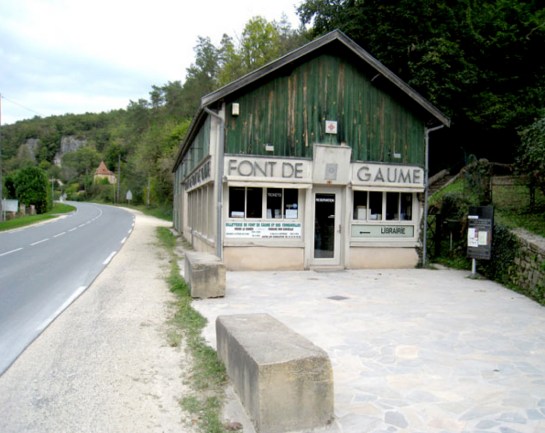
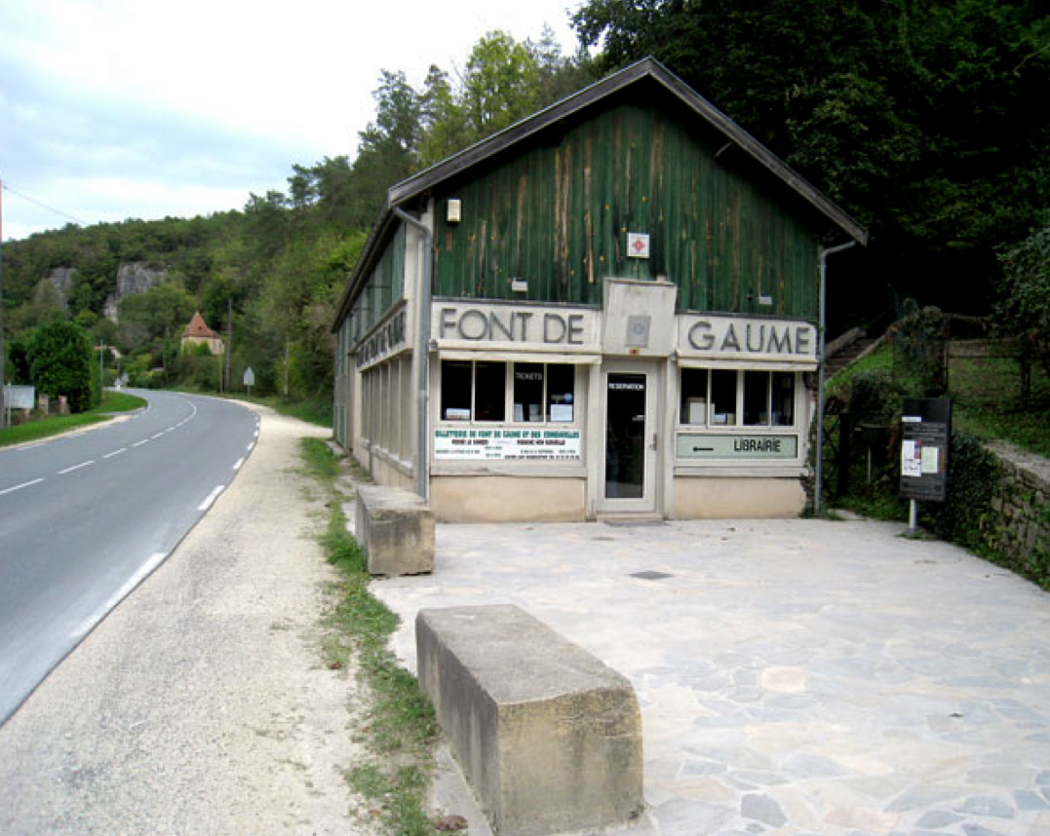
So, we stopped by the office — a shack with books and souvenirs for sale — and asked if it might be possible to get a ticket for the next day.

“We are closed Saturday,” she said. “But we have tickets available for this afternoon at 3.”

It was about 12:30 at the time. So we bought our tickets and drove around the countryside, looking at the paysage and enjoying the many roadside attractions, like the Prehisto-Parc, which features those familiar papier mache Neanderthals bagging a concrete mammoth. We passed on going in.

We drove all the way to Montignac, just to see the scenery, and, boy were we even happier we had come the wrong way.

Many years ago, when Carole and I first visited Canyon de Chelly on the Navajo reservation, we came to it the back way, along a dirt road from New Mexico. We didn’t know what we were looking for and got lost on the back roads through the forest. But eventually, the road started down the side of a cliff and we saw a large hole in the ground a couple of miles ahead. It was Canyon de Chelly, and the road led us up to it with no traffic, tourists or souvenir shops. We came upon it — actually upon Wild Cherry Canyon, a side canyon — and got out of the car and had the canyon to ourselves, looking 400 feet straight down into a rock hole. It was awesome. It was only later, getting to the head of the canyon, that we saw the traditional entryway, Chinle, a godawful tourist hole rank with traffic and jewelry stands. If we had come to Canyon de Chelly through the front entrance, we would have been put off by the wretched poverty of the Indians and the rancid commercialism of the dusty town.

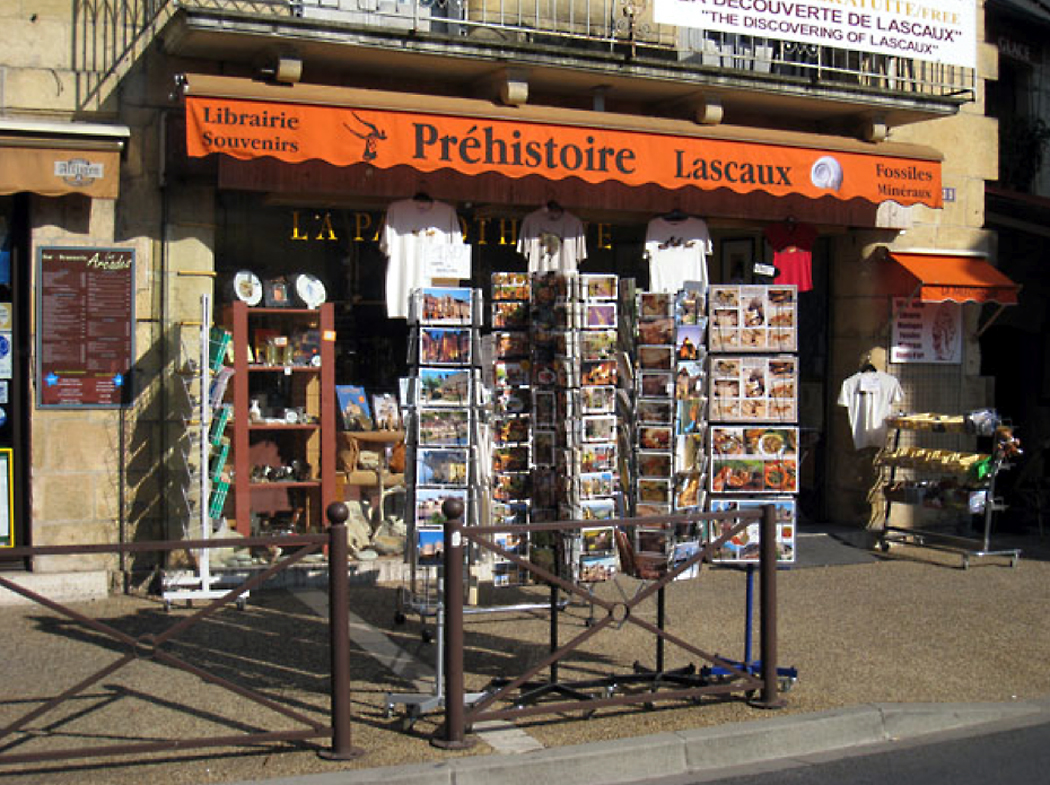
Postcards for sale, Montignac

Postcards for sale, Montignac

So it was at Montignac, a fussy, busy, crummy town, catering to the worst of the tourist trade. If we had seen it first, we would have held our noses, visited Lascaux II and gotten the hell out of Dodge as fast as possible.

But coming up through Les Eyzies instead, we got a boat load of prehistoric places, smaller and less commercialized than Lascaux II, and we found a hotel a few miles north of town called the Hotel Peche-Lune, a large, new hotel with large, clean rooms and a great restaurant out front.

By then, we had used up our extra time and came back to Font-de-Gaume, in time to begin our tour.

It was an unannounced trek uphill for 500 meters, a grueling bit of alpine climbing for Carole and me, huffing and puffing, 20 yards behind the rest of the group, and losing ground.
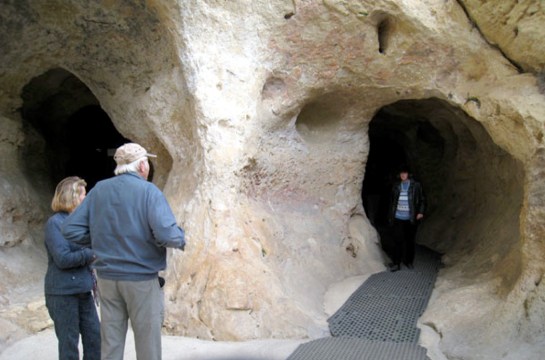
Cave entrance, Font-de-Gaume

Cave entrance, Font-de-Gaume

At the top, there was a hole in the mountain and our guide took us 12 in to see the cave paintings. The cave is not the wide, high sort of Carlsbad Caverns sort of cave, but a seam in the limestone eroded out, about 120 meters into the hill, with several side cavities off at a good Karstian 90 degree angle. At its narrowest, the cave rubbed both shoulders, and there were a few places I had to duck my head, but mostly, it was wide enough for one or two people to pass, and in the main grotto, the ceiling was 100 feet up.

It is dark inside, with a faintly lighted footpath, and a few round lights on the wall that were switched on to dimly illuminate a three-foot bison on the wall about a foot above head height. No, there was another one a little on. And another. Actually there were five bison in the first section of the cave. The first was the clearest, hunch-shouldered, battering ram head, tiny legs and a wooly coat of brown. A small hole in the rock served as the beast’s eye.frieze of bison

The first impression is that the paintings are so faint as hardly to be visible at all. But as you get used to the low illumination in the cave, you realize that what is actually surprising is that they are still visible at all after 17,000 years. It is an astonishing passage of time: 15,000 years before Christ. 12,000 years before the Great Pyramid at Giza. That we could see them at all has to be a miracle.

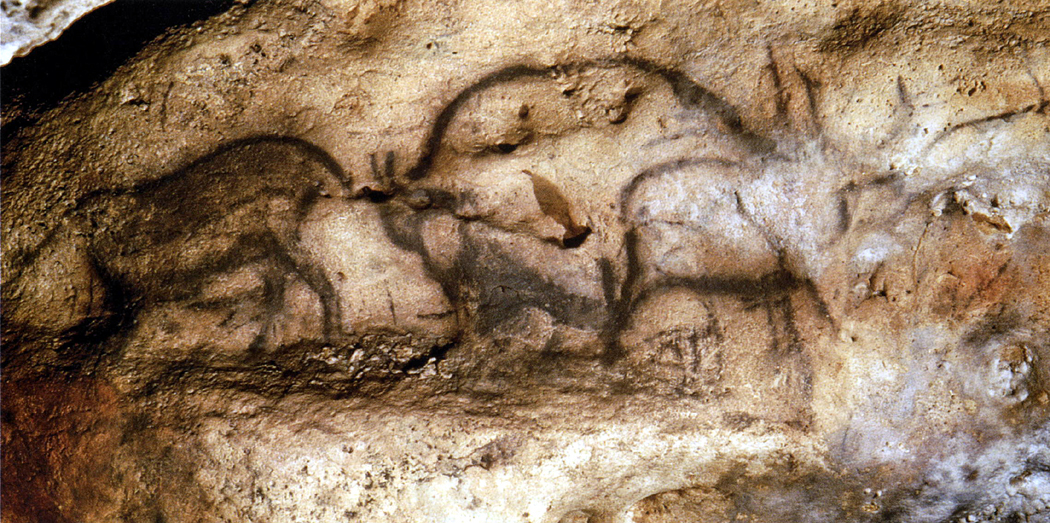
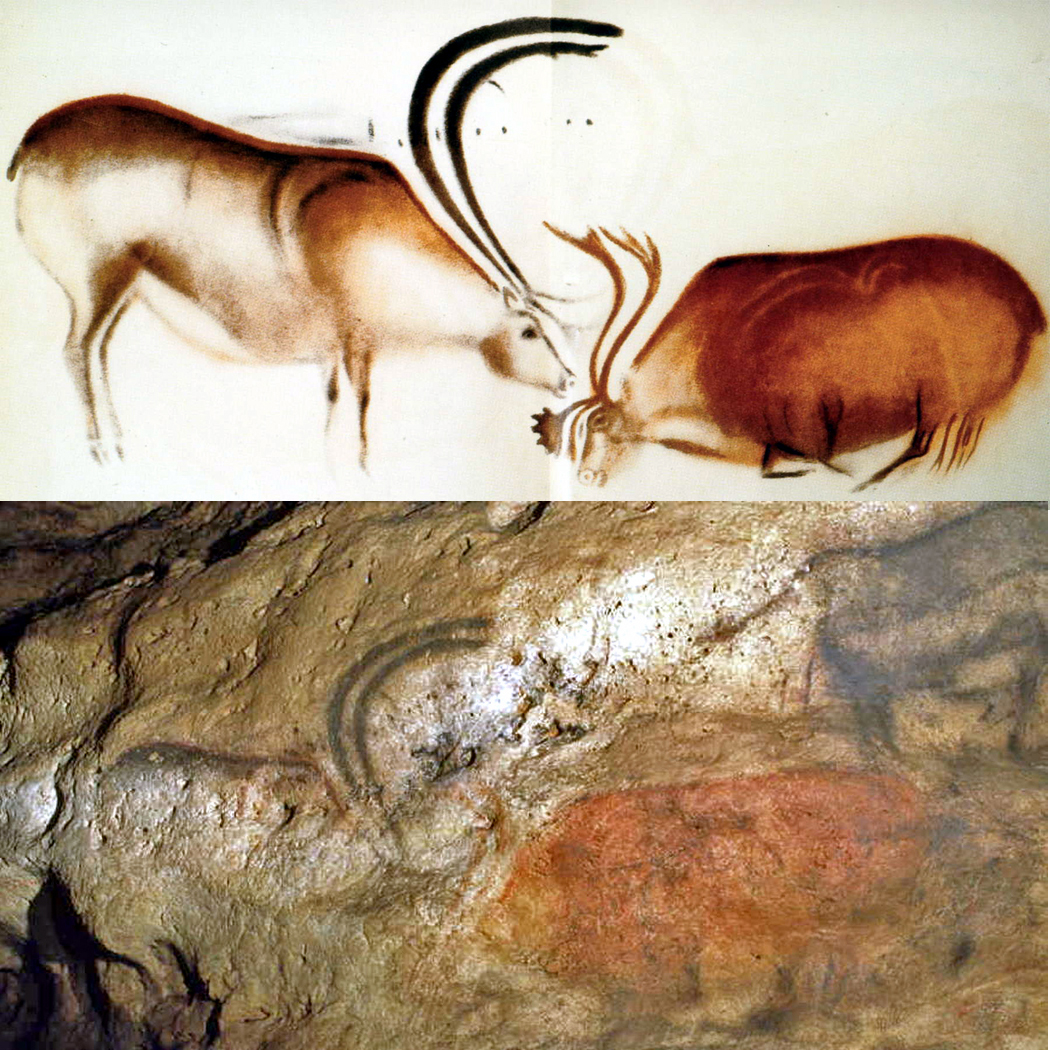
We moved down the corridor of the cave to another spot, where we saw a giant reindeer, maybe 4 feet long, with a great hoop of antlers curved in a giant C from his head and forward. The shoulders and antlers were the clearest to see, the head, partly painted and partly incised in the stone, was more difficult to make out, but when you did, you saw the reindeer was licking another animal standing in front of it: another reindeer, facing the opposite way, darker and more obscure.
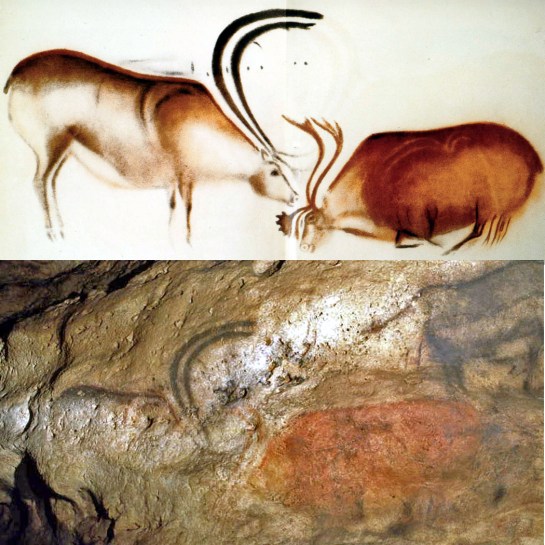
Comparing the "enhanced" reproduction with the actual drawing. More on this in Part 2

Comparing the “enhanced” reproduction with the actual drawing. More on this in Part 2

There were more bison and some horses, and what struck you, after realizing how faint some of the imagery was, was how beautifully they were drawn. It is the drawing, not the painting, that is the most notable.

The painting is really bichrome: There is black, mostly for outline, and there is a kind of white, faintly yellow, and there is the ocher mixture of the two, making the brown.

Why are these images here? Who made them? You cannot help but agonize over their meaning. Over the years, there have been many proposed explanations, but none of them really help.

Surely, you think, the paintings might have been the only part of some more elaborate installation that has otherwise long rotted away. We’ll never know.

Over dinner, Carole and I came up with a dozen stories.

I mentioned the football “Game Plan Theory,” with Xs and Os on the blackboard to teach the tactics of the game. Perhaps some ancient hunting teacher was showing the younger generation the ropes.

Or perhaps it was a school, says Carole. One bison, two bison, three bison, learning to count.

She also wondered if they might not have been painted not by adults, but by children, or a single child especially talented at art. And perhaps they are in the caves because that child kept them as his secret place, where he decorated his play fort walls with his drawings.

I said that we should not rule out the possibility that they were created not by men or boys, but by women. “It has to be possible,” I said. “Perhaps the cave was the place in which women were isolated for their menses. Many primitive societies do such things.”

“Then I would expect the animal paintings to be about mothers and calves, or animals giving birth,” she said.

The usual explanations about magic and shamans might be true, but I wondered if we don’t too often condescend to our ancient forebears.

“These were Cro-Magnons, which means they were modern humans in every anatomical aspect. They were exactly the same species as us, with exactly the same brainpower. The only difference between then and now is cultural: We have built on the culture we inherited, as our grandfathers built on the culture they inherited, from the pickax to the digital watch.

“Perhaps we should ask what would we have made these paintings for. Maybe the answer isn’t some tribal woo-woo, heebie-jeebies, but something as practical or as quotidian as our own lives.”

I wasn’t sure what that would be: Certainly these cave paintings were not made as art galleries. Seeing them is a pain in the ass, and there is no track lighting, to say nothing of the lack of white wine and cheese.

It used to be thought that the paintings were hunting magic, capturing the image of the animal to be hunted, to make it easier to capture the meat on the hoof. But recent studies of the caves make it clear that the animals in the paintings were not prey animals. The cavemen did not eat bison or lions or bears.font de gaume single bison
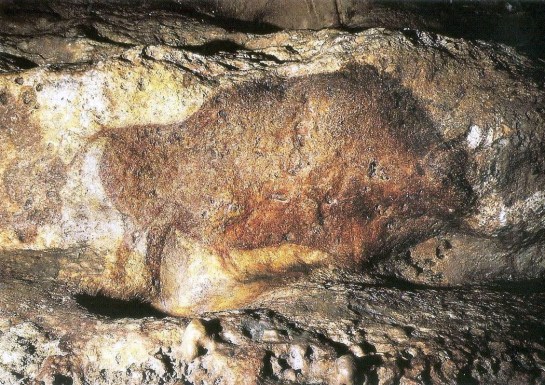
The second theory is that they were “animal masters,” that is, the animals of cult worship, and the painting of them was a magical means to capture their power, their emotional power.

My own best guess is that they might have been images for meditation, something to concentrate on to bring the observer into an altered state of consciousness. Certainly, many of the drawings — at least elsewhere in the world — contain odd hallucinogenic dots, crosses and spiral patterns, the same imagery that modern drug-religion ceremonies induce and that can be seen in Huichol paintings.

The thing is, we’ll never really know. Almost certainly, vital evidence has disappeared over time, rotted into oblivion: The paintings are denuded of their context and we have nothing to go on but the measly remains, not even so much evidence as dinosaur bones.

We discussed this all over a great dinner at our hotel: We began with a salade de perigourdaise, which was lettuce, foie gras on toast, and lots of duck innards skizzied up and hot. It was surprisingly delicious and very meaty. Carole picked at the lettuce, but couldn’t bring herself to eat duck parts she couldn’t recognize: gizzards, livers — for all we knew duck tongues and spleens.

The main courses were better accepted by a wider population of the Nilsen household. Carole had a faux filet — a beefsteak — bien cuit, thank you very much, and some sliced, fried potatoes. I had a magret de canard with the same potatoes. My duck was really great.

“Duck, the OTHER red meat,” I said.

I saw no ducks on the cave walls. Surely they enjoyed ducks as much as I do.
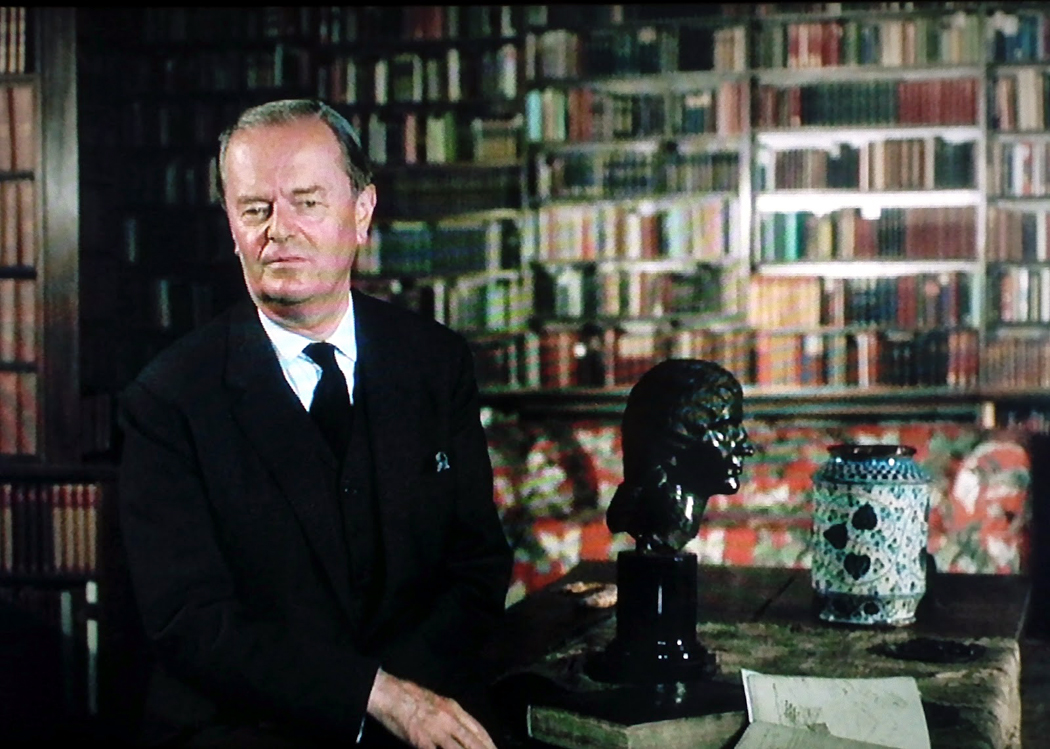
W. Eugene Smith

W. Eugene Smith

Sometimes, failure is the greatest success.

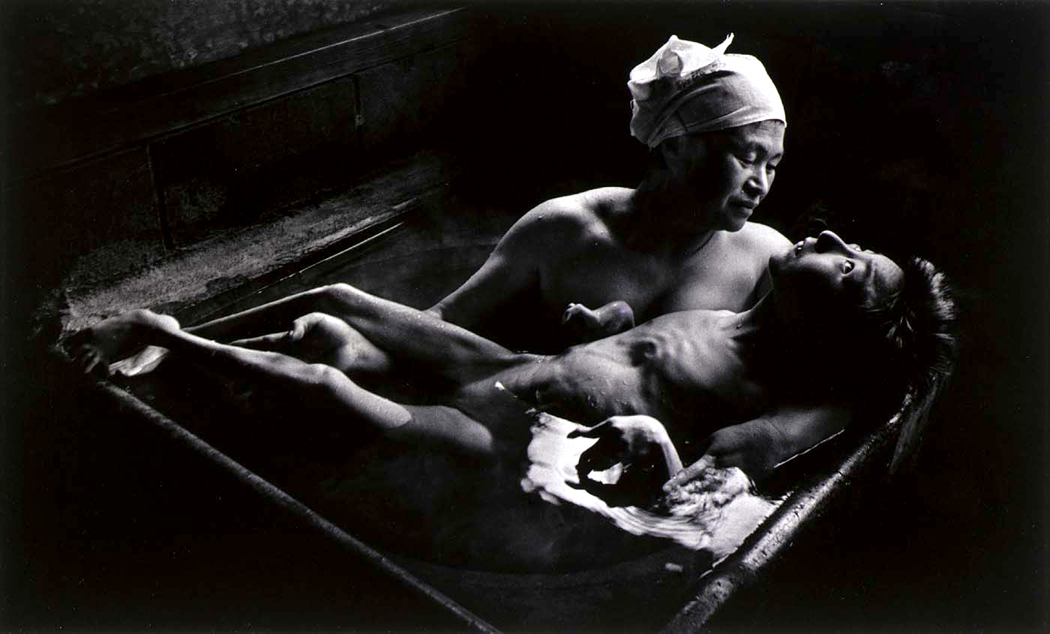
That is the key to the secular sainthood of photojournalist W. Eugene Smith. He aspired to such purity of esthetic and moral vision, that, in a way, if he had succeeded, it would only have proved to himself that his sights had been set too low.

Smith is the patron saint of photojournalists. During his stint as a Life magazine photographer in the 1940s and ’50s, his picture essays — of World War II, an American country doctor, a nurse midwife and a Spanish village, among others — made his reputation as not only a fine journalist but also a photographic stylist. A Gene Smith photograph had a look all its own. schweitzer in pith helmet

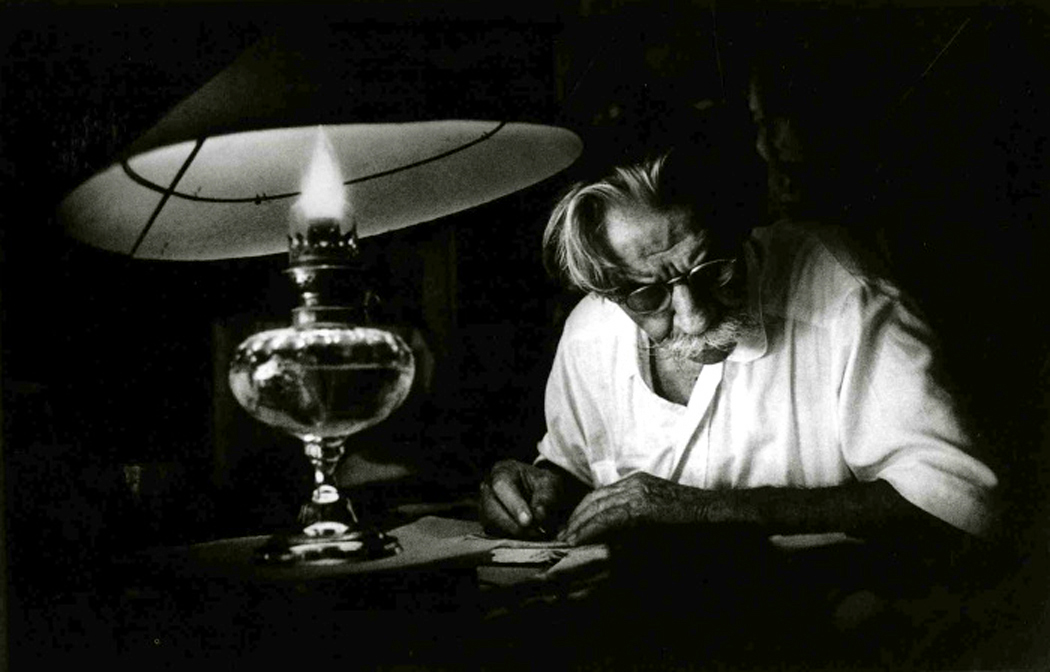
Smith’s reputation as saint began in 1954, when he quit Life after a dispute over the editorial layout for a story he did on Dr. Albert Schweitzer. Smith had photographed Schweitzer in the context of his hospital at Lambarene in what was then French Equatorial Africa and concentrated on the difficulties of providing health care in the Third World. Life’s editors trimmed the essay back and made Schweitzer into a one-dimensional white hero among the natives.

From Smith’s point of view, it would be as if the editors had taken an essay of emotional depth and turned it into an Entertainment Tonight sound bite.

It wasn’t the first time Smith had fought with his editors (in fact, he had quit the magazine once before), but the Schweitzer imbroglio caused him to leave the magazine permanently. Depending on whether you were a photographer or an editor, Smith’s single-minded insistence on the integrity of his work made him a saint or a crybaby prima donna.

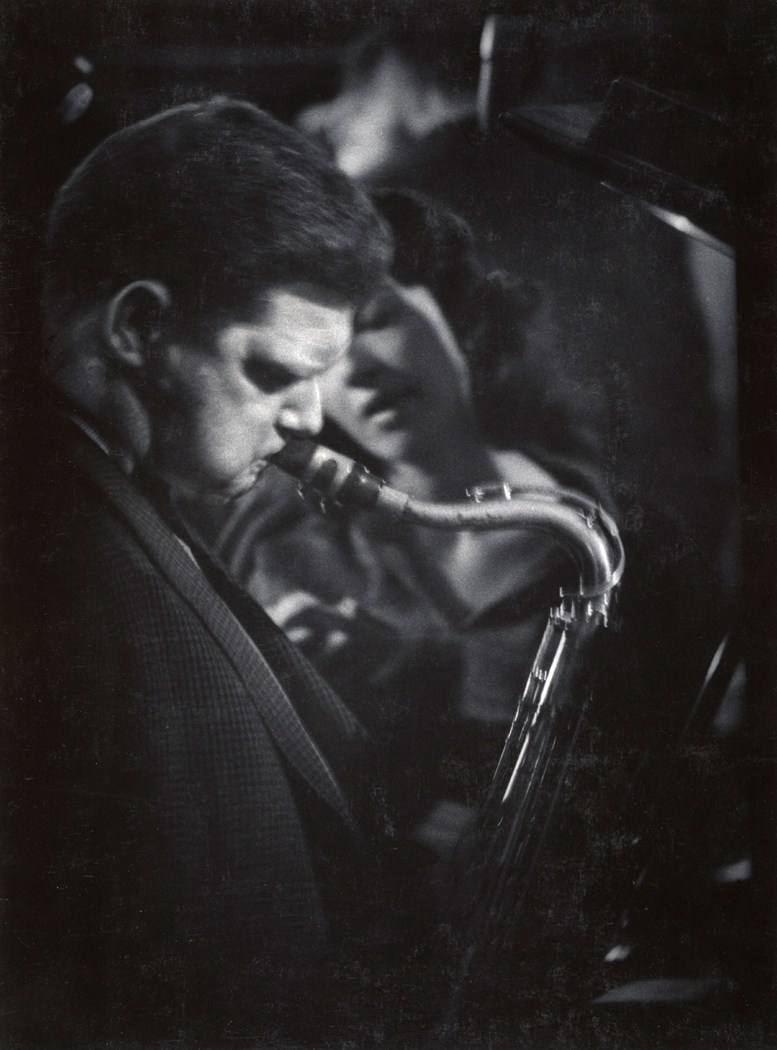
Zoot Sims

Zoot Sims

Time has come down on Smith’s side. No one remembers the editors’ names now.

(Smith couldn’t stand even to edit himself. When he gave his archives to the Center for Creative Photography in Tucson, Ariz., before his death in 1978, the negatives, prints, letters and notes weighed 22 tons. He could never bring himself to throw anything away — included in the archives is laundry.)

There are other great photojournalists, but there is no one like Smith.

His images from World War II were so uncompromising, half the pictures he made were censored by the government as too grisly and not heroic enough for public consumption.

“I would that my photographs might be, not the coverage of a news event, but an indictment of war,” he wrote, “the brutal corrupting viciousness of its doing to the minds and bodies of men.”

But what distinguishes his work is quite apart from journalism. Now that we have the perspective of time, we can see that Smith wasn’t really a journalist at all; he was an artist. His success is not that of showing us events, but of showing us his own mental and emotional insides. They were not bright and happy insides. schweitzer with lamp

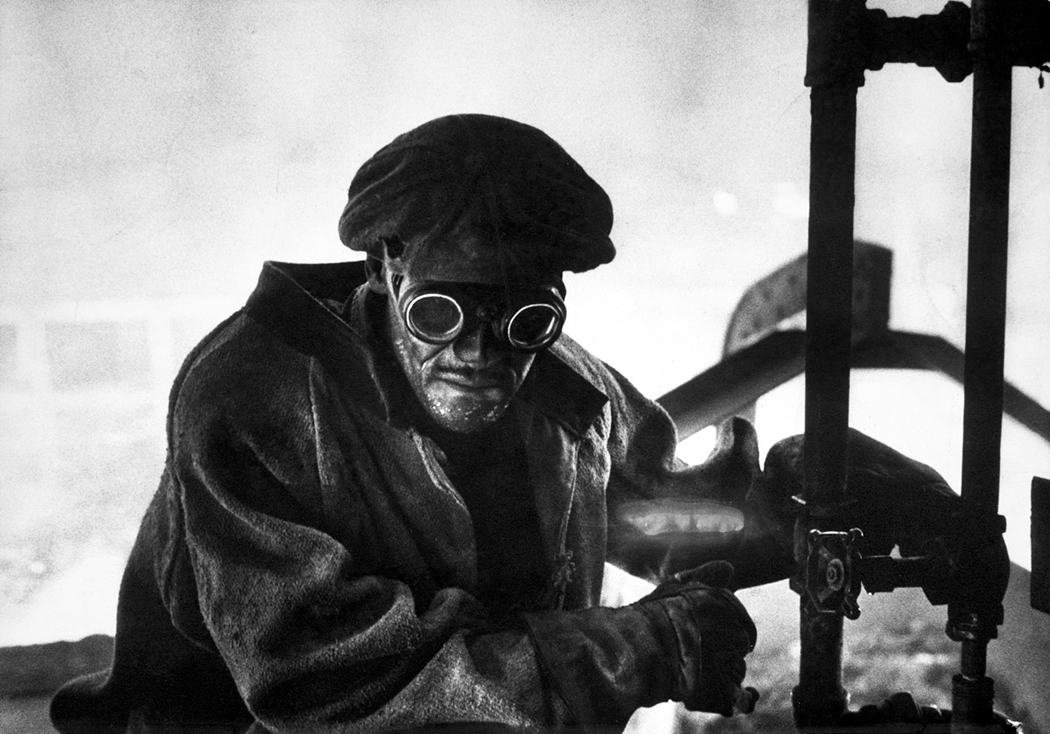
The first thing you notice about the mass of Smith’s work is its darkness. Almost all the photographs are predominantly black. The standard Smith photograph shows a working face lighted in the darkness.

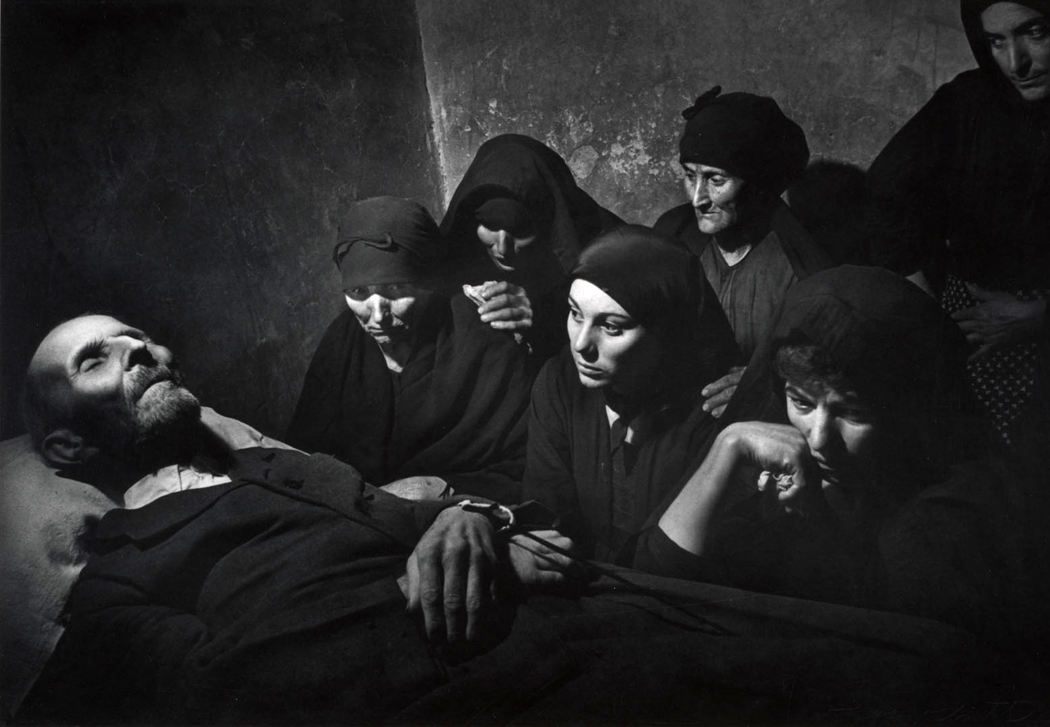
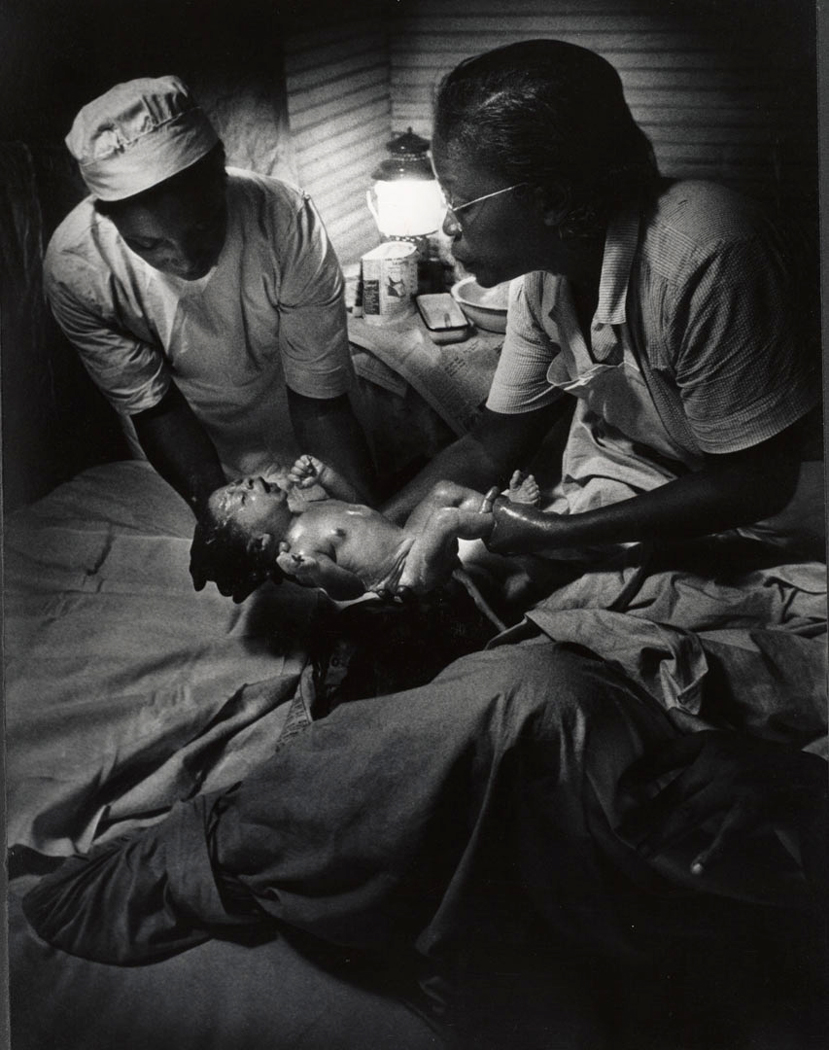
The darkness is universal and threatening, and against it, Smith pits his hero, always a working man. It matters not what else the man may be, Smith pictures him at work and at work with an intensity that shows the hero’s effort alone holding back the perimeters of darkness, whether he is a surgeon saving a baby or a mourner at work watching a corpse. country doctor

The blacks and whites of the photos take on symbolic meaning.

Smith’s world was one of alienation, darkness, maimed and diseased people, back-busting labor, sweat, hardship and fear — but against it Smith put heroism of the common man trying to make a difference. Volare Digital Capture

For Smith, every man was a working man, and the working man became Everyman. Smith could give a symphony musician a blue collar. In one photo, soloist Gregor Piatagorsky takes a drag on a cigarette and looks like Edward R. Murrow holding a cello. In another, Igor Stravinsky in short sleeves and pullover works out a point of interpretation with a violinist. This preoccupation with labor may reflect the influence of the WPA photographers of the Depression.

There are machines, tools and human flesh, often mangled by disease or accident. His subjects are constantly ”fronting the essential facts of life,” as Thoreau put it. Never are any of the people in a Smith photograph relaxed. They are always in rapt contemplation or action. Intensity beams from their faces — the kind of blade-edged intensity most people feel uncomfortable with and cannot live with. It is a grim but heroic world.

One wonders how Smith ever survived at Life, with its celebration of middle-class optimism. Smith’s mythology is more Nordic. One is sure the darkness eventually will win.

People are apt to be alone in his photos. When they are not alone, they don’t interact with each other, instead staring in different directions. And when they do interact, they do not do so with each other, but through a common task, a dying patient, a dead relative. The task is the unifying element of Smith’s world. spanish funeral

One is struck by the extent to which Smith’s own neuroses and anxieties turned the world into darkness. Smith was a great artist, not merely a photojournalist, because of the myth he made of the world. In the guise of presenting fact, he presented a version of truth.

Smith had a powerful if idiosyncratic style. He was not a stylish photographer in the ordinary sense — there is little that is self-consciously visual or artistic in Smith. Irving Penn and Richard Avedon are stylish photographers. Smith was interested in truth, not style.

Yet his design is striking, beautiful, considering how uninvolved Smith was in making things look good.

walk to paradise gardenThe “truth” was his passion, a truth he never understood as subjective. Like a good Calvinist, he was utterly convinced that his vision presented the world as it is. And it is that unwavering belief that makes his photos so compelling. They convince us that Smith’s personal vision was, and is, the truth.

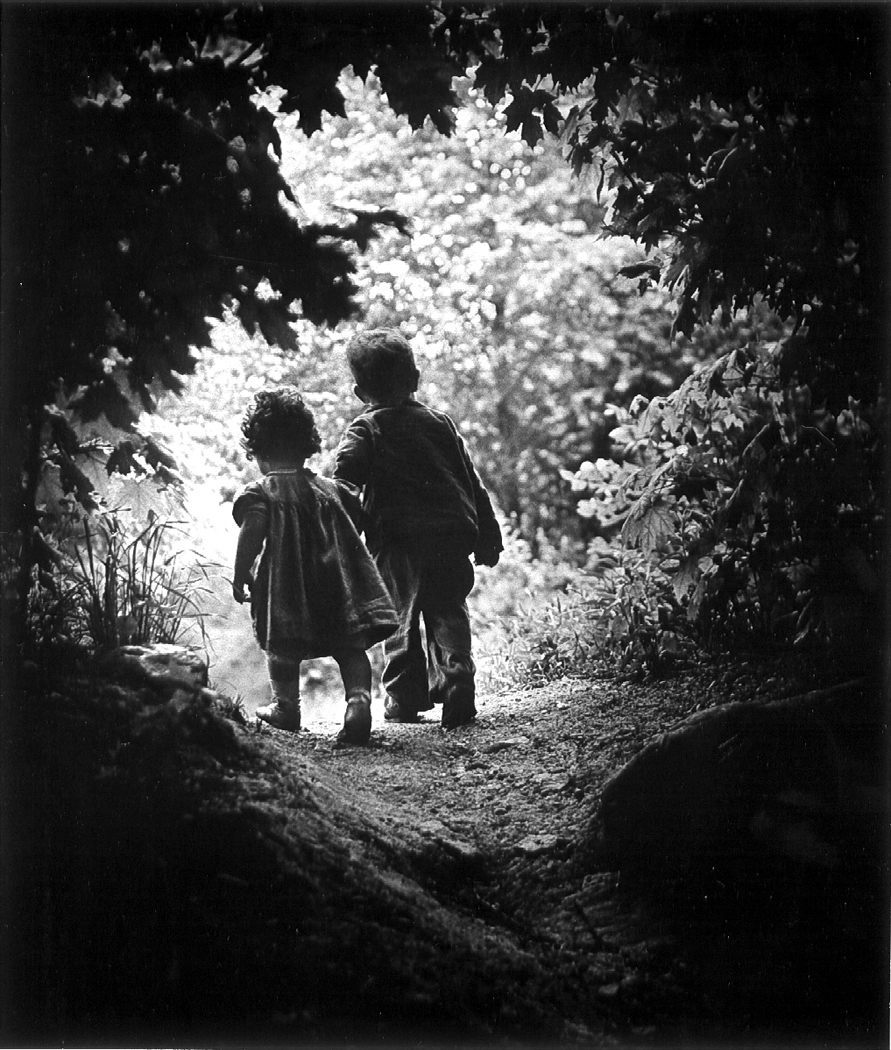
There is no humor in Smith; saints rarely crack jokes. No wit, no irony. He believed in the world he created. He could not have irony about that. That is why when he tried to create a purposely optimistic photo, as in Walking to Paradise Garden, a picture of his two children walking into the light of a break in the woods, the result was mawkish and sentimental.

Smith’s strengths are not found in such uncharacteristic photographs. Smith’s strengths are found in his illumination of darkness.

The darkness is all enveloping and irreducible. It is no surprise then, that he saw his work rather like that of Sisyphus, doomed to failure.

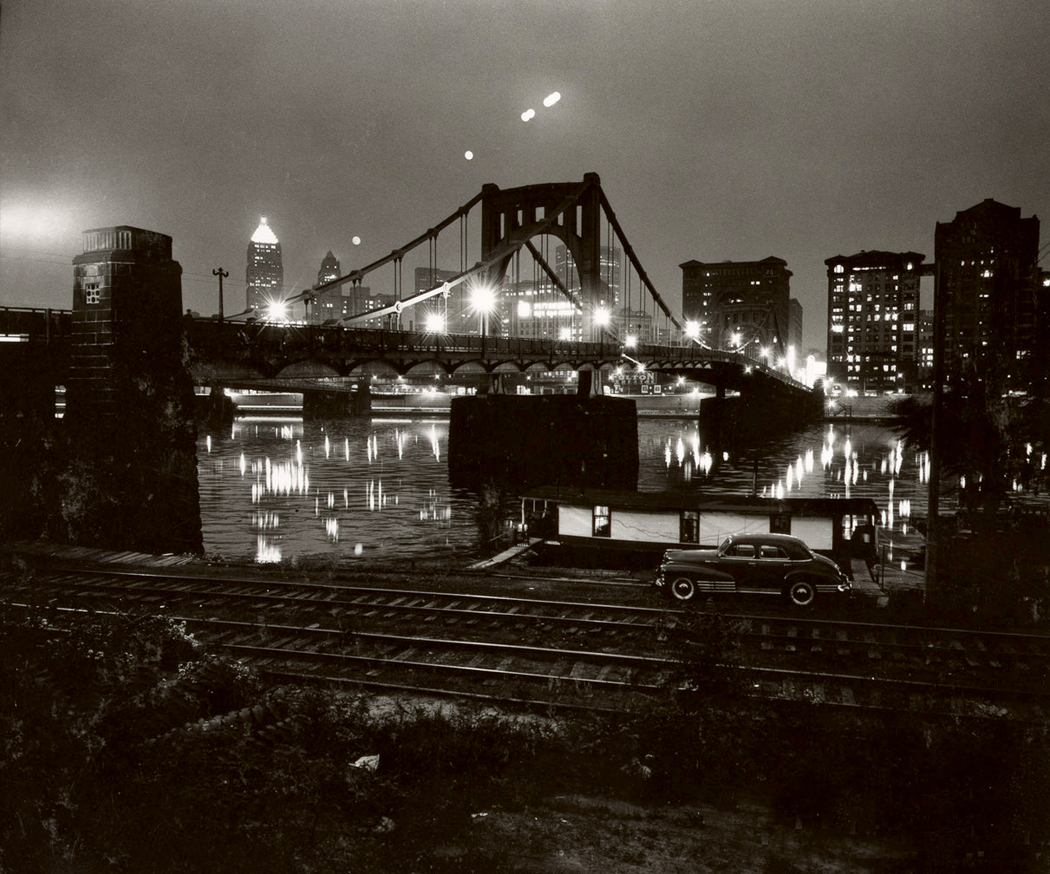
Therefore, his greatest failure is also his greatest success: The images he made as a “portrait” of Pittsburgh in 1955-57. The photographs make a kind of composite picture of place, an attempt to present the complexities and contradictions of the Iron City, leaving nothing out.steel worker flaming coke

The series has seldom been shown separately as a group since Smith threw his hands up on the project 55 years ago, having failed to finish it to his strict satisfaction.

The story of the Pittsburgh failure — and its ultimate success — parallels almost everything in Smith’s life.

He was nearly killed on Okinawa in 1945 when a shell tore through his skull. It took two years of rehabilitation and plastic surgery before he could resume his existence.nurse midwife

Then, he produced some of the signature photo-essays in Life, including stories on Schweitzer, a country doctor, a black midwife and a Spanish village under the Franco regime.

But each photo essay was a failure in Smith’s mind, because photo-editors altered his conception of the pictures.

No doubt, Smith was a difficult man to work with, and no doubt, he was his own worst enemy. He knew no motivation except truthtelling — and that meant the truth as he knew it, told the way he envisioned it being told.

“I cannot accept many of the conditions common within journalism without tremendous self-dishonesty and without it being a grave breach of the responsibilities, the moral obligations within journalism, as I have determined them for myself,” he wrote about his Life magazine resignation.

Yet, he needed to work. He had a wife and family to support. Even so, the inner demons refused to let him take a simple assignment and complete it simply. He was incapable of being a hack.pittsburgh at night

In 1955, he was hired to illustrate a book about Pittsburgh’s bicentennial. He was supposed to provide the 50 or so pictures that would accompany the text. It was an assignment that should have lasted less than two weeks. He wound up working more than three years and taking something like 17,000 negatives.

No wonder, when he taught a course at the New School for Social Research in New York, it was called “Photography Made Difficult.”

His marriage did not survive his obsessive drive to tell truth.

The Pittsburgh photographs are the perfect introduction to Smith’s work. Instead of objective reportage, they are profoundly metaphorical. Smith felt the world a dark, cold, even malevolent place, softened only briefly and minutely by the warmth and light of human love and caring.Tamoko

The pictures obsessively show a small point of light in a dark, obscure background. Whether it is the brilliantly lit face of an millworker in a black universe, or the small touch of a bride’s hands spot-lit in a dark room, they pound home Smith’s personal world view.steel worker

When he died, in Tucson, in 1978, he was the closest thing photojournalists had to a saint, and his work is a constant reminder of what the highest goals of the profession should be.

He may have been a pain in the ass to work with, but he created a deeply moving body of work, one it is nearly impossible to be indifferent to.

turn here 1

A reader once asked me what I thought were the major turning points of art – by which he meant the Euro-American tradition in art from the Renaissance to the 20th century. Of course, he had his own list already prepared to share with me. On it were 20 items. He wanted to know what would be on my list. He had the enthusiasm of a puppy dog, and it would have felt churlish to refuse him.

Making it a list of 20 is, of course, arbitrary: There are hundreds, maybe thousands of “turning points” in art history.

Also, we must confess this is a parochial list, when you have the rest of the world and antiquity — to say nothing of prehistory — to consider. But that bobsled ride from the Renaissance to Postmodernism can be seen as a single unit, and that is what my reader wanted me to consider.

Off the top of my head, then, are the 20 most pivotal pieces of art, each of which could be a chapter heading in an art history text.

Admittedly, they function as epitomes. It is rare a single piece of art can change the course of art history; instead, they are stand-ins for whole movements in art, entire changes of esthetic outlook and purpose that propel the eras they helped codify or inaugurate.

But even given my guidelines, I had to start a bit earlier, because the reawakening of Europe after the Dark Ages doesn’t happen in Renaissance Italy, but in Gothic northern Europe.

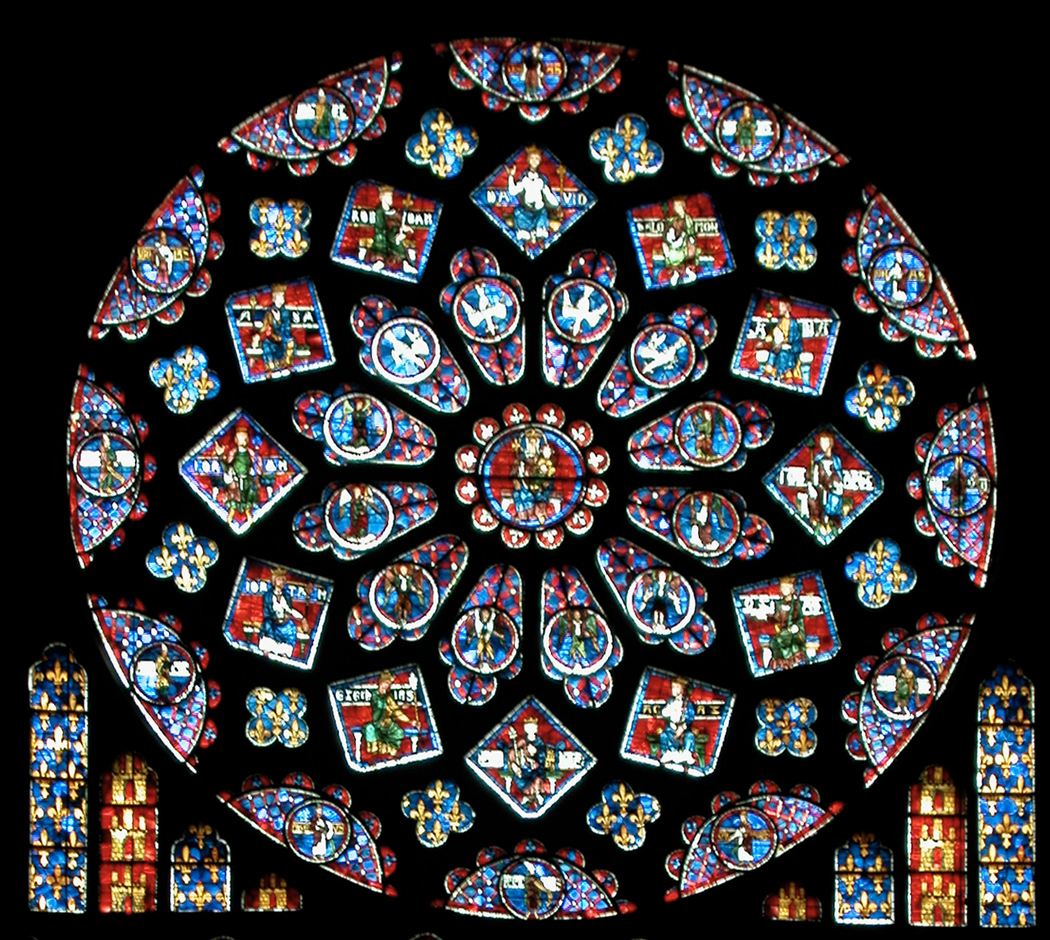
Chartres north rose window

My list begins with the north rose window at Chartres – the single most beautiful thing I’ve ever seen from the hand of humankind. Actually, the list should begin with the basilica of St. Denis in Paris, the first truly Gothic church, and the inspired conception of Abbot Suger, one of the most important clerics of the 11th century. His Neoplatonist idea was that God was light and that a church, to capture the spirit of divinity, must be opened up with windows and color. The engineering was a breakthrough: He realized that you don’t need walls – the heavy stone walls of the Romanesque – to hold up a roof, but you could put the roof on pillars and fill in the space between the pillars with curtains of colored glass. It was a huge step forward esthetically and technologically. But St. Denis was a first draft: It is in Chartres that the ideal finds its apotheosis.

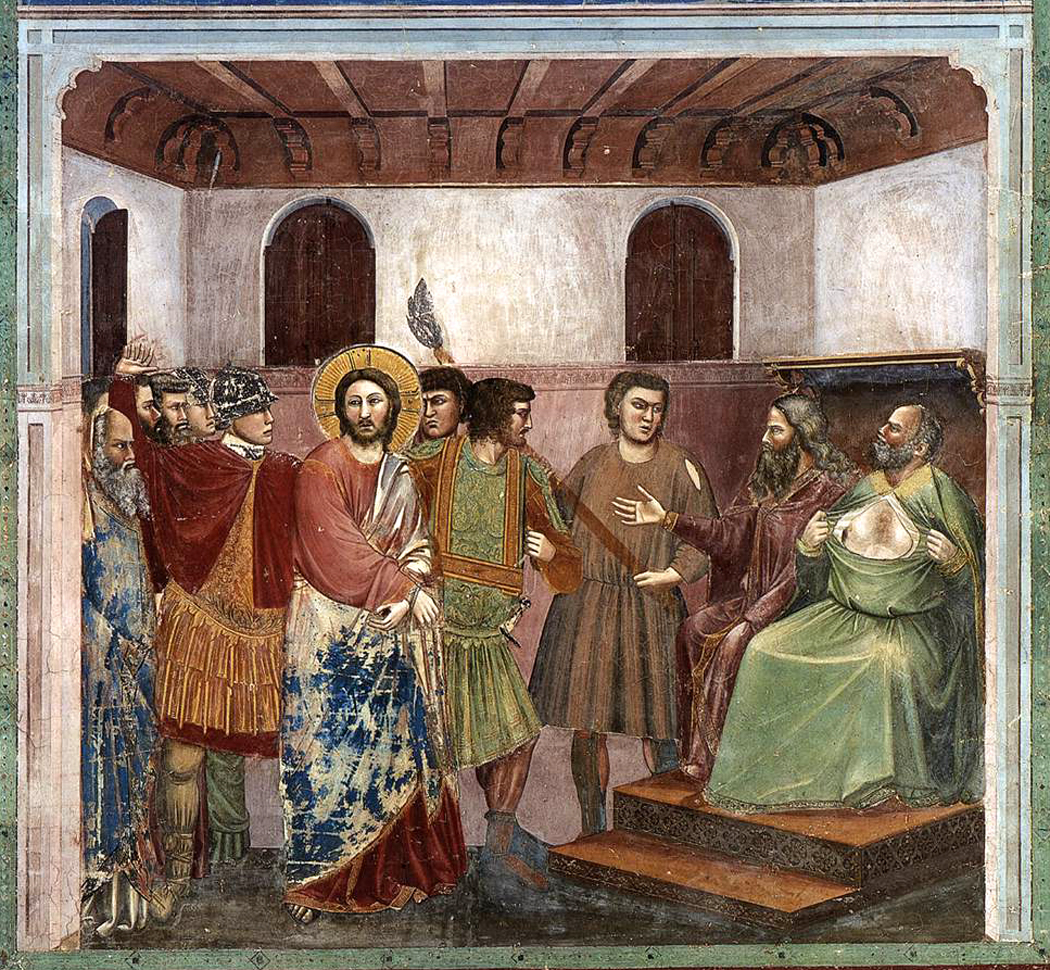
Giotto

Second, Giotto’s interior frescoes for the Arena Chapel in Padua, for waking up to the idea that painting not only could, but should try to capture something of the feel of reality.

Masaccio trinità

Third, the Trinity of Masaccio at the Sta. Maria Novella in Florence. It’s impossible to choose the single image that represents the triumph of Renaissance perspective over the Gothic style, but Masaccio is as good a choice as anyone.

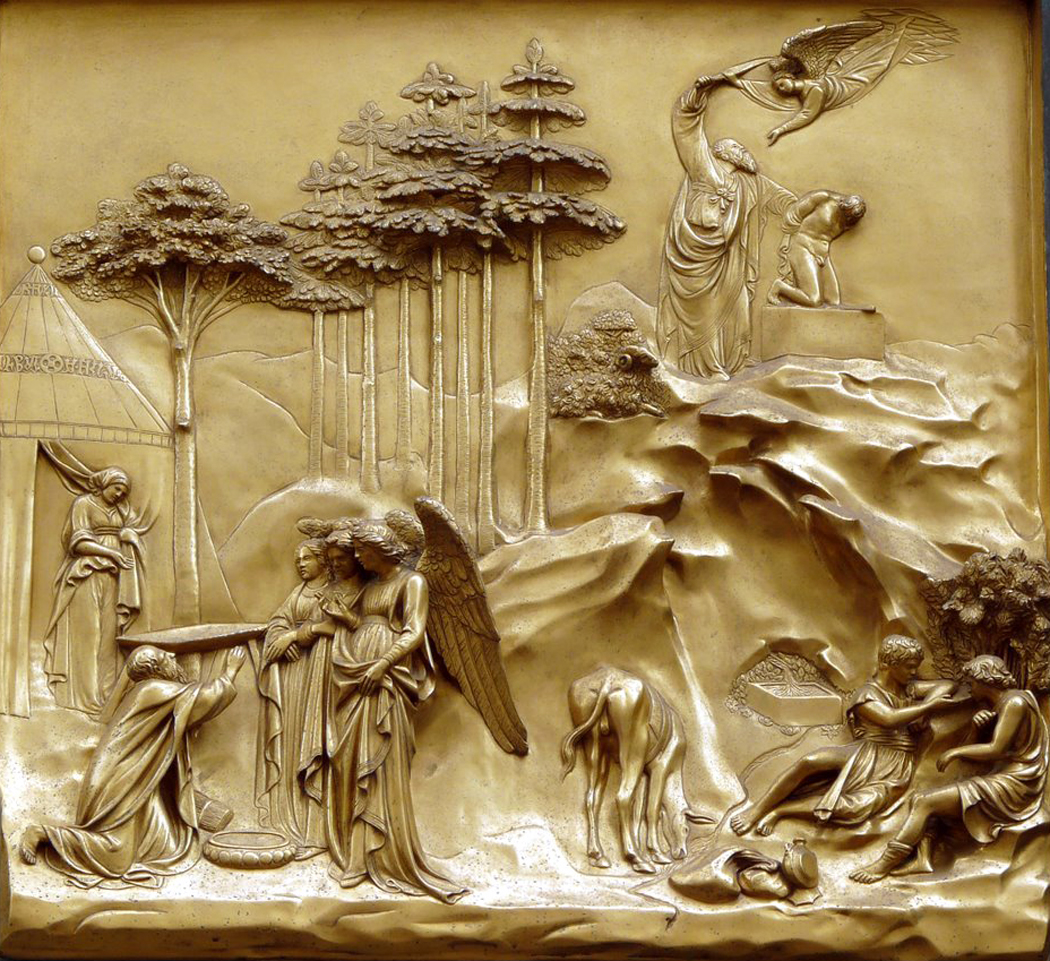
ghiberti abraham 2

Fourth: The bronze doors of Ghiberti to the Baptistry in Florence, an astonishing display of inventiveness and naturalistic imagery.

three davids

Fifth: The David of Donatello, and the final destruction of the Gothic schema in Western art.

Sixth: The David of Michelangelo Buonarroti, and

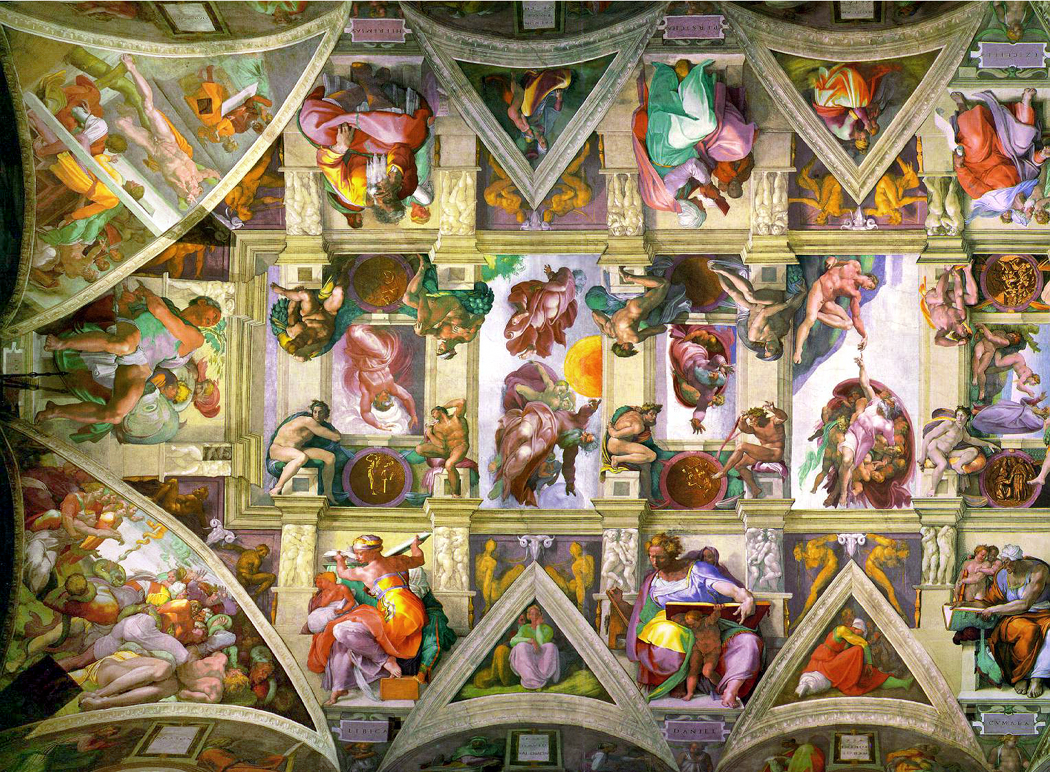
Sistine ceiling detail

Seven: The Sistine ceiling. No artist so defined his age and the two hundred years after him more than Michelangelo, the single most influential artist in history.

caravaggio

Eight: Caravaggio: The Calling of St. Matthew, although most of the crazy guy’s central paintings would do: The Invention of the Baroque. “Energy is eternal delight,” as Blake says.

Nine: The David (above) of Gianlorenzo Bernini (although I actually prefer the Apollo and Daphne), and the perfection of the Baroque, and the most proficiently perfect sculptor in history. I choose the David only for the symmetry with Donatello and Michelangelo. Look at the three Davids together and see the direction of the 15th and 16th centuries.

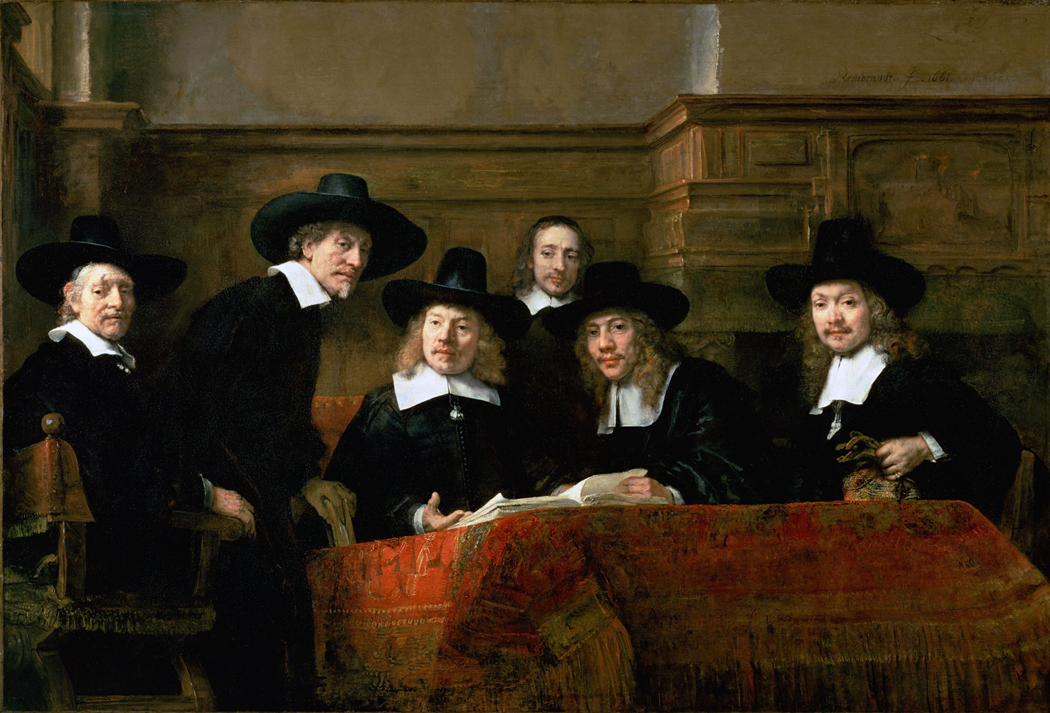
rembrandt

10: Rembrandt Portrait of the Syndics of the Cloth-maker’s Guild, (chosen over the more flamboyant Night Watch) to show how the psychological acumen of the Dutchman could bring life to an otherwise utterly conventional group portrait. This sense of psychology, that there is a real person behind the eyes, is what Rembrandt brought to painting, as Shakespeare brought it to the stage.

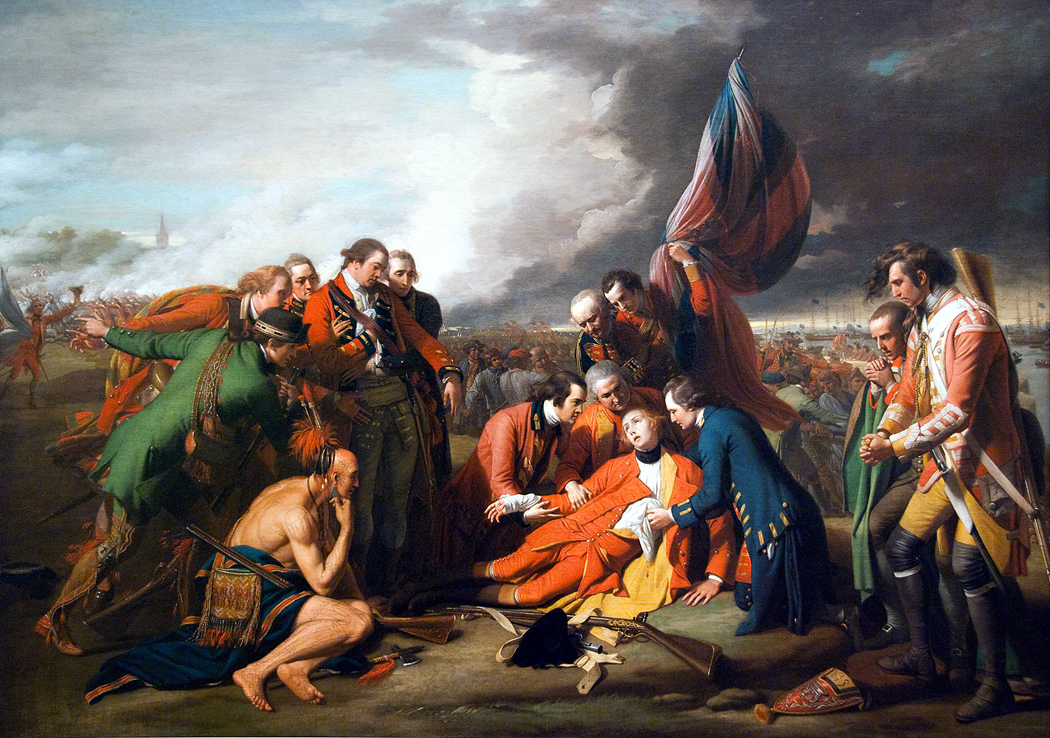
benjamin west

11: The Death of General Wolfe by Benjamin West, which manages to turn the conventions of the mythological painting onto not merely the historical event, but the current event. In a way, each of these choices is a step on a road from stylization and convention to a more aware and awake attempt to engage with the experience of being alive, with what we might call a more “real” vision of the world.

delacroix

12: Liberty on the Barricades by Eugene Delacroix, although you could also use Greece Expiring on the Ruins of Missolonghi, as the symbolic use of politics and the rise of the democratic spirit in the world.

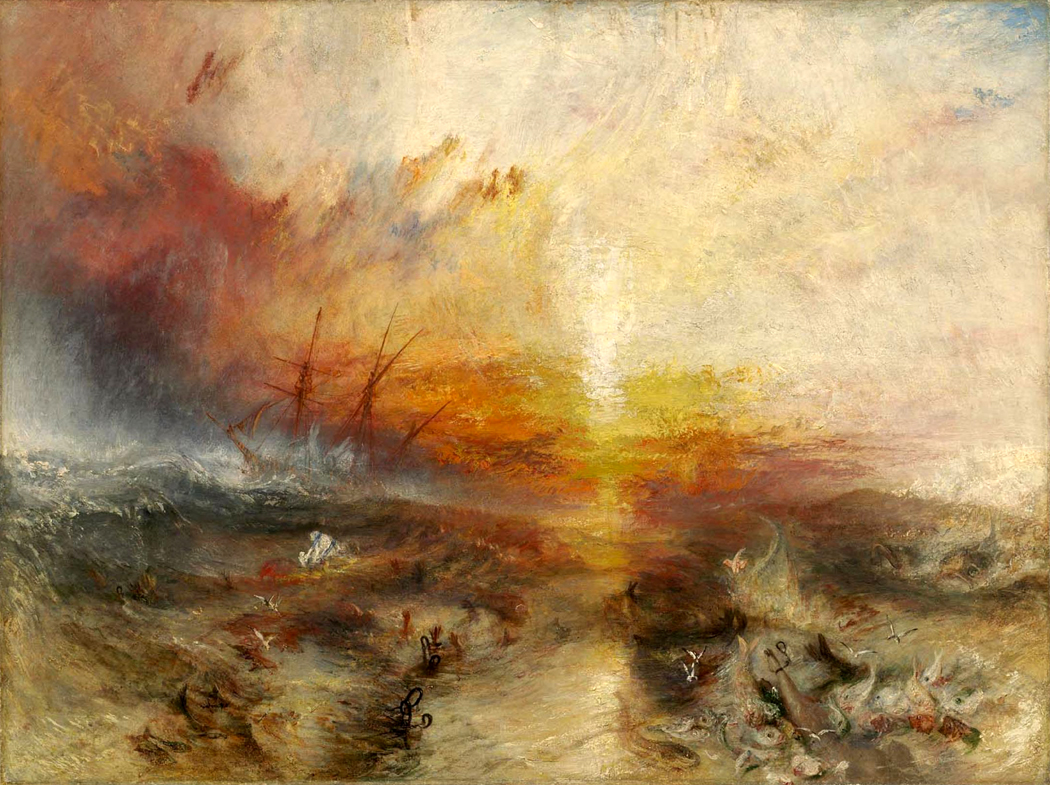
Turner

13. Joseph Mallord William Turner’s The Slave Ship as another political comment, but more important as the first glimmerings of a kind of Impressionism in paint, and the turning point where what we now call Modernism has not its birth, but at least its conception.

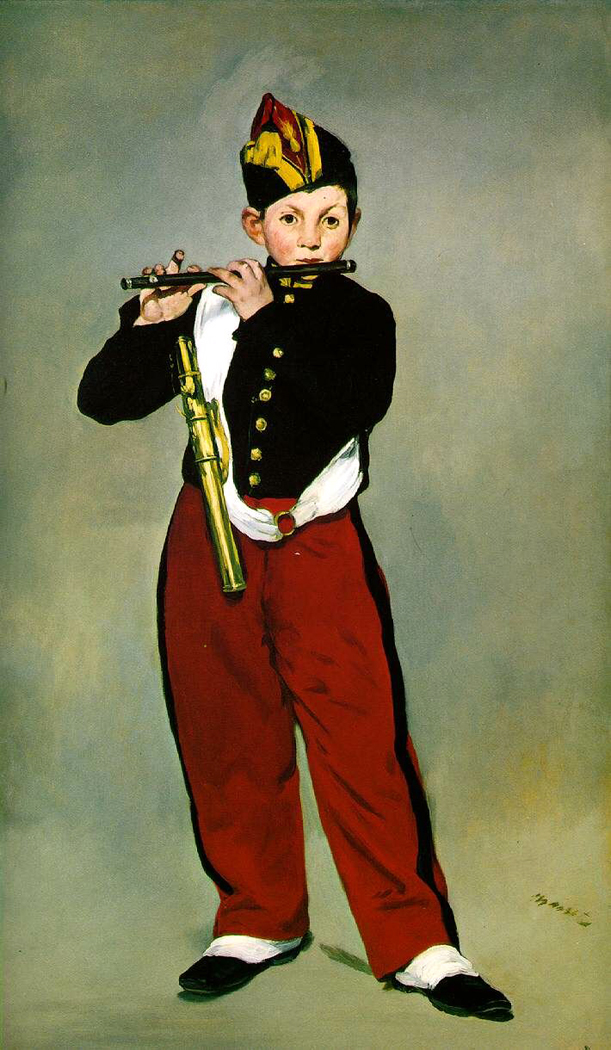
Manet

14. Edouard Manet, The Fife Player, as the birth of that Modernism, flat, ironic, oblique.

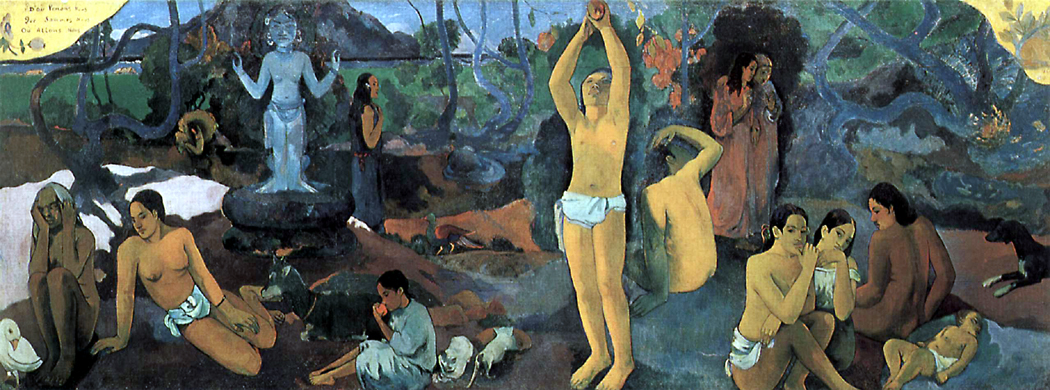
Gauguin

15. Paul Gauguin, Where Do We Come From? What Are We? Where Are We Going? and the continuing flattening of picture space, at the same time as opening up to non-Western pictorial influences — to say nothing of questioning the values of European civilization, and it’s about time.

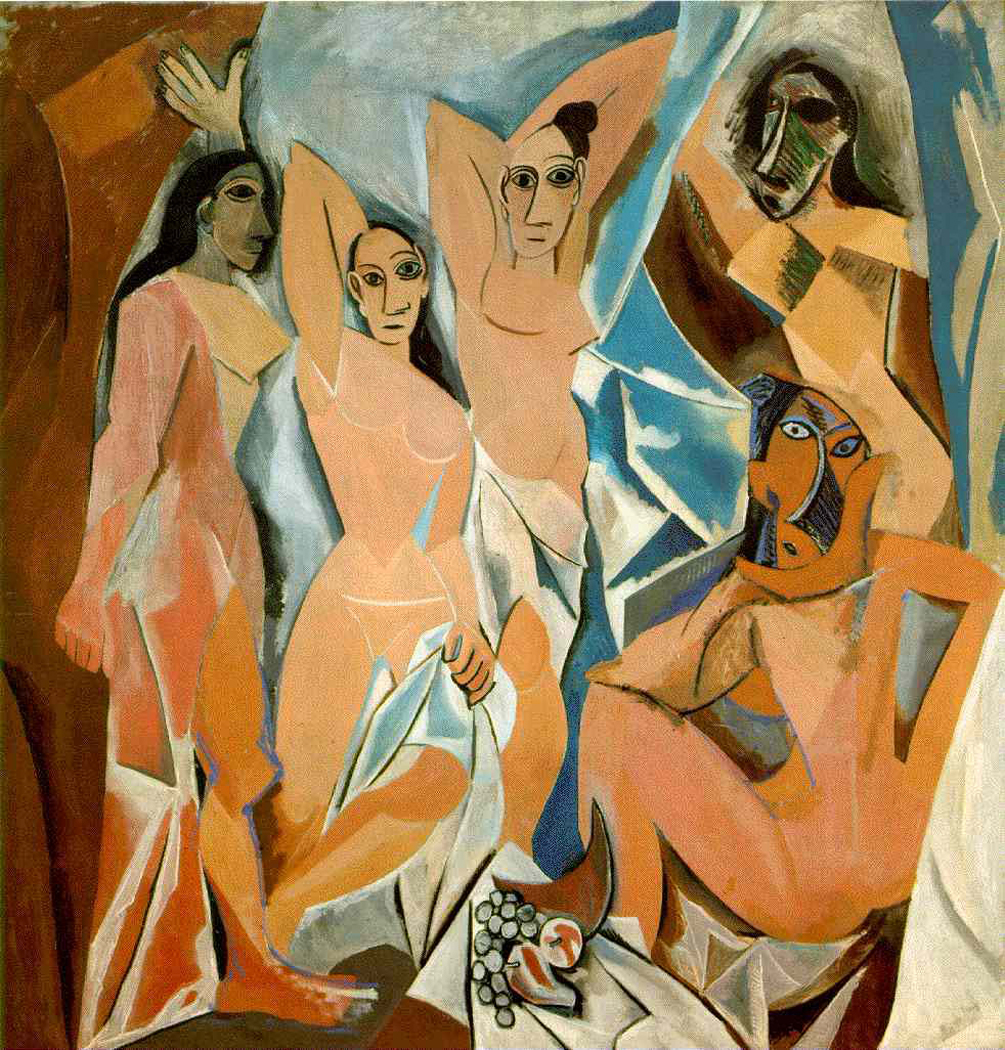
picasso demoiselles

16. Pablo Picasso, Demoiselles d’Avignon as the source of Cubism, and the sense that the picture is a canvas and not a window. It was the single most revolutionary painting of the 20th century, although in retrospect, not Picasso’s best.

duchamp

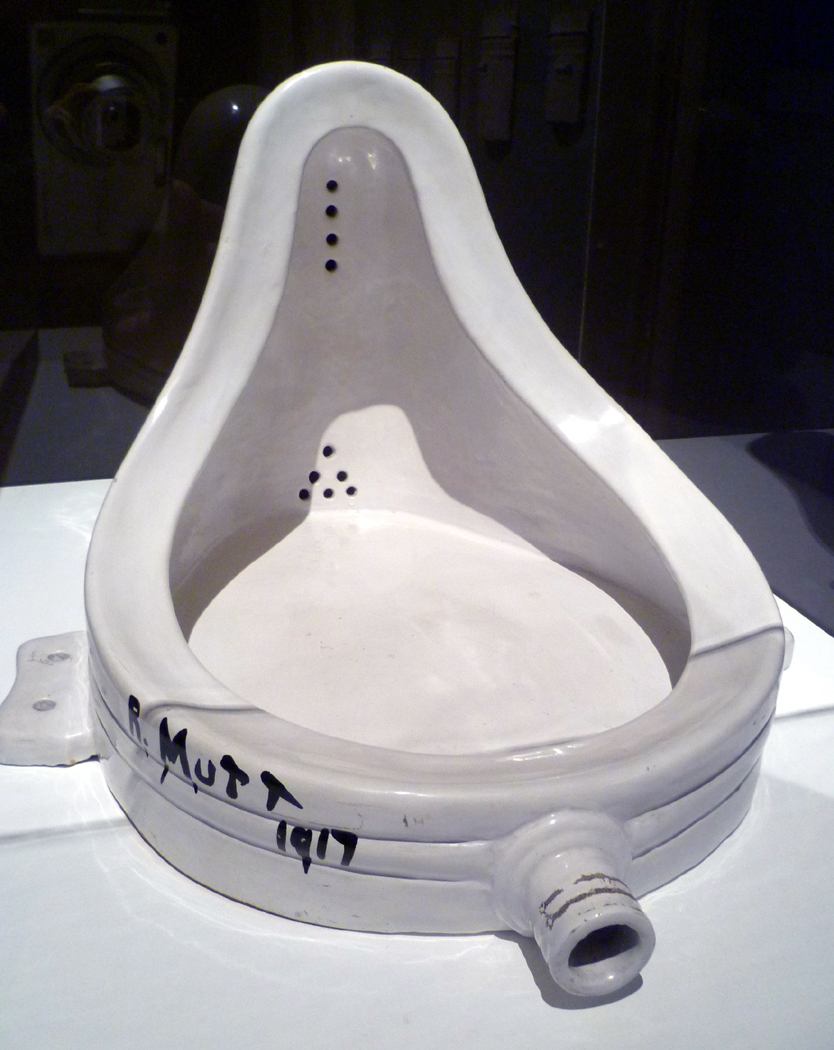
17. Fountain by Marcel Duchamp – the “found object” urinal – and the single most influential sculpture of the 20th century, and an influence that is still oppressive today. Now, everyone thinks he’s Duchamp.

40-12-17/35

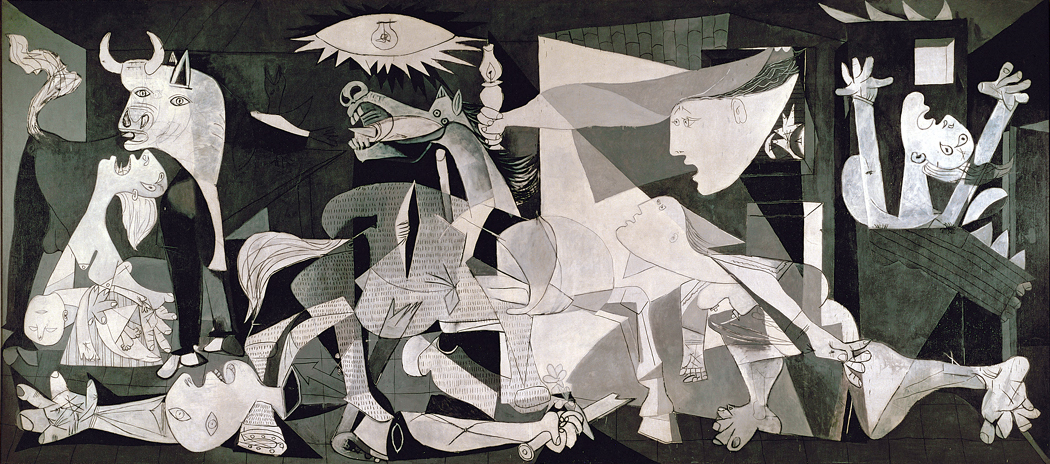
18. I would also include Picasso’s Guernica in this list, as his most ambitious work and the single most powerful image of the 20th century. I grew up with this mural size scream, when it was at MOMA in New York and I was a kid. It is the perfect meld of technique, imagery, symbol and “message.”

warhol soup can multiples

19. Andy Warhol’s Campbell Soup Can and the rise of Pop. Warhol is the most serious postwar American artist, despite his public antics. Art is about the world we live in; Warhol reminds us that the world we currently inhabit is the one of commercial signage and media imagery.

beuys

20. Finally, Joseph Beuys How to Explain Pictures to a Dead Hare, or any of a dozen other Beuys pieces, angry yet detached, symbolic yet utterly there physically as a presence. The most influential European artist of the postwar years.

This list is, of course, just off the top of my head. I’m sure if I gave it deeper thought, I’d switch out some of these choices. But this is a good enough start.

I’m sure you can think of things I’ve missed.

olana

Everyone likes a home with a view. If you are rich enough, you can afford to buy such a property, and if you are an artist, you can design such a house.

Frederic Edwin Church was both of these things, and the estate he created, Olana, is now a state park near Hudson, N.Y., where it sits on the top of a hill overlooking the Hudson River and the Catskill Mountains. catskills from olana

Church worked obsessively on the house and grounds from 1860 until age and arthritis forced him to give management of the estate to his son in 1891. Always, Church’s goal was to create natural landscape views from every turn of road on the 250-acre estate and from every window in the house. And he knew something about landscape views.

Church was one of the most famous of American painters of the previous century. His work commanded the highest prices of any American art when it was new, and inexpensive prints made from them were sold by the thousands to his middle-class audience.

Niagara Falls

Niagara Falls

He found in the New World apt subject matter: the American landscape, from Niagara Falls to the volcanoes of South America. The land he painted was vast, romantic and sublime. It told of a new Eden, almost a new covenant for which America was the herald.

The Heart of the Andes

The Heart of the Andes

Frederic Edwin Church

Frederic Edwin Church

From the 1850s through the next two decades, Church’s paintings glorified America’s vision of itself and the Manifest Destiny that was the root of the vision.

Others painted the same subjects. What made Church distinct was his scale and detail: His paintings were big enough to be exhibited like movies, in their own venues with an admission charge, and they didn’t generalize or idealize their flora and fauna, but instead painted them in Peterson field-guide detail. You can name the plants in a Church painting; you can almost name the week and month by their stage of development.

Rainy Season in the Tropics

Rainy Season in the Tropics

The same kind of obsessive detail marks his house, too. Church couldn’t stand an empty wall or a broad expanse of window. Victorian houses are often chock-a-block with bric-a-brac, but Church is notable even by these standards.

The house was originally intended to be a French chateau-style building. But when Church and his wife toured the Middle East in 1869-70, they became infatuated with what they called ”Persian” architecture. It was actually a little closer to the Arabian Nights style Hollywood eventually adopted for its version of Baghdad. olana front hall

They called it Olana after an ancient treasure-fort in Persia. olana studio

Inside, Church displayed all of his many souvenirs. Most look like they’re straight from Pier One Imports. One lesson to be learned: Being an important artist doesn’t automatically confer good taste.

One room avoids the Scheherazade look. The dining room instead mimics a Medieval castle. And on its walls are the paintings Church called his ”Old Masters.” In fact, they are old, dusty souvenirs of Europe, sans provenance, sans signatures, sans anything else but an old look. If a painting was too bright for his taste, Church himself dimmed it in brown varnish.

The dining room is also one of the few places in the house without a view. Everywhere else, each window or balustrade frames what could as well be a painting. view from olana

In 1884, one visitor wrote about her trip to Olana: ”Mrs. Church met me at the Hudson and we drove up here, several miles, through thick woods, like the ascent to the Alhambra. In fact, Olana is placed somewhat like that, on the top of a cone-like height commanding the Hudson. The house is large and all open on the lower floor, with wide doors and windows a daux battants, so that everywhere you look through vistas to shining oak boughs at hand, and dim, blue hills far beyond, middle distance omitted because so far below.”

The Icebergs

The Icebergs

The house stayed in the Church family until 1966, when it was purchased and later donated to the state of New York. It had fallen into a bad state of repair, but renovation has brought the property up to code and turned it into a beautiful place to spend a day.

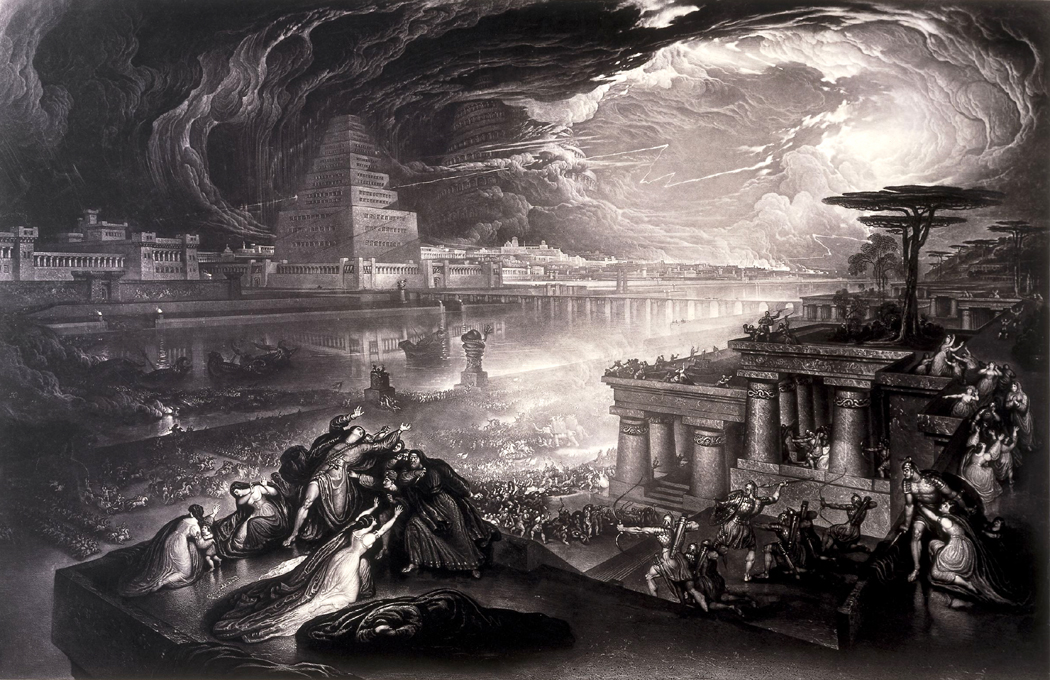
The Fall of Babylon, John Martin

The Fall of Babylon, John Martin

We all have our guilty pleasures. One of mine is the art of John Martin. Actually, I love all the various painters of hysteria and grandiosity, of vast Romantic and Baroque spaces, like the prisons of Piranesi and Superman’s Fortress of Solitude.

These incredible spaces — and I use the word “incredible” in its technical sense — are projections of the Romantic sensibility, that desire for transcendence and a grasping for the cosmic. And always, with the dark shade of annihilation lurking behind it.

There is a delightful strain of paranoia in the paintings of John Martin (1789-1854). It is that touch of insanity that makes his Romantic landscapes so, well, Romantic. He was known to many as ”Mad Martin.”

He certainly came by it honestly: His brother William called himself the ”philosophical conqueror of the universe” and wrote pamphlets that proved beyond question — to himself at any rate — that the prime element out of which everything in creation is made — is air.

His other brother, Jonathan, is known to history as the ”incendiary of Yorkminster,” after he set fire to Yorkminster Cathedral because of some presumed ecclesiastical insult.

The painter himself devised a vast plan to reform the sewer system of London and held patents on hundreds of inventions of questionable usefulness.

His one lasting invention was the steel mezzotint engraving. The copper and zinc plates used for etching and engraving made beautiful prints, but the edges of the engraved line wore down too soon to make the thousands of copies necessary to feed the growing mass media. Martin’s steel plates, while unable to take the fine and subtle detail of copper, lasted forever.

But fine and subtle weren’t in Martin’s vocabulary, anyway.

Of biblical proportions

Balshazzar's Feast

Balshazzar’s Feast

He specialized in biblical paintings that would make C.B. DeMille seem like a miniaturist in comparison. One painting of Balshazzar’s Feast (he painted several) includes a building 7 miles long.

You can tell, because he includes, among the hundreds of writhing figures, one man standing beside one of the columns in a gallery that extends nearly to the horizon line. If you take that figure, meant to provide scale, at 6 feet tall, you can extrapolate, via the rules of Renaissance perspective, the length of the building. At least, so Martin wrote. When I have tried to follow his directions, the measurements get snarled up in swirling mist and the diminution of distance. But I’ll take his word for it.

The Evening of the Deluge

The Evening of the Deluge

This weakness for gigantism is the defining quality of Martin’s art. Other titles bear this out: Joshua Commanding the Sun to Stand Still Upon Gideon; The Fall of Ninevah; and trilogies on the themes of The Deluge and Last Judgment.

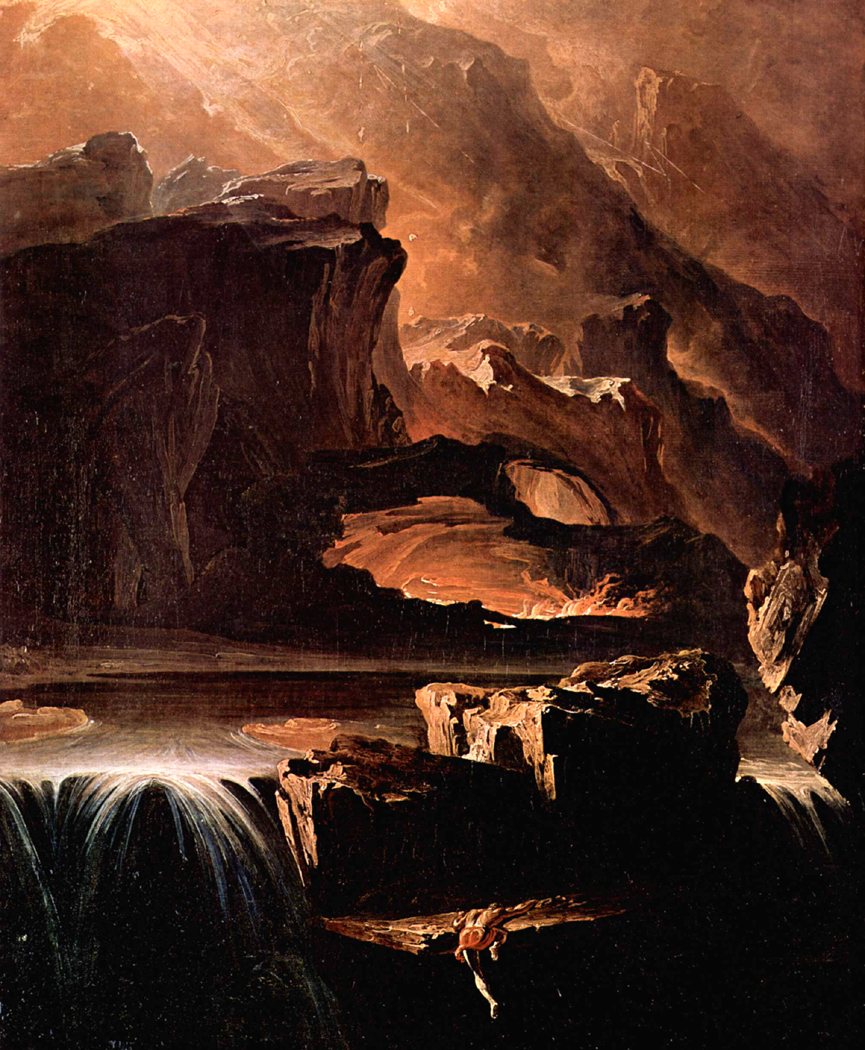
My favorite is his Sadak in Search of the Waters of Oblivion, in which the tiny, exhausted and naked figure of Sadak, in the bottom corner of the canvas, climbs the sublime precipice complete with waterfalls that make Angel Falls in South America look like a drinking fountain.

Sadak in Search of the Waters of Oblivion

Sadak in Search of the Waters of Oblivion

Martin’s best work is his series of steel mezzotints illustrating Milton’s Paradise Lost. He had some trouble drawing figures, which are often awkward, even childish, but he had no trouble imagining and picturing the vastness of time and space. Satan, of course, is his Byronic hero.

The Bridge Over Chaos, from Paradise Lost

The Bridge Over Chaos, from Paradise Lost

Martin was enormously popular through the 1820s and ’30s — he was knighted by Leopold I of Belgium in 1833 — and small engraved versions of his huge paintings were as popular in England at the time as Taylor Swift posters are now. He became very wealthy, but lost most of his fortune on his sewer-improvement scheme.

Critical favor turned away from Martin by the time of his death, and a century after his peak fame, his canvases sold for as little as $10.

American landscapes by Thomas Cole, Frederic Church, Albert Bierstadt and Thomas Moran owe much of their sense of hysterical grandeur not merely to the scenery they painted — and exaggerated in the process — but to the Romanticism that inspired Martin. Cole, especially, admitted his debt to the Englishman and at times imitated him outright.

But Martin’s most familiar progeny are heavy-metal bands such as Black Sabbath, King Diamond, Slayer, AC/DC, Napalm Death and Cannibal Corpse. There is the same obsession with death, Satan and the black arts. king kong 3

And that sense of dark, vast space, craggy rocks extending to the skies, and winking light back in the distance, was an inspiration to the makers of the original King Kong, too.

It is all driven by an adolescent understanding of what Longinus called ”the Sublime.”

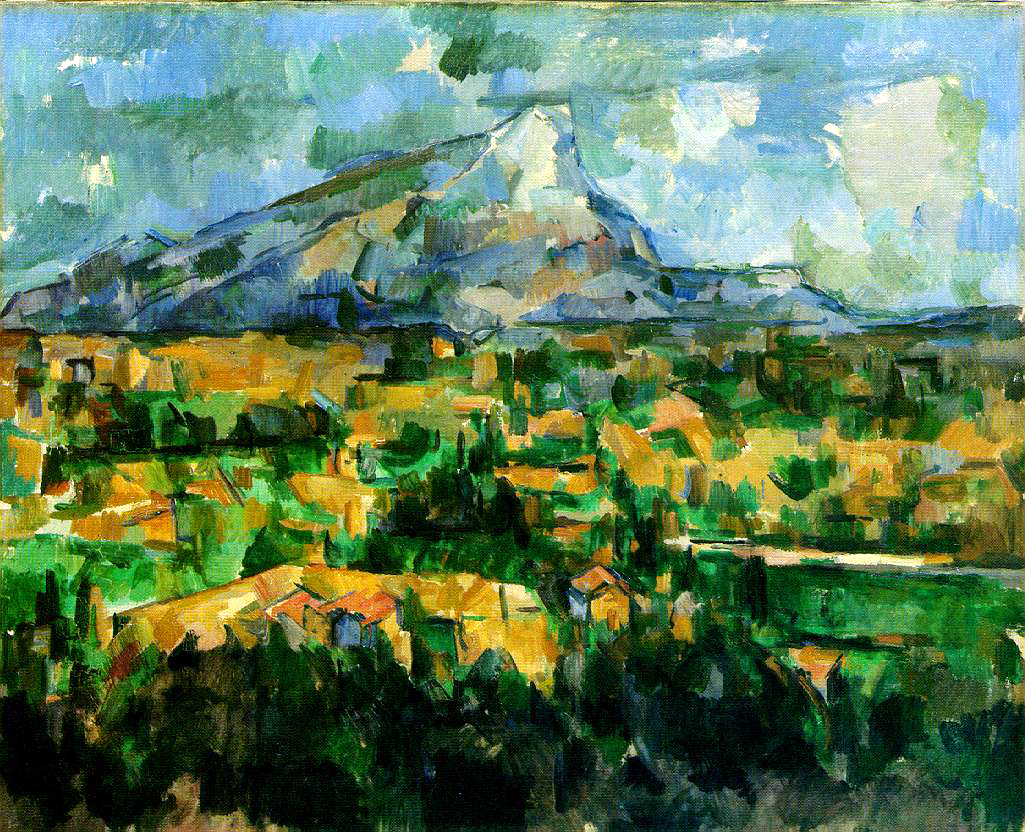
Mont Ste. Victoire, Aix-en-Provence

Mont Ste. Victoire, Aix-en-Provence

For nearly a century, we have seen Paul Cezanne through the eyes of his disciples. They have given us the popular and concretized version of who the painter was. A version to validate the century that followed.

And we have all been his disciples: No other artist has had a more profound or lasting effect on the art of the 20th Century. In some sense, Cezanne (1839-1906) invented Modern Art.

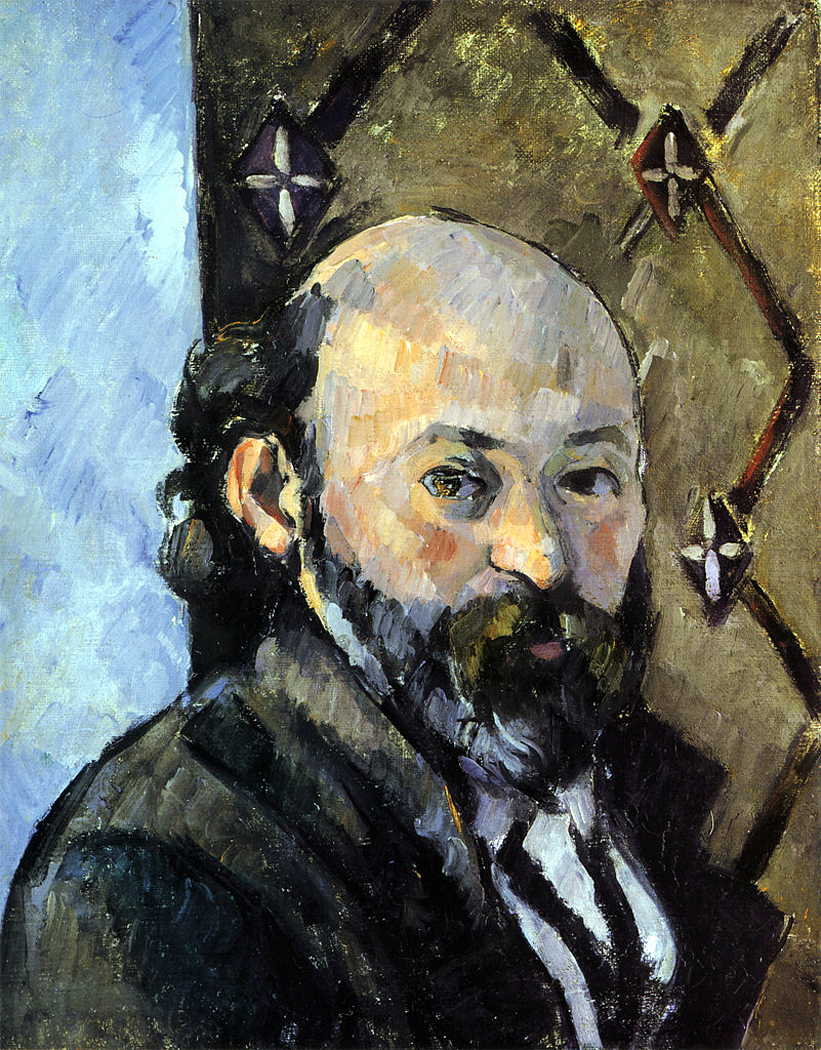
The problem is that Cezanne himself was more complicated, more equivocal than the simple image of his work and influence. And it would be good for us today to widen that narrow view to discover something else in his art that may still be fertile for inspiration and a way out of the locked room that Modernism has become. cezanne self port

No one could miss the direct line between some of Cezanne’s paintings and the analytic Cubism of Picasso and Braque. And that visual kinship is reinforced by Cezanne’s own words: “Treat nature by means of the cylinder, the sphere, the cone …”

He mentioned often the need to see a canvas as a separate object, with its own rules, even if his prose is sometimes convoluted to the point it may cease making sense:

“… everything brought into proper perspective so that each side of an object or a place is directed towards a central point. Lines parallel to the horizon give breadth, whether it is a section of nature, or, if you prefer, of the show which the Pater Omnipotens Aeterne Deus spreads out before our eyes. Lines perpendicular to this horizon give depth. But nature for us men has more depth than surface, whence the need to introduce into our light vibrations, represented by the reds and yellows, a sufficient amount of blueness to give the feel of air.”

But even here, we find Cezanne concerned with something Modern art tends to ignore: The way the world looks.

Despite the modern appearance of his canvasses, Cezanne often wrote about that aspect of art he shared with the long centuries that went before him: The need to see the world clearly, and to attempt to record on his surface not only a version of the world as he knew it, but an accurate record.

“I had to become a student of the world again,” he said to Emile Bernard, “to make myself a student once more.”

We think of Cezanne as the man who made abstract art possible, but in his own words, he constantly talked of capturing the reality — the visual reality — of the world on his canvases. To be true to the world he saw and felt.

This connection with the things of the world is what evaporates as the 20th century advances. The dedication to the reality of paint and canvas supersedes the dedication to understanding the world itself.

“You say that because two large pine trees are waving their branches in the foreground. But that’s a visual sensation … Moreover, the strong blue scent of the pines, which is sharp in the sunlight, must combine with the green scent of the meadows, which, every morning, freshens the fragrance of the stones and of the marble of the distant Ste-Victoire. I haven’t conveyed that. It must be conveyed. And through colors, without literary means.”mtstevictoire1

The painter writes and talks about the colors, the feel of the air on his skin, the smells of the forest, the give of the loam under his feet. He is veritably intoxicated by the things of the world.

“The world, the sun. .. that which is transient … that which we both see … our dress, our flesh, reflections … That’s what I have to concentrate on. That’s where the slightest error with the brush can send everything off course.”

What is different in Cezanne from the connection to reality in the Impressionists that preceded him is a faithfulness to what he would call the “permanent” or monumental quality of the things of the world. Monet might be more interested in what the sun does to those trees over the space of five minutes in the morning of a spring day; Cezanne hoped to capture some essential truth of the thing-itself. That meant finding something in the world that stayed essentially the same, no matter how the sunlight played over it through the course of a day, a week or a year.

This realization dawns on you if you visit Aix-en-Provence and see the architecture there. Those blocky houses he paints, so redolent of Picasso’s Cubism, are not a figment of Cezanne’s simplifying imagination. That’s what the houses actually look like. painting and real house

Paul Cezanne felt a loyalty to the world, a sense that the things of the world inspire love and affection, and when transcribed to canvas, can be laid out almost like scripture for us. We all need to be reminded occasionally that “die Welt ist schoen,” as the photographer Albert Renger-Patzsch had it, and that through his canvases, Cezanne could capture that essential part of the world that we might miss when we fail to pay attention to what is around us.

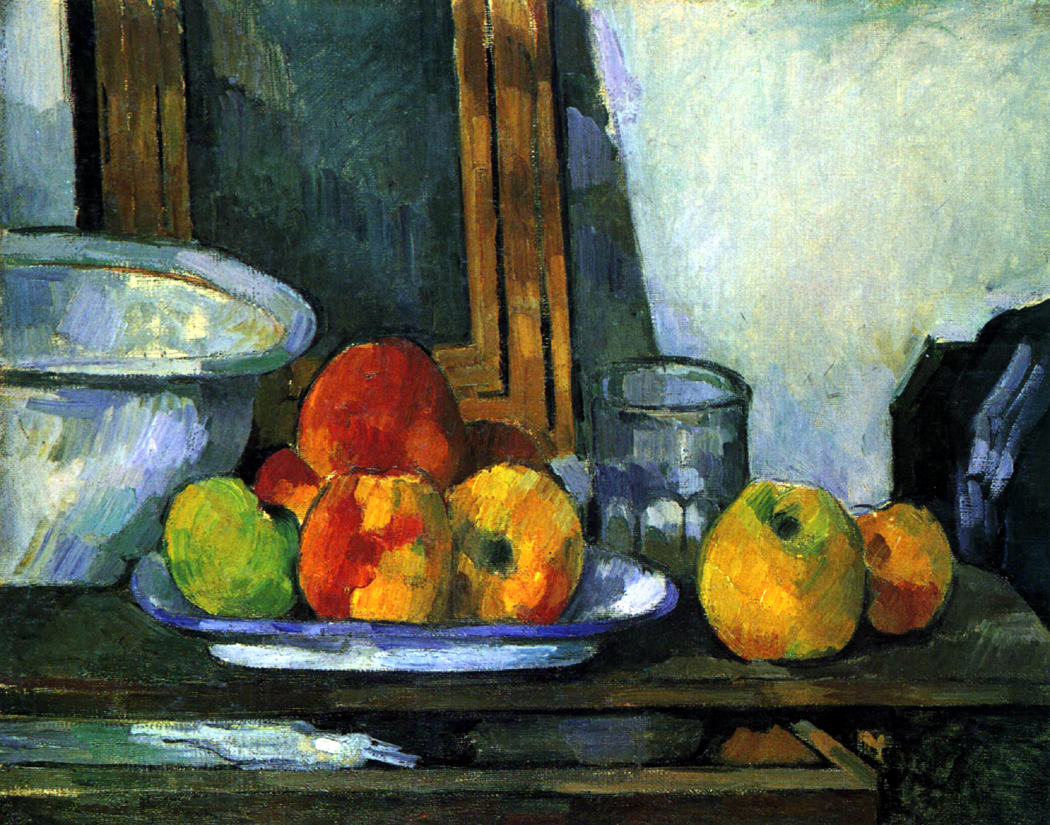
They are, after all, the most real apples and pears ever seen that do not go soft and brown over time. cezanne apples

So, to see Cezanne only as a seed of Modern Art is to misunderstand the magnitude of his accomplishment.

At least for most people, there is little in the art world as dependably moving as a Cezanne apple or mountain. Painters, in particular, have always been astounded at the subtlety of his vision. It is said the Eskimos have 27 words for snow; Cezanne must have had 27 words for blue-green.

gauguin

Are the arts important?

It is the question at the bottom of the debate over public funding, and a lot of hooey has been written on the subject, from both sides of the issue.

Yet, the question remains. Is art important, or is it merely one of the frills of life? Is it more than the amusement of the rich people who can afford to buy it or attend its performances? Does it serve some essential function in our lives?

The answers usually provided are too often soft and squishy, with a lot of feel-good oohing-and-aahing alternating with benign platitudes.

All of which miss the point.

There are three major things that art provides that we can ill afford to do without. They have nothing to do with ”identity,” ”self-expression” or ”healing,” or any of the pop-oriented, new age or parochial apologies being given in the discussion.

No, what art does is as fundamental as language. Far from being an ornament, it is the foundation of culture.

Put another way, civilization doesn’t make art, art makes civilization.

How does it do this?

First, art asks, ”What is real?” It is the first line of investigation into what is true. Art is the acid test we give our assumptions about reality to find if they are gold or lead.

If science is the test we give to hard fact, art is the test we give to everything else.

Second, it gives us a way out of the isolation of our egos. The greatest art forces us to sympathize and empathize with others and enlarge ourselves and our moral compass in the process.

And third — and least familiar and most difficult to understand — it asks, ”What is the meaning and purpose of structure?” This last has unforseen ramifications.

They may be summed up in Paul Gauguin’s famous painting from Tahiti: Where Did We Come From? What Are We? Where Are We Going? Those three questions give us a clue about why art is important, why it isn’t merely window dressing.

When we ask, ”Where did we come from?” we are asking what is the ground of reality.

When we ask, ”What are we?” we are asking about those things that make us most human.

And when we ask ”Where are we going?” we are asking how art might show us the possibilities for making a life.

Let’s look at them one at a time.

ART AND REALITY

When art addresses reality, it does so on several levels.

On the simplest, it attempts to find out what the world looks like. That may seem unnecessary at first, but it isn’t as easy as it sounds.

We must learn to see, not only as individuals, but as a culture. And art is our most important teacher.

We could be taught to see other than as we do.
It is through art as a mediator and not through direct perception that you come to recognize the world. This is a fact we are almost always blind to. We see it no more than we see the retina on which the image is formed. durer

It was a heroic thing for those Renaissance artists who worked out the mathematics of perspective. They were grappling with reality; they were wrestling with an angel.

In some sense, every artist does that when he sets up a bowl of fruit and begins drawing, trying to stare that stubborn reality into submission.

But reality isn’t only about what we see. It is the question of what we feel and believe as a people. So theater and novels investigate the nature of justice or love or violence. In each case, the artist or playwright is creating a model of the world — a virtual reality — that we must come to accept or reject.

It is also important to recognize that every one of these artistic answers is provisional, and each is modified or rejected by succeeding generations. All reality is a working hypothesis.

To those who see art only as surface, the history of art is a history of changing styles. To those who look beneath the surface, style is irrelevant, nothing but distraction. The changes are not mere fashion but result from the constant testing of art against reality and back.

ART AND EGO

The second issue of art is just as important. Too many of us live our lives in the prison of our own egos.

We know what we have experienced but not what others have experienced. We trust our reality but no one else’s.

Art gives us a way out of this prison, by presenting us with other worlds, other realities, deeper emotions and more profound thoughts.

It is the reach of imagination that allows us to grow beyond ourselves and feel those emotions.

Art forces open those prison doors and sends us out into the light of day, where we must learn and feel what it is like to be Madame Bovary, Henry V or Shakuntala.

Art gives us a way of escaping the happenstance of history and birth for a chance at a more comprehensive, more universal understanding. We grow in worth as human beings.

For the great moral lessons, one turns to Aeschylus’ Persians, Sophocles’ Oedipus, Dostoevsky’s Aloysha or James Baldwin’s Beale Street.

It is doubtful whether, without the powerful emotions of pity and love, we would ever be able to create a civilization worth living in.

ART AND STRUCTURE

The third issue is more subtle and difficult.

We understand the things of this world not merely as an accumulation of unrelated facts, but as system. We see not leaves and sticks, but trees.

What we understand in that instance is structure — the ”big picture.” It is the glue that holds together our perception.

That structure doesn’t appear out of nowhere; it has its roots deep in the human psychology. It is the archetype of Jung, the mothers of Goethe, the poetic imagination of Blake. It is the central core of comprehensibility. We measure all things against it, whether we recognize it or not.

A good story isn’t just a collection of episodes, but episodes with a certain shape to them: a beginning, middle and end.

The structure of a story is every bit as important as its content.

Imagine two newspaper stories about the same train wreck. One is a cluttered assemblage of facts, in no particular order; the other is a well-told story with direction and emphasis. Each contains the identical facts, but the second can be read and remembered. The first is fact confetti. We cannot even read it; it makes no sense.

The only difference between them is the structure.

MYTHOLOGY OF CULTURE 

We can take the same structure and apply it so some other news event. The facts may change, but the import of the story remains the same. We see it over and over in newspapers: the child in peril, the senseless killing, the arbitrary natural disaster. Each is a structure of story that we fill in with the facts of the case. Each 40-car pileup is identical, except to those involved.

Each of these stories is a small myth in the larger mythology of our culture.

We think of myth as being a story that isn’t true, but the truth or falsity of a myth is irrelevant. All that matters is its persuasiveness.

The artist recognizes this fact and uses it in his art, working the changes on the myths and archetypes.

What makes this important is that we all use these myths — recognized or not — to give meaning to our lives. We live out our roles as father, mother, hero, victim, lover, loyal friend, all following the internalized archetype we have either learned or been born with.

Art, literature, theater, dance, music, provide models for us, so we may know how to make a life.

Like ritual, they show us the steps to the dance, and the steps are structure.

EMPATHETIC COMMUNICATION 

Take Michelangelo’s Pieta.

It is on one level an attempt to make a statue as lifelike as possible, with poses and emotions as true to their condition as possible. On that level, Michelangelo is exploring the reality of surfaces.

But we don’t look at the grieving Virgin and the dead Jesus as a test of what reality looks like or of what we would do in the same situation. pieta

We feel the emotions of the Virgin almost telepathically. It becomes possible to know what it is like to lose a child, lose a part of your own flesh. Even if we have lived the most sheltered and protected life, we cannot avoid coming to know at least a little about the experience of tragedy, and we are made bigger by it.

It is a work of profound human emotion, and you needn’t be a Christian to feel it.

But Mary is also the archetype of the mother, and Jesus is the archetype of all of us who know we will eventually die. We are given a role in the cosmic drama and the means of playing it with dignity.

The very greatest art, from James Joyce’s Ulysses to Wagner’s Ring Cycle to the Mahabharata does this for us.

A DIGRESSION

Stories have a narrative content, but they have a structure, too, or they would fall apart.

Is it possible to write a story with the structure alone, with no facts to plug in?

That is in essence the direction of what we call Modern Art.

In the Renaissance, a painting was metaphorically a window through which we looked at the virtual reality presented. The paint resting on the canvas was intended to be rendered invisible, like glass.

But in Modern Art, we are meant to look not through the window, but at it. The paint, the brushes’ marks, the canvas, the colors up against each other: They are the very point of the art.

At its most heroic, Modern Art attempts to put us in contact directly with reality and with our emotions, unrelated to mere narrative event. That is the effect of Kandinsky or Pollock or Rothko.

But we have spent nearly a century investigating that level of reality and it has gotten a little moldy with use.

It is now the job of Postmodernism to write with its finger in that now-dusty window, ”Wash Me.” triptych

Yet, that layer of structure, unrelated to fact, remains in art, as it always has. Sometimes art uses it to give meaning to our lives without our knowing it, sometimes art points its arrow at the structure and says, notice it and enjoy it.

Without structure, there is no meaning, and art gives meaning to life.