Archive

Tag Archives: art

Do you think you know the title of this painting?

Do you think you know the title of this painting?

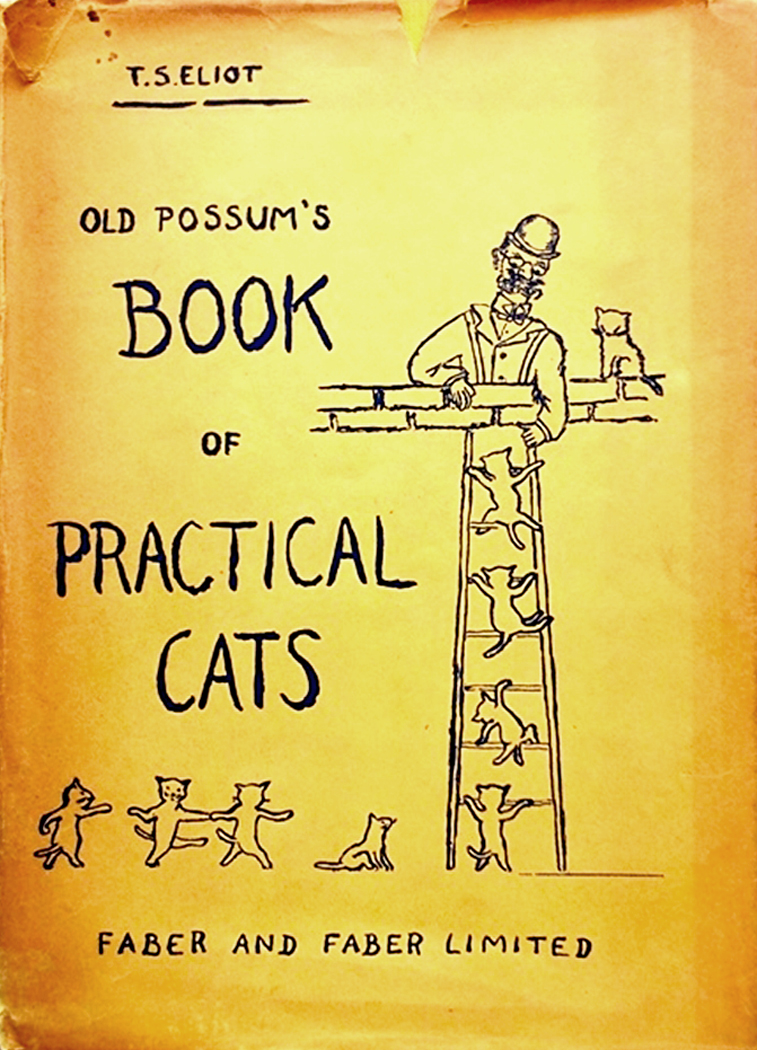
In T.S. Eliot’s Old Possum’s Book of Practical Cats, he writes, “The naming of cats is a difficult matter,/ it isn’t just one of your holiday games.old possum

“You may think at first that I’m mad as a hatter/ when I tell you a cat must have three different names.”

Of course, that book of poems went on to become the beloved and behated Broadway musical Cats, with people who should know better running around onstage dressed up in Halloween costumes as felines. The high-church Eliot probably rolled over in his grave.

But in the real world, it isn’t just cats. It’s a problem that comes up in the art world all the time: What’s the real and true name of a painting, a symphony or a poem?

When I was a working journalist, this would sometimes present a problem: Copy editors would demand the precise title of a work mentioned in a story, and they could be quite the sticklers. The Beatles’ “White Album” (by which name the entire world recognizes the double-disc album put out in 1968) is not “really” the title. So, we would have to call it The Beatles, which for most people is unhelpfully indistinct.

The world of the arts is filled with such issues over titles. It makes it sometimes quite chaotic. Of course, to live in the world of the arts requires a significant ability to endure the vague, but many people, especially engineers and editors, are as uncomfortable with the vague as Indiana Jones is uncomfortable with a snakepit.

And if engineers or biologists lived with such a level of unclarity, bridges would fall and the contents of petri dishes would infect the world.

But it is true. Titles are a frustratingly messy bogeyman.

We think of titles as being a simple issue: The painter or writer or composer gives his or her work a title, and it somehow gets registered somewhere — maybe the Library of Congress — and that’s that.

But that’s not the reality.

Consider Antonin Dvorak’s New World Symphony. Or is it the Symphony No. 9 in E-minor, op. 95, or is it Symphony No. 9, “From the New World.” Must a symphony have three different names?

Your grandparents knew it as Dvorak’s Symphony No. 5. So, where is reality?

(Before recent scholarship and a fetish for completism, Dvorak’s first four symphonies were not much played, being considered “student work”; therefore, his final symphony was his fifth. We now count the early ones and have bumped the “New World” up to No. 9.)

The problem, in part, is caused by history. History causes many problems.mona lisa

What we take today to be a hard-and-fast category — titles — turns out to be a fluid concept. When Leonardo da Vinci and Rembrandt were working, they never titled their works.

Da Vinci’s The Mona Lisa also is called La Gioconda. One of Rembrandt’s most famous paintings, The Night Watch, also is called The Shooting Company of Franz Banning Cocq and The Company of Frans Banning Cocq and Willem van Ruytenburch. So, what are their “real” titles?

Well, there aren’t any.

Such titles originally were descriptions of the paintings written for sales catalogs, most often for estate sales after the artists’ deaths. The widow pulls together all the unsold work, and someone writes down “Summer Evening” or “Young Woman With a Milk Pail.” Not titles, just short descriptions to help potential buyers tell one painting from another.

And they often have multiple titles, from subsequent sales.

It wasn’t until the 19th century that paintings or sculptures were given anything like what we now would call an official title. And even then, the artists tended to make their titles descriptive, to help gallery-goers explain to gallery representatives which paintings they were interested in buying.

The music world is even more byzantine, because there is no consensus at all on what to call a given work.

Take Beethoven’s Eroica.

When we call it that, pretty much everyone knows what we’re referring to: the symphony in E-flat, or the Third Symphony, or the Symphony No. 3 in E-flat, “Eroica.” There are a dozen other names in common usage.

What did Beethoven call it? Well, the title page of the manuscript, in Beethoven’s hand, calls it: Sinfonia eroica, composta per festeggiare il sovvenire d’un grand’uomo (“Heroic symphony, composed to celebrate the memory of a great man.” But then when it was first published, the cover page called it Symphony for Grand Orchestra in E-flat, op. 55, and the title page read something like: Symphony in E-flat for 2 flutes, 2 oboes, 2 clarinets in B flat, 2 bassoons, 3 horns in E flat, 2 trumpets in E flat and C, timpani in E flat and B flat and strings, op. 55.

It also is ascribed to “Luigi van Beethoven.” The French version calls him Louis van Beethoven.

So, what is its title?

As with the paintings, Beethoven’s original audience was comfortable with descriptions rather than titles. Any of the above sufficiently describes the symphony so it won’t be confused with anything else.

There are other problems.

Even in works that have real, official titles, we don’t always use the full version.

Brahms’ German Requiem is more properly A German Requiem, to Words of the Holy Scriptures.

This is pretty common. After all, Shakespeare’s Merchant of Venice was given the fuller title in the First Folio, The Most Excellent History of the Merchant of Venice. With the extreme cruelty of Shylock the Jew towards the said Merchant, in cutting a just pound of his flesh: and the obtaining of Portia by the choice of three chests.

Quite a mouthful.

Mozart’s Marriage of Figaro is actually titled The Marriage of Figaro, or One Crazy Day.

Which raises another problem: The title, really, is Le nozze di Figaro, ossia la folle giornata, but we commonly translate the title into English for the sake of being understood. So, Die Walkure becomes The Valkyrie, and Mondscheinsonate becomes the Moonlight Sonata, which, of course, is really the Sonata quasi una fantasia, in C-sharp minor, op. 27, No. 2, or, by another convention, Beethoven’s Sonata No. 14. Confusing enough?

Titles in translation are often changed if their original meaning might be misunderstood in the new language’s idiom, or if it comes across unidiomatically, so that Proust’s A la Recherche du temps perdu was known for years in America as “Remembrance of Things Past.” Presumably “About the Search for Lost Time” falls considerably flatter in English than in French.

Discussing such things with copy editors may or may not go anywhere: We are stuck with the whole idea that an art work or poem or piece of music could no more not have one final true title than a person could have no name on a birth certificate.

And one final thought: By far, the most popular title in art galleries is  “Untitled.”

Is that its title?

huck finn modern book cover

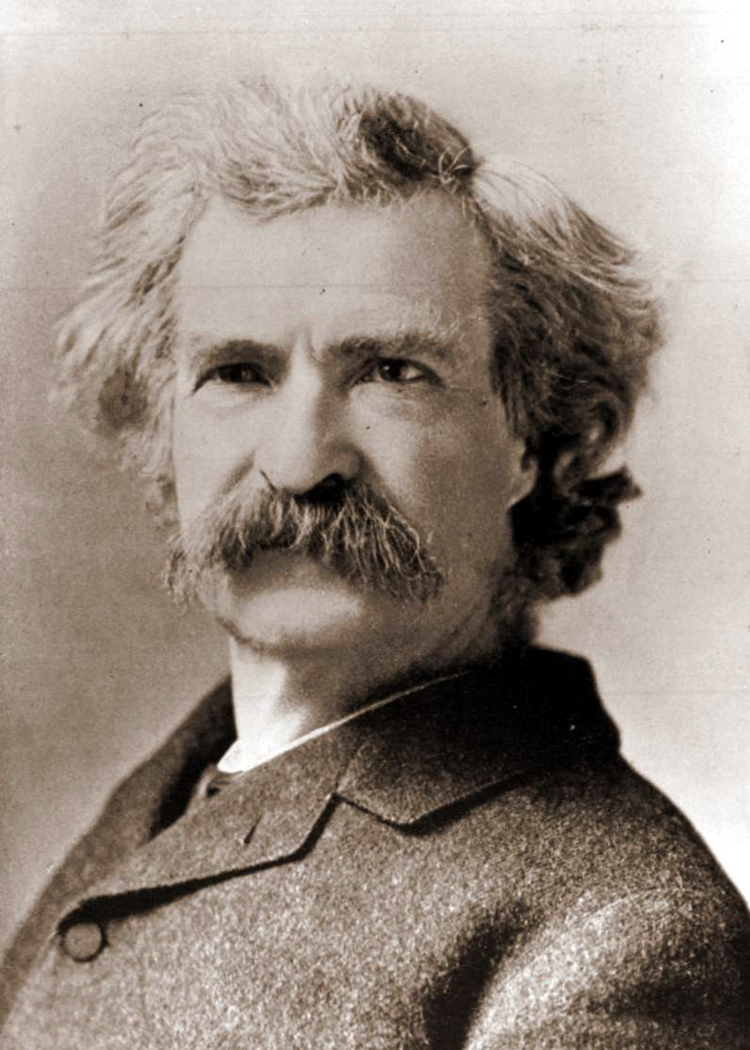
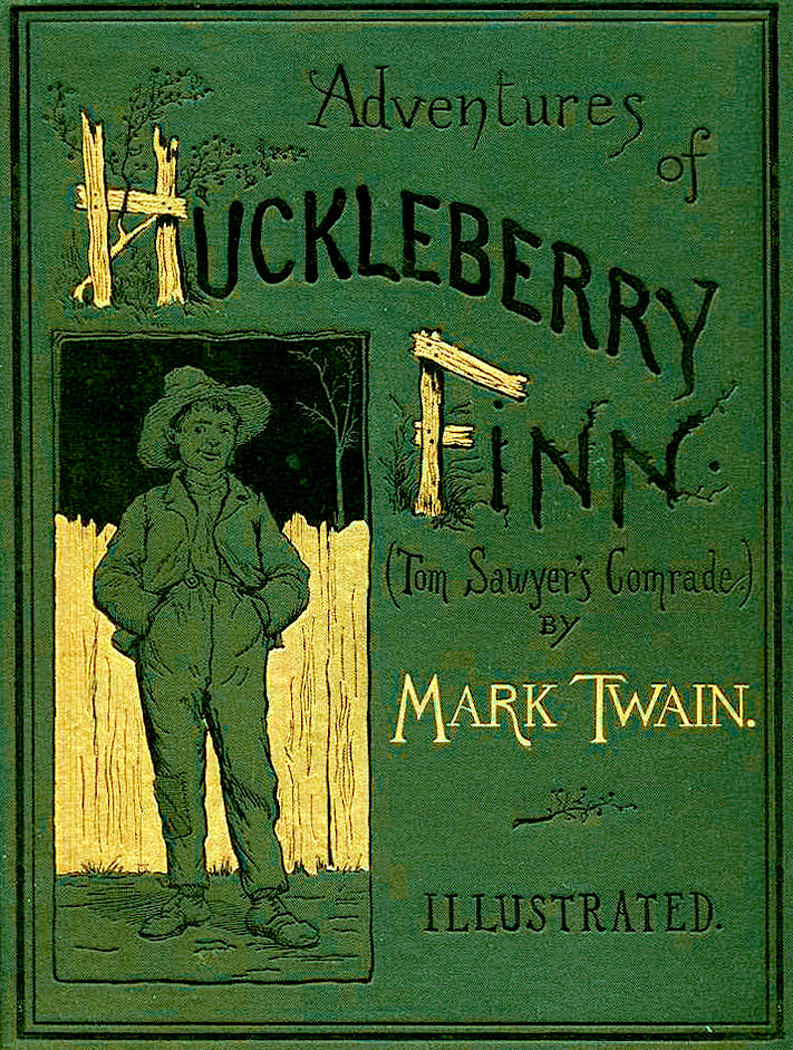
“All modern American literature comes from one book by Mark Twain called Huckleberry Finn,” Ernest Hemingway wrote. mark twain
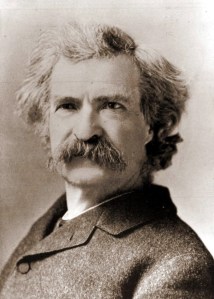
In that book, nearly every theme that identifies our art as American is established and explored: migration, race, individualism, anti-intellectualism, optimism, religion, social climbing, moneygrubbing and the comfortable informality that marks us as a people.

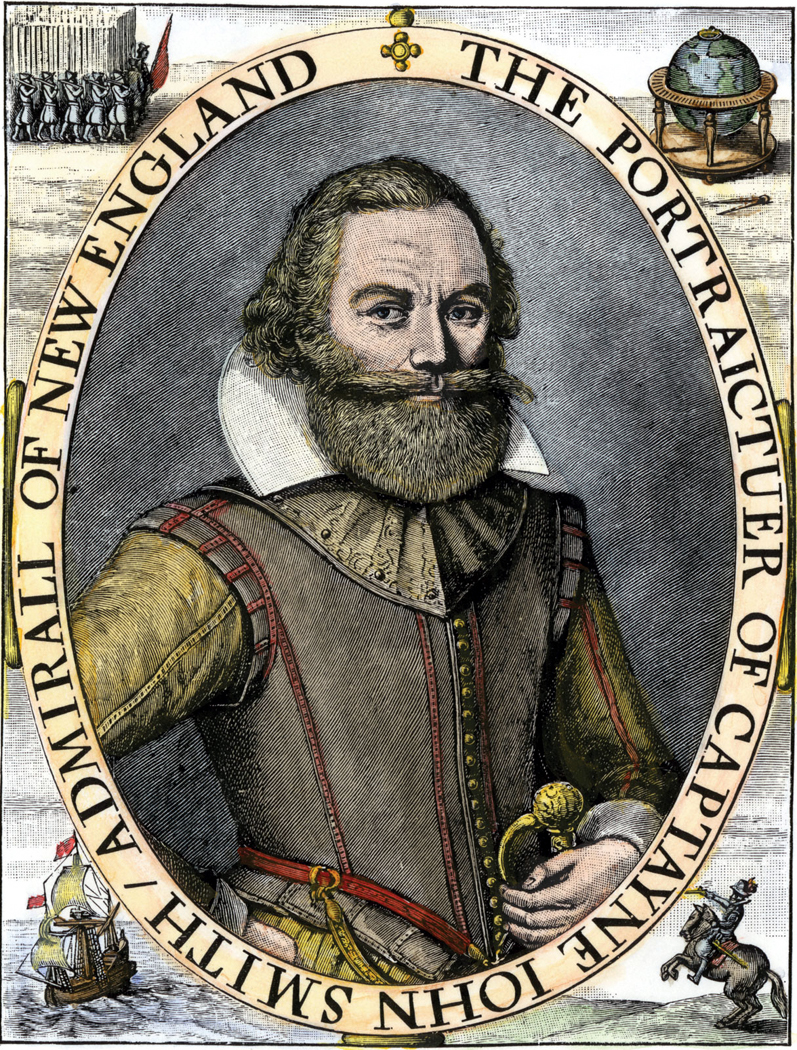
It’s as if Huck Finn were the instruction manual for how to be American. In that, Twain is just as clearly American as Debussy is French or Basho is Japanese. john smith We often look to our art for clues to national identity. But although Twain gives us Americanness in concentrated form, most of the arts made on this continent, from Capt. John Smith’s General History of Virginia (1624) and Anne Bradstreet’s poetry, all the way up to this week’s latest rap song, partake in certain common traits.

What are they? First, we need to eliminate some of the things we like to think are particularly American, such as patriotism or respect for family. Every culture feels these qualities are particularly their own, but in fact, they are universal.

Even such negatives as bigotry and racism have their American coloration, but they are evils found in every culture.

It needs to be noted, too, that what we admire in ourselves is not necessarily admired elsewhere. Americans are direct, which others often see as rude. We are informal, which others translate as slobbishness. We are optimistic, which can be taken as arrogance. We believe in individualism, which others see as selfishness. But there are six things that we can see as particularly American: migration, individualism, optimism, religiosity, informality and expansiveness. source_28

Migration

The one thing all Americans share is that we are immigrants.

Even Native Americans, although they hate to think so, came here from somewhere else, whether it is across an Arctic land bridge or up through a sipapu.

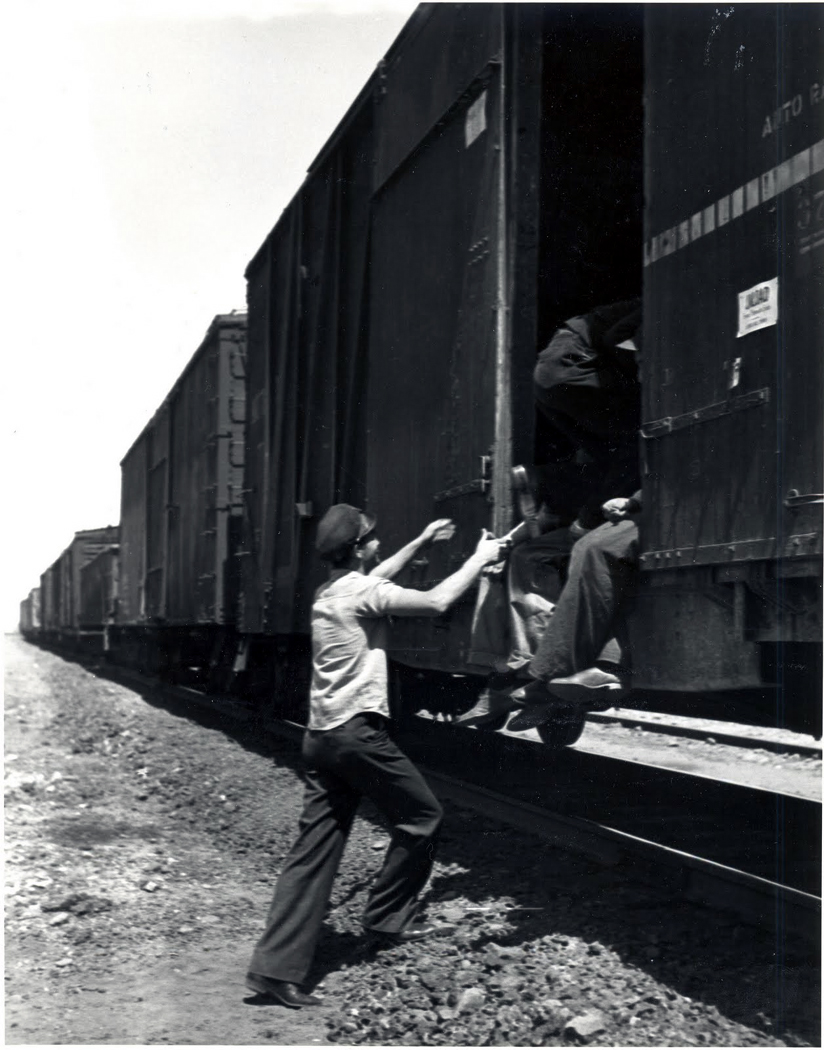
It is the parent fact that gives birth to all our other traits. jumping a freight Even after our ancestors came here from far shores, we have never ceased from peregrinating. First we moved West, populating the great wilderness.

Now, we move away from home to college or career, and find our parents retired to Florida and our siblings spread across four time zones.

To Europeans or Asians whose families have lived in the same villages for centuries, we must seem utterly rootless.

So it can hardly be surprising that the central metaphor of Huck Finn is a journey: The book is many things, from its hero’s double negatives and “ain’ts” to his climactic choice to follow his instinct instead of his schooling about runaway slave Jim, but first and foremost, it’s a “road book,” marking the peripatetic nature of American life.

Much of our art reflects this continuous travel. From the moment we arrived on the Atlantic Coast we began moving west. As art, The Godfather speaks of the immigrant experience, but so does every B Western ever filmed.

All the other traits we think of as American ultimately owe their birth to this constant moving: It gives birth to our self-reliance, our willingness to risk tomorrow on faith, and our freedom from many of the cultural straitjackets found back in the Old Country. It’s all there in the art. All either necessary for immigration or fostered by it. high noon

Individualism

Make that “rugged individualism.”

We trust our own instincts, like Huck Finn, rather then the wisdom of the group. We are Mr. Smith in Washington, Gary Cooper at high noon, Ellen Ripley blasting aliens.

The single most potent distillation of this individualism can be found in John Wayne, love him or despise him. But Wayne didn’t spring up ex nihilo; rather, he grew from the soil: He was originally Natty Bumppo, or Hawkeye, from James Fenimore Cooper’s Leatherstocking Tales: self-reliant, unschooled but wise and practical, with an unshaken faith in his own code of behavior. He’s Walt Disney’s Davey Crockett saying, “Make sure you’re right, then go ahead,” which is just a pop culture simplification of Henry Thoreau’s Civil Disobedience.

Sometimes it’s shocking to realize how of a piece our cultural heritage is. davy crockett march

The flip side of individualism is our tendency to isolationism: “Good fences make good neighbors,” as Robert Frost ironically wrote. Going it alone is usually seen as a virtue.

The downside of this self-reliance is our anti-intellectualism. We trust our own ignorance more than someone else’s knowledge. This is nothing new: It’s why Andrew Jackson was elected president. It’s Huck Finn fearing to be “sivilized” by his Aunt Sally. It’s why one of the most powerful political factions of the 19th century was called the “Know-Nothings.”

It’s a trait of national identity that we should never misunderestimate. oklahoma!

Optimism

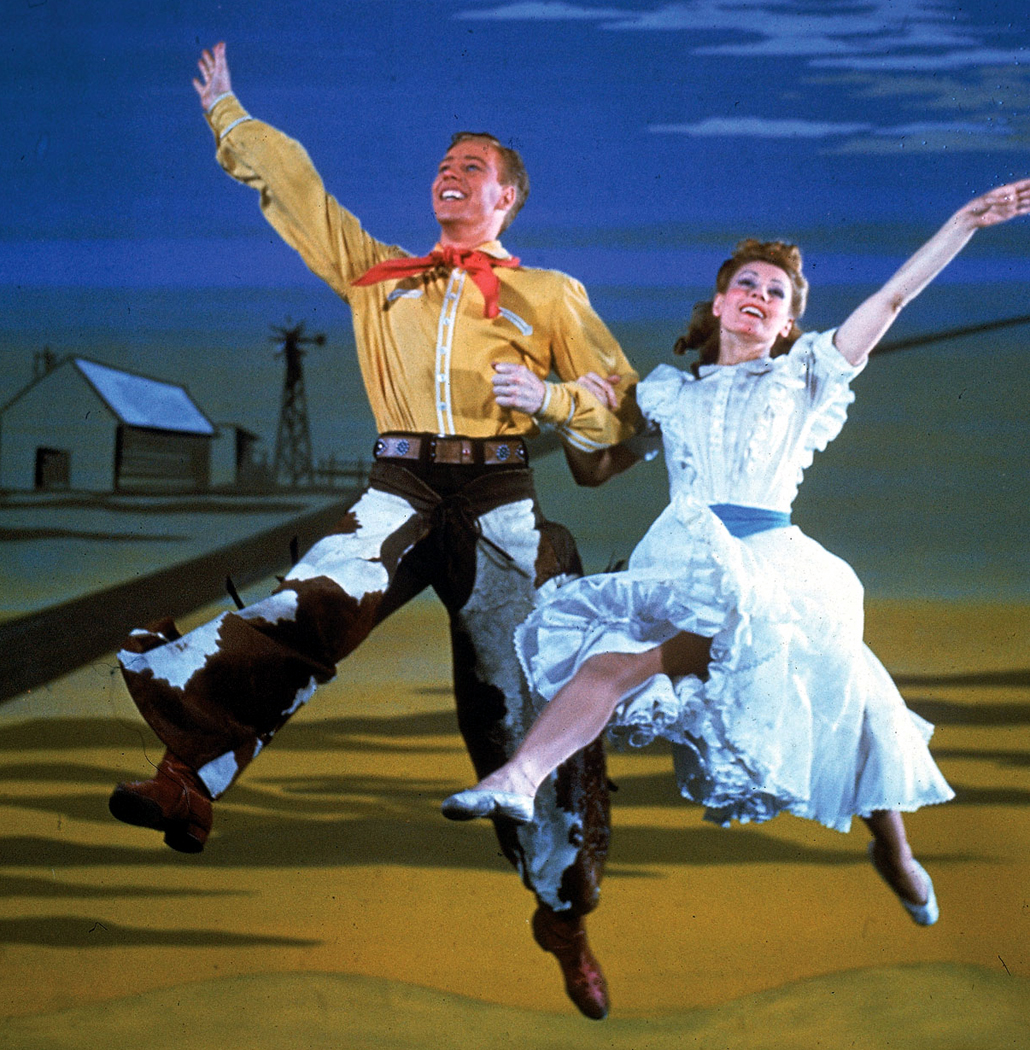
Against all reason and the evidence of history, Americans believe they can do anything. It is our “can-do” attitude, and you find it in the barking joy of Walt Whitman’s poetry and the songs of Oklahoma!Doris Day

To others in the world, this makes us look naive and foolish; fatalism is not part of our makeup.

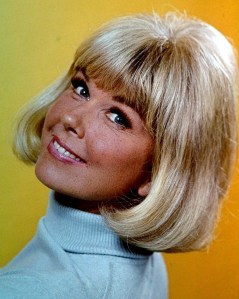
Which is why America is home to pop psychology and Doris Day. As a corollary, for Americans, the future only holds a better world. “Tomorrow, tomorrow,” Annie sings. “Make it new,” said poet Ezra Pound, and although he was speaking of literature, he could just as well have been speaking of Thomas Edison, the Chrysler Building or Elvis Presley.

Take what you’re given and do something new with it. Never accept the past as the final word. billy sunday preaching

Religion

Many peoples are religious, but in America, religion is something else.

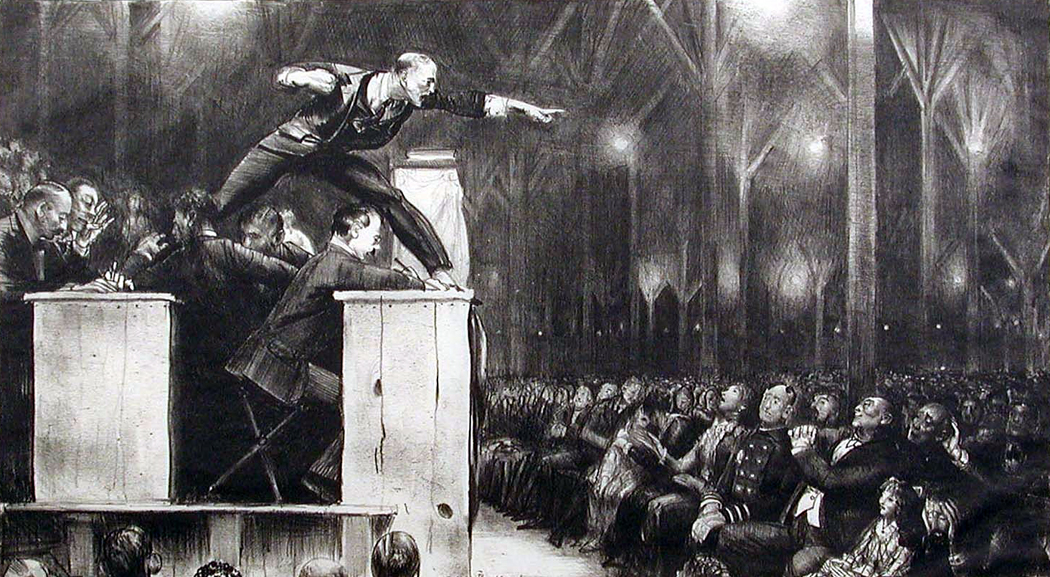
From the utopian religious communities of the 19th century to today’s fundamentalism, there is a glint of zealotry in American spirituality. Elmer Gantry would not be thinkable in France.

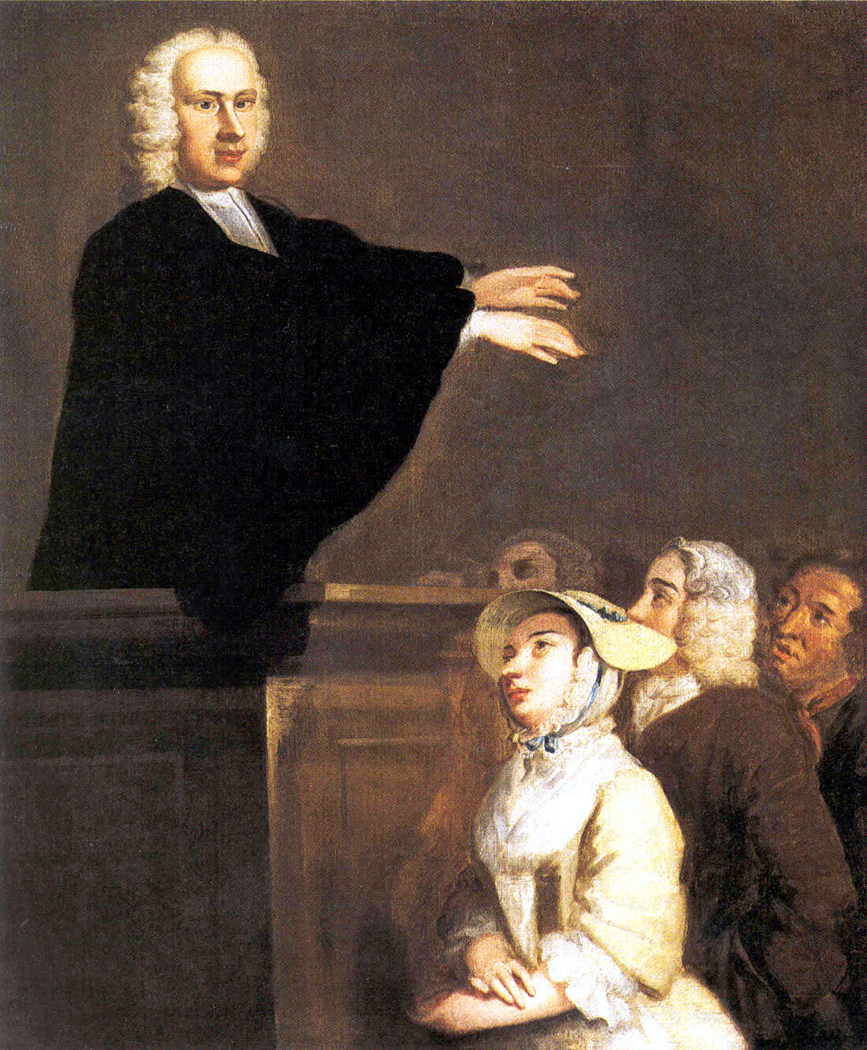
We have gone through at least four “Great Awakenings,” in which we rediscover the old-time religion and the narrow virtues of belief. rev whitefield
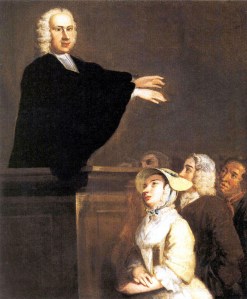
It was, after all, religion that founded this country, whether it is Congregationalists in New England, Quakers in Pennsylvania, Roman Catholics in Maryland. Each of them came here for religious freedom, although they were perfectly willing to oppress any religion not their own.

The separation of church and state in our Constitution is there not because we were an agnostic nation, but because everyone was so nuts on the subject and we wanted to keep from each others’ throats.

You hear the religion in the symphonic music of Charles Ives and in Negro spirituals. It echoes in Moby-Dick, and even the window behind the dour couple in Grant Wood’s American Gothic. leaves of grass frontispiece
Informality

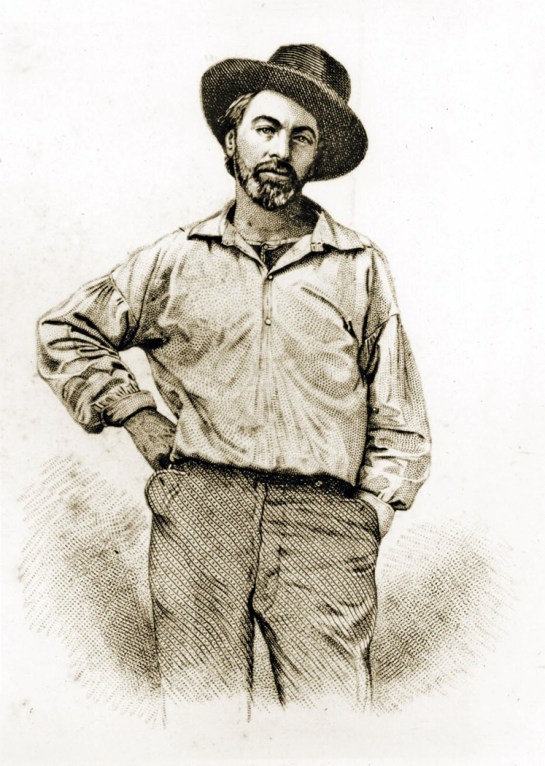
“I lean and loaf at my ease, observing a spear of summer grass,” Whitman writes in a poem of expansive informality, turning his back on the formal expression of European art: No villanelles for Americans, no Rime Royal.

In Europe, you have Oedipus, in America, Stanley Kowalski.stanley kowalski Mark Twain wrote Huckleberry Finn in colloquial American English and even put a note about it at the beginning of the book. Take that, Henry James!

“Whatever is not of the street,” wrote novelist Henry Miller, “is false, derived, that is to say, literature.” And he wasn’t using the word as a compliment.

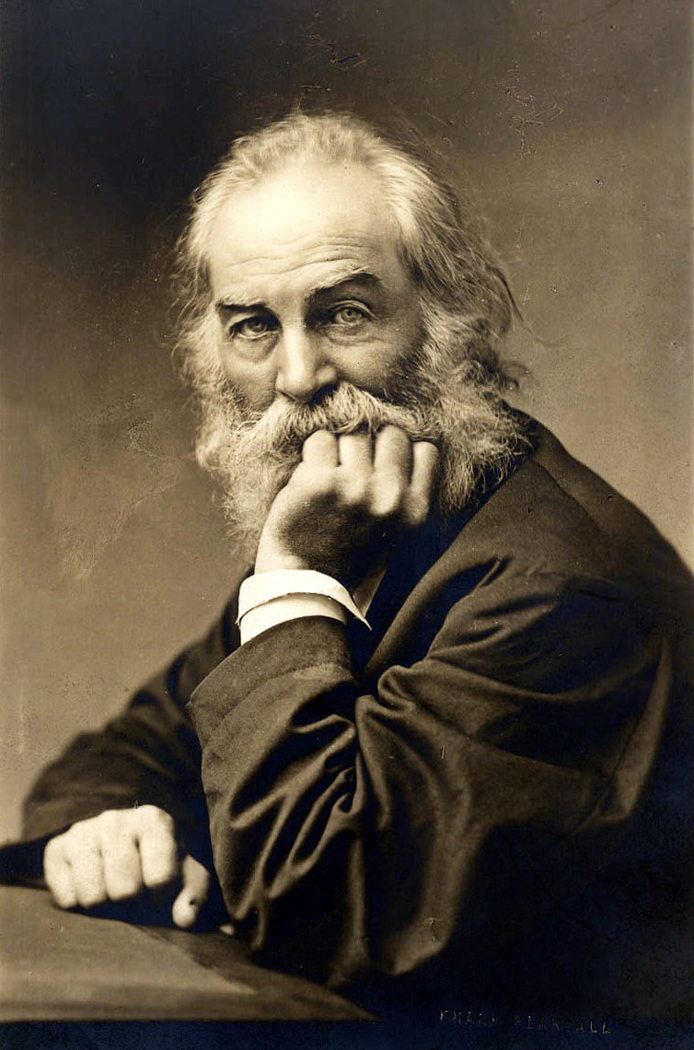
You can see it in the portrait of Whitman at the front of his book, Leaves of Grass: There he is, sleeves rolled back, collar unbuttoned, hips shifted comfortably, hat at a rakish angle. You could never imagine Tennyson like that. manifest destiny gast

Expansiveness

Everything in America is supersized, whether it’s fast food or our landscape.

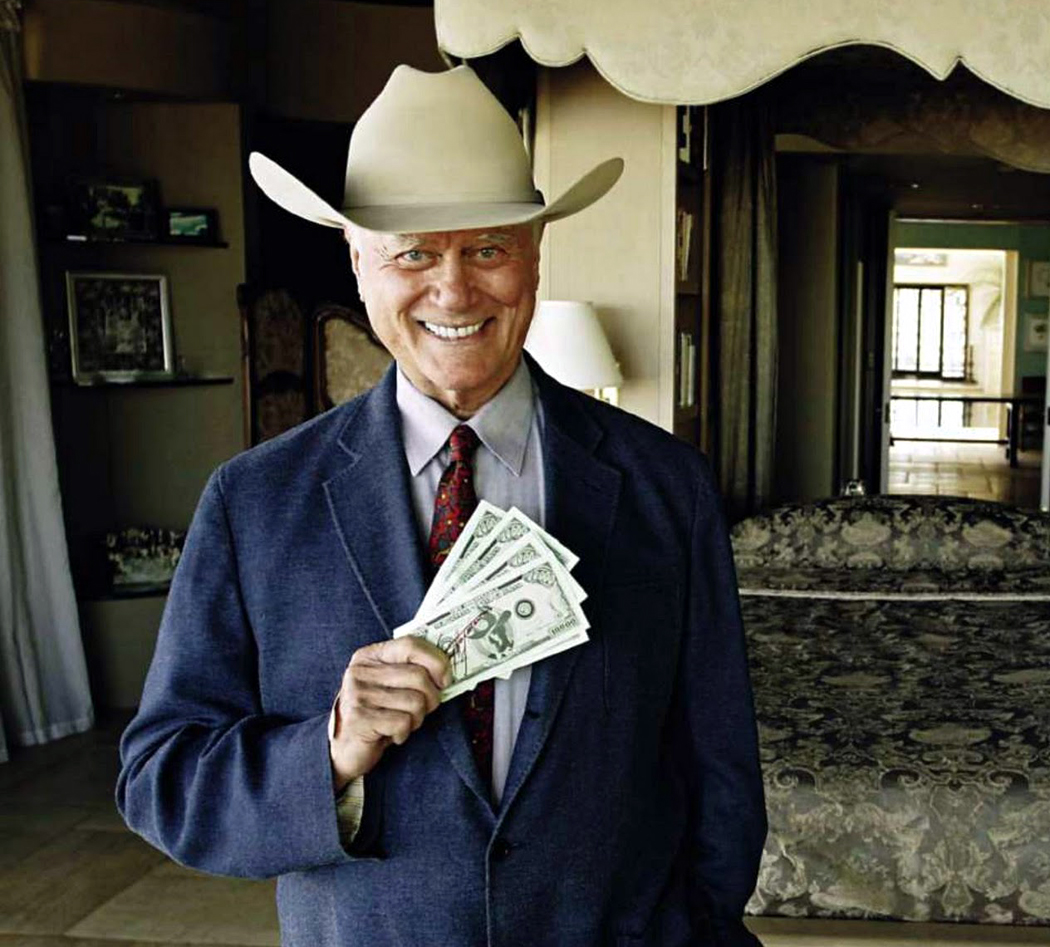
In America, bigger is better: We drive SUVs and watch blockbuster movies. It’s a Texas mentality. Star Wars isn’t big enough; we need a director’s cut, added scenes, a DVD packed with extras. A movie isn’t a success unless it makes $200 million. And the TVs on which we watch those DVDs continue to grow; soon they’ll cover our living room walls. larry hagman with cash

One Marilyn Monroe isn’t enough; Warhol must print her by the dozens, just as Babe Ruth must eat hot dogs by the score.

The tall tale is our national mythology, from Paul Bunyan to Jim Carrey’s face.

Of course, how could it be otherwise with the Rocky Mountains, the Grand Canyon and the Great Plains? Our very landscape calls out for grandiosity and grandiloquence. Over the top is America’s starting line, and the next frontier is our constant goal.

OH, AND AMERICANS LOVE LISTS:

Most-American Americans
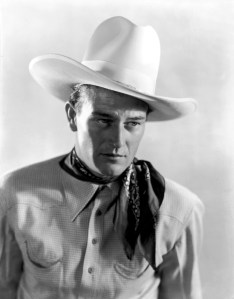
John_Wayne - overland stage raidersJohn Wayne: Love him or hate him, we can’t think of him as merely an actor. He has become an icon, the movie roles and the man bound into one, indivisible: the lone, laconic hero, man of action rather than words, graceful and bullying in turns.

4 more:

Louis Armstrong: American as soul.

Eleanor Roosevelt: American as do-gooder.

Babe Ruth: American as appetite.

Thomas Edison: American as inventor.

Most American Movies godfather

The Godfather Saga, Francis Ford Coppola, 1977: The conflated version of the first two Godfather films tells the immigrant experience writ large: family, business, love, loyalty, betrayal and the move west, told with the force and mythology of opera.

4 more:

The Man Who Shot Liberty Valance, John Ford, 1962: “When the legend becomes fact, print the legend.”

Star Wars, George Lucas, 1977: Good vs. evil supersized.

Gone With the Wind, David O. Selznick, 1939: History whitewashed.

Do the Right Thing, Spike Lee, 1989: Race will not go away.

American Contributions to global culture constitution go
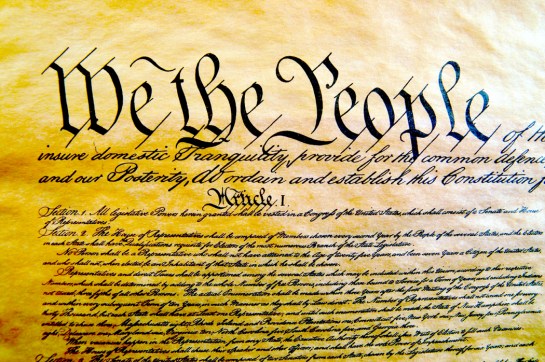
The Constitution: Our “governmental instruction manual” has become a model for the world, and its first 10 amendments have become the guiding principles of many an emerging nation. It’s more than merely political, it’s at the center of our culture, and the one thing the world really does want from us.

4 more:

Jazz: From which all popular music ultimately derives.

Hollywood: America’s secret plan for world domination.

Technology: The physical evidence of the can-do spirit.

Coca-Cola: Las aguas negras del imperialismo.

Most American Novels

huck finn book coverHuckleberry Finn, Mark Twain: The Great American Novel, filled with everything, good and bad, about ourselves: race, individualism, anti-intellectualism, optimism, religion, social climbing, moneygrubbing and our comfortable informality.

4 more:

On the Road, Jack Kerouac: An essential national theme takes center stage.

Beloved, Toni Morrison: The evils of slavery haunt even the freed.

The Leatherstocking Tales, James Fenimore Cooper: The invention of John Wayne.

The Great Gatsby, F. Scott Fitzgerald: Money, glamour, celebrity and loss.

Most American Plays angels in america

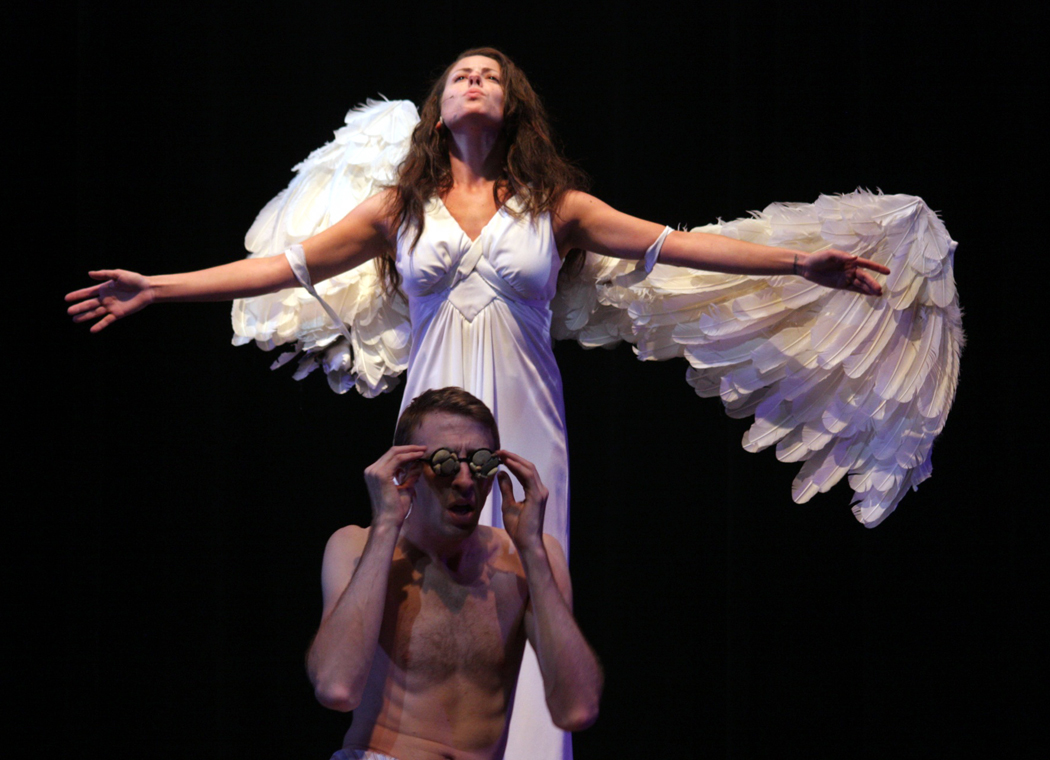
Angels in America, Tony Kushner: The hugely ambitious “Gay Fantasia on National Themes,” takes on more American themes than anything since Huck Finn: politics, sex, generations, religious revelation, Reaganism, bigotry and forgiveness; so expansive a single night can’t hold it.

4 more:

Death of a Salesman, Arthur Miller: The underside of the American dream.

Oklahoma!, Rodgers and Hammerstein: Gushy, American cornpone classic.

Streetcar Named Desire, Tennessee Williams: Torn T-shirts and sweaty thighs.

Fences, August Wilson: Black view from Pisgah.

American Classical-music compositions

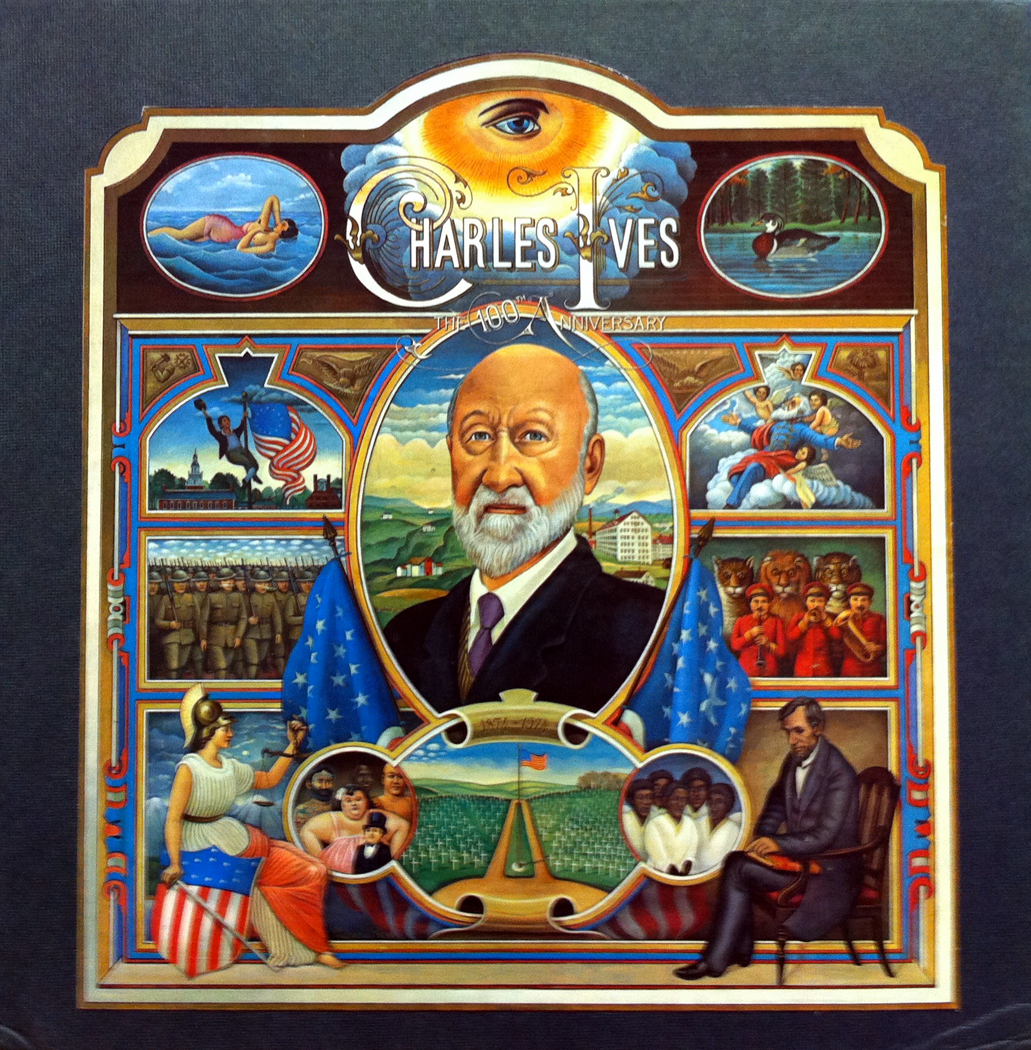
ives album coverThree Places in New England, Charles Ives: The crusty New England composer reinvents classical music to make it more American: loud, brash, nostalgic and patriotic at turns, and finds its subject in landscape and history.

4 more:

Rhapsody in Blue, George Gershwin: Jazz, Tin Pan Alley, Chopin and Carnegie Hall.

Appalachian Spring, Aaron Copland: Shaker hymn goes mainstream.

Symphony No. 3, Roy Harris: The type of the American symphony.

New World Symphony, Antonin Dvorak: Is the Most American Symphony written by a Czech?

American Architecture
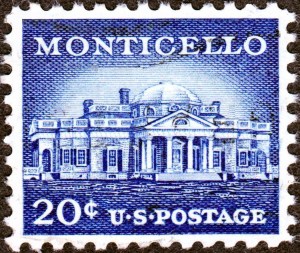
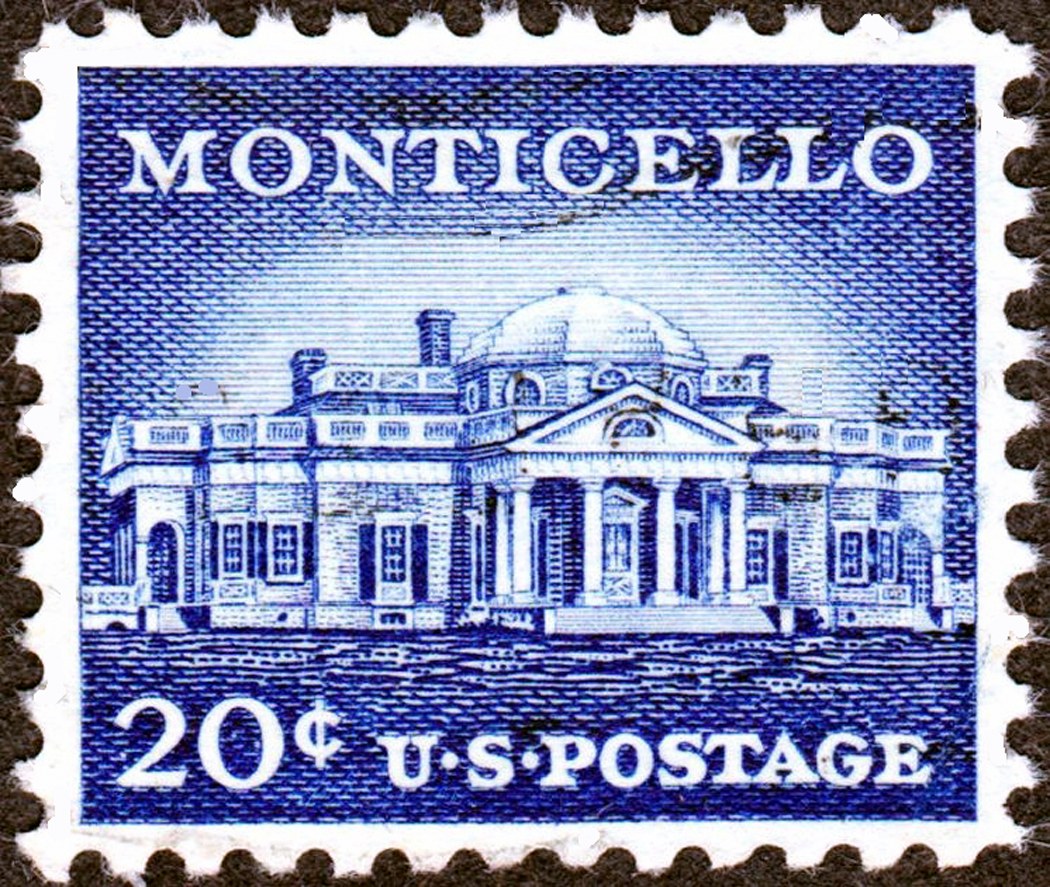
monticello stampMonticello, Thomas Jefferson: Just as equivocal as its owner and designer, this icon from the back of the common nickel is both paean to Europe’s classical past and the American’s love of invention, gimmickry and nature: Palladian windows and a moose head.

4 more:

Chrysler Building: American industrial dynamism with grace.

Sleeping Beauty Castle at Disneyland: Architecture as play-pretend.

Fenway Park: So cranky we actually love it.

Falling Water, Frank Lloyd Wright: Built over a waterfall like a diving board.

American Poems

Whitman at 50Song of Myself, Walt Whitman: The “good gray poet” could not have arisen anywhere else; he is completely American, from his deification of democracy to his catalogs of diversity to his “I sound my barbaric yawp over the roofs of the world.”

4 more:

Song of Hiawatha, Henry Wadsworth Longfellow: Closest thing we have to a national epic poem.

Poems, Emily Dickenson: Nothing more American than her quirky New England eccentricity.

Howl, Allen Ginsberg: “Visions! omens! hallucinations! miracles! ecstasies! gone down the American river!”

Mending Wall, Robert Frost: “Good fences make good neighbors.”

American Visual arts

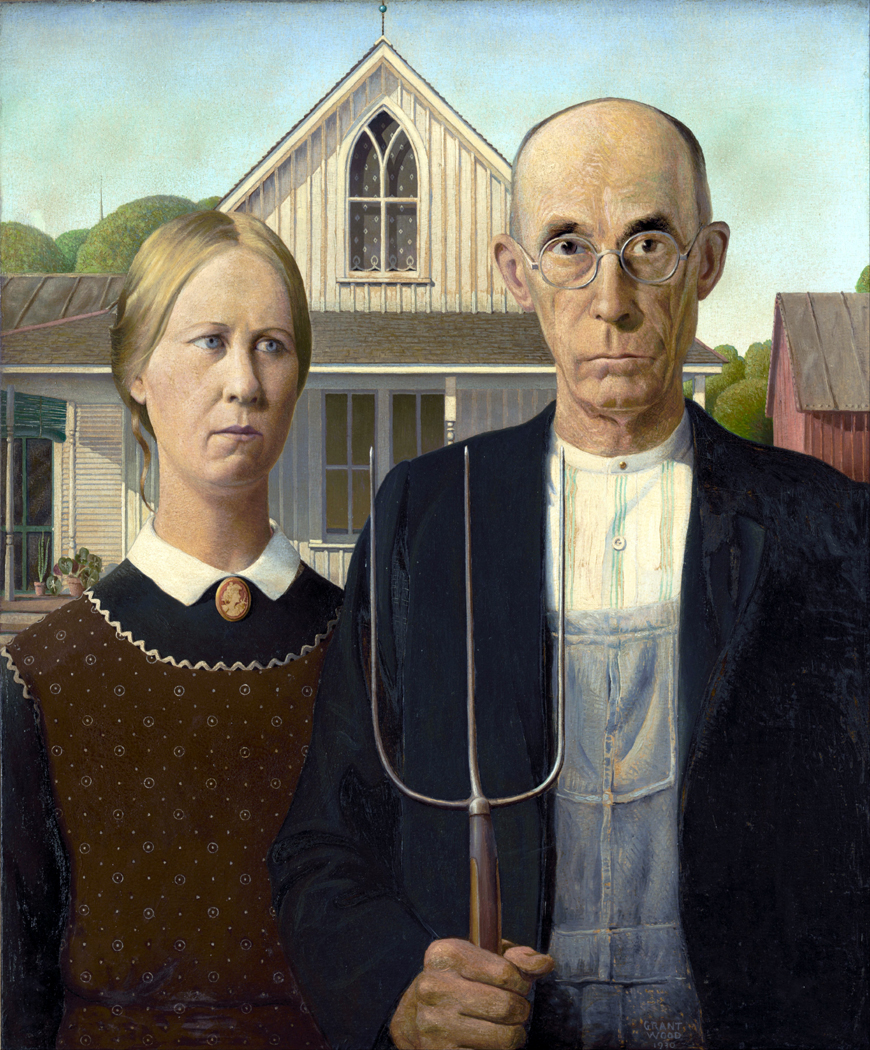
American gothicAmerican Gothic, Grant Wood: This iconic painting is more enigmatic than the Mona Lisa: encomium of hardcore American values or satire of Midwestern provincialism? Conservative or avant-garde? He’s not telling.

4 more:

Watson and the Shark, John Singleton Copley: Art ripped from the headlines, circa 1777.

Marilyn Monroe multiple, Andy Warhol: If one is good, a dozen must be better.

Dogs Playing Poker series, Cassius Marcellus Coolidge: Now, that’s OTT!

Freedom From Want, Norman Rockwell: Turkey, potatoes and lots of corn.

American Popular music

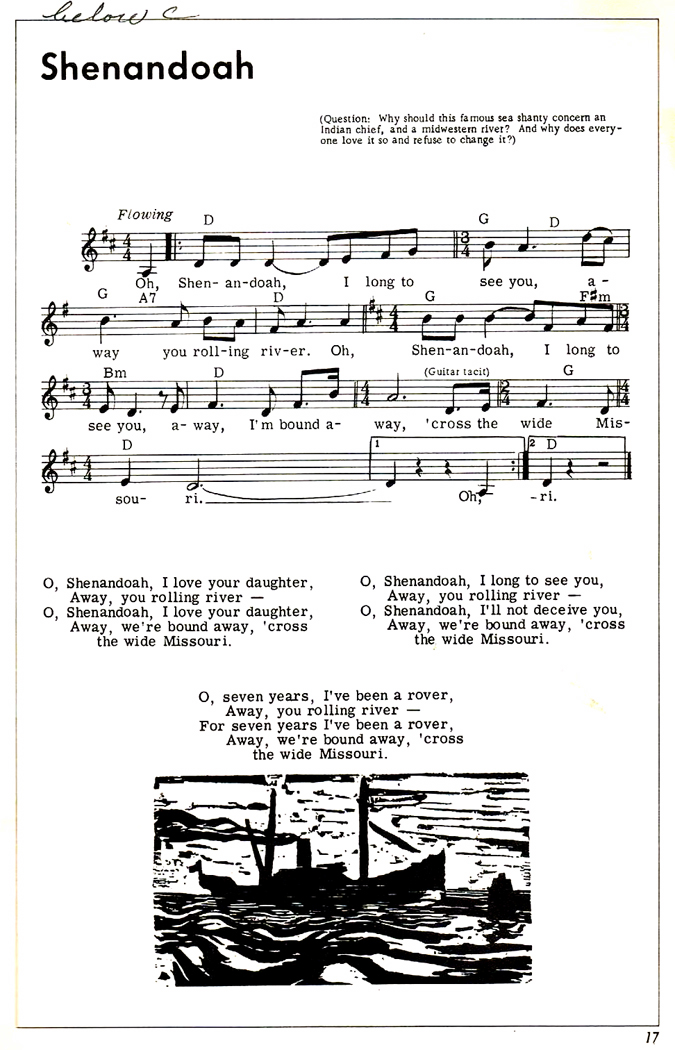
shenandoahShenandoah: A folk song of undetermined origin, this is the quintessential song about migration and loss; with its odd strophic form and 19th-century sentiment, it borrows elements from Irish shanties and African-American blues.

4 more:

One O’Clock Jump: Count Basie and swing.

Born to Run: Rebels on wheels, a la the Boss.

Hound Dog: Elvis frees America all over again.

Swing Low, Sweet Chariot: The suffering of a people, caught in the throat.

janissary 1

East is east and west is west. But the twain have met many times before the current unpleasantness.

The West and Islam go way back.

On the serious side, there were the Crusades, the Moorish conquest of Spain and Charlemagne. On the more trivial side, there was the Dutch craze for Asian tulips in the 17th century.

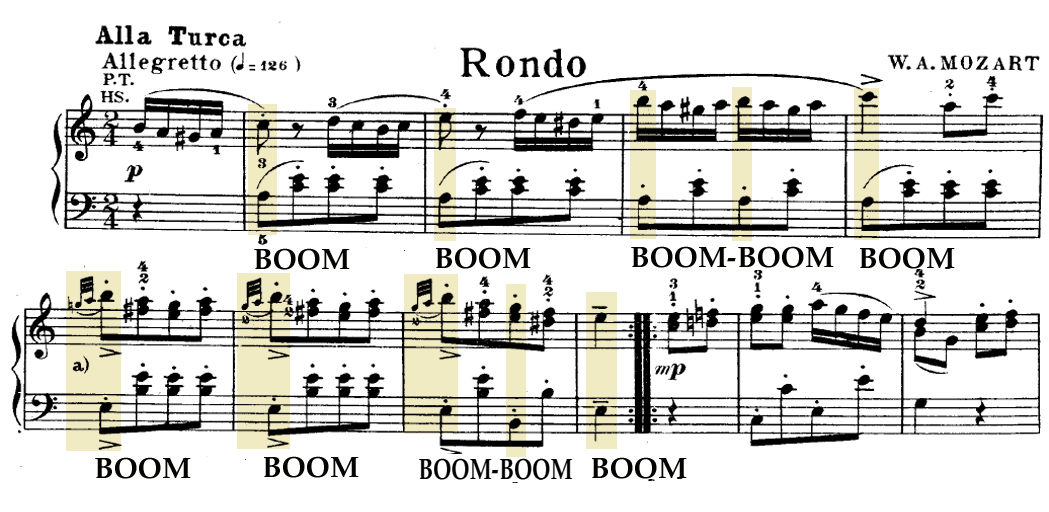
And one of the more interesting collisions between the West and Islam occurred in Europe in the 18th century with a craze for all things Turkish. It gave us coffee, croissants, Angora sweaters and Mozart’s Rondo “alla Turca.”

It also finally gave us Rossini’s Italian Girl in Algiers (L’Italiana in Algeri), and its sequel, The Turk in Italy (Il Turco in Italia).

Europe had been under the gun from the Ottoman Empire for centuries, but when the Treaty of Karlowitz was signed in 1699, it ushered in not only an era of peace but a fad in fashion. For the next century and a half, all things Turkish, Moorish and Islamic became the source of the culturally exotic in European minds.

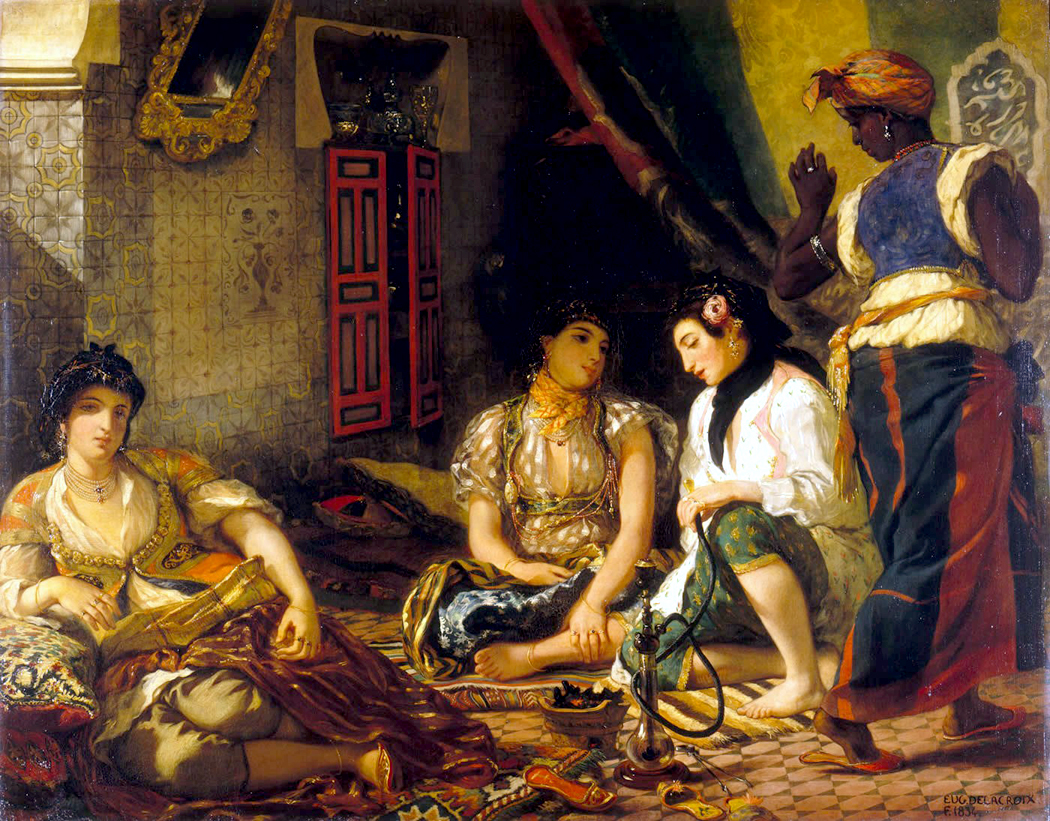
Eugene Delacroix "Women of Algiers" 1834

Eugene Delacroix “Women of Algiers” 1834

It’s really quite stunning to see it all: Turkish cigarettes, Turkish baths, Turkish carpets, harem pants, slippers with upturned toes. There were harem girls painted by Ingres and Delacroix. The turkey named for the color of its wattles, which matched a popular fabric dye of the time, called “Turkey red.”

And one of the most pervasive effects was the popularity of “Turkish music.” Haydn, Mozart and Beethoven all wrote versions of Turkish music.

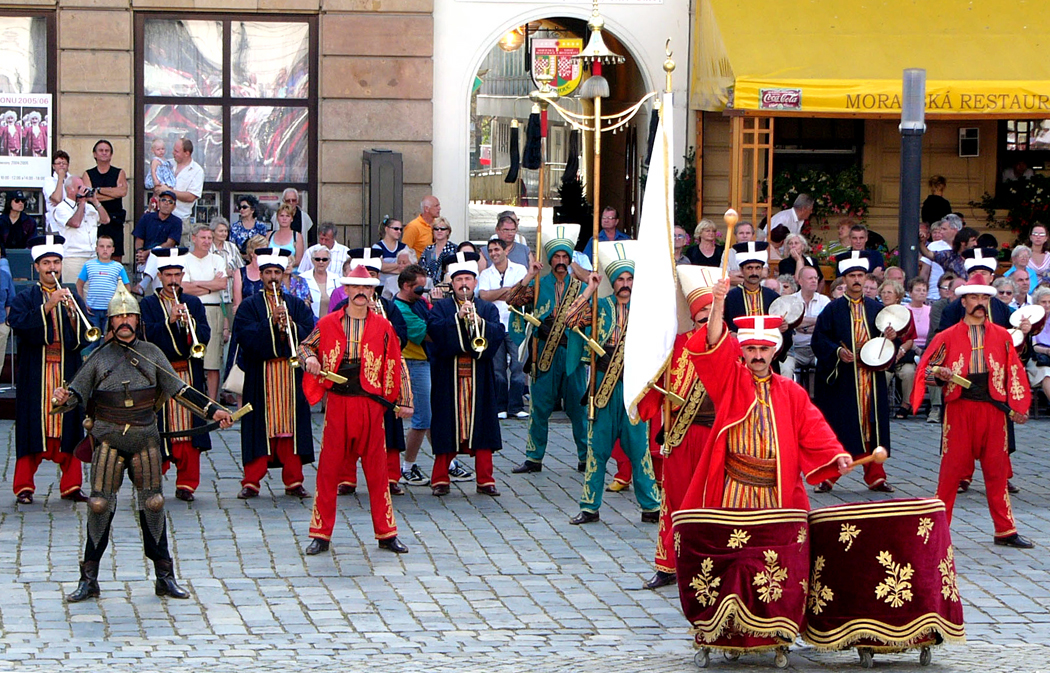
When the Ottoman Turks sent janissary bands — their military bands — to Vienna as a kind of cultural-exchange program, the European ears were perked by the exotic sounds of their drums, cymbals and chimes. It was a clattery music with an insistent rhythmic drive.

You hear the European orchestra expanded with new percussion instruments at just this time, when Haydn wrote his Military Symphony and Mozart his Turkish concerto for violin.

The characteristic rhythm of Turkish music was the march beat of “Left… left … left, right, left,” and you can hear it in Mozart’s Turkish rondo as well as in the concerto.

rondo boom

And Beethoven even included a segment of Turkish music in his sublime Ninth Symphony, the “Ode to Joy,” when the whole thing comes to a momentary halt, interrupted by the burps of a contrabassoon, followed by the Turkish marching music that sounds remarkably like the theme song to Hogan’s Heroes.

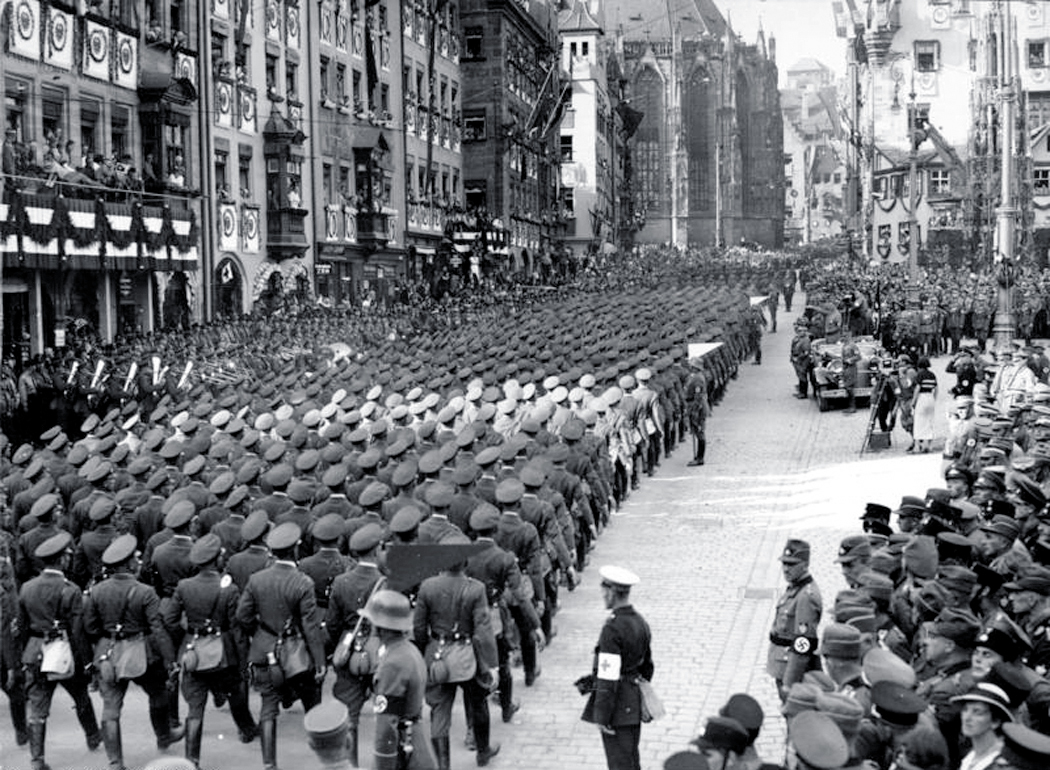
In fact, German military music made such pervasive use of the Turkish rhythm that it soon lost all sense of being exotic and became the drumbeat of Germanic militarism: If you watch the Leni Riefenstahl film, Triumph of the Will, about the Nazi Party rallies in Nuremberg before the war, you are nearly oppressed with that “boom … boom … boom-boom-boom” rhythm. Nürnberg, Reichsparteitag, Marsch der Wehrmacht

That is a baleful end to what began as pure fluff. Operas about Turkish pashas and European women were a regular occurrence.

Mozart wrote his Abduction From the Serail, filled with Turkish effects, and Rossini, decades later, imitated that sound — and pretty well stole the plot — from the Mozart, for his Italian Girl in Algiers. In it, a crafty Italian woman outwits a foolish Turkish bey and saves herself and her fiance from a fate worse than Wagner.

It’s a wonderful opera, full of Rossini’s best tunes and imbroglios.

"The Death of Marat," by Jean-Louis David, 1793

“The Death of Marat,” by Jacques-Louis David, 1793

It was called, simply, “the Terror.”

the last death no one leftIt was probably the closest Western Europe ever came to the horrors of Rwanda — not just in body count, but as mere anarchy loosed upon the world.

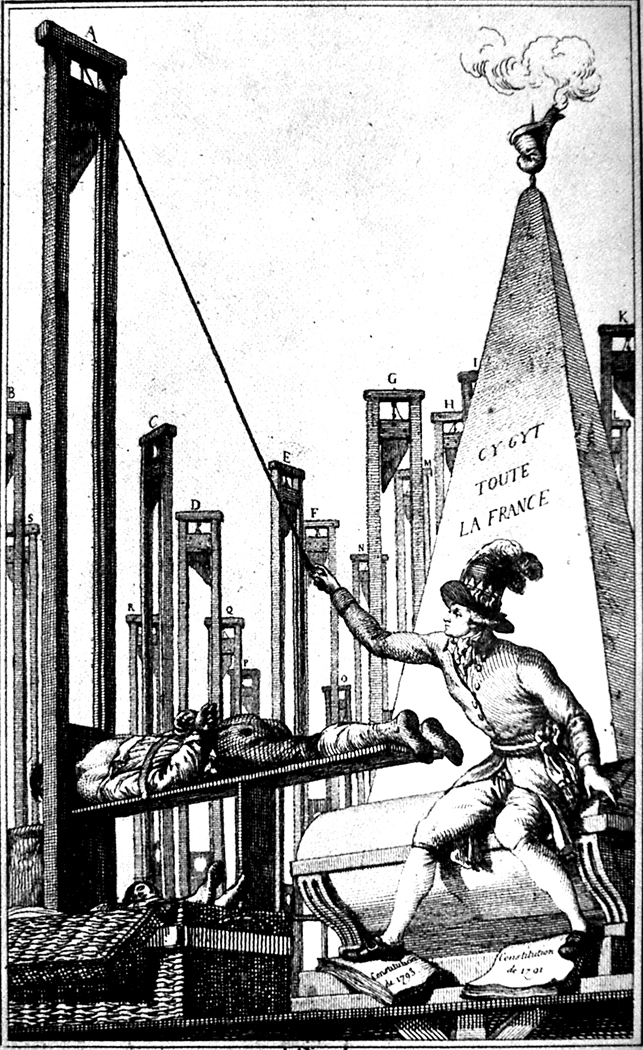
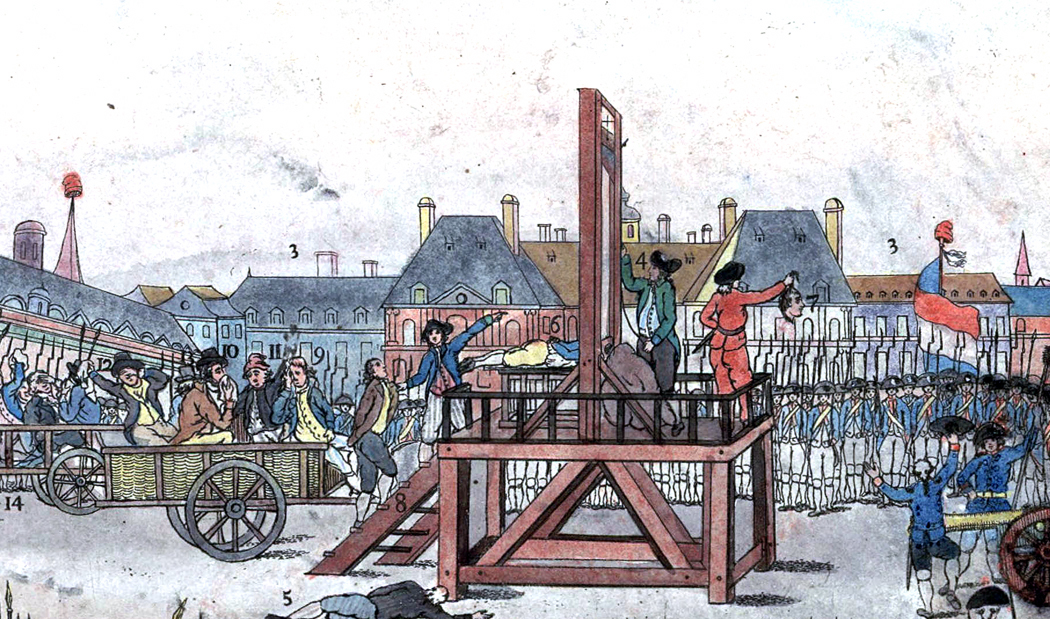
It was the French Revolution, and from September 1793 to July 1794, nearly 2,000 people a month were beheaded in Paris, many for nothing more than being too tepid in support of the Revolution.

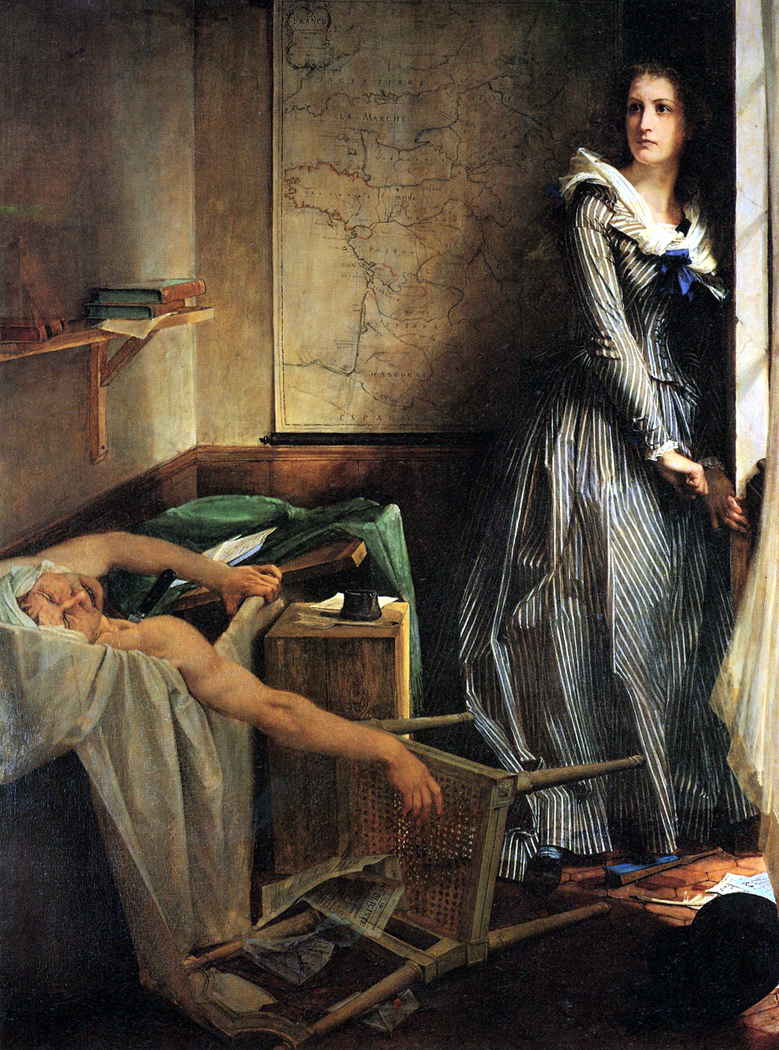
And in the middle of this bloody storm was painter Jacques-Louis David, who created the most famous painting of the Revolution, The Death of Marat, in 1793. It was a masterpiece of political propaganda.

But that is not all David did for the Revolution: That is not red paint on the artist’s hands. The painter personally signed at least 300 death warrants as a member of the Jacobin government’s Committee for General Security.

The painting, originally called Marat at His Last Breath, created a martyr of the revolution from a man who is more properly a war criminal. And it again raises the question of art’s moral responsibility.

Marat

Marat

The dead man in the painting, Jean-Paul Marat, was a journalist who called for thousands of heads to roll. “No, hundreds of thousands,” he wrote.

And on July 13, 1793 — the day before what is now Bastille Day — this greatest, most bloodthirsty exponent of the Terror was stabbed to death by a young woman.

“I killed one man to save a hundred thousand others,” she said.

She miscalculated. She had killed Jean-Paul Marat, but his death unleashed the worst of the Terror.

Jean-Paul Marat was not the kind of person you would think of if you wanted to create a hero.

He was a peculiar man, formerly a physician — some called him a quack — and at turns vicious and paranoid. He cut an unpossessing figure: Ugly, short, he suffered from a skin disease, likely a psoriatic arthritis, that left his face scarred: He called it “leprous.” To salve his discomfort, he conducted his daily business from a bathtub filled with cool water. On his head he wore a towel soaked in vinegar for relief. A board across the tub provided a desk.

Marat published a newspaper called Friend of the People, which harangued and incited. He lauded what he considered republican virtue and selflessness, and called for the death of anyone he considered a traitor: that is, anyone who didn’t agree with him. Patriotism and selfless devotion to the cause drove Marat.
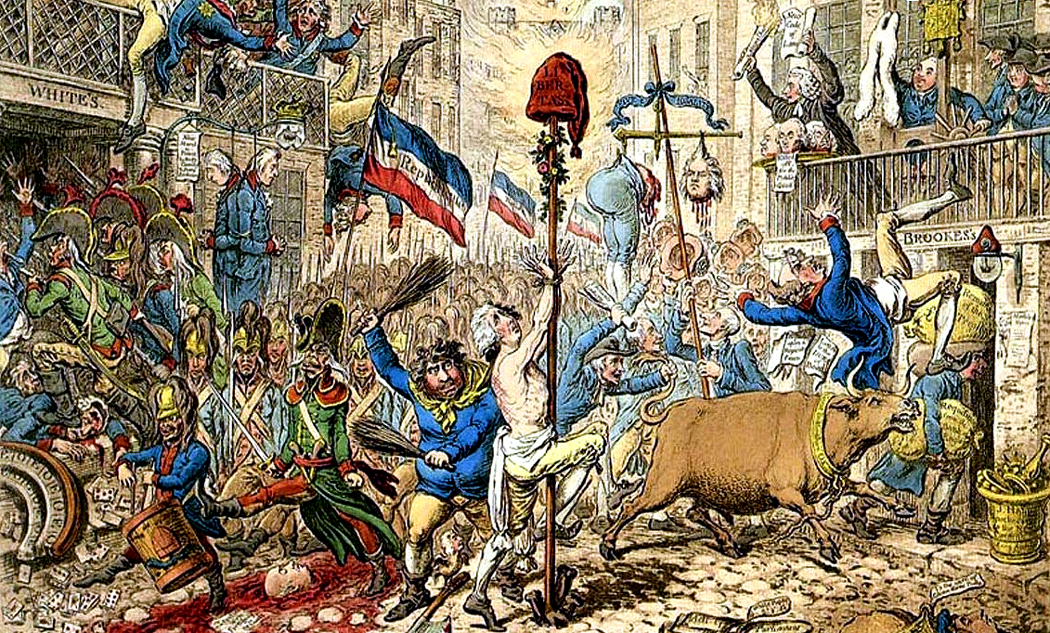
James Gilray on The Terror

James Gilray on The Terror

It went well beyond a call for the beheading of the aristocracy.

In fact, during the Terror, 70 percent of those killed were from the lower classes. People settled grudges by informing on their neighbors. An accusation was enough.

But for painter Jacques-Louis David, Marat became the perfect subject to deify when he was assassinated in the early months of the “Reign of Terror.”

"Charlotte Corday" by Paul Jacques Aime Baudry, 1860

“Charlotte Corday” by Paul Jacques Aime Baudry, 1860

His assassin, Charlotte Corday, then just 23, felt just as keen a patriotism as Marat. But for her, patriotic duty meant she must kill “the monster, Marat,” even if it meant her own death.
She came to Paris, bought a 6-inch kitchen knife, wrote a note explaining her actions and pinned it to the inside of her dress. In it she called Marat “the savage beast fattened on the blood of Frenchmen.” She also bought a new hat, a green one.

On the morning of July 13, 1793, she went to Marat’s apartment, armed and determined. She couldn’t get past Marat’s bodyguards. But she came back in the evening, slipped in behind some delivery men, flashed a phony list of the names of “traitors.” Marat showed interest, calling her to his tub.

Marat looked the list over and told her, “Don’t worry, in a few days I will have them all guillotined at Paris.”

She then pulled out the knife and stabbed him in the chest once, severing his aorta and puncturing a lung. A jet of blood sprayed the room. He died calling for help from his friends.

Four days later Corday was beheaded for her crime, and Marat was transformed into a patriotic martyr.

And David was just the man to do it. He had been the artist of the Revolution, creating images of republican virtue and the glorious past.

When the news of Marat’s death reached the National Convention, one delegate yelled out, “David, where are you? Take up your brush — there is yet one more painting for you to make.”

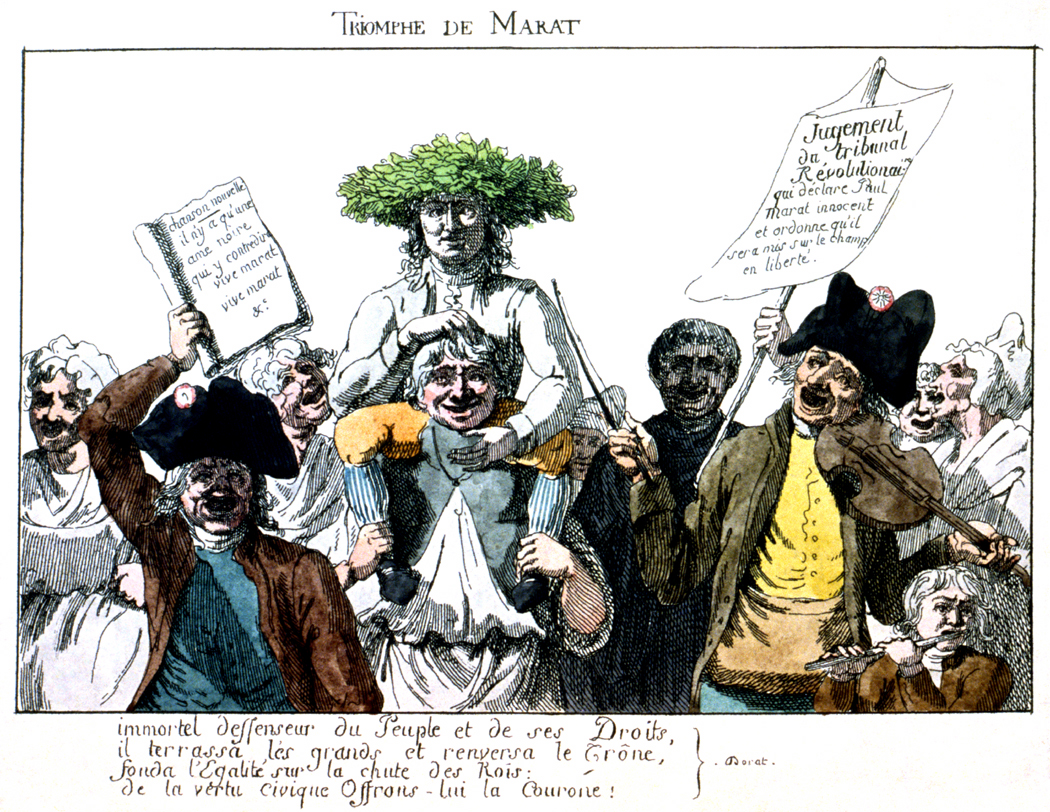
Cartoon of Marat as defender of the People and the Peoples' rights

Cartoon of Marat as defender of the People and the Peoples’ rights

The propaganda machine went into high gear. A great public funeral was held — organized by David — streets were renamed for Marat, poems and songs were written. At least one new restaurant opened in the rue Saint-Honore called the Grand Marat.

“Indeed, Marat dead was perhaps more useful to the Jacobins than the unpredictable, choleric live politician,” wrote Simon Schama in Citizens, his history of the French Revolution.

A commission for a painting was voted and David began three months’ work on what would be seen as his masterpiece.

When it was finished, it was paraded around Paris like a Mexican santo, rallying the people to redouble their republican ardor and sharpen the cleansing edge of the guillotine’s blade.

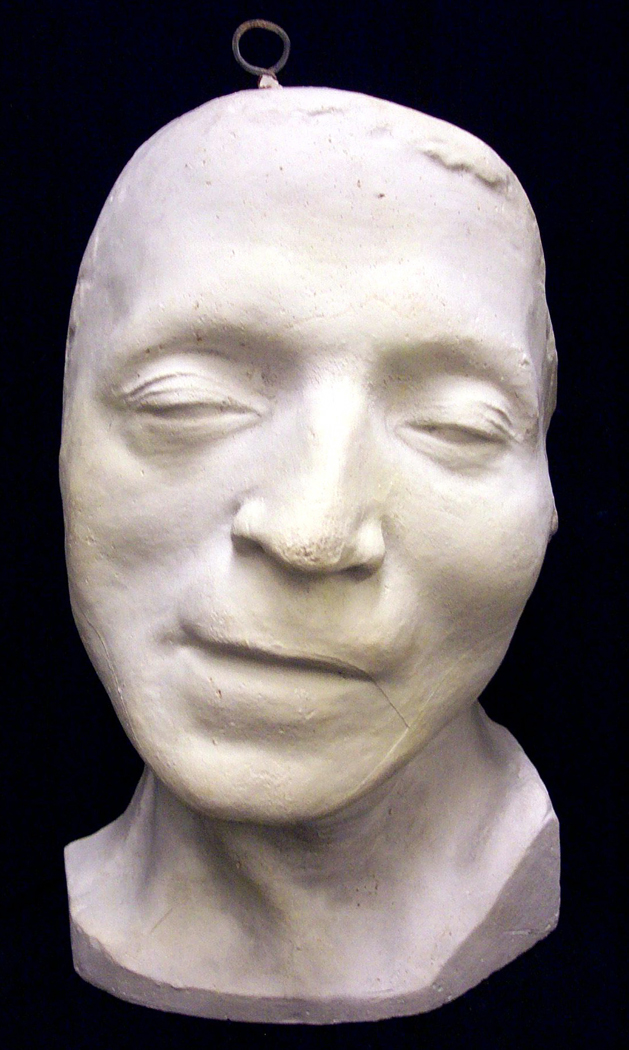
Marat's death mask

Marat’s death mask

Thousands of cheap engravings were distributed, made from a death-mask portrait drawn by David. Marat’s eyes closed, his head tilted in death.

Copies of the painting were ordered from David and his atelier, to be sent to the other cities of France.

Instead of stopping the violence, as Corday had hoped, her act only worsened the Terror. The assassination now became a cause.

As for David, when the Terror ultimately collapsed and its architect, Maximilien Robespierre, was guillotined, the painter went to prison. At least he kept his head.

He was released after about a year in a general amnesty.

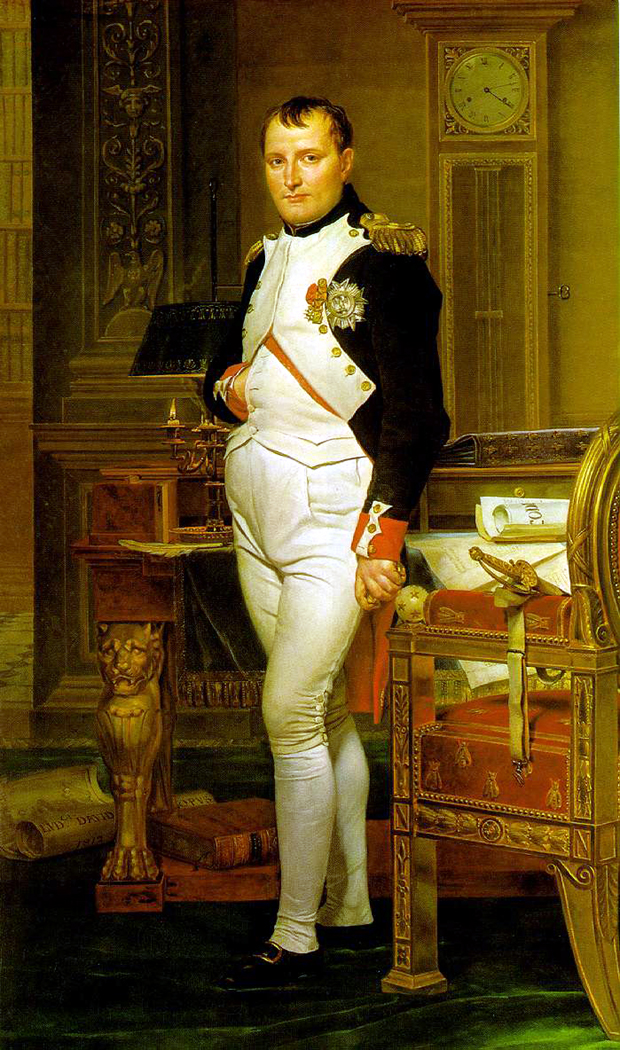
When Napoleon came to power, David became the imperial artist, glamorizing the First Consul as he had glamorized the Revolution. David was a political chameleon, a slippery eel. The artist was always looking for a “great man” to glorify, whether it was Marat or Napoleon.

"Napoleon in his study"

“Napoleon in his study”

When Napoleon fell, David went into exile in Belgium, where he died in 1825.

His great painting had a similar fate: It was withdrawn from the public shortly after the fall of Robespierre and sent back to the artist’s studio, where it remained, unexhibited till well after David’s death.

Finally, in 1848, republican sentiment arose once more in France and Marat came out of storage. The poet Charles Baudelaire saw it and wrote a famous encomium, which raised public awareness of the masterpiece once more. The painting became canonized.

Today, the most recognized souvenir of Marat’s life and death is the painting David made to immortalize the journalist.

It is powerful: “David weaponizes art,” said one museum curator.

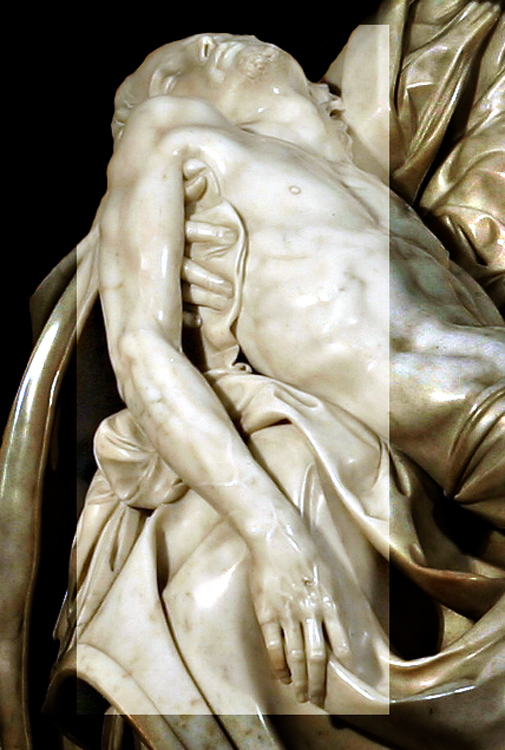
David’s painting is hugely original, mixing an almost journalistic sense of the here and now with familiar iconographic symbols, like the hanging arm of Michelangelo’s Pieta, turning the dying journalist into a Christ figure.pieta arm

That isn’t just a conceit: The subconscious reading of the painting can’t help seeing the echoes of earlier, religious paintings. David was able to mythologize current events and give them depth and power.

“If there’s ever a picture that would make you want to die for a cause, it is Jacques-Louis David’s Death of Marat,” historian Simon Schama says in his TV series The Power of Art. “That’s what makes it so dangerous — hidden from view for so many years. I’m not sure how I feel about this painting, except deeply conflicted. You can’t doubt that it’s a solid-gold masterpiece, but that’s to separate it from the appalling moment of its creation, the French Revolution.

“If ever a work of art says that beauty can be lethal, it’s Jacques-Louis David’s Marat.”

David has turned the paranoid fanatic into a saint of the revolution. He had also made what some have called the first “modern” painting: spare, direct, almost abstract in its design.

But the image raises a question: Can great art be made for evil reasons?

The question is not merely academic. These questions have come up many times in the past: Can Leni Riefenstahl be a great filmmaker if the films she made glorify Hitler? Can D.W. Griffith’s Birth of a Nation really be one of the most important films ever made if its heroes are the Ku Klux Klan?

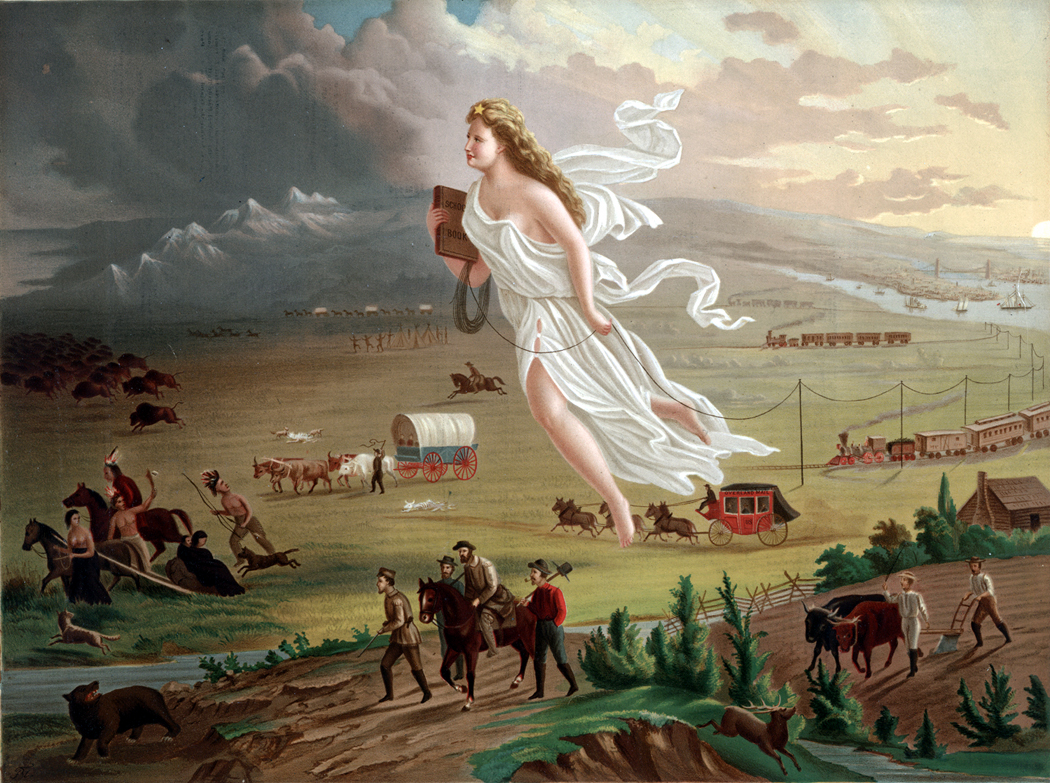
And what about Westerns? Are our heroes cowboys? Or do we acknowledge our own genocide? What was once the patriotic foundation myth of our nation now embarrasses any thoughtful American. The once-famous Battle of Wounded Knee has now become the Massacre at Wounded Knee.

So, what do we make of art when we question the artist’s motives?

There are some who believe composer Aaron Copland’s music can’t be any good because of his lefty political leanings. And the take people have on Shostakovich often depends on whether they see him as a Soviet apologist or a secret dissident.

The art of Englishman Damien Hirst horrifies some people, because he may use dead animals, pickled in formaldehyde, as part of his art. His shows bring out the picketers.

Wagner cannot be played in Israel because of his anti-Semitism and because Wagner was Hitler’s favorite composer. Where can we draw the line on this?

Do we ban politically injurious art, the way many would ban the use of Nazi medical research?

"Execution of Robespierre" detail

“Execution of Robespierre” detail

“I can appreciate pure ‘art for art’s sake,’ ” says artist Anne Coe, whose paintings are never politically neutral.

Coe is an ardent environmentalist and lover of animals, and her paintings promote her views.

“But to me, the really knock-your-socks-off art has a little more,” she says. “It has ideas behind it. I think art is insipid without some sort of idea in it.”

And David’s art is all about ideas.

“David is the artiste engage par exellence,” says Mary Morton, associate curator of paintings at the J. Paul Getty Museum. “He gave himself completely to politics.”

The subject of the painting, she points out, is not so much Marat the man but the virtues of republican self-sacrifice.

“David’s art is very didactic,” Morton says. “It is about civic responsibility.”

And perhaps we are removed enough from the events of 1793 that we can see in David’s painting the idea rather than the man — the spirit of democracy instead of the call for blood.

“What is that line between propaganda posters, like ‘Uncle Sam Wants You,’ and the David painting, or the paintings of religious martyrs?” Coe asks.

“Does some art lead to evil things? That is the risk you take in a society that says everything is relative.”

There is no single answer to the question; you have to take each case individually and weigh it in your own conscience.

“I listen to Wagner. I love Wagner,” Coe says. “You can’t have an answer.”

Orangerie Paris

What is culture, and why should we care?

These are questions that don’t get asked often enough when we discuss such inflammatory issues as government funding of the arts and humanities.

To many people, culture simply means a lot of wealthy people going to the opera and sitting through a hare-brained story in a language they don’t understand while listening to a soprano shriek so loud their elbows go numb.

Or it means drinking bad white wine from a plastic champagne glass at an art gallery opening or long, dense scholarly papers deconstructing Little Red Riding Hood as a text about the patriarchal hegemony.

We too often talk about culture as if it meant only evenings in the theater and long Russian novels.

But what would happen if all these so-called ”high” arts suddenly disappeared? Do we actually need them?

To understand the answer, we need to understand what culture is. Culture is broader than just the arts.

It’s what you eat for breakfast and whether your trousers have cuffs. It is who you are allowed to marry and what happens to your body when you die.

Culture is the set of rules — mostly in the form of traditions — by which society runs.

It is the software for our social lives.

In fact, far from being a luxury, culture is something you cannot live without. It is religion, art, laws, ethics, history and even our clothing.

Culture is who we are.

And who we are at this moment: No culture is static. It is an evolving thing — to keep up with the computer metaphor, there are constant upgrades. Culture 2.7 gives way to Culture 3.0, as the circumstances of our lives and our cultural needs change. The culture of the clipper ship means little on a jumbo jet.

Yet, although culture changes, it is inherently conservative. It changes very slowly. Nobody wants to get caught with a beta version of untested software.

Patterns from our ancestors persist in our lives. We enter the jumbo jet from the left side because our great-grandfathers wore their swords on their left sides and consequently mounted their horses from the left, to avoid entangling their swords.

You can see the history of aviation change from the stirrup on the left side of a World War I biplane to the door on a 747.

And how many children today play with ”choo-choo trains,” although not even their parents ever lived in a world with steam locomotives?

The patterns stick with us even when they no longer make sense.

But culture does change. The three-minute song remains the cultural pattern, although Dinah Shore has given way to Taylor Swift.

Songs from our agricultural past, lauding springtime and the moon, make little sense to our urban present, where nocturnal lighting is more likely neon. So we change. Slowly.

And where does cultural change come from? More often than not, from the arts.

The arts try out possible ideas onstage to see if they might make sense. Sometimes they do, sometimes they don’t. But the best minds and imaginations give it their best.

That is why we think of theater as ”culture.” Or literature, or painting.

Yes, there are some people who want to keep their old software version, and some who want to return to earlier versions. But culture cannot stand still.

Therefore, we need to be on the lookout for meaningful directions to go in. Art is our investigation of our values, testing them and throwing out some and reinforcing others.

Without art, culture ossifies and the people become emotionally and spiritually dead. So, if we mean to maintain a vital culture, we must support the best in the arts.

There is another computer saying: GIGO — garbage in, garbage out. In other words, if we don’t care for the changes in our culture, we are likely to wind up with the lowest common denominator. We are likely to wind up with nothing more than Duck Dynasty and microwave pizza.

winogrand hollywood

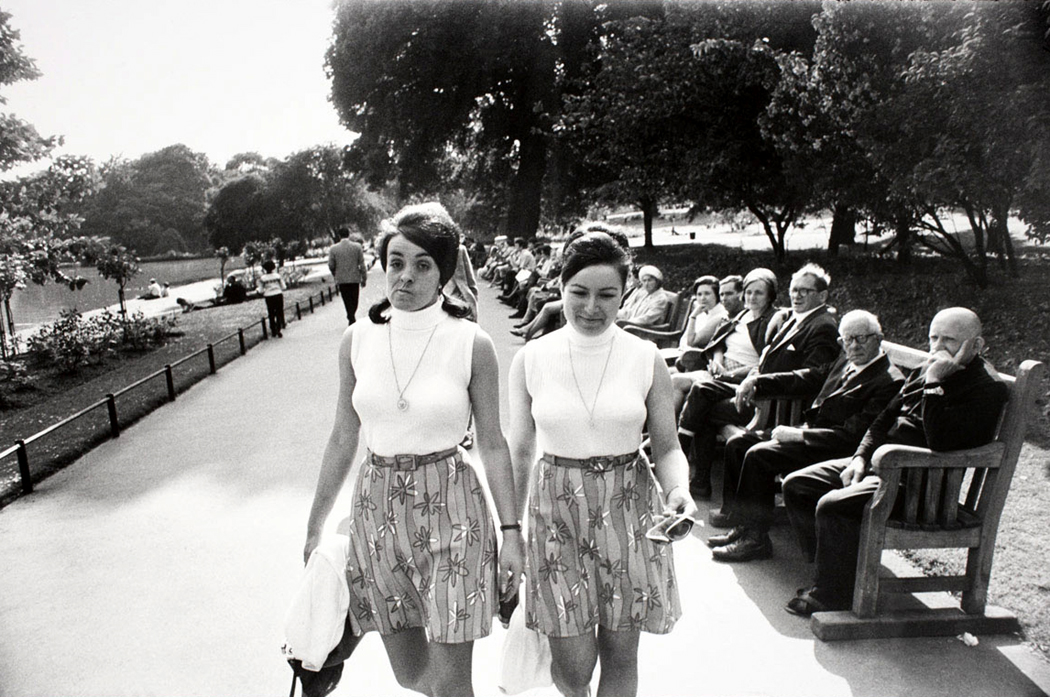
Curiosity is the libido of art, and photographer Garry Winogrand was its visual Don Juan.

Over a 40-year career, he photographed with prodigal fascination the cities, foibles and mores of America. He pointed his Leica, with its wide- angle lens, at a roiling chaos of visual information. Anything might tickle his curiosity.

So prolific was he, promiscuous some might say, that at his death in 1984 at age 52, he left behind a third of a million exposures either undeveloped or unedited. He could never catch up in the darkroom with the conquests of his shutter button.

To be more specific: He ran through film like an alcoholic runs through gin. He left behind 2,500 rolls of film undeveloped, 6,500 rolls developed but not edited or printed and about 300 contact sheets unedited.

The pictures he did print are often enigmatic: You can’t always tell why he took a particular picture, at least until you look long and hard, and look through an entire box of them. Then, Winogrand’s odd world view takes hold and his pictures become addictive. It is a Winogrand world.

Someone once said, “The world is not only stranger than you imagine, it is stranger than you can imagine.”

This is the truth Winogrand captures in his pictures. winogrand elephant 2

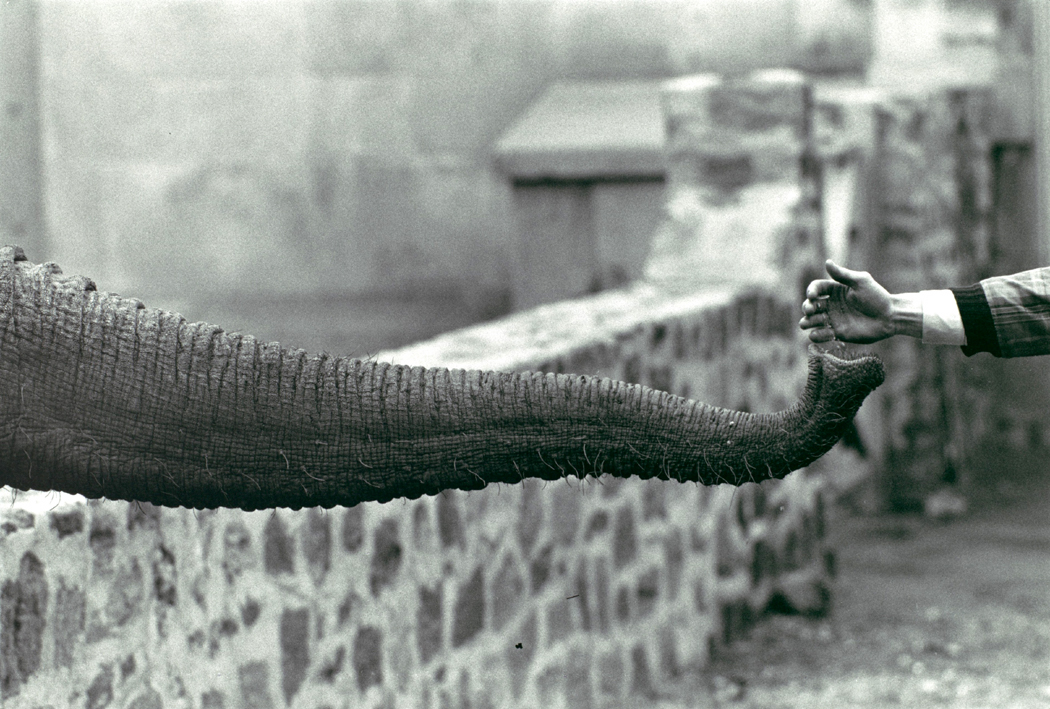
winogrand monkey in carIn many cases the photographs he left are jokes we can enjoy. An elephant’s trunk stretches across the frame to catch some peanuts dropped from a hand. No elephant in the picture; no person. Just hand and trunk.

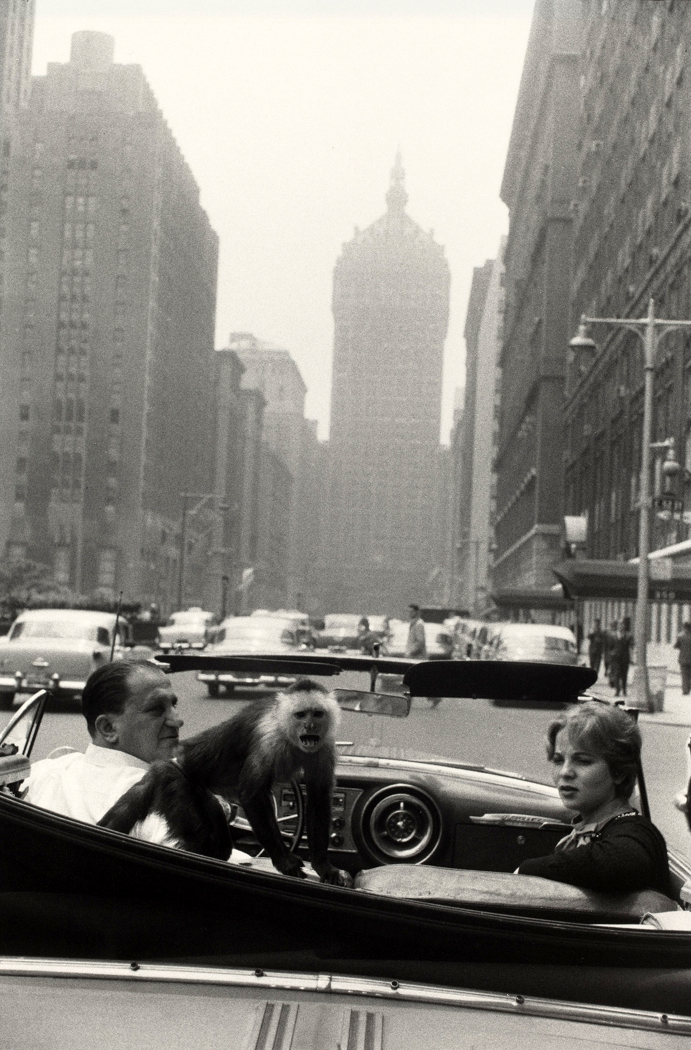
A middle-age couple sit in a convertible on Park Avenue in Manhattan; an angry monkey perches on the seat back. What does such a thing mean?

A bagpiper in full Scots drag plays a bagpipe in a men’s room in front of a rank of urinals.

Few of the pictures have titles, and for those that do, the titles tell us very little: Park Avenue, New York, for instance, for the scowling monkey, or Apollo 11 Moonshot, Cape Kennedy, Florida. That picture shows a crowd of people from the back watching — and photographing — a rocket launch, while one small woman in the foreground looks in the opposite direction and makes a picture — we can never know of what — with her Kodak Instamatic. winogrand cape canaveral

But more often than not, the punch line is equivocal; more often it looks as if there must be a joke we do not get. It is on this edge of comprehension, subtle and uncomfortable, that Winogrand’s most important photography creates its meaning. For pictures with punch lines, Elliott Erwitt is much more consistently funny. But Winogrand tells us something deeper and more disquieting. winogrand richardson 1977

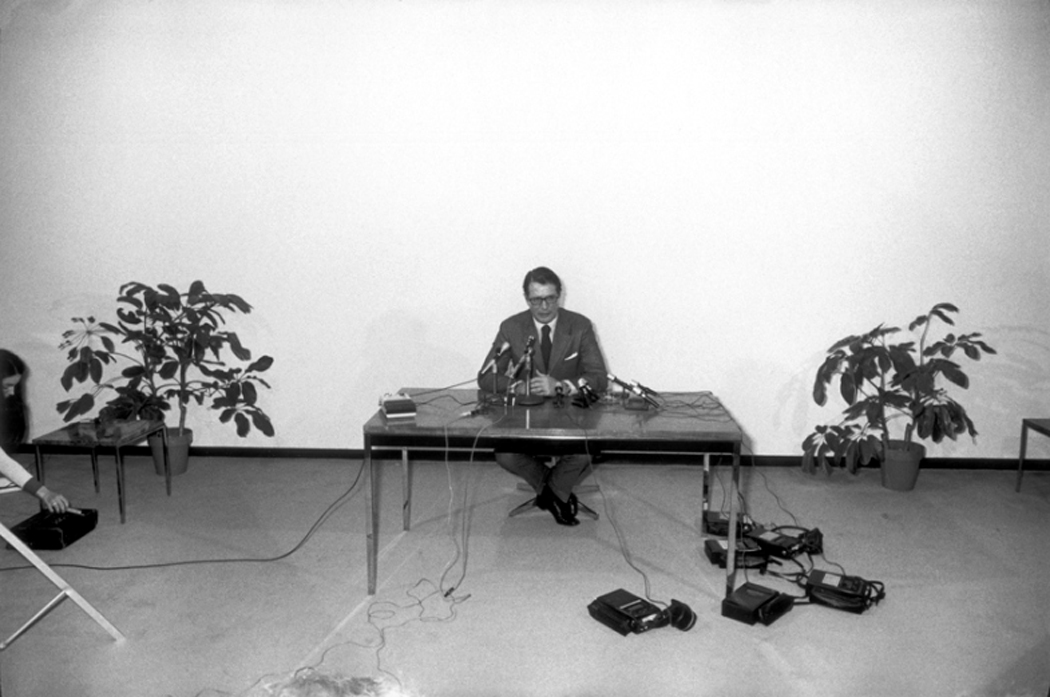
Most of us live in a world where things proceed largely as we expect them to. We hardly notice the anomalies. Winogrand was never so acculturated that he had conventional expectations; it freed him up to see what was really in front of him. Nixon Attorney General Elliot Richardson in a press conference alone and isolated — small — at a folding table and surrounded by tape recorders. A man and a woman — their backs to us — stare at a gorilla in a zoo; the gorilla stares back. winogrand phonebooth pair

Other photographers made consciously surreal pictures — Les Krims, for instance, who taped dozens of photos to his mother’s nude body, or Duane Michals, who used camera trickery to show a soul departing through an apartment window.

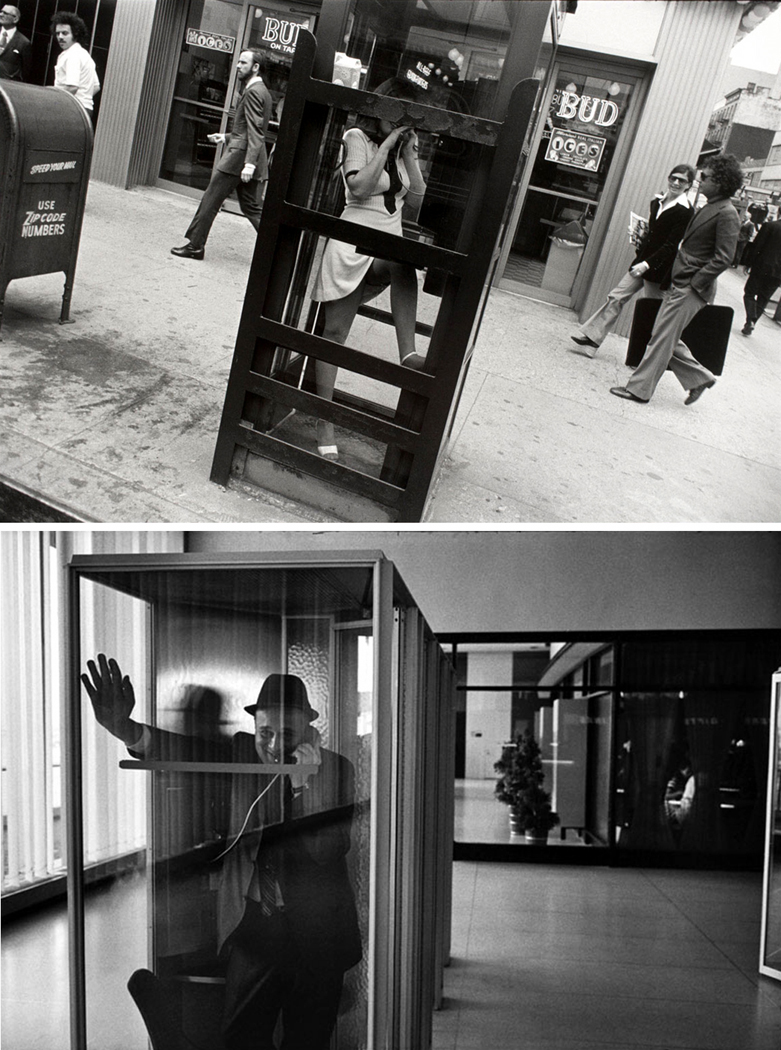
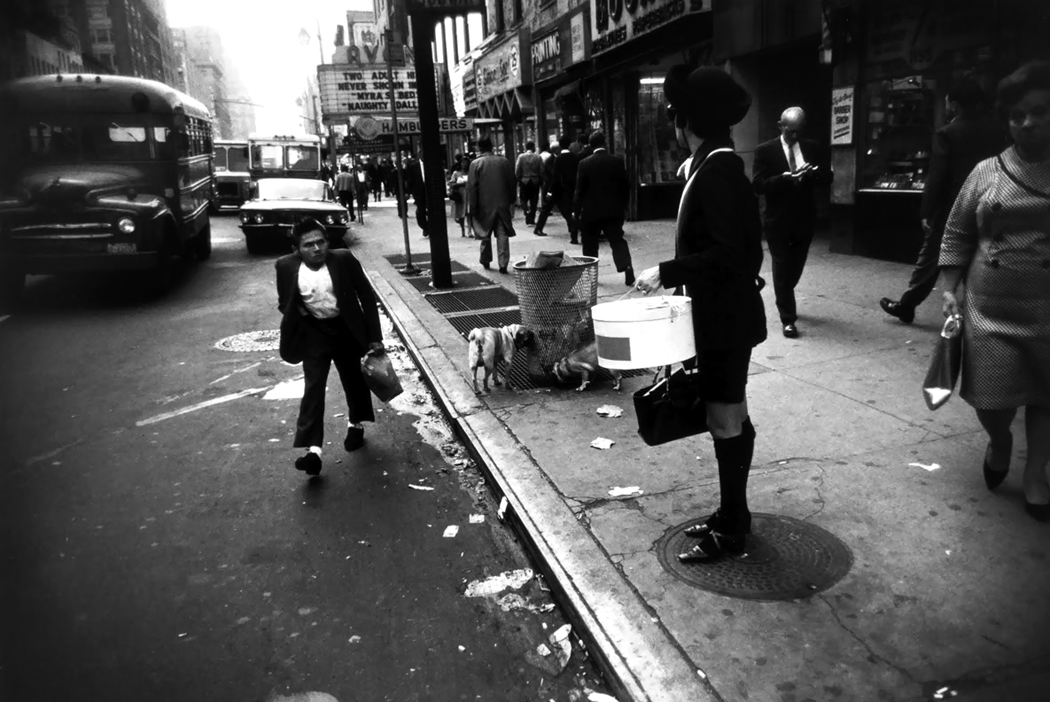
But Winogrand isn’t surreal. His world is the everyday one in front of us all the time, but which we do not see. Nothing is more bizarre than the ordinary. winogrand underwater pair

But it isn’t just the world by itself. As Winogrand insists, it is the world wrung through a camera lens. The act of making a picture changes the world.

He often said he made pictures to find out what the world looked like in photographs. And there is an awareness in Winogrand’s work that photographs rewrite reality. He makes us question our belief in the supposed truthfulness of photographs. winogrand nyc 1970

Winogrand knew that the four edges of a picture frame are a cookie cutter that slices out a bit of reality’s dough and separates it from its context and remakes the facts. No doubt there were a bevy of reporters listening to Richardson’s comments, but because they don’t appear inside the image frame, they cease to exist. This is what Winogrand means when he talks about seeing how something looks in a picture. It is changed. Utterly and inutterably. winogrand 1991 1

Winogrand was aware that a photograph has a grammar and syntax that we have learned to read. He makes us distrust that syntax.

He also plays God, making order out of chaos. Or at least, being aware that human perception will force meaning from chaos, he creates an artificial meaning from something that has none. In doing so, he forces us to consider the very existence and nature of meaning itself. Perhaps meaning is just a pattern we have gotten used to, a habit. Perhaps all it takes to create new meaning is a new pattern. Winogrand 1984 2

It is the artistic equivalent of naming constellations in the night sky. In that sky is a confused mass of stars, but we have grouped some together and named their configuration. The Big Dipper does not exist of itself, but only in that we have invented it. Orion, Scorpio, Gemini: The boundaries of any of these constellations could be redrawn and renamed. Put together the tail of the Big Dipper with the stars Spica and Arcturus and call it ”The Great Sky Scythe.”

Winogrand realized that we create such patterns; they are not inherent in reality. Winogrand understood that perception creates reality, or at least that we have no way of knowing reality except as it is ordered by our perception. winogrand nyc

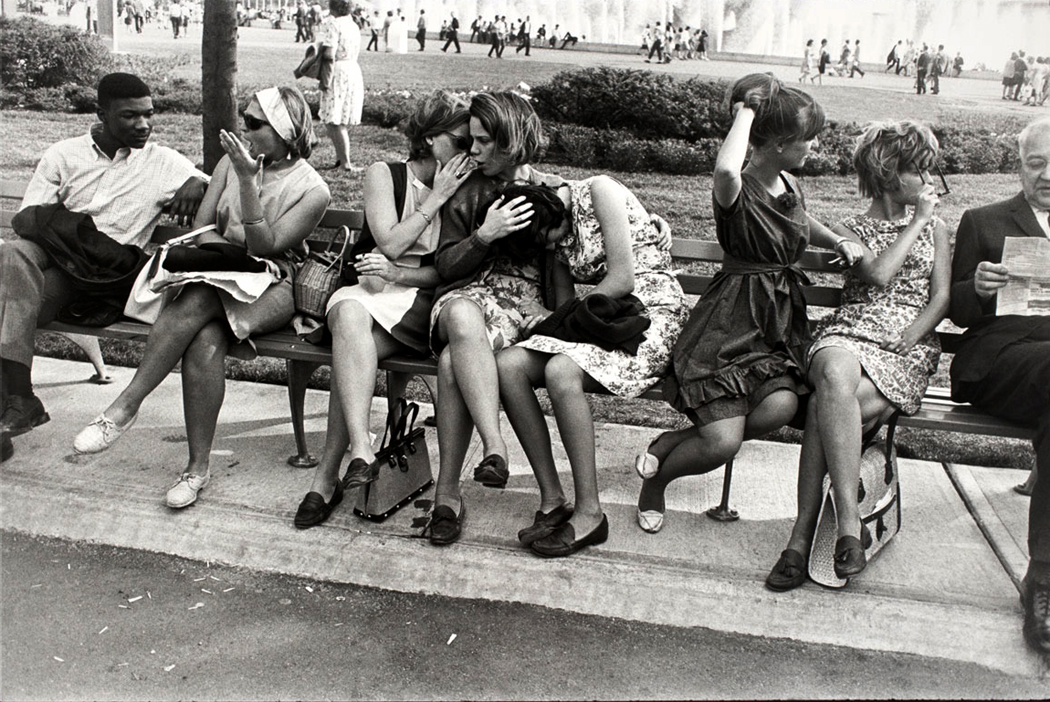
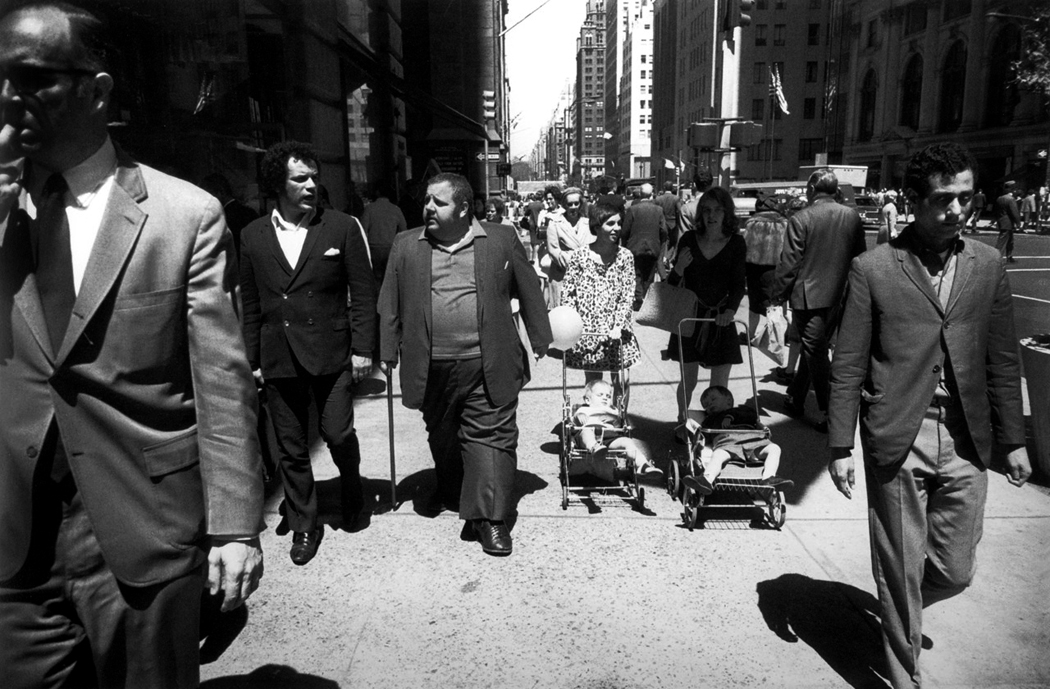
He will find four or five people walking down the street, or gathered at a party, and use the edge of his picture as that cookie cutter. He makes us see those people as a coherent group, just as we see the Big Dipper. A part of us knows we have been manipulated, but the instinctive part of us accepts the fiction. Photographs confer validity even to lies.

Yes, Winogrand presents a picture of America over the past 30 years; yes, the photographs often have a visual punch line; yes, they show sometimes grotesque people. But above all, they experiment with what the mere fact of pressing the shutter button does to reality. winogrand 1984 4

They don’t all work: That would be too much to ask of such a prolific seer. But even the boring photos play with what the camera does. An ordinary person standing with a drink in his hand at a party, someone else stands behind him. We are forced to stare at the photo until we satisfy ourselves that we understand why he took that photo.

At times no reason ever emerges. But the event, framed in the viewfinder, probably a meaningless juxtaposition of two partygoers, is forced to seem as if it were meaningful. The simple fact of its being taken creates that fiction.

The bottom line becomes not whether the picture has any meaning, but our understanding that we automatically assume it must. We see ourselves seeing. We become aware of the picture’s frame as an event in itself. winogrand street women pair

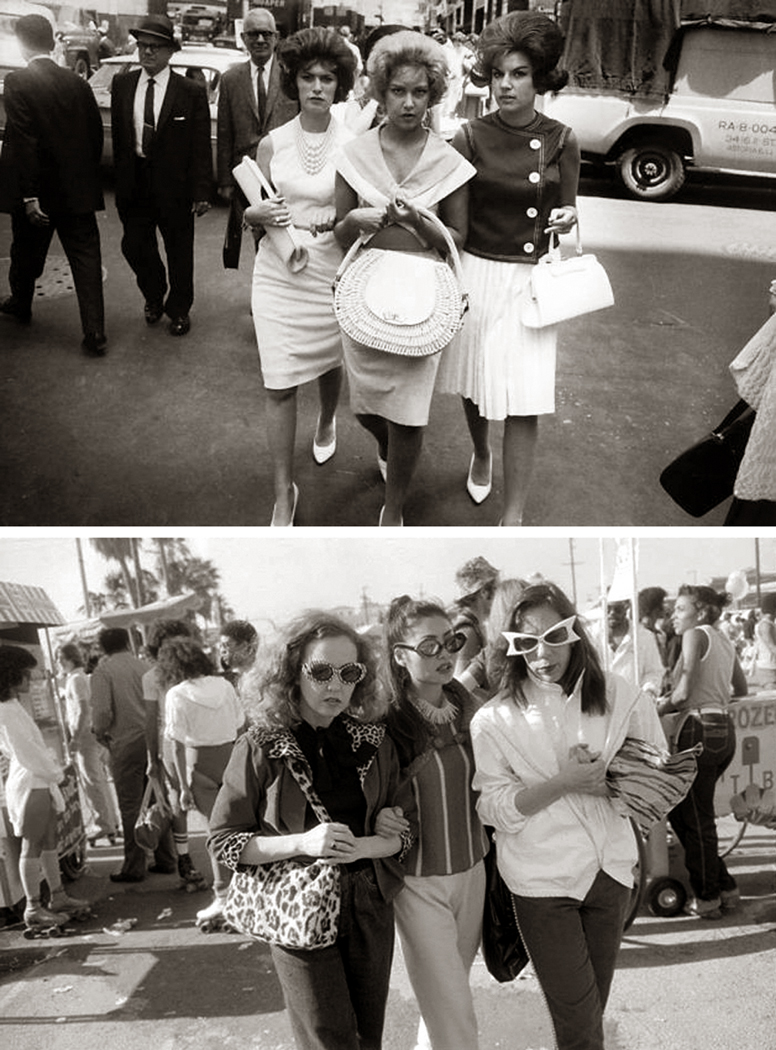
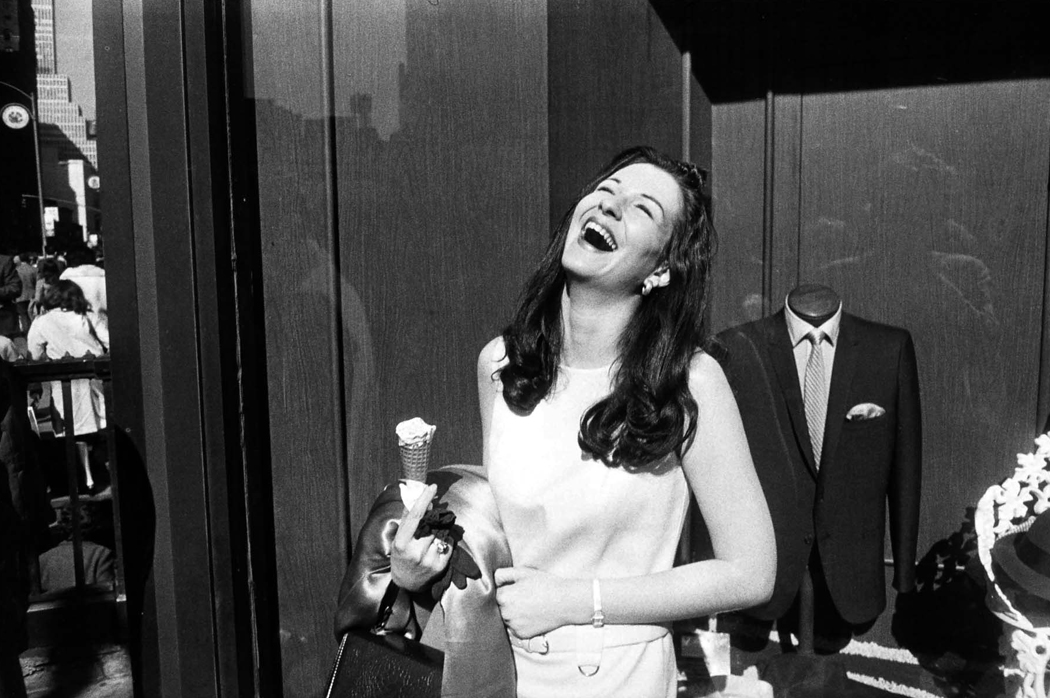
He was a peculiar man, neurotic and obsessive. His thousands of photographs of women, for instance. He took pictures over and over of women on the streets. He seems to have been sexually obsessed with them, but only as seen. They drown us in their banality, but Winogrand saw something different. Photography has made them worth ogling; it has made them into cover models, no matter how dreary the reality.

“Whenever I’ve seen an attractive woman, I’ve done my best to photograph her,” he said. “I don’t know if all the women in the photographs are beautiful, but I do know that the women are beautiful in the photographs.”winogrnd nyc 1982

Of course, everyone and his student is now playing with the ”medium as message.” But what is different with Winogrand — aside from the fact that he was doing it 30 years before the crowd — is that most of the facile youngsters doing so now almost seem to have no conscience about it. The tricks of the media hustler are used as if they were of themselves profound. winogrand nyc 1969

But Winogrand’s investigations are less glib, less pat. He is an intellectual intuiting a Postmodern truth. And there is an implied criticism of this packaged meaning. Winogrand is intuiting how images convey meaning and how they do so without any linear, verbal sense.

Others have used what he found, made theories about it. They turn what Winogrand found into sales pitches for Coke and Big Macs. But Winogrand was a discoverer, someone delighted and sometimes horrified by what he found.

lascaux horse and sign

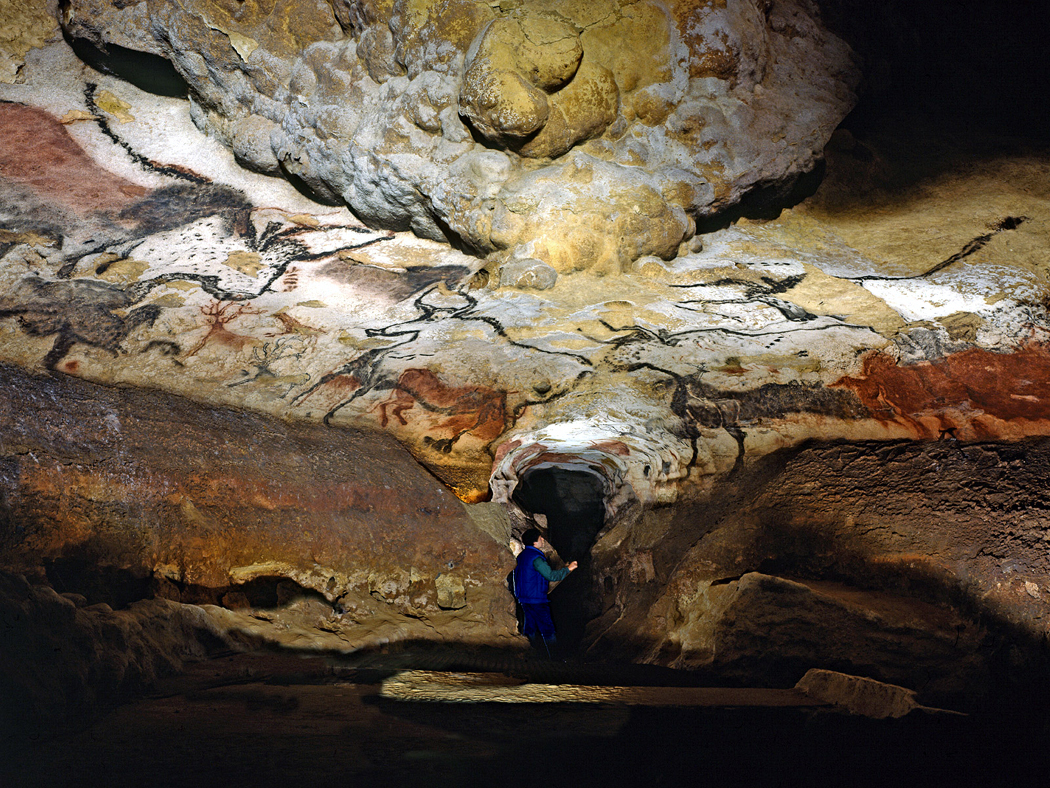
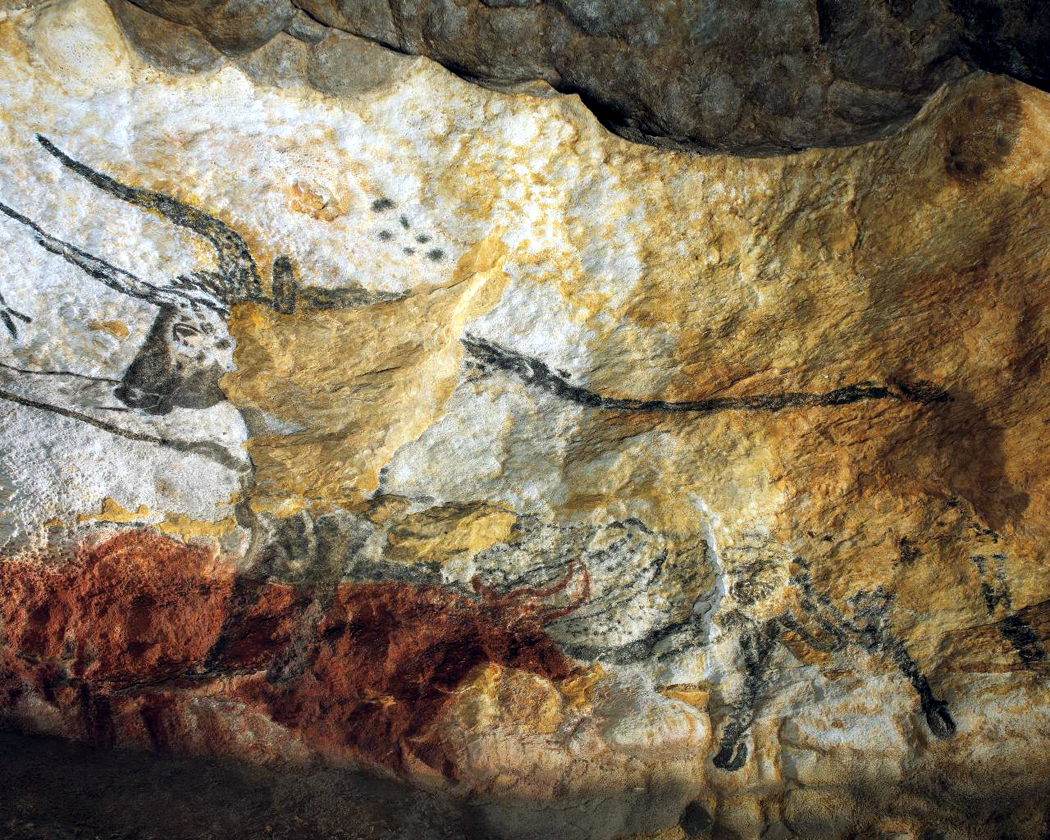
Seventeen-thousand years ago, a group of people very much like us descended into a cave in Magdalenian Europe and began painting animals on the walls. We can hardly know what drove them, although we enjoy pondering their motives.

Click to enlarge

Click to enlarge

Caves, like the one at Lascaux, had been decorated at least since 30,000 years ago — as at Chauvet caves to the east of Lascaux — but it is Lascaux that has most captured the world’s imagination. Tourists came by the thousands to walk through the galleries and be awestruck. That is, until their very enthusiasm began to endanger the drawings. Now, tourists come to see the replica of the caves at an attraction called Lascaux II.

My wife and I had been to France many times. We had visited most of the great cathedrals of northern Europe, from Amiens to Rheims, and had made pilgrimages to sites like Mont St. Michel and the Impressionist Eden where Claude Monet painted at Giverny. We had gained a profound education in the long line of history and culture that informs who we are today.

Carole likes to look into the old family photographs to see the physiognomic evidence of her genes, dating back to her great-grandfather, Rowan, who fought (on the losing side) in the American Civil War. She searches old genealogical records to carry that family history back further into time, at least back to the 18th century. For her, as an artist, looking at the bulls and horses of Lascaux is very like seeing the ultimate and oldest family photographs.

Click to enlarge

Click to enlarge

This is where our histories began, or at least, where they were first recorded, in the cave paintings along the Vezere valley from Montignac to Les Eyzies.

And, although Lascaux II is a reproduction, and not the original, it can carry the same potency that a reproduced family photograph can have. It is the pith of the image that carries the wallop and not its provenance. Seeing the imitation still gives us something that images in a book cannot convey: the size, the architecture, the surface. And it gives us a fighting chance to imagine ourselves in the caves before the development of writing, governments or digital watches. We can feel in our hearts the atavistic rumblings. That this is an act of imagination rather than a literal case is not only not a detriment, it is a positive improvement: Imagination is the source of everything here and that has come after. We would hardly be human without it.

We found the billeterie and bought our tickets for Lascaux II and were told there was an English language tour at 11:30 a.m. Lascaux II is about a kilometer out of town, up a narrow road and a narrower driveway, with lots of cinder parking lots at the top.

We waited where we were told to wait, and about 20 others joined us until a young man with balding hair and a flashlight came out and welcomed us in English with a characteristic French accent.

We walked down a flight of stairs into an underground chamber that had a dozen or so museum-style exhibits describing how the cave was discovered, how it was formed geologically, and how visitorship had damaged the original caves, and so a new reproduction was created for visitors, out of concrete, measured, millimeter by millimeter from the original. Two of the largest galleries were recreated in Lascaux II, including about 80 percent of the best animal drawings in the cave.lascaux ii

He led us into a darkened cavern the size of an auditorium and on both walls we saw animals, beautiful animals drawn, some smaller than lifesize, some, like the great 18-foot-long taurus, larger than life.

The bottom of the cave was “wainscotted” with clay, and no drawings were made on the clay.

“You cannot paint on clay,” our guide said.aurochs and horses lascaux1947

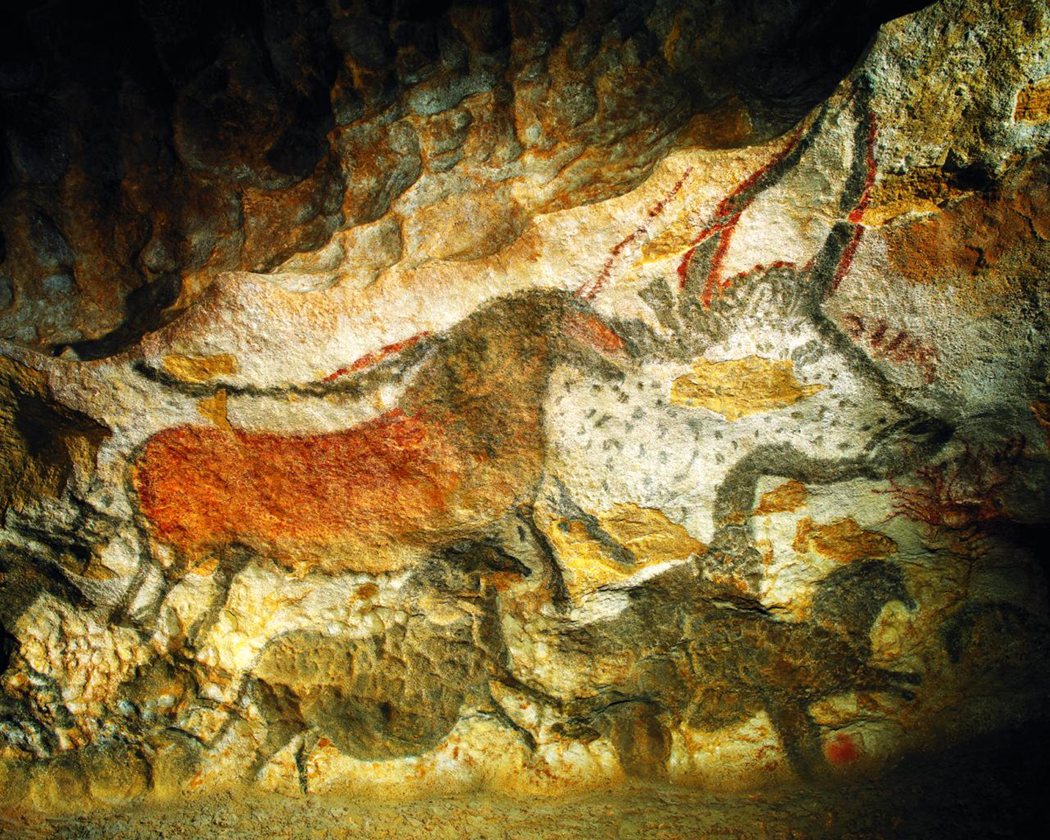
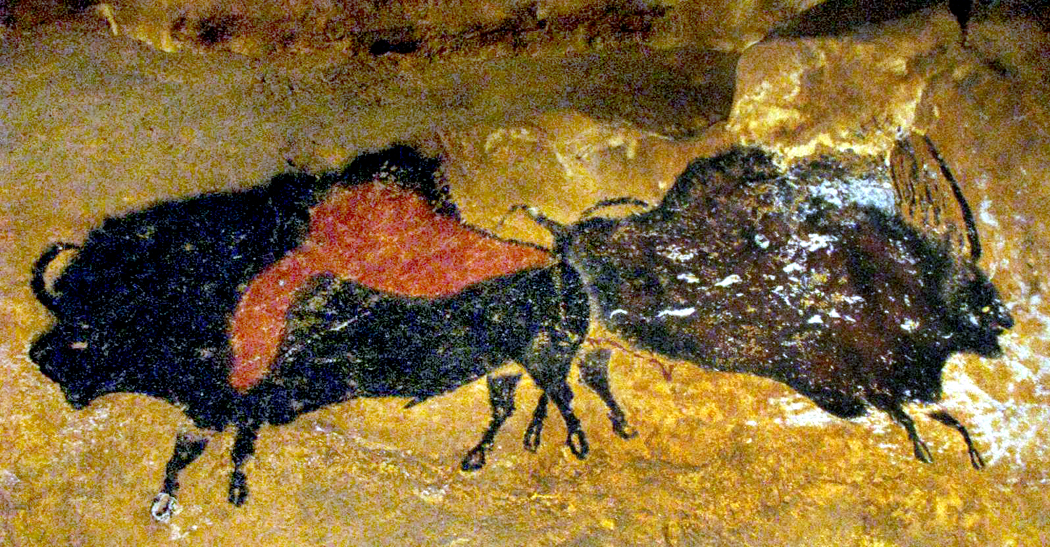
But on the limestone above were a ring of horses overdrawn with a larger ring of bulls, as if a horse cult had made an altar for equines, and maybe centuries, or millennia later, a bull cult came in and made their altar for their bulls. The bulls were all bigger than the horses, and tended to be in outline form, while the horses tended to be filled in with color. (This was not universally true, but is the tendency.)

There was also a figure the guide called a “unicorn” at the very entrance of the cave, although why it was called a unicorn, I don’t know, since it clearly had two horns blazing out of what seemed like a lion’s head.lascaux unicorn

Carole immediately spotted it as a shaman wearing an animal hide and carrying two sticks, like the African deer dancers we have seen pictures of.

“The first figure, as we entered the bull room, was not the most impressive — the big bulls were — but the first figure is something you work your way back to after recognizing what the other figures are,” she said.

“The first figure is mysterious and it isn’t drawn with the same confidence as the bulls and horses. There are not the same strong completely informed curves. The first figure looks like a man with black legs whose back and head might be covered with a lion skin. In place of his head is a lion’s head, with what looks like two long, straight horns protruding from the temples. I think those two prongs were not horns, but were sticks the man was carrying. It looked like the sides of an animal skin were hanging down on both sides from the man’s torso, if he was a man.

“Our guide showed us what he called a ‘hump of fat’ on the man’s back, like the hump of a bull, or maybe a grizzly, but I thought it was the lion’s mane. It wouldn’t have been practical to make something there like a lump of fat, if the man were wearing a costume.

Because the man was right there, and drawn smaller than most of the other figures, he did not seem to represent his own importance; he seemed to be driving the animals. His placement puzzles me. I don’t know what these paintings were for, but I do know what they are, and I think that is joy.”

click to enlarge

click to enlarge

Perhaps he was driving the animals in the cave in a kind of cattle drive.

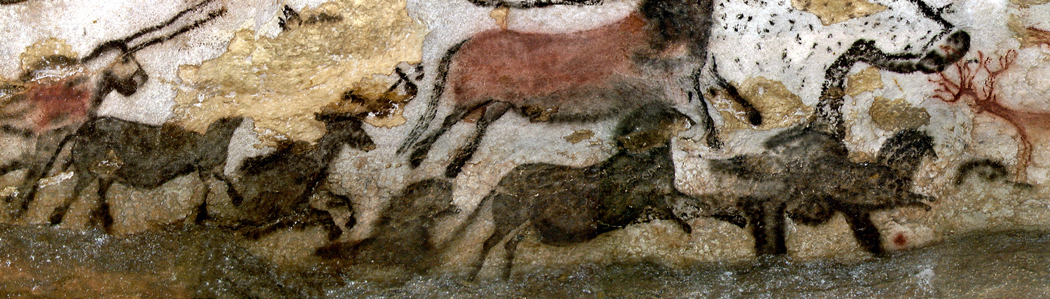
The animals, especially the horses, tended to be drawn in series, and at least one series — “like a musical phrase,” Carole says — shows them advancing from a standing horse, through a walking horse to running horses.Lascaux II bull and horse

The horses were finely seen, with astonishing attention to anatomical detail, allowing for a certain amount of distortion, like the distended bellies on several of the horses, and legs rather shorter than their bodies would have had. Still, the attention to joints, hocks and fetlocks was surprising.

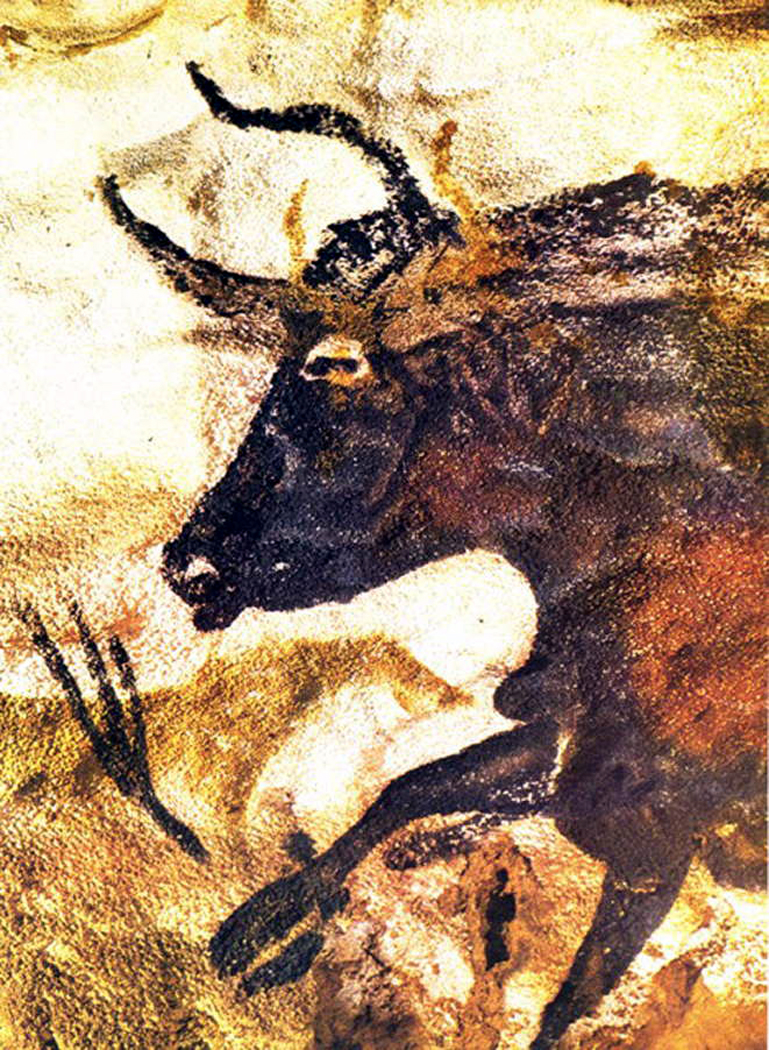
The bulls, much larger and drawn above and overlapping the horses, were often just heads and shoulders. Some had the curved backs and bellies and jaunty forelimbs racing out front. But although they also showed keen attention to anatomy, they clearly were meant to impress with size and energy.megaloceros room

The second room we entered was called the Axial Gallery and contained many more wonderful drawings, including a group on the ceiling, leading some to call it the “Sistine Chapel of prehistory.”black bull 2

You can see why they might say so, for the animals, all drawn with care for detail and expression, were everywhere.

“Our guide gave a running commentary and explanation of what we were looking at, but I tried not to hear him and tried to pretend that I had accidentally found it, so I could feel it only visually,” Carole said.

“I had a great feeling of joy and definitely a feeling of inspiration and gratitude. It felt just like a cathedral and I think I said out loud, ‘It is a cathedral, Richard.’

“I thought the most beautiful drawings and paintings were the bulls. They had wonderful curved horns, like Picasso’s bulls, but their heads were more prominent and really beautiful. Beautifully shaped and beautifully drawn. On at least one bull’s face, the detail of the nostril and the mouth were indicated by negative space against a black muzzle.

“If I had been alone, and obeying my instincts, I think I would have skipped and danced and clapped my hands, in a circle, round and round and round in the round room, just happy because of the bright contrast and the strength of the animals, and the joyous beauty of them running together, overlapped and contained within.lascaux II panorama 2

“There were little runs of horses like musical phrases.

“After seeing all these paintings and drawings, bulls, horses, reindeer, it becomes hard to believe they could have been anything but religious objects, icons or totems for clan worship.”

Despite being so realistic in so many ways, they are also somewhat stereotyped: the same horse shape from the same side angle. The same bull head over and over.

But there was one exception: At the end of the chamber, in a darkened corner where the passageway was bifurcated and narrowed, there was what looked at first like an upside down horse.falling horse

“Perhaps they thought it was Australian,” joked our guide.

“Or perhaps it had been killed and was dead,” he said.

But a dead horse is not upside down like a cockroach, but flat on its side.

No, this horse seemed to be dust-bathing, rolling back and forth on its back, almost playing. Alone of all the paintings we had seen in the Lascaux II galleries, it seemed to be an artistic rendering of something the artist had seen in the real world and was drawn not because of its totemic meaning, but simply for the pleasure of rendering experience, of seeing the world.

Lascaux II was a decidedly more satisfying experience than the Font-de-Gaume paintings: The animals were better drawn and they could be seen with a clarity missing in the other cave. There was a joy to the energy of the animals racing and jumping; you could hardly fail to be exhilarated by them.Big Bull Lascaux II

And seeing them in situ — even in a reproduced situ — gave you a much deeper understanding of them compared merely to seeing the photos in a book. Some of them are giant, like the 18-foot bull, a scale you can’t reproduce in a halftone.

They are some of the most astonishing drawings I’ve ever seen, even if they are 17,000 years old.

For Carole, as always, they hit with a more personal note.

“Maybe one reason I love these paintings and this experience so much is that I’ve made this paint myself, many times, beginning when I was about six or seven years old, in my back yard. There was plenty of iron oxide red dirt, plenty of yellow ocher clay and always charcoal from the place where we used to build a fire and roast oysters.

Notice the overlapped hindquarters

Notice the overlapped hindquarters

“I regularly made mud pies out of the red dirt and yellow clay and set them out on the back steps to dry for my playhouse bakery. The stain that the red mudpies left on the steps would not come off, no matter how much I washed it. So when Daddy had the men in his plumbing shop paint the back of our house white, I couldn’t wait for the white paint to dry; I pestered my parents about when the paint was going to be dry and unfortunately, they didn’t think to ask me why I was so interested. As soon as it was dry, I mixed up a bucket of red dirt and water and got a window sash brush. I used the step ladder and painted everything I knew how to draw all across the back of the house, as large as I could and I signed it with my name.

“I asked Mother and Daddy to come out and take a look at the wonderful thing I’d done. Daddy was not pleased and I was sent back up the stepladder with the same bucket and soapy water, but it never came off. Eventually, we painted the back of the house white again, but some of the red still bled through.

“And all I really learned from this was that that red dirt must be one of the most powerful things in the world. It made me love it more.

“I’ve written a lot of poems about that red dirt. When I went barefoot, it used to stain my feet. The red water it made in the bottom of the bathtub was beautiful, running toward the drain.

“Then, when I was in my 30s, I had a house that had a fireplace and I always had pieces of charred wood. From the time I was little, I would try to draw with pieces of charred wood, because I thought Abraham Lincoln did his homework with such a thing. On this day, I used charred wood on paper to make a large drawing of the sun’s face. I drew the outline and the features with black and I made yellow ocher paint and red iron oxide paint from the dirt in my yard in Greensboro. I hung it on the wall above the fireplace, where it hung for six years. I called it ‘Abraxas, the god of change.’Lascaux II bull paintings

“I still love the range of contrast that you get from this velvety black, strong iron red and buttery yellow ocher. There were cows the color of yellow ocher that used to sleep in the grass on the river road past our house. When the grass in those fields turned lion colored, the cows were camouflaged. In the summertime, thousands of orange day lilies filled the same pastures.

“So, actually, when I was in the cave, I experienced the pictures in my body, with my hands and memory of mixing those paints myself, and feeling like a hero making pictures with the paint.”lascaux panorama

les eyzies bison carving

Open a bottle of champagne and leave it out, and by morning it is flat and stale.

Opening up a prehistoric cave can be like that. Lascaux caves in France, with its menagerie of animal paintings, lasted for nearly 20,000 years intact. It was discovered (or more properly, rediscovered) in 1940 and after the war, was opened to tourists. It was soon apparent that the cave was beginning to be degraded. Lichens were starting to grow on the walls, and the huge jump in carbon dioxide levels, from the breath of all those making the pilgrimage through the caves, was joining with the calcium in the limestone to form a layer of calcite that would soon cover and blur all the imagery.

It was that, like the Heisenberg uncertainty principle, the act of observation changed what was being observed. When you open up the box with Schrodinger’s cat inside, sometimes what you find is not quote so pleasant.

The caves were closed to the public. In 1983, a simulation — a copy of the original caves — was opened as Lascaux II, and tourism heated up again. Tour guides led groups through the ersatz caverns and let us see a simulacrum of the original experience. They assure us over and over that the copy is precise down to the millimeter.

Lascaux II

Lascaux II

Yet.

I’m a naturally suspicious person. When a shopkeeper is friendly, I allow she may indeed be very nice, but I recognize she also has a self-interest in making customers feel good.

And when I see the great cathedrals of northern France, I question whether I’m getting the vision of the master builder and his sculptors, or am getting the Viollet le Duc version and a 19th century stylization of the Gothic art and architecture. They rarely let you know what parts of a church are original and what parts have been restored. Sometimes it is easy to tell, but much of the time, it is not.

Whether it is Sir Arthur Evans at the Palace of Knossos, or reconstructed pyramids at Chichen Itza or the Carnac alignments, the work, even of dedicated and honest archeologists, is suspect.

Entrance to Lascaux II

Entrance to Lascaux II

And when we visit Lascaux II in Montignac, Perigord, France, I am suspicious of the recreation of the original paintings by a 20th century artist, no matter how well meaning.

I’m not saying I don’t believe what I see is accurate, but that I harbor a constant suspicion that it may not be.

The problem is that the reproduced paintings are so much clearer and more contrasty than the genuine paintings we saw at Font-de-Gaume.

When I asked the tour guide about it, his answer was not satisfactory, and somewhat off point.

“These paintings were drawn from accurate photographs of the originals,” he said. “And they don’t vary as much as a millimeter from the real ones.”lascaux II panorama 2

But it isn’t the size that I was questioning, but that the photographs taken of the real cave may very likely have had their contrast boosted to make the images more legible, and I wondered if the artist who created the facsimile might have unconsciously reproduced jiggered-up photos.

Did he visit the original cave under the same lighting conditions he painted in, and did he compare his results, not with the photograph, but with the real paintings? This is not an academic question.

Our own biases secretly creep in whenever we look at the past. It cannot be otherwise. Even the most scrupulous “reproduction” is an interpretation.

It isn’t the honesty of the reproductions that I worry about. But I remember how easily fooled art experts were by Han van Meegeren’s forged Vermeers, and how shocked I was when I first saw them, with the gift of several decades between them and me, that anyone could ever have been fooled by them. Or even the Minuet by Paderewski, that he pawned off as a long-lost dance by Mozart. In the 19th century, it sounded genuinely like Mozart to their ears, but our ears can not be fooled: It is pure Victorian kitsch.

Abbe Breuil

Abbe Breuil

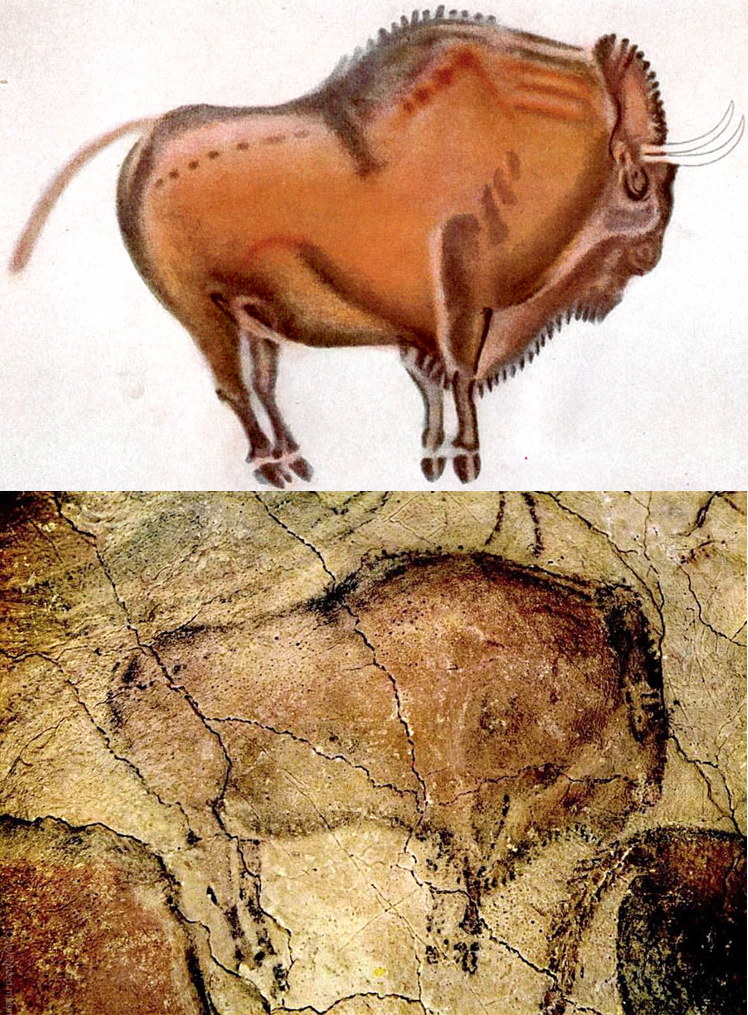
Often, in books, the images we see of cave paintings are not photographs of the original, but reproductions of drawings made of them. Abbe Henri Breuil, for instance, made many of them. He was one of the first and most influential archeologists to study the many cave paintings in France and northern Spain. But his drawings often make the originals clearer and of higher contrast. And we cannot always know if he has given us a perfect copy, or a modern interpretation.altamira bison pair

Consider his famous drawing of a bison from the caves at Altamira in Spain. He has added the horns and has made clear what is obscure — or has made guesses at what its original makers would have wanted us to understand.

He made a famous drawing of a supposed “sorcerer” from Caves of Trois-Frères, but a simple comparison of the drawing with a photo of the original makes one skeptical of all such attempts to reproduce the cave paintings.sorcerer pair

It is our own time and culture that colors what we pick from the welter of confused sense data that we see before us. We need to make sense of it, and invariably make a kind of sense that works in the confines of the culture we have been born into.

The air we breathe is invisible to us, the culture we absorb is odorless and tasteless. Only later can the habits and prejudices of one age be clearly spotted by its successor.

(It is easier these days to spot the cultural accretions from the Romantic 19th century, less easy to spot our own. One scratches one’s head at Beethoven’s Ninth Symphony, comparing when on one hand, he declares “alle menschen werden bruder” — all men will be brothers — with the “Hogan’s Heroes” march where the tenor tells us that joy is like the hero after victorious battle. Who has he battled, if all men are brothers? Clearly, the Romantics had a different, and mythic vision of war than we can ever sustain after the Somme, the bombing of Dresden or slaughter at Stalingrad. Beethoven and Schiller were certainly blind to this irony. We can never be.)

It isn’t that I think we should be allowed to visit the original Lascaux: It is clear that visitation destroys them, and I’m all for preserving them.

But I asked if scholars are allowed to visit the original and the guide said, “No. Not even scholars are allowed in. There is a keeper of the cave and he ventures in on a strict schedule to monitor the air, the humidity and the temperature, but no one else may enter.”

So, I wonder if all the latest scholarship is based on inaccurate reproductions.

Because at Font-de-Gaume, the paintings, while beautifully drawn, were noticeably low contrast, often barely legible on the walls. You had, in many cases, to acclimate your eyes to make out the bull or his eye or his horns.

In some cases, animals we were shown may be more like the fanciful shapes people make out of stalactites and stalagmites in tourist caves — “Here is the ‘ham and eggs,’” or “Can you see the elephant here?”

Our Lascaux guide assured us that the originals at Lascaux look “just like the reproductions, and are very clear,” and I have to say they look bright and legible in the photographs in the books.

In vintage photographs, the paintings look clear and contrasty.

In vintage photographs, the paintings look clear and contrasty.

“Font-de-Gaume was made something like 4000 years after the Lascaux paintings,” he said. “They were not the same culture.”

And he implied that the Font-de-Gaume artists were inferior and less able to articulate their animals and less able to make their contrast ring out.

So, when our guide tells us the Lascaux facsimiles are accurate, I am inclined to believe him, and when Carole tells me that the shopkeeper was really nice and loved talking with her, I tend to believe Carole knows it is so. Yet, I also remember that the shopkeeper does a better business by being friendly.

NEXT: Visiting Lascaux II 

font de gaume drawing

On every continent, save Antarctica, early humans have left their mark on rock faces. Whether Australia or southern Africa or Asia, there is rock art left behind. The most famous and most familiar, of course, are the cave paintings of Europe. Dating from 30,000 years ago to roughly 10,000 years ago, they are the starting point from which we begin every survey course in art history.

The most famous caves are Altamira in Spain and Lascaux in France, but there are hundreds of others, including the recently famous Chauvet cave in southern France.

I have taught some of those survey courses, but I had never seen any of the actual caves: I had only seen reproductions in my Janson or Gombrich. Several visits now to Europe have given my wife and me the chance to see some of the cultural monuments we had only dreamed of seeing: Chartres, Giverny, the Louvre — and the cave paintings.

You come to think of yourself as an adult, and that you have seen pretty much everything — in general if not in particular — and you develop a skin of insouciance. It is children whose eyes widen, not adults. We measure and compare, we add some small dram of new experience to the old and hold all in emotional proportion.

That ceases to be possible when staring at the bison, aurochs and horses scratched, drawn and painted in the inner recesses of inaccessible caverns, with a palpable lacuna of 20,000 to 30,000 years in between ourselves and the clearly living and breathing — and thinking and feeling — people who left this evidence on the limestone walls.

Bison, Font-de-Gaume

Bison, Font-de-Gaume

And we fall in awe that those people we depict as “primitive” cave dwellers could be so artistically advanced, so visually sophisticated. Yet, there is also a kind of glass wall between us and them. We have no idea why they painted and scratched these images; we have no idea what the images meant to them. We are left to guess.

Those guesses fall into two large categories: On one hand, a group of modern people assume the prehistoric people were decidedly primitive, unlike us in so many ways beyond merely not having smart phones; on the other hand, there are those who make the empathetic leap and recognize that the Cro-Magnon human is exactly the same species as we are, with exactly the same brain power, same potential for neuroses, same skills, and that if we had been in their position, we would perform exactly as they did, and so perhaps the cave paintings are not something alien and other, perhaps they can be understood, not as Alley Oop, the cave man, but as mon frere, ma soeur.

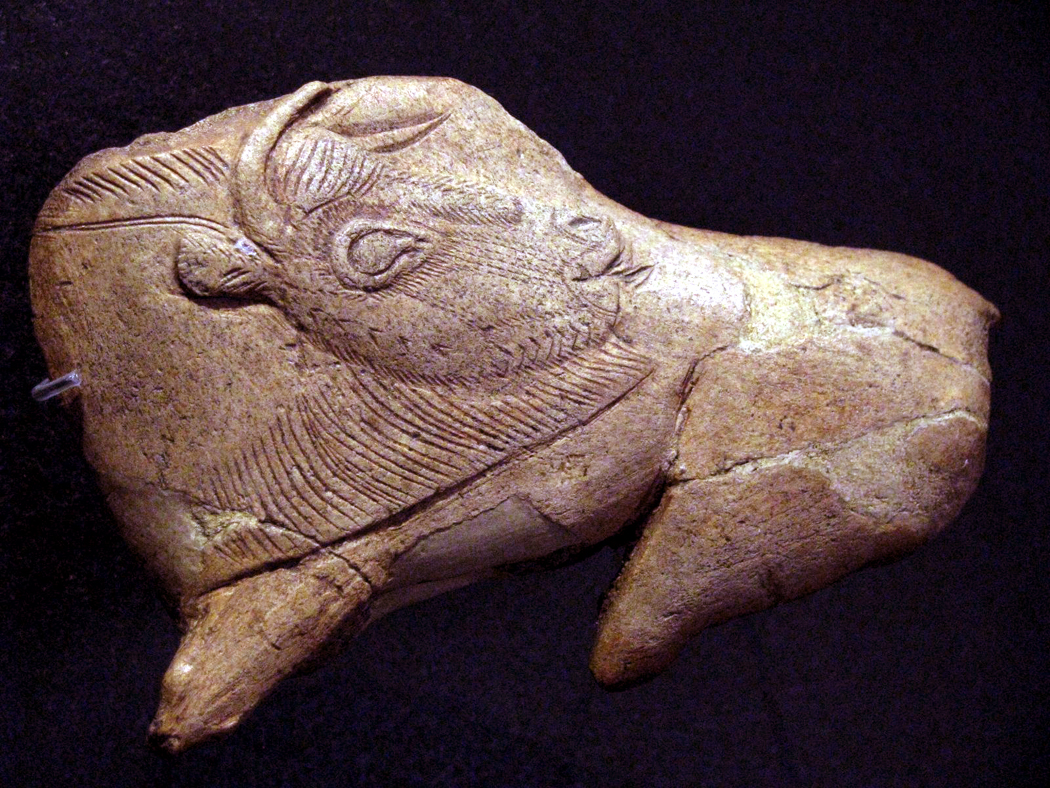
The first art we saw is 17,000 years old, on a cave wall in the Vezere river valley of the Perigord region of France. There were bison, reindeer and horses, drawn with an anatomical awareness that European artists didn’t seem to recapture until the Renaissance.

We had planned first to go to Lascaux in Montignac, but the roads are not always well marked in France and we wound up instead in Les Eyzies at the other end of the Vezere valley.

And it all came to us by accident.

The plan was to drive from Angouleme to Montignac to see the Lascaux II reproductions of the cave art of the original, now closed Lascaux caves.

The road wound through green valleys, up over wooded hillsides and over streams. Eventually, we got to Les Eyzies without ever seeing Montignac.

Les Eyzies de Tayac

Les Eyzies de Tayac

Turns out, that was a good thing.

Les Eyzies is a small village, made up mostly of cafes and souvenir shops, all along a single street below a tall yellow limestone cliff. These bluffs line the river valley. In them are dozens of caves, and many of those have prehistoric art in them.

Lascaux, further north just outside Montignac, is, of course, much more famous. But the cave has been closed for decades; a substitute cave, called Lascaux II is open to tourists, featuring recreations of the original art. It had been our intention to visit that cave first, and then perhaps check out some of the other, lesser sites along the river valley.

But because we came the wrong way, we found the Grotte de Font-de-Gaume, which is one of the only remaining caves with polychrome painting still open to the public. They protect the cave as well as they can by only allowing 12 people in at a time, and fewer than 200 a day. You have to make an appointment.font de gaume entrance

So, we stopped by the office — a shack with books and souvenirs for sale — and asked if it might be possible to get a ticket for the next day.

“We are closed Saturday,” she said. “But we have tickets available for this afternoon at 3.”

It was about 12:30 at the time. So we bought our tickets and drove around the countryside, looking at the paysage and enjoying the many roadside attractions, like the Prehisto-Parc, which features those familiar papier mache Neanderthals bagging a concrete mammoth. We passed on going in.

We drove all the way to Montignac, just to see the scenery, and, boy were we even happier we had come the wrong way.

Many years ago, when Carole and I first visited Canyon de Chelly on the Navajo reservation, we came to it the back way, along a dirt road from New Mexico. We didn’t know what we were looking for and got lost on the back roads through the forest. But eventually, the road started down the side of a cliff and we saw a large hole in the ground a couple of miles ahead. It was Canyon de Chelly, and the road led us up to it with no traffic, tourists or souvenir shops. We came upon it — actually upon Wild Cherry Canyon, a side canyon — and got out of the car and had the canyon to ourselves, looking 400 feet straight down into a rock hole. It was awesome. It was only later, getting to the head of the canyon, that we saw the traditional entryway, Chinle, a godawful tourist hole rank with traffic and jewelry stands. If we had come to Canyon de Chelly through the front entrance, we would have been put off by the wretched poverty of the Indians and the rancid commercialism of the dusty town.

Postcards for sale, Montignac

Postcards for sale, Montignac

So it was at Montignac, a fussy, busy, crummy town, catering to the worst of the tourist trade. If we had seen it first, we would have held our noses, visited Lascaux II and gotten the hell out of Dodge as fast as possible.

But coming up through Les Eyzies instead, we got a boat load of prehistoric places, smaller and less commercialized than Lascaux II, and we found a hotel a few miles north of town called the Hotel Peche-Lune, a large, new hotel with large, clean rooms and a great restaurant out front.

By then, we had used up our extra time and came back to Font-de-Gaume, in time to begin our tour.

It was an unannounced trek uphill for 500 meters, a grueling bit of alpine climbing for Carole and me, huffing and puffing, 20 yards behind the rest of the group, and losing ground.

Cave entrance, Font-de-Gaume

Cave entrance, Font-de-Gaume

At the top, there was a hole in the mountain and our guide took us 12 in to see the cave paintings. The cave is not the wide, high sort of Carlsbad Caverns sort of cave, but a seam in the limestone eroded out, about 120 meters into the hill, with several side cavities off at a good Karstian 90 degree angle. At its narrowest, the cave rubbed both shoulders, and there were a few places I had to duck my head, but mostly, it was wide enough for one or two people to pass, and in the main grotto, the ceiling was 100 feet up.

It is dark inside, with a faintly lighted footpath, and a few round lights on the wall that were switched on to dimly illuminate a three-foot bison on the wall about a foot above head height. No, there was another one a little on. And another. Actually there were five bison in the first section of the cave. The first was the clearest, hunch-shouldered, battering ram head, tiny legs and a wooly coat of brown. A small hole in the rock served as the beast’s eye.frieze of bison

The first impression is that the paintings are so faint as hardly to be visible at all. But as you get used to the low illumination in the cave, you realize that what is actually surprising is that they are still visible at all after 17,000 years. It is an astonishing passage of time: 15,000 years before Christ. 12,000 years before the Great Pyramid at Giza. That we could see them at all has to be a miracle.

We moved down the corridor of the cave to another spot, where we saw a giant reindeer, maybe 4 feet long, with a great hoop of antlers curved in a giant C from his head and forward. The shoulders and antlers were the clearest to see, the head, partly painted and partly incised in the stone, was more difficult to make out, but when you did, you saw the reindeer was licking another animal standing in front of it: another reindeer, facing the opposite way, darker and more obscure.

Comparing the "enhanced" reproduction with the actual drawing. More on this in Part 2

Comparing the “enhanced” reproduction with the actual drawing. More on this in Part 2

There were more bison and some horses, and what struck you, after realizing how faint some of the imagery was, was how beautifully they were drawn. It is the drawing, not the painting, that is the most notable.

The painting is really bichrome: There is black, mostly for outline, and there is a kind of white, faintly yellow, and there is the ocher mixture of the two, making the brown.

Why are these images here? Who made them? You cannot help but agonize over their meaning. Over the years, there have been many proposed explanations, but none of them really help.

Surely, you think, the paintings might have been the only part of some more elaborate installation that has otherwise long rotted away. We’ll never know.

Over dinner, Carole and I came up with a dozen stories.

I mentioned the football “Game Plan Theory,” with Xs and Os on the blackboard to teach the tactics of the game. Perhaps some ancient hunting teacher was showing the younger generation the ropes.

Or perhaps it was a school, says Carole. One bison, two bison, three bison, learning to count.

She also wondered if they might not have been painted not by adults, but by children, or a single child especially talented at art. And perhaps they are in the caves because that child kept them as his secret place, where he decorated his play fort walls with his drawings.

I said that we should not rule out the possibility that they were created not by men or boys, but by women. “It has to be possible,” I said. “Perhaps the cave was the place in which women were isolated for their menses. Many primitive societies do such things.”

“Then I would expect the animal paintings to be about mothers and calves, or animals giving birth,” she said.

The usual explanations about magic and shamans might be true, but I wondered if we don’t too often condescend to our ancient forebears.

“These were Cro-Magnons, which means they were modern humans in every anatomical aspect. They were exactly the same species as us, with exactly the same brainpower. The only difference between then and now is cultural: We have built on the culture we inherited, as our grandfathers built on the culture they inherited, from the pickax to the digital watch.

“Perhaps we should ask what would we have made these paintings for. Maybe the answer isn’t some tribal woo-woo, heebie-jeebies, but something as practical or as quotidian as our own lives.”

I wasn’t sure what that would be: Certainly these cave paintings were not made as art galleries. Seeing them is a pain in the ass, and there is no track lighting, to say nothing of the lack of white wine and cheese.

It used to be thought that the paintings were hunting magic, capturing the image of the animal to be hunted, to make it easier to capture the meat on the hoof. But recent studies of the caves make it clear that the animals in the paintings were not prey animals. The cavemen did not eat bison or lions or bears.font de gaume single bison

The second theory is that they were “animal masters,” that is, the animals of cult worship, and the painting of them was a magical means to capture their power, their emotional power.

My own best guess is that they might have been images for meditation, something to concentrate on to bring the observer into an altered state of consciousness. Certainly, many of the drawings — at least elsewhere in the world — contain odd hallucinogenic dots, crosses and spiral patterns, the same imagery that modern drug-religion ceremonies induce and that can be seen in Huichol paintings.

The thing is, we’ll never really know. Almost certainly, vital evidence has disappeared over time, rotted into oblivion: The paintings are denuded of their context and we have nothing to go on but the measly remains, not even so much evidence as dinosaur bones.

We discussed this all over a great dinner at our hotel: We began with a salade de perigourdaise, which was lettuce, foie gras on toast, and lots of duck innards skizzied up and hot. It was surprisingly delicious and very meaty. Carole picked at the lettuce, but couldn’t bring herself to eat duck parts she couldn’t recognize: gizzards, livers — for all we knew duck tongues and spleens.

The main courses were better accepted by a wider population of the Nilsen household. Carole had a faux filet — a beefsteak — bien cuit, thank you very much, and some sliced, fried potatoes. I had a magret de canard with the same potatoes. My duck was really great.

“Duck, the OTHER red meat,” I said.

I saw no ducks on the cave walls. Surely they enjoyed ducks as much as I do.

bruckner stamp austria

Are you old enough for Bruckner?

Poet Ezra Pound said there is no reason you should like the same book (or music or art) at 40 that you liked at 16. At 16, I liked Ezra Pound; now I’m 65.

The author graduates high school in 1966

The author graduates high school in 1966

Our tastes change as we age, or they should. My introduction to classical music was Tchaikovsky. His symphonies and concertos pumped new-generated hormones through my arteries like adrenalin — when I was in high school.

It wasn’t long before I left him behind for Stravinsky, then Beethoven.

By the time that I was middle-aged, I had gone through Bach, Mozart, Berlioz, Debussy, Mahler, and most recently had added Bruckner and Haydn to the list. I get things from each of them I was deaf to earlier. Now that I am retired, I have finally come to appreciate Verdi. But, boy, it was hard to get past all the oom-pah-pah-pah, oom-pah-pah-pah.

The path won’t be the same for everyone, but there are some general patterns that seem to hold.

In painting, we all loved van Gogh at about the same time we loved Tchaikovsky. There is a bigger-than-life striving in van Gogh that appeals to the adolescent, striving himself for some sense of the heroic.

The author 1975

The author 1975

That same aspiration drove us to read Catcher in the Rye.

With a few more years under an increasingly large belt, we drop Tchaikovsky as hopelessly sentimental, Salinger as naive and simply move past van Gogh as we become aware of the Impressionists, who tickle our eyes all over again. Hormones calm, reality sets.

When we are in college or as grad students, we tend to gravitate to those things that are trendy, new, and exclusive, that set us off from the proles: We read Umberto Eco or — in my generation, Alberto Moravia and Robbe-Grillet. We jumped on Marina Abramowic  and Bruce Nauman and listened to Lutoslawski, Schnittke and Harry Partch. Yes to Pina Bausch, meh to Swan Lake.

The author 1977

The author 1977

Yes, we were showing off. In many cases we admired more than enjoyed.

We then gave up the need to be au courant or exclusive as we came to distinguish between the gee-whiz and the substantial.

As adults, we craved the substantial. Adult tastes are acquired tastes: Poussin, Schoenberg, Milton, rutabagas, pickled herring.

Old age now brings something else: simplicity and inclusiveness. I am no longer quick to drop the critical meat-cleaver and sever away something I consider unworthy. They are all worthy. Tchaikovsky as much as Webern, Salinger as well as Joyce. We are enriched by each of them.

The author in his "Van Gogh" pose 1980

The author in his “Van Gogh” pose 1980

(No, I haven’t gone senile — I’m not ready to accept Andrew Lloyd Webber or Thomas Kinkade, although I see some value in Norman Rockwell that would have shocked me to hear anyone admit when I was 20. No, Rockwell is no Raphael, but there is room for an entire spectrum of abilities and accomplishments. What I ask isn’t so much undying masterpieces, as sincerity of attempt, and a willingness to put in the work.)

So, growth isn’t just a case of moving on from one thing to another, but adding more and more to our trove. By the time you are my age, you will have a heady backlog of esthetic experiences to draw on.

What is most interesting to me is that, if we continue to grow, we can return to art we left behind and find something new in it. From age 17 to about 40, I couldn’t bear Tchaikovsky — it seemed like treacle. But then I began noticing his bizarre harmonic sense and what I might call ”orchestration from Mars.” You only have to read the scores to see how peculiar is his voice leading. When I could get past the heart on the sleeve, I discovered an intelligence there that was hiding, or rather, that I was unwilling to discover, having made up my mind and moved on.

The author at Canyon de Chelly, 1989

The author at Canyon de Chelly, 1989

An now that I am bald, bearded and grey, I find that there is something even in the emotional immediacy that once embarrassed me.

As we grow, we not only grow into new experiences, we grow out of our old prejudices.

This all came back to me this week as I watched Lust for Life on cable. The 1956 biopic starred Kirk Douglas as van Gogh and Anthony Quinn as Gauguin. The film is an odd combination of excellence and awfulness, mixing insight with bromides, sanitizing the painter’s life while emphasizing the insanity.

More than anything, this is the van Gogh who appeals to adolescents, the van Gogh of idealism, identity crisis and suicide.

Alienated, misunderstood.

But there is one more aspect of him that is included: his commitment and perseverance. These quieter virtues, more than his insanity, give van Gogh his stature as an artist.

the author lecturing 2005

the author lecturing 2005

There was a time, in my 20s, that I dismissed van Gogh. The peculiar paint-busy canvasses, I was convinced, were just the evidence of a deranged mind. If you were schizophrenic, you could be a great artist, too.

But more careful study in recent years, especially of the many notebooks filled with drawings, told me something else again. Van Gogh paints the way he does because of his unwavering honesty to his eyes. He kept looking till he got it right.

And ”right” for him was to notice everything that his eyes saw, not merely what he had been trained to see.

If you stare long enough and with enough concentration, you can see something of the granular reality van Gogh saw. We no more pay attention to it in daily life than we pay attention to the grain in a movie’s film stock. It is not the information, but the medium of the information. We filter out so much. Van Gogh didn’t.

the author at Giverny 2008

the author at Giverny 2008

The other wonderful thing about van Gogh is that he had so little talent.

We tend to think of great artists being as fluent as Mozart or Raphael. Yet talent is a poor indicator of quality in art. For every Raphael, there are scores of Geromes and Bouguereaus: accomplished and pretty, but ultimately empty.

Van Gogh shared a lack of talent with several other great artists: Cezanne, for instance; or Jackson Pollock. One searches the drawings and oil sketches of Cezanne for even the slightest encouragement of talent. His drawing is hopelessly awkward.

Pollock searched for years for an adequate means of expressing what was inside him. To do it, he had to give up everything he had learned. If he had no talent for drawing, he would not draw. He found a talent for splashing instead.van gogh landscape

Van Gogh’s notebooks are full of erasures. He looked, drew, erased, looked again, drew again, erased again. Many drawings are never finished, but those that are, are right in a way the more facile Ingres never is.

Van Gogh was stubborn. I admire that in him more than I admire the talent of William Merritt Chase.

But give me another 10 years and we’ll see.