Archive

Tag Archives: art

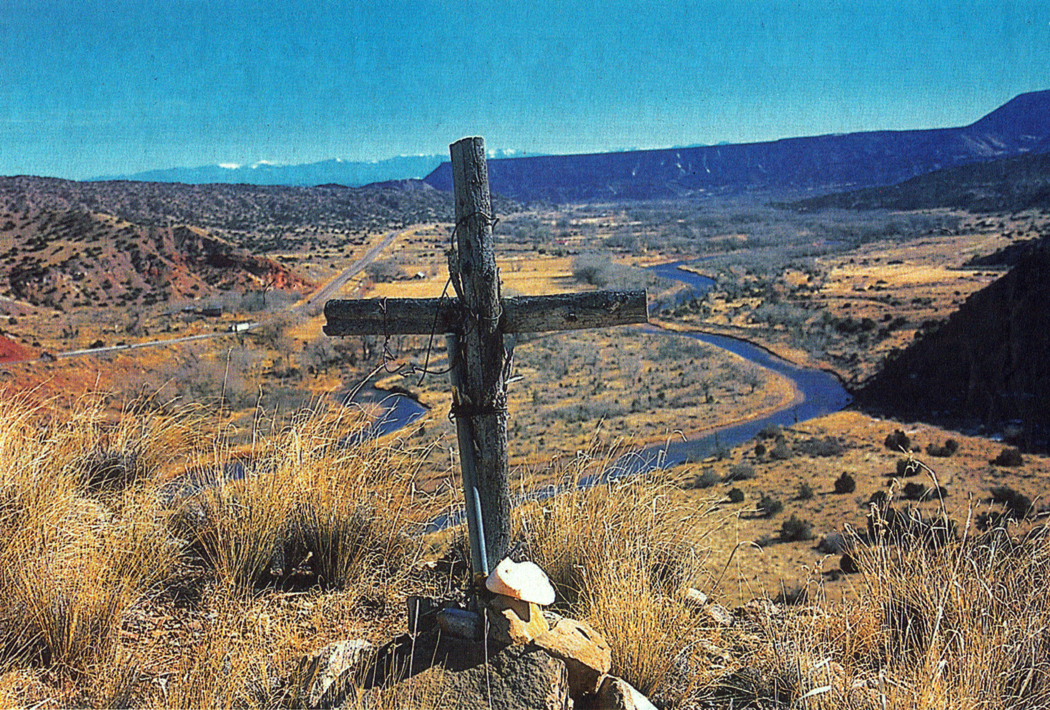
okeeffe landscape cross

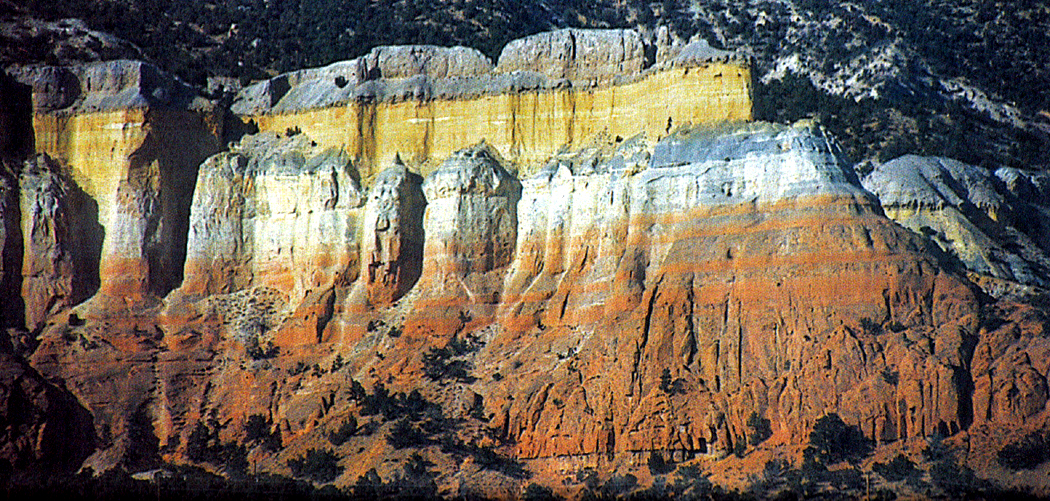
You can’t drive up the Chama River Valley in northern New Mexico and not feel the snap of recognition.

It doesn’t matter whether you’ve ever been there before, it looks familiar. The reason is not hard to guess.

It is this area north of Santa Fe that painter Georgia O’Keeffe recorded in her work, beginning in 1929, when she first started to visit the state with regularity.

”This is wonderful,” O’Keeffe said on first seeing the sage and sandstone landscape. ”No one told me it was like this.” okeeffe san jose church copy

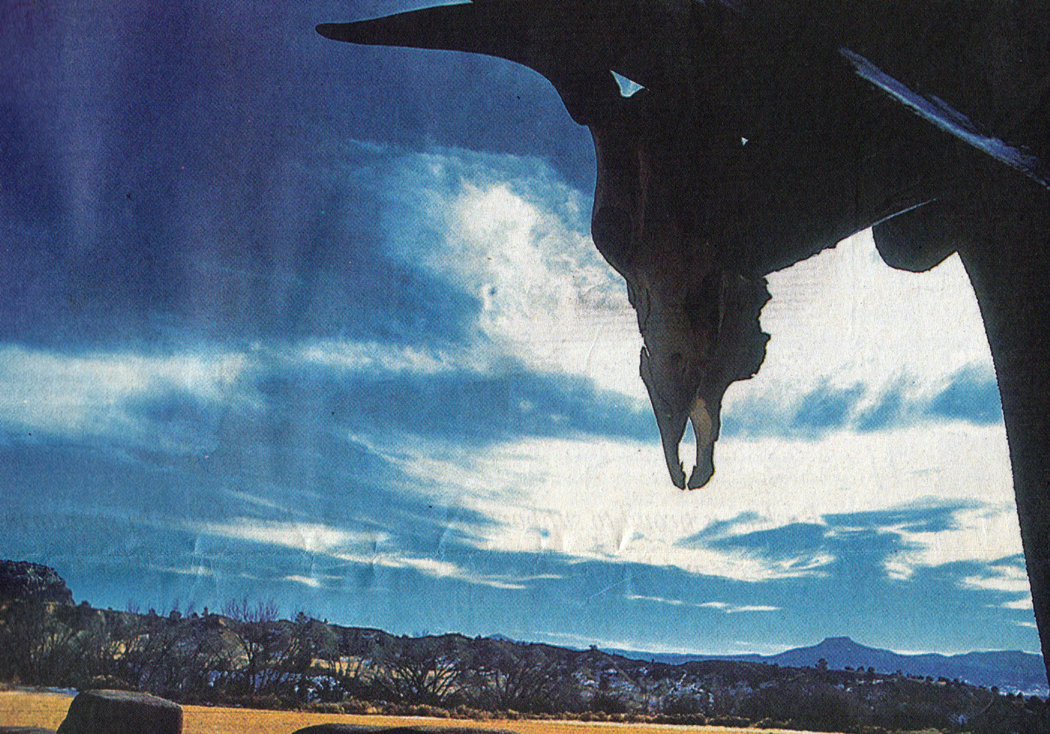
The surprising thing is that so little seems to have changed. You can still see the adobe churches, the penitente crosses, the occasional cow skull with its corkscrew horns. All of which became familiar icons in O’Keeffes paintings. okeeffe ghost house at ghost ranch copy

In fact, a drive up U.S. 84 from Espanola to Abiquiu is as close as you will ever get to driving through an O’Keeffe painting. It is all around you.

Although O’Keeffe is permanently associated with New Mexico, she was born in Wisconsin in 1887. Her family moved to Virginia when she was 14 and she later studied art in Chicago and New York.

She didn’t see New Mexico until she was 30, and then only briefly. She didn’t move to the state permanently until she was 62.

She first achieved note as a painter in New York at the art gallery run by Alfred Stieglitz, who later became her husband.

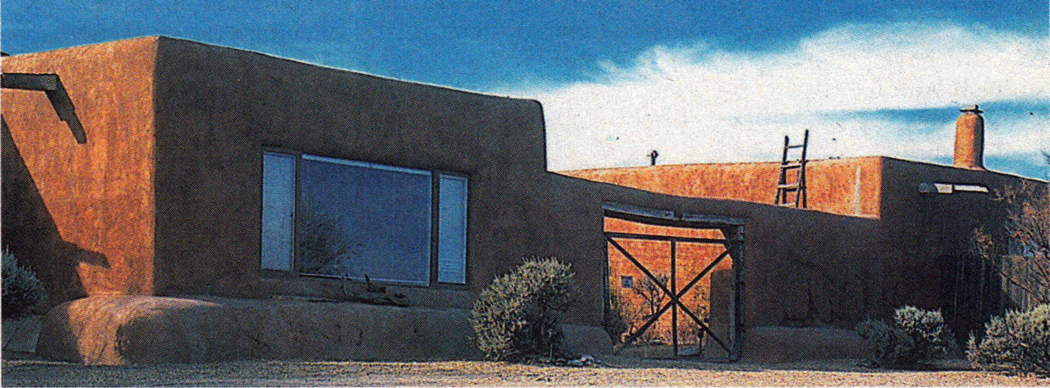
She took solo vacations to the West for many years, leaving Stieglitz behind and renting and then buying property, first at a dude ranch called the Ghost Ranch about 65 miles north of Santa Fe, and later in the tiny village of Abiquiu (Aba-cue) about 15 miles south of that. okeeffe abiquiu home copy

Her paintings, which simplified and mythologized the land around her, have become iconic for both Americans in general and women in particular she was one of the first women whose work was taken seriously in the ”man’s world” of art. okeeffe church golden NM copy

The stretch of U.S. 84 from Espanola to the Echo Amphitheater, north of the Ghost Ranch, offers the most insight into O’Keeffes work. You can see just how she translated what she called her ”back yard” into paint. okeeffe echo canyon copy

”I wish you could see what I see out the window,” she wrote to a friend in 1942. ”The earth pink and yellow cliffs to the north the full pale moon about to go down in an early morning lavender sky behind a very long beautiful tree-covered mesa to the west pink and purple hills in front and the scrubby fine dull green cedars and a feeling of much space It is a very beautiful world.” okeeffe ladder ghost ranch copy

O’Keeffe was a stubborn woman, and she stubbornly refused to leave this life until she was a few months short of turning 99.

”When I think of death,” she wrote, ”I only regret that I will not be able to see this beautiful country anymore … unless the Indians are right and my spirit will walk here after I’m gone.” okeeffe tesuque pueblo copy

No one driving along the Chama River can doubt the presence of O’Keeffe’s redoubtable spirit. okeeffe skull on eave

Mahler 9 ending

I am at this moment listening to Mahler’s Ninth Symphony and my face is covered with my own tears and my insides are torn up by the force of the music.

It is the morendo of the final movement. Ersterbend, is what Mahler asks for. And he means “dying.” Not the dramatic or theatrical dying a sensitive teenager imagines, but a slow extinguishing ad nihil: a kind of evaporation of the last molecules of life. I can hardly tell when the last note actually ends, it is so quiet.

The great music critic, Dimitri Drobatschewsky, who died last year at 90, (and who attended the Ring cycle at Bayreuth 17 times, and before he retired, managed to go to two different Mahler festivals, one in Amsterdam in 1995 and the other in Berlin 10 years later) said the highest experience he ever had in a concert hall was the Mahler Ninth conducted by Abbado in Amsterdam. As that last note hung in the ether and finally could be heard only in the mind’s ear, Dimitri said he was afraid the mood would be destroyed by the expected applause, but it didn’t: “No one applauded for a full five minutes,” he said. And I’ve read the same thing in other accounts of that concert. If he was exaggerating, it is only by a little.

Applause would have been the inappropriate response to the music; this was hardly a case of hearing pleasant tunes and enjoying them. The music, rather, spoke to its listeners on some deep, disturbing and emotional level.

The profound emotions drawn out of us by Mahler, or the late Beethoven quartets, or the Bach unaccompanieds (take your pick, fiddle or violoncello), have long ago persuaded me that music is not abstract, as the current prejudice would have it, but rather, it was meant by its composer to be “about something.” That is, the music is deeply metaphorical.

When we listen to Shostakovich’s Seventh or his Eighth quartet, or to Beethoven’s Eroica or Mahler’s Third, we are hearing the composers thoughts about extra-musical issues. Yes, they are all elaborate, complex and interesting arrangements of notes, but they are also about war, heroism, nobility, longing, death, love and idealism, among many other things. To ignore those things in the music is to misunderstand the music. Worse, it is to trivialize it.

I am not making the argument that all music, or all classical music is meant to be understood philosophically, but that a certain level of music by a certain class of composer was intended to intersect the larger issues of being alive. A brilliant Mozart divertimento may not be more than an especially graceful and intelligent divertissement, and our main concern may be the clever things he does with D-major, but you cannot hear “Viva la libertad” from Don Giovanni and not weep for its extra-musical import and what it meant at that instant of human history.

Neither am I making an argument for what used to be called “program music.” I don’t mean that the composer meant to tell a story simply by substituting notes for words. Yes, many 19th century composers published or announced “programs” for their works, but many of them also privately or later publicly disavowed those programs. And there are many cases of music writers proposing programs that are prima facie ridiculous. We now use those excesses to bludgeon the entire century of musical purpose.

But I am saying that the music we take most seriously, and hold to the longest in our lives, speaks to us of more than musical ingredients. We should not be embarrassed to be brought to tears or to elation by the Beethoven Ninth or the Verdi Requiem. That’s what those composers intended to happen. They weren’t entertaining us, they were speaking to us.

There are two aspects to this problem that I worry the most about.

The first is the assertion by some (including all those tedious French Post-Structuralists) that thoughts and words are identical. There is a good deal of thinking — perhaps the overwhelming majority — that is not verbal. We can think spatially, we can think mathematically, we can think emotionally, we can think visually. When we do something as simple as pass a car while driving, we don’t think in words about the speed of our car, the speed of the car in front of us, the speed of the car coming at us in the other lane and how far off it is. We think in temporal-spatial terms, completely without words, knowing whether there is opportunity to overtake the bumpkin in the pickup truck in front of us who is going 25 in a 45 mph zone. No words, but thought nonetheless.

And when Richard Strauss takes on the afflatus of idealistic aspiration in his Don Juan, we recognize the affliction in our own body-reaction — the heightened pulse or the rise of gorge in our goozle. I don’t have to put in words to know it. It is the perfect musical metaphor for the non-musical experience.

If one objects that the music can never be as precise, or that it is always ambiguous, I can only respond that words themselves are always ambiguous and imprecise. Their supposed precision is an optical illusion. (It is why we have lawyers). To contain largeness requires ambiguity: The more precise a word is, the less it defines, until the ultimate precise word has no more meaning than the name of a dog. Here, Spot.

(I mean, for instance, that genus is more narrow than phylum, species more precise than genus, breed yet more precise than species, and when you slice it down to an individual dog by name, you have narrowed the scope so much that whatever observation you make no longer has any wide application.)

If we think about this issue of precision, it is obvious: What is the white whale in Moby Dick? The very ambiguity is essential to its power. So, this can be no argument against metaphor in music.

And secondly, if you say music is not “universal” and is culturally inflected — as so many intellectuals do these days — then I scratch my head. Is not language culturally inflected? Do you not have to learn English to understand Steinbeck? So how is it different having to learn the tradition of European classical music to understand Mahler? Mahler is (albeit idiosyncratic) something to learn, just as you have to learn by reading Faulkner or Joyce to get past the parts that at first don’t make sense.

The Mahler Third arguably makes no sense understood merely musically. It took me years to begin to fathom what was going on in that vast ocean of music and orchestration, but now that I understand it metaphorically, it is the greatest of Mahler’s symphonies (or maybe shares that with the Ninth and Das Lied von der Erde — “Ewig, Ewig.”

The other big problem I have is the prejudice of Modernism.

I have lived through the century of Modernism, and was infected with it from my earliest years. I am only recently cured. I grew up loving abstract art and stream-of-consciousness novels. The party trick that is Modernism is to understand the means of expression as the subject of the art itself: color, form, shape, contrast: These carry meaning in themselves.

(I know Modernism has other aims as well, but this part of it is what ruins classical music for me.)

And you can see the effect of Modernism in the history of classical music recordings. The old style of performance, exemplified by Furtwangler, Mengelberg, Casals and Walter, by mid-century, gives way to Toscanini, Weingartner and eventually Szell, Solti and now, John Eliot Gardner. These are the “just-the-facts-ma’am” conductors, following Toscanini’s dictum: “To some, the Eroica may be about heroism and nobility, but to me it is just Allegro con brio.”

A century of musicians have disparaged the very idea that music can be about anything but music. “Music can express nothing,” said Stravinsky, whose music is profoundly expressive despite himself.

What is lost when this Modernist esthetic is applied to music — and 19th century music in particular — is the core of what the music is about. If a Leonard Slatkin doesn’t believe that the first movement of the Eroica strives for something and achieves it in the coda, then he is only making noise. I read reviews over and over where the critic complains that the conductor is “interpreting” the music instead of just letting it speak for itself, and what he means, of course, is that he wants the music to shut up about life, death, the universe and everything, and just scratch the familiar tickles and amuse me. As if you could play Hamlet and just speak the words clearly without all that “acting.”

The century of Modernism is over, although the effects linger on. And what we call Postmodernism isn’t all that much better (it being merely a kind of Mannerism to the Renaissance of Modernism), but you can find a number of musicians and conductors seeking to find other ways of dealing with the real issues of the music. Yes, there are the Roger Norringtons out there, mucking things up with their idiocy, but there are also the Mikhail Pletnevs and Daniel Barenboims, seeking to understand why there should be a ritardando here, or a sforzato there, even when not called for in the score. The same as a Gielgud applies a pause in “To be or not to be,” to maximize the rhetorical understanding of the content. Shakespeare did not indicate such in his text, but an intelligent actor knows where they work and why.

I also have to laugh at the way Modernism once thought of itself as the natural conclusion of a historical process, having finally gotten to the point of esthetic “purity” that all art previously only aspired to. Got a giggle out of that.

Along with Pablo Neruda, I am in favor of the impure in art.

And in favor, not of a simple-minded return to an elusive “golden age” of the past — such an age never existed, and the old recordings prove that musicians now play in better tune and with better intonation than they ever played for Mengelberg — but for some new way to explore the metaphor inherent in the music, and not to ignore the music’s meaning for the sake of keeping alive a dying flame of Modernism.

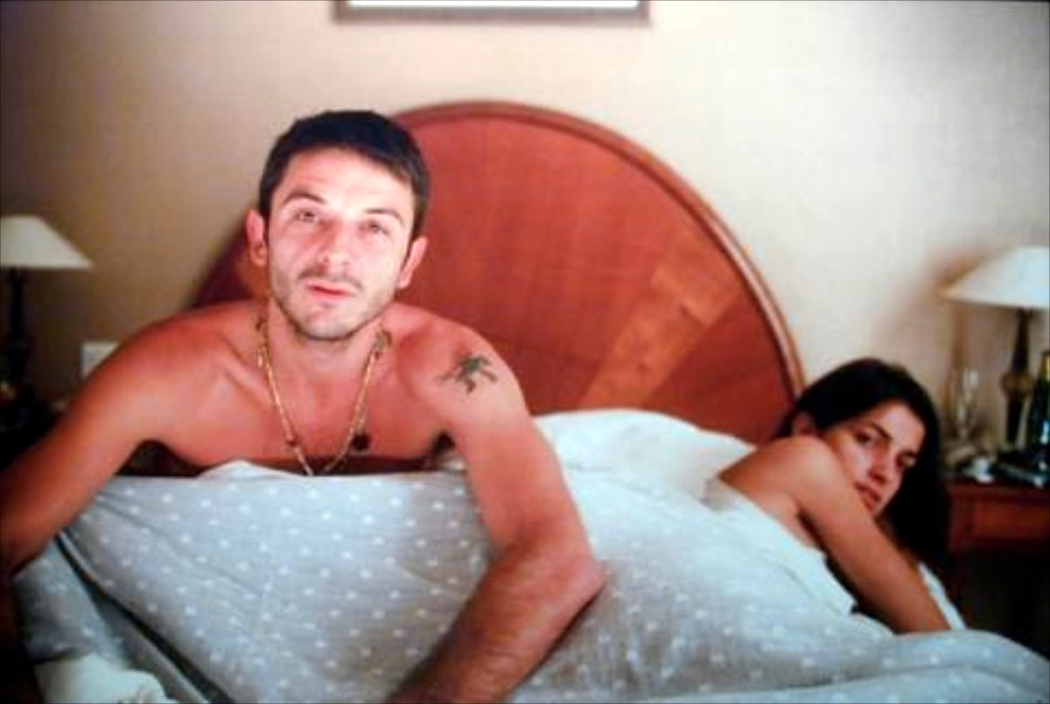
goldin 4 black eye

Even when they stand before us stark naked, the only part of their anatomy that matters is their eyes, which hold us paralyzed in their gaze. They are mirrors of infinite sadness.

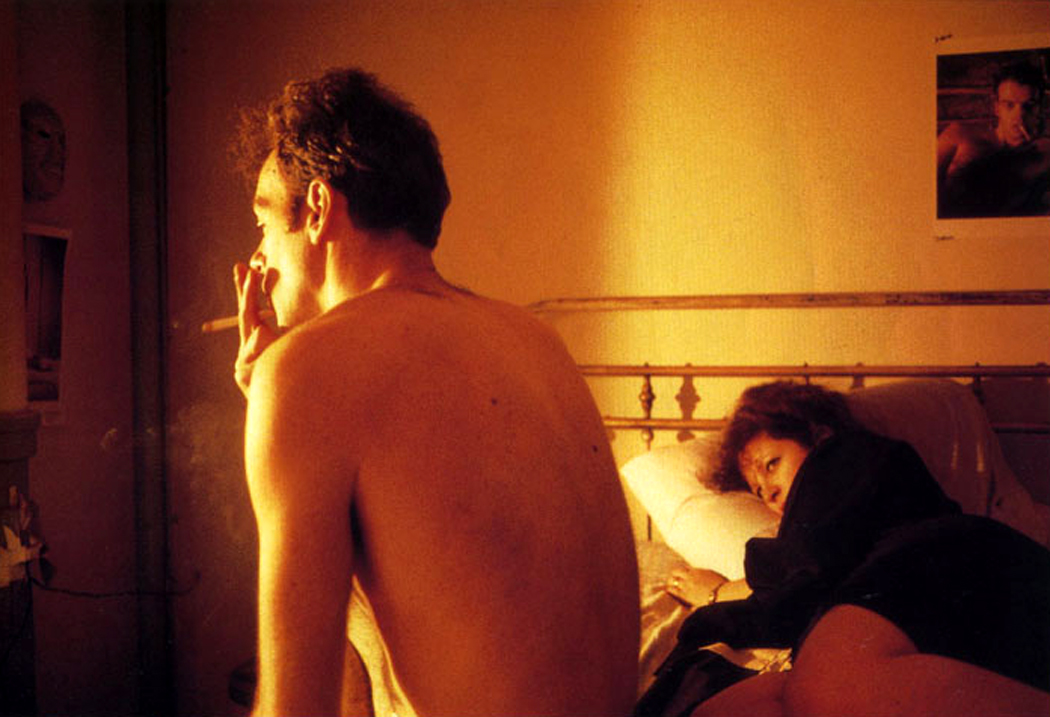
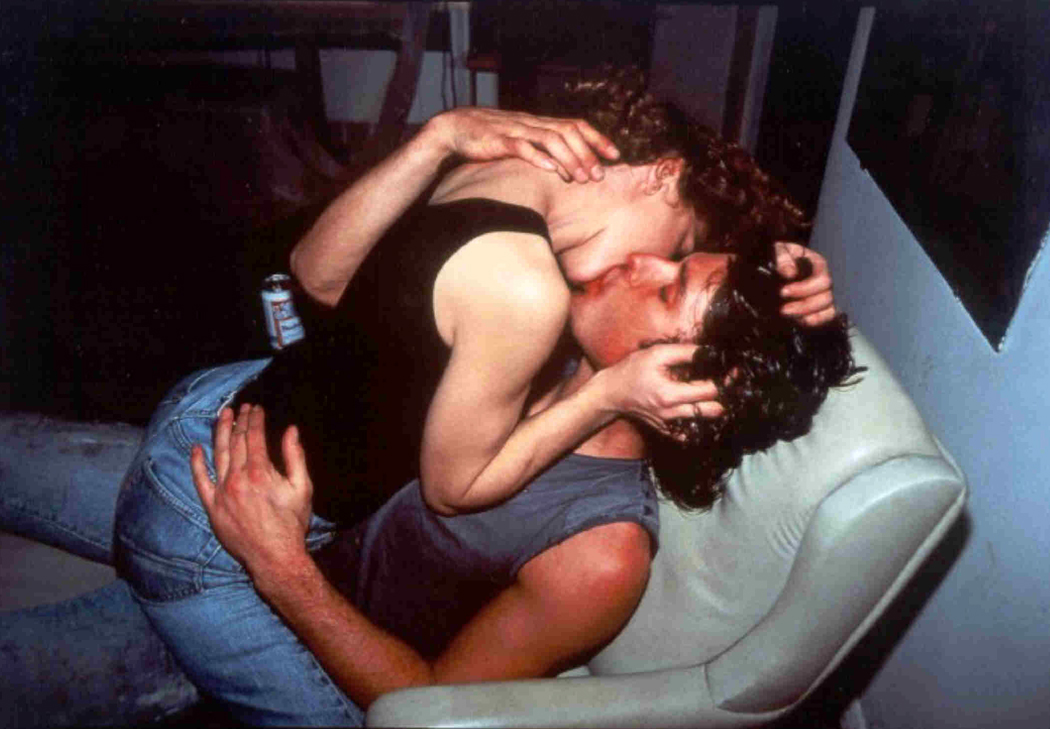
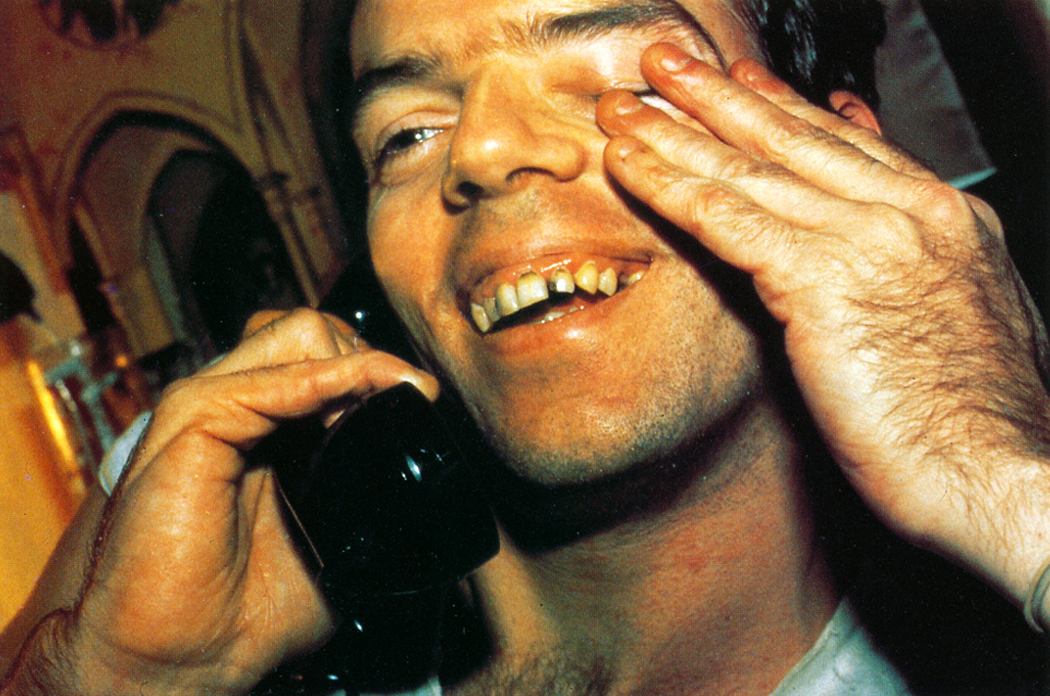
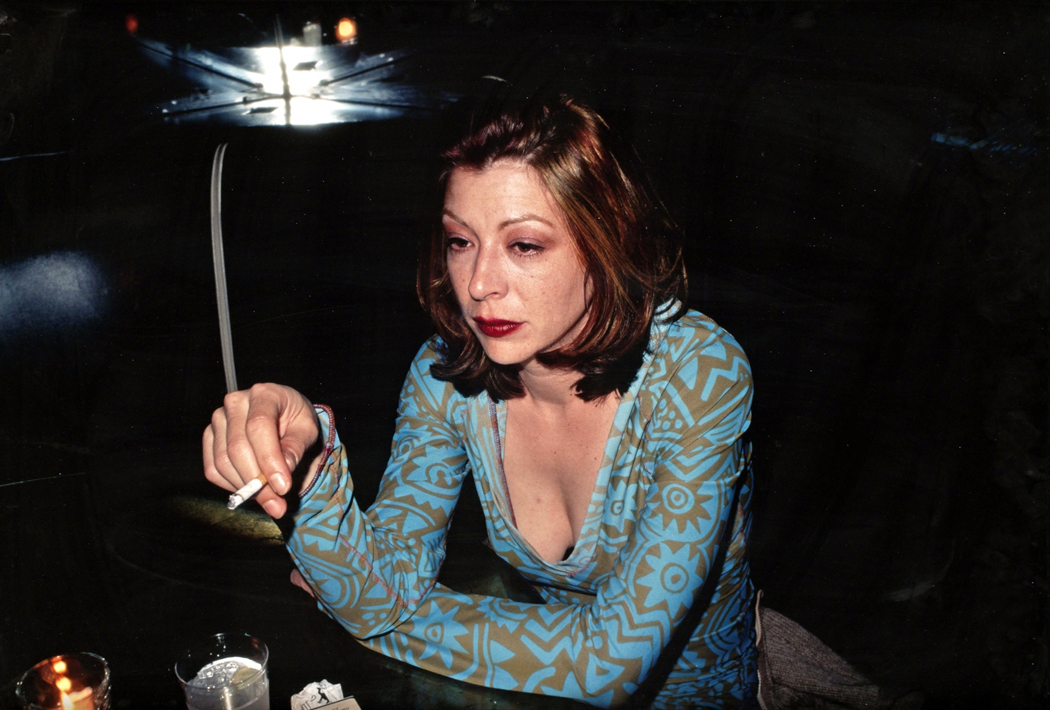
One of the perennial sellers among photographic books is Nan Goldin’s Ballad of Sexual Dependency, a woeful tale of the underbelly of the art world told in a series of primitive color photographs full of battered women, tattoos, transvestites, pimps, drugs and hangers on.

Ballad of Sexual Dependency

Ballad of Sexual Dependency

They look out at us, bruised and lost.

Over a period of 40 years, but primarily in the 1980s, Goldin has photographed the beaten underside of la vie de Boheme — the art world and the pretenders to the art world, the gay world, the broken and wounded, the young who have found what they are looking for in being lost.

And it is an impressive accomplishment. Some 700 photographs, each an intense shot of emotional cocaine, are accompanied by music, ranging from blues to heavy metal to opera.

Goldin has photographed this subculture from the inside. She bears no objectivity: These are her friends and lovers.

“I don’t choose people in order to photograph them,” she has said. “I take photos straight from my life. These photos come from relationships, not from observation.”goldin 1

The pictures are raw, like snapshots, and the life is even more raw: They love, shoot drugs, party, cry on each others’ shoulders, smoke Marlboros, dress up in costumes and search for — and intermittently find — meaning. More often, they find pain and suffering. And in the age of AIDS, they also find death.

These are people on the edge, their nerves raw from abrasion. For them, “unprotected sex” is spiritual as well as physical: Their souls are wide open and vulnerable.

The photographs at first appear nothing more than snapshots, but the cumulative effect of 700 of them proves that Goldin is instead a rare technician, able to create the effect of spontaneity and carelessness at will. The figures’ motion shows as blur in the pictures, usually lit with the garish glare of the flashbulb. The colors of the pictures are the brightest Kodachrome blues, greens, violets and golds. Goldin has created a style perfectly suited to the subject matter.goldin 6

The faces are both pathetic and heroic. The young bohemians, living in squalor, clearly see themselves heroically, participating in grand love affairs, where violence can easily be confused with passion and romantic dreams can comfortably ignore their rat-infested surroundings. It is cold water flats with concrete floors, soiled sheets and nose rings.

Which gives them a certain nobility: They know they are alive.

Most people have seen the photographs published in book form, but Goldin didn’t intend the series as a book. It was first a slide show that she dragged around the New York art world in the 1980s, showing in night clubs as well as galleries. It is meant to be accompanied by music, which is missing in the book. The music is as important as a score to a film. goldin 11

The show, which takes 45 minutes to sit through, is not endured by many museum goers when it has been shown at major museums, most of its watchers come and go after seeing a minute or so of the presentation.

And its intensity does make it hard to sit through.

But Goldin manages to keep it all coherent, scripting the show in smaller bursts of slides grouped thematically, or as an episode in a single love affair.

Because she makes you see the flow from one slide to the next, it never becomes the interminable horror of a neighbor’s travel pictures. Unless your neighbor is Dante.

Yet, it isn’t quite hell, either. It is relentlessly romantic. Goldin is never the outsider, seeing the pain and filth and commenting on it. She is instead an avid participant, able to play-pretend with all her other subjects that she is in the middle of some grand opera of love and passion. goldin 16

And while at some level she must recognize the ugliness, she is no moralist, presenting shocking scenes in hope we will pass laws or enforce a social code. Lewis Hine she is not.

No, she gives us a layered, complex vision of her world that alternately repels and attracts. She makes us want to give in to the romantic illusions, but the bruises on her face brutally contradict them.

Indeed, Goldin is a major participant in the story she tells. She appears in a large number of the photographs, including the climax series, wherein she sustains the abuse of a boyfriend and wears the black eye he gives her.

But this is never a tract about domestic abuse: Goldin clearly takes responsibility for her own actions. She is willing to trade being terrorized for the drug rush of romantic obsession.goldin 12

This is la vie boheme in the age of AIDS and crack cocaine, and Goldin is its Puccini.

And that is the key to the success of these photographs as art. We do not need to live in rat-infested cold-water flats like Goldin’s subjects, but we do need to know we are alive.

It is the primary duty of art to reacquaint us with the fact.

Daily living takes the edge off life for all of us. Habit and conformity dull our senses. We may feel more mature and less reckless than Goldin’s druggies and transvestites, but if we are honest, we also must admit that what we call maturity is too often composed of equal parts of cowardice and exhaustion.

Goldin’s people risk everything, even death, for the rush of feeling alive. goldin 13

In that, they are like the Medieval stories of Tristram and Iseult or Launcelot and Guinevere. Our notion of romantic love had its beginning in these stories of adultery. For the sake of their passion, the lovers accepted not only death, but the eternal damnation they believed would follow. The assumption of such stories was that transcendent experience could not be found in the routine, in the sanction of society; it must be found outside the rules. A life lived only by rules is a mechanical life; authenticity is found only by acting from the purest impulse.

It is a grand and romantic notion.

But we were not asked then to become adulterers and we are not asked now by Goldin’s work to go out and score a bag of heroin. Art must be understood metaphorically, not literally. The message we learn from both the Medieval and postmodern is that life requires risk, that any risk less than all doesn’t count.goldin 7

So Suzanne, Cookie, Siobhan, Claude and all the rest of the recurring denizens of this demimonde, including Nan herself, who is a principal in her own opera, throw themselves into relationships — into experience — with a foolhardy disregard for their own self-preservation.

When I call this impulse “romantic,” what I mean is that it attempts to connect with those things larger and more eternal than a smooth running society. It tests the limits rather than acceding to them.

They are a La Boheme for the current age. The violence is always mistaken for passion; the sex is always mistaken for love.

When you see something like Goldin’s pictures, you begin to understand some of the attraction of the life with its unmade beds, dirty drinking glasses and cigarettes extinguished on the rug. Perhaps you or I would not like to live that way, but there is an underlying romanticism to it: They are not living the quiet, safe world of their parents. It is a life taking chances, living on the edge, a desperate chance for transcendence.

So, the women risk beatings by their boyfriends and the men risk thrashing by their drug dealers, all in the name of feeling overpowering emotions and not giving in to what they see as the gradual death of conventional living. goldin 15

For the secret romanticism, whether it is Nan Goldin or Percy Shelley, is its aspiration to transcend life’s limits. Nothing should be forbidden and the only thing worth doing is what is impossible.

There is a wonderful scene in William Blake’s Marriage of Heaven and Hell. An angel brings the poet to a precipice and from their height, they look down on “the infinite abyss, fiery as the smoke of a burning city; beneath us, at an immense distance, was the sun, black, but shining; round it were fiery tracks on which revolv’d vast spiders, crawling after their prey, which flew, or rather swim, in the infinite deep, in the most terrific shapes of animals sprung from corruption.”

On being told of this vile place, the poet innocently suggests, “if you please, we will commit ourselves to this void, and see whether providence is here also.”

Much of what passes for art in any age merely keeps us lulled: Pretty pictures or numbing farces. People call for beauty, but what they really ask is for an anodyne: a buffer between themselves and the difficulties of being alive.goldin 8

But if we risk feeling alive, we must remember that to be alive is to suffer. Americans sometimes like to forget this fact; we live comfortable lives, insulated from the hard certainties. We kill to eat, although we never think of the slaughterhouse when we buy our burger; we grow old and die, although we spend billions on cosmetics and plastic surgery to deny the inevitable. Our love cannot protect our children and our best intentions cannot prevent us from hurting others.

But as Krishna taught Arjuna in the Bhagavad Gita, one must recognize the universal tragedy and still act.

And, like Nan Goldin’s art, manage in the face of suffering and death to say “yes.”

Mary,_Queen_of_Heaven-_c._1480_-_c._1510_(hi_res)

Wandering around the National Gallery of Art in Washington D.C., I nearly broke into tears. So many old friends, so much moving, meaningful art. There the Panini, there a Canaletto, over there the Rembrandt and there the Assumption by the Master of the St. Lucy Legend.

This is why I love art. In one spot, so much of the best and even when not the best, then the best known. Each room contains two or three of my oldest, dearest friends, and oh, how they have changed over the years since I last saw them. It has been at least a dozen years since I visited them and they have altered greatly. Some that I loved passionately when I was a college student have now become garish, cheap, obvious and unsubtle.

It isn’t just us that change as we age: It seems the very paintings do, too.

So now, others that I knew as one knows a distant aunt or uncle, not too well but by reputation, now seem as deep and wide as oceans.

I have left TerBrorch and Hals, but they have been replaced by Corot.

At noon, my brother, Craig, showed up in the rotunda and we wandered the galleries trading enthusiasms. Mostly, we walked through the 19th Century French galleries where the Cezannes are as serious as Bach and the Renoirs as cheap as a wine cooler. Through the American galleries and then to the East Wing. We stayed there until we were thrown out by guards at 5 p.m.

When we got to Craig’s car, the battery was dead. He called AAA and we waited an hour for them to show up, much of that time listening to the sorry tale of a homeless ex-drug addict, now relapsed (making him, I guess, a former ex-drug addict). He seemed bright and alert and he originally showed up in an attempt to help us start the car. He offered to call the police, saying they usually have jumper cables and help out.

“Don’t ask a cabbie,” he said. “They always want money for it. It ain’t their business. They shouldn’t be asking money for helping people. But they always want $10.”

Craig let on that $10 might be a bargain to get the car started without waiting the hour to 90 minutes the AAA had promised.

But he began telling us his life story, kneeling on the asphalt so his head was at car-window level so he could see both of us inside.

“I’m going to a program in West Virginia Tuesday. It will help. I was in a 12-step program and I kept clean for 11 months and seven days, but two weeks ago, I relapsed. You know I never did none of that crack cocaine, but it’s a depressing high. It’s a nice high, you know. But it’s depressing. I makes you, if you have a conscience, you know, makes you do things you wouldn’t. You’d sell your own mother. Well, I’m lucky cuz I never had to steal nothing to pay for it. I had a job with the government, but they found out I didn’t finish high school. I had only two credits to go, they told me, and I could finish it in summer school. I had scholarships, had …” here he held up fingers like he was counting them in his mind … “seven scholarships. I was in track and field and in football. One was for Notre Dame, and the rest were for schools here.”

But drugs intervened.

“You know, one thing I learned: You should always marry into the same religion. My wife and I are different. She’s into Yaweh and Yeshua — Is that what it is? I never understood. Yeshua and Yaweh, that’s Jesus and God. I don’t know why she calls them different. But my Mama always went to church. I’m not much of a churchgoer, really, but if you don’t have religion, you can’t kick the drugs. I really believe that. This retreat in West Virginia is religious.

“My Mama showed what you can do, how you can overcome your adversities. She didn’t have no education, really, and my Dad, well, he was paralyzed from the neck when I was two. I never seen him after that. I told everybody he was dead. He came back from that war, what was that war, in 1968? Vietnam? Was that Vietnam? And he married my Mama when I was 2 then. But later he got real, he drank too much at a party one night and when he drove home he ran into that building there, what’s that building? The FBI building. He ran into it and got thrown out of his car and layed out in the street all busted up. He weren’t ever around when I grew up.

“Mama took some courses in typing and secretary things and got a part-time job with the Government Accounting Office. It was a good job and she took courses and after about six months, she left there and got another job and went to college. She studied accounting and became a CPA and now she works for the Internal Revenue.

“I don’t wanna disappoint Mama, which why I’m out here on the street today. I don’t wanna be out here tonight, cuz if I am and I do the drugs, I’ll miss the trip to West Virginia. If I do the drugs, I won’t be here.

“Drugs is bad, and that crack cocaine is the worst. I mean, the man who invented it … I mean the man who invented any drug should be in jail, but the man who invented crack cocaine, they should shoot him.”

He never sounded inarticulate, but he lapsed from King’s English into street patois and back, sounding sometimes like a home-boy, and sometimes like a middle-class stray. He was well-groomed and with a beard.

“I have never gotten so bad, you know, that I had to eat out of the garbage or pick up some food someone dropped. But I ain’t saying that couldn’t happen, but it hasn’t yet. But if I don’t stay clean till Tuesday, it wouldn’t surprise me. You know, they say that when you relapse for the first time, it’s the worst, that things are much worse than when you’re hooked the first time. And they’re right. If I don’t get out of this now, I’ll keep going back and it’s just gonna get worse and worse.

“But I never broke with my family or nothing, so they’re there for me, my Mama is, anyway. I’m an only child and I think she tries to take better care for me for that. She always tried to buy me the best clothes, not just ordinary clothes, but the best.”

And although he had mentioned panhandling early in the conversation, he never did hit us up for money.

“It’s good to talk about it,” he said as he rose from the pavement. “It’s good to talk with someone and tell them, so thanks for listening, you hear? I can go and get the police. They’re right over here in this building,” he said, pointing to a large, characterless, bureaucratic building of poured concrete and glass. “The police here will help you; they’re good about that. Don’t stop no cabbie.”

And he walked off. About 15 minutes later, AAA showed up and jumped us.

So, after a foot-numbing day of museum-going, I hobble back to the hotel and just as I get my socks off and begin rubbing my toes, it begins raining in downtown Washington, slickering the streets and streaking my window. Lightning flashes benignly in the clouds. And though I can barely walk, I slip my shoes back on and limp down the hall to the elevator and out into the weather.

“I’m from Arizona,” I tell the doorman. “What do you call this funny stuff falling out of the sky?”

He laughs. “Rain. It rains here most every afternoon in the summer.”

“Where I come from, it hasn’t rained since last year,” I tell him. And I don’t remember any rain since before January, so it’s true.

I walk out in it, get my hair wet and my clothes dampened. A low roll of thunder and the car tires sizzle on the wet pavement.

Mont Ste. Victoire, Aix-en-Provence

Mont Ste. Victoire, Aix-en-Provence

For nearly a century, we have seen Paul Cezanne through the eyes of his disciples. They have given us the popular and concretized version of who the painter was. A version to validate the century that followed.

And we have all been his disciples: No other artist has had a more profound or lasting effect on the art of the 20th Century. In some sense, Cezanne (1839-1906) invented Modern Art.

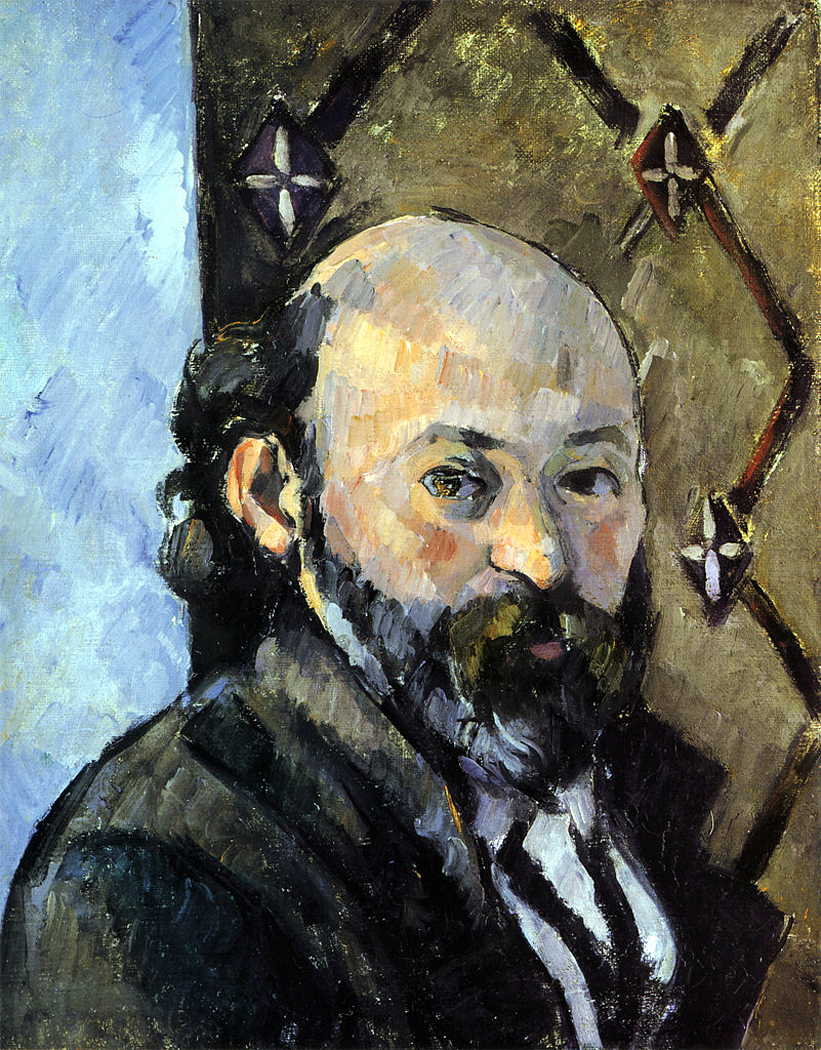
The problem is that Cezanne himself was more complicated, more equivocal than the simple image of his work and influence. And it would be good for us today to widen that narrow view to discover something else in his art that may still be fertile for inspiration and a way out of the locked room that Modernism has become. cezanne self port

No one could miss the direct line between some of Cezanne’s paintings and the analytic Cubism of Picasso and Braque. And that visual kinship is reinforced by Cezanne’s own words: “Treat nature by means of the cylinder, the sphere, the cone …”

He mentioned often the need to see a canvas as a separate object, with its own rules, even if his prose is sometimes convoluted to the point it may cease making sense:

“… everything brought into proper perspective so that each side of an object or a place is directed towards a central point. Lines parallel to the horizon give breadth, whether it is a section of nature, or, if you prefer, of the show which the Pater Omnipotens Aeterne Deus spreads out before our eyes. Lines perpendicular to this horizon give depth. But nature for us men has more depth than surface, whence the need to introduce into our light vibrations, represented by the reds and yellows, a sufficient amount of blueness to give the feel of air.”

But even here, we find Cezanne concerned with something Modern art tends to ignore: The way the world looks.

Despite the modern appearance of his canvasses, Cezanne often wrote about that aspect of art he shared with the long centuries that went before him: The need to see the world clearly, and to attempt to record on his surface not only a version of the world as he knew it, but an accurate record.

“I had to become a student of the world again,” he said to Emile Bernard, “to make myself a student once more.”

We think of Cezanne as the man who made abstract art possible, but in his own words, he constantly talked of capturing the reality — the visual reality — of the world on his canvases. To be true to the world he saw and felt.

This connection with the things of the world is what evaporates as the 20th century advances. The dedication to the reality of paint and canvas supersedes the dedication to understanding the world itself.

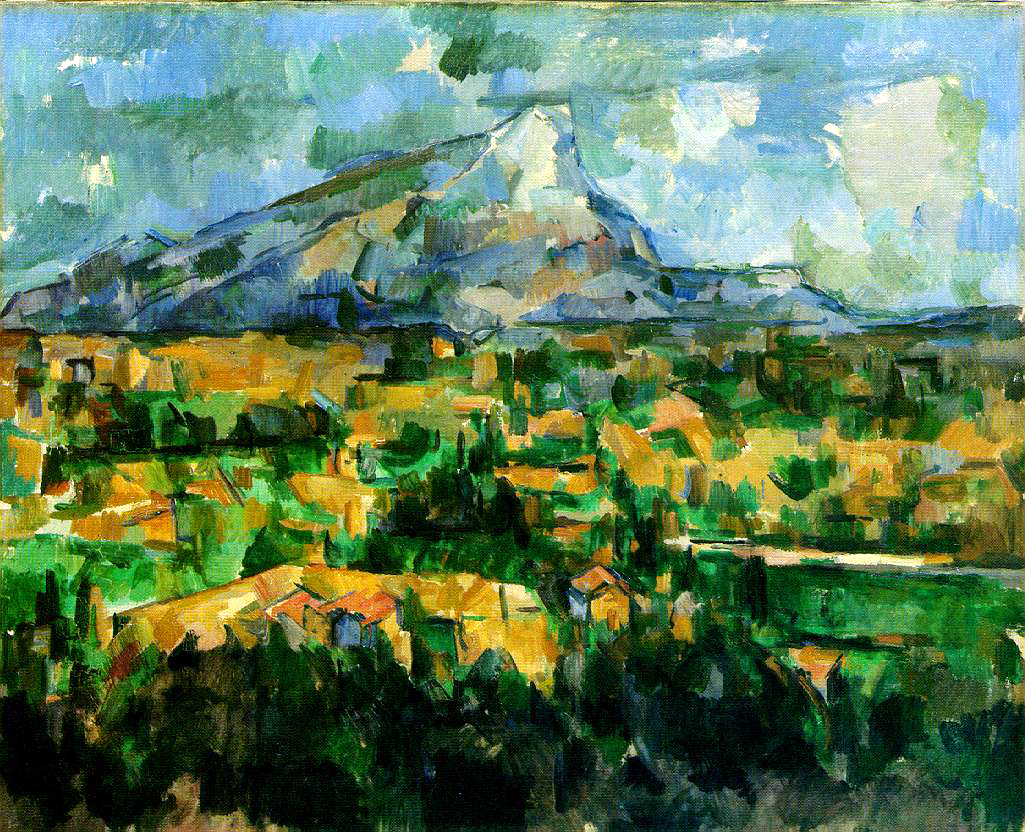
“You say that because two large pine trees are waving their branches in the foreground. But that’s a visual sensation … Moreover, the strong blue scent of the pines, which is sharp in the sunlight, must combine with the green scent of the meadows, which, every morning, freshens the fragrance of the stones and of the marble of the distant Ste-Victoire. I haven’t conveyed that. It must be conveyed. And through colors, without literary means.”mtstevictoire1

The painter writes and talks about the colors, the feel of the air on his skin, the smells of the forest, the give of the loam under his feet. He is veritably intoxicated by the things of the world.

“The world, the sun. .. that which is transient … that which we both see … our dress, our flesh, reflections … That’s what I have to concentrate on. That’s where the slightest error with the brush can send everything off course.”

What is different in Cezanne from the connection to reality in the Impressionists that preceded him is a faithfulness to what he would call the “permanent” or monumental quality of the things of the world. Monet might be more interested in what the sun does to those trees over the space of five minutes in the morning of a spring day; Cezanne hoped to capture some essential truth of the thing-itself. That meant finding something in the world that stayed essentially the same, no matter how the sunlight played over it through the course of a day, a week or a year.

This realization dawns on you if you visit Aix-en-Provence and see the architecture there. Those blocky houses he paints, so redolent of Picasso’s Cubism, are not a figment of Cezanne’s simplifying imagination. That’s what the houses actually look like. painting and real house

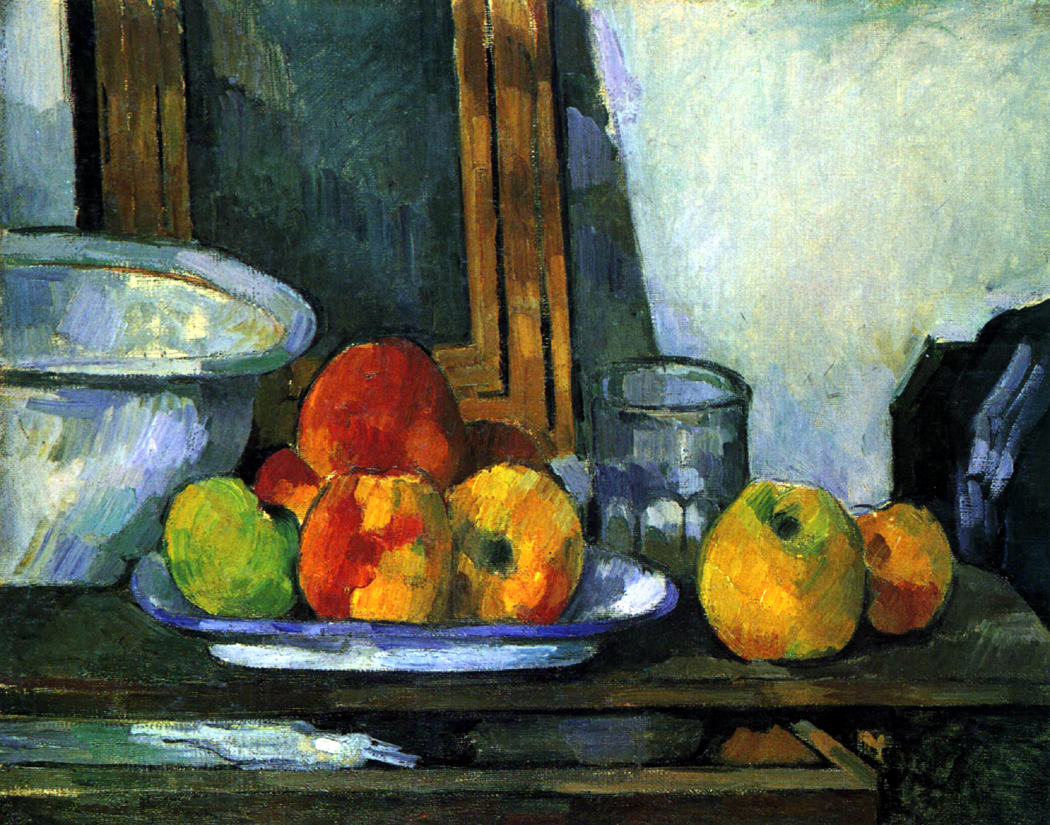
Paul Cezanne felt a loyalty to the world, a sense that the things of the world inspire love and affection, and when transcribed to canvas, can be laid out almost like scripture for us. We all need to be reminded occasionally that “die Welt ist schoen,” as the photographer Albert Renger-Patzsch had it, and that through his canvases, Cezanne could capture that essential part of the world that we might miss when we fail to pay attention to what is around us.

They are, after all, the most real apples and pears ever seen that do not go soft and brown over time. cezanne apples

So, to see Cezanne only as a seed of Modern Art is to misunderstand the magnitude of his accomplishment.

At least for most people, there is little in the art world as dependably moving as a Cezanne apple or mountain. Painters, in particular, have always been astounded at the subtlety of his vision. It is said the Eskimos have 27 words for snow; Cezanne must have had 27 words for blue-green.

fighting for peace 1950

Politics and art; oil and water; Mitch McConnell and charisma.

Like alternate universes, the oppositions seem utterly irreconcilable.

”The only thing poetry and politics have in common are the letters P and O,” the late poet Joseph Brodsky once quipped.

Yet, there are clearly many cases of political art. Much of the world’s greatest art, from the Antigone to Angels in America, has concerned politics.

So when I say art and politics are death to each other, what I mean is not politics as a subject — anything in life is fit subject for art — but politics as a lens, as dictator of what is permissible. If you have a political ax to grind, don’t try hacking tree stumps with it, hoping to make a masterpiece.

Another way of looking at it is that there are two types of political art.

The good and the bad.

If you are politically inclined, good political art is art that advances your ideology, and bad art is anything else. This was the inspiration for most Socialist Realism, and it’s making a comeback in a raft of forgettable politically correct art and theater.

But if you are aesthetically inclined, the good and bad are not defined by ideology but by aesthetic persuasiveness. Does the work ring true?

Politics itself can be seen as two separate, almost incompatible things. On the basic level, politics is the acquisition and use of power. It is a basic characteristic of humanity. Politics on this level can be used for ill or good. It is not a thing about which a value judgment can be made. Like gravity, it just is.

But to too many people, ”politics” means political theory. It means not the way things are, but the way things should be. Life should be more fair, the aristocracy should rule, power to the people, a flat tax will solve all ills. Name your poison. human pyramid

When American politics works as it is supposed to, factions promote their causes and compromise is reached. The result is a continuous tension of interests, like a human pyramid in the circus.

But when ideology takes over, compromise is seen as an evil. Through the ideological lens, there is only one truth and everything else will lead to ruin. This is equally the case with Marxists and the Christian right.

”One law, one God, one king,” as William Blake has it. You are either with us or against us.

So, lost in the discussion is the fact that when we say something is ”political art,” we mean two very different things. On one side, there is partisan art, which takes a political stand and uses the art to proselytize. It is the art of the street theater, meant to persuade — although more often than not, its audience has already signed on, so its purpose really is to reinforce beliefs already held. socialist realism

At its worst, partisan art is Nazi and Soviet propaganda; at its best, it is Brecht. Always, it is didactic, and more often than not, it is forgotten by the following year. Name a Socialist Realist painter, I challenge you.

But art may approach political questions from another direction:

There is an art that is interested in the ironies and passions of politics, in its human toll, not its theories.

Partisan art is interested in answers, certainty and action; the other direction is interested in questions, ambiguity and contemplation.

The problem is that ideology is system, and systems are dehumanizing. It matters not whether it is left- or right-wing. The machine is supreme: We measure success not in human terms, but by whether it adheres to theory. Read any Marxist criticism and you will see such. Or listen to a House Republican talking about the National Endowment for the Arts.

In both cases, the question is whether the art is orthodox — does it adhere to the party line.

It is a mark of critic John Berger’s intelligence that his Marxist theory inevitably leads to gibberish and double talk. He must wind up saying something patently silly or else he must ultimately abandon the theory.

People simply do not act the way Marxist theoreticians say they do; neither do they act the way capitalist theoreticians say. Humans are much more complex, much more contradictory.

No, art, if it is to last, must concern itself with the human, not the system.

Goya’s Disasters of War, Picasso’s Guernica, Tolstoy’s War and Peace, even Homer’s Iliad, all approach political questions from a human point of view.

So do Citizen Kane and Oliver Stone’s Nixon. And so does Anna Deavere Smith’s Fires in the Mirror. It does not take a stand on one side or the other; rather, it allows each side to say its piece, incompatible as those sides may be.

Such art examines the possibilities and tests them against the human heart.

Such art is dedicated to this one human truth: There is always a larger context.

Compare Maria Irene Fornes’ A Conduct of Life with Ariel Dorfman’s Death and the Maiden. The first deals with the rape of a 12-year-old girl; it knows who the villains are and what we should think of them, and it tells us in no uncertain terms.

Death and the Maiden, about a woman brutally tortured under a South American military regime, is much more equivocal. We are never quite sure whether the man she accuses of carrying out the torture is guilty or innocent, and we surely find that the woman’s revenge on him is brutal in return. There is blame to go around.

As W.H. Auden wrote, ”Those to whom evil is done do evil in return.”

Or Barbara Garson’s MacBird, which lampooned Lyndon Johnson as a Macbeth who killed his Kennedy/Duncan for his own political ends. It is a sour-toned comedy and nearly forgotten except by graduate students with theses to complete.

And that brings up another reason the narrow partisan art dies such a stiff death. Its concerns are almost always so transitory. Does MacBird still have meaning 45 years after the events it describes?

Nothing is more dated than a superannuated political idea. We’ve moved on; we have our own problems, thank you.

Compare that with Citizen Kane, which is equally a hatchet job on a public figure. But because filmmaker Orson Welles concentrates on the human rather than the partisan, it still contains meaning, still has that resonance which is the ultimate test of a work of art.

gauguin

Are the arts important?

It is the question at the bottom of the debate over public funding, and a lot of hooey has been written on the subject, from both sides of the issue.

Yet, the question remains. Is art important, or is it merely one of the frills of life? Is it more than the amusement of the rich people who can afford to buy it or attend its performances? Does it serve some essential function in our lives?

The answers usually provided are too often soft and squishy, with a lot of feel-good oohing-and-aahing alternating with benign platitudes.

All of which miss the point.

There are three major things that art provides that we can ill afford to do without. They have nothing to do with ”identity,” ”self-expression” or ”healing,” or any of the pop-oriented, new age or parochial apologies being given in the discussion.

No, what art does is as fundamental as language. Far from being an ornament, it is the foundation of culture.

Put another way, civilization doesn’t make art, art makes civilization.

How does it do this?

First, art asks, ”What is real?” It is the first line of investigation into what is true. Art is the acid test we give our assumptions about reality to find if they are gold or lead.

If science is the test we give to hard fact, art is the test we give to everything else.

Second, it gives us a way out of the isolation of our egos. The greatest art forces us to sympathize and empathize with others and enlarge ourselves and our moral compass in the process.

And third — and least familiar and most difficult to understand — it asks, ”What is the meaning and purpose of structure?” This last has unforseen ramifications.

They may be summed up in Paul Gauguin’s famous painting from Tahiti: Where Did We Come From? What Are We? Where Are We Going? Those three questions give us a clue about why art is important, why it isn’t merely window dressing.

When we ask, ”Where did we come from?” we are asking what is the ground of reality.

When we ask, ”What are we?” we are asking about those things that make us most human.

And when we ask ”Where are we going?” we are asking how art might show us the possibilities for making a life.

Let’s look at them one at a time.

ART AND REALITY

When art addresses reality, it does so on several levels.

On the simplest, it attempts to find out what the world looks like. That may seem unnecessary at first, but it isn’t as easy as it sounds.

We must learn to see, not only as individuals, but as a culture. And art is our most important teacher.

We could be taught to see other than as we do.

It is through art as a mediator and not through direct perception that you come to recognize the world. This is a fact we are almost always blind to. We see it no more than we see the retina on which the image is formed. durer

It was a heroic thing for those Renaissance artists who worked out the mathematics of perspective. They were grappling with reality; they were wrestling with an angel.

In some sense, every artist does that when he sets up a bowl of fruit and begins drawing, trying to stare that stubborn reality into submission.

But reality isn’t only about what we see. It is the question of what we feel and believe as a people. So theater and novels investigate the nature of justice or love or violence. In each case, the artist or playwright is creating a model of the world — a virtual reality — that we must come to accept or reject.

It is also important to recognize that every one of these artistic answers is provisional, and each is modified or rejected by succeeding generations. All reality is a working hypothesis.

To those who see art only as surface, the history of art is a history of changing styles. To those who look beneath the surface, style is irrelevant, nothing but distraction. The changes are not mere fashion but result from the constant testing of art against reality and back.

ART AND EGO

The second issue of art is just as important. Too many of us live our lives in the prison of our own egos.

We know what we have experienced but not what others have experienced. We trust our reality but no one else’s.

Art gives us a way out of this prison, by presenting us with other worlds, other realities, deeper emotions and more profound thoughts.

It is the reach of imagination that allows us to grow beyond ourselves and feel those emotions.

Art forces open those prison doors and sends us out into the light of day, where we must learn and feel what it is like to be Madame Bovary, Henry V or Shakuntala.

Art gives us a way of escaping the happenstance of history and birth for a chance at a more comprehensive, more universal understanding. We grow in worth as human beings.

For the great moral lessons, one turns to Aeschylus’ Persians, Sophocles’ Oedipus, Dostoevsky’s Aloysha or James Baldwin’s Beale Street.

It is doubtful whether, without the powerful emotions of pity and love, we would ever be able to create a civilization worth living in.

ART AND STRUCTURE

The third issue is more subtle and difficult.

We understand the things of this world not merely as an accumulation of unrelated facts, but as system. We see not leaves and sticks, but trees.

What we understand in that instance is structure — the ”big picture.” It is the glue that holds together our perception.

That structure doesn’t appear out of nowhere; it has its roots deep in the human psychology. It is the archetype of Jung, the mothers of Goethe, the poetic imagination of Blake. It is the central core of comprehensibility. We measure all things against it, whether we recognize it or not.

A good story isn’t just a collection of episodes, but episodes with a certain shape to them: a beginning, middle and end.

The structure of a story is every bit as important as its content.

Imagine two newspaper stories about the same train wreck. One is a cluttered assemblage of facts, in no particular order; the other is a well-told story with direction and emphasis. Each contains the identical facts, but the second can be read and remembered. The first is fact confetti. We cannot even read it; it makes no sense.

The only difference between them is the structure.

MYTHOLOGY OF CULTURE 

We can take the same structure and apply it so some other news event. The facts may change, but the import of the story remains the same. We see it over and over in newspapers: the child in peril, the senseless killing, the arbitrary natural disaster. Each is a structure of story that we fill in with the facts of the case. Each 40-car pileup is identical, except to those involved.

Each of these stories is a small myth in the larger mythology of our culture.

We think of myth as being a story that isn’t true, but the truth or falsity of a myth is irrelevant. All that matters is its persuasiveness.

The artist recognizes this fact and uses it in his art, working the changes on the myths and archetypes.

What makes this important is that we all use these myths — recognized or not — to give meaning to our lives. We live out our roles as father, mother, hero, victim, lover, loyal friend, all following the internalized archetype we have either learned or been born with.

Art, literature, theater, dance, music, provide models for us, so we may know how to make a life.

Like ritual, they show us the steps to the dance, and the steps are structure.

EMPATHETIC COMMUNICATION 

Take Michelangelo’s Pieta.

It is on one level an attempt to make a statue as lifelike as possible, with poses and emotions as true to their condition as possible. On that level, Michelangelo is exploring the reality of surfaces.

But we don’t look at the grieving Virgin and the dead Jesus as a test of what reality looks like or of what we would do in the same situation. pieta

We feel the emotions of the Virgin almost telepathically. It becomes possible to know what it is like to lose a child, lose a part of your own flesh. Even if we have lived the most sheltered and protected life, we cannot avoid coming to know at least a little about the experience of tragedy, and we are made bigger by it.

It is a work of profound human emotion, and you needn’t be a Christian to feel it.

But Mary is also the archetype of the mother, and Jesus is the archetype of all of us who know we will eventually die. We are given a role in the cosmic drama and the means of playing it with dignity.

The very greatest art, from James Joyce’s Ulysses to Wagner’s Ring Cycle to the Mahabharata does this for us.

A DIGRESSION

Stories have a narrative content, but they have a structure, too, or they would fall apart.

Is it possible to write a story with the structure alone, with no facts to plug in?

That is in essence the direction of what we call Modern Art.

In the Renaissance, a painting was metaphorically a window through which we looked at the virtual reality presented. The paint resting on the canvas was intended to be rendered invisible, like glass.

But in Modern Art, we are meant to look not through the window, but at it. The paint, the brushes’ marks, the canvas, the colors up against each other: They are the very point of the art.

At its most heroic, Modern Art attempts to put us in contact directly with reality and with our emotions, unrelated to mere narrative event. That is the effect of Kandinsky or Pollock or Rothko.

But we have spent nearly a century investigating that level of reality and it has gotten a little moldy with use.

It is now the job of Postmodernism to write with its finger in that now-dusty window, ”Wash Me.” triptych

Yet, that layer of structure, unrelated to fact, remains in art, as it always has. Sometimes art uses it to give meaning to our lives without our knowing it, sometimes art points its arrow at the structure and says, notice it and enjoy it.

Without structure, there is no meaning, and art gives meaning to life.

Waterlily pond at Giverny

Waterlily pond at Giverny

When Claude Oscar Monet arrived at his new home in the spring of 1883, he had to borrow money to pay the rent.

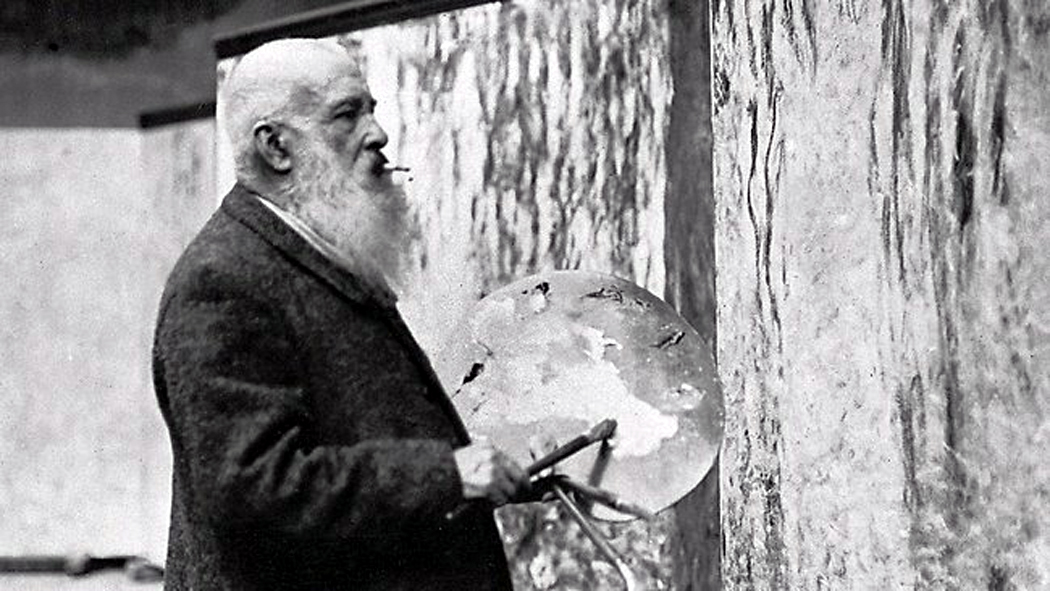
The sturdy burger with the black Babylonian beard, smoker of strong cigarettes and painter of soft paintings was broke. He was one of many Frenchmen still suffering from the economic depression that had hit 10 years earlier and reduced the demand for paintings — among other things. Unable to sell his work, Monet had trouble feeding the mouths that depended on him.

For when he moved into the great barn of a house in Giverny, some 40 miles northwest of Paris, he didn’t come alone. He came equipped with his two sons, his companion, Alice Hoschede, and her six children. The youngest was only 5. They soon added a half-dozen servants.

The painter lived in his pink and green house in Giverny, along with his alternately growing and shrinking family, for the next 43 years, producing the body of work for which he is best known, a body of work that cannot be separated from the home he lived in.

That home served not only to shelter him, but to inspire him. The house and its surrounding gardens became, as he got older, the only thing he painted.


House at Giverny

House at Giverny

COMFORTABLY MIDDLE CLASS

Monet was born in 1840 in Paris and moved to Le Havre when he was 5 years old, and grew up there in comfortable middle-class surroundings. When he was a teenager, he decided he wanted to be an artist, began his studies and finally set up as a painter along with a ”brat pack” of his buddies, all of whom challenged the status quo in the French art world of the 1860s.

They later were called Impressionists and among their number was Renoir, Pissarro, Degas, Caillebotte, Sisley and Berthe Morisot.

They were beginning to achieve success when a double-headed ax fell on their careers. First, there was the Franco-Prussian War of 1870-71, and then the bank crash in 1873.

By 1880, things had improved, but Monet had to start from scratch building his career. He was lucky in that he had Paul Durand-Ruel as his dealer. Durand-Ruel was a saint among dealers and regularly advanced Monet money on paintings he hadn’t painted yet.

That is how he managed to pay the annual rent on the 2 acres of land with the house and outbuildings.

The bank crash had brought him Alice, too. Originally the wife of one of his benefactors, Ernest Hoschede, who had commissioned paintings and decorations from Monet, she gravitated to the painter when her husband fell bankrupt and abandoned his family.

At first, Alice and her six children lived with Monet and his wife, Camille, and their two boys in the town of Vetheuil. But Camille died in 1879 and Monet and Alice set up house together quickly after that.

It was one of the great partnerships in art, a perfect match between people, one intemperate and moody, the other steady and gracious, with all the tact the painter himself lacked.


Punt at waterlily pond

Punt at waterlily pond

ON THE BANKS OF THE SEINE 

Giverny was not more than a village, with fewer than 300 residents, when they moved there. It sat on the north bank of the Seine River in the angle where the Epte joins it, on a slightly rising bank above the river and below the wooded hills that rose behind.

Monet’s new home sat near the edge of town between the two main roads. The house itself was a monster of an old farmhouse, looking something more like a warehouse than a home. On one end was a barn that Monet turned into his studio. The building was covered in a pinkish stucco that Monet made pinker, with gray shutters that Monet painted green.

The yard that came with the house had an old orchard in it and room for the gardens that Monet planned. Within a few years, the grounds were overgrown with the many flowers and trees Monet planted.

And life began slowly to improve for the Monet-Hoschede family. At a time when a common laborer made about 10,000 francs a year, Monet was selling his canvases for 12,000 francs each. By 1888, Monet was making 100,000 francs a year.

He spent it lavishly, building studios and greenhouses, adding to the house, improving the garden.

”Everything I have earned has gone into these gardens,” he wrote.

And when his lease ran out in 1890, he had no trouble buying the house and grounds for 22,000 francs, payable over four years.

In 1893, he bought an adjacent lot, on the other side of the railroad tracks that bordered his property, and began making a pond to grow waterlilies.


Japanese bridge at Giverny

Japanese bridge at Giverny

AN EARLY RISER 

Monet’s life in Giverny turned into an ordered process of days, not only as the seasons progressed through the year, but even as the day progressed.

He got up early, between 5 and 6 in the morning, took a cold bath and ate a big breakfast, often an ”English” breakfast of bacon and eggs. From then until midday dinner, held promptly at 11:30 a.m. every day, he painted. He carried his canvases with him, often working on more than one, passing from canvas to canvas as the light changed with the hour.

He would sit out in the sun in his tweed suit and pleated shirt wearing a broad-brimmed old hat and smoking his stinky Caporal Rose cigarettes.

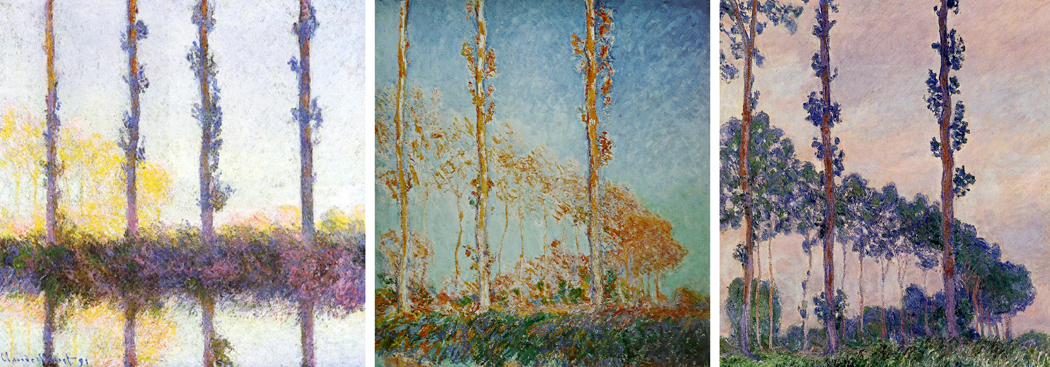
Monet had begun working in series, attempting to catch the evanescent effects of light as they flew by. A series of haystacks was followed by a series of poplar trees, each showing what their subject looked like at dawn, early morning, late morning, midday, afternoon and evening. As the sun changed, he changed canvases.

Monet poplars series

His critics complained that he was just trying to sell the same painting many times over. But Monet showed a dogged determination to make these series.

When the land with the poplars was sold, Monet paid the new owner not to cut down the trees until he was finished painting them.

Lunch was the major social event of the day. When Monet had visitors — which was often, more often than he sometimes wanted — they did their visiting at midday.

The afternoon was given over to painting once again, followed by a small supper at 7, and for Monet, bed by 9:30. He was notoriously bearish if this schedule wasn’t kept precisely.

So that, when his son-in-law, who was a slow eater, visited, Monet gave orders to the servants that no seconds should be offered.

And the painter could get out in the field with his canvases and brushes on time.
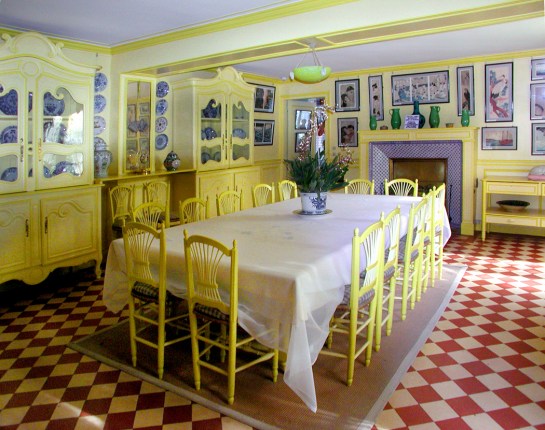
 

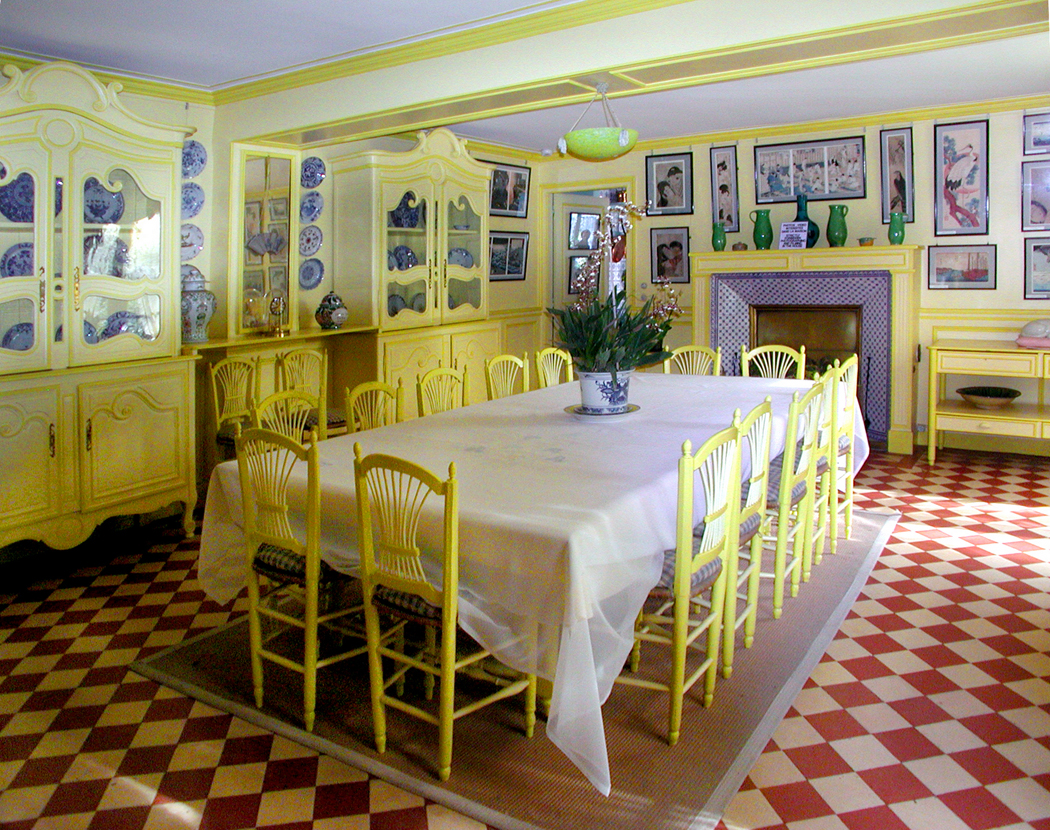
Dining room at Giverny

Dining room at Giverny

THE GOLDEN YEARS 

The 20 years after he moved to Giverny were the best of his life. His prices kept rising, he painted happily and productively through the year, taking time most years for an extended trip. One year, he went to Venice, another to Norway.

In 1892, after Ernest Hoschede’s death, Monet and Alice got married. The following year, he built his first water garden. In 1897, his son, Jean, married Alice’s daughter Blanche. Monet’s solo exhibitions regularly sold out.

The only troubles he had were in getting the municipal cooperation on improving his pond. Local residents were concerned that Monet’s plan to divert water from the Ru River, actually little more than a brook, would affect their crops and cattle grazing, but some help from the mayor swayed them and the permits were issued.

Alice’s daughter Suzanne married the American painter Theodore Butler and another daughter, Germaine, married a businessman from Monaco. The marriages soon brought four grandchildren to the family.

Meanwhile, Monet added more acreage to his holdings, including the ”Maison bleu” — the ”Blue House” — in the middle of town, where he installed a gardener named Florimond to cultivate his kitchen garden, which supplied the family with vegetables for their elaborate menus.

At one point, he employed six gardeners alone, along with a cook named Marguerite, a butler and valet named Paul, who was Marguerite’s husband, a maid named Delphine and a combination chauffeur and wine steward named Sylvain.

He needed the chauffeur because, although he owned automobile after fancy automobile — fast cars were a passion, along with watching auto racing — he never learned to drive.

The family also owned four boats, which they moored on the Seine, including the one boat Monet had fitted out as a floating studio. Monet often was accompanied on his painting forays by his step-daughter Blanche, also a painter, and they shared space on the boat.

Once a month, Monet retreated to Paris to have dinner with his circle of artist friends. He and Alice would take in the latest theater, see the gallery shows, and attend concerts.

Or watch wrestling — a particular favorite of the otherwise demure Alice.
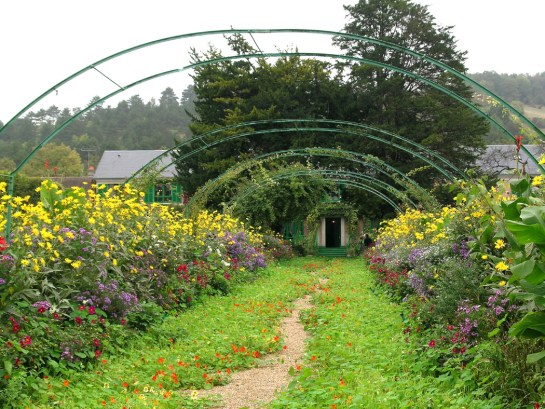
 

Clos Normand

Clos Normand

A DISTRESSING UNDERTOW

Yet underneath the comfortable bourgeois existence of the increasingly wealthy painter was a distressing undertow. If Monet made paintings that soothed — he once called them a ”refuge for a peaceful meditation” — perhaps it was because he had a better than passing acquaintance with death and loss.

His mother had died when he was 18. Friends had died in the war. His wife, Camille, had died in 1879 after three years of lingering illness. The very month he moved into Giverny, his mentor, Edouard Manet, had died and Monet had served as pallbearer.

The early years at Giverny had proved a reprieve, but as Monet’s once black beard turned into a vast white haystack on his chest, time caught up with him.
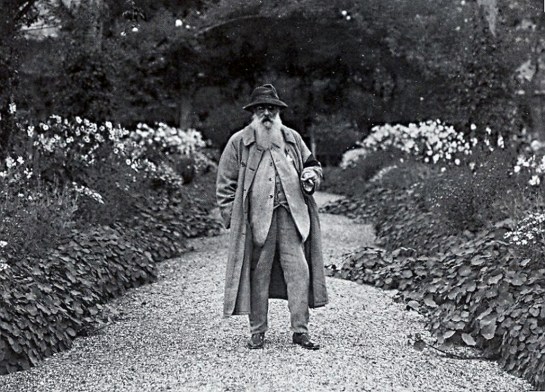
Monet in the garden

In 1894, Suzanne developed a paralysis and five years later, she died. Alice went into a depression from which she never fully recovered.

”Our beloved Suzanne died last night,” Monet wrote Durand-Ruel, ”while her poor mother was in bed with a bad case of bronchitis which she caught the other day at Moret. One sorrow after another.”

Around him, his colleagues began dying, too. Caillebotte — a particular friend — had died in 1894. Alfred Sisley died only a week before Suzanne.

Pissarro died in 1903; Cezanne in 1906. By 1917, Rodin and Degas were dead, along with Monet’s friend, the playwright Mirbeau. And in 1919, Renoir died.

Part of this was the natural result of living a very long life. But there were special sorrows for Monet.

A flood destroyed his lily pond and large portions of his gardens in 1910. It took several years to rebuild.

In 1911, Alice died after a long illness. Monet entered a deep depression that prevented his painting for some time.

In 1914, his son, Jean, died. Jean’s widow, Blanche, returned to Giverny and served Monet as hostess and housekeeper.

And the outbreak of World War I weighed heavily on the painter.

”I’m back at work,” he wrote. ”It is still the best way of not thinking about present sorrows, although I’m rather ashamed of thinking about little researches into forms and colors while so many suffer and die for us.”


Pond edge, Giverny

Pond edge, Giverny


FAILING EYESIGHT

There was another sorrow for Monet, one that threatened his very identity as a painter.

Beginning at the turn of the century, Monet’s eyes, which had bothered him since his youth, began to develop thick cataracts that interfered with his vision.

He painted through them, but friends and critics noticed a change in the paintings, which sometimes seemed oddly colored.

”I’m working very hard and I would like to paint everything before I cannot see anymore,” he wrote Durand-Ruel.

The condition worsened and relented over the years, but by 1922, his eye doctor reported that Monet’s vision was reduced to ”one-tenth in the left eye and to perception of light with good projection in the right eye.”

Monet continued painting, sometimes knowing what color he used only by reading the label on the tube of paint.

”I could paint almost blind,” he told a visiting journalist, ”as Beethoven composed completely deaf.”

The operation his doctor recommended on his right eye helped things in 1923, but resulted in a peculiar condition called ”xanthopsia,” which caused him to see everything too yellow. When this condition abated, it resulted in its opposite, in which Monet saw everything as too blue.

”It’s disgusting, I see everything in blue,” Monet complained to a visiting professor.

”How do you know it’s blue?” the visitor asked.

”By the tubes of paint I choose.”

His ophthalmologist finally found a pair of tinted glasses that brought his vision back to something approaching normal, and Monet painted like a demon.

In 1925, he wrote, ”My vision has improved tremendously. I am working harder than ever, I am pleased with what I do, and if the new glasses are better still, I would like to live to be a hundred.”


Orangerie, Paris

Orangerie, Paris

A FINAL GIFT

He didn’t make it to a hundred, but the final years were spent on a vast project of painting the waterlilies in his water garden.

Conceived as a gift to France, he worked in increasingly larger formats, finally building a new studio to house the 8-foot-tall, 12-foot-long segments of the murals he was painting.

”These ‘water and reflection’ landscapes have become an obsession,” he wrote the journalist Gustave Geffroy in 1908. ”They’re too much for an old man’s strength, yet I should like to be able to reproduce what I feel.”

He destroyed paintings he didn’t think up to his standards. At one point, he wrote Durand-Ruel, ”I have five or six at most that merit consideration, and have just, to my great satisfaction, destroyed at least 30.”

The large waterlilies marked a significant change in Monet’s approach. In the past, he had been rigorous in painting outdoors, directly from life. But for these ”decorations,” as he called them, he worked inside, in his studio, from his imagination.
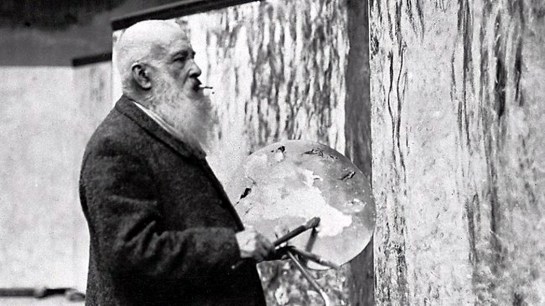
Monet at canvas

That underlined not just a change in technique, but in the basic purpose of his painting. What had been an attempt to reproduce an accurate record of what his eye saw became an involvement in what paint can do and mean.

Pablo Picasso had painted his first Cubist painting in 1906 and the winds of Modernism were blowing the old smoke out of the room. Monet caught the fresh air and enthusiastically took part in the change. The late waterlilies are no longer Impressionism; they are modern art.

”I am looking for something I have not done before, a shiver my painting has not yet given,” he wrote.

In 1926, a lifetime of smoking cigarettes caught up with Monet. By late summer, he was bedridden with pulmonary sclerosis. His eyesight had deteriorated; he no longer could paint. He died on Dec. 5 with his family around him.

The following year, his waterlily decorations were installed at the Musee de l’Orangerie in Paris.

As for his beloved home, it stayed in the family, eventually abandoned in World War II. But in 1957, Monet’s surviving son, Michel, donated the deteriorating property to the Academie des Beaux-Arts, along with the paintings left behind by the painter at his death.

The Giverny site, now renovated with gardens replanted in the 1970s, draws about a half-million visitors a year.

On Michel’s death in 1966, the paintings reverted to the Musee Marmottan in Paris.

It is hard to calculate how much this one small piece of provincial property has given to art. Monet painted what he loved, and what he loved for the final four decades of his life was his home in Giverny.

”My heart is to Giverny for ever and ever,” Monet wrote.


Nixon birthplace

”I was born in a house my father built.”

It is one of the great first lines in American literature and says more than perhaps the entire rest of the book toward explaining Richard M. Nixon. It is an expression of the politician’s essentially mythological sense of his own life.

Others might have written, “I was born in Yorba Linda, Calif.,” or “I was born a month before the 16th Amendment was ratified, creating the income tax.” But no, Nixon goes for the archetypes: birth, father, home.

The little white clapboard house that Nixon’s father built, and that opens his memoirs, still can be found, at the Richard Nixon Library and Birthplace in Yorba Linda.

The house, shaded under a grove, is rather dwarfed by the huge, impersonal marble and glass library, with its parking lot and fountains.

Nixon Library and Gardens

But the house is the only real reason to visit. Inside the tiny cottage, which Nixon’s father had ordered from a catalog, is the niche of a bedroom and the bed on which the future president was born.

Richard Nixon's birth bed

Richard Nixon’s birth bed

It makes Nixon feel almost human.

You can get a sense of the small-town bourgeois life that he sprang from, the piano in the parlor and the small bookshelf with the equivalent of the Harvard Classics that must have given Nixon his early sense of education and culture.

I have to admit, I never much liked Nixon — more accurately, I despised him and his politics — until Watergate. My reaction is probably the opposite of most of those who lived through those times: Nixon was elected in a landslide in 1972 and after his resignation, widely denounced. For me, I hated him until his crimes and venality humanized him.

Politics tends to flatten its heroes, to turn them into one-dimensional factional puppets. We don’t like to find out that our presidents are mere people, that they have faults, fudge the truth, create political lists, philander.

It was only after Watergate that the more complicated, vast, conflicted, confusing, contradictory Nixon became widely known and written about. Nixon, the contemporary Richard III, the one candidate who could deal with evil in foreign affairs because he was conversant with it in himself.

He was surely the only 20th-century politician who plausibly can star in his own opera: John Adams’ Nixon in China.

The real Nixon won my respect because he was larger than life, or, more precisely, he was as big as life.

So, it was a huge disappointment to discover that the Nixon Library, and the museum attached, do their best to turn Nixon back into a plaster bust, denying him all the richness that made him so fascinating.

It is a sanitized Richard Nixon that shows up at the library, one who doesn’t use expletives, deleted or otherwise. The old newspaper clippings glorify his career without ever mentioning his pink-paper campaign tactics, his smearing of Helen Gahagan Douglas, his ”enemies” list.

The real Nixon was Shakespearean, the enshrined Nixon is as polyethylene as Reagan.

The real Nixon saw himself mythologically, and like myth, is open to various, equally defensible interpretations. He was not coherent, but multifarious. There is something in his life for everyone, whether they want to hate or admire.

Which is why the Oliver Stone movie seems so true, no matter how loose he plays with fact. Stone recognizes the essentially mythic quality of Nixon’s personality, which is why he built his entire movie as a gloss on Nixon’s farewell speech to his staff, which is concocted of archetype: ”I remember my old man. I think that they would have called him sort of a little man, common man. He didn’t consider himself that way.” And, ”Nobody will ever write a book, probably, about my mother. Well, I guess all of you would say this about your mother: My mother was a saint.”

It was a gloriously bathetic speech, mawkish and sentimental, but it summed up the essential Nixon, not as one man in a planet full of its congested billions, but as the single Shakespearean king, the central player, not only in history, but in his own life story, as in each of our lives, where we are all the king.

One glorious piece of mythologizing snuck in, although the museum staff doesn’t seem to recognize it for the glorious kitsch it is.

There is a large painting of Nixon by the Hungarian-American artist Ferenc Daday. In 1956, Eisenhower sent Vice-President Nixon on a fact-finding tour of Europe. He made an unscheduled late-night visit with refugees of the Hungarian Revolt at the Austrian border town of Andau.

One can imagine Nixon in reality, getting out of his limo, stopping to talk with a few people, as awkward as he was with the anti-war protesters at the Lincoln Memorial. But the painting doesn’t show that; it shows a heroic Nixon in a white trench coat under an anagogic sky — it could be a leftover from Gone With the Wind. The refugees plead with him for succor.

nixon painting

The whole thing is a wild sendup of the great history paintings of art history, populated with suffering masses, a man on crutches, another with a Hungarian flag unfurled in the wind. The vast plains of Hungary spread out in the background like the landscape in an Altdorfer painting.

And standing next to one poor woman, her arm in a sling, is a shaggy Puli hound, its tongue hanging out. It is such a piece of deflating silliness, the artist surely must have put it there satirically. But if so, the Nixon Library staffers are not in on the joke. Apparently, they have since taken the painting down, perhaps embarrassed by its schmaltz. They should reconsider; the painting says more about Nixon than all the official policy papers and bronze statuary.

When I asked about the painting, many years ago, when I first visited, I got only the party-line response, almost as if the staffer were reading off a TelePrompTer.

The only one who got it was the young man at the gift shop.

”What’s the kitschiest thing you have here?” I asked him.

”This is our bestseller,” he told me, and dragged me with a smile over to the shelf with the coffee mug on which is printed a photograph of Nixon and Elvis.

nixon and elvis with mug

Now, that’s mythology.

Ives portrait

The music of Charles Ives has been thought gnarly and noisy, difficult and dissonant. And it is, for sure. But it is also profoundly nostalgic and deeply American.

Instead of avoiding his music because it is so “modern,” you should let the music steep inside your consciousness and let it dredge up all your most inkept feelings of loss and childhood. Ultimately, his music is not so much avant-garde as it is heartbreaking. Fireworks, parades, summer vacations, church picnics — it’s all there in the music. And all the more potent for its evocation of the New England that Ives grew up in.

For Ives, New England was America. He was born from the soil of New England and finally was returned 79 years later to that same soil. He inherited the culture of Emerson, Thoreau and Hawthorne and turned it into sound.

His piano sonata Concord, Mass. 1840-1860, his Holidays Symphony and his Third Symphony (Camp Meeting) all grow from his New England roots, full of the marching-band tunes, patriotic airs and revival-meeting hymns he heard as a boy.

But one piece above all sums up his New England experience, and it is one of his easiest to digest and, therefore, most popular. It is Three Places in New England, and it describes in music three very precise landscapes.

Sometimes called the “New England Symphony,” it was written by Ives between 1903 and 1911. It contains three movements that are unforgettable impressions of the land and people.

Landscape plays a big part in the history of painting and hardly less in literature. We can visit the very square foot of land in Canada where painter Frederic Edwin Church stood to paint his monumental Niagara Falls or we can tour the Lake District that inspired William Wordsworth and Samuel Taylor Coleridge.

But it is not often that landscape inspires music. There is the occasional Moldau or La Mer, but scene-painting in sound is not often as precise as a painting. Smetana takes in the whole river, not a single view, and Debussy’s ocean is any ocean.

Yet Ives gave us in his Three Places three distinct sites that can be visited and enjoyed and compared with the sound portraits.

Shaw Memorial, Boston

Shaw Memorial, Boston

The SHAW MEMORIAL, Boston

The first section in Ives’ music is titled ”The St. Gaudens in Boston Common” and is subtitled ”Col. Shaw and his Colored Regiment.”

The St. Gaudens is a Civil War monument, considered by some people to be the best American example of memorial sculpture. It was created by Augustus Saint-Gaudens and unveiled in 1897 at the northeast end of Boston Common, across the street from the Massachusetts Statehouse.

The deep-relief sculpture commemorates the 54th Massachusetts Volunteer Infantry Regiment and its commander, Col. Robert Gould Shaw, who died in the Civil War.

The 54th was unusual at the time because its enlisted ranks were composed entirely of African-Americans. On May 28, 1863, the largest crowd in Boston’s history came out to see the 54th march off. They saw the thousand Black soldiers marching, accompanied by their White officers on horseback.

A souvenir of the day quoted Byron: ”Who would be free, themselves must strike the blow.”

Two months later, Shaw and a third of his command were dead, killed in the attack on South Carolina’s Fort Wagner in Charleston Harbor. Their charge had failed, but the soldiers had fought so well that they legitimized what had been considered a questionable idea: African-Americans in combat.

Shaw initially was buried in a common combat grave with his dead troops, and after the war, when plans were made to exhume the gallant young officer and give him an official ceremony in a Massachusetts cemetery, his parents refused, writing that they could hope for ”no holier place” for him than ”surrounded by his brave and devoted soldiers.”

Saint-Gaudens, America’s premier sculptor at the time, was commissioned in 1883 to monumentalize Shaw, and briefly considered a standard equestrian statue, but finally decided that the Black troops deserved the memorial as much as Shaw and devised plans to include them.

He wanted to represent the soldiers accurately; some were as young as 16, others were bearded grandfathers. So he hired African-Americans to pose for him and made 40 heads as studies. Sixteen went into the final bronze.

So Shaw rides his horse in front of a rhythmical line of marching soldiers, their heads, sleeping packs and rifles creating a visual drumbeat.

Ives’ 8-minute portrait of the monument is a diffuse, dissonant wash, as though not only the images of the Civil War but also its very idea were obscured in the haze of memory and history.

”Moving — marching — faces of souls! Marked with the generations of pain, Part-freers of a destiny, slowly, restlessly swaying us on with you towards other freedom!” Ives wrote in his score.

The monument was only a few years old when Ives began writing about it, and the layers of time show through in the music: the war, the remembrance of war, the causes and unfinished business of the war in a conflicting mass of sound.

Often, in the welter, you can make out a familiar tune: Marching Through Georgia or Battle Hymn of the Republic.

Then it all fades away into the nostalgic past.

Today, the sculpture is nearly black in its patina. It sits on its granite plinth looking vaguely like a plaque on a headstone. The tour buses stop, and the tourists pour out with their cameras. Some shoot the gold-domed statehouse, others shoot the St. Gaudens.

One bus unloads two dozen Japanese tourists. They also point their cameras. The amplified sound of a tour guide overpowers the street noise — but in Japanese — and I cannot possibly know what she is saying or what the Japanese tourists can make of the racial complexity involved in the war, the monument and American history.

Putnam's Camp, Redding, Connecticut

Putnam’s Camp, Redding, Connecticut

PUTNAM’S CAMP

The second movement is called ”Putnam’s Camp, Redding, Connecticut.”

Gen. Israel Putnam, like most American generals in the Revolutionary War, was better known for strategic and tactical retreats than for victories. Charged with holding the Hudson Highlands in 1777, he lost Fort Monroe and Fort Clinton while backing up into Connecticut.

He and his troops wintered near Redding, Conn., in 1778, undergoing much of the same privation and hardship Washington endured at Valley Forge.

But Ives isn’t remembering the Revolutionary War in his music. Rather, he is remembering his childhood, when he used to visit the site of Putnam’s Camp and fantasize what it must have been like in the winter of 1778-79.

He also recalls the patriotic Fourth of July picnics he attended there and the brass bands that played.

”Long rows of stone campfire-places still remain to stir a child’s imagination,” Ives wrote.

What he hears is a grand cacophony of marching bands, playing different tunes at the same time. It is loud, bouncy and ear-blasting, getting louder and louder, with strains of The British Grenadiers and other songs, and ending in a misquoted bar and a half of reveille.

It is all a jolly 6-minute joke but the kind of music Ives loved best. ”Pretty sounds are for pretty ears,” he said, deriding those who wanted pleasant melodies from his orchestra.

Once, upset over the hoots and boos of an audience listening to some modern music, Ives got out of his seat and exhorted the unappreciative crowd to ”Stand up and take your music like a man!”

Putnam’s Camp is today a state park, half on the east side of Connecticut 58, half on the west. It is the eastern half that is most visited; it has a lake, a parking lot and picnic tables, and many of the people who come there probably give little thought to the Colonial army that once wintered there.

On the other side of the road, there is a path through the woods that passes the lines of camp hearths and a hilltop cemetery full of the unmarked graves of those who died fighting for American independence.

At the lake, a man — who looks like he’s playing hooky from work — casts his fishing line into the water. The fall remnants of waterlily leaves are curled and brown on the water, and a few Canada geese honk on the lawn.

The sky is overcast, and the woods are brown as tweed, with neither shadows nor highlights. And the old-fashioned New England Fourth of July patriotic and religious picnic is as much a part of the past as Putnam’s war.

Housatonic River, Stockbridge, Massachusetts

Housatonic River, Stockbridge, Massachusetts

HOUSATONIC at STOCKBRIDGE

The last section of Three Places in New England is perhaps the most moving. It is ”The Housatonic at Stockbridge.”

That is, the Housatonic River at Stockbridge, Mass.

The Housatonic is one of those alternating lazy and cascading streams that run from north to south, along which New England’s factories were built in the early years of the Industrial Revolution.

It begins at a small pond in Washington, Mass., and wends its way 149 miles to Long Island Sound at Stratford, Conn.

Along its banks are both towns and woods. Ives honeymooned in the Berkshires in 1908 with his new wife, Harmony, and one Sunday morning, they strolled near Stockbridge and the river.

”We walked in the meadows along the river,” he wrote many years later, ”and heard the distant singing from the church across the river. The mist had not entirely left the riverbed and the colors, the running water, the banks and the trees were something that one would always remember.”

The 4-minute movement that Ives wrote captures the quiet and the mist: It is ambiguous tonally and melodically, like a remembered dream, builds to a climax that evaporates abruptly, uncovering the quiet chords playing on the orchestral strings as if they had been sounding all along, but drowned out by the noise.

Like the strings in Ives’ Unanswered Question, which are drowned out by chattering woodwinds, the final quiet strings in Three Places are the eternal harmonies of nature.

Ives liked his piece well enough that he turned it into a song later, with words by poet Robert Underwood Johnson:

”Contented river! In thy dreamy realm — the cloudy willow and the plumy elm.”

It is an elegy to nostalgia.

Stockbridge has changed since the Iveses visited. It is now a prime tourist destination, full of gift shops and art galleries, with frozen yogurt. It is also the home of the Norman Rockwell Museum. Rockwell made his home there and used Stockbridge natives as models for his magazine-cover paintings.

The river eases in and out of town, crossed by four or five small bridges. The Housatonic is an average of only 35 yards across in Stockbridge, hardly more than a brook.

On a cloudy day in October, it also is hidden by the grayness. I have visited every spot along the river in town and enjoyed its quiet but missed its beauty.

Until late that afternoon when I stand on the hill by the Rockwell Museum looking over the river out at Pleasant Hill and a chink in the clouds widens, throwing a spotlight on the meadow across the water. The bare winter sycamores along its banks suddenly stand out like neon, and the band of sunlight sweeps from left to right, finally in its passing leaving the scene in gray once more.

And the riverbed and the colors, the running water, the banks and the trees were something that one would always remember.

DEEP TIME 

The search for Ives’ three places has turned into a pile of time on time, present on past, past on deeper past, all wound up in a single point of geography.

It is as if the Indians, who were in New England before the Pilgrims came, had a deeper understanding of reality. When something happens, they believed, it is always happening. Time is not a straight line but a basket full of harvest, all piled in together.

So that I cannot see this single piece of real estate, the Housatonic, the Yankee military camp or the St. Gaudens statue, without thinking of history, memory, my past and my nation’s past, all balled up into a single, complex thing.

All happening at once and all happening in my eye, looking at the past.

And I know it is not just true for these three places, caught in Ives’ web of meaningful noise, but for all places and all times.

Charles and Harmony Ives

Charles and Harmony Ives

CHARLES IVES

Charles Ives is the father of American music.

Before him, what American composers wrote for the concert hall was a dim reflection of European — and especially German — art music, with its sonatas and symphonies. After him, it was possible to feel truly American.

You can see his influence in the folk tunes that show up in Aaron Copland, the spare orchestrations and open harmonies of Roy Harris and the avant-garde fun John Cage has with noise.

Ives was a funny duck. Born in 1874, he studied composition at Yale, but instead of becoming a poverty-stricken composer, he became a wealthy insurance executive. Ives and his partner, Julian Myrick, founded a successful agency that pioneered much of the industry’s modern practice. Myrick had the business sense, Ives brought the creativity.

Together they prospered, ultimately becoming the largest insurance agency in America. In 1929, the firm sold $49 million worth of insurance.

But he was also a genius in music, taking little stock of what he learned from his stuffy college professors and feeding large on the oddball music education he received from his father, George Ives, who was bandmaster for the small Connecticut town of Danbury.

George Ives loved to experiment with sound, playing with microtones, out-of-tune instruments, polytonality and organized noise. That enthusiasm for experiment, which in George was a variety of practical Yankee inventiveness, became for his son a creed and a muse.

Yet although Charles Ives’ music was more modern than Stravinsky’s and more dissonant than Bartok’s, he really was not concerned with fitting into the long history of European art music. It is obvious in the music; Ives was not writing about modern things.

For although the music is filled with ear-splitting dissonances, it is unabashedly nostalgic. Ives felt a powerful nostalgia for the past — his past — and his music drips with bits of the music he heard when he was a boy: old hymn tunes and marching-band music.
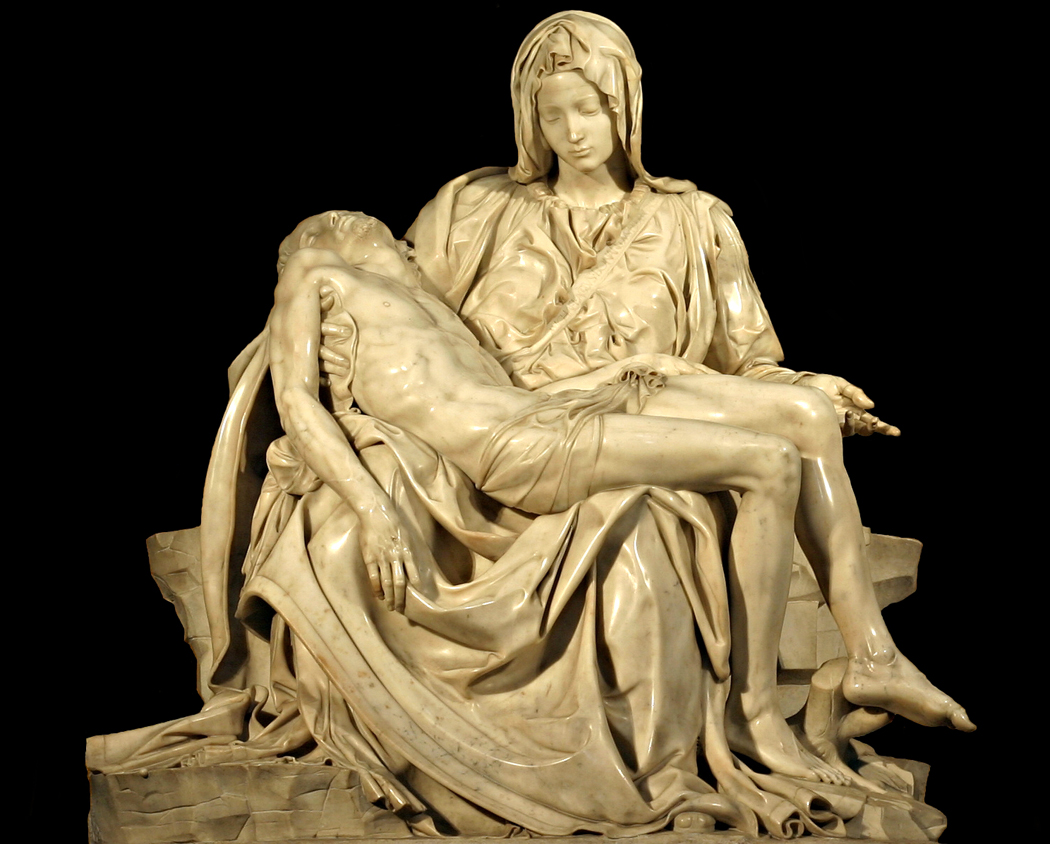
No matter how loud and incoherent Ives sounds at first, at long last, it settles into Bringing in the Sheaves and Columbia the Gem of the Ocean — not whole but in snippets, as if half-remembered.

Ives wrote the bulk of his music in the first years of this century. His business and his ailments — he suffered from a poor heart muscle — kept him from concentrating on composition after 1918.

Or perhaps, as Ives’ early biographers, Henry and Sidney Cowell, suggested, ”The war was a shock of the first magnitude to a man whose life was based on his confidence in human progress.”

He lived on until 1954, becoming for many American composers a kind of father figure and rallying point.