Archive

Tag Archives: books

Our education is judged as much by the books we haven’t read as those we have. It’s a sad fact that no matter how well-read we try to be, we simply cannot read everything. Not even close. 

My reading includes many a quaint and curious volume of forgotten lore. I have read Xavier de Maistre’s Voyage Around my Room, Seneca’s Apocolocyntosis of the Deified Claudius (Alternately, the Pumkinification of the Divine Claudius, antedating the apocolocyntosis of Donald Trump by two millennia), Robert Burton’s Anatomy of Melancholy, the Prose Edda of Snorri Sturluson, and The Narrow Road to the Deep North by Matsuo Basho.  

That tendency to seek out so many obscure books has meant that I read Melville’s Israel Potter: His Fifty Years of Exile long before I ever finished Moby Dick. In fact, I have read almost all of Melville, from Typee to The Confidence Man to John Marr and Other Sailors, and his poetry, in Battle Pieces and Aspects of the War. The problem with Moby Dick was not the book, but me. I love the style of Melville so much, that every time I picked up Moby Dick, I started again from the beginning. Over and over. I must have read “Loomings” 50 times. I have since gotten through the whole thing, and I love the book dearly. Reading Melville is like eating a meal as rich as foie gras. 

I mention all this because, while I have read Xenophon’s Anabasis, and enjoyed the hell out of it, I have to confess, I have never quite been able to finish Thucydides. Herodotus charms the heck out of me; I can’t count the number of times I have gone back to his Histories, but old Thucydides always feels a bit turgid, dense and humorless. I feel I gain as much from reading a summary of his Peloponnesian Wars as from trudging through the full-length. I may be mistaken in that belief, I grant. But the fact is, I have limited time on this planet, and of the making of books there is no end. 

The number of books I know I should have read is immense. Yes, I have read Tristram Shandy (the funniest book I have ever read), but I have never read Jane Austen. I hope to get around to it some day. I have read Gibbon’s Decline and Fall of the Roman Empire, but I have not yet read Proust. (I have a similar problem with Swann’s Way that I had with Moby Dick: I have read the first 50 pages several times, and each time, I start anew.) 

I only got around to Tolstoy’s War and Peace last year. I don’t know why it took me so long. It may be the greatest book I’ve ever read. I still haven’t tackled Anna Karenina, although many years ago I read The Death of Ivan Ilyich and The Kreutzer Sonata. 

The holes in my erudition are wide enough to sail an icebreaker through. Yet, I count in this world, as a fairly well-read man. 

Sometimes we feel guilty for things we should not. The guilt hangs over us like a dark cloud, and we live our lives believing that everyone knows. I am confessing my guilt here, and the obvious fact that I am a fraud. 

Among the books I haven’t read are: The Aeneid (it bores me every time I pick it up); Don Quixote (I’ve tried, believe me, but it just goes on and on and never seems to get anywhere); Les Miserables; Sons and Lovers; The Tin Drum; Lord Jim; Rabbit, Run; Orlando; The Handmaid’s Tale; Dr. Zhivago; Jude the Obscure. I could go on. 

There are whole authors I have managed to avoid: Aside from Austen, there are: Thomas Mann, Hermann Hesse, Thomas Wolfe, Henry James, J.R.R. Tolkien. All of them worthy and important. Among the writers I have avoided because of being forced to read them in high school, and therefore destroying my ability to even bear them are Thomas Hardy and Charles Dickens. Forcing kids to read books well beyond their ability to understand them can only ruin those books for life. 

From the list of the so-called greatest books on the website thegreatestbooks.org, I have read 19 of the top 25 volumes on the list and 31 of the first 50. That seems decent, but it leaves off too many books that I should have read. 

Prominent among them are more recent writings. I have read the Epic of Gilgamesh, the Tao Te Ching and Beowulf many times in different translations, I have somehow managed to miss Jonathan Franzen, Joan Didion, Salman Rushdie, V.S. Naipaul, Khaled Hosseini, Annie Proulx, and Jeffrey Eugenides. 

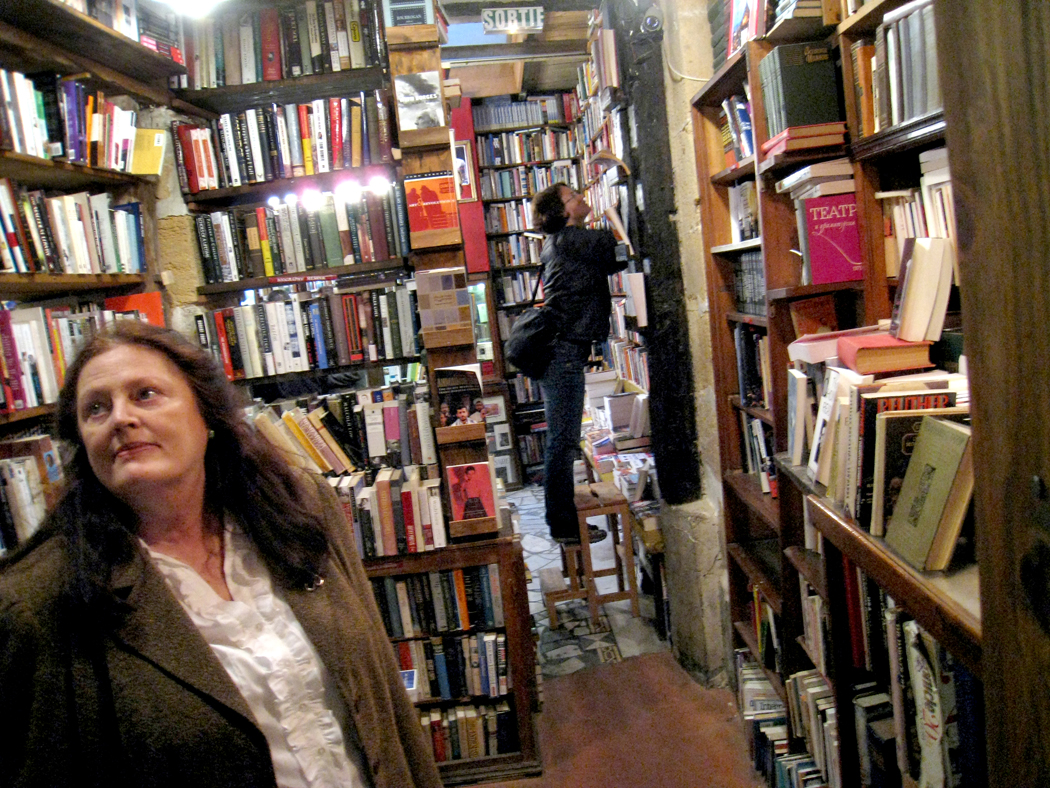
Shakespeare & Co., Paris

I swear, I know this is a horrible confession. I am one ignorant S.O.B. Yes to Suetonius, no to Dio Cassius; Yes to Longinus and Lucretius, not so much for Josephus or Livy. 

What I blame is not so much my waywardness, but the fact that it is impossible to read everything. The last person to do that, according to his biography, was John Milton, who took several years off after university to read everything ever written in a language he could read, and that included Latin, Greek, Hebrew, French, German, Italian and, of course, English. But much has been published since then, and even a specialist cannot read everything just in his or her own field. So, we pick and choose.

And if, like me, you choose not to be a specialist, and not get a post-doctoral degree in the subspecies of Malagasy dung beetle, so as to become the world expert in such, the purpose of reading is not to master a particular field, but to take as wide a view of everything as possible. 

One could certainly find a list — such as the Harvard Five-Foot Shelf — of those books deemed by consent of the educated to be the most important and slog your way through them one by one so as to round out your erudition. But I have chosen a more desultory strategy, picking those books that appealed to me. After all, I read primarily for pleasure, not by obligation.

And let’s face it, the five-foot shelf of a hundred years ago is now rather dated and fails to include much that would now be considered mandatory. Things change. 

So, I make my own list, and if it includes H.L. Mencken and doesn’t include Fenimore Cooper, so be it. Although I did get huge pleasure from reading Mark Twain’s exploration of Cooper’s “literary offenses.” I recommend it. 

When you are young, it is easy to be in love with art. You may love its artifice, you may love the colors or the rhymes or the great blaring sounds of the music you listen to. Art is vibrant; it seems so alive. But most of all, you are in love with the sense of importance art brings: It seems to validate the belief we all have when we are young that our own lives matter, that we count in the larger scheme of things.

We are all Tristan or Holden Caulfield.

Perhaps that is why the young make so much art. They are not yet unhappy with it, not yet dissatisfied at the lies that art creates, not yet disgusted with the prettiness of it all.

Most of all, the art we make when we are young imitates the art we have come to love: Art most often imitates art, not life. There is so much bad imitation T.S. Eliot written in college, so much abstract painting of no consequence, so much herd instinct.

I have been as guilty as anyone. In 50 years of photography, the bulk of my work has been imitation Ansel Adams or Edward Weston or Irving Penn. I was learning to make images that I could recognize as art, because it looked like the art I knew. 

Big mistake.

Go to any art gallery and you see the same process unfolding. Imitation Monet here, imitation Duchamp there, imitation Robert Longo there. Whatever the current trend in art is, there are acolytes and epigones. 

At some point, as you age and if you are lucky, you let all this shed off you, and you no longer care about art. What takes its place is caring about the world, caring about the experience of being alive. It isn’t going to last long, so you begin paying attention: close attention to soak in as much as you can before you die. 

And if you are inclined toward art, you give up caring whether you are making “great” art, or whether you are part of the great parade of art history, and you care only about what you see hear, touch, smell and taste. The world becomes alive and art fades to pathetic simulacrum.

When you reach this point, then you can begin making art. And you make it for yourself, not for posterity. You make it to attempt to capture and hold the world you love, or to understand the world, or to transcend it, when it becomes too difficult to endure or accept. 

2.

The first garden I made was a vegetable garden in the front yard of the North Carolina house I was renting in the early 1970s. I grew the usual tomatoes and peppers, beans and spinach. I also ventured into eggplant, which turned into the most successful part of the garden, to my surprise.

But what I really learning from my garden is the difference between the neat, orderly photographs in the seed catalogs, and the rampant, weedy, dirt-clod messiness of the real thing. Gardens, I discovered, were not military rows of uniform plants, but a vegetative chaos. 

The stupid thing was that I should have known this going in. All around me trees, vines, shrubs, roadside flowers and Bermuda grass were telling me one single thing, over and over: Profusion is the order of nature. Variety, profligacy, energy, expediency, growth.

Whether it is a kudzu shell over a stand of trees, or the tangle of saplings that close over an abandoned farm field, or the know of rhizomes that run under the turf, the rule of nature is clutter.

The walnut tree outside the front door was old, and its bark was stratified with moss, lichen, beads of sap, and a highway of ants running up and down. From a distance, it was just a tree, but up close, it was a city.

When I was a boy, there was an abandoned farm beside our property. An old, unpainted barn and farmhouse stood in the center of a field of grass and weeds. When I was maybe eight years old, those building burnt down one night in a glory of flame.

In the years that followed, the course of plant succession took over. I learned my lessons from the Boy Scout merit badges I earned, but even there, the story of succession seemed much more orderly than what I saw out my window. Plant successions wasn’t a clear progression from annuals to perennials to shrubs and through a clearly delineated march of one kind of tree into another till we reached climax growth. It was instead a tangle of saplings through which it was nearly impossible to walk. There was not a “baby forest” that we saw, but an overpopulated struggle for sunlight, every plant elbowing its neighbor for survival. In a forest, the trees stand a certain distance apart, their crowns touching to make a roof. But this young version was more like a thick head of hair; there was no distance between the shoots.

Everything in nature told me the same thing: busyness, struggle and chaos. It was all exhilarating, and I loved the tangle of it all, the textures, the smells, loam and rot, the mud and dew.

And yet, that isn’t what I saw when I looked at art about nature, whether it was glossy calendar photos or Arizona Highways’ covers on the low end, or whether it was  Raphael and Delacroix on the high end. 

The nature I saw in most art was tame as a housecat. And the art wasn’t really about nature at all, but about order. It wasn’t made to see the world we saunter through, but to see how our minds organize and codify it.

Whether it was 18th century paintings or Ansel Adams’ photographs, the art was all about order. In fact, you could say that the point of the art wasn’t to make us see nature, but to understand order.

I was unsatisfied with it, and with my own art. I wanted to make an art that would look at the natural world and make images that spoke to me about what I was really seeing and feeling.

3.

I recognized something of what I wanted in the arts of the Gothic, Baroque and Romantic periods, eras in art that glorified the energy and visual confusion of the world. They are arts that responded to the profuse variety of experience. They were also arts that were devalued by the mainstream art world of the 20th Century. Eliot deprecated Milton; Stravinsky insulted Berlioz; Mies van der Rohe is the anti-Gothic architect. 

Yet, I loved Shelley, Schumann, Chartres. And I wanted to find a way to make that art over in our new century, in a new way, and reattach art to the world around me. It had been untethered too long; too long it had been its own reason for being. Art for art’s sake? Not any more.

It can be hard — it is probably impossible — to make art completely divorced from one’s time. The visual universe is too persuasive. We cannot even know how deeply we are affected by the stylistic twitches of our own age, and I am not saying my own work is sui generis. It certainly is not.

The light that knocked me off my horse on my own way to Damascus was a single book of photographs — still a fairly obscure book — by Lee Friedlander, titled Flowers and Trees, from 1981. It was spiral bound, printed in a matte finish, and had virtually no text. Inside, I found a mirror of the nature I knew and felt. Nothing was framed neatly, nothing was glorified by the light poured on it, nothing was reified into monumentality. Instead, there was the profusion, confusion and organicim that I recognized from my own experience.

And I realized that I had been working in that same direction for years, but had buried the photographs among the more conventional mountainscapes and detail photographs. I had several series of images that were my own immediate response to nature and they were all photographs I had made in the gardens of friends. 

I gathered them together and looked. The conventional photographs seemed to have no value whatsoever and these others, almost random, usually confused, and always ad hoc, seemed to breathe the life I had been looking for.

Since that time, and with the advent of digital photography, I have been liberated. I take my camera with me, point it at something I want to feed it, and let it do the chewing. I never look through the viewfinder anymore, but instead look at the larger shapes, darks and lights, that show in the digital screen on the back of my camera. I see how I see and click the shutter. 

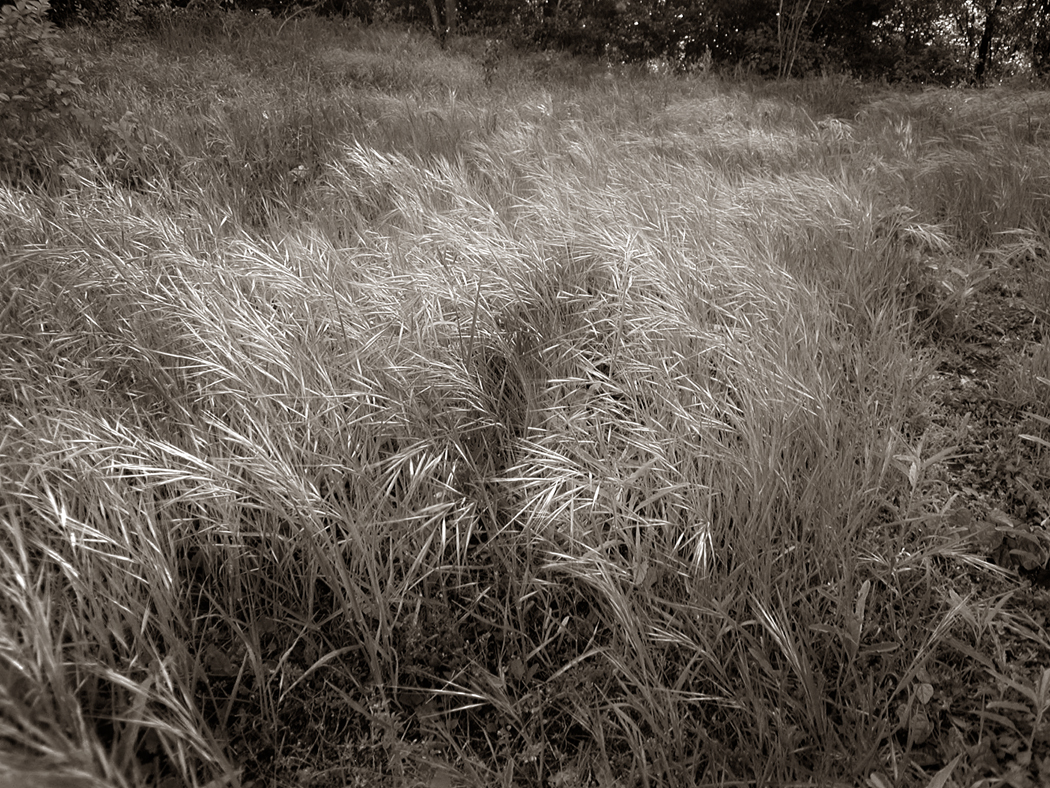
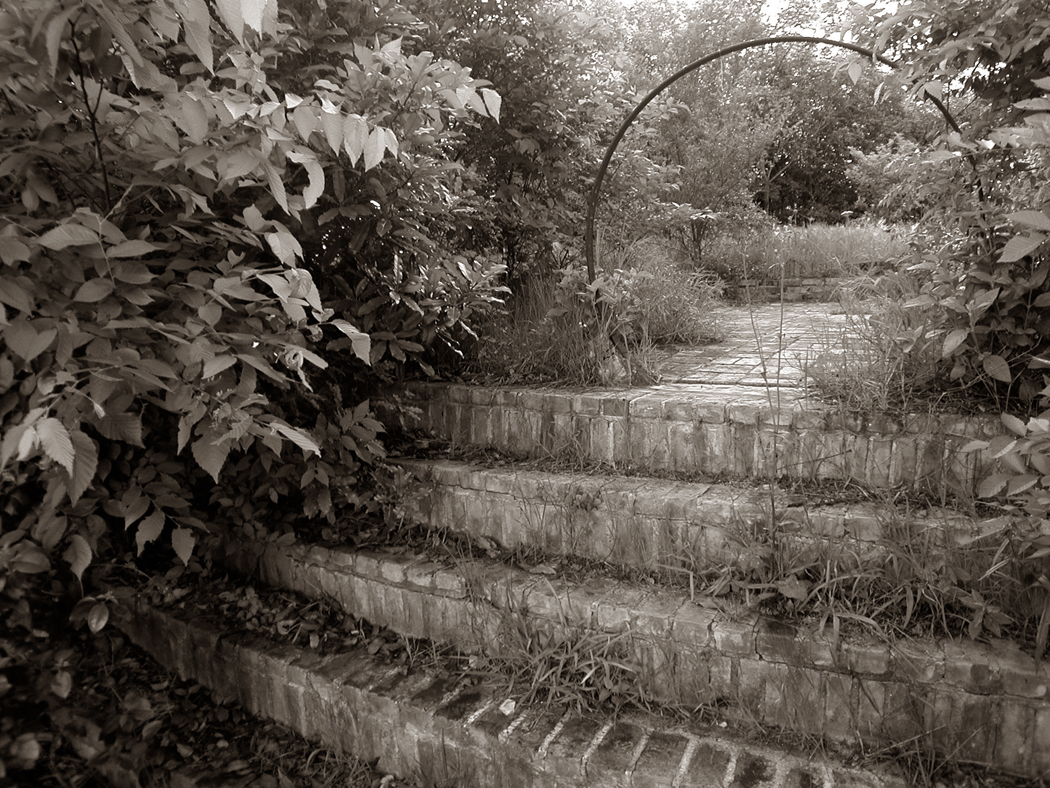
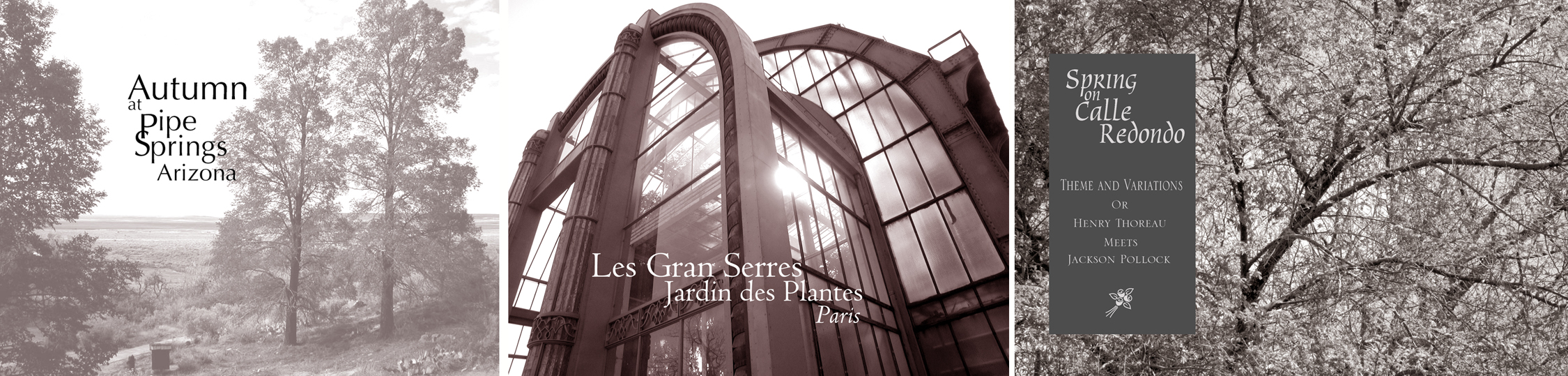
Over the years, I have made many of these sets of photographs, usually 15 to 35 pictures in a group, and printed together to be seen as a “book,” that is, a print cabinet, where my audience can spend as much or as little time as they wish and shuffle to the next.

And the unit of my work is the book, not the individual photo. Each chapter in this volume is a single look at a single place, with all the images usually taken in a very short amount of time, a single visit.

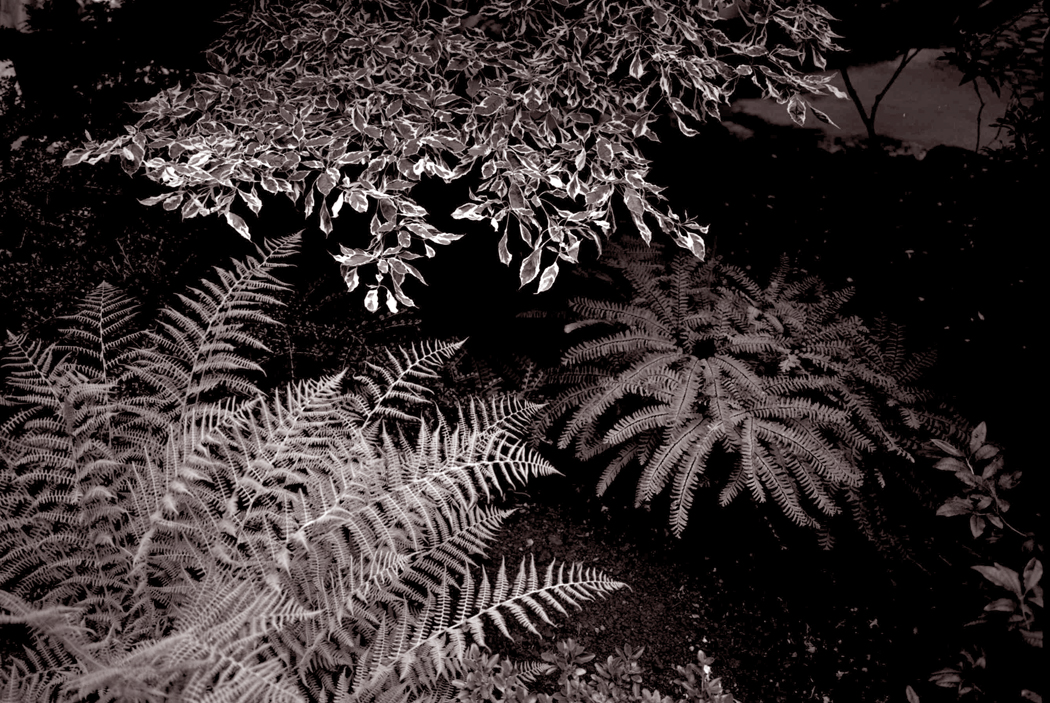
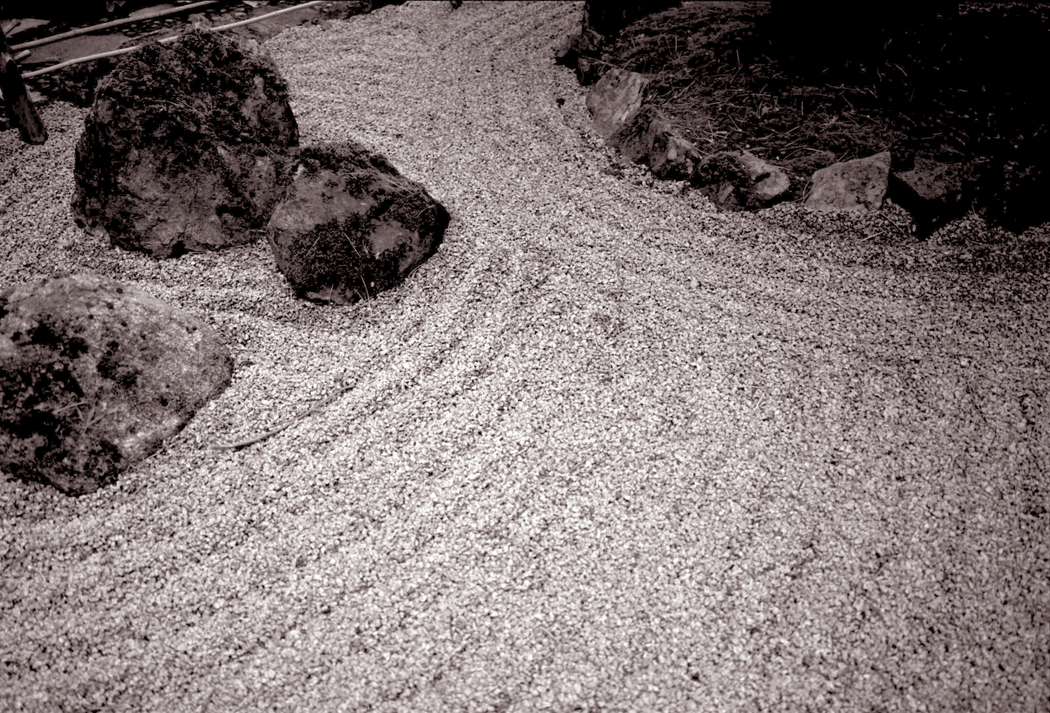
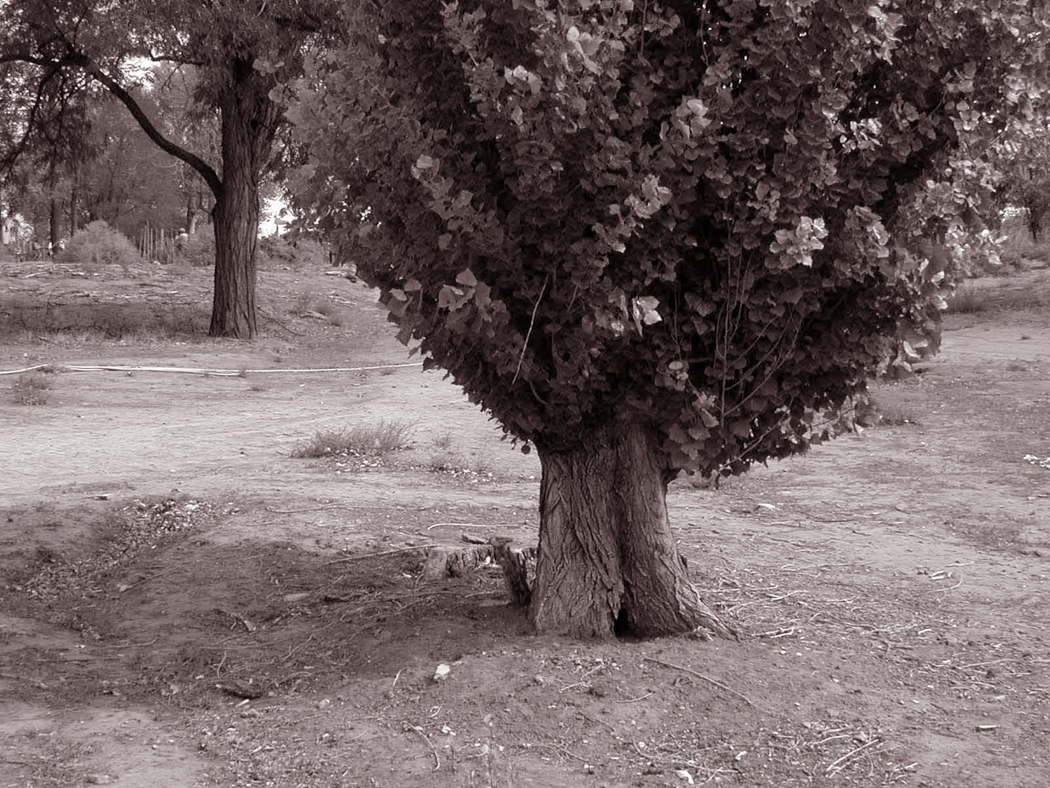
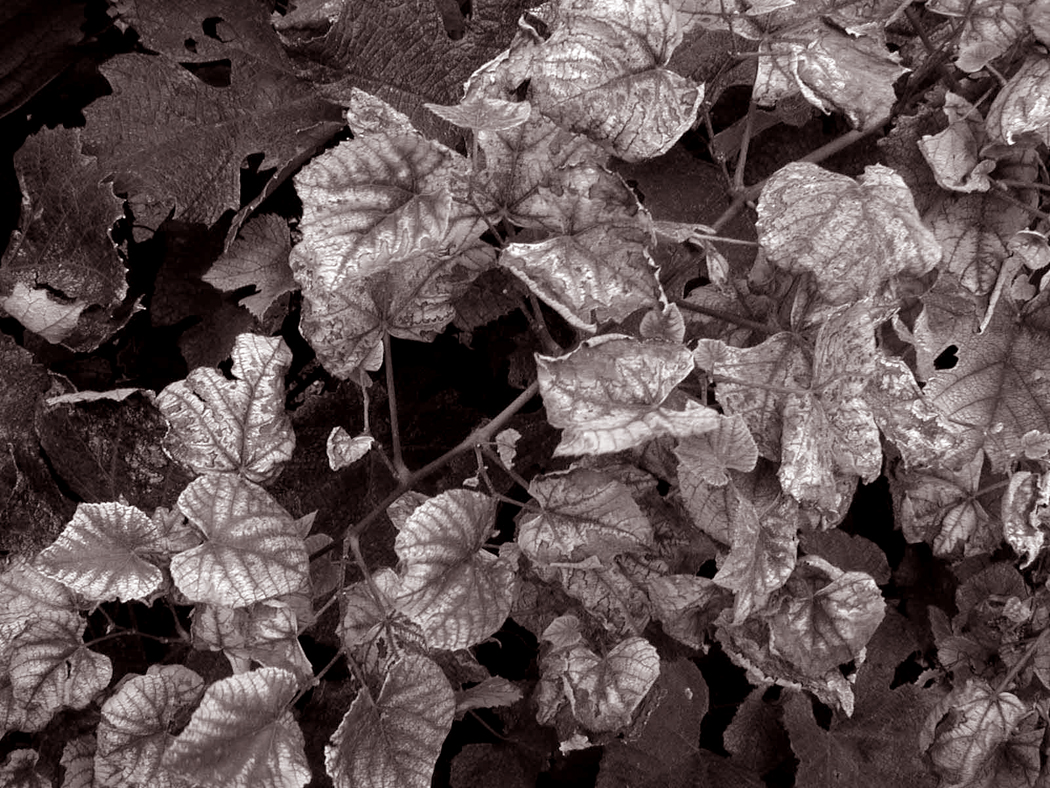
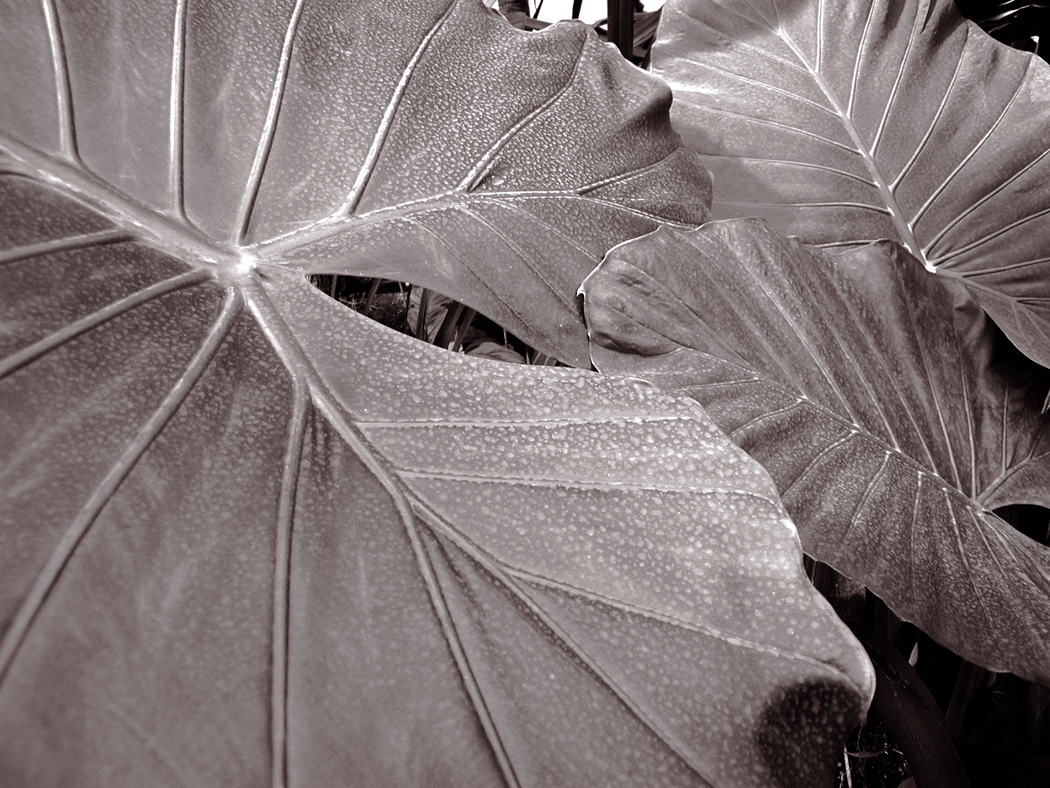
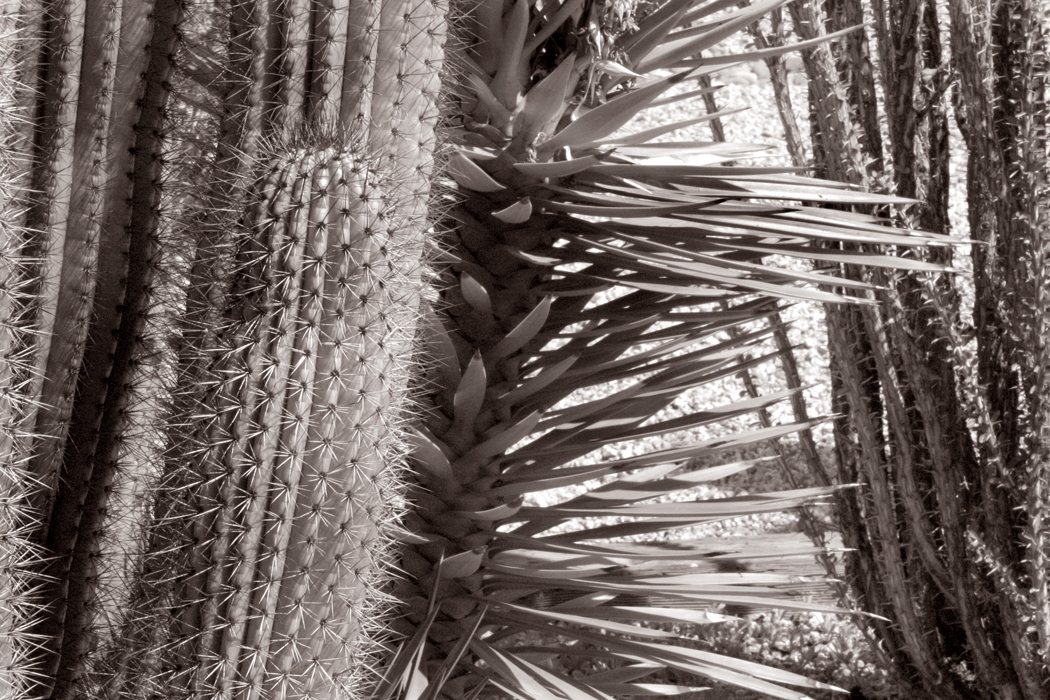
For the pictures here, selected from those loose leaves, I have managed to edit them down to a manageable few. Here are a couple, maybe three, images from each of several of those “books.” I hope they still give a flavor of what I have attempted.

4.

If I have succeeded, I have also failed.

For in the end, my attempt to wrestle with the world has turned into an art that is also about order, about how the mind engages with the things around it. I have wound up doing exactly what my predecessors have done.

It isn’t surprising. After all, when I turn on my elders and find their efforts insufficient, I am doing nothing different from what they did when they turned on their elders. It is how art grows. Wordsworth rebels against Pope, Eliot rebels against Wordsworth, Ginsberg rebels against Eliot. One generation finds its parents lacking and tries on its own to finally express the truth.

And I can only be happy when a generation after mine points its own finger backward and wiggles it in reproach at me.

It seems we never get closer to what we are all after. Value is all in the trying.

Click on any image to enlarge

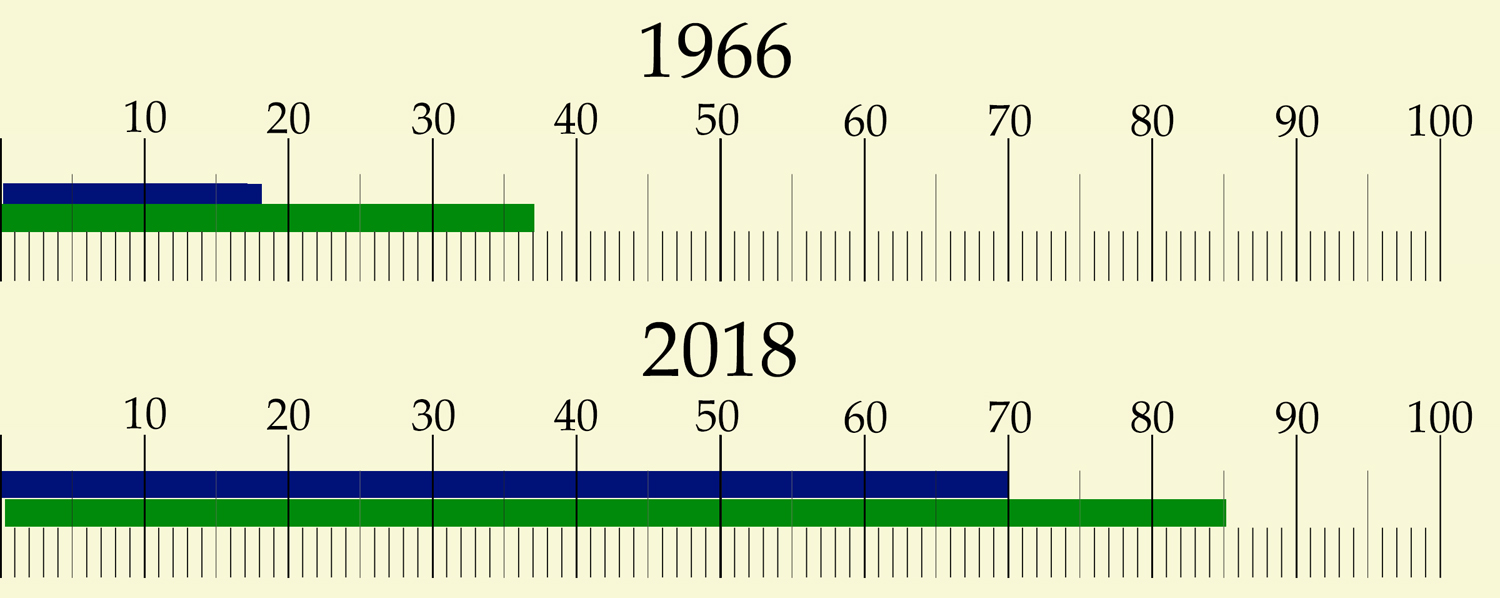
Mathematics. We all have our personal sums and divisions. I was once 20; I am now 70. The years have added up, and what is left is now a fraction. 

When I entered college in 1966, I was just over half the age of the professor who had the most influence on me. He is now 85 and have become exactly 14/17ths his age. I am catching up. The ratio has narrowed. 

(If we both live long enough, I calculate by my birthday in 2025, I will be older than him by seven months.) 

There was once a great difference in our ages and in our wisdom; now we are roughly equal. The piling of years does that; the gathering of experience. 

I have spent my life learning. It is the basic drive, like women for Don Giovanni, or gathering corporate acquisitions for Warren Buffett. But more math: Every time I increase what I know by 2 percent, I double what I don’t know. I learn arithmetically, I become ignorant exponentially. It is as if I am splashing in an inflatable wading pool on the beach next to the ocean.

When I was young, I was a complete idiot, and my ambition in life was to know everything. Seriously: everything. I suppose underneath the surface, I understood that was impossible. But you have to have some kind of aspiration. 

But back then, being an idiot, I still thought being intelligent meant knowing a lot of stuff. And I knew a lot of stuff. Piles of facts and factoids. I could explain the Defenestration of Prague in 1618: the shifting taxonomy of lions from Felis leo to Panthera leo to Leo leo; the use of the Neopolitan sixth chord as the subdominant in a minor key. And perhaps I showed off a bit too much. But now I understand that knowing stuff is mere accumulation. Nothing to take credit for: These things stuck in my mind because my brain is gummy. 

Besides, the more you learn, the more you discover that what you once took to be fact has either been superseded by later research, or been misunderstood, or turned out to be canard and cant. I.e., Cliff Clavinism. 

I have a pile of books and music scores that keep me going, and I add to that all the things of the real, the physical world, that I observe — the seasons changing on the trees, the birds chirping, the clouds ranging over the skies.

I am hungry to take it all in. 

But there is another delusion: that being intelligent somehow means being rapid of apprehension. Quick. Sharp. Fast on the uptake. While it is true that a fast comprehension comes with intelligence, it is, as they say, necessary but not sufficient. 

People who know they are smart tend to sort things very quickly into their silos, eager like tennis pros, to volley the next shot back. C’mon, you can bring’em faster than that! But sorting isn’t intelligence. Quickness of wit is fine; it is fun, it is exhilarating, but it doesn’t get us to the core of things. 

This is something I have come to understand over many years. Two people, more than any others, more than any book or class, taught me what to value in whatever mote of intelligence I possessed. 

The first was my wife. She was the most intelligent person I ever knew, although, on first hearing her, you might be confused over that issue. She could say the most surprising things: “Andrew Wyeth is more abstract than Jackson Pollock” or “You can fall into blue.” (We once argued over that last one for three full days and nights, before I capitulated. I always gave in. She was always right, although you had to think sideways or give up long-held unreflected prejudices. Wyeth is abstract in the sense that he abstracts a visual essence from the world and flattens it into an image made of blurts and squiggles, while a Pollock painting is no abstraction: It is palpably and solely a painting; it is what it is and nothing else. As for blue, I have been drowning in it since that fight.)

What she had was complete and utter openness to input. A failure to plop input into those silos. She didn’t so much think outside the box, but was unaware there was a box. I marveled at her insight, which she was basically oblivious to. It just was. 

It led me to my doctrine of volitional ignorance. That is, to approach any subject from the point of view of complete innocence. Forget what you think you know and just take in the new experience. 

The second person, and earlier lesson came from that professor, now frail and failing, who forced me to engage with the material. 

When I first got to college, I knew I was bright, and I responded to classes by doing what I had always done: giving the teacher what he or she wanted. I was good at that. But in my class of English Romantic Poetry, I handed in my first paper, saying exactly what I knew my professor wanted me to say and he gave me back my paper with a big, red “D” on it. (Technically, it was a D-plus). I was dumbfounded. There was nothing in the paper that didn’t repeat what he had said in his lectures. It couldn’t have been that far wrong.

But what he wanted from me was not what I thought he wanted. He wanted me to engage with the material. To know something, not to know about something. There is a difference, not just in magnitude, but in kind between knowing about and knowing. 

That is where engagement comes in. Paying attention. Not sorting to be done with, but holding something between your thumb and fingers, twirling it around, seeing it from all sides, squeezing it to see how hard it is, cutting it open to see what’s inside. 

You must start from the simplest things. Looking at a painting, do not decide what the subject is or means, but first look. Long and hard. Describe everything you see, however slight. Don’t forget the corners, what is hidden in the shadows, describe the exact color of the blank parts of the background, what the fingers of the subjects left hand is doing. Get all the bits in first. Take time. I once spent seven hours in front of a single painting. It takes time and commitment. It takes engagement.

Only when you have spent all the time you need should you then essay to understand what the art might be about. Ingest it first, digest it second. 

Fifty years ago, my professor forced me to engage with the material. I wasn’t there to learn facts about Shelley, but to engage with the work and see what it might teach me. I have been attempting that ever since. It is a hard practice to keep up: so much easier to categorize and dispense and move on to the next. More efficient. Gets things done. 

But if you really want to partake in this life, be embedded in the world into which you have been dropped, it is essential to pay attention, to know in your bones how little you truly understand.  

 For the world is infinitely complex and can obey no schema you toss over it. Engage with it on any level and extract whatever you can. Savor it.  

everymans-library-lede-pic

As I’ve become older, I have become less tolerant of badly-designed, -printed and or -bound books. When I was younger, often I didn’t really know the difference, or thought there was nothing I could do about it — I would just have to read whatever volume came to hand.

These days, however, if a book is the wrong size, has print too tiny, or margins to slender, or its binding cracks when opened too often, I simply put it aside and pick up another book.

It helps that the books I read are primarily classics — that is, books that come in various published versions. Best sellers tend to come only in the version their publishers produce, but when it comes to Lucretius or Melville, you can find a choice of version. You don’t have to put up with yellowing paper or brittle glued bindings.

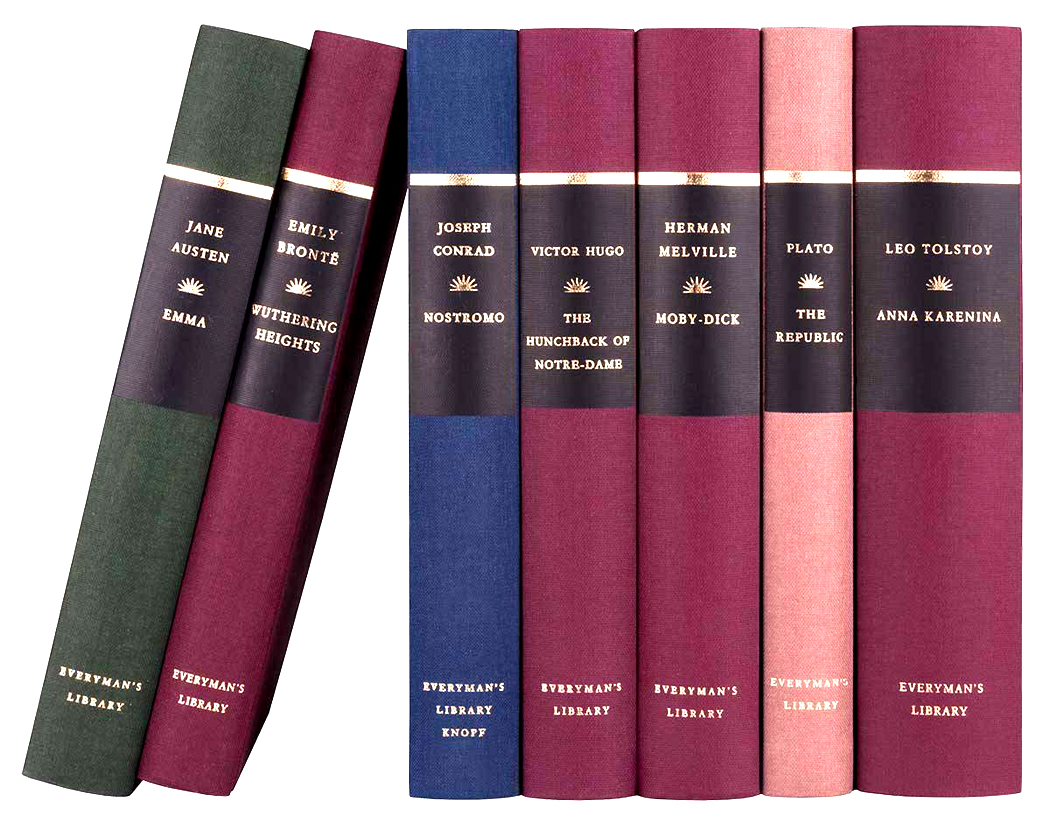
I bring this up, because I have settled on a prodigy of good book production. The paper is acid free, the type is neither too small or too big, the ink is solidly black, the margins adequate for scribbling, the bindings tight and the covers covered in a beautiful linen. As a bonus, each book comes with its own ribbon bookmark attached to the spine. They are sold under the name Everyman’s Library and in the U.S. are an imprint of Knopf.modern-library-2

The current editions are not the same as the classic Everyman’s Library books that are the hidden treasure dug up in every excavation of a dusty old used bookstore in an off-the-way road in rural America. In the past, avid prospectors of used books to read (as opposed to the more modern perversion of seeking first-editions and rare books for a “collection” shown off to visitors and seldom actually read) would seek out Everyman’s books and their American equivalent, Modern Library books. They were cheap, well made and gave you access to all the classic novels and poetry you craved. You can still uncover Modern Library books on the swayback shelves of those bookstores, but some of them have actually become “collectible,” and therefore unaffordable.

everyman-old-style

everyman-old-style-stackThe original Everyman’s Library was devised in 1905 by J.M. Dent and Company in London, with the idea of creating a 1,000 book library of world literature affordable to the ordinary man (and woman). The books originally sold for a shilling apiece (roughly $5 in current U.S. dollars). The books were beautifully designed, in imitation of the books of the Kelmscott Press, and were pocket size and hard cover. I still own several titles, including the entire Spectator series written by Joseph Addison and Richard Steele, from the 18th century. Four volumes of enameled prose.

The current Everyman’s Library books are full size, with nice curved spines, clean linen hard covers, color coded by which century a book was written in, and offer more than 300 titles. They also produce a series of pocket-sized volumes of poetry that you can carry around with you without tearing open the corners of your jacket pockets.

The first of the new Everyman’s Library I became aware of was when I looked for a version of Tristram Shandy I could read. The one I had was a lousy paperback in dense print with insufficient leading between lines. It was an offset print version poorly inked, meaning the letters often grayed out on the yellowed pages. Pfui. But I found a used copy of the Everyman’s Library version and it was as if the sun shone from behind the clouds and the angels’ sang. I read it cover to cover, enjoyed the hell out of it and realized how much the book design helped me navigate it.

library-of-america-shelf

There is another excellent series of books published as the Library of America, which reprints American classics in beautiful editions. Compared with the Everyman’s Library, the Library of America suffers from slightly smaller type and thinner paper. They are excellently edited and offer many tomes not even available elsewhere (such as William Bartram’s Travels and Francis Parkman’s histories). As I gaze to my left at the floor-to-ceiling bookshelf in my office, I count 49 Library of America book spines. I seek them out in used bookstores to save a few bucks — another advantage of the Everyman’s Library books is that, while they are no longer a shilling apiece, they do run an average of a third less than the Library of America offerings.

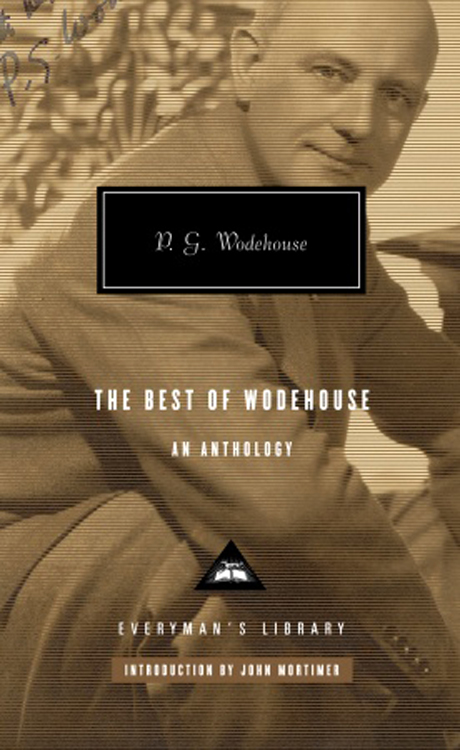
best-of-wodehouse-coverI bring all this up because I am presently reading the Everyman’s Library edition of P.G. Wodehouse. It is 840 pages of Jeeves, Bertie Wooster, Blandings Castle and Mr. Mulliner in prose as frothy as the foam above a double latte. Friends who know me well knot their eyebrows and wonder what’s going on with Nilsen. Where is the man who would rather collate translations of Vergil than dive into a chocolate sundae?

As it turns out, one needs some balance in a life. As I consider my recent reading history I see the obvious pattern. After diving deep (and I mean deep) into Timothy Snyder’s Bloodlands, I needed to blow off the louring clouds, and took on John Updike’s Bech books — collected, as it turned out, in an Everyman’s Library volume. Enjoyed the heck out of them.

After that I took on Alexander Solzhenitsyn’s Gulag Archipelago. It is three giant volumes long of depression, depravity, injustice, sadism and totalitarianism. I got through the first volume and a half before I had to put it down for a spell. In the interim, I took up Jean Renoir’s memoir of his father. It was a joy to read. I am not a big fan of Pierre Auguste’s paintings, but his son is an excellent writer and I came to value Renoir pere as a man, even if the book didn’t change my thinking about him as an artist.

It felt like diving into the sea, coming up for air, diving down once again, and coming up into the sunlight for relief.

After Renoir, I got back into the Gulag, but soon needed more oxygen, so before I even finished Vol. 2, I headed off to reread Melville’s I and My Chimney — my favorite of his Piazza Tales, and then into A Mencken Chrestomathy, for a good draught of cynicism and cold water before returning to the Solzhenitsyn. But I got sidetracked by another Everyman’s Library book: The Book of Common Prayer.

I don’t know if it was the recent election or what, but I felt I needed the cleansing of some very pure language. You may ask, why would a hardened atheist decide to read Thomas Cranmer’s iconic prayer book? It certainly wasn’t for the theology; it was for the words, so familiar to us, speaking to us of hundreds of years of linguistic tradition, a source of all we take as serious and dignified in the English language. It is hard to turn the page and not find some phrase that is our mother tongue’s subconscious. There is comfort in those cadences.

After that, I took on D.H. Lawrence’s Mornings in Mexico. I enjoy his travel books more than his fiction. He is one odd fellow, idiosyncratic, often wrong-headed in the extreme, but always fun to read.

Other palate-cleansers I have dipped into include Nabokov’s Speak, Memory, Laurence Sterne’s A Sentimental Journey and James Michener’s Tales of the South Pacific.

war-and-peaceWhen I have done with Wodehouse, the next in the queue is War and Peace. It is a book that if I were to go to a Roman Catholic confession, I would have to admit, “Father forgive me, for I have sinned. I have never read War and Peace.” I know it is on the list of books that one should have read, but although I had begun the thing several times over the years, I had never found a volume comfortable enough to read. The thing is immense. One version I bought came with a complimentary hydraulic lift to help lug it around.

Then I discovered the Everyman’s Library edition — in three easily handled volumes, breaking up the density into digestible bits. It comes in its own box, with small wheels attached to help roll it around. (Actually, I’m making up the wheels, but it does have its own box.)

It sits there staring at me, waiting for me to finish with Bertie Wooster and challenging me with Pierre Bezukhov. If I make it through — like trudging from St. Petersburg to Vladivostok — I will find something a little lighter to serve as a sherbet dessert before taking up Vol. 3 of the Gulag.

The New York Times runs a feature in its book section called “By the Book,” where famous authors are asked a set of questions. The Times will never get around to me, so I decided I needed to ask myself these standard questions.

Gulag 2

Question: What books are currently on your nightstand?

Aleksandr_Solzhenitsyn_1974Answer: I am about 70 pages into the second volume of Alexander Solzhenitsyn’s Gulag Archipelago. There are three volumes; I fear my nightstand may collapse. Not only for the weight of the books — they are real doorstops — but for the sagging heaviness of its content. For some reason, I have an unquenchable thirst for validation of my pessimism, for a dim view of humankind’s inhumanity to humankind, and likewise a depressing recognition of the tiny flame of idealism that refuses to be extinguished. I wish I could get rid of it. It always breaks my heart.

Q: That’s fine for your nightstand, but what book are you currently reading?

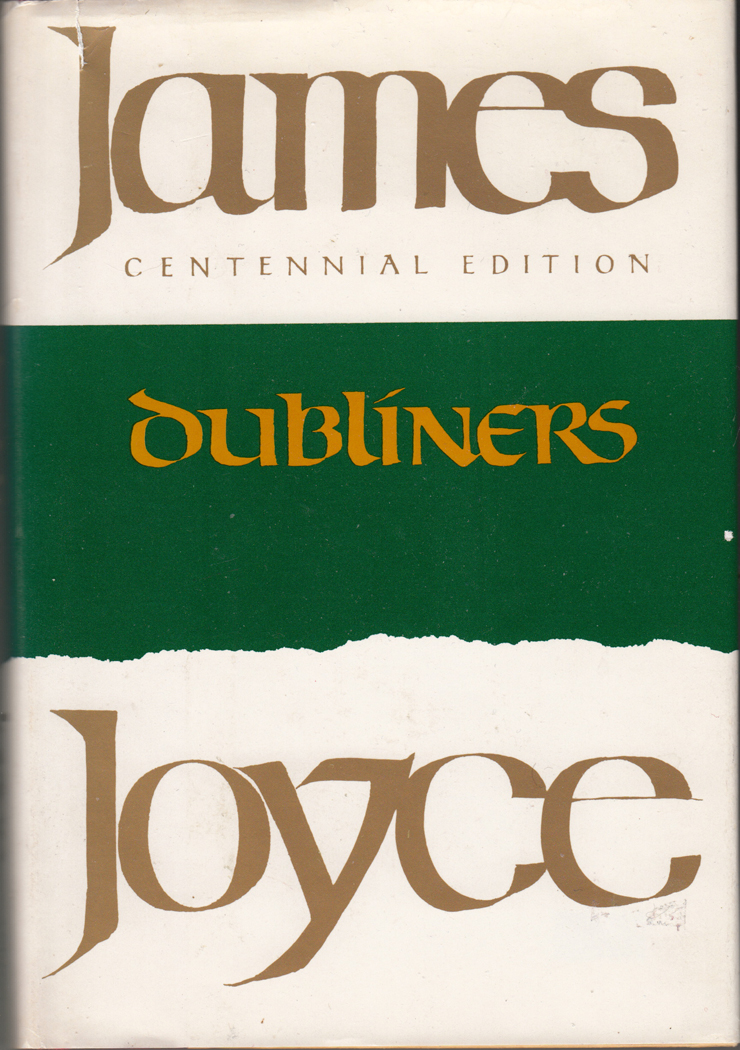
DublinersCaught me. Yes, I’m 70 pages in to Vol. 2 of the Solzhenitsyn, but it was so depressing, I needed to take a short break. So, I am now finishing up James Joyce’s Dubliners. Turns out it’s nearly as depressing. I’ll be getting back to the Russian as soon as I’m done with the Irishman.

Q: What was the last great book you read?

A: That’s a tough question to answer, because you have to decide where to set the bar. Does the Solzhenitsyn count, even though I’m not finished? Before that, Timothy Snyder’s Bloodlands. But that is for content, not for style (nothing wrong with his prose, but that’s not the reason for picking up that depressing book). Ted Hughes’ Tales from Ovid is one of the best translations I have ever read. I just finished rereading it (again). I read all three of John Updike’s Bech books and reread Saul Bellow’s Herzog, which I first read in high school when it first came out. But if you mean really great, like Moby Dick or Proust, then I will up the ante, if you want great, the greatest book I have ever read is Homer’s Iliad. How can it be that the first book in our culture is also the greatest? I reread it once a year.

Q: What book did you hate reading as a child?

A: Hands down: I was required in 8th grade to read Oliver Twist. I hated it. I hated, hated, hated it. The teacher had picked out a book she thought each student would most enjoy and I got saddled with Dickens. I don’t know what she saw in me that thought I would enjoy reading a Victorian novel, but it has ruined me for life, not just for Dickens, who I still cannot bear, but for all Victorian literature. The fault is not in the books, but in myself. I grant that. But I feel like I’m chewing an old mattress when I try once more.

Q: Disappointed, overrated, just not good: What book did you feel you were supposed to like but didn’t? Do you remember the last book you put down without finishing?

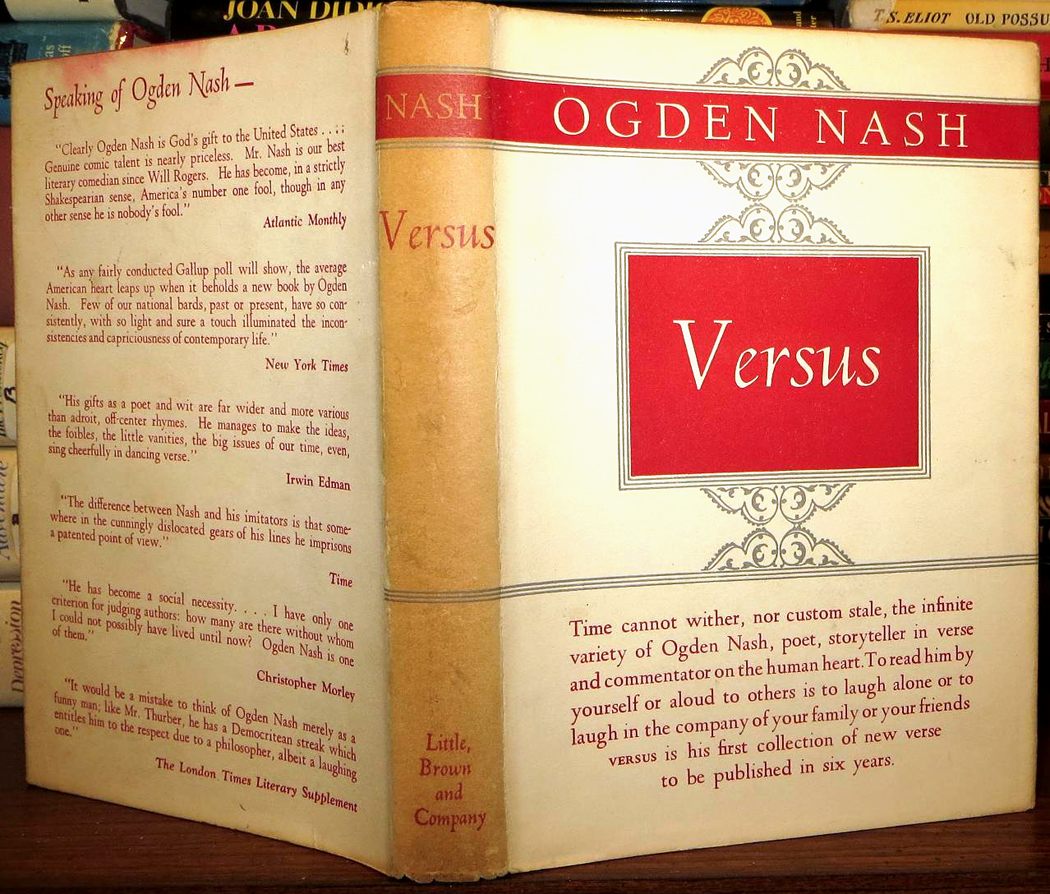
ogden nashA: We are all inclined to favor certain styles and epochs and to fail to appreciate others. I have never been able to stand Virgil’s Aeneid. It feels completely stiff and academic to me, too literary, too contrived, artificial. I have tried to read many different translations, hoping to find one I could stomach, but so far … no. As for not finishing, I came across a used set of the complete works of Ogden Nash. I so looked forward to wallowing in his wit. Lightweight, yes, but clever. At least, so I thought. Turns out, all the great bits he wrote are already anthologized to death and the stuff that you don’t already know — it turns out there’s a reason you don’t know it. Pedestrian, dull, dated, trying too hard, puerile, or contorted beyond enjoyment. I couldn’t finish it. I’ll keep to the good verses I already know.

Q: What do you read for fun?

brian lambA: My wife makes fun of me by calling me “the man who can’t have fun.” She means I’m always in some serious book of history, or the classics. She means that on weekends, I watch C-Span. (There are some very few beings in this world whose utter humanity and service to humankind recommends them for sainthood and among them I place the Dalai Lama, David Attenborough and Brian Lamb). My wife wants me to go see some popular movie or wear a funny hat for a costume party, and I just cannot get any pleasure from such things. I dread state fairs and Renaissance festivals. Shoot me if you ever see me at a karaoke bar. But that doesn’t mean I don’t have fun. It’s just that my definition of fun is different from hers. I get the greatest pleasure from listening to Bach or Schoenberg, reading John Milton, viewing films by Tarkovsky and rereading Ovid one more time. I can’t help it. I’m not pretending, or trying to make myself sound more brainy; these are the things I genuinely enjoy. I do them for pleasure. Utter pleasure.

Q: All the time? Really?

A: Well, my wife and I share an enjoyment watching British detective series on TV. American cop shows are too violent for our tastes, and the crimes are always by serial killers, drug kingpins or terrorists. The British series tend to focus on the more mundane crimes we are all more likely to encounter in life, crimes of jealousy, greed, anger. And the British series  often bypass the actual murder, joining the story as the body is found. We love them all, from the wimpiest to the grittiest. Unfortunately, between the two of us, we have defused too many of these mysteries by discovering the most successful trick in fingering the guilty party, and it has nothing to do with clues. It is a metalogic method: Just look for what we call “the unnecessary character,” the supererogatory person in the story — an extra sister not otherwise needed, a solicitor outside the main story, an ex-boyfriend or a retired cop, dragged into the story for reasons not otherwise clear. The unnecessary person rarely fails us.

Q: But this is about books. Do you read mysteries, too?

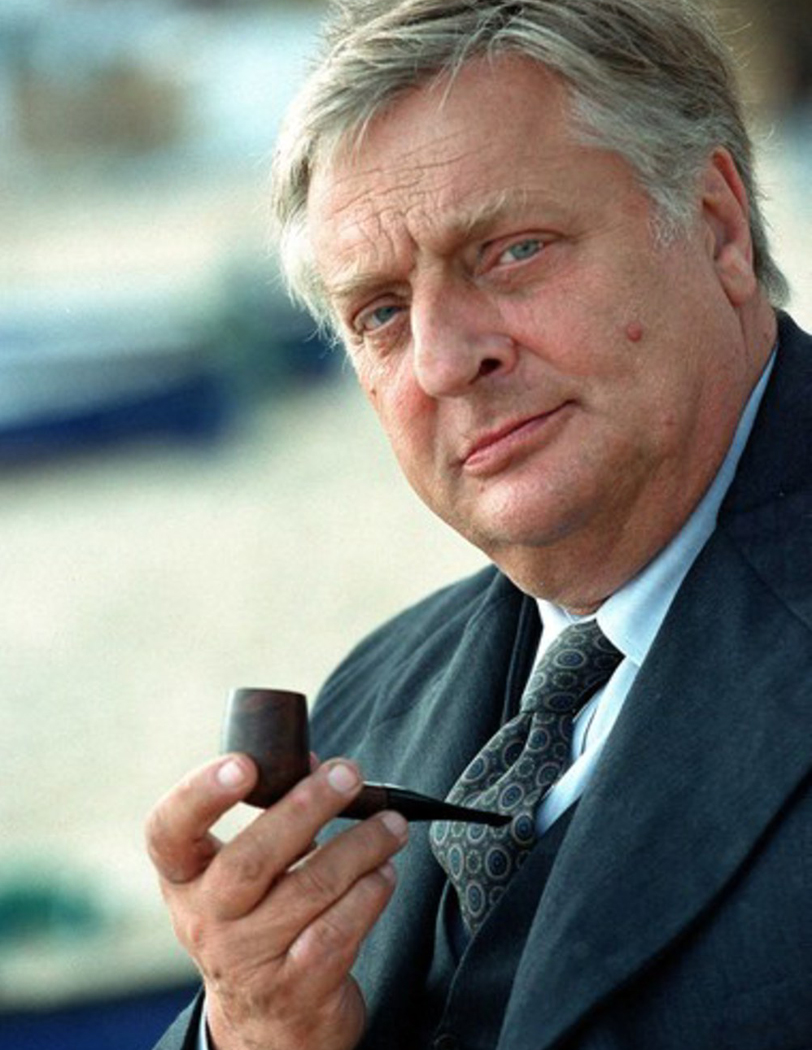
Bruno CremerA: Sort of. I’m addicted to Maigret books. Whenever I have to decompress from reading more about genocide in Eastern Europe, I pop open another Maigret. But properly speaking, they aren’t mysteries. We often know who the culprit is early in the book. Instead, they are novels about crime, and Georges Simenon fills the pages with vivid characters, drawn in three dimensions. There is little of the piling up of clues and gathering people together at the end to ferret out the killer. Instead, the same books could probably have been written without the crime at all, as perhaps love stories or travel books. I love Simenon as a writer. By the way, we have the DVDs of all the Bruno Cremer Maigret episodes and the British version with Michael Gambon. Watched them all multiple times.

Q: What books give you the most pleasure in the reading?

A: And the re-reading. There are a handful of books I can read over and over and always give me pleasure, not so much in the storytelling — since I already know how it comes out — but in the words. The words, words, words. Certain writers just make my mouth water with the words they use, the metaphorical and playful use they make of them. If I were to make a list of, say, the top five books that give me utter, ecstatic pleasure, they would be: 1. Tristram Shandy; 2. The Decline and Fall of the Roman Empire; 3. Paradise Lost; 4. Joyce’s Ulysses; and 5. The Iliad. I cannot get enough of all of them. Oh, and I have to add Chaucer; can’t leave him off. And Moby Dick. Jeez, I love that book. I cannot limit it to five. How could I leave off Ovid’s Metamorphoses?

Q: What books most influenced you as a writer?

Herman MelvilleA: So many people were influenced by Hemingway. I was not. Instead, I loved the long, baroque sentences and richly figurative language of Herman Melville and Henry David Thoreau, image piled on image with a profuse fertility, leaving me, as a reader, feeling like I was being pulled one way and then another by breakers at the beach. Oddly, I often read secondary works before moving on to the main course. I read all of Melville’s short stories, including Benito Cereno and Billy Budd, before I ever finished Moby Dick. Perhaps because I loved the opening chapter of Moby Dick so much, every time I put the book down and picked it up again, I started from the beginning. I must have read “Loomings” a hundred times before finally moving on to the rest. The other great influence was Henry Miller, not for the obscenity, but for the torrent of words, the forward motion of the narration in such books as Plexus, Tropic of Capricorn and Big Sur and the Oranges of Hieronymus Bosch. I’ve since left Miller behind, but he was a great ignition flame.

Q: Which writers writing today — novelists, poets, playwrights, journalists, critics — do you admire most?

A: I am not being disingenuous when I say my favorite living poet is my wife, Carole Steele, whose book, Rust Sings, is full of life and great lines. And I always open my New Yorker to its final pages looking for Anthony Lane.

Q:  What author, living or dead, would you most like to meet, and what would you like to know?

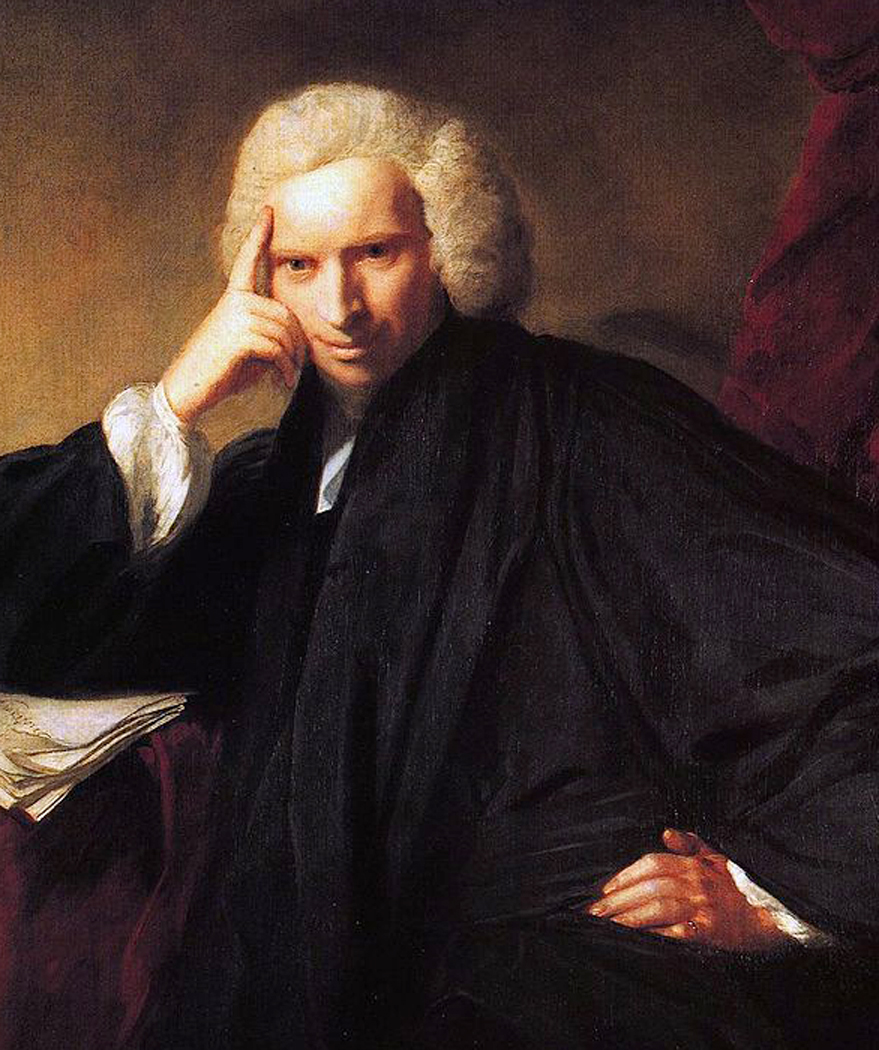
Laurence_Sterne_by_Sir_Joshua_ReynoldsA: First, it would have to be an author in English. I can’t speak ancient Greek. There are some that come to mind, but I’m not sure I really want to know them: Nabokov is too waspish; Faulkner too inebriated; Gibbon too erudite. I go through a list and realize most authors I would rather read than meet. But there is one I would love to spend a lazy afternoon with, talking and making jokes and maybe commiserating a bit — Laurence Sterne. We could share a beer easily. What would I want to know? Not a thing; let’s just talk.

Q: What is your favorite word?

A: We’ve made a pivot (Bernard) in this Q&A, haven’t we. What’s the loveliest word in the English language, officer? In the sound it makes in the mouth? In the shape it makes in the page? Not “elbow,” not for me, though it is a fine word. No, I like “smudge,” or perhaps “caliper,” which on the page has both an ascender and a descender, which makes it a good word to compare typefaces with. Really, I can’t pick one word. How does a mother choose among her children? Not possible.

Q: What is your favorite curse word?

A: I rarely curse, which makes it more effective when I do.

Q: If a movie were to be made from your life, who should play you?

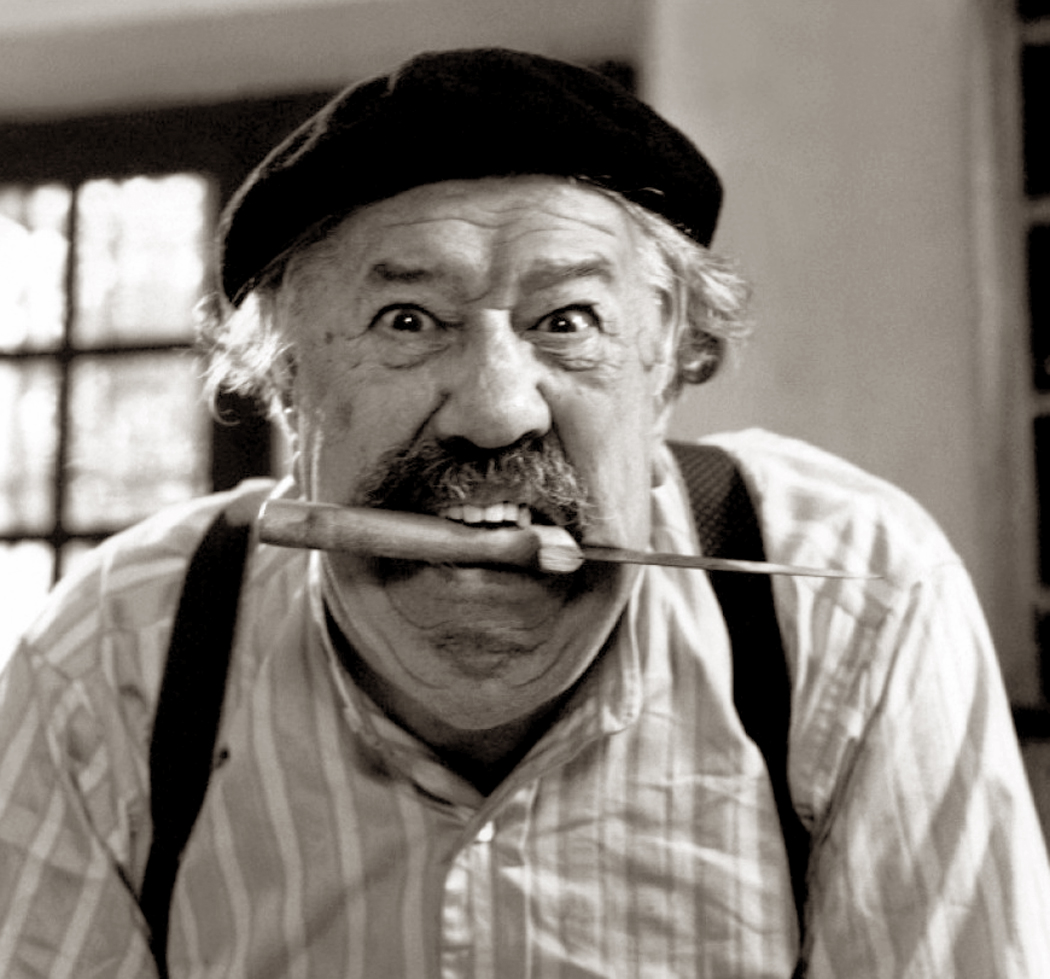
michel simon 1A: Ideally, Jean Gabin, but more realistically, Michel Simon.

Q: What sound or noise do you love?

The squall of thousands of Canada geese in a pond and flying overhead. A noise most people find excruciating, but in me, it brings forth the swelling of my chest and the tears one sheds faced with ultimate beauty.

Q: If Heaven exists, what would you like to hear God say when you arrive at the Pearly Gates?

A: “Don’t unpack, we’re sending you back for another round.”

alaskan brown bear 2
In May, nearly half the world population of the rare Mongolian antelope, the saiga, were found dead, presumably from disease. Some 120,000 carcasses were discovered on the grasslands of Kazakhstan. The population of saiga has been under decline for many decades, and the Saiga Conservation Alliance estimates that the number of animals has dropped by 95 percent in the past 15 years — and that was before May’s catastrophe.saiga 2

This is enough to alarm any animal lover, and anyone worried about the state of the environment anywhere on the globe, but it had a personal resonance with me, because I knew of the saiga vulnerability since I was a child, thanks to a remarkable book I received when I was perhaps 6 years old: Wild Animals of the World, by William Bridges and Mary Baker, which was first published the year I was born — 1948.

On page 221, Bridges writes: “This odd antelope of the cold, flat treeless steppes of Siberia has the misfortune to be highly prized by the Chinese pharmaceutical trade for the sake of its horns…” On the top of the page is a fine black-and-white drawing of a saiga by the artist, Mary Baker.

The book was one of those premonitory gifts of childhood that dug deep into my growing brain and stayed there. On the surface, it was a bestiary, a catalog of mammals of the world, written for young people; each page featured a portrait of an animal by Baker and a short text by Bridges giving a mini-overview of the animal, its habits, its usefulness to humans, when appropriate, and often, a warning as to its peril.title page 2

Looked at that way, it was certainly a successful book: I loved it on that level alone.

But it had several other things going on for me. It was in its way a “gesamtkunstwerk” for my curious child brain: It fascinated me on several levels, and led me to art, to language, to design and to a love of “the things of this world.”

Let me explain.

First, the drawings were distinctive. Even as a kid, I could distinguish between the look of Baker’s drawings and the look of photographs, and the look of other artists’ styles. I valued Baker’s fine detail, the beautifully delineated textures of the fur, hides, and markings of each animal. The drawings were hyper-realistic, yet somehow not “photographic.” They were clearly drawings: I could see the pencil on the paper. This difference — the esthetic surface of the image — I did not understand at that tender age, but I clearly felt it, and it thrilled me. I pored over the book endlessly. It was my first acknowledged awareness of “art” as a separate entity.

When I was a little older, maybe sixth grade, I picked up a pencil and copied several of the drawings, and felt proud satisfaction when my version approximated the original. uakari 2

Then, there were the animal names. I knew horses and cows, even monkeys and deer, but this book told me about scores of exotically named animals, such as the anoa, argali, chevrotain, coypu, douroucouli, gaur, gerenuk, nilghai, paradoxure, thylacine, yapok, kiang, and of course, the saiga. There are dozens more: sitatunga, ratel, quagga, pichiciago, okapi, galago, and the flying phalanger. Who knew the world was this strange, that language was this baroque?

I reveled in this richness of nounage. The world was full of amazing things, and this book showed them to me. There were more things in heaven and earth, etc. And they all had names. I started on a long quest for vocabulary and the building of a word-horde.wisent 2

With my early and budding interest in language, I even put together the similarity of the European wisent and the American bison and thought, they must be related words. The wisent, by the way, was my best drawing copy.

But there was more. I cannot say I was consciously aware of all the book meant to me, or of all I learned from it, but I felt these things, even as a child. I loved, for instance, the typography. I wouldn’t have known that’s what it was, but the book was very well designed, and each page had the name of the animal at the top in a display typeface different from the text font. I loved the difference. There was something exotic in that display font. gorilla 2

In the same way, I had a nascent awareness of design. Each of Baker’s drawings had a blank background, except for a shaded rectangle, asymmetrically positioned to provide an active balance to the overall design. We are used to pictures being bound by a rectangular frame, but here, the animals burst out of the rectangle, giving them more life and vivacity. Again, I wouldn’t have put it that way as a boy, but I clearly felt it.chimpanzee 2

There were 251 animals described in the book, all of them mammals, and it gave me an encyclopedic sense of zoology. I wanted to learn more.

I don’t know how to express how essential books like Wild Animals of the World were to me growing up. There were other books that had the same kind of hold on me. Life magazine’s The World We Live In was one, the ancient Compton’s Picture Encyclopedia, from the mid-1930s was another, with its endpaper dirigibles and gyrocopters flying over futuristic cities.

But it is essential to recognize that it is not merely the information contained in these books that is important. What meant so much to me was not simply the factoids, but the whole experience of the book — its design, its typography, the color of the paper it was printed on, the smell of the binding, the stiffness or flexibility of its cover. It is a whole experience.
Kiang 2

Which is why I worry about the current educational emphasis on information. This is an information age, we are told, but it isn’t fact alone that is meaningful. What I loved — and still love — about Baker’s book is everything about it. The physicality of the learning experience, not its disembodied data.

Which brings me to my last point. Now that I am old, I find that there is a recurring pattern to the years. There are moments when we acquire and moments we divest. This is true of possessions as well as ideas. At some point we buy things we want; later we come to “simplify” our lives by getting rid of clutter. Certainly one of the effects of retirement is reducing the number of things we need to pack when we move out of the large house and into something more convenient for age. But there is a countervening impulse to reacquire some of the things we have lost, whether it is a CD of a record that used to mean so much to us when we were courting, or a Ford Mustang we used to drive, or — in this case — a book that meant so much to the inchoate curiosity of our yearning childhood.

I had long ago lost possession of Wild Animals of the World. I have no idea where my original copy went. Probably my parents sold it off in a yard sale after I moved out to go to college and they got rid of most of the household residue when they retrenched to a double-wide in a retirement community in Florida. But I felt a deep nostalgic need for the book and found a used copy online for some ridiculous price — a buck ninety-nine or some such — and ordered it. I still pore over it. I still learn from it.


treblinka sign

I’m wearing a virtual foam collar around my brain stem, suffering from a kind of whiplash, having finished one book, so devastating and depressing, and having begun another so invigorating and life-affirming — really, brain-affirming — that my poor psyche feels like Faye Dunaway in Chinatown, slapped back and forth by Jack Nicholson.

I recommend both.

The first is a recounting of the inhumanity humanity deals to itself; it is a tale of humankind seen not as individuals, but as an aggregate of categories. The second is a memoir of humans seen as individuals, with all their flaws and foibles. It is the macro view vs. the micro view.

The most distressing thing is that we all have to live in both worlds; we have our families and friends, but we also cannot escape the things our governments, our religions and our employers do in our name.

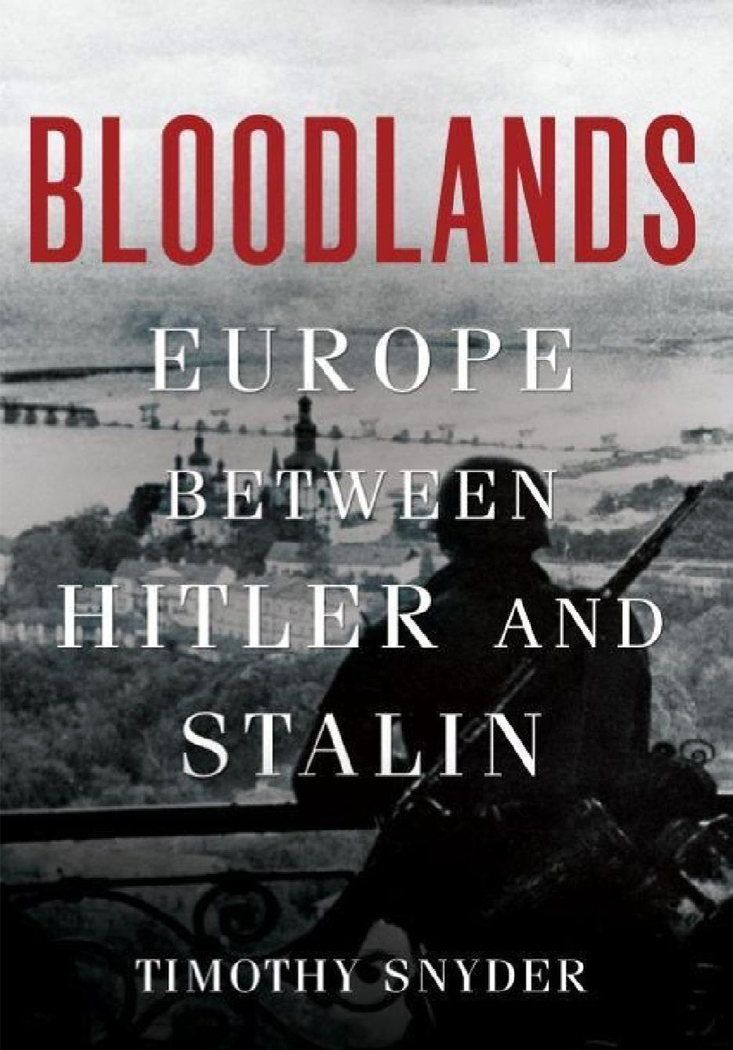
bloodlandsThe first book is Bloodlands, by Timothy Snyder, which recasts the central story of World War II — really from 1933 to 1948 — in a way which finally makes sense to me, and is a needed antidote for all the triumphalist D-Day feel-goodism you are weighed down by in endless TV documentaries about the war.

We are too often deluded into thinking that World War II was a time in which America waged a “good war” against Nazism and won. I had always found this view indefensible, simple minded and ultimately jingoistic. The U.S. certainly had its part to play — and I don’t mean to denigrate the sacrifice of our soldiers, sailors and those on the homefront —  but when I looked at the figures, it was hard to reconcile the idea that we were the major player when our war dead totaled half a million but the Soviet Union’s dead exceeded 12 million. Either they were terrible soldiers and ours were magnificently efficient, or the real war was not in Normandy, but in the Eastern Front.

But even my own prejudice about the war really being between Germany and Russia turns out to be a gross simplification.

The book is an accounting of all the dying that took place in the shifting-border areas between Germany and Russia — the areas that were sometimes Poland, sometimes Ukraine, Belarus and parts of the Baltic states, Romania and Hungary — death caused by the political choices and policies first of Stalin in the Soviet Union and then Hitler in Germany.Jew_Killings_in_Ivangorod_(1942)
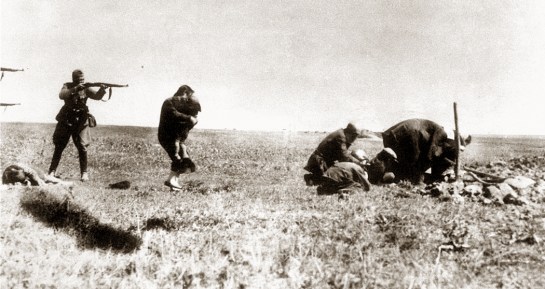
By the accounting of the author, they are culpable in the deaths of 14 million civilians. This is above and beyond the military deaths caused by the war itself. This was the deliberate starvation of Ukrainian farmers in the 1933, the “Great Terror” of 1938, in which Stalin wiped out his political enemies, rivals and phantoms of his paranoia, followed by the mass shootings in occupied Poland from 1939 to 1941, the starvation policy used by the Germans on 3.1 million Soviet prisoners of war and the intended extermination of Jews by Germans from 1941 to 1945. It is a dismal story of humanity’s inhumanity. These were not accidental deaths, but deaths of central planning and political purpose.

The overwhelming bulk of death during those years took place between the so-called Molotov-Ribbentrop line that divided pre-war Poland in half, and the eastern borders of Ukraine and Belarus.

Snyder footnotes the exact counts, often village by village, with anecdotal horror stories of those shot, burned, gassed and garroted. One hardly turns the pages without choking and weeping.

From Snyder’s view, the war in Europe was not merely one between Nazi Germany and the Communist Soviet Union, but rather one in which Hitler and Stalin colluded in first wiping Poland off the map, splitting it between them in 1939 (the aforesaid Molotov-Ribbentrop line), and then, when Hitler’s plan to evict all the Poles and Jews from what was formerly western Poland got bogged down in difficulty (the plan to deport them all to the east, vaguely somewhere in the Soviet Union, perhaps Kazakhstan was nixed by Stalin), it turned into a plan to murder them all.

It should be noted that in Russia, the official dates of World War II are 1941 to 1945. They don’t acknowledge the invasion of Poland by Germany on Sept. 1, 1939 as the start of the war, because they were equally culpable in that dissolution of the state of Poland. But they start the conflict in 1941, when Hitler invaded the Soviet Union. Except, of course, that Hitler didn’t first invade the Soviet Union. He invaded what used to be eastern Poland, on the other side of the Molotov-Ribbentrop line, but had since been declared to be part of the Soviet Union — the formerly Polish part. For Stalin it made no difference that this was formerly Poland; now it was de facto part of his Soviet Union.

When Hitler’s army failed to take Moscow quickly, as his Blitzkrieg model had planned, the war turned into a protracted and mass slaughter of German and Soviet armies.

While we in the West call World War II “the good war,” in Russia they remember it as the Great Patriotic War, but in reality the whole thing should be called the Soviet-German war over the dismemberment of Poland.

To that bloody conflict, D-Day, Sicily, North Africa, Dunkirk, the Battle of Brittain were all basically a side-show. Our propaganda portrayed Hitler as seeking “world domination,” but that was never more than a comic-book arch-villain sort of plot. France and England were brought into the war because they had a defense treaty with Poland. Hitler would have preferred to avoid war with England and France. His beef was with Stalin over the land he wanted in Poland for German expansion — primarily to provide farming land and food for an expanding and industrialized Germany. Having to deal with England and France in the west was a pesky bother to him.

(The war in the Pacific, which happened concurrently, can be seen as primarily a separate war, beginning with Japanese invasions of Manchuria and China in the 1930s and ending after the war in Europe. The Pacific war was essentially America’s war, unlike the war in Europe.)

Back to the book: What makes it so dismal is not just the magnitude of the statistics — how many million shot in the back of the head here, so many million run through the death camps there — but the documented stories of individual deaths, or whole villages prisoned in churches that were then burned down, or men required to dig pits the length of two football fields, and then told to lie down in the graves, where they were shot, and layered like lasagne with another pile of bodies, shot, and another, and another, then covered up with dirt.

One fears turning the page in Bloodlands to find more starvation, more cold-blooded planning of mass murder, more mothers torn from their babies, more husbands worked to death in labor camps, while their parents were shipped off to Treblinka or Chelmno.

We too often think of the concentration camps as the place of the Holocaust, but Snyder makes clear that as many Jews were killed by bullets as by gas, and that the version of camp death we most often think of — say Auschwitz or Buchenwald — were not actually death camps, but rather holding camps in which death was a too-common byproduct. The real death camps were small facilities with no barracks, just changing rooms. The victims arrived by train, stripped of clothing and possessions and were herded directly into gas chambers where internal combustion engines piped carbon monoxide in, killing all in about 20 minutes of terror, and then the corpses were carried out an burned in huge pyres, kept fired up like so many charcoal grills. Treblinka was built exclusively to empty out the Warsaw ghetto. When that was accomplished, Treblinka was closed down. The extermination camp at Chelmno did the same thing for the Jews of the Lodz ghetto. The industrialized purposefulness of such factories is all the more chilling. deportation to treblinka 1942
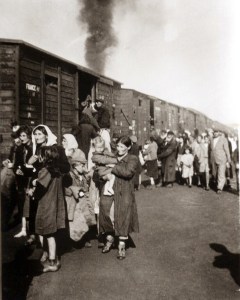
We tend to think of Hitler’s atrocities as being 6 million Jews killed in the Holocaust. And in terms of ethnic cleansing, it is one of the most ghastly in human history, but the suffering was also spread out in the period Snyder covers, from so-called kulaks in Ukraine to Polish officers massacred after the division of Poland in 1939, to dissidents and potential dissidents in the Soviet Union. Some 60 million people died in those years from political violence, less than half of them were military. That was 3 percent of the world’s population at the time.

One of the arguments one hears from the so-called Holocaust deniers, is that the Shoah was simply too vast to be believed. No humans could possibly have exterminated that many people in that short a time. Yes, they say, Hitler had anti-Semitic policies and maybe a few were killed, but the vast numbers were not believable. One has to laugh at this argument, not only in the face of Snyder’s careful accounting, but in the long view of history, and the slaughter of conquered peoples from the dawn of time. The Holocaust was not a singular event, but something like the standard order of things. This is what people do to each other, over and over and over. One must remember the wholesale extermination of city populations by Genghis Khan, the pyramids of skulls of Tamerlane. The slaughter of Cathars in the 13th century, or earlier, of the Wu Hu in China in the Fourth Century. One voice echoes through history: Carthago delenda est. So, ethnic cleansing continues in our own time, whether in Rwanda or Sudan or Cambodia.

I have gone on is rather more length than I had intended. The book is overwhelming, the pessimism it engenders is oppressive. I do not hope for a brighter future; I cannot knowing the lessons of history.

But I can put the book down when finished, and pick up another, one that gives me as much pleasure as Bloodlands gives me pain.

And here’s where the whiplash may hit you, too.

trilogyBecause the next tome I picked up was H.L. Mencken’s three autobiographical books, published as a single volume by the Library of America. I cannot convey to you quite the pleasure to be had by reading Mencken. His writing is full of the vigor and intellectual energy of a man in love with life and in love with the way language can convey that love.

It is not that everything is wonderful in Mencken’s life, but rather that the failings of human existence — seen as the acts of individuals, rather than classes of people — are at bottom so entertaining.

It is particularly his volume on his early newspaper work that fills me with joy. Newspaper Days covers the years from about 1899 to 1906, and lets me know that journalism hadn’t changed much from his day to mine (that it is now nearly extinct is another sorrow I feel).

Just as I dreaded each new chapter in Bloodlands, I check to see how many more pages I have left of Mencken and dread instead the final page, when my pleasure will come to its end. Prejudices
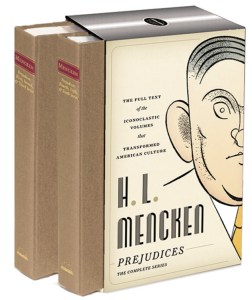
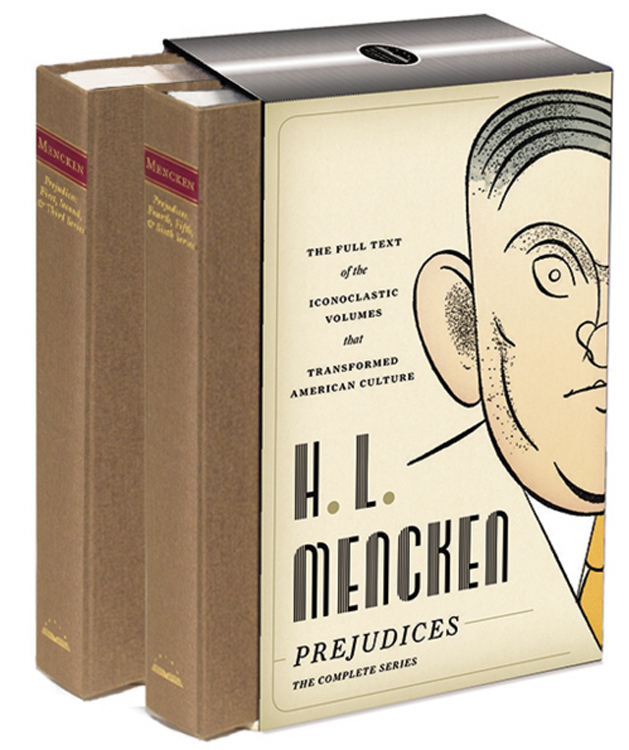
The Library of America had previously published his six series of  Prejudices, which were collected essays, always a joy to read, even when what he says might be outrageous and, well, prejudiced. At bottom, Mencken is clear-eyed and unbowed, and we value his fellowship, even in print, as we might value it sitting on a barstool next to him, sharing banter over a foamy beer. You might not agree with Mencken’s opinions, but they were always magnificently expressed, in a kind of journalistic language raised to the level of poetry.

I have his three volume The American Language, which is about as entertaining a scholarly book as you could find. Thorough, amused and amusing, it is indispensable.

The best way I can convey to you the qualities of Mencken’s writing, and of his mind, is to quote him. Here is a section from Newspaper Days, in which he talks about the artists employed back at the turn of the century to illustrate newspaper stories, before the days when photographs could be easily reproduced. As editor, he had to deal with their eccentricities.

After a few anecdotes about artists getting themselves into trouble and drink, he reminds us that:

“The cops of those days, in so far as they were aware of artists at all, accepted them at their own valuation, and thus regarded them with suspicion. If they were not actually on the level of water-front crimps, dope-pedlars and piano-players in houses of shame, they at least belonged somewhere south of sporty doctors, professional bondsmen and handbooks [obsolete slang clarification: bookies]. This attitude once cost an artist of my acquaintance his liberty for three weeks, though he was innocent of any misdemeanor. On a cold Winter night he and his girl lifted four or five ash-boxes, made a roaring wood-fire in the fireplace of his fourth-floor studio, and settled down to listen to a phonograph, then a novelty in the world. The glare of the blaze, shinning red through the cobwebbed windows, led a rookie cop to assume that the house was afire, and he turned in an alarm. When the firemen came roaring up, only to discover that the fire was in a fireplace, the poor cop sought to cover his chagrin by collaring the artist, and charging him with contributing to the delinquency of a minor. There was, of course, no truth in this, for the lady was nearly forty years old and had served at least two terms in a reformatory for soliciting on the street, but the lieutenant at the station-house, on learning that the culprit was an artist, ordered him locked up for investigation and he had been in the cooler three weeks before his girl managed to round up a committee of social-minded saloonkeepers to demand his release. The cops finally let him go with a warning, and for the rest of that Winter no artist in Baltimore dared to make a fire.”
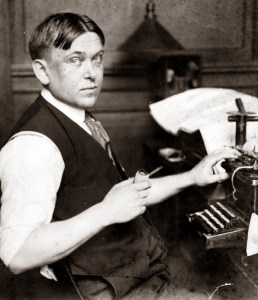
mencken 3The book moves forward with speed and irony, full of vivid expressions and entertaining stories. Mencken recalls cops and judges, editors and pressmen, drummers for patent medicines and press agents of dubious veracity, kindly murderers and scapegrace yobs of all descriptions, many of which Mencken counted as his special angels of the kind of humanity he most valued. He detested all cant and corporate or governmental doublethink, and anyone who would put life into a file cabinet alphabetically.

It is the pleasure of coming across his book after reading Bloodlands that restores the oxygen to a world otherwise noisome with the mephitic stench of death. And reminds us that it is a grace that we live in a world of individuals rather than in the statistical world of categories and proscription lists. Grace is what keeps us alive.

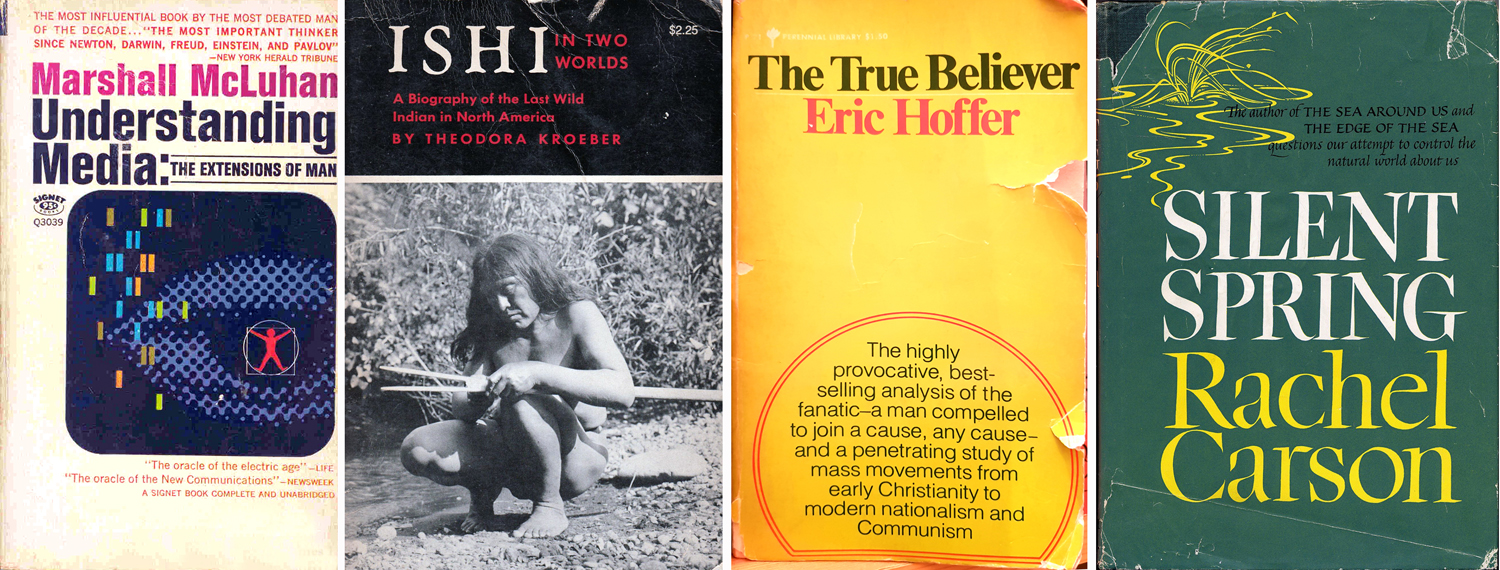
 Facebook friend left a challenge for her followers: 

“In a text post, list 10 books that have stayed with you in some way. Don’t take but a few minutes, and don’t think too hard — they don’t have to be the “right” or “great” works, just the ones that have touched you. Tag ten friends, including me, so I’ll see your list.”

rosmal

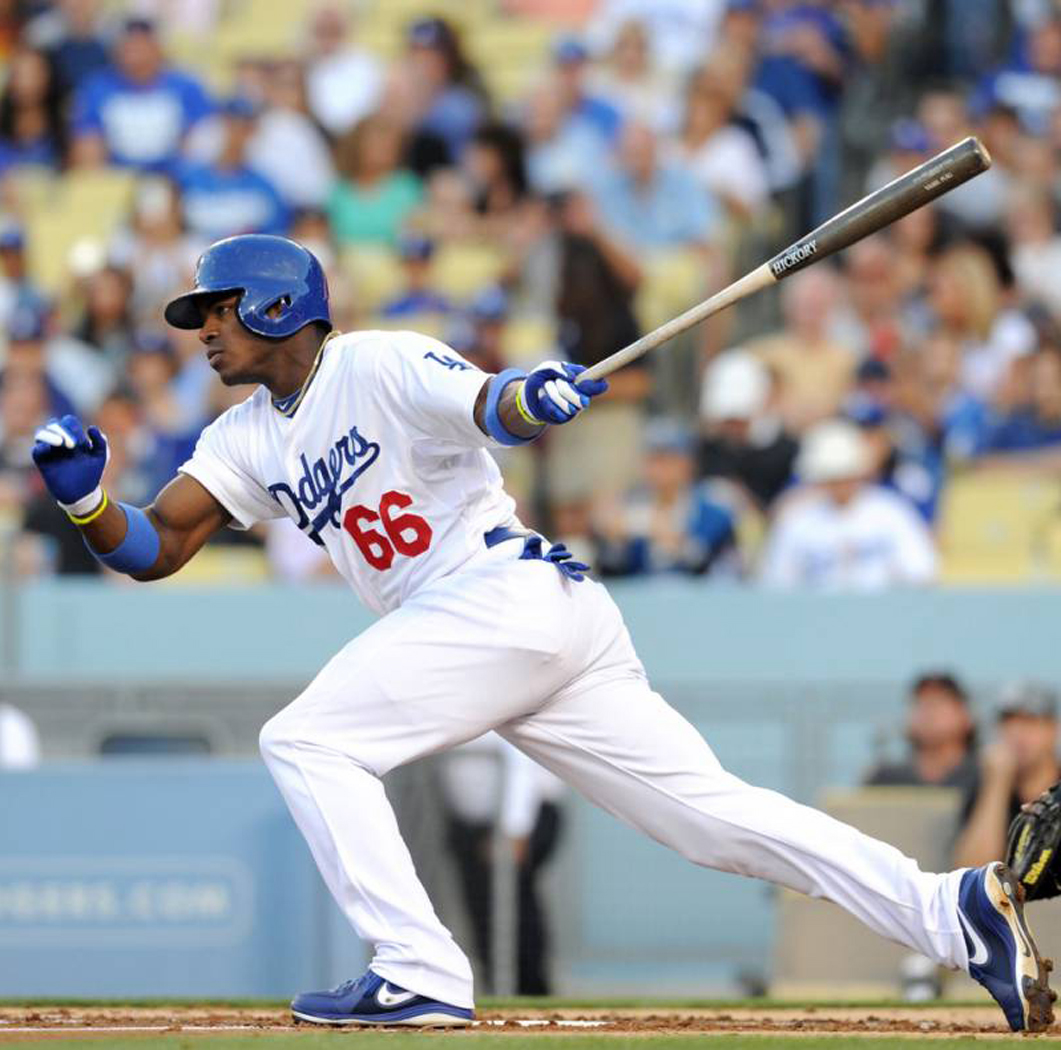
When we are young, reading opens up a whole new world, infinitely grander than the banal existence we desperately want to escape. puig swing 2We measure our tiny lives up against what seem to us the great works of poetry and literature like some Little Leaguer pretending to swing the bat like Yasiel Puig.
Some of us, wanting to be writers ourselves, spend too many early efforts attempting to imitate the style of the writers we adore. That is why any of us who do eventually become writers hold ritual bonfires of our old manuscripts.
This equation changes as we mature. Where once we compared our lives with the works we read, we now — as our own lives become cluttered with failed loves, office politics, medical emergencies, death of parents or worse, death of children, divorces, betrayals, remarriages, trips, arthritic knees and the recognition that a girl who knew all Dante once should live to bear children to a dunce — turn the whole transaction around: As we age, we in turn test the books we read against the truth of our own lives. Instead of questioning whether we measure up to the glory of our favorite books, we question whether the books measure up to the lives we lead.

It is at this point we can comfortably shed any naive idea of the importance of books and instead realize their genuine value. We give up the shadow for the substance.

For me, this includes the books that most vividly capture the whatness and nowness of the experience of being alive, and those books that most precisely and melodically use language to express fresh thought.

As I read, I rub the words between my fingers like a farmer squeezing the spring mud to see if the soil is dry enough to plow and sow. I value less that prose that deals in ideas qua idea, and more deeply appreciate that which can provide me the richness of touch, smell, sight and sound, give me the living thought of human life in all its variety and with the raw tender flesh of a recent wound.ulysses book cover

I find this in James Joyce’s Ulysses. Exhibit A. There are complaints that the book is “difficult,” although I cannot see any obstructing difficulty. I find the opening chapters some of the best-written and clearest prose in the English tongue. The so-called “experimental” stuff in ensuing chapters are only difficult if you refuse to surf through them a few times and upon re-re-reading, they become nothing more than a practiced set of chord changes you have mastered on a guitar. Hard at first, but eventually natural.joyce

And the world Joyce gives us is as true as any I’ve found between any covers anywhere.

“Mr. Leopold Bloom ate with relish the inner organs of beasts and fowls.” This is not merely so descriptive that one can nearly taste the sauteed comestibles, but can do so most because of the sound of the words over the tongue, which is both the organ of language and of gustation. You practically chew the sentence as you speak it, before swallowing and digesting. Feel your cheeks, tongue and lips as you masticate those words.

“He liked the thick giblet soup, nutty gizzards, a stuffed roast heart, liver slices fried with crustcrumbs, fried hencod’s roes. Most of all he liked grilled mutton kidneys which gave to his palate a fine tang of faintly scented urine.”

The world as it is, not as you would have it.

I have also read and re-read many times his Portrait of the Artist as a Young Man, which is also full of crystal phrases and accurate observation.

Not so much for Finnegan’s Wake, which I cannot, for the life of trying, even enter, much less transcompass its periplus.

milton cameoThe only other writer I know whose words have such aural weight is John Milton, whose Paradise Lost creates worlds and psychologies that I can recognize in those craggy consonants and melodious vowels. Weigh them out in the index of your Bartletts and you find that none but Shakespeare and the King James Bible can best him for having gifted our mother language with so many memorable phrases so completely digested into the language that for most speakers, they have lost their roots. Milton is one of the inventors of our speech.

But it is the thrust of that language and its vivid imagery that keeps me coming back. I cannot help but weep uncontrollably every time I face those final pentameters:

“The world was all before them, where to choose

Their place of rest, and Providence their guide.

They, hand in hand, with wand’ring steps and slow,

Through Eden took their solitary way.”

This is not theology: It is the reality we all face on becoming adults.auden

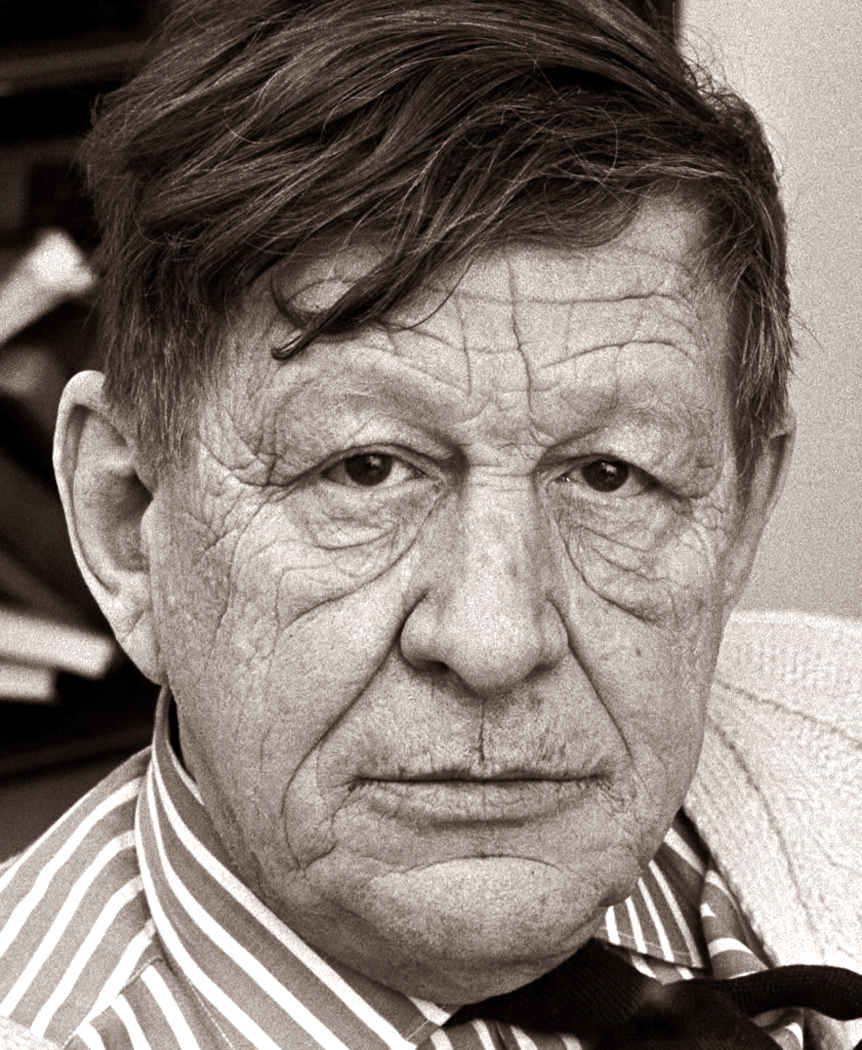
There are several poets whose words ring true rather than merely “poetic.” Wystan Auden is the most grown-up poet of the 20th century. There are no castles in his sky.

“I and the public know what all schoolchildren learn, 

Those to whom evil is done, do evil in return.”

Check the daily paper for reinforcement of this.

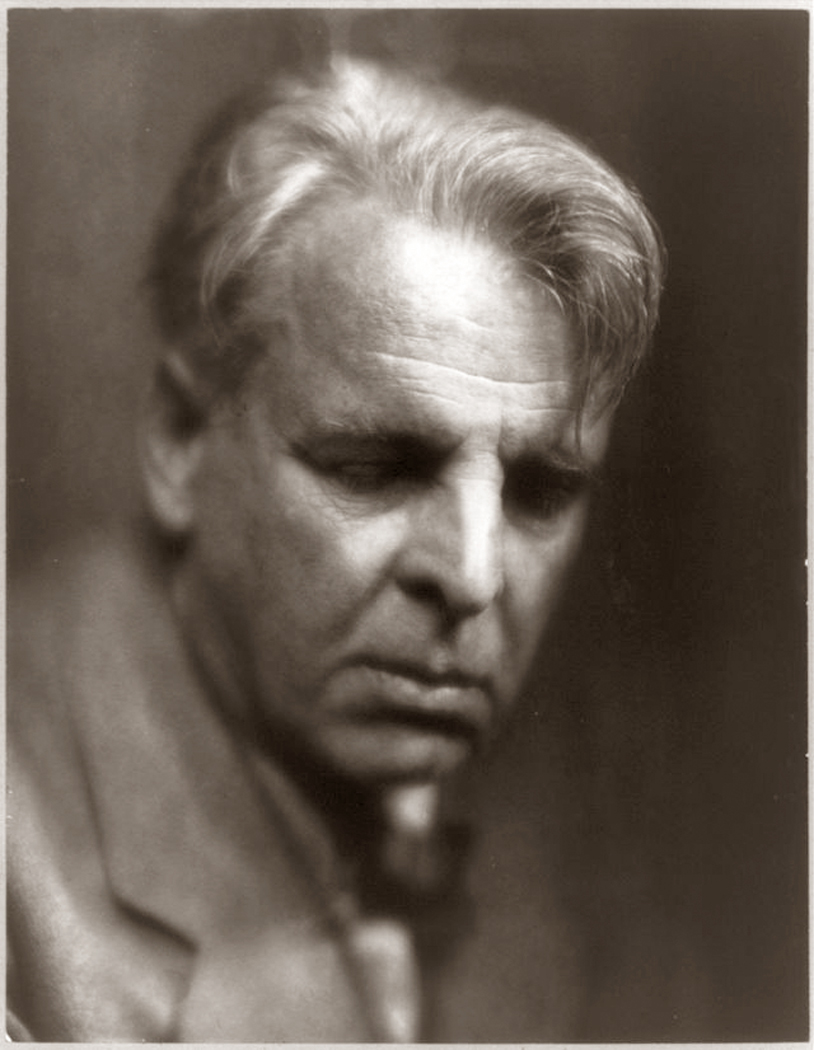
And William Yeats, laid to rest, is evermore my honored guest. Not merely for the girl who knew all Dante once, but for so many deeply wise poems scripted in such unforgettable language.yeats eyes closed

“But love has pitched his mansion

In the place of excrement.”

Or, in words that are closer to the bone than most any I have read:

“Bodily decrepitude is wisdom; young, 

We loved each other and were ignorant.”

Oh, I want so much to go on. There are so many other books I want to list. When you have been reading for six decades, there are so many that you hold dear to your chest.

But I have tried your patience too long with this series of posts. Through them all I wanted, not merely to share which books have built a person out of me, but how they have done so, in hopes of helping you recognize the same in your own reading life. It is the larger issues that count, not the particular books, which will be different for each of us.ovid medieval

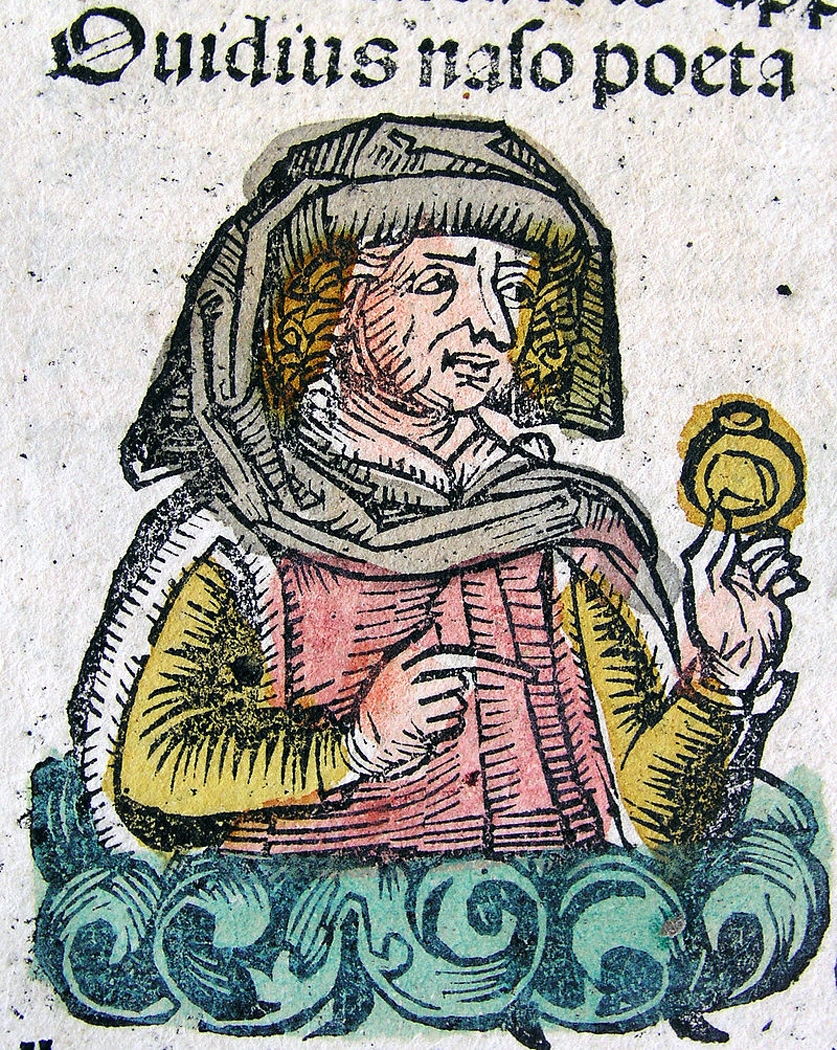
How could I have left off Tristram Shandy, the funniest book I have ever read, or Edward Gibbon, whose irony-drenched sentences pull long loads of dependent clauses and parenthetical complexities — such beautiful writing I cannot hope to approach — or Ovid, dear Ovid, whose Metamorphoses is one of the consoling books of my senescence, and that connects me once again to the long, continuous line of culture of which I am one minuscule link, and I see each writer through history as a flower that turns to fruit and then to seed that turns to seedling, to plant, to flower and to fruit all over again. Each flower like a mouth and each fruit like a word.


A Facebook friend left a challenge for her followers: 

“In a text post, list 10 books that have stayed with you in some way. Don’t take but a few minutes, and don’t think too hard — they don’t have to be the “right” or “great” works, just the ones that have touched you. Tag ten friends, including me, so I’ll see your list.”

flaxman

As I get older, so do the books I find most congenial.

I admit I’ve always been something of an old pedant and have always spent more time with what other people have called “serious” books rather than best-sellers or recent worthies. But age has only exaggerated this tendency.
wright moon 2

Perhaps it is because as I’ve gotten older, the distance between the old tomes and the present seems shorter and shorter, almost to the point of disappearing.

For many readers, such books as the Iliad or Ovid’s Metamorphoses seem incredibly distant, in a past that is so vastly divorced from the concerns of today that they question the relevance. But for me, the space between then and now has become compressed and it is in those old authors that I find an urgency and relevance unmatched.

I am now 66 years old — two thirds of a century. It is a time that has passed as swiftly as an eyeblink. I was a boy last Tuesday. My grandmother used to say, with some amazement and some pride that she was born before the Wright Brothers’ flight and lived to see the moon landing. This is a personal, internal sense of history. It is increasingly the way I see the past. yardstick

If I measure the time between now and my birth, and take it as a yardstick, I can get a sense of the it. jesse james

Sixty-six years from my birth is now; 66 years before my birth was the year Jesse James was shot dead — 1882. If I flip my yardstick over one length down the timeline from that, I arrive at 1816, the year Mary Shelley conceived of Frankenstein. One more flip of the yardstick and I’m at 1750, the year Johann Sebastian Bach died. That is, I’m only three lifetimes — three very short, skipping lifetimes from Bach and those last unfinished measures of The Art of the Fugue.

I could keep flipping the yardstick to measure the years before: 1684, 1618, 1552, 1486, 1420, 1354, etc. And I discover it takes only 30 copies of my life before I’m face to face with Caesar Augustus. Only 42 lifetimes and I’m sitting there with Homer. Forty-two of my own short lifetimes — not enough to fill a bus. So, you see, the past increasingly does not feel long ago, does not feel alien, does not feel irrelevant. It feels contiguous. I can measure it all out in lifespans I can imagine and visualize it in a way impossible with the more Saganesque “billions and billions” of the cosmos.

Heck, I can take that yardstick back far enough to see them painting the caves at Lascaux and I haven’t even filled up a jumbo-jet.

World War II ended three years before I was born; it is fresh in my culture’s memory and a constant in television documentaries. Troy fell three millennia ago and it hardly seems any different to me. It is all connected and I feel the fibers of my blood and sinew in the pulse of history.

So, the paroxysms of current events, which feel so dire to those younger than me, feel like familiar blips when taken in the long view. I do not know if we will survive them, but chances are we will. And even the genocides of Rwanda and Darfur or the beheadings by Islamists seem merely familiar excrescenses of an eternal human tendency, and in fact pale compared not merely with the Shoah, but with the extermination of Native Americans, the pyramids of skulls left by Tamerlane or Genghis Khan, or the smiting of the Canaanites and Jebusites ordered by Jehovah (Deuteronomy 20: 16-17). According to scientist and author Jared Diamond, it is possible that Neanderthals disappeared under just such a fatwah. skull pyramid

So, when I open Homer’s Iliad and find in its opening lines grief and the corpses of “so many fighters leaving their naked flesh to be devoured by dogs and vultures,” it is no more removed than Afghanistan or Gaza.

“Homo sum: humani nihil a me alienum puto.”

I am constantly amazed that the first book in the Western canon should never have been bested. The Iliad has a breadth of vision unmatched by anything else I am familiar with. It is always the first on my list.

homer bustHomer describes everything from the food to the landscape as if he were a gobbling camera, eating up the full existence of life. And not, like some novelist, in different chapters, but in a single sentence he can telescope from the entire battlefield down to the iris of a bee’s eye, and then back out again in the space of five or 10 words. It leaves one not just with the grand view and not with the microcosm, but with a clear sense that they co-exist in a single space, a single comprehension.

There is little so vivid as Homer’s description of battle. Yes, our modern understanding of war — at least those of us who have not been in it — has more to do with battalions and artillery, but even in modern warfare, the experience of it from the inside is personal: one human soldier and the chaos that threatens to erase him (or her) and the light that comes in through his eyes.

“Thrasymedes stabbed Antilochus right in the shoulder and cracked through the bony socket, shearing away the tendons. Then he wrenched the whole arm out and down thundered Antilochus and darkness blanked his eyes. …

“Peneleos hacked Lycon’s neck below the ear and the sword sank clean through, leaving Lycon’s head hanging on his body by only a flap of skin. The head swung wide and Lycon slumped to the ground. …

Tarantino is playing catch up.iliad mitchell

It isn’t merely the violence that is shown us, but the desires, the pity, the sorrows and the triumphs. I try and re-read the Iliad once a year, and each time in a different translation. Last year, it was Alexander Pope’s. This year, it is the recent one by Stephen Mitchell. I’ve read in past years, translations by Robert Fagles, Richmond Lattimore, Walter Benjamin Smith with Walter Miller (illustrated by the great Neoclassical designs of John Flaxman), and George Chapman.

(Of these, I recommend Fagles for first-timers. Chapman is rough sledding, despite the reputation Keats gave it in his sonnet.)

If I ever have to shrink my library down to something I can carry in a duffel, it would include the Iliad, the Odyssey, the Bible and a Shakespeare.

Ah, but I would have to make room for a Milton, too.

NEXT: A grand finale

A Facebook friend left a challenge for her followers: 

“In a text post, list 10 books that have stayed with you in some way. Don’t take but a few minutes, and don’t think too hard — they don’t have to be the “right” or “great” works, just the ones that have touched you. Tag ten friends, including me, so I’ll see your list.”

Church Iceberg flotante, 1859

There are so many books I have overlooked. There is no way to tally up the consequence of reading most of them: Such cumulation is like measuring the rain that fills the sea bed.

But I want to pick out several of the idiosyncratic ones, outside the usual suspects (Camus, Dostoevsky, Lawrence, Shakespeare, Faulkner, Hemingway, et al.), which can be assumed. My taste has always gravitated to the forgotten, abused and out-of-fashion. There is something in my sensibility that just flat-out enjoys complex, baroque sentences and the kind of observational intensity that you find most developed in those authors hovering on the edge of custom or sanity.

Part of this preference comes from a desire for transcendence, and transcendence never comes in conventional form.

Longinus explains why my tastes may run to the extravagant.

“The startling and amazing is more powerful than the charming and persuasive,” he writes.

His On the Sublime is a sometimes numbing description of rhetorical tropes, but several times in their midst, he breaks free and discusses the big issues. In the climactic 35th chapter, he breaks out:

etna erupting“What was it they saw, those godlike writers who in their work aim at what is greatest and overlook precision in every detail? … (W)e are by nature led to marvel, not, indeed, at little streams, clear and useful though they be, but at the Nile, the Danube, or the Rhine, and still more at the Ocean.  … nor do we consider out little hearthfire more worthy of admiration than the craters of Etna whose eruptions throw up rocks and boulders or at times pour forth rivers of lava from that single fire within the earth.

“We might say of all such matters that man can easily understand what is useful or necessary, but he admires what passes his understanding.”

It is that great writing that attracts me to Henry Thoreau and Herman Melville. Both have a foundation in a kind of biblical tone, a King James timbre, full of striking metaphor and cosmic awareness.

“Time is but the stream I go a-fishing in. I drink at it; but while I drink I see the sandy bottom and detect how shallow it is. Its thin current slides away, but eternity remains. I would drink deeper; fish in the sky, whose bottom is pebbly with stars.”

Or: Herman Melville 1885

“All visible objects, man, are but as pasteboard masks. But in each event — in the living act, the undoubted deed — there, some unknown but still reasoning thing puts forth the mouldings of its features from behind the unreasoning mask. If man will strike, strike through the mask! How can the prisoner reach outside except by thrusting through the wall? To me, the white whale is that wall, shoved near to me. Sometimes I think there’s naught beyond. But ’tis enough. He tasks me; he heaps me; I see in him outrageous strength, with an inscrutable malice sinewing it. That inscrutable thing is chiefly what I hate; and be the white whale agent, or be the white whale principal, I will wreak that hate upon him. Talk not to me of blasphemy, man; I’d strike the sun if it insulted me.”

That ain’t Hemingway.

But it isn’t only Walden and Moby Dick; I have spent many hours in happy lucubration over the pages of Thoreau’s Journals, collected in two giant volumes by my favorite publishing house, Dover Books. And I can hardly pass up re-reading most of Melville’s short stories, I and My Chimney, The Apple-Tree Table and Piazza. I read them over the way one listens to a favorite tune, waiting for your favorite chorus to set your toe tapping.let us now praise cover

But for intense unreadability married to heartbreaking self-flagellation and obsessive observational skill, you cannot beat James Agee’s Let Us Now Praise Famous Men, a volume of such personal journalism that it makes Tom Wolfe or Hunter Thompson look like disinterested sub-sub-librarians.

The book is an investigation of tenant farmers in Alabama during the Depression and Agee spends a portion of his life living with one of the families he reports on. And he spends an entire chapter describing the shanty room he is sitting in late in the night under a kerosene lamp as the family sleeps in the other room. He describes, it seems, every knot in the wood of the walls he stares at, every hook holding up every potholder or towel. It approaches the insane, but in the same way the fevered eyes of Vincent Van Gogh looked at the wheatfield and crows. Every bush is the burning bush.

The intensity, the engagement is the thing. 2006.13.1.8 002

“Every fury on earth has been absorbed in time, as art, or as religion, or as authority in one form or another,” he writes. “The deadliest blow the enemy of the human soul can strike is to do fury honor … Official acceptance is the one unmistakable symptom that salvation is beaten again, and is the one surest sign of fatal misunderstanding…”

Perhaps Agee attempts more than is possible in sewn signatures and binding, and maybe he is a fool for even trying, but I am his target and he hits me in the quick.

Official acceptance means becoming part of an unexamined and cataloged orthodoxy: Things settled so you don’t have to parse them out all over again. The problem with that is:

“The way that can be named is not the constant way.”tao te ching

The Tao Te Ching can be read as an ambiguous and mystical series of woo-woo New-Age aphorisms, or it can be taken as precise and direct in meaning. Most of its readers, and many of its more recent translators opt for the former, turning it into a kind of text to daze its readers and perhaps sell them a regimen of dietary supplements.

I take the latter view, that it means what it says and means it directly.

If there is one thing at the core of my intellectual being, as a dense molten iron core of the planet, it is a recognition — I cannot call it a belief, because it is too obvious — a recognition of the primacy of diversity and fecundity in the cosmos. A sense that existence is too complex ever to be summed up in a political philosophy, theology or epistemology. Every esthetic and intellectual movement comes a cropper against the largeness and variety of the universe. As the Tao puts it, any time you name something, you have lied.

The way that can be named is not the constant way: Our cultural world view and our personal understanding of the structure and meaning of the world — our umwelt — changes over time, and changes in ways that are largely predictable, at least in wider outline, even if details surprise us.

These are the waves hitting the shores that we see over and over — a pendulum swinging back and forth — over the centuries, and embodied in cultures we name as pairs: Hellenic and Hellenistic, Romanesque and Gothic, Renaissance and Baroque, Neoclassical and Romantic. It is the same pendulum slowly rocking.

Most people take sides, like T.S. Eliot’s angry brief against John Milton, but some of us step back and observe them as two sides of the same coin. Taking sides is self-limiting: “mind-forged manacles.”

“It is the way of heaven to show no favoritism.”

For me, the most interesting times are those on the cusp of one or the other named moments: the change itself, rather than the brief second when the pendulum stills on one end of the arc or the other.

maistre book 2And it leads me to such peculiar books as Xavier de Maistre’s Voyage Around My Room, a travel book — or a parody of a travel book — about the room de Maistre is trapped in during a house arrest in 1790, at just the point that the classicism of the 18th century was melting into the weirdness of the coming age. But it also takes seriously — if that is the word — the possibility that one might invest a description of one’s daily surroundings with the same majesty one might use to describe, say, Goethe’s journey over the Alps. Every bush, again.

Oh, I wish I could go on. I have left out Robert Burton’s Anatomy of Melancholy; I have left out the Mahabharata and its Bhagavad Gita; I have snubbed Yeats’ A Vision. Villon’s Testament; the Daybooks of Edward Weston — I have inherited for the meat of my bones the DNA from my parents, for better or worse, but I have inherited my intellectual genes from all the books I have had the happiness to encounter.

NEXT: The books age with their reader