Archive

Tag Archives: classical music

beethovn lede photo
Ludwig van Beethoven would have turned 244 this week. belushi beethoven

Everyone knows Beethoven. He wrote “Da-da-da-dum” and “Ode to Joy.” He’s the scowling visage parodied by John Belushi on Saturday Night Live. He’s the plaster bust on Schroeder’s toy piano.

Ask anyone to name a classical music composer and nine out of 10 will utter his name. Even those with no familiarity with classical music know he’s the one who rolls over to tell Tchaikovsky the news.

So it’s not surprising that symphonies program his music more than anyone else’s, and often devote entire festivals to the music. schroeder 2

It would be silly to call anyone the “greatest” composer, but Beethoven — along with only Bach — is the one most often given that honor. Such is his power as a producer of human emotion through the ear canal, that his only real rivals in European art music are Bach and perhaps Mozart. That doesn’t mean he is everyone’s favorite composer. There are many who cannot stand his relentless pounding and drive. And surely among “great” composers, Beethoven probably has the third-most detractors, after Schoenberg and Wagner.

But it would be hard to find anyone who has altered Western music history more directly and obviously than the scowling master from Bonn. michael christie

“There are many reasons one could say Beethoven’s music is the greatest. His music speaks to the listener from the first note,” says conductor Michael Christie, music director of the Minnesota Opera.

It isn’t just that the music is familiar, it’s overpowering. It’s big, loud, sublime and of an intensity unheard before him.

“Just take the opening of the ‘Eroica’ symphony,” conductor Joel Revzen says. “The first two chords. Haydn or Mozart used a slow introduction to prepare us for what is to come. Beethoven takes a hammer and hits you over the head with it.”

Two crisp E-flat chords, and we’re off to the races.steve moeckel

“You can listen to one chord and know it’s Beethoven,” conductor James Sedares says. “He had a voice that was completely unique for his time and always.”

Violinist Steven Moeckel has given wonderfully insightful performances of Beethoven’s violin concerto.

“This may sound cheesy, but it feels, when you play it, Beethoven got a glimpse of heaven. Audiences are taken on this journey, so epic. Beethoven is on a heroic scale — and he means to be.”

Difficult to appreciate

But why does Moeckel qualify it? “It may sound cheesy … . ”

There are several things that stand between us and Beethoven, and make both the performance and appreciation of his music difficult.

Beethoven’s music is about big ideas, such as heroism, nobility, struggle, brotherhood. He believed in them; the question is, do we? Or have such ideas been rendered into toothless bromides and platitudes?

Can we still understand Beethoven’s music after the trenches of World War I, after Auschwitz, after all the dehumanizing misery of the 20th century?

Music historian Richard Taruskin has written about the difficulty of accepting the grand vision of Beethoven’s Ninth Symphony, with its paean to universal brotherhood.

“Why? Because it is at once incomprehensible and irresistible, and because it is at once awesome and naive,” he wrote.

“We have our problems with demagogues who preached to us about the brotherhood of man. We have been too badly burned by those who have promised Elysium and given us gulags and gas chambers.”

You can hear the problem in many modern performances of Beethoven. The conductor no longer believes in the grand ideas and falls back instead on the music’s obvious rhythm and drive. There’s a great divide between the conductors who performed before World War II and those who came after.james de preist

“I look for the old depth and breadth of expression that was there and can be retrieved if we listen to the right master,” the late conductor James DePreist said. “And most of the right masters are dead.”

You listen to recordings by Wilhelm Furtwangler or Willem Mengelberg and you hear a Beethoven different from that of Roger Norrington or David Zinman.

To many modern ears, the older performances seem melodramatic and overwrought. The modern performances seem cleaner and less fussy. The older conductors interpreted the music and massaged its rhythms. They conducted by phrase length, not by bar length, and they knew the rhetoric of performance and often spoke to their orchestras about the philosophy and meaning of the music. Modern conductors speak of the notes.

But Beethoven was clear about this. In the same way a great actor interprets Shakespeare when performing as Hamlet, and makes pauses and emphases, the musician was asked by Beethoven to do the same.

“The poet writes his monologue or dialogue in a certain continuous rhythm, but the elocutionist, in order to ensure an understanding of the sense of the lines, must make pauses and interruptions at places where the poet was not permitted to indicate it by punctuation,” Beethoven told his friend Anton Schindler. “The same manner of declamation must be applied to music.”

‘Writing for history’

But ours is an unheroic age. We reserve the word for firemen and soldiers, who certainly perform courageous acts. But a hero is more than that. Mythologically speaking, a hero is the individual who translates the will of the gods into history.

This is no small claim: A hero changes the world. Beethoven certainly did.

There is good reason to be suspicious of such things now. Too many have changed the world for the worse.lawrence golan

But Beethoven, born in Bonn, Germany, in 1770, clearly saw himself as a hero. He knew he was changing the world. He championed freedom and democracy in a restricted and aristocratic age.

“He changed the world of music,” conductor Lawrence Golan says. “Right off the bat, with the first chord of his first symphony. It was revolutionary at the time.”

He performed for the aristocracy and slummed with the nobility, but he told Schindler, “My nobility is here,” pointing to his heart, “and here,” pointing to his head.

“We’re clearly looking at big ideas in Beethoven’s music,” conductor Timothy Russell says. “Mozart wrote for an audience, but Beethoven knows he’s writing for history.”

History, however, has moved on.

Disposable music

For the 21st century, music has mostly become entertainment. Music written to be pondered and meditated upon does not fit into the jigsaw puzzle of a niche-market audience, where music is used and discarded in months.beethoven bust

“Beethoven wrote Velcro music and this is a Teflon Age,” DePreist says.

“We have deconstructed the 19th century and have an initial impulse to jettison so much of it. But the idea that the 20th century — or the 21st century — would simply supplant the 19th was absurd,” he says. “But we have much to learn from every century.”

The difficulty has been to separate the desire to be free from the past — which is an honest desire — from the tendency to ignore the past and refuse to look at what the past teaches us.

“It teaches us more than the notes of the stylistic things,” DePreist says.

Art has a responsibility to challenge people, says Moeckel.

“To broaden their horizons, and, so, if you don’t like it, that’s fine, but let’s talk.”

And what he confronts us with is the struggle of being alive.Joel Revzen 1

“Beethoven was a man who struggled every day of his life, a man shaking his fist at the heavens constantly,” says Revzen. “It is the human condition to struggle against adversity, whether socially, politically or one’s physical limitations. It is the struggle of the human condition through eternity.”

If you want to relate it to the contemporary world, he says, just think of what the people in in Syria or Afghanistan are going through just to survive, “or the people who struggle against oppression every day around the world, or the people who struggle in this recession.”

“How can I survive until tomorrow in hopes maybe my life will change?”

It is that engagement with the big things that drives Beethoven’s music and gives it such power to move us, even when we are suspicious of its meaning. The problem is ours, not Beethoven’s.

“There is still a message in the ‘Eroica’ or the ‘Ode to Joy,’ ” conductor Benjamin Rous says.

“Our time is broken in a way Beethoven’s music isn’t. Maybe a broken era needs an art that is whole.”

Three creative periods

Critics, biographers and historians divide Beethoven’s life and work into three periods: early, middle and late.

Since Beethoven, the tripartite division has come to fit the careers of many artists, but it began with the composer.beethoven young man

His Early Period features music that imitates the style of Haydn and Mozart, and although the music sometimes strains to escape the bonds of that style, it’s thoroughly Classical.

His Middle Period contains most of the music for which he’s best loved: the “Eroica” symphony, the “Emperor” concerto, the “Archduke” trio, the “Appassionata” sonata. It is big, brawny, heroic music that strains to escape not just the style but the very limits of the musical instruments of his time, the philosophical and religious conventions of his era, and sometimes the very heart in his breast. It is loud, pounding music.

“He grabs you by the collar and says, ‘I’m Beethoven, and I have something to say!’ ” says Revzen.

There are a lot of musical exclamation points in this very publicly aimed music.beethoven primary portrait

It is in the Middle Period that Beethoven staked his claim to being the first Romantic composer, emphasizing emotion over formal restraint. But, as conductor Benjamin Rous puts it, “He started out as Classical and ended up as Romantic, but in reality, he was Classical and Romantic at every moment in his life.”

Finally, Beethoven’s Late Period defines the term for all others: The music becomes more inward and searching, it has left behind the formal constraints of the time and experiments with new form, new meaning and expression. His late quartets bewildered not only the audiences of his time but the musicians who played them.schuppanzigh

“Do you imagine, when the spirit speaks to me, I have your wretched fiddle in mind?” he asked violinist Ignaz Schuppanzigh, whose string quartet premiered most of Beethoven’s late quartets.

Beethoven’s late music remains a challenge for many listeners. The “Grosse Fuge,” was his final movement to the string quartet op. 130, but was a movement so difficult for both listeners and performers that when Beethoven originally submitted it for publication, his publisher requested he substitute something easier. It is still work to listen to, albeit work with a tremendous payoff to those willing to dive in.

The rondo he wrote in its place as the quartet’s finale turned out to be the last piece of music Beethoven wrote before his death.

A gut reaction

Ludwig van Beethoven was probably history’s most famous sufferer of irritable-bowel syndrome. It made the composer’s life miserable and likely accounts for the scowl he wears in almost every portrait.

“The cause of this must be the condition of my belly which, as you know, has always been wretched and has been getting worse, since I am always troubled with diarrhea, which causes extraordinary weakness,” the composer wrote a friend in 1801.beethoven death mask

It was a problem that plagued him his entire life, and its likely cause is what killed him.

This may seem an undignified way to introduce “the greatest composer in history,” but you have to do something to clear away the idolatry that accumulates around a world-changing figure, to see him as a man rather than a demigod.

Otherwise, when we spin panegyrics about the man’s greatness, our eyes will glaze over, reading it as conventional boilerplate.

So, it must be said that this colossus who changed music and directed its course for more than a century was in reality a short, stocky German with a provincial accent, boorish manners, who wrote in bad grammar and frequently uttered banal platitudes as if they were earth-shaking profundities.

He was born in Bonn in 1770, and his drunken father tried to pass the child off as a prodigy, like Mozart. But Beethoven’s virtues were not Mozart’s: He had none of the grace and felicity of Mozart; his music grew from hard work and infinite rewriting.

Beethoven went to Vienna to make his fortune as a piano virtuoso and found many aristocratic patrons. He frequently insulted the hand that fed him.

He told one of his patrons, “Prince, what you are, you are by accident of birth; what I am, I am through my own efforts. There have been thousands of princes and will be thousands more; there is only one Beethoven!”beethoven ear trumpet

But just as he began to achieve fame, his hearing started to fail. In later years, he was completely deaf: At the premiere of his Ninth Symphony, a soprano had to turn him around onstage so he could see the applause he could not hear.

Each new piece found both acclaim and criticism: Conservatives disliked the profusion of ideas in the music, finding them confusing and the works too long and difficult; admirers recognized in his work overwhelming emotional power.

By the time of his death, in 1827 at the mere age of 56, he was generally acclaimed as the greatest composer in the world. More than 20,000 people attended his funeral.

It is only in recent years, after scientific analysis of a few strands of his hair, that we know how the composer died: It was lead poisoning, probably by drinking wine from a lead-lined cup, that slowly killed the composer and probably caused his lifetime of colic.

The ‘Mighty Nine’

Beethoven’s nine symphonies are the cornerstone of classical music. Every conductor cuts his teeth on them; every audience expects them.

Their monumentality influenced every composer who came after him for at least a century, and even now, it’s impossible to dip into classical music without addressing “The Nine,” as they’re known.

But the symphonies are very distinct; each has its own personality. Collectively, they are probably the best entry point for discovering the music of the titan, Beethoven.

There are many sets of them on CD, spanning nearly the entire history of recorded music. The first complete set of symphonies was recorded in 1920 and since then there have been at least 100 traversals. There have been 60 full sets sold since 1960. Herbert von Karajan recorded them all four times, Bernard Haitink and Eugen Jochum each did it three times. Any conductor worth his salt wants to prove his mettle by tackling the nine.

There is no one “best” set — pretty much everyone is agreed on that point — but if you want them all in one package, you could hardly to better than the set with Daniel Barenboim and the Staatskapelle Berlin recorded on Teldec. Both the performance and engineering are tops. Teldec makes the orchestra sound like it’s in your room with you. Barenboim has a unified and coherent view of the cycle which is intelligent and emotionally persuasive.

But for some, it will feel old-style. It is. If you want the modern huff-and-puff race to the finish, then you should look to John Eliot Gardiner and the Orchestre Revolutionnaire et Romantique on so-called original instruments.

You could hardly find two more different views of the music, but both are played with commitment and musicality. (Avoid the Norrington sets, which are dreadful and downright unmusical).

One-by-one

There are many who insist the best way to acquire the best of them is to get them individually and not in complete sets. Different orchestras and different conductors respond to certain symphonies better than others. David Zinman and the Tonhalle Orchestra Zurich, for instance, cannot be beat for discovering the wit and verve in Beethoven’s first symphony, but they don’t really believe in the nobility and heroism inherent in the bigger, odd-number symphonies, like the Fifth. For that, you have to go to an old-order conductor, such as Wilhelm Furtwangler and the Berlin Philharmonic, which recorded the most harrowing and emotionally wrought versions of the Fifth Symphony.

Any choices among the symphonies will be idiosyncratic: As listeners we are just a variable in our sympathies as the conductors themselves. You may want the bounce and beat of a modern performance, or you may be more moved by the old tradition.

These are a few of my suggestions, along with some information about each of the Nine.

Please note that modern critics aren’t the only ones who are idiots.

Symphony No. 1 in C

First performed: 1801.

david zinmanBeethoven’s first is his lightest, brightest and funniest, an obvious imitation of the spirit of his teacher, Joseph Haydn. Its jokes begin with the very first notes: a dissonance in the wrong key!

Initial critical response: One critic called it “a caricature of Haydn pushed to absurdity.”

Suggested recording: No one has captured the wit of this symphony better than David Zinman and the Tonhalle Orchestra Zurich.

Symphony No. 2 in D

First performed: 1803.

bernard haitinkNow considered one of Beethoven’s “shorter, lighter” symphonies, it was a large symphony by the standards of the time and a challenge for its first audience.

Initial critical response: The Leipzig critic called it “a gross enormity, an immense wounded snake, unwilling to die, but writhing in its last agonies, and (in the finale) bleeding to death.”

Suggested recording: Bernard Haitink and the London Symphony.

Symphony No. 3 in E-flat, “Eroica”

First performed: 1805.

bernstein youngThis immense symphony single-handedly changed the course of music history; twice as long as the standard Haydn symphony and built on ideas of heroism, with a great funeral march as a slow movement.

Initial critical response: The leading music journal of the day described it as “a daring wild fantasia of inordinate length and extreme difficulty of execution. … There is no lack of striking and beautiful passages in which the force and talent of the author are obvious; but, on the other hand, the work seems often to lose itself in utter confusion.”

Suggested recording: Many modern performances are too tame. For the needed heroism and grandeur, and the sheer visceral excitement, try Leonard Bernstein and the New York Philharmonic.

Symphony No. 4 in B-flat

First performed: 1807.

claudio abbado 2Robert Schumann called it a “graceful Grecian maiden between two Norse giants.” It seems like a retreat after the furious charge of the “Eroica,” but if it is less noisy, it is subtly subversive, with an introduction in the “wrong” key.

Initial critical response: Carl Maria von Weber wrote a review in which the orchestra instruments all bitterly complain about having to play this symphony and then are threatened with being forced to play the “Eroica” if they don’t shut up.

Suggested recording: Claudio Abbado and the Berlin Philharmonic are as elegant as it gets.

Symphony No. 5 in C-minor

First performed: 1808.

wilhelm furtwanglerFor two centuries, this has been Beethoven’s calling card, the primal symphony, restless, turbulent, an epic struggle to wrest a triumphant C-major out of an obsessive C-minor, and with more than 700 relentless iterations of the iconic rhythm: “Da-da-da-dum.”

Initial critical response: French critic Jean Lesueur said it was such exciting music that it shouldn’t even exist.

Suggested recording: The music is so familiar, and so emotional, it’s hard to play now without irony, but when attacked with conviction, it still packs a wallop. Wilhelm Furtwangler and the Vienna Philharmonic are still the champs in a pre-stereo recording, but in modern sound, Carlos Kleiber and the same orchestra come very close.

Symphony No. 6 in F, “Pastoral”

First performed: 1808.

bruno walter 2This is Beethoven’s musical picture of nature, complete with birdcalls and thunderstorm. But it’s also one of the composer’s most tightly argued pieces musically, with much of the symphony drawn from the first two bars: It’s a miracle of concision, even when most discursive.

Initial critical response: Berlioz agreed with critics, “as far as the nightingale is concerned: the imitation of its song is no more successful here than in M. Lebrun’s well-known flute solo, for the very simple reason that since the nightingale only emits indistinct sounds of indeterminate pitch it cannot be imitated by instruments with a fixed and precise pitch.”

Suggested recording: Every critic’s choice in this seems to be Bruno Walter and the pickup Columbia Symphony Orchestra.

Symphony No. 7 in A

First performed: 1813.

arturo toscanini 1Richard Wagner called this the “apotheosis of the dance,” and it is the most rhythmically driven of all symphonies; the second movement hardly contains anything but its rhythm. It all comes together in a Dionysian paean to the spirit of life.

Initial critical response: Weber expressed the opinion that Beethoven “was now ripe for the madhouse.”

Suggested recording: Even though it’s a pre-stereo recording, you have to hear Arturo Toscanini and the NBC Symphony in a driven performance that wrests every ounce of power out of the score.

Symphony No. 8 in F

First performed: 1814.

georg solti 1The composer looks backward with a smaller, almost Haydnish symphony, full of Haydnesque “jokes,” such as the metronome tick-tick of the second movement.

Initial critical response: One critic wrote that “the applause it received was not accompanied by that enthusiasm which distinguishes a work which gives universal delight; in short — as the Italians say — it did not create a furor.”

Suggested recording: Georg Solti and the Chicago Symphony give a brawny performance of this work and include a really fine Symphony No. 7 as well.

Symphony No. 9 in D-minor, “Choral”

First performed: 1824.

bernstein oldBeethoven’s magnum opus, which adds singers and chorus to the symphony and expresses the composer’s view of universal brotherhood and the joy of the cosmos. At more than an hour long, it is immense and usually performed for ceremonial occasions.

Initial critical response: “Beethoven is still a magician, and it has pleased him on this occasion to raise something supernatural, to which this critic does not consent.”

Suggested recording: Despite mangling the finale by changing Beethoven’s “Freude” (“joy”) to “Freiheit” (“freedom”), there is no more committed performance than the one given by Leonard Bernstein at the fall of the Berlin Wall in 1989 with an orchestra composed of musicians from many orchestras in both East and West Germany.

Johann Sebastian Bach
Johann Sebastian Bach is the alpha and omega of music.

It’s one of the few things most musicians agree on. The question is whether to pay attention to the alpha part or the omega part.

For many, he’s the beginning of 250 years of the classical-music tradition: During most of that time, his music was the earliest regularly programmed and, for composers, the model of what good music should be.janus coin

Beethoven called him “the father of us all.”

But for an increasing number of listeners, he just as importantly is the culmination — the end — of the long tradition of polyphonic music dating back to the Renaissance and the Middle Ages. Like the Roman god Janus, he faces both directions at once.

He is the hinge on which the history of music turns, the hinge between early music and our modern tradition.

J.S. Bach was born 325 years ago in the dead center of what now is Germany. In 1685, it was the town of Eisenach in Thuringia.

eisenach 1647

So many of his family were musicians — uncles, cousins, grandparents — that in parts of Germany at the time, Bach was a slang term for musician the way “Einstein” is sometimes used for a scientist. His father was Eisenach’s bandleader.

The young Bach was a spirited fellow — caught once with a girl in the choir loft; another time, he fought a duel in the streets; and later, for another offense, spent a week in jail.

He must have had a very passionate side, given his two wives and 20 children, even in a cold German habitat.

He joined the family business, as it were, and had a series of musical jobs for the rest of his life.thomaskirche leipzig2

His career can be divided into three distinct parts. From age 18 to 32, he was a church organist, mostly in the city of Weimar. From 32 to 38, he wrote secular music for Prince Leopold of Anhalt-Cothen in Cothen. And from then until his death at 65, he was in charge of all music at St. Thomas Church in Liepzig.

At St. Thomas, he wrote a new sacred cantata every week for five years. About 250 of them survive: They make up a third of his output.

The composer didn’t get around much; few people did back then. All these places were within 50 miles of each other.

bach ms 2

The High Baroque

We call J.S. Bach a Baroque composer, but what does that mean?

Mostly, it means energy, emotion, drama and density.baroque art

From roughly 1600 to 1750, whether it is the painting by Rubens or Rembrandt, the poetry of John Milton or the counterpoint of Bach, Baroque art embraced its own artifice and reveled in florid extravagance.

You can listen to the music of Bach like any other, of course, letting it flow over you. Its tunes are memorable and its rhythms and harmonies are always interesting and pleasurable.

But Bach’s music offers special rewards that you can uncover if you try listening with your attention focused on these three things:bach canonic portrait

* Counterpoint: Much of Bach’s music is written in counterpoint, which means the playing of multiple melodies at the same time, overlapping each other. You can pick the top line and hear it as the “main tune” or you can listen to the subordinate parts and discover a tremendous richness of detail and meaning. Bach wrote many fugues, which are pieces of music in which the same melody overlaps itself in a different key, and races after itself (“fugue” comes from the Latin word for “flight,” as in “tempus fugit,” “time flies”). Listening to a fugue is like juggling with your ears.

* Bass line: Bach’s music has a forward movement driven by a clear and distinct bass line. You will find the music opens up for you if, instead of listening to the main tune, you focus on the lowest notes and see where they go: They will always guide where the top melody can settle. The 19th-century composer Johannes Brahms used to cover up the upper staves of music when looking at a new piece of music, and concentrate on the bass line. “That’s how you can tell if the music is good or not,” he said. You learn new things, like the way a football play opens up if, instead of keeping your eye on the quarterback, you follow the left tackle or linebacker.

* Dissonance: Oddly, for music that’s so listener friendly, Bach is one of the most dissonant of composers. It hardly sounds that way, because the sharp conflicts of notes are always resolved into a satisfying and harmonious manner, but the great emotional depth of Bach’s music — and its tremendous sense of humanity — comes in part from his use of dissonance as a metaphor for human suffering. (In an experiment, you might play one of Bach’s chorale hymn settings, such as “A Mighty Fortress Is Our God,” and play only the offbeats — it will sound surprisingly like Schoenberg.)

One of the canards about Bach’s music is that it is somehow academic and mathematical; the truth is, he was all over the map.

There is a core of irrationality in Bach’s music, a Dionysian freedom: You never know where he’s going next.

When Bach was working, music for church or concerts was polyphonic; that is, written not so much as a melody with accompaniment but as multiple melodies played one on top of the other to make a single whole.

Bach had an astonishing facility for combining separate lines and overlapping melodies with themselves, sometimes at different speeds at the same time, sometimes turning a melody upside down or playing it backwards.

There are worlds within worlds, and the contradiction of seeming to be the epitome of both order and spontaneity.WTC prelude 1

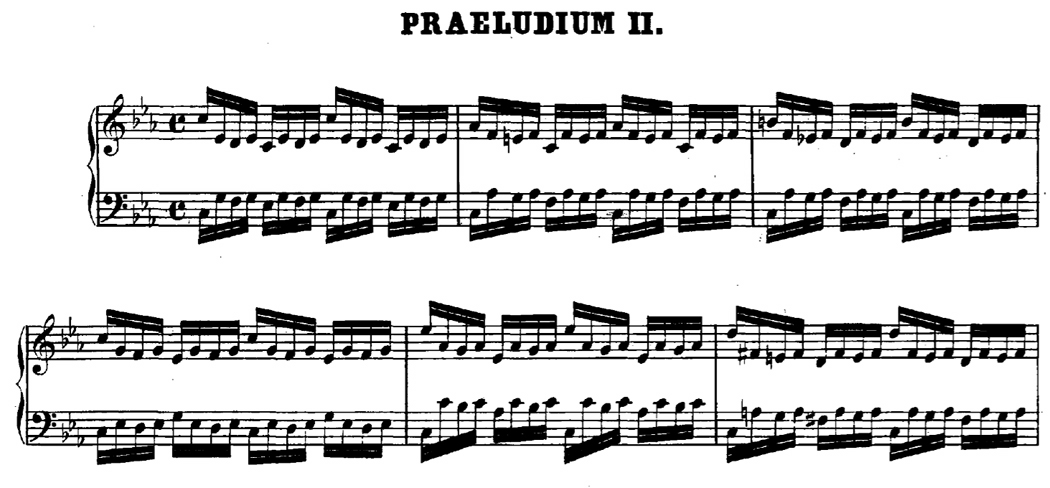
His music may have wheels spinning inside wheels, but it’s always surprising, like the C-minor prelude from the Well-Tempered Clavier, Book I, which begins with a repeated rhythmic figure, unchanging over a constantly shifting harmony, but about three-quarters of the way through, he simply gives up on the pattern and takes off on a flourish of notes like a skyrocket spinning in air, and just when you get comfortable with that, he settles into a melismatic cadence that keeps promising to come to a rest but refuses to stop.WTC prelude 2

Or that moment in the Fifth Brandenburg Concerto where everyone stops for fully five minutes to let the keyboard wander off on its own for a brilliant cadenza, essentially a rhapsody on a dominant pedal, that seems to find every possible permutation of its ideas, before the orchestra re-enters to conclude the piece.

Barroca

The word “Baroque” comes from the Portuguese word for a misshapen pearl, and it was initially applied to the art of the period as an insult, by the calmer minds of the era that followed.

The history of art is an alternation of periods that idealized order and simplicity with a succeeding age that valued emotion and drama. The Renaissance calm gave way to a Baroque frenzy, just as the Neo-classical stability of Haydn and Mozart gave way to the Romantic yearning of Berlioz or Wagner.Greek sculptures

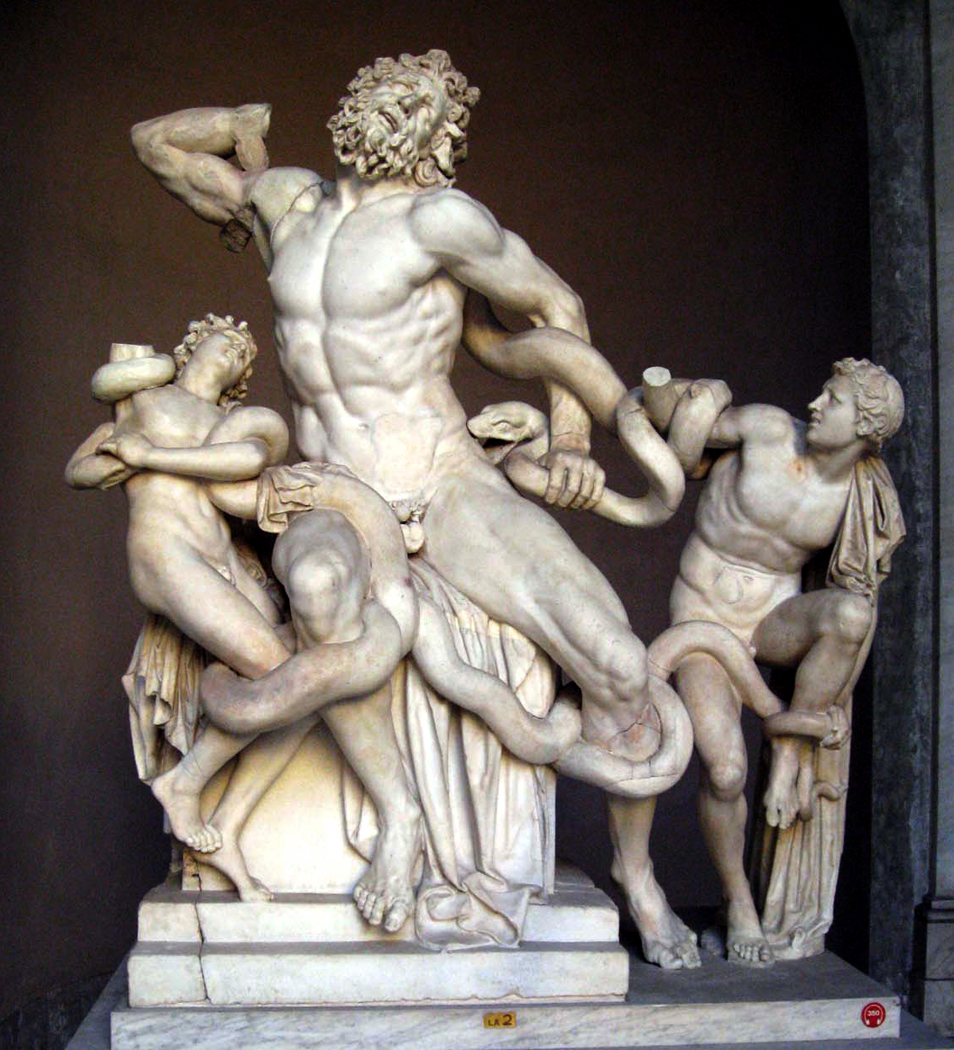
You can find this alternation as far back as you want: The Hellenic stasis of the Parthenon frieze in ancient Greece gave way to the wild extravagance of Hellenistic sculpture of the time of Alexander the Great, with its writhing figures and tortured faces. The dour Romanesque of the early Middle Ages gave way to the bustling aspiration of the Gothic.

Philosopher Friedrich Nietzsche named the guiding spirits of the alternating eras Apollonian and Dionysian. They also are called Classic and Romantic.

Perhaps one of the reasons the music of Bach speaks to us again so strongly, through the newer interpretations, is that we’re currently entering another era of Baroque sensibility. The virtues of Bach’s time are re-emerging: variety and diversity rather than unity, the recycling of artistic material — Bach was not afraid to reuse material; he was one of the original samplers — and a mixing of high and low cultures. Bach used dance rhythms as the basis of much of his music, the way Duke Ellington and Chubby Checker might have.

(A modern version of the Baroque suite, with its allemande, courante, sarabande and gigue, might be an orchestral suite made up of a fox-trot, a waltz, a tango and a Charleston.)

Postmodernism has become a neo-Baroque, and Bach is speaking our language once more.

brilliant bach

Bach-Werke Verzeichnis

Bach’s output was enormous: The complete works fill 155 CDs in one collection. There are more than a thousand numbered compositions, running from music for solo violin to grand vocal works for multiple choruses and orchestras. Half the music was written for church services.

Much of the music is among the best known and dearest loved in the repertoire. Even those with no interest in classical music know his Toccata and Fugue in D-Minor for organ — it’s played endlessly every Halloween — and the Prelude to his first Suite for Unaccompanied Cello can be heard in several television commercials, including one for American Express.

His music connects with a lot of different audiences.bach at organ horizontal color copy

Culture wars

The problem is, there are two primary constituencies for the music of Bach, and the difference between them might as well be between red states and blue states: It’s a culture war.bach statue 2

The older tradition plays a beautiful Bach, with long, flowing melodic lines and a profoundly emphasized bass line, with clearly delineated harmonies. It is the Bach that for many, including Romanian philosopher Emil Cioran, “is the only argument proving the creation of the universe cannot be regarded as a complete failure.”

The composer Debussy said, “Bach is our lord of music. Every composer would do well to pray to him before commencing work.”

This is the Bach we inherited, thick with 250 years of performance tradition. It is Bach as the Alpha of our music. For this contingent, Bach is something universal, primordial, fundamental: Homer in music, or Shakespeare.

The name Bach in German means “brook” or “stream.” “He is not a brook,” Beethoven punned. “He is an ocean.”

But that’s the Bach who is the first modern composer; there’s a rising contingent that views him instead as the culmination of a century and a half of an older music tradition — The Omega. It is a Baroque style of playing completely at odds with the traditional symphonic approach.

The younger tradition mistrusts such grand religio-philosophical interpretations as pretentious piffle. And for them, as for the conductor Arturo Toscanini, “Tradition is just the last bad performance.” They want to clean the browned varnish from Bach and find the bright colors underneath.

These new historically informed performance-practice people want to dance, dance, dance, and they emphasize the rhythm and up the tempo, sometimes approximating speed metal.kimberly marshall

“Sometimes the tempi have become absurd,” says organist Kimberly Marshall. “You’d think you were playing your LP at 78 rpm, like the Energizer Bunny or something.”

The revisionists quote poet Ezra Pound, who famously averred that “music begins to atrophy when it departs too far from the dance.”
And they believe they’re performing the music in a more authentic way, meaning, the way Bach would have performed it himself. Usually, on the musical instruments that Bach would have known: valveless horns and trumpets, oboes with few keys, wooden flutes and short-necked violins with light bows. They strive to recreate the sound that would have resounded in Bach’s ear.

And this is the sticking point: Like believers in competing religions, their dogmas are irreconcilable. Whose ear is more important? Bach’s ear or the contemporary listener’s ear? After all, we can never have 18th-century ears. Too much has happened since.

“The loudest sound Bach would have heard might have been a door slamming,” says conductor Benjamin Rous, who began his career leading the Boston Baroque Ensemble at Harvard University. “If you wanted to give our listeners the experience that Bach had, you’d have to create a world without the last two centuries of history.” So, pick your side and make your argument.
hamlet burton

“It’s like politics,” says cellist Blythe Tretick of the trio Paradisa. “You get into some pretty heated discussions about these things. You can’t win, because it’s a matter of taste.”

Unexamined through all this is the basic premise that music should reflect the composer’s intent. It’s taken as an axiom. But few people are asking why. We don’t insist that Shakespeare be performed outdoors, with boys playing the women’s parts and with the rhetorical delivery of its actors. We don’t blanch at Richard Burton playing Hamlet in suit and tie.

So why do we argue over whether Bach’s musicians played with a vibrato or not? Shouldn’t the music be played to mean the most to modern audiences, the way we do with Hamlet? How much is composer’s intention and how much merely the limitations and conventions of his age? And is a performance something alive, or a museum piece under a vitrine?

Rock ‘n’ Roll

Perhaps this is the underlying truth of the historical-performance people: Unacknowledged by them, they aren’t so much re-creating historical fact as reflecting contemporary taste. We have grown up with a popular music based on rhythm and energy, so we may well now prefer our Bach the same way. Perhaps our ears are attuned to the virtues of Creedence Clearwater Revival bach with electric guitarand feel more comfortable with a Bach that sounds very like it.

And, too, after a violent century, we have become a little more circumspect about claiming the great philosophical ideas and universal truths we found in Bach’s music and that too often justified war and genocide. We have been humbled into seeking a more modest music.

Yet, the emotional and spiritual profundity is there, goading us into recognizing that if the current age is modest, the universe is still infinite, and someone with the genius to write the Mass in B-minor or the St. Matthew Passion is a brilliant mirror to that something bigger than our paltry selves.

You pays your money and takes your choice

Both styles of Bach performance are generously represented on CD. Arkivmusic.com lists more than 5,700 recordings.stern st. john pair

You might compare the recording of his violin concertos by Isaac Stern (old style) with those by Lara St. John (new style). You’ll get whiplash going from the first to the second.gould copy

The older style is warmer and richer; the newer style is bouncier and more rhythmic — and a whole lot faster. Discover which performance tradition speaks best to you.

One CD everyone should own is Glenn Gould’s 1955 recording of the “Goldberg Variations.” It’s not only one of the greatest Bach performances on disc, it’s one of the greatest recordings of all times: exuberant, manic in places, and with its counterpoint always clear. It has never been out of print. It’s neither old school nor new school: It is Gould school. Sui generis.

Here are other recordings to check out.

3 traditional recordings you can’t do without

old bach trio

* “Bach: The Great Solo Works,” with Rosalyn Tureck, piano. Tureck was a Bach specialist, and here she shows just how Baroque the composer could be, in a disc of lesser-known works. A must-have.

* “The Brandenburg Concertos,” with the Marlboro Festival Orchestra, Pablo Casals, conductor. This is old-style Bach, including a piano instead of a harpsichord in the Fifth Concerto (played by the great Rudolf Serkin).

* “Well Tempered Clavier, Book I,” with Daniel Barenboim, piano. Barenboim uses all the possibilities of the piano — pedal, arpeggios, strong bass notes — to make a heroic performance of this iconic music.

Revisionist Bach

new bach trio

* “Six Suites for Violoncello Solo,” with Anner Bylsma, cello. The music is played on a Baroque-style cello (the Stradavarius “Servais” instrument from the Smithsonian Institution) and shows it off at its best.

* “The Brandenburg Concertos,” with Concentus Musicus Wien, Nikolaus Harnoncourt, conductor. Harnoncourt is one of the leaders of the “original instruments” movement, and he buffs up and shines Bach’s chestnuts with a fresh vision.

* “Bach Cantatas,” with the Amsterdam Baroque Orchestra and Chorus, Ton Koopman, conductor. This DVD includes performances of five of Bach’s church cantatas, including the famous Nos. 140 and 147 — with the chorus “Jesu Joy of Man’s Desiring” — and his secular “Coffee Cantata,” which was essentially a singing commercial for the composer’s favorite coffeehouse.

Bottom line

The fact is, the music is so strong, so compelling, so moving — so graceful and so inevitable — that almost any performance will leave you in awe of the imagination and humanity of the grumpy little burger who wrote it.

It hardly matters if its the clever intertwining of voices in a Two-part Invention or a cantata in praise of a good cup of coffee or the cosmic agony of the final chorus of the St. Matthew Passion. graph

A former editor of mine created a little mind-game of an intellectual Cartesian co-ordinate system. Up and down its ordinate you map a person’s depth — how profoundly he or she can think and feel, and avoid cliche and generalization, with maybe Justin Bieber on one end and, say, Nelson Mandela near the other. And along its perpendicular abscissa you can map a person’s “width,” or how broad are his or her interests and competence.

There are people with great depth in a narrow band. They have a Ph.D. and know everything there is about the design of active site-directed irreversible enzyme inhibitors, but never heard of the infield fly rule. And there are those with a tiny dabs of knowledge in a very wide field — “Jack of all trades but master of none” — but very few, as my old boss pointed out, that score in both depth and width.

There is Shakespeare; there is Homer; there is Johann Sebastian Bach.

Alpha and Omega.


BSO
It’s odd, considering how old much of it is, that classical music is so recent an invention.

We think of classical music as being longhair music written by dead White guys. But, in fact, Mozart didn’t know he was writing classical music. He was just writing music.

“There’s only two kinds of music: good and bad,” jazz icon Duke Ellington said. (Mozart is in the first group.)

Bu something changed over the centuries: As mass audiences grew to like popular music, the kind of music written by the older composers was relegated to a new category: classical.

“Classical music is the kind we keep thinking will turn into a tune,” humorist Kin Hubbard wrote in the 1920s.bugs plays piano

And, increasingly, audiences diverged; one group went to the dance halls, the other to the concert halls. Classical music became marginalized, especially in American culture. It became a target for the Three Stooges and Bugs Bunny.

Yet a hunger for music that addresses larger and more complex issues has always existed alongside fiddle tunes. Even in the world of rock music, some music is understood to be more important than others. Radiohead has serious fans that would look down their noses at, say, Justin Bieber.

The distinction should be made, not so much between classical and pop musics, but between music created primarily as an entertainment and music that attempts to express more profound human issues.

There’s nothing wrong with entertainment. We all love a good song. But it isn’t the only thing there is. And we should not judge the one by the standards of the other.

Everyone knows what to listen for in popular music. They have a lifetime of dealing with it. The beat, the tune, the words, the instant gratification.

Rock music now has the “wow” factor, the light and spectacle. And now that’s what people expect, to be bowled over emotionally, to get their juices pumping.

Classical music is emotional, too, but it’s more interior and subtle. And it’s dramatic in ways audiences just aren’t familiar with anymore.

Drama is the key word: Like a play or a film, classical music deals with multiple characters (called themes) as they interact over time, and where you start isn’t where you end. Like I’ve written before: Classical music is movies for the ear.

Popular music is a place; classical music is a journey.

Listen to Mahler and one movement may take 45 minutes. But there are so many ideas juxtaposed in so many different ways that your mind starts spinning. You connect A to B and then A to C and then C to F. It’s all interacting in different ways.

You have to come to the concert hall prepared for that journey. You have to come equipped.

There are five important ways classical music differs from pop.

* Its length.

Classical music is almost always longer, In-a-Gadda-Da-Vida notwithstanding. Pop music may be likened to music videos, classical to a full-length feature. The plot takes longer to develop.

* Its dependence on harmony both structurally and expressively.

A sonata is built on D-major or F-minor, and the elaborate and subtle changes in harmony are both the structural and expressive content of classical music. You don’t need to know the name, but you feel the changes of harmony in your chest, physically.

* Its reliance on variety and contrast.

Unlike pop, which sustains a single clear mood, classical moves constantly, now fast, now slow; now loud, now a whisper. It seldom keeps a single mood for long, but asks you to compare and contrast.

* Its multiple simultaneous voices, or counterpoint.
Fugue

Whether it’s a fugue or a quartet, there almost always is more than one thing going on at any given moment. You have to be able to hear two or more things at once.

* And finally, on the importance of “active listening.”

That is, the importance of paying attention and following ideas as they change and develop through the course of the piece.

Memory is the important part. You need to have a musical memory of some kind to distinguish between what happened before and what happens now.

You have to pay attention, the way you would when reading a novel, keeping track of what’s happening to Raskolnikov at any given time and how he changes over time.

Of all these things, harmony is the hardest to discuss in words. There is no non-musical language to express the modulation from D-major to A-flat. You have to hear it.

Or you try to describe it in words that can’t possibly mean anything to a non-musician: An enharmonic shift, followed by a run around the circle of fifths. How about the Neapolitan relationship? Does that mean anything to you? Didn’t think so. But you can hear it without naming it. Like the way you can hear the “changes” in 12-bar blues. You can feel when the phrase starts anew, with each round of chord changes.Brahms Fourth

It’s only more extreme when you follow the same kind of repeating chord changes in the finale of Brahms’ Fourth Symphony: You feel the drive of those harmonies racing to the finish line.

Harmony is the emotional effect created by playing several notes at once as a single idea. It also is the movement from one set of notes to another, and the emotional effect created by that shift.

Western music has the idea of expectation and release in it. Play a dominant-seventh chord and then try to stop. You can’t do it comfortably. You have to have it resolve.

Harmony, more than rhythm, provides the forward motion of classical music.

Of course, pop and classical aren’t mutually exclusive genres. It’s more of a spectrum of intent: There is pop that tackles serious issues and there is classical music meant merely to entertain.

And there are many classical musics from around the world: Indian, Chinese — and for many of us, American jazz — are classical musics. They all tend to be longer and more complex than the popular music from those same cultures.

Classical music isn’t only music with violins and oboes. It can be made with synthesizers or electric guitars, as any fan of Philip Glass or Steve Reich knows. Classical is not a style but an approach; not a sound but a way of thinking about music and what music means.

If all this makes classical music sound like work, well, it is. It requires more from the listener. But there is a reward for all the effort you put in.

It reaches depths of our souls that everyday music just doesn’t.

And it satisfies the hunger that poet William Carlos Williams defined: something that is difficult, but “men die miserably every day for lack of what is found there.”

Popular music deals with thoughts and emotions that are understood and already defined; classical attempts to understand things that we don’t yet fully grasp: the big questions of life and existence that don’t have simple answers.

Like all fine art, it seeks rather than finds, it defines questions rather than provides answers.

It’s a richer experience, and some people gravitate into it with age and maturity. People can graduate from pop to classical music, but it seldom happens the other way round.

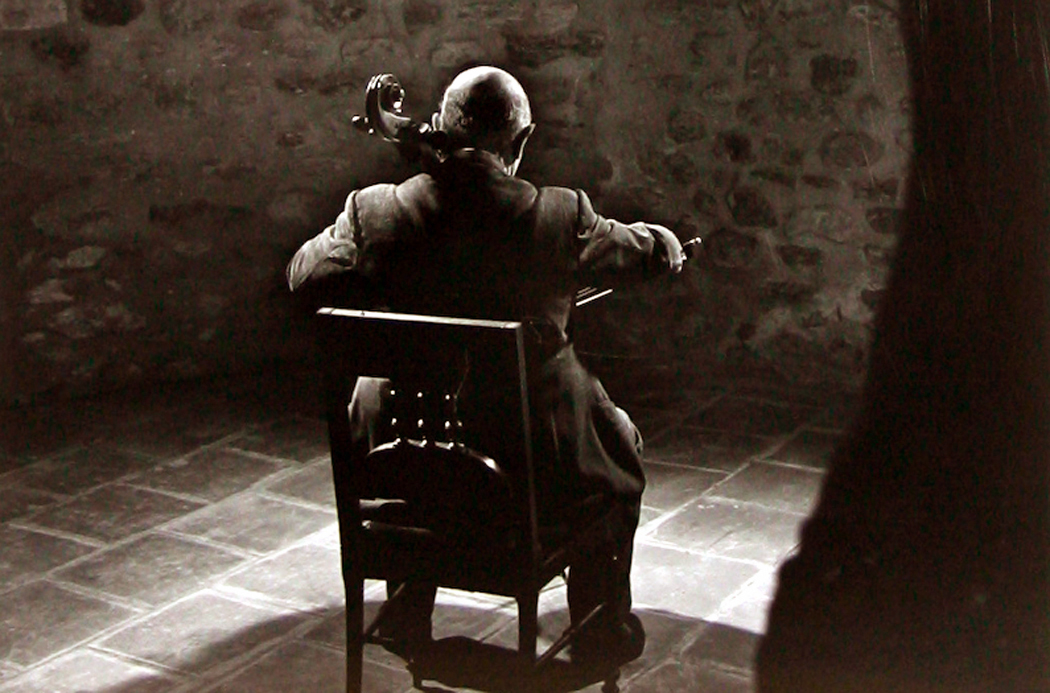
casals
What is classical music?

It can be hard to pin down. Many have tried to define it; certainly, they believe they can know it when they hear it. But the outlines of what we define as classical music are unhelpfully squishy.

Is it merely European aristocratic music from the 18th through the 20th centuries? Certainly the audience for Mozart’s Magic Flute wasn’t aristocratic. And Italy’s appetite for opera is wider than the upper crust.

Is it orchestral music? Not if we count Bach’s suites for unaccompanied cello. Is it instrumental? Not if we count the masses of Palestrina.

It is often called “art music,” as if music in other forms could not aspire to the condition of art. Tell that to Frank Zappa. And frankly, much of the music played in concert halls was never intended to be more than entertainment, albeit of a refined order. Not everything is the St. Matthew Passion; some of it is just Skater’s Waltz.

To look at what we call classical music, we should consider: What is the central question of classical music? That is, what question does classical music answer?

And by that, I mean not only European classical music, but all those around the world, from Indian ragas to Chinese opera.

The question is so banal as almost never to be asked. What is the central question to all classical musics?

It is this:

“How do you make a piece of music last more than three minutes?”

Popular music consists of songs, and, in our culture at least, that means a 32-bar song that you can repeat over and over. But imagine listening to Memories repeated for half an hour and imagine the tedium. It would be my substitute for pistol and ball.

Whether it’s folk songs or rock and roll, the idea is to get in and out quickly, establish a mood and then finish it off.

Yes, there are exceptions in popular music, from In-a-Gadda-Da-Vida to Duke Ellington’s Reminiscing in Tempo, but a case can be made that they are “classical musics,” also.

When we ask the first question, a second question arises immediately:

“Why should a piece of music last more than three minutes?”

And it is here that we come to the difference between popular and classical musics: the difference between simple mood and complex emotional developments. Between a New Yorker cartoon and a Tolstoy novel. cartoonA song gives us a passing mood, seldom offering any narrative complexity (it may offer psychological complexity and even complexities of melody or key structure, and a great song usually has something of this). But a symphony, like a play or a movie, starts in one place and takes us on a journey, leaving us someplace else at the end.

The time spent allows for not just complex emotions, but a sequence of emotions that interact.

You can think of it this way: Classical music is movies for the ear. There are characters, there is development, there is a plot and plot twists. Fight scenes and love scenes, perhaps a mystery, perhaps a road trip.

It presents ideas in time in a way that makes sense to an audience listening for them.cellar 1

Most young filmgoers know the habits of filmmakers so well, for instance, that their expectations become part of the appreciation of the film: They know what to expect when the teenager opens the cellar door and goes down to the dark to investigate that funny noise, and they are delighted if the filmmaker does something fresh and new and upsets their expectation with a surprise.

Classical audiences also know what to expect and are delighted when a composer takes a left turn and expresses a new way to think about it.

It is often thought there is special, arcane knowledge required to enjoy classical music. And, of course, there is a lot of specialized language. There is with films, too — key grip, D.P., fade, dissolve, two-shot — but you don’t need to know any of them to enjoy a film. It is the same with symphonies or sonatas.

It isn’t the words that matter, but the sounds. You don’t need to know the words to enjoy the music.

These are words about wordless things.?????????????????????????????????????????????????????????????????????????????????????

When you see a gun being put in a desk drawer in the first half of a movie, you know instinctively that it will be used in the second half.

When Beethoven’s audience heard C-major sneak into the first three movements of his C-minor symphony, they knew it would come out blazing in the finale: They waited in suspense to hear how he would do it.

This is the appeal of classical music for its audiences.

This isn’t something technical only a musician would know. “Major” and “minor” are simply words: It is the emotional shift that matters, from the tight, constricted, frustrating feel of the opening of the symphony to the ecstatic release of the ending. It is an emotional journey, and one that you could not accomplish in a simple song.

It’s also part of what distinguishes classical music from its popular cousin. Popular music is like a commercial: short, punchy, memorable; classical music is like a novel: long, involved and with many characters and a slowly achieved resolution.

None of this is meant to denigrate popular music or songs. I love a good tune as much as the next person. But popular and classical musics are attempting very different things.

You couldn’t pack all of Indiana Jones into a three-minute trailier.

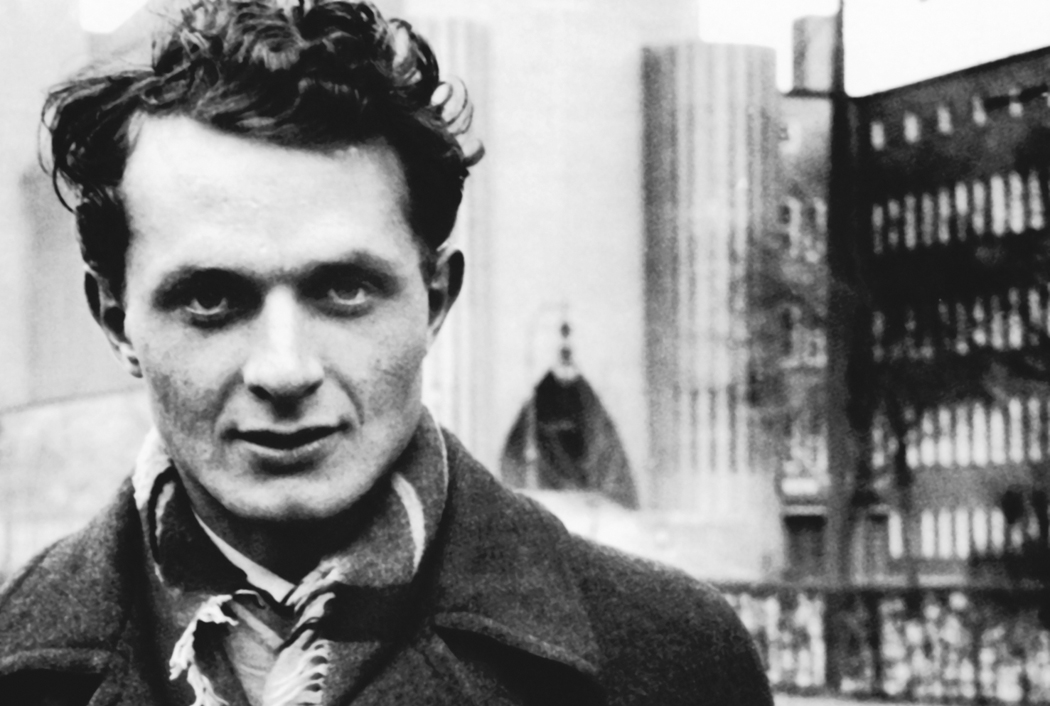
Stephen Spender   The English poet Stephen Spender wrote a poem whose first line I can’t get out of my head: “I think continually of those who were truly great.”
Of course, Spender was writing about political issues, but I can’t help thinking how this line might apply to art.
Because, we use such words rather loosely in the art world. This is “great,” that is “great.” But this devalues the word. I think continually, not of the great writer, painters and musicians who have populated our world, our college curricula and our anthologies — there are many: so many, no one — not even Harold Bloom — can read, see and hear them all — but rather I am thinking of what Spender might call the “truly great.” There are so few of them.
These are those men (and I’ll qualify that soon if you give me a minute) whose works either changed the world significantly or at least changed the culture, or whose works are recognized by a preponderance of humankind to have the deepest insight into the human condition.
It is best understood if we start with science. Who was “truly great?” You could name hundreds of great thinkers, from Watson and Crick to Louis Pasteur to Edwin Hubble. Their contributions have been invaluable. But none of them so completely changed our thinking or ruled it for so long as my three nominees: Aristotle, Newton and Einstein. Each remade the world.three scientists
Who in the arts can have had such effect? These are the people whose works are the core of our culture, the central axis of our understanding of how the world looks, feels, acts, and responds.
The Big Boys.
You may have your own thoughts on the matter: That is not the issue.  We can haggle over the contents of the list. The issue is whether there are some creators whose works are so essential to culture that to be ignorant of their work, is to be ignorant. Period.
In literature, I would say the list begins with Homer and Shakespeare. They are the consensus leaders. If I would add Chaucer, Milton and Dante to the list, so be it. You can add your own. But Homer and Shakespeare are “truly great” in this sense.
What I am suggesting is that in each field, there are probably such consensus choices. In music, you have Johann Sebastian Bach, Wolfgang Amadeus Mozart and Ludwig van Beethoven. Surely others belong on the list. I would include Haydn, Wagner and Stravinsky. You can add your own, but again, if you are not familiar with Bach, Mozart and Beethoven, your education is incomplete.
Among painters, you have Raphael, Rembrandt and Picasso. No one will argue against them. There are many painters that could be included: Titian, Michelangelo, Monet, Turner — the list is expandable depending on your taste, but who has had more influence than Raphael? More depth than Rembrandt? More expanse than Picasso?
(I am purposely narrowing my list to European culture, not because I think that is is the only one that counts, but because I swim in it rather than another, and because I have not enough exposure to everything in other cultures to claim even the slim authority I have discussing Western culture. If I had my way, I’d add Hokusai to this list, but he is ruled out by the operating principles of my system.)
Who are the sculptors? Michelangelo, surely; Bernini and Rodin. Others are great, but these are the standard-bearers.
Try it for yourself. Among novelists, who are our Newton and Einstein? Tolstoy, Dostoevsky and James Joyce.
Again, you may put forth your Fielding, your Trollope or Dickens and I won’t argue. This is only my list and it is surely provisional. It is merely my meager assay. It is my claim that there are the “truly great.” And that they offer something bigger, larger and more powerful than even the best of the rest. They have altered the course of the planet. Or at least the people upon it.
One final caveat: Where are the women? I am not so churlish that I don’t recognize the many great artists who are built with X chromosomes. My argument is with history, not with women: Historically, women have been blocked from the world of art. This is not so anymore, or at least not to the extent it has been true in the past. I was an art critic for a quarter of a century, and I saw the art world shift from a boy’s club to a much more open thing. Most of the best artists I came across were women. Many of our best and most honored writers are now women. In the future, I have no doubt there will be women who shake the world the way Michelangelo did. But I have to look backwards for my list, not guess at the future.
So, does Gertrude Stein belong here? Or Virginia Woolf? This is not to gainsay their genius or the quality of their work. Everyone should read them. But I am not writing about the great: I am comparing them to Shakespeare. The lack of women on this list is a historical artifact, not a prescriptive injunction.
The world is sorely lacking for heroes these days. We don’t even trust the idea of the hero. He surely must be in it for himself; there must be some ulterior motive. It’s all about power, say the deconstructionists. It is all reduced to a steaming pile of rubble and we shout with glee over taking down the idols and smashing them.
But I am suggesting that we actually read Homer, study Rembrandt, listen to Beethoven’s late quartets with the intensity and importance we otherwise give to defusing a bomb.
We should read or listen or look as if our lives depended on it. Because they do.

jumping for joyIn Shelley’s Ode to a Nightingale, he reminds us that “our sweetest songs are those that tell of saddest thought.” And in classical music, our greatest symphonies, quartets, sonatas and trios all give us a complex emotional universe — and the greater the music, the more likely it will contain heavy, dark, profound and difficult emotions. When it’s doing its job, a symphony is not background music.

You can go through it all: Even music that is ostensibly about joy tends to be about a kind of manic fervor or about the transcendence of the pains of mortal life — not simple happiness. Beethoven’s “Ode to Joy,” for instance, is so over the top, that sometimes you just want to say, “Boy, get a grip.”

Happiness would seem to be the province of the popular song — Feelin’ Groovy, or Irving Berlin’s Blue Skies (you should hear Duke Ellington’s take on that one in Blues No End). What you feel coming out of a performance of Mahler’s Third Symphony is something different — rung out, depleted yet renewed, taken through the paces of all of life. Happiness is irrelevant. Beethoven’s Fifth, Brahms’ First, Tchaikovsky’s Pathetique, Mozart’s Jupiter — They are all large, complex and attempts at metaphor for the joys and pains of being alive.

“Our sincerest laughter/ With some pain is fraught.”

But mere happiness? You can look long and wide to find anything that simple in classical music. And yet …

And yet, as I was driving to the store the other day, with Brahms’ First Serenade in the CD player, I felt a swelling of pure happiness as I listened. The music flew by with a genuine joie de vivre, a thought you rarely think when Brahms comes along. Johannes is all gravitas, Weltschmerz, longing — it used to be joked of Brahms that when he is happy, he sings, “The grave is my joy.”

But here he is, without a thought in his head, spinning out tunes of unreflexive pleasure. The horns and clarinets seem to dance their way through the six movements, with no angst over whether the G-major of this theme leads to the e-minor of that one, or whether the rising fourth here is balanced by a descending fifth in the finale. None of it, just tunes. Bouncy, happy tunes. Who knew Brahms had it in him.

And I began to consider other pieces in the standard repertoire that might share something of this simplicity, this sheer pleasure in the notes —  that feeling of walking along on a sunny day with some spare change in your pocket, knowing you will see your sweetie in the evening and whistling a happy chune. Happy couple

Could I list at least 10 such compositions: It was a challenge I set myself.

First up, of course, come Schubert’s “Trout” quintet. No one has ever written so many hummable tunes in a single piece of music, from beginning to end, pure forward-moving bouncy, danceable melody. It is the counterweight to that other quintet, the string quintet that seems to bind up in its aching arms all the sorrow and pain of the world. In the “Trout,” there is none of that, only hope and pleasure and everything that a major key can shout.

Did Beethoven ever write anything so worry-free? Beethoven had bigger fish to fry. He was busy creating a new century. And yet …

Buried in that treasure hoard of piano sonatas — the so-called “New Testament” of piano literature — there is one tiny sonata in G-major, op. 78 — alla Tedesca — that has nothing but bounce and verve. It is short, clever, witty and fun. Not your usual Beethoven adjectives.

Haydn, of course, is the fountain here. You can pick almost any of his works and find acres of wit, bounce, pleasure and fun. There are his more profound moments, but pick any symphony in the 60s or 70s and you can run from start to finish with a smile in your heart. When I want to feel good, I snap in a Haydn symphony to listen to.

For instance, the Symphony No. 73 in D, “La Chasse,” which ends with a fox hunt, a rousing ride through the countryside with horn and hounds.

Or the Symphony No. 60 in C, “il Distratto,” which has a joke larded into it every 11 bars — you never have to wait long for another one, like a New York City bus. There’s the place where he stops and has the orchestra retune, right in the middle of the finale; there’s the second theme in the first movement, that just stops in its tracks harmonically and seems to fall asleep. But it isn’t the jokes, per se, that I am touting here, but the sheer joy of the music, unalloyed with anything like “the saddest thought.”

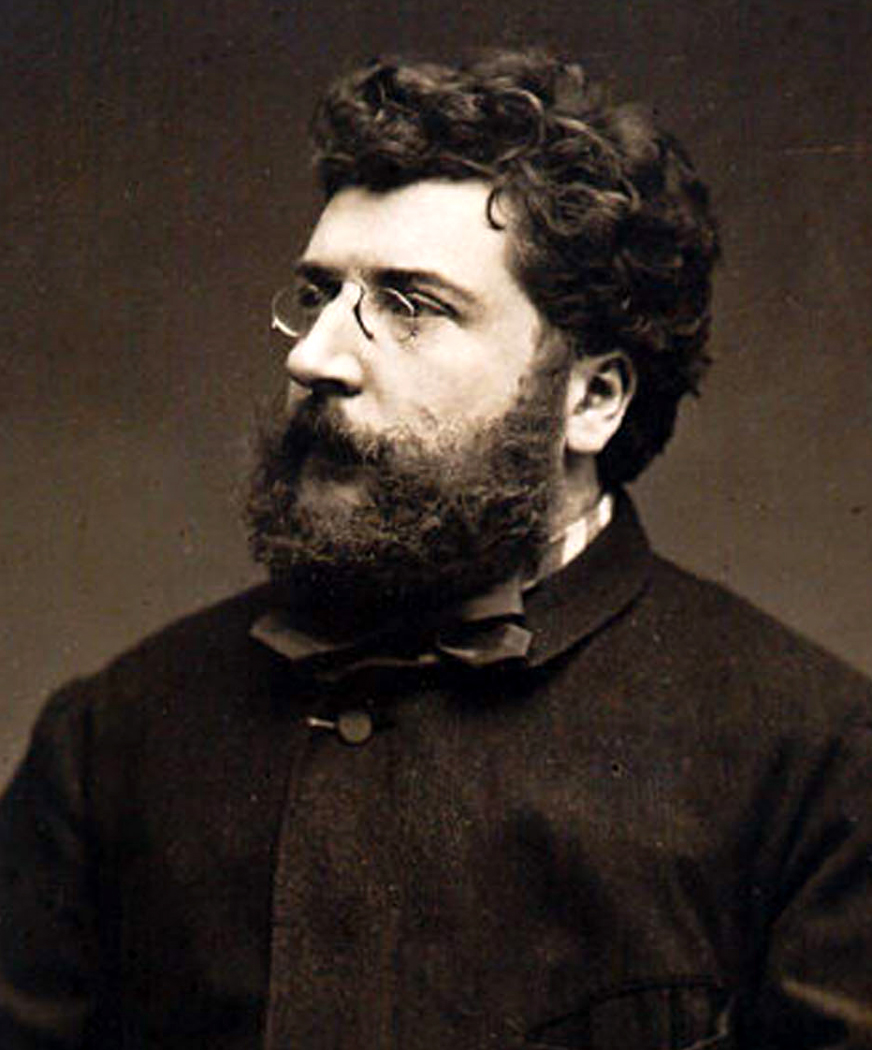
If you want to find the same music, but in a 19th century idiom, you have it in Georges Bizet’s Symphony in C, which he wrote when he was a mere stripling of 17. It begins with joie and ends with enthusiasm and in between it is stuffed with buoyancy and energy. You cannot listen to it without it putting a bounce in your step.

I had the pleasure of seeing the New York City Ballet perform George Balanchine’s Symphony in C at the Palais Garnier in Paris, and I couldn’t tell which thrilled me more, the choreography or the music. It is one of the high points of my esthetic life and kept me smiling for days, even weeks.

You get something of the same confident buoyancy in Nikolai Rimsky-Korsakov’s Capriccio Espagnol, written as a virtuoso piece for orchestra, and everyone gets to join in the party. No shadow hangs over the music — it is all joy.

The 20th century is a sorry one, filled from end to end with war, murder, oppression and genocide. But there are points of light in the music. Prokofiev may have the three great “War Sonatas,” with all the weight of the world on them, but he started out with his Classical Symphony, which is a nod back to the music of Haydn, but with all the hot sauce of Modern dissonance tossed in for spice. The music bounces its way from the get-go. You can’t have a heavy thought while listening to it.

And Paul Hindemith — who used to count as one of the big three of Modern music with Stravinsky and Schoenberg (how the mighty have fallen) — joins my list with his Symphonic Metamorphoses on Themes of Carl Maria von Weber. He is helped out, of course, with the jaunty tunes that he culled from Weber, but he costumes those tunes with the happiest, bounciest orchestrations and developments.

And finally, to round out my self-assigned Ten, there is the verve and sass of Darius Milhaud’s Le boeuf sur le toit, which is 15 minutes of toe-tapping polytonality based on dance tunes from Brazil and named after a cabaret in Paris where the avant-garde met and drank and did their best to show off to each other. Listen to the music once and you will not be able to get it out of your head for days — or out of you hips, knees and feet. Not a care in the world.

The cares of the day will come back, as they always do, and even such happiness as embedded in this music can wear out its welcome, joyful, but a bit thin compared to the Big-Boy cousins in the concert hall, but for a moment, like that happiness you feel skipping down the street on a good day, it seems like all the world needs.

Here’s my list. Please add to it or make your own:

–Symphony No. 60 in C “il Distratto” by Joseph Haydn

–Symphony No. 73 in D “la Chasse” by Joseph Haydn

–Piano Sonata No. 25 in G, op. 79 “alla Tedesca” by Ludwig van Beethoven

–Piano Quintet in A, op. 114, D. 667 “Trout” by Franz Schubert

–Symphony No. 1 in C major by Georges Bizet

–Serenade No. 1 in D, op. 11 by Johannes Brahms

–Capriccio Espagnol, op. 34 by Nikolai Rimsky-Korsakov

–Symphony No. 1 in D, op. 25 “Classical Symphony” by Serge Prokofiev

–Symphonic Metamorphoses on Themes of Carl Maria von Weber by Paul Hindemith

–Le Boeuf sur le Toit, op. 58 by Darius Milhaud


pop diva troika

Listen to any pop-music diva these days, and you hear melodies spinning every which way, like the hand-held shots in an action movie, wiggling and jiggling in a way that can give you a kind of aural queasiness, seasickness for the ear, unable to find the still point of gravity.

This style of singing has become the lingua franca for such popular music venues as American Idol and The Voice. The singer hovers around the expected note without ever having to land on it any more than an Apache helicopter touches down to disgorge the troops from its inside before soaring off into the ether once again.

This was not an issue in the past, when listening to Ella Fitzgerald, Peggy Lee or Dinah Shore. Whatever vocal calisthenics they indulged in were anchored to a harmonic rock that led the music to a distinct place — usually the final perfect-authentic cadence, the great dominant-tonic resolution.

But this is gone from most contemporary pop music. I don’t want to sound like an old fogey lamenting nostalgically about a golden-age past, for after all, there were good and bad singers then as there are now. But I do want to express something genuine about the progress of popular music. And to point out that in this, it follows the same pattern as that of classical music.

In his great Harvard lectures, Leonard Bernstein talked about how the history of music is the history of seeking “newer and better ambiguities.” And these ambiguities are often (though not exclusively) harmonic.

Consider the opening of Wagner’s Tristan und Isolde, with its famous “Tristan chord.” What key is that in? You can hardly tell, it wavers so ambiguously. But a look at it over the longer stretch of the score and you can discover an overriding structure of A-minor. The music stretches the meaning of tonality, but doesn’t leave it.

Debussy and Schoenberg, in different ways, undercut the pull and power of harmonic direction, softening up the basic tonics or dominants with extra harmonics: sixths, ninths, elevenths. The reason Debussy sounds so vague is that his harmonies are vague. His melodies remain clear as a bell, but they are built on shifting sand.

In jazz, the course of things went much the same way. Listen to Louis Armstrong, or — especially — Duke Ellington, and you hear the steam locomotive drive of the harmonic motion. Ellington built some of his most powerful music on the blues changes. They are hidden under a rich palette of tone color, but they are still there, providing a solid skeleton for the music.

But, beginning with the bop musicians, the extra partials have been once again added, to build harmonies more ambiguous and malleable. Sure, underneath it all, you can still find the basic harmonies of I Got Rhythm, but over the top, Charlie Parker and Dizzy Gillespie are playing those ninths and elevenths, letting the air out of the pneumatic drill of harmonic progression. So that, nowadays, harmonies have become mere ornament for elaborate melodies. You can ornament the tunes various ways without changing the basic tune — much like you can decorate a Christmas tree in many fashions.

When Schubert wrote a song, the melodies are unforgettable in part because they are constructed on persuasive harmonies. You cannot imagine Die Fiorelle or Erlkoenig reharmonized without also losing the melody: They are no more separable than height and width in a drawing. But take any tune from Andrew Lloyd Webber and not only can it be reharmonized with no loss to the music — whatever music there is — but it is absolutely expected that an arranger will change the harmonies. They are no more than ornament to a fixed melody. What was once the structural underpinnings of song have become merely the “changes” that we deck the song out with. The powerhouse dominant-tonic motion has been gutted.

You can hardly hear them anymore. In pop music, you hear a stepwise bass motion that plays more as a simple counterpoint to the melody, rather than a solid drill sergeant bouncing the heavy tread of root position tonics and dominants.

It isn’t that the heavy tread of Schenker analysis is the only way to organize music.

But all art exists in the play between expectation and surprise. If we expect a G7 dominant to resolve into a C-major chord, then the composer can play with that expectation and withhold the resolution, to draw out our longing for the satisfaction we will get when the final C-major is achieved. You can organize a whole symphony like this: As Bruckner’s Fifth heads slowly to a solid B-flat or — most famously — Beethoven takes us from an unsettling C-minor to a triumphant C-major in his Fifth Symphony.

But if you take away that rock on which most Western music has been built, you still need something to stretch out our longing and expectation.

It must be admitted that harmony is only one way to organize music.

Pop music has left behind the principle of its birth and begun to find new — and largely non-Western ways. Western ears have not heard so much Oriental melisma since the Arabs conquered Spain. Mariah Carey is closer to a muezzin than to a big-band singer. “Just hit the damn note,” you want to scream, but, of course, her artistry is to make us wait in anticipation of the final pitch of a note. That pitch anticipation has replaced the dissonance and resolution of harmonic tune-writing.

One style is not better than another. And I don’t mean to sound like I’m prescribing a return to the past.

But it is important to know what we have lost. The glory of 250 years of Western music is its unique experiment with harmony. We have tossed it away like a used candy wrapper.

tres riches heures seasons

When it’s summer in Vivaldi, is it winter in Piazzolla?

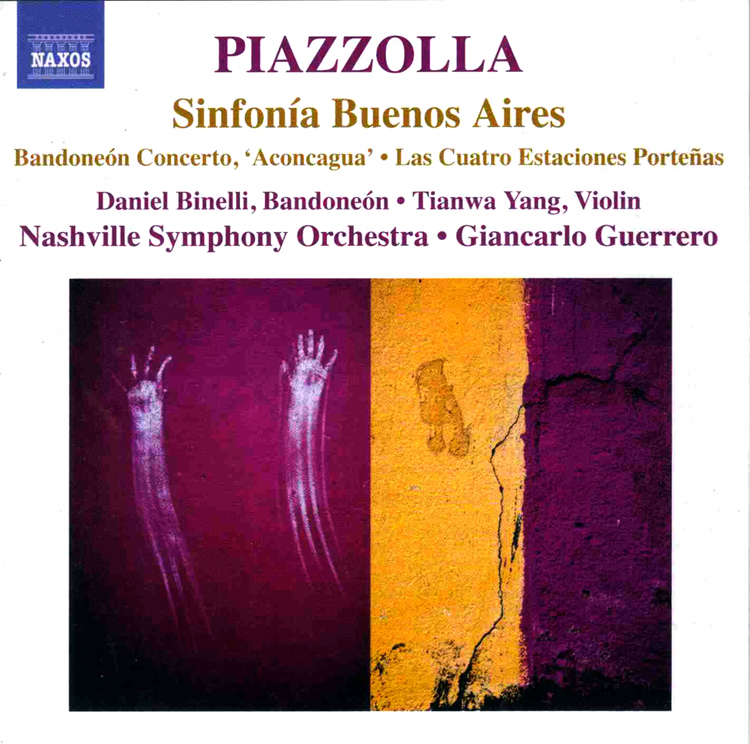
The Venetian composer Antonio Vivaldi wrote perhaps the most popular classical music ever with his “Four Seasons,” describing the progression of the year in his home country. A popular website lists over 200 recordings.Piazzolla cuatro estaciones

Argentine tango-master Astor Piazzolla responded with his Four Seasons of Buenos Aires, a Southern Hemisphere version, at antipodes with the Mediterranean.

And when Philip Glass wrote his second violin concerto, he called it his “American Four Seasons.”

And Japanese composer Toru Takemitsu has his own Seasons, subtitled “Red and blue graphic score for live improvised percussion with tape.”

Everyone and everywhere seems to have its own “Seasons.”

But it is astonishing just how much classical music is inspired by not only seasons, but climate and weather.

There are grand oratorios, such as Haydn’s The Seasons, that take on all four quarters of the year, and there are symphonies, such as Schumann’s “Spring” Symphony, that take on a single season.

And there are depictions of thunderstorms – the overture to Rossini’s William Tell – and a host of other meteorological phoenomena: sunrise at the start of Richard Strauss’s Thus Spake Zarathustra; moonlight in Beethoven’s “Moonlight” sonata; shifting, amorphous clouds in Debussy’s Nuages; even an earthquake at the end of Haydn’s Four Last Words of Christ.

There are so many nocturnes in the repertoire, that no one could list them all.

Yet, the best and most effective tone painting remains Vivaldi’s four concertos, first published in 1725 as part of the composer’s “Contest between Harmony and Invention,” 12 violin concertos that also include evocations of a storm at sea, a hunt, and even one celebrating simple pleasure.

Yet, the first four concertos of the group, popularly called “The Four Seasons” stand out for their descriptiveness.

You can hear how icy and slippery it is – arpeggiated runs make you feel like you’ve lost your step and are slipping on ice. The short trills in the bass create the constant “brrr” or shivering feel.

Vivaldi printed four sonnets, one with each season, in the score to the music, describing the scenes he painted in sound.

“Shivering, frozen in the frosty snow and biting, stinging winds,” starts the one about winter. “Running back and forth to stamp your icy feet, with your teeth chattering in the bitter chill.”

It’s hard not to picture it, hearing the shivering repeated chords at the concerto’s opening, edged with the dissonance of serial suspensions – notes held from one harmony into another.

Then, there are the barking dogs, imitated by the violas in the slow movement of the “Spring” concerto.

The “Summer” sonnet begins, “Beneath the blazing sun’s relentless heat, men and flocks are sweltering, pines are scorched. We hear the cuckoo’s voice; then the sweet songs of the turtle dove. … soft breezes stir the air.”

You can hear it all in the music: There are dancing peasants, a hail storm, the pizzicato raindrops of a cold winter rain, the swarms of gnats in the hot summer sun – Vivaldi’s pictures are as vivid as music gets.

And that can be a problem for other composers, who want to essay the same subject matter.

Among some musicians and audiences, there is a prejudice against what used to be called “program music,” that is, music meant to express extra-musical associations. But music can certainly express more than notes. Too many composers have made it explicit, from the bird calls in Beethoven’s “Pastoral” symphony to the wind machine used to Richard Strauss’ Alpine Symphony.

You can’t argue about program music when a composer gives you instructions in the score. Or in the title.

Debussy’s piano prelude Des pas sur la neige (“Footsteps in the snow”) uses its harmonies to suggest the white blanketing of snow. The ostinato rhythm creates a sense of emptiness and desolation, a cold beauty through which weaves a fragmented melody that may represent the human presence of the footsteps in the snow.

It can make you shiver.

Debussy is the most meteorological of composers: You find wind, rain, snow, mist, moonlight, all in his music.

But of all the music about weather and seasons, spring predominates. There are 10 pieces of music about spring for every one about summer, fall or winter. Yet, for many, winter music holds the biggest emotional punch.

Death finds its metaphor in winter. For some, the ultimate winter music is Schubert’s song cycle, Winterreise (“Winter Journey”) about a young man, jilted in love, who slowly loses his mind, ending in the 19th century version of homelessness.

The German song repertoire provides an abundance of songs on the seasons, on stormy and calm weather, outside and inside our hearts.

So, blow, winds, and crack your cheeks! Rage! Blow! You cataracts and hurricanoes. You give power to our  music and our music gives power to you.

Picking your Vivaldi

vivaldi stokowski-There are many mainstream accounts of Vivaldi’s “Four Seasons,” and most of them are pretty good. It’s hard to go wrong with the music.

-Take your pick from Isaac Stern, to Anne-Sophie Mutter to Nigel Kennedy and Sarah Chang. All good.

-But there are two extreme versions that bookend the spectrum of possibility, both excellent, and as different as can be.

-In 1967, violinist Hugh Bean recorded the concertos with Leopold Stokowski and the new Philharmonia Orchestra.

-It is the very model of historical incorrectness: an old-fashioned large symphony orchestra playing Vivaldi as if it were Mahler, thick, syrupy and lush. You simply have to hear it to believe it. Yet, it is also a beautiful recording.vivaldi alessandrini

-At the other extreme is Rinaldo Alessandrini and the Concerto Italiano, playing in historically-informed style in their 2002 CD, but with an emphasis on the music’s rhetoric rather than its beauty: Every moment described in the Vivaldi’s sonnets is separated and performed in a distinct tempo and touch, making this recording the most pictorial ever. The violas really bark, the wind cuts through your sweater.

-So, smooth and lush, or edgy and driven, two versions, both among the best available.


WEATHER in MUSIC

Seasons

Antonio Vivaldi – “The Four Seasons”

Astor Piazzolla – Cuatro Estaciones Porteñas or “Four Seasons of Buenos Aires”

Philip Glass — Violin Concerto No. 2 “The American Four Seasons”

Toru Takemitsu — Seasons for Percussion and Tape

Joseph Haydn – The Seasons

Alexander Glazunov – The Seasons Op. 67

Piotr Tchaikovsky – The Seasons Op. 37b

Jean-Baptiste Lully – Les Saisons

John Cage – The Seasons (1947 ballet score for Merce Cunningham)

James DeMars – Piano Concerto, “The Seasons”

Charles-Valentin Alkan – Les Mois

By individual seasons

Spring

Robert Schumann – Symphony No. 1, “Spring”

Johann Strauss II – “Voices of Spring” waltz

Christian Sinding – Rustle of Spring

Edvard Grieg – To Spring

Igor Stravinsky – The Rite of Spring

Ludwig van Beethoven – Violin Sonata No. 5, Op. 24, “Spring”

Richard Strauss – “Fruhling” from “Four Last Songs”

Benjamin Britten – Spring Symphony

John Knowles Paine – In Spring, symphony

Claude Debussy – “Rondes de Printemps” for orchestra, from Images

Aaron Copland – Appalachian Spring

Richard Wagner – “Du bist der Lenz” from Valkyrie

William Bolcom – Spring Concertino for oboe and small orchestra

Summer

Felix Mendelssohn – Midsummer Night’s Dream overture and incidental music

Hector Berlioz – Les Nuits d’Ete, song cycle

Autumn

R. Strauss – “September” from Four Last Songs

Grieg – In Autumn, overture

Debussy – Feuilles Mortes or “Dead Leaves” from Preludes, Book II

Winter

Tchaikovsky – Symphony No. 1, Op. 13, “Winter Dreams”

Franz Schubert – Die Winterreise, song cycle

Wagner – “Wintersturme” aria from Valkyrie

Weather

 Thunderstorms

Beethoven – Symphony No. 6, Op. 68, “Pastoral”

Gioacchino Rossini – Overture to William Tell

Wagner – Prelude to Valkyrie

Beethoven – Piano Sonata No. 17, Op. 31, No. 2, “Tempest”

Wagner – Opening of Flying Dutchman

Giuseppe Verdi – Storm in Otello

Vivaldi – Concerto “La Tempesta di Mare”

Berlioz – “Royal Hunt and Storm” from Les Troyens, Act IV

Earthquake

Haydn – Four Last Words of Christ

Avalanche

Alfredo Catalani – La Wally ends with an avalanche

Sunrises

R. Strauss – opening of Thus Spake Zarathustra

Maurice Ravel – Daphnis et Chloe

Haydn – Symphony No. 6, “Morning”

Ferde Grofe – “Sunrise” from Grand Canyon Suite

Moonlight

Debussy – La Terrasse des audiences du clair de lune, from Preludes, Book II

Debussy – “Clair de Lune” for piano, from Suite Bergamasque

Beethoven – Piano Sonata No. 14, Op. 27, No. 2, “Moonlight”

Rain

Frederic Chopin – Prelude, Op. 28, No. 10, “Raindrop”

Debussy – “Jardins sous le pluie” from Estampes for piano

Grofe – “Cloudburst” from Grand Canyon Suite

Johannes Brahms – Violin Sonata No. 1, Op. 78, “Regenlied,” or “Rain Song”

Wind

Debussy – West Wind from Preludes, Book I

R. Strauss – Alpine Symphony

Alkan – “Le Vent,” from op. 39 Etudes, Comme Le Vent

Clouds

Debussy – Nuages

Franz Liszt – Nuages Gris

Snow

Leopold Mozart – Musical Sleighride

Debussy – Footsteps in the Snow from Preludes, Book I

Debussy – “The Snow is Dancing” from Children’s Corner for piano

Mist

Debussy – Brouillards from Preludes, Book II

"Michael Jackson and Bubbles" by Jeff Koons, and Elgin Marbles figure

“Michael Jackson and Bubbles” by Jeff Koons, and Elgin Marbles figure

In 1632, the young English poet John Milton, just out of college, took up residence at his father’s country estate at Horton, near Windsor. And for the next six years he managed to read everything that had ever been written and was extant, in all languages living and dead, that a European scholar of the time might have heard of. That included literature, history, biography, philosophy, science, mathematics — the whole throatful of it. milton cigar

Everything that had ever been written.

It boggles the mind. Today, we cannot even keep up with the magazines we subscribe to; most of human knowledge falls off the edge of the Earth, where the map of our erudition shows nothing but serpents. reading the oed

We can never achieve what Milton did; it’s foolish to even try. But shouldn’t we attempt at least some sketch of what was fully painted for the poet? There have been recent books by writers who have read every article in the Encyclopedia Britannica (The Know-It-All, One Man’s Humble Quest to Become the Smartest Person in the World, A.J. Jacobs, 2004), The Oxford English Dictionary (Reading the OED: One Man, One Year, 21,730 Pages, Ammon Shea, 2008), or the equivalent of the Harvard Five-Foot Shelf (Great Books, David Denby, 1996), but such ventures are little more than stunts.

To absorb 5,000 years of human culture requires more than memorizing almanacs or dictionaries. It means to have a grounding in the art, literature, theater, music and architecture of our ancestors.

Of course, most of human knowledge, at least in ordinary life, in mass or pop culture and in our individual autobiographies is utterly trivial, and it would be a crime to stuff our brains with it.

But not all knowledge in this information age is trivial. There is still a core of useful literature — and I use the word in the broadest possible sense — that it behooves us to be acquainted with.

It is unfortunate that there is an argument over this. In the imbecilic culture wars that currently ravage the intellectual countryside, the lines are drawn between ignorant armies.

On one side, you find right-wing reactionary fossils fighting to maintain the canon of mainly European classics. On the other side, there is a cadre of victimization that wants to eliminate anything written by dead white males.

A pox on both their houses.

Milton didn’t have to worry about the canon. For him, the canon encompassed everything he could possible encounter.

Since that time, though, we have had to become more selective. Those items we have, as a culture, thought worth perpetuating we have called ”classics” and added them to the list — the canon — of ”required reading.”

But we misunderstand the very idea of culture if we believe the world froze solid with the publication of the Harvard Five Foot Shelf.

Corneille

Corneille

The canon is a garden that must be weeded and tended, and each season may call forth a different harvest.

The problem with the conservative view is that it values a former ”golden age” that our own time never measures up to. It is a sentimental view of life and history, and deaf to the fact that we live now, not in the imaginary ”then.” It is the voice of Cato, of Corneille, of William Bennett — a man of whom it is said he cannot sleep a-nights if he suspects someone, somewhere is having fun.

It is a view of an idealized perfection that we have disastrously fallen short of. It is one form of imbecility.

The problem from the other side is an egalitarianism that is just as moronic. According to them, nothing is better than anything else. Either it is merely a question of personal taste, or it is one of cultural identity.

By their standards, it is elitist to prefer Pablo Neruda to Rod McKuen. Let them, I say, let them renew their subscriptions to Us magazine.

They can deconstruct its gossip to death and find the parallels with Plutarch — if they only knew who Plutarch was.

To consider one “text” more important than another, for them, is to promote colonialism and the subjugation of the downtrodden.

Hence, they judge not by esthetic considerations — it’s all just personal taste to them — but rather by politics.

For them, politics overwhelms aesthetics — overwhelms reason, emotion, common sense and experience. For them, everything has a party line. Ah, but they forget, politics answers no question worth asking.

It also worries me that behind the masks of intellectual argument, I sense a fascism on each side — at the very least a certain priggishness to both sides that any reasonable human finds dangerous.

At bottom, the problem is that both sides make the mistake of believing the canon immutable and fixed. They see the canon as an end, one side blindly despising it and the other defending it like Texans at the Alamo.

But the canon, properly seen, is a beginning, not an end; a foundation, not a roof.

It is the ABC of cultural literacy, the cardinal numbers of thought.

One used to hear the warning that when you have sex, you are having sex with everyone your partner has ever slept with. Well, when you read a book, you are also reading everything that the author read. When you hear music, you also hear everything that composer heard.

Culture is the slow accumulation of thoughts and habits. To read Melville is to hear the diapason of King James under the rich melody of the prose. Every author is the product of multiplier and multiplicand: the writer’s imagination and the long road of history leading to his standing on the curb with his thumb out.

The fact is, we cannot read everything, the way Milton did. We must be more selective. Suggestions for that selective offering is what we call the canon. But it changes constantly: It now includes James Baldwin and Toni Morrison; it includes Derek Wolcott and Yukio Mishima;  The Beatles and Duke Ellington.

The Laocoon

The Laocoon

How can you understand Jacques Derrida without standing firmly on the firm ground of Kant’s a priori? How can you read Isabel Allende without sensing the spirituality of Calderon behind her words?

How can you understand Jeff Koons’ Michael Jackson and Bubbles if you don’t already have the Elgin Marbles in your system? You can’t. How can you get the joke on the back of countless Yellow Pages if you don’t know the Laocoon?

Certainly, the old rationale for learnedness remains: These are great writers, profound thinkers and brilliant painters and sculptors and we cannot consider ourselves educated without their acquaintance. Knowing them is its own excuse. But even more important is that when you hear the echoes in a piece of art, see its ancestry, the piece resonates. Resonance is what gives art and literature is power. kane

Like the mirror scene in Citizen Kane, one man is multiplied into an army. Like Isaac Newton said, if we see further, it is because we stand on the shoulders of giants. It is a wise man who knows his parents.

carmen death

Opera has an ABC. They are Aida, Boheme and Carmen. No regional opera company ever went broke programming these blockbusters. They are all extremely popular and well-known.

Georges Bizet

Georges Bizet

Carmen, especially. Perhaps too well known.

We all know that the gypsy Carmen seduces the not-too-bright army corporal, Don Jose, and then dumps him for the flashy matador Escamillo. Death ensues while crowds cheer in the bull ring.

We hum along with the tunes: the habanera, the toreador song, the boys mocking the soldiers and their tune. The suite from the score was once one of the most programmed pieces of light classical music, rivaling Tchaikovsky’s Nutcracker Suite and Grieg’s Peer Gynt. One of Sir Thomas Beecham’s “lollipops.”

The opera comes from a novella written in 1845 by the French Romantic author Prosper Merimee. And like a movie made from a book, a few things are changed for the sake of drama.carmen conductor

Here are some things you probably don’t know about Georges Bizet’s Carmen:

1. Bizet’s librettists, Henri Meilhac and Ludovic Halevy, gave their bullfighter a major promotion. In Merimee’s book, he is not the noble matador, but a mere picador, a stripling named Lucas.habanera score

2. The famous Habanera (“L’amour est un oiseau rebelle“) was an afterthought.carmen painting

The mezzo hired to sing the part of Carmen didn’t like the aria Bizet had first written. He tried 10 times to come up with something, eventually writing the single most famous tune from the opera. Or did he? Turns out, he stole the melody from an earlier tune, called El Arreglito, by Sebastian Yradier who had only recently died. Yes, Bizet plagiarized the melody. When the score to Carmen was published, Bizet had to add a note acknowledging his source.

3. The first recording of Carmen (1908) was sung in German. “Liebe ist wie ein wilder Vogel.” Oy.

4. More than 60 films have been made of the story. Oddly, the first 17 were silent films. Silent opera is rather like dancing on the radio. That list of silent films includes one by Cecil B. DeMille, from 1915, which was based on the original novel because the producers didn’t want to pay the rights to the opera and chose the public-domain novel instead. They then changed the book’s plot to match the opera’s. Among the silent Carmens were Theda Bara (1915, directed by Raoul Walsh), Pola Negri (1918, directed by Ernst Lubitsch) and Delores Del Rio (1927, also directed by Walsh).carmen saura

5. Recent Carmens tend to stretch the story or the music. Like Beyonce in Carmen: A Hip Hopera (2001), or the 1983 Carlos Saura masterpiece, which turns it into a flamenco dance. Also on the list: Carmen on Ice (1990); Karmen Gei (2001), which sets the story in Senegal; Carmen Jones (1954), with Dorothy Dandridge and Harry Belafonte; and most recently the powerful South African township version, U-Carmen eKhayalitsha. Check it out on DVD.