Archive

Tag Archives: grammar

I was an English major and I’m married to an English major and it’s hard being an English major and only getting harder. An English major feels genuine pain hearing the language abused, mal-used, corrupted and perverted. 

I’m not talking here about outdated grammar rules and a fussy sort of prisspot pedantry. As a matter for fact, one of the most persistent pains a true English major suffers is such misplaced censure, especially when interrupting a casual speaker to let them know that “them” is plural and “speaker” is singular. In my book, this is merely rude. A caboose preposition is nothing to lose sleep over. 

No, what I’m writing about here is are things that are genuinely ugly or purposely unclear, or overly trendy, to the point of losing all meaning. You know — politics. That and corporate language, or management speech — which I call “Manglish” — is a great corrupter of speech. 

“We have assessed the unprecedented market shifts and have decided to pivot this company’s new normal to a deep-dive into a robust holistic approach to our core competency, circling back to a recalibrated synergy amid human capital in solidarity with unprecedented times.”

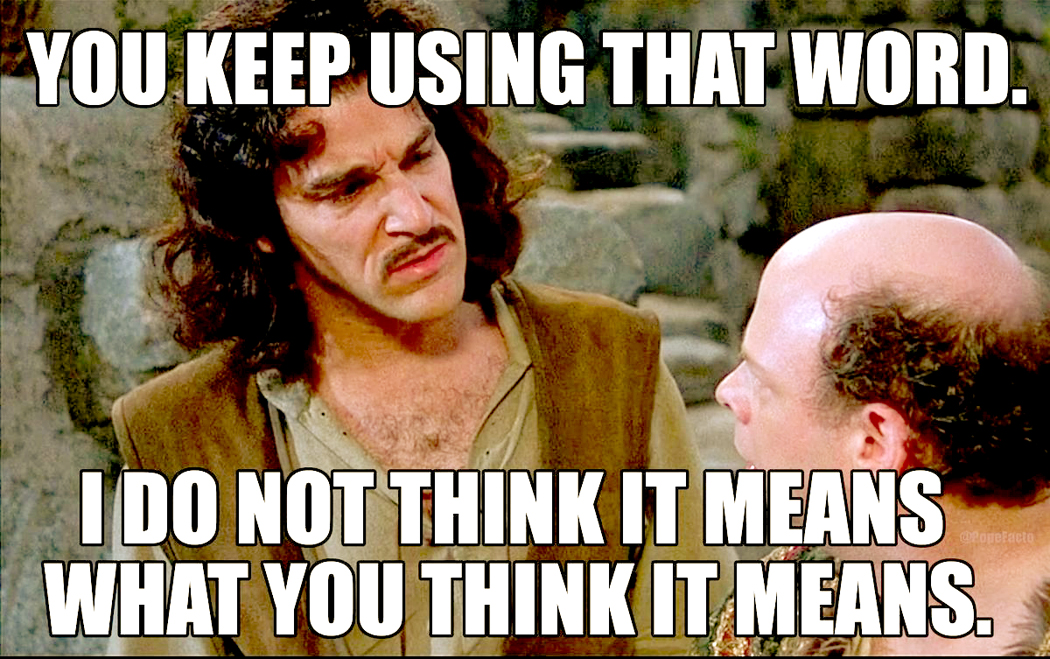
Committees try to make language sound profound and wind up writing piffle. I’m sure it was a committee that agreed in Iredell County, N.C., to make the county slogan, “Crossroads for the future.” I do not think that word means what you think it means. 
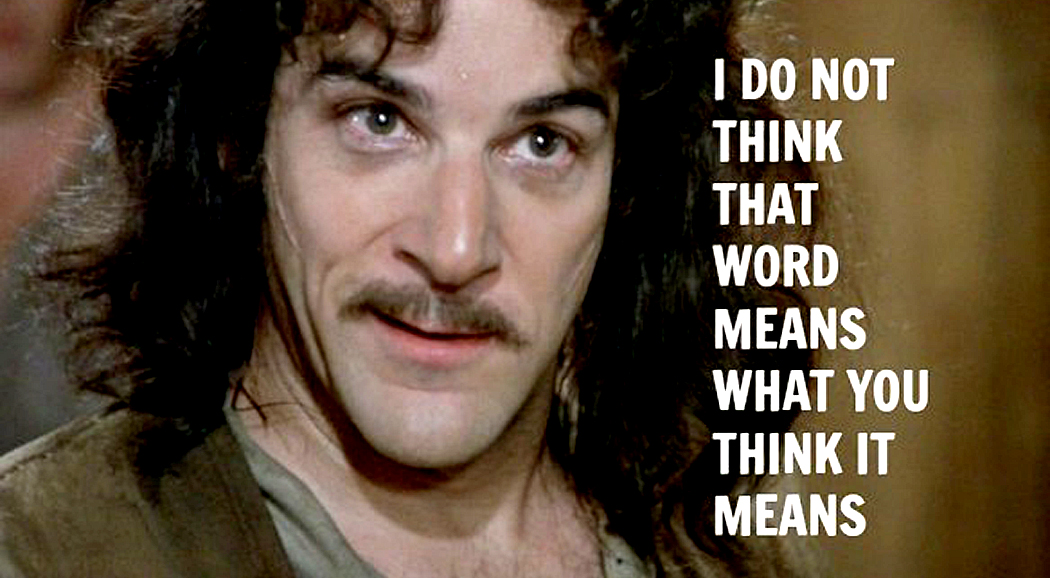
I wrote for a daily newspaper and language was my bread and butter, but the higher you go up the corporate ladder, the worse your words become. I remember the day they posted a new “mission statement” on every other column in the office, filled with buzz-word verbiage that didn’t actually mean anything. I looked at my colleague and said, “If I wrote like that, I’d be out of a job.”

But it isn’t just Manglish. Ordinary people are becoming quite lax about words and meanings. Too often, if it sounds vaguely right, it must be so. And you get “For all intensive purposes,” “It’s a doggy-dog world,” being on “tender hooks,” or “no need to get your dandruff up.”

“I’ve seen ‘viscous attack’ too many times recently,” my wife says. “It gives me an interior pain like a gall bladder attack.” 

And the online world is full of shortcuts, some of which are quite clever, but most of which are just barbarous. An essay about digital usage is a whole nother thing. Not room here to dive in. 

But, there is a world of alternative usage that is not standard English, that any real English major will welcome as adding richness to the mother tongue. Regionalisms, for instance. Appalachian dialect: “I’m fixin’ to go to the store;”— actually, that is “stoe,” rhymes with “toe” —  “I belong to have a duck;” “I have drank my share of Co-Cola.”

And Southern English has served to solve the historical problem of having lost the distinction between the singular “thee,” and the plural “you,” with the plural “you all,” or “y’all.” Although, more and more “y’all” is now being used also for the singular, and so is becoming replaced with “all y’all.” Keep up, folks. 

Then, there’s African-American English, which has enriched the American tongue immensely, as has Yiddish: “Shtick,” “chutzpah,” “klutz,” “schmooze,” “tchotchke.”

Regionalisms and borrowings are like idioms. Sometimes they don’t really make sense, but they fall comfortably on the tongue. “Who’s there?” “It’s me.” Grammatically, it would be proper to say “It is I,” but no one not a pedant would ever say such a thing. The ear is a better arbiter than a rulebook. 

George Orwell ended his list of rules for writing with the most important: “Break any of these rules sooner than say anything outright barbarous.”

English is a happily promiscuous tongue and so much of the richness of the language comes from borrowings. But there are still other problems: bad usage, misuse of homonyms, loss of distinctions. The English major’s ears sting with each onslaught. 

What causes our ears to burn falls into three broad categories. Things that are just wrong; things that are changing; and things that offend taste. Each is likely to set off an alarm ping in our sensitive English major brains. 
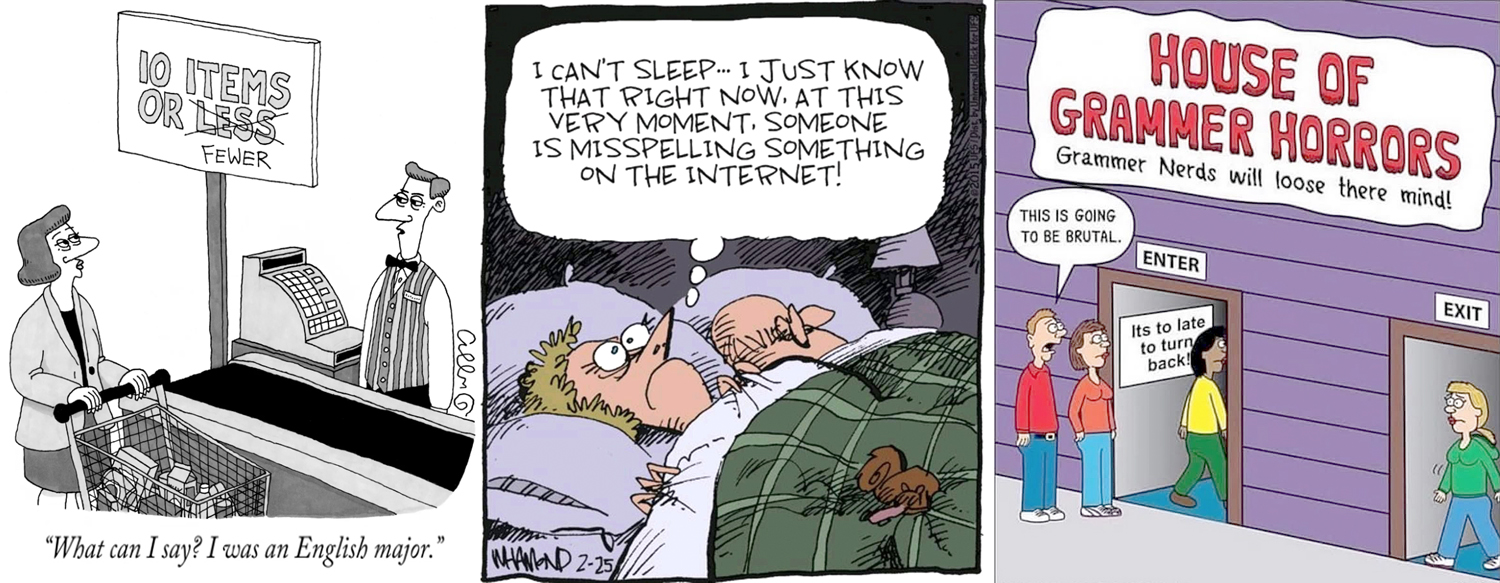
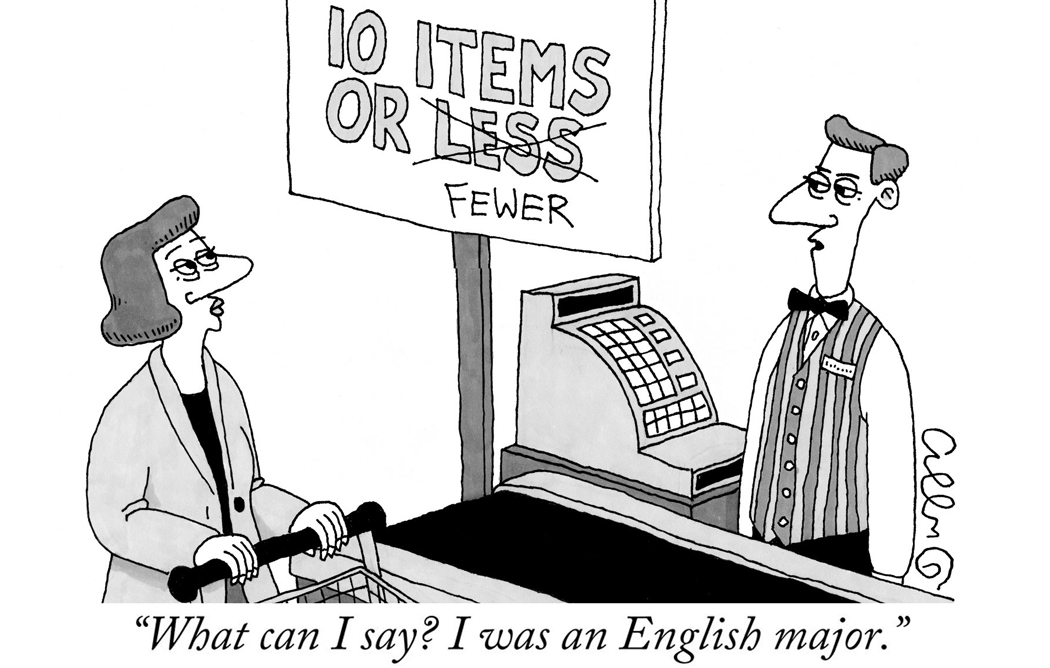
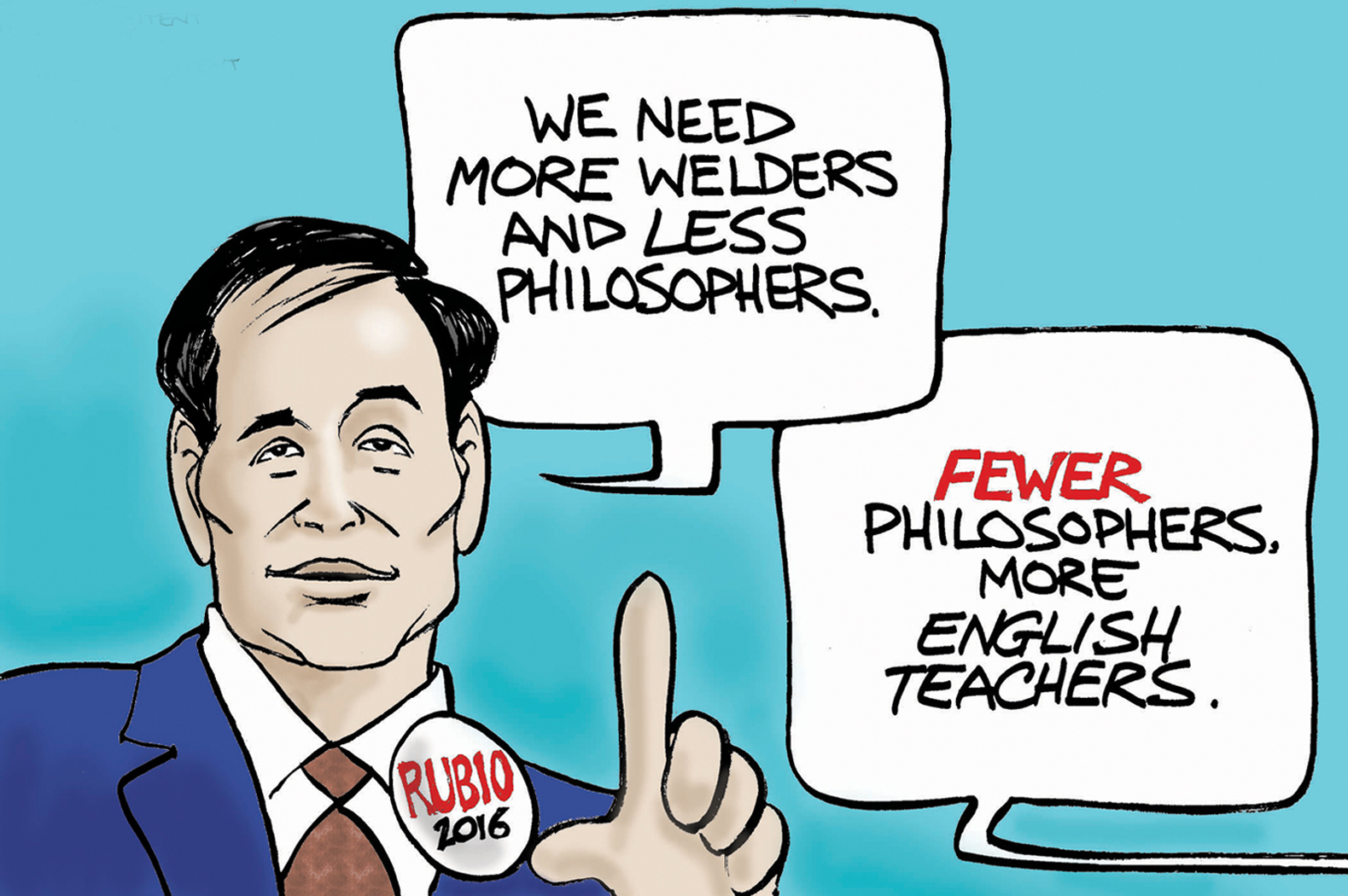
Every time I go to the grocery store I am hit with “10 items or less.” Few people even notice, but the English major notices; we don’t like it. “Comprised of” is a barbarism. “Comprises” includes all of a certain class, not some items in a list of choices. I feel slapped on the cheek every time I come across it mal-used. 

And homonyms: a king’s “rein,” or a book “sited” by an article, or a school “principle” being fired. It happens all the time. It is endemic online. “Their,” “they’re,” “there” — do you know the difference? “You’re,” “your?” Most young’uns IM-ing on their iPhones don’t seem to care. 

And fine distinctions of usage: I am always bothered when I see a murderer get “hung” in an old Western, when we know he was “hanged.” 

Again, most Americans hardly even notice such things. They all get by just fine not caring about the distinction between “e.g.” and “i.e.” In fact, they can get all sniffy about it. 

I know a former medical transcriptionist who typed up a doctor’s notes each day, and would correct his grammar and vocabulary. She corrected the man’s “We will keep you appraised of the outcome,” with “apprised,” and each time, he would “correct” that back to “appraised.” Eventually, she gave up on that one. 

English majors know the difference between “imply” and “infer,” and it causes a hiccup when they are mixed up. “Disinterested” mean having no stake in the outcome; “uninterested” means you cannot be arsed. They are not interchangeable. 

We EMs cringe when we hear “enormity” being used to mean “big,” when it actually means a “great evil.” And “unique” should remain unique, unqualifiable. Of course, “literally” is used figuratively literally all the time.  Something is not “ironic” simply because it is coincidental. 

I hear the phrase “begging the question” almost every day, and always misused. It refers to circular reasoning, not to “raising the question.” I hold my ears and yell “Nya-nya-nya” until it is over. 

Some things, which used to be wrong, are slowly being folded into the language quietly, and our EM ears may still jump at hearing them. “Can” and “may” used to mean distinct things, but that difference was lost at least 100 years ago. We can give that one up. And “hopefully” used to be a pariah word, but we have to admit, it serves a grammatical function and we have to let it in, however grudgingly. 

My wife is particularly sensitive to the non-word, “alot.” She absolutely hates it. I understand, although I recognize a need for it. “A lot” is a noun, and sometimes we use it as an adjective: “I like chocolate a lot.” Perhaps “alot” will eventually become an adjective. Not for Anne. 

People are different and have differing talents. We seem to be born with them. Some people grasp mathematics in a way a humanities student will never be able to match. Some have artistic or musical talent. We can all learn to play the piano, but only certain people can squeeze actual music out of the notes. 
And each of us can learn our native tongue, but some of us were born with a part of our brains attuned to linguistic subtlety. We soaked up vocabulary in grade school; we won spelling bees; we wrote better essays; we cringe at the coarseness of political speech. Language for the born English major is a scintillating art, with nuance and emotion, shadings and flavors. We savor it: It is not merely functional. 

(I loved my vocabulary lessons in grade school, and when we were asked to write sentences using that week’s new words, I tried to use them all in a single sentence. People who show off like that often become writers.)
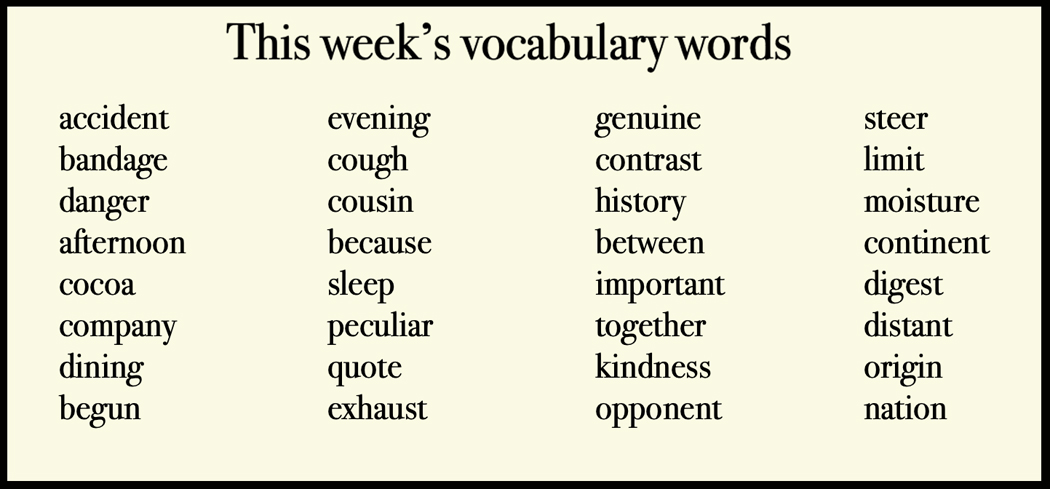
Just as my piano playing, even when I learned whole movements of Beethoven sonatas, was always the equivalent of speaking English as a second language, my best friend, Sandro, could sit at a piano and every key was fluent, natural, and expressive. It was a joy to hear him play; a trial for me just to hit the right notes. 

I am saying that those of us who gravitate to speech, writing, and language in general, have something akin to that sort of talent. It is inherent, and it can be a curse. Bad language has the same effect on our ear as a wrong note on a piano. 

We can feel the clunkiness of poorly expressed thoughts, even if they are grammatical. Graceful language is better. And so, we can rankle at awkward expressions.
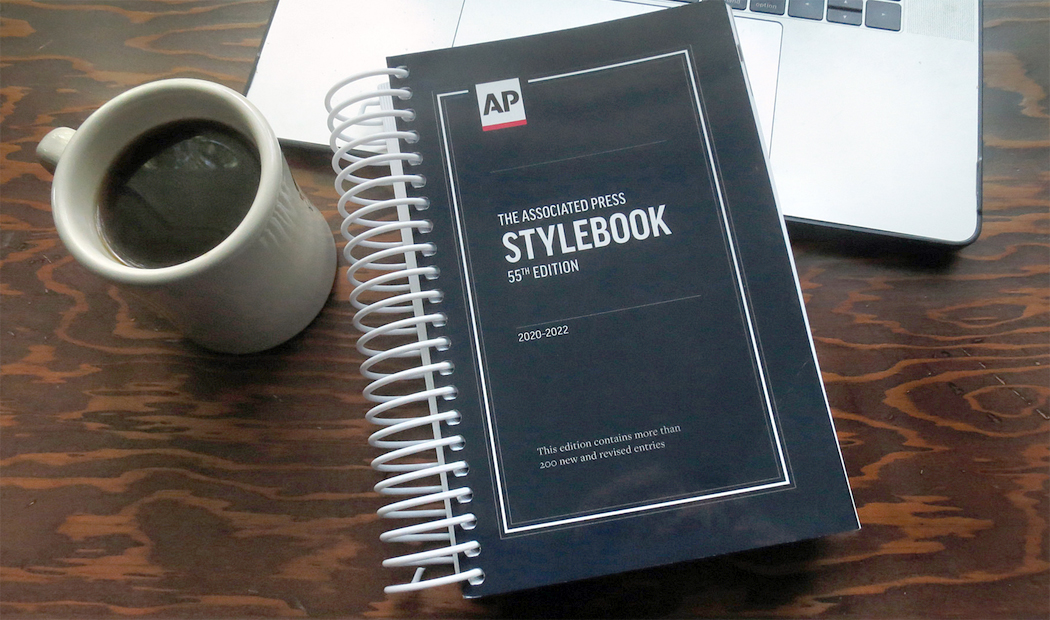
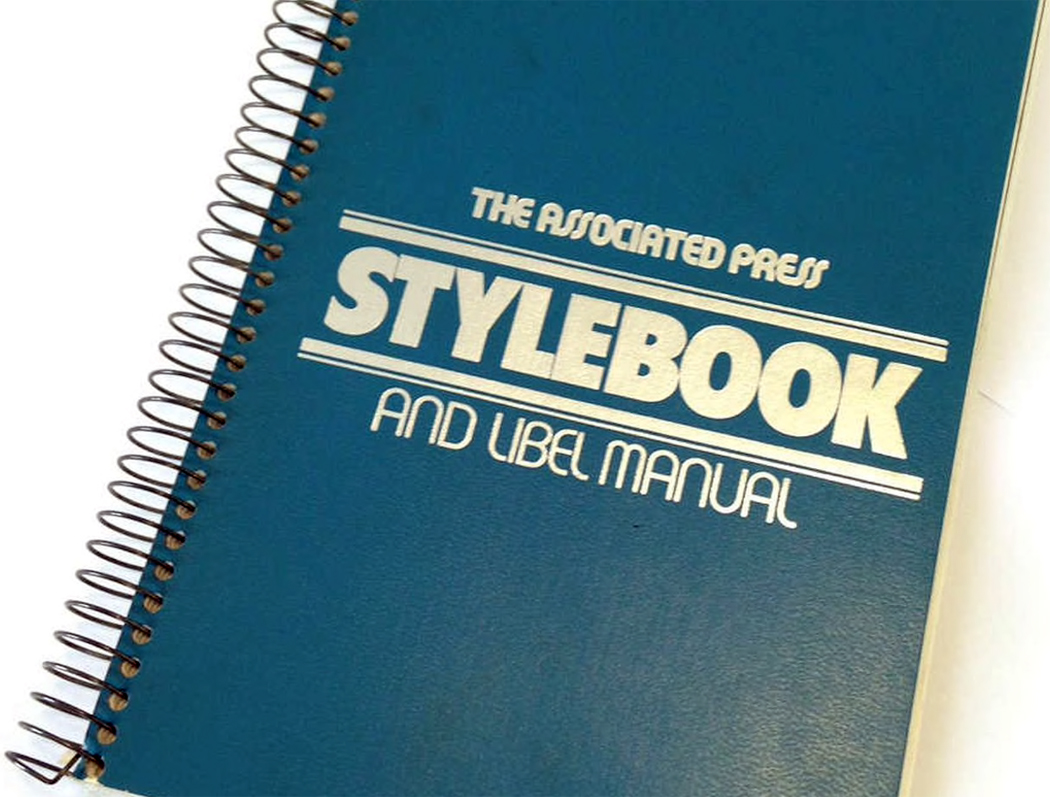
I have a particular issue, which I share with most aging journalists, which is that I had AP style drummed into me — that is, the dicta of the Associated Press Stylebook, that coil-bound dictator of spelling, grammar and usage. One understands that AP style was never meant to be an ultimate arbiter of language, but rather a means of maintaining consistency of style in a newspaper, so that, for instance, on Page 1 we didn’t have a “gray” car and on Page 3 one that was “grey.” 

And so, the rules I lived by meant that there was no such thing as 12 p.m. Is that noon or is that midnight? Noon was neither a.m. nor p.m. Same for midnight. They had their own descriptors. “Street” might be abbreviated in an address, but never “road.” Why? I never knew, but in my first week on the copy desk I had it beaten into me when I goofed. 

“Back yard” was two words, but one word as an adjective, “backyard patio.” Always. “Air bag,” two words; “moviegoer, one word. “Last” and “past” mean different things, so, not “last week,” unless Armageddon is nigh, but “this past week.” Picky, picky. 

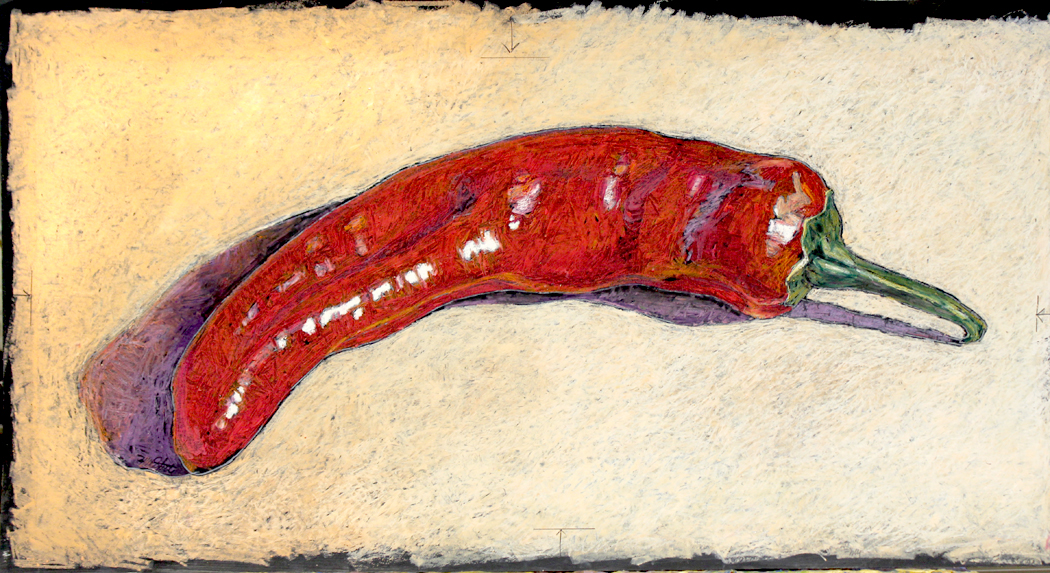
I had to learn all the entries in the stylebook. The 55th edition of the AP Stylebook is 618 pages. And this current one differs from the one I had back in 1988; some things have changed. Back then, the hot pepper was a “chilli pepper,” and the Southwestern stew was “chili.” I lived and worked in Phoenix, Ariz., and we all understood this would get us laughed off the street, and so exceptions were made: yes, it’s a chile. 

Here I am, nearly 40 years later, and retired for the past 12 years, and I still tend to follow AP style in this blog, with some few exceptions I choose out of rebellion. But I still italicize formal titles of books, music and art, while not italicizing chapter names or symphony numbers, per AP style. I still spell out “r-o-a-d.” It’s a hard habit to break. 
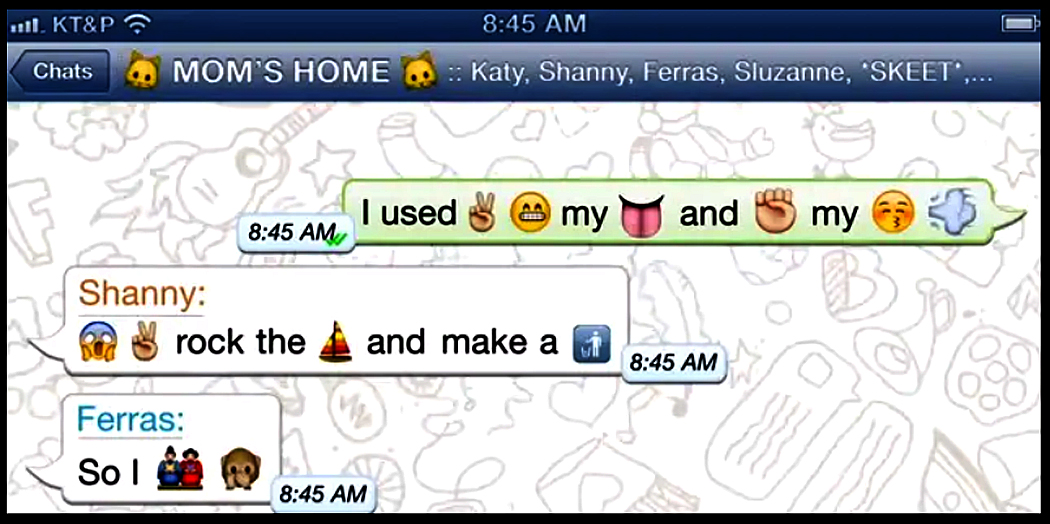
The online world seems to care little for the niceties of English. We are even tending back to hieroglyphs, where emojis or acronyms take the place of words and phrases. LMAO, and as a card-carrying alte kaker, I often have to Google these alphabet agglutinations just to know what my granddaughters are e-mailing me. Their seam to be new 1s each wk. 

And don’t get me started on punctuation.
When faced with some difficult problem of geometry or algebra, I usually just throw up my hands and say, “Don’t look at me, I was an English major.” I’ve noticed, however, that Anne will always phrase that a little differently. She say would shrug and say, “I’m an English major.” 

The difference in tense speaks to how we each view ourselves and our place in the world. When it comes to things such as grammar or usage, I tend to be more flexible while Anne has more in common with a British sergeant-major. For her, there is right and there is wrong. 

Of course, there are those more lax than I am and some more unbending than Anne. It is a spectrum. I have many peeves about poor usage, and especially misused words. I admit the definitions of such words as “enormity” and “disinterested” are changing and in the future they will mean whatever their speakers intend them to mean. But for now, it gives me hives when I hear a newscaster say, “There are less people having babies now.” Drives me nuts. But for Anne, this is not so much fighting a rear-guard action against change, as building a fortress against incoherence. “Things mean what they mean; illiteracy is no excuse.” 

To gauge where you fall in the spectrum, consider a simple sentence: “Who did you give the book to?” There are two things “wrong” with this sentence, but how you intend to fix it, or fix it at all, may help you decide. 

If you are one of those people who still believe that a sentence should not end with a preposition, then you will change it to, “To who did you give the book?” But that sounds all wrong. No one would actually say that. 

And that’s because of the other problem — “who” should be “whom.” And so it becomes “To whom did you give the book?” But that can sound pedantic. So, you choose one mistake over the other and wind up with, “Whom did you give the book to?” 

So, you pick your poison. Of course, in reality, you wouldn’t say any of these. What you would actually say is “Hooja give the book to?” And language is filled with hoojas. 

We don’t speak word-by-word, but in phrases, and those phrases become units all their own. “Jeet jet?” Did you eat yet? “I’m gonna sell the old Ford.” “I dunno what is correct.” Sometimes these vocal elisions make it back into print. How many times have you seen “I would of gone” instead of “I would have gone?” But, of course, this isn’t so much an illiteracy but a back-transference from spoken language. You say, “I would’ve gone.” If that’s what you hear, you might very well think you’ve heard “would of” and then use it in your Tweet. 

These back-transferences now often make it into print, mostly in dialog in fiction, to make the speech sound more natural. Ultimately, these have a chance to become standard English, and in the same way that “a nuncle” became “an uncle” by printing what the ear heard. At some point in the future, it will be in the Chicago Manual of Style to write, “We’re gonna study alot of stuff we dunno much about.” 

That brings up “a lot,” which is one of the main bugbears for Anne. She yells at the page when she comes across “alot.” The word bothers me, too, but not as much as it rankles her. And I have to admit that at some point in the not-too-distant future, it will be common in dictionaries. 

That’s how languages go. What is an ugly and ignorant solecism in one age becomes propriety in the next. Garish new money becomes respectable old money when the billionaire entrepreneur is knighted. 

So, language changes, but almost never by fiat. Suggestions can be made. They may catch on, they may not. 

One of the most successful came with Noah Webster’s desire to create a “more American” spelling. His 1806 Compendious Dictionary of the English Language sought to simplify spelling. Eventually, his changes caught on and we now spell “color” without a superfluous “u,” and “theater” with the “e” in its functional place. 

Among British language reformers were George Bernard Shaw, H.G. Wells, Alfred Tennyson, and Charles Dickens. A Simplified Spelling Society was created in 1908 (currently, the English Spelling Society). America had its own Simplified Spelling Board, begun two years earlier, with a grant from Andrew Carnegie. President Theodore Roosevelt issued an order for all federal documents to adopt the suggested new spellings. That lasted short while. The old spellings were soon re-instated. The Louisville Courier-Journal published an article ridiculing him, which stated: “Nuthing escapes Mr. Rucevelt. No subject is tu hi fr him to takl, nor tu lo for him to notis.”

But if these things can’t be imposed from above, they can take hold from below. Consider the effect of Twitter and the Internet on language: “R U There?” Texting language now occasionally shows up in print. Expect more of it.

Language changes because there is a need, or because the newer versions seem simpler, or get adopted because technology or culture changes. 

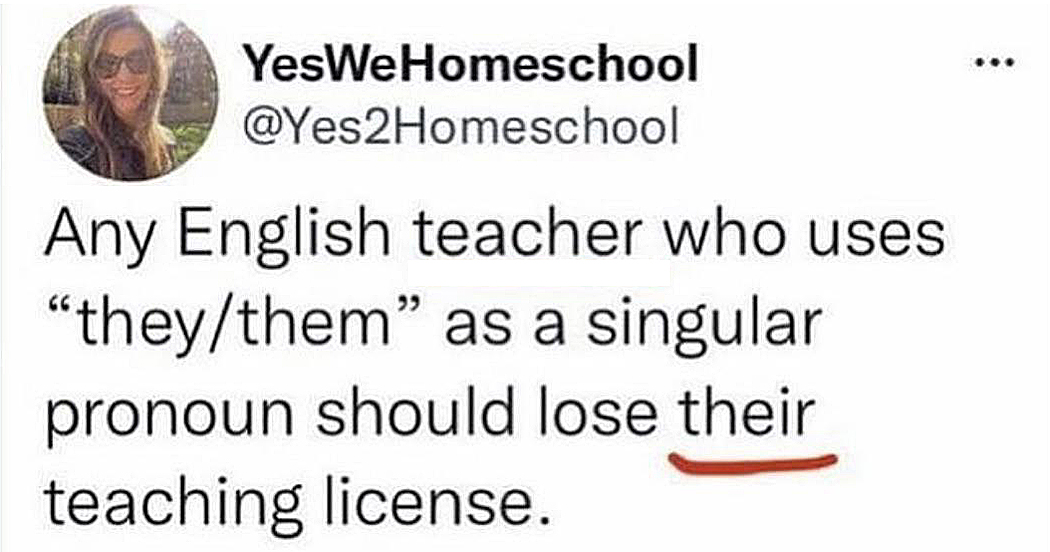
There are those who want to invent new pronouns to accommodate the rising awareness of gender fluidity. Some new words have been floated, such as “xe,” “xyr,” “em,” or “fae.” None has caught on. Given time, one of these may win out and may become normal. I don’t count on it. But the use of a so-called “singular they,” has long infiltrated common usage: “Everyone should take their hat off.” Solves an awkward problem (“his or her” is just cumbersome) and has actually been hiding in the language for centuries, no matter what edicts are handed down from hide-bound grammarians. 

The last time a new gender-bound word has successfully entered the language was “Ms.” It is now used by almost everyone, and by many who don’t even know it was lobbied for in the 1970s when Ms. magazine first began publication. (And first proposed as far back as 1901). It is just a normal part of our vocabulary now, although those of us who remember when it was new can recall the angry backlash that came from the stodgier sections of our society. 
Another group wants to get rid of apostrophes in contractions. Dont need them, they say. Context makes the meaning clear. “What Id like to study is the human id.” “Dont eat the yellow snow.” There are very few places where the meaning isnt clear, and even with the apostrophes, there is plenty of confusion in the language. 

Linguist Geoff Lindsey points out that in spoken language, we don’t really ever hear the “t” in such words as “can’t.” That when we speak them, the difference between “can” and “can’t” isn’t in the “t” but in the vowel. If you say, “I can’t do it,” you actually say, “I can’ do it.” But you pronounce the “a” as the “a” in “bad,” while when you say “I can do it,” the vowel goes like “ken” — “I ken do it.” 

So perhaps we don’t need the “t” — or perhaps we can just take out the apostrophe and say “cant.” And then write “ken” when we mean the opposite. 

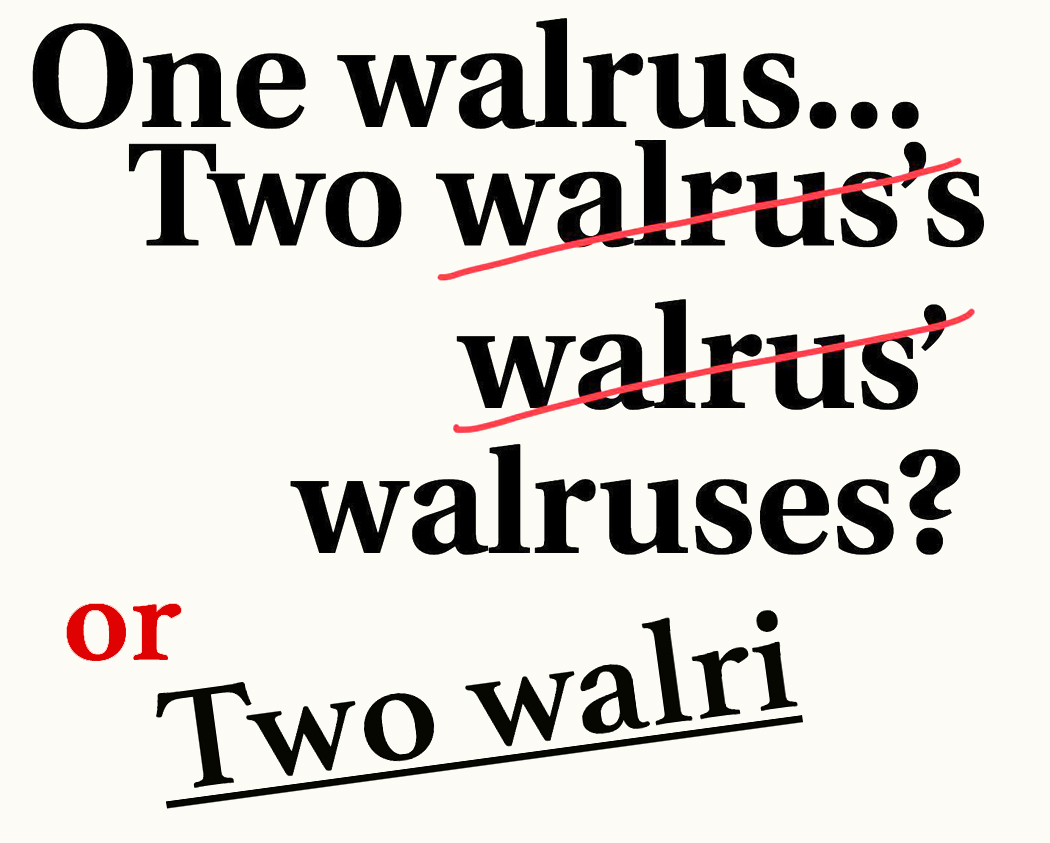
I’m not sure eliminating such apostrophes would make up for the number of supererogatory apostrophes added to create plurals. This is an ugliness that leaves me feeling like King Canute before the sea. It makes me hiccup every time I see it, but I am powerless to stop the rising tide. Perhaps in 40 or 50 years, even the Chicago Manual of Style will accept it as standard. 

There are many normal progressions in the history of languages, expected simplifications and sometimes added complexities. Words that used to be two words became hyphenated expressions and then turned into compound words. Cellphone used to be cell phone; webpage was once web page, then, briefly web-page; hotdog was hot dog. English moves in the direction of eliding these words back down to one. 

It has been pointed out that the perfect tense in English is fading. Where we once said “Have you finished yet” we often say instead, “Did you finish yet.” 

Irregular verbs are being replaced by regularized versions. I remember when I was a journalist and required to use Associated Press style, we had to used “burned” instead of “burnt,” or “dived” instead of “dove.” I liked the older words with more taste in the mouth. But the direction of our language is toward regularization, at least in words less seldom used. We now sneaked instead of snuck; pleaded instead of pled; dreamed instead of dreamt. Maybe at some point “I did it,” will become “I dood it.” 

Also, as we head into the soft middle years of the new century, borrowings from Spanish will become more common. They’ve always been there, from rodeo to hoosegow, but newer ones will proliferate. English has always been promiscuous and up to 80 percent of our vocabulary has been acquired from other languages (depending on your starting point — where was English first English and not related at all to what we speak now?).

And speech is the important issue. English has had a relatively quiescent period for the past several hundred years, as the language has been held steady by print. But as electronic media take over, spoken language is becoming more central, whether spoken on television or radio, or mimicked in texting and tweeting. Before print, English spelling varied widely. It looks like that Wild West of orthography could be our future.

And if so, then the hoojas will take over the tongue. And the didjas, the woodjas, the havyas and canyas.

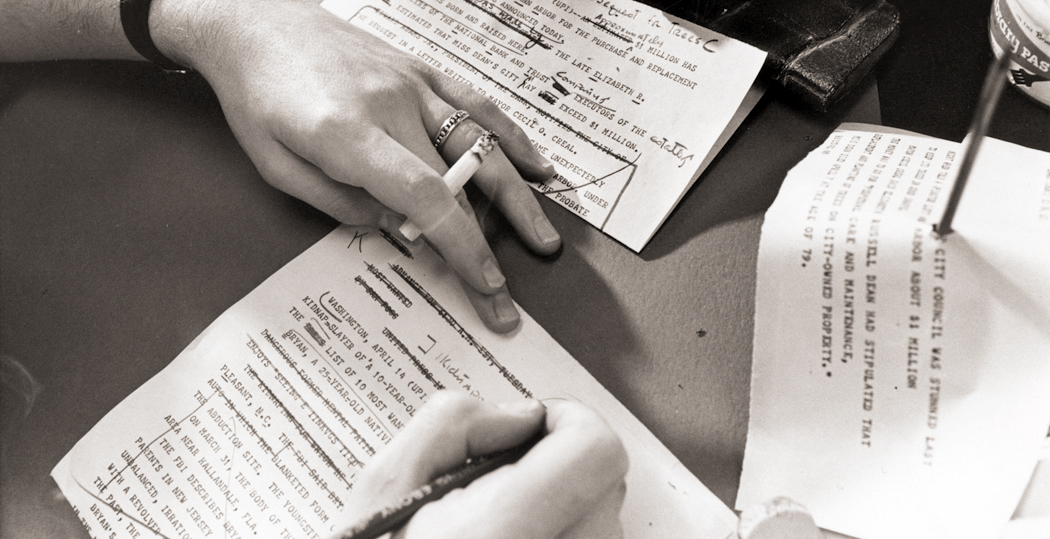
The Arizona Republic newsroom, ca. 1988 

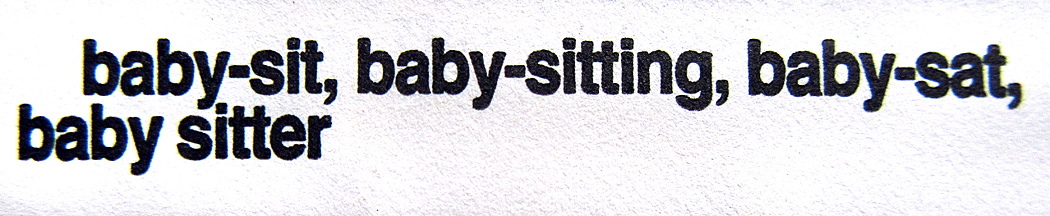
For 25 years, working at the newspaper, I had a holy scripture. It was  my bible. And it was just as strict and just as puzzling as Leviticus or Deuteronomy. It told me how to spell certain words, how to punctuate, how to think. It told me, for instance, that “baby sitter” is two words, but that “baby-sitting” requires a hyphen. It told me that third-graders were not students, but instead, they were “pupils.” And that in street addresses, it was required to abbreviate “Street” as “St.” but ordered me never to shorten “Road” to “Rd.” Never. 

It was the Associated Press Stylebook, and the version that first guided my work was the 1988 edition. In it were many notable proscriptions and admonitions. I was not to spell “gray” as “grey.” Unless it was in “greyhound.” That the past tense of “dive” should be “dived” and not “dove.” That donuts didn’t exist; they were “doughnuts.” 

There could be no 12 a.m. or 12 p.m. They were “midnight” and “noon,” although which was which was entirely the problem with the “a.m.-p.m.” formulations. (Is 12 a.m. noon or midnight?) Noon is technically neither morning nor afternoon, but the non-existent mini-instant between the two. 

 “Last Tuesday” should be the “past Tuesday,” unless, of course, time ended and it really was the last one. 

These and many other formulations became second-nature to anyone working in journalism. Some of these may have changed since 1988 — usage changes and the AP takes that into account, even if ever so slowly: They are always playing catch-up. (“Ketchup,” by the way should never be “catchup” or “catsup.”)

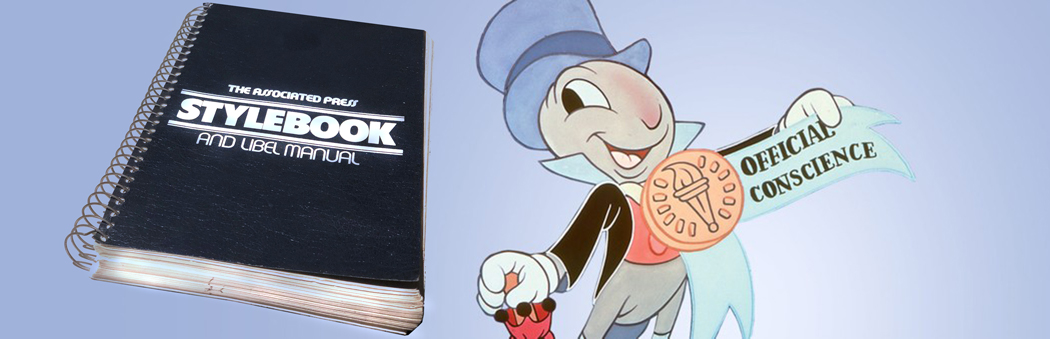
Even a decade after retiring, I still have lodged in the noggin all these rules and prescriptions and when writing this blog, I tend naturally to notice whether I’ve put my period inside or outside the close-parenthesis, depending on whether the parenthetical remarks are inside a longer sentence, or in a separate sentence of its own. Anyone who has written for a newspaper will likely have the same grammatical Jiminy Cricket whispering in his ear to get it right. 

Yet, I grew up spelling “grey” with an “e.” And some of the rules in the stylebook seemed so arbitrary. With my Norwegian background and its Germanic language, I always favored butting words into each other rather than separating them as two words, or with a hyphen. What could be wrong with “babysitter?” It seemed natural. 

But I was disabused by my copy desk chief, who explained to me — the way a patient adult has to explain to a toddler having a tantrum — that the point of AP style was never to enforce a “correct” English style, but merely to make sure that we didn’t see on the same page one column with a “grey” and another with a “gray.” “It’s so we don’t look like idiots,” he said. It was not to choose the “right” style, but to choose a consistent one. And AP style was what newspapers everywhere agreed would be the version to provide that. 

Still, there were times that the Stylebook asked us to do patently dumb things that would, indeed, make us look like idiots. In Arizona, where I was working, Mexican food was really good — and really Mexican (not just Taco Bell) — remember this was 1988 before Mexican supplanted Italian or Chinese as the foreign cuisine of choice — and we knew the differences among the many types of chile peppers — jalapeño, chipotle, anchos, etc. — but the Associated Press was telling us we should spell the word as “chili.” We would have looked like fools to our readers, who knew better. So, our management slyly gave us permission to overrule the stylebook and spell the word as it should be. “Chile.” The AP Stylebook eventually caught up with us, and now allows “chile” to describe the capsicum peppers. 

Most recently, AP relented on “pupil” and “student,” so first-graders are permitted to be students. It is a slow process. 

Much of the stylebook does concern itself with correct grammar and proper spelling, just to make sure we writers didn’t accidentally write “discrete” when we meant “discreet,” or forget how many double letters you have in “accommodate.” But most of the important issues concern just how our newspaper would deal with the fuzziness of certain locutions. Is a minister “Rev. So-and-So” or “the Rev. So-and-So?” Can we use “CIA” in a story without having to first explain it as the Central Intelligence Agency? 

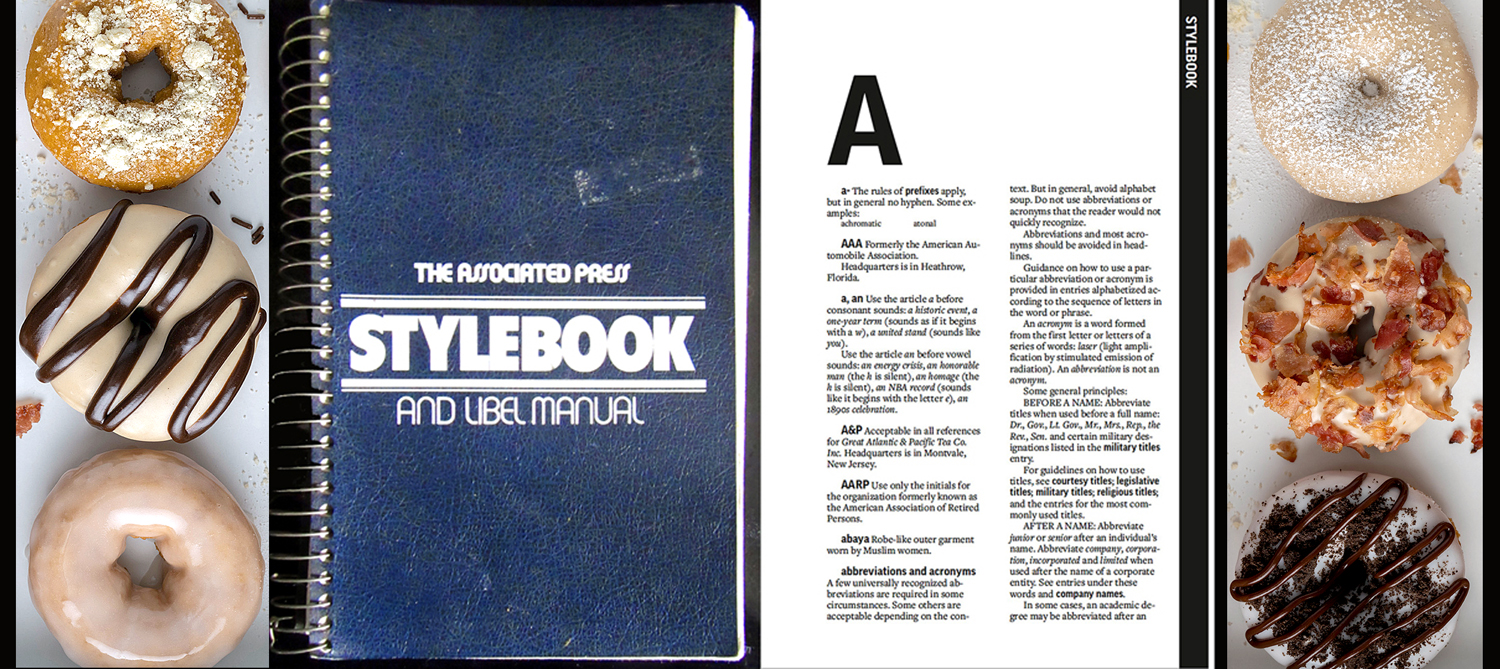
I thought that non-journalist readers might enjoy a little peek into the old stylebook for a few of my favorite choice entries, starting with the letter “A.” These are all directly from the 1988 edition of the AP Stylebook. 

A

A.D. Acceptable in all references for anno Domini: in the year of the Lord. Because the full phrase would read in the year of the Lord 96, the abbreviation A.D. goes before the figure for the year: A.D. 96. Do not write: The fourth century A.D. The fourth century is sufficient. If A.D. is not specified with a year, the year is presumed to be A.D. 

From addresses Spell out and capitalize First through Ninth when used as street names; use figures with two letters for 10th and above 7 Fifth Ave., 100 21st St., 600 K St. N.W. Do not abbreviate if the number is omitted: East 42nd Street, K Street Northwest.

all right (adv.) Never alright. Hyphenate only if used colloquially as a compound modifier: He is an all-right guy

ampersand (&) Use the ampersand when it is part of a company’s formal name: Baltimore & Ohio Railroad, Newport News Shipbuilding & Dry Dock Co. The ampersand should not otherwise be used in place of and

ax Not axe. The verb forms: ax, axed, axing

B

baloney Foolish or exaggerated talk. The sausage or luncheon meat is bologna.

barbecue Not barbeque or Bar-B-Q.

brussels sprouts

C

collide, collision Two objects must be in motion before they can collide. An automobile cannot collide with a utility pole, for example. 

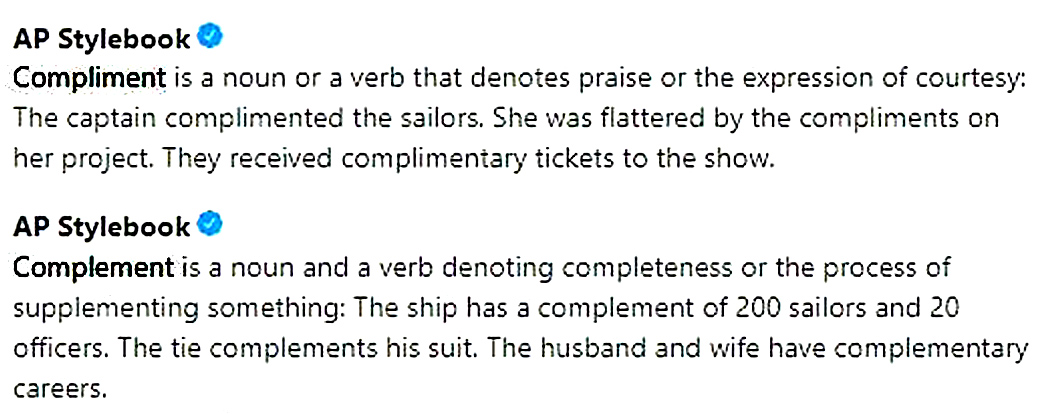
Comprise Comprise means to contain, to include all or embrace. It is best used only in the active voice, followed by a direct object: The United States comprises 50 states. The jury comprises five men and seven women. Never use comprised of

controversial An overused word; avoid it. 

crawfish Not crayfish. An exception to the Webster’s New World based on the dominant spelling in Louisiana, where it is a popular delicacy. 

cupful, cupfuls Not cupsful

D

decades Use Arabic figures to indicate decades of history. Use an apostrophe to indicate numerals that are left out; show plural by adding the letter s: the 1890s, the ’90s, the Gay ’90s, the 1920s, the mid-1930s

demolish, destroy Both mean to do away with something completely. Something cannot be partially demolished or destroyed. It is redundant to say totally demolished or totally destroyed

different Takes the preposition from, not than

doughnut Not donut.

E

engine, motor An engine develops its own power, usually through internal combustion or the pressure of air, steam or water passing over vanes attached to a wheel: an airplane engine, an automobile engine, a jet engine, a missile engine, a steam engine, a turbine engine. A motor receives power from an outside source: an electric motor, a hydraulic motor

en route Always two words. 

ensure, insure Use ensure to mean guarantee: Steps were taken to ensure accuracy. Use insure for references to insurance: The policy insures his life

even-steven Not even-stephen.

F

Fannie Mae See Federal National Mortgage Association.
Fannie May A trademark for a brand of candy. 

farther, further Farther refers to physical distance: He walked farther into the woods. Further refers to an extension of time or degree: She will look further into the mystery

fulsome It means disgustingly excessive. Do not use to mean lavish, profuse. 

[“F” is also home to a host of confused pairs and the stylebook makes sure we understand the usage difference between “fewer” and “less;” “figuratively” and “literally;” and “flaunt” and “flout;” and “flounder” and “founder;” and “forgo” and “forego.” It is a minefield of potential oopses.]


G

gamut, gantlet, gauntlet A gamut is a scale or notes of any complete range or extent. A gantlet is a flogging ordeal, literally or figuratively. A gauntlet is a glove. To throw down the gauntlet means to issue a challenge. To take up the gauntlet means to accept a challenge. 

ghetto, ghettos Do not use indiscriminately as a synonym for the sections of cities inhabited by minorities or the poor. Ghetto has a connotation that government decree has forced people to live in a certain area. In most cases, section, district, slum, area or quarter is the more accurate word. Sometimes a place name alone has connotations that make it best: Harlem, Watts.

girl Applicable until 18th birthday is reached. Use woman or young woman afterward. 

glamour One of the few our endings still used in American writing. But the adjective is glamorous.

go-go [This was the 1988 edition, after all.]

grisly, grizzly Grisly is horrifying, repugnant. Grizzly means grayish or is a short for for grizzly bear

gypsy, gypsies Capitalize references to the wandering Caucasoid people found throughout the world. Lowercase when used generically to mean one who is constantly on the move: I plan to become a gypsy. She hailed a gypsy cab.

H

half-mast, half-staff On ships and at naval stations ashore, flags are flown at half-mast. Elsewhere ashore, flags are flown at half-staff

hang, hanged, hung One hangs a picture, a criminal or oneself. For the past tense or the passive, use hanged when referring to executions or suicides, hung for other actions.

hangar, hanger A hangar is a building. A hanger is used for clothes. 

hurricane Capitalize hurricane when it is part of the name that weather forecasters assign to a storm: Hurricane Hazel. But use it and its — not she, her or hers — in pronoun references. And do not use the presence of a woman’s name as an excuse to attribute sexist images of women’s behavior to a storm, for example such sentences as: The fickle Hazel teased the Louisiana coast

I

imply, infer Writers or speakers imply in the words they use. A listener or reader infers something from the words. 

injuries They are suffered or sustained, not received

innocent Use innocent, rather than not guilty, in describing a defendant’s plea or a jury’s verdict, to guard against the word not being dropped inadvertently. 

J

jargon The special vocabulary and idioms of a particular class or occupational group. In general, avoid jargon. When it is appropriate in a special context, include an explanation of any words likely to be unfamiliar to most readers. See dialect

junior, senior Abbreviate as Jr. and Sr. only with full names of persons or animals. Do not precede by a comma: Joseph P. Kennedy Jr. The notation II or 2nd may be used if it is the individual’s preference. Note, however, that II and 2nd are not necessarily the equivalent of junior — they often are used by a grandson or nephew. If necessary to distinguish between father and son in second reference, use the elder Smith or the younger Smith

K

ketchup Not catchup or catsup

K mart No hyphen, lowercase m. Headquarters is in Troy, Mich.

L

lady Do not use as a synonym for woman. Lady may be used when it is a courtesy title or when a specific reference to fine manners is appropriate without patronizing overtones. 
late Do not use it to describe someone’s actions while alive. Wrong: Only the late senator opposed this bill. (He was not dead at that time.)

lectern, podium, pulpit, rostrum A speaker stands behind a lectern, on a podium or rostrum, or in the pulpit

M

malarkey Not malarky

May Day, mayday May Day is May 1, often observed as a festive or political holiday. Mayday is the international distress signal, from the French m’aidez, meaning “help me.”

milquetoast Not milk toast when referring to a shrinking, apologetic person. Derived from Caspar Milquetoast, a character in a comic strip by H.T. Webster. 

minus sign Use a hyphen not a dash, but use the word minus if there is any danger of confusion. Use a word, not a minus sign to indicate temperatures below zero: minus 10 or 5 below zero

mishap A minor misfortune. People are not killed in mishaps.

N

Negro Use black or Negro, as appropriate in the context, for both men and women. Do not use Negress

No. Use as the abbreviation for number in conjunction with a figure to indicate position or rank. No. 1 man, No. 3 choice. Do not use in street addresses, with this exception: No. 10 Downing St., the residence of Britain’s prime minister. Do not use in the names of schools: Public School 19.

non-controversial All issues are controversial. A non-controversial issue is impossible. A controversial issue is redundant. 

O

From obscenities, profanities, vulgarities Do not use them in stories unless they are part of direct quotations and there is a compelling reason for them. … In reporting profanity that normally would use the words damn or god, lowercase god and use the following forms: damn, damn it, goddamn it. No not, however, change the offending words to euphemisms. Do not, for example change damn it to darn it. … If a full quote that contains profanity, obscenity or vulgarity cannot be dropped but there is no compelling reason for the offensive language, replace letters of an offensive word with a hyphen. The word damn, for example, would become d – – – or – – – –

OK, OK’s, OK’ing, OKs Do not use okay

opossum The only North American marsupial. No apostrophe is needed to indicate missing letters in a phrase such as playing possum.

P

palate, palette, pallet Palate is the roof of the mouth. A palette is an artist’s paint board. A pallet is a bed. 

pantsuit Not pants suit

poetic license It is valid for poetry, not news or feature stories.

pom-pom, pompon Pom-pom is sometimes used to describe a rapid-firing automatic weapon. Define the word if it must be used. A pompon is a large ball of crepe paper or fluffed cloth, often waved by cheerleaders or used atop a hat. It is also a flower that appears on some varieties of chrysanthemums. 


From Prison, jail Do not use the two words interchangeably. … Prison is a generic term that may be applied to the maximum security institutions often known as penitentiaries and to the medium security facilities often called correctional institutions or reformatories. All such facilities confine people serving sentences for felonies. A jail is a facility normally used to confine people serving sentences for misdemeanors, people awaiting trial or sentencing on either felony or misdemeanor charges, and people confined for civil matters such as failure to pay alimony and other types of contempt of court. 

punctuation Think of it as a courtesy to your readers, designed to help them understand a story. Inevitably, a mandate of this scope involves gray areas. For this reason, the punctuation entries in this book refer to guidelines rather than rules. Guidelines should not be treated casually, however. 

R

raised, reared Only humans may be reared. Any living thing, including humans may be raised

ranges The form: $12 million to $14 million. Not: $12 to $14 million

ravage, ravish To ravage is to wreak great destruction or devastation: Union troops ravaged Atlanta. To ravish is to abduct, rape or carry away with emotion: Soldiers ravished the women. Although both words connote an element of violence, they are not interchangeable. Buildings and towns cannot be ravished

reluctant, reticent Reluctant means unwilling to act: He is reluctant to enter the primary. Reticent means unwilling to speak: The candidate’s husband is reticent

restaurateur No n. Not restauranteur

S

Saint John The spelling for the city in New Brunswick. To distinguish it from St. John’s, Newfoundland

San‘a It’s NOT an apostrophe in the Yemen capital’s name. It’s a reverse apostrophe, or a single opening quotation mark. 

Satan But lowercase devil and satanic

sex changes Follow these guidelines in using proper names or personal pronouns when referring to an individual who has had a sex-change operation: If the reference is to an action before the operation, use the proper name and gender of the individual at that time. If the reference is to an action after the operation, use the new proper name and gender. For example: Dr. Richard Raskind was a first-rate amateur tennis player. He won several tournaments. Ten years later, when Dr. Renee Richards applied to play in tournaments, many women players objected on the ground that she was the former Richard Raskind, who had undergone a sex-change operation. Miss Richards said she was entitled to compete as a woman

Solid South Those Southern states traditionally regarded as supporters of the Democratic Party. 

SOS The distress signal. S.O.S (no final period) is a trademark for a brand of soap pad. 

St. John’s The city in the Canadian province of Newfoundland. Not to be confused with Saint John, New Brunswick

straight-laced, strait-laced Use straight-laced for someone strict or severe in behavior or moral views. Reserve strait-laced for the notion of confinement, as in a corset. 

straitjacket Not straight-jacket.

T

teen, teen-ager (n.) teen-age (adj.) Do not use teen-aged

that, which, who, whom (pronouns) Use who and whom in referring to people and to animals with a  name. John Jones is the man who helped me. See the who, whom entry. Use that and which in referring to inanimate objects and to animals without a name. 

Truman, Harry S. With a period after the initial. Truman once said there was no need for the period because the S did not stand for a name. Asked in the early 1960s about his preference, he replied, “It makes no difference to me.” AP style has called for the period since that time. 

tsar Use czar

U

UFO, UFOs Acceptable in all references for unidentified flying object(s)

Uncle Tom A term of contempt applied to a black person, taken from the main character in Harriet Beecher Stowe’s novel “Uncle Tom’s Cabin.” It describes the practice of kowtowing to whites to curry favor. Do not apply it to an individual. It carries potentially libelous connotations of having sold one’s convictions for money, prestige or political influence.

unique It means one of a kind. Do not describe something as rather unique or most unique

United Rubber, Cork, Linoleum and Plastic Workers of America The shortened forms of United Rubber Workers and United Rubber Workers union are acceptable in all references. Capitalize Rubber Workers in references to the union or its members. Use rubber workers, lowercase, in generic references to workers in the rubber industry. Headquarters is in Akron, Ohio. 

United States Spell out when used as a noun. Use U.S. (no space) only as an adjective.

V

versus Abbreviate as vs. in all uses. 

Vietnam Not Viet Nam

volatile Something which evaporates rapidly. It may or may not be explosive. 

W

war horse, warhorse Two words for a horse used in battle. One word for a veteran of many battles: He is a political warhorse

whereabouts Takes a singular verb: His whereabouts is a mystery.

whiskey, whiskeys Use the spelling whisky only in conjunction with Scotch

X Y Z

X-ray (n., v. and adj.) Use for both the photographic process and the radiation particles themselves. 

yam Botanically, yams and sweet potatoes are not related, although several varieties of moist-fleshed sweet potatoes are popularly called yams in some parts of the United States. 

youth Applicable to boys and girls from age 13 until 18th birthday. Use man or woman for individuals 18 and older. 

ZIP codes Use all-caps ZIP for Zone Improvement Program, but always lowercase the word code. Run the five digits together without a comma, and do not pt a comma between the state name and the ZIP code: New York, N.Y. 10020.

This is the 600th blog entry I’ve written since retiring eight years ago from the writing job I held for 25 years. But as I’ve said many times, a real writer never retires, he just stops getting paid for it. 

During my career, I wrote over 2.5 million words. Since then, I’ve added another million. If you are born a writer, you simply can’t help it. 

(In addition, since 2015, I’ve written a monthly essay for the website of The Spirit of the Senses salon group in Phoenix, Ariz., a continuation of the many salon lectures I gave there for years.)

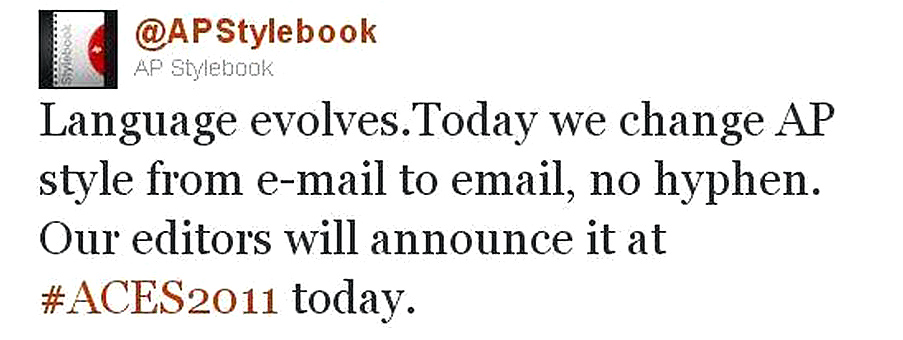
And even when I write an e-mail to friends or family — the kind of note that for most people contains a short sentence, a quick “LOL” and an emoji — I am more likely to write what looks like an old-fashioned missive, the kind that used to come in a stamped envelope and delivered by a paid government worker. An e-mail from me will take a while to read through.They are sent not merely to convey information, but to be read. They have been written, not just jotted down. 

Over the eight years of blogifying, I’ve covered a great many topics. Many on art and art history — I was an art critic, after all — many on history and geography, a trove of travel pieces, a few frustrated political musings and a hesitant offering of oddball short stories (if you can call them by that name.) 

People say, “Write what you know,” but most real writers, myself included, write to find out what I know. The writing is, itself, the thinking. Any mis-steps get fished out in the re-writing. 

Ah, words. I love words. I love sentences, paragraphs, chapters. Although I wrote for a newspaper, where short, simple sentences are preferred, I often tested the patience of my editors as I proved my affection for words by using obscure and forgotten words and by using them often in long congregations. 

“I love long sentences. I’m tired of all the short ones. Hemingway can keep them. Newspapers can urge them. Twitter can mandate them. To hell with them.

“My ideal can be found in the long serpentine railways of words shunted hither and thither over dependent clauses, parenthetical remarks, explanatory discursions and descriptive ambiguities; sentences such as those found in the word-rich 18th century publishing world of Fielding, Sterne, Addison, Steele, or Boswell, and perhaps most gratifyingly in the grand, gravid, orotund sentences of Edward Gibbon, whose work I turn to not so much for information about the grandeur that was Rome, but for the pure sensuous pleasure to be had from those accretive tunes built from the pile of ideas and imagery (to say nothing of ironic asides), and peppered liberally with the notations of colons, semicolons, dashes and inverted commas.”

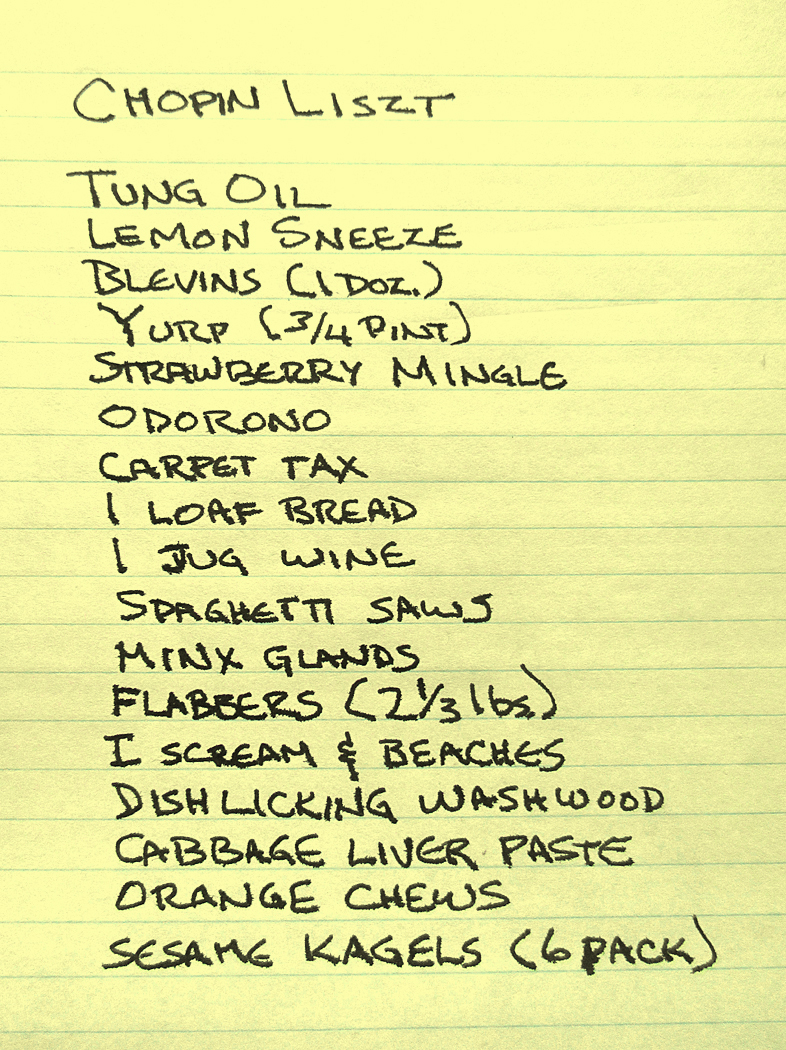
The love of words fuels a fascination with paronomasia. I make up words, play with them, coin spoonerisms and mondegreens and pepper my everyday speech with them. As music critic, I reviewed sympathy orchestras. Sometimes I have trouble trying to mirimba a name. On my shopping list I may need dishlicking washwood. 

I often give my culinary creations names such as Chicken Motocross, Mentil Soup, Ratatootattie, or  — one I borrowed from my brother — Mock Hawaiian Chile. 

When my wife came home from work, I usually asked “How did your Italian?” (“How did your day go?”)

When asked for my astrological sign, I say, “I’m a Copernicus.” My late wife was a Virago. And I’m pretty sure our Orange Bunker Boy was born under the sign of Feces. I call him a would-be Moose-a-loony.

I try to keep unfashionable words in currency. On long car trips with granddaughters, we didn’t count cows, we counted kine. I tend to refer to the girls as the wee bairns, or the kidlings. 

I have no truck with simplifying the language; I will not brook dumbification. The more words we use, the better, and the better inflected those words will be. As we lose words, the slight difference in emphasis and meaning is lost, and a simple word then has to do extra duty to encompass ideas and things that are better understood as different. 

Every word has a dictionary definition, but that definition is little but the skeleton on which the meat and muscle is hung onto. Each word has a nimbus of meaning and affect around it, which is learned by its speakers and readers through long acquaintance. You can always tell when someone has snuffled through a thesaurus, because the fancy word they choose has been stripped of its nimbus, or has an aura that is the wrong color for the spot in which it is placed. In other words, such a writer doesn’t really know the word that has been chosen. The Webster version is only a fuzzy black-and-white photo, not the real thing. 

I have written before how sometimes, instead of doing a crossword puzzle or rearranging my sock drawer, I will make lists of words. Each has a flavor and reading such lists is like perusing a restaurant menu and imagining the aroma and flavor of each offering. It is a physical pleasure, like the major or minor chords of a symphony. Here is a brassy word, there the pungency of an oboe, and over there, the sweet melancholy of a solo cello. 

I think all writers must have something of the same feel for the roundness, spikiness, warmth, dryness or wetness of words. And the way they connect to make new roundnesses, coolnesses, stinks or arousals in sentences. 

Yes, there are some writers — and I can’t pooh-pooh them — who use words in a blandly utilitarian way. Stephen King, for instance, is a great storyteller. He can force you by a kind of sorcery to turn pages. But on a word-by-word level, his writing is flavorless, almost journalistic. I suspect this is a quality he actually aspires to — to make the language so transparent as to be unobservable. I have to admit there are virtues in this, also. But not for me. 

I want a five-course meal of my words. 

Language can take either of two paths: prose or poetry. The first invests its faith in language as a descriptor of systems. It reaches its nadir in philosophy. It makes little difference if it is Plato or Foucault; philosophy — especially the modern sort — is essentially a branch of philology. It seeks to deconstruct the language, as if understanding the words we use will tell us anything about the world we live in. It tells us only about the language we use. Language is a parallel universe to the one we inhabit, with its own rules and grammar, different from the rules and grammar of the real world. 

This has been a constant theme in my own writing. When we say, “A whale is not a fish,” or “A tomato is a fruit, not a vegetable,” we are talking about language only, not about whales or tomatoes. But beyond the language we use to communicate our understanding of the world, no matter how vast our vocabulary, the world itself is infinitely larger, more complex, diverse, chaotic and unsystematic, not to be comprehensively understood by mere mortal. 

And I should clarify, by language, I mean any organized system of thought or communication. Math is just language by other means. When I use the term “language” here, I mean what the Greeks called “logos” — not simply words, or grammar, syntax or semantics, but any humanly communicated sense of the order of the cosmos. Not one system can encompass it all. 

Consider Zeno’s paradox: That in a race between Achilles and a tortoise, if you give the tortoise a headstart, no matter how little, Achilles can never catch up. Before he does, he has to go halfway, and so is still behind the tortoise, and before he goes the remaining distance he must go again halfway. Thus he can never catch up. The paradox is purely in the forms of logic, not in the reality. We all know Achilles will catch up in only a few strides. But the system — the logic, or the words — tells us he cannot. Do not trust the words, at least not by themselves, without empirical evidence to back them up. 

All systems of thought, whether religious, political or scientific, ultimately break down when faced with the weedy complexity of existence.

And so, a good deal of what we all argue about is simply the words we choose to use, not the reality. We argue over terminology. Conservative, liberal? Is abortion murder? These depends entirely on your definitions. 

Poetry, on the other hand — and I’m using the word in its broadest and metaphorical sense — is interested in the things of this world. Yes, it may use words, and use them quite inventively, but its goal is to reconnect us with our own lives. It lives, not in a world of isms, but in one of mud, tofu, children, bunions, clouds and red wheelbarrows. This is the nimbus of which I speak. 

It is ultimately our connection with our own lives that matters, with the things of this world, with the people of our lives that should concern us. It is what provides that nimbus of inexactitude that gives resonance to the words. 

At various times in my career as someone who got paid for writing, I have been asked to speak to groups of students or the curious about my craft. It hasn’t always gone well. 

I remember one time I managed to annoy a community college teacher no end by telling her students to ignore everything she had been hammering into their heads. I didn’t know I was doing that; I was just talking about what I knew through experience. But she had been filling their minds with ugly formulae and what to my mind are tired old saws: Make an outline; use a topic sentence; the rule of threes. As if you could interest readers by rote. 

Part of the problem is that I believe that writers are born, not made. Of course, you can improve anyone’s ability to put down comprehensible sentences, but good spelling and decent grammar do not make a writer. Just as anyone can be taught to draw and sketch, but that won’t make them an artist, anyone can be instructed how to fashion a paragraph or two without embarrassing themselves, but that don’t make’em into Roger Angell. 

One of the things that caused the teacher no end of bother was my insistence that the single most important and defining part of writing was “having something to say.” Without it, no rhetorical device, no repetition of authoritative quotations, no using active rather than passive voice, would suffice. And the truth is, few people have anything to say. 

Of course, everyone thinks they do, but what passes for thought is most often merely the forms of thought, the words that have previously been used to frame the ideas, and hence, someone else’s thoughts. Having something to say is genuinely a rare gift. 

This hardly serves to help the composition-class student or the teacher hoping to form them into perfect little Ciceros. Having something to say requires having had a living experience to draw upon, something original to the writer — a back yard with skunk cabbage, or a two-month deployment with a platoon, or the betrayal of a spouse — and an idiosyncratic reaction to it, something personal and distinct. Instead, most people are just not used to finding words to describe such things and fall back on words they have heard before. Easily understood words and phrases and therefore the mere ghosts of real expression. 

When you use someone else’s words, to that extent you don’t know what you are talking about. 

Being born a writer means being consciously or unconsciously unwilling to accept approximation, to be unsatisfied with the easily understood, to search for the word that more exactly matches the experience. 

One of the consequences is that to be a writer means to re-write. As you read back over what you have just put on paper — or on the computer screen — you slap your forehead over this bit or that. How could I have let that through? And you find something more exact, more telling, more memorable. It is only the third or fourth go-round that feels acceptable. (Each time I come back to a piece I’m working on, I begin again from the beginning and work my way through what I’ve already finished and change things as I go to make myself clearer or my expression more vivid. This means that the top of any piece is usually better written than the end. Sorry.) 

Having something to say and sweating over saying it in a way that doesn’t falsify it — this is what writing is all about. 

But is there anything I can say to those who just want to be a little bit better when turning in a school paper, or writing a letter to the editor, or publishing a novel about your life so far? Here are a few suggestions.

First and most important: Read. Read, read, read. Not so much to imitate what you have found, but to absorb what it is to use language. Just as one doesn’t “learn” English as a youngster, but rather you absorb it. When you are grown, you may have to learn a second language, but as an infant, you simply soak up what you hear and gradually figure it out. And likewise, reading lots of good writing isn’t to give you tricks to follow, but to immerse you in the medium so that it becomes your mother tongue. 

Second: Write. Write, write, write. In his book, Outliers, Malcolm Gladwell famously made the claim that it took 10,000 hours of practice to master a skill. He later explained he only meant that as an average, but the issue remains: You can’t become a writer without writing. Over and over, until it becomes second nature and all the amateur’s kinks are driven out. Write letters, journals, blogs — it doesn’t matter what, but writing and doing it constantly makes you a better writer. 

Third: Fill the well you draw from. Nothing will come of nothing. Everything you see, feel and do is who you are and is the substance of your writing. If you know nothing, feel nothing deeply, do nothing interesting, then you have nothing to bring to the sentences you write. Good writing is not about writing, despite all the reflexive gibberish of Postmodern philosophers. 

Even when you want to write about abstract ideas, you had better do it through touch, feeling, color, smell, sound. Nothing is worse than reading academic prose, because it is upholstered with “isms” and “ologies.” 

“The work of the text is to literalize the signifiers of the first encounter, dismantling the ideal as an idol. In this literalization, the idolatrous deception of the first moment becomes readable. The ideal will reveal itself to be an idol.”

Thank you. I no longer need to count sheep. 

Through the Middle Ages, all educated people communicated in Latin. In a strange way, that doesn’t seem to have changed. Words of Latin origin predominate in academic prose. Sometimes reading a peer-reviewed paper is like translating Virgil. 

Language and experience are parallel universes. We try to get language closer to the life we live, but it is always at least slightly apart. When we speak or write in abstractions, we are manipulating language without reference to the world of things we live in. Language about language. Good writing is the attempt to bring these two streams closer to each other, so that one may refresh the other. We do that primarily through image and metaphor. An idea is clearer if we can see it or feel it. Flushing it through Latin only obscures it. 

“Show, don’t tell” works best even when you are “telling,” i.e., writing. 

For those who don’t have to think about such things, a word is a fixed rock in the moving stream, set there by the dictionary. But for a writer, each idea and each word is a cloud of meaning, a network of inter-reference. To narrow down those possibilities, a picture helps — a metaphor. Not added on at the end, but born with the idea, co-nascent. 

Take almost any line of Shakespeare and you find image piled on image. “Our little life is rounded with a sleep,” says Prospero. Donalbain fears “the daggers in men’s smiles.” “If music be the food of love, play on.” “Now is the winter of our discontent made glorious summer by this son of York.” Shakespeare is nothing if not a cataract of sense imagery. 

How different if Prospero had simply said, “Life is short and then you die.” 

There are a whole host of injunctions and directives that are given to wanna-be writers, and all of them are worthy. Don’t use passive voice; always have antecedents to your pronouns; avoid pleonasm; edit and revise; dump adverbs and, damn it, learn how to use a semicolon. 

But none of them is as important as the primary directive: Have something to say. 

Oh, and yes, it’s always fun to annoy community college teachers. 

I recently wrote a piece about grammar and vocabulary peeves. And I mean “peeves.” It’s too common to take such language infractions as if federal law had been broken. For me, such things are merely irritants. Others may take such examples as I gave as bad grammar, or mistaken grammar, but I meant to show the personal reaction some of us get when the way we were trained to use language gets trampled on by those not similarly trained. 

Sometimes, there is truly a misuse of language and creates misunderstanding or even gobbledegook, but at other times, it is merely a failure to recognize how language changes and grows through time, or a refusal to understand idiom or regionalism. 

The war between descriptionists and prescriptionists is never-ending. As for me, I have matured from being a mild prescriptionist to a rather forgiving descriptionist, with some few hard rules added. I feel that to be either all one way or all the other is a kind of blind stupidity. 

For instance, I would never use the word “irregardless.” It is unnecessary. But neither will I claim it is not a word. Maybe it didn’t used to be, but it is now, even if it is an ugly word. If someone wants to sound coarse and unlettered, he or she is free to use “irregardless,” regardless of its gaucheness. 

There was a notepad full of examples that I did not fit into the previous blog post, and some newer ones sent me by friends or readers. So, I thought a followup might be due. Some of these are clearly mistakes and misusage, but others are just rules I or we learned at an early age and now flinch at whenever we hear or read them flouted (the confusion of “flouted” and “flaunted” being one of the mistakes that make us flinch). 

I am at a particular disadvantage because I was horsewhipped into shape by the Associated Press Stylebook. I never use an abbreviation for “road” when writing an address, while I have no problem with “St.” for “street.” Why the AP chose this path, I have no clue, but they did and now I am stuck with it. It was driven into me by a rap on the knuckles during my first week working on the copy desk. I am also stuck with “baby sitter” as two words, while “babysitting” is one. 

(Sometimes the stylebook is brutally ignorant. When I began as a copy editor, it told us to spell the little hot pepper as a “chili” and the dinner made with it and meat and/or beans as “chilli,” but we were in Arizona, where Spanish and Spanglish are common, and would have looked like idiots to our readers if we had followed that rule, so we were allowed to transgress and spell the word for both as “chile.” I believe that the Associated Press has finally caught up. I am retired now, and no longer have the most recent copy of the book.)

Of course, the AP Stylebook wasn’t designed to decide once and for all what is correct usage, but rather only to standardize usage in the newspaper, so different reporters didn’t spell “gray” in one story and “grey” in another. But the result of this standardization is the implication that what’s in that book is “right and true.” As a result, I almost always avoid saying “last year,” or “the last time so-and-so did this,” but rather contort the sentence so I can use “past” instead of “last,” the logic of which is that last year wasn’t the last one — at least not yet. Yes, I know that is stupid and that everyone says “last year” and no one is confused, but the AP has rewired my neurons through constant brainwashing. 

It also has me aware of distinguishing jail from prison. People are held in jail awaiting trial; after conviction, they serve their sentence in prison (yes, some convicts serve their time in jails, but that doesn’t change things. Jails tend to be run by counties; prisons by state or federal governments.)

And so, here is my list of additional words and phrases that get under my skin when used or misused. 

For me, the worst, is the common use of “enormity” to describe anything large. I twitch each time it sails past me. An enormity is a moral evil of immense proportions. The Shoah was an enormity; the vastness of the ocean is not. 

Then, there is the confusion between “imply” and “infer.” To imply is to slip a clue into the flow; to infer is to pick up on the clue. 

One hears constantly “literally” used instead of “figuratively.” Ouch. It debases the strength of the literal. 

There are rhetorical figures that are misapplied over and over. Something isn’t ironic simply by being coincidental, nor is oxymoron the same as paradox — the latter is possible through reinterpretation, the former must be linguistically impossible. To be uninterested is not the same as being disinterested. It causes me minor physical pain each time I hear some bored SOB called “disinterested.” 

I have other peeves, lesser ones. “My oldest brother,” when there are only one other brother. “Between” three people rather than “among.” Using “that” instead of “who” when referring to a person: “He was the person that sent me the letter.” Pfui. 

There is a particular personal proscription list for anyone who uses “which” instead of “that” in a sentence with a defining adjectival phrase, as in: “It was the dog on the left which bit me.” It’s OK in: “It was the dog on the left, which bit me, that I came to despise.” 

Some of us still make a distinction between “anxious” and “eager.” The virus makes me anxious. I am eager to get past the threat. There are other pairs that get confused. I try to ensure that I never use “insure” when I’m not talking about an insurance policy; the wrong use of “effect” can affect the meaning of a sentence; further, I never confuse “farther” with something other than physical distance. “Floundered” and “foundered” mean different things, please. 

From other people and from comments to the blog, I have heard complaint of “bringing something with me when I go” or “taking something home with me.” “Bring” comes home; “Take” goes away. 

Another hates seeing “a lot” as one word, unless, of course, it has two “Ls” and means to portion something out. Yet another yells at the TV screen every time someone says “nucular” for “nuclear.” I share that complaint, although I remember many decades ago, Walter Cronkite making a reasoned case for pronouncing “February” without the first “R.” “It is an acceptable pronunciation,” he said, “It is listed as a secondary pronunciation in the Webster’s Dictionary.” I’m afraid “nucular” has become so widespread that it is in the process of becoming, like “Febuary” an accepted alternate. But it hurts my ear. 

Trump give “free rein” to his son-in-law, but perhaps it really is “free reign.” Confusion abounds. 

All this can reek of pedantry. I’m sorry; I don’t mean it to. There are many times you might very well subvert any of these grammatical conventions. I have heard complaints about sentences that start off as “I and Matilda took a vacation” as ugly and wrong, (really, the grammatically worse “Me and Matilda” is idiomatically better, like “Me and Bobby McGee”) but I remember with literary fondness the opening of Herman Melville’s “I and My Chimney:”

I and my chimney, two gray-headed old smokers, reside in the country. … Though I always say, I and my chimney, as Cardinal Wolsey used to say, I and my King, yet this egotistic way of speaking, wherein I take precedence of my chimney, is hardly borne out by the facts; in everything, except the above phrase, my chimney taking precedence of me.

And there are presidential precedents. “Normalcy” wasn’t a word until Warren G. Harding used it to describe a vision of life after World War I (there are examples from earlier, but he popularized its use and was ridiculed for it — “normality” being the normal word). 

I would hate to have to do without George W. Bush’s word: “misunderestimate.” If that hasn’t made it into Webster’s, it should. I think it’s a perfectly good word. Language sometimes goes awry. We don’t always hear right and sometimes new words and phrases emerge. I knew someone who planned to cook dinner for a friend. “Is there anything I should know about your diet? Anything you don’t eat?” “I don’t eat sentient beans,” she said. He had never heard of that sort of bean. It was only much later that he smiled at his own misunderstanding. Since then, I have always kept a bin of dried sentient beans to make “chilli” with. At least, that’s how I label the tub. 

Language shifts like tides. Words come and words go; rules pop up and dissipate; ugly constructions are normalized and no longer noticed, even by grammarians. I have listed here some of the formulations that still rankle me, but I am old and wear the bottoms of my trousers rolled. I’m curious, though, what bothers you? Let me know in the comments. 

I began life as a copy editor, which means, I had to know my commas and em-dashes. My spelling had to be impeccable and I memorized the Associated Press Style Book, which taught me that the color was spelled g-r-a-y, not g-r-e-y. Except in “greyhound,” that is. 

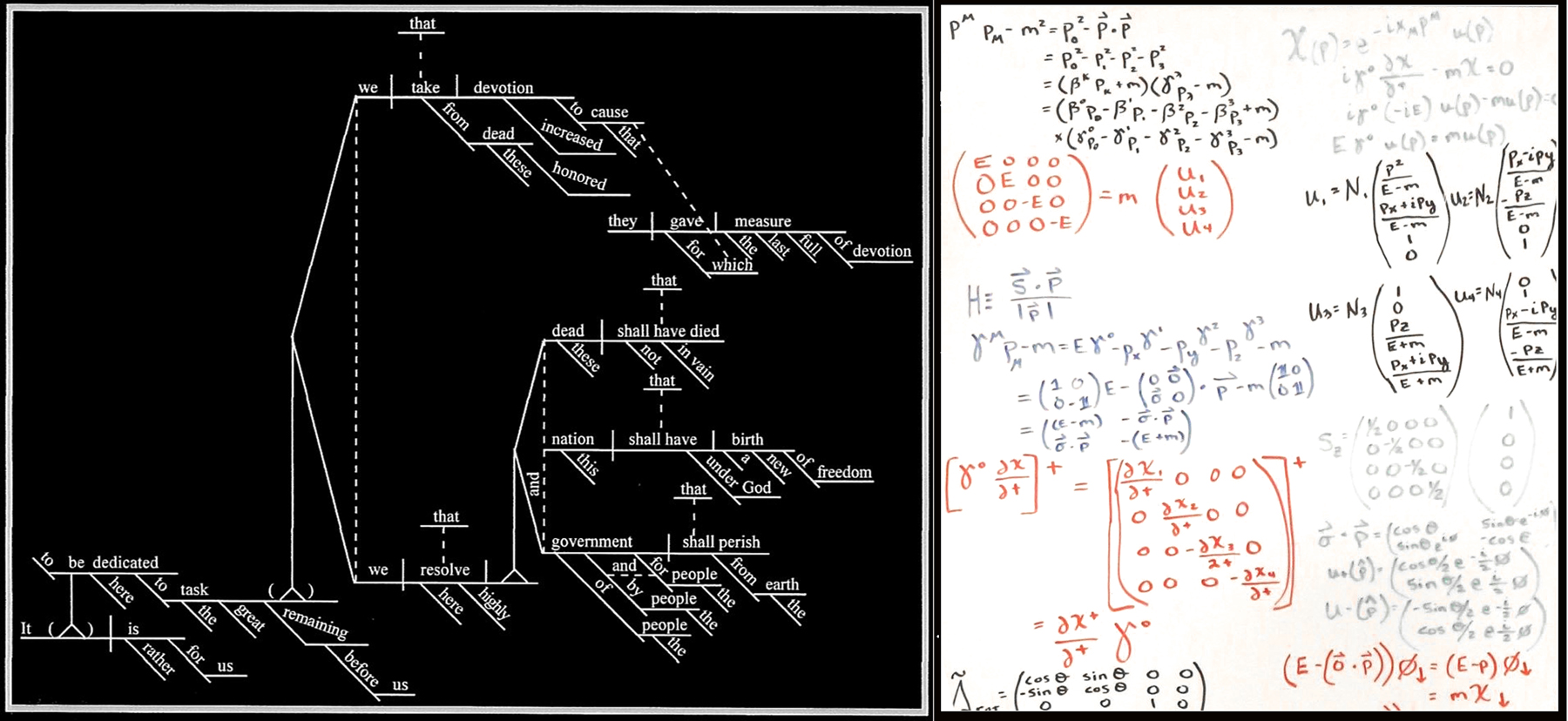
It is a line of work I fell into quite naturally, because from the second grade on, I have had a talent for words. I diagrammed sentences on the blackboard that had the visual complexity of the physics formulae written on his whiteboard by Sheldon Cooper. I managed to use my 10 weekly vocabulary words, tasked with writing sentences for each, by writing one sentence using all ten. I did OK with math, but it was never anything that much interested me, but words were another thing. I ate them up like chocolate cake. 

The upshot is that I am a prime candidate for the position as “Grammar Cop,” bugging those around me for making mistakes in spelling, punctuation and usage. And, admittedly, in the past, I have been guilty. But as age softens me, I have largely given up correcting the mistaken world. And I have a different, more complex relationship with language, less strict and more forgiving. 

The cause for this growing laxness are multiple. Certainly age and exhaustion are part of it. But there is also the awareness that language is a living, growing, changing thing and that any attempt to capture it in amber is a futile endeavor. 

But although I have come to accept many changes in speech that I once cringed at — I can now take “their” in the singular (“Everyone should wash their hands”) and have long given up on “hopefully” — there are still a handful of tics that I cannot get over. I try, but when I hear them uttered by a news anchor or starlet on a talk show, I jump a little, as if a sharp electric shock were applied to my ear. 

The first is “I” used in the objective case. It gives me the shivers. “He gave the award to Joan and I.” It gets caught in my throat like a cat’s fur ball. 

The second is using “few” for “less.” I know that the usage has largely changed, but it still assaults my ear when I hear, “There will be less pumpkins this Halloween, due to the drought.” Ugh. 

A third is the qualified “unique,” as in, “His hairstyle is very unique.” It’s either unique or it isn’t. 

Then there are common mispronunciations. “Ek-setera” is just awful. Although, I did once know someone who always gave it its original Latin sounding: “Et Caetera” or “Et Kye-ter-a.” Yes, that was annoying, too. 

The last I’ll mention here is the locution, “centered around.” Gets my goat every time. Something may be “centered on” a focus point, or “situated around” something, but “centered around” is geometrically obtuse unless you’re discussing Nicholas of Cusa’s definition of the deity, whose center is everywhere and circumference is nowhere. 

Others have their own bugaboos. One friend cannot get past the confusion between “lay” and “lie.” She also jumps every time someone uses “begging the question,” which is misused 100 times for every once it is understood. 

Of course, she may be more strict than I am. “There have been errors so egregious that I’ve stopped reading a book,” she says. “I just stomp my foot and throw the book away.” 

Her excuse: “I was an English major.” 

There are many other issues that bother me, but not quite so instantly. I notice when the subjunctive is misused, or rather, not used when it should be. If I were still an editor, I would have fixed that every time. 

I am not sure I will ever get used to “like” used for “said.” And I’m like, whoever started that linguistic monstrosity? I also notice split infinitives as they sail past, but I recognize that the prohibition against them is a relic of Victorian grammarians. It is too easy to lazily give in to those ancient strictures. 

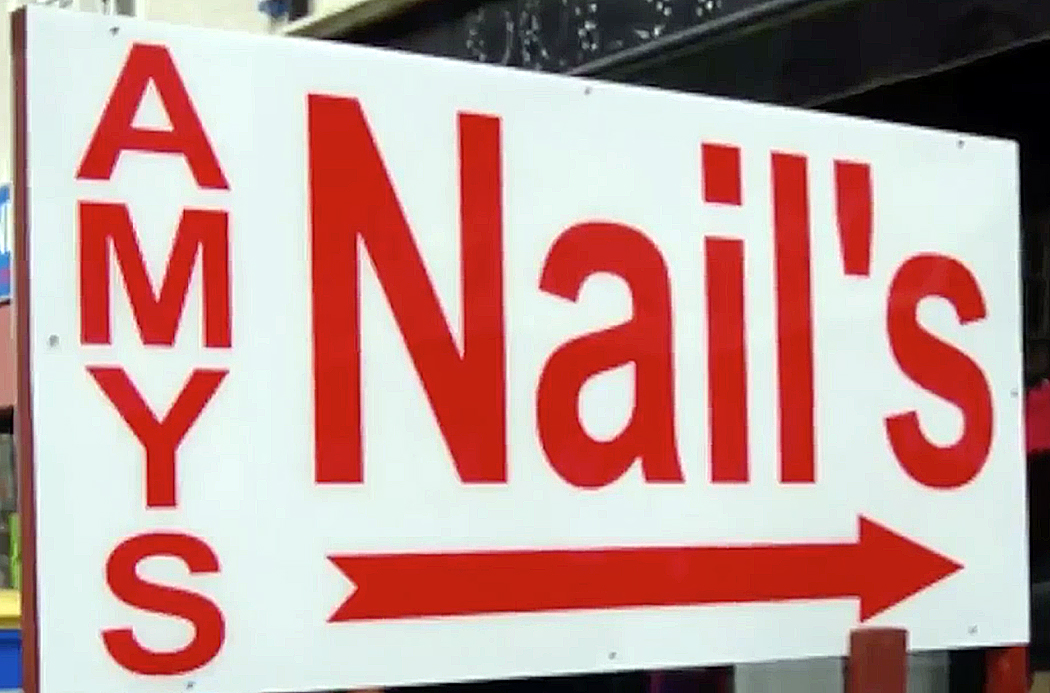
So far, I’ve only been talking about catches in speech, although they show up in print just as often (you can actually come across “ect.” for “etc.”) But reading a book, or a newspaper or a road sign and seeing the common errors there can be even more annoying. There is probably nothing worse, or more common, than the apostrophe plural. You don’t make something plural by adding an apostrophe and an “S.” “Nail’s” is not the plural for “nails.” This is encountered endlessly on shop signs. 

And digital communication is fraught with homophone confusion. “They’re,” “there,” and “their,” for instance, or “you’re,” and “your.” I admit that occasionally this is just a mental hiccup as you are typing. We all make mistakes. I have sometimes put a double “O” after a “T” when I mean a preposition. That’s just a typo. But there are genuinely people who don’t seem to notice the difference with “to,” “too,” and “two.” (I have great tolerance, however, for the ideogrammatic usage of “2” for “to” in electronic messaging. I find it kind of amusing to see the innovation in space-saving for Twitter and e-mail. I may even have been guilty myself of such things. Indeed, there is a long history of this sort in handwritten letters in the 15th to 18th centuries, when “William” was often “Wm,” and “through” was often “thro.” Paper was expensive and abbreviations saved space.)

Some frequent typological absurdities make me twitch each time. I really hate seeing a single open-quote used instead of an apostrophe when a word is abbreviated from the front end. You almost never see “rock ’n’ roll” done correctly. 

There are lesser offenses, too, that I usually let pass. “Impact” as a verb, for instance. It bothers me, but the only people who use it tend to write such boring text that I couldn’t wade through it anyway. (I wrote about the management class mangling of the language in what I call “Manglish.”) “Different than” has become so normalized for “different from” that I’m afraid it has become standard English. Of course, the English themselves tend to say “different to.” So there. 

There are distinctions that have been mostly lost in usage. “Can I” now means the same as “May I” in most circumstances, and almost no one still makes a distinction between “shall” and “will.” 

Many of us have idiosyncratic complaints. I knew someone who complained that “laundermat” was not a word. We saw such a one on Vancouver Island when visiting. “It should be ‘laundromat,’” she said, arguing the parallel with “automat.” 

Another cringes at “would of,” “should of,” and “could of” in place of “would have,” “should have,” and “could have.” But this is merely a mishearing of the contractions “would’ve,” “should’ve,” and “could’ve” and turning them into print. Yes, it should be corrected, but it doesn’t get under my skin when I hear it. 

And there are regionalisms that bother some, although I glory in the variety of language. One person I know complains about such phrases as “had went,” but that is a long-standing Southernism and gets a pass, as far as I’m concerned. 

And much else is merely idiom. If you get too exercised about “I could care less,” please relax. It means the same thing as “I couldn’t care less.” Merely idiomatic. Lots of grammatical nonsense is now just idiomatic English. Like when the doorbell rings and you ask “Who’s there?” and the answer comes back, “It’s me.” If you hear “It is I,” you probably don’t want to open the door. No one talks like that. It could be a spy whose first language is not English. Better ask if they know who plays second base for the Brooklyn Dodgers (old movie reference). 

And the Associated Press hammered into me the habit of writing “past week” instead of “last week,” on the principle that the previous seven days had not, indeed, been terminal. You can take these things too far — but I am so far brainwashed not to have given in. “Past week,” it will always be. 

I may have become lax on certain spelling and grammar guidelines, but one should still try one’s best to be clear, make sense, include antecedents for one’s pronouns and be clear about certain common mistakes. “Discreet” and “discrete” are discrete words. And someone I know who used to transcribe her boss’s dictated letters once corrected him when he said a client should be “appraised” of the situation and typed instead, “apprised.” He brought her the letter back and complained that she had misspelled “appraised.” Being a man and being in management, he could not be persuaded he was wrong. She had to retype the letter with the wrong word. There’s just nothing you can do with some people. 

Language is just usage at the moment. It shifts like the sands at the beach, what was “eke” to Chaucer is “also” to us. What was “conscience” to Shakespeare is “consciousness” to us. Thus does conscience make grammar cops of us all. We don’t learn our mother tongue, we acquire it and what we hear as babes becomes normal usage. Ain’t it the truth?

Johnson dictionary

I love long sentences. I’m tired of all the short ones. Hemingway can keep them. Newspapers can urge them. Twitter can mandate them. To hell with them.

My ideal can be found in the long serpentine railways of words shunted hither and thither over dependent clauses, parenthetical remarks, explanatory discursions and descriptive ambiguities; sentences such as those found in the word-rich 18th century publishing world of Fielding, Sterne, Addison, Steele, or Boswell, and perhaps most gratifyingly in the grand, gravid, orotund sentences of Edward Gibbon, whose work I turn to not so much for information about the grandeur that was Rome, but for the pure sensuous pleasure to be had from those accretive tunes built from the pile of ideas and imagery (to say nothing of ironic asides), and peppered liberally with the notations of colons, semicolons, dashes and inverted commas.

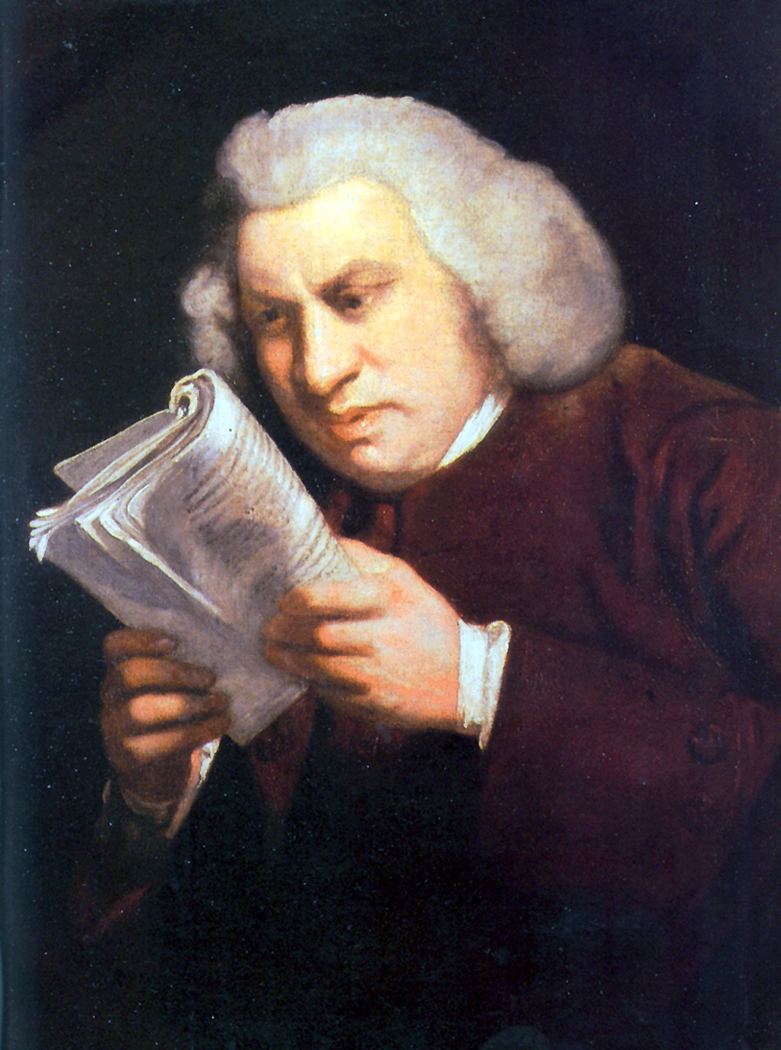
Johnson by Joshua ReynoldsNeedless to say, my love of such sentences caused me some embarrassment during my years as a practicing journalist, where I was encouraged to keep my sentences simple and clear. I am sure I must have tested the patience of many an editor over those years. I did pick up one countervailing habit: My paragraphs tend to be short. Often a single sentence per.

It is not only 18th century writing I enjoy. The same love of the trailing, dawdling sentence gives me pleasure in William Faulkner, James Agee and Lawrence Durrell. I want to settle into each sentence as if it were a good book.

I remember in the second or third grade learning to diagram sentences. Noun, verb, object; subject, predicate. This was the armature upon which was built increasingly baroque structures. (When we had assignments to use our newly learned vocabulary words in sentences, I always tried my best to use the entire list in a single sentence.)

What kind of sentence am I talking about? When Gibbon talks ironically about how the spiritual “gifts” of early Christians as well feathered their own nests as proved their piety, he follows with: “Besides the occasional prodigies, which might sometimes be effected by the immediate interposition of the deity when he suspended the laws of nature for the service of religion, the Christian church, from the time of the apostles and their first disciples, has claimed an uninterrupted succession of miraculous powers, the gift of tongues, of vision, and of prophecy, the power of expelling daemons, of healing the sick and of raising the dead.”  I like that: “suspending the laws of nature for the service of religion.” Gibbon has a way of making clear his own skepticism through irony while at the same time never crossing the line into a simple “Nya-nya.” It is a performance of extreme delicacy.tristram shandy hogarth

Tristram Shandy lays the (comic) misfortune of his life to the interrupted coitus of his conception, explaining in one grand run-on sentence: “Believe me, good folks, this is not so inconsiderable a thing as many of you may think it; — you have all, I dare say, heard of the animal spirits, as how they are transfused from father to son, etc., etc. — and a great deal to that purpose: — Well, you may take my word, that nine parts in ten of a man’s sense or his nonsense, his successes and miscarriages in this world, depend upon their motions and activity, and the different tracts and trains you put them into, so that when they are once set a-going, whether right or wrong, ’tis not a half penny matter, — away they go cluttering like hey-go mad; and by treading the same steps over and over again, they presently make a road of it, as plain and as smooth as a garden-walk, which, when they are once used to it, the Devil himself sometimes shall not be able to drive them off it.”

The extreme pleasure of the book is as much linguistic as it narrative.

Or from The History of Tom Jones, A Foundling: “For the reasons mentioned in the preceding chapter, and from some other matrimonial concessions, well known to most husbands, and which, like the secrets of freemasonry, should be divulged to none who are not members of that honourable fraternity, Mrs. Partridge was pretty well satisfied that she had condemned her husband without cause, and endeavored by acts of kindness to make him amends for her false suspicion.”

Simple thoughts may be satisfied with simple sentences, but knotty thoughts, thoughts of subtlety and complexity, require longer compound and compound-complex sentences; sentences in which ideas are parsed, turned over, elucidated, tested and rubbed up against themselves.

(I am reminded that in The Bear, a portion of Faulkner’s Go Down, Moses, a single sentence continues for 11 pages. To say nothing of Molly Bloom’s soliloquy. Hurrah.)

These sentences I admire and enjoy, are not mere coagulations of verbiage, but rather like puzzle pieces that fit together ultimately to make a perfect construction. Or the worms and gears of an intricate machine turning smoothly. They might be compared to their advantage to the miserable word salad of unfinished thoughts and undefined terms of the blather of Republican presidential candidate Donald Trump: long empty strings of cliches and bigotry, and cliched bigotry, in a never-ending stream of inanities and incoherencies that never reach that concluding peroration that brings all the eggs into a single meaningful basket. It is language spewed, not built. My heroes learned their lessons from the classical languages, whence Aeschylus can have his opening speaker in The Agamemnon go on for a full page before punctuating his speech with the single concluding verb that ties the whole performance up in a word that makes sense of all that came before. Grammar can be used to effect: Trump hardly knows there is such a thing as grammar. He is a bilge pump.

But all this is only prolog to my actual subject for today: The odd and magical concatenation of entries, definitions, etymologies and examples found in the famous dictionary of Dr. Johnson. Johnson has his many prejudices that today strike the reader as comical, as when he defines “oats” as “A grain, which in England is generally given to horses, but in Scotland supports the people.” Or defines “stateswoman” as: “A woman who meddles with publick affairs. In contempt.”

rhinoNevertheless, if you consider the immensity of the task he set himself in 1746 — a task that wound up taking away nine years of his life — you must admire his profound sincerity and deep devotion. He put together the first comprehensive English dictionary, and in doing so, pretty well had to come up with the plan for it ab ovum. (There were glossaries and word lists, and a few dictionaries before him, but none complete or even attempting to be so). If his definitions sometime seem a trifle punctilious, it must be remembered he was pretty much inventing the whole idea. The definitions range from those that hardly convey what we would consider sufficient information (“Rhinoceros: A vast beast of the East Indies armed with a horn on his front”) to those that seem to do verbal somersaults to convey their meaning (“Network: Anything reticulated or decussated, at equal distances, with interstices between the intersections.” By the way: “To Decussate: To intersect at acute angles” and: “Reticulated: Made of network; formed with interstitial vacuities.”)swine

We are so used to a more casual and informal speech these days, that it is a pleasure to see these words in their after-five formal dress. (“Rosin: Inspissated turpentine; a juice of the pine.”) Remember, Johnson had to invent his definitions from sheer air. How would you do if you were faced with defining several thousand words from scratch? How would you define “lard,” for instance. For Johnson, it was “the grease of swine.” There is both an elegance to that terse explanation, but also, to our ears, a kind of humor. We don’t speak that way anymore.

Or how would you explain “smoke?” Johnson: “ The visible effluvium, or sooty exhalation from anything burning.” “Sun?” “The luminary that makes the day.”

Den? “A cavern or hollow running horizontally, or with a small obliquity, under ground; distinct from a hole, which runs down perpendicularly.” The nicety of the distinction is deeply felt for someone who cares about language.

“Mouth: The aperture in the head of any animal at which the food is received.”

“Tree: A large vegetable rising, with one woody stem, to a considerable height.”

“Wolf: A kind of wild dog that devours sheep.”

“Orgasm: Sudden vehemence.”

Can you do better? Well, in some cases, yes, but only because we have several hundred years worth of lexicography behind us (and less delicacy about sex). Remember, Johnson was inventing the thing, a first draft.

I like it when the language is wearing its white tie and waistcoat: “Cough: A convulsion of the lungs, vellicated by some sharp serosity. it is pronounced coff.” If you flip the pages, you find also: “To Vellicate: To twitch; to pluck; to act by stimulation.”

Or: “Whey: The thin or serous part of milk, from which the oleose or grumous part is separated.”

Some of the definitions bear the wisdom of Johnson’s worldview, giving us more than we may actually need to know: “Compliment: An act, or expression of civility, usually understood to include some hypocrisy, and to mean less than it declares.”

There are many words that no longer survive in any meaningful form: “Stirious: Resembling icicles.” And there are words where Johnson threw up his hands: “Stammel: Of this word, I know not the meaning.” (OED says, “A coarse woolen cloth,” and “a shade of red in which the cloth was commonly dyed”).

There are moments where the lexicographer simply got things wrong, or took a metaphorical use as a second definition. He defined “pastern” as “the knee of a horse.” It is rather, part of the foot of a horse. When a woman  asked Johnson how he came to make such a mistake, he answered, “Ignorance, Madam, pure ignorance.”

But by and large, his work was an admirable thing, for which I thank him. And thank him for the pleasure I gain both from his formality, his erudition, and the not infrequent (and often unintended) humor. It is impossible to read through the dictionary and not sense the very particular and idiosyncratic man behind it. Most dictionaries feel distant, academic, objective. Not Johnson’s book: Who read it, hears the blood and bones behind it. Everything in it — and especially its preface — its intensely personal. Its triumphs and its failings are human and profoundly so.

This shows nowhere more than in his botany and zoology. There were many animals with which he clearly had no first-hand information. Some of these were merely legendary, and often a skepticism of such hippogryphs comes out in his entry. Sometimes not.

alligator crocodile“Alligator: The crocodile. This name is chiefly used for the crocodile of America, between which, and that that of Africa, naturalists have laid down this difference, that one moves the upper and the other the lower jaw; but this is now known to be chimerical, the lower jaw being equally moved by both.”

“Salamander: An animal supposed to live in the fire, and imagined to be very poisonous. Ambrose Parey has a picture of the salamander, with a receipt for her bite; but there is no such creature, the name being now given to a poor harmless insect.”

“Tarantula: An insect whose bite is only cured by musick.”

camelopard“Camelopard: An Abyssinian animal, taller than an elephant, but not so thick. He is so named because he has a neck and head like a camel; he is spotted like a pard, but his spots are white upon a red ground. The Italians call him giaraffa.”

It is fun to read through the dictionary as a kind of bizarro-world view of 18th century natural science, punctuated by Johnson’s peculiar phraseology and word choice: “Tadpole: A young shapeless frog or toad, consisting only of a body and a tail; a porwiggle.” As for the tail: “That which terminates the animal behind; the continuation of the vertebrae of the back hanging loose behind.”

I wish I could go on with so many more entries, but I can only end with a few.

starfish“Starfish: A fish branching out into several points.”

“Frog: A small animal with four feet, living both by land and water, and placed by naturalists among mixed animals, as partaking of beast and fish. There is likewise a small green frog that perches on trees, said to be venomous.”

“Toad: An animal resembling a frog; but the frog leaps, the toad crawls: the toad is accounted venomous, I believe truly.”

“Wasp: A brisk stinging insect, in form resembling a bee.”

“Serpent: An animal that moves by undulation without legs. They are often venomous. They are divided into two kinds; the viper, which brings young, and the snake, that lays eggs.”

“Lizard: An animal resembling a serpent, with legs added to it.”

“Shrewmouse: A mouse of which the bite is generally supposed venomous, and to which vulgar tradition assigns such malignity, that she is said to lame the foot over which she runs. I am informed that all these reports are calumnious, and that her feet and teeth are equally harmless with the mouse. Our ancestors however looked on her with such terrour, that they are supposed to have given her name to a scolding woman, whom for her venom they call a shrew.” (vide:  “Shrew: A peevish, malignant, clamorous, spiteful, vexatious, turbulent woman.”)

elephant“Elephant: The largest of all quadrupeds, of whose sagacity, faithfulness, prudence , and even understanding, may surprising relations are given. This animal is not carnivorous, but feeds on hay, herbs and all sorts of pulse; and it is said to be extremely long lifed. It is naturally very gentle; but when enraged, no creature is more terrible. He is supplied with a trunk, or long hollow cartilage, like a large trumpet, which hangs between his teeth, and serves him for hands: by one blow with his trunk he will kill a camel or a horse, and will raise a prodigious weight with it. His teeth are the ivory so well known in Europe, some of which have been seen as large as a man’s thigh, and a fathom in length. Wild elephants are taken with the help of a female ready for the male: she is confined to a narrow place, round which pits are dug; and these being covered with a little earth scattered over hurdles, the male elephants easily fall into the snare. In copulation the female receives the male lying upon her back; and such is his pudicity, that he never covers the female so long as anyone appears in sight.”

And the elephant also brings us back to the GOP and its excrescences: “Trumpery: Something fallaciously splendid; something of less value than it seems.”

leo gorcey

Americans have always had a cultural inferiority complex. In other areas, we may walk with a swagger of a bully, but from our earliest years, when the colonists imported all their music and tea, to the 20th century, when we looked to France for our avant garde, Americans have not had the self-confidence to be who they are.

And so, we often try our hardest to climb the social ladder by imitating others.

Certainly this impulse is behind the current epidemic of saying ”you and I” when we mean ”you and me.” As in, ”He left a message for Harry and I.” The hair twitches on the back of my neck every time I hear it.

I know where this ugly solecism comes from: We have been told not to say, ”Me and Harry are going down to the shop to work on the carburetor,” but rather, ”Harry and I are going.”

”It’s a question of breeding,” our matronly third-grade teachers told us, lorgnette over nose.

Henry Thoreau noticed that when a cat jumps on a hot stove and is burned, it will never jump on a hot stove again. But then, it will never jump on a cold one, either.

And we transfer this delicacy to the wrong place, saying ”you and I” whether as subject or object.

It’s like holding up our pinkie when we pick up our teacup.

In the process, we often make ourselves look foolish, as we attempt to be more French than the French or more English than the queen. Only this attempt to borrow class can explain the success of such monumental bores as Masterpiece Theatre.

But America ain’t Cole Porter; America is Leo Gorcey.

This has been brought back to me hearing local TV news anchors attempt to stuff self-consciously correct Spanish pronunciations into the middle of middle-brow English sentences.

”In the latest news from ‘Nee-hah-RAH-wah’ . . .,” the anchor will say, and I am embarrassed for him. Not because he’s trying to be politically correct, but because he doesn’t seem to know that ”Nicaragua” is an English word. Sure, it is spelled just like the Spanish word, but like so many formerly foreign words, it has become naturalized.

The American pronunciation falls off the tongue better, certainly, than the British pronunciation: Nick-uh-RAG-yoo-wa.

”But we need to show respect for Hispanic culture,” he says.

And I agree. Americans are miserable when it comes to learning second languages. I am all for a bilingual America; we should not be so provincial as we are. But my simple answer is a question:

What is the capital of France?

Are we showing disrespect for the French when we blithely mispronounce ”Paris”? Why should it not be ”Par-ee?”

Well, because it sounds pretentious, that’s why. Pronunciation is guided by usage. We say ”Paris” in English and ”Par-ee” when we speak French.

Which is why the same news anchor isn’t consistent and doesn’t bring us news from ”Meh-hee-ko,” our neighbor to the south. It would sound silly. Long usage in English makes us pronounce the ”X” in Mexico as a ”ks” sound, its habitual sound in English.

Are we dissing Russia when we say ”Moscow” instead of ”Moosk-vah?” And after all, what do the Chinese call their country? Certainly it isn’t ”China.”

Are you suggesting we should say ”Nihon” instead of ”Japan”?

This isn’t really about respect but about communication: Usage allows our hearer to understand our words.

And conversely, is the Puerto Rican immigrant showing disrespect for American when he calls our largest city ”Noo Jork?” Of course not, but certainly respect has to be a two-way street. Those who demand we show respect for other cultures often share the familiar lack of ”cultural self-esteem” for their American roots.

If it is a moral question to give up our American pronunciation of familiar foreign words, why is it not also a moral question for others to give up their accents when they speak English?

Put that way, the silliness of it all becomes clear.

English is a wonderfully rich and adaptable language, and it has borrowed from almost every other language on the planet over the years. But it changes the words it borrows and makes them fit comfortably on the English-speaking tongue.

Certain words and names through long usage have developed idiomatic English pronunciations. We listen to the mazurkas of ”Show-pan” and look at the canvases of ”Van-go.”  It puts people off — and certainly puts me off — when people attempt to be more correct than necessary. In essence, they are merely showing off.

It is that unattractive element of social climbing.

When there is not a habitual English idiomatic usage, I’m all for pronouncing words as accurately as possible in their original language. But some things have become English.

I remember an object lesson listening to classical music radio in North Carolina many years ago.

The station was traditionally run by engineering students who were more interested in radio than in music. They couldn’t pronounce anything right. They mangled composers’ names. Bach was ”Baytch,” Chopin was a phonetical ”Chop-in,” as in ”there’s a pork chop in the freezer.”

We suffered for years, until they went the exact opposite way. One day they got an announcer who was more French than De Gaulle, or thought he was.

All of a sudden, Chopin’s name was ”Fray-der-EEK France-WAH Show-(something swallowed in the back of the throat and simultaneously sneezed out the nose after wrapping around the adenoids).”

It was a pretentious-sounding rectitude.

That same announcer later gave away the game, demonstrating what level of sophistication he’d actually achieved, when he played a Mahler symphony and he called out the name ”Goose-TAHV Mah-LAY.”