Archive

Tag Archives: history

giza view from cairo

We were watching a TV show about ancient Egypt and the voiceover told us the pyramids we were visiting were “35 centuries old,” and that phrase suddenly struck me in a new way.

I am now 68 years old, which is a bit more than two-thirds of a century, and I have a body-sense, a memory-sense — a conceptual awareness — of what a century feels like. I wrote for the newspaper for a quarter of a century. Four times that and Bingo! So, a century has a palpable meaning for me. I feel it in my bones. Hearing the TV presenter, then, made me react, “Thirty-five is not a very large number.” I can picture in my mind’s eye what 35 centuries might be, and it really doesn’t seem like all that long. The Viking Age ended only 10 of them ago.

Anton and Laura Nilsen

Anton and Laura Nilsen

After all, my grandfather, who I knew when I was a boy, was born in 1890, which was the year Vincent van Gogh died. It was also the year Sitting Bull died, and the Elephant Man (John Merrick), and Heinrich Schliemann — the man who discovered Troy. My grandfather was seven years old before Johannes Brahms died. These historical figures seem that much less remote when I think of it that way.

Rowan and Nancy Steele

Rowan and Nancy Steele

For my wife, it is even more present. When she was a girl, her great-grandmother lived with her family. Her great-grandmother, Nancy Jane Steele, was a Civil War widow. She married Rowan Steele after that war, but Rowan had been a cavalry soldier during the battle at Appomattox. That dumps the War Between the States right in my wife’s lap. History is not some remote collection of facts gathered from a book, it is family.

The word, “century,” has its roots in family. The Latin word was “saeculum,” which was an indistinct time period that measured, basically, the time from your grandfather to the time of your grandchild. Caesar Augustus regularized that time to be 110 years, but in effect it varied from 90 years to about 120 years. It was an “age.”

History, as a subject, is different if you think of it that way. It is not a set of facts for a trivia contest, but a continuity, of which we are each a knot along a string.

For many, these days, that continuity is found in genealogy: How far back can you trace your ancestors? With various DNA tests, you can discover ancestry beyond the civic records of the standard genealogy. A y-DNA test can follow the paternal haplogroup all the way back to Africa, with punctuated stops along the way. A maternal mitochondrial DNA test can do the same for the distaff side.

It means that you are very personally connected to the history you study in school. Somewhere among those pogroms, crusades, wars and massacres, your strands of DNA were either slaughtered or doing the slaughtering, and probably both at different times. Looked at through the small lens, genealogy is your story; looked at through the big lens, all of history is your story. How can one not be interested?

Carol Lily

Carol Lily

My granddaughter is now studying AP world history, and sometimes, she comes to me for help understanding the subject. I wish I could somehow inspire her to see it not as an impersonal school subject she has to be graded on, but the story of how she got here, what happened on the way to her creation, and how she fits into that grand, long picture. She makes good grades, but it would be more important to think of history as something personal, something that informs her life: She is Southern, so the slavery that ended 151 years ago colors her life every day; the arguments held in Philadelphia in 1787 affect what she can and cannot do today; that the battle of Plataea in 479 BC is part of the reason she speaks English today and not some descendant of Farsi.

The horsemen from Mongolia shaped what later became Russia, which became the Soviet Union, which defeated Nazi Germany, became our enemy in the Cold War, and led to Vladimir Putin today. It is not ancient history, it is merely the dangling end of a long cord: The same people who gave us Xanadu and Kublai Khan gave us the Silk Road and the Golden Horde, and is one of the reasons given for why Hungary is named HUN-gary, and, incidentally, gave their name to the tartar sauce you put on fried fish.

Know-Nothing poster

Know-Nothing poster

It is disappointing to see so many Americans with so little sense of history, of where we came from. We hear the resurrected Know-Nothing-ism of Donald Trump and too many of his followers hear no resonance of the anti-Catholic, anti-Irish sentiment of the earlier wave of xenophobia. The past, for them, is a black hole out of which no wisdom can emerge.

Presentism, as it is sometimes called, is rampant: the belief that what is now is somehow “true,” and the past was all a big mistake; it is the error that what we think and believe now is the “right” and “correct” version of the world, and those benighted people of old were merely beta-versions of humanity. We require more humility; history can provide that humility.

I can remember when the faces of Eisenhower and Stevenson on the tiny black and white television we had in the house when I was yet too young to go to school. I remember the Dodgers at Ebbets Field. I remember when they added the second deck to the George Washington Bridge. ike and adlai 1952These things are now history. They are ink on a page in the history book my granddaughter reads for class. But I was a real person who lived through them. My father lived through the Battle of the Bulge in World War II. My great-uncle wore puttees as a dough boy in the first War to End Wars. My wife’s great-grandfather fought in the Civil War. Somewhere, back before my genealogy became writ into the family bible, I surely had ancestors who went a-viking and worshipped the lord Odin.

I feel those connections, not as dry intellectual answers to history-class homework questions. History is not something merely read, it is red, it runs through our veins. It’s been there for 35 centuries, at least.

World Map 1689Stuart got a job recently. Well, a part-time job — as adjunct faculty teaching a history course. I’m not sure how he got it; he doesn’t have a degree in history. But he said he talked the department head into it by describing his take on world civilizations. He did his Stuart dance for his dinner.

“Well, I said I wanted to teach world history a different way,” he said to me over lunch the other day. “I wanted to look at it through the lens of geography. It explains so much.”

Mostly, he said, he just wanted to try organizing the Big Picture a different way, because looking at something differently opens a subject up for fresh insights. At least, that’s my stuffy way of saying what he was up to.
aegean sea map

“From even prehistoric times,” Stuart explained, “human cultures have organized themselves in two ways — either around a body of water or in the middle of a chunk of land. These two societies tend to approach the rest of the world differently.

“You can see this in the signal conflict of the classical world — the Persian Wars. We may think of Greece as a nation, like France or Argentina, but back then, Greek civilization was a constellation of cities and islands around the Aegean Sea. It was built facing the water, so to speak, and like the ancient Lake People of Switzerland, they looked across the pond and saw trading partners. They built ships and launched out across the water to find their likeness on the far shore.

“Rome was built around the Mare Nostrum, the Mediterranean. In the Middle Ages, the Hanseatic League was all about trade.

Persia satellite view“But Persia was a continental power, built on land, surrounded primarily by land, where other people may have been trading partners, but they were primarily a threat. All through the Middle East, you have one conquering nation after another invading their neighbors. Their gods told them to. Persia, like the standard model continental power, wanted to expand, to push its borders out farther, absorb the neighbors to nullify the threat.

“These are two fundamentally different ways of approaching the outer world, and those two ways govern so much of what happens in history.”

“And this is what you told the department head?” I asked. “And he bought it?”

“She did,” he said — which explained a bit more about Stuart’s persuasiveness. If you know anything about Stuart, you know he approached the world, not so much by riparian or continental cultures, but through the interaction of men and women.

“And so, now you’re teaching world history to students at a two-year school.”

“It’s great, although class is rather early for me: It starts at 10 every Tuesday and Thursday morning. But I can get up for it; it’s been really fun so far.”

“It’s always fun until the grading starts,” I said.

“I haven’t got there yet,” he said. “But I’ve assigned the first paper.”

I remembered my time teaching, and the surprising papers that were turned in. I used to read the really bad ones at dinner parties for fun; we all had a good laugh. Bad grammar, misunderstood concepts, lazy ideas. Once, in an art history class, I had 16 students and 16 different spellings of “Coliseum,” and not one of them correct — despite the fact there were two acceptable spellings: “Coliseum” and “Colosseum.” I knew Stuart was in for a disappointing surprise when those papers were turned in. Indus river map

“Think of all the early civilizations,” Stuart went on. “Egypt on the Nile, the Indus River civilization, the Chinese living along the Huang Ho and Yangtze. Later, you have Vikings around the Baltic Sea and North Atlantic. China is interesting, because it starts as a riparian civilization, but as it grew, it turned continental. It gives a distinct flavor to Chinese history.”

“And the continental?” I asked.

“Think of the Mongolian Hordes,” he said. “Or early American tribes conquering each other. Persia, the Ottomans, Moguls.

“If you look at pre-colonial Africa, you see some cultures are riparian, like Ghana, and some are continental, like the Berbers. The distinctions have been blurred over by the pie-slicing of the continent by its colonial powers into supposed nation-states mimicking those of Europe. Quite unnatural. But they were there: riparian and continental ways of looking at the world.

thirteen colonies“I thought, this explains a lot about us,” he said. “About America. When we were founded, we were an outpost on the other side of the pond. We looked across the Atlantic and saw our compadres there. Europe and the New World were built around the ocean, whether it was England and the 13 colonies, France and Quebec, or Spain and Latin America. It may be a distortion to consider the interrelation between the Old and New Worlds as trade, considering we didn’t really give the native peoples a choice in the matter, but from the point of view of the colonizers, who really didn’t take the original inhabitants seriously, they saw themselves as Europeans trading with their parent nations.

“And for the 13 colonies, when they were still colonies, they were Englishmen trading with England, later making alliance with France. We began, like China, as a riparian society. There were even laws passed to prevent settlers from moving west of the Appalachian Mountains, to keep it a riparian culture.

“But we expanded anyway and became, over time, a continental power. Expansion was seen as not only good, but necessary, even ordained by God. This change explains the current political landscape.”

“How so,” I said, innocently, while waiting for the punchline.red and blue

“Think about it. Where are the blue states and where are the red? By and large, the blue states are on the edge of the continent, both on the Atlantic and and on the Pacific, or around the Great Lakes. The red ones are in the center, where they remain continental in outlook, fearful of foreigners and the core of isolationism.”

“I thought the difference was between the agrarian states and the urban states,” I said.

xi jinping 2“Certainly. My outlook isn’t the only factor in this. But it is there, not often mentioned, and is in part also the reason the coastal states built their economies on trade and the interior states on farming and ranching. I’m not making the case that this theory explains everything, or that it is the only thing that made us what we are, but I am saying that it helps explain it, and that you can see the same forces acting out elsewhere in the world. Maoism was continental in China, but the coastal cities of China were built on trade. The new China of Xi Jinping has grown as it has seen its place in the larger world — and as a riparian economy, not a continental one. The burgeoning economy is largely a coastal event. The Chinese poor are largely in the interior.

“And so, blue states look outward to the world, the red states are xenophobic.eurasia

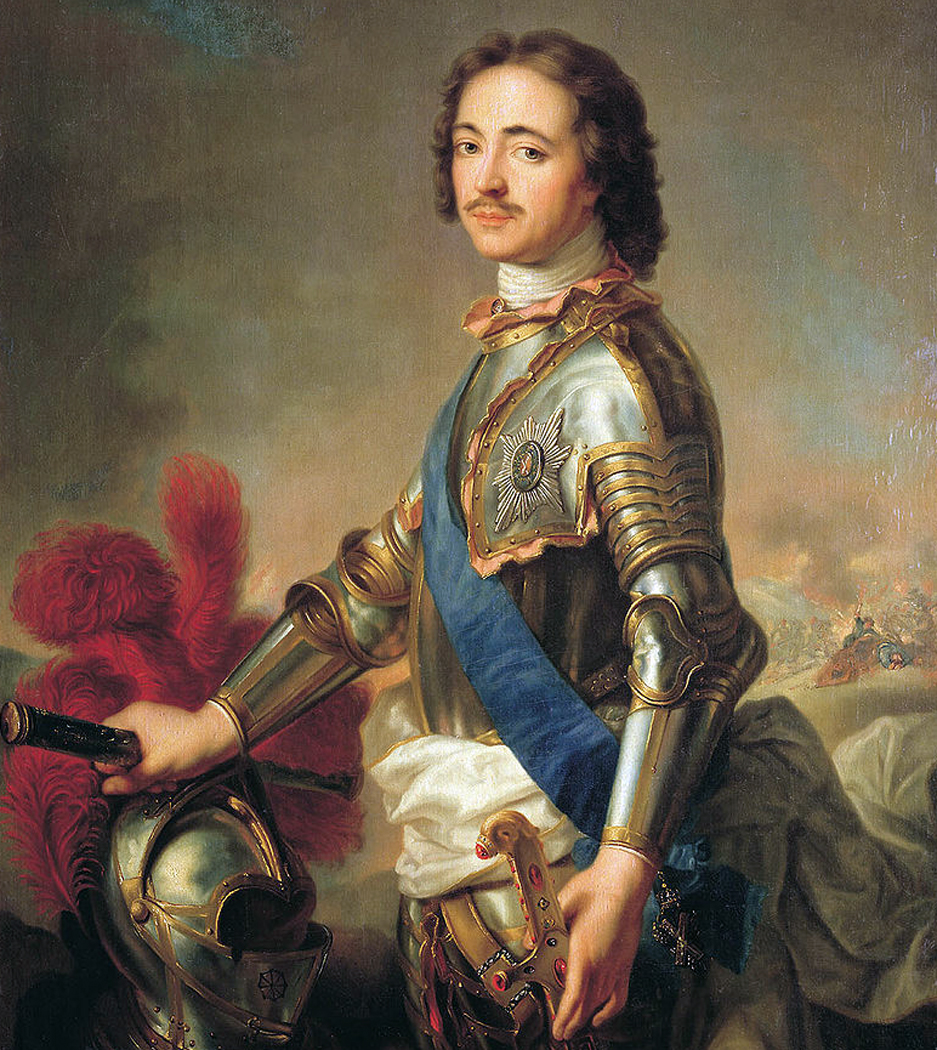
“Look at Russia,” Stuart said. “They are a quintessential continental power, hunkering down in the middle of Eurasia. Invaded by Tatars, Verangians, and Teutonic Knights, they came to fear the outside and built a national identity on creating a fortress mentality, and conquered neighboring lands to make redouts to protect the national core from attack. Peter the GreatPeter the Great attempted to turn Russia into a riparian culture by building his capital on the Baltic, hoping to become part of the European world of trade. But since then, the country has retreated to Moscow and glowered out at the rest of the world. It’s how the Union of Soviet Socialist Republics accrued, and after a brief period of glasnost, why PutinVladimir Putin has resumed the essential Russian inwardness, and his need to expand the borders again to build up those protective buffer nations around the national heartland. Lookout, Ukraine.”

I wondered if Stuart taught any of this chronologically, or was the whole course built around this theory. Were there any parts of history unrelated to his bifurcation of world outlooks.

“Oh, I fit all that other stuff in, too,” he said. “But mainly I wanted to explore this idea for myself. Teaching is the best way to learn.”

I couldn’t argue that.

“And your department head thinks this is OK? To use your class for you to explore your ideas?”

“Oh, didn’t I tell you? I moved in with her last week. We’re good.”

stone.tif

stone.tif

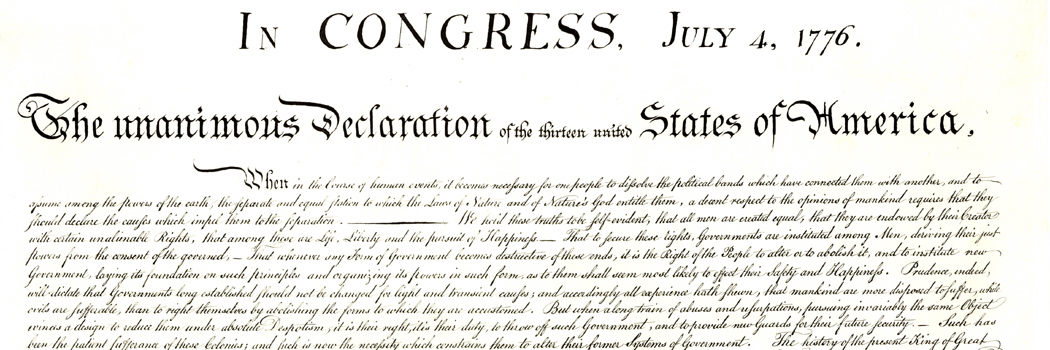
Perhaps the most peculiar thing about the Declaration of Independence is that the portion of it that seemed commonplace when it was written now seems revolutionary, and the part that seemed to its framers as most central, to us seems trivial, even whiny.

As a piece of rhetoric, it begins in generalities, narrows to specifics, and ends in a course of action. It couldn’t be more concisely structured. The committee charged with drafting it in the summer of 1776 chose wisely when it asked Thomas Jefferson to write the first version. Jefferson’s prose is a model of late 18th-century style: precise, lucid and syllogistic. declaration 3

It states baldly and without argument or support, that all men are born equal, have certain rights by virtue solely of being born, and that when a government fails egregiously to effect the safety and happiness of the people, it is their right to replace it.

But Jefferson didn’t invent its ideas whole cloth. In fact, as Jefferson wrote years later, the purpose of his stirring words was “not to find out new principles, or new arguments, never before thought of, but to place before mankind the common sense of the subject, in terms so plain and firm as to command their assent, and to justify ourselves in the independent stand we are compelled to take.”

Much of the remainder of the Declaration is given over to a litany of complaints the colonies had about British governance. Some of these complaints still seem legitimate; many seem trivial, even trumped up. “The King did this” and “The King did that.”

“He has plundered our seas, ravaged our coasts, burnt our towns and destroyed the lives of our people,” it says. Pure hyperbole.

These complaints were the part of the Declaration that was “news” in 1776. They constituted what made the document inflammatory.

Few can read through the whole of the Declaration of Independence now without a sense of fatigue: Those complaints were the issues of 1776, not of today.

It is the second paragraph that seems told to all people at all times, and remains news to us in the 21st century.

Bridge between ages

But to follow those ideas from the century before the Declaration into the ink on its page shows just how important its year of birth was. It was born in the cusp between two great ages, two overriding sensibilities, and partakes of both.

The period from about 1775 to about 1825 is one of the richest in humankind’s history, fertile, even febrile. It is in many ways, the hinge between the past and the modern, between the classically minded 18th century and the Romantic 19th. From an age of Reason to one of Sentiment — as it was called at the time. In Europe, it was the age of Goethe and Rousseau.

And no figure in the American experiment better demonstrates that shift of sensibilities than Jefferson.

On one hand, he epitomized the faith in science and logic of the Enlightenment; on the other, he shared with the revolutionary Rousseau the belief in the nobility of humanity and its drive to social improvement.

You can hardly fail to notice this point when you visit Jefferson’s home in Virginia.

Monticello is a mirror of its maker. Jefferson built a model of Palladian proportion and filled it with moose antlers. The outside lines of the house are clean and mathematically rational. The inside is a warren of peculiar and unnerving spaces.

Jefferson never fully reconciled these two aspects of his personality. He was a slave owner who sings of the dignity of the free man. How much more conflicted than that can you be?

The Declaration of Independence speaks to us now, in large part, because of this clash of sensibilities in Jefferson.

On the one hand, you have the ideas of the Enlightenment, that brilliant flame of philosophy and science that sprang up in Europe in the 17th and 18th centuries.

On the other hand, you have the growth of the individual as a thinking and feeling person.

The Enlightenment preached rationality and temperance, tolerance and universal principals.

One of its most influential writers was John Locke, who, in his Second Treatise on Civil Government, from 1690, wrote that all human beings have natural rights and that these included “life, liberty and the pursuit of property.”

It was an idea that took hold and flourished.

By the time of the American Revolution, the idea was commonplace. It shows up in George Mason’s Virginia Declaration of Rights in June 1776, in slightly altered form:

“That all men are by nature equally free and independent and have certain inherent rights, of which, when they enter into a state of society, they cannot by any compact, deprive or divest their posterity; namely, the enjoyment of life and liberty, with the means of acquiring and possessing property, and pursuing and obtaining happiness and safety.”

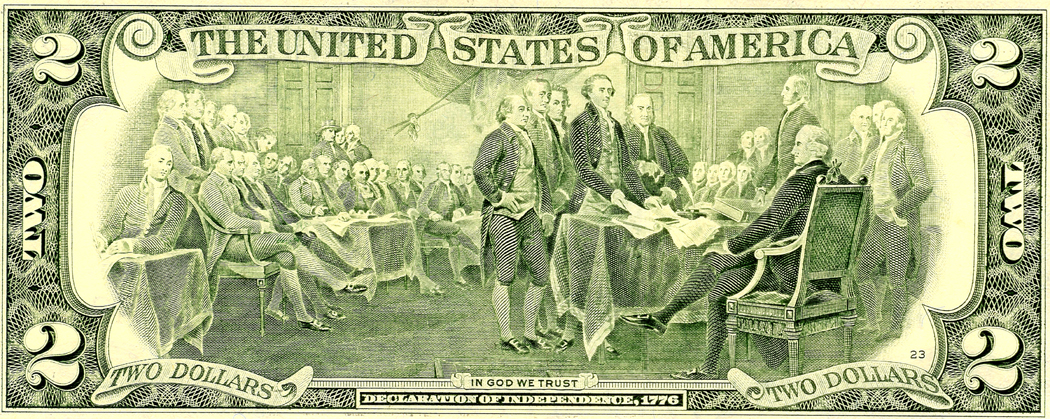
When you compare that with what Jefferson first wrote, you can see how much better a writer Jefferson was. He only needed 31 words to say what Mason required 57 for, and say it more forcefully and memorably. Two dollar bill

An economy of words

Jefferson’s first take on this was considerably more sonorous, but still not quite there:

“We hold these truths to be sacred, that all men are endowed by their Creator with certain unalienable rights, and that among these are life, liberty and the pursuit of property.”

It was a committee of five, delegated by the Second Continental Congress, that were given the responsibility to draw up the Declaration. Jefferson wrote that first draft, but Benjamin Franklin, also on the committee, struck out “sacred” and replaced it with “self-evident.”

By 18th-century reasoning, self-evidence was universal, while sacredness could be construed as sectarian. Franklin wanted to emphasize the universal truth of the proposition.

And Jefferson himself changed “property” to “happiness,” and with that stroke made the Declaration jump from the past into the future.

The past was Thomas Hobbes, with his sense of the nastiness, brutishness and shortness of life, and a belief that the natural order of mankind was greed, rapine and thievery. Only strong central government, he wrote, could possibly control the natural impulses of humankind.

The future was Rousseau’s perfectibility of man, his belief in the nobility of those uncorrupted by society and government, the “natural man.”

The middle was Jefferson, perfectly if perilously balanced between.

The right of life remained pretty much the same looking forward and back, but the other two rights changed meaning over the cusp of 1800.

Locke believed that all humans coveted was property; Jefferson realized that there were many routes besides ownership to humanity’s true goal, individual happiness. Hence, the change in language.

Liberty is the word that has changed the most. In the 18th century, it meant being left alone, basically. Your government let you be: Taxes shouldn’t be too onerous and armies shouldn’t be quartered in your home at the whim of the commandant.

But by the 19th century, liberty took on a more revolutionary turn: Romantic writers saw liberty as the antidote to repressive regimes around the world and one read poems to Count Egmont, the Prisoner of Chillon and Nat Turner. It fueled popular movements all across Europe and led to a crisis year in 1848. Liberty meant revolt — a very different thing from what John Locke had in mind.

(And it makes almost comic the confusion of the two versions of liberty conflated by contemporary anti-tax factions and the paranoid fringe looking for the black helicopters that we can get all belligerent and militant about “tyranny” in Washington, when compared to what is happening in Sudan, Russia or North Korea, we remain among the most liberty-ridden people on earth. Admittedly, the Declaration of Independence itself is full of the same sort of inflated rhetoric.)

“Life, liberty and the pursuit of happiness.”

This meant that the Declaration could speak, Janus-like, forward and backward. The fulcrum of modern history. The Age of Reason is emerging from its pupa into the language of Romanticism.


madison lede pix
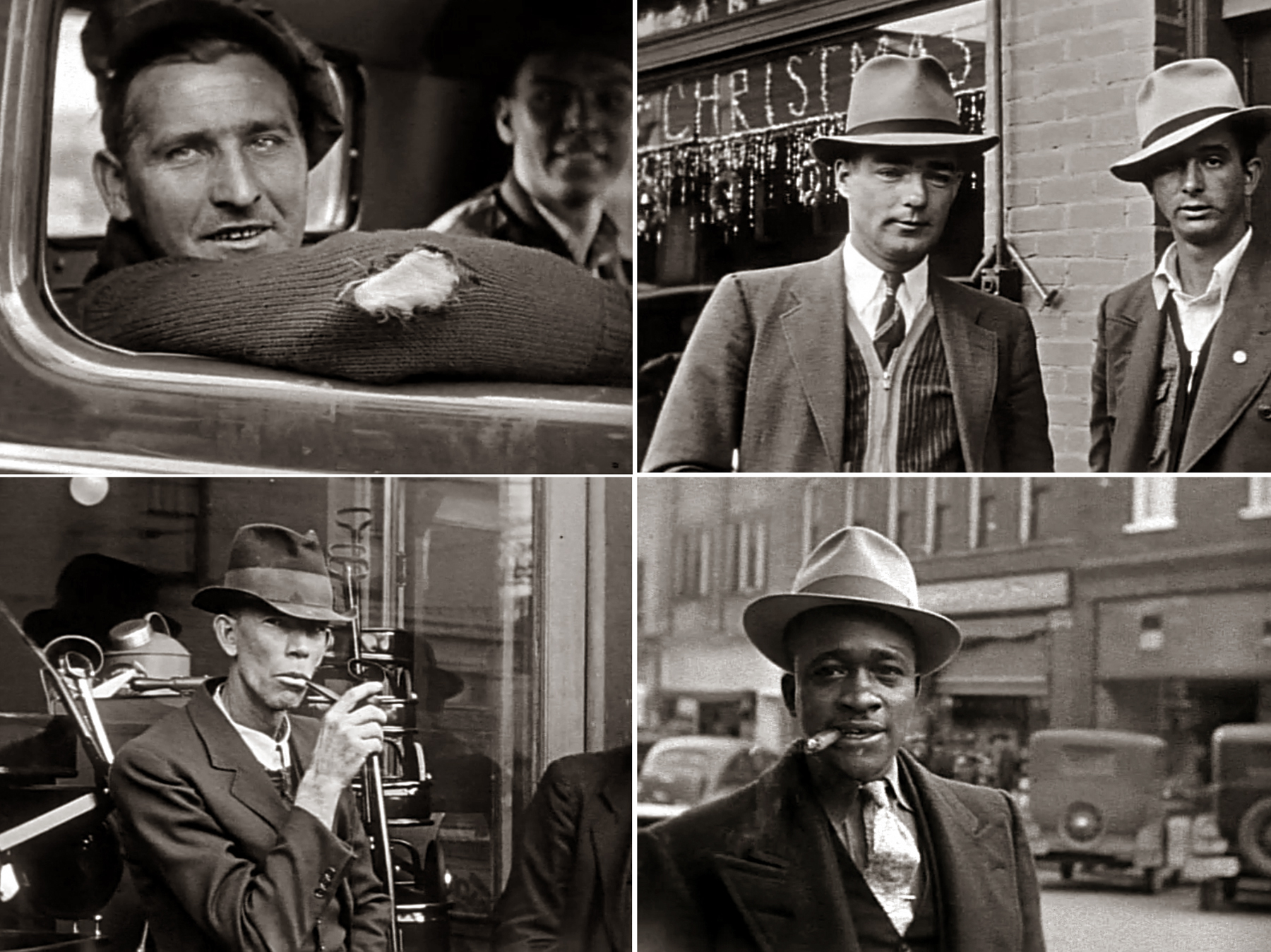
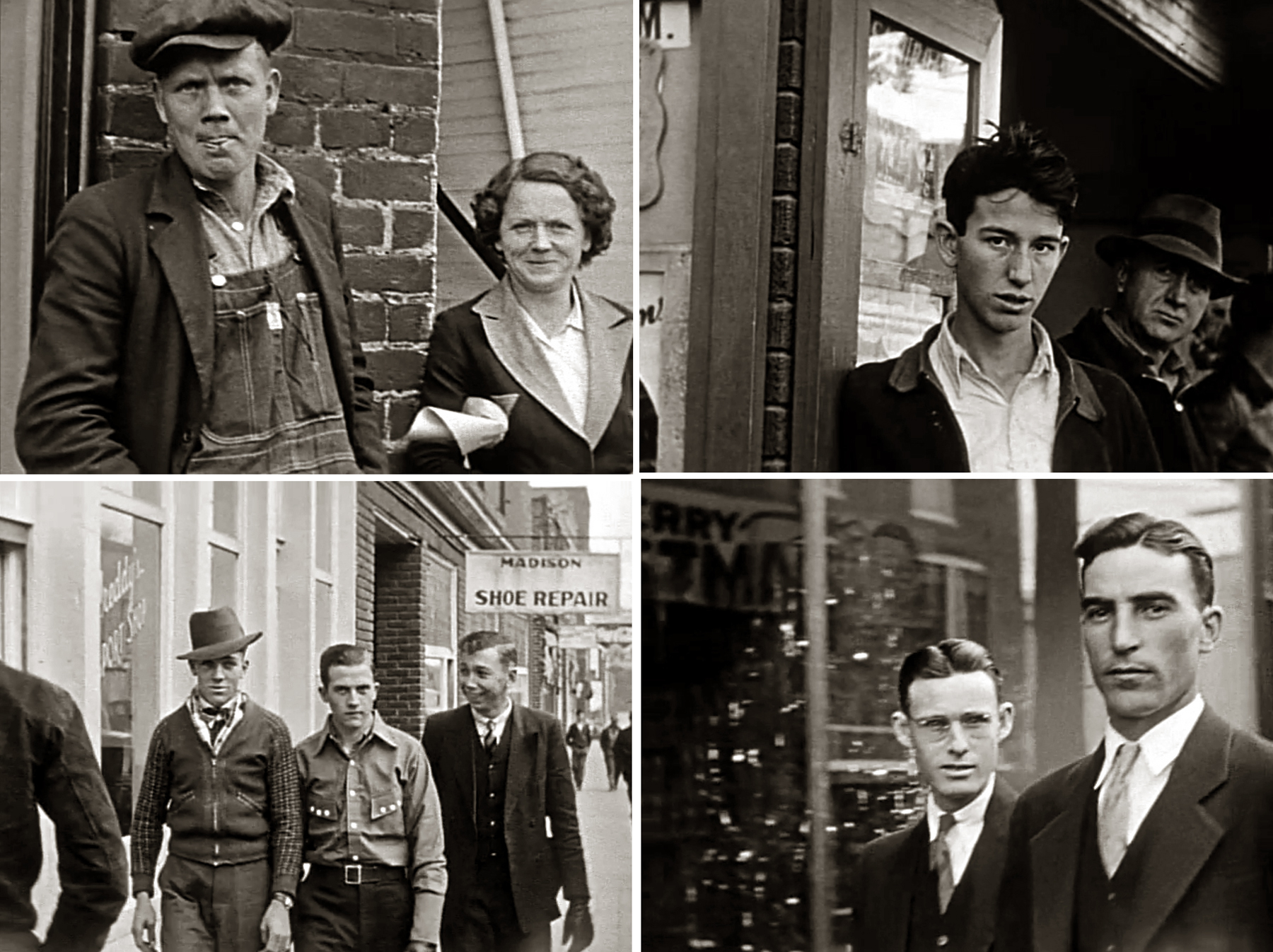
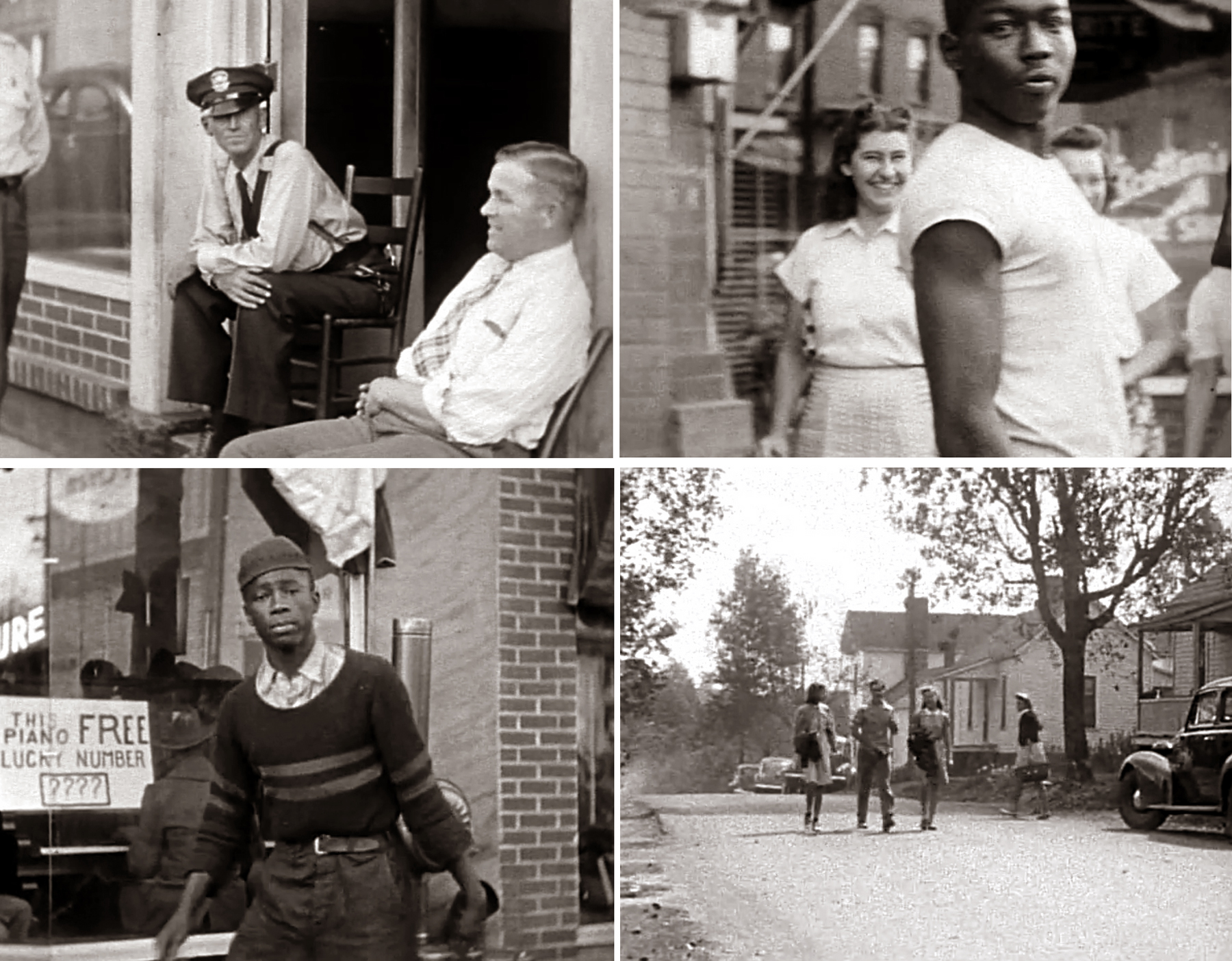
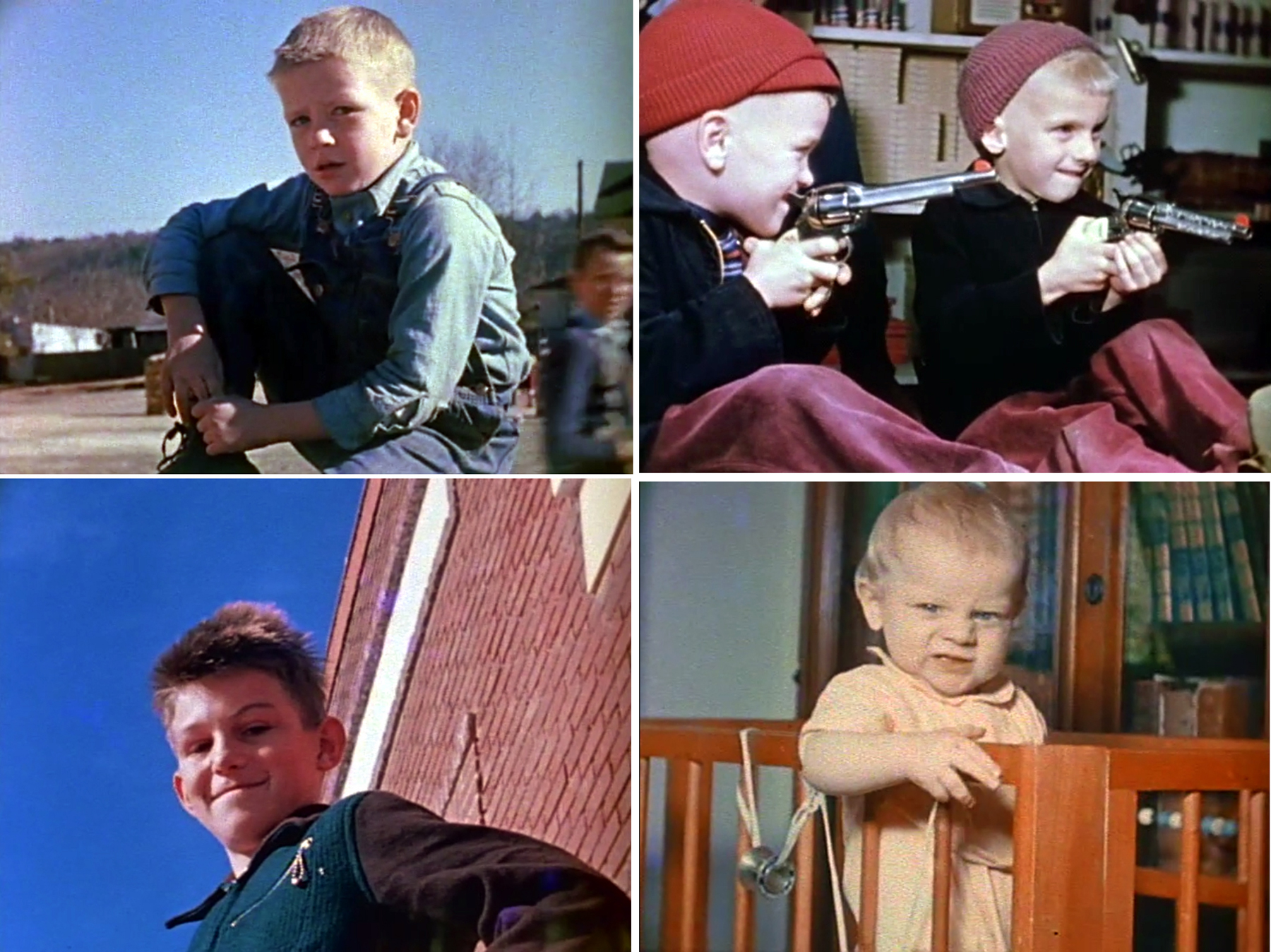
The 1930s remain in our visual imagination with a vividness that hardly exists from other eras — at least eras we didn’t actually live through. And it is through the photography of the period that this happens: It is hard to recognize how many of the canonized photographers from that era gave us documentary and quasi-documentary images of the times. Elsewhen, artists — and the photographers — often sought something more universal, or general, or eternal, but the quota of work from the 1930s screams out the time of its birth. madison color quad

Think of them: Brassai, Bill Brandt, Walker Evans, Cartier-Bresson, the whole army of photographers working for the Works Project Administration under Roy Stryker — our image trove from the 1930s is a stuffed portfolio. Madison bw quad 1

Click to enlarge

If we tend to distinguish between photography as journalism and photography as art — art with its formal concerns — then the work of Life magazine photographers falls into the first camp and the more elevated work of photographers such as Edward Weston, Imogen Cunningham or Frederick Sommer would seem to be of another genus. But especially in the prewar decade, the photographers we honor as artists often were the ones who left us with a chronicle of their times. It is hard to picture America during the Depression without the black and white images of breadlines, dustbowl farms, iron workers and iron-willed matriarchs reigning over raw wood kitchen tables in unelectrified Appalachian cabins.madison bw quad 2

(I am not forgetting later movements of “street photography,” and certainly not forgetting Robert Frank, William Klein or Garry Winogrand, but their work on one hand also seems like a throwback to an earlier era, and on the other, is more consciously concerned with formal problems, like composition, lighting and contrast — and often with even more Postmodern concerns, such as how photography makes the world look. In the ’30s, the primary concern was sociological: These people we have been privileged to look at.)madison bw quad 3

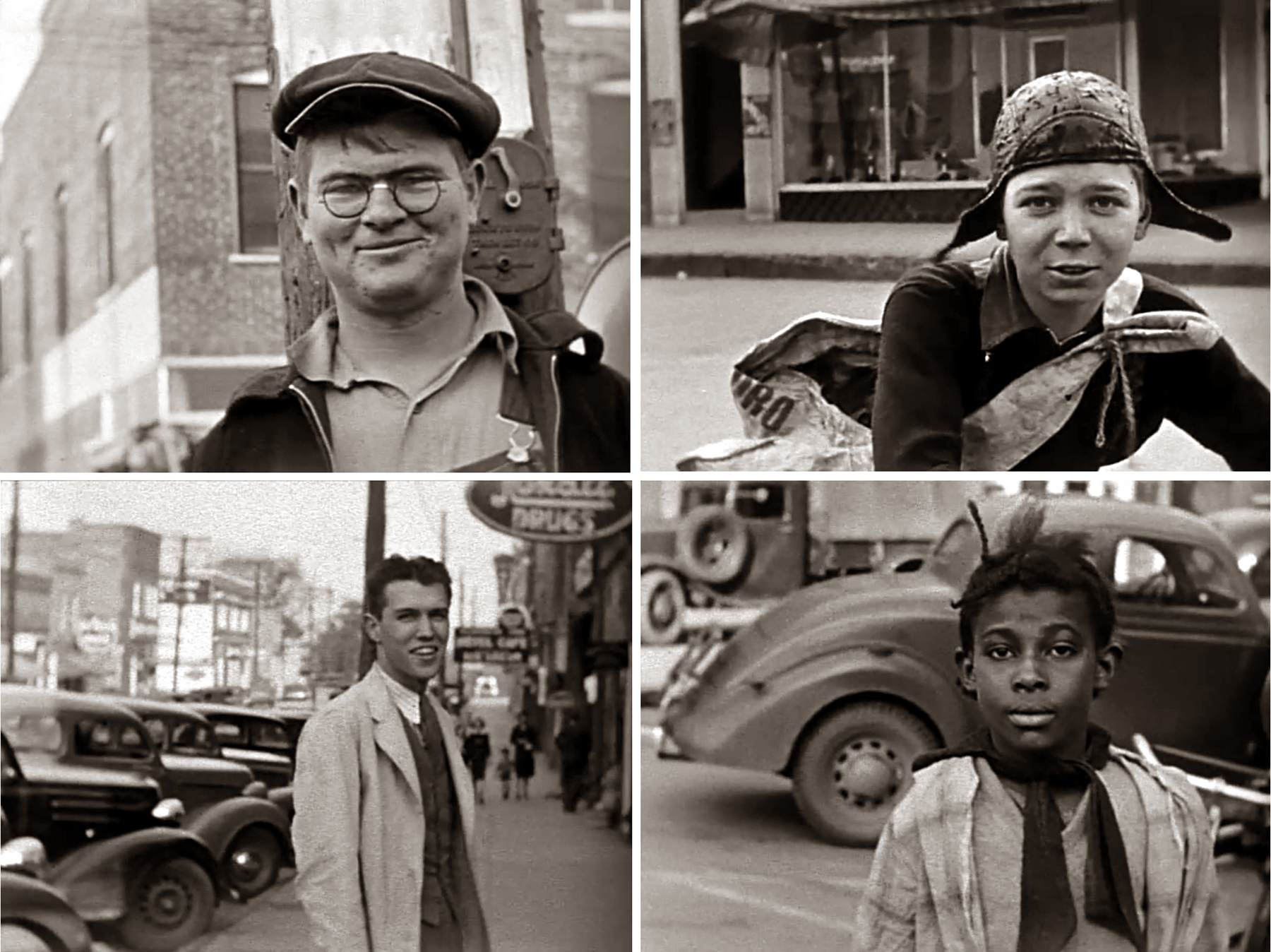
I bring all this up because a friend sent me a link to an unusual archive at Duke University of old documents, photographs and films, primarily from North Carolina. In it, there is a set of three films, or rather three reels of randomly edited home movies, from Madison, N.C., taken between 1939 and 1941 and available for download. You can find them at:

http://library.duke.edu/digitalcollections/hleewaters/Spatial_Coverage/Madison%20%28N.C.%29

madison bw quad 4These films appear to have been taken by a single person, who filmed schoolkids, class by class, streaming out of the schoolhouse, workers leaving the factory and pedestrians walking down the streets of Madison and neighboring Mayodan. At times, he attempts trick photography, and they are not always in perfect focus. The first reel is in color, the remaining two reels are black and white. It is clear he (or she) favors framing with the subject in the right half of the picture, but it seems less like a formal concern and more like a idiosyncratic tic.

madison bw quad 5Madison particularly interests me because it is where my wife grew up. She was born in 1941 and so, the images in these movies pretty closely approximates the town she knew as a little girl. A few of the teachers shown in them are teachers she knew in school. madison bw quad 6

But I also found that if I excised individual frames from the motion, I could see them almost as a new source of FSA photos, or undiscovered images of Walker Evans. I have included a bunch of them with this blog post. madison bw quad 7

One has to forgive the lower quality of focus or color, taken as they are from what must be a 16mm original, but what strikes me most in them is the quality of individual human beings, the person behind the eyes that stares out at us from the pictures. It is the same face — or the same kind of face — that we see in Dorothea Lange’s California agriculture photos. There is joy, suspicion, hope, hopelessness, anger, privilege, satisfaction and shyness in these faces (sometimes as the film progresses, the same suspicious face turns friendly).

madison bw quad 8And I come to see them not so much as impersonal esthetic constructs, but as a doorway into each of them as people. Individuals, shining lights of the cosmos bound in skin. madison bw quad 9

And then, by way of looking back at the old, familiar pictures of Jack Delano, Russell Lee, Marion Post Wolcott, John Vachon, Ben Shahn and others, you come to the realization that what makes them special — what, indeed, makes them important — is not their photographic quality, not their compositional innovations or formal intent, but that through those rectangular frames burn the lives of actual beings. What brings them alive for us esthetically is exactly the quotient of compassion, of empathy, we bring to them. Do we see them as esthetic exercises? Certainly that aspect exists in them, but such aspect exists in abstract torn-paper collages, too. No, what gives them power is that connection they enable between us in our age, and those people in the pictures, in their age and we see they are us. madison color quad 2


arrow earth
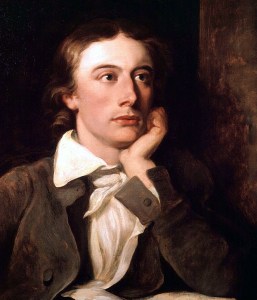
“Beauty is truth, truth beauty,” wrote John Keats. He may have intended that ironically, although it has been taken literally by many. Truth is beauty — well, at least in this: that artists have always sought to express the truth, at least as they have known it.John Keats
Art is, in large part, an attempt to discover truth in the welter of the chaos and confusion that is our lives. We write a play and test whether the ideas our characters believe can hold up under scrutiny. We paint canvasses in an attempt to discover what the world looks like. We write music to explore our emotional coherence.

In short, science is the test we give to hard fact; art is the test we give to everything else.

If you look at the broad expanse of cultural history (including art, literature, music, architecture — even politics and religion), you find each generation attempting to ameliorate the fallacies, misconceptions and naivete of their parents’. It is an ongoing march.

(The 20th century was deluded into thinking that there was a directional arrow to this process, and that they were the conclusion of the historical process, the end result of all that dialectic. That was their naivete.)

But the process continues: Our children see right through us. Their children will see through them.

The real “truth” is that our experience is too multifarious, to contradictory, ever to be summarized by a single cultural moment. This does nothing to minimize the efforts of all those generations before us to attempt to understand their lives. Each attempt is heroic in its own way. And each is truthful in its own way.

This constant shifting can be seen in the back-and-forth of certain cultural constants, which I call the pendulums. They swing back and forth. In gross outline, they are the classic and romantic ideas, the Apollonian and Dionysian impulses. But the pendulums are more complex than that simplicity implies. There are dozens, scores, hundreds of competing and repeating ideas that jostle each other out of the way temporarily, only to reappear in their turn and push back.

In the previous blog post, I discussed one of these ideas — the primacy in their turns of the generalized, universalized image, versus the individualized and particularized.

But there are many more oppositions, many more pendulums, swinging back and forth over our shared history.

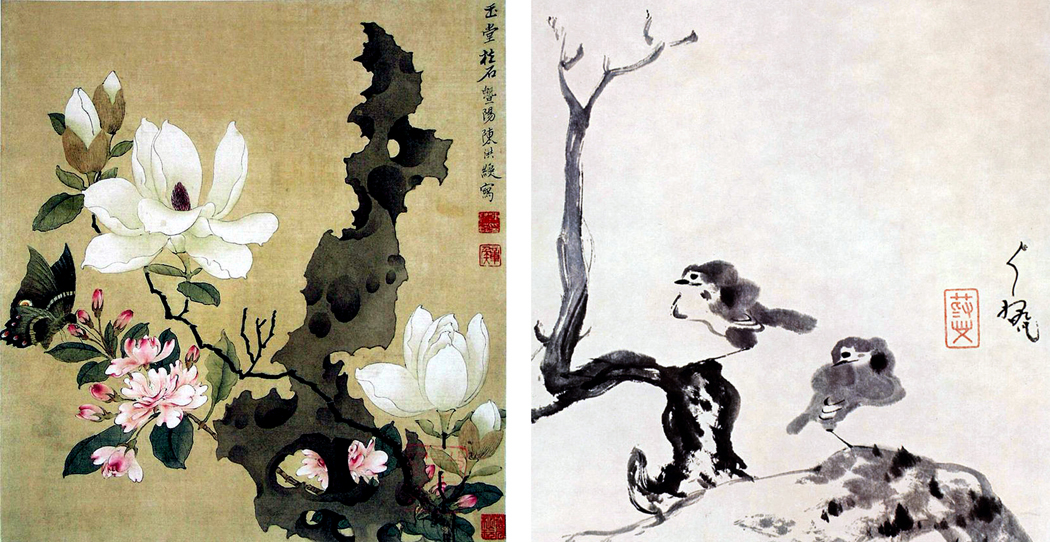
(My survey encompasses primarily Western art tradition, because it is the one I know best, the one I swim in, but other cultures share the dynamic, albeit with differing permutations. Just consider the Chinese art that swings from the formality of Chen Honshou to the spontaneity of Mu-Ch’i or Pa-ta-shan-jen).chen hongshou and bada sharen

Society or Cosmos

I wanted to look at just a few of these other oppositions in Western culture.

A second large group of oppositions concerns the subject matter, and whether the artist is concerned with man as a social being, an individual set in a welter of humanity — or whether he is concerned with the individual against the background of nature or the cosmos.

In the 18th Century, for instance, Alexander Pope wrote that “The proper study of mankind is man.”

The novel, which investigates human activity in its social setting, came from the same century. Fielding and Defoe come from that century.Prometheus
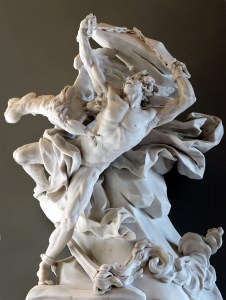
The succeeding century is concerned more with man in nature, or man in his loneliness, or fighting the gods and elements. One thinks of Shelley’s Prometheus Unbound or Byron’s Manfred.

Such poetry would have been considered utter nonsense 50 years earlier. One hundred years later, and they were taken for nonsense once again.

One only has to look at Pope and Wordsworth to see the difference.

I said these pendulums swing at different rates: After Romanticism in writing, we swing back to the social nature of Flaubert or Thackery or Dickens. The pendulum tends to remain social through the early part of this century. Eliot, despite his religious conversion, is eminently concerned with man and man, and sees religious conviction as a social good.

But when we hit the mid-century, the pent-up spirituality bursts out with the Beat writers, with the Abstract Expressionists, with Existential philosophy

The social-cosmic pendulum does not swing in synch with the general-particular pendulum.

Social — Cosmic

Limits — No limits

This world — The next world

Political — Apolitical

Regional — International

Active participation — Retreat from world

Rational — Magical

Emblem — Myth

Incarnation — Transcendence

Society — Nature

Nature as desert — Nature as cathedral

Dramatic — Lyric

Irony — Sincerity

Clarity and Ambiguity

The third large category is the fight between clarity and ambiguity. One age likes its art simple and direct; the next likes it textured, complex and busy.

The classic example, of course, is the shift from Renaissance classicism to Baroque emotionalism.

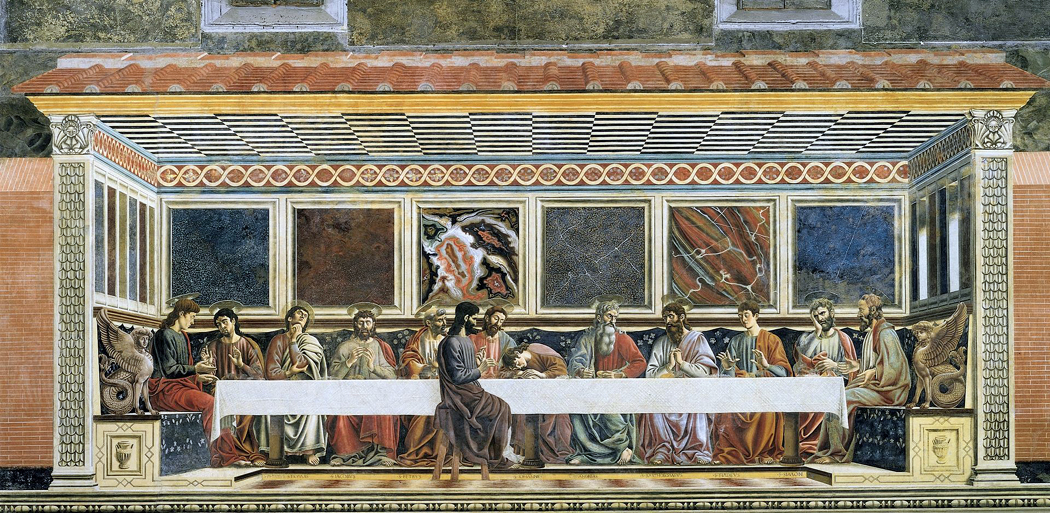
In a Renaissance painting, the artist made sure everything could be seen clearly. He lined everything up with the picture frame, lit it with a general illumination so that confusing shadows would be minimized.

Look at this Last Supper by Andrea del Castagno.

castagno

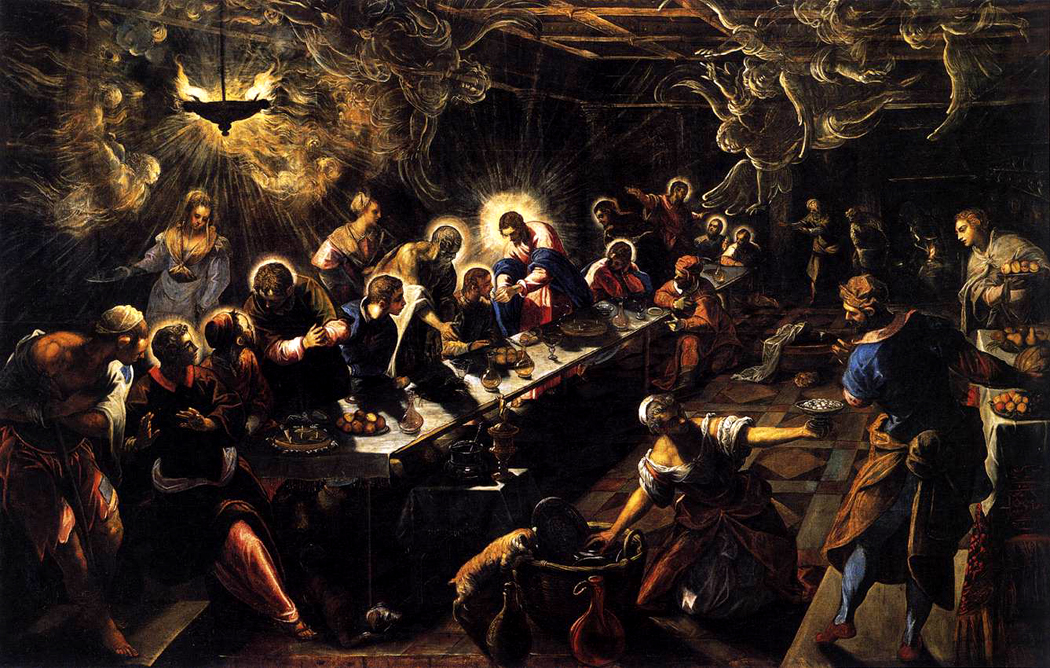
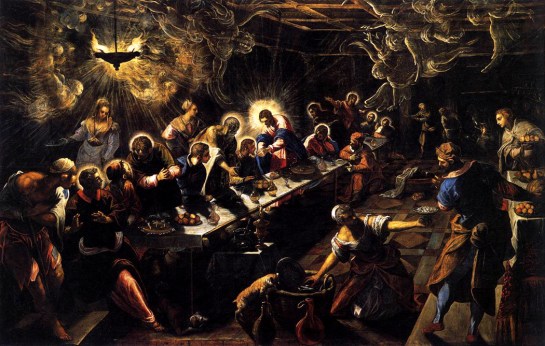
See how clear it all is. But the Baroque painter Tintoretto had a different vision of the same biblical event. It is writhing, twisting out into deep space, with deep shadows and obscure happenings.
tintoretto

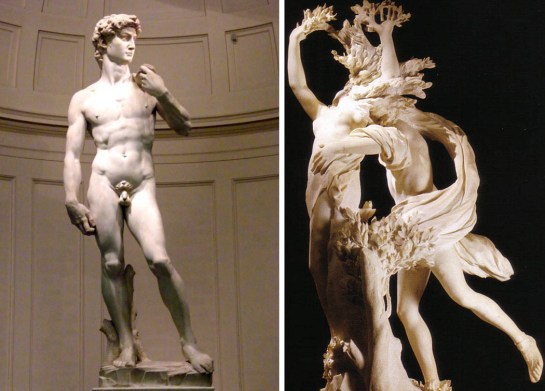
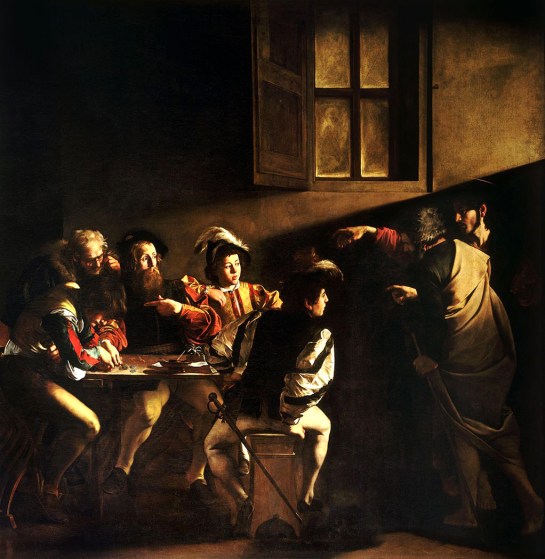
The Renaissance liked stability and clarity, the Baroque, motion and confusion.

Like the David of Michelangelo and the Bernini statue of Apollo and Daphne.
david and apollo and daphne

Or the Birth of Venus of Botticelli

botticelli

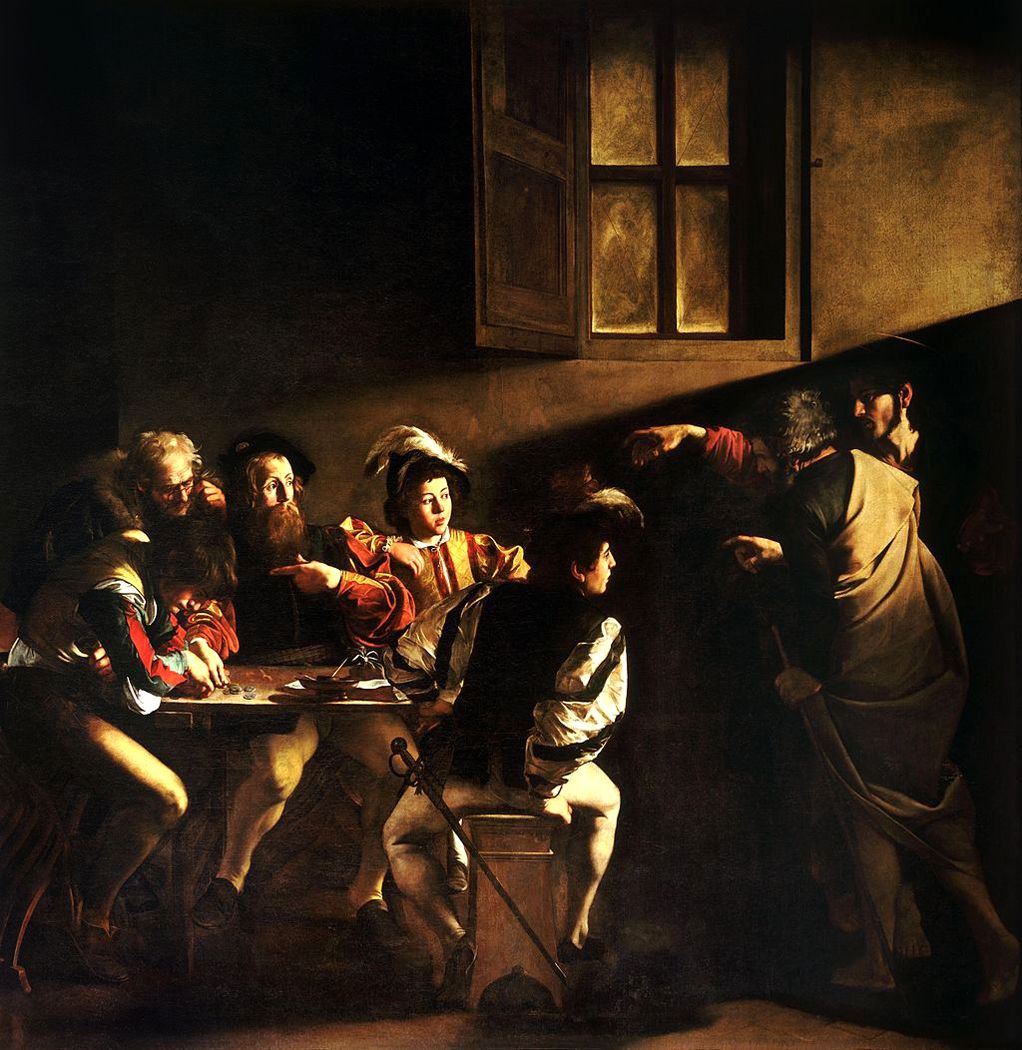
and the Calling of St. Matthew by Caravaggio.
caravaggio

In buildings, you can see the shift from the Gothic, with its infinite variety and crenelated detail, obscuring the larger structural designs to the clarity of ornament and design in Christopher Wren’s  St. Paul’s Cathedral in London.st pauls milan cathedrals

You can hardly see the actual walls of the Gothic cathedral, so overwhelmed are they by buttresses and sculptures.

But St. Paul’s is a monument to line and form, clearly seen and designed.

Clarity — Ambiguity

Limits — Freedom

Simplicity — Complexity

Unity — Diversity

Drawing — Painting

Stasis — Energy

Regulation — Impulse

Overall — Detail

Formal — Organic

Codify — Explore

Stability — Change

Rules — Anything goes

Clarity — Obscurity

Old form — New form

Discrete disciplines — Mix and match

Relevant or Isolated

Another shift concerns whether art should serve some wider function, like moral instruction or a search for scientific truth, or whether art has no purpose but to stimulate our esthetic tastes. Art for art’s sake.

Should the art hang on the wall to be looked at, or should it decorate the handle of the shovel or spoon? Should it remain outside the mores of its time, or should it be used as propaganda for a righteous cause? Is it merely to look at, or should a Madonna teach you something about your religion?

This is a concern that has become important in the art of our time. A whole herd of artists arose in the 1960s who saw art as divorced from life. Color Field painters preached the gospel: “Art can make nothing happen.”
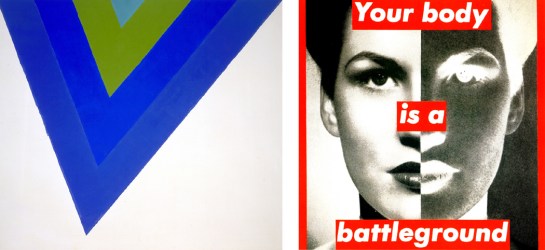
noland kruger pair

But Postmodernism is largely about inserting political thought into the paintings. Art for art’s sake is declared “elitist” and “irrelevant” and the new art must be judged on its political truth.


Art as Art — Art for Function

Entertainment — Edification

Style — Content

Apolitical — Political

Ignore past — Embrace past

Retreat from world — Active participation

Art on wall — Art on implement

Technical — Visionary

Vocation — Inspiration

Contemplation — Propaganda

Ideal — Practical

Tribal or Cosmopolitan

The history of art also pulsates with the shift from nationalistic to international styles, from that which is specific to an ethnic or identity group, and that which seeks to transcends those limitations. The Gothic style as an international style, but the Renaissance is either Italian or Northern. The Baroque breaks up further into French, Dutch, Italian, Flemish.

In music, Bach imitated the national styles in his English and French suites and his Italian Concerto.

But the Galant and Classical styles that replaced it vary little from country to country. Perhaps the Italian is a little lighter and the German a little more complex, but you can’t get simpler or more direct than Mozart.

Nationalism reasserted itself in the next century, so that you have whole schools of Czech music, French, Russian.

In the early 20th Century, internationalism took charge once more and for a while, everybody was writing like Stravinsky.

The main architectural style of the first half of this century is even called “The International Style.”

But ethnic identity is back, and art is once again seen as a key to identity.

Exclusionary — Syncretic

Limits — No limits

Theocratic — Humanistic

Reinforce ethos — Challenge ethos

Regional — International

Nationalism — Cosmopolitanism

Discrete disciplines — Mix media
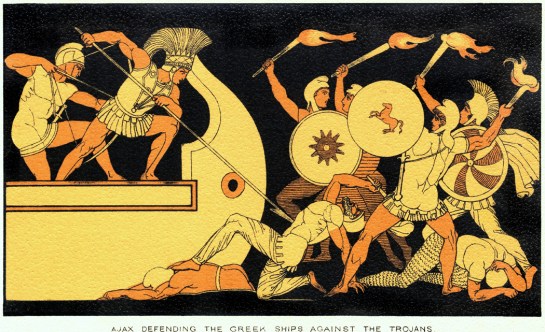
Ajax Defending Greek Ships Against Trojans

All of us or just me

One of the big shifts is between what I call “ethos” and “ego.”

That is, art that is meant to embody the beliefs of an age, thoughts and emotions that everyone is believed to share — or art that is the personal expression of the individual making it.

We have so long taken it for granted that an artist is supposed to “express himself,” that we forget it has not always been so. Did Homer express his inner feelings in the Iliad? Or are those emotions described the emotions he expected everyone would understand and share? He tells of what Achilles is feeling, or Ajax or Hector or Priam — and they are deep and profound emotions — but they give no clue to what Homer was feeling.

In music, Haydn’s symphonies were written about as being powerfully emotional. Nowadays, we think of Haydn as a rather cerebral composer. If we want emotion, we go to Beethoven or Schubert. You cannot listen to Schubert’s string quintet and not believe it expresses the deepest emotions that its composer was suffering at the time. It is his emotion. We may share it, but it is his.

Ethos — Ego

General — Particular

Investigate world — Investigate self

Chorus — Individual

Rectitude — Bohemianism

Anonymous creator — Signed art

Vocation — Inspiration

Atelier — Single creator

Talent — Genius

Depiction of emotion — Expression of emotion

Head or Heart

baudelaireThen, there is the fight between wit and sentiment.

To some generations, art needs to take a cool, ironic view of the world. Cervantes in his Quixote, or Pope in his Rape of the Lock.

To other generations, art is about human emotion. The more a person feels, the better the art.

Wit was the hallmark of the 18th century. Sentiment of the 19th. It was a common issue of discussion. Everyone knew just what you meant when you used the terms.

Did you wish to write “what oft was thought, but ne’er so well expressed”? or did you want to release pent up emotions, creating something new, never felt before? That’s what Baudelaire did.

Wit — Sentiment

Irony — Sincerity

Universal — Particular

Intellect — Emotion

External — Internal

Reinforce ethos — Challenge ethos

Artifice — Naturalism

Social — Cosmic

Verbal — Sensuous

Society — Nature

Emblem or Myth

Penultimately, there is the swing from art which uses its symbols emblematically and that which uses it mythologically.

That is, if you use a symbol, does it stand “for” something else — as cupid stands easily for love in so much pastoral poetry — or does it partake of that which it expresses — that is, in photographer Minor White’s wonderful formulation: “what it is and what ELSE it is.”faerie queene

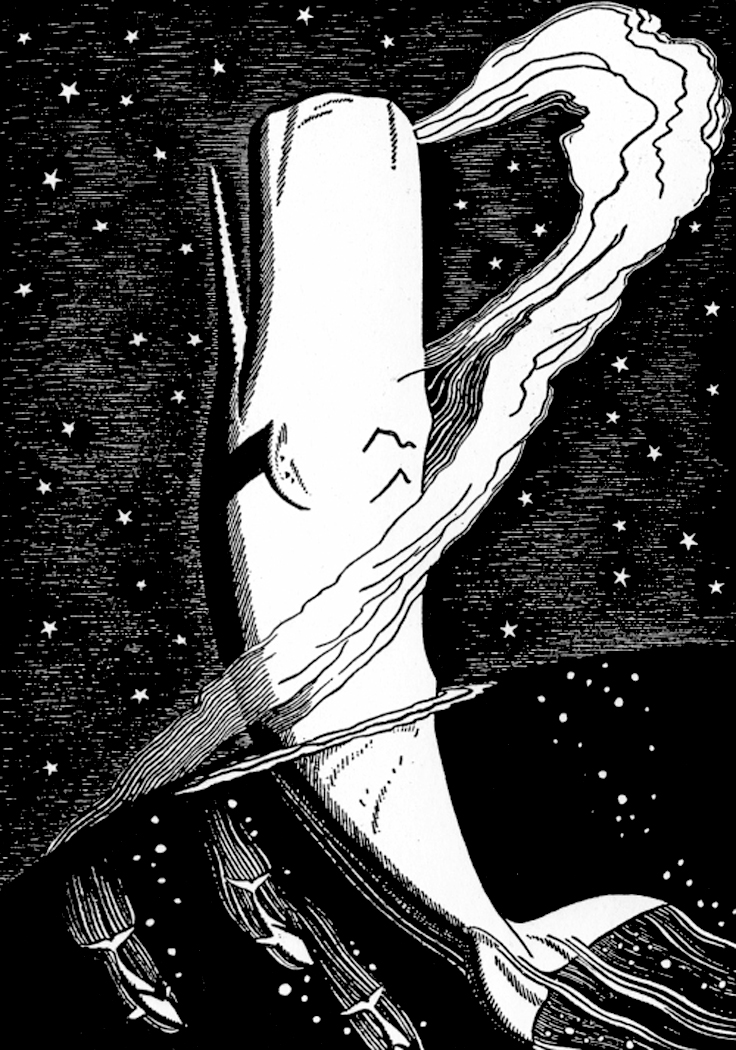
Cupid is an emblem. The Cross on the Knight’s shield in The Faerie Queene is an emblem. Moby Dick is a myth. One is easily translatable, the other is not and opens itself to investigating that which cannot be put in mere words or images.

A Classic age tends to be emblematic, a Baroque or Romantic age tends to be mythic. The one uses symbols as shorthand, the other as incredibly convoluted mental images that point at, but don’t touch, what it means. It is the opposite of shorthand.

Ovid is the acme of the emblematic. Homer of the mythic. Homer’s gods — for all their occasional silliness — are actual divinities. Ovid’s are puppets playacting for our amusement.

Emblem — Myth

Universal — Particular

Intellectual — Emotional0 R

Simplicity — Complexity

Unity — Diversity

Stasis — Energy

Regulation — Impulse

External — Internal

Secular — Religious

Style — Content

Synthetic — Organic

Miniature — Epic

Ironic — Sincere

Mimesis or Poiesis

And finally, there is the issue of whether art should imitate the appearance of nature, or should imitate the processes of nature. That is, whether art is mimetic or poetic. Should it copy or create from whole cloth?

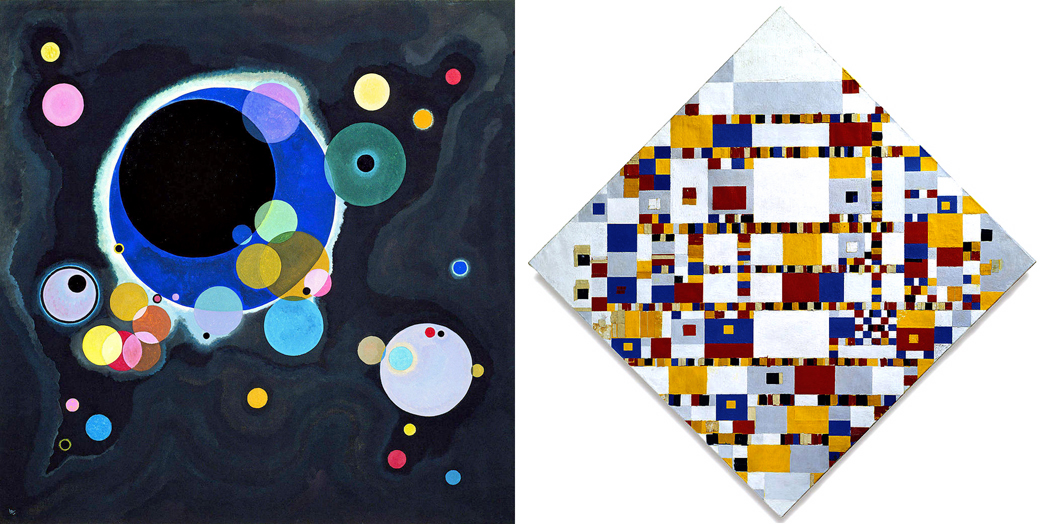
We have seen in our century the change from abstract art to images. Abstraction once seemed unassailable. It was the serious art; anything else was trivial.
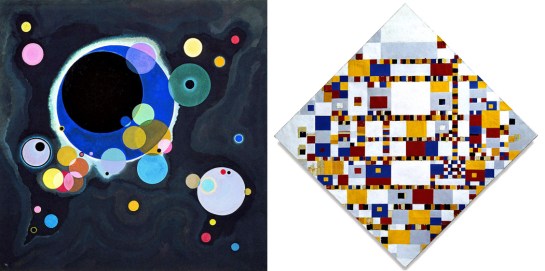
kandinsky mondrian pair

lichtenstein 2Well, we got over that. From the time of Pop Art, art has increasingly attempted to look, in some form or other, like the world.

It hasn’t done this in imitation of the look of paintings from earlier centuries. That look cannot come back, or cannot be used without irony.

But artists today paint images of people and things. They are identifiable. Some are almost like the old paintings.

Richard Diebenkorn was hailed as an abstract artist in the 60s.

When he began returning to the figure, he was at first castigated.
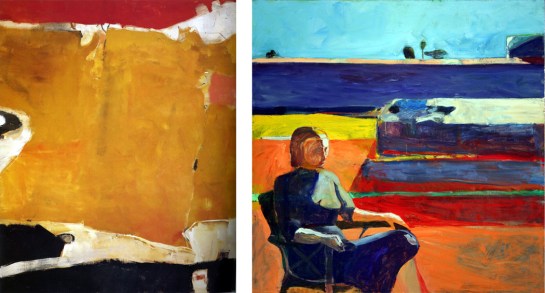
diebenkorn before and afterNow he is seen as a prophet.

Abstraction wasn’t only in painting. Waiting for Godot is an abstract play. Gertrude Stein wrote abstract prose. Carl Andre wrote abstract poetry.

Mimesis — Poiesis

Imitation — Abstraction

Particular — General

Individual — Universal

Observed –Stylized

Detail — Overall

Edification — Entertainment

Content — Style

Naturalism — Artifice

Investigate world — Investigate self

Scientific realism — Emotional realism

Stretching the frame

Before we leave the subject, we should point out that oppositions are entirely dependent on context. Baptists and Lutherans are opposites until we pair them as Protestants against Catholics, and we pair those against, say, Islam as the opposite of Christianity, or those paired as religions of the book against, let’s pick, Hinduism, but then we can pair those as religions against atheism, and pair them as belief systems against thoughtlessness, and pair them as philosophies against — well, whatever is the opposite of philosophy.

There are an uncounted number of oppositions; I have listed a few I have considered. I could elaborate blogs about each of pair them.

But you get the picture.


Romeo and Juliet in frame
“All great love ends in death,” Stuart said.

“Maybe in literature, but not in real life,” I said.

“Yes. All love ends in death. On one hand, sometimes it’s love that dies and then you are stuck. But even if love doesn’t die, the lovers do.”

“You mean like Romeo and Juliet?” I asked.

“Yes, like Romeo and Juliet. Like Tristan and Isolde.”

“But can’t love end happily?” I put forward that possibility; I’ve been married 30 years.

“Yes, but even the most successful love ends in death,” Stuart said. “Either for one or the other and eventually, both. They may be 80 years old, but eventually, love ends in death.”

“Oh. I see what you mean. It’s a trick. Like a trick question.”

“No, it’s not a trick, except that it is a trick the universe plays on all of us. I don’t mean it as a trick.

“Romeo didn’t have to die the way he did,” Stuart went on, “but he had to die eventually. Even if they got married and lived long lives, he would have to die some time, and then, Juliet loses him anyway.”

It is the underlying metaphor of all tragic love stories, he thought. His own, for instance. Stuart had never seen a great gulf between literature and his own life. Others, well, they may be banal and ordinary, but his own life had all the electricity of a great book or epic myth.

The one thing that separated Stuart most from the accountants and dentists of the world was that he recognized in himself the hero of his own life — the sense that he was the main character in a story of infinite significance. When something happened to Stuart, it happened to the universe.

The joke was, of course, that this is true. But there was a stinger, too: Although it was true, the universe is so vast that no matter how big it was to Stuart, it added up to zilch in the big picture.

“That is truly depressing,” I made a sour face.

“But that is not the real issue,” Stuart said. “The real issue is the frame.”

“The frame?”

“Yes. This is something I’ve been wondering about for a while. Every comedy ends in a marriage, it is said. The curtain drops and the audience goes home enjoying the happy ending.

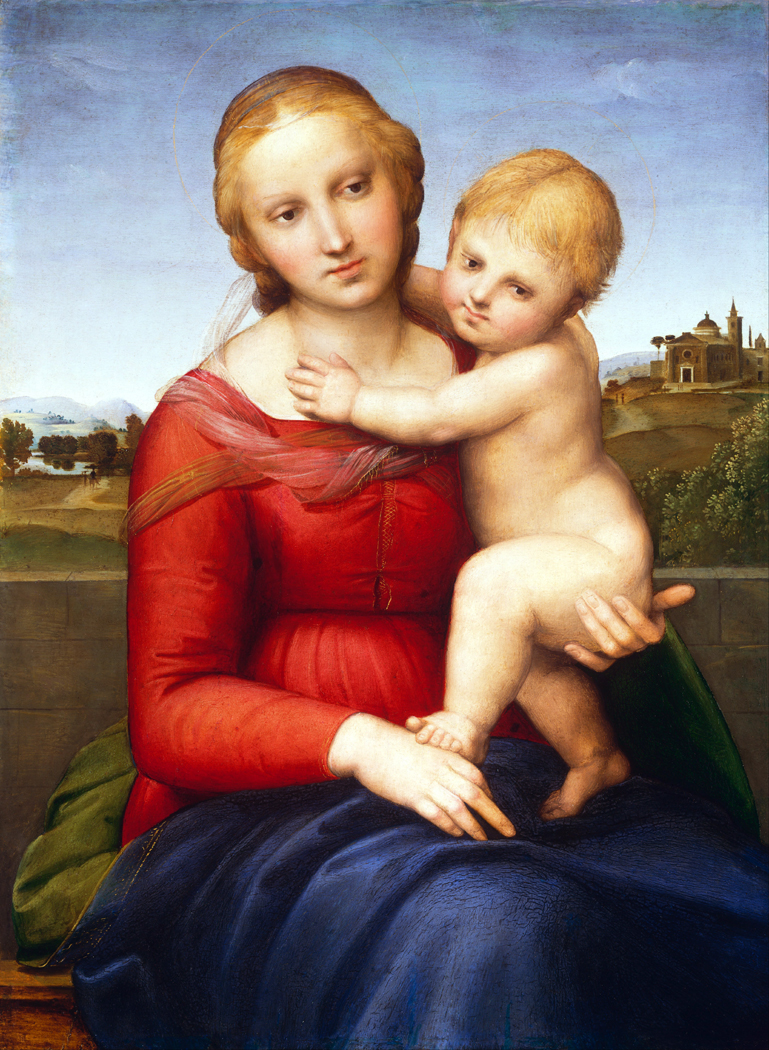
“But, if we followed Beatrice and Benedick after the end of the play, in a few years, at least, there would be divorce — or more likely, murder. Happy endings are always provisional. So, there is an artificiality to comedies that is ineradicable. The happiest comedy, if drawn out to the uttermost, ends in dissolution.”Raphael

“So, you’re saying that the frame — the curtain — reveals any art as an artifice.”

“Yes. And not just in theater. Take the photographs of Garry Winogrand. We are meant to see the frame — the edge of the photograph — as an arbitrary border drawn around some episode, but beyond the frame, there are other people doing other things. This has become something of a trope in photography.

“It used to be that we understood the frame in a painting — say a Renaissance crucifixion, or a Madonna — as merely the point at which our interest in the visual matter evaporates. It is the Christ or Virgin that sits in the middle that is meant as an object of contemplation. A frame could be larger or smaller and still contain the essential action.Tintoretto, La crocifissione, Sala dell'albergo, Scuola di San R

“In Baroque painting, there is often the growing sense that the frame cannot contain the action, but that there is something worth knowing just beyond the edge. That sense has become central in certain strains of contemporary photography. winograndA photograph may contain an image of someone looking back at the camera, over the photographer’s shoulder, at something behind him that we can never see.

“The first kind of frame serves as a kind of fence, or corral in which the important information is contained. The second is more like a cookie cutter, which sticks into the welter of existence and excises this small bit for us to consider.

“That is the frame, the ‘beginning, middle and end’ that gives us such satisfaction in a play or opera.”

My concern at this point is that I could see that Stuart was unwinding his own life from the bobbin, and holding it out in his fingers to examine, and what he was finding was deflating. What set Stuart apart from most people was about to be undone. siegfried

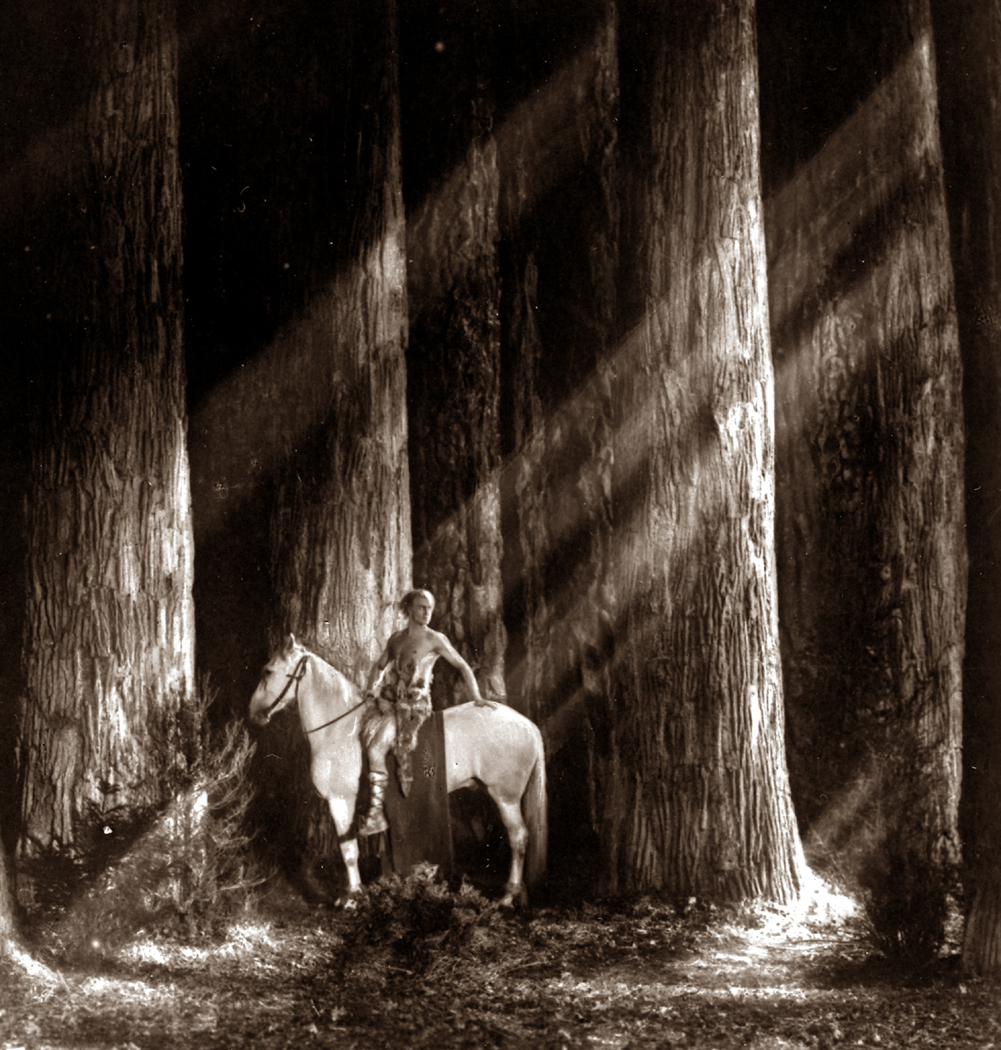
I had known Stuart since college, and what made him glow from the inside was not just his energy — or jittery intelligence — but his sense that he was the star in his own movie. Or rather, that he saw in himself a larger, mythological version of himself playing out among the chess pieces of the universe. He was Siegfried voyaging down the Rhine; he was Odysseus; he was stout Cortez.

Don’t misunderstand, please. He was never grandiose — in his exterior behavior, he was as normal as you or me. But inside, was something larger, bursting to get out. He saw the world swirling the way Van Gogh did. For Stuart, every bush was the burning bush. Take away that internal furnace, and what would be left of Stuart? He would have grown up. Not something that any of us who knew him would wish for.van gogh

“This is the fundamental fallacy of American conservatism,” he went on, making another 90-degree turn.

“They seek to enforce a static vision of society, of law, of human behavior. They keep telling us, that if only we would do things their way, everything would finally be peach-hunky, into eternity — the happy ending that we know (and they don’t admit) is always provisional. They see a — excuse me for the exaggeration — ‘final solution’ for something that has no finality to it.

“Politics — real politics — is always the flux of contending interests. You want this, I want that, and we wind up compromising. Conservatives see compromise as surrender, precisely because they see politics with a frame. Get the picture right, and then it is done. Deficits are erased; the wealthy get to keep what is rightfully theirs; order is established. It is the underlying metaphor of all Shakespeare’s plays: The establishment of lasting, legitimate order, final harmony. stew

“Only, we know that after Fortinbras takes over, there will be insurgencies, dynastic plots, other invasions, a claim by mainland Danes over island-dwelling Danes, or questions of where tax money is going. It is never ending. Fortinbras is only a temporary way-station.

“Existence is a seething, roiling cauldron and sometimes this bit of onion and carrot comes to the surface, and sometimes it is something else. It is never finished, there is no frame, no beginning, middle and end.”

“So, where does this leave poor Juliet?”

“Juliet?”

“Yes, where does this leave us all, we who are all bits of carrot. We who are married for 30 years, we who entered the field of contention, worked for our required decades and left the battlefield to become Nestors — or Poloniuses. All this washes over us and we see that, in fact, we have a frame. Existence may not have one, but I do. I am getting old. 67th birthdayI just turned 67 and I feel it. And I know that my Juliet will die, or I will go before her. We do have, in fact, a frame, a curtain that draws down and leaves us — as Homer says — in darkness.”

“Exactly,” Stuart said, “and this is my point. Every one of us lives two very different lives. You can call them the external and internal lives. The first is the life in which we share the planet with 7 billion others. We are a tiny, insignificant cog in the giant machine. The second is the mythic life, the life we see ourselves as central to, in which we are the heroes of our own novels or movies, and everyone we know is a supporting actor. If we live only in the first life, we are crushed and spit out. But if we live only in the second life, we are solipsists. Sane people manage to balance the two lives. A beautiful counterpoint.

“We are most engulfed by that second life when we fall in love. We are certain that we invented this condition. No one else has ever felt what we feel. It’s comic, of course, but it is also profound. Without this feeling, life is unbearable. We have to have meaning, and meaning is created by how we imagine ourselves.

“Politics hovers oddly in the intersection of these two worlds. We need to sober up and consider the other 7 billion people if we are to create useful policy, but we mythologize those who lead us, and those who lead do so most effectively when they mirror back some version of mythology. The most extreme example I can think of is Nazism in Germany. A whole nation bought into the fantasy. Disaster follows.

“But all ideology is ultimately built on mythology: on a version of the world with one or two simple dimensions, when existence is multi-dimensional. The political myth is always a myth of Utopia, whether right-wing or left-wing. And it is always a static myth: Racism ends and everything is great, or government spending is curtailed and everything is great. That simply isn’t the way existence is.”

“The world is always bigger and more varied than our understanding of it, and it will always come back to whack us upside the haid.”

“Right. The conservative sees the world only with his ego eyes, not from outside himself. That frame — his death — is something he cannot see beyond. There is something egoistic about conservatism. Often selfish, also, but the selfishness isn’t the problem, it is the egoism — the frame they put around the world, the static sense of what is finally right — the so-called end of history. In this, the conservative — or at least the tin-foil-hat variety — is no different from the dyed-in-the-wool Communist. Both see the establishment of their Utopia as the endgame of human existence.” hubert robert

“You’ve been reading Ovid again.”

“How did you know?”

“The Pythagoras chapter.”

“Right again. Panta Horein, as Heraclitus said: ‘Everything is flowing.’ As Ovid has it, even landscapes change over time, and Hercules’ brawn withers and Helen’s breasts sag. Cities grow and are demolished; Mycenae gives way to Athens, to Alexandria, to Rome, to Byzantium and Baghdad, then to London and now to Washington, with Beijing waiting in the hopper. ‘Mais ou sont les neiges d’antan?’ “

“How’s that?”

In saecula saeculorum: World without frame.”


ITR-PCL-00051429
If one takes the long view of history, recent events often turn out to be part of larger patterns, or “themes” of history. Nowadays, for instance, we can see World War II as the completion of World War I. And we can see World War I as the natural continuation — a flare up — of the same thing that caused the Thirty Years War of the 17th Century. These things can smolder for centuries, like a peat fire, and flare up when local events add oxygen.

It is important to understand the long view on history if you want to find a lasting solution to current problems. You don’t treat heart disease by prescribing an aspirin for chest pain.
I don’t want to make unrealistic claims for this. The local symptoms do need to be addressed and the current situation needs to be handled in a way that deals with the contemporary realities of the case.

But we will only make things worse if we act in a knee-jerk fashion with no understanding of the complexity of events.

The underlying mistrust between the European or Western world and the Islamic world can be traced back at least as far as the 11th Century, when Pope Urban II called for a crusade to wrest the Holy Land from the infidel.

It was the European version of a jihad or holy war. In calling for the war to “liberate” Jerusalem, the Pope declared, “It is the will of God.”

Over the next several centuries, European armies contended with “pagan” armies over the region, winning some and losing some. The horrors of that time, and the crimes of the crusaders are well recorded and nowadays would certainly be understood as war crimes, even terrorism.Ninth Crusade

When they first conquered Jerusalem in 1099, the crusaders slaughtered some 40,000 Muslims and Jews who lived in the city.

Yet, the Moslem defenders don’t get off the hook, either. They committed their own series of atrocities. It was a time that didn’t reflect well on the humanity of either side.

Each side was certain of its rectitude and each side knew that divinity was backing them against the unbelievers.

The contested borders of Christianity and Islam continued long after.

Indeed, the problems in the Balkans recapitulated the battles in Kosovo during the 14th and 15th centuries between the Muslim Turks and the Christian Serbs. acropolis mosque

The World Trade Center isn’t even the first well-known building to be destroyed by the enmity. In 1687, the Venetians were fighting the Ottoman Turks when they managed to blow up the Parthenon on the Acropolis in Athens. Before then the old temple had survived relatively intact for more than 2,000 years.

It is important to recognize that it isn’t merely a battle for territory, like many intra-European disagreements.

The two sides have fundamentally different world views.

Which means that in another sense, the roots of the current attack go back well before the Crusades and begin in the Persian Wars of the Aegean in the Fifth Century B.C.

It was during those conflicts between ancient Greece and Persia that the defining difference between East and West was first, and principally defined.

Up until then, wars were largely fought between sides claiming to be bigger and better than their foes. The biggest monkey kept the banana.

But the Greeks defined themselves against the Persians as an idea. The Greeks — and their historical progeny in Europe — have tended to think of themselves as free, as democratic and as rational and have seen their counterparts in the East as despotic, uncivilized slave societies.

We’re not claiming that this is literally true. There is barbarity and nobility to go around.

But the West has largely thought of itself in these terms, even when in fact it didn’t measure up. Persia is now Iran.

We still see this battle with terrorism as one of “freedom and democracy” against the blind superstition of unreasoning fanatics.

And when Vice President Joe Biden was still a senator, and chairman of the Senate Foreign Relations Committee, put it even more directly.

“This is not a struggle over ideology. This is not a struggle over religion. This is a struggle between civilization and barbarity.”

These are the very terms the Greeks used in describing their war with Darius and Xerxes.

I am not suggesting that the Islamic world is barbaric, but that we have set up the terms of the argument in this old language, learned from the Fifth Century B.C.

But there is this kernel of truth to the matter: The West has come largely to believe that the purpose of government is the well-ordered organization of society — a belief they hold even in its breach. Meanwhile, the East has seen government as settling the issue of “who’s in charge.”

For the West, the theoretical end of political desirability is “benevolent anarchy” — such as that called for by Libertarians and “shrunken-government” Republicans, while for the East, the same theoretical end is the “benevolent theocracy,” centralized rule that preserves societal order.

The two systems are at such fundamental loggerheads that we mistake the meaning of such words as “democracy” when uttered from across the cultural divide. They mean something different by the word.

It is this difference, cooked long and slow by history, that must be taken into account when we seek to solve global problems.

It is what worries me when I hear even university presidents declare the obsolescence of the humanities, and when I hear the appalling lack of historical knowledge held by American students — to say nothing of a political leadership that has no more historical memory than last week’s car bombing. Those who refuse to learn from history are condemned to repeat it.

And it is what worries me when I hear increasingly bludgeoned rhetoric from our lower-grade politicians — “the windiest militant trash” — looking for quick and easy revenge.

They are missing the point. I am reminded of the lines by W.H. Auden:

I and the public know/ What all schoolchildren learn,/ Those to whom evil is done/ Do evil in return.”


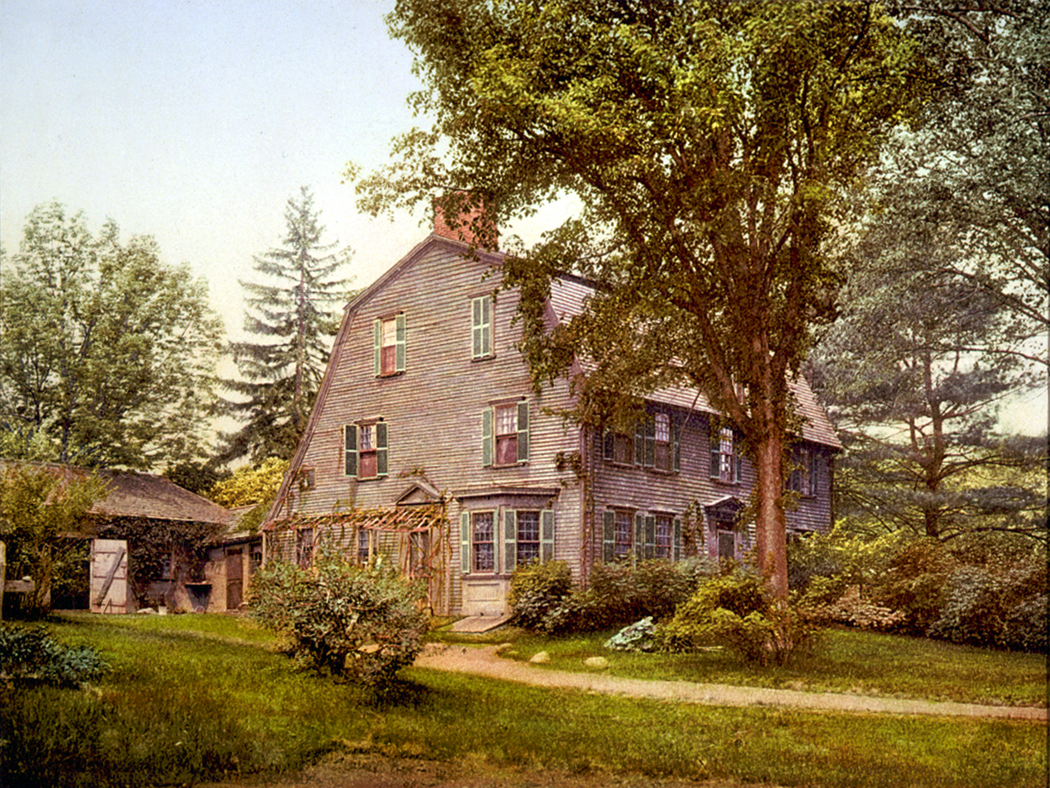
old manse with wallThe Old Manse is one of the most extraordinary houses in America. It saw the birth of two revolutions and was lived in by a string of some of the most exceptional Americans every to grace a town noted for exceptional people.
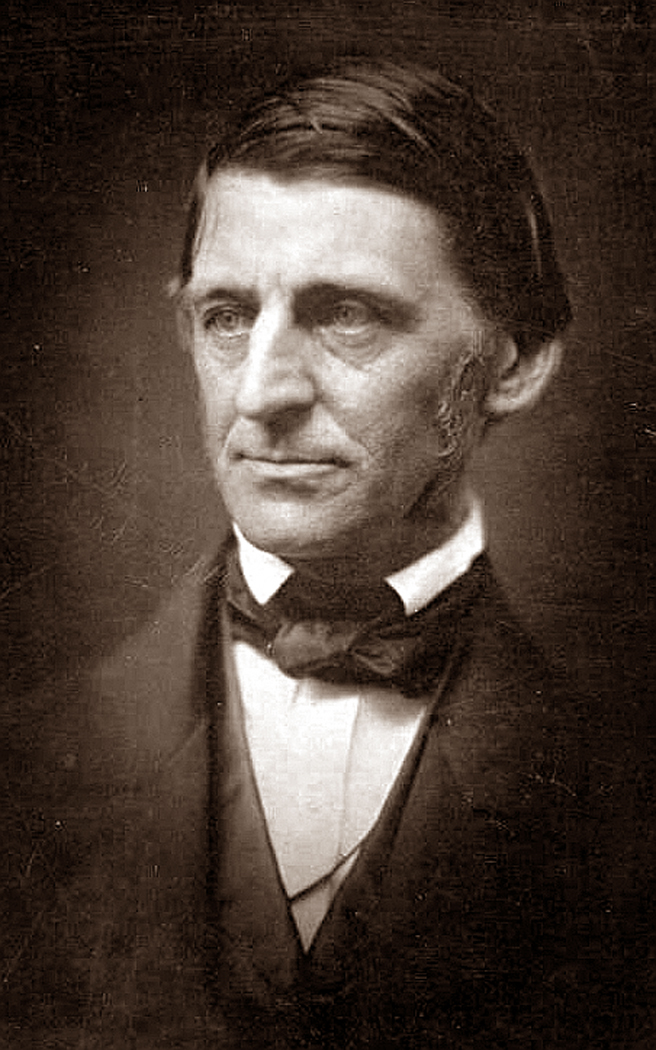
rw emerson

Concord is that town, a small, suburban Massachussets community, only 15 miles west of Boston. There is a grassy town square with its monument, a hillside cemetery, a single street lined with shops and several venerable old churches with  white, pointy steeples.

Concord was also, for a time in the center of the last century, the intellectual center of the young nation. Among its residents were writers, preachers, lecturers, editors and abolitionists. Some of their names are still current: Ralph Waldo Emerson, Henry David Thoreau, Louisa May Alcott, Daniel Chester French — sometimes it seems you have to have three names to live in Concord — and Nathaniel Hawthorne, who broke the three-name rule. Others were once as eminent, but are now remembered mostly by scholars and readers of history books: Amos Bronson Alcott, William Ellery Channing the younger, and Ezra Ripley among them.old manse 1930s

The Manse sits on a wooded rise on Monument Street north of the town center. It is a two story wood frame, gambrel center-entrance twin chimney Colonial house, now with gable windows in the roof and most of its paint gone, leaving a gray, old weathered building in the arbor of trees and vines. It is notable for its many tiny rooms, unusual for an eminent house of that time.old north bridge from manse

Its back yard slopes off toward the Concord River and the Old North Bridge, where American Minutemen fought British regulars on April 19, 1775 and “fired the shot heard round the world.”

That was the first revolution the house presided over.

Mary Moody Emerson, who was an infant at the time, used to say that she, too was “in arms” that day, because she was held up by her mother to the second-floor window of the Old Manse to witness the battle.

Her father, Reverend William Emerson, built the Manse in 1770.

“It was all mother’s fault that the Manse was cut up into so many small rooms,” she later wrote. “My father built it just according to her ideas and she used to say, ‘she was tired of great barns of rooms’ so he had all the rooms little boxes to please her.”ezra ripley silhouette

When William Emerson died in 1776, from disease contracted at Fort Ticonderoga, his widow tried to carry on by herself, but then, in 1780, she married the formidable Reverend Ezra Ripley. He preached up a thunder for 63 years as minister of Concord.

Ripley’s step-grandson, Ralph Waldo Emerson, remembered him this way: “Dr. Ripley prays for rain with great explicitness on Sunday, and on Monday the showers fell. When I spoke of the speed with which his prayers were answered, the good man looked modest.”

And when he died, he was laid out “Majestic and noble,” recalled Ralph’s older sister, Ellen.

“Waldo, taken to see him, walked round and round the couch and at last asked, ‘Why don’t they keep him for a statue?’ ”

Mary Moody Emerson became an eccentric, herself. She was witty, bright and well-read and was Ralph Waldo’s favorite aunt. “For years,” he wrote, “she had her bed made in the form of a coffin. … She made up her shroud, and death still refusing to come, and she thinking it a pity to let it die idle, wore it as a night-gown, or a day-gown, nay, went out to ride in it, on horseback, in her mountain roads, until it was worn out. Then she had another made up. …. I believe she wore out a great many.”old manse dining room

Ralph Waldo only lived at the Manse for a single year, but it was for him and important year. It was at the Manse that he wrote his first, and most influential essay, “Nature,” which spelled out the tenets of Transcendentalism.

That was the second revolution. It altered the intellectual direction of the country and was the first genuinely American philosophical venture. Its effects can still be seen in American culture, from the photographs of Ansel Adams to the American national park system.sophia peabody 2

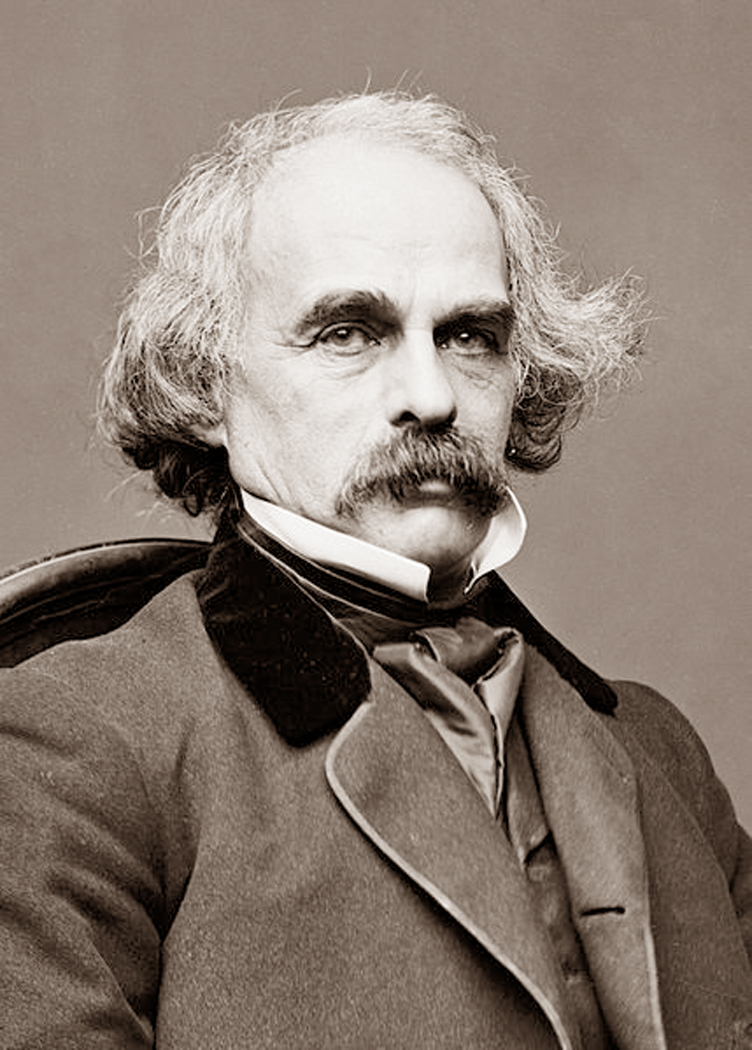
In July 1842, Nathaniel Hawthorne and his bride, Sophia Peabody (that’s “So-FYE-uh PEEB-iddy”), became tenants at the Old Manse. They stayed three years “in Eden,” he wrote.

He wrote many of his best known short stories in the Old Manse and also the introductory essay for the volume of stories known as Mosses from an Old Manse.

Ralph Waldo, recently married and removed to his own house, had suggested the Old Manse to Hawthorne. Henry Thoreau became Hawthorne’s gardener. The couple was transcendently happy.nathaniel hawthorne

“We seem to have been translated to the other state of being, without having passed through death,” he wrote.

The house had always before reflected the dour Puritan esthetic of its builder, but the young couple redecorated it, brightening it up and modernizing.

“It required some energy of imagination to conceive the idea of transforming this musty edifice, where the good old minister had been writing sleepy sermons for more than a half-century, into a comfortable modern residence,” he wrote. By the aid of cheerful paint and (wall)paper, a gladsome carpet, pictures and engravings, new furniture, bijouterie and a daily supply of flowers, it has become one of the prettiest and pleasantest rooms in the whole world.”

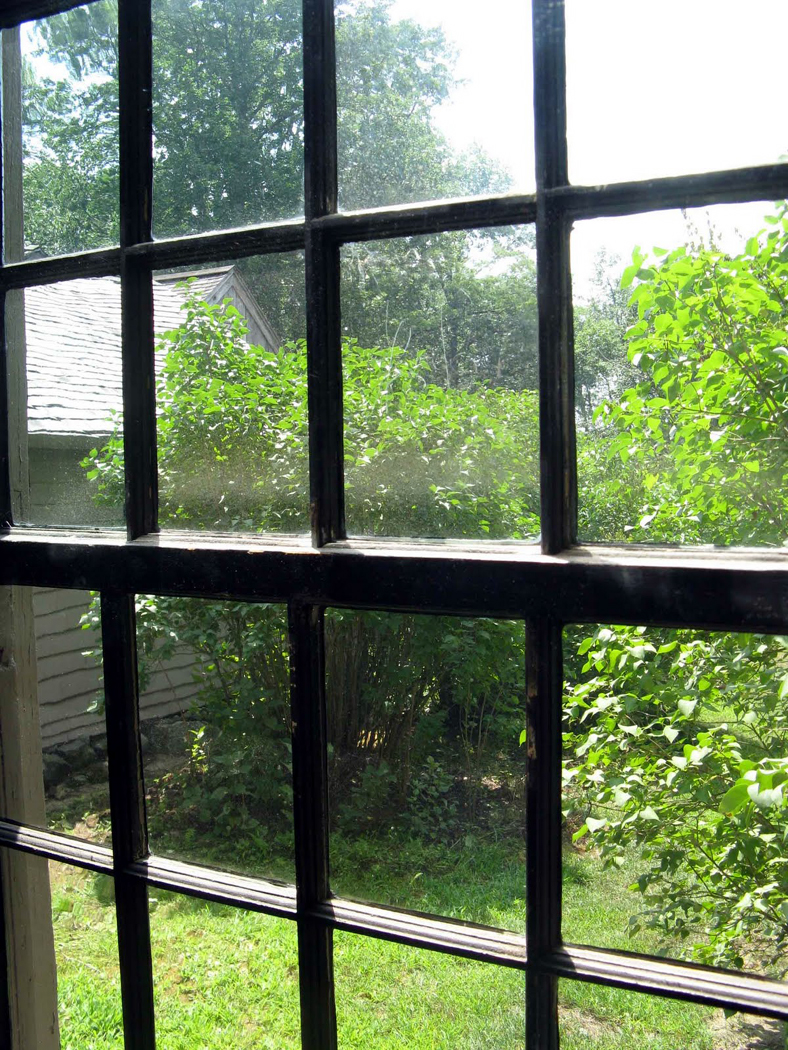
In the north window of the upstairs study, Hawthorne and his wife scribed sweet nothings into the glass.old manse window

“Man’s accidents are God’s purposes. Sophia A. Hawthorne, 1843.”

“Nathaniel Hawthorne. This is his study, 1843.”

“The smallest twig leans clear against the sky.”

“Composed by my wife and written with her diamond.”

“Inscribed by my husband at sunset, April 3, 1843. On the gold light. S.A.H.”

The scratchings are still there to be seen. We think them immeasurably romantic. Their landlord looked at it something more like vandalism and they were asked to move out.sarah ripley

Samuel Ripley and his wife, Sarah, then moved in.

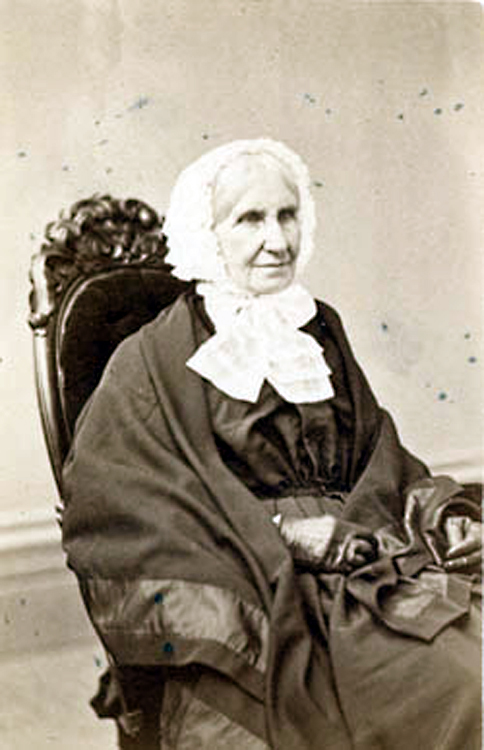
Sarah was perhaps the brightest light ever to live in the Old Manse. She was exceptional in any age, and a miracle in her own.

With only a year and a half of formal schooling, Sarah went on to teach herself botony, calculus, Greek, Latin, and most modern European languages. When she was in her 60s, she took up Sanskrit.

She apologized to one visitor that she still needed a Sanskrit dictionary to help her, implying that she could read the Odyssey or the Aeneid the way some people read the daily newspaper.

She sighed, “I cannot think in Sanskrit,” recalls her grandson, Edward Simmons.

Another visitor records a trip to the Old Manse and seeing Sarah rock the cradle with one leg while cooking dinner with her hands and tutoring one student in German and another in geometry.

Ralph Waldo wrote of her, “Mrs. Ripley is superior to all she knows. She reminds one of a steam-mill of great activity and power which must be fed, and she grinds German, Italian, Greek, Chemistry, Metaphysics, Theology, with utter indifference which, — something she must have to keep the machine from tearing itself.”old manse kitchen

The Manse remained in the Emerson-Ripley-Ames family until 1939, when the family transferred the property to the Trustees of Reservations, a non-profit organization that maintains historic properties in Massachussets.

“The Concord literati are gone,” wrote Simmons, “the town has completely changed, but the Old Manse is still there, holding many secrets.”

oxford red clay roadIn northern Mississippi, where the iron-rich clay is the color of a hunter’s vest, the town of Oxford sits in the middle of Lafayette County in exactly the same central position as Jefferson sits in the middle of William Faulkner’s fictional Yoknapatawpha County.yoknapatawpha map

Faulkner’s fictional county began in the 1820s with the first white settlers and an Indian named Doom. The real Oxford was founded in 1833; 11 years later, the University of Mississippi opened for business. There are many similarities between the fiction and the reality, and not the least of them is the way progress seems to have obscured the the old ways that Faulkner felt were the heart of the South.

The town of 20,000 still radiates out from the central square, where an old, large courthouse still stands and is still the central political and legal fact for the county.

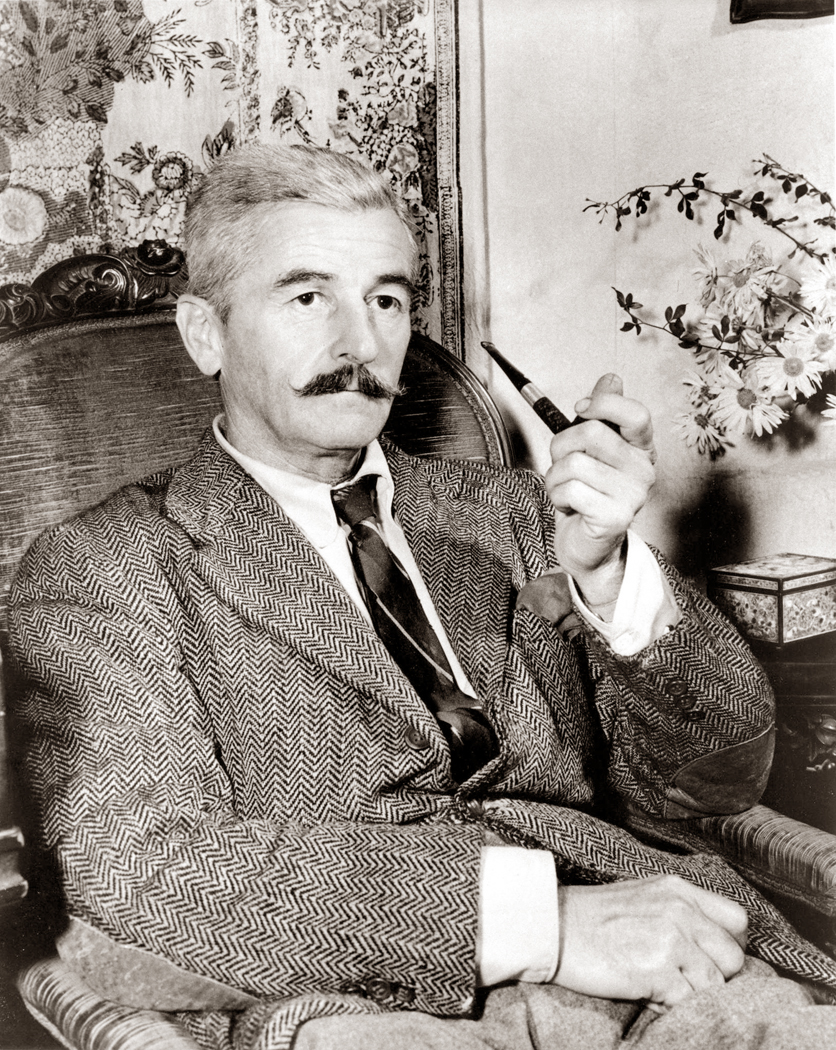
But unlike Jefferson, Oxford is a college town and the existence of Ole Miss changes the equation radically. For one, there are bookstores in Oxford.William Faulkner

And, when you stay in the motel at the edge of town, the nearest restaurant serves Orange Roughy with Cilantro Salsa — an Eastern attempt at Fish Veracruz — and Pork Chops Stuffed with Morel Mushrooms and Pine Nuts.

And what is worse, the trendy, warehouse atmosphere with its scrubbed concrete floor and unfinished wood handrails, is home to waiters brandishing pepper grinders, who say, “Good evening, my name is Brian and I’ll be your server tonight.”

So, it can be disappointing, if you go to Oxford to find the flavor of the Compsons, Sutpens and Snopeses.

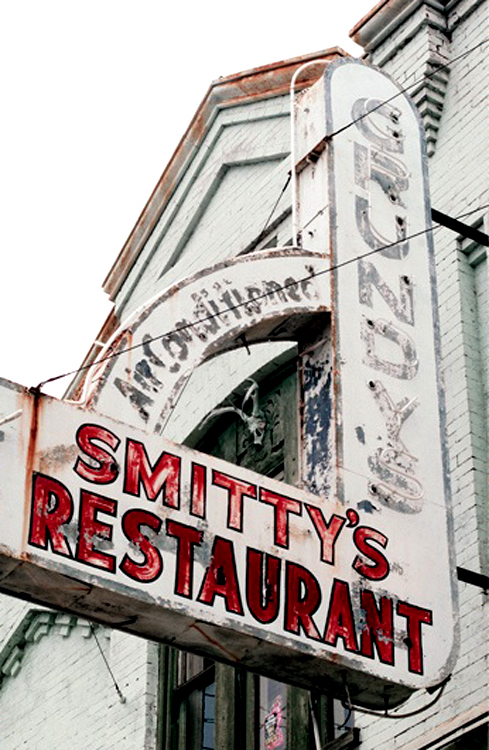
The courthouse square, where the town used to buy its dry goods, hardware and groceries, now houses restaurants, sportswear shops and a very fine bookstore with a very fine section of Faulkner first editions. square books interiorUpstairs is a coffee bar and tables, where students and tourists mix while reading the morning paper over a cup of hazelnut mocha.smitty's sign

But if you could walk back in time just a few years, you would find a little shopfront cafe called Smitty’s. In the early morning, it would be filled with courthouse lawyers and snappy waitresses, drawling conversation accompanied by the music of clinking glasses being racked in the kitchen.

At Smitty’s, the waitress still called you “Honey,”’ and meant it. The biscuits were still smothered in white sausage gravy and the buttered grits were always salted and peppered.

And the weathered faces of the Old South still gathered for their morning cup of coffee and the local gossip.

When I was there once, in 1994, one particular and dignified gentleman caught my eye. He must have been 75, with thin white hair combed so the furrows left by the comb were clean lines. He wore a striped tie and a dark blue suit that his frailing limbs couldn’t quite fill out anymore. He also wore bifocals and talked in that sweet, subdued aristocratic drawl.

He was natty in a way only very old, very respectable Southern men can be.

At first, he shared the next table with three other men who we learned were lawyers from the courthouse. The blue suit was a judge.

But more and more men filed in and eventually, they all gravitated to one wall, where several tables were lined up end to end. There must have been 20 or more lawyers, all talking and laughing and keeping each other amused with good ole stories and friendly joshin’.

The judge sat dead center at the row of tables, the obvious center of gravity. The surrounding lawyers looked almost like apostles at the Last Supper.

The old man might as well have been Judge Sartoris. He could have come straight from the pages of Sanctuary or Intruder in the Dust. You could sense he knew not only everyone in town, but knew their granddaddy.

But there were also things that had changed: A few of the lawyers were black.la paz oxford

Smitty’s is gone now, replaced first by a yuppified eatery called 208 South Lamar, after its street address, and currently by a Mexican restaurant.

But even with the changes — in some ways, Oxford is impossible to tell from any other university town, whether Chapel Hill, N.C. or Charlottesville, Va. — but the building now occupied by La Paz, formerly 208, formerly Smitty’s, and before that Grundy’s, and before that other bars and restaurants, was built in the 1880s, and despite the frequent facelifts, the past is still there underneath.faulkner's typewriter

Those who don’t understand it laugh when you tell them that in many ways, the South is more civilized than any other region in the country. They shouldn’t. While the rest of the nation is fragmenting culturally, the South is holding on, however tenuously, to the culture and history that made it what it is and that Faulkner chronicled.

In New York, history is a subject taught in school; in Mississippi, history is your grandfather.

A Facebook friend left a challenge for her followers: 

“In a text post, list 10 books that have stayed with you in some way. Don’t take but a few minutes, and don’t think too hard — they don’t have to be the “right” or “great” works, just the ones that have touched you. Tag ten friends, including me, so I’ll see your list.”

flaxman

As I get older, so do the books I find most congenial.

I admit I’ve always been something of an old pedant and have always spent more time with what other people have called “serious” books rather than best-sellers or recent worthies. But age has only exaggerated this tendency.
wright moon 2

Perhaps it is because as I’ve gotten older, the distance between the old tomes and the present seems shorter and shorter, almost to the point of disappearing.

For many readers, such books as the Iliad or Ovid’s Metamorphoses seem incredibly distant, in a past that is so vastly divorced from the concerns of today that they question the relevance. But for me, the space between then and now has become compressed and it is in those old authors that I find an urgency and relevance unmatched.

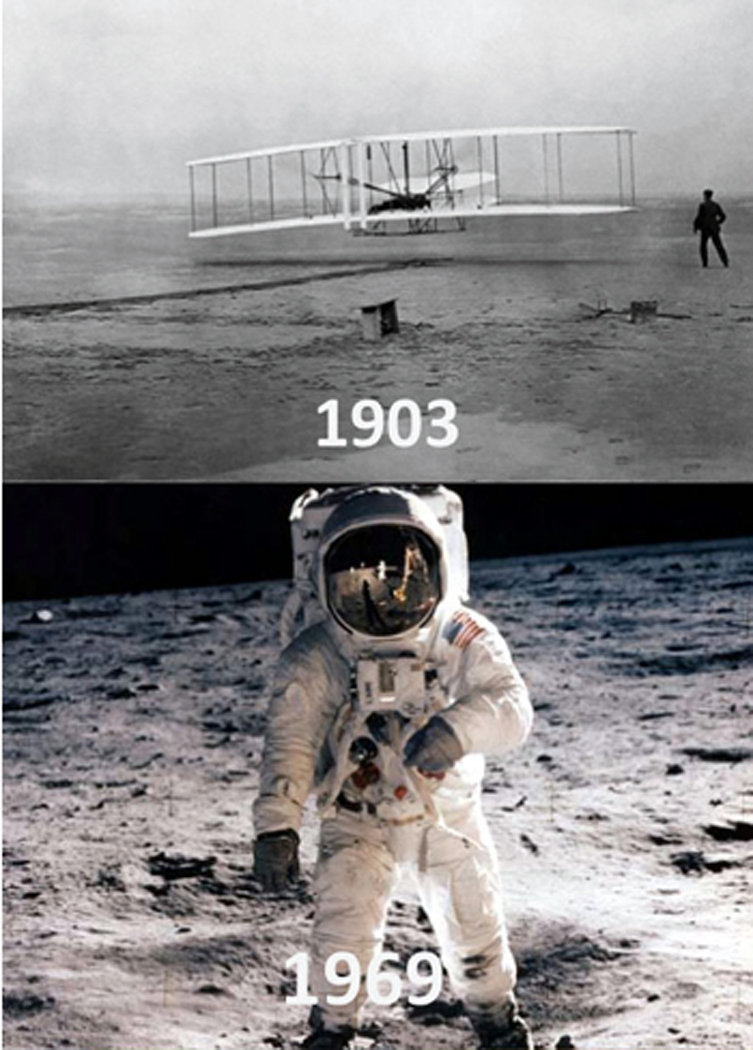
I am now 66 years old — two thirds of a century. It is a time that has passed as swiftly as an eyeblink. I was a boy last Tuesday. My grandmother used to say, with some amazement and some pride that she was born before the Wright Brothers’ flight and lived to see the moon landing. This is a personal, internal sense of history. It is increasingly the way I see the past. yardstick

If I measure the time between now and my birth, and take it as a yardstick, I can get a sense of the it. jesse james

Sixty-six years from my birth is now; 66 years before my birth was the year Jesse James was shot dead — 1882. If I flip my yardstick over one length down the timeline from that, I arrive at 1816, the year Mary Shelley conceived of Frankenstein. One more flip of the yardstick and I’m at 1750, the year Johann Sebastian Bach died. That is, I’m only three lifetimes — three very short, skipping lifetimes from Bach and those last unfinished measures of The Art of the Fugue.

I could keep flipping the yardstick to measure the years before: 1684, 1618, 1552, 1486, 1420, 1354, etc. And I discover it takes only 30 copies of my life before I’m face to face with Caesar Augustus. Only 42 lifetimes and I’m sitting there with Homer. Forty-two of my own short lifetimes — not enough to fill a bus. So, you see, the past increasingly does not feel long ago, does not feel alien, does not feel irrelevant. It feels contiguous. I can measure it all out in lifespans I can imagine and visualize it in a way impossible with the more Saganesque “billions and billions” of the cosmos.

Heck, I can take that yardstick back far enough to see them painting the caves at Lascaux and I haven’t even filled up a jumbo-jet.

World War II ended three years before I was born; it is fresh in my culture’s memory and a constant in television documentaries. Troy fell three millennia ago and it hardly seems any different to me. It is all connected and I feel the fibers of my blood and sinew in the pulse of history.

So, the paroxysms of current events, which feel so dire to those younger than me, feel like familiar blips when taken in the long view. I do not know if we will survive them, but chances are we will. And even the genocides of Rwanda and Darfur or the beheadings by Islamists seem merely familiar excrescenses of an eternal human tendency, and in fact pale compared not merely with the Shoah, but with the extermination of Native Americans, the pyramids of skulls left by Tamerlane or Genghis Khan, or the smiting of the Canaanites and Jebusites ordered by Jehovah (Deuteronomy 20: 16-17). According to scientist and author Jared Diamond, it is possible that Neanderthals disappeared under just such a fatwah. skull pyramid

So, when I open Homer’s Iliad and find in its opening lines grief and the corpses of “so many fighters leaving their naked flesh to be devoured by dogs and vultures,” it is no more removed than Afghanistan or Gaza.

“Homo sum: humani nihil a me alienum puto.”

I am constantly amazed that the first book in the Western canon should never have been bested. The Iliad has a breadth of vision unmatched by anything else I am familiar with. It is always the first on my list.

homer bustHomer describes everything from the food to the landscape as if he were a gobbling camera, eating up the full existence of life. And not, like some novelist, in different chapters, but in a single sentence he can telescope from the entire battlefield down to the iris of a bee’s eye, and then back out again in the space of five or 10 words. It leaves one not just with the grand view and not with the microcosm, but with a clear sense that they co-exist in a single space, a single comprehension.

There is little so vivid as Homer’s description of battle. Yes, our modern understanding of war — at least those of us who have not been in it — has more to do with battalions and artillery, but even in modern warfare, the experience of it from the inside is personal: one human soldier and the chaos that threatens to erase him (or her) and the light that comes in through his eyes.

“Thrasymedes stabbed Antilochus right in the shoulder and cracked through the bony socket, shearing away the tendons. Then he wrenched the whole arm out and down thundered Antilochus and darkness blanked his eyes. …

“Peneleos hacked Lycon’s neck below the ear and the sword sank clean through, leaving Lycon’s head hanging on his body by only a flap of skin. The head swung wide and Lycon slumped to the ground. …

Tarantino is playing catch up.iliad mitchell

It isn’t merely the violence that is shown us, but the desires, the pity, the sorrows and the triumphs. I try and re-read the Iliad once a year, and each time in a different translation. Last year, it was Alexander Pope’s. This year, it is the recent one by Stephen Mitchell. I’ve read in past years, translations by Robert Fagles, Richmond Lattimore, Walter Benjamin Smith with Walter Miller (illustrated by the great Neoclassical designs of John Flaxman), and George Chapman.

(Of these, I recommend Fagles for first-timers. Chapman is rough sledding, despite the reputation Keats gave it in his sonnet.)

If I ever have to shrink my library down to something I can carry in a duffel, it would include the Iliad, the Odyssey, the Bible and a Shakespeare.

Ah, but I would have to make room for a Milton, too.

NEXT: A grand finale