Archive

Tag Archives: life

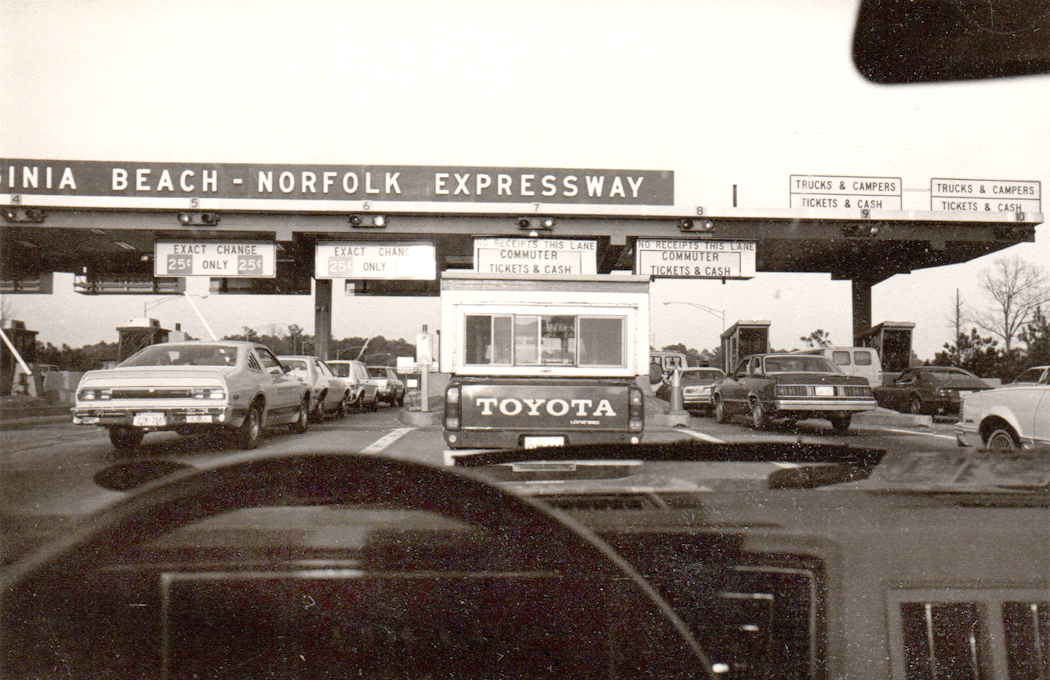
Am I Southern? I have lived in the American South for most of my life. I am comfortable with most of the culture and folkways of the region. Both my marriages have been to Southern women and this is the place I choose to live. But I was not born here. Worse, I came from New Jersey. 

If there is anything more un-Southern than Bergen County, just off the George Washington Bridge, I would be hard pressed to name it. Even the wilds of Afghanistan has more in common with life in the South than I had growing up. That sense of tribal identity — of living in the hardscrabble land, of having kinship with the soil, the bona fides of regional identity — that is more Southern than life along the Turnpike. I don’t remember anyone I grew up with pounding their chests with pride saying “I’m from New Jersey.” No one cared. My family didn’t go back five generations there.  

It is true that the South has changed, become more cosmopolitan. Not everyone’s a farmer growing tobacco or sorghum. Interstate migration has diluted the percentage of homegrown folk, and cities such as Atlanta or Houston have radically altered the demographics. Even the accent and vocabulary have begun evening out. 

Yet, there is still that sense of Southernness. It may be less clannish than it used to be, but it is still layered in to the psyche of anyone who grew up here. 

I first arrived in 1966, entering college in central North Carolina. There was then still a strong backlash — even a mainstream backlash — against the Civil Rights movement. Jesse Helms spewed his racist venom on the radio waves, and was soon elected to the U.S. Senate. His campaign, against Democrat Nick Galifianakis, preyed on bigotry and that suspicious foreign-sounding name: “Vote for Jesse; he’s one of us.” The Klan was still in business. If schools were legally desegregated, most communities still had a Black side of town. 

No one now takes a second notice of a Black family sitting at the Red Lobster. I’m not claiming racism is over; it is not. But the norms have shifted. Black newscasters on TV or a Black state trooper are hardly noted. 

One thing I noticed as soon as I got here: There is and was a countervailing sense of manners that didn’t play out in the same way back in New Jersey. Some of it struck me as odd, initially, and even worse, some seemed absolutely hypocritical. I didn’t understand. 

I remember a perfect example of how this works in the South, and why I have come to understand the brilliance of it. Many years ago, my wife’s teenage cousins (“cousin” is a loosely-defined concept in the South) had bought some new tires for their car. When one of the tires had a blow-out, their father, a Yankee transplant from Massachusetts, drove to the tire-store and screamed at the man there, “You goddamn kid killer! Someone coulda died! — why’d you sell those rotten tires?” He demanded an apology and satisfaction. All he accomplished was to raise the hackles of the tire salesman. Ineffective strategy. Made sense in Boston, but not in North Carolina. Luckily, cooler heads intervened. 

Their Southern-born mom intervened and had a long conversation with the salesman, after first apologizing for her husband. “You have some really nice tires here.” “Thank you ma’am. We try.” “I know. But sometimes something slips through, and I know you would never, ever want to let that happen.” “Well, no, ma’am.” “I’m afraid, I don’t know why, but one of the new tires my daughter bought had a little blow-out. Brand-new, you understand.” “I’m very sorry to hear that.” “Well, I’d hate to inconvenience you, but I know you would want to make things right.” “Of course, ma’am.” I believe there was also a bit of discussion about the salesman’s son, who went to the same high school as the girls, and probably a bit, too, about whose aunt had known whose aunt and a recipe for a good coconut cake. Things resolved amicably and no one was further accused of anything nefarious. 

This is a culture, after all, where the gravest insult comes in the form of “Bless your heart.” 
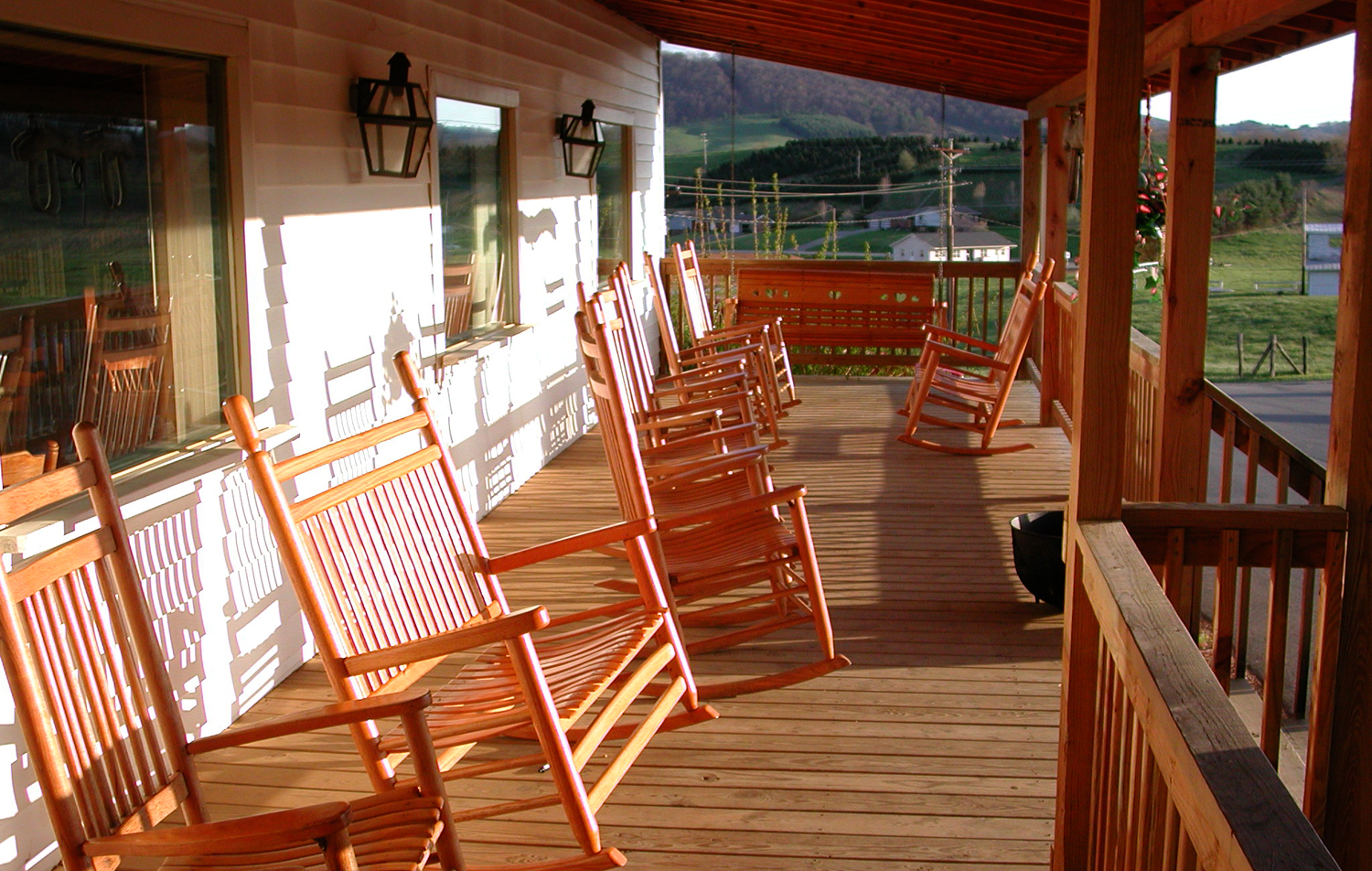
  I know full well that since I wasn’t born here, I can never truly be Southern. And I also have been reminded constantly by my wives that I’m a Yankee. Even if they haven’t held it against me, the fact is always there. I grew up with bagels and saurkraut, not with biscuits and slaw. 

My ex-wife asks if it even matters if I’m Southern or not. Why should I care? “There’s no court you have to prove it to,” she says. “Yes there is,” I say. “There’s in-laws.”

As the years slid by, I have become increasingly acculturated, so that I now lift four fingers off the steering wheel in salute of drivers headed the other way. I talk slower than I used to (part of that, I admit, is age). I am no longer surprised by ham hocks in my beans (which, of course, I now call “pintos”), and I find myself saying “sir” and “ma’am” in a way that would have made my New Jersey relatives look at me like I was an alien. Up there, it was closer to “Hey, Mack…” 
I would say the transformation is roughly 80 percent complete. I still love pickled herring in sour cream, bagels with a schmear, and cannot yet bring myself to accept the local pizza. I have been ruined by the New Jersey version, perfection in every aspect. 

And when I open a tin of King Oscar kippers for a sandwich, Anne will call from the other room, “What is that stink?” And I cannot get used to sweet tea. Curls my tongue. I take mine unsweetened. 

I love Eastern North Carolina barbecue and hushpuppies. And I now understand that the dried-out Shake’n’Bake chicken I had growing up (more wood plank than comestible) has absolutely nothing to do with fried chicken. I grant your fried chicken balances my pizza. 

It has taken me longer to accept boiled greens, but I have gotten there. I had spinach growing up, but collards stewed with sidemeat until it turned to something akin to road tar — well, that took a little longer. And, to be fair, even most Southerners now let their turnip greens keep a resemblance to its original form as plant life. I now am able to add them to my plate sprinkled with some vinegar. 

One one side of the ledger, I’ve now fired rifles and pistols recreationally; I wait for pedestrians crossing the road in front of me (that was a hard one for me: where I came from efficiency was the rule — who could get out of the way faster, and it was usually the car); I automatically walk on the traffic side of the sidewalk when with my wife; I make small talk with the checkout staff at the grocery store (and I now call it a grocery store instead of a supermarket). 

On the other side of the ledger, I’m told I talk too fast; I have no interest in college football; I don’t listen to country music, and Anne tells me “you’re still unsound on black-eyed peas.” On my first trip to the barber, making small talk, he asked which church I attend. “I’m not a believer,” was the nicest way I could answer, and the subject changed. 

If there is something that draws a line I cannot cross, it is probably Robert E. Lee. My late wife, Carole, kept a portrait of Bobby Lee in the china cupboard. I was never allowed to say nary a  word ’gainst his sainthood, and in converse, she would bring the hammer of heaven down upon my head if I ever said anything temperate about Wm. Tecumseh Sherman. “Villain!!!” 
My vocabulary has shifted, too. Southern expressions fall out of my mouth without my even being aware of them. I say “Y’all” unconsciously, and even “all y’all.” I am fixin’ to do something. “Cattywampus” and “plumb” — as in “plumb outa Crisco” — I hardly note as I say them. “Reckon” is now in my regular speech, as is “poke,” as in where I lodge my vittles when I haul’em from the grocery store. I have been known to call my jeans “britches,” and my suspenders “galluses.” But that is more mountain talk than just Southern.

I asked Anne how I’ve changed over the years. “You’re not as obnoxious as you used to be,” she says. 

I have been well trained by a series of serious-minded women, among them wives, girlfriends and mothers-in-law. With an emphasis for the last on “law.” I know my place.
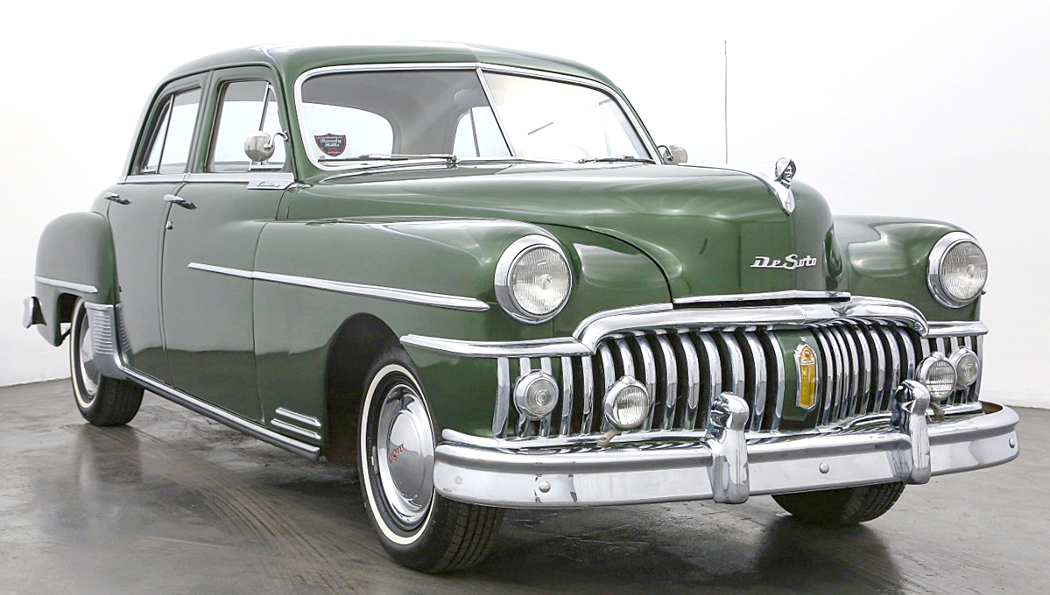
When Wolfgang Mozart was three, he was already picking out notes on a keyboard. His father recognized the potential earnings potential and trotted young Wolfie around as a prodigy, showing off to wealthy patrons for their gratuities. I’m no Mozart, and my talent was of an infinitely smaller order, but I remember when I was three and my father showed me off, too. 

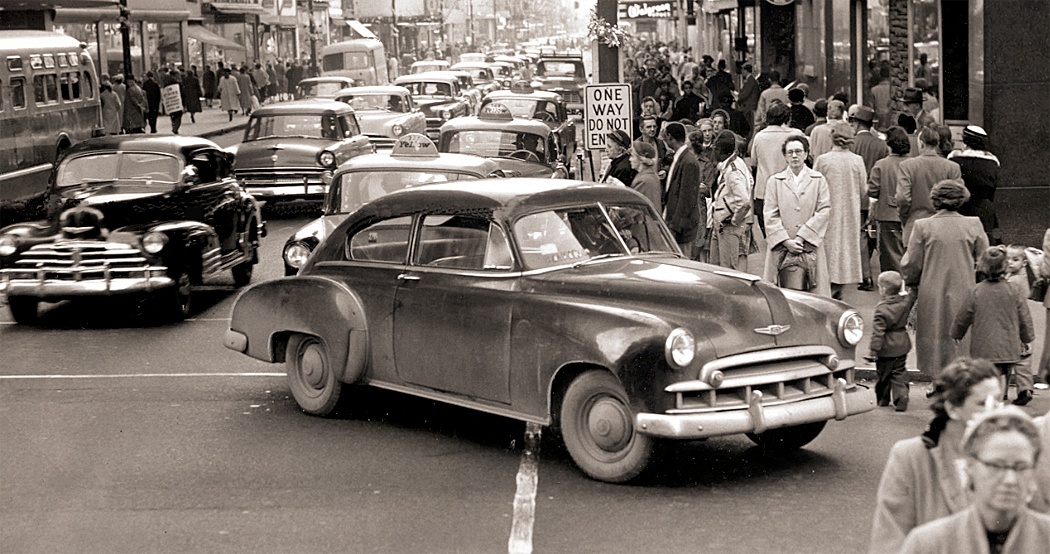
At that tender age, I had learned to recognize all the cars that passed on the street in front of our house in Teaneck, N.J. I would sit on the front stoop and call out names as they drove by. That would have been in 1951, and the cars were quite distinct. There were Packards and DeSotos; there were Mercuries and Studebakers — each with their characteristic shapes, grills, ornaments and sizes. 

DeSoto

It was only a few years since the war ended, and many older cars remained on the road, like the LaSalles or the pre-war Fords. Our next door neighbor even had a car with a rumble seat. (They were comically called “mother-in-law seats,” although I can’t believe many could had clambered up to get in.)

1939 Plymouth with rumble seat

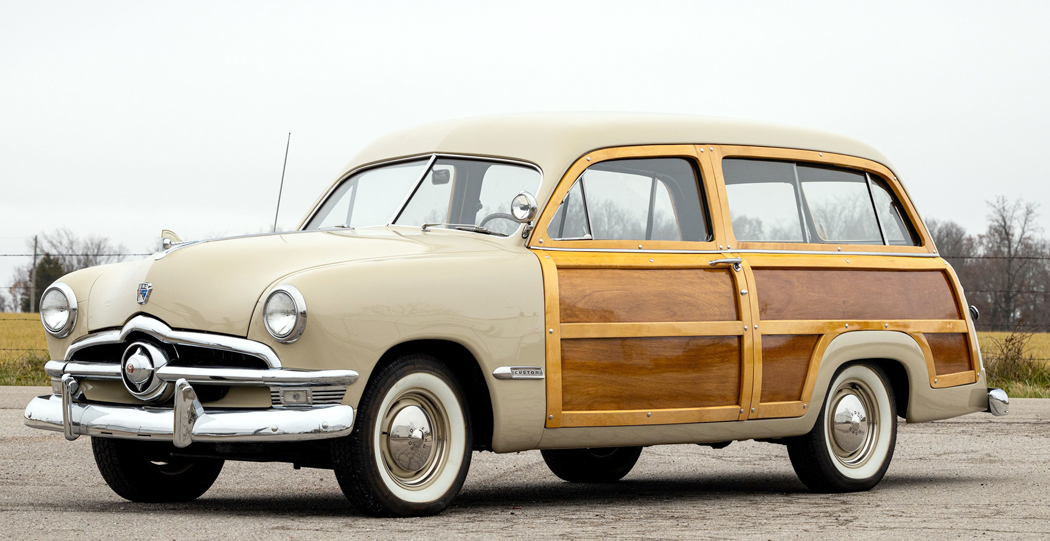
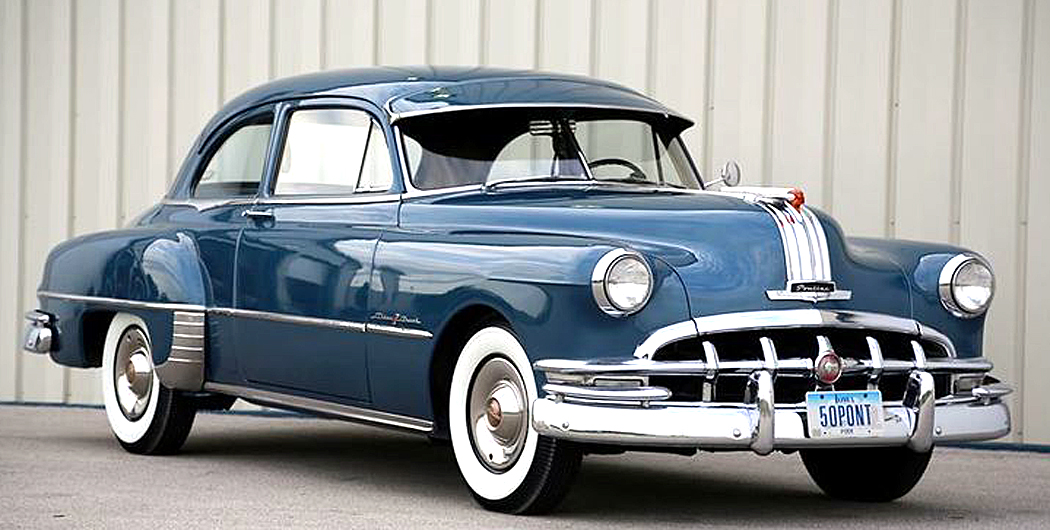
At three, I knew the Pontiac had three chrome stripes on its hood; the Buick had its portholes; the Ford had its bullet-grill; the Hudson seemed as broad as the river I thought it was named for. Many station wagons had wood paneling. I had them all down pat. 

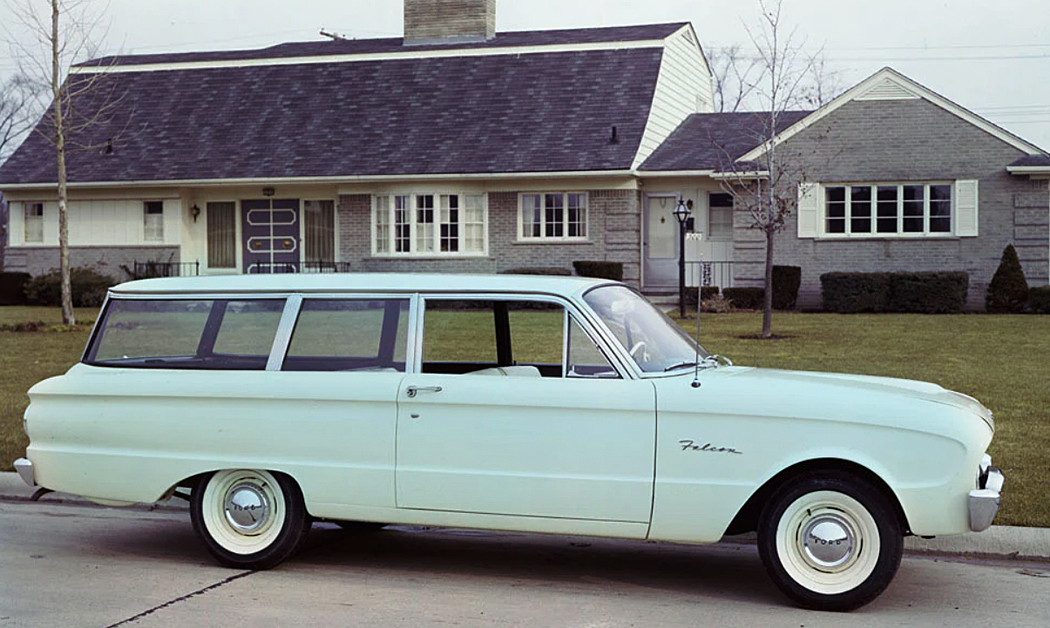
1950 Ford station wagon

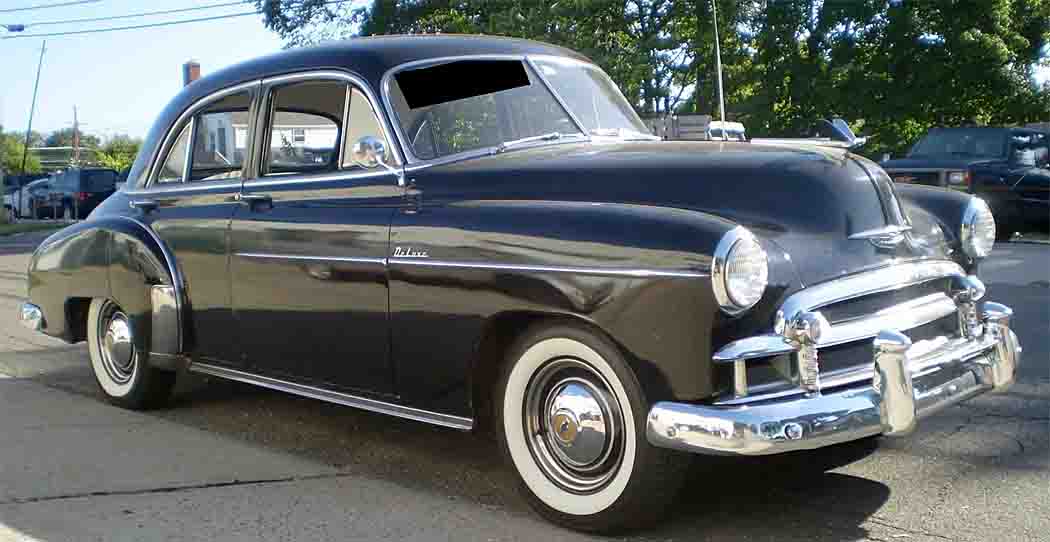
And on July 4 that year, when I was three-and-a-half years old, the family drove down the hill to watch the fireworks over the Hackensack River. There was a crowd gathered. The gravel parking lot was full, with people lining the banks of the river to catch the display. I sat on the hood of Dad’s black 1950 Chevrolet and not much liking the noise. Two of my uncles were there, too, with their families. And Dad decided to show me off. And so, with uncles in tow, and a few of their friends, too, we trooped up and down the lot with me announcing the names of every car we passed, all to the astonishment of the grown-ups. Hudsons, Studebakers, Packards, to say nothing of the Fords, Oldsmobiles, Buicks, and Nashes. I felt so proud showing off. I don’t know if Dad actually took wagers or not, but he clearly enjoyed bragging on his son. 

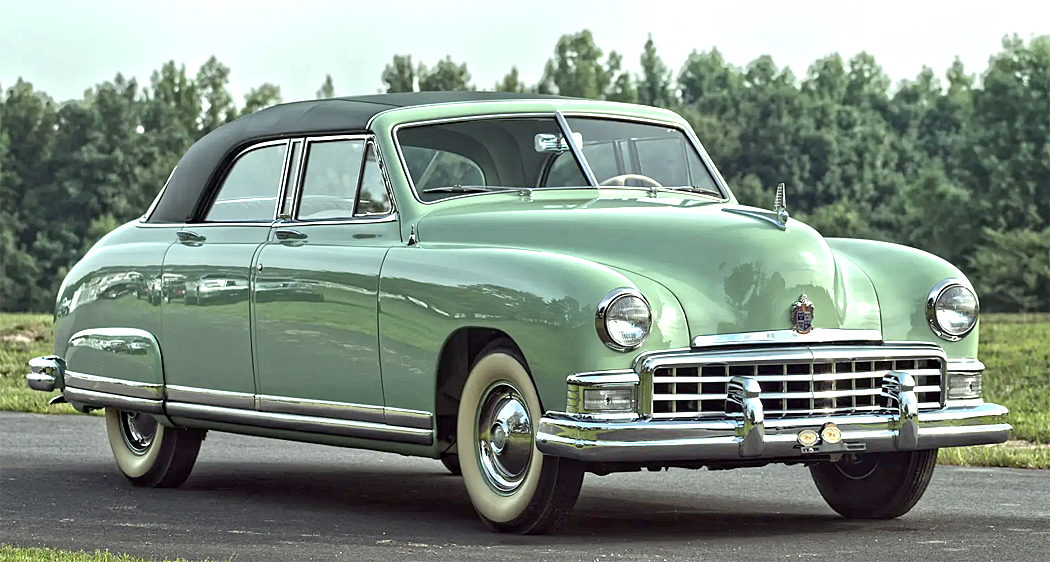
1950 Frazer

Through the 1960s, cars designs remained distinct, especially with the absurdly growing tail fins — or the Edsel, described as “a Ford sucking a lemon.” The also grew to be great barges of the road, rolling with wobbly suspensions (which you can’t help notice on old TV reruns when those leviathans turn corners). But cars have since been growing more generic. 

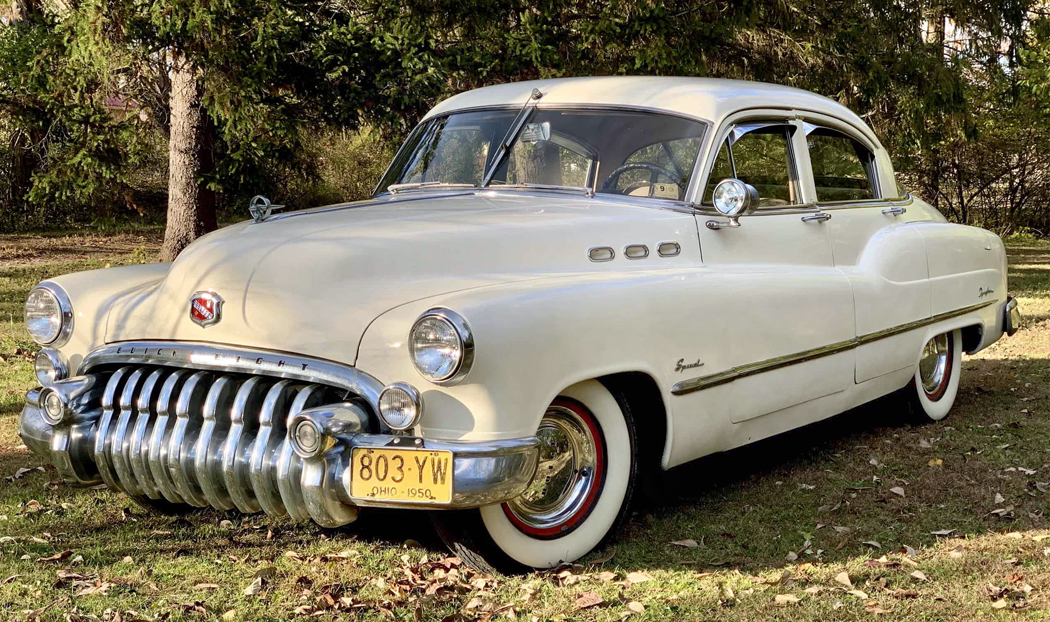
1950 Buick Special Deluxe Jumbo

Oddly, as I became a teenager, when most of my buddies were swooning over 400 horsepower behemoths and zero-to-sixty ratings, I had no real interest in car culture. I have always loved driving, but never much cared which car I was driving in. But something of that original car-naming from my preschool days survived. 

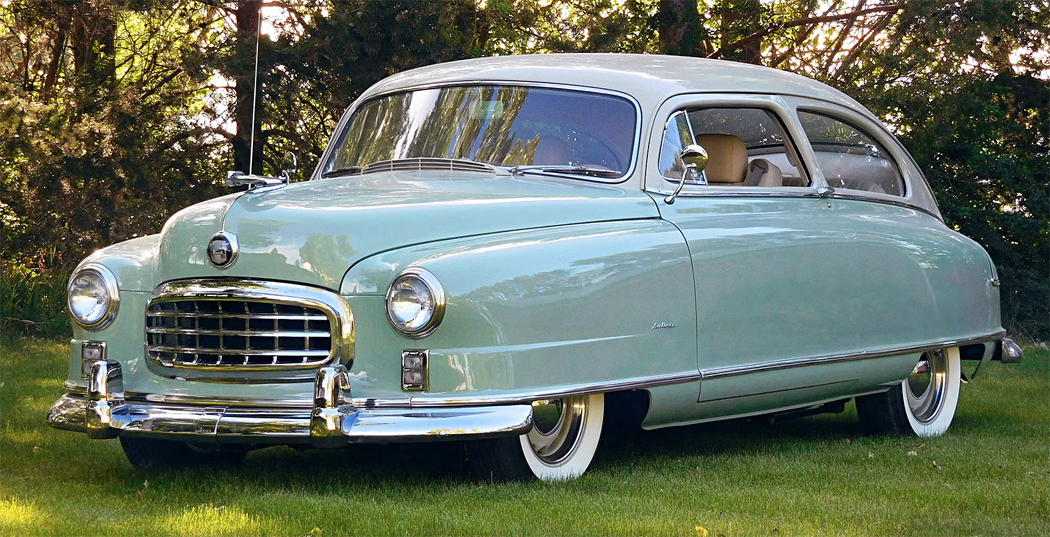
1950 Nash Airflyte

As I grew up and went to school, the habit of learning and naming classes of things continued. In the third grade, it was dinosaurs; in fourth grade, it was whales; fifth grade brought ships. On it went. Later, with birdwatching, or the naming of wildflowers. Most recently, I compiled a list of the names of British comedians I recognized on sight; it had 127 names on it. I guess you never get over it. It’s a form of acquisition, and all adds to the trove of knowledge and experience. A hunger for knowing. 

1950 Pontiac Chieftan

There is a streak that mainly boys seem have: learning and naming. I don’t remember schoolgirls having anything like the habit. Maybe they did and I just didn’t notice. To boys at that age, between the ages of maybe five and the advent of puberty, girls are, if not the enemy, at least utterly foreign. 

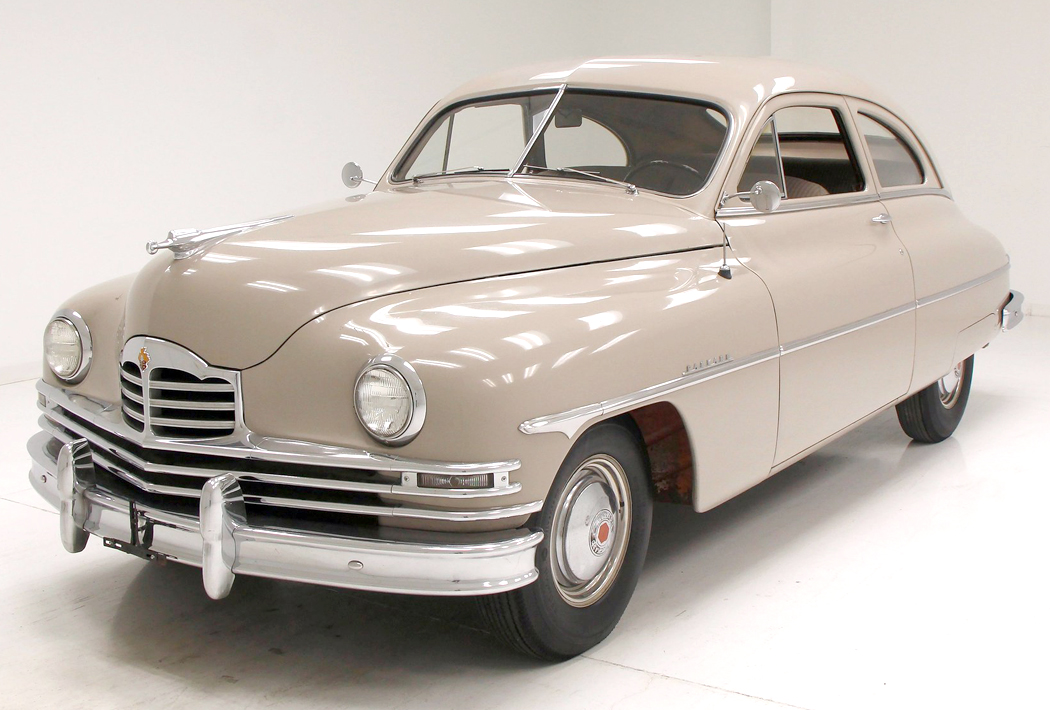
1949 Packard 23 Series club sedan

Many boys never outgrow this naming quirk. Often a concern with regalia properly sorted. When I was an art critic in Phoenix, the museum had an annual show of Cowboy Art, with lots of paintings of shoot-em-ups, horse wrangling; cow-punching and war parties. All kinds of Western movie tropes, but with the serious, almost solemn belief in “historical accuracy.” No one would picture a Montana cowboy riding the kind of saddle popular in Texas, or show a sheriff holding a gun in 1882 that wasn’t manufactured until 1893. They could be quite persnickety about such things. Women’s hair-dos, though, not so much care in that, but then, women didn’t much figure in their mythologies. When I wrote a review that made fun of such things, I wound up being hanged in effigy in a cartoon in Western Horseman magazine. 

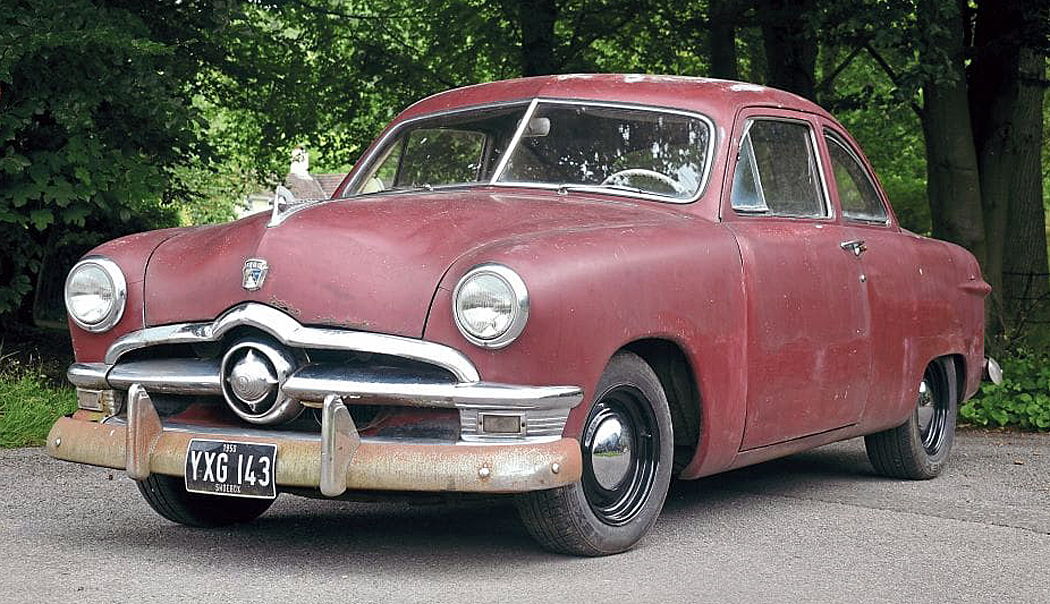
1950 Ford Custom Club coupe

All this came back to me the other day as I sat at a red light and noticed the flood of cross traffic. I could see vehicle after vehicle pour across the intersection with monotonous sameness. There is no way I could tell anymore a Honda from a Kia.  

Three seemed to be only three kinds of vehicles, each sharing a sameness with others in its class: First, the SUVs, bigger than they need to be — the bullies of the highway; second, the small sedans — they used to be derided as “European jogging shoes” — that are faceless as store mannequins; and finally, the pickup trucks. This last may be more prominent in the South, where I live, but the cars crossing in front of me seemed about equally divided into these three. The only punctuation in this repetitive tune was the public transit bus. 

The only way to discover the difference was if you could see the logo on the trunk. What was once the personalities of their manufacturers have become mere brand names, no more different than yogurt brands or actual jogging shoes. 

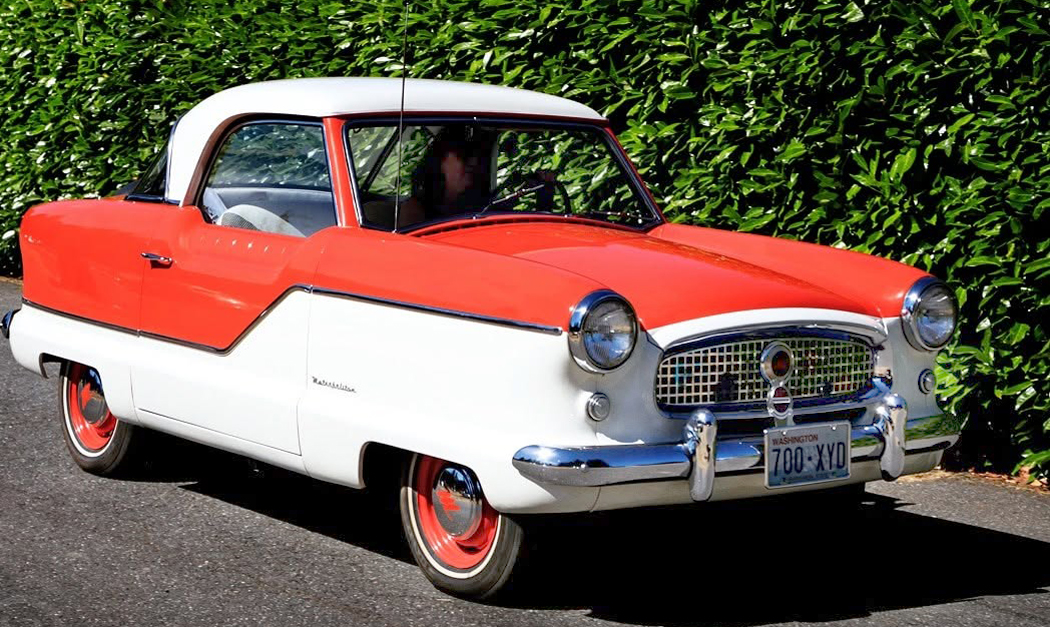
1957 Nash Rambler Metropolitan

How different from when I was three or four and naming the cars (with a certain amount of joy in their esthetics, and pride in my ability to name them). They were very distinct designs. “We had faces then,” as Gloria Swanson says in Sunset Boulevard. (actually, I looked it up and misremembered. She actually said, “We didn’t need dialog; we had faces.” But same thing, right?) Car manufacturers used their special designs to sell the cars and create identity. Hence the broad Packard and the Studebaker, with its pooched “mouth.”  

1950 Studebaker Commander

I don’t know why there is such a paucity of interesting design among cars. When I was little, they really did have faces.

I’m now 78 and I’ve done a few things in my life. Probably most people have. Things they can list that few others have managed. Places visited; people who have impacted their lives; adventures to recount to grandchildren. 

And so I think back to recount my own experiences, those particular to my own past. Maybe others have similar lists. This is mine. 

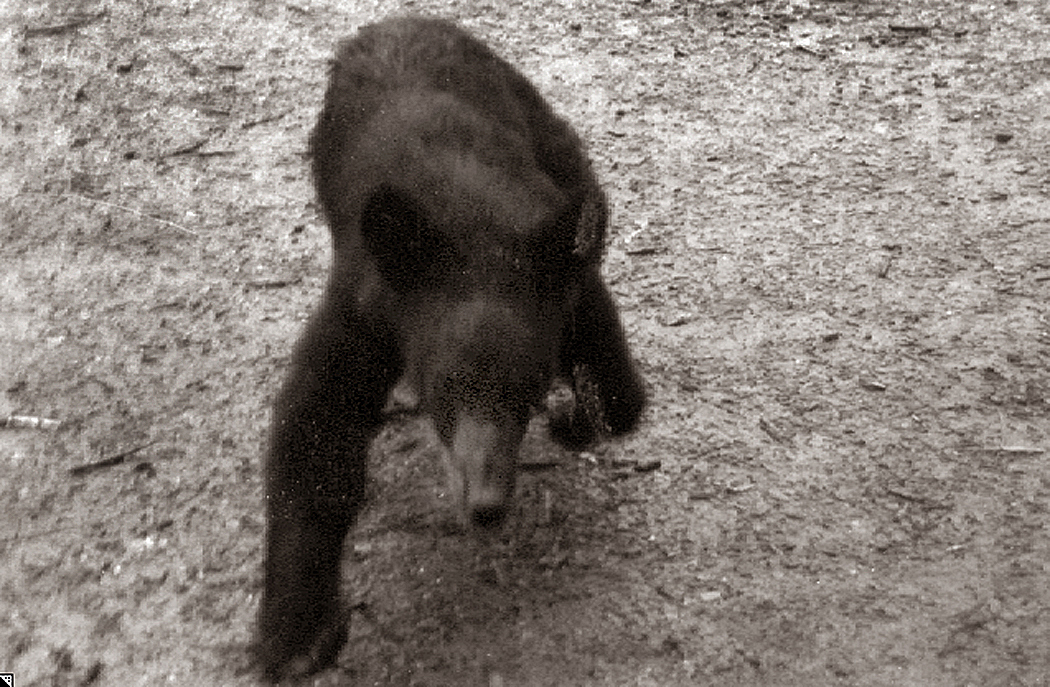
I’ve been charged by a bear, for instance. How many people can say that? I was hiking the Appalachian Trail in Smoky Mountain National Park with a few friends. By late afternoon, we reached a lean-to shelter and I walked out onto the path with my camera, when a black bear — maybe two or three years old — crossed the trail about 30 feet from me, spotted me, didn’t like what he saw and turned and charged at me. He was no more than five feet away when he veered off to my right and chugged off into the woods. I was stupid enough that while he came at me, instead of running back to the shelter, I took photos, so at least now, I have the evidence. If it’s a tad fuzzy, I’m sure you can understand. 

Certainly the bear makes my list. But I tried remembering other things that would make the list of things peculiar to my life, that few people are unlikely to have shared.

Almost no one now crosses the Atlantic on an ocean liner. I did, in 1966 aboard the MS Oslofjord from New York to Norway, when I accompanied my grandmother to the Old Country where she was born. I was a high-school student at the time, and I remember standing on the ship’s deck watching the Orkney Island lights at midnight, bright points on the black horizon as we sailed past. 

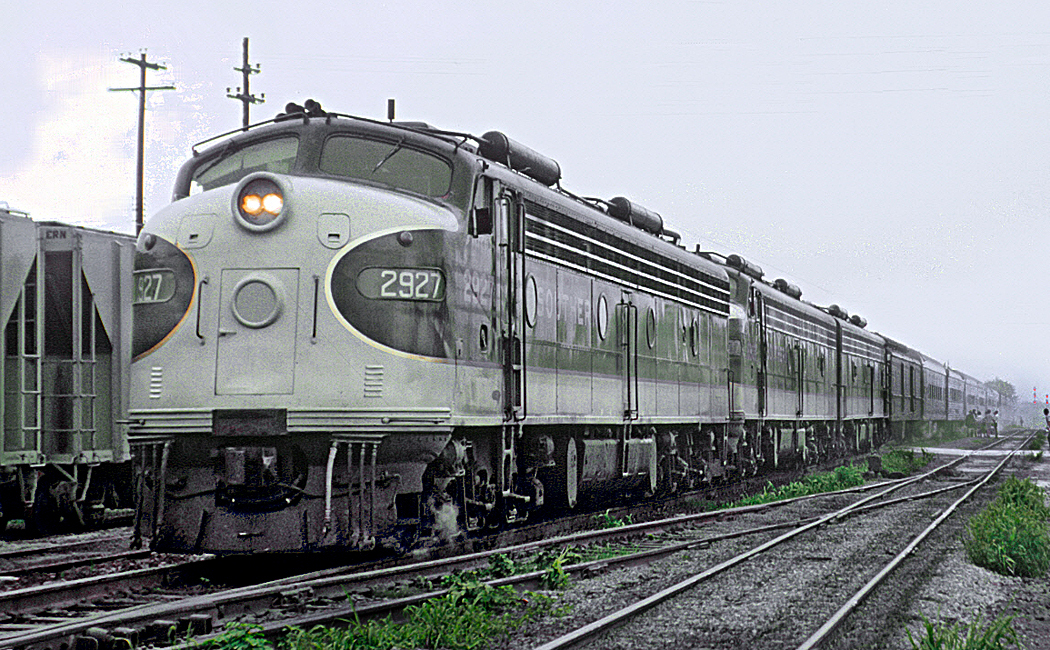
There’s a lot of travel in my past. I’ve crossed the U.S. twice by train. Once when I moved from North Carolina to Seattle, taking the Southern Crescent from Greensboro to New York, the Twentieth Century Limited from NY to Chicago and the Empire Builder from Chicago to Seattle. 

The Southern Crescent

I recall the dreamlike lights of Toledo factories as we passed after midnight; the 10-below zero air when I stretched my legs at the station in Minneapolis; the vast empty spaces between farmhouses in South Dakota; and the track-side elk watching the train pass by near Yakima, Wash. 

The second time was more luxurious: Working for the Phoenix newspaper, I was assigned to write a story about the then newly-launched Sunset Limited route from LA to Miami that passed through Phoenix, bringing the first rail service to the city in decades. 

The paper flew me to Los Angeles where I boarded, and flew me back from Miami when finished. In between, I had a sleeper compartment and ate my meals in the dining car, which Amtrak had fitted out initially with a first-class galley and real chefs. That didn’t last long after my trip, before cost-cutting turned steak into saran-wrapped bologna sandwiches. 

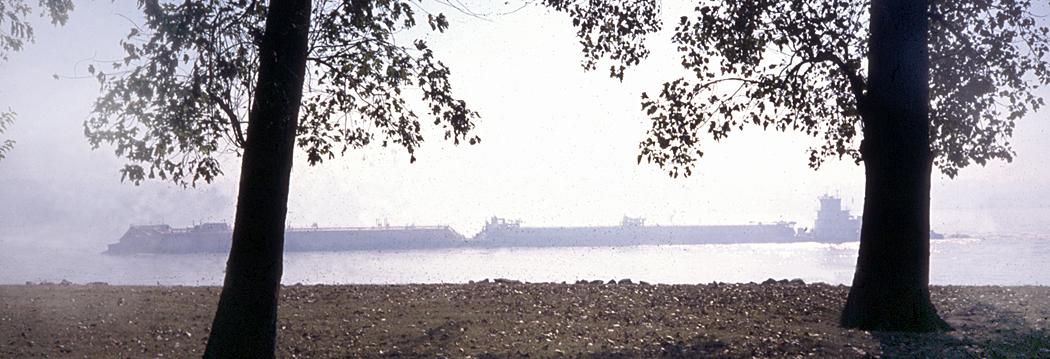
Mississippi at Cairo, Ill. 

One of my beats at the newspaper was as a travel writer and I got to choose many of my subjects. I have driven the length of the Mississippi River from its source at Lake Itasca in Minnesota to its end in the Gulf of Mexico. So, I’m one of the few people who have ever visited Cairo, Ill., which is a largely deserted town, at the tip of the state where the Ohio River pairs with the grandfather of all American waters. 

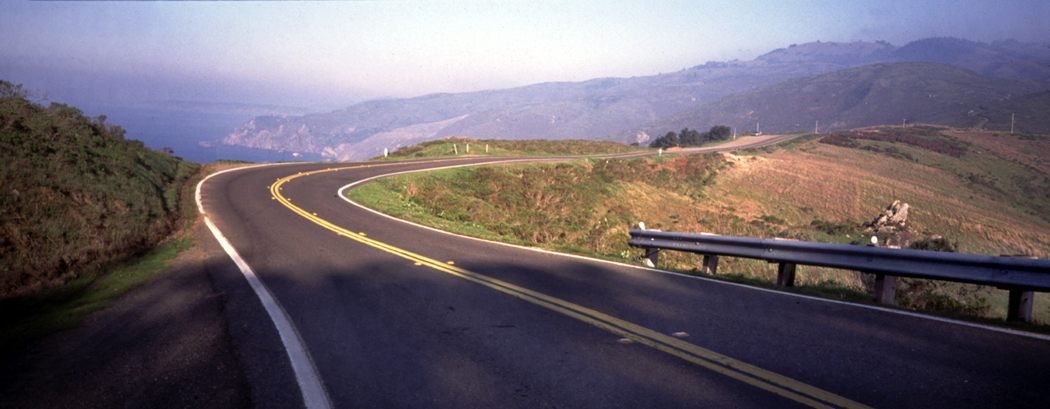
I have also driven the Pacific Coast Highway from Tijuana, Mexico to Vancouver, British Columbia. And as part of that trip, I got to stop off at Point Roberts, that tiny exclave of the U.S. that can only be reached overland by driving through parts of Canada. Virtually nobody visits there, because there is nothing to be seen or done, and the only reason to go there is to be able to say you had done so. 

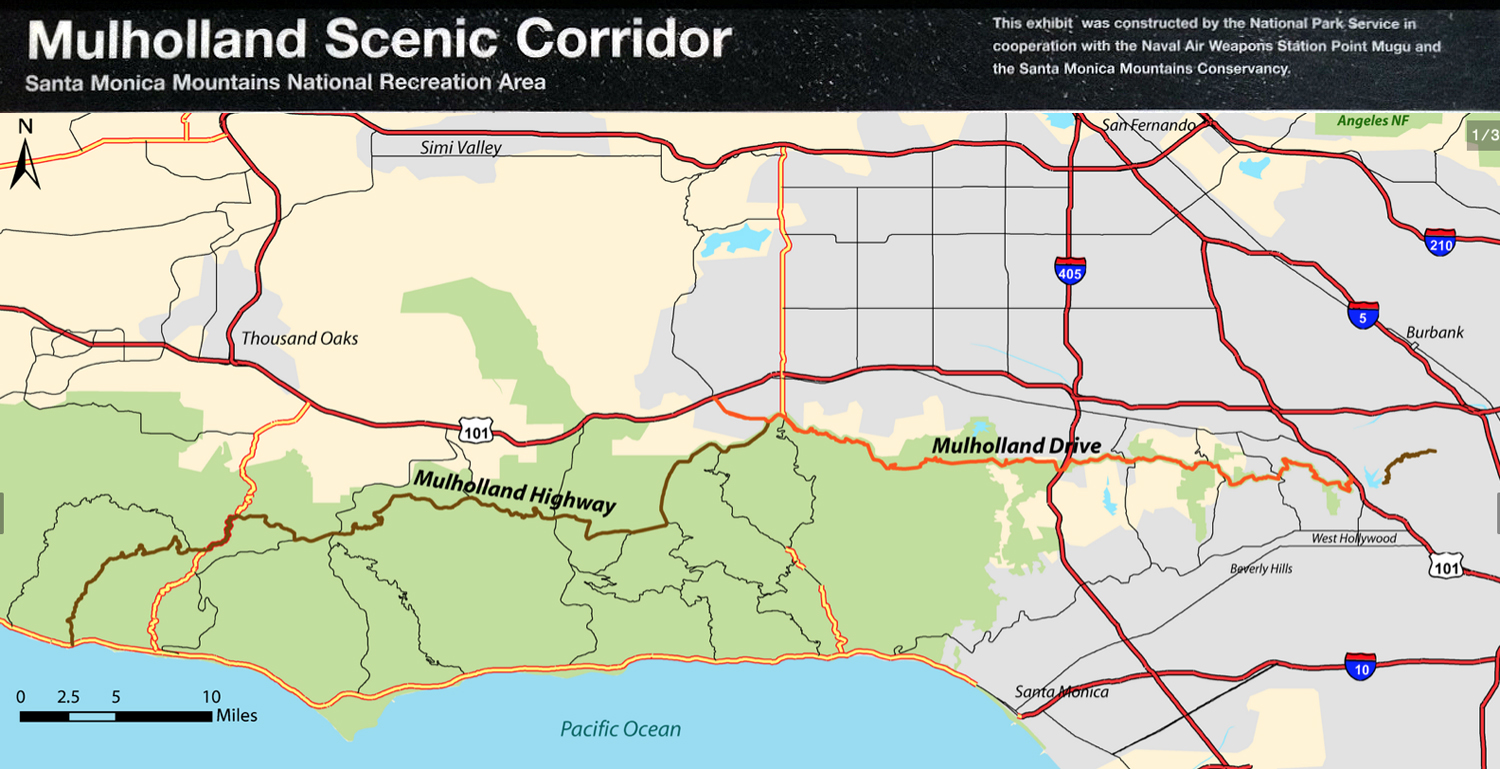
Back before the wilder parts of the road were closed to traffic, I drove the length of Mulholland Drive and Highway, across the crest of the Santa Monica Mountains, from its beginning at the Hollywood Freeway over Cahuenga Pass, past all the film stars’ extravagant homes into the brushland wilderness, with its dirt roads, and finally down to the Pacific Coast Highway at Leo Carillo State Beach, some 55 miles later. 

I pitched a story to my editor about the Hundredth Meridian that traditionally divided the East of the country from the West — the line that separated the land that got more than 20 inches of rain per year, from that which got under that amount. I drove from Laredo, Texas to the Canadian border, writing stories the whole way. And when I got back, I conspired with a page designer to take over an entire Sunday travel section with my pieces — all without telling my editor. “If you had told me, I would never have permitted it,” she said. “But I’m glad you did it. I looks great.” Easier to ask forgiveness than permission.

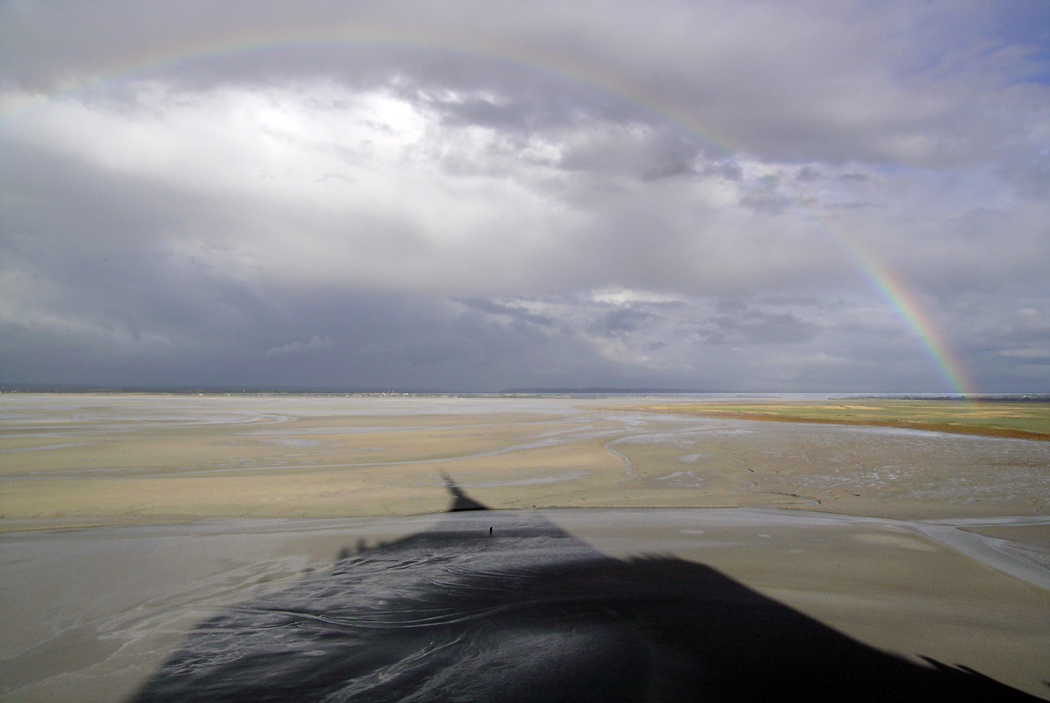
Clearing storm, Mont St. Michel

I have been many places in my life. I’ve been to Mont Saint-Michel in France, that island abbey on the coast of Normandy, where the tides come in at such a speed that anyone walking on the mud flats at low tide is in danger of drowning. I’ve been to see the Bayeux Tapestry in its current home. I’ve listened to the organist at Notre Dame de Paris play a recital of Messiaen. 

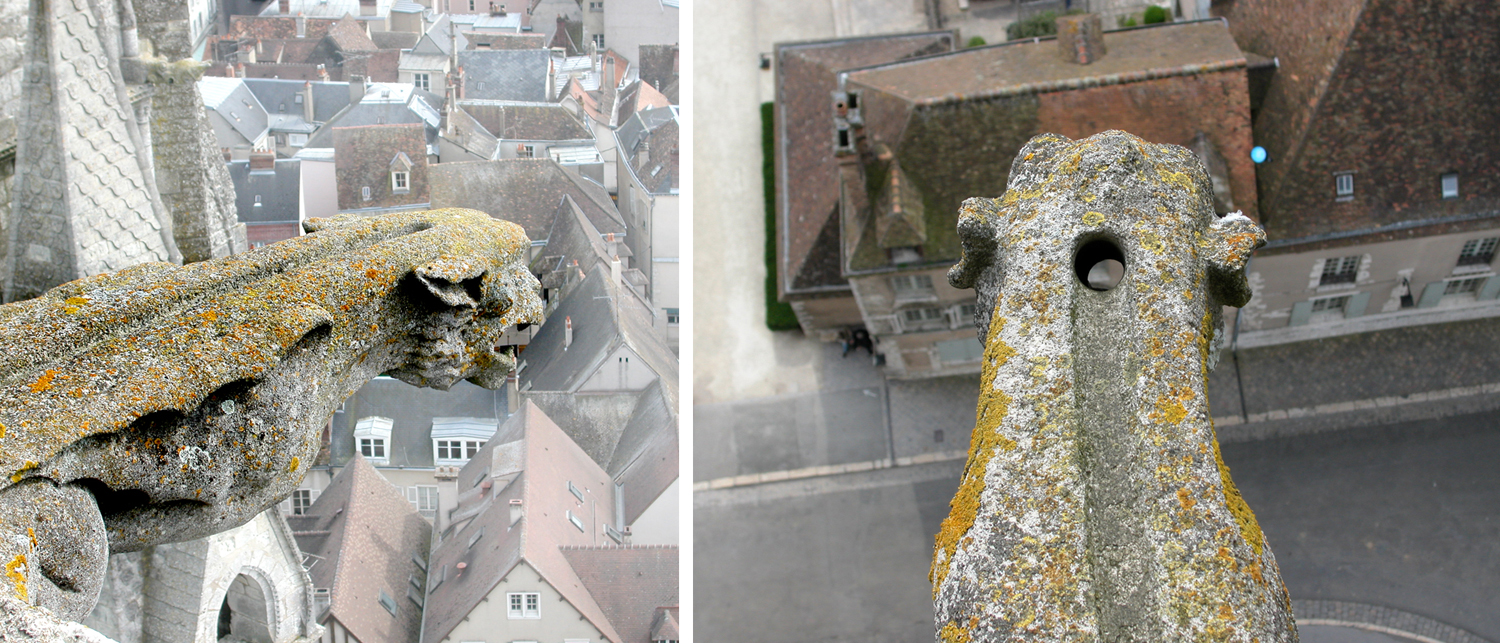
Two views of gargoyle rainspout at Chartres Cathedral

I’ve climbed to the top of Chartres Cathedral, where I could look down at the gargoyle rainwater drains and see their channels and spouts. For that matter, I’ve visited most of the major gothic churches of northern France. 

I stood at night on the banks of the Rhine River in Dusseldorf, German, where the composer Robert Schumann had lived and written his deeply romantic Rhenish Symphony. The rushing current of the mile-wide river, catching moonlight in its waves, seemed the essence and power of  nature. 

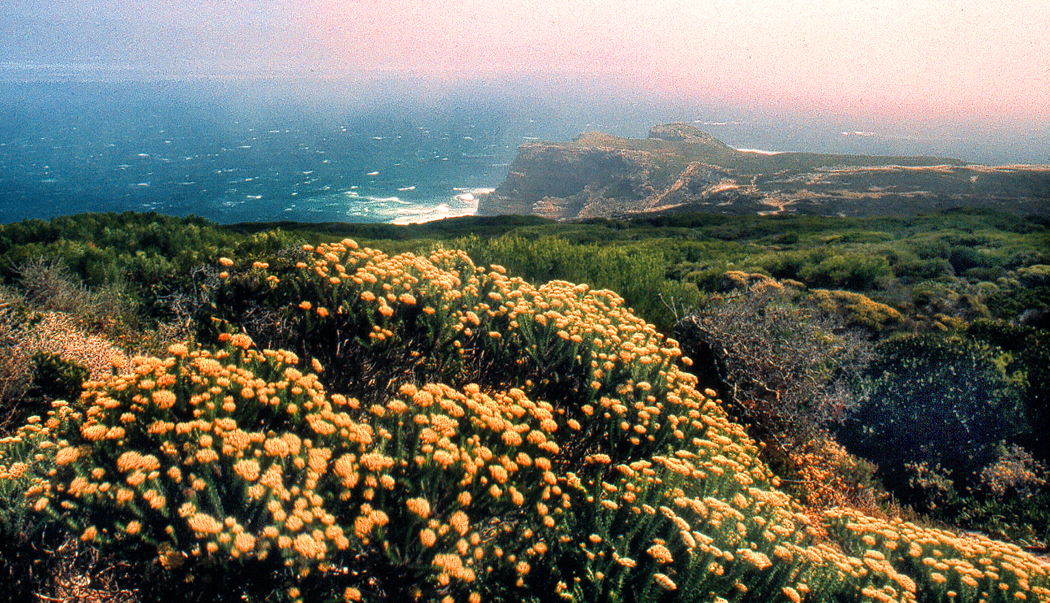
Cape of Good Hope, South Africa

I had always had an interest in the remote and isolated places in the world, and I got to visit the Cape of Good Hope in South Africa, which is as remote and isolated as you can pretty much get. While in that country, I also got to taste grilled mopane worms. Few Americans have managed that, or would care to. 

I’ve been to Hudson Bay in Canada, to Percé Rock on the Gaspe Peninsula, to Glacier Bay in Alaska, to the Yukon, and to the Cape Verde Islands (although that one hardly counts, since it was a layover on the flight to Africa; I didn’t get to see much; bragging rights only). 

I have been to all 48 contiguous states many times. I used to say “I’ve been everywhere, man, I’ve been everywhere.” And indeed, I can bore my wife when watching some film on TV and I recognize locations I’ve been. “I’ve been there,” I say. She gives me the side-eye. 

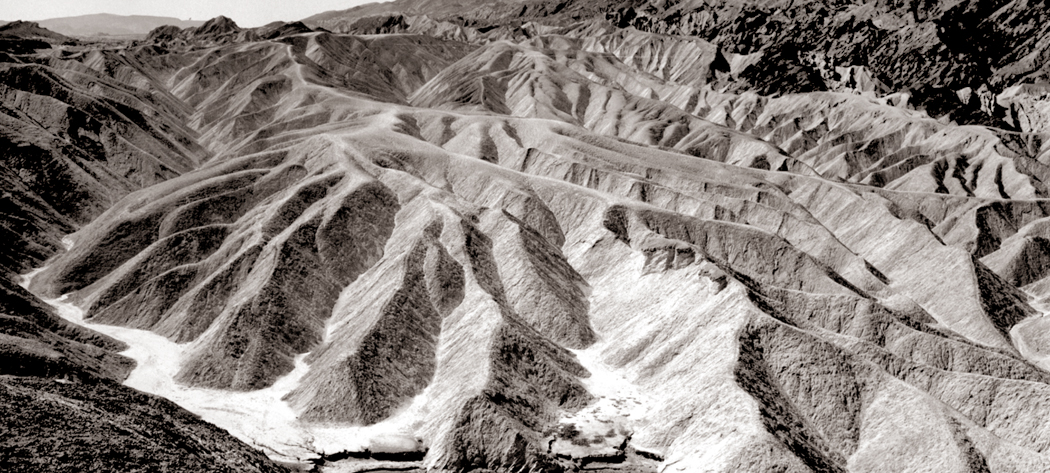
I’ve canoed with alligators in the Okefenokee Swamp. Driven through Death Valley in July in a car with no air-conditioning — nearly collapsed from dehydration and had to drink a full gallon of water to revive.  

Zabriskie Point, Death Valley, Calif. 

I have driven the length of the Blue Ridge Parkway I don’t know how many times, and the continuing Skyline Drive, also. There are notable roads, often over mountain peaks, such as the Going-to-the-Sun Road in Montana’s Glacier National Park, the Beartooth Highway from Montana into Wyoming (we drove in the summer, but it still snowed in flurries), the Tioga Road over the Sierra Nevada. Or the roads in the East like the Kancamagus Highway in New Hampshire, the Natchez Trace from Mississippi to Tennessee, and the Colonial Parkway that runs from Jamestown to Yorktown in Virginia. Many more with no special names.

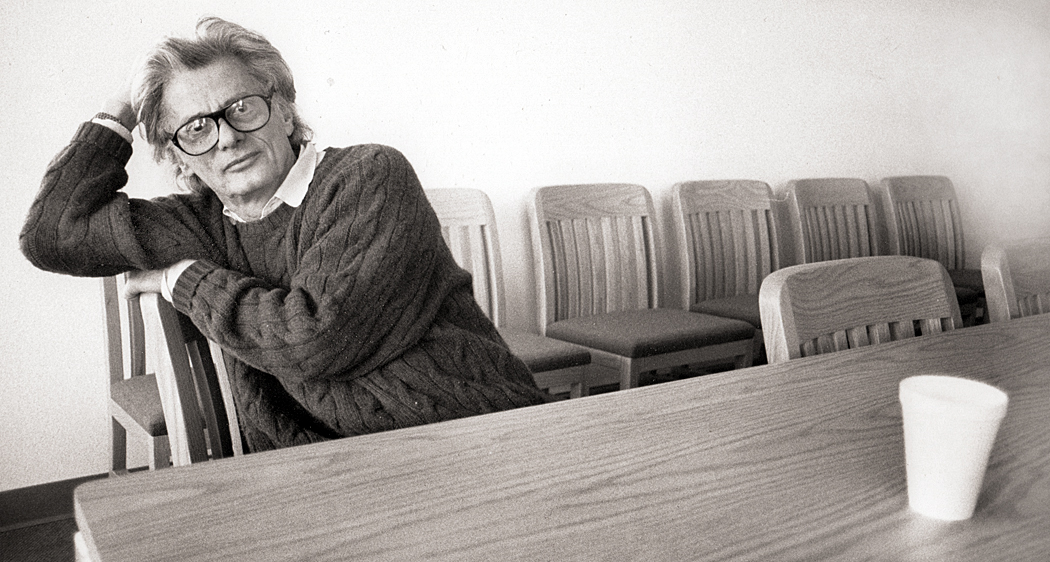
Richard Avedon

I took photographer Richard Avedon out to lunch at my favorite  Salvadoran restaurant in Phoenix. I interviewed Duke Ellington’s son, Mercer, when he brought the band to play in Phoenix. I talked to him only about his own music (sure that he was tired of repeating all the chestnuts about his old man), and at the concert, he dedicated a performance of his  Blue Serge to me, saying the band hadn’t played it in 20 years, but they brought it out and spiffied it up just for me. I knew Frederick Sommer, the reclusive Surrealist photographer who lived in Prescott, Ariz., and visited his home several times, where we talked about things that would have made no sense to anyone listening in. 

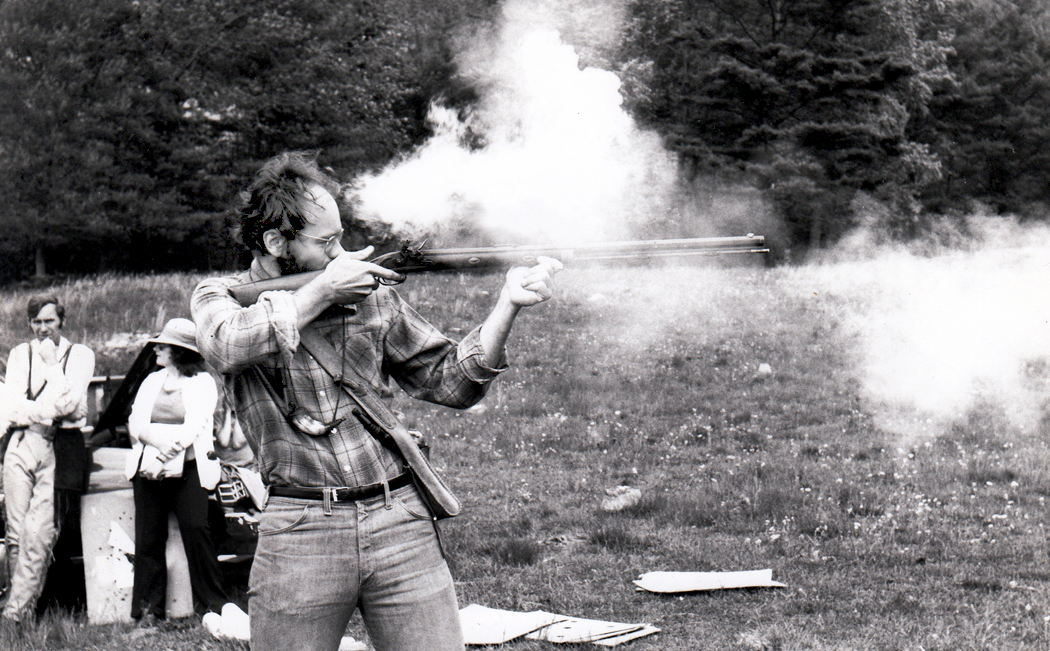
I’ve fired guns a few times over the years, once when I was training to be a security guard (a low point in my career), and several times at black-powder gatherings. My wife had a flintlock carbine that I had the pleasure of firing. A lot of smoke and a loud, brusque “whoosh” rather than a cracking “bang,” and a .50 caliber ball blew out the barrel at the target. 

Yes, that’s me, ca. 1981

I worked at the zoo in Seattle, and most days, when the place closed for the public, I would accompany the bear keeper to the back alleys behind the exhibits and feed leftover food-stand hot dogs to the grizzly bears. We were behind the enclosure, about 20 feet above the bears. They would stand up, open their maws and we would toss the franks down their gullets. No swallowing, just straight down the chute to the stomach. 

Behind them was the back entrance to the tiger cage, with a small barred door to get in when the keeper needed to clean up. When a tiger came to the door, I saw what felt like the most enormous thing I had ever seen, its giant head, bigger than my imagination could hold, and when he “purred” the ground shook. I would rank that the single most impressive thing I’ve ever encountered. 

That zookeeper was my friend, and he once commented to me about the crowds, “You see all those kids, don’tcha just want to run them all over?” 

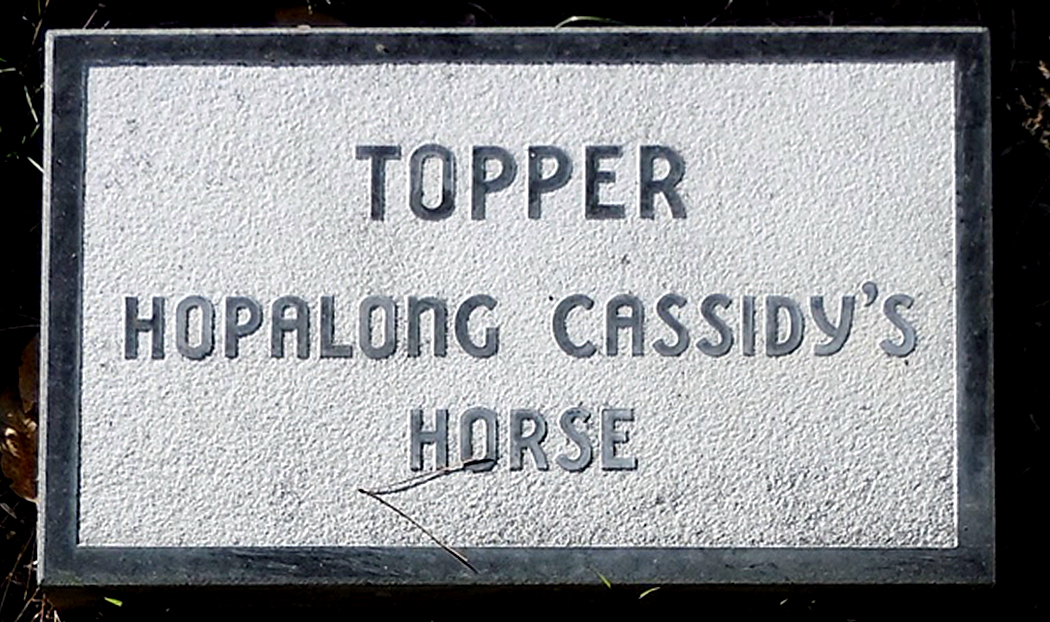
There were many more zoo stories, but most are not suitable for family reading. But more animals: I once had a six-foot boa constrictor wrapped around my neck. I visited the grave of Hopalong Cassidy’s horse, Topper, at the Los Angeles Pet Memorial Park in Calabasas, where you can also find Rudolph Valentino’s dog, Kaber, Petey, the ring-eyed dog from the “Our Gang” comedies, and Tarzan’s chimp Cheetah (real name Jiggs). 

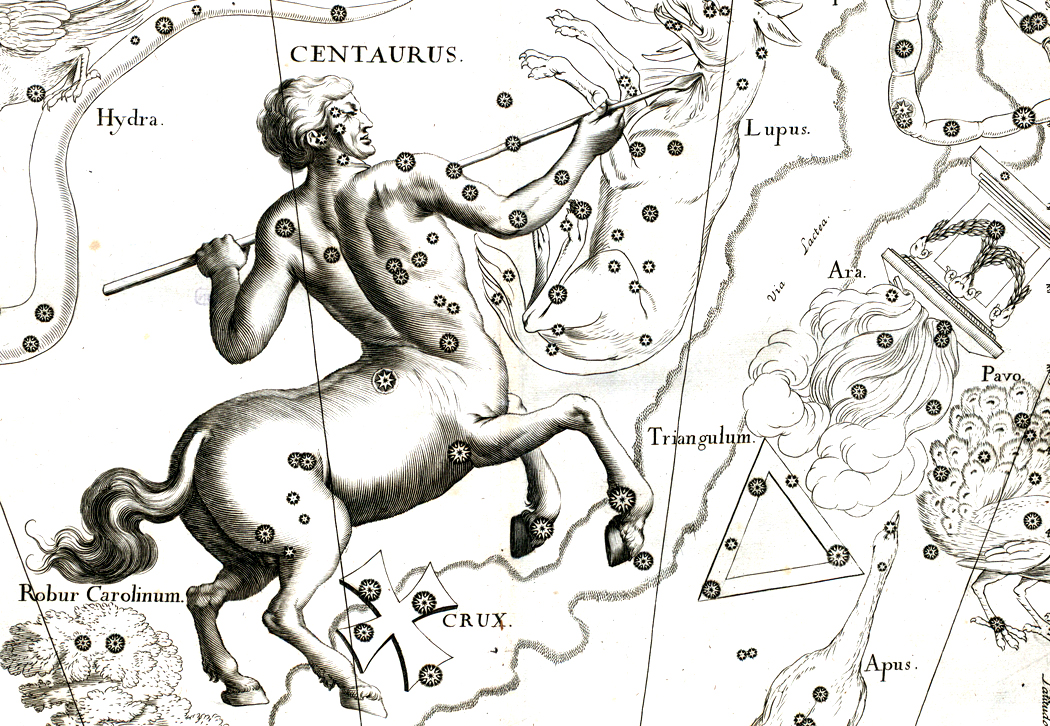
I might also mention driving to Maine in 1963 to see the total eclipse of the sun, or having crossed the equator twice, and in Africa, seeing the Southern Cross and the constellation Orion in the night sky standing on his head, with his sword pointing straight up. 

Which reminds me of the night camping in the Outer Banks of North Carolina with my friend Sandro, and discovering that someone had forgotten to close and lock the door to the Hatteras lighthouse, and so we snuck in, climbed to the top, heard the roar, and watched the black surf below us catch the light. 

Or the time I climbed Roden Crater in Arizona with artist James Turrell, who was reshaping the extinct volcano to make an earthwork piece of art from the mountain. We were standing at the top as the sun set. “People talk of nightfall,” he said to me. “But they should call it nightrise, like sunrise.” Because, he pointed out, the night doesn’t descend, but rises, as a mass of dark sky climbs from the horizon in the east up into the sky, eating away the dusk. You can actually see the borderline as it rises, until all is dissolved in the general night. It is a startling effect that we don’t notice, because our horizons are generally blocked by trees or buildings. The phenomenon is a stunning revelation. I have looked for it — and seen it — many times since then. We walked down the mountain in the gathering dark. 

I have always avoided writing about politics in this blog. In fact, I wrote, many years ago, that I believed that “politics answers no question worth asking.” It cannot provide meaning in life; it cannot answer the big questions. It can attempt to ameliorate the problems it has itself caused, by trying to fix its mistakes, although every repair just causes newer problems. It can reduce suffering, although, in practice, it more often causes it. You nail a patch over a hole causing a leak in the boat, but the nails just cause more holes.

But the big issues of life are not addressed by politics, and especially not by party politics. Yet, we are stuck with it. We work within the system we have inherited, or sometimes, we attempt to overturn that system and build something better. The report card on those attempts is rather dismal. 

I have no faith in any system; every system is a simplification of the infinite complexity of what we assume to be reality. And worst of all, anything with an “ism” at the end of it. It will ignore much in order to make sense of the fraction that is left. While granting there will always be a system of one sort or another to organize the practical relations among peoples, no system encompasses the whole of experience. It is a scribbled shorthand. 

I am an old man now, but once was a young man committed to justice and reform. I came of age during the Vietnam War and spent angry hours protesting that war. I attended a Quaker college and became a convinced pacifist in the 1960s. Now, I am less sure of myself; more willing to accept that I don’t have answers. But that only leads me to believe no one else does, either. 

Meaning in life comes from many things. I find it in art, literature, music, but more importantly, in relationships, family, grandchildren. I find it in kindness and in helping others when I can. Being useful. I realize that others also find it in faith, or belonging to a group. We each have our ways. 

Our son, Lars, came for a visit, driving up from Austin, Texas, for a few days. We had intense conversations deep into the night, which only underlined the difference in generations that divides us. At 55, Lars remains a kind of embittered idealist, who imagines a better world, while ol’ stick-in-the-mud me just remembers the lines from Yeats, “And when they know what old books tell/ And that no better can be had,/ Know why an old man should be mad.” An attitude Lars ascribes to Boomer complacency. 

He talks of anarcho-syndicalism. As he explained his version of it, it  sounded to me very like Brook Farm. I remember how that went. I am suspicious of any kind of utopianism. 

I had my green days of idealism, too, when I thought my generation was going to fix all the problems that our elders had created. We were going to end war, end racism, end sexism and a glorious new age would be born. Everything that has transpired since then knocks the wind out of me, and I now have more modest hopes — not that we will perfect the world, but that a certain boring normality will descend, with all its faults, imprecisions and piecemeal improvements. 

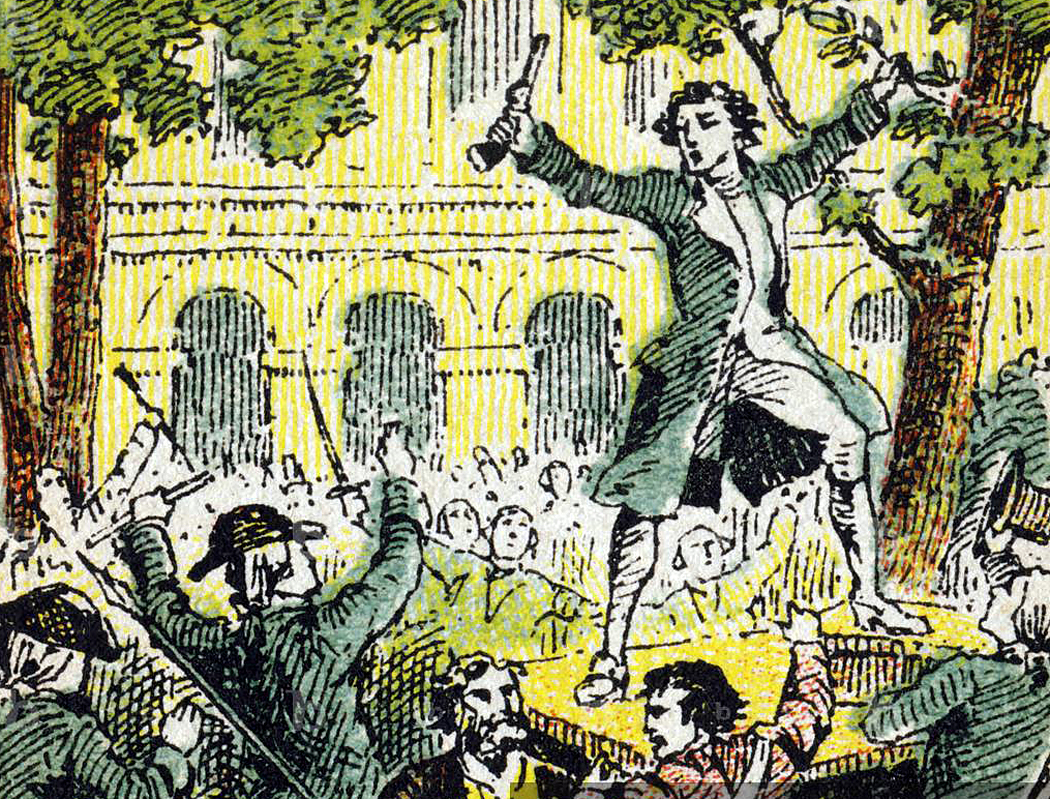
While Lars believes in radical action, with perhaps rolling heads, I remind him that all the idealism of Robespierre left rather a horrifying lot of rolling heads — including his own — and if they got rid of a monarch, they merely wound up with Napoleon. Know why an old man should be mad. 

My generation’s idealism, after all, did help end the Vietnam war — without stopping recurrence in Iraq and now Iran — incrementally reduced racism — certainly not enough, but a smidgeon and even that now being lost — and it was women of my age who shouldered their way into chipping out  bits of patriarchal misogyny. Again, with a frightening recent recidivism. 

But I have to admit that a certain Boomer exhaustion may well contribute to what looks to the young as complacency. We leave the trenches to those who still have the energy and the working knees. 

We failed, our fathers’ generation failed before us, our children’s generation is already failing, and whoever takes over next can only fail in turn. That doesn’t mean we shouldn’t keep trying, but should maintain a certain humility about what is actually possible. Hence my desire for something more normal than the current insanity, bigotry, and incompetence. And my fear that nothing better can be had. 

I am a centaur. Well, not technically — but I know what it feels like to be one. Sorta. 

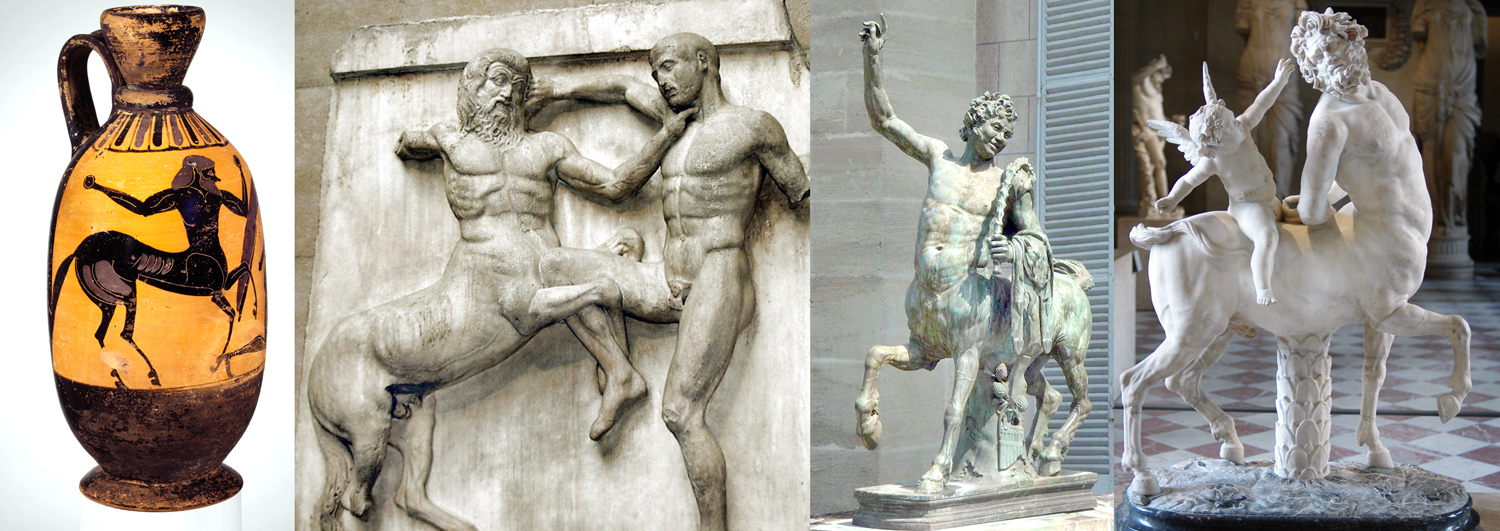
A centaur is a familiar mythological creature, half man, half horse — although more like one-third man with two arms, and two-thirds horse with four legs (although there is a second version that is half man, with two arms and two human legs in the front, and the rear half of a horse abutted  to the backside). In either case, with six appendages, the beast might well be classified as an insect. 

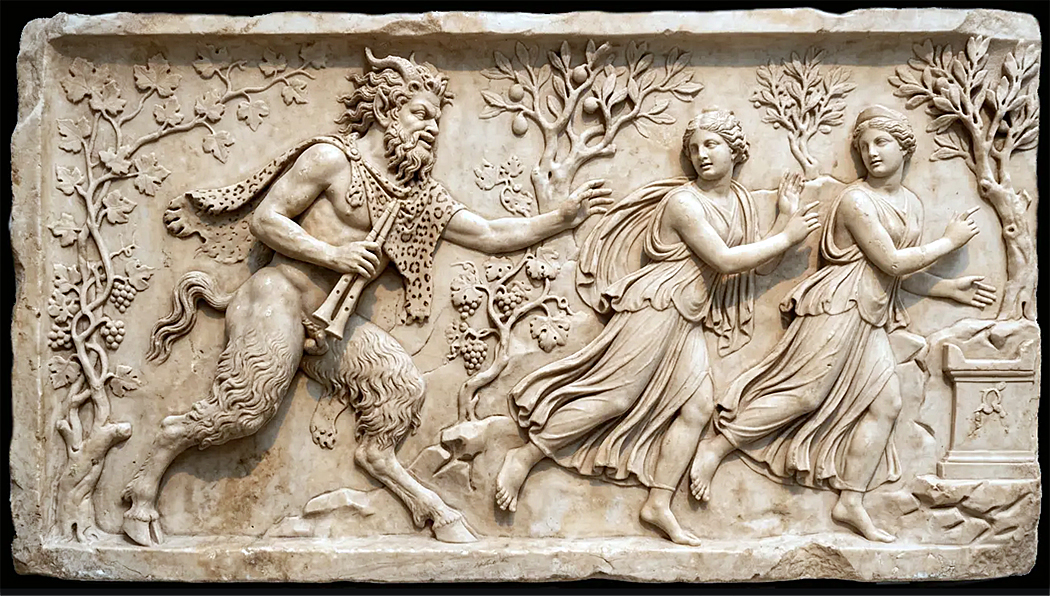
Mythology is well populated with the hybrid offspring of human and animal, from the Minotaur through the sphinxes and down to the half-man, half goat satyrs. They all seem to be metaphors for the animal side of human nature. 

Like most Greek myths, there are multiple versions of the story, but in the most common form, Ixion lusted after Hera (Zeus’s wife), so the Big Guy formed a false image of Hera from a cloud, named Nephele, and Ixion had his way with the cloud, which subsequently gave birth to a son, named Kentauros (Κένταυρος or Centaurus), who, in turn mated with the Magnesian mares of Thessaly, who then engendered the race of horse-men called Centauridae, or centaurs. In his anger at Ixion (remember Ixion?Several generations back?) Zeus struck him with a thunderbolt and bound him to a burning, spinning wheel that careened through the heavens forever. The wheel is central here. 

Hence, the centaurs are the grandchildren of wheel-bound Ixion, which brings us  back to me as a centaur. It is often thought that the idea of the centaur was evolved from first seeing men riding horses — who knew they could do that? The man and horse must be the same being. Merger of Homo and Equus into a single being, one mind, one corpus. 

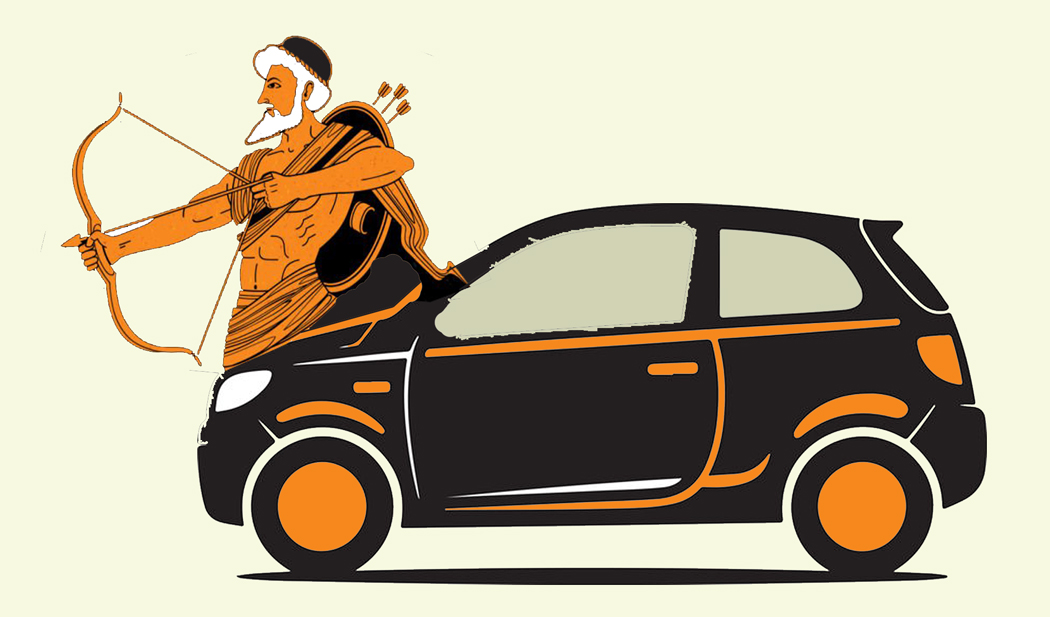
We don’t much ride horses anymore, at least not on city streets. We drive cars. And it is possible to merge with the machine just as it was thought to merge with beast. When I drive, the car and I become a single being. I am not just a person getting into a car, strapping on a seatbelt, plugging in an ignition key and revving up the engine. I become one with my automobile. It has been this way for me since I first got my driver license. 

As a sidenote, I have tried riding a horse. Did not go well. It was a docile animal, but it turns out that the round belly of the horse and the desire of my knees to remain straight conflicted painfully. Knees bend front to back, horses pull them sideways. The wrenching pain was somatic dissonance. I got back in my car. 

I’ve been a car person ever since I was two or three years old. We had a black 1950 Chevrolet, and in those years before children’s car seats, I rode in the back, standing on the seat so I could look out the window. I loved riding and watching the New Jersey scenery go by. 

My younger brother, on the other hand, has always had a different response to car travel. I rode with my nose pressed to the glass so I wouldn’t miss anything. He said that car travel, for him, was much like an elevator ride. You got in, waited till you got to your destination, and the door opened and you got out. Basically, it was lost time. 

From my earliest years, I was hooked on driving and riding in cars, but I never transferred that interest to the cars, themselves. 

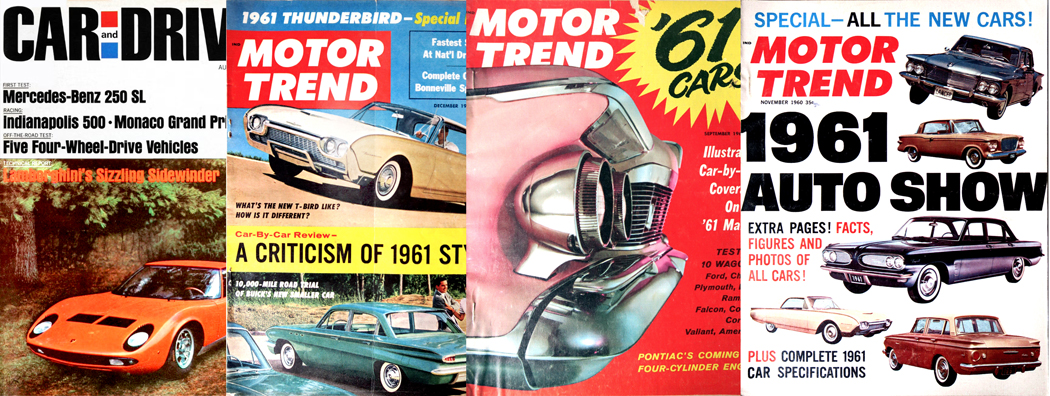
When I became a teenager, cars were important to all the boys I knew. They swore by Motor Trend magazine, and looked forward each fall to the unveiling of the latest model cars, with their tail fins and chrome trim. Which new car could go from zero to sixty the fastest. In contrast, I didn’t much worry about racing through city streets. Zero to sixty was a meaningless metric. For me, they were a means of going. 

My first car was a powder-blue 1960 Ford Falcon station wagon, which had a mattress in the back and loosey-goosey steering, which led to my first car wreck. The second car was a red Chevy, twice the size of the Ford. For some reason, we kept a bunch of plastic grapes hanging in the rear side-window, and so we named the vehicle, Vanessa Redgrape. (The naming of cars, at a certain age, seems important. They all had names. My friend, Hank, had a green VW beetle he called Gigi, or “G.G.” for “Green Gonad.”)

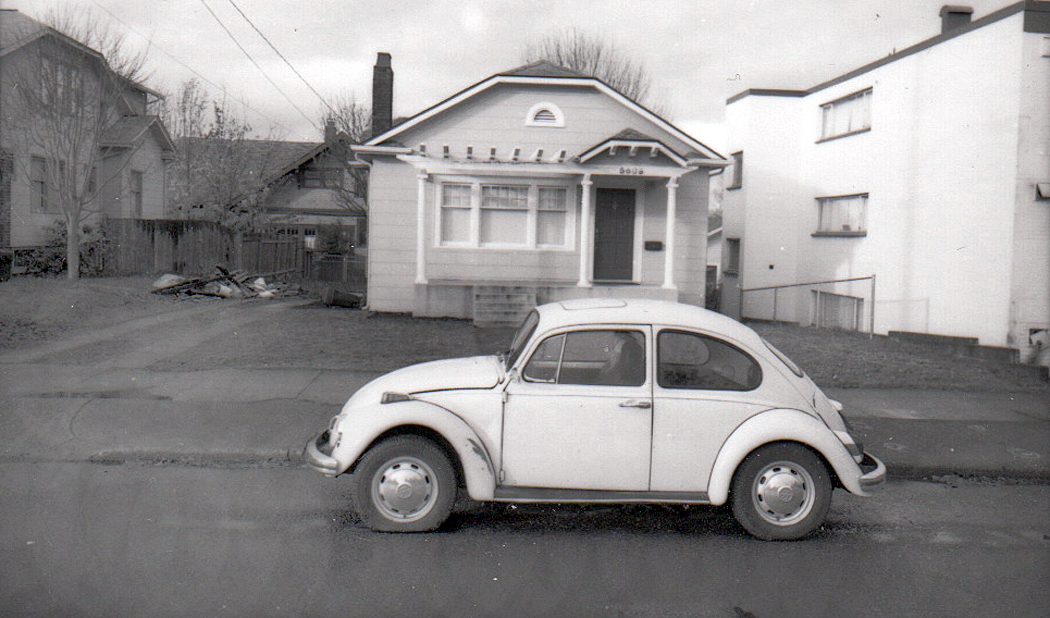
I also owned a succession of Veedubs, which I loved, in part because I could always repair them with just a hammer and a screwdriver. They were simple. Cars have gotten so much more sophisticated technically, so that now, mechanics generally effect engine repair not by fixing, but by replacing. It was the age, back then, of hippies and Whole Earth Catalogs, and I pined to own a VW Minibus, and eventually I found one I could afford, and it promptly broke down on the way home from the car lot. I couldn’t afford to fix it. 

Many of us have had dogs we treasured, but they eventually die on us, and we sometimes find a replacement, but usually keep in our hearts the ones we loved most. Like the Navy blue Ford Falcon passed on to me when I was down on my luck by my friends Alexander and Mary Lou. It was falling apart, with no heater, no windshield wipers, and a rusted hole in the floor under the brake pedal that let me watch the asphalt pass by below my feet. It was the car I drove up the Blue Ridge to meet the woman who became my wife. It was snowing that day, and I had to drive with my window rolled down and my head stuck out like a locomotive engineer (or a happy dog) because I couldn’t see anything out the windshield. I loved that sorry car. 

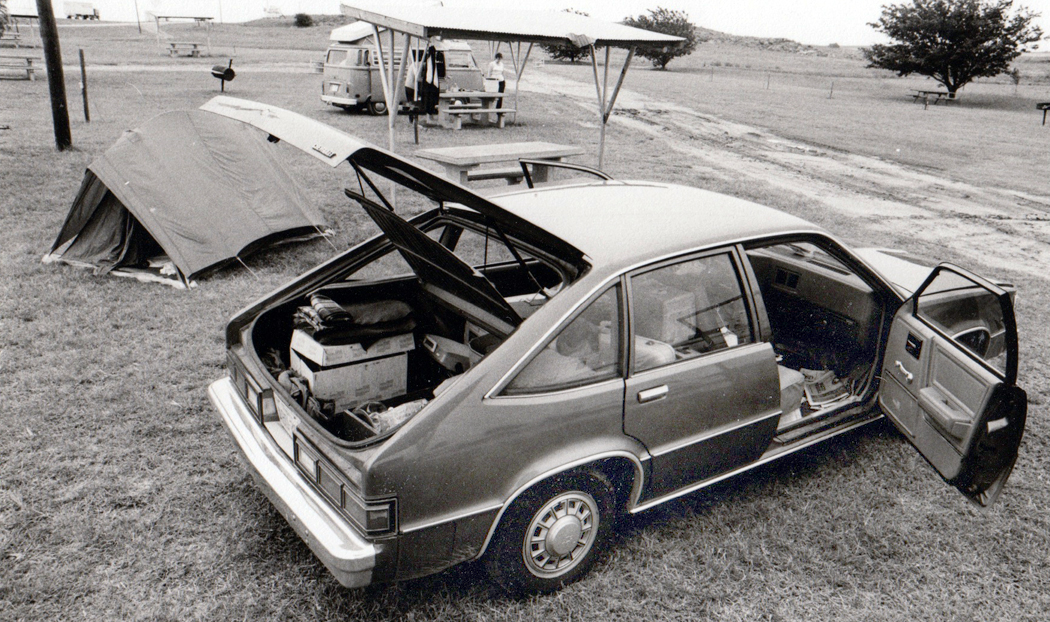
Mostly, since then, I have had modest cars with generic names, various Datsuns, Hondas, or Toyotas. Although one very particular exception was the Chevy Citation that came into the family when I married Carole. Citations had a reputation as a break-down special. They were badly designed. But for some glitch in the universe, her car was the opposite of a lemon. Never had a whisper of a problem with it and drove it past 200,000 miles, then gave it to my brother, who continued with it for some time. 

In that car, Carole and I began our many peregrinating years. She was a teacher, and I was also, and so, we had our summers free. In 1981, we put 10,000 miles on the Citation as we drove across the U.S., up and down and back and forth. 

Each year after that, we chose a region and explored it in depth; by the third summer we had visited all 48 contiguous states, and most multiple times. 

When we lived in Phoenix, I’d drive a hundred miles south to watch an opera in Tucson and drive home the same night. I could not tote up the number of miles I’ve sat behind the wheel over my life, but I’m sure I could have gotten to the moon and back, if there had been motels along the way. 

And even now, when I am old and falling apart at the seems, so that even walking is a chore, with knees that need a serious relining, I have no trouble getting in the car and driving. I am most comfortable behind the wheel.

And it is because I have become a centaur. In a car, I am the ghost in the machine. We merge to become one single entity — a car-centaur. I extend my sense of self from bumper to bumper. Proprioception is the sense we have of our bodies and their shape and location in the world. I can feel where my feet end, where the top of my head is. I can twiddle my thumbs with my eyes closed. I have a clear sense of where my body extends. 

In the driver’s seat, that sense expands to encompass a larger whole: The car is as much a part of me as my knees or my fingertips. We have  become mechano-organic. My foot on the clutch and my hand on the gearshift is like breathing, natural and fluid. 

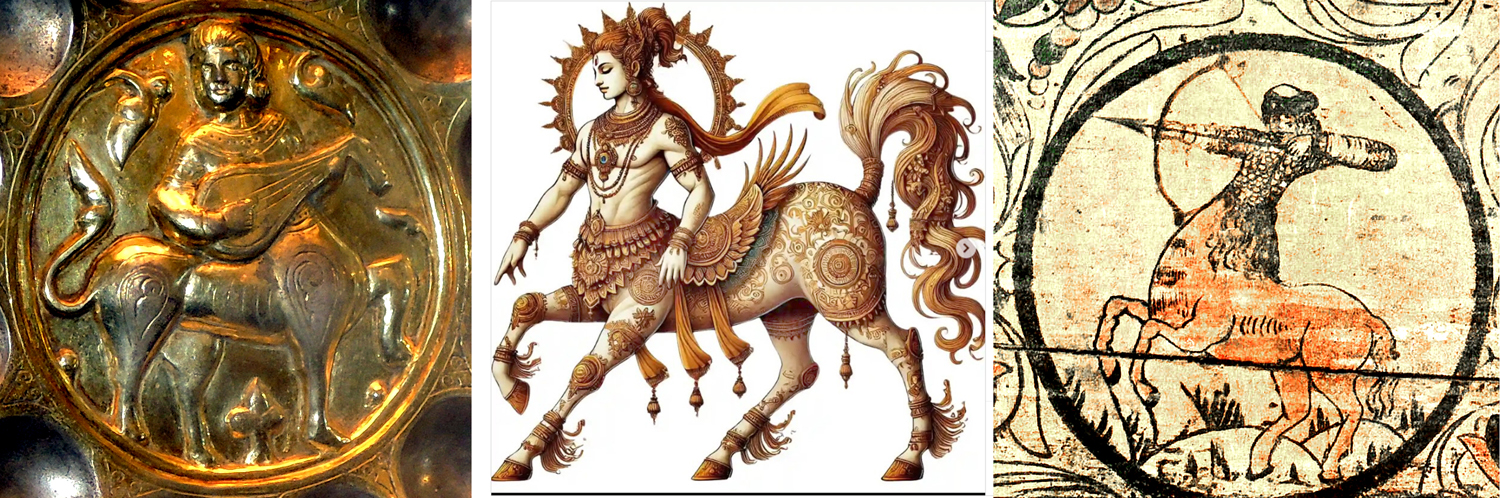
Byzantine gold cup; Indian Kinnara; Russian Polkan

Each culture and every epoch has its hybrid mythiforms, and there are horse-men from the Hindu Kinnara written about in the Mahabharata to the Russian Polkan and the troubadour centaurs of the Byzantine Middle Ages. It seems natural that we should adopt the modern in-car-nation. 

We look at history all wrong. In school, history seems like a bunch of random dates we have to remember. You know: 1492; 1066; 1929; 1588. Just numbers. But history isn’t like that. History is continuous, all connected. 

It all needs to be looked at a different way. I think of history as a series of grandmas. It makes history more relatable, but also a good deal shorter than you might imagine. 

My grandmother was born in 1900. It is now 2025. That’s a 125 years. The way the Romans counted centuries — grandparents birth to grandchild’s death — was called a “saeculum,” which we tend to translate either as “era” or “century.” But I know my grandmother was born before the Wright brothers flew and didn’t die until after Neil Armstrong walked on the moon. An augenblick in time. 

And so, I try to line up these consecutive eyeblinks to imagine how distant, really, is the past. Now, I understand that not all grandma-to-grandkid timespans are the same. Some are considerably shorter. But I use my own as a milestone to count my way through the past I’ve learned about. In that way, the Declaration of Independence was from my grandmother’s grandmother’s time. Only two grandma’s ago, so to speak. 

The Roman Empire, in the east, fell in 1453, which is just 4.5 grandmas in time. My grandmother’s grandmother’s grandmother’s grandmother could have witnessed it. 

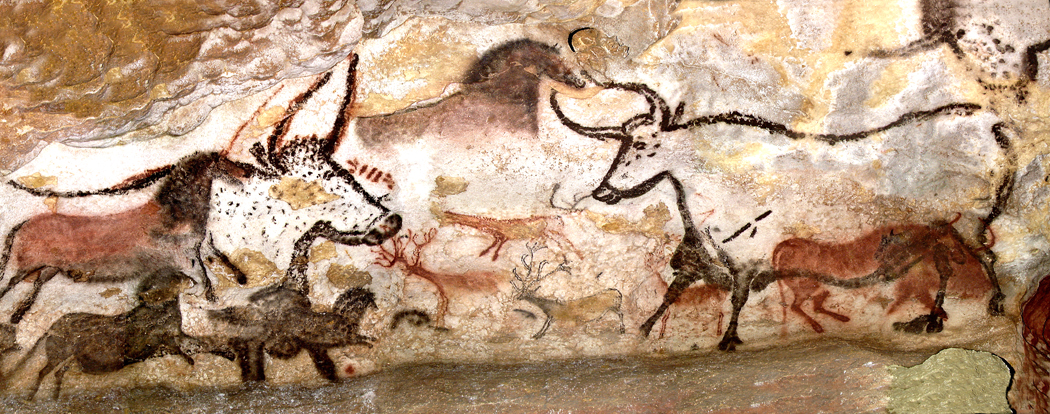
We think we have been on this planet so long, that prehistory seems interminable. But I attempted to calculate how long it has been since humans painted aurochs on the cave walls at Lascaux. The date for the original artwork is usually given as about 19,000 years ago. A long time, no? 

Well, in grandmas, that is just 152 grandmas ago. Your standard charter bus carries about 50 people, and so it would only take three busloads of grandmas and their grandmas to get us back to the cave paintings. It really isn’t all that long ago. 

In sum, I have long believed we should never teach history simply as dates, and shouldn’t teach it from back then to now, but rather from now, counting grandmas — or some other measure of time — backwards through time to see the continuous thread we are connected with. 

I was sitting on the backyard patio this morning, soaking up sunlight, when a squirrel skittered across the lawn, back and forth like a pinball. Eventually, he came to within 10 feet of me. I sat stock still, and he stared, twitching his nose, standing on hind legs like a deacon. After about a minute — which can feel like quite a long time — I must have blinked, because he jumped, startled, and took off running away. 

I often sit in the back yard, to hear the birds and watch the clouds. It feels like an unmediated soak in existence. I sit trying to notice everything, the birds singing, the clouds moving, the wind making the trees wiggle in random motion, and until recently, the incessant noise of the cicadas, sounding like the A Train rushing through the 81st Street subway station. I felt the breeze in my hair, saw the bluish greens of the iris plants and the yellower green of the grass, I enjoyed the warm concrete on the soles of my bare feet and the incipient sunburn on the backs of my hands.

Bill Moyers once asked Joseph Campbell about the search for meaning, but Campbell switched focus: “People say that what we’re all seeking is a meaning for life. I don’t think that’s what we’re really seeking. I think that what we’re seeking is an experience of being alive, so that our life experiences on the purely physical plane will have resonances with our own innermost being and reality, so that we actually feel the rapture of being alive.”

And so, I sit watching my back yard, the trees that line it and the sky above it. I can feel myself breathing, wiggling my toes and being alive, and what is more, recognizing the world being alive around me. For a moment, there is no boundary between my existence and the sea of being in which I swim. 

A wren flits down and sits on the steps to the shed and moves from one position to another with no apparent intervening motion, as if it were a jump-cut in a movie. A really bossy mockingbird runs through his repertoire of bird calls, claiming this patch as his own. A cardinal flies from my left to land on a bush to the right. A white butterfly bounces on the air waves to disappear behind the bushes. 

I’ve seen so much life in this tiny patch of ground, it sometimes astounds me. I cannot count the birds. Crows, even a raven. Way up in the sky, I’ve seen up to a dozen buzzards at a time circle as they catch the updraft coming from the river and up the bluff to this house. 

There have been cottontails and many squirrels. Two years ago, coming home from a trip to Maine, as I pulled into the driveway, two bear cubs were climbing up a tree at the back of the property. We watched them having their fun, and then mama bear climbed up behind them to encourage them to come back down. A dog barked aggressively from somewhere down the neighborhood and the bears all dropped to the ground and ran off. I’ve seen bears waddling through the streets here, and long ago learned not to put the trash out until garbage delivery day. 

A groundhog has crossed the back yard so often, he has left a permanent trace in the lawn. I have seen him multiple times harrumphing his way along. If he spots me sitting, he will take a moment to stare and consider his next move, but then run faster than you think he can move, back where he came from. 

Then, there are the bumble bees, the honey bees, the wasps and the ant lions — their little sandy funnels in the dirt of the front garden. Big black butterflies, and their yellow and orange doubles light on the hedges and weeds. Ants build their nests in the cracks of the driveway, leaving tiny ridges of dirt where they have dug down. 

Yesterday, as I was headed out the back door to have my daily sit-down on the patio, before opening the door, I saw the groundhog plopped down right by my chair, butt-flat on the concrete and motionless as a garden gnome, while an angry mockingbird jumped in a half-circle around him aiming “Cht-Cht — Cht Cht” at him. They continued this performance for a good two minutes until I must have made a noise and the great, heaving woodchuck became disturbed, turned its head my way and waddled off to hide under the shed and the bird, having had its way, flew up to a tree and quieted down. 

When I was little and visited the Bronx Zoo, I was impatient to see the animals, who sometimes hid in the shade at the back of their enclosure, or sat behind some rocks, and if I did not have my interest piqued in the first five seconds, I moved on to the next animal. But my father told me to wait. Just watch. Eventually something would happen. I didn’t understand that then; I do now. I find myself in my yard patiently waiting for the next miracle. 

(Many years later, I worked at the Woodland Park Zoo in Seattle, and saw crowds of impatient kids moving from exhibit to exhibit. And it is only worse now, in an era of cell phones and digital immediacy.) 

Writing in the Fourth Century, the Christian poet Prudentius identified in his Psychomachia (“Battle of the Souls”) his version of the Seven Deadly Sins, and the corresponding Seven Virtues, at war with those sins, and among the virtues was Patience. 

I don’t know if I learned it from my father, or inherited it from his DNA, but, like him, I have become rather patient. Or maybe I’m just sluggish. But, I believe it served both of us well. The old man was slow to judge, slow to anger, and would never think to get outraged at traffic. Being raised that way, I, too, am willing to wait, when waiting seems either inevitable or purposeful. In fact, I can sit quietly in a chair neither talking or thinking for ages at a time. When I’m being philosophical about it, I call it meditation.

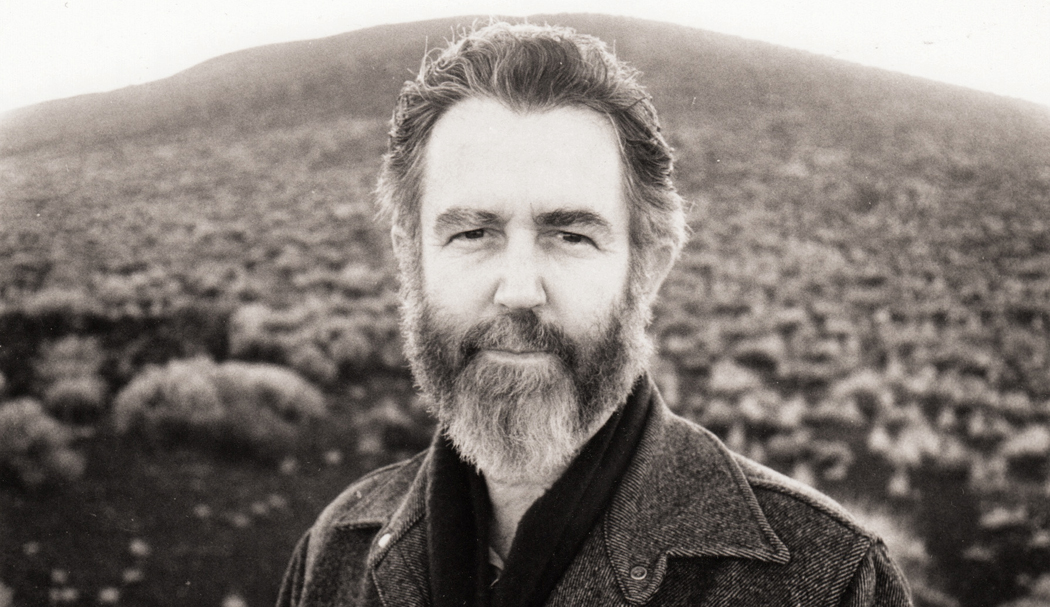
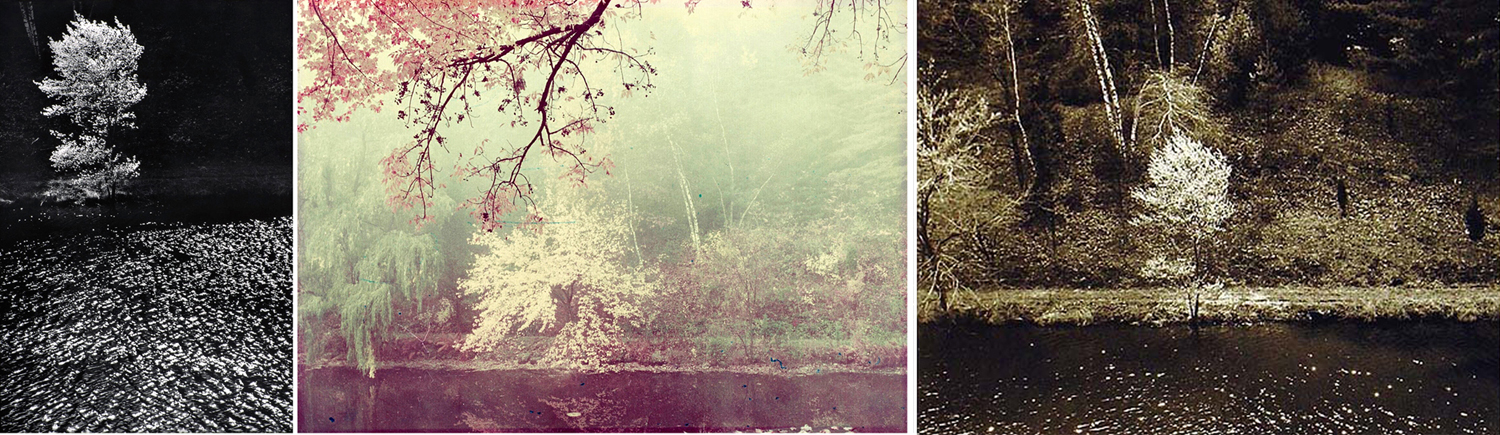
In the 1950s, the aging photographer Edward Steichen rarely left his home in West Redding, Connecticut, and began photographing a serviceberry tree (he called it a shadblow tree) through his window. He watched the seasons shift across the face of the pond and the tree and pictured them in all seasons and hours of the day, under varied weather, and made a case you could spend an infinite amount of time in a single place with a single subject and discover everything. As Yogi Berra once famously said, “You can observe a lot by just watching.” 

And it is the little things, carefully watched, that won’t happen again. The flow of the world is that it won’t happen again, all in constant forward motion and I sit to watch it move past me, and take me with it. 

 I just want to sit and soak, to sense the universe around me without thinking. We tend to glorify rationality, and the power of our brains to think meaningful thoughts, and we diminish the value of pure sensation, the sensuous awareness of colors, shapes, earthforms, clouds, birds, song, rhythm, touch, smells, and tastes. But these things are primal and exist before thought. Sensation is primary; making sense is an afterthought. 

And so I sit, trying to lose myself in the larger pattern.  

But, damn it, I can’t help being a writer and so I need to belittle what I enjoy, turning it all into words, into capsules of meaning that when read by others will be turned into ideas about sensations. Words not experience. And so, I can’t stop myself from writing this, hoping you share some of that delight when you step outdoors on the right day, with the right breeze, and the right mockingbird and crow squawking, and can see the trees dancing and the sun moving slowly across the sky blotted with whatever variety of cloud you have that moment.

Delmarva Peninsula

When I was a kid, most things in the world just were. Everything was normal, even if it wasn’t. People lived in houses, roads were paved, families had a mom and dad. And, for a kid, parents were just parents; I never gave much thought to why they did what they did. It wasn’t even that if they did something, they must have had a reason. They just did things. They were Mom and Dad, and as children, me and my brothers just followed along. As a child, the world is a given. 

It’s hard to recall that state of affairs, when things happened because they happened. That they might have done things for the abstract good of their children never dawned on me. Of course, now that I am old, I look back and realize how much they did for us, things they didn’t have to do, or things they probably would have preferred to do some other way, including some other things they might have wanted to do with their sparse vacation time. 

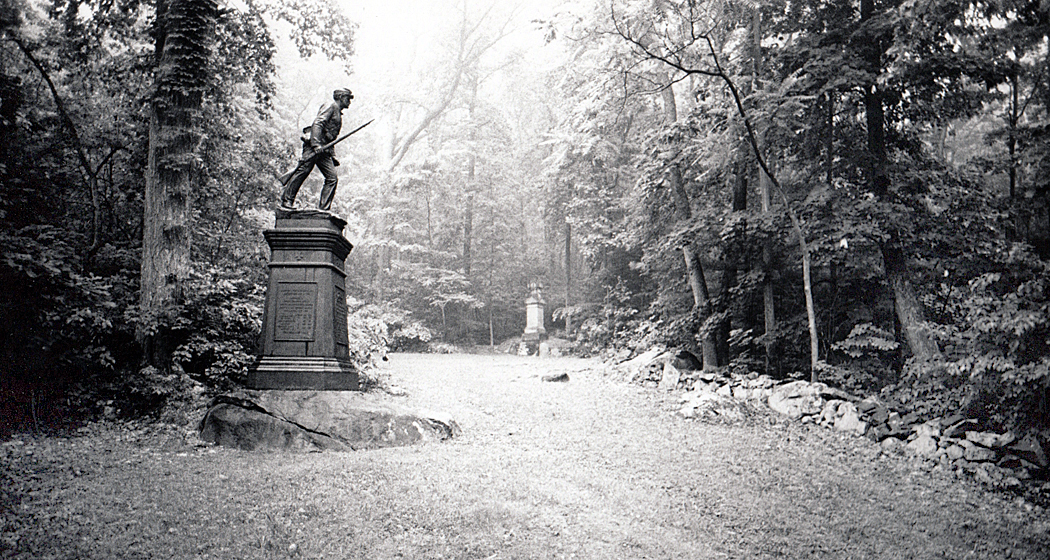
Gettysburg, Pennsylvania

But one of the things they did for us was travel. When we had our summer school vacations, Mom would pore over various brochures, magazine articles, and roadmaps and carefully plan routes to drive and sites to take in, and then, when it came time, we would load up the car and take off. We went to Washington D.C., to Niagara Falls, to Fort Ticonderoga, to Gettysburg — and many spots in between. Only later did I come to understand there was a purpose to these vacation trips. they chose these things to expose their children to history, geography, politics and to let us see what was possible outside suburban New Jersey. Travel was part of our education. 

Back when they were children, they didn’t get to travel. They both grew up in northern New Jersey and neither had more than a high school education. Dad’s family was heavily religious and didn’t approve of having fun, and Mom had to raise her two younger siblings after her father died when she was still in grade school and her mother had to find work in New York City. And so, the worlds they grew up in were limited.

German gun, Omaha Beach, Normandy, France

But when my father was drafted in 1940, he was sent to Camp Wheeler in segregated Georgia. He didn’t talk much about his army life, but he did express shock at discovering the pervasiveness of racial discrimination. And then he was sent overseas after D-Day to France, Czechoslovakia and Germany and found that other peoples had various ways of making a decent life. His horizons were involuntarily expanded. 

When they got married, shortly after the war, they felt it was important to broaden their children’s horizons, too, and to make sure we got the best educations. There was never any question that their kids would go to college. (I was told that when I entered second grade, I asked if that meant I could go to college “next year?”) Education was Priority One. Travel was a component of that. 

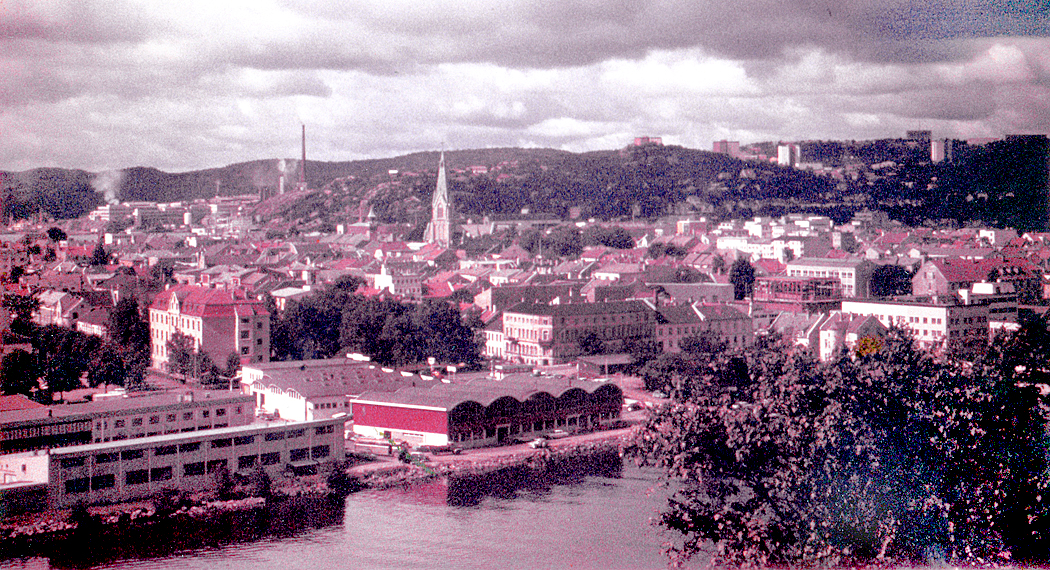
Kristiansand, Norway

Later, when I was in high school, they made it possible for me to go to Europe, accompanying my immigrant grandmother to her birthplace in Norway, and to take a bus tour through France, Germany, the Netherlands, Belgium and Luxembourg. A few years later, my younger brother, Craig, was sent off on a similar trip. 

Mark Twain famously said that “Travel is fatal to prejudice, bigotry, and narrow-mindedness, and many of our people need it sorely on these accounts. Broad, wholesome, charitable views of men and things cannot be acquired by vegetating in one little corner of the earth all one’s lifetime.” 

The vast bulk of the MAGA world, it seems to me, is made up of those who have never ventured far from their birthplace. If they had seen how others live, they would not accept the lies. 
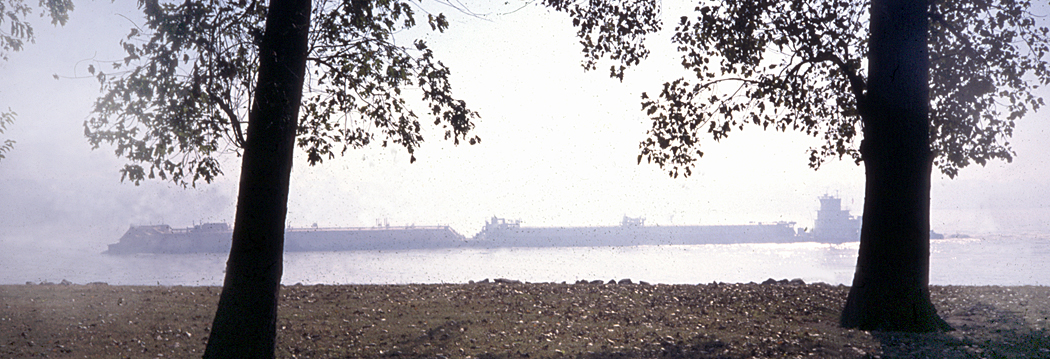
Cairo, Illinois

Travel, then, has pretty much always been an essential part of my life, and having become an adult — at least as quantified in years accrued on the planet — I have continued the habit instilled by my parents. Education wasn’t only in books; I read Huckleberry Finn, of course, but I’ve also been to Mark Twain’s childhood hometown of Hannibal, Mo., and to what remains of Cairo, Ill. I’ve driven along the entire length of the Mississippi River, from Lake Itasca, Minn., to the Venice Marina where the road ends in Louisiana. 

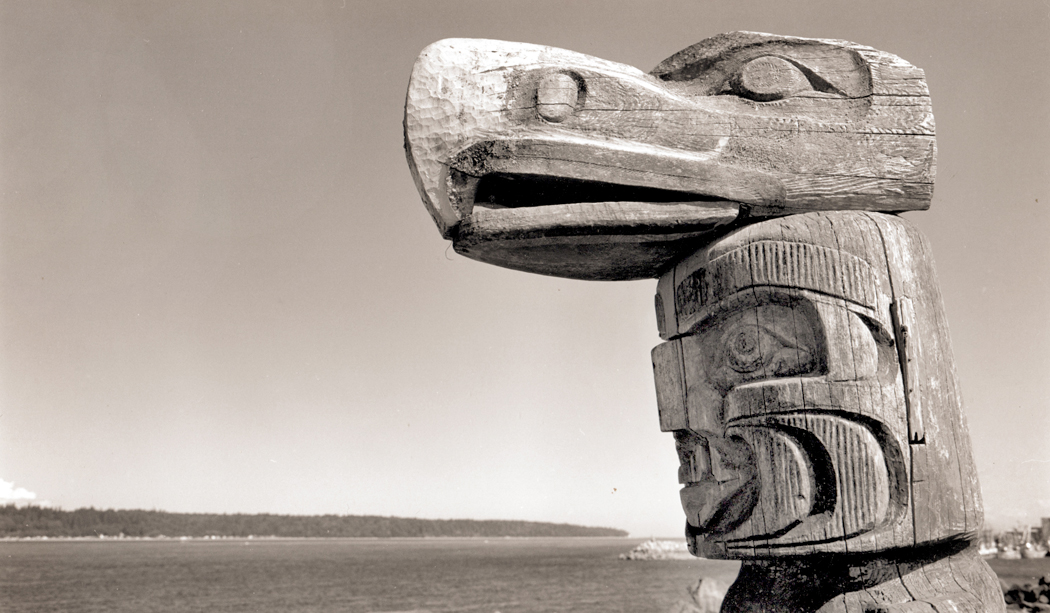
Vancouver Island, British Columbia

It is rare to mention a place I haven’t been in the continental United States or provincial Canada. Big Sur; Mt. Katahdin; the Everglades; El Paso;, the Union Pacific Bailey Train Yard in North Platte, Neb.; Hudson Bay; Halifax, Nova Scotia; the Tehachapi Loop in California; the Sturgis Rally in South Dakota; even Glacier Bay in Alaska.

Glacier Bay, Alaska

Believe me, I can be quite irritating, when someone mentions some far-off place and I chime in, “Oh, yeah, I’ve been there. Had a great Po Boy sandwich in a little shack along the road in Pecan Island.” Which is a tiny community along the southernmost road in Louisiana. Or “Abiquiú? Yes, we visited Georgia O’Keeffe’s place there.” I am slowly learning to keep my yap shut. 

Red Mesa, Navajo Reservation, Arizona

I’ve been to every state except Hawaii, and most of them many times, and every province in Canada, save only Prince Edward Island and Newfoundland. I’ve lived in four corners of the continental states, growing up in the Northeast, moving to the American South, then to Seattle in the Northwest, and spending 25 years as a writer in the Southwest. Each move gave me a chance to explore all the territory nearby, often in some detail (There’s hardly a square meter of Arizona that I haven’t been to. Go ahead, name something obscure: Ajo? Red Mesa? Tumacacori? Freedonia? Gadsden? Quartzsite? Check, check, check, check, check and check.)

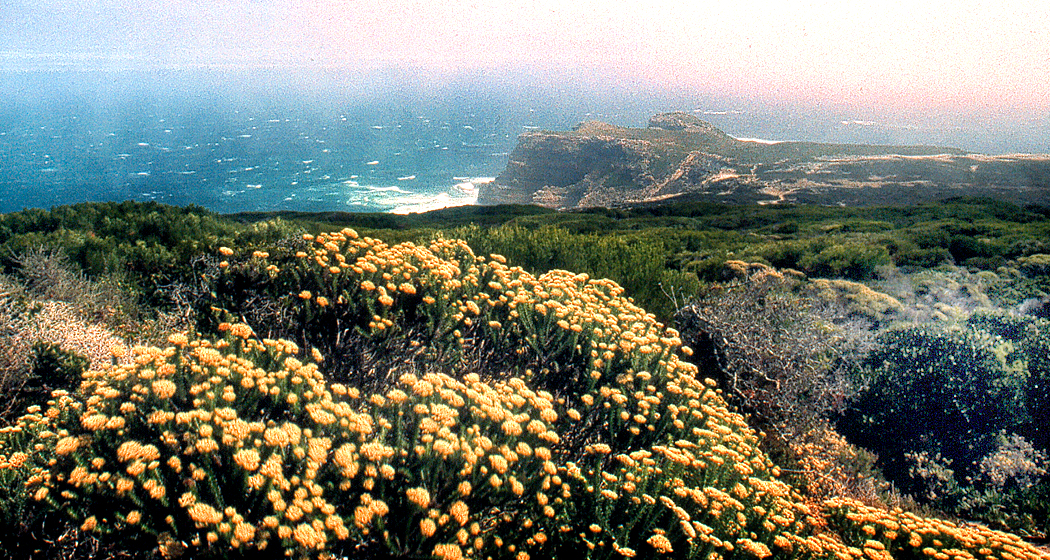
Cape of Good Hope, South Africa

I’ve been to the Cape of Good Hope in South Africa and to Marylebone Road in London; I’ve been to the Chartres Cathedral, and to the bull ring in Arles, in Provence. My late wife and I went back to France many times, and drove to all six corners of “The Hexagon.” 
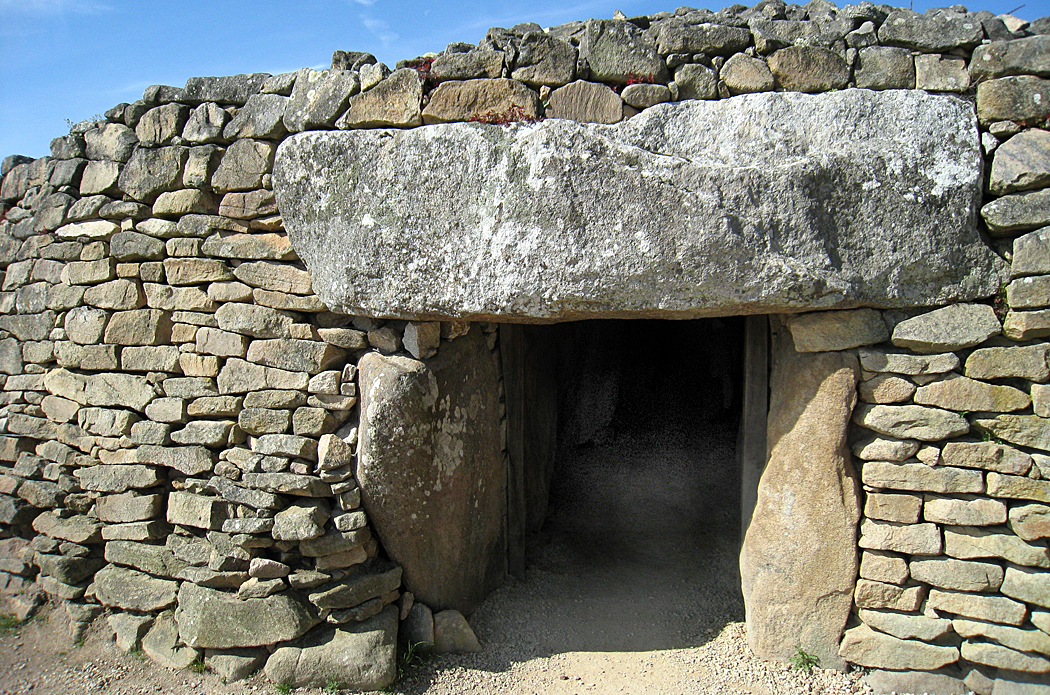
And so, yes, I’ve been to the D-Day beaches at Normandy and to the bomb craters still evident in Verdun, to the cave art along the Vézère Valley, to the paleolithic menhirs and dolmens near Locmariaquer. 

Dolmen, Locmariaquer, Brittany, France

I’ve visited the Museum of Questionable Medical Devices, the Museum of Jurassic Technology and the Hammer Museum of Haines, Alaska. 

And it has all been an education. I certainly learned that the omelet I get at Denny’s is a pale mutilation of the rich, creamy offering you can find at any neighborhood cafe in Paris. 

O’Keeffe Country, New Mexico

Of course, I’ve also learned how little of the world I’ve actually seen. I have so much of the non-European inflected planet yet to see, although, at my age, it’s almost certain I will never get to Japan or the Seychelles or Samoa. Just as, no matter how many books I’ve read, there is always a hundred times more books I will never get to read, and not enough time left even to put a dent in that list. I keep trying. 

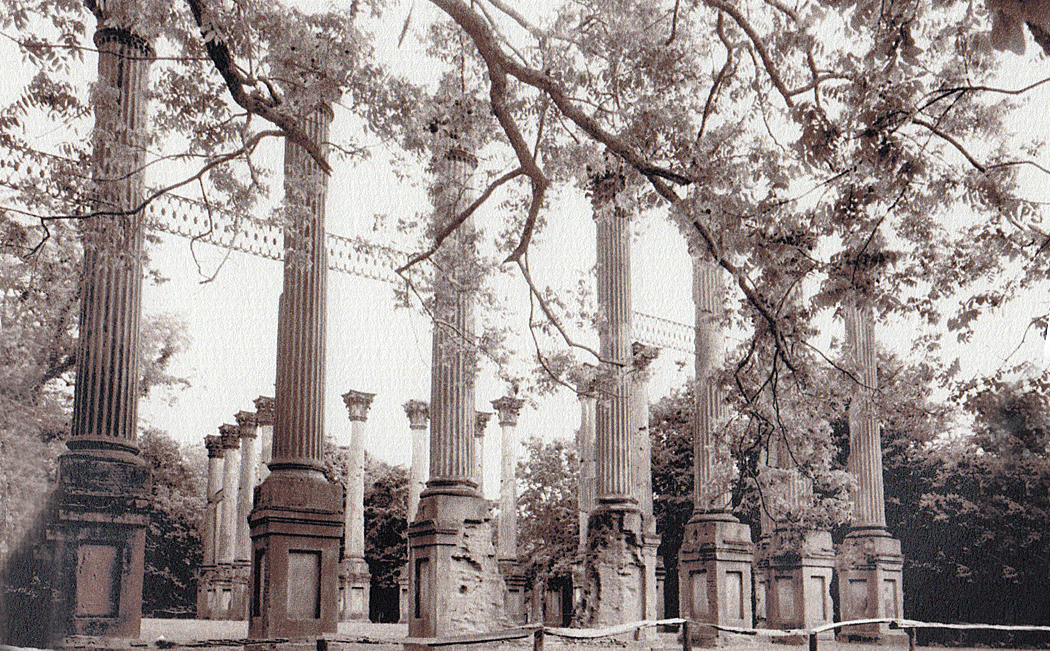
Windsor Ruins, Mississippi

And so, in addition to bragging about all the places I’ve been, I am shamed by all those places I have not gone to, just as all the art I haven’t seen, all the books I haven’t read, all the music I have never heard. But I think that it is only because of all I have read, seen, and heard, that I know enough to feel the gaping holes in my education.

I got a call from Stuart last night. We don’t see each other in person as much as we used to, partly because of the virus, but mostly because we are old and long drives or flights are really hard on the knees. 

“I read your piece on threes,” he said (link here), “and I had a realization. In the past, you’ve written a lot about how we are all really two people — the public person, who is just one of seven billion others and of no real significance in the big scheme of things; and the interior person, who is the hero of our own story, and therefore central in existence.”

“Yes,” I said.

“And so, that is one more binary system, like hot and cold, or tall and short, or inside and outside. Our brains seem to like to divide things into pairs of opposites. Even though, as you say, hot and cold or tall and short  are really just the same thing, relative to each other.”
“Yes, that old, who is the shortest giant or the tallest dwarf. The sunspot is a cold spot on the sun, but it is still thousands of degrees Fahrenheit.”

“I think what you said was there’s the burning end of a cigar, and the cold end, but there’s really only one cigar.”

“Yes,” I acknowledged that I once said something of the sort — my gloss on the Tao. 

“But, I realized the experience of being alive can equally be seen as  made up of three parts,” Stuart said. “The experience, I say — the way we experience our lives.

“In the old days,” he continued, “we would call those three things ‘Man,’ ‘Nature,’ and ‘Soul,’ but those terms are freighted with religion and gender bias. I don’t like them. So, instead, I call them ‘humankind,’ ‘the universe,’ and  ‘the psyche.’ These three elements encompass our experience.”

“And ‘Nature’ conjures up too much flowers and trees and birds and bees,” I said. “It’s a term too cuddly for what you mean here, right?”

“Absolutely. I mean something closer to what Werner Herzog says about nature — the indifferent violence and coldness of the cosmos. 

“Let me take them one at a time,” Stuart said. “What I’m labeling as ‘Humankind’ is the societal and political mix, the way we fit into the ordering of the welter of human population. It includes such things as relationships — father and son, husband and wife, pastor and congregation, lord and serf, American and foreigner, really all of them you can name. It is what is between people. 

“This is essentially the same as your ‘just one of seven billion’ and is the public part of our existence. We are taxpayers, we are Catholics (or atheists), we are Tarheels or Mainers, we are children or senior citizens, Tory or Labor — “

“You’re getting kind of binary on me,” I said. 

“Sorry, I didn’t mean to. But these are all those interpersonal roles we have to play out daily and throughout our lives. 

“And none of any of this does the universe care a fig about. The universe is vast and operates on its own schedule and according to its own rules, none of which consider our human needs or desires. It is the universe that throws the dice as to whether we are born male or female; it is the universe that makes us work in the day and sleep at night; the universe that ends our life when it will. We think we have so much control, but in reality, we are able to nudge the universe only infinitesimally this way or that. In the last degree, the universe will do whatever it does. We don’t count.”

“It is the universe that took my Carole away from me five years ago. I had no choice.”

“Exactly,” Stuart said. “It’s something we just have to live with. The universe is an essential part of our experience of being alive and we accommodate to it. It makes no accommodation to us. 

“Then, there is the inner life we lead, as important as the other two, perhaps more important. It is not only the sense of ourselves as ourselves, but also, all the unconscious trash that we have to deal with that’s buried in the braincase, like superstition, hard-wired evolutionary neuronal structuring, the forgotten traumas of childhood that govern our choices in ways we’ll never know about, even that drive to see the world in patterns, patterns which may or may not actually be there.”

“Like constellations in the night sky,” I said. 

“Our brains force us to find patterns, it’s all part of the psyche.”

“But isn’t there some overlap in your system?” I asked. “You say, for instance, that family relationships are part of the ‘humankind’ portion of experience, but isn’t family also an archetype, a part of the built-in wiring of the psyche?” 

“In the terms I’m speaking of, I’m considering these as two separate things: the public understanding of family as a civic unit on one side; and the archetype of family as a mythic unit on the other. They may share a name, but they are very different things. There are quite a few examples of ideas that are seen differently through one of these three different lenses. There are even those who believe ‘family’ is a universal truth, although we know historically, families are constituted differently at different times in different cultures. 

“I expect you could look at most things through one of these different lenses and find quite different results. Even the ‘individual’ has a political significance that is different from its psychic significance. To say nothing of its insignificance in the wider universe.”

“But there is a significance to the universal individual,” I said. “It is the ancient problem of the one and the many. The universe may be infinite, but it is still made up of individual parts, be they people, planets, muons or quarks. Each may be observed separated from the matrix.” 

“I’m seeing it all through the psychic lens,” Stuart said. “And not through the objective lens of science. I’m talking about our experience of being alive. And looking up at the starry night sky can be understood through each of these lenses. As a societal matter, you are an astronomer in your social role, or you are a dreamer wasting time. Through the universal lens, you are an utterly insignificant speck of organic dust …”

“Or, you are the universe looking at itself.”

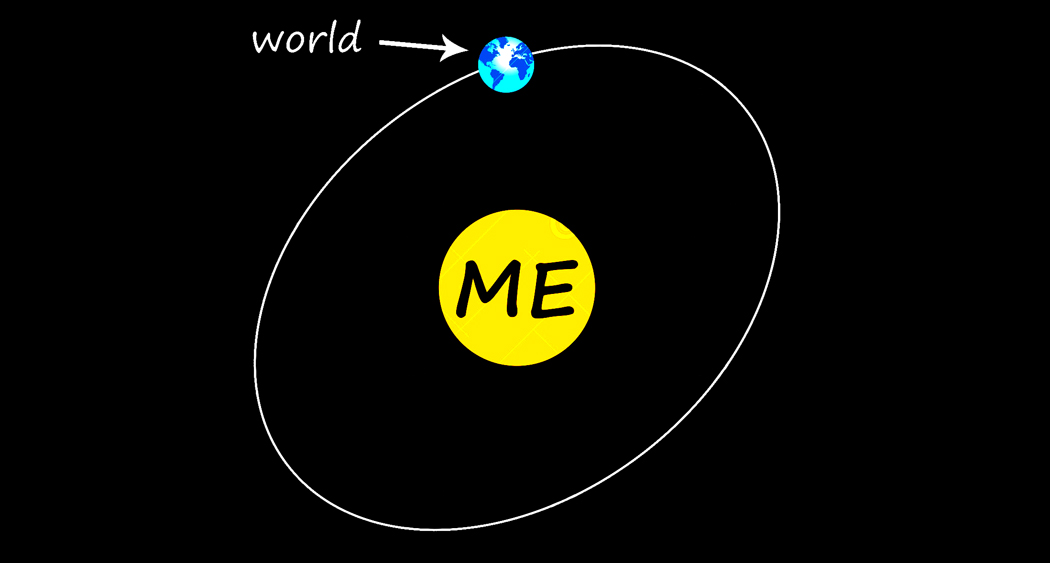
“Perhaps. But through the psychic lens, you are the center of the universe, and it all revolves around you, certainly out of your reach, but the psychic center of the universe is yourself — each of us his or her own center.”

“And you are knocked out of your ego-centered reverie, when you get a jury summons, throwing you back into the social web,” I said. “Or getting a traffic ticket, or punching in at work.”

“And getting knocked from that reverie when the universe sends you the message that arthritis is chaining up your knuckles, or that your once-new car is rusting out in its undercarriage.

“None of these three lenses is sufficient. We need them all out in our full selfhood, but they are each there, nonetheless, and can be teased out and thought about separately. I think a healthy personality keeps them all in balance. A juggling act.”

We talked about many other things, we usually do. It went on for about an hour. But this was the gist of the phone call, what I thought might be interesting to share. I miss Stuart and Genevieve in person. We had such good times. Isolation is not good. A curse on the universe for making us get old and for giving us viruses. 

I make no claim of wisdom. In fact, the older I get, the less wise I feel. But I can claim, at the age of 70, to have amassed a life of experience. I have been through a lot, from the turmoil of the 1960s, divorce, near homelessness, the death both of a brother and of my late espoused saint. I have been both unemployed and had a successful career and traveled three continents. Finally, I have grandchildren and see with trepidation into the 21st century, beyond my time here. 

And it is that last that gives me pause. If there is one regret that haunts my senescence, it is that all the experience I have lived through can never be transmitted to the twin granddaughters that I love. Sure, I can tell them things, and perhaps some of what I tell them helps. More is surely ignored — I know I ignored the importunings of my elders when I was their age. It cannot be otherwise. When I was young, I knew so much; now that I am old, I know so little. They certainly see that in me, now that they are 18, headed off to college and know so very much. 

But it isn’t advice I am talking about. I am talking about the impossibility of transferring experience. From my brain, from my heart, to theirs, of for that matter, to anyone. A whole life of accrued sensation and false step, of battering and acceptance, of the shiftings of love and the devastation of failure, the afflatus of joy and the satisfaction of doing good work, remains bottled up inside me — and inside everyone. 

I am reminded in this of the soldier back from the war, with the thousand-yard stare, who can say in words what he has been through, but can never actually share the reality of it. The horror, the horror. So many, like my own father, a veteran of World War II in Europe, never talked about it. When he was old, I tried to tease it out of him. I asked questions about his war experience, but he always deflected. I know at one point near the end of the war, that 11 German soldiers walked out of the woods to surrender to him. But as far as he was concerned, he had no part in that. It was just something that happened while he was there. He avoided ever talking about the war and when pressed, made light of it, in a way that made it clear there was little lightness about it at all. 

Things of the magnitude of war and destruction cannot be adequately talked about. You had to be there. And having been there, you never wanted to be there again, even in recollection. 

I had a similar experience when my wife died. There is no way to express the enormity of the loss, or the singularity of the experience. There were many who expressed sympathy, and I greatly appreciated those words intended to comfort. But they cannot know what it was like. Is like. In no way. The only people I could truly commune with were those who had also lost a mate. They had been through it, too. They understood. It is a kind of brotherhood. 

The actual complexity and depth, the horror and devastation of it cannot be conveyed in mere words. The experience of it is different from language. It is the biggest event in my life, and remains so a year and half later. 

In the same way, all the years that have been poured into and out of my body and my psyche can not be expressed in words that begin to touch the heart of it. Language is a parallel universe, a train out of whose windows you may watch the world pass without having the need to experience it. The real thing is bigger, inexplicable, devastating, body-filling, rich, dense, multifarious and always connected, piece to piece in a larger and larger construction, which is me. Or you. 

It is the final frustration of life that all that history buried in my mind is stuck there, doomed to die when I do. In a way, all that learning I have amassed is ultimately pointless; poof, gone. 

I am aware of the irony: I made my living as a writer, and words are my only useful tools. But no matter, I have always felt the inadequacy of those ink squiggles on the paper. 

I am reminded again of those lines in Andrew Marvell’s poem, The Garden: “The mind, that ocean where each kind/ Does straight its own resemblance find,/ Yet it creates, transcending these,/ Far other worlds, and other seas…” 

The idea being that inside us is a world actually bigger than the outer one. It takes it all in and creates even further, making connections not obvious, building from imagination “far other worlds and other seas.”

“Annihilating all that’s made/ To a green thought in a green shade.”

And it’s the “annihilating” part that digs at me. I have no fear of death — after all, I was not afraid before I was born; non-existence is a neutral state (of course, like Woody Allen, I don’t want to be there when it happens). Like Herman Melville told Nathaniel Hawthorne, “I have pretty well made up my mind to be annihilated.” But all that life, all that experience of which my cup overfloweth, will ultimately count for nil. That is the part that vexes me. 

I want to make the twins’ lives easier, happier, with less of the pain and frustration that comes to all of us. I want to impart to them the equanimity that age confers, but I cannot. No one can. All that experience is ultimately wasted in me, moiling about inside with no escape. No purpose, no benefit. It is life’s greatest frustration. And I feel it intensely.