Archive

Tag Archives: music history


pop diva troika

Listen to any pop-music diva these days, and you hear melodies spinning every which way, like the hand-held shots in an action movie, wiggling and jiggling in a way that can give you a kind of aural queasiness, seasickness for the ear, unable to find the still point of gravity.

This style of singing has become the lingua franca for such popular music venues as American Idol and The Voice. The singer hovers around the expected note without ever having to land on it any more than an Apache helicopter touches down to disgorge the troops from its inside before soaring off into the ether once again.

This was not an issue in the past, when listening to Ella Fitzgerald, Peggy Lee or Dinah Shore. Whatever vocal calisthenics they indulged in were anchored to a harmonic rock that led the music to a distinct place — usually the final perfect-authentic cadence, the great dominant-tonic resolution.

But this is gone from most contemporary pop music. I don’t want to sound like an old fogey lamenting nostalgically about a golden-age past, for after all, there were good and bad singers then as there are now. But I do want to express something genuine about the progress of popular music. And to point out that in this, it follows the same pattern as that of classical music.

In his great Harvard lectures, Leonard Bernstein talked about how the history of music is the history of seeking “newer and better ambiguities.” And these ambiguities are often (though not exclusively) harmonic.

Consider the opening of Wagner’s Tristan und Isolde, with its famous “Tristan chord.” What key is that in? You can hardly tell, it wavers so ambiguously. But a look at it over the longer stretch of the score and you can discover an overriding structure of A-minor. The music stretches the meaning of tonality, but doesn’t leave it.

Debussy and Schoenberg, in different ways, undercut the pull and power of harmonic direction, softening up the basic tonics or dominants with extra harmonics: sixths, ninths, elevenths. The reason Debussy sounds so vague is that his harmonies are vague. His melodies remain clear as a bell, but they are built on shifting sand.

In jazz, the course of things went much the same way. Listen to Louis Armstrong, or — especially — Duke Ellington, and you hear the steam locomotive drive of the harmonic motion. Ellington built some of his most powerful music on the blues changes. They are hidden under a rich palette of tone color, but they are still there, providing a solid skeleton for the music.

But, beginning with the bop musicians, the extra partials have been once again added, to build harmonies more ambiguous and malleable. Sure, underneath it all, you can still find the basic harmonies of I Got Rhythm, but over the top, Charlie Parker and Dizzy Gillespie are playing those ninths and elevenths, letting the air out of the pneumatic drill of harmonic progression. So that, nowadays, harmonies have become mere ornament for elaborate melodies. You can ornament the tunes various ways without changing the basic tune — much like you can decorate a Christmas tree in many fashions.

When Schubert wrote a song, the melodies are unforgettable in part because they are constructed on persuasive harmonies. You cannot imagine Die Fiorelle or Erlkoenig reharmonized without also losing the melody: They are no more separable than height and width in a drawing. But take any tune from Andrew Lloyd Webber and not only can it be reharmonized with no loss to the music — whatever music there is — but it is absolutely expected that an arranger will change the harmonies. They are no more than ornament to a fixed melody. What was once the structural underpinnings of song have become merely the “changes” that we deck the song out with. The powerhouse dominant-tonic motion has been gutted.

You can hardly hear them anymore. In pop music, you hear a stepwise bass motion that plays more as a simple counterpoint to the melody, rather than a solid drill sergeant bouncing the heavy tread of root position tonics and dominants.

It isn’t that the heavy tread of Schenker analysis is the only way to organize music.

But all art exists in the play between expectation and surprise. If we expect a G7 dominant to resolve into a C-major chord, then the composer can play with that expectation and withhold the resolution, to draw out our longing for the satisfaction we will get when the final C-major is achieved. You can organize a whole symphony like this: As Bruckner’s Fifth heads slowly to a solid B-flat or — most famously — Beethoven takes us from an unsettling C-minor to a triumphant C-major in his Fifth Symphony.

But if you take away that rock on which most Western music has been built, you still need something to stretch out our longing and expectation.

It must be admitted that harmony is only one way to organize music.

Pop music has left behind the principle of its birth and begun to find new — and largely non-Western ways. Western ears have not heard so much Oriental melisma since the Arabs conquered Spain. Mariah Carey is closer to a muezzin than to a big-band singer. “Just hit the damn note,” you want to scream, but, of course, her artistry is to make us wait in anticipation of the final pitch of a note. That pitch anticipation has replaced the dissonance and resolution of harmonic tune-writing.

One style is not better than another. And I don’t mean to sound like I’m prescribing a return to the past.

But it is important to know what we have lost. The glory of 250 years of Western music is its unique experiment with harmony. We have tossed it away like a used candy wrapper.

carmen death

Opera has an ABC. They are Aida, Boheme and Carmen. No regional opera company ever went broke programming these blockbusters. They are all extremely popular and well-known.

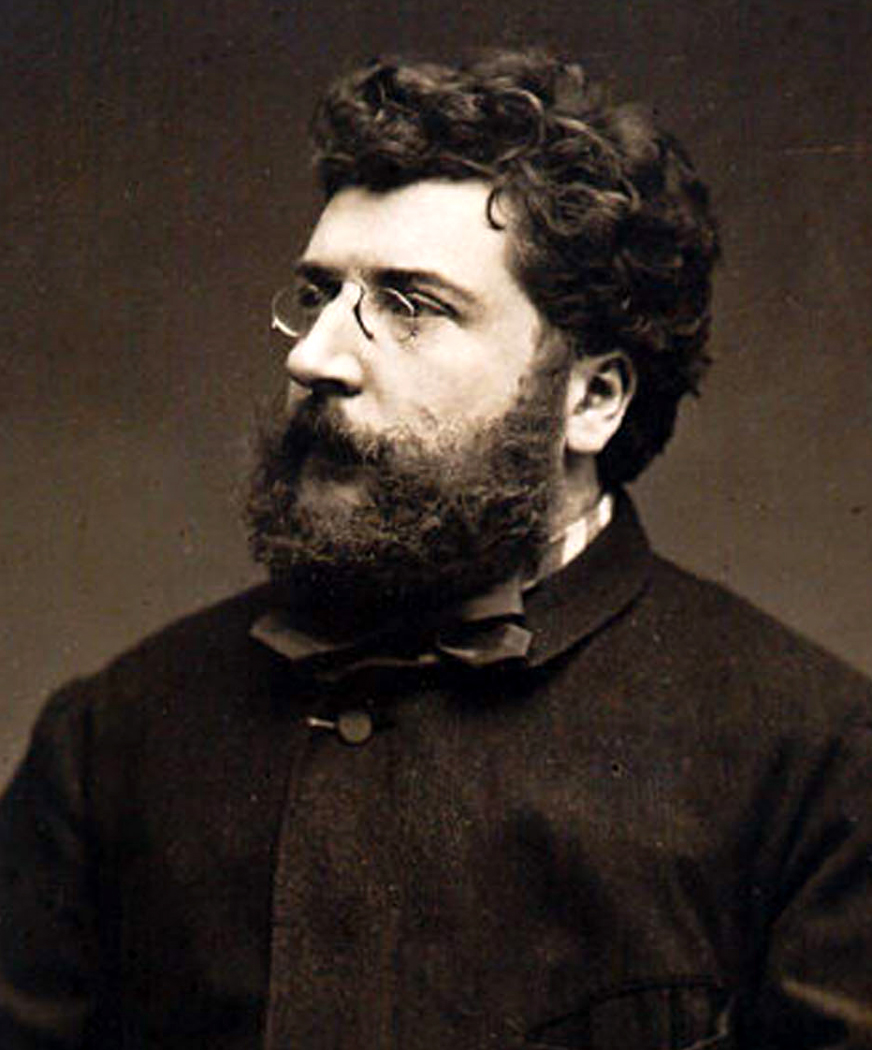
Georges Bizet

Georges Bizet

Carmen, especially. Perhaps too well known.

We all know that the gypsy Carmen seduces the not-too-bright army corporal, Don Jose, and then dumps him for the flashy matador Escamillo. Death ensues while crowds cheer in the bull ring.

We hum along with the tunes: the habanera, the toreador song, the boys mocking the soldiers and their tune. The suite from the score was once one of the most programmed pieces of light classical music, rivaling Tchaikovsky’s Nutcracker Suite and Grieg’s Peer Gynt. One of Sir Thomas Beecham’s “lollipops.”

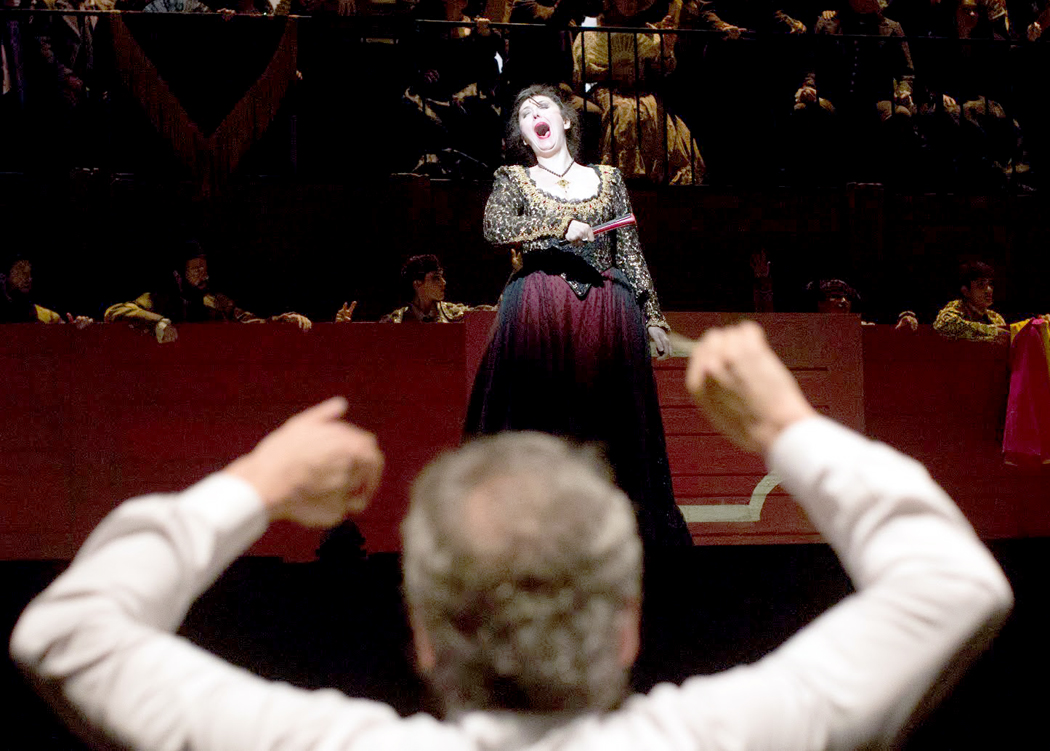
The opera comes from a novella written in 1845 by the French Romantic author Prosper Merimee. And like a movie made from a book, a few things are changed for the sake of drama.carmen conductor

Here are some things you probably don’t know about Georges Bizet’s Carmen:

1. Bizet’s librettists, Henri Meilhac and Ludovic Halevy, gave their bullfighter a major promotion. In Merimee’s book, he is not the noble matador, but a mere picador, a stripling named Lucas.habanera score

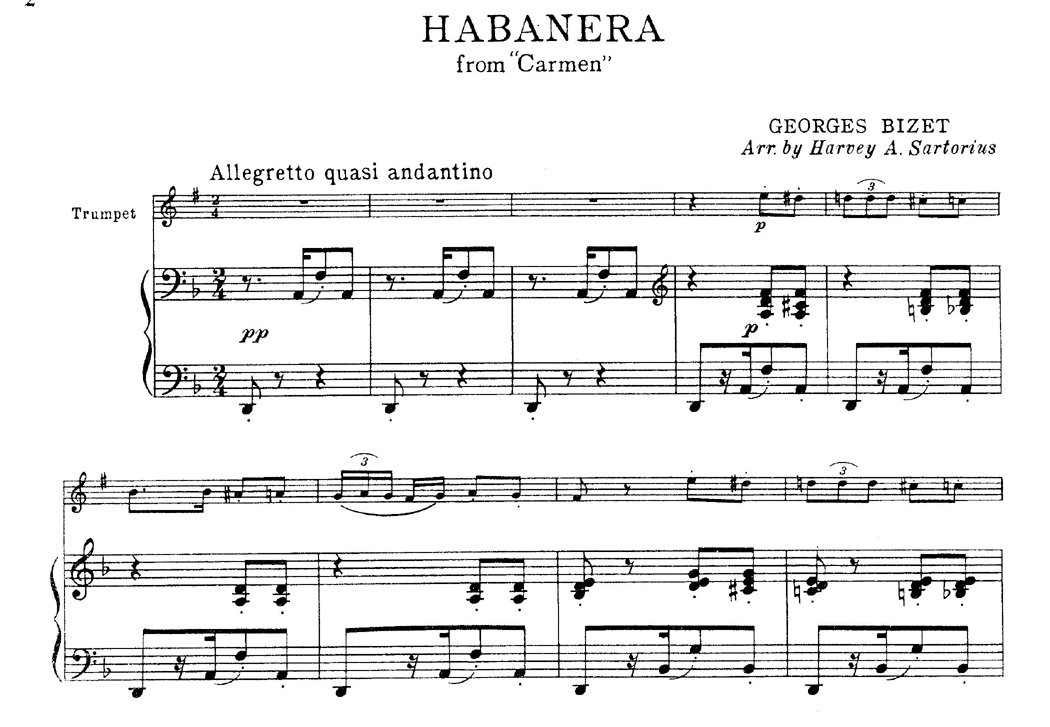
2. The famous Habanera (“L’amour est un oiseau rebelle“) was an afterthought.carmen painting

The mezzo hired to sing the part of Carmen didn’t like the aria Bizet had first written. He tried 10 times to come up with something, eventually writing the single most famous tune from the opera. Or did he? Turns out, he stole the melody from an earlier tune, called El Arreglito, by Sebastian Yradier who had only recently died. Yes, Bizet plagiarized the melody. When the score to Carmen was published, Bizet had to add a note acknowledging his source.

3. The first recording of Carmen (1908) was sung in German. “Liebe ist wie ein wilder Vogel.” Oy.

4. More than 60 films have been made of the story. Oddly, the first 17 were silent films. Silent opera is rather like dancing on the radio. That list of silent films includes one by Cecil B. DeMille, from 1915, which was based on the original novel because the producers didn’t want to pay the rights to the opera and chose the public-domain novel instead. They then changed the book’s plot to match the opera’s. Among the silent Carmens were Theda Bara (1915, directed by Raoul Walsh), Pola Negri (1918, directed by Ernst Lubitsch) and Delores Del Rio (1927, also directed by Walsh).carmen saura

5. Recent Carmens tend to stretch the story or the music. Like Beyonce in Carmen: A Hip Hopera (2001), or the 1983 Carlos Saura masterpiece, which turns it into a flamenco dance. Also on the list: Carmen on Ice (1990); Karmen Gei (2001), which sets the story in Senegal; Carmen Jones (1954), with Dorothy Dandridge and Harry Belafonte; and most recently the powerful South African township version, U-Carmen eKhayalitsha. Check it out on DVD.

Johannes and Piotr

“I have played over the music of that scoundrel Brahms,” wrote Tchaikovsky in his diary in 1886. “What a giftless bastard!”

Russian composer Pyotr Tchaikovsky had a lot to say about Brahms’ music — all bad.

Johannes Brahms, for his part, didn’t seem to much enjoy Tchaikovsky’s music, either. He attended a rehearsal for Tchaikovsky’s Fifth Symphony and fell asleep.

Although the two composers share a birthday — May 7, with Brahms, born in 1833, being seven years older — they illustrate opposite poles of the composing spectrum. Brahms was the great classicist, building vast symphonies and concertos with intricate musical logic; Tchaikovsky was the heart-on-sleeve emotionalist, as colorful as Brahms was sober.

“It angers me that this conceited mediocrity is regarded as a genius,” Tchaikovsky continued in his diary.

The quotes could fill a book. Some of his dislike seems to be envy of Brahms’ success.

“Brahms is a celebrity; I’m a nobody. And yet, without false modesty, I tell you that I consider myself superior to Brahms. So what would I say to him: If I’m an honest and truthful person, then I would have to tell him this: ‘Herr Brahms! I consider you to be a very untalented person, full of pretensions but utterly devoid of creative inspiration. I rate you very poorly and indeed I simply look down upon you.’ “

But it was really the Germanic music style he hated. About Wagner, the Russian wrote, “After the last notes of Gotterdammerung I felt as though I had been let out of prison.”

Tchaikovsky’s idea of music was simply different: color, melody, grace, direct, simple emotion. Brahms was interested in something else.

“Brahms, as a musical personality, is simply antipathetic to me — I can’t stand him. No matter how much he tries, I always remain cold and hostile. This is purely instinctive reaction,” Tchaikovsky wrote in a letter.

Of course, Tchaikovsky wasn’t the only one who failed to appreciate the charms of the German.

One writer said, “Art is long and life is short; here is evidently the explanation of a Brahms symphony.”

And composer Benjamin Britten complained, “It’s not bad Brahms I mind, it’s good Brahms I can’t stand.”

Needless to say, this is no longer the majority opinion, as Brahms and his music are almost universally loved by those who care about classical music.

One critic explained: “Tchaikovsky’s music sounds better than it is; Brahms’ music is better than it sounds.”

But Brahms’ violin concerto was a particular target for Tchaikovsky, perhaps because he had written his own concerto, which had been very poorly received (it is also now accepted as a masterpiece).

“Brahms’ concerto appealed to me as little as everything else he has written,” Tchaikovsky wrote in 1880 to his patron, Nadezhda von Meck. “Lots of preparations as it were for something, lots of hints that something is going to appear very soon and enchant you, but nothing does come out of it all, except for boredom.”

Later in the letter comes the most famous quote about Brahms.

“It is like a splendid pedestal for a column, but the actual column is missing, and instead, what comes immediately after one pedestal is simply another pedestal.”

So, it comes as a surprise that when the two composers actually met each other, they got along very well.

Adolph Brodsky

Adolph Brodsky

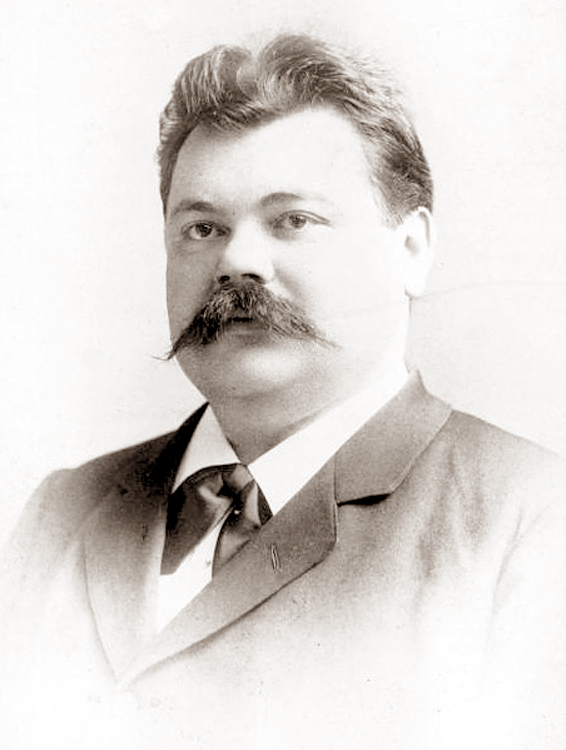
They met on New Year’s Day, 1888, when violinist Adolph Brodsky was rehearsing a Brahms trio. Brodsky had premiered Tchaikovsky’s Violin Concerto, and both composers were invited to dinner after the rehearsal.

Tchaikovsky entered the room while the music was still playing, and after dinner, they drank together and got along famously.

Brahms was doing his best to be friendly, Tchaikovsky noted, and the Russian composer found he actually liked the German, who was so different in character. Tchaikovsky was elegant and smoked fine cigarettes; Brahms was a German burger, smelled of old man and tweed, and smoked cigars, with the ash falling in his beard.

Brahms was known for his tart tongue. Once when he attended a rehearsal of one of his string quartets, he afterwards told the violist, “I liked the tempos, especially yours.”

But Brahms was genial that night at Brodsky’s home, and they drank rather a lot.

They met at least one more time and spent that night drinking as well.

“Brahms is quite a tippler,” Tchaikovsky wrote back to Russia.

Yet, the fact they could get on well together never changed his opinion of Brahms’ music.

As he left the house that night after the dinner with the Brodskys, Anna Brodsky asked him if he liked what he had heard during the rehearsal.

“Don’t be angry with me, my dear friend,” he answered, “but I did not like it.”

Do you think you know the title of this painting?

Do you think you know the title of this painting?

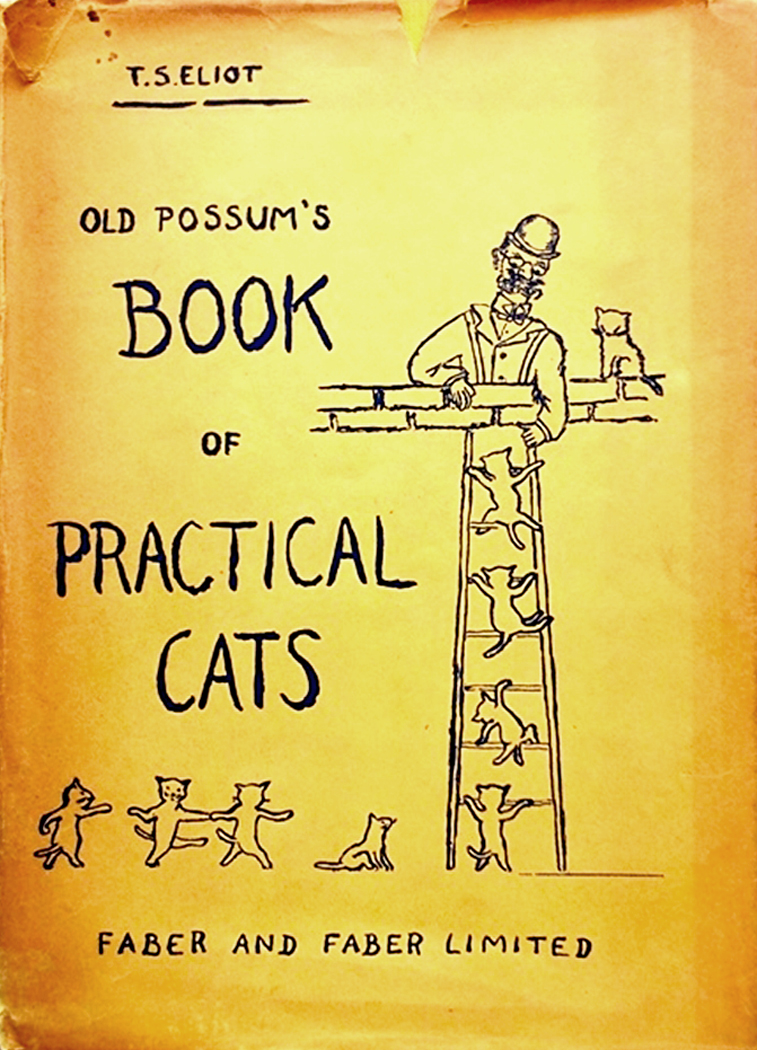
In T.S. Eliot’s Old Possum’s Book of Practical Cats, he writes, “The naming of cats is a difficult matter,/ it isn’t just one of your holiday games.old possum

“You may think at first that I’m mad as a hatter/ when I tell you a cat must have three different names.”

Of course, that book of poems went on to become the beloved and behated Broadway musical Cats, with people who should know better running around onstage dressed up in Halloween costumes as felines. The high-church Eliot probably rolled over in his grave.

But in the real world, it isn’t just cats. It’s a problem that comes up in the art world all the time: What’s the real and true name of a painting, a symphony or a poem?

When I was a working journalist, this would sometimes present a problem: Copy editors would demand the precise title of a work mentioned in a story, and they could be quite the sticklers. The Beatles’ “White Album” (by which name the entire world recognizes the double-disc album put out in 1968) is not “really” the title. So, we would have to call it The Beatles, which for most people is unhelpfully indistinct.

The world of the arts is filled with such issues over titles. It makes it sometimes quite chaotic. Of course, to live in the world of the arts requires a significant ability to endure the vague, but many people, especially engineers and editors, are as uncomfortable with the vague as Indiana Jones is uncomfortable with a snakepit.

And if engineers or biologists lived with such a level of unclarity, bridges would fall and the contents of petri dishes would infect the world.

But it is true. Titles are a frustratingly messy bogeyman.

We think of titles as being a simple issue: The painter or writer or composer gives his or her work a title, and it somehow gets registered somewhere — maybe the Library of Congress — and that’s that.

But that’s not the reality.

Consider Antonin Dvorak’s New World Symphony. Or is it the Symphony No. 9 in E-minor, op. 95, or is it Symphony No. 9, “From the New World.” Must a symphony have three different names?

Your grandparents knew it as Dvorak’s Symphony No. 5. So, where is reality?

(Before recent scholarship and a fetish for completism, Dvorak’s first four symphonies were not much played, being considered “student work”; therefore, his final symphony was his fifth. We now count the early ones and have bumped the “New World” up to No. 9.)

The problem, in part, is caused by history. History causes many problems.mona lisa

What we take today to be a hard-and-fast category — titles — turns out to be a fluid concept. When Leonardo da Vinci and Rembrandt were working, they never titled their works.

Da Vinci’s The Mona Lisa also is called La Gioconda. One of Rembrandt’s most famous paintings, The Night Watch, also is called The Shooting Company of Franz Banning Cocq and The Company of Frans Banning Cocq and Willem van Ruytenburch. So, what are their “real” titles?

Well, there aren’t any.

Such titles originally were descriptions of the paintings written for sales catalogs, most often for estate sales after the artists’ deaths. The widow pulls together all the unsold work, and someone writes down “Summer Evening” or “Young Woman With a Milk Pail.” Not titles, just short descriptions to help potential buyers tell one painting from another.

And they often have multiple titles, from subsequent sales.

It wasn’t until the 19th century that paintings or sculptures were given anything like what we now would call an official title. And even then, the artists tended to make their titles descriptive, to help gallery-goers explain to gallery representatives which paintings they were interested in buying.

The music world is even more byzantine, because there is no consensus at all on what to call a given work.

Take Beethoven’s Eroica.

When we call it that, pretty much everyone knows what we’re referring to: the symphony in E-flat, or the Third Symphony, or the Symphony No. 3 in E-flat, “Eroica.” There are a dozen other names in common usage.

What did Beethoven call it? Well, the title page of the manuscript, in Beethoven’s hand, calls it: Sinfonia eroica, composta per festeggiare il sovvenire d’un grand’uomo (“Heroic symphony, composed to celebrate the memory of a great man.” But then when it was first published, the cover page called it Symphony for Grand Orchestra in E-flat, op. 55, and the title page read something like: Symphony in E-flat for 2 flutes, 2 oboes, 2 clarinets in B flat, 2 bassoons, 3 horns in E flat, 2 trumpets in E flat and C, timpani in E flat and B flat and strings, op. 55.

It also is ascribed to “Luigi van Beethoven.” The French version calls him Louis van Beethoven.

So, what is its title?

As with the paintings, Beethoven’s original audience was comfortable with descriptions rather than titles. Any of the above sufficiently describes the symphony so it won’t be confused with anything else.

There are other problems.

Even in works that have real, official titles, we don’t always use the full version.

Brahms’ German Requiem is more properly A German Requiem, to Words of the Holy Scriptures.

This is pretty common. After all, Shakespeare’s Merchant of Venice was given the fuller title in the First Folio, The Most Excellent History of the Merchant of Venice. With the extreme cruelty of Shylock the Jew towards the said Merchant, in cutting a just pound of his flesh: and the obtaining of Portia by the choice of three chests.

Quite a mouthful.

Mozart’s Marriage of Figaro is actually titled The Marriage of Figaro, or One Crazy Day.

Which raises another problem: The title, really, is Le nozze di Figaro, ossia la folle giornata, but we commonly translate the title into English for the sake of being understood. So, Die Walkure becomes The Valkyrie, and Mondscheinsonate becomes the Moonlight Sonata, which, of course, is really the Sonata quasi una fantasia, in C-sharp minor, op. 27, No. 2, or, by another convention, Beethoven’s Sonata No. 14. Confusing enough?

Titles in translation are often changed if their original meaning might be misunderstood in the new language’s idiom, or if it comes across unidiomatically, so that Proust’s A la Recherche du temps perdu was known for years in America as “Remembrance of Things Past.” Presumably “About the Search for Lost Time” falls considerably flatter in English than in French.

Discussing such things with copy editors may or may not go anywhere: We are stuck with the whole idea that an art work or poem or piece of music could no more not have one final true title than a person could have no name on a birth certificate.

And one final thought: By far, the most popular title in art galleries is  “Untitled.”

Is that its title?

bipolarportrait

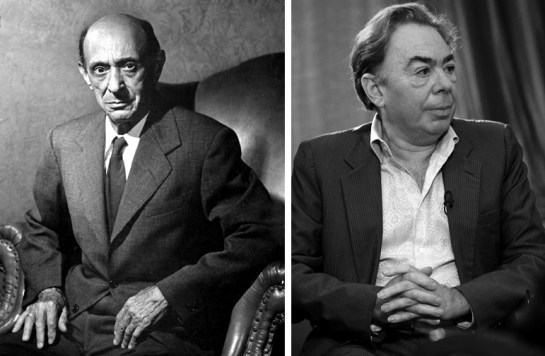
I’m going to make an argument here that will perturb any normal classical music lover: The atonal music of Arnold Schoenberg is not atonal.

Schoenberg is a whipping boy for all those who hate, just hate what happened to music in the 20th century. He is held to be the archdeacon of unlistenable cacophony. But whether you like his music, the way you might like the music of Mozart, or not, a good deal of the disapprobation that has been visited upon him is undeserved and derives from a complete misunderstanding of his music, and I would argue a misunderstanding of what is called classical music, in general. 

Some background: Arnold Schoenberg was born in Vienna in 1874, when Richard Wagner and Johannes Brahms were still alive, and the two ruled the German music world, as two poles of artistic radicalism and conservatism. Schoenberg was 8 when Wagner’s final opera, Parsifal, premiered in 1882. He was 23 when Brahms died (when Schoenberg was born, Brahms had not even written his first symphony). 

He became a composer, writing first in the arch-Romantic style that borrowed a good deal from Wagner’s chromaticism and Brahms’ idiosyncratic rhythmic complexity. He came of age in a Vienna dominated by the musical will of Gustav Mahler.

As a composer, he believed he was moving on the logical path set forward by Wagner, Brahms and Mahler, among others, a path that moved historically from diatonic to chromatic music, and then to music of indistinct tonality — which has sometimes been called atonal. His final move was to a structured composing method he felt would reimpose order in the making of music. In this, he was one of the two primary sources of Modernism in music, along with his “archenemy,” Igor Stravinsky.

(That “method” was, of course, the 12-tone, or dodecaphonic system, also called “serial” music — more of that later). 

To those ears used to hearing music with tonic and dominant harmonies in major and minor modes, Schoenberg’s later music seemed hopelessly aimless, and worse, ungrounded in traditional harmony. To them, it seemed like noise rather than music.

Setting aside questions of taste: For some of us, Schoenberg’s music is unutterably beautiful, while others may never see (or hear) past the dissonances. But as I said at the beginning, there is a serious misunderstanding of Schoenberg’s aim. 

By my definition, Schoenberg’s music — even his later 12-tone music — is not actually atonal. If I want atonal music, I must look to Andrew Lloyd Webber.

What! You say? How can that be?

I’m not being facetious: I’m making a central point about classical music.

For the sake of argument, we should say that what we call music is often broken down into three primary components: melody, rhythm and harmony. It is admittedly simplistic to make this generalization, but it has a kernel of truth to it: If we divide the world’s music up, it can be said that Asian music is given over to the primacy of melody and can consist of melodies of incredible complexity; African music respectively finds enormous complexity and expressiveness in rhythm. Yes, there is melody, harmony and rhythm in all these musics, but there is a special place given to melody in the often drone-harmonied Asian music, and a special place to rhythmic complexity on sub-Saharan African music.

But European music has placed its money on harmony. Since the Renaissance, harmony has been the most expressive, and certainly the most complex element of European music. By the 18th century, this had evolved into a system of keys and key relationships.

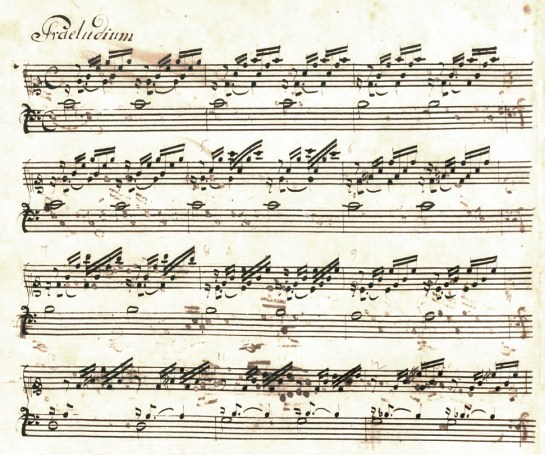
If you want a demonstration of what I mean by harmony being the central element, consider something as simple as Bach’s Prelude in C-major from the first book of the Well-Tempered Clavier. In it a simple eight-note rhythmic figure is repeated, over and over, twice to a bar, unchanged for 32 bars. That is 64 identical iterations. It serves as both melody and rhythm. The only thing that changes is the harmony, constantly shifting: It is beautifully expressive in its simplicity. 

BachPrelude

Or take a Schubert song. It would appear that the melody is what makes Schubert so can’t-get-out-of-your-head, but in fact, it is the often-wild and inventive harmonies he has underpinned them with. Try re-harmonizing any of his songs and the magic evaporates. 

Reharmonize Andrew Lloyd Webber and it hardly matters; in fact, his music is commonly reharmonized with each new arrangement, so indifferent is the harmonic underpinning. In a good deal of contemporary music (mostly pop) the harmonies are merely ornaments to the beat and tune, and can be interchanged with impunity. The “chords” are just called “changes,” and little thought is given to them, or to their interrelationships. 

This is what I consider atonal music. It may be consonant and it may all sound very pleasant, but it does nothing expressive with its harmonies and there is no coherence to key relationships. 

All music also depends on the setting up of expectations and then satisfying them or deflecting them. This is true of the changing rhythms of African drums or the melisma of the Arabian oud. 

Tension and resolution. 

In Western music, this creation of expectation and its subsequent completion falls primarily to harmony. 

The primary engine of this tension is dissonance and the primary resolution is found in the subsequent consonance. But that is only in the short term. To make a piece of art that lasts longer, requires a more sophisticated pattern: how to delay the final resolution until it comes to us like a dawn sun after a dark night. 

Consider the slow tread to C-major in Beethoven’s Fifth Symphony, where the tonal resolution comes after many short glimpses, but not in full till the finale. Or even more extreme: the way Bruckner withholds the genuine tonal resolution until the very last B-flat chord of his Fifth Symphony. 

Wagner depends on holding off that longed-for resolution; it’s what gives the Liebestod its unendurable sense of longing.

The history of Western music is the history of what Leonard Bernstein once called “newer and better ambiguities” in tonality. The thumping tonic-dominant structure of Beethoven turns eventually to the sliding chromaticism of Wagner, and later, the battering tone clusters of Stravinsky. 

You can hear the way tonality gives direction to music in something as simple as the blues. The chord changes in the blues, although they are sometimes given a little kick by adding sixths or sevenths to the basic chords, is a very simple set of chord progressions. Tonic, tonic; subdominant, tonic; dominant, tonic. Over and over. You can feel the movement at each chord change.

Classical music does that to, albeit in a more complex, subtle and varied manner. You need to feel the chords — the harmonies, change under your feet.

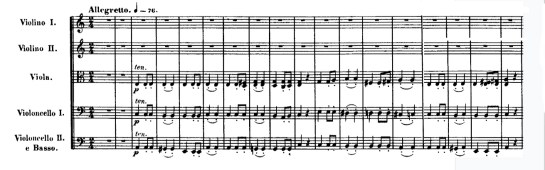
Listen to the second movement of Beethoven’s Seventh Symphony, one the most memorable and moving in his oeuvre. The melody is hardly more than a single repeated note in a repeated “Dum-ditty-dum-dum” rhythm. But the harmony changes constantly and meaningfully: It moves from A-minor and into C-major and on to B-major and B-minor before noodling back through the dominant E to the home A-minor at the end of the phrase. Beethoven keeps it alive and fresh; he keeps it interesting. 

Beethoven7

You should not only notice, you should feel the harmony. It is meant to convey emotion.

The best way to do this is to listen more to the bass line than the soprano. You’ll get the tune whether you listen especially to it or not, but listen to the bass, and you’ll hear where the music is going.

Brahms always used to cover up everything but the bass staff in a score when looking at the printed version of a new piece of music. He claimed it was the best way to tell whether the music had any lasting value. 

Of course, music isn’t just the triads on parade: It is the non-harmonic tones that give it spice. 

Dissonance is everywhere in music. You cannot have music without it. If you think Schoenberg is dissonant, you should consider Johann Sebastian Bach. He is probably the most dissonant composer of all time. Of course, there is this central distinction between his dissonance and that of Schoenberg: Bach always resolves his dissonance.

If you were to take a simple choral tune, say, “Ein feste Burg,” (“A Mighty Fortress is our God”) and play only the off beats, you would hear something as modern and dissonant as Schoenberg himself. All those passing tones, all those appoggiaturas, all those mordants and nachschlags. Most of the vertical harmony (harmony at any given moment, seen from highest note to lowest bass) in Bach is clangorous , but always resolved immediately and given a place in the key structure of the melody. 

When we are comfortable in C major or G minor, we feel comfortable also to take minor departures, in full expectation of the resurrection of harmonic order. All is right in Bach’s universe.

Schoenberg lived in a different time from Bach, a time when all was not right. It was the early 20th century, and wars, ethnic cleansing, fascism, colonialism’s evils and even the death of God made life seem less secure. For Schoenberg, tension was the order of the day, not resolution. And so, in his so-called atonal music, each cluster of tones, although the equal of any tone cluster in Bach, is not fit into a hierarchy of key, and does not anticipate its own resolution into something emotionally satisfying. 

If Wagner attempted to keep resolution at bay for minutes and quarter-hours at a time, Schoenberg keeps it at bay for entire pieces of music.

Each cluster twists in a matrix of implied tonal structure, but moves from one to the next in such an eel-like manner that no tonal structure is ever settled or constructed. We are never in D minor, although it may seem at certain instants that we are headed there.

The meaning of Schoenberg’s music, thus, depends on our ears expectation of tonality, and its meaning depends on the denial of the same. In this sense, Schoenberg’s music is still tonal, even when it avoids any key center. Even at its most radical, his music relies on our own ear’s sense of the harmonic universe in which it exists to provide “Luft von anderem Planeten:” “air from another planet.”

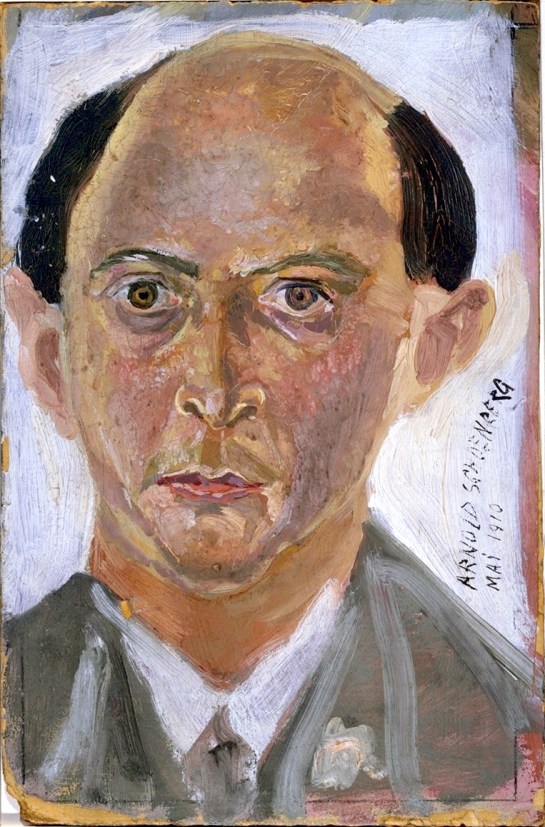
Schoenbergselfportrait

That is true even of the serial music he wrote. It’s emotional resonance depends on our placing it in an endlessly shifting tonal universe, a ball of mercury that cannot be pinned down. 

In this sense, Andrew Lloyd Webber’s music, although it is written in a key, does not depend on tonality the way Western music from Bach to Debussy did. Its tonality is mere happenstance, something unconsidered because merely habitual, something virtually unseen, or unheard by its creator. 

And hence, I claim that Schoenberg’s music is tonal, and Webber’s music is not.