Tallulah Rose

Tallulah Rose

I have an interesting “contest” going on with my granddaughter, Tallulah Rose. She is 16 and immersed in music, taking guitar, piano and banjo lessons; she has some genuine talent. When I chauffeur her around on those occasions when I am called on, and am playing some Bach or Beethoven on the car CD, she is apt to say something like, “Classical music is so boring; it all sounds the same.” And, of course, when I hear her listening to pop music on her iPad, my reaction is the mirror: Pop music is so boring; it all sounds the same. So, I scratch my head and wonder.

How can something sound so monotonous to me and not bore her to tears? How can something so varied and glorious as classical music possible sound to her as if it is all the same gluey mush? It is more than a question of taste; we are clearly hearing different things.

Most people are likely to think of this as merely a matter of taste — “I like indie rock, but she likes country,” —  and it is, to some degree — but while someone who likes Taylor Swift may say they don’t like Justin Bieber, they recognize it as merely a different genre of pop, and they wedge into their corner of sound comfort. Is there anything more insular than heavy metal?

But classical music doesn’t seem to function to Tallulah Rose as just one more Billboard magazine chart category, like soul or country-Western or hip hop. Those are all options out there for popular consumption and one chooses the category one feels most simpatico with.

But classical seems to be a different species altogether. It isn’t, for its serious listeners, just one more entertainment option. Its goals are elsewhere.

Modest Mouse

Modest Mouse

Tallulah Rose and I thought we might explore this question. She suggested an exchange. She would choose 10 pieces of pop music for me to listen to and I would choose 10 pieces of classical music for her. Tallulah Rose isn’t one of your ordinary junk-music fans: She has high standards for her music and would consider the bands she has chosen for me to be “art,” or at very least music that no one of any musical sophistication would be embarrassed to be heard listening to. She has excellent taste in her music. She picked for me music by Wilco, Vampire Weekend, Arcade Fire, Modest Mouse and Death Cab for Cutie, among others. I was to listen to her music and write about it, and she was to do the same for my choices.

What T-Rose chose for me:

1. Jesus, Etc. by Wilco
2. Australia by The Shins
3. Hannah Hunt by Vampire Weekend
4. Ragged Wood by Fleet Foxes
5. Wake Up by Arcade Fire
6. Young Folks by Peter Bjorn & John
7. Little Black Submarines by The Black Keys
8. This Charming Man by The Smiths
9. Missed the Boat by Modest Mouse
10. Dance Yrself Clean by LCD Sound System
Bonus track: Title and Registration by Death Cab for Cutie

In choosing music for her, I felt it only fair that I not bury her under the Bruckner Fifth or the Mahler Third, but try to find pieces of reasonable length, and I chose several movements instead of whole concertos or symphonies. Her music for me tends to run between 3 and 5 minutes. Here is my list for her (She snuck in an extra for me, so I added one extra Mahler track for her):

1. Gabrieli — Canzon Septimi Toni No. 2 for brass choirs
2. Bach — Prelude and Fugue in c-minor from WTC Book 1
3. Mozart — First movement of the Piano Concerto No. 20 in d-minor
4. Beethoven — Third movement from the “Tempest” sonata, Op. 31, no. 2
5. Chopin — Mazurka Op. 30, no. 4
6. Brahms — Finale of the Fourth Symphony
7. Mahler — Two songs: Wer hat das Liedlein erdacht? from Das Knaben Wunderhorn and Ging heut Morgen ubers Feld from Songs of a Wayfarer
8. Rachmaninoff — Finale from Piano Concerto No. 3
9. Villa Lobos — First movement from Bachianas Brasileiras No. 5
10. Copland — Fanfare for the Common Man

I have listened four times through to all of T-Rose’s music and I can say that none of them is musically unsophisticated, but neither can I say, outside the LCD Sound System’s Dance yrslf Clean, which actually does something with the music,  that they engage my deepest sympathies. Again, I am convinced that my music and hers simply are not attempting the same thing.

For a start, her music’s appeal depends greatly on the lyrics. Even when I read rock criticism in, say Rolling Stone, the criticism is less about the music qua music, and more about the quality of the words. The sentiment expressed is expressed verbally, not musically. (More on lyrics later).

Second, the parts of music that seem most treasured by the rock and pop listener is a consistent beat, often aggressively propulsive. Following that, it is a melody — although in contemporary pop music, melody sounds more like chant than tune — prosody is so slipshod that the same melodic note can sustain a single syllable or three or four, if that is what the words demand.

Johannes Brahms

Johannes Brahms

For my classically oriented ear, the unrelenting rhythm is monotonous; I keep hoping it will lead to something, but it doesn’t. For my ear, harmony is paramount. I am always aware of it, shifting from major to minor, or to a Phrygian mode or the endless unresolved but constantly yearning dissonances of atonal or serial music. I am always aware — more than the melody at the top of the orchestral heap — of the bass line. I remember Brahms saying when he got a new piece of music to look at, he’d cover up the top staves and look at the bass line. That way, he said, he could tell if the music was good or not. When I listen to popular music, the bass line is generally undistinguished, often repetitive, and rather more in the way of a continuo — a second reinforcement of the beat slammed out by the drums and cymbals.

When I say her music and mine are not doing the same thing, I mean, in part, that the music part of her music is meant to be a place to drop her head into for a few minutes, to grok on a pulse, while the verbal part is there to express, often elliptically, the concerns of a young mind. At worst, in the kind of pop music T-Rose wouldn’t be caught dead listening to, those concerns are numbingly conventional, but even the more sophisticated lyrics speak to the exaggerated optimism or cynicism of adolescence, the need to be appreciated as wise and knowing, even when those of us who have been through it already, now recognize those attitudes as pose.

angry young men

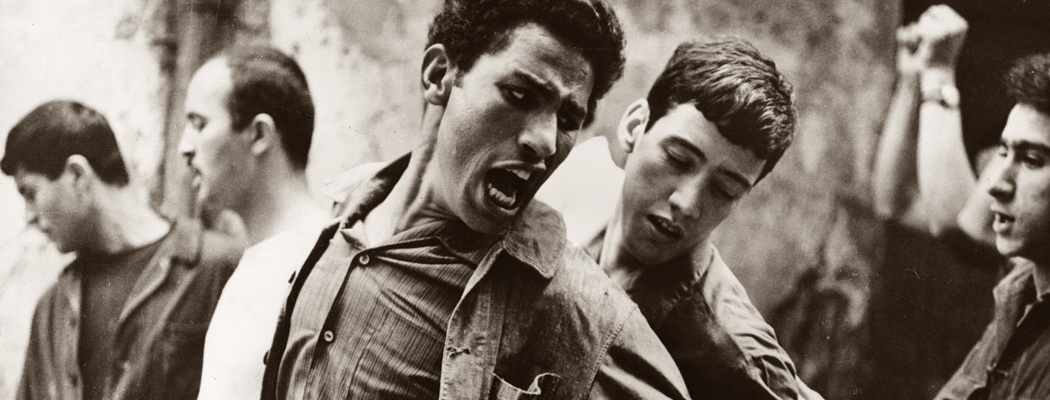
Slight digression: The question of pose is most obvious in the many band photos used for PR or for CD covers. The musicians look so serious and world-wise: You can’t put anything over on them. But you can run through hundreds of photos and they all seem to be the same people: surly faces, collars drawn up, hands in their pockets standing in a warehouse district street to prove their working-class origins. One can’t help recognize the same memes from the Angry Young Men of England in the 1950s and ’60s. It’s as if every band has seen photos of John Osborne and wants to be Richard Burton from Look Back in Anger or Tom Courtney from Loneliness of the Long Distance Runner. The straight-jacket of the meme is limiting.

Vampire Weekend: More hands in pockets

Vampire Weekend: More hands in pockets

Back to the main issue: The music of rock and pop seems meant to create a pervasive mood throughout the length of a song — and except for a few experiments, all this music falls into the 3 to 5 minute song form.

Classical music, on the other hand, revels in contrast: The tempos keep changing, vigorous first themes alternate with quiet second themes. An established key center is disrupted by a series of wrenching modulations only to be reaffirmed. Instead of a single simple emotion, there is a constant development of emotions. When I find T-Rose’s music boring, what I mean is it doesn’t grow — but then, it’s not meant to. And one of the things she finds boring in my music is that it never settles down into something she can depend on, to give her that one single, clear emotion she wants from her tune.

Another thing: For her music, as I said, the words are paramount. The music behind the words seems to function more like the music in a film: to underline the sentiment, but not to express it directly. Something interesting to hear while the “real” action is happening in the words. For my music — at least for the big 19th century pieces that make up the bulk of the repertoire — the music attempts to make an argument from start to finish, like the slow shift from c-minor to C major in Beethoven’s Fifth, or the chapters of Mahler’s Third, “What the fields tell me,” “What the birds tell me,” “What love tells me.” It works like an opera, telling a story — musically — from start to finish. To hear its meaning, you have to be aurally sensitive to changes in harmony, in orchestration, in dynamics, in the ways the themes change and grow. The way you hear the E-flat arpeggiated tune at the beginning of the Eroica changes from a closed-off, harmony-denying drop to its D-flat in the third bar to that bright, victorious arpeggio in the recap and coda, where the same tune ends on the upper B-flat dominant that seems to rise above all the violence and disaster of the previously heard music. Classical music is about development; pop music seems to be about stasis.

Arcade Fire: yet again -- hands in pockets

Arcade Fire: yet again — hands in pockets

I write as if I think classical music is superior to pop music — and I would be lying if I didn’t fess up to that prejudice — but that is not what I’m writing about here. Rather than argue that one music is superior, I’m saying their goals are so different, so at odds, that it is almost silly to compare them at all. One might as well compare apples to double-entry bookkeeping.

But I wanted to note something interesting about the words in the music T-Rose gave me.

The conventions of prosody have shifted dramatically. In the “old days” — as recently as the Beatles — words were written as poetry and scanned with regular meter, and carefully crafted to fit the tunes. In this, Paul McCartney and John Lennon were no different from Oscar Hammerstein II. Think of such lyrics as, “I once had a girl, or should I say, she once had me.” Every accented word drops on every accented note, with the weaker beats hitting off-beats in the tune. A comfortable fit. The same with “Some enchanted evening,” or “I’m gonna wash that man right outa my hair.”

“Blackbird singing in the dead of night…” or “You should see Polythene Pam, she’s so good lookin’ she looks like a man.”

Even the Rolling Stones followed the conventions: “I see the girls walk by dressed in their summer clothes; I have to turn my head until the darkness goes.”

This is what Robert Frost would call playing tennis with a net.

Playing with the net can bring delightful surprise and pleasure. Think of, “In olden days a glimpse of stocking was looked on as something shocking, now heaven knows, anything goes.”

Words and music: Hand in glove.

But listen to the songs T-Rose gave me, and something different is happening: First, the words don’t scan; they are more like snippets of prose. Some words have a strong beat, others fit in the space between, no matter how many or how few syllables. They just cram into whatever space is left for them.

Death Cab for Cutie

Death Cab for Cutie

The song is designed around a short, repeated pattern of notes that are memorable, or are meant to be memorable. The words fill in the interstices and the music is a mortar between the word-bricks. (This method would seem to derive from the blues, with its statement and licks, but they no longer follow the 12-bar harmonic pattern of the blues).

“You’ll be damned to pining through the windowpanes,/ You know you’d trade your life for any ordinary Joe’s,/ Well do it now or grow old,/ Your nightmares only need a year or two to unfold.”

There’s no regular rhythm to the words. But over and over in these songs, I do hear a pattern, and it is a surprising “revenant” from the past: It is the pattern of Medieval English verse — the four-beat line split in half with a caesura, or pause. Like The Seafarer or Piers Ploughman, the lines come with heavy stresses counted, but unstressed syllables come willy-nilly, and always that pause in the middle.

“I looked on my left side (pause) as the lady me taught
and was aware of a woman (pause) worthily clothed.”

Think of the line by Pope: To err is human; to forgive, divine.”

Then try these lines from Ragged Wood, by Fleet Foxes:

“Come down from the mountain (pause) you have been gone too long
The spring is upon us (pause) follow my ornate song.”

If Norwegian Wood had been written by Wilco, no doubt its words would be something like: “I got a girl (pause) She had me.”

(I doubt this is in any way a conscious or even unconscious DNA reappearing in pop music from the distant past, but rather that there is something meaningful in such a line that means it can reappear like convergent evolution that makes a marsupial Dingo look like a canine. Anyway, I’m sure I’m over-analyzing that habit.)

The pattern occurs in song after song that T-Rose gave me. With this one variation. In some songs, the two-beat (pause) two-beat is followed by a closing three-beat line. The Black Keys’ Little Black Submarine:

“I should’ve seen it glow (pause) But everybody knows
That a broken heart is blind” (three beats).

(In conventional prosody, “I should’ve seen it glow” would scan at three beats — “I SHOULD have SEEN it GLOW” — but with the music under it, it has only two beats: “I SHOULD’ve seen it GLOW.”)

It’s a whole different prosody; a whole nother esthetic.

I have listened yet again to the songs on T-Rose’s list, and I can hear many interesting bits in them. I even came to think very highly of the music in Dance yrself Clean — it actually goes somewhere. But overall, I’m stuck where I began: Popular and rock music — even indie music — is too simple musically, too repetitive, too harnessed in its beat, and written with lyrics created under an esthetic that I am simply too old to be simpatico with. I can respect it, but I cannot enjoy it.

I think the same for Tallulah Rose: I believe, on her part, she has already given up on Bach and Copland. I have not heard anything from her about it.

Anton, Laura and family copy

Genealogy is buncombe.

Certainly, our family trees are interesting — at least to us (in this, they resemble dreams, fascinating to the dreamer, but please, save us from having to hear about yours).

But, beyond a few generations, already known to you, the information involved is either or both too complex to be meaningful, or too corrupt. Yes, perhaps you can trace your line back to Charlemagne, but such a lineage is close to meaningless.

Take the complexity first. Genetically speaking, you have two parents, four grandparents, eight great-grandparents, sixteen great-great-grandparents. Each generation doubles the number of genetic strands in your makeup. Generationally, it goes 1 (you) -2 (parents) -4 (grandparents) -8 (etc.) -16 -32 -64 -128 -264 -528 -1056. Each generation doubling its number of ancestors. So, trying to follow just a single one — one that perhaps takes you back to Charlemagne — ignores all the others, whose influence is quantitatively the same.genealogy fan chart

Not to forget that not only do you have, say, 128 great-great-great-great-great-grandparents, but each and every one of them also had 128 great-great-great-great-great-grandparents. That is more than 16,000 people dumping DNA into your genome. How complete do you want that family tree when you sign on to Ancestry.com? How complete is possible?

At best, you can have only a very partial sense of your family background. And that is only one side of the problem. The other side is human nature.

We ran into this when my wife’s brother signed up for one of those y-DNA tests. Such a test follows the haplogroup of paternal lineage up through the generations, seemingly all the way back to its African origins. With random mutations along the way to give a sort of timeclock to the changes, a sense of where a certain male lineage was at a certain epoch is roughly possible. But that is only a line through father and father’s father and father’s father’s father, etc.

When we got back the result of my brother-in-law’s test results, we discovered that his (and by extension, my wife’s) paternal lineage came from County Cork in Ireland. (Before that, through Sardinia, the Middle East and back to Africa). The test also gave us the names of other people who had taken the test and found matches between them and brother-in-law. His name is Steele, and there are several Steeles named. But most of them are Driscoll, not Steele. My wife was puzzled. Most of those Driscolls still live in Ireland.

A little cogitation and the lightbulb goes on. Somewhere up the line, a woman had a child out of wedlock. Either she was married to a Steele and had committed adultery, or she was born a Steele and was a single mother, or had a baby out of wedlock and later married a Steele and her son was adopted. Somewhere back in history, the Steele patrimony was hijacked. A son bore the Steele name, but the y-chromosome of a Driscoll.

Did that young Steele boy know his real father was a Driscoll? Did his mother ever tell her husband who the father of her son was? We don’t know. Any version is just a story we make up. But the logic of the genes is clear: At some point the surname Steele was carried by a man not born to a Steele.

genealogyOne has to imagine that this sort of thing happens all the time. Human nature being what it is, fatherhood is always a matter of convention and convenience. The actual line of DNA is uncertain.

Modern tests can give us some minute part of the information about where we came from, but whatever pride we might wish to feel about being related to royalty or fame is diluted to the point of meaninglessness by the admixture of everyone else who has gotten into the act. And the line we might trace out on a family tree only follows the surnames and marriage registers — the reality may be genetically hidden from us by some usurper as the randiness of human sexuality is taken into account. So, perhaps Charlemagne isn’t really your great-great-great etc., perhaps it was his groom, perhaps it was hundreds of years later that someone cheated and split surname from genome leaving you barking up the wrong family tree.Laura Nilsen 2

History is such an uncertain thing. My entire family, as far as we can trace it back, is Norwegian (with one Swede thrown in for good measure). Perhaps I am related to Erik the Red (or to Harald Bluetooth, or Ivar the Boneless — I love these old names). But any pride I might want to feel about a presumed Viking ancestry must balanced against the likelihood that somewhere unknown to me, there is an interloper in the family tree. Perhaps there is a Sicilian (Vikings conquered Sicily first in 860 and then again in 1038, first under Bjorn Ironside and then under Harald Hard-ass). So, who knows?

But more directly, every Norwegian I know in my family, going back as far as our records go, was as tame and toothless as any Norwegian bachelor farmer. My recent ancestors are the single most boring group of people ever assembled in a room to drink coffee and mutter quietly about drivel. Viking ancestry? No trace remains.Anton Nilsen 2

The whole point about genetics is that it is a crap shoot. You never know what you’re going to get. Bits of DNA might make it through the centuries and might give you the hazel eyes you bear, but most of the DNA of those thousands of copulations that ended in your ultimate birth have been filtered out, remixed and gummed up.

I can see the interest in plotting that family tree back three or four generations. Beyond that, it seems meaningless. I knew my great-grand uncle on my father’s side, and I knew my grandmother’s mother-in-law. They lived just long enough to be a sliver of my memory. Beyond that it is only a few names in a family Bible. Beyond that, all swallowed up in the forgetfulness of the grave.

bonneville broadbent ford davies

My wife and I watch a lot of British TV. Mostly crime, mystery and cop shows. The English have a different view of such things. If you watch American television, crime consists almost entirely of serial killers, terrorists and drug lords. The stereotypes come faster and more furious than naked blondes on Game of Thrones. As for the cops who battle them, there is a rather disproportionately frequent appearance of FBI profilers and clairvoyants, to say nothing of Asberger-spectrum inhabitants.

The American version tends to focus on action and violence, where the British tends to focus on character and the effects of crime on the rest of us.

"Inspector George Gently"

“Inspector George Gently”

Simon Callow

Simon Callow

But there is one aspect of British TV that gives me no end of pleasure and it is something beyond plot, character, dialog or camera angle. England is roughly the size of North Carolina; it has approximately one-sixth of the population of the U.S., and by extension, fewer actors to draw on for TV dramas. In fact, by our count, there are only 79 actors in all of England, which means they show up over and over again. Over time, we see them over and over in many roles, and we watch them over the years as they age.

Take the face we see at the head of this blog. You see him move from strapping adult, to senescence and to old age. Wait — that’s not the same actor: It’s Hugh Bonneville, Jim Broadbent and Oliver Ford Davies. I think. The same weak chin, thin lips, broad pate and pudgy little nose. Come to think of it, have you ever seen any two of them in the same production? Perhaps they really are the same person.

Annabelle Apsion

Annabelle Apsion

Coming to recognize British actors is one of the subtle joys of watching British TV shows. There are the British superstars, and they don’t do that much TV. There is Helen Mirren, for instance. But she made Prime Suspect for Granada TV. There are Ian McKellan and Derek Jacobi. You would never expect them to do TV. But there they are camping it up as two aging queens in Vicious. Jacobi is also in the BBC series, Last Tango in Halifax. Of course, most Americans first came to know him in I, Claudius.

British actors have always seemed more willing to take on television series. Dame Judith Dench, Oscar and Tony award winner and stalwart of Shakespearean stage, did not believe it beneath her to take on episodic TV in A Fine Romance and As Time Goes By.

The actors who show up in Harry Potter are also the ones who show up at the Royal Shakespeare company and on half-hour sitcoms, like Vicious. English actors seem very like they will take on any job that needs doing.

Malcolm Storry

Malcolm Storry

But the actors I find most interesting in this context are the lesser-known character actors who show up over and over — actors such as Roger Allam, David Ryall, Malcolm Storry or Clare Holman. They will have a featured role one week on one series, and a bit part the next. There are some who always play the same part, like Simon Callow with his perennially supercilious air, who can be plugged into any plot where needed, the way the great Hollywood character actors of the 1930s, and liven up any scene they are in (think of Eric Blore, Donald Meek, S.Z. “Cuddles” Sakall or James Gleason.) Then there are those who can be an Oxford don in one show, and a Yorkshire farmer in another. Sometimes we are astonished by the transformation.

David Troughtman

David Troughton

It’s hard to believe that the threatening thug Ricky Hanson from New Tricks is the same David Troughton as the sensitive and thoughtful gardener from the mild comedy, The Cafe.

Often, when we watch, we can’t recall the name of the actor, but our faces light up and my wife will point and say, “Isn’t he the same guy that was the Vicar in that episode of Midsomer Murders?” Yes, he was, and it was likely to be Richard Briers or David Ryall.

Still, after all these years of buying DVDs from Amazon.UK (we have an all-region DVD player — which I recommend to one and all), finding things on Netflix and on Acorn, and seeing them on PBS, we have come to know many of these role players by name. Phyllida Law, Alison Steadman, Peter Davison, Gemma Jones, Alun Armstrong, Philip Jackson,

Celia Imrie

Celia Imrie

Annabelle Apsion, Celia Imrie, Julie Graham, John Shrapnel, Anthony Bate, Sorcha Cusack. I might be able to name all 79 by now. That includes all the Foxes (Edward, James, Freddie, Emilia and Laurence) and the Weeks (Honeysuckle, Rollo and Perdita).

I think our interest in these actors began with a single source, a fountain of tremendous English character actors, who we see over an over and over, and keep track of their careers. That single source is The Singing Detective, which first aired in 1986 and remains one of the greatest TV series ever. If you haven’t watched it, I suggest you stop reading this immediately and go out and find a copy.

The Singing Detective is a postmodern concatenation of a pulp private eye story; a ride through a debilitating skin illness; and the raw guilt of a childhood crime, filtered through the unstable mind of our protagonist, the writer Philip Marlowe, played by Michael Gambon. But most importantly, here, the cast was filled by the actors we have come to know so well: Patrick Malahide, Gerard Horan, Leslie French, Ron Cook, Jim Carter, Janet Henfrey, Bill Paterson, Charles Simon, Simon Chandler.

Simon Chandler

Simon Chandler

Let’s take Chandler for example. He played the ultra-Christian doctor in Singing Detective, forcing the medical ward patients to sing banal hymn tunes of a Sunday. But we have since seen him in: Wallander, Vera, Midsomer Murders (twice, in different parts, separated by nine years), Judge John Deed, Foyle’s War, The Inspector Lynley Mysteries, The Ruth Rendell Mysteries, Silent Witness, and Bergerac. He has also been in movies and dozens of other TV shows that we haven’t seen.

Patrick Malahide

Patrick Malahide

Malahide plays the “villain” in Singing Detective, and he does so dripping with insinuations and venom — so successfully that when he later took the lead part in The Inspector Alleyn Mysteries, he was simply not believable as a “good guy.” He embodied his vileness so well, in voice, aspect and posture, that the perfect villain became a smarmy hero (the series didn’t last). (American viewers may know Malahide for playing Lord Balon Greyjoy in Game of Thrones).

We have watched these actors grow old. Take Gerard Horan, from Singing Detective. In that series, he was a young thief in the hospital visited in the night by the beat cop played by Malcolm Storry. Horan has been in most of the regular cop shows, even later, playing a cop in Kingdom, and a firefighter in London’s Burning. Horan, once svelte and fit, has swelled up to his manly form over the years.

Gerard Horan

Gerard Horan

You can marvel at the change in John Nettles from his earlier series, Bergerac, where he is athletic and dashing, and his later work in Midsomer Murders, where he is barrel-chested, middle-aged and let’s his detective sergeant do all the chasing down of escaping baddies.

John Nettles, "Bergerac" and "Midsomer Murders"

John Nettles, “Bergerac” and “Midsomer Murders”

We have particularly enjoyed the rise of Jim Carter from the forlorn and bereft father in Singing Detective, to the butler Carson on Downton Abbey. He is always a joy.

While we enjoy all the British TV we have seen, from comedies such as The Fall and Rise of Reginald Perrin and Miranda, to the dramas  and dramadies, like Doc Martin and All Creatures Great and Small, the bulk of our TV time is spent with detective shows.

Helen Mirren and David Ryall in "Prime Suspect"

Helen Mirren and David Ryall in “Prime Suspect”

As a connoisseur of such things, I will say they fall into several grades. There are the truly lightweight ones, such as Father Brown and Pie in the Sky. There are those which are completely middlebrow and are perhaps the British equivalent of Matlock, such as Midsomer Murders. There are the best of them, headed by Inspector Morse and its sequel, Lewis, and one of the best and most thoughtful, Foyle’s War.  And there is at least one that transcends mere TV: Prime Suspect.poirot

They are also divided by running time. The hour-long series (really, 50 minutes) can only comfortably handle the crime and the solution, with a limited cast of suspects. The longer version (90 minutes to 2 hours) can fill out the drama with subsidiary characters, more complex solutions and a good deal more context. (You see the difference, for instance, between the early Poirots and the later ones, expanded out and filled with more interesting atmosphere.)

Then, there is the divide between the “nice” ones and the grittier ones. There are the “cozy” mysteries, where someone is found dead in the conservatory, and the detective brings all the suspects together at the end and points the finger at the true culprit. Agatha Christie was the master of the genre, and you find that formula in Poirot and Miss Marple. But you find it also in the more recent Death in Paradise, set in the Caribbean.

"A Touch of Frost"

“A Touch of Frost”

The nice ones tend to be set in the British (or Scottish, or Welsh) countryside, like Midsomer Murders or Rosemary and Thyme. The crimes may be gruesome enough, but we usually don’t see the actual acts of murder; more often, a body is found, setting off the story). The grittier ones are usually set in cities, like Prime Suspect, A Touch of Frost or Inspector George Gently. (There is a recent tendency for English TV to begin emulating their American cousins. Luther can be quite violent, and there is an English version of Law and Order.)

It must be possible to spread these series out, like a spectrum, from the strongest to the blandest. Each has its pleasures and its virtues — some more than others. On the way, you gather a good deal of insight into the British law enforcement and legal system, class differences, and the regional accents and customs of Great Britain. And you will learn the names of all 79 English actors.

Big Baby

I have slighted a good deal of the state in these writings. So much is left out. I have barely mentioned the Navajo Reservation, an area the size of West Virginia. I have loved visiting the Rez, and the Hopi Reservation swallowed Jonah-like inside it. I have left out huge chunks of Arizona that I love and remember well: I scarcely nodded to Tucson, Aravaipa Canyon, Fort Huachuca, the Petrified Forest, Painted Desert, Payson, Showlow, the Mogollon Rim — the list is too long to number here. All of it fascinating either for its geology, its history, its development, its politics, its beauty or its characteristic ugliness. Whatever it is that makes it memorable.

Little Colorado River, Holbrook

Little Colorado River, Holbrook

I feel bad for not being able to squeeze it all in.

Cottonwood bark

I began in Phoenix, drove south then southeast; then up north and across Interstate 40, making a grand spiral. If I followed that logic, this entry should begin at Hoover Dam and continue on a plumb line south to Yuma, where the excursion should end. But I have left out the middle portion of the state so far. And I should like to be able to mention such prodigies as the pile of rocks at Granite Dells, the prehistoric ruins at Tuzigoot, the Verde River valley and the sliding town of Jerome.

Jerome

Jerome

This imaginary roadtrip began because I was feeling homesick for the state I left four years ago. I have seen its distances in dreams, when I wake and only half-remember that my eyes now open in the Blue Ridge Mountains of North Carolina. (When I lived in Phoenix, I often had this same homesickness for the Eastern forests and hills). The fact is, I want to engulf it all, sweep it all into my innards and swallow the map whole: I have loved travel more than anything in my six decades and eight years.

Verde River

Verde River

So, I finally recall the dusty streets of Kingman, the old road through Oatman, and the wastage south, through Spring Break Gomorrah (Lake Havasu City), and on to the remains of the internment camp at Poston, with its memorial (although more moving are the stumps of concrete foundations you can find throughout the area, where the barracks used to be that warehoused Japanese Americans), and Poston’s irrigation and farmland, all on the Indian reservation.

Poston

Poston

South of that, you follow the Colorado River to Yuma, where you can walk across the river most times of the year and hardly get your ankles wet. The green farmland along the river, all the way down to San Luis, remind you that so much of Arizona remains agricultural.

Crazy cactus

I have loved it all, and more: It has become a part of my inner landscape. Drop me anywhere — Burro Creek Canyon, Yarnell, Mormon Lake, Old Oraibi, Gila Bend — and I will know where I am instantly. I have soaked Arizona in like a sponge.

Yuma

Yuma

But I have lit out for the territories — in my case, that is returning to my past in the Blue Ridge, among the beech and oak and ash and dogwood, where bears scavenge my garbage and a pileated woodpecker knocks the old red maple in my front yard.

Quartzsite

Quartzsite

I have lived in the four corners of the continent: born in New Jersey, schooled in North Carolina, taught in Virginia, tested in Seattle and ripened in Arizona; visited every one of the contiguous 48 states at least a half-dozen times, not counting all the Canadian provinces save Prince Edward Island, and I’ve internalized it all. Now that I am old, and driving long distances is torture on my knees, I can revisit the places I know by writing about them. I recommend the maneuver to everyone: Write — or draw, or dance, or sing — and reconnect with the life you have led, with the world you inhabit. Everything written is a new Genesis: the world is created once more, and the world needs to be reborn constantly.

Tacna

Tacna

Monument valley windows 2

We’ve all had the experience of revisiting some place that meant something to us when we were young, only to find it ruined by the passing years — the blight in tract homes where there had been woods we played in; the proliferation of 7-Elevens or Starbucks; the widening of roads we had ridden our bikes down and the concomitant soot-spewing storm of traffic. The divided-highway bypass and the Walmart near the exit. Time has not been good to the landscape we knew.

But I have always thought, there must be someone of a generation previous who looked at the landscape I bicycled down and thought, how much better it had been when the road was gravel and there were no houses — including the one I grew up in — lining that road.

The fact is, time is furious and eats up the land just as it eats up the remaining years of my life. “Panta Horein” said the Greek philosopher Heraclitus: “Everything changes.” Doubtless, there was someone before my elder who loved the same land when there was nothing but a footpath through the forest and thought it better for all that.

And no doubt there will be some future progeny who will look at the scene some 50 years hence and lament the loss of those same 7-Elevens, replaced by something even crasser and more demoralizing. To them, the land I now lament will have been Eden.

Holbrook, Arizona

Holbrook, Arizona

Too often we think of the land as something permanent through which plays the impermanence of our comings and goings — a static stage set for our dramas. Its pace may be slower than ours, but the land changes, also; it has its own drama. I particularly love to see the scars of those changes, the evidence of what used to be, the peeping out from under the macadam of the buried eyes of the past.

Along old 66 Signs and storm

One of the prizes I have is a Rand-McNally road atlas from the year I was born (1948). The map of Arizona has no interstates on it, and you can see that the very getting from Phoenix to Flagstaff was a detour, driving first through Wickenburg and up to Prescott before either heading north to Ash Fork and then east on U.S. 66 to Flag, or taking the more mountainous route up Alternate 89 over Mingus Mountain, down to the Verde Valley and then up the hill through Sedona and up the face of the Mogollon Rim to your destination.

Along old 66 Tumbleweed

Of course, there was a more direct route, through Dugas and Camp Verde, but the road was mostly dirt and rutted.

The thing is, that if you look for them, all those ruts are still there. You can, if you wish, and if your car is sturdy enough, drive those roads up through Bumble Bee, through Orme, through Skull Valley, Iron Springs or Happy Jack. Like Schliemann digging down through layers of Troy, the archeology of Arizona is there — or its fossils are.

West of Kingman

West of Kingman

All of which brings me to the slice of Arizona across its northern tier, now defined by Interstate 40. The interstate ate up what used to be U.S. 66 — Route 66 of legend — and takes the speediferous driver across the flatter parts of the Colorado Plateau, up through Flagstaff, and down through Williams, Kingman and on to California. “You’ll see Amarillo, Gallup, New Mexico, Flagstaff, Arizona. Don’t forget Winona, Kingman, Barstow, San Bernardino…”

Along old 66 Interstate 40

But, if you get off the interstate, right at the state line in Lupton, you can find the ghost road, mostly paralleling the freeway, and you can drive along it, at a steady 45 mph, watching for potholes, and see the scars of the past dug into the dry stony soil. The road is discontinuous — you will have to get back on the interstate for an exit or so, or ride over the tide of traffic to pick up the auxiliary road on the other side, where old 66 will start again. It is a ghost of itself, and along it are a few forgotten towns, many gutted old service stations with their paint peeled, their windows blown out and their driveways split by weeds busting through.

Along old 66 Minyard Feed Store

Time is fierce, it eats everything.

I admit to a weakness for these pentimenti, for the palimpsest of time, showing through the later “improvements.” They provide a glimpse of the process, of the metamorphosis — using Ovid’s word — of the constant writhing and seething of the planet and our place as people in the ferment and bubbling.

Along old 66 sunflowers

It comes in the shorter term, such as old Route 66 being devoured by grasses and crucifers, but it also comes in longer terms, such as the Anasazi ruins of Canyon de Chelly and Betatakin, the petroglyphs of Rio Puerco in the Petrified Forest National Park.

Rio Puerco Ruins

There are remaining parts of old Route 66, running through Seligman, and it is mined constantly for nostalgia. But it isn’t that I am feeding on, but the sense of sand sifting through my fingers, of time leaving. It comes out of some chthonic well and runs past us and dissipating in an ocean of we know not where. The old road is still there, and it will be there even when there are no cars — just as the wagon ruts can still be found along the Santa Fe Trail, sunk into the grasses of Kansas.

Old 66 to Seligman

I relish all the different tickings and tockings of the various clocks running their various races.

Sliding Rock Ruins, Canyon de Chelly

Sliding Rock Ruins, Canyon de Chelly

You stand at the rim of Canyon de Chelly on the Navajo Reservation and look down to the braided stream at the bottom that scoured this great hole out of the sandstone and wonder how long it must have taken. Then you see the tiny Anasazi relics built into the walls of the rock and realize how long people have been living here, and then you see the sandstone itself an think about how much longer ago — exponentially longer — that ancient river deltas deposited the silt that later became that stone.

White House Ruins, Canyon de Chelly

White House Ruins, Canyon de Chelly

How much more do you sense these multiple time scales at this rift’s big brother, the Grand Canyon.

Marble Canyon

Marble Canyon

If you want to have the planetary feeling without racing around the globe, you can get it standing still in Arizona: with your feet planted at the edge of the Grand Canyon. In that case, you stand stock-still and let the planet do the moving.

North Rim, Grand Canyon

North Rim, Grand Canyon

The first time I saw sunrise at the Grand Canyon, my wife and I were camping on the North Rim outside the National Park. We had arrived with the naive assumption we could wander in late in the afternoon and get a room at the lodge. Or failing that, we could get a slot at the campgrounds.

The desk clerk took pity on us and explained that although they were completely booked, lodge and campground, for the foreseeable future, we could find a dirt road just outside the park that would take us to a place in the National Forest where people often camped.

It was dark by the time we got to that road, and when we turned into an open place where two or three other tents were set up, it was already night.

We slept, we dreamed, and we woke before sunrise, when the earliest glow floated in through our tent flap. And when we got out to stretch and start up the camp stove, we gasped: We were about 15 feet from the rim of the canyon. It dropped out of sight below us.

If we had pulled forward just a little farther the night before in the blackness, it would have been Thelma-and-Louise time for us. We were hard on the edge.

But more impressive, the humid late-July weather had left the entire canyon as a gigantic dish of cotton. The clouds filled in the canyon-hollow like apples in a fruit bowl. A 215-mile long fruit bowl.

The mists swirled and wisped below us, over precipices and down canyonlets, in constant motion, rising and subsiding as the new-hatched sun warmed patches of the air the mist rode upon and the breezes wafted the veils.

Grand Canyon West

Grand Canyon West

The Classical writer, Longinus, said that we enjoy the day-to-day things of our lives, but when it comes to awe, we get that only from the sublime. Hearth fires, he said, were nice, but erupting volcanoes make us consider a planet and cosmos larger than we are and well beyond our control. The sublime is beautiful, but it is also scary: It is the source of religious feeling.

You cannot avoid that at the Grand Canyon, with its stony layers of eons piled upon each other. The Canyon is a great wound in the Earth into which we can look and see its organs pulsating at a rate so slow as to make all of human history a mere blip on its EKG.

Grand Canyon

The Grand Canyon is a clock. It has a big hand and a little hand.

The little hand moves very slowly, telling the time in geologic terms. To see the hand move, you must wait millions of years.

In that time, you would see continental oceans lay down sediments and tectonic forces push those layers upward, only to be eroded by a river, like a sand pile washed by a hose.Grand View Point, Grand Canyon NP Ariz

One stands at the rim now and looks back into the past, washed away eon by eon, stratum by stratum, until one’s eye stands on the Vishnu schist, the Precambrian footings of the Canyon.

You hardly can take in the vastness of it. It is an earthly reminder of eternity, that time beyond time that turns our lives into flyspecks.

But this geological clock has a fast-moving big hand, too. And it changes all 200 miles of the Canyon second by second. It can seem to the observer like time-lapse photography in real time as the sun jumps from the horizon and changes the shadowed blacks of the deep walls to a burning cherry ruddiness and on much too quickly to the weathered indigo blueness of noon.

Cycles and epicycles, wheels inside wheels, the turning of time on itself in all its speeds.

The first time I saw the Canyon, I got there before dawn. My wife and I had arrived late the previous night and wound up camping in the Kaibab National Forest outside the park. I set our alarm clock for 4 a.m., and when we got up, it was completely dark.

We drove to the overlook at Lipan Point, and I set up my camera in the blackness, out on a rocky ledge beyond the guardrail.

The tripod barely could find purchase on the narrow outcrop, and my wife warned me about taking chances, especially by the glow of a flashlight.

A little after 4, the horizon began to appear. It was July, but it was icy cold before the sun rose. The batteries of my light meter ceased to work in the cold.

Yet it was beginning to be possible, as the far edge of the Canyon contrasted with the blue-gray of the lightening sky, to focus my lens on the ground glass of the camera. And I saw there little more than that dividing line.

But down in the bottom of the Canyon, a mile below us, there was a snaky line of a reflecting light.

Dawn, Grand Canyon

It was the river, a white tube of neon cut off here and there by the mesas and buttes below us. At times, the rope of water actually seemed brighter than the sky.

I managed to take a two- or three-minute exposure of the nearly black landscape. The glow in the sky had begun to make some of the rock texture visible, but less so to the eye than to the camera.

Dawn, Grand Canyon NP Ariz 2

Moment by moment, the scene changed, a slow crescendo of light that began where the river disappeared in the northeast until the fire broke the horizon and the first sliver of sun appeared.

What is most surprising is the quickness of the change. If you were to take a photograph once a minute over the course of a day, you hardly would have two alike.

When the sun is on the horizon, you actually can see it move. And as it rose and sank its light deeper into the Canyon, what had been a charcoal mass of rock mazes became lighted at the top ends of the rocks, like the cherry end of a cigarette in the dawn.

You could see probably scores of miles down the Canyon to the west and see the angle of the sun on the edge of the rock.

Nothing is so like the Earth waking up.

Grand Canyon NP, with shadow

Looking toward the sun, the Canyon became a receding stage set of silhouettes, each lighter and grayer as it retreated toward the sunrise. Looking away from the sun, the rock faces became increasingly red, then orange, then brick, with layers of white and green thrown in.

The Grand Canyon is grandest in the dawn. Those willing to awaken early enough stare into the clock of the day playing on the stone and see their lives moving before them. If time is a stream, as Thoreau says, at the Grand Canyon you can see its rapids. The change continues all day. On most summer days, the midday hours are the least interesting. The hazy blueness of the distant rim seems steady from about 10 a.m. to 2 or 3 p.m. But if you stare with enough commitment, you can see the changes even then as the downward angle of the sunlight twists slowly from one side of the cliffs to the other.

Grand Canyon West

Grand Canyon West

Later, when the sun’s angle lowers to day’s end, the changes accelerate once more, taking the rocks back from blue to red and into darkness.

There is no mistaking the Earth as a clock, turning with the sun as the hour marker, moving in orderly procession around the rim of the great circle we live on.

But the two clocks at the Canyon also remind of the conflicting realities of the place. On the one hand, the slow clock tells of the everlastingness of things, their physical endurance. On the other, how can you believe in reality if the same limestone that can be red at 8 a.m. can be blue by 9?

It reinforces your sense of rock-solid reality and undercuts your belief at the same time. To live in two times at once: This is the central message of all the world’s religions.

When people find spiritual meaning in the Canyon, perhaps it is these conflicting clocks more than anything else that create that sense. Certainly, the Canyon’s vast space is inspiring, but it is time that speaks of eternity and our place in it.

Snake infinityClick any image to enlarge

Miami, Arizona

Miami, Arizona

Many decades ago, when I first came through Arizona, I passed through a landscape so surreal that after I got home, I could not be sure, when I went back to my job in Virginia, that I had actually seen what I had seen: mountains and mountains of grayish-tan gravel, in a town so beaten down, so weathered, so spavined and dried out, that could not be sure that I had not dreamed the whole thing during a nap after an ill-advised meal of rarebit.

When we finally moved to Arizona, I rediscovered Miami-Claypool and it lost nothing of its Twilight Zone weirdness. To those of us not familiar with copper mining, the thought that humans could build cordilleras of utter waste — post-apocalyptic poetry — was hard to credit. Part of me wanted to live there. Nothing could possibly feel day-to-day, ordinary, or boring in such a nerve-frayed landscape.

Superior

Superior

If you drive east from Phoenix, out past Mesa, past Apache Junction, into the desert past Florence Junction and climb up into the hills, you will find a string of mining towns, mostly abandoned or dying, or hanging on by their fingernails, beginning with Superior. It was one of the locations for the 1997 Oliver Stone film, U Turn, and it feels like it could have been dreamed up by a Hollywood set designer. In 2005, a sci-fi film called Alien Invasion Arizona was filmed there. It isn’t quite a ghost town, but you could easily place a season of The Walking Dead there.

Superior Kellner Ave

Superior’s biography is like so many copper towns in Arizona part of a history that almost no one thinks about. It is an industrial history, full of smokestacks and labor disputes, and fills in the space between the six-gun Old West of popular mythology and the modern and often banal state of tourism and retirees.

Superior AZ Mission Cola

Unfortunately, it is an industry that cycles with the international market price of copper: The price plummets and Arizona mines lay off workers and shut down. If the price recovers sufficiently, the mines start up once more. Mine-worker families face an uncertain life.

Superior cliffs

Superior cliffs

The history of Arizona’s mining towns is generic. Whether it is Bisbee or Bagdad, Morenci or Globe, there is a familiar tale, altered only with variations on the tune.

For each, it begins in the 1860s or ’70s, when an army officer or a prospector picks up a rock and smiles, recognizing it as ore. Usually, they were looking for gold. Often what they got was copper. Then there is a period of individual prospecting, usually ending in bankruptcy all around. Then, financiers from New York or San Francisco add capital and mining picks up on an industrial basis. Towns spring up, usually shanty towns precariously perched on gravelly hillsides near the mines. During boom years, the towns grow. Wood is replaced by brick; large hotels are built and streets are paved.

One company buys out another until huge corporations are formed with names like Phelps Dodge  and Magma.  Ultimately they become multinationals with many interests beyond copper.

Between the wars, the underground mines are largely replaced by the great pit mines, man-made miniature Grand Canyons of ore-dig.

Morenci

Morenci

But then, after boom years and some bust years, the mines play out or are flooded or copper prices fall and the towns surrounding the mines die out.

Or, in a few cases, they persist, either as mining persists, as at Morenci, or as the towns find new purpose as tourist destinations, such as Bisbee, or county seats such as Globe.

But the past also persists, and those interested in this forgotten past of Arizona can still visit many of the best locations.

Mining hit Superior in 1870  when silver was discovered and the Silver King Mine  became one of the richest silver mines in Arizona history. But in 1912,  Boyce Thompson  bought the mine, formed Magma Copper and the area became one of the great copper mines. The smelter closed in 1971;  the mine remained in operation until 1982.  The mine has sporadically been worked since, depending on copper prices. But Superior, taking a cue from Bisbee and Jerome has tried to position itself as a tourist location. The wooing of Hollywood has been part of that resuscitation and the town has its own film board.

Hayden

Hayden

South of Superior, are mines at Mammoth and Kearny and Hayden, home to the ASARCO  smelter complex, which services several of that company’s state mines. It is rich in mining history, and union grumbling is still part of the town: One abandoned building has “Union Yes! Forever” painted on it, with one of the “Ns” in “Union” painted backward. The first parts of the plant were opened in 1912,  and now it covers 200 acres  with a smelter smokestack 1,000 feet  tall. Nearby Winkelman  and Kearny  are worth seeing, also, and the now-closed San Manuel  mine is several miles south near Mammoth.  The tell-tale tailings ridges run for miles.

ASARCO’s big open pit Ray Mine is 22 miles  south of Superior on Arizona 177.  The Ray Complex  covers 53,000 acres  and is the second largest copper mine in Arizona. There is an overlook off the highway that affords an unofficial peek at the mine.

But this is a detour. Back to Superior, and driving east up into Queen Creek Canyon and beyond to Miami-Claypool and its veritable Himalayas of detritus, where you will see what will be, depending on your esthetic sensibility, either a great warning of industrial environmental depredation, or an awesome visual wonderland, an eruption of surrealism in the middle of the quotidian.

Miami

Miami

The town looks like it was dropped as litter from some passing god’s chariot, scattered on the hillsides to either side of U.S. 60.  The smelter smokestack rises to the north, over the black drapings of slag across one tan tailings hill.

Bloody Tank Wash, Miami

Bloody Tank Wash, Miami

The town is younger than most of the mining towns in the state. In 1909  the Miami Copper Company  began operations on the hills beside Bloody Tanks Wash.  For a while, it was a rival to Globe, where the Old Dominion Mine  was one of the biggest producers. But Globe ceased being a mining power in 1931  when the mine flooded, and Miami became the center, not just of mining – several mines are nearby, including the Pinto Creek open pit – but the major smelting location for Phelps Dodge.

Now, the townsite, with its bridges over the wash looking like Venetian canal bridges gone terribly wrong, is home to many antiques stores. Unlike many old mining towns, the industry is in full swing, and the mines and processing plant prosper and wane with the price of copper.

San Carlos Lake

San Carlos Lake

Past Globe you enter the San Carlos Indian Reservation. Take a right down to Coolidge Dam and San Carlos Lake. Monuments to civilization are always so much more compelling when they are stuck in the middle of nowhere, like Shelley’s Ozymandias or Catherwood’s Palenque.

At least, that’s what comes to mind when you finally come upon Coolidge Dam, standing like a sentinel in the grass and hills of the Apache reservation.

Gila River from Coolidge Dam

Gila River from Coolidge Dam

Built in the late 1920s, it comes from that great era of dam building and dam architecture. Although it is much smaller than Hoover Dam on the Colorado, it shares an obvious family relationship, with its Art Deco details and horseshoe curvature. It looks like one of the great, archetypal dams.

It reaches a climax in two giant Deco eagle heads near its lip that watch over the downstream Gila River as it enters the Needles Eye Wilderness. They are eagles that pronounce the word “federal” with authority.

It was the Bureau of Indian Affairs that built the dam, to allow the San Carlos tribe to make use of the fluctuating water supply of the Gila. In 1994, the dam overflowed, with water released in such quantities through its spillways, that they had to be repaired. On the other hand, the lake has shrunk to practically nothing at least 20 times in its four-score years of life. In 1977, the lake got so low, there was a major fish kill, with an estimated 5 million fish going belly up. It took five years for the lake to recover.

At low water, the lake must look the way it did when the dam was dedicated in 1930, when humorist Will Rogers looked out at it during the ceremony and joked that, “If this were my lake, I’d mow it.”

By 2015, it could have used another good mowing, because the lake was down to about 5 percent of capacity, leaving most of the dam high and dry, exposing what is supposed to be under water. The current El Niño has raised the level once more.

Coolidge Dam

Coolidge Dam

Three great bulbous rounds of concrete make up the upstream part of the dam, and they are exfoliating sheets of concrete as they age, and looking more and more like a ruins in the making.

If you take the pilgrimage to see the dam, you might as well continue along Reservation Route 500 for 30 miles until it reunites with U.S. 70 at Bylas. Few drives in Arizona are as peaceful and solitary. Just watch out for the potholes.

Black Hills Back Country Byway

Black Hills Back Country Byway

Continue down U.S. 70 along the Gila River and farmland to Mt. Graham and Safford. From there you head toward Clifton and Morenci, up in the hills. There is a “short cut” — the 21-mile Black Hills Back Country Byway, which takes you through wilderness on a gravel road. This is what Arizona looked like when Geronimo hid in these canyons and arroyos. After you cross the Gila River on its Depression-era concrete bridge, you can see a parody “shining city on the hill,” Clifton, like a mirage.

"Shining city on the hill"

“Shining city on the hill”

If you really want to see the industrial power of Arizona, you can do no better than to visit Clifton-Morenci in Greenlee County.  The largest open pit copper mine in the nation has spread so many miles across, it actually ate up the original town of Morenci.

The Phelps Dodge mine can be viewed from an overlook on U.S. 191,  11 miles north of Clifton. It is a humbling experience: like looking at a manmade Grand Canyon, covered with trucks the size of five-story buildings busting dust up along the miles and miles of mine roads in the pit.

Morenci pit and road

One truck can haul 270 tons  of ore on tires 12 feet in diameter.  The biggest trucks carry 320 tons.

Morenci mine truck

Morenci is still a company town, the last in the state, where all the housing is company owned, and all the workers and families shop at the company store.

The mining potential of the area was discovered in 1865  by passing soldiers. The first mine opened in 1872,  but things took off when Phelps Dodge entered the picture in 1881.  The open pit was begun in 1937,  since then, 4.1 billion tons  of ore and rock have been dug out, leaving behind a hole big enough to see from outer space.

Morenci S-curve

The industrial complex is impressive. Miles of corrugated-metal processing plants and piles and piles of tailings and slag.

Morenci mine industry

Clifton, a few miles south, is practically a ghost town, but filled with the same kind of buildings that give Bisbee its period charm. Only in Clifton, they are rather more like Roman ruins.

Clifton

Clifton

Seeing these old mining towns, like Clifton, Miami or Winkelman, can leave you feeling quite conflicted. They are clearly evidence of monumental environmental destruction. Poison waters run off the tailings piles and nowadays have to be captured and treated, but in the past, just filtered down to the streams and water table. Whole mountains have been turned into holes in the ground. Ash heaps make new mountains. Lives are burned up, too. Miners attempting to find better conditions could find themselves dumped off a train in the emptiness of New Mexico and told not to return. Huge corporations buy up the hard work of the original prospectors and squeeze the profits out of the land, like water from a dishcloth. The land has been turned gray and dusty, and tire tracks the size of riverbeds gouge out the roadways. The air is heavy with dust and fumes, and men swarm over the desiccated heaps like ants on an ant hill.

Clifton

Clifton

"Picturesque"

“Picturesque”

Yet, it is hard not to be awed by the sublimity of such hugeness, vastness, even if vast destruction. One is left with two hearts.

In the 18th century, there was a fad for paintings of Classical ruins. Such paintings were called “picturesque,” and they depicted not merely the architecture of Rome and Greece, but the vines growing up the stones, and the peasants building cooking fires below the aqueducts. The cracked masonry, fallen blocks, glowing in a beautiful sunset, set 18th century sensibilities into a dither, fanning themselves in admiration of the beauty — a beauty that told of death and decay, of the falling of empires, and the persistence of life below the arches and gables. There is a sense of grandeur, even if we only live in reflection of it.

Clifton AZ bathtub

And while I cannot avoid seeing the landscape as some sort of movie set for a new Mad Max film, neither can I deny the grandeur of the landscape, the sense of loss that fuels the emotions, the sense of something larger, older, and more significant than myself alone.

Clifton

Clifton

Much of the mythology of Arizona revolves around cowboys and Indians, some fantasy version of the “Old West.” (Somehow, Scottsdale gets to call itself “the West’s most Western town,” while in reality being a commercial real-estate empire filled with shopping malls and freeways). The mythology is a commodity. Yet, there is real myth — the feeling in your psyche of the expansiveness of history and the world — in the union battles, corporate dealings, dying towns and Dante-esque pits into the earth.

Route 191 north of Morenci

Route 191 north of Morenci

As you head north out of Morenci, you enter the mountains and head to a completely different Arizona.

Patagonia

Patagonia

The area in Arizona west of Interstate 19 and south of Interstate 10 is a forgotten quadrant of the state, perhaps because it is so lightly populated, perhaps because it is so heterogeneous, and perhaps because it chooses to be. It is a place where retirees and the remnant of hippiedom are often the same people, where irrigated farms fill the flatter areas and the hills are riddled like Swiss cheese with tunnels, more often abandoned than not.

I went there often, partly because I like the less formalized regions in general, and in part because I had so many newspaper assignments there: wine country, the opening of Kartchner Caverns, the anniversary of filming Oklahoma! in the grassy fields of Patagonia, the Amerind Foundation in Dragoon, historic Fort Bowie, birding in Ramsey Canyon, a tour of copper mining in the state, a travel piece about the Chiricahua Mountains.

Fort Bowie

Fort Bowie

It is home to some of the most picturesque desert and mountain landscape in Arizona, and it is also home to the army-base squalor and mini-mall-and-tattoo-parlor congestion of Sierra Vista.

This part of southern Arizona is defined, more than anything else, by what is no longer there.

Kartchner Caverns

Kartchner Caverns

Dozens of townsites are now only blowing grass; whole mountains have been turned into empty, terraced holes in the ground.

Geronimo’s been captured; the ores are largely played out; and the railroad doesn’t stop here anymore.

Elgin, Arizona

Elgin, Arizona

Yet, everywhere you turn are reminders of how things used to be. Old land grants show up on maps along with mountain ranges named after Indians. Abandoned mines perforate the hills and tell of short but acute prosperity. Former railroad rights-of-way cut across river bottoms that used to be littered with bustling towns.

Ruby, Gleeson, Charleston and a score more towns like them are now only crumbling adobe, gray weathered boards and unhinged tin roofs banging in the wind.

Lopez Pool Hall, Patagonia

Lopez Pool Hall, Patagonia

The area south of Interstate 10 is a gigantic history museum, and that history is based largely on copper, cattle and crops and the water needed to exploit them.

Drive to Bisbee and see the Copper Queen Mine, or drive east of Douglas and see the John Slaughter ranch, or drive north in the Sulphur Springs Valley to the farming community of Kansas Settlement where the irrigation still coaxes green out of the brown dirt.

It is a history of hard-working people wrestling an existence out of the ground beneath them.

Adobe Patagonia

You can see it in the drawn faces that stare out of century-old photographs: the Cornish miners, the Mexican vaqueros and the Mormon farmers. They lived hard lives and when the mines played out, or the ranch lost out to urban encroachment, they moved on.

Warren pit head, Bisbee

Warren pit head, Bisbee

What they left behind more often than not, was the weathered bones of their existence, the frame houses, mine-shaft timbers and empty general stores.

The boom of the late 1800s died down. In 1882, Tombstone had an estimated 10,000 people and was the largest town in Arizona. By 1940, that number was just over 800. There were fewer people in Cochise County in 1950 than there were in 1910.

The first big wave of prospectors came to southern Arizona in the 1860s after the California gold rush. They came for gold and silver and found found what they were looking for.

In Tombstone, 5.8 million ounces of silver was mined in 1882 alone.

Dragoon

Dragoon

Dragoon cactusBut because the water needed to process the silver ore wasn’t to be had in Tombstone, a series of satellite communities were built along the San Pedro River, some 10 miles or so west of Tombstone, where Millville and Contention City gave rise to stamp mills that processed the ore that was hauled in in wagons.

Charleston and Fairbank arose to provide food and dry goods to the miners and mill workers. Fairbank became something of a shopping mall.

Built beside the railroad that followed the San Pedro, the town supplied Tombstone with its food and goods until well into this century. There were no groceries in Tombstone; residents had to ride the 10 miles down to the depot and the Fairbank Commercial Company. The town never had more than about 100 people, but it did have a hotel, and for a while, a Goldwater-owned store.

Texas Canyon

Texas Canyon

That all changed in 1884 when the Tombstone mines began flooding out. By 1888, the Contention City post office closed; other communities followed.

Fairbank lasted into the 1970s, with a population of 3 in 1971. Now there is only the volunteer site host for the San Pedro Riparian National Conservation Area, living in a trailer near the back of the “town.” The store and post office — built in 1883 — are still standing, as is the schoolhouse built in 1920 and a couple of homes and outbuildings.

Where the Montezuma Hotel used to stand, there is now the asphalt of Arizona Route 82, which runs past the site.

The pattern of boom and bust played out all through the region. Claims were filed, mines opened, saloons opened, mines played out, people left to move on to the next new ore pit.

Bisbee

Bisbee

One town that has lasted longer than most is Bisbee. It owes its existence to copper, which was discovered in the surrounding Mule Mountains in 1875. Three years later, it was profitable enough to haul ore to the railhead in Benson and send it on to Pennsylvania for smelting. By 1901, smelting operations were moved to Douglas, only 25 miles to the east, when a railroad was built.

The Bisbee mines successfully produced copper and its related metals for 90 years. Over that time, miners extracted more than 8 billion pounds of copper, worth about $2 billion. The mines also yielded 3.9 million pounds of lead, 3.8 million pounds of zinc, 2.7 million ounces of gold and more than 1 million ounces of silver. In the process, some 2,000 miles of tunnels were drilled through the mountains.

Dragoon Spanish sword

By the turn of the century, it was the largest city between St. Louis and San Francisco, with 20,000 residents.  With Brewery Gulch and a red-light district, it had all the color you could as for, and after a major fire in 1908, the city rebuilt largely in brick.

Those buildings still survive, largely unchanged, giving visitors a peek at what life was like back then.

The mines thrived, copper prices went bust, the mines suffered. There was union activity. In 1917,  there were strikes at most of Arizona’s major mines; Bisbee’s answer was to round up 1,200 strikers, herd them into railroad cars and ship them east to New Mexico where they were dumped unceremoniously. This was the infamous Bisbee Deportation.

Lavender Pit, Bisbee

Lavender Pit, Bisbee

By then, new technology allowed the introduction of open pit mining and the face of Bisbee began changing forever. The most famous of these pits opened in 1951: The giant Lavender Pit mine operated by Phelps Dodge dug a monster hole into the ground just south of town. It eventually wound up some 900 feet deep by the time it closed in 1974.Dragoon tree

Bisbee itself might have closed down soon after, but its residents liked living on the mountainside and a host of retirees and later, artists and lingering hippies, now long of beard and wide of girth, joined in to keep the town alive.

Where once you would find a miner tossing down rotgut whisky, you are now more likely to find microbrew or a hazelnut latte.

My favorite vista in the quadrant is the Willcox Playa, a huge dry lakebed that functions as a landmark along I-10. You can see it from dozens of miles away, and when you are traveling west on the interstate, it is when you know you are back home in Arizona. In the summer, dust devils whip the white dust into mini-tornadoes of grit and sand. Sandhill Cranes roost in the area. The giant white circle in the flatness of the desert is so dry you know you have to find something to drink.

In Willcox, you can grab a soda at Rodney’s.

Wilcox Rodney's BBQRodney Brown has run his tiny eatery in Willcox for 20 years. It has a kitchen the size of a closet and no dining room at all — you find a seat out back at a picnic table.

“If you want an interesting place to eat, you should try Rodney’s,” says John Ware, director of the Amerind Foundation in Dragoon, about 20 miles to the west. “But it is kind of funky.”

It may be a measure of a traveler’s adventurousness to eat at Rodney’s. The building on Railroad Avenue, two doors down from the Rex Allen Museum, is barely large enough to qualify as real estate, and its walls are cracking.

“This crack in the concrete started only yesterday,” he says, pointing at the wall just outside the screen door to his backyard refectory.

Things are informal. If you want a drink, grab one from the ice-filled sports cooler on the floor.

There’s nary a vertical or perpendicular line in the building, which leans a bit, and the floor is wobbly at best. The screen door to the backyard doesn’t open all the way; it catches on the uneven ground.

Rodney stands behind the counter, taking your order, then spooning the dark, gooey barbecue into a tin pot to heat it up.

Wilcox Rodney fixing BBQ

The food is good. Lots of customers back up in the street at lunchtime, waiting for a chance to get inside and order.

Like a barber on caffeine, he keeps the conversation going, stirring your food, pointing to the signed picture on the wall: “To Rodney, all the best, Lorenzo Lamas,” it says.

Next to it is another celebrity photo that looks like Willie Nelson, but, says Rodney, “It’s not really. It’s a Willie Nelson impersonator. But he’s really good.”

Rodney moved to Willcox 20 years ago after working in Sierra Vista for 10 years. In Sierra Vista, he ran Rodney’s Southside BBQ.

Asked why he moved to Willcox, he says only, “We don’t know yet.”

Another freight train rumbles by across the street, rattling everything in the joint and drowning conversation. Rodney stops in midsentence, only to pick up again as the train passes and the dishes stop jumping.

“Ambience,” he says.

Sonoita vinyard

On the eastern side of the quadrant, you find the vinyards of Patagonia and Sonoita.

Sonoita wine barrel

East of Sonoita, the road weaves through more yellow grasslands, with the torso hills getting closer and closer to the road, finally coming together at a pass between the Mustang and Whetstone mountains and dipping then into the wishfully named Rain Valley.

Sonoita Creek

Sonoita Creek

The same road then continues down to the wooly bottomlands, thick with willow, along the San Pedro River. That’s San Peedro, if you want to fit in. All among the trees, the birds are thick as thieves and noisy as conventioneers. Looking down from the aging iron bridge into the water’s flow, you can see the green waterweeds individually pulled in direction of the current.

On a cold windy morning in spring, the blow twists the riverbank grasses the same way.

Patagonia Lake State Park

Patagonia Lake State Park

From there, the road goes south to Coronado National Memorial in the Huachuca Mountains. You gain altitude constantly from the river lowlands until you are under the mountain peaks. The pine trees are greenish black and burning in the late afternoon sun. When the pavement gives out, the switchbacks take you up Montezuma Canyon to the pass, where to the east you can see most of the San Pedro Valley and down into Mexico and to the west, you can see as far as Baboquivari and Nogales.

When the air is clear — and it is so more often than it is in Phoenix — the valleys below are straw yellow, lined with denim-blue mountain ranges.

On Ariz. 80 out of Douglas, you pass a misplaced corner of the Chihuahuan Desert in the San Bernardino Valley, a broad saucer of tawny grass and spiky lechuguilla and yucca. The sky near the horizon is the color of a robin’s egg; just below it, the distant mountains are dusky purple and below them, the grays and greens dotted with black trees. Nearer still are the chocolate brown hills and the bottomlands of yellow. It is all spread out like a geological rainbow.

The road is long, straight and smooth and you look at  the speedometer and are startled that you are doing 80. The horizon is always your destination.

The highway will take you, briefly into New Mexico, where you can turn back toward the Chiricahua Mountains.

Chiricahua Mountains

Chiricahua Mountains

Few Arizonans, I suspect, have ever crossed the backbone of the Chiricahuas from the east, but the drive through Portal into Cave Creek Canyon is a drive through a rocky portal into Paradise. The broad green canyon is lined with cliffs and pinnacles and could easily be mistaken for a scaled down Yosemite Valley.

Chiricahua National Monument

Chiricahua National Monument

Along the roadsides, the spring wildflowers dot the shoulders like stars in sparse constellations. They are not so thick this dry year as they have been, but the flowers are still there, lupine and brittlebush, penstemmon and globemallow. Each flowerhead pokes into the passerby’s awareness as individually beautiful and separately tenacious.

Benson

Benson

Perhaps that is why the desert attracts a certain kind of human, demanding their quirky individuality, no matter how bizarre or paranoid.

Click to enlarge any image

Mobile AZ graffiti

It is a truth universally acknowledged, that the drive from Phoenix to Tucson along Interstate 10, is the most boring stretch of road anywhere in American experience, outside of the state of Texas.

After you pass the stucco hell of Chandler, you must endure the endless greasewood flats of the Gila Indian Reservation, passing the bridge over the Gila River — although I doubt many drivers note the fact, because the dry riverbed is nearly indistinguishable from the non-river that surrounds it: just more greasewood and a pulverous dust-and-gravel mix that can get whipped up into the air by dust devils during the sun-baked summer months, by which we mean any month except December and maybe the early weeks of January.

Mission church on Gila Reservation

Mission church on Gila Reservation

Past the reservation, you hit the sprawl of Casa Grande and the junction with Interstate 8, where, as your rise up on the overpass, you can spot on the distant horizon the spire of Picacho Peak, which is your beacon for the next 45 miles. There are the pecan forests of Eloy, and, as you drone past Picacho, the ostrich farm, which is about the only meaningful punctuation in your journey until you hit the Ina Road exit, which marks the slow relief you feel as you finally approach your destination. Tucson! That outpost of civilization in the desert.Irrigated farmland

When my job took me to Tucson, I tried to find alternate routes whenever I could. The interstate is tedious, but usually, you had to find the fastest way between cities — it may surprise denizens of America’s eastern climes that in Arizona, it was not considered unusual or beyond the call of duty to drive to Tucson for an opera or a concert and afterwards, drive home to Phoenix the same night — each way a distance of some 125 miles.

Mobile, Arizona

Mobile, Arizona

But when I could — when it was still daytime, or when I had already spent the night in a Tucson motel — I would find some other road. If I had the whole day, I would drive up the foothills of the Santa Catalina Mountains, through Oracle Junction and along the Pima Pioneer Highway to Florence and then west through Apache Junction and back to Phoenix. It is a much more interesting drive, though considerably out of the way.

North Kinney Road, near Tucson

North Kinney Road, near Tucson

More often, in such circumstances, I would attempt to drive roads that paralleled Interstate 10, but entered the towns that the interstate bypassed, and looped widely through farm country and desert, giving a drive time to enjoy the exceptional Arizona landscape. The problem is that there are a couple of places where there is no alternative to the freeway, and for a few miles you have to hop back onto the mindless buzz and exhaust of the expressway before you can find an exit that lets you back into the reality of the land.Mobile Az train

I recommend the extra time it takes to take such a route. You see more of the state, partly because you are driving more slowly, but mostly because all the knobs and bosses on your map are wide of the I-10 right of way.

Casa Grande National Monument

Casa Grande National Monument

You can take 51st Avenue around the west end of South Mountain in Phoenix, and head into the Gila Reservation, and you can pass through Maricopa and Mobile — which began as an enclave for African-Americans when they were less than welcome in other towns — and you can see Sacaton.

I once committed a crime in Sacaton — breaking and entering. My wife and I culled our overwhelming book collection and came up with five or six boxes of books we decided to donate to the library in Sacaton. But when we got there, the old wooden library was closed. I broke into the building, picking the lock with my jackknife and leaving the boxes on the floor of the library with a note announcing “the midnight skulker” had left the books for the residents.

Several years later, we did the same thing again, except that the library had new deadbolt locks, increased security and a fence around the property. This time, we left the books on the front stoop, assuming that they would not be rained on as long as they were discovered before five months had passed.

Red Mesa

Red Mesa

You can drive through the pecans of Eloy, not past them.

Eloy pecans

Eloy pecans

And when you get to the land just north of Tucson, there is farmland and the old railroad, including the abandoned water tower of Red Mesa, just north of Marana. From Marana, you can drive through the east section of Saguaro National Park (nee Monument), and past the Sonoran Desert Museum, past the Old Tucson movie set, up over Gates Pass Road and down onto Speedway Boulevard and Tucson.

Pima Air Museum, Tucson

Pima Air Museum, Tucson

Saguaros TucsonIt used to be that Phoenix was the crass commercial center of the state, and Tucson was the cultural center, where you found the arts and the educated people. But as Phoenix grew, such institutions as the Arizona Theater Company and Arizona Opera migrated north to the bigger city and Tucson has its past to cling to. It is still a more livable city than Phoenix, though traffic on Speedway is getting to be as bad as that on Camelback Road.

But it is south of Tucson that things get interesting again. The corridor down Green Valley takes us past mission churches, artist colonies, copper mines and nuclear destruction.

The highlight is the church of San Xavier del Bac, built in the late 18th century and recently restored. Services are still held, and while tourists run through the nave on weekdays, it is best seen in action during Mass.

San Xavier del Bac

San Xavier del Bac


San Xavier del bac dog at door


San Xavier del bac interior dome


San Xavier del Bac interior man sittingOn tourist days, the plaza in front is often filled with crafts and jewelry for sale, and a food truck.

Asarco mine tailings

Asarco mine tailings

One thing that struck me, even the first time we drove through Arizona in 1980, was the prevalence of mountain ranges created by copper mines — the tailings piles that grew as large as the mountain ranges of New Jersey. They reach their Rocky Mountain stage further north, in the Miami-Claypool area, but you pass slightly newer and neater beside the roads as you head south from Tucson. The giant Asarco mines welcome visitors, and you can see a hole in the ground that makes you think someone is searching for Dante’s Inferno, having dug at least to the Malebolge. There are rings around the copper pit, just as Dante has his rings of Hell.Asarco mine 3

Perhaps a more literal hell is implied by the Titan Missile Museum next door, where you can see the implements of world destruction set out for you like a Disney attraction. Titan missile ArizFor those of us who grew up in the “duck-and-cover” 1950s, when nuclear annihilation seemed a palpable and immediate threat, the nose cone of the rocket seems a round pyramid of doom. Perhaps the mines are currently more immediate harbinger of doom, as the nuclear threat has stood down. For the moment.

Tubac

Tubac

South of that, the traffic really dwindles, and you find the isolated and happy community of Tubac, an artists colony, and beyond that, the ruins of the Tumacacori Mission Church, with its adobe outbuildings and its recollection of the conversion of heathen Indios, whether they wanted it or not.

Tumacacori

Tumacacori

At Tumacacori, an ancient woman demonstrated the making of flour tortillas. At Mexican restaurants, I always specify corn tortillas, because the flour version seems insipid and pointless. But at her side, my wife tried patting out the masa triga and made a mess. The old lady made perfect circles and plopped them down on her comal, flipped them once and offered them for us to eat. The mission church has not lost its touch: I was converted. A fresh flour tortilla, hot off the griddle, is a joy and a wonder. It is the commercial flour tortillas that are tasteless wads of paste. This version was a gustatory revelation and I will never think poorly of the flour tortilla any more — although unless it is made for me immediately off the tin-plate stove over a fire of wood ash, I will continue to avoid the store-bought variety.Tumacacori baptistry

Down the road from Tumacacori, you used to be able to drive along back roads, dirt roads, through old farms and river beds. The drug wars have ended that. So many roads are blockaded now. Freedom of movement in Southern Arizona is severely curtailed. So, you might as well just drive on to Nogales and get a meal there.

Click any photo to enlarge

Click any photo to enlarge

Camelback from air

I have a love-hate relationship with Phoenix, Arizona. No, that’s too strong. I have a like-frown relationship. Living in its ever-expanding confines for an entire quarter of Arizona’s statehood, I never truly warmed up to it, the way one comes to love San Francisco, Seattle, New Orleans or Manhattan. There is a kind of numbing neutrality to Phoenix. It isn’t as bad as all that, but neither is there much to get excited about. It is a city with little personality.

Click any photograph to enlarge

Click any photograph to enlarge

I don’t mean that to sound too negative. There is much I miss. I loved my job; I can’t imagine being happier in employment than I was for most of my time at The Arizona Republic, or having better colleagues. When I retired, I didn’t so much leave the newspaper, as instead, the newspaper left me. It was going in directions that had less and less use for what I provided. It was time to go. But what happened to The Republic is true of newspapers all across the nation. It is journalism that left me.

Phoenix skyscraper

There are things I miss, besides the occasional meal at the Golden Greek or El Bravo.

OLYMPUS DIGITAL CAMERA

I sorely regretted leaving Ballet Arizona. By the time I left, ballet had become the art form I most loved. Ib Andersen had raised the local company up to a level that competed with the major troupes around the country, and even around the world. I miss the art museum and its staff (now, most of them are gone, too), I miss the symphony and the chamber music. I miss the lunches I shared with Phoenix Chorale’s Charles Bruffy. (Congratulations on yet another Emmy).

Phoenix Double sign

My wife and I have friends in the city and we miss them dearly.

Papago Buttes

But the city itself? Not so much. And here, I mean the whole metro area. It is hard to make any distinction between Phoenix, Glendale, Mesa, Scottsdale and Tempe, Chandler, Gilbert, Fountain Hills: It all turned into endless suburbia, 60 miles from east to west and 45 miles from north to south, and it continues to metastasize. The last time I drove south to Maricopa, it seemed like more of the same.

Phoenix car junkyard

The weather was brutal, the traffic brutish, the city politics banal (and state politics worse: delusional). New gated subdivisions gobbled up huge spreads of desert. Have you driven down Dynamite Road lately? Shopping malls, freeways, mobile-phone towers, endless Circle Ks and 7-Elevens, red-tile roofs, and stucco, stucco, stucco.

Phoenix washingtonia

But there were places I could retreat and find some character. South Phoenix, with its poor neighborhoods, houses with sun-warped wood and flaking paint, with its panaderias and tiendas. The gravel roads before they were chewed and digested into Macmansions; the old canals, not yet channelized and rinded with concrete; the farther expanses of the city limit where there are still working farms; and the old warehouses south of the railroad tracks. I like seeing the older stores painted garish colors, and the black-painted bars on windows and doors. My favorite Mexican food found at the hole-in-the-wall storefronts where the clients are all Hispanic and they still serve tongue and tripe, and where the frying is still done in lard. It isn’t so much that these things are old and I feel nostalgia, but rather that these things still have character, personality; they are not whitewashed into the great Osterized American culture. They battle the blandness of television and the chamber of commerce.

Maria's children

Maria’s children


In the next several blog entries, I plan to take a trip around the state, beginning in the Valley of the Sun, to see how much I can turn up of the lost and forgotten, the real flavor of the state, the part of it that I miss and wish I could experience all over again. I’ll move south through Tucson then west and north, traveling counter-clockwise around the state. Most of this virtual trip will be in photographs, with a few words stuck in here and there. They are the parts that to me feel alive and wriggling, even when abandoned or forgotten — the played out mines, the baked arroyos, the Native American ruins, the dusty places just outside of towns. This is the Arizona I miss when I remember my years there.

Goodyear Cemetery in Chandler

Goodyear Cemetery in Chandler


This Arizona is completely personal and subjective. But I suspect many of you harbor similar feelings, similar places in your psyches, whether it be in Ohio, Quebec, Idaho or Mazatlan. This is the Arizona that remains alive to me.

Here are some of those things and places:


South Phoenix

South Phoenix


Canal and farmland

Canal and farmland


Gila River south of Phoenix

Gila River south of Phoenix


Abandoned racetrack

Abandoned racetrack


Agricultural buildings west of Phoenix

Agricultural buildings west of Phoenix


Pueblo Grande

Pueblo Grande


Hiking around North Mountain

Hiking around North Mountain


Phoenix Santa Fe close up


Near Fredonia

Near Fredonia

During the 25 years I lived in Arizona, I saw pretty much every dusty corner of the state, either on assignment for my newspaper, or on my own. I came to love the state — warts and all. And it has warts: Arizona politics is dismaying, its inhabitants sometimes astonishingly parochial, its sense of itself as “special” endearing; I’ve lived in enough different places to know that they each think of themselves as special: You can outright choke on Seattle; North Carolina Public Television crowds out PBS programming with self-congratulatory programs on local history, local events, restaurants, the cult of barbecue, its exceptionally progressive foresight, and its sports heroes. The self-regard is truly cloying. Arizona hasn’t a patch on that, even counting Arizona Highways magazine.

Brewery Gulch, Bisbee

Brewery Gulch, Bisbee

And speaking of warts, the city of Phoenix is essentially Cleveland in the Desert: ugly with traffic, convenience stores and real-estate deals. But in Arizona, the land is essential: The desert is like nothing else.

Red Mesa, Navajo Reservation

Red Mesa, Navajo Reservation

Arizona has a particular difficulty because its image of itself is incredibly beautiful. It is the Grand Canyon State, and its landscape has filled more calendars and books than horsehair has filled sofa cushions. The Arizona Highways effect prettifies the state so to anyone with clear eyes, it is no longer recognizable. Arizona for most people is a fictional Arizona, a fantasy landscape drawn by John Ford’s Monument Valley, Ansel Adams’ Grand Canyon, or the “Tonto Rim” of Zane Grey. The landscape we mail out to the rest of the world is one of pristine wilderness and vast vistas. This is not, however, the Arizona I came to love. Quartzsite in the middle of winter is not part of this picture, neither is Apache Junction or Sacaton.

Morenci

Morenci

My Arizona has been worked over pretty thoroughly, by mining companies, by ranching conglomerates, by real-estate developers, by tract housing, road-building, tourist traps, warehouses and farm tractors. It is canals, cotton gins, interstates, gas stations and Circle-Ks. And since leaving the state four years ago for retirement in North Carolina, I have often grown homesick for my Arizona.Washingtonias gone to beard

I actually love the forgotten places, the abandoned garages on the abandoned Route 66 that parallels Interstate 40. I love the grade crossings by the trash dumps near Mobile; the painted concrete dinosaurs that advertise eateries and tourist spots; the gravel roads across dry washes; the busted-out Gillespie Dam, choked with willows; the mountains of junked cars in South Phoenix wrecking yards; the eroded bentonite hills north of Cameron; the worked-out copper pits in Ajo and Bisbee — great gaping holes in the earth. I’ve been everywhere from San Luis to the Four Corners, from Hoover Dam to the Slaughter Ranch. How can you not love seeing the white expanse of the Wilcox Playa from a distance, knowing that when you get there, you can visit the statue of Rex Allen and have some great barbecue from Rodney’s hole-in-the-wall?

Yuma

Yuma

It isn’t that I don’t like the Grand Canyon. How can you not? But I love the North Rim, the 60-mile dirt road down to Toroweap, the beginning of the whole thing at Lees Ferry. Old apple trees and weathered wood buildings tell you about when old John Lee lived there and supervised the crossing of the Colorado River.

Coyote melons

Coyote melons

I began a few weeks ago collecting material for a potential book about this Arizona, as a kind of counterbalance to all the pretty-face calendar art that oozes from that quarter of the Southwest. Whether it ever actually turns into a book or not, I thought I might share a few of my images with my readers on the blog.

Roper Lake, Mt. Graham in storm

Roper Lake, Mt. Graham in storm

I have some 320 pictures filed for use in the book. I will post maybe 10 or 15 at a time for the blog. I hope they spark some of the same love for the real Arizona that I continue to feel from afar.

Tumacacori

Tumacacori

Click on any image to enlarge.

Morenci pit

Morenci pit