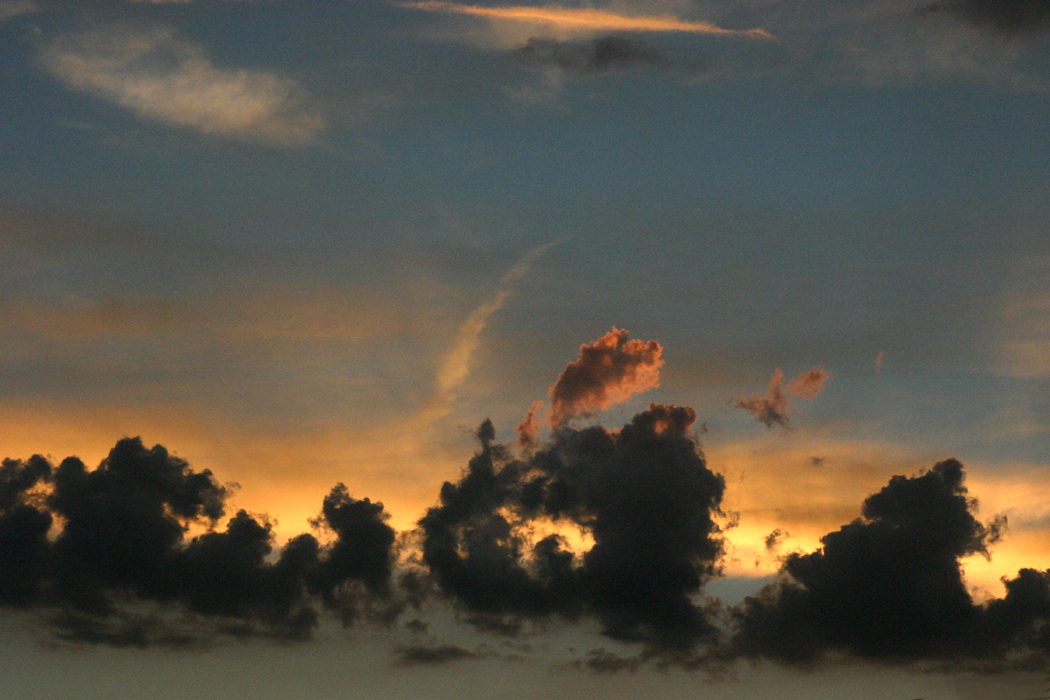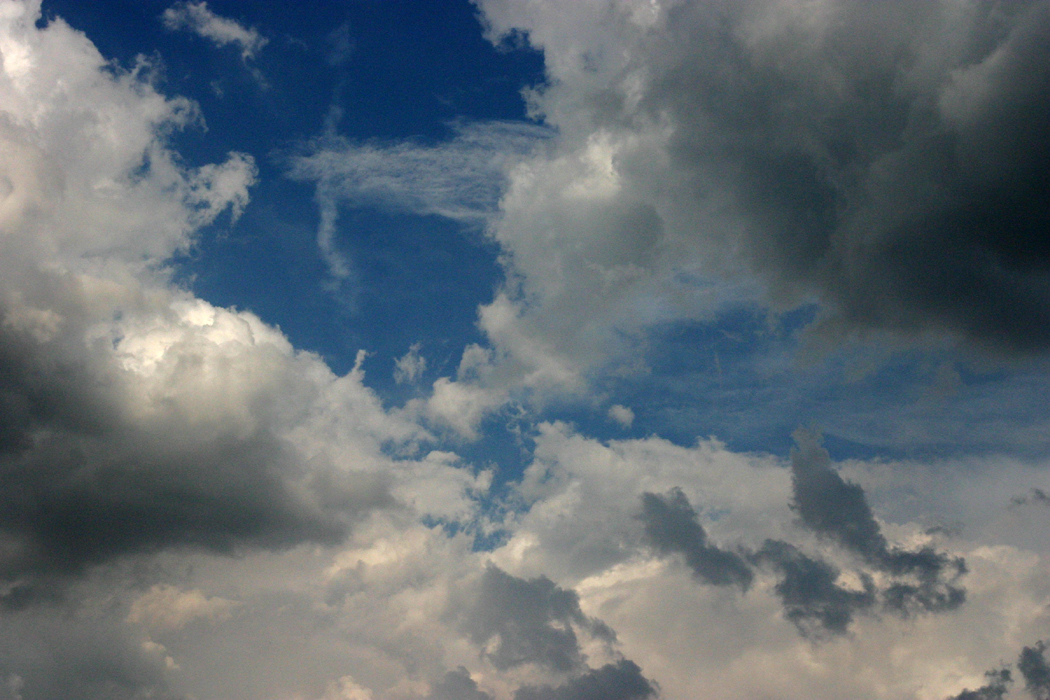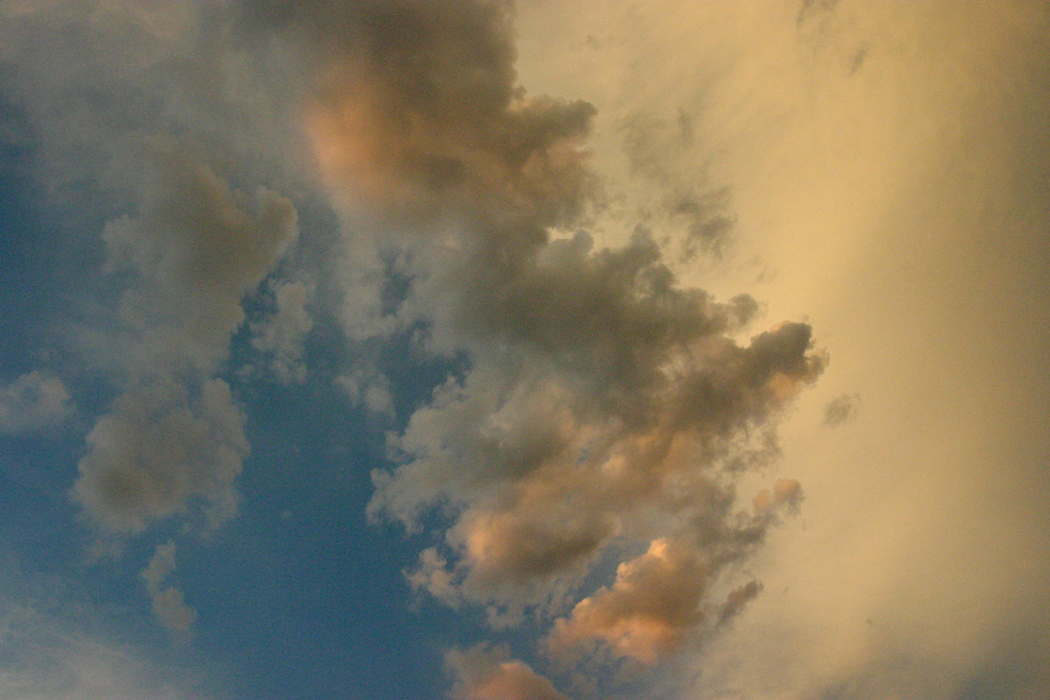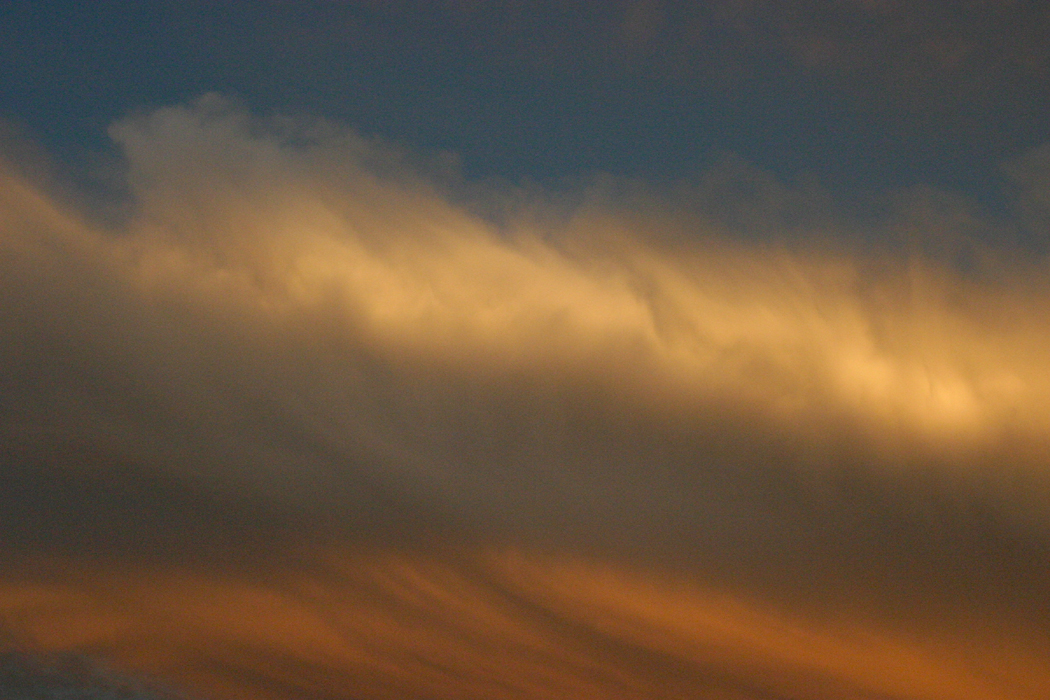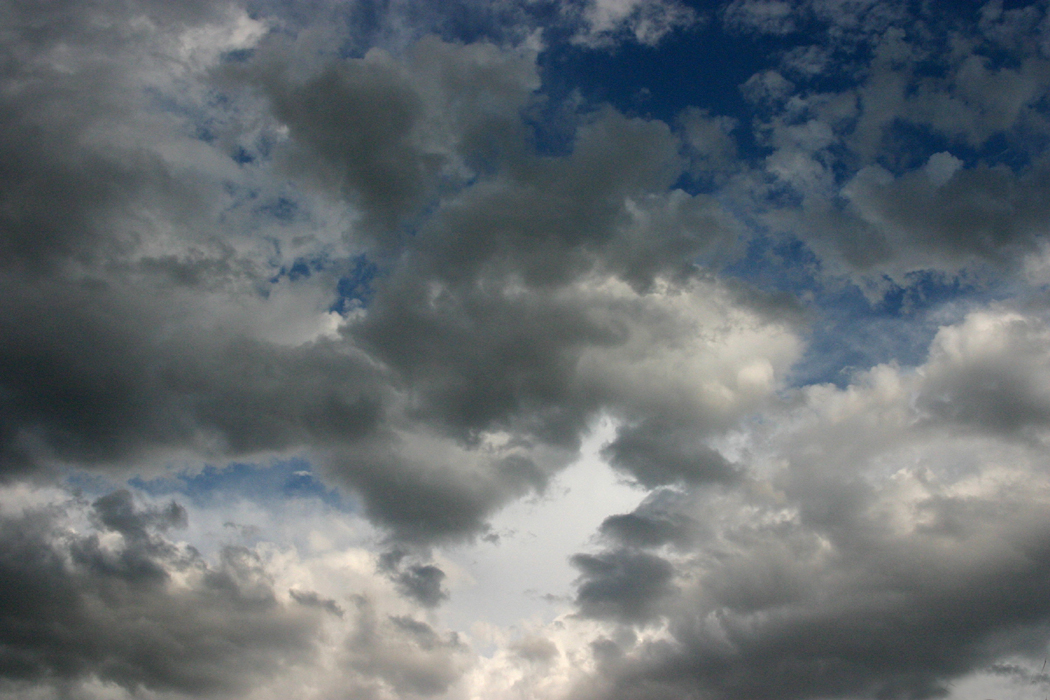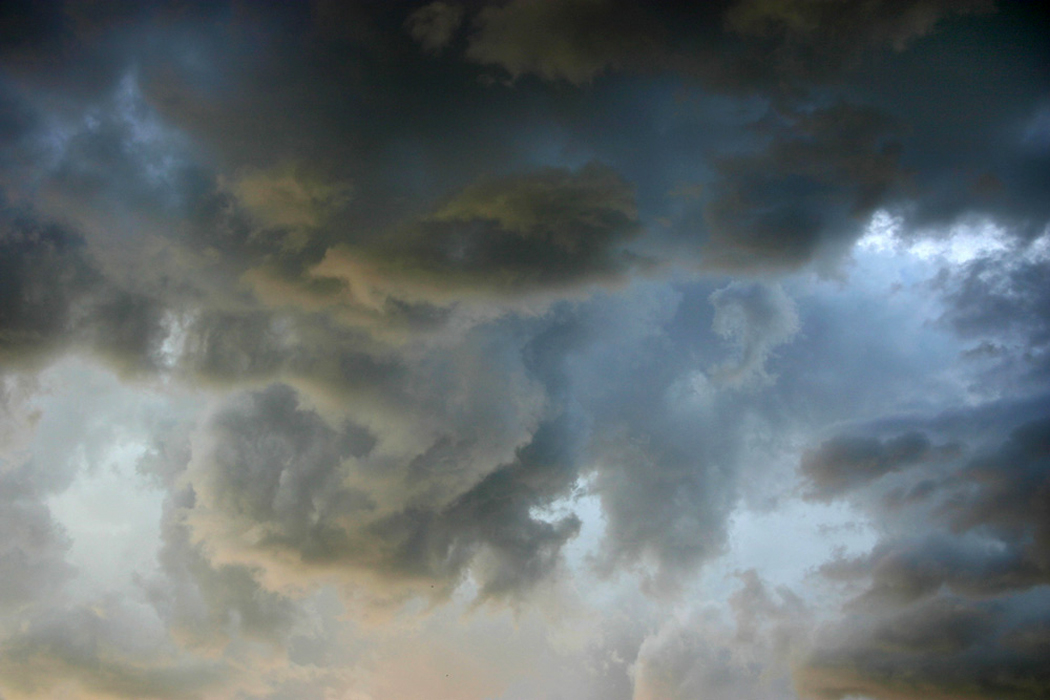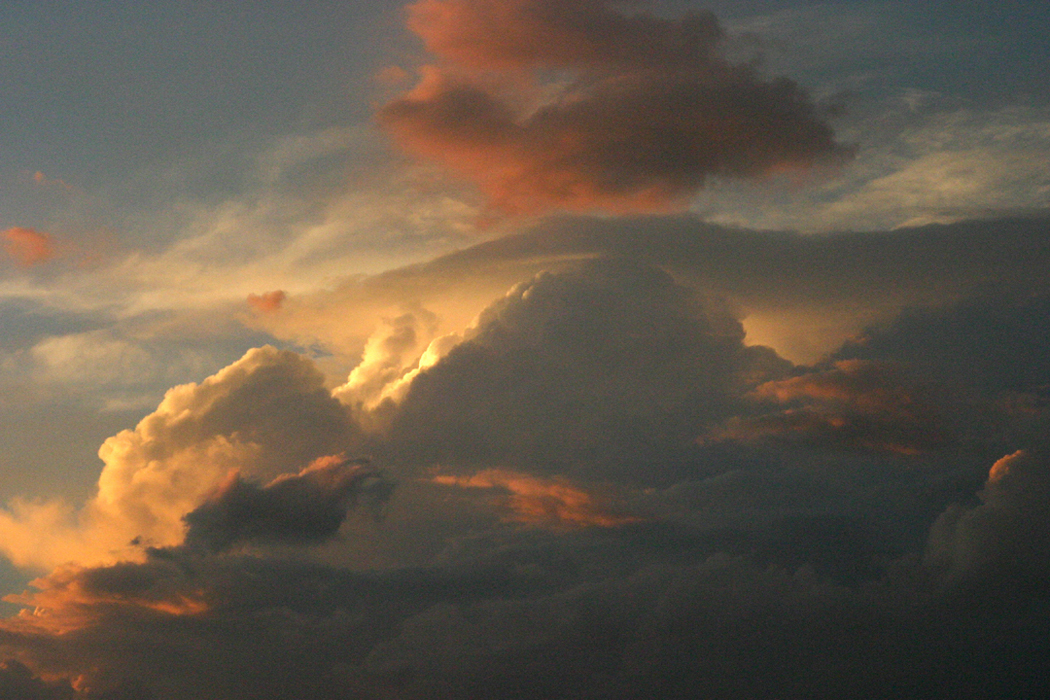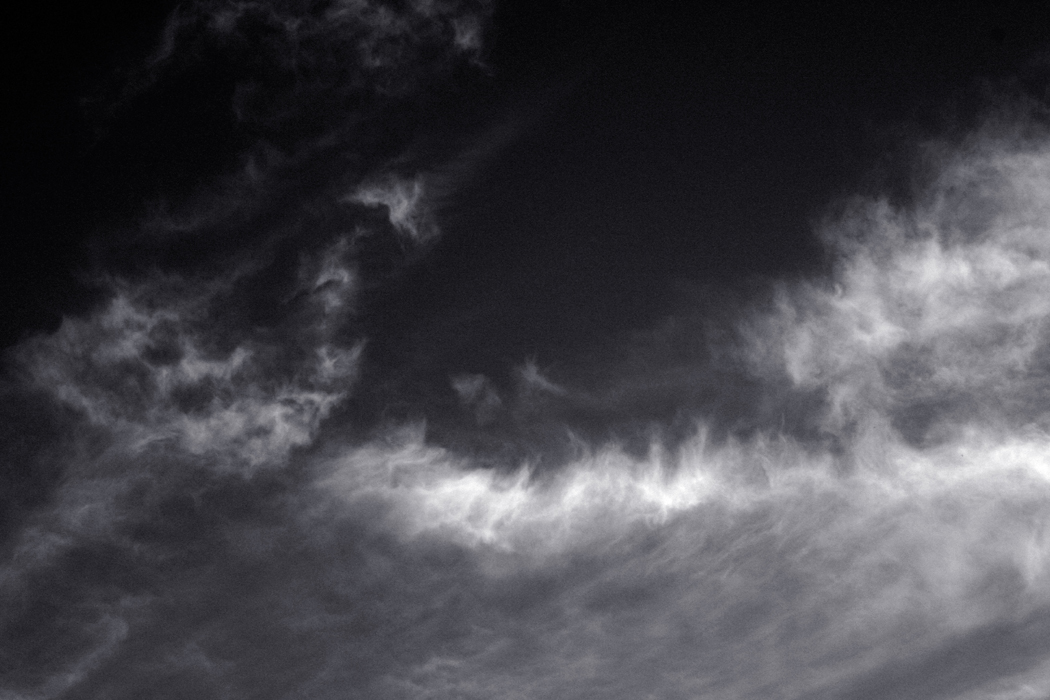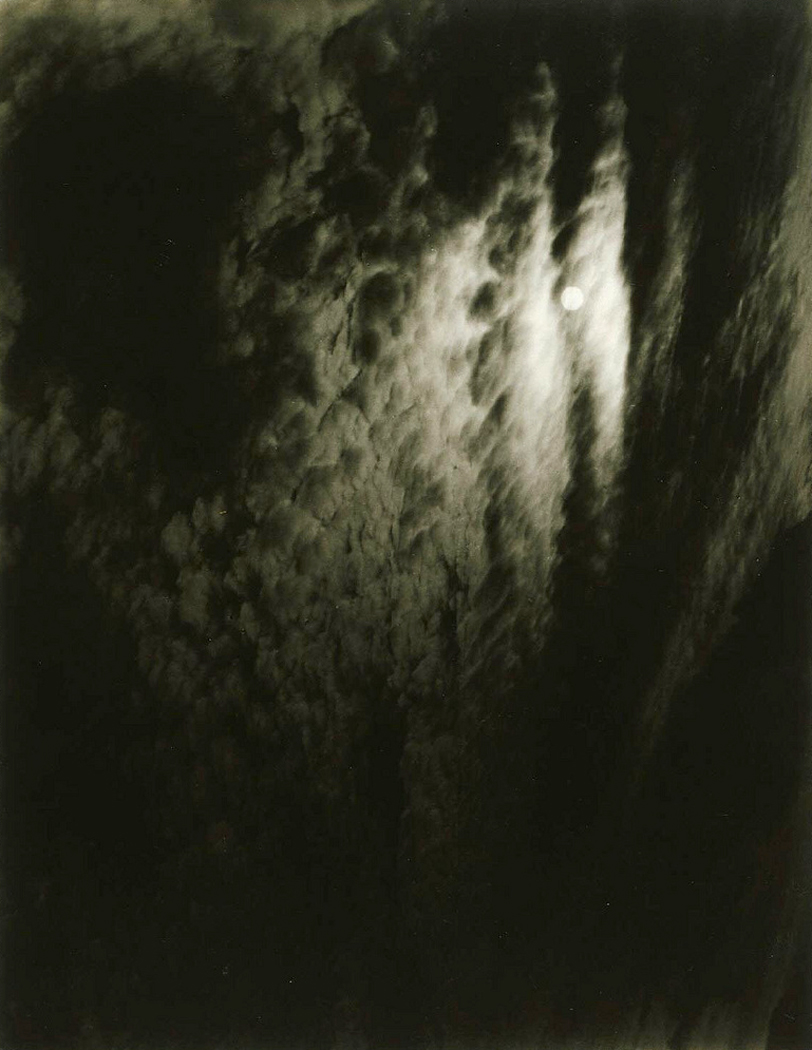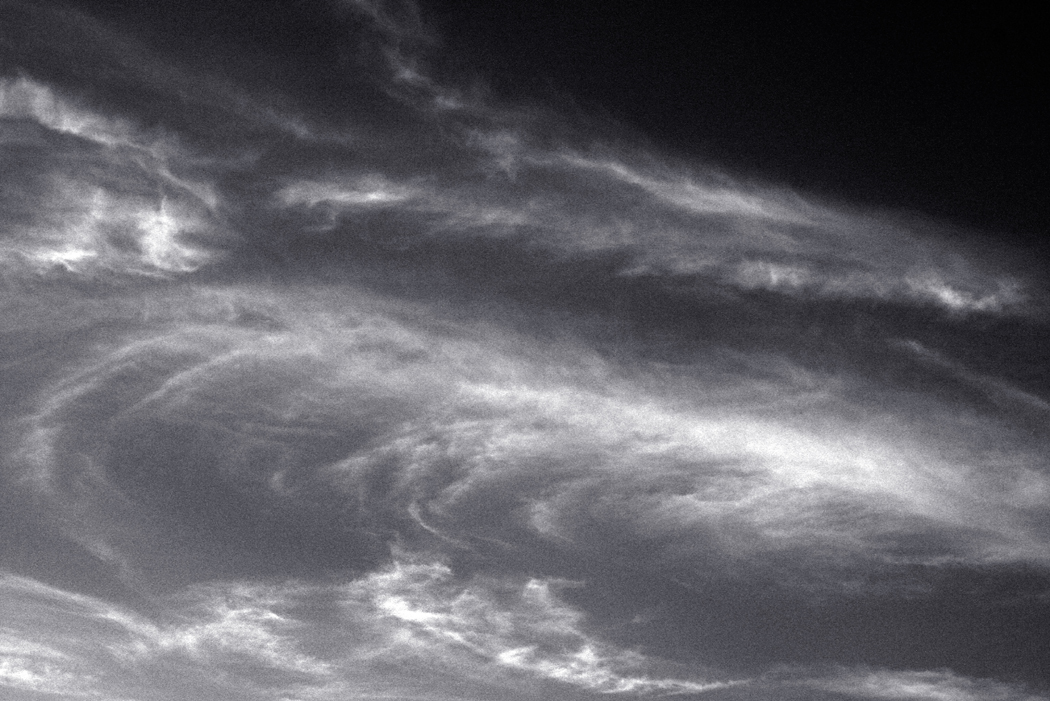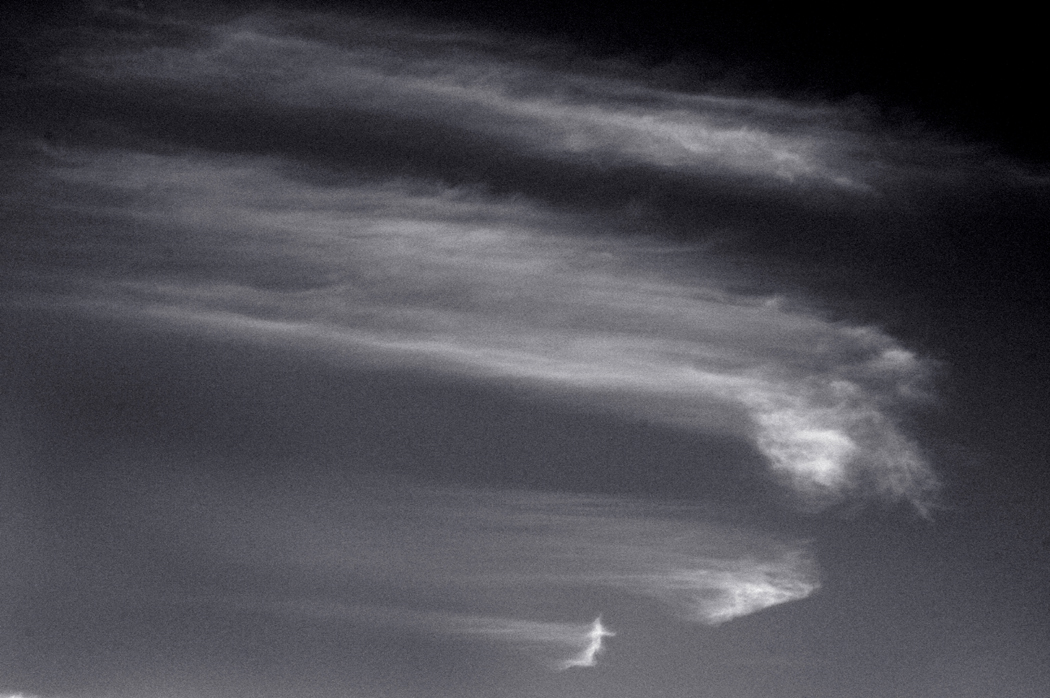
One grows as a human being, and the art cannot help but grow, too. When I was young, it was art that impressed me most: the forms, textures, colors, the transformation of stimuli into esthetic forms. Don’t blame me — it was the times in which I grew up; Modernism was in the ascendency and we all mouthed such platitudes as “art changes nothing,” and “Subject matter? The subject doesn’t matter, only what you make from it.” In those years, life drawing ceased to be taught in most art schools; students were asked merely to “be creative.” The divorce between life and art was complete.
The prejudice was that the subject, say in my chosen medium, photography, was only there to catch light and make for a splendid arrangement of greys and blacks printed out in rich silver on glossy paper. Anything else was pretty pictures for calendars or chamber of commerce brochures. A kind of puritanism set in. If you are old enough, I’m sure you remember it: No cropping, previsualize, etc. So, when I was younger, I concentrated on the beautiful print, in black and white, and archivally processed. Zone system, anyone?
My life turned in a different direction. Instead of a photographer, I turned out to be a writer. And lucky for me, it was on a newspaper and not in academia. I never had to slog through the atrocious trends of literary theory then current (still current). When asked to lecture to writing classes, I always had one lesson to give: Good writing is having something to say. Writing in fancy words or jargon, clever euphues, gongorisms, or acrostics or esoteric allusion only get in the way. One can be so caught up in the allure of a classic Bugatti that you forget its purpose is to get you somewhere. Fancy writing is that shiny Bugatti sitting unused in a garage, cherished and polished but useless.
I continued to make photographs, nevertheless. And I have had gallery shows. But as I got older I came to see that the Bugatti was there to drive somewhere, not to show off. Subject matter not only counted, it was the reason for making the picture in the first place. But — and this is a big proviso — not to share the subject with your audience so you can all go “Ooh, what a beautiful sunset.” That really is a calendar photo.
No, the entire purpose of art, if it can be said to have a purpose, is to make a connection with the world. To reconnect with what habit has made invisible. To see what you normally ignore, to find the glow of liveliness in the experience of being alive. Few people need to be told that a sunset is pretty; there is no art in that.
But to find the chispas — the sparks — in the crack of a sidewalk, or the bare winter trees, or the clouds that sail over us every day — this is not so much a finding of a source for perfect prints to hang on the wall, but rather the illumination of a hidden fire. These things are all alive: Every bush is the burning bush. That is what makes Van Gogh’s landscapes so alive. They burn from within. This is not something he has applied from the outside; it is something he was able to see as the scales fell from his eyes. And so it can be for anyone willing to look, to see. It is what makes life drawing so indispensable for an artist. Drawing is not simply making an art object, drawing is learning to see, to break through the cataracts of habit.
And so, when I come back to clouds as an old man, I see in them not merely abstract shapes from which I can make suitable art. I don’t care about art. I see something that wakes me up, and I try to capture it with the snap of my shutter. For me. Not for some appreciative audience. For me. I am the one I want to keep awake, alive. Others have helped me in this; if I can pass this on to others, all to the good. But I no longer care about making art.
(Note: All but three of these photographs were taken on the same day during monsoon season from my back yard in Phoenix, Ariz.)

Nimbus of meaning, part 1
In the 1920s, a fundamental change occurred in the part of photography that was attempting to be seen as art. What had always previously been seen as a picture of something became a picture of its own.
In this, it followed the progress of Modernism in other media. What had been a photograph of a house or a boat, and judged by how well it set off the house or boat, it now became an arrangement of grey and black, of line and form.
If anyone could claim to be the leader of this shift, it would be Alfred Stieglitz. “I was born in Hoboken. I am an American. Photography is my passion. The search for truth is my obsession.”
Despite his tendency toward oracular declamation — or perhaps because of it — Stieglitz became the prophet of a new type of photography in America. Modernist. 
His first work, from the late 1890s through the 1920s was mostly figurative, but he became dissatisfied with the idea that his photographs were praised for their subject matter.
In 1922, he began photographing clouds and turning them into the equivalent of abstract paintings.
“Through clouds to put down my philosophy of life — to show that my photographs were not due to subject matter — not to special trees or faces, or interiors, to special privileges — clouds were there for everyone — no tax as yet on them — free.”
These first series of cloud abstractions he called “A Sequence of Ten Cloud Photographs.” When he showed a new series in 1924, he renamed them “Songs of the Sky.” He continued making these prints, usually exaggerated in contrast and printed quite dark, making the blue sky black. He made them by the dozens, and by 1925, he was calling them “Equivalents.”
“I have a vision of life and I try to find equivalents for it sometimes in the form of photographs…(Cloud photographs) are equivalents of my most profound life experience.”
This idea of “equivalents” was later taken up and expanded by photographer Minor White and others, but in essence, the abstraction of the clouds were to stand for “equivalent” emotional and intellectual experiences.
There is certainly a grandiosity to Stieglitz’s language, indeed to his person. But the photographs remain and many of them are deeply moving, perhaps compared to the late quartets of Beethoven.
But the underlying idea was that the medium of photography, rather than the subject matter the camera is pointed at, could be expressive: that the surface of palladium printed paper, or silver prints, and the blacks and whites of the silver on its surface, and the shapes they make, almost as if a Rohrschach test, could be sufficient for art.
Abstraction became a subset of 20th century photography, and even when there was a subject, such as a portrait or landscape, the photographer, whether Edward Weston or Paul Strand, or White or Bill Brandt, would insist on its essential abstraction as the basis of its value.
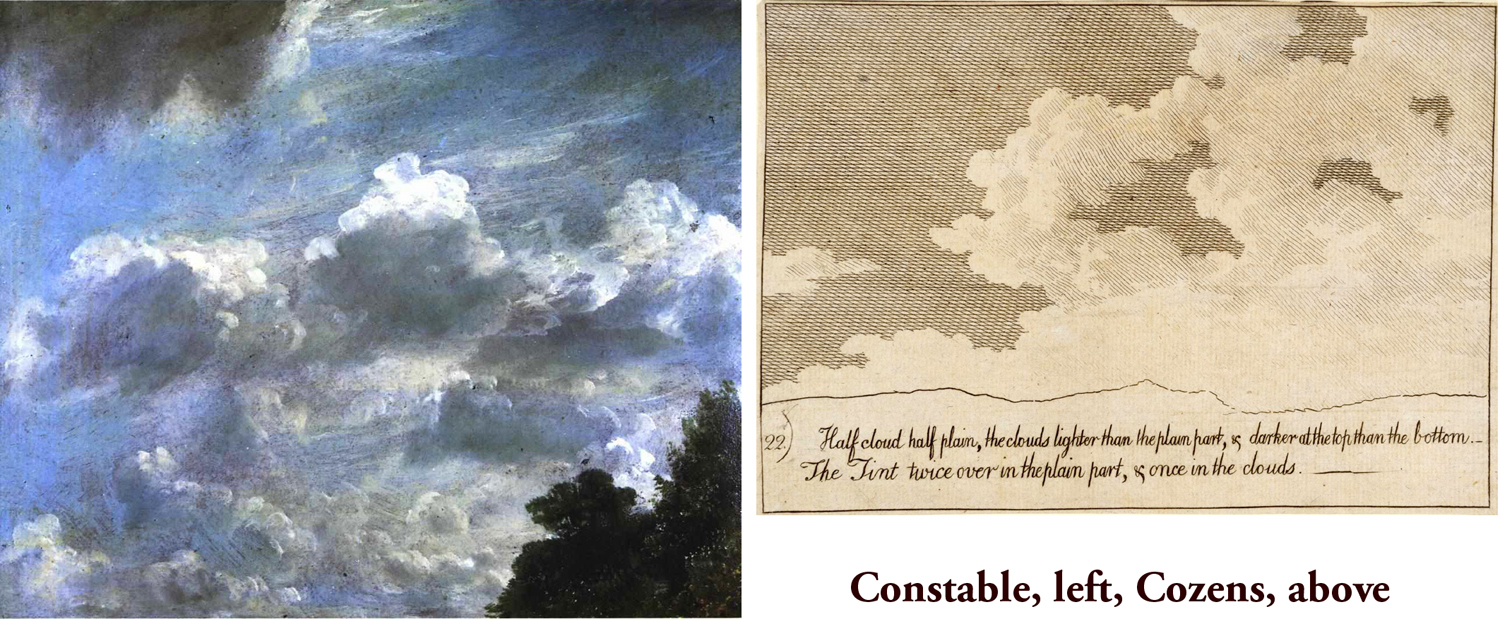
But there is a problem with this: Those Equivalents that Stieglitz made are still clouds, and clouds carry with them all the baggage of subject matter. From the clouds in Renaissance paintings through the glorious cumulous in the seascapes of Aelbert Cuyp to the drawings of Alexander Cozens and countryside of John Constable. Clouds are an endless source of inspiration for the imagination of shape.
In photography, it is almost impossible to eliminate subject matter, short of making photograms. The forms, colors, shadows, textures of the recognizable sensuous world keep intruding, no matter how extracted from context. When I was a teacher, one of the assignments I gave my students was “to photograph something so that I cannot tell what it is.” I expected them to get ultra close, or turn something upside down, or extend the contrast. But, try as they might, I could always tell what I was looking at.
I do not see this as a deficiency in photography, but a strength. Photography can keep us tethered to the world when we might wish to float free; it reminds us that our primary obligation is to the existence we occupy and work in.
Given that, photographs of clouds still has a powerful attraction: We can see that abstraction and reality are not necessarily in opposition: We can have both at once.
Put this way, it seems obvious, a commonplace. But this “double vision” is one of the things that keeps art lively, and informs our interaction with the everyday — keeps us aware that the world is alive, not inert.
And so, I have made my own cloud photographs. The first series, seen here, are a rank imitation of Stieglitz’s Equivalents. The next blog installment will follow with the development of the idea.

A note from the Indian Ocean
All the translations in this book are by the author, save only those in passages by books cited in the bibliography.
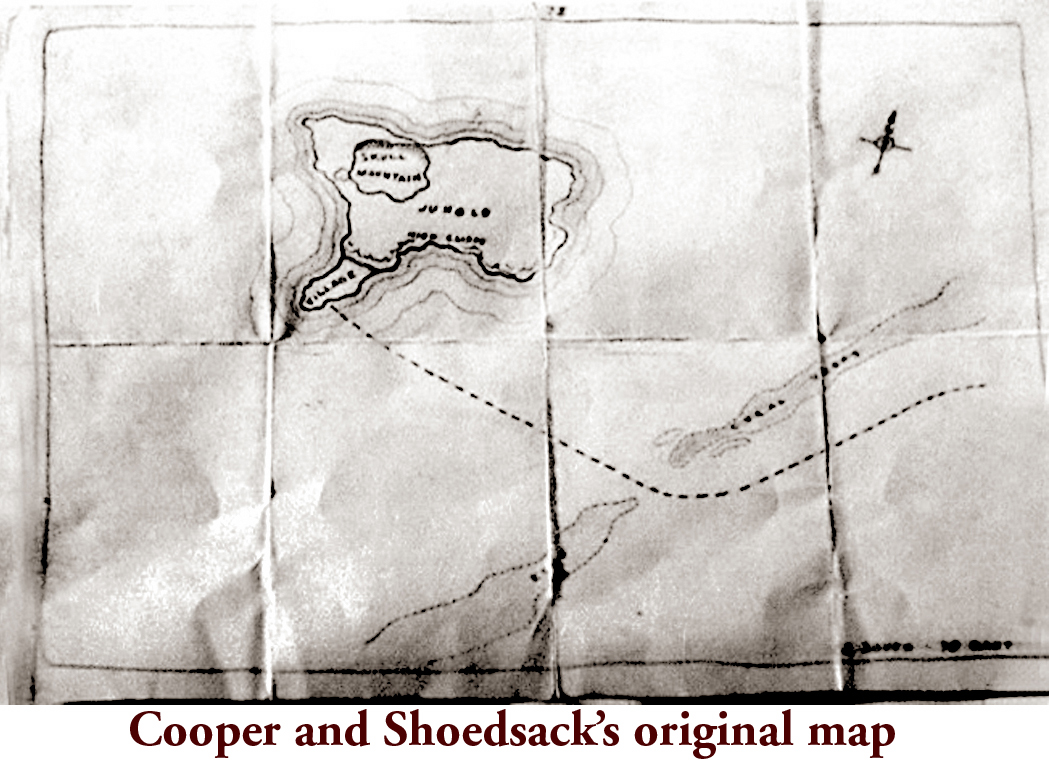
A few notes about the difficulty of translating the native language of the Kandeni Islands might be in order. Those tiny islands in the Indian Ocean (approximately 2 degrees South and 90 degrees East), and their primary island, Kandei, were undiscovered until 1933 (Cooper and Schoedsack, 1933), and so remote are they that their language and customs seemingly grew in isolation for centuries, if not millennia. A few relics in their language suggest they had contact with cultures in the South Andaman Sea in earlier eras, perhaps related to the extinct Jangil peoples, but in the main, their language is unique.
By far, the primary difficulty in their language is the fact that it has only two verbs, which might best be described as the verb to be and the verb to do, one active, one passive. Every usage is intelligible only in context. The language has nouns with cases, adjectives that mirror those cases and a few prepositions and a few vestigial conjunctions. There are no articles.
This bifurcation of verb is essential to their organization of the world. Things — whatever they are — either be or do. They exist as essences or they exist as agents. Every act is merely a morph of the simple act of doing. Running, speaking, sleeping, eating — they are all seen as variants of a single act.
For the elders who spoke to me, this is taken as obvious: Their mythology (see Chapter 3) revolves around the dichotomy of being and doing, and their gods, if you can call them that (they may also be seen as ancestors), fall into two categories, the “be-ers” and the “do-ers.” These supernatural beings (I use our terminology — they do not make the distinction between natural and supernatural) are at odds, if not at war (the stories vary from family to family).
On first approach, it may appear that the language is simple to the point of being rudimentary, but in fact, with these few elements, it has grown into a language of immense complexity, requiring of its speaker — and listener — not only great subtlety but awareness of its context. The same sentence in the morning may mean something different after the sun begins its descent.
As one might expect, that although there are only two verbs, there are many nouns. The Kandeian people have words for the things of their world, but not static words. A certain plant, for instance, will have a different noun for its seedling, for its fruiting or for its use by native animals. Linguistically, they are different things, even if our Linnean system sees them as merely phases of the same plant. This is true as it is for us, for instance, who think of a boy as different from a man, a puppy as different from a dog. For them, the manioc plant is a different plant before it grows a sufficient tuber. For us, these distinctions are vestigial, for them, they are applied to almost everything in their ecosystem.
The prepositions come in five varieties, describing being above something, under something, around something or in something and finally away from something. There is no before or after: That is expressed by saying something like “I here (to be), he here (to be), and the listener infers from context that the one happened before the other.
Adjectives and adverbs are undifferentiated; they are universal modifiers and no distinction is made between a fast runner and running fast (or in the language “active verb fast.”
A few examples might help.
A standard statement might include first a subject, like the personal pronoun, “I,” followed by the object of the sentence followed by one of the two verbs. If you were to express a simple idea, such as “I throw the ball,” the sentence would be constructed as “I ball (active verb).” Or “I ball do.” The “I” is in the nominative case, the “ball” in the objective. The “do” or “act” is understood as something you do with the ball — which in context would most likely be understood as “throw.” The speaker might mimic the act of throwing, but this is not necessary. If you needed to express something else, such as “I sat on the ball,” you would have to express this with not only the sentence, but with gesture. “I ball (do)” and a short squatting gesture. Why you might want to sit on a ball, I don’t know.
The other verb expresses both condition and essence — both the concepts that in Spanish are divided by “ser” and “estar.” To say “I am here,” the sentence would be built as “I here (to be).” “Here” is in the locative case. Other places would likewise be in the locative. “I river (to be).” There is no tense expressed. Again, tense is implied by context or by extension: “I river yesterday (to be).”
Naturally, such a language can only be meaningful in a face-to-face encounter. The many gestural inflections cannot be captured in print or over a telephone. Neither of which, I hardly need to say, the Kandeian peoples do not have.
When they were discovered by a passing tramp steamer in 1933, it is estimated there were perhaps 400 Kandeian speakers on the island. In the intervening time that number has dropped precipitously; there are now estimated to be under a hundred left, although a precise census has never been taken, in part because the Kandeians resist outside visitors, and in part because the island is so wild and overgrown, cross-country travel is extremely hazardous.
I spent two years on the island in the late 1980s, studying the language and customs. I spoke with several family leaders — a position gained not by force or vote, but by assent — and they told me their stories and the stories of their ancestors. This raises another distinct quality of their language. When discussing everyday events, they speak in an ordinary pitch and volume, as you or I might. But when relating myth, they speak in a high pitch and with little inflection. They can revert back and forth with seemingly no difficulty as they interweave the mythic with the quotidian.
This way of speaking also functions as a kind of subjunctive mood, as it is also used to express things that might not be, or might occur in the future. So, for the Kandeian, linguistically at least, the past — other than a personal past — and the future are equally mythic. In the middle, there is the lifetime remembrance of the speaker, which is taken as indicative rather than subjunctive; all else is relegated to myth, or a time that may have been or might become.
The problems of rendering such a language in English should be manifest. When I translate the words of Ruthentay, leader of his family, I must interpret his meaning into English rather than literally translate. Certainly this is the case when translating from any language to another; the problems of turning Tolstoy into readable English is well known. But with the Kandeian Islander, this is raised to an exponential degree. I cannot just give the words Ruthentay speaks, but must render them as if they had been spoken in English. This distorts them in ways that break my heart, but it cannot be otherwise.
In those cases where no English equivalent exists, as for certain food items of the Kandeian diet, I must use transliterations of the native words. I am sorry if this causes confusion but again, there seems no way around it.
The narrowing

When you are young, starting out in your adulthood, your interests expand, the world widens and you want to breathe it all in. It is all there, in front of you, waiting to be experienced.
If you are of a reasonably intellectual bent, you will devour every new Jonathan Franzen novel, check out the Whitney Biennial, seek out the next Philip Glass opera, sample the new molecular cuisine — perhaps drive a Tesla and test out the Google glasses.
You want to ride the crest of your times, and keep up with your scuttling generation.
I certainly did, when I was young. It was my avowed ambition to “know everything.” And I meant it. (Yes, I recognized the impossibility of taking my goal literally, but that doesn’t change the idealist zeal of it all).
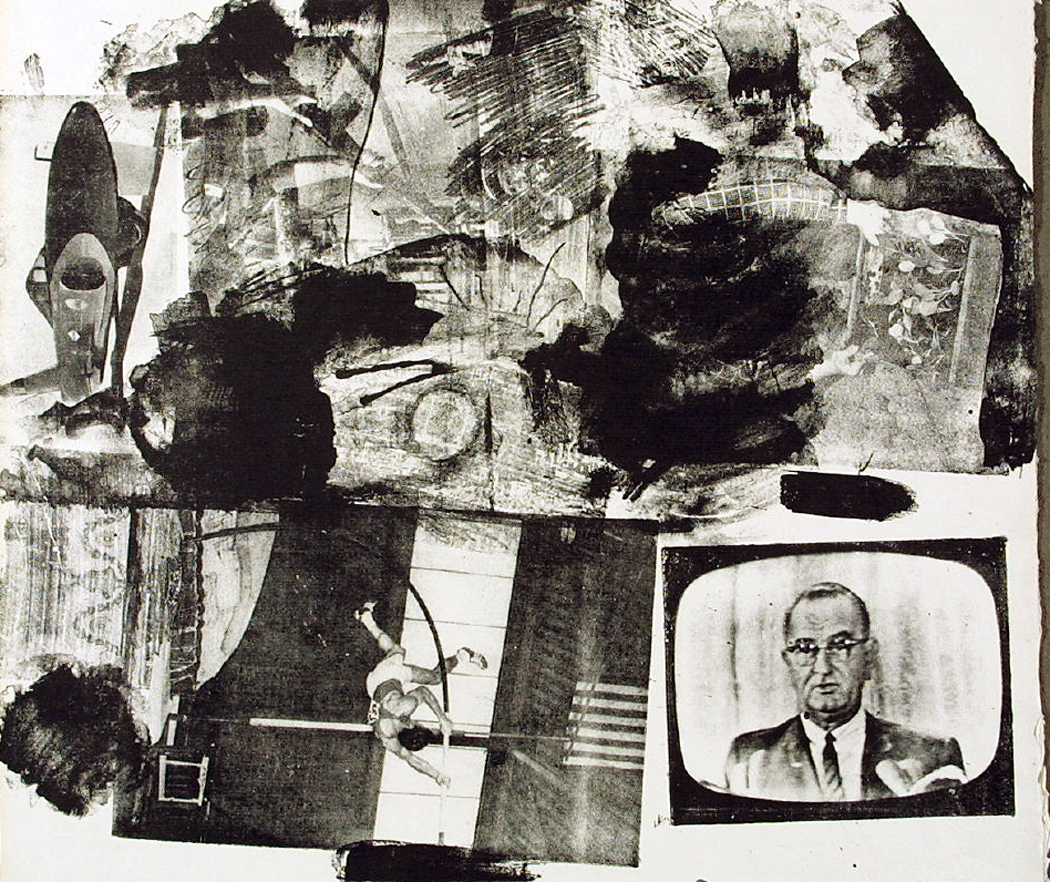
In my day, it meant reading Saul Bellow, seeing Robert Rauschenberg’s “Inferno” at MoMA, grooving on Morton Subotnick’s “Silver Apples of the Moon,” eating tandoori chicken and driving a VW bus.
The world seemed particularly open then, although looking back, I know it was really me who was open. It all rushed in. I could not get enough. Even in high school, I read James Purdy, Thomas Pynchon, Norman Mailer, Hubert Selby Jr. — and all the Bellow I could get my hands on. What I could have made of these writers at the tender age of 16, I have no idea. But I knew I wanted what they had to offer.
By the time I got to college, I had all that under my belt, and I was ready to charge into Chaucer, Wordsworth, Blake, Homer, Sophocles, Melville, Milton, Joyce, Eliot — I was a starving man at the feast of Trimalchio. Handfuls stuffed into my cheeks. I couldn’t chew fast enough.
School certainly opens the world up for those eager for it, but that was hardly the end of it; it was barely the beginning. Since then I’ve run through whole forests of paper splattered with ink. In huge draughts: All of Henry Miller, most of D.H. Lawrence, the obscure parts of Melville, the verbal excesses of Lawrence Durrell — but you get the picture. And that’s just the reading.
I took on Beethoven quartets, not just in listening, but poring over the scores. Mahler symphonies; Mozart operas; Balanchine ballets. Bruckner came late, but I fell hard.
I don’t want to give the impression that it was all old masters, although I did incline that way. I also kept up with Glass, Reich, Adams, learned to love Osvaldo Golijov and kept track of the development of Jennifer Higdon.
The same pattern continued for the visual arts, for poetry, and for travel: I wanted to see everywhere, to learn everything. Linguistics, color theory, whatever part of particle physics that an English major could ingest without coughing up indigestible math.
But things have changed; I am getting old. And when you are old there comes a narrowing of interests.
You come to recognize there will not be time to know everything, to take up Russian and learn the history of Chinese opera, to finish all of Proust or finally visit Uzbekistan. The limits of learning, the limits of a life become tangible. You can see in calendar units the coming end of sentience, the final breath, when you can no longer breathe anything in.
This is not all merely maudlin and depressing. When you get old, the end seems less a tragedy and more a satisfying completion. Herr, lehre doch mich, das ein Ende mit mir haben muss, und mein Leben ein Ziel hat, und ich davon muss, und ich davon muss.
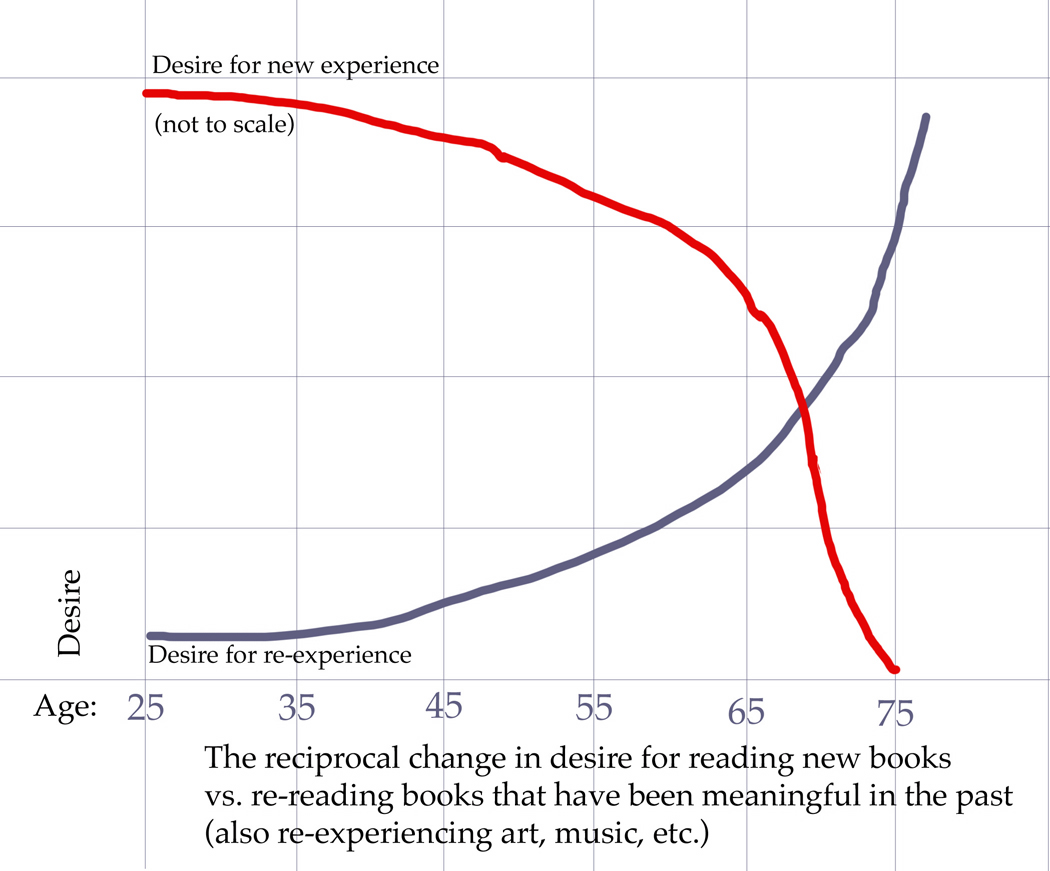
I still want to read new things, see new art, hear new music, but I attack these with less fervor; they are subsidiary to a growing desire to revisit those things I encountered earlier, but now need to consider once again. In part, this is to re-experience things that gave me great pleasure, and it’s pleasure all over again to dive in once more. But it is more that because I am old, I can squeeze more juice out of the old rinds. There is so much in Dante I could not have understood when I was an eager lad. So much in those late quartets that passed me by the first hundred times I listened. 
And so, I find myself rereading things that meant a great deal to me rather than reading new things. Oh, I don’t want to exaggerate this; I still read new things, too. I still want to learn new things and I still tackle new subjects, but without the expectation that I can ever “learn it all.” And those things that have stuck with me — the Iliad, some Shakespeare, the Beethoven quartets, the woodcuts of Hokusai or the films of Renoir — are such a huge reservoir of experience that they can be dipped into over and over and always with new reward.
I remember the complaint that used to be lodged against the famous orchestra conductor Arturo Toscanini. The older he got, the fewer works he programmed. Those who only came to know him from his late recordings could believe he only played the Beethoven and Brahms symphonies over and over and avoided new music. But when he was younger, he gave world premieres of dozens of operas and symphonic works — including Puccini’s “La Boheme” and “Turandot,” and Leoncavallo’s “Pagliacci.” When he was young, he championed contemporary music. He was 70 when the NBC Symphony was created for him and close to 90 when he made most of the recordings he is known for — all that Beethoven and Brahms. That narrowing of repertoire should be taken less as a lack of interest in new music, and more as a deepening of his immersion in that music he loved most deeply.
This is a pattern I recognize and while I might have made apologies for it when I was younger, I have come to understand it as it has happened to me, also.
I remember when my friend Dimitri Drobatschewsky approached 90, he often talked about the coming end, and how much he had appreciated all the experience that he had managed to pack into his very full life, and how he relished rehearing the music that had meant so much to him when he was younger. He felt it was up to a fresh generation to come to love newer music, and that his Strauss and Mahler were enough to support him as his tide receded. There was no sense of resignation in his declaration, but clearly a recognition of limitation. We are all limited. It’s just that when we are younger, we don’t know it.
A smaller and smaller pool of art and literature becomes infinitely large and expansive, and instead of thinking there is too much to know in the world, you realize there is even too much to know just in Chaucer.
I am not arguing against Franzen, or against Idina Menzel or Ai Weiwei; I am just saying that I leave those treasures for younger minds, who, when they get older, will reread and rehear and resee in those works the complex meanings and awakenings that are undoubtedly buried there.
As for me, I’m rereading “Herzog” now to find out what I missed when I was a pimply-faced kid.
Oh the humanity! Oh the obliquity!
“Earlier this week, the Israeli Supreme Court outlawed torture, so I know one place ‘Love Stinks’ will not be opening. 
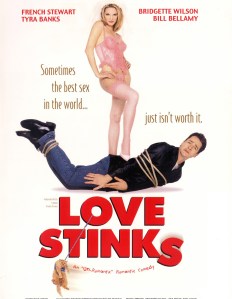
“It’s the kind of movie you fidget your way through, holding your wristwatch up to the light of the screen to see how long you have survived, sort of like seeing how long you can hold your breath underwater. It’s a macho test to survive this miserable, vile clunker.
“You, lucky moviegoer, can always walk out. You can demand your money back. But pity the poor reviewer, paid to sit through it, who cannot leave but is handcuffed to his seat, with wire claws lashing his eyelids open, being forced to watch endless failed flatulence jokes, Elvis jokes and hair jokes.
“How can a flatulence joke fail? This movie shows you.
“Yes, you can demand your money back, but I can never demand back the time I gave to this sinkhole. It is time missing forever from my life and will be listed in my memoirs as my greatest regret. This is a movie that can damage you spiritually.”
Wow! I really didn’t like that movie.
But I seemed to have enjoyed writing about it. This is a constant nag to a movie critic, and one of the questions most often asked of us — “Do you have more fun writing bad reviews.”

The answer, of course, is I hate writing bad reviews, but — you got me — I love writing fun reviews of really awful films.
This is the crux: Some of the most memorable movie reviews are the pans, like when Roger Ebert wrote, of “North,” “I hated this movie. Hated hated hated hated hated this movie. Hated it. Hated every simpering stupid vacant audience-insulting moment of it.”
Most people go to movies occasionally. The most avid rarely go more than once or twice a week. But the movie critic sees movies, sometimes several in a day. We become surfeited.
We also see a lot of un-inspired twaddle. You, the moviegoer may be mildly entertained by a mediocre movie; you can forget it soon after exposure. But the critic has probably seen a dozen rom-coms with the same plot, the same jokes, and the same actors — at least they do seem to blend together eventually into a single pair of Hugh Grants and Julia Robertses.
Imagine a light romantic comedy with Julia Roberts and Mandy Patinkin, with clever writing, snappy direction and a heartwarming ending.
Then imagine that Roberts isn’t available, so you replace her with a look-alike. And then Patinkin isn’t available, either, and neither are the good writers nor a classy director.
What you have is “Love & Sex,” a film that never rises to its own ambition.
It can’t decide whether it wants to make real points about real life and love, or wants to be a low-budget imitation of a high-budget Hollywood meet-cute romance.
It is true that I wasn’t a fulltime movie critic. Mostly I covered art and music. But I was a kind of back-up critic for our regular guy, and he often gave me art films and foreign language films to review.
For this I am hugely grateful.
It isn’t simply that foreign films are better than Hollywood films, but rather that the bad French films or Italian films are less likely to be imported and distributed in the U.S., meaning my films was pre-selected for quality.
That meant, I got to see a better run of films than our poor movie critic.
But for times he was on vacation, or out sick, I wound up having to review some real dogs.
There have been so many first-rate foreign, indie and small films to come through town lately that it sometimes seems that a critic must have run out of stars to sprinkle from his pepper shaker. So it should be a relief to find a dud, but it never is.
And there are so many.
Anyone who manages to sit through “The Mating Habits of the Earthbound Human” to the end and, in a masochistic exercise, remains in the theater for the credits will see the two funniest jokes of the movie — not making too strong a claim for them.
So you don’t have to squirm in your seat that long, I will reveal them here: First, the credit line says, ”This movie was shot entirely on location on the planet Earth,” and then the disclaimer line reads, ”No humans were harmed in the making of this movie.”
There you have the best this sorry exercise has to offer. You can now save your money.
Or, to turn to another one:
To call “Wicker Park” glossy is an insult to the word “glossy.” There is not a thought in its pretty little head.
And it does look gorgeous. Shot mostly in winter, its cityscapes are as romantic as Impressionist paintings. The falling snow provides a sense of motion, even when the film is dead in the water.
But it’s like watching a 90-minute fashion commercial, and with about as much character development.
You are grateful for good films; certainly, you would prefer that all the films you see are top-notch. Good films make your life better, richer, fuller. The only problem is that, for a critic, there are only so many words you can use to praise a film, and the praise can get a little numbing for your reader. How can you express your enthusiasm without seeming addled or hyperbolic? You put five stars at the head and hope your readers will notice.
And most films you see are neither very good, nor very bad. They are a bear to write about. What can you say? You won’t waste your money, but you won’t remember the film at all by next year.
A friend recently asked me to send her some of my old movie reviews for fun, and I scrolled through hundreds of them, and I was shocked at how many movies I saw, I wrote about, and yet I have not a single recollection of. They have evaporated.
But the truly awful movies: They are memorable. And they give the critic a chance to rev up the invective. We have suffered through you movie, so we are going to balance the karmic account by enjoying the review writing as much as we didn’t enjoy sitting in the dark theater cringing our way through the miserable offering.
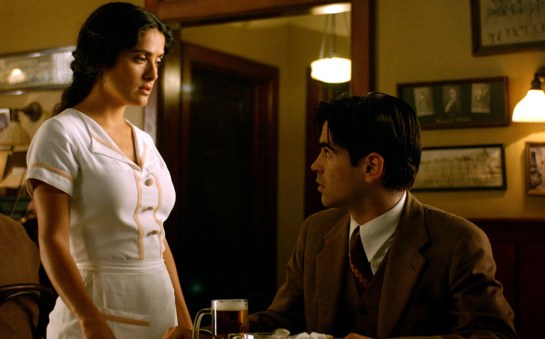
There is a long-abused, overworked and now out-of-date word to describe Robert Towne’s “Ask the Dust.”
Phony.
This movie, set in Los Angeles in 1934, is as phony as a three-dollar Hollywood smile. Nothing in it rings true. Not the dialogue, not the acting, not the sets, not even the air.
Which is too bad, considering Towne was also responsible, as writer, for the best LA-in-the-’30s movie ever, “Chinatown.”
But “Dust” fails in all the ways “Chinatown” triumphed.
It’s our revenge.
“A Home at the End of the World” was made by Warner Independent Pictures, and that pretty well sums up its strengths and weaknesses. Warner Independent Pictures — that’s like Consolidated Amalgamated Home Made Pies Inc.
How can a gigantic multinational media conglomerate make an independent film? Well, it can’t.
Critics are often accused of hating movies. And there are movies we hate, but critics — and it is true for me — don’t hate movies; we love movies. And so, we are heartbroken when a movie fails to live up to its potential. And more than heartbroken, we can actually get angry about it.
Because it is so unnecessary for a movie to be as bad as some of these films are.
A tin ear is a painful thing.
Not for those who have it, but for those who are asked to review its productions.
It begins with this film’s title. Here is a story of epic sweep, recounting a heroic and desperate episode in the Mormon migrations westward into Utah. It is a tale that begs for a star like Charlton Heston, a score like “Exodus,” a cast of thousands.
And they name it “Handcart.”
The technical name for this trope is bathos. It is a sign of tone-deafness. But that is just the beginning. Throughout this two-hour saga, its makers manage to trivialize every point possible, turning genuinely dramatic events into cliches of cloying sentimentality and predictability.
So, we have to lay our cards on the table. Wretched is wretched.
When friends and relatives rib me about being paid to watch movies for a living, I only have to point them to something like “Fast Food Fast Women” to prove that there is a cost involved. This film is payback.
It’s one of the worst films of the year, a candidate for the Ed Wood Award for incompetent cinema. It’s that bad.
It isn’t only the cheapy films, or the exploitive films that cause this hiccup of disaffection. It is often the high-budget literary films that drive me to distraction.
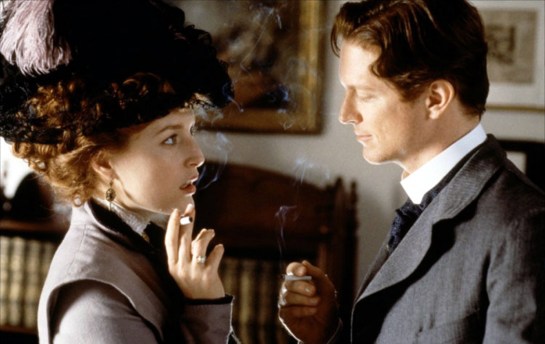
If you’ve ever gotten a shirt back from the laundry with too much starch, you will have some sense of what is wrong with “House of Mirth.” It creases where it should drape.
You might expect a movie with mirth in the title and Dan Aykroyd in the cast to be a barrel of laughs, but there is not so much as the hint of a smile in this glum period picture made from the Edith Wharton novel about New York high society in 1905. It is Wharton with all the subtlety left out.
What is left is the worst of Masterpiece Theater: Mannequins in rich dresses moving about and pronouncing their words so distinctly that you’d think they were shelling pistachios with their tongues.
And, oh, those lines they are forced to mouth: “If obliquity were a vice, we would all be tainted.”
I like that line: “ pronouncing their words so distinctly that you’d think they were shelling pistachios with their tongues.” It is bad movies that evoke such language.
So, yes, I have to admit, writing reviews of bad movies (as opposed to writing bad reviews — reviews badly written) is often a good deal of fun. Certainly more fun than sitting through the movie.
But there is another kind of film that elicits bad reviews. There are movies that rile up the moral indignation normally complacent when watching an entertainment medium. Some films are morally reprehensible.
I am not talking about taking political sides in a current debate, as if a pro-Arab film is somehow a bad film because of its message. I’m talking about something deeper than that.
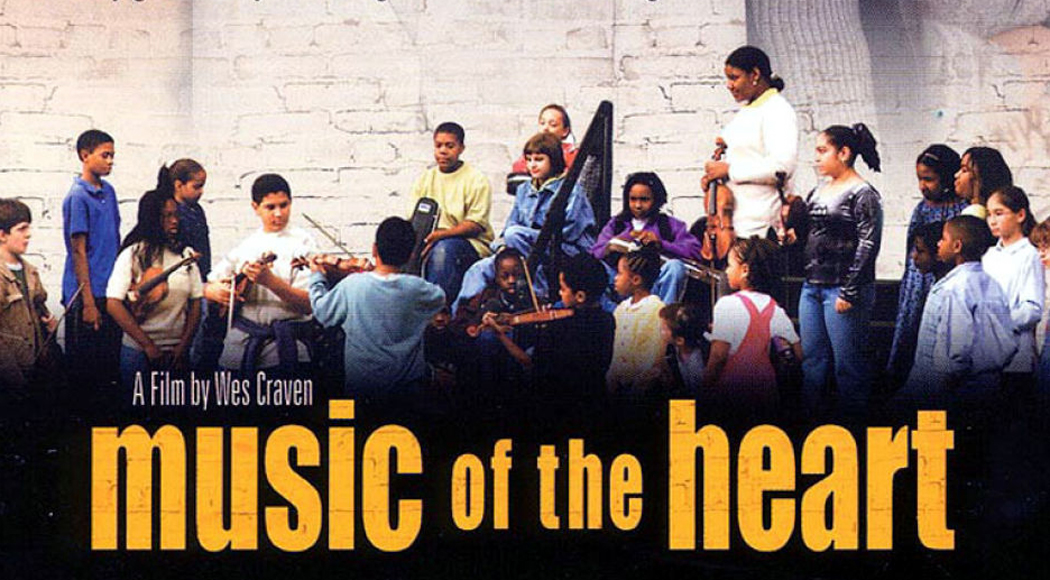
And readers so often confuse the content of a film with the quality of the film. I never had more reaction — negative reaction — to a review I wrote than when I panned Meryl Streep’s “Music of the Heart.”
The events of the film had a good heart, good intentions. It was about teaching music to inner-city kids. This is an idea no one can argue against. But the movie was a cloying, sentimental lie, from beginning to end. I could not believe a pismire of it, despite that it was “based on real events.”
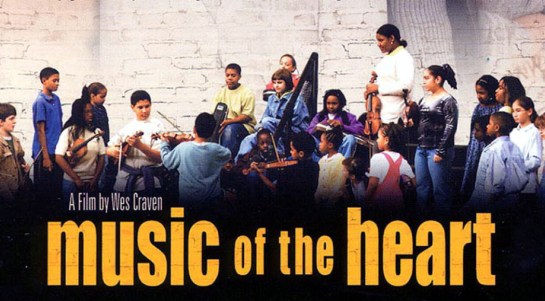
“Music of the Heart” is the most nakedly manipulative movie I’ve seen in years. It yanks you around from pillar to post, trying to make you grab for the hankies, but instead, it makes you squirm in your seat.
It means to make you feel good as you leave the theater, but take my word, the earlier you leave the theater, the better you’ll feel. There is no other word for the movie but ”phony.” Nothing in it is believable.
The kind of thing that made me cringe was the fantasy that a part-time temporary teacher in the New York City school system, now a divorcee from a Navy man, had enough money — despite complaining about her poverty in the film — to buy and renovate a New York brownstone.
When I see movies like this, I wonder what chumps the film industry takes us all for. How many final basketball games are we meant to sit through, wondering if the underdog will win?
The Big Game in this film is a Carnegie Hall concert, meant to save the music program in the school where Streep teaches. Will they pull it off? With the help of Isaac Stern, Itzhak Perlman, Arnold Steinhardt and — if they are too highbrow — Mark O’Connor?
This is not a story; it is a ritual. But even ritual must be judged by the truth that underlies it. There is nothing in this film even remotely related to real life: And I’m not just talking about how a single-mother substitute teacher with two young boys can afford to buy and renovate a house in Manhattan, building a little bit of Yuppieville in the middle of Harlem. No, I mean that no schoolchild ever acted like these children, no ex-husband ever acted like this one, no new boyfriend ever thought the thoughts of this one, no group of tiny fiddlers, spending the year playing “Twinkle Twinkle Little Star” in unison can turn around and instantly start playing J.S. Bach’s four-part counterpart on the stage of Carnegie Hall.
But what can you expect when a film sets out to press every button mechanically? There is artificial pathos at every moment, from divorce through rejection into spousal abuse and drive-by shooting.
There is even a little girl in leg braces who received inspiration from the example of Perlman. No cheap tear is avoided by director Wes Craven.
The film moves from one crisis into another by rote, using each to create a mini epic of schmaltz with each problem and resolution leading into the next, building to the Big Crisis at the end, with the Big Payoff.
Well, I heard squawks and squeals from all the fine and sensitive readers who thought I was disparaging the idea of teaching kids music, that somehow, I thought giving Harlem children violins and attention was a terrible thing.
I tried to make it clear in my review that I thought no such thing. Teaching is good; movie is bad. The distinction isn’t always made by civilians, for whom the mechanics of filmmaking are subliminal and the story is all that they notice.
I want, finally, to give you one whole review, entire. I was often blamed for alleged artiness, that I valued art films over entertainment. And while I certainly asked of films that they have some lasting value to the viewer — something beyond the momentary tickle of amusement — I was no fan of mere artiness.
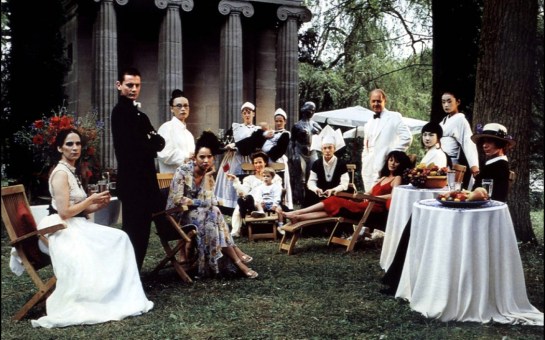
In fact, the film that gave me the most severe moral nausea was perhaps the artiest film I ever saw, save only “Last Year at Marienbad.” It was Peter Greenaway’s “8½ Women,” which struck me as so vile and misogynistic that it gave me the equivalent of metaphysical borborygmus.
There is no one who admires art films more than I. If you have read my film criticism over the years, you already know that if it is slow, wordy and has thoughtful gazes instead of car crashes, I usually give it stars out the wazoo.
But I have met my match.
Peter Greenaway’s new film, “8½ Women,” is so pretentiously arty, so aridly sterile, so ponderously coy that I could barely make it through to the end.
If you’ve seen other Greenaway films – “Draughtsman’s Contract,” “The Cook, the Thief, His Wife and Her Lover,” “Prospero’s Books” or “The Pillow Book” – you have some idea what to expect. If you enjoyed those films, you may enjoy this. I could find neither pleasure nor intellectual stimulus.
The film follows a 55-year-old financier and his grown son as they accumulate a harem on their Geneva estate, and then we watch as the whole thing breaks down.
That synopsis makes it all seem more coherent than the movie does, which is elliptical to the point of cloying.
It is all told in a series of brief, enigmatic vignettes strung together like baroque pearls on a string.
The 8½ women are not really women, and they are not really stereotypes either: What they are are embodiments of various fetishisms.
Critics have lamented Greenaway’s misogyny – I won’t belabor that point – but it isn’t simple misogyny. In fact, the women in this film don’t matter at all, one way or another. What matters are the accouterments of their individual brands of fetishism.
In other words, while pornography objectifies women, fetishism objectifies the paraphernalia and ignores the women altogether.
So, we have a harem including: a prostitute dressed as a nun; a woman in a business suit who makes usurious loans; a nude woman in leather body brace who loves horses and a 600-pound, enormously pink pig; a Japanese woman who wants to be a female impersonator so she can be more ”feminine”; and an amputee – the ”½” woman.
I have no doubt that Greenaway is serious about all this. But in human hands, such a cast could create only ludicrous comedy. Unfortunately, Greenaway doesn’t have a funny bone in his body: It is all quite grave.
Both father and son in the film are notorious narcissists, and it seems as if Greenaway is, too, but instead of navel gazing, they are staring a bit lower.
Most of the nudity is of 55-year-old John Standing, admiring his penis in a mirror.
I’ve never seen a film with this much nudity that is so unerotic.
Giving stars to a film like this is a problem. We are supposed to take into account the intent of the film. We don’t give bad reviews to action films because they are brainless: We take into account what the film intends and whether it succeeds at it.
Well, Greenaway intends to make a pretentiously arty film. So, should he get five stars for succeeding at making a reptilian, repulsive, boring, emetic and anaphrodisiacal yawner?
In his press material, Greenaway says that ”it is absolutely imperative to read poetry many times” and that we need to view his films multiple times to extract the meaning from them.
I think you’ll be a champ if you manage to make it through even once.
The lower 48
When I was growing up — in the Antediluvian Age when everyone smoked Lucky Strikes and cars all had clutches and carburetors — the maps in my grade school rooms had 48 states on them.
Those classroom roll-down maps were beautiful to my young eyes — all that green, yellow and ruddy brown in wood engraving density. They are maps that have never been equalled, and I knew, looking at the map, pulled down in front of the black chalkboard, that I wanted to go to every one of those states and see if Colorado were really the color of chestnuts, if Florida were really Kelly green. It seemed so lush.
Over the years, I’ve gone to — and written about — all 48 contiguous United States, seven Canadian provinces, a couple of edgings into Mexico and a few places in Europe and Africa.
In each of the places I’ve been, there is a top sight to see, like the Grand Canyon in Arizona or Yellowstone in Wyoming. And I’ve loved them all.
But there are also smaller, less well-known places that have quietly become some of my favorites. I’m sure everyone has the same: places where something special happened, or that sum up the qualities of a state or region, or that just seem so relaxed and beautiful that they draw you back over and over.
For me, such places are often remote from normal tourism attractions. I am a sucker for unspoiled grasslands in the Great Plains, for alligator-filled swampland in the South, for backcountry roads in the Appalachians. Others may look for happy crowds to join, for music and dancing or roller coasters. My favorites, however, tend to be empty of people, silent and to provide long views over a significant arc of the planet.
So, here are a few of those places, listed state by state.
Alabama
If you want to learn about the Deep South and how much it has changed, you should visit Selma. It is where the great Civil Rights march of 1965 began, crossing the Edmund Pettus Bridge and heading on to the state capitol at Montgomery. If you think the battle is over, you should visit Selma and see, despite how far we have come, how distant is the horizon.
Of course, the Grand Canyon is on our license plates, but almost any other square foot of the state is nearly as wonderful, from Hoover Dam to Douglas, from Four Corners to Yuma. But I have a special place in my heart for an obscure exit ramp from I-17 north of Phoenix. Badger Springs Road is a bit of largely undisturbed desert, with trails and cactus, and I can always pull off the highway and find a bit of peace and quiet.
Arkansas
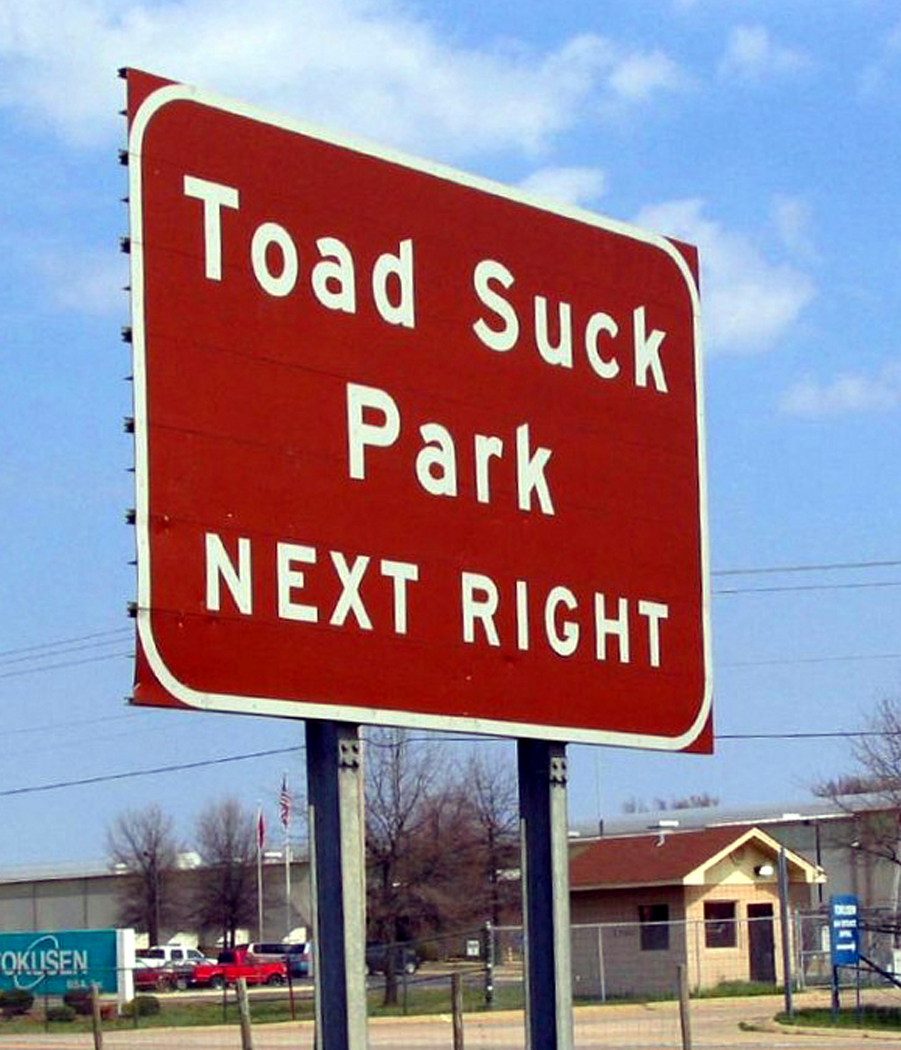
The state is rich in rural areas, craggy in the north, flat and muddy in the east through the Mississippi flood plain, steamy with hot springs toward the south. But the little town of Toad Suck in the center of the state seems even a little quieter, a little more remote than most, and is graced with a state park as well, along the Arkansas River. No hotels, but friendly people.
Northern California
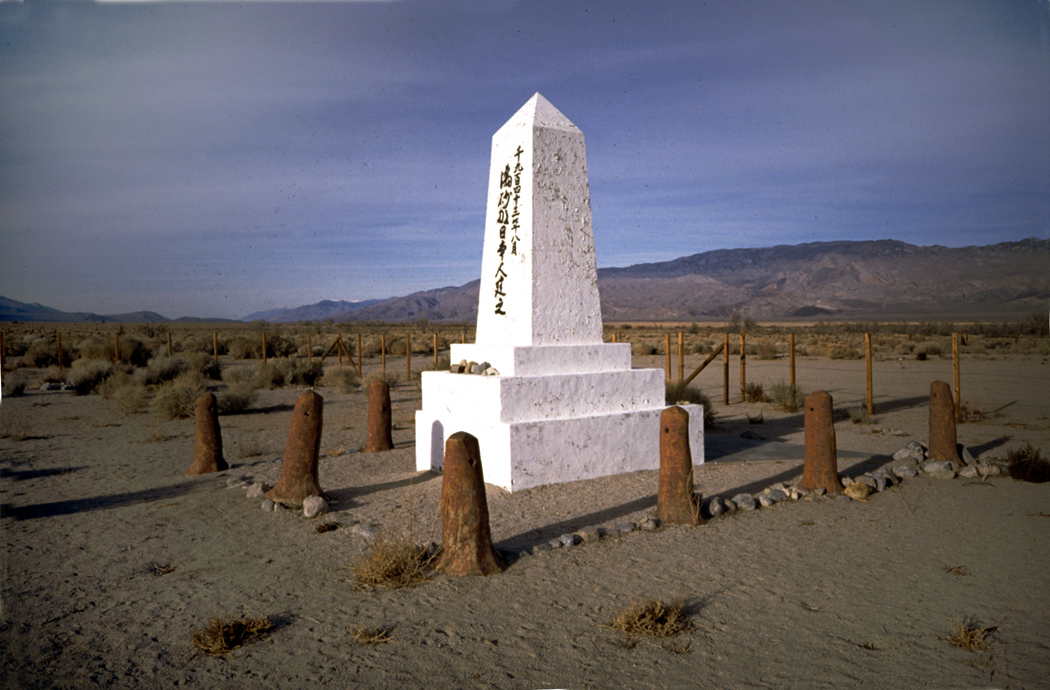
California is too rich; I have to split it in two. Even then, I could name a dozen places in each half: In the north — Tule Lake National Wildlife Reserve, Mono Lake on the eastern side of the Sierras, Lassen National Park, the Humboldt Redwoods, the tule marshes along the Sacramento River. But I keep coming back to Owens Valley, just below Mt. Whitney. From the soda-flat Owens Lake north to the ruins of the Manzanar Relocation Center — where Japanese-Americans were interned during World War II — the valley is both picturesque — the Alabama Hills where so many Western films were shot among the wonderland of rocks — and historic — in addition to the concentration camp, there is the sorry and violent tale of how a thirsty Los Angeles stole the valley’s water earlier in the century.
Southern California
East of San Diego is one of California’s most pristine deserts. It is called Anza-Borrego Desert State Park and it is the primordial home of all those Washington palm trees that line the streets of Phoenix. Borrego Springs is a surprisingly kempt little town in the middle of it, but the rest of the park usually seems as empty as a college campus during spring break.
Colorado
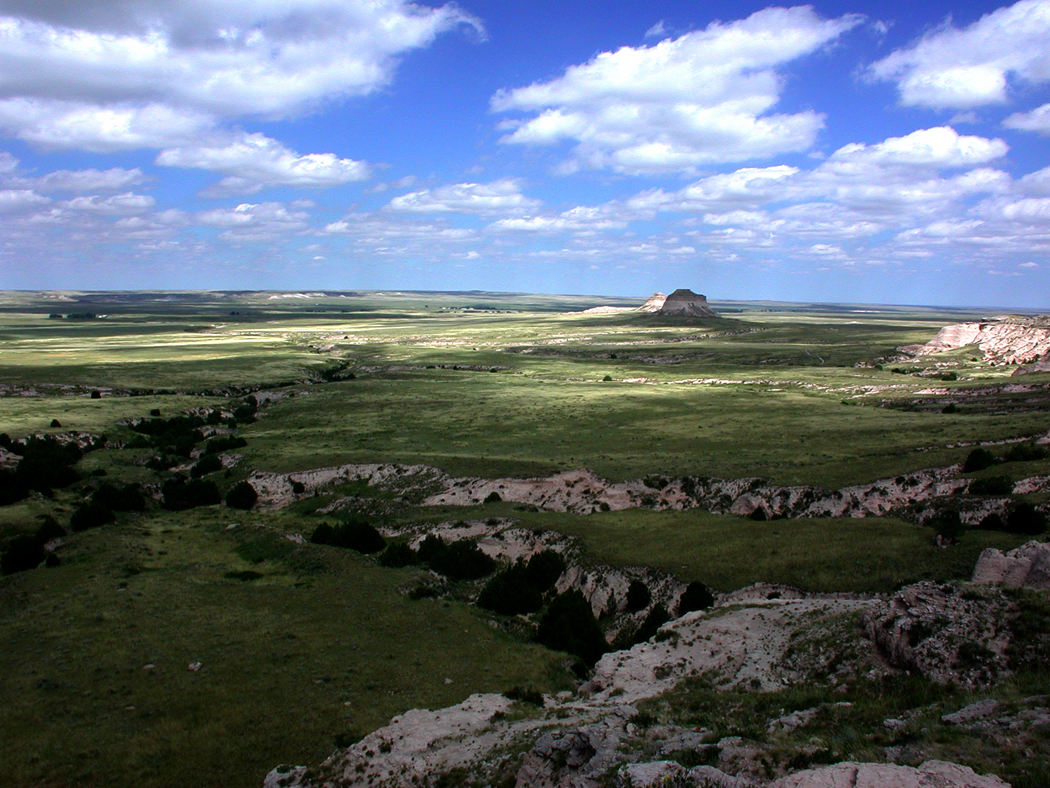
For most people, the state probably brings to mind skiing or expansion baseball, or an over-hyped beer, and certainly Colorado is best remembered for post-card mountains — all those “fourteeners” — but I love the Pawnee National Grasslands, one of the best places to get a sense of what the West was really about, what the Great American Desert was — not desert, but the Great Plains, vast, sweeping and grassy.
Connecticut
There is no more peaceful a river valley in the nation than the Housatonic north of New Milford. The Appalachian Trail winds along a portion of its banks. There are covered bridges, meadows and not too far away, near Cornwall, there is a large stand of virgin white pine, called the Cathedral Pines. U.S. 7 parallels the river most of the way.
Delaware
Delaware is a tiny state, and most people notice it, if at all, for the chemical plants and refineries that stick their bellowing smokestacks into the air, and the highways that pass through it on their way elsewhere, up over the twin Delaware Memorial Bridge. But there are the “Hooks” — Prime Hook and Bombay Hook national wildlife refuges, swampy and woodsy on the broad mouth of Delaware Bay.
Florida
If you cannot get enough of the Everglades, or if the national park is too crowded, head north off U.S. 41 on any of a dozen gravel roads into Big Cypress National Preserve. Or take the loop road to the south, through incredible cypress wetlands, with sagging Spanish moss and blackwater swamps.
Georgia
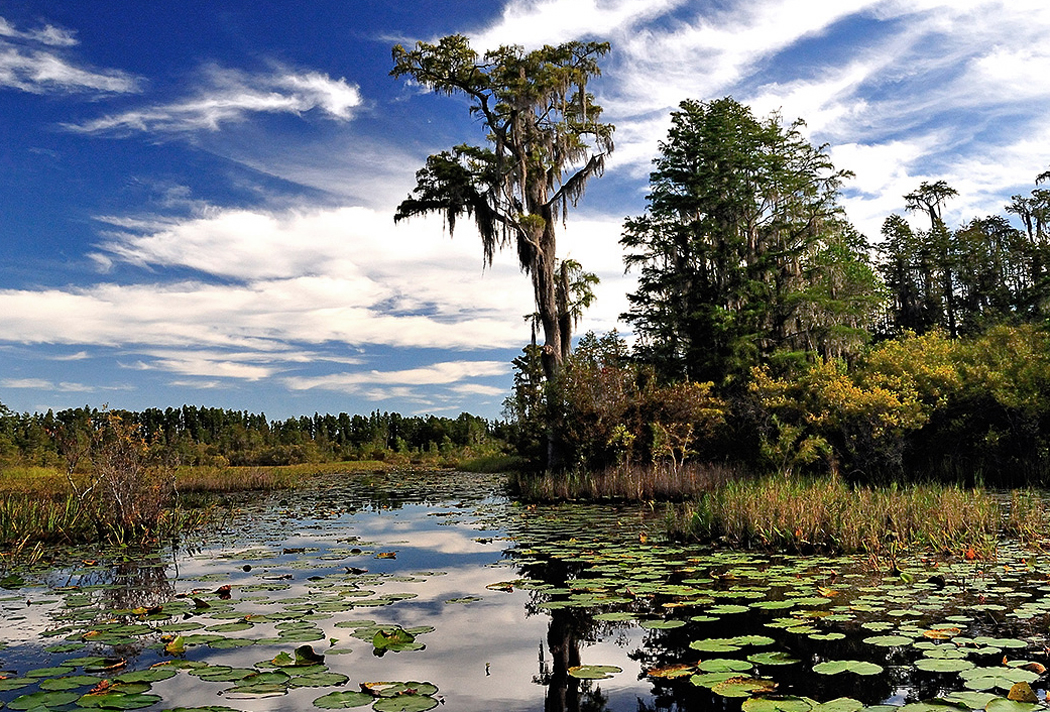
The Okefenokee is my favorite swamp. That’s saying a lot. I’ve seen more wildlife in it than in any other. Drive up Georgia 177 from Edith into the Stephen C. Foster State Park and rent a canoe. Paddle within inches of swimming alligators. Look into the trees for the snake birds — anhingas — with their darting necks and their wings spread out in the sun to dry.
Idaho
With its camas prairies, steep mountains and gaping canyons, the Nez Perce Indian Reservation is one of the most beautiful parts of this beautiful state. You can see the valley where Chief Joseph began his tragic 1,500-mile unsuccessful flight to freedom for his people in 1877.
Illinois
Chicago has big shoulders in the north, but down at the very bottom are the forlorn toes of Cairo, one of the most memorable of Mississippi River towns. It is aging, with peeling paint and boarded up storefronts, but you can feel in the humid air the history behind it. And you can see the conjoining of the muddy Mississippi water with the clearer, faster moving Ohio River. Boats and barges move past in the misty mornings like iron dreams.
Indiana
If you want to find the prototype of Disney’s “Main Street U.S.A.,” you couldn’t do better than to see Paoli, in the southern part of the state. No more perfect quiet little Middle-American village can be found. There are no tourists and nothing to do, but imagine what it must be like to live there, under the spreading chestnut trees just off the town square.
Iowa
Iowa is sometimes surreal: At the bottom of the bluffs of the Mississippi are cities filled with Victorian architecture. There are trees and vines. On top of the bluffs, there are endless rolling farms, with silos instead of trees, like some Grant Wood painting. The best of the cities is Dubuque, one of the greatest surprises of my travels. It is one of America’s most beautiful cities.
Kansas
If you want to get away from civilization, you can hardly do better than the middle of Kansas. Just north of Lebanon is the “Geographical Center of the Conterminous U.S.,” which is a highly qualified title to be proud of. But you stand there, looking out over the grass and wonder, if they dropped the Big One here, would anyone hear it?
Kentucky
The state is mud in the west, limestone in the center and coal in the east. Among the stumpy, round-bumped mountains of coal-mining Harlan County and neighboring Letcher County, are some of the poorest homes and interesting people of the country.
Louisiana
It surprises even me, but one of my favorite places is along the Interstate. For 20 miles, I-10 rises on piers over the Atchafalaya Swamp. Take an exit into the dark woods and drive along the river into old, mossy river towns, built where the terra is not so firma. Even the pavement seems squishy beneath your feet.
Maine
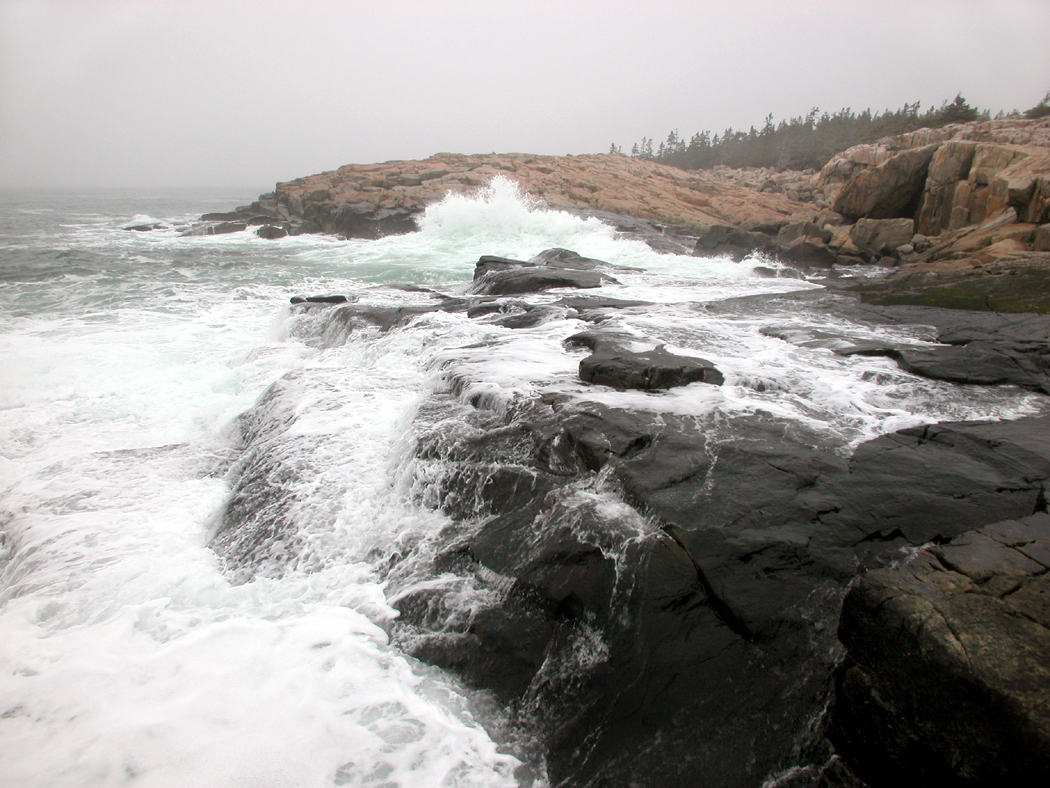
Everybody heads to Bar Harbor, where the T-shirt shops and frozen yogurt stores are chock-a-block. Pass on that and head to Schoodic Point further north. Also part of Acadia National Park, it is one of the ruggedest, rockiest parts of the rocky Maine coast.
Maryland
Antietam National Battlefield, near Sharpsburg, is the most emotional Civil War site I have visited. Every aspect of the fight, and all the blood and bullet-holes, seem spread out graphically, and the spirits of the dead and suffering seem almost palpable at the sunken road called Bloody Lane.
Massachusetts
Arrowhead is the one-time home of Herman Melville in Pittsfield. The house is actually a character in many of his stories, and you can look out the second-floor window of his study, where he wrote Moby Dick, and see the saddle-back peak of Mt. Greylock to the north, “Charlemagne among his peers.”
Michigan
The Upper Peninsula is a big place, but everywhere you turn, there are forests, lakes and rivers, including Papa Hemingway’s Big Two-Hearted River. It’s hard to pick a single place, but there is always the drive on U.S. 2 along the southern shore of the peninsula along Lake Michigan.
Minnesota
A river doesn’t really start from a single source, but the agreed fiction is that the Mississippi begins at Lake Itasca, southwest of Bemidji. The lake is not that large, by Minnesota standards, and seems quite placid. The “father of waters” begins at a reedy little outlet that you can step across and brag you crossed the Mississippi on foot.
Mississippi
The blues began in the Mississippi Delta, and they are still played in the shabby juke joints of Clarksdale, one of those old, cracked-concrete, grass-in-the-railroad-ties, dying-downtown Deep South county seats. Everybody you see, sitting on their porch fronts, seems more human, more profound. Maybe it’s the blues.
Missouri
The Ozark Mountains can be beautiful, with lichen-covered limestone and rivers that disappear underground. Like at Big Spring State Park on the Current River, where the river comes gushing back out of the rock like a fountain.
Montana
Chief Joseph began his three-and-a-half month trek in 1877 in Idaho, he ended it on the flat, grassy, empty plains of northern Montana, at a place called the Chief Joseph Battlefield near the Bears Paw Mountains, only 40 miles from the safety his Nez Perce Indians sought in Canada. He was captured by the U.S. Army, and promised “From where the sun now stands, I will fight no more forever.”
Nebraska
People look at me funny when I tell them that Nebraska is probably my favorite state to visit. The sand hills, the puny “national forest,” the Platte River and Scotts Bluff — they all seem unbearably windblown and lonesome. I love them all, but in North Platte, you cannot feel alone at the biggest railroad freight yard in the country. You can watch trains all day.
Nevada
If Nebraska is my favorite state, Nevada is probably my least favorite. It is empty, true, but its emptiness seems hard and thoughtless, like a biker at a roadside bar and casino. But I cannot deny the beauty of such places as Big Smoke Valley, between the Toiyabe and Toquima mountains, and the wide sagebrush plains where you don’t see a car for hours, but maybe a dozen dusty pickups.
New Hampshire
The Kancamagus Highway is one of the most beautiful drives in the country, winding through the White Mountains along the Swift River. It goes from Lincoln to Passaconaway and passes some stunning stony waterfalls.
New Jersey
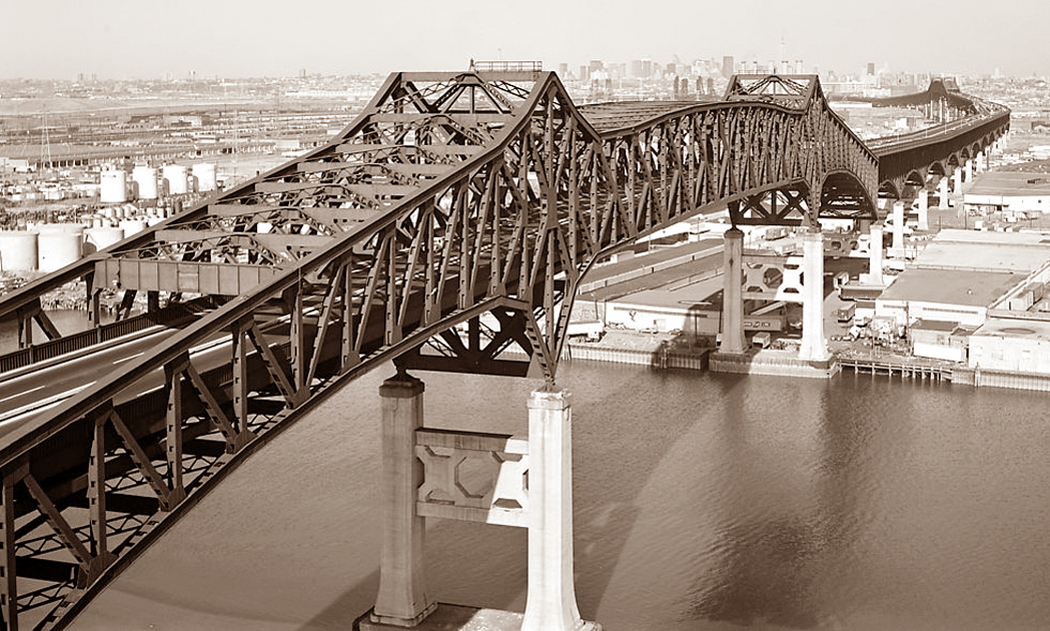
This is the state where I grew up. I came to despise the suburban banality of most of the state, but I loved two things: the northwest corner, with its minuscule mountains and bucolic forests; and most of all, the industrial corridor of the Jersey Turnpike, with its refineries, chemical plants and the always-beautiful Pulaski Skyway.
New Mexico
At the top of the Sacramento Mountains, in the Lincoln National Forest is a place called Cloudcroft. There is great camping, wild animals and — usually — clean air that is so clear, it could cut diamonds.
New York
New York offers more than any other single state except California. There are dozens of favorite sites, from Montauk Point to Niagara Falls. But I will always have a special affection for Harriman State Park, along the Hudson River, and Bear Mountain, that looks down at the gorge, just south of West Point and its military academy. Seven Lakes Drive, through the park, is what nature in the East is all about.
North Carolina
No question here: Ashe County, tucked up in the northwest part of the state, above the Blue Ridge, is away from the normal tourist loop, but more beautiful than any other place north of the Smoky Mountains. Any gravelly back road will take you to something surprising and there is the New River to canoe down.
North Dakota
It hardly counts for anything, and there is no real reason to visit, but I cannot get enough of Zap, a tiny crossroads, where the roads don’t go anywhere. Between Beulah and Golden Valley, Zap sits among the rising and dropping swell of the grasslands, with the occasional pond for cattle to drink from.
Ohio
Just south of Cleveland, there is a small bit of woods and rock called Virginia Kendall Park. It is right next to the larger Cuyahoga Valley National Recreation Area, and benefits from more people going there than here. There is a rocky bluff in the middle of the park and echoing voices in the forest among the leaf litter.
Oklahoma
One of the worst massacres of the so-called Indian Wars took place just outside of Cheyenne, along the Washita River. The site is now nothing but grass, a line of trees along the water, and some outcroppings of rock. But the surrounding Black Kettle National Grasslands can give you a real sense of what the land looked like 121 years ago.
Oregon
The Columbia River Gorge is one of the scenic wonders of America, and one of the most scenic drives is along the old, outmoded Columbia River Gorge Scenic Highway, which rises up the mountainside above the interstate highway, and takes you through more waterfalls than any comparable stretch of road outside Hawaii.
Pennsylvania
The second most famous house in America — after the White House — is probably Frank Lloyd Wright’s Fallingwater, a vacation home he designed for Pittsburgh’s wealthy Kaufman family beginning in 1934. It is also one of the most beautiful buildings in the country, sitting literally atop a waterfall and jutting out over the small forest glen.
Rhode Island
If you’re on the A-list, you’ll naturally gravitate to Newport and its extravagant mansions. I’m not on that list; I prefer the more humble Conanicut Island, where real people live. It sits in the middle of Narragansett Bay and gives you a good sense of what life on the bay is like.
South Carolina
Myrtle Beach gets all the traffic and spring-breakers, but Huntington Beach, 10 miles further south along Murrell’s Inlet, is the better place to be. With Huntington Gardens just across the street, with all those animal sculptures of Anna Hyatt Huntington, and a fresh-water alligator pond next to the salt marsh, Huntington Beach is a great — a great — place for seeing birds.
South Dakota
The Pine Ridge Indian Reservation may be poor, but it is beautiful. And as with many places noted for its poverty, it is very real. The people take the time to talk to you and there is history at every turn in the road — not all of it very comfortable for an Anglo to remember.
Tennessee
Most of the crowds at Great Smoky Mountains National Park gather along U.S. 441 across the crest of the range, or in Cades Cove in the southwest of the park. But one of the great drives, and less crowded, is up the Little River Road through the back side of the park. It follows the cascading Little River most of the way, and finds its way back to the visitors center at Sugarlands.
Texas
Even Texans will tell you the center of their state is the best part: The Texas Hill Country is an oasis in the middle of a state that sometimes seems like nothing more than the world’s largest vacant lot. And the best part of the Hill Country is found at the LBJ Ranch near Johnson City. It is no wonder that our 36th president loved his ranch so much. It is a jewel in a perfect setting.
Utah
Is there a square inch of the state that doesn’t deserve to be a national park? I haven’t found it. But one of the most overlooked gems is the ride along Utah 128 from Moab to Cisco. Through most of its route, the road seems to be the one you would imagine at the bottom of the Grand Canyon. Well, perhaps that exaggerates it a wee bit. But it is special.
Vermont
Near Plymouth is the birthplace and homestead of Calvin Coolidge, who has recently lost his title as the president we made the most jokes about. In fact, Silent Cal was a smart cookie and not at all the buffoon stand-up comics make him out to be. He was raised in a tiny Yankee village that is preserved as a state park.
Virginia
Virginia is another state that seems to have more than its fair share of special places. Perhaps it’s history, perhaps geography, but almost anywhere you turn, there is something that will draw you back over and over. Still, there is something special about Thomas Jefferson’s mountaintop home, Monticello, a monument to just how profoundly beautiful a little nuttiness can be. The Age of Reason meets Henry Thoreau.
Washington
Eastern Washington is largely a blank spot in America’s consciousness. Seattle, the Olympics, the Cascades, Mt. Rainier — they are all in the west. But there is hardly an odder or more peculiar and spooky landscape on Earth than what is called the Channeled Scablands east of the Cascades. The Grand Coulee Dam blocks the Columbia River there, where a prehistoric flood scraped the earth clean for hundreds of miles.
West Virginia
The Hawks Nest, on U.S. 60 between Gauley Bridge and Ansted, looks out over the deep declivity of the New River Gorge and is one of the great scenic views of the eastern U.S.
Wisconsin
Southern Wisconsin has many treasures, including the Mustard Museum in Mt. Horeb, and the world’s largest six-pack of beer at La Crosse, but nothing can beat the genuine zaniness of the Dickeyville Grotto, a religious site in Dickeyville created out of broken bottles, seashells, stones and broken crockery. It is one of the great “outsider art” sites, and don’t miss the tribute to Columbus.
Wyoming
What’s the highest, most alpine road in America that actually goes somewhere? Undoubtedly, it is the Bear Tooth Highway, U.S. 212 from Red Lodge, Mont., to Yellowstone National Park. It climbs up over Bear Tooth Pass at 10,940 feet and provides more long Rocky Mountain views than any other road. Look out for the marmots.
Leaving for Omsk
“Don’t make me shoot,” he said. “There’s too much paperwork afterwards.”
The guard, Bamki, was only half joking. I call him a guard, but he was more like an administrator. He was the only one left on this hill, surrounded by chain link. He got to live in the quonset hut. There was a coal stove there. We were surrounded by the fence, not so much to keep us in as to mark the edge of the compound; after all, the gate had fallen to ruin long ago, so there really was nothing to keep us in.
From the open front of the garage at the top of the hill, you could see for miles. Nothing out there but grass and scrub, except for the four birch trees under which the quonset hut was pitched. You could drive for hours from here and not find any mark of human activity other than the road, if you can call it that. More like a tractor path.
The five of us were there to fix things. Once a week or so, a truck would arrive. We would drag the load into the garage — more like a barn with a corrugated tin roof — and see what was on offer. A transmission, a desk, an entire load of crowd-control barriers, smashed by some uncontrolled crowd, maybe a sofa or coffeemaker. We never knew, but it was our job to repair and send it out with the next truck.
It was cold. It was always cold. Except in July, when it was hot. Now, it was November and ice glazed the water buckets in the morning. At least we had a brazier in the corner of the garage, although, with one whole wall open to the weather, the only heat was within a few inches of the fire. The tips of the fingers poked through the worn, frayed cloth of our gloves.
“How far do you think it is to Omsk?” Dentril said.
“I don’t know. Maybe 250 miles.”
We didn’t really have a clue. We didn’t really know exactly where we were. No one thought it important to tell us when they dragged us here. What was it. Seven years ago. Maybe eight.
“I think I found a cabbage leaf in my soup,” Dentril said. “No, wait, it is only the cellophane that wrapped the cabbage.” The soup steamed in the corner of the garage on a little propane stove. It was a joke he repeated every day.
Around us were the bones of old tractors, trucks, automobiles and bicycles. A wheel here, a frame there, gathering rust like moss. A crow sits on the fence outside the garage. Now two of them.
Dentril tossed the remains of his soup out the door at them. They didn’t move.
“How far did you say?”
“I don’t really know. Two hundred, three hundred miles. Maybe more.”
“Maybe less?”
“Could be.”
“Which direction?”
“Take your pick.”
“Toward the sunrise, or away from it?”
“What sun?”
The sky was always gray, although it seldom actually rained, or snowed. Winter saw a shadow of snow clumped around the roots of the grasses, where the wind couldn’t sweep it away.
“I mean, are we east or west of Omsk?”
“Or south. And why do you want to know? What difference does it make?”
“I was thinking of going there.”
On the wall, a rack of wrenches lined up, with more empty places than wrenches. Usually, if we couldn’t fix it with a hammer, it just added to the pile of spare parts and wrecks.
Dentril sucked some cold snot back into his nose and wiped the rest on his sleeve.
“I’m thinking Omsk must be nicer than this.”
“I’ve been there,” I said. “It’s OK.”
It was Tuesday, I think. A new truck was coming in. We waited.
“If we go on the truck, we could leave,” he said. “Who’s going to stop us? Bamki? He’s just as stuck here as we are.
“He’s got a gun,” I said.
“So?”
“It’s his job to stop us.”
“And it’s our job to escape.”
He said this as if it reflected some sort of incontrovertible logic. Like the next move in a game of chess, or the changing of tides.
The truck came. It was loaded with boots. Hundreds of them. No laces. They weren’t paired, either. Just a pile of boots. Some had holes in their soles; most looked almost new. They were dumped in the center of the floor. Dentril looked to see if any were his size. He found one, threw out his old shoe and put the newish boot on his left foot, keeping the other shoe on his right.
“What do you think?” he said. “Should we get in the back?”
It was an old army truck, with a canvas cover over its back half and a drop at the back end and a large red star on each cab door. We loaded three re-upholstered sofas on in exchange for the boots. The driver never left the cab. He smoked one cigarette after another without so much as rolling down his window. He didn’t look at us, and seemed mildly annoyed when the loading of sofas made the truck bump.
“I’m going,” Dentril said. “You coming?”
He jumped into the back and ducked behind one of the sofas.
“What you going to eat?” I asked him. “What you going to drink?”
Who knew how long the ride would be. Or where it was actually going, for that matter.
“I’ll eat in Omsk,” he said. That kind of optimism was bred by years of having none at all.
“Come on, don’t be silly,” I said. “Get off.”
“Make me.”
“I would but I don’t want to fill out the paperwork.”
We only had three jokes among us, so we reused them frequently. They were just another set of spare parts.
The driver started up the engine and made a grinding noise with the clutch. I jumped on to pull Dentril back. He crawled deeper into the cargo hold. I went for him just as the truck pulled forward. Dentril grabbed my ankle and held me.
“We’re going. We’re going to Omsk.”
Bamki watched the truck leave through what used to be the gate. He waved at us. He didn’t want to fill out the paperwork.
Two hours later, we were still on the dirt road, going somewhere. I pulled the flaps shut in the back, to try to keep a little warmer.
Three hours later, the same. Six hours the same. Dentril was bored. He reclined on one of the sofas and went to sleep. It began to get dark, and with the flaps closed, we could not see outside. But I could hear that the sound had changed: We were in a town. There were other people. The grinding of the truck echoed off the building faces and made a wholly new soundscape in the darkness.
“Wait till we get to the river,” Dentril said. “Then we’ll jump off.”
We waited, but the soundscape reverted to its former lonesome emptiness. If there had been a river, we missed it.
“Wait till the next town,” Dentril said.
We slept in a jostle of bad truck suspension and bad road.
In the morning, we both peed off the back of the truck.
“Where do you think we are?” Dentril said.
All we could see out the back was more grass. The road was better, paved, even, though full of potholes. By the angle of the sun, I could see we were headed west.
“That’s good,” Dentril said. “That’s toward Omsk, isn’t it?”
“It would be if we knew where we started from.”
He took comfort in that answer, although I don’t know why.
About noon the truck pulled to a stop. We could hear other people outside. They said “sir,” and “yessir,” and it sounded military. This was not good.
After an hour or so, the truck started up again. Dentril said he was hungry.
“I told you,” I said.
“What?”
“That you wouldn’t have any food.”
“Oh, yeah. But I’m hungry.”
We drove another six hours, and entered another populated space. The sound bounced off walls. We slowed. I heard a train pass.
“We should get off now,” I said.
Dentril looked at me, then bolted. He jumped off the back of the truck into what remained of the November sunlight.
“Halt!”
That was the familiar bark of authority. It repeated, more urgently. Then a gunshot and the sound of someone — Dentril — sighing like the air had been squeezed out of him, and a flop on the ground.
The truck took off again. I was alone in the back.
Another night was spent sleeping fitfully on a sofa. Another morning lit up the canvas top of the truck. Another pee out the back. When I looked, the landscape was flat. There was a lake in the distance. A big one. There were geese. The road rounded the shores; nothing else in sight. I was thirsty.
I was hungry, too, but it was the thirst that spoke louder. I damned Dentril for making me take this trip; I prayed for him, too.
As the second night descended, and I was faint from dehydration, the truck came to a stop once more. It was quiet. I peeked out. There was a chain link fence and a gate swung shut.
“Hoy,” said a voice. “Help me get these things out of here.”
He was looking at me. Blank face. No surprise. Like I was supposed to be there.
“Let’s unload,” he said, and turned his back. Another climbed in the back and grabbed one end of the first sofa.
“Let’s go,” he said, looking at me impatiently.
I grabbed my end and we carried the sofa off, into a large warehouse with a tin roof. Went back got the next and then the last, and lined them all up against the inner wall of the building. There were at least 20 other sofas there, all lined up. Beside them were bicycles; on the other wall were transmissions and truck doors. A brazier burned in the corner.
“Cabbage soup again for supper,” he said.
I took the bowl gratefully and slurped down the salty liquid.
“I think I found a cabbage leaf,” I said. “No, it’s only cellophane.”
“Comedian,” he said.
The long line

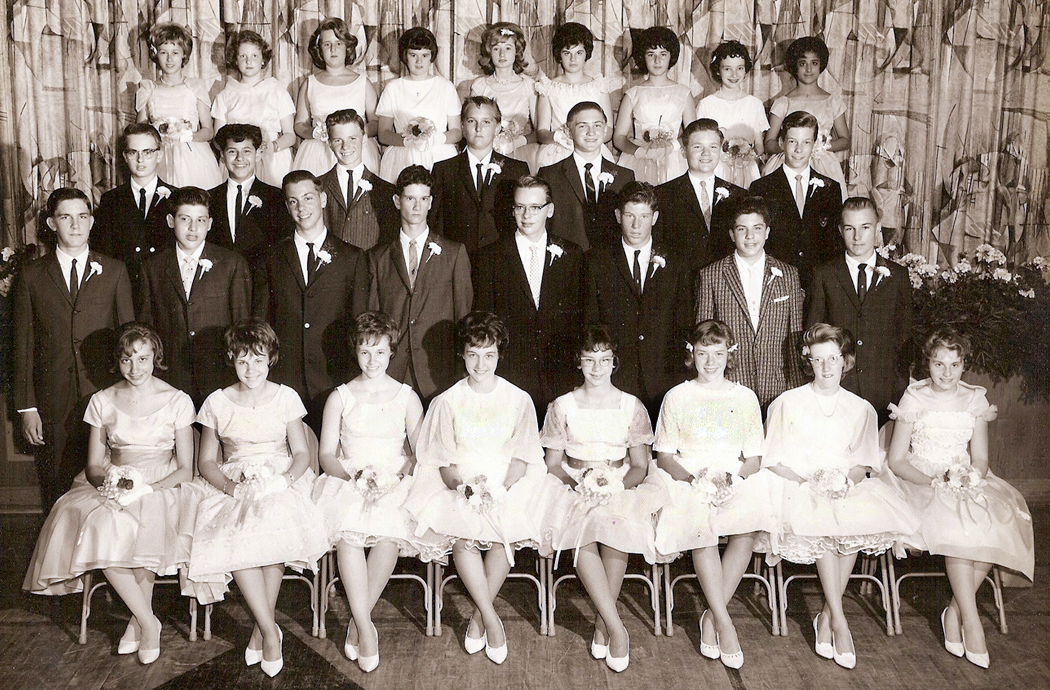
I recently came across a photograph of my second grade class and something odd happened.
I hadn’t thought of these young faces in more than 50 years. Yet, as I looked into their faces, their names popped into my brain. Where those names and faces had been stored, I have no idea: some forgotten warehouse in my mind, like the scene at the end of “Lost Raiders.” These were faces from nearly 60 years ago, and in their fresh-faced innocence, they barely show the traces that would line them even in their eighth grade graduation photo. 
I left behind my life in New Jersey four years after that second photo, going off to college and what seemed to me to be “real life.” I wanted to forget New Jersey — more exactly the banality I saw in the suburban stultification of my home state — and dive into the deep end of art, music and poetry.
But now, a half-century later, I saw the faces in that picture and names I have not uttered in 50 years reappeared magically, jogged out of the synapses of my brain like dust between the floorboards.
What connects, ourobouros-like, our lives now with our lives then? The disconnect seems immense: There is so little of then that survives into my now; yet, the person — the sensibility I am — is a continuous existence, a line drawn without the pencil once being lifted off the page.
There is a danger, when looking back, to fall into the miasma of nostalgia. You see it all over the internet: “Share if you remember when the milkman delivered milk to your door?” and “Remember when cars had running boards?” Rotary phones? Party lines? As the American population has aged, PBS stations ask for money to a soundtrack no longer of septuagenarians playing Glenn Miller standards, but now to septuagenarians singing doo-wop music and recalling, with a wistful gaze on their faces “the music of our times,” as if this shared experience created an us-vs.-them world in which we remain the good guys, who really knew the score, and they are the johnny-come-latelies who have ruined it all. 
So, it is easy to make fun of the elderly, watching reruns of Lawrence Welk and wishing music still had melody, like the tunes of Patti Page and Perry Como. Or the Beatles and Barry Manilow. Or, sometime in the future, of Nirvana and Coldplay.
Nostalgia is a trap we should avoid. The past was not better than the present; it was different. I, for one, would not wish to retreat to a time when segregation was enforced by police, when women had to wear girdles, and when everyone, everywhere, at every hour of the day, sucked cigarettes.
What interests me in that second-grade photograph is not a warm, fuzzy nostalgia, but a hard, difficult and confusing problem: How much of that is me, is still me? How complete is the link between that little boy and this old, bearded senex? What is the mechanism of selfhood? How come a flash glance at an old picture can fire off a neuron after a half century and cough up the name of a Linda Muth or a Lenny D’Angelo. Why do those names persist in the neurobiology of a 67-year-old writer, who has left them all behind? And what else is buried under a lifetime of experience, ready to be excavated by a chance trigger?
A few years ago, my wife and I were visiting her hometown in North Carolina. We stopped at a gas station to refill the car and she got out to go into the quickie-mart. Inside, while standing at the cash register, a voice called out behind her, “Carole Steele, do you remember me?” She turned around and saw an old man, cue-ball hairless, nearly toothless, with a vast beer belly and dressed in denim overalls — clearly an old farmer. “Thomas Bullins,” she said, in instant recognition. “What happened to your red hair and your freckles? And how did you recognize me?” Carole was now 70 years old. “Your hair,” he said. When they were in the first grade, little Tommy Bullins used to steal the ribbons from Carole’s pigtails.
He smiled that toothless smile, and Carole reached up and kissed him on the mouth. Some vast and unnamed chasm had been spanned in an instant.
What traces of the six-year-old Tommy Bullins remained on the wrinkled, pudgy, puffy, weathered face that Carole could see so immediately? “There is an X on the faces of all the Bullinses,” she says, “that I saw in the gas station.” Not an actual X, but a lineup of features that suggested an X there, that signaled that this was Tom Bullins.
I don’t know the mechanism for memory. I’m not sure anyone does. But I know its persistence, and I know that somehow that persistence is necessary for the development of a self — that sense that the boy is truly father to the man, that the me in New Jersey 60 years ago is the same me in the mountains of North Carolina now, despite all the midden of experience that has piled on in the intervening years. Would my mother recognize the little boy in me now? I know that Carole recognizes the little girl in her 50-year-old daughter; in fact, she hardly recognizes that Susie is all grown up.
We push through time like snow plows, leaving a cleared path behind us. That wake is our selfhood. 
Through Facebook, I recently reconnected with a boy (now man) I first met in kindergarten at the Henry Wadsworth Longfellow Elementary School in Teaneck, N.J. He now lives on the other side of the continent. When my family moved from Teaneck to Old Tappan and I began the second grade at Charles De Wolf Elementary School in Old Tappan, he was there, too, his family having also moved. This makes him the person outside of family that I have known the longest.
The contact brought up a welter of memory, of playing in a rhythm band in kindergarten, of taking those daily naps on the classroom floor, of seeing him and other classmates singing “Sailing, sailing, over the bounding main,” and of walking every day — at five years old — the half mile from home to school, and later, walking back. The entire geography of my tiny life was back before me: the A&P I passed on the way, the firehouse on Morningside Drive, the ballfield outside Longfellow school, the deli, the stationery store, the old grocery with its sawdust floor, the Italian pushcart merchant that wandered up Farrant Terrace calling out his wares, the two collies that lived down the street that scared my younger brother, who thought they were lions — the inside of the closet in my home, with its lathe-and-plaster walls. A whole world wells up. Where has it been sitting? Why is it all buried in there?
A few years ago, I began an autobiography, not for publication, but to share with my brothers in a group project: They would write theirs, too, and we would get to know each other better — what they had done after leaving home for college, and we lost daily contact.
The thing that most astonished me about the writing was that every memory I retrieved was a room with three other doors, and behind each of those doors was another room with three more doors, on and on, like some Borges story. I was dumbfounded at the amount of information that was still there to be recovered. Many were not anecdotal stories, but rather, sense memories, bits of things and locations that fell back into place when recalled.
It must be the same for everyone. I know that when I ask my wife to tell me about her childhood, she can go on for an hour and we have to stop, but the next day, we can start again and there is an endless stream, an bottomless well of material. In her case, it sounds all like a Faulkner novel and I have tried to write it all down. A fool’s errand: There can be no “all,” because it never seems to end. I write it into my laptop as fast as she can speak it, but I’ll never have the time to go back and edit the notes, because the next time, there are all-new stories, and another cast of characters.
I want to save as much as possible, not for publication, but for the sake of our grandchildren, so they can have some sense of their grandmother. If her stories can become part of their memories, then their interior lives can retreat five generations, back to Carole’s grandparents, who were so central to her life.
In the end, this has given me a powerful sense of the onflow of life, of the piling on of detail, of the continuity, not merely of selfhood, but of family, of history: a line that Carole calls “the long man,” which reaches back past Eve and Adam, past Homo habilis, back to our reptilian life, back to our eukaryotid beginnings, all a wholeness. Ontogeny recapitulates phylogeny. 
I see the scrubbed face of my old picture, holding my favorite ball, and I see myself now, aged and worn, and there is an odd reversal: The baby photograph is now six decades old and the ancient me is brand new. And in some inexplicable way, they are the same.
The idea of Alaska
When I was in my 20s, strapping and idealistic — i.e., an idiot — I lusted after this landscape. I knew it only in the photos in the Sierra Club coffeetable books, thinking how grand it would be to live in an alpine meadow in the Cascades, Sierras or in Alaska, with distant lightning-zag waterfalls dropping in a pencil-line a thousand feet down the face of a granite escarpment. I could feel the bracing air in my imagination. 
The attraction was part a Longinian yearning for the sublime, for the vastness of the landscape; part of the attraction was its isolation, away from the ordinariness of daily life with all its people, some of whom might well be my boss. There was no TV in this idealized world; only bear and moose.
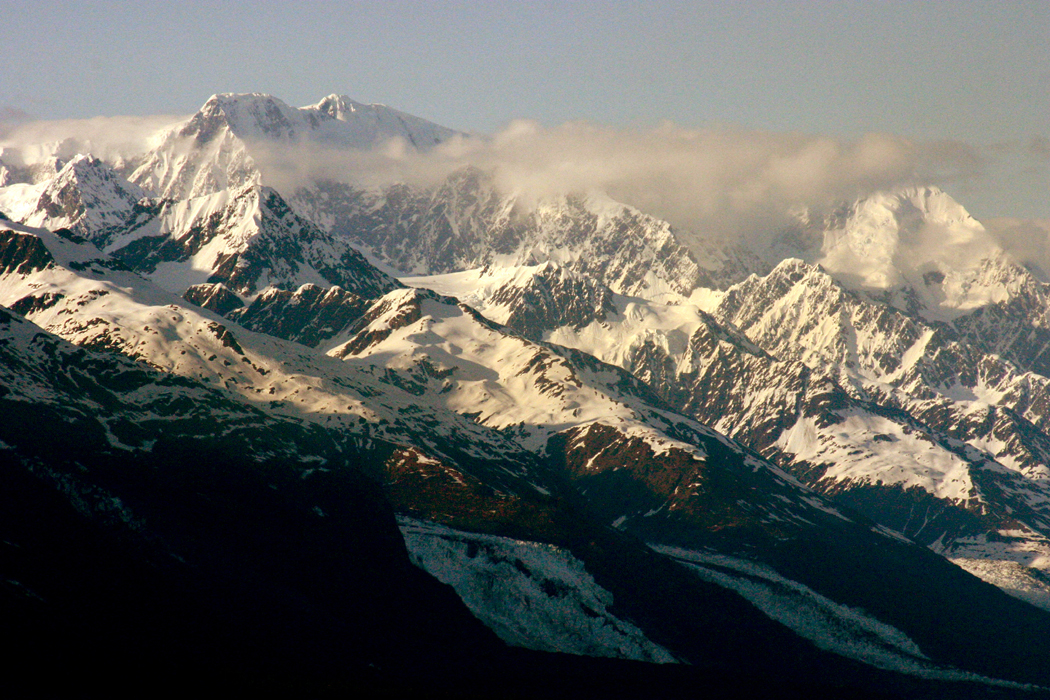
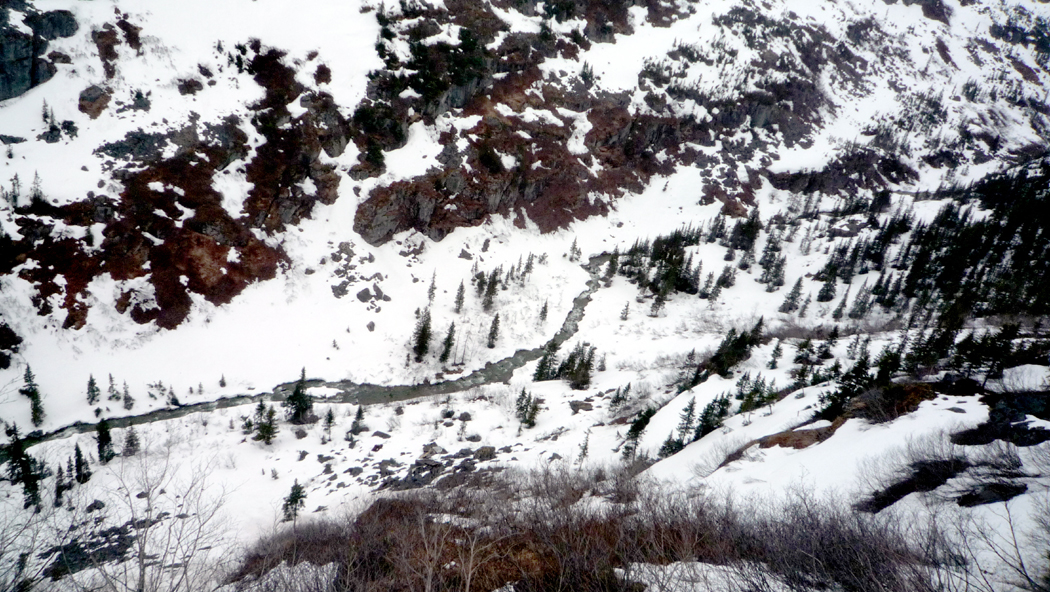
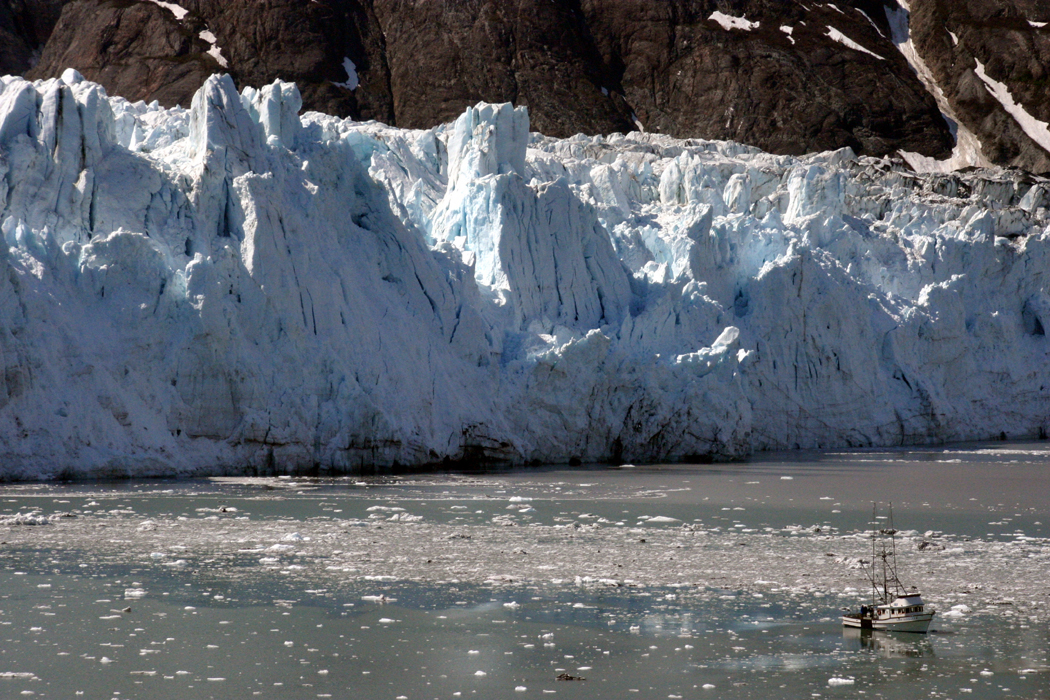
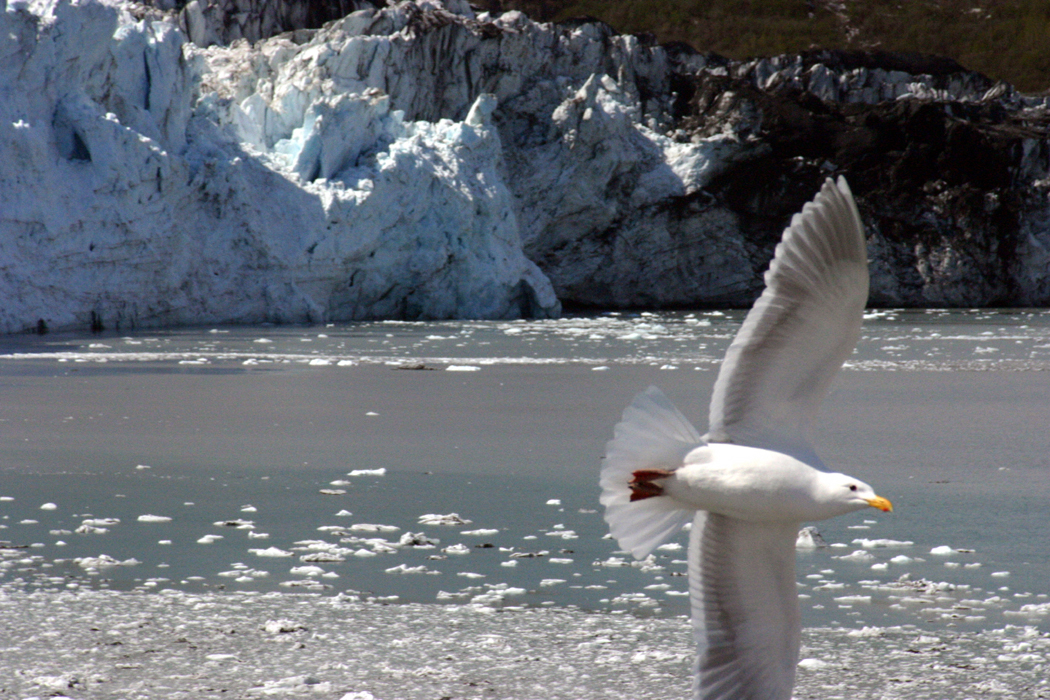
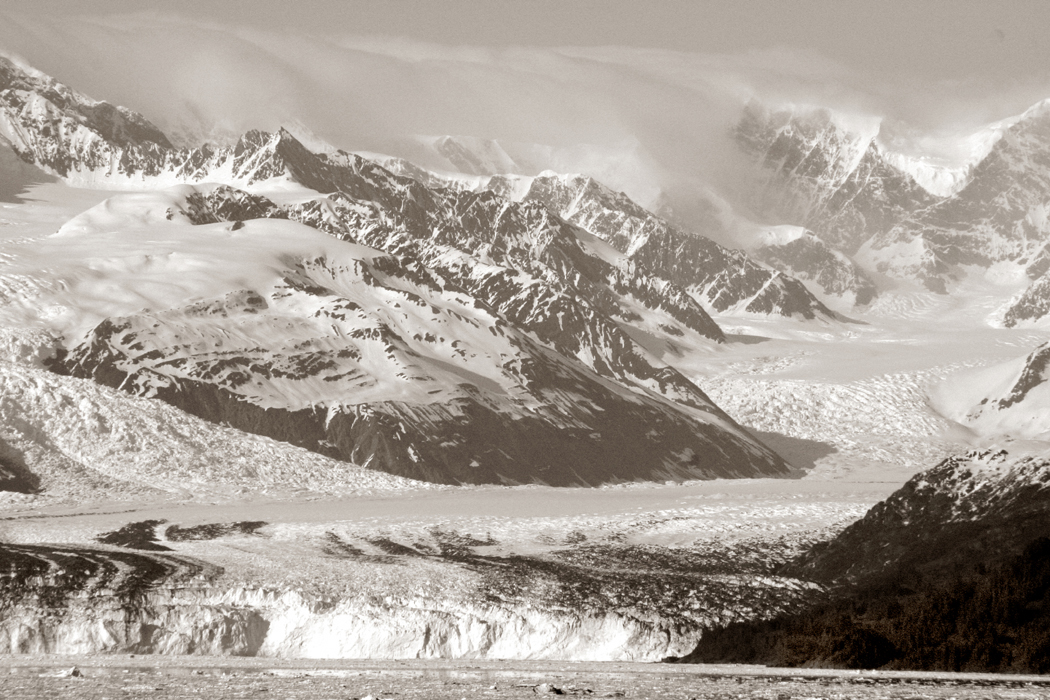
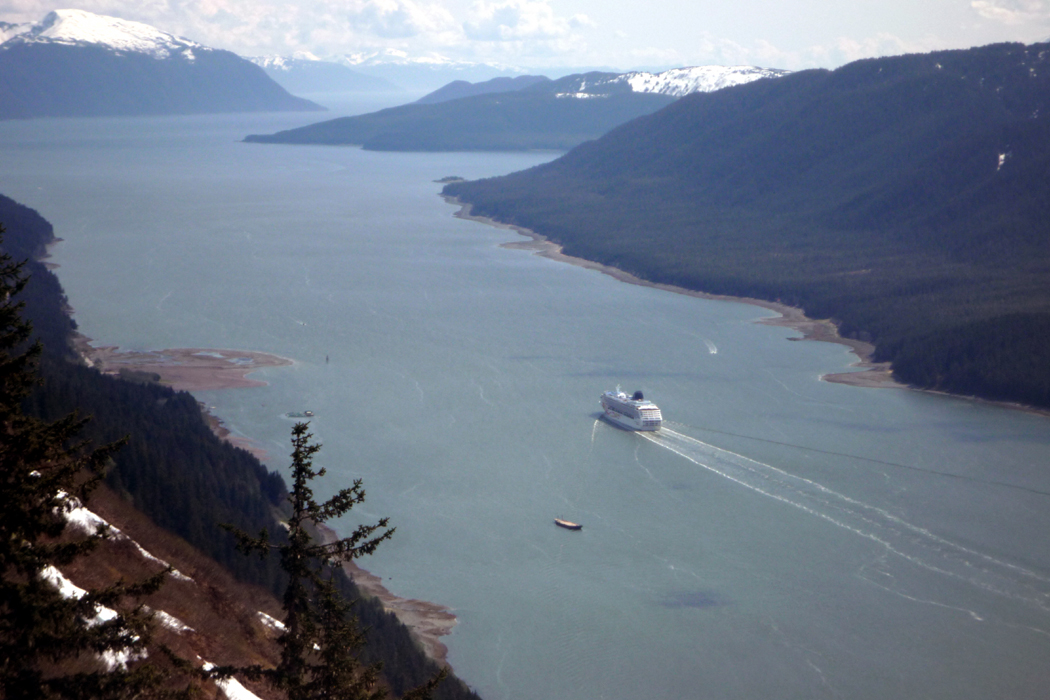
I am older now, still an idiot, and I can no longer feel that fervid longing, at least not directly, but I remembered it keenly visiting the mountains and glaciers of Alaska. They are vast, the air is ice on the skin and the vistas are the kind John Martin might paint.
The pianist Glenn Gould once made a radio show for Canadian listeners called “The Idea of North.”
For those of us south of his border, the idea of north is Alaska. Endless forests, grizzly bears, rock-cobbled rivers, salmon, snow and rime.
Alaska is an inaccessible place, where no interstates lead, and even its state capital cannot be reached except by air or sea. For most of us, Alaska is important precisely because we cannot get there; it is proof that there is still a moment on the planet that is not yet filled with highways, billboards, Nike ads and grinning tourists. For most of Alaska, to be seen is to be explored; it takes dedication, muscle and energy, just as it did for the Gold Rush prospectors who hiked over the Chilkoot Trail.
We think of Robert Service poetry or Jack London novels. Perhaps our idea of the frozen north comes from Robert Flaherty’s “Nanook of the North,” or Mary Shelley’s “Frankenstein.” In any case, it is a north that is still dangerous. A landscape that carries with it the final sense of the sublime: beauty that can kill us. And even if we survive, it is beauty on such a scale that our human minuteness shrivels our ambitions and makes us harbor cosmic thoughts.
Two hundred years ago, European art and literature was chockablock with the frozen Arctic. From paintings by Caspar David Friedrich to “Frankenstein,” it was icebergs and glaciers that told of the vastness and sublimity of nature. Make that Nature, with a Capital N.
The dark, stormy North was inaccessible and remote; humans were pismires in its vastness; danger lurked everywhere. Ice froze on the ship’s rigging and mariners had to chop it away with axes. 
“We are still surrounded by mountains of ice, still in imminent danger of being crushed by their conflict.” — “Frankenstein”
Or, from “The Ricome of the Ancient Mariner”:
“And now there came both mist and snow,/ And it grew wondrous cold:/ And ice, mast-high, came floating by,/As green as emerald. … / It cracked and growled, and roared and howled,/ Like noises in a swound!”
As green as emerald? Rather, as blue as sapphire.
In College Fjord, the glacial ice is blackened at the margins with sooty dirt and rocks, but the central part — the “filet,” as you might call it — is pure and clean. It is there, in places where deep fissures in the ice let you see into the glacier, that the ice shows bright, clear blue. The color is brighter when the sun briefly shines on it. It is Tarheel blue, as bright as a new paint block in a watercolor set. 
One of the vertical slices of the glacier has been worn through, leaving an icy natural bridge. In its donut hole, the blue is intense. Ice, it turns out is blue. It is not the mere reflection of the sky that makes it so — if proof be needed, there is no blue sky most of this day — but rather that the ice is not clear. Turns out, water is not clear, either.
It really is blue, although so thinly colored that a glass of it looks transparent. Put enough of it together and the blue is apparent enough. And the ice made in this giant Frigidaire is also blue where it is pure enough, although much of the surface is roughed up with layers of snow, to make them white and glistening.
Crack and boom, and some more ice falls off the front of the glacial wall. Most of the calving involves an avalanche of small ice cubes and snow balls rather than the giant heaving chunks we see on the nature TV shows. The center of the glacier’s face is where most of the action is happening; a certain section is concave and its upper surface, overhanging its lower, keeps dropping bits like plaster falling off a wet ceiling. It crashes into the water in big ice slides and sends up waves that circle off toward the boat. They peter out into wide ripples before they reach us, so we can hardly notice them as they pass.
When a bigger chunk falls off, it drops below the surface and immediately pops back up, like a whale breeching. Sometimes, as it reappears, it also turns over on its back, like a restless sleeper, before settling back down into the water. Seabirds rush to the spot to seek food.
It was the north that attracted Amundsen, Nansen, Peary. Parkas of animal fur made their heads three times normal size and they walked about in a stiff-leg shuffle in the ice and snow. The sky was always gray and the air always frigid. Snow blew sideways.
It was the ice and isolation that drew Byron’s Manfred, Jack London’s White Fang, Robert Service’s Dan McGrew. In Finland, it is the snow and ice of Sibelius’s “Finlandia,” the thin, remote trombones of his Seventh Symphony.
The problem is, that for most Americans who venture to Alaska now, they do so on a cruise ship, eating rib roasts and sherry triffle, looking off the taffrail for the spout of a friendly whale, or the antics of a sea otter. The cruise industry has turned the sublime into Disney ride. Whee!
It can take some concentrated effort, but for anyone who wants to invest the psychic and emotional energy to do so, the Alaska of vast spaces and endless emptiness is still there. But unlike the days when leathery men packed mules to go across the passes, we have to make that journey more in our heads than on our feet. It is an act of imaginative will to see the skull beneath the skin, the rocky sublimity under the coating of easy tourism.
I went to Alaska to find the wilderness I fantasized about when I was 20. It was the allure of the Sierra Club coffeetable books, with their glossy photos of deep glacial valleys and snow-capped sierras. I imagined living on some Cascadian mountainside with mountain goats and bear grass.
Which brings us all back to Wordsworth and the “Intimations Ode.”
We gain a good deal as we accumulate experience like barnacles. We are stronger, less easily angered or driven to political excesses, and we certainly have learned something about love that we could never have guessed when our hearts merely wanted. But, we have lost a good deal, too.
“I know, where’er I go,/ That there hath pass’d away a glory from the earth.”
Now that I am past 60, it is no longer a life I want, but one can never cease wishing to be 20 and longing for the heart’s desire.
“Dear Carol”

There was a moment in my life I was unemployed. I received unemployment checks for some weeks before I was handed a job interview with The Carolina Peacemaker, the black weekly newspaper in Greensboro, N.C. The fact that I was white seemed to make no difference. Neither did the fact I had no journalism experience at all.
Initially, the paper was looking for a photojournalist — actually, they just needed someone who could process film. When they hired me, they asked if I could write, too, and within a few months, I was “news director,” a title that sounds a whole lot more impressive than the reality. Reality was a staff of me and one other writer, a secretary, a typist, an ad salesman and Mike Feeney, a cynical Irishman and washed-out New York Times reporter who came in once a week to lay the paper out. He spent his spare time in his office drinking bad coffee and filling out the Times crossword puzzle in ink, without ever needing to use any of the “down” clues. It was like filling in an application blank. His desk was piled with ancient moldy paper coffee cups, with dehydrated grounds in the bottom, along with crushed out cigarettes. There must have been a hundred of them. I don’t know why he chose not to throw them out.
When Feeney quit, I became “managing editor,” although all that meant was that I had more work. I edited all the copy, wrote all the headlines, laid out the paper each week, developed all the photographs, sized them and sent the works out to the printer.
I also wrote many of the stories, and all of the editorials. It may seem strange that a white guy should be writing editorials telling the black population of Greensboro who to vote for, but I have to say that I never felt the slightest sense of resentment or mistrust. The paper never hid the fact that I was not African-American, and I had excellent relations with everyone I met in the black community.
But it wasn’t only editorials and news stories. A few years after I got there, the woman who wrote the advice to the lovelorn column retired, and I inherited the “Dear Carol” spot. I also became the “Kitchen Magician,” and wrote a weekly cooking column.
I have to say I had fun with Dear Carol. I created a distinct personality for her: She was a militant black feminist. I knew her entire biography, where she was born, who her father and mother were, where she went to school — the whole nine yards. I didn’t need to invent her: She was there, inside me waiting to get out.
But the most amazing part of the “Dear Carol” column was that I didn’t only have to write the answers to the letters, I had to write the letters, also.
Week after week, I concocted letters with some of the oddest and most peculiar personal problems I could think of. I had a ball.
Here are a few of them:
LOUD TIES
Dear Carol,
There is this really cute guy in the office where I work. He is a salesman and I am a secretary. But though he is friendly, and I think we could really get together, I worry about him because he wears the most disgustingly loud ties. And his socks never match. In fact, I don’t see how he can be the successful salesman he is when he shows such miserable taste in his clothes.
I know you shouldn’t judge a book by its cover, but a book doesn’t choose its cover. This guy chooses his gold lame neckties.
Should I try to become used to his clothes, or should I forget about him and look for someone else?
— My Clothes Match
Dear My,
Why aren’t you a saleswoman? You have more class than this dodo that’s pulling in the loot, but you type his ungrammatical letters.
There are three ways to be about clothes. One is to be oblivious. Many people just don’t care what they look like. Clothes just aren’t important. If they keep one from being arrested or from catching pneumonia, that’s enough.
Another whole group of people love clothes and they love the way they look in the latest fashions. They know how to dress and they do it. You can see them not only on the neon disco floor, but even in church on Sunday mornings. These people just look classy.
Then there is our salesman. He apparently wants to dress well, but doesn’t know the first thing about style. He should just relapse to the first phase and not care about his clothes. When he tries to look good, he becomes a joke. Plainness is better than gaud.
The choice is yours. Do you want a turkey who looks like a Reynolds Wrap mummy, or do you want some other turkey?
If I were you, I would just bide my time and not worry about men. When you find the right kind of man, it will be soon enough. In the meantime, you just don’t need one.
ON THE MAKE
Dear Carol,
I am a salesman for a small business and my boss is a woman. I can get along with a woman boss just fine, that doesn’t bother me. In fact, she’s real good at what she does. But she has made advances to me that are more than suggestive. They are downright rough. If she had her way, the janitor’s closet in our building would be a mighty busy place.
But she is not my type, and besides, I’m married. My wife is a quiet sort who hasn’t been around much.
My boss has been a round a lot. Especially around my desk, chasing me. Will I have to quit my job?
–Chased, so far
Dear Chased,
Don’t quit good job merely for personality problems. If you enjoy your career and you are making a good living, don’t blow it just because of one lecherous boss. If she is really good at her job, she will be promoted or will change companies as she rises in management. Then your problems will be gone. Until then, realize that her attentions are only a nuisance. Let her know that you are satisfied in your marriage and tell her she is bothering you.
And when you make it into a management position, remember your lesson and don’t bother the women you supervise. It’s a two-way street. I know.
NOT SINCE HIGH SCHOOL?
Dear Carol,
Boy, do I ever have a problem.
I am getting married next month to the man I’ve been engaged to for two years. We have a good relationship and I love him a whole lot.
We have always had a good sex life and we enjoy each other a lot. But I am pregnant. (That’s no problem since we both want a lot of kids).
But the problem is that several months ago, I decided that if I was going to be married, I should get out and have a last fling. Things got a little out of hand and I made it with 16 different guys in a week period. It was during that time I got pregnant. Now, I don’t know if the baby will be my fiance’s or not.
So far, the notorious week has been a secret, though I don’t know how. I haven’t done anything like that since high school. But should I tell my man or not?
I just don’t know what got into me.
— Monogamous
Dear Monog,
First of all, don’t ever say a thing about it. You will only cause pain for the one you love. It is spilt milk, so forget it.
Second, don’t ever let it happen again. If you’ve been with this guy for two years and having “a good sex life,” you are as good as living together and in my book, that is the same as marriage. And marriage requires trust. If you aim to make it safely through the many years you have left, you will have to give some reason for your hubby to trust you.
Of course, the same thing goes for him. I don’t want to leave the men off the hook.
They probably need to listen to this advice more than most women.
With a child on the way and a marriage upcoming, you will need a whole lot more maturity than you showed several months ago. You will have to be more circumspect as a mother.
But what in the world did you do in high school?
THE RAT COMES HOME
Dear Carol,
I am in a rage. The man I have been seeing for five years is seeing another woman. My man is married and his wife never knew about us. We kept a good secret, but now I find my man has been keeping a secret from me, too.
I got so mad that I told his wife about his affair with the third woman, but I still haven’t told her about us. His wife threw him out of the house for playing around with the other woman and the rat has come to me asking for a place to stay. The whole thing is a mess.
Well, I just want to say that for the first time ever, I understand the wife’s point of view. It hurts. But should I keep the rat, or let him drown?
— Tables Turned
Dear Turned,
You should have learned your lesson by now. The rat won’t drown, he’ll just ask a fourth or fifth girlfriend for a place to stay. He may have already. Did it ever occur to you that he may have been turned out by other girlfriends before he even asked you? Forget him. And clean up your own act.
A STINKER
Dear Carol,
My wife embarrasses me every time we go out. She has a nasty habit of smoking cigars. She likes those imported Italian cigars that are triple-dipped in asphalt and she smokes one with a cup of coffee after dinner. That is not so bad at home, but she does it when we are visiting friends and relatives.
My mother never liked my wife, and now this only seems to confirm, for my mother, the nasty things she has thought all along. But aside from the cigars, my wife is wonderful. I love her very much and don’t want to lose her. What can I do?
— Smoke Gets in Your Eyes
Dear Smokey,
Cigar smoking is unusual in a woman. I dislike all smoking and try to convince everybody to stop. I’d try to convince your wife to stop, too, but I doubt it would work. Best thing is for you to do is talk it over with her. Compromise and let her smoke among certain friends that are used to her, and ask her to forego the stinkers when you visit relatives, especially the worried mother. I know how that can be.
Just remember that several great women smoked cigars, though I doubt George Sand smoked those Italian jobs.
PAINT PAINS
Dear Carol,
My son is in college now, studying art. For Christmas last year, he gave us a huge painting to put over the couch. This canvas in the frame is at least six feet long. But Carol, the painting is terrible! It is six feet of modern abstraction, all bright blue, red and green. It looks like a wreck between a paint truck and a ketchup factory. It has been hanging up there since Christmas and I can’t take it anymore.
I thought that after a few months I could get used to it, but I don’t think several decades would help. I don’t want to hurt my son’s feelings, but I can’t stand the pain in my eyeballs anymore.
What can I do?
–No Whistler’s Mother
Dear No,
I sympathize with you. I once received a hall clock that was a statue of a naked lady with a clock in her belly. It was too big to put in my hall and so I finally put it in a large dumpster.
But your problem is that it is your son who gave you the painting and the only way to handle the problem tactfully is to ask him to paint you a new one. If you flatter him into painting a new one, then it can take the place of the old one. Give yourself several months to get used to whatever he paints. Give the old one to his father and let him worry about where it might fit in his workshop.
HER MAN IS A PICKY EATER
Dear Carol,
My boyfriend is such a picky eater. He won’t touch most anything that normal people eat.
He eats peanutbutter and marshmallow sandwiches and mashed potatoes stirred up with mustard, but practically nothing else.
His mother always let him get away with being picky when he grew up, and now I think he’ll never change.
One the other hand, I enjoy good foods. I go crazy in a Japanese restaurant or around a food processor. I love nice cookware and I own a beautiful set of carbon steel chef knives.
Well, my boyfriend and I are thinking about getting married, and I wonder if our eating habits will cause any trouble. Do you think I have something to worry about?
–Gourmet
Dear Gourmet,
It might cause a problem at first, but as the years go on and on and you fall into a common marriage pattern, you won’t be eating together anyway, so it will make no difference.
You will wind up eating salads or soup alone and hubby will come home late and fix a P-butter and Marshmallow sandwich and sit down in front of the tube.
Mothers — When your children are young, make them eat at least a bit of everything that you serve. If a kid hates mashed rutabaga, make her eat one spoonful every time you make it. In a few years, rutabaga will be among her favorite vegetables.
A kid can’t complain about one spoonful, and almost any food problem can eventually be overcome this way. Start early with your children and they will lead fuller, happier lives.
I know. My mom made me eat rutabaga.
I CHEATED, BUT NOW MY WIFE WANTS A TRIAD!
Dear Carol:
I’ve been married for ten years and have no children (by choice) and I have always gotten along with my wife. In those ten years we have never had a fight.
But as I hit my 35th birthday, I began to wonder where my life was going and I began to be afraid that I would be caught in a dull life. So when the opportunity arose to cheat on my wife, I took it.
The other woman was a waitress with huge beautiful brown eyes and a pair of legs that belongs in the Guinness Book of Records. But she was only 19 years old.
Now I knew that a lot of men go through what I did and I know a lot of wives find out about it, like mine did. But most wives either ask for a divorce, or make the big effort to forgive. My wife has a different idea. She wants all three of us to live together.
She went to the restaurant to talk to the other woman and they liked each other. My wife told her that even though she was jealous, she would control it and that she would like to find out what I would do if we all lived together.
What I’m doing is panicking.
Now a lot of guys would get real excited about living with two women and I agree it has its points, but what most men don’t consider is what it would be like to have two women telling him to take out the garbage; two women telling him to mow the lawn; two mothers-in-law.
If I had my choice, I would just go back to my wife and things would like they always were. My life is no longer dull, but I don’t think I can manage this a trois.
–Off The Pace
Dear Off,
Now you know what life is like in the fast lane and you are coughing exhaust fumes.
I think your wife is trying to teach you a lesson and it sounds like it’s a lesson you’ll never forget. Now you know the grass on the other side of the fence will only get you in trouble.
Pardon me while I gloat.
I’m sure that if you explain to your wife how you feel and if you promise to be a good boy and not do it again, she will let you off the hook. Personally, I marvel at the ingenuity of your wife. She must know just how to make you suffer.
Dear Carol,
I lost a part of my thumb in a mill accident several years ago. That is not a problem by itself, but I love bowling and my bowling ball has only two holes drilled into it.
Many years ago, a lot of people had ball with only two holes, but most of the buys in my league don’t remember that and they make fun of my bowling ball.
I know I’m being touchy about it, but they make the same jokes all the time and it gets on my nerves. “Hey, thumbs up, Bill,” they yell at me across the lanes. Last Christmas the guys on my team took up a collection and bought me another hole for my ball.
Am I being too sensitive?
–Spare me
Dear Spare,
Repetitious jokes can get on anyone’s nerves. What you need to do is talk to your team next time you bowl and tell them how you feel.
Don’t make a big thing of it, just say quietly, “I know you fellows mean well, but I’m sensitive about this matter and I wish you wouldn’t make jokes any more about my ball or my thumb.” That’s all there is to it. Most people are mean only for thoughtlessness. If they know the score, they will go ten frames for you.