stone.tif

stone.tif

Perhaps the most peculiar thing about the Declaration of Independence is that the portion of it that seemed commonplace when it was written now seems revolutionary, and the part that seemed to its framers as most central, to us seems trivial, even whiny.

As a piece of rhetoric, it begins in generalities, narrows to specifics, and ends in a course of action. It couldn’t be more concisely structured. The committee charged with drafting it in the summer of 1776 chose wisely when it asked Thomas Jefferson to write the first version. Jefferson’s prose is a model of late 18th-century style: precise, lucid and syllogistic. declaration 3

It states baldly and without argument or support, that all men are born equal, have certain rights by virtue solely of being born, and that when a government fails egregiously to effect the safety and happiness of the people, it is their right to replace it.

But Jefferson didn’t invent its ideas whole cloth. In fact, as Jefferson wrote years later, the purpose of his stirring words was “not to find out new principles, or new arguments, never before thought of, but to place before mankind the common sense of the subject, in terms so plain and firm as to command their assent, and to justify ourselves in the independent stand we are compelled to take.”

Much of the remainder of the Declaration is given over to a litany of complaints the colonies had about British governance. Some of these complaints still seem legitimate; many seem trivial, even trumped up. “The King did this” and “The King did that.”

“He has plundered our seas, ravaged our coasts, burnt our towns and destroyed the lives of our people,” it says. Pure hyperbole.

These complaints were the part of the Declaration that was “news” in 1776. They constituted what made the document inflammatory.

Few can read through the whole of the Declaration of Independence now without a sense of fatigue: Those complaints were the issues of 1776, not of today.

It is the second paragraph that seems told to all people at all times, and remains news to us in the 21st century.

Bridge between ages

But to follow those ideas from the century before the Declaration into the ink on its page shows just how important its year of birth was. It was born in the cusp between two great ages, two overriding sensibilities, and partakes of both.

The period from about 1775 to about 1825 is one of the richest in humankind’s history, fertile, even febrile. It is in many ways, the hinge between the past and the modern, between the classically minded 18th century and the Romantic 19th. From an age of Reason to one of Sentiment — as it was called at the time. In Europe, it was the age of Goethe and Rousseau.

And no figure in the American experiment better demonstrates that shift of sensibilities than Jefferson.

On one hand, he epitomized the faith in science and logic of the Enlightenment; on the other, he shared with the revolutionary Rousseau the belief in the nobility of humanity and its drive to social improvement.

You can hardly fail to notice this point when you visit Jefferson’s home in Virginia.

Monticello is a mirror of its maker. Jefferson built a model of Palladian proportion and filled it with moose antlers. The outside lines of the house are clean and mathematically rational. The inside is a warren of peculiar and unnerving spaces.

Jefferson never fully reconciled these two aspects of his personality. He was a slave owner who sings of the dignity of the free man. How much more conflicted than that can you be?

The Declaration of Independence speaks to us now, in large part, because of this clash of sensibilities in Jefferson.

On the one hand, you have the ideas of the Enlightenment, that brilliant flame of philosophy and science that sprang up in Europe in the 17th and 18th centuries.

On the other hand, you have the growth of the individual as a thinking and feeling person.

The Enlightenment preached rationality and temperance, tolerance and universal principals.

One of its most influential writers was John Locke, who, in his Second Treatise on Civil Government, from 1690, wrote that all human beings have natural rights and that these included “life, liberty and the pursuit of property.”

It was an idea that took hold and flourished.

By the time of the American Revolution, the idea was commonplace. It shows up in George Mason’s Virginia Declaration of Rights in June 1776, in slightly altered form:

“That all men are by nature equally free and independent and have certain inherent rights, of which, when they enter into a state of society, they cannot by any compact, deprive or divest their posterity; namely, the enjoyment of life and liberty, with the means of acquiring and possessing property, and pursuing and obtaining happiness and safety.”

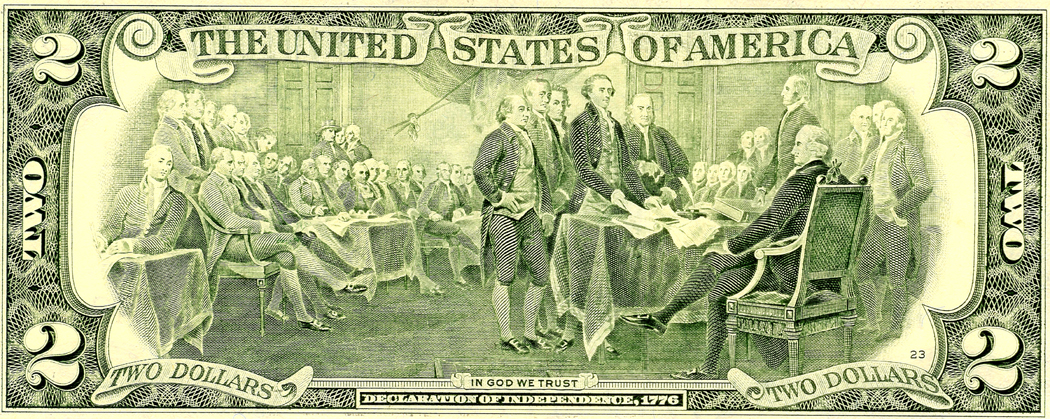
When you compare that with what Jefferson first wrote, you can see how much better a writer Jefferson was. He only needed 31 words to say what Mason required 57 for, and say it more forcefully and memorably. Two dollar bill

An economy of words

Jefferson’s first take on this was considerably more sonorous, but still not quite there:

“We hold these truths to be sacred, that all men are endowed by their Creator with certain unalienable rights, and that among these are life, liberty and the pursuit of property.”

It was a committee of five, delegated by the Second Continental Congress, that were given the responsibility to draw up the Declaration. Jefferson wrote that first draft, but Benjamin Franklin, also on the committee, struck out “sacred” and replaced it with “self-evident.”

By 18th-century reasoning, self-evidence was universal, while sacredness could be construed as sectarian. Franklin wanted to emphasize the universal truth of the proposition.

And Jefferson himself changed “property” to “happiness,” and with that stroke made the Declaration jump from the past into the future.

The past was Thomas Hobbes, with his sense of the nastiness, brutishness and shortness of life, and a belief that the natural order of mankind was greed, rapine and thievery. Only strong central government, he wrote, could possibly control the natural impulses of humankind.

The future was Rousseau’s perfectibility of man, his belief in the nobility of those uncorrupted by society and government, the “natural man.”

The middle was Jefferson, perfectly if perilously balanced between.

The right of life remained pretty much the same looking forward and back, but the other two rights changed meaning over the cusp of 1800.

Locke believed that all humans coveted was property; Jefferson realized that there were many routes besides ownership to humanity’s true goal, individual happiness. Hence, the change in language.

Liberty is the word that has changed the most. In the 18th century, it meant being left alone, basically. Your government let you be: Taxes shouldn’t be too onerous and armies shouldn’t be quartered in your home at the whim of the commandant.

But by the 19th century, liberty took on a more revolutionary turn: Romantic writers saw liberty as the antidote to repressive regimes around the world and one read poems to Count Egmont, the Prisoner of Chillon and Nat Turner. It fueled popular movements all across Europe and led to a crisis year in 1848. Liberty meant revolt — a very different thing from what John Locke had in mind.

(And it makes almost comic the confusion of the two versions of liberty conflated by contemporary anti-tax factions and the paranoid fringe looking for the black helicopters that we can get all belligerent and militant about “tyranny” in Washington, when compared to what is happening in Sudan, Russia or North Korea, we remain among the most liberty-ridden people on earth. Admittedly, the Declaration of Independence itself is full of the same sort of inflated rhetoric.)

“Life, liberty and the pursuit of happiness.”

This meant that the Declaration could speak, Janus-like, forward and backward. The fulcrum of modern history. The Age of Reason is emerging from its pupa into the language of Romanticism.


gibbon decline and fall horizAs a now former and once long-time member of the Society of Professional Journalists, I was taught — indeed, had it drummed into me — that the best prose style was invisible, that it disappeared like window glass, letting the matter and substance of what was being written be transmitted from one mind to the other effortlessly, almost telepathically, as if it had no need of linguistic intercessor. One should never notice that there were words — black tadpoles — darting across the white expanse of page.

Yet, that was never how I felt in my deep heart’s core. I came to writing through love of reading, and that which I loved to read were words that gave me pleasure in the reading. Certainly, the stories being told carried their own power, and the ideas expressed fertilized and pruned my own ever-growing and expanding sensibility. But for utter pleasure, it was the words. I enjoyed writers who used those words and fashioned elegant sentences with a joyful abandon. I loved those sentences that could fill out a printed page with dependent clauses, semicolons and parenthetical interpolations. Hemingway made a distinction between those writers who were “taker-outers” and those who were “puter-inners.” My heart always went lost to the puter-inners, the piler-on-ers, the expanders and expatiators. I frequently crack a book not for what it has to tell me but for its way of telling it, for its personality, its sparkle.

Until recently, for instance, the New Yorker magazine had two primary and alternating film critics. One — David Denby, who recently retired from the ring — was a sober and thoughtful critic, whose judgment I valued, and whose taste was undeniably similar to my own. I could trust his opinion when I meant to put down my peso for a ticket. But the other — Anthony Lane — gave me joy in the reading. Each week, when the magazine materialized in my mailbox, I opened to the final pages to see who was writing. If Denby, my heart sank a little, not because he was a bad writer, he wasn’t — he was actually a very clear and intelligent crafter of words — but because Lane’s reviews, even when espousing views antithetical to my own, sparkled with wit and inventive phrases; the page bubbled. I looked to Denby for discernment and taste; what I got from Lane was a kind of naughty tickle to my brain, as if he were sharing some ripe piece of villainous gossip. I learned a lot from my schoolmasters, too, but I loved going to the amusement park.

Or, consider author Elmore Leonard’s famous advice to writers, where he warns them away from what Steinbeck called “hooptedoodle:”

“Rule No. 10: Try to leave out the part that readers tend to skip.

“A rule that came to mind in 1983. Think of what you skip reading a novel: thick paragraphs of prose you can see have too many words in them. What the writer is doing, he’s writing, perpetrating hooptedoodle, perhaps taking another shot at the weather, or has gone into the characters head, and the reader either knows what the guys thinking or doesn’t care. I’ll bet you don’t skip dialogue.

“My most important rule is one that sums up the 10.

“If it sounds like writing, I rewrite it.”

This is all well and good for Elmore Leonard, who wants to make the reader turn the page, as if the last one were worthless, but maybe there was gold in the next. And that is fine for a certain kind of book. It reminds me of the advice given by film director Sam Fuller, when asked what makes a good movie.

“A story,” he said, with a cigar in his teeth.

“And what makes a good story?”

“A story.”

But it isn’t the story that gives me the pleasure I seek, it is the hooptedoodle.

Here are a dozen of the books that satisfy my addiction to hooptedoodle, the books I return to over and over just for the sybaritic enjoyment of chewing over their words, gurgling their wine on my palate as I suck in a bit of air to pick up the notes of wood and chocolate, words I can inhale and breathe out like the curl of smoke from a good cigar. I recommend them to you.

Edward Gibbon, The Decline and Fall of the Roman Empire
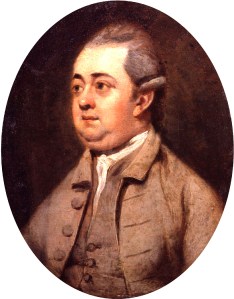

gibbonThis monumental tome, in six volumes, follows its subject with intense scholarship. Gibbon had read all the sources, so that we don’t have to. After all, how much Procopius or Irenaeus have you actually imbibed? But it isn’t the history itself that propels the work, it is Gibbon’s propulsive prose, a piling on of detail and irony that keeps me buried in the pages. I can pick up a volume and dip into it at any point and come away with a full belly. Such wonderful, rich, cream-filled sentences:

“If a man were called to fix the period in history of the world during which the condition of the human race was most happy and prosperous, he would, without hesitation, name that which elapsed from the death of Domitian to the accession of Commodus.”gibbon decline and fall

It is Gibbon’s theme that the empire fell because it embraced Christianity. He reaches for his highest caliber irony when discussing what he calls its “superstition.” And although he lives in an age of an established church in England, when everyone was nominally pious, he uses his irony to express what he felt he could not say outright. About the claim of miracles, and of resurrection:

“But the miraculous cure of diseases of the most inveterate or even preternatural kind can no longer occasion any surprise, when we recollect that in the days of Irenaeus, about the end of the second century, the resurrection of the dead was very far from being esteemed an uncommon event: that the miracle was frequently performed on necessary occasions, by great fasting and the joint supplication of the church of the place, and that the persons thus restored to their prayers had lived afterward, amongst them many years. At such a period, when faith could boast of so many wonderful victories over death, it seems difficult to account for the scepticism of those philosophers who still rejected and derided the doctrine of the resurrection. A noble Grecian had rested on this important ground the whole controversy and promised Theophilus, bishop of Antioch, that, if he could be gratified with the sight of a single person who had been actually raised from the dead, he would immediately embrace the Christian religion. It is somewhat remarkable that the prelate of the first eastern church, however anxious for the conversion of his friend, thought proper to decline this fair and reasonable challenge.”

As the Duke of Gloucester said when the author presented him with a copy, “Another damned thick book! Always scribble, scribble, scribble! Eh, Mr. Gibbon?”

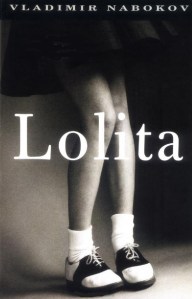
Vladimir Nabokov, Lolita
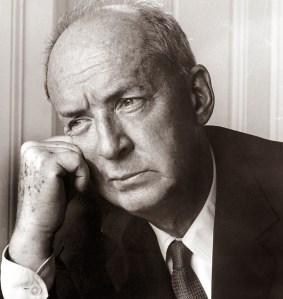
nabokovA wicked and malicious book, all verbal skyrockets and Roman candles, there is no more sustained example of literary pyrotechnics in English in the 20th century (the requirement for English disqualifies Finnegans Wake). It tells the story of the nympholept and child molester Humbert Humbert in his own words, which drip with irony from start to finish, yet with a second layer of irony underneath, provided by Nabokov. Humbert freely admits his crime, with charm and erudition, but Nabokov lets us know that however forthcoming Humbert seems to be, there is an imposture in self-revelation. All in virtuoso prose: “You can always count on a murderer for a fancy prose style,” he says.

There is misogyny and misanthropy in Humbert, which you can read in his description of a dalliance he has with another amour, Rita:nabokov lolita
“She was twice Lolita’s age and three quarters of mine: a very slight, dark-haired, pale-skinned adult, weighing a hundred and five pounds, with charmingly asymmetrical eyes, an angular, rapidly sketched profile, and a most appealing ensellure to her supple back — I think she had some Spanish or Babylonian blood.”

“She was so kind, was Rita, such a good sport, that I daresay she would have given herself to any pathetic creature or fallacy, an old broken tree or a bereaved porcupine, out of sheer chumminess and compassion.” 

“When I first met her she had but recently divorced her third husband — and a little more recently had been abandoned by her seventh cavalier servant — and others, the mutables, were too numerous and mobile to tabulate. Her brother was — and no doubt still is — a prominent, pasty-faced, suspenders-and-painted-tie-wearing politician, mayor and booster of his ball-playing, Bible-reading, grain-handling home town. For the last eight years he had been paying his great little sister several hundred dollars per month under the stringent condition that she would never enter great little Grainball City.”

A little later:

“Then one day she proposed playing Russian roulette with my sacred automatic; I said you couldn’t, it was not a revolver, and we struggled for it, until at last it went off, touching off a very thin and very comical spurt of hot water from the hole it made in the wall of the cabin room; I remember her shrieks of laughter.”

James Joyce, Ulysses

joyceJoyce has a reputation for being difficult, but when he wants to be clear, there is no better stylist in the English language. His prose is clear and direct and redolent of the things of this world. If I were to choose a single sentence (or two) that sums up everything I love most in a book, it would be:

“Mr Leopold Bloom ate with relish the inner organs of beasts and fowls. He liked thick giblet soup, nutty gizzards, a stuffed roast heart, liverslices fried with crustcrumbs, fried hencods’ roes. Most of all he liked grilled mutton kidneys which gave to his palate a fine tang of faintly scented urine.”

joyce ulyssesBut he can make dire fun of his other protagonist, Stephen Daedalus, and the way the scholar can drown in Aquinian scholasticism. Going down for the third time, Daedalus says:

“Ineluctable modality of the visible: At least that if no more, though through my eyes. Signatures of all things I am here to read, seaspawn and seawrack, the nearing tide, that rusty boot. Snotgreen, bluesilver, rust: coloured signs. Limits of the diaphane. But he adds: in bodies. Then he was aware of them bodies before of them coloured. How? By knocking his sconce against them, sure. Go easy. Bald he was and a millionaire, maestro di color che sanno. Limit of the diaphane in. Why in? Diaphane, adiaphane. If you can put your five fingers through it, it is a gate, if not, a door. Shut your eyes and see.”

Herman Melville, Moby Dick

melvilleThere is no more perfect example of the “putter-inner” than Melville. He expands; he exfoliates; he swells with words on words. I love his best work like little else in American literature. I can reread I and my Chimney or Bartleby or The Piazza or Benito Cereno over and over again, sucking up the juices. But it is Moby Dick that is the champ. I had trouble reading it at first, not because I found it hard going — quite the opposite — but because I loved its opening chapter so much that each time I picked it up, I found myself not reading where I had left off, but starting anew each time with “Call me Ishmael.” I must have read the first chapter a hundred times before I managed to break through and get to the end.

“Whenever I find myself growing grim about the mouth; whenever it is a damp, drizzly November in my soul; whenever I find myself involuntarily pausing before coffin warehouses, and bringing up the rear of every funeral I meet; and especially whenever my hypos get such an upper hand of me, that it requires a strong moral principle to prevent me from deliberately stepping into the street, and methodically knocking people’s hats off — then, I account it high time to get to sea as soon as I can. melville moby dickThis is my substitute for pistol and ball. With a philosophical flourish Cato throws himself upon his sword; I quietly take to the ship. There is nothing surprising in this. If they but knew it, almost all men in their degree, some time or other, cherish very nearly the same feelings towards the ocean with me.”
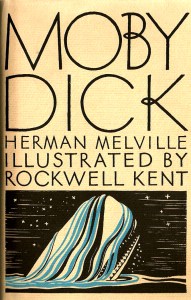
The pith of the book can be found in Ahab’s description of his hatred of the white whale:

“All visible objects, man, are but as pasteboard masks. But in each event — in the living act, the undoubted deed—there, some unknown but still reasoning thing puts forth the mouldings of its features from behind the unreasoning mask. If man will strike, strike through the mask! How can the prisoner reach outside except by thrusting through the wall? To me, the white whale is that wall, shoved near to me. Sometimes I think there’s naught beyond. But ’tis enough. He tasks me; he heaps me; I see in him outrageous strength, with an inscrutable malice sinewing it. That inscrutable thing is chiefly what I hate; and be the white whale agent, or be the white whale principal, I will wreak that hate upon him. Talk not to me of blasphemy, man; I’d strike the sun if it insulted me.”

Laurence Sterne, The Life and Opinions of Tristram Shandy, Esq.
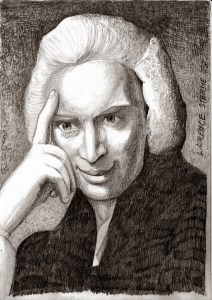
sterneThis must be the funniest book in the English language. Sterne manages to make fun of the human condition without ever seeming mean about it. There is a gentleness to it, even when he is close to obscene, as when he opens the book with the very moment of conception for its hero, and the discomfiting dialog between his mother and father at the moment of ejaculation:

“I wish either my father or my mother, or indeed both of them, as they were in duty both equally bound to it, had minded what they were about when they begot me; had they duly consider’d how much depended upon what they were then doing; — that not only the production of a rational Being was concerned in it, but that possibly the happy formation and temperature of his body, perhaps his genius and the very cast of his mind; — and, for aught they knew to the contrary, even the fortunes of his whole house might take their turn from the humours and dispositions which were then uppermost; — Had they duly weighed and considered all this, and proceeded accordingly, — I am verily persuaded I should have made a quite different figure in the world, from that in which the reader is likely to see me. sterne tristram shandy— Believe me, good folks, this is not so inconsiderable a thing as many of you may think it; — you have all, I dare say, heard of the animal spirits, as how they are transfused from father to son, &c. &c. — and a great deal to that purpose: — Well, you may take my word, that nine parts in ten of a man’s sense or his nonsense, his successes and miscarriages in this world depend upon their motions and activity, and the different tracks and trains you put them into, so that when they are once set a-going, whether right or wrong, ’tis not a half-penny matter, — away they go cluttering like hey-go mad; and by treading the same steps over and over again, they presently make a road of it, as plain and as smooth as a garden-walk, which, when they are once used to, the Devil himself sometimes shall not be able to drive them off it.

Pray my Dear, quoth my mother, have you not forgot to wind up the clock?Good G..! cried my father, making an exclamation, but taking care to moderate his voice at the same time, — Did ever woman, since the creation of the world, interrupt a man with such a silly question?”

 James Agee, Let Us Now Praise Famous Men
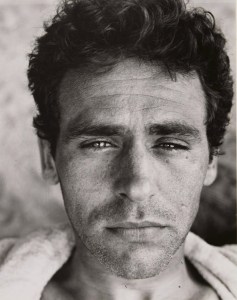
ageeWhile ostensibly, this is a book about white tenant farmers in Alabama in the 1930s, it is almost more about Agee’s guilt over the fact that he is using their misery to make a book, and his empathy for their condition, and his righteous insistence on not falling back on stereotypes and formulae, but to get it absolutely right, to be absolutely accurate, which leads him to vast circumlocutions as he tries to find just the right words.

It is a very hard book to describe, so unlike anything else in the literature, and must be taken in long draughts to get the real flavor of it. Short quotes will not do.

A long section describes him late at night in the Gudger cabin, fretting over his relationship with them. He describes the lamplight and the bare wooden walls, all in minute detail, so we don’t too easily generalize, which, he feels would be a lie. All the while, on the other side of that wall the family sleeps, husband, wife, sister-in-law and four children. agee let us now praise

“.. and there lie sleeping, on two iron beds and on pallets on the floor, a man and his wife and her sister and four children, a girl and three harmed boys. Their lamp is out, their light is done this long while, and not in a long while has any one of them made a sound. Not even straining, can I hear their breathing: rather I have a not quite sensuous knowledge of a sort of suspiration, less breathing than that indiscernible drawing-in of heaven by which plants live, and thus I know they rest and the profundity of their tiredness, as if I were in each one of these seven bodies whose sleeping I can almost touch through this wall, and which in the darkness I so clearly see, with the whole touch and weight of my body: George’s red body, already a little squat with the burden of thirty years, knotted like oakwood, in its clean white cotton summer union suit that it sleeps in; and his wife’s beside him, Annie Mae’s, slender, and sharpened through with bone, that ten years past must have had such a beauty, and now is veined at the breast, and the skin of the breast translucent, delicately shriveled, and blue, and she and her sister Emma are in plain cotton shirts; and the body of Emma, her sister, strong, thick and wide, tall, the breasts set wide and high, shallow and round, not yet those of a full woman, the legs long thick and strong; …”

It goes on. Nothing is easily said in this book; it is all tortured and parsed: allie mae for agee
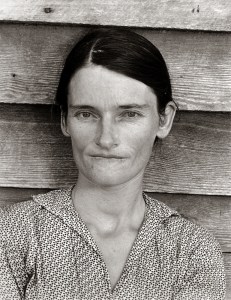
“The Gudgers’ house, being young, only eight years old, smells a little dryer and cleaner, and more distinctly of its wood, than an average white tenant house, and it has also a certain odor I have never found in other such houses: aside from these sharp yet slight subtleties, it has the odor or odors which are classical in every thoroughly poor white southern country house, and by which such a house could be identified blindfold in any part of the world, among no matter what other odors. It is compacted of many odors and made into one, which is very thin and light on the air, and more subtle that it can seem in analysis, yet very sharply and constantly noticeable. These are its ingredients. The odor of pine lumber, wide thin cards of it, heated in the sun, in no way doubled or insulated, in closed and darkened air. The odor of woodsmoke, the fuel being again mainly pine, but in part also, hickory, oak and cedar. The odors of cooking. Among these, most strongly, the odors of fried salt pork and of fried and boiled pork lard, and second the odor of cooked corn. The odors of sweat in many stages of age and freshness, this sweat being a distillation of pork, lard, corn, woodsmoke, pine, and ammonia. The odors of sleep, of bedding and of breathing, for the ventilation is poor. The odors of all the dirt that in the course of time can accumulate in a quilt and mattress. Odors of staleness from clothes hung, or stored away, not washed. I should further describe the odor of corn: in sweat or on the teeth, and breath, when it is eaten as much as they eat it, it is of a particular sweet stuffy fetor, to which the nearest parallel is the odor of the yellow excrement of a baby. All these odors as I have said are so combined into one that they are all and always present in balance, not at all heavy, yet so searching that all fabrics of bedding and clothes are saturated with them and so clinging that they stand softly out of the fibers of newly laundered clothes. Some of their components are extremely ‘pleasant,’ some are ‘unpleasant’; their sum total has great nostalgic power.”

Mickey Spillane, The Big Kill

From the sublime to the ridiculous. Mickey Spillane said he didn’t have readers, he had customers. “The first page sells the book,” he said, “the last page sells the next book.”spillane the big kill
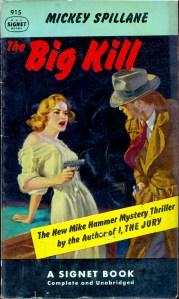
But there is a vigor in his prose, tinged with kitsch, for sure, but still vivid in the extreme. You could find examples in almost any of the books, but this is from The Big Kill:

“It was one of those nights when the sky came down and wrapped itself around the world.
The rain clawed at the windows of the bar like an angry cat and tried to sneak in every time some drunk lurched in the door. The place reeked of stale beer and soggy men with enough cheap perfume thrown in to make you sick.

Two drunks with a nickel between them were arguing over what to play on the juke box until a tomato in a dress that was too tight a year ago pushed the key that started off something noisy and hot. One of the drunks wanted to dance and she gave him a shove. So he danced with the other drunk.

She saw me sitting there with my stool tipped back against the cigarette machine and change of a fin on the bar, decided I could afford a wet evening for two and walked over with her hips waving hello.”

Lawrence Durrell, The Alexandria Quartet

If there were ever an author who required you to have a dictionary beside your reading table, it was Durrell. He would choose “pegamoid” and “objurgation,” as a dare. In his books, language is the readers’ usufruct, somewhere in the banlieus of usage. durrell justine
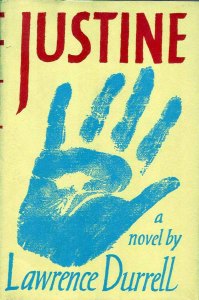
The Alexandria Quartet are four novels that tell the same story, each from the point of view of a different actor. We find out that no one really understands what is happening, but it is happening in Alexandria, Egypt, and is populated by espionage, love-sickness, sex and camels. Durrell’s prose is as perfumed as it comes, and the books, as a unit, are perhaps best read when the reader is still young; older, you have less patience for the exoticism and the verbal barnacles crusting the pages. I love it.

I’ll give only a short tasting, from the last volume, Clea:

“The whole quarter lay drowsing in the umbrageous violet of approaching nightfall. A sky of palpitating velours which was cut into the stark flare of a thousand electric light bulbs. It lay over Tatwig Street, that night, like a velvet rind. Only the lighted tips of the minarets rose above it in their slender invisible stalks — appeared hanging suspended in the sky; trembling slightly with the haze as if about to expand their hoods like cobras.”

Henry David Thoreau, Walden
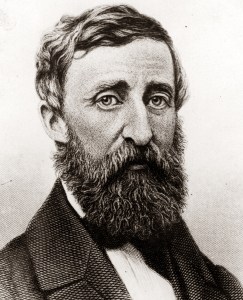
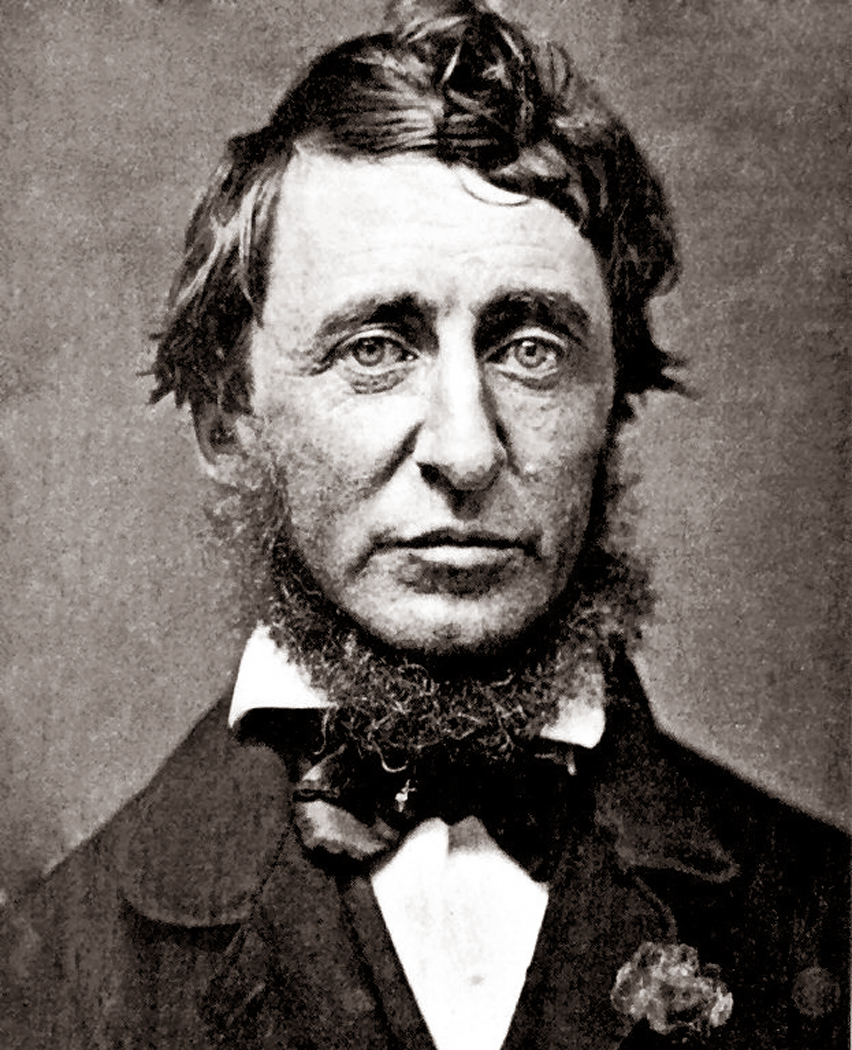
thoreauThoreau mixed ancient Greek writers with agronomy; no philosopher had so much to say about beans since Pythagoras. What elevates his style is a mixture of close observation with nature and the ability to fly, like Icarus, up to the heavens in vast sweeps of inspired hooha. Metaphors grow like weeds in his paragraphs, and we are all the richer for it. There is something Shakespearean about his means of expression: A rich overflowing of imagery, mixed, we might say, like a salad, and unpruned like a feral apple tree. He simply can’t stop making new metaphors:

“Time is but the stream I go a-fishing in. I drink at it; but while I drink I see the sandy bottom and detect how shallow it is. Its thin current slides away, but eternity remains. I would drink deeper; fish in the sky, whose bottom is pebbly with stars. I cannot count one. I know not the first letter of the alphabet. I have always been regretting that I was not as wise as the day I was born. The intellect is a cleaver; it discerns and rifts its way into the secret of things. I do not wish to be any more busy with my hands than is necessary. My head is hands and feet. I feel all my best faculties concentrated in it. My instinct tells me that my head is an organ for burrowing, as some creatures use their snout and fore paws, and with it I would mine and burrow my way through these hills. I think that the richest vein is somewhere hereabouts; so by the divining-rod and thin rising vapors I judge; and here I will begin to mine.”

Jack Kerouac, On the Road

“That’s not writing, that’s typing,” said Truman Capote. But there is power in it. Kerouac set out across the country in the late 1940s, with peanut butter sandwiches and a part-of-the-way bus ticket. He ended up a sorry, alcoholic travesty, ruined by the popular image of the beatnik. kerouacBut his book is better than that. Even if he sometimes forgets Elmore Leonard’s Fifth Rule of Good Writing: “Keep your exclamation points under control.”
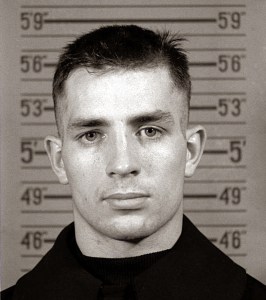
“George Shearing, the great jazz pianist, Dean said, was exactly like Rollo Greb. Dean and I went to see Shearing at Birdland in the midst of the long, mad weekend. The place was deserted, we were the first customers, ten o’clock Shearing came out, blind, led by the hand to his keyboard. He was a distinguished-looking Englishman with a stiff white collar, slightly beefy, blond, with a delicate English-summer-night air about him that came out in the first rippling sweet number he played as the bass-player leaned to him reverently and thrummed the beat. The drummer, Denzil Best, sat motionless except for his wrists snapping the brushes. And Shearing began to rock; a smile broke over his ecstatic face; then the beat went up, and he began rocking fast, his left foot jumped up with every beat, his neck began to rock crookedly, he brought his face down to the keys, he pushed his hair back, his combed hair dissolved, he began to sweat. The music picked up. The bass-player hunched over and socket it in, faster and faster, it seemed faster and faster, that’s all. Shearing began to play is chords; they rolled out of the piano in great rich showers, you’d think the man wouldn’t have time to line them up. They rolled and rolled like the sea. Folks yelled for him to “Go!” Dean was sweating; the sweat poured down his collar. “There he is! That him! Old God! Old God Shearing! Yes! Yes! Yes!” And Shearing was conscious of the madman behind him, he could hear every one of Dean’s gasps and imprecations, he could sense it though he couldn’t see. “That’s right!” Dean said. ‘Yes!’ Shearing smiled; he rocked. Shearing rose from the piano, dripping with sweat. These were his great 1949 days before he became cool and commercial.”

H.L. Mencken, Prejudices, Series I-VI
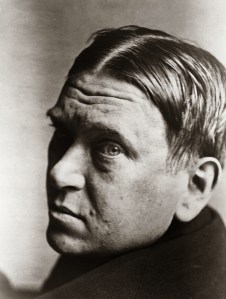
menckenMy personal hero, Mencken was a sour old pessimist, a journalist through and through, who never let sentiment cloud his prejudice. Almost anything he wrote is worth reading, not so much for the ideas therein, which are sometimes lamentable, but for the vigor and spark of their saying. I can read his work endlessly, like eating popcorn or Fritos, and never get tired of it.

“Of all forms of the uplift, perhaps the most futile is that which addresses itself to educating the proletariat in music. The theory behind it is that a taste for music is an elevating passion, and that if the great masses of the plain people could be inoculated with it they would cease to herd into the moving-picture theaters, or to listen to Socialists, or to beat their wives and children. The defect in this theory lies in the fact that such a taste, granting it to be elevating, simply cannot be implanted. Either it is born in a man or it is not born in him. If it is, then he will get gratification for it at whatever cost — he will hear music if hell freezes over. But if it isn’t, then no amount of education will ever change him — he will remain stone deaf until the last sad scene on the gallows.”

Robert Burton, Anatomy of Melancholy
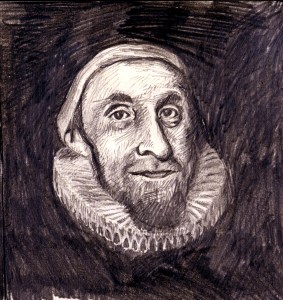
burton 2Finally, there is Robert Burton (1577-1640), the great magpie of English literature, who put everything he could stuff into his one big book. It purports to be about melancholy — depression, as we know it — but really, it has no boundaries. Burton cannot say something once, but must, like Walt Whitman in his cataloguing mania, say it three, four, five times over, in slightly varying phraseology, just to make his point, to emphasize it, to make it clear, to ram it home, to buttonhole you and make sure you have got it.

This is a particularly juicy section, in which he discusses sex and the contemptus mundi of the sallow-skinned blue-stockings that in our own day, as much as in his, make our lives less gaudy and fleshy.

“Into what subject have I rushed? What have I to do with Nuns, Maids, Virgins, Widows? I am a Bachelor myself, and lead a Monastick life in a College. I am truly a very unfit person to talk about these subjects, I confess ‘tis an indecorum and as Pallas, a Virgin, blushed, when Jupiter by chance spake of Love matters in her presence and turned away her face, I will check myself; though my subject necessarily require it, I will say no more.

burton anatomyAnd yet I must and will say something more, add a word or two on behalf of Maids and Widows, in favour of all such distressed parties, in commiseration of their present estate. And as I cannot choose but condole their mishap that labour of this infirmity, and are destitute of help in this case, so must I needs inveigh against them that are in fault, more than manifest causes, and as bitterly tax those tyrannizing pseudo-politicians’ superstitious orders, rash vows, hard-hearted parents, guardians, unnatural friends, allies, (call them how you will), those careless and stupid overseers, that, out of worldly respects, covetousness, supine negligence, their own private ends, (because, meanwhile, it is well for him), can so severely reject stubbornly neglect and impiously contemn, without all remorse and pity the tears, sighs, groans, and grievous miseries, of such poor souls committed to their charge. How odious and abominable are those superstitious and rash vows of Popish Monasteries, so to bind and enforce men and women to vow virginity, to lead a single life against the laws of nature, opposite to religion, policy and humanity, so to starve, to offer violence to, to suppress the vigour of youth! by rigourous statutes, severe laws, vain persuasions, to debar them of that to which by their innate temperature they are so furiously inclined, urgently carried, and sometimes precipitated, even irresistibly led, to the prejudice of their souls’ health, and good estate of body and mind! and all for base and private respects, to maintain their gross superstition, to enrich themselves and their territories, as they falsely suppose, by hindering some marriages, that the world be not full of beggars, and their parishes pestered with orphans! Stupid politicians!

Stupid politicians, indeed!
 

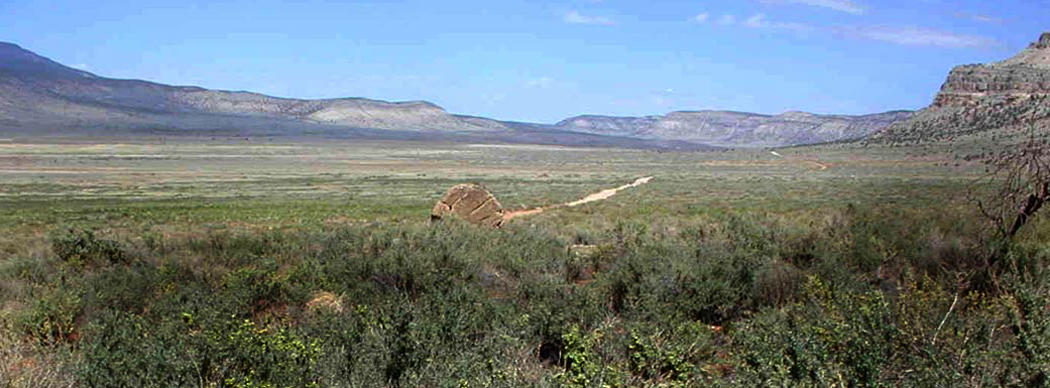
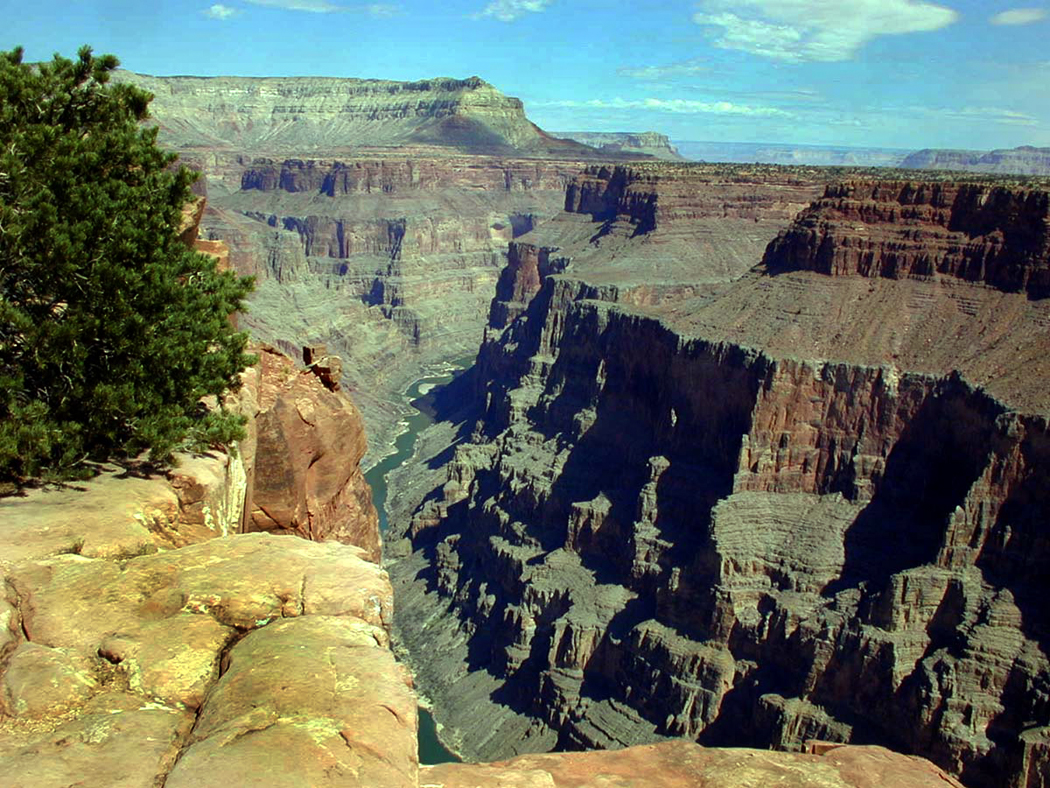
toroweap 6I’ve been to the Grand Canyon enough times that I couldn’t accurately count.

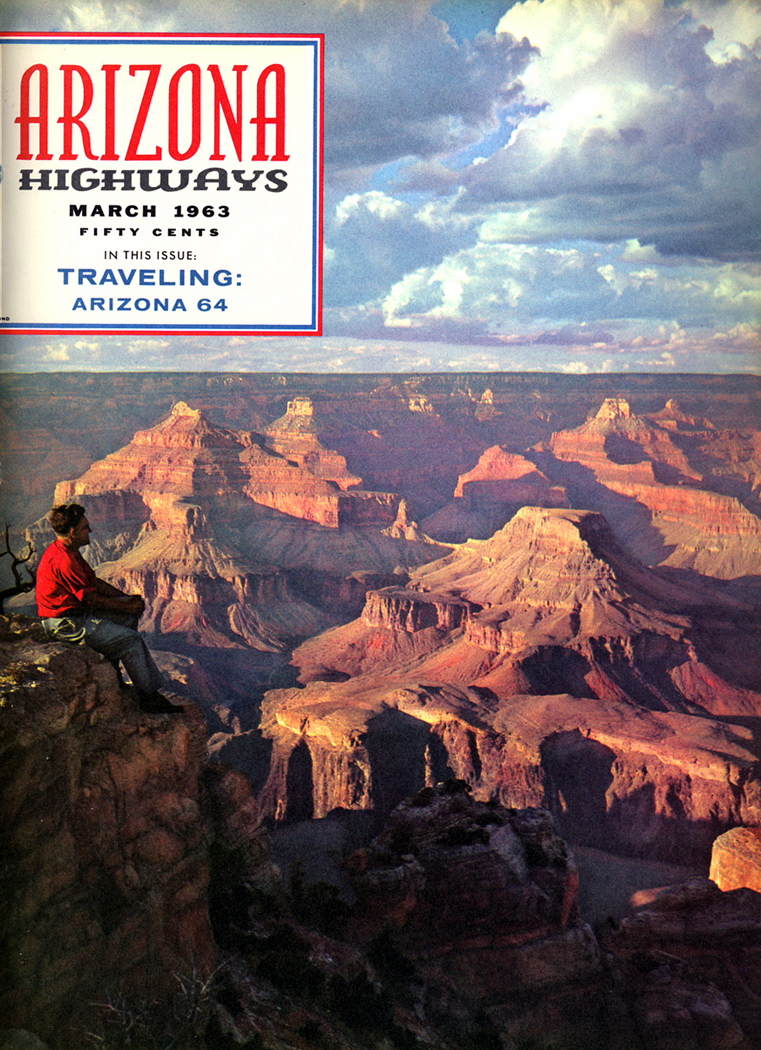
But sometimes familiarity makes us lose the magic. If I’ve been to Mather Point once, I’ve been a dozen times, at all hours of the day. And while it is still beautiful, still breathtaking, there is something missing — that virgin sense of seeing it for the first time.arizona highways magazine cover

This is replaced by the proxy pleasure of watching someone else see it for the first time, but now I’ve had even that vicarious fun often enough that I know what to expect.

But there are other places to see the canyon besides the official viewpoints of the National Park Service.

One of my first images of the Grand Canyon came when I was a child in the Christmas edition of Arizona Highways magazine, which was once a year available on the magazine racks in New Jersey. One of the pictures in it was a stunning photograph of the Canyon from Toroweap Overlook. I never forgot that name, it seemed so odd — although I don’t know why an Indian name should seem exotic to a Jersey boy living between Hackensack and Ho-Ho-Kus.toroweap 15

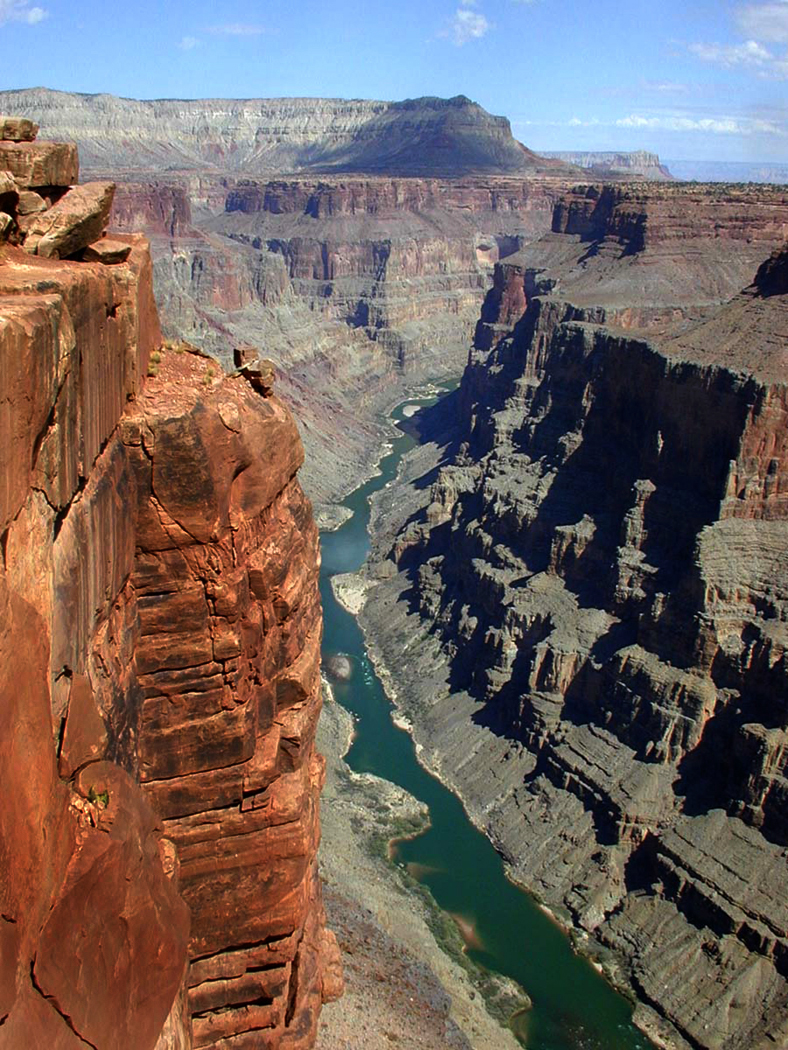
Nevertheless, I always wanted to go to Toroweap, to see that vertical panorama, the 3,000-foot drop to the river.

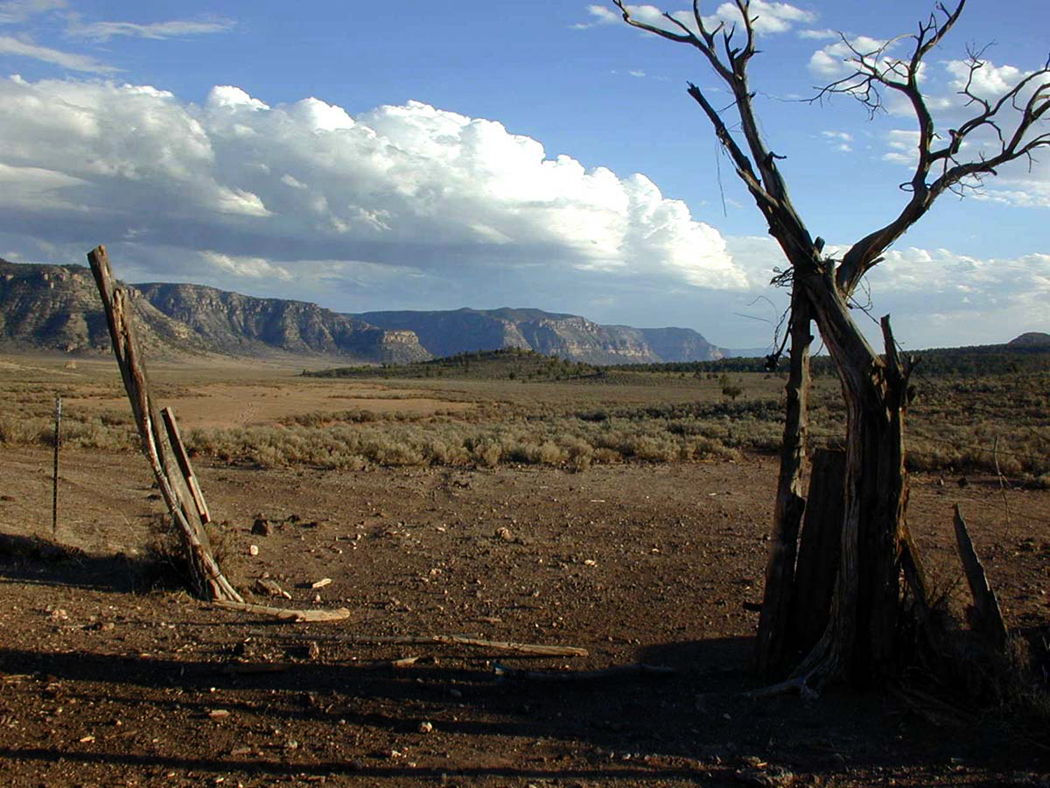
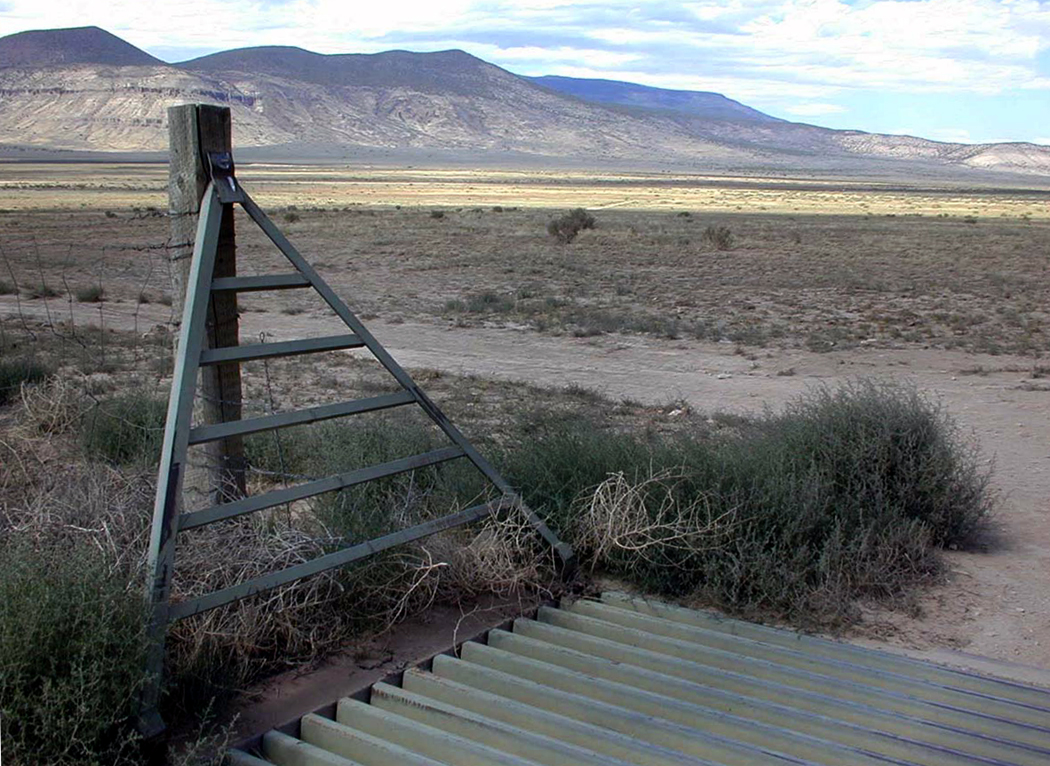
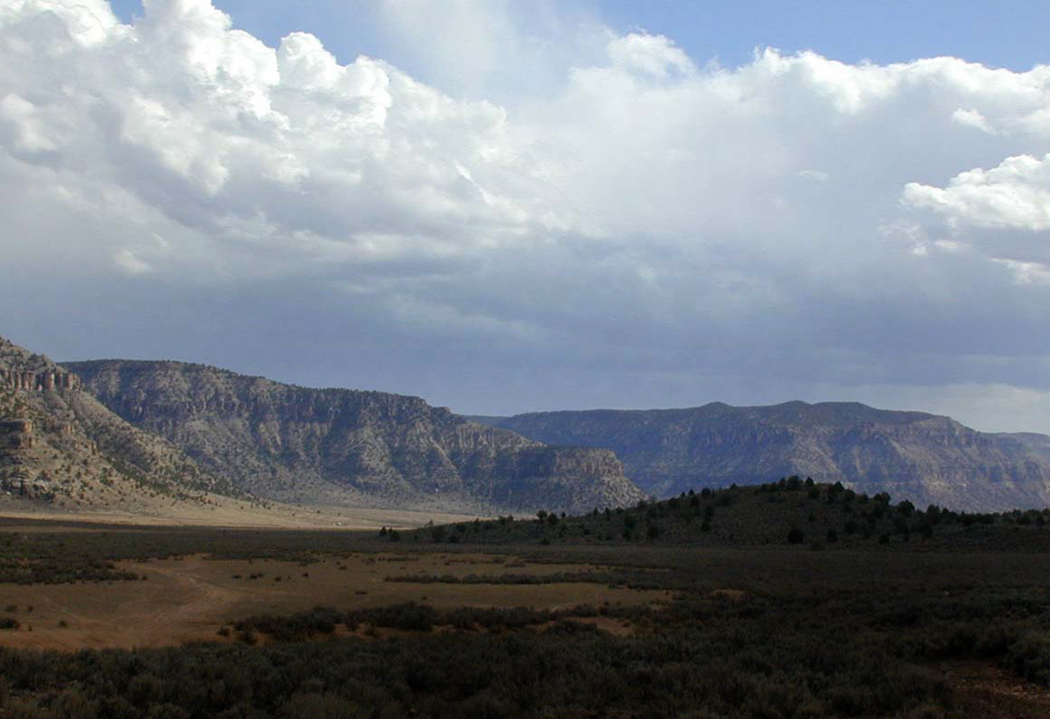
The overlook is reached by 61 miles of dirt road. And those miles start from a point 9 miles west of Fredonia, Arizona, which is already as remote as it is possible to be in the state. On the Arizona Strip between the Canyon and Utah, Fredonia is a little town you pass through on the way to Kanab, which is no Chicago either.

Fredonia is 120 miles from the nearest Arizona town of any significance, Flagstaff, through the Navajo Indian Reservation and across the northern margin of the state skirting the Vermilion Cliffs. It is so remote that when you pass the turn off for the Grand Canyon North Rim, you still have to press on into the wilderness to get to Fredonia.toroweap 9

How remote is it? Well, it is technically considered frontier. Any place with fewer than two people per square mile is officially called frontier, said the ranger at Pipe Spring National Monument, which is also in this neck of the woods.

The Arizona Strip easily qualifies. Arizona, for instance, has a population density of about 50 people per square mile. When you subtract the population center of Fredonia, with its 2100 people, the rest of the Strip checks in with .014 people per square mile. That’s fewer than 3 people per 20 square miles.

That is the official definition of empty.toroweap 7

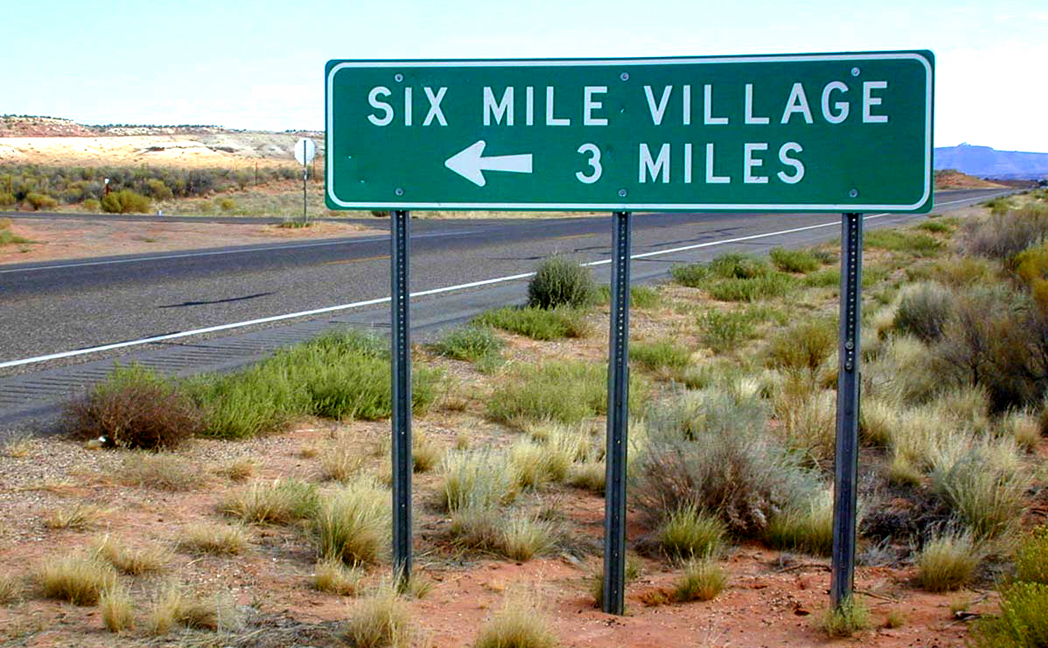
toroweap 17Well, a little past the sign that reads “Six Mile Village, 3 miles” you find a dirt-road turn off with a sign to Toroweap Overlook. It says, “Toroweap Overlook, 61 miles.”

At first, you feel rather confident. Anyone who regularly drives the dirt and gravel back roads in this state will be lulled into a false sense of security.

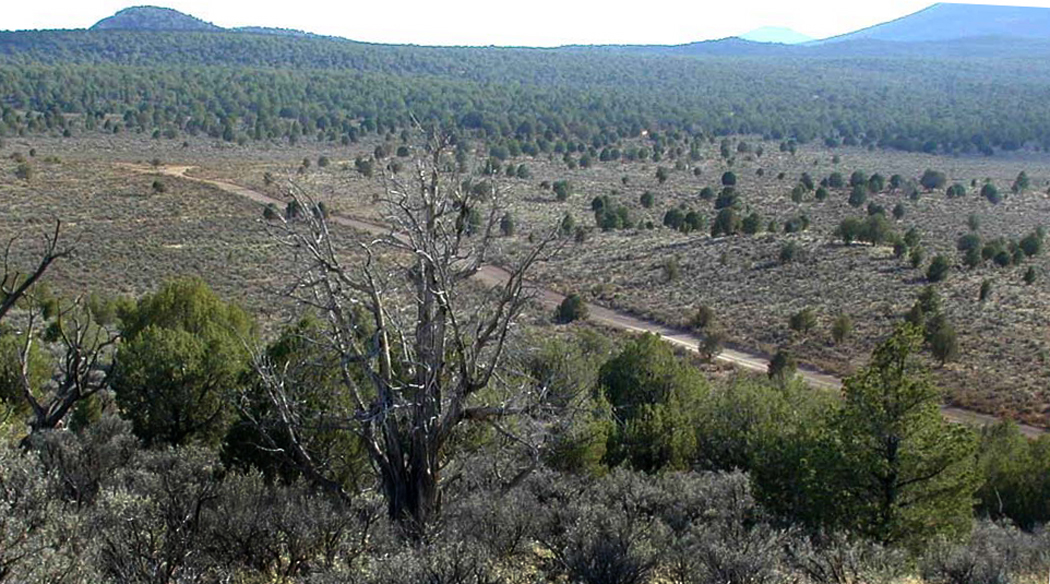
The first 20 miles or so are pretty flat, pretty well kept up and surprisingly civilized. You can do a comfortable 50 miles an hour if you don’t mind kicking up a few stones and hearing them clatter against your undercarriage.toroweap 10

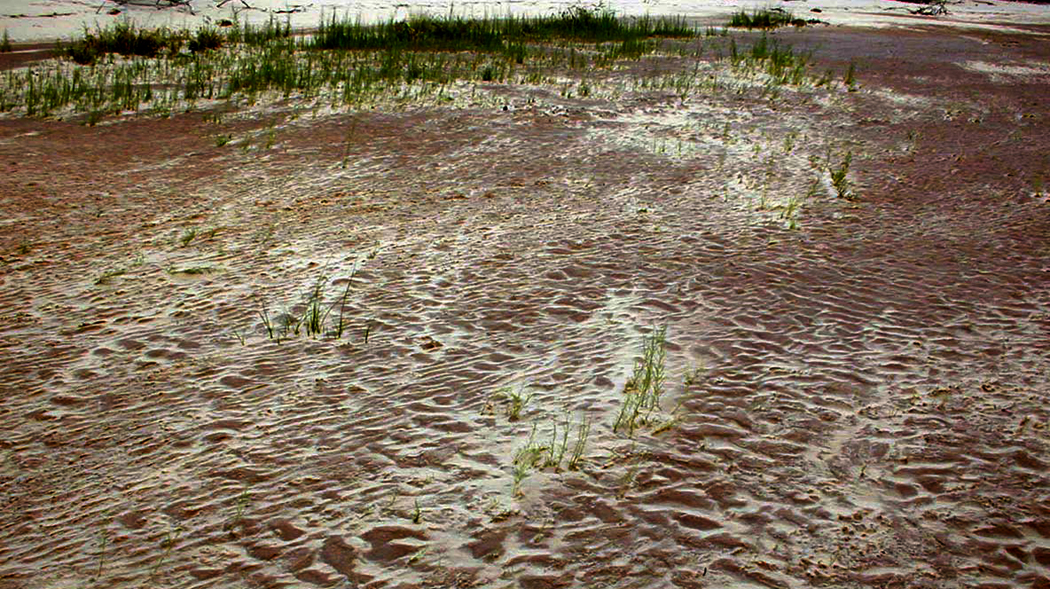
But then, after crossing the Antelope Valley, you have to climb the first small plateau and the road begins to wind and narrow. Patches of sand appear in the hollows of the land and you have to slow down or risk losing control of your car.

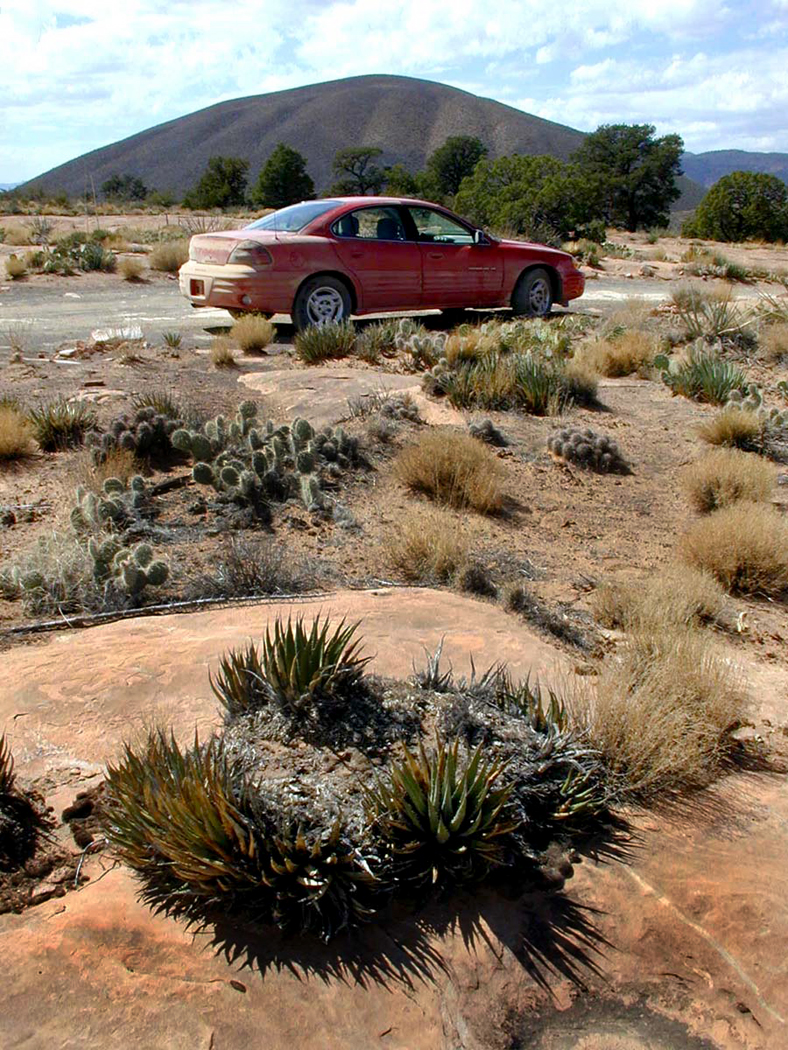
Yes, I said car. Every guide book I checked out said the trip can be made in a passenger car. And since I am an intrepid risker of my car, I thought that this sounds like a piece of cake. I have driven my car through mountainside cow pastures, through North Carolina woods with no roads, twisting between the trees like a Daniel Boone in a Chevy. I have taken my car on the 30 miles of washboard someone jokingly called a road on the far side of Death Valley from the highway.

I can go anywhere.toroweap 8

But the road to Toroweap became hinkier. About 45 miles in, just after the turn-off for the road to Mt. Trumbull, the road gets questionable. And I mean, like I question that it deserves the name road at all.

Since I was two-thirds of the way to my longed for magic dream, I pushed on.

After all, I am the man who drove my car across Thompson Wash to the north of Canyonlands National Park in Utah. I am the man who keeps an entrenching tool and a Hudson Bay ax in the trunk at all times in case I need to dig out of the sand and chop down brush to thrust under the tires for some purchase.toroweap 13

There were some sand pans along the way, where your tires no longer go where you point them and your careen through the powder like a raft going downstream. The steering wheel becomes a tiller and you just try to keep pointed forward. But if you get up a head of steam going into the sand, you can more or less bull your way through.toroweap 14

But after the Tuweep Ranger Station, where you enter the national park lands, it started getting tricky. I had had some touchy moments in the sand, but nothing I didn’t think I could handle in my Pontiac Grand Am. But in the final eight miles from there to the overlook, the road gets positively grim. The sand — I call it sand, but it is really a fine, pulverized powder that sits axle-deep in the roadway — had previously been in recognizable pans, small patches of up to 100 feet in extent. But along the Toroweap Valley, there is a stretch of about a quarter mile of unrelieved sand.toroweap 4

As I was driving along — careening, really — I came upon the ranger in a road grader smoothing the roadbed. He should have saved his effort. The grader was smoothing off the top of the sand, but that didn’t make it any easier to plow through. In fact, the ruts provided better traction for the tires, as long as the high sand in between didn’t contain any large rocks waiting to score the bottom metal of the car.

With the sand passed, the road got narrower and rockier. The rocks were bumpy and you had to take them slowly, especially around the tight curves up and down the canyon, but they were negotiable. The final three miles slowed me down to a pace of between 5 and 10 mph, but I didn’t mind so much, since at least I knew the road wouldn’t swallow my tires.

At the end, Toroweap Overlook was a small rocky parking lot with a port-o-let to one side and a giant hole in the ground to the other.toroweap 2

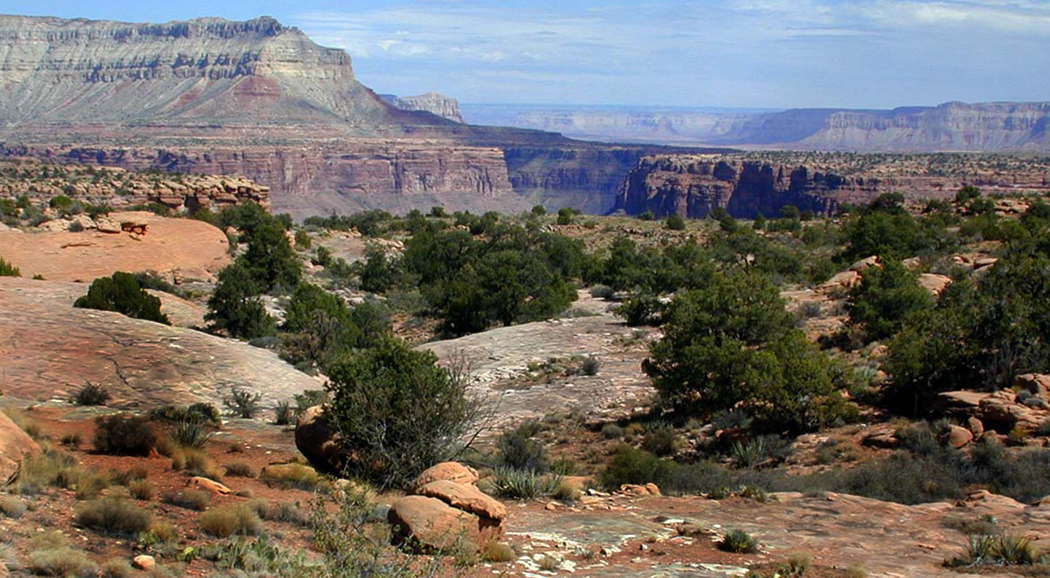
They view was spectacular and the rawness of the experience made the South Rim look positively urban. There are no guard rails, no interpretive signs, no ranger walks, just an edge of rock with a vertical drop down to the river of three-fifths of a mile. The canyon at Toroweap is very narrow — it is about a mile to the southern rim across the gorge, and directly below, you can hear the roar of the rapids.toroweap 11

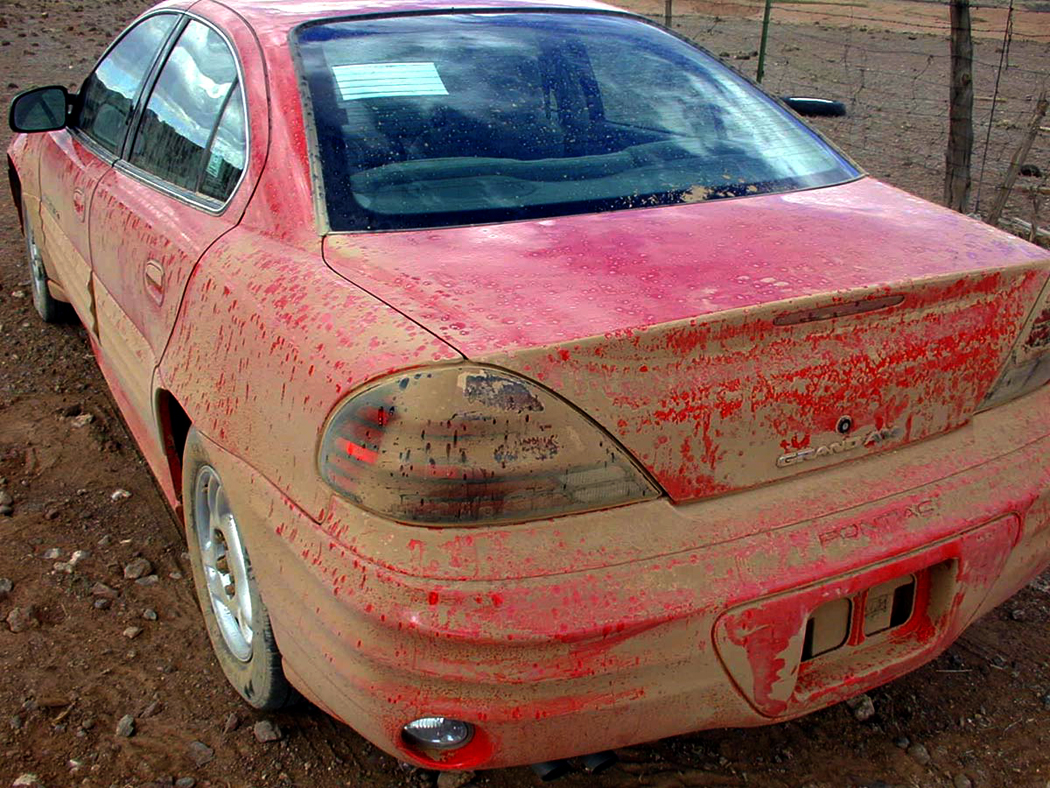
Two German couples were there looking down the hole and taking pictures of each other on the ledge. One of the men, seeing my once-bright red sedan now a uniform dun of dust — and comparing it with their two high-water SUVs, came over to me and asked me which route I had taken. When I told him, the looked at me like I was crazy, laughed and said, “In that car? How did you do it?”toroweap 3

And, you know, I’m not completely sure myself. But I knew that ahead of my was another 61 miles of the same thing just to get out again.toroweap 1

So, this is a warning to you. Don’t believe everything you read in a guidebook.

Yes, it is possible to get to Toroweap in your car, if you have the gumption.

But don’t expect any yellow brick road.toroweap 16


curtis and isabel
Portrait photographs come in basically two varieties: the formal and the candid. These days, with selfies monopolizing the social media, almost all portraits are informal. And when asked, most people say they prefer the candid picture, perhaps because the formal portrait has fossilized into the Olan Mills mall photo, in garish color against phony backgrounds. It would be hard to make an esthetic case for these assembly-line excrescences, with their banal smiles and enforced familial geniality.olan mills family

karsh sibeliusThen, there is a prejudice against artifice: Many people prefer the snapshots because they seem more natural, more spontaneous. If you look at one of those highly massaged portraits by Yousef Karsh, there would seem nothing less spontaneous. Every light, every specular reflection in an eye, seems calculated, even marmoreal, like his portrait of composer Jean Sibelius. If we’re a “rock and roll” nation, we are one that values the brash, the riff, the off-the-cuff: Indeed, we trust it to be more “truthful” than the rhetoric of the planned, controlled and considered. As Allen Ginsberg mendaciously preached: “First thought, best thought.” (Despite the fact that his best poems, such as Howl, were thoroughly revised and rewritten; we have the typescript for evidence, with all its emendations.)karsh churchill

Yet, some of our most iconic images — the ones we remember, the ones that fix in our minds some large truth about their subjects, are exactly the careful, posed and arranged portraits, such as Karsh’s take on Winston Churchill — a photo that might have won the war all by itself.

The idea of the formal portrait survives, even in the gaudy, awful Olan Mills photos: The idea that the subject wants to be seen in his Sunday best, with his best teeth put forward for posterity: “This is how I want to be remembered.” Even though the actual life may be more squalid or confused, or complex– certainly infinitely richer. But “this version is the one with the barnacles scraped off.”

olan mills family portThe photographer Richard Avedon said, “What ends up in your scrapbook? The pictures where you look like a good guy and a good family man, and the children look adorable — and they’re screaming the next minute. I’ve never seen a family album of screaming people.”

But when done well, it isn’t the vanity of the subject that is portrayed, but the insight of the photographer. A good portrait should tell us something about the subject that the subject doesn’t want us to know, or is not aware of, or is somehow larger than the public face intended.

A photographic portrait also tells us something about the artist who makes it. This is something that Avedon always stressed.

“My portraits are always more about me than they are about the people I’ve photographed,” he said. You can spot an Avedon immediately: It’s style is uniquely his. The same can be said for Irving Penn, or for Arnold Newman, or Yousef Karsh — any of those who made a name as portraitists. An Avedon portrait — or a Penn — is a world view, consistent from image to image. avedon eisenhower

And it is in this sense that the portrait rises from vanity icon to art. The picture tells us not merely, what does this person look like, but rather the larger message: This is what being human is.

It is in the eyes, most often, that the humanity is tethered. You can see the light behind them. Nothing is worse than a picture of someone who is bored with the process of being photographed: The eyes turn into ball bearings, lifeless and extinct. A good portrait is a picture, instead, of being alive, of being in the moment, even if that moment is for posterity, or for eternity.

I bring all this up, because in the age before I became a writer, I thought I would be a photographer. It was in the days of chemicals and dim amber lights, and I became a proficient darkroom worker: My prints, I say with some pride, were as good as anyone’s. Crawford 1977 copy

And I took many portraits, working my way through the learning and development that any artist goes through: Imitation, innovation and finally, something personal that emerges.

Most of these portraits were friends or more. I went through cameras, always seeking the right one, never actually finding it: Nikons, Rolleis, Hasselblads. I went through lighting schemes, through backdrops.

And I went through the history of portraiture, from Holbein to Raphael to Rembrandt to Gainsborough to Chuck Close. The model I felt closest to was the Renaissance portrait, such as Raphael’s portrait of Baldassare Castiglione. Here was a face to look at: Eyes that had seen a good deal of the best and worst of the world: It registers. raphael castiglione portThere is also a sense of moment; this is for posterity. The figure makes a pyramid in the frame, giving it foundation and security. The background is broken into interesting shapes — the so-called negative space, not ignored, but make essential to the impact of the image.

I saw something of the same in the photographs of Avedon: formality, interesting negative space, and the centrality of eyes.

There is one major difference between these great images and the Olan Mills smile-o-thons: So many of them have equivocal expressions on their faces. They aren’t genial and smiling; indeed, it’s hard to quite know what they are expressing. There is a neutrality to their faces; not slack, as if thoughtless, but rather as if thoughts were unresolved.Henry Parrish Lippincott Hackett

In other words, the faces were not billboards flashing their message, but rather something denser, meant to be read and fathomed. Not the momentary but the monumental.

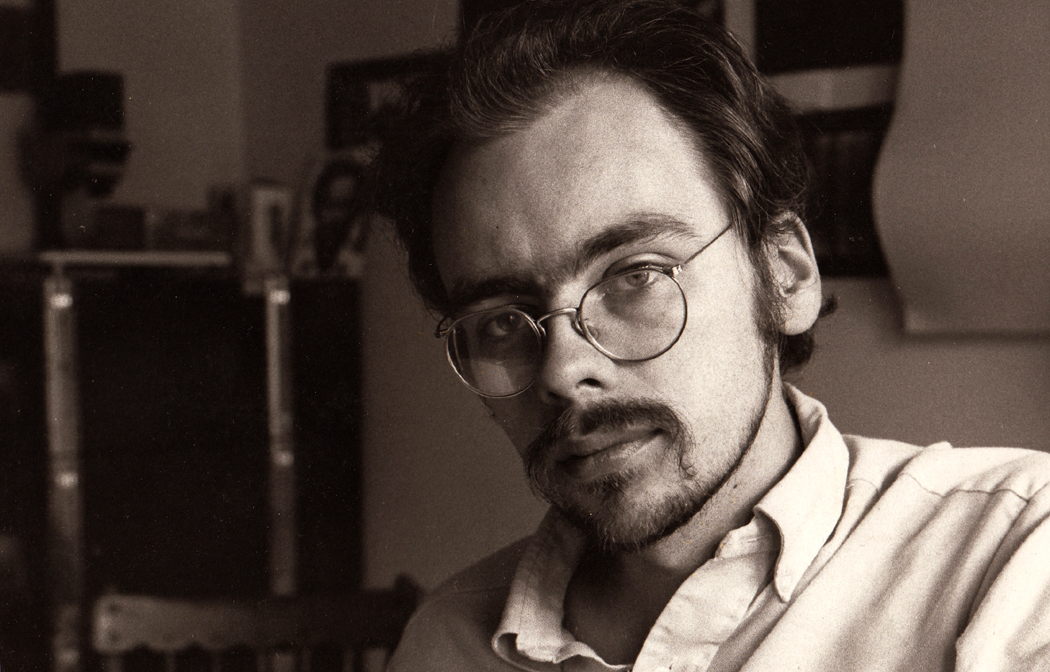
This is a portrait of Henry Parrish Lippincott Hackett, I made it in about 1973. It is a model of what I was trying to get in those years.

Of course, they were also shapes in a frame, and the graphic quality of the images counted for a lot, such as the eye of Picasso in Penn’s version, or the indistinct edge of Eisenhower’s head in Avedon’s portrait.

I used the eye in a photo I made of Pam Henry, in the mid-1970s. double picasso pam

Other imitations, conscious or otherwise can be found in other portraits I made from 1970 to about 1986, when I gave up teaching photography and became a writer at The Arizona Republic.

 My Degas:double chrysanthemums

Not a conscious imitation, but clearly a resonance of Ingres in a portrait of artist Mel Steele.double ingres mel


This is Doug Nufer in 1978, when he was officially dubbed “The World’s Most Obscene Man,” against Avedon’s portrait of Willem de Kooning. Nufer has since gone on to become one of the avant-garde literary lights of Seattle. Made from work print, 9/25/06, 12:15 PM, 16C, 5364x6131 (1182+1975), 125%, Hennessey 0823,  1/15 s, R38.2, G21.9, B47.9

double MK Elks and VenusOr, Botticelli’s Venus in a picture of Kathy Elks.

But it wasn’t all imitation. It was an education, and a slow development of what I was trying to find in portraiture. I wanted it to be formal; I wanted it to be graphic; I wanted it to be more than a snapshot reminder of who my friends were. When I was teaching photography, I ran a course on portraiture and I was not so much concerned with the usual lighting schemes or lens choices, but with engaging with the sitter, finding something human there. And while book after book told us that we should use a long lens for more natural perspective, I found that a normal lens, or even a wide angle lens brought the photographer and the sitter closer together, making interaction unavoidable: The photographer could not be aloof from the sitter, as though the sitter were a mere object, and the sitter could not be indifferent to the photographer invading his private space. The interaction was forced. Always use a short lens, I taught. Get in their faces.

Here is artist and friend, Charles Williams, who returned the favor by making a drawing of my wife and me. Charles Williams

Second lesson: Always have the sitter look into the lens, so that in the photograph, he gazes out of the picture into the eyes of the person looking at the image. This makes the portrait not a neutral event, but it forces the viewer to have a relationship with the subject. In other words, the photographer confronts the sitter; the photograph confronts the viewer. This makes for a more active work of art.

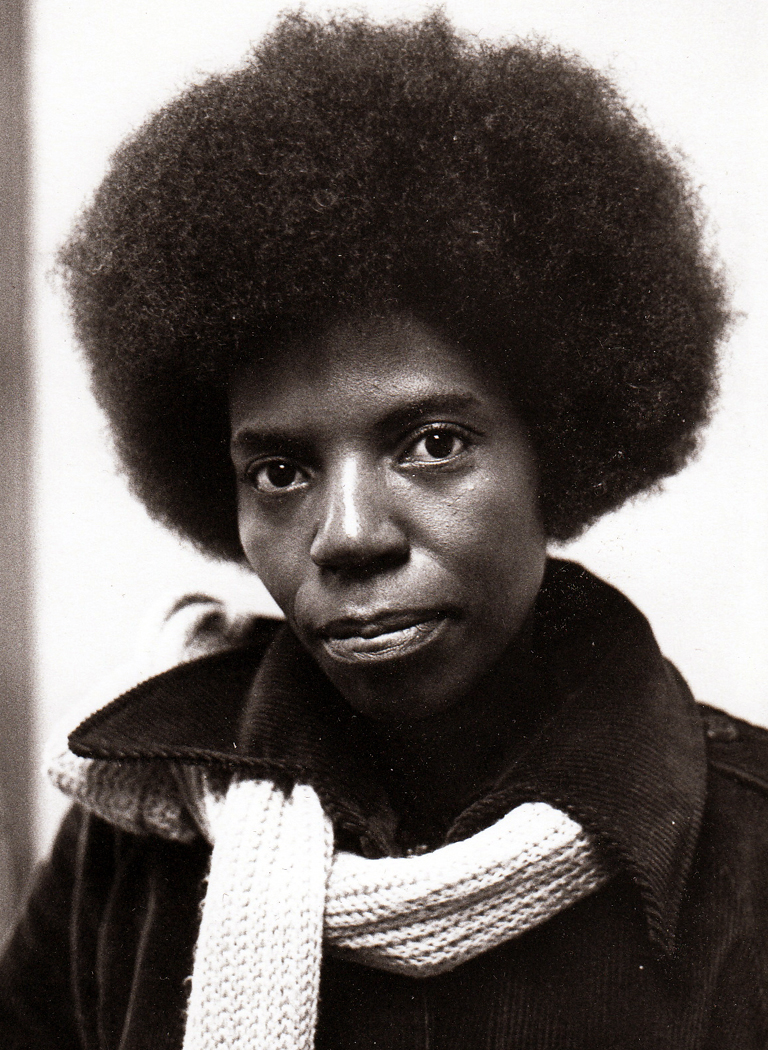
These are three photos I took for The Carolina Peacemaker, when I worked for that weekly black newspaper in Greensboro, N.C. I was looking for that directness, rather than the mere animation that most photo editors want.triple peacemaker ports

Third, no smiles. Unless they are genuine and are more than a tightened muscle at the mouth corner. There is a story about Greta Garbo, when an observer at a studio shoot said afterwards, “I couldn’t see her doing anything,” and the film director said, “But it will show up on film, just wait and see.” And of course, when the dailies were screened, every emotion ran riot across her face — primarily because she didn’t underline each one melodramatically. The film sees things you don’t. Let it do its job.double iott wolf

There were many other points in the course, but these three were most important, even if they ran counter to what is usually taught. After all, I told my students at the beginning of every class that I considered it my job as a teacher in the art department, not to train them for careers, but to make them unemployable. I wanted them to dig deeper than the stereotype. Many of them did. It was a great class.double robin reid linda olson

When I moved to Arizona and started work at the newspaper, I stopped taking as many photographs. I spent my time writing the two-and-a-half million words I pumped out in 25 years. There were photos meant to illustrate stories, but my emphasis had shifted.

Now, I still make the occasional photograph, and I still use the shorter lens, the in-your-face, and the attention to eyes.Mel BW

And I’ve gotten older, and so have my friends. You saw my Ingres-photo of brother-in-law Mel Steele. Here he is a couple of months ago, more informal — almost a snapshot, but with the lessons I learned from years of looking.


alaskan brown bear 2
In May, nearly half the world population of the rare Mongolian antelope, the saiga, were found dead, presumably from disease. Some 120,000 carcasses were discovered on the grasslands of Kazakhstan. The population of saiga has been under decline for many decades, and the Saiga Conservation Alliance estimates that the number of animals has dropped by 95 percent in the past 15 years — and that was before May’s catastrophe.saiga 2

This is enough to alarm any animal lover, and anyone worried about the state of the environment anywhere on the globe, but it had a personal resonance with me, because I knew of the saiga vulnerability since I was a child, thanks to a remarkable book I received when I was perhaps 6 years old: Wild Animals of the World, by William Bridges and Mary Baker, which was first published the year I was born — 1948.

On page 221, Bridges writes: “This odd antelope of the cold, flat treeless steppes of Siberia has the misfortune to be highly prized by the Chinese pharmaceutical trade for the sake of its horns…” On the top of the page is a fine black-and-white drawing of a saiga by the artist, Mary Baker.

The book was one of those premonitory gifts of childhood that dug deep into my growing brain and stayed there. On the surface, it was a bestiary, a catalog of mammals of the world, written for young people; each page featured a portrait of an animal by Baker and a short text by Bridges giving a mini-overview of the animal, its habits, its usefulness to humans, when appropriate, and often, a warning as to its peril.title page 2

Looked at that way, it was certainly a successful book: I loved it on that level alone.

But it had several other things going on for me. It was in its way a “gesamtkunstwerk” for my curious child brain: It fascinated me on several levels, and led me to art, to language, to design and to a love of “the things of this world.”

Let me explain.

First, the drawings were distinctive. Even as a kid, I could distinguish between the look of Baker’s drawings and the look of photographs, and the look of other artists’ styles. I valued Baker’s fine detail, the beautifully delineated textures of the fur, hides, and markings of each animal. The drawings were hyper-realistic, yet somehow not “photographic.” They were clearly drawings: I could see the pencil on the paper. This difference — the esthetic surface of the image — I did not understand at that tender age, but I clearly felt it, and it thrilled me. I pored over the book endlessly. It was my first acknowledged awareness of “art” as a separate entity.

When I was a little older, maybe sixth grade, I picked up a pencil and copied several of the drawings, and felt proud satisfaction when my version approximated the original. uakari 2

Then, there were the animal names. I knew horses and cows, even monkeys and deer, but this book told me about scores of exotically named animals, such as the anoa, argali, chevrotain, coypu, douroucouli, gaur, gerenuk, nilghai, paradoxure, thylacine, yapok, kiang, and of course, the saiga. There are dozens more: sitatunga, ratel, quagga, pichiciago, okapi, galago, and the flying phalanger. Who knew the world was this strange, that language was this baroque?

I reveled in this richness of nounage. The world was full of amazing things, and this book showed them to me. There were more things in heaven and earth, etc. And they all had names. I started on a long quest for vocabulary and the building of a word-horde.wisent 2

With my early and budding interest in language, I even put together the similarity of the European wisent and the American bison and thought, they must be related words. The wisent, by the way, was my best drawing copy.

But there was more. I cannot say I was consciously aware of all the book meant to me, or of all I learned from it, but I felt these things, even as a child. I loved, for instance, the typography. I wouldn’t have known that’s what it was, but the book was very well designed, and each page had the name of the animal at the top in a display typeface different from the text font. I loved the difference. There was something exotic in that display font. gorilla 2

In the same way, I had a nascent awareness of design. Each of Baker’s drawings had a blank background, except for a shaded rectangle, asymmetrically positioned to provide an active balance to the overall design. We are used to pictures being bound by a rectangular frame, but here, the animals burst out of the rectangle, giving them more life and vivacity. Again, I wouldn’t have put it that way as a boy, but I clearly felt it.chimpanzee 2

There were 251 animals described in the book, all of them mammals, and it gave me an encyclopedic sense of zoology. I wanted to learn more.

I don’t know how to express how essential books like Wild Animals of the World were to me growing up. There were other books that had the same kind of hold on me. Life magazine’s The World We Live In was one, the ancient Compton’s Picture Encyclopedia, from the mid-1930s was another, with its endpaper dirigibles and gyrocopters flying over futuristic cities.

But it is essential to recognize that it is not merely the information contained in these books that is important. What meant so much to me was not simply the factoids, but the whole experience of the book — its design, its typography, the color of the paper it was printed on, the smell of the binding, the stiffness or flexibility of its cover. It is a whole experience.
Kiang 2

Which is why I worry about the current educational emphasis on information. This is an information age, we are told, but it isn’t fact alone that is meaningful. What I loved — and still love — about Baker’s book is everything about it. The physicality of the learning experience, not its disembodied data.

Which brings me to my last point. Now that I am old, I find that there is a recurring pattern to the years. There are moments when we acquire and moments we divest. This is true of possessions as well as ideas. At some point we buy things we want; later we come to “simplify” our lives by getting rid of clutter. Certainly one of the effects of retirement is reducing the number of things we need to pack when we move out of the large house and into something more convenient for age. But there is a countervening impulse to reacquire some of the things we have lost, whether it is a CD of a record that used to mean so much to us when we were courting, or a Ford Mustang we used to drive, or — in this case — a book that meant so much to the inchoate curiosity of our yearning childhood.

I had long ago lost possession of Wild Animals of the World. I have no idea where my original copy went. Probably my parents sold it off in a yard sale after I moved out to go to college and they got rid of most of the household residue when they retrenched to a double-wide in a retirement community in Florida. But I felt a deep nostalgic need for the book and found a used copy online for some ridiculous price — a buck ninety-nine or some such — and ordered it. I still pore over it. I still learn from it.


RW ca 1975Although almost everything I write is in some way about myself — I call it all “Nilsenology,” after all, very little is overtly autobiographical. I am by nature rather private. But there was a moment in my life when I realized I could be private by being completely open: that if I put it all out there, it would be possible for me to be left alone, no one would have to pry.

This came after several personal catastrophes in the 1970s, a year of fleeing to Seattle and then returning, tail between my legs, to North Carolina. I was basically homeless, no job, no ambition, no career, no future. My friends Alexander and Mary Lou had offered me a room in their house in Summerfield, about 10 miles north of Greensboro, N.C., and gave me a year and a half to recover. My life is in debt to their generosity. Aside from cooking and maintenance — part of the agreement — mostly what I did was write letters, rather like Moses Herzog, going through his own crises. In a single month — March of 1980, I wrote 500 pages of letters on my aqua-colored plastic portable typewriter, using a tree stump as a desk by the barn out back of the house. I am including one of those letters here. 

It was during this time I became a writer. Alexander in Summerfield NC

Alexander in Summerfield

In the first year I spent back in North Carolina, I worked for Manpower a total of six days; I substitute taught at a school for juvenile delinquents a total of about 15 days; I worked at The Carolina Peacemaker, the black weekly newspaper in Greensboro, for two stretches of three weeks each; I shot two freelance photo jobs. The money from that, from my income tax refund and $600 I made selling my Hasselblad camera is everything I earned and lived on, November 1979 to November 1980.

Alexander had given me his old Ford Falcon. It was a dark blue bomb, with no heat, no windshield wipers and a hole in the floor under the driver that let you see the road flash by under the chassis. When I had some money, I could fill it with gas and try to find some extra work.

But I really never had any money. I managed to live for a month on $20 and use the change for the following month. There were those few Manpower stints — one working in an electronics hardware factory was as close to Dante’s hell as I ever hope to know: My job for 8-hours a day was to collect the vacuum-molded plastic sprues from the individual machines and carry them back to a jet-engine-noisy room where I dumped them handful by handful into a grinding machine that chewed them back into pellets that could be reused in the molding machines.

I enjoyed my retreat from society; I enjoyed it too much. But I wrote so often for that year and a half that, although almost nothing was published (and what was published was only bits and pieces for the black newspapers), I reckon the beginning of my existence as a writer from that time. 

I took a perverse pleasure in my poverty, I got down to my lowest point: a point that remains one of the cruxes of my life, the node or nodule of meaning around which I build a sense of my selfhood. I had no job, no prospect, old ragged clothes, a jalopy but no money for gasoline. It was icy cold, December, no heat in my room. I had exactly two nickels and three pennies to my name; nothing more was coming. 

A few times, my poverty grinded me into pellets, too. In December, 1980, I wrote this letter:

When I read about the poverty in Dickens or in a monster Russian novel — read about stealing an overcoat or sleeping in an icy room with no heat — I respond out of recognition. C’est moi.

Take for instance, last Wednesday. I got up early, watching my breath condense before me and feeling my lungs disabused by the frigid air. I planned to drive downtown on the last gallon of gas in the car. It would not be enough gas to get me back from downtown. I was going to stop at the Plasma Center and donate — sell — my blood. My conscience bothered me terribly, but I could see no other way out. I had borrowed money from friends and I never liked the feeling, and my friends, Alexander and Mary Lou — my “family” — were so short of money themselves that they were borrowing off their credit card.

So I got in my car and headed for town. The car has no heater, so the half-hour’s drive to Greensboro was as bad as trying to get out of bed in the morning into air cold enough to preserve a mastodon. In town, I kept trying to put off going to the Plasma Center, first by going up to my old office at the Peacemaker, and then by seeing my old boss at the camera store, where I had worked in the early ’70s.Peacemaker

At the newspaper, I found them late for press because the typesetting machine was busted. I fixed it for them, saving them a $75 IBM service call, but when Rosie, the editor, asked me to stay and help proofread, I said I had another appointment.

So I went to see Bill Stanley at the photo shop. His face lit up when he saw me. “Well, look what the shit drugged in,” he said. “So, how’s it going Richie? You still living out in Summerstone? Didja have a good vacation?” A wry smile tortured his face as he explained to his current helper, “Richie here has been on vacation for … How many years is it now?”

The helper  sat passively, probably thinking if I was any friend of Stanley’s, he’d better stay out of it.

“Hey, you want some lunch?”, asked Stanley.

“I’m afraid I don’t have any money.”

“Shit, I didn’t ask you if you had any money. Listen to what I say, willya. I asked if you wanted lunch.”

“I’d love some.”

“That’s more like it.”

I was hungry as a dung beetle. I hadn’t eaten any breakfast since there was nothing in the house, and I couldn’t afford to stop at Dunkin’ Donuts for coffee and a cruller. So we left the kid in charge and went across the road to Matthews Bar and Grill, the regular lunch spot.

Mat’s is another story. It is run by a Greek, Mihaious Daskilakis, and his wife. Everyone calls him Mat and calls her Mrs. D. When I first worked at the camera store about 10 years ago, she was a knockout, looking dark and earthy like Irene Papas. And even now, she is good looking, though the years have filled out her rump and her hair is mostly grey. And she can still barely speak English.

She is pleasant to the customers, but a termigant to Mat. He is a thinner version of Mel from Mel’s Diner, with black hair. He speaks a broken English and types amusing menus because of it. Mrs. D is unspeakably jealous and the waitress, though it is a new one every few months is invariably over 300 pounds. Mrs. D has last word in hiring waitresses. Once, when she was back in Greece for a family visit, Mat hired a good-looking, friendly, intelligent woman. She lasted until Mrs. D got back and was gone the next day.

The food at Matthews is slophouse diner food, drooling with grease. And the coffee, which I grew to love, is officially classed as a carcinogen by the FDA. The waitress has to pour it from a reagent bottle. The daily lunch special is something like meatloaf with a choice of two vegetables — from a list of peas, corn, okra, cottage cheese, french fries and “You wanta da gravies?”

“I’ll have the meatloaf,” says Stanley, “and okra. Just okra. Hold the other vegetable. And I want only one piece of bread.”

“Coffee?”

“I guess so.”

“And you?” She turned to me.

“A cheeseburger, with lettuce and tomato. And coffee.”

“Izatall?” butts in Stanley. “Have what you want. Shit, man, don’t be bashful.”

“A burger is all I need, but thanks, Willie.” I always called him Willie or William; everyone else called him Stanley.

As the waitress sets down the coffee, its surface swirled with grease or detergent, I thought, cripes, just like Henry Miller, bumming meals off the old buddies. And it was true that the burger was all I needed. Probably all I could have stood. My stomach had shrunk out of disuse. (Oh, I eat well enough at dinner, which I cooked, but breakfasts and lunches are often meager or non-existent.)

“Do you think the Old Man might need some Christmas help?”, I asked.

“Yeah, it could be. But you’d better ask him. I’m too close to retirement.”

I didn’t ask what that might mean.

“Has he been around yet today?”

“No. He’s out on his rounds now. I dunno if he’s coming downtown.” Willie slurped his coffee like an air raid siren and began sopping up the last of the gravy with the half-piece of bread he had left.

I knew I couldn’t put off my errand any more, so I thanked Willie for the meal and walked out into the cold and up the street to the seedy storefront that served for the Plasma Center.

I have given blood many times, but it has always been a free donation at a Red Cross bloodmobile. I strongly believe that is as it should be. I am appalled by the idea of selling part of me to make a buck. It is almost like “percentage slavery:” If I can’t sell whole human beings, at least I can sell of parts of them — or parts of myself, anyway.

It’s all too mercenary. But I was desperate.

What a marvelous word: “Desperate.” I had not a dollar to my name and no hopes of getting any. My clothes were wearing out and I was skimping on food. I was hitting on old friends for a meal. I was wearing summer sandals because they were all I owned and my feet were stiff with cold. Without the money from selling my blood, I doubted I could even drive home, let alone look for a job.

Behind the reception counter was a fine-looking woman of maybe 18 or 19. She looked surprised to see me: I was dressed in my Sunday best — my good pair of trousers and my last clean sports jacket. Even so, I must have looked a class apart from the derelicts who habituate the joint. Puzzled, she asked, “Can I help you?”

“Yes. I’ve given blood before …”

“So, we draw out a pint and then extract the red blood corpuscles and shoot them back into you. Then we have to do it all again to make a whole pint of plasma. If you have ever felt faint after giving blood, you won’t feel that, since we give you back all your red blood. The whole process, the first time, takes at least a hour and a half. We pay seven dollars the first visit, because of the physical, and eight dollars each time after that.

“But the doctor’s already gone for the day, so we can see you whenever you can come back.”

A real disappointment. I was hoping for at least $10. And now I was in town with no way to get out. So I drove out to Guilford College, where I had been doing some work in a professor’s darkroom. I thought I might as well get some production out of the day.

But when I reached into my coat pocket to get the car key, I found $4. A drop of luck hits the day! And as I drove towards Guilford, I tried to remember where the money came from, why I should have $4 I hadn’t known about. Then I remembered: I had picked up a few groceries for Mary Lou and she had given me a tenspot to cover them. This was her change that I had forgotten in my pocket. After a short moral argument with myself, I pulled into a self-serve gas station and bought $4 worth of gas.
The darkroom I use at Guilford is built in a short corridor running from the drama department’s studio/stage to the outside of the building. The corridor is unheated and unfortunately very public. The enlarger and supplies have to be locked up in a giant metal cabinet in a corner of the room. I had brought a portable electric heater to warm up the air and I plugged it in and started setting up my chemicals.

Just then, Matthew’s coffee reached overflow in my bladder, so I walked across the stage and into the dressing room, where the nearest mens’ room was. The dressing room was filled with costumes and makeup. Old bobbies’ uniforms and patched cutaways. I relieved myself and as I was leaving, I noticed a line-up of shoes under the clothing rack. I looked at them and they all seemed to be normal size — much too small for my feet. But one pair was larger than the rest. I picked them up and looked them over.

They were a very plain pair of oxfords, a little worn, with tilted heels, but not badly scuffed. On the sole was a Salvation Army pricetag for $2.25 I sat down on the linoleum and tried them on and, though they dug into my heel a bit, they fit. Another short moral argument and I wore them out of the dressing room. Providence and a lax conscience had provided me with the pair of shoes I needed.

I have always thought of myself as honest. It it true that I stole a few paperbacks from the drugstore in New Jersey when I was in high school — mostly for the illegal thrill of it. But since then, I have been basically honest. Not that I ever felt particularly proud of it. I feel strongly in my bones that we are all capable of enormous crimes. The human heart is foul and devious. I don’t abide with those happy-face people that feel humankind is basically “good” and has only been driven to crimes for socio-pathological reasons. We are all potential murderers. That we don’t kill, for the most part is incidental. We all could.

Henry David ThoreauI believe most great writers — probably most great people — have understood this. Gentle soul Henry Thoreau says of himself, in Walden, “I never knew, and never shall know, a worse man than myself.” If my crimes are paltry — a stolen pair of worn-out shoes or a pocket of unreturned change — then it is only, I think, that I have not had the opportunities that others have had. I was not born to the Third Reich or to the Inquisition. It is easy for me to abhor the enormities of Auschwitz from my distance. It is easy to feel that I could never allow it to happen here. But I am fooling myself, as others do themselves continuously. Evil is, as they say, banal and everyday. My conscience will bother me little about the shoes: I needed them. What glib rationalization is harder to come by to steal someone’s silverware? To murder the pissant who robbed me of my redhead? To rape and pillage a whole country?

I know of few people more gentle than myself; slower to wrath, slower to find fault. I live much of my life according to “Judge not, lest ye be judged.” But when I found out how my redhead’s new husband had forbidden her to communicate with me, I felt such a welling of bile that I know I could have murdered him. I saw red. Reason drained from me. For those few hours, as I wrote the first and only vicious hate letter of my life, I was a murderer. I know in my heart that though I would likely never actually kill anyone, I was nevertheless capable of hating with a passion that rationally allowed murder. Nothing is more false than the myth propounded by the NRA that “the criminal element” is responsible for murders and rapes. Murders are committed by fathers, rapes by uncles. The Mafia really touches few of us in any direct way. If there is a criminal element, it is in each of us — a Caliban in our hearts.

And I believe that if we are to live morally — to refrain from blowing the face off our brother-in-law — we must acknowledge this beast in our bosom. If we behave morally because we believe ourselves moral and good, then what is to stop us from punishing those who are not, in our eye, also moral and good? But as I know I am capable of crime, I do my best to control myself and will spend little effort controlling others. The Inquisition was run by men who knew they were moral. They had their God on their side. They were certain; they harbored no doubts. Be we smaller people, admitting the rancor in our breasts, how can we condemn that rancor in others? If there is any Satan, surely his name is Certainty. If there is an angel who can save us, that angel is Doubt. Hitler was Certain. Anita Bryant is Certain. Jerry Falwell is Certain. The Ayatollah is Certain. Let us not be so sure. Let us not send Jews to the showers.

So, when I finished in the darkroom, I drove home on the gas I bought with Mary Lou’s money and wearing stolen shoes and not feeling too badly about myself. I could have been Raskolnikov.


marigolds“Ooooh, language,” Stuart said. “It’s why I hate Plato.”

“Surely only one of the reasons,” I said. “Let’s not forget Plato was a fascist pig,” I said, only half jokingly. “But why ‘oooh, language.’?”Marble statue of  the ancient greek philosopher Plato

“I can’t blame only Plato for this, but most of us habitually think of the world in terms of nouns; we name things and believe we have described existence. Plato’s so-called ‘forms’ are little more than sanctified nouns, nouns privileged as ultimate reality. But truly, nouns are only resting places for things in motion, as if a snapshot could be more real than a movie.”

“I’ve been writing about that for years,” I said. “I don’t know how many times I’ve reiterated, ‘Nature is a verb.’ The Heracleitan flux rather than the Platonic stasis.”

“Yes, yes.” There was a tone of impatience in Stuart’s voice.

“I mean,” I continued, “that Plato would have us believe in an ideal  marigold, say, and any real flower can only approximate the ‘real’ one. But I say, the marigold is not a thing, but a process. Depending on where you start, it is a seed, a seedling, a sprout, a plant, a flower bud, a flower, a fruit that bursts into seeds, which fall and start the whole thing over. A verb.”

“And that doesn’t even task Plato with the question of whether an ideal marigold is a red one or a yellow one, or if there are separate ideal forms for red and yellow marigolds, or whether that is different from an ideal flower, or from an ideal plant, or ideal living thing: Where do you take your category from when positing these damnable ideals?”

“So, nouns are only place-holders, parking spots for verbs. Being Greek, Plato has in mind an ideal human being, which is, of course, male, and young, maybe 20 years old. But a man, like the marigold, is always on the move — an infant, a child, an adolescent, a youth, a grown man, a father, a middle-age man, an old man, a geezer, a corpse. We move through it all. Panta horein.”

“Let’s not forget women, too, with perhaps their own verbal cycle, parallel, but often diverging from the man’s.”

“And let’s also not forget,” I added, “that the hangover from Plato’s noun-based reality is the demotic Christian sense that when we get to heaven we’ll be our ‘ideal’ selves, not the decrepit senexes we have become before we die. Heaven is full of beautiful people, in their ideal perfection — which is defined, as Plato would have it, as ourselves when we were, say 20. Maybe 25.”

“This is all well and good,” Stuart said. “But I have a quibble.”

Stuart always had quibbles. This explained the earlier impatience. He wanted to get on to what he was really thinking about.

“The view of existence — metaphorically of course — as a verb is existence seen objectively, as if we were gods looking at the universe and seeing a vast process in motion. But if we were to look at the cosmos subjectively, from our individual points of view, then the essential word-form is the preposition. The preposition and the conjunction.”

Now I knew the trolley had arrived in Stuartville.

“These tiny words, barely noticed as they whiz by in a sentence, are the key words that describe our place in the universe, and our relation to it. They are the most important words. They create whole plots, whole novels in two or three letters. ‘By,’ ‘over,’ ‘near,’ ‘but,’ ‘and’ — they force us to create at least two nouns — they give birth to the nouns — and make us see those two nouns in a relationship, and what is more, they imply movement, or at least imply a temporal situation.

“In the beginning was the word, and that word was a preposition.

“The Greeks recognized that certain sentence formations had meaning in and of themselves. Like, ‘on the one hand, blah blah, but on the other hand, blah blah.’ or ‘He says blah, but his actions prove blah.’ The sentences can be filled in with various content, but the structure of the sentence carries its own meaning, a description of a part of reality.

“But I am saying that the same thing can be said for the simple ‘but.’ You don’t need the whole sentence. Just a ‘but.’

“It implies a stop sign; a motion forward, but a redirection. There you are, a point in the universe at motion, under the rule of inertia, unstopping unless another force is applied, and suddenly, ‘but,’ and that force is applied. The conjunction has cosmic meaning.

“You can say something similar about ‘and.’ There is something in the universe, and suddenly, there is something else. ‘And.’ point in motion

“The prepositions do the same. You are that point, with no defined volume, mass or blood — at this moment, completely undefined except for your beingness, your awareness, and then, you are driven ‘under,’ ‘around,’ or ‘through,’ and with the advent of the preposition, you have a relationship to that cosmos.”

“It all sounds very, well, cosmic.”

“Yes, it is. Or at least, it is like a thought experiment. You don’t need to have a dog or a truck or a marigold to have the relationship. It is inherent in the ‘if,’ ‘and’ or ‘but.’

“Which is why I say that the verb is a description of the objective, divinely- observed universe, but the conjunction and preposition are the same for a subjectively sensibility-observed universe.”

“But — and I use the word advisedly — you are an atheist.”

“Exactly.”


01 Cholla Organ Pipe Cactus NP Ariz
I miss the desert.

02 Ocotillo Organ Pipe Cactus NP ArizThe gravel, the dust, the prickles, the skin-shriveling heat, the raking shadows, the beige mountains turned pinkish in the afternoon, the buzzards hanging overhead, the greasewood smelling like aftershave in the rain.03 Organ Pipe Cactus Diana pair 3

When I lived in Arizona, I lived in the city; I don’t miss the city. I used to call Phoenix “Cleveland in the desert,” but aside from the scorch and desiccation, the desert doesn’t make itself much known in the cities of Arizona. For that, you have to leave the gridlock of reticulated and decussated streets and get out to where the dust devils spin and the owls burrow. 04 Cholla close Organ Pipe Cactus NP Ariz

Many years ago, I took a toy camera out to Organ Pipe Cactus National Monument, south of Why, and drove the loop road past Bates Well and Quitobaquito Spring. 07 Pond Organ Pipe Cactus NP ArizThere was no sight of another anthropoid anywhere. The only hint of human occupation was an abandoned ranch, the gravel roads and an occasional descanso commemorating someone’s unfortunate death under the oven dome. The horno cósmico13 nicho trio

Click to enlarge

The Diana camera cost something like $1.99 and had a plastic lens and used old roll film. It had the solid polystyrene worksmanship you might expect from Mattel or Ron Popeil.05 Butte Organ Pipe Cactus NP Ariz After a lifetime of Nikons, Canons and Hasselblads, and having moved up to a 4X5 camera with a Super-Angulon lens, it was a kind of mortification of the flesh to bust out the Diana. A means to get away from the high-resolution, Zone-System rut. 06 Saguaro Organ Pipe Cactus NP Ariz

And now, looking at the results 20 years later, the fuzz and blur of the photos seems more like the nostalgia I feel: less like being there, more like remembering, even half-remembering.16 Organ Pipe Cactus Diana pair 4

08 dark vista Organ Pipe Cactus NP Ariz12 Wire fence Organ Pipe Cactus NP Ariz

10 Ranch fence Organ Pipe Cactus NP Ariz

 
 17 Carole as Flora in the desertCarole as Flora


Looking down the barrel of 2016, it is looking increasingly possible that we may be forced to choose between two dynastic names. If this seems like an anomaly in American history, well, maybe not so much.

In America, anyone can grow up to become president. At least, that’s what we were taught in school.

The reality is a little more complicated. It turns out that if you want the office, it really, really helps to be related to someone who has already held the office.

Even Barack Obama is 11th cousin to the Georges Bush, according to noted genealogist Gary Boyd Roberts, who has studied such things and written the book Ancestors of American Presidents.

Certainly, 11th cousin is a little too distant to be meaningful — at that distance, an amazing number of people are related to everyone. It turns out that if you carry it all back far enough, every American president except Rutherford B. Hayes is ultimately descended from Alfred the Great. But then, you might be, too. I don’t know why Hayes misses out.

But we don’t have to go that deep into genealogical minusculae to realize that having a relative in the Oval Office helps: Four presidents are father-son (Bushes and Adamses), two more are grandfather-grandson (William Henry and Benjamin Harrison). Just at that level of connectedness, that means that just under 14 percent of our chief executives are related to other chief executives. That is already statistically significant.

If you add the Roosevelts, that number jumps up to just under 20 percent. Nearly one in five of our presidents is closely related to another president.

But it doesn’t end there. James Madison was second cousin to Zachary Taylor. At the third-cousin level, Martin Van Buren claims the Roosevelts, John Adams adds Calvin Coolidge.

That raises the percentage up to just a hair under 30 percent.

Beyond that, at the fourth-cousin level, you have to include John Tyler and the Harrisons, Ulysses Grant and the Roosevelts (and Van Buren), Zachary Taylor and the Roosevelts, James Garfield and the Bushes, Franklin Pierce and Herbert Hoover, Millard Fillmore and the Adamses, Calvin Coolidge and the Adamses, William Howard Taft and the Adamses. Everyone seems to be related to the Adamses. The presidency is in some respect an Adams Family thing.

If we count all the fourth cousins, that means that 43 percent of American presidents are related to other presidents.

Beyond fourth cousin, the connections become admittedly more tenuous, But there are other notable relationships that might be mentioned: Hoover and Richard Nixon, both nominally Quakers and distantly related, Nixon and Jimmy Carter, Nixon and Gerald Ford.

Ford is an instructive case: The simplest and folksiest of recent presidents is in some ways the best connected. He is distantly related to Franklin Roosevelt, Abraham Lincoln, Millard Fillmore, Garfield, Hayes, Taft and Coolidge. He is also related to George W. Bush.

George W. Bush, in turn, is related to Pierce, Garfield, Hoover, Fillmore, Taft, Grant and Nixon — and, of course, George Herbert Walker Bush — not exactly the most illustrious line of presidents, and several who have been considered at the bottom of the barrel.

Admittedly, many of these more distant relationships are slender, at best. But if you count everyone down to 10th cousin among this presidential inbreeding, you come up with the astonishing figure that 61 percent of our presidents are related to other presidents.

And that doesn’t count such things as: George Washington’s half aunt married James Madison’s half first-cousin, once removed, or that Woodrow Wilson’s second wife was the great-great-great-niece of Thomas Jefferson.

So, it’s not just who you know, but who you’re related to.

stokie bach 2
He stand up on stage, his back to the audience, raises his arms, flicks a thin shaft of wood and the orchestra sounds. As he beats time, the musicians keep up. He slows his arms, they slow the music; he speeds up, they race forward.

What is the magic of a symphony conductor?

The single most-often asked question I got as a classical music critic by a non-musician is: Just what does a conductor do? Is he necessary? Could I do it?

And this is a difficult question to answer, because orchestras differ, conductors differ and the music they play varies. No single answer is quite right. conductor 3 Lenny

For instance, when a Leonard Bernstein stands up in front of the venerable Vienna Philharmonic and gives a tiny wiggle of his wrist, the music stirs, just as if the baton were a swizzle stick; if a journeyman conductor stands in front of, say, an orchestra in Muncie, Indiana, and waves his arms like a madman, the players likely puzzle what the dickens he is trying to accomplish, or worse, are forced to ignore him.

(Or her — there are finally a growing number of women maestros, or maestras).

We say the conductor “leads” the orchestra, but what that means can vary quite a bit.

conductor 11 eduardo marturetIn current times, many conductors find themselves primarily in the position of traffic cops, keeping the music running on time, slowing the aggressiveness of the brass, or encouraging the timid violas to speak up.

In past times, the podium-master was a magician, drawing from the orchestra a singular and personal reinterpretation of the score.

But, you say, aren’t the musicians professionals? Don’t they know how to play the music? And, of course, in a good orchestra, they are. If it is an “old hand” group, with a long history of playing together, the orchestra may decide they know better than the tyro conductor how that Mozart symphony should go, and then, no matter what the minimaestro signals from the stand, they ignore him and go their own way. This often improves the performance; old hands often DO know what they’re doing.james de preist

It also depends on whether the conductor is attempting a “standard model” performance, matching the so-called Platonic ideal performance that almost every classical music fan has in his head — in such cases, the orchestra can run on auto pilot quite well — or whether he is an idiosyncratic baton waver, who will be asking the musicians to rethink the warhorse, in which case, if they are a conscientious orchestra, they will attempt to follow the baton.

Some famous conductors were notorious for changing their interpretations during performance. Wilhelm Furtwangler, most notoriously, could ask them to do the opposite of what they had rehearsed. He often defended this by saying he doesn’t know what will happen in the hall, where acoustics can change with the audience, how full it is, or how much wool overcoat the crowd — and the reverberant sound — may be buried under. He also depended on momentary inspiration for his performances: This gave the Berlin Phil under his stick a presence and vitality rare in the industry: Every moment was alive with possibility, and never a routine run through.

Or Sir Thomas Beecham, who famously hated to rehearse, and would spend the time running quickly through each piece and then announce, “That sounds about right,” and then, during performance, ask them all kinds of somersaults and bounce from the podium.conductor 2

Needless to say, not everyone can get an orchestra to turn on a dime, follow the baton like a setter on a leash, and roll over the interpretive cliff with the arch of an eyebrow. The major maestros can and could do this. The itinerant guest conductor is not often in that league (make that “almost never” and then cross out the “almost”).

There are those who decry an overly demonstrative baton-waver (Bernstein used to alarm an army of critics, who found him frantic on the podium, only later to change their initial opinions of him when they discovered he could draw life-altering performances from his charges). And there are those who praise the Laconian reserve of others, believing that there is some virtue in not hamming it up.

The truth is, either approach can create great music.abbado conducting

A symphony conductor has several jobs, not all apparent to the audience.

Let’s take them one at a time.

First, the major part of his work is done in rehearsal, not in performance. While working with the musicians, the conductor lays down the outlines of what he wants in the performance, things such as how fast they should play, how loud, and when the oboe should play louder to be heard over the horns, and when the horns should tone it down, so the oboe can be heard.

They work over phrasings, over such arcane things as the bowings to be used by the string players, the amount of vibrato, or when to alter the scorings (there are times when the parts must be gently rewritten for better effect — each conductor has his own conscience on such matters, but even the score-fanatic Arturo Toscanini regularly touched up his Beethoven).

conductor 4 kentThey also decide when to take marked repeats and when to ignore them. (Failure to make such things clear can create disaster, as when Beethoven screwed up a repeat during the premiere of his Choral Fantasy and had to stop the music altogether and restart the band.)

In rehearsal, the conductor’s personality and approach can make a difference. In the past, some conductors were absolute dictators, brooking no backtalk from the galley slaves. Others were more collegial, asking in conversation with the musicians what might work best. (Sometimes the orchestra, for instance, knowing the hall better than the visiting conductor, can help him understand the idiosyncrasies of the performance space).

Nowadays, dictators are rare. Musicians unions and simple common-sense have toned town the tyrants. A conductor cannot easily get away treating his subordinates like dogs. This is better for the poor musicians, but not always better for the music.conductor 7

Second, during the actual performance, the conductor tries to keep the music running on the schedule he has set during rehearsals, and tries to keep the musicians from straying too far from the plan. He beats time with his baton and uses his free hand to give hints, such as “more vibrato, please,” or “you, up there with the trombones, a little humility, please, we’re trying to listen to the cellos.”

But there is a third job the conductor has, and it is sometimes overlooked, indeed, oftentimes derided. That is the conductor’s duty to the audience. And I mean his visual duty, not merely his sonic one.

That is, the conductor, who knows the music well, can help the unsuspecting public understand what is going on in the music. Regular concertgoers don’t need much help with Beethoven’s Fifth, but especially in less familiar music, the body language of the conductor can point the listener in the right direction. The motions of the conductor can be theatrical for the audience, not merely technical for the players.

Certainly, there is a level of puritanism rampant in the classical music world that frowns on conductorial theatrics with the same disapproving hauteur that it reserves for those neophytes who applaud between movements, or leave the hall before the encores in what is sometimes called a “standing evacuation.” But a certain amount of theater can be a great help for the audience, who are often in the process of falling into a “confused slumber” while the music is droning on, and they can wake up for those moments when the conductor is hovering mid-air like an apache helicopter.bugs bunny conducting

The magic a great conductor can create is one of those things, like charisma, that we have all experienced but can never explain. Some got it, some don’t. The pretenders are embarrassing.

There are fashions in classical music, just as there are with everything else. Currently, there is a widespread prejudice that a good conductor shouldn’t “interpret” the music, but should let the music speak for itself. This sounds nice, but it is rather like telling an actor playing Hamlet, just speak the words clearly, don’t “interpret” them. There is a reverence for the score that would do a hardshell Baptist proud speaking about holy writ.

Yet, some of the greatest recordings to come down to us demonstrate that the personal vision of the conductor can make the music, not only come alive, but provide for the audience such a profound and moving experience that they are willing to shell out the price, often dear, of a ticket for the next concert, in hopes of something equally thrilling, even life-changing.

And anyone who actually looks at a score will know, there are hundreds of details that need interpreting. A score is by necessity a rather vague document. It tells us the notes, but not the music.opening two pages

Click to enlarge

Let us take a well-known example: the first page and a half of Beethoven’s Fifth Symphony. We can point out a few of the puzzles a conductor must deal with. Sure, he can rely on his memory of a thousand other performances, but a conductor should always start with the score, and this one has lots and lots of questions for him.

Right from the get-go, there are those four opening notes: “Dah-dah-dah-Dum.” Then repeated a step lower. opening motif

They are usually played as a triplet and a downbeat: “ONE-2-3-ONE.” But notice that the score actually begins with a rest. This is in 2/4 time and there are four eighth-note beats before the bar line. It is “(rest) 1-2-3-ONE.” Which throws the rhythm slightly off and turns it from a triplet to a pair of iambs. The first and third beats of a bar are accented; the second and fourth are recessive. The first note is on the second beat, so, the first bars go like: “I CAME to PLAY; I’m HERE to STAY.”

OK, but that creates a problem. As the symphony progresses, we hear that four note motif hundreds of times, and often so fast, piled one on the other that keeping the fine point of the rhythm is very difficult, especially for lesser orchestras. And when we hear it so often as a pattern, we tend to hear it as a triplet and downbeat.

Further, if we look deeper into the symphony, we find that the four note motif is repeated in all four movements, and in the third, it comes in a triple meter: It actually becomes ONE-2-3-ONE.scherzo

So, perhaps Beethoven always intended it to sound like three-and-one. Here is a decision that has to be made in rehearsal: The orchestra has to all agree, or at least the conductor has to decide which way he’s going to play it.

You can hear different recordings of the symphony and in some, you can hear the triplet-and-downbeat and in others you hear the pair of iambs.

The next decision you have to make concerns those two prominent fermatas (the “eyebrows”) over the second bar and the fifth bar.opening bar with fermata pointed

They indicate Beethoven want you to lengthen those notes and hold them longer than their measured length. But how long should you hold them? This will depend on how you see the rest of the symphony, or at least the rest of the movement.

Look at the first page and a half and notice how often there are rests and fermatas. This is a very odd symphony. It begins with a lot of ambiguities. Not only the issue of triplet or iamb, but what key is the damn thing in? The first four pitches are G to E-flat and F to D. There is no bass note to tell us whether we are in the key of E-flat major or in C-minor. It could be either. And with all those pauses and fermatas, we can’t initially tell whether the movement will be fast or slow.

As Professor Peter Schickele says in his sportscast of the Fifth Symphony, “I can’t tell if it’s fast or slow, because it keeps stopping.”
benjamin zander conducting vertical

This brings up a major interpretive choice the conductor has to make. Should he try to smooth things out to make a continuous movement with a propulsive sense of drive, or should he emphasize the herky-jerky stop and go? After all, Beethoven intentionally put all those stop signs along the road.

You can get an immediate idea of what your conductor thinks with how he handles those two first fermatas.
If he wants to drive the thing forward, he will barely hold the E-flat and D under the eyebrows, and keep the rhythm as propulsive as possible. Otherwise, he may tend to  hold those notes a very, very long time, breaking up any sense of forward motion.

Listen to two extremes: First, conductor Benjamin Zander, with a student orchestra plays the first movement like a bat out of hell, running through the stop signs. It is exciting and propulsive. It’s hard not to be caught up in the excitement.

Listen at: https://www.youtube.com/watch?v=4gXdWELSgEQ

LEAD Technologies Inc. V1.01Then, listen to Wilhelm Furtwangler and the Berlin Philharmonic in 1947, in the first performance the conductor was allowed to lead, after being finally cleared of Nazi leanings. The emotions, not just the thrill, are deep and profound. The world has just survived the worst war in history and the man who loved music and Beethoven above all else is finally allowed back with his beloved musicians. What a deeply moving performance, but how utterly different from Zander’s.

Listen at: https://www.youtube.com/watch?v=2qMwGeb6SfY

Some will say that it is Furtwangler’s emotions we are hearing, not Beethoven’s, but perhaps they need to be reminded that what we’re really talking about is emotions we all share. The audience had just been through a great conflagration. Their nerves were shot, emotions were near the surface. The performance acknowledges that: It is music for the NOW of the moment, and not a recreation of some 19th century moment. Surely this is the true purpose of the concert. If Furtwangler makes the undercurrent all the more palpable, he is truly giving us the heart of the music.conductor 9 mahler

This may seem like a lot of fuss to be made over four lousy bars of music, but they are essential to understand the music.

Now, if you look at the succeeding bars, you will see that the four-note motif gets tossed around the string section, from second violin to viola to first violin, and then repeats, as if it is piling the motif up on itself.

Taking approach No. 1, you want the motif to build into a theme, and you want the pattern to play as if it were performed by a single instrument, in a single singing line. If you take approach No. 2, you want to phrase the thing so that there is just a little hitch between violin 2, viola, and violin 1, so they can be heard as separate voices.

That phrase repeats, and then the four-note motif goes through its first metamorphosis, and becomes not three repeated notes, but in the treble, two repeated notes, and descending eighth note and then the downbeat note. It is a slide downhill. It is answered by the bass notes doing two repeats and a rising eighth note before the downbeat. Going uphill. with sine wave overlappedApproach No. 1 is to play these patterns almost as a sine-wave down-up, down-up, again as if it were a single singing voice. Approach No. 2 plays treble against bass, as if they were arguing, “I’m going downhill!” “NO! I want to go UP!” Back and forth.

Again, you accomplish this by phrasing the notes with a little hitch between the parts. That hitch is too short to be notated, and in fact, doesn’t necessarily alter the beat at all, but rather you simply hesitate a microsecond before each entry, creating a minuscule gap between the phraselets. Disintegration, not the through-line, is the guiding metaphor for this version of a performance.

You might notice in the score that underlying this sine-wave/argument the cellos and bassoons are playing an alternating C and B, which are the home note and leading tone of the key of C-minor. The conductor has to decide how prominent to make this counter-melody. Is it merely background, or is it something paying auditory attention to?

You might also notice that until this point, the double bass has had nothing to play, outside underlining the opening motif notes. Since then, they have been silent. But now, the whole orchestra lights up in a tutti cadence, and we come to a natural “joint” in the structure of the symphony, a big gesture rounding off a section of the musical argument. (You don’t need to understand this, but the cadence uses a D-major chord, technically the dominant of the dominant, to end the cadence on a G-major chord, the dominant chord of C-minor — for the first time, Beethoven has used a chord outside the key of the symphony).

But wait, as Ron Popeil might say. That cadential G-major chord includes a whole note with fermata on the first violin section, which seems to have taken it upon itself to play “outside the box,” as it were, refusing to punch out that G-major with the same brusk hit that the rest of the orchestra uses, it holds on, as if it were a misbehaving child.

violin fermata 2

Again: How long should the violins hold that fermata? Approach No. 1 says, not long, we don’t want to slow things down. Approach No. 2 says “But we’re trying to interrupt the flow as often as we can.”

While we are on that half-note G that the violins hold, a decision has to be made whether the note should be played at a constant dynamic level, and a constant intensity, or whether it should include a bit of a climax: Should they slightly increase the volume as they hold the note, or slide the bow lower on the string to change the intensity and timbre of the tone as they hold it; should they do a slight decrescendo on that note, letting it die away; should they do a slight increase and then decrease in volume or intensity, making a kind of whoooOOOOooo out of the note; and should they just end the note, or let it die away, or should they punctuate the end with a kind of plosive end, as if they ended in a “T” or “P” sound? The choice will depend on what the conductor believes the symphony is trying to accomplish.

So, with that fermata, does the conductor hold up the next series of notes a bit, or does he dive ahead as strictly as he can? Of course, the next notes are the four-note motif again, and another fermata and another stutter and hold. conductor 5 bert hulselmans

One thing I haven’t mentioned yet is the basic tempo. Beethoven gives us a metronome marking for the movement, where a half-note beat registers 108 on the Maelzel metronome. This is very fast, indeed. There is a  problem — or at least a question — about Beethoven’s metronome markings. They are all rather fast, compared to the way the symphonies have been traditionally performed. The HIPP (“historically informed performance practice”) crowd believes the metronome markings should be taken seriously and biblically. The traditional crowd notes that Beethoven didn’t come up with these metronome markings until late in his career — they are retrofit to the scores — and that when he came up with them, he was stone deaf. They point out that the early metronome Beethoven had may have been malfunctioning. And that if you hear music only in your head, it is likely to be heard faster than you would experience it in a working ear.

When he actually tried to perform the allegro of his Ninth Symphony at the tempo marking he originally indicated, he realized it was off by a third, and reduced it from a metronome marking of 120 to 88. We should keep that in mind when we proscribe any variations from the printed metronome numbers.

Either way, Beethoven made clear that he wanted the tempo indicated to refer to the beginning tempo only, and that he expected his musicians to alter the tempo as the music progressed to further its expressivity.

The quote: “My tempo markings are valid only for the first bars, as feeling and expression must have their own tempi,” he wrote.

Beethoven was no fan of metronomic performance.

And, how can you have a meaningful metronome marking when the music keeps stopping and notes are asked to be held against the prevailing metronome beat?

A lot of decision have to be made even in this first page and a half. Many of them have to be hashed out in rehearsal, so the orchestra is on the same page with the conductor.

But others can change during performance. Orchestra overhead shot copy

The phrasing has to be agreed on before the performance, but things like how long to hold the fermatas may change during performance depending on many factors.

You know in theater, how the audience can affect the actors’ performance. A good audience brings out a better performance; a bad audience can turn the actors into automatons or can make them exaggerate their performances to try to force a reaction from a recalcitrant audience.

The same in music, and the conductor may alter his tempo, the length of holds and rests, in order to underline some interpretive detail that he believes the audience is not paying attention to, or conversely, is so in tune with the music, that he can risk some interpretive byways he would not attempt with a less attentive group.conductor 14 muslim

Or, it could be the occasion: Some national figure has just been assassinated, or some city has been bombed: the ritual significance of the music may make for a deliberately more emotional performance.

Furtwangler recorded the Fifth at least 12 times over the course of his career, from 1926 to 1954, and anyone who cares about the music deeply wants to have as many as possible, because they are each different. There’s one from before the war, during the war, the one just after the war when the conductor was first freed to perform again, and then recordings from the 1950s, in better sound, but as the conductor was aging. In 1943 in Berlin, the war was in everyones’ hearts and minds, and Furtwangler brings greater intensity to the music, with longer fermatas and more intense phrasing. Other recordings he made at different times are quite different. The particular way he plays the music was most likely spur of the moment, created during performance and not in rehearsal, as he asked the orchestra to “feel” along with him what he was attempting to do.

I hope I haven’t bored you with too much detail, or patronized you by saying things you already know quite well. I just want to help you enjoy classical music as much as I do. I cannot imagine life without it: As Nietzsche said, “Life without music would be a mistake.”