Archive

Tag Archives: travel

toroweap 6I’ve been to the Grand Canyon enough times that I couldn’t accurately count.

But sometimes familiarity makes us lose the magic. If I’ve been to Mather Point once, I’ve been a dozen times, at all hours of the day. And while it is still beautiful, still breathtaking, there is something missing — that virgin sense of seeing it for the first time.arizona highways magazine cover

This is replaced by the proxy pleasure of watching someone else see it for the first time, but now I’ve had even that vicarious fun often enough that I know what to expect.

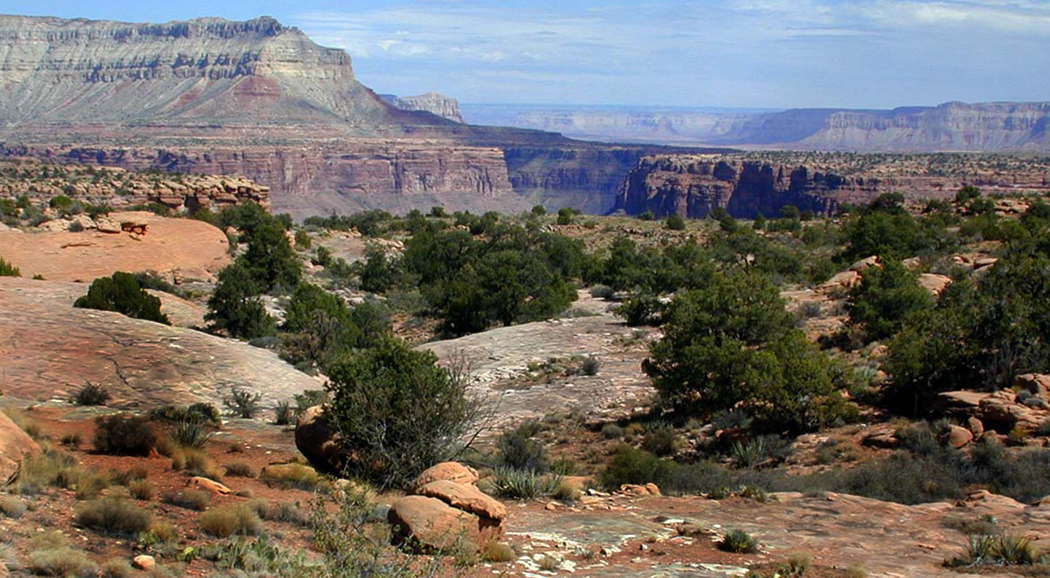
But there are other places to see the canyon besides the official viewpoints of the National Park Service.

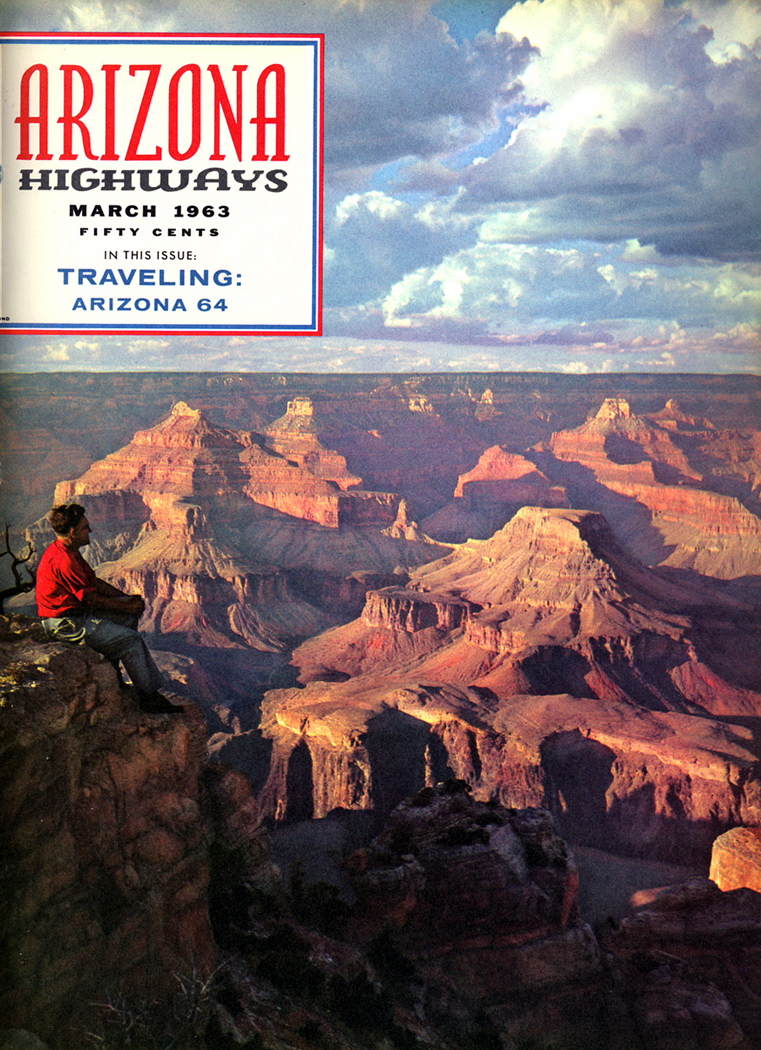
One of my first images of the Grand Canyon came when I was a child in the Christmas edition of Arizona Highways magazine, which was once a year available on the magazine racks in New Jersey. One of the pictures in it was a stunning photograph of the Canyon from Toroweap Overlook. I never forgot that name, it seemed so odd — although I don’t know why an Indian name should seem exotic to a Jersey boy living between Hackensack and Ho-Ho-Kus.toroweap 15

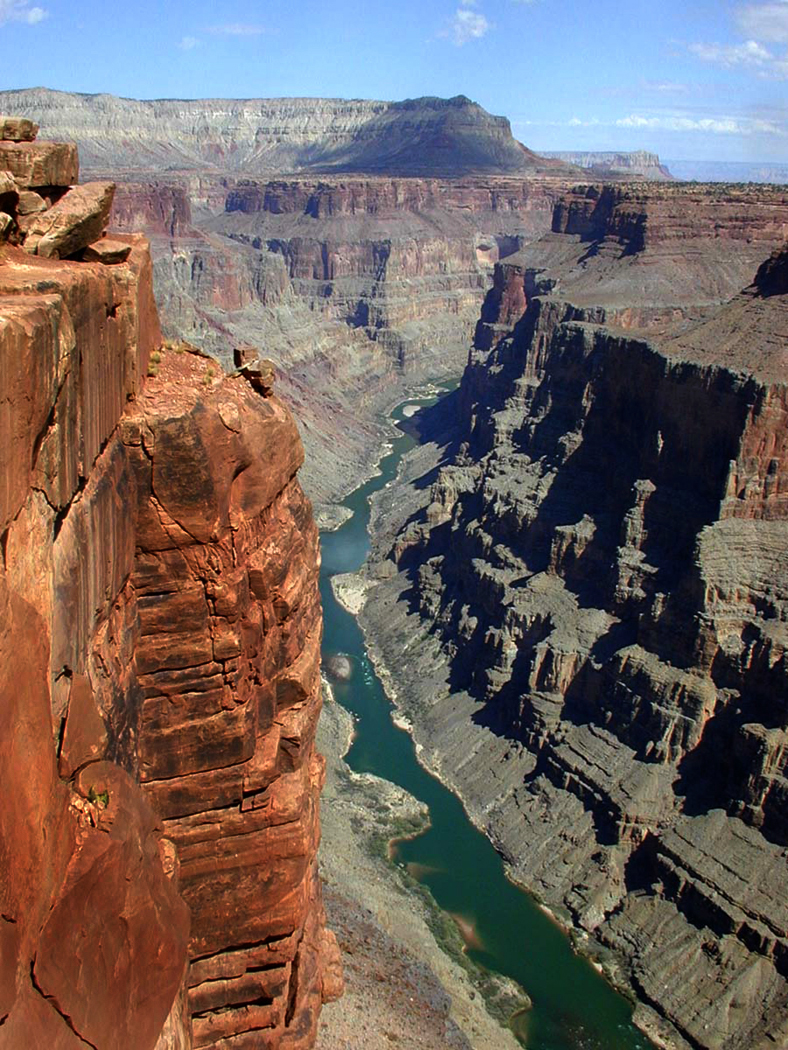
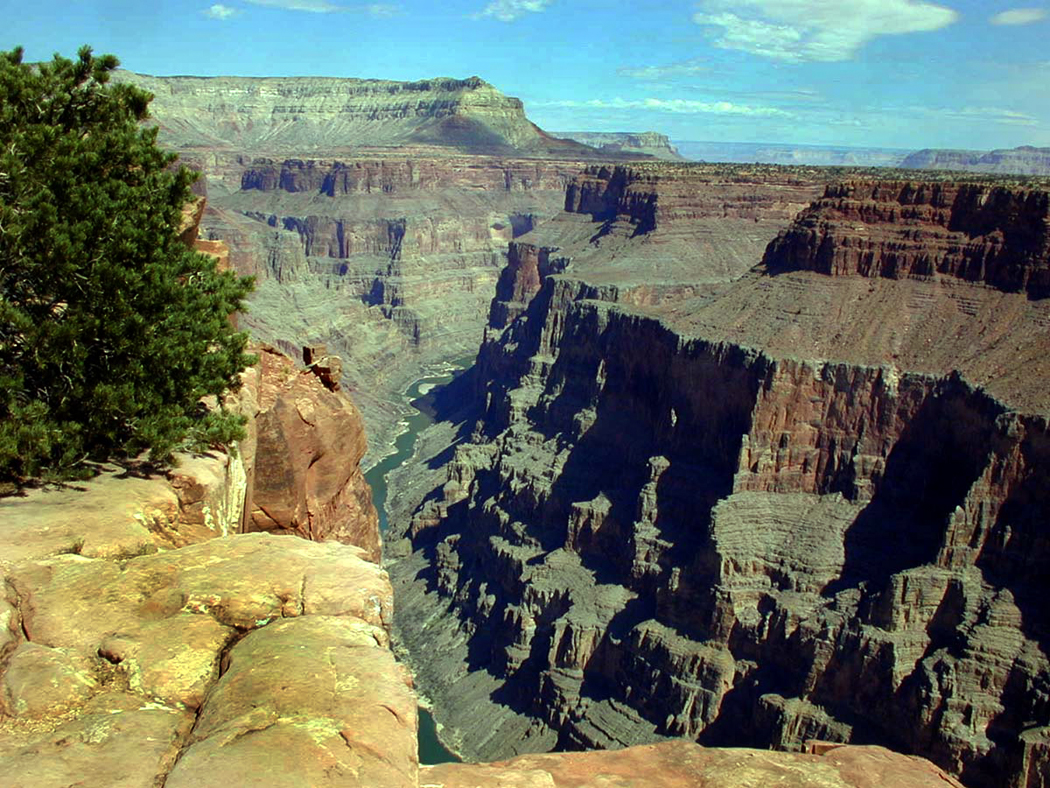
Nevertheless, I always wanted to go to Toroweap, to see that vertical panorama, the 3,000-foot drop to the river.

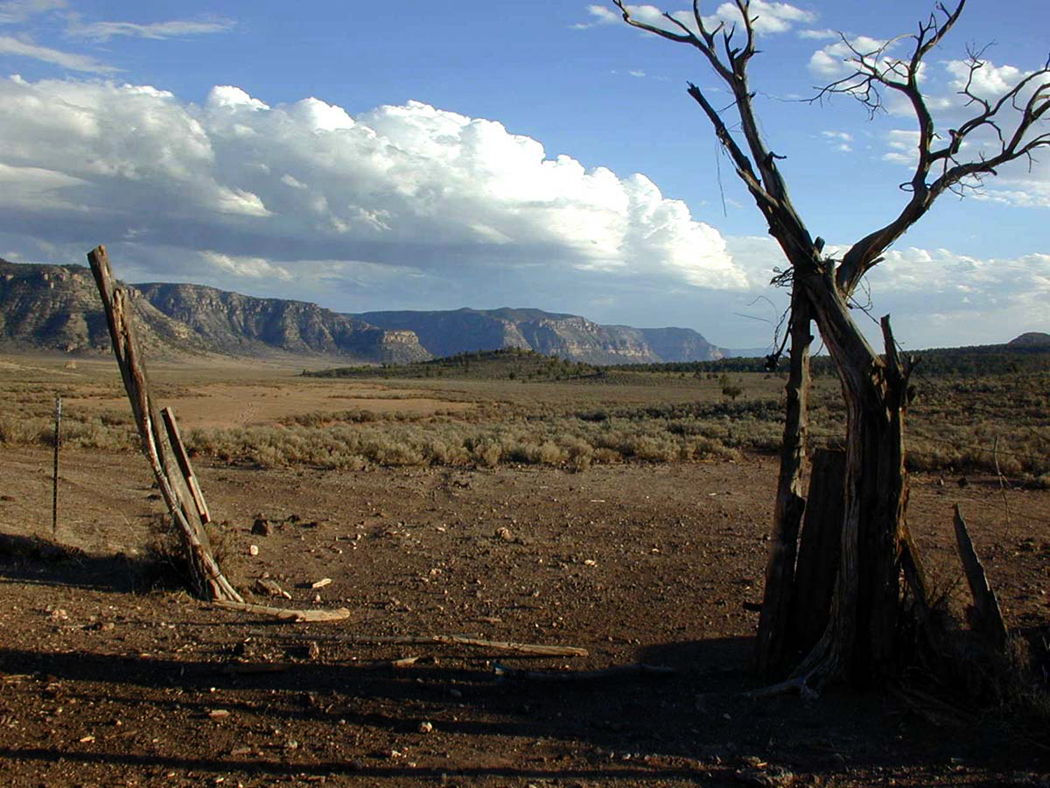
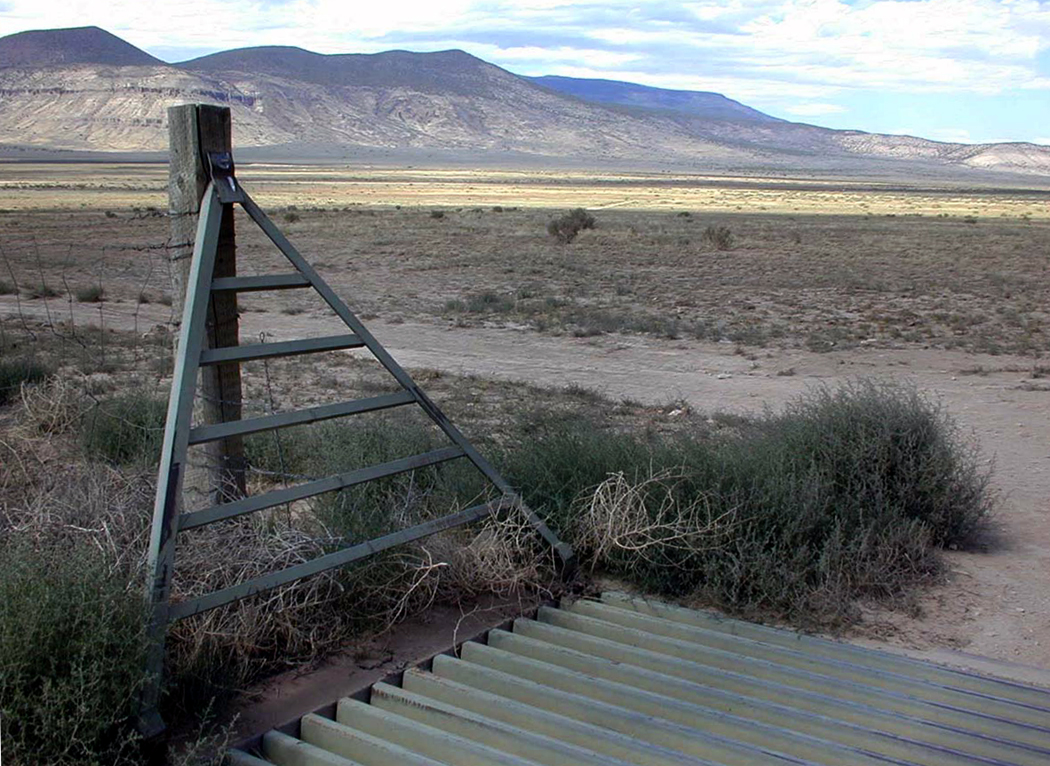
The overlook is reached by 61 miles of dirt road. And those miles start from a point 9 miles west of Fredonia, Arizona, which is already as remote as it is possible to be in the state. On the Arizona Strip between the Canyon and Utah, Fredonia is a little town you pass through on the way to Kanab, which is no Chicago either.

Fredonia is 120 miles from the nearest Arizona town of any significance, Flagstaff, through the Navajo Indian Reservation and across the northern margin of the state skirting the Vermilion Cliffs. It is so remote that when you pass the turn off for the Grand Canyon North Rim, you still have to press on into the wilderness to get to Fredonia.toroweap 9

How remote is it? Well, it is technically considered frontier. Any place with fewer than two people per square mile is officially called frontier, said the ranger at Pipe Spring National Monument, which is also in this neck of the woods.

The Arizona Strip easily qualifies. Arizona, for instance, has a population density of about 50 people per square mile. When you subtract the population center of Fredonia, with its 2100 people, the rest of the Strip checks in with .014 people per square mile. That’s fewer than 3 people per 20 square miles.

That is the official definition of empty.toroweap 7

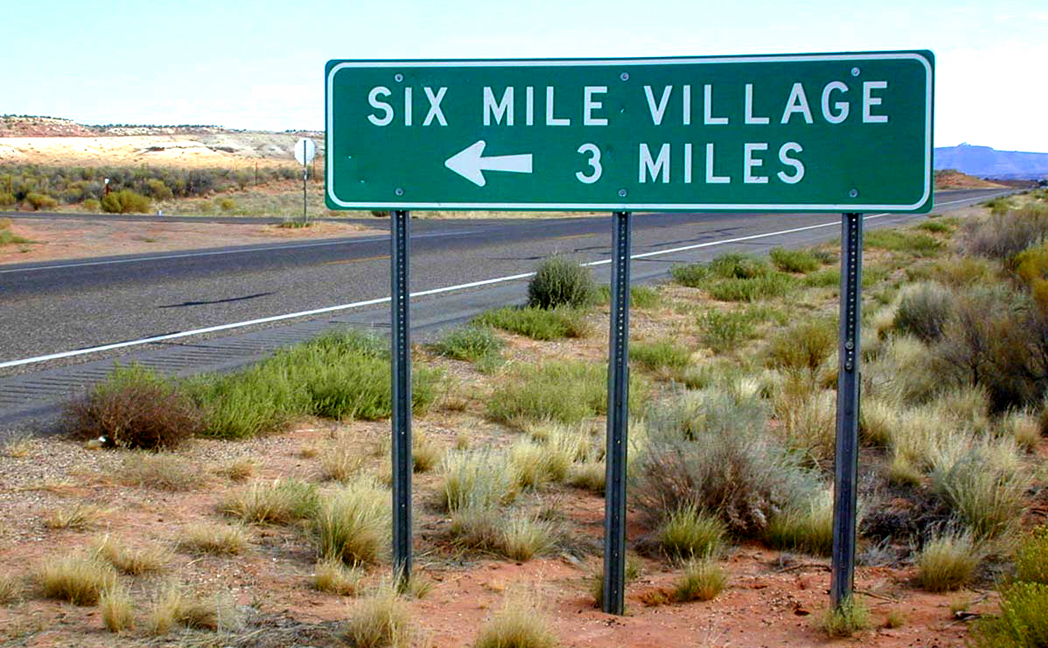
toroweap 17Well, a little past the sign that reads “Six Mile Village, 3 miles” you find a dirt-road turn off with a sign to Toroweap Overlook. It says, “Toroweap Overlook, 61 miles.”

At first, you feel rather confident. Anyone who regularly drives the dirt and gravel back roads in this state will be lulled into a false sense of security.

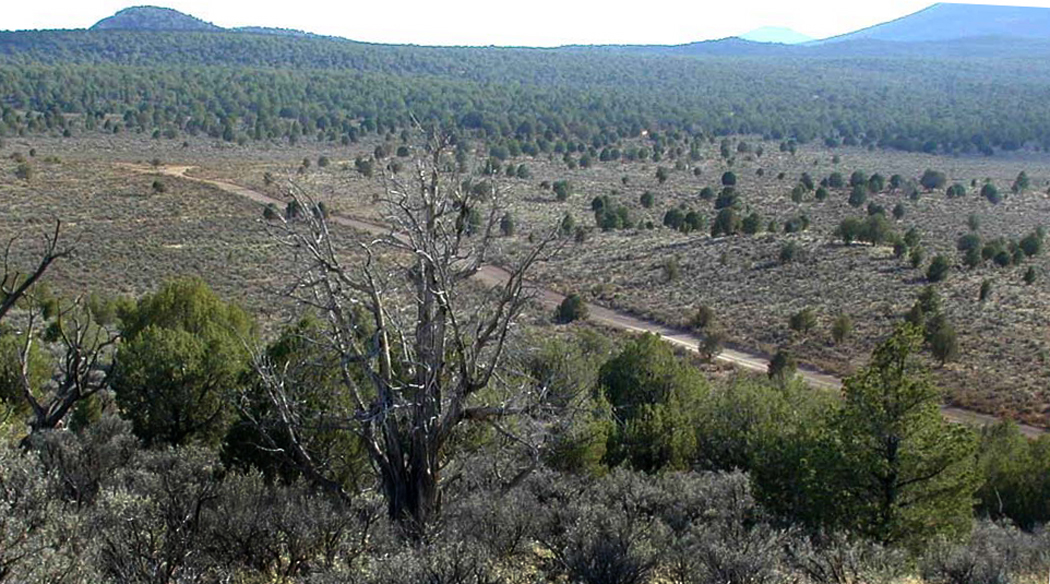
The first 20 miles or so are pretty flat, pretty well kept up and surprisingly civilized. You can do a comfortable 50 miles an hour if you don’t mind kicking up a few stones and hearing them clatter against your undercarriage.toroweap 10

But then, after crossing the Antelope Valley, you have to climb the first small plateau and the road begins to wind and narrow. Patches of sand appear in the hollows of the land and you have to slow down or risk losing control of your car.

Yes, I said car. Every guide book I checked out said the trip can be made in a passenger car. And since I am an intrepid risker of my car, I thought that this sounds like a piece of cake. I have driven my car through mountainside cow pastures, through North Carolina woods with no roads, twisting between the trees like a Daniel Boone in a Chevy. I have taken my car on the 30 miles of washboard someone jokingly called a road on the far side of Death Valley from the highway.

I can go anywhere.toroweap 8

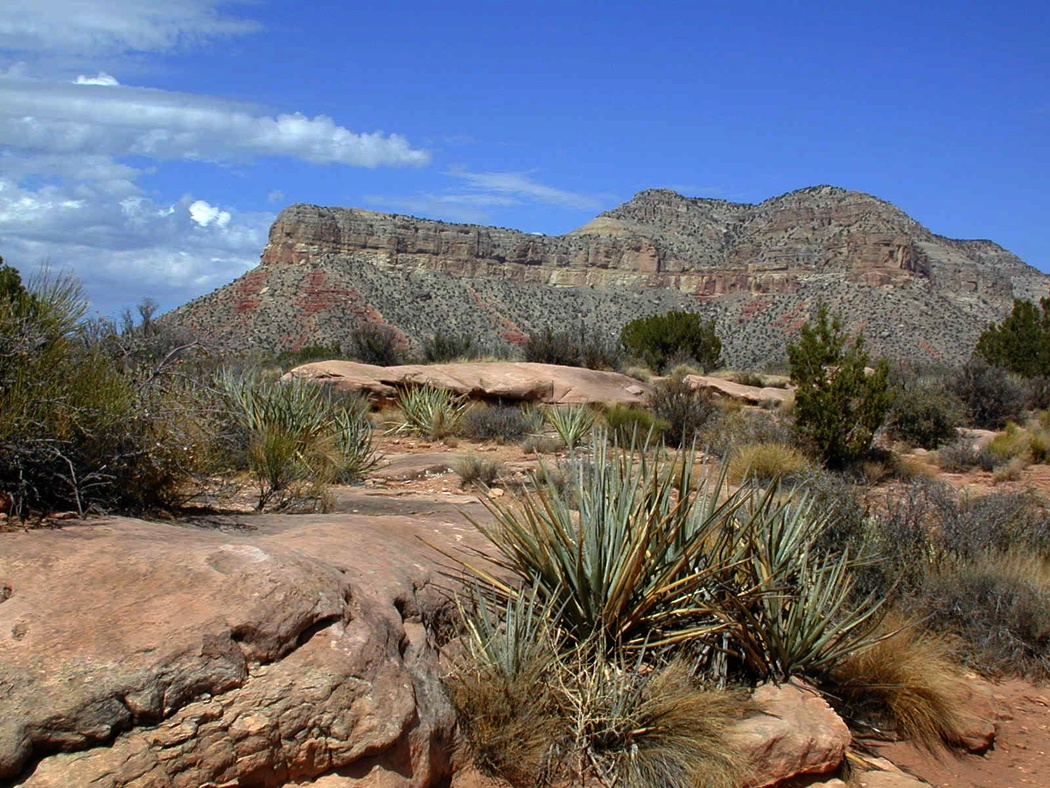
But the road to Toroweap became hinkier. About 45 miles in, just after the turn-off for the road to Mt. Trumbull, the road gets questionable. And I mean, like I question that it deserves the name road at all.

Since I was two-thirds of the way to my longed for magic dream, I pushed on.

After all, I am the man who drove my car across Thompson Wash to the north of Canyonlands National Park in Utah. I am the man who keeps an entrenching tool and a Hudson Bay ax in the trunk at all times in case I need to dig out of the sand and chop down brush to thrust under the tires for some purchase.toroweap 13

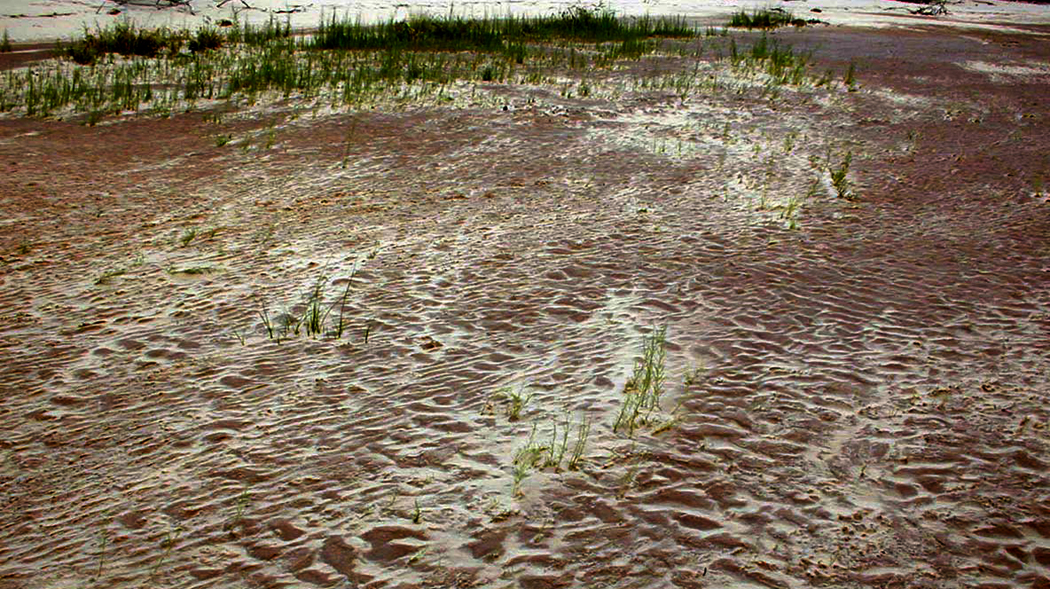
There were some sand pans along the way, where your tires no longer go where you point them and your careen through the powder like a raft going downstream. The steering wheel becomes a tiller and you just try to keep pointed forward. But if you get up a head of steam going into the sand, you can more or less bull your way through.toroweap 14

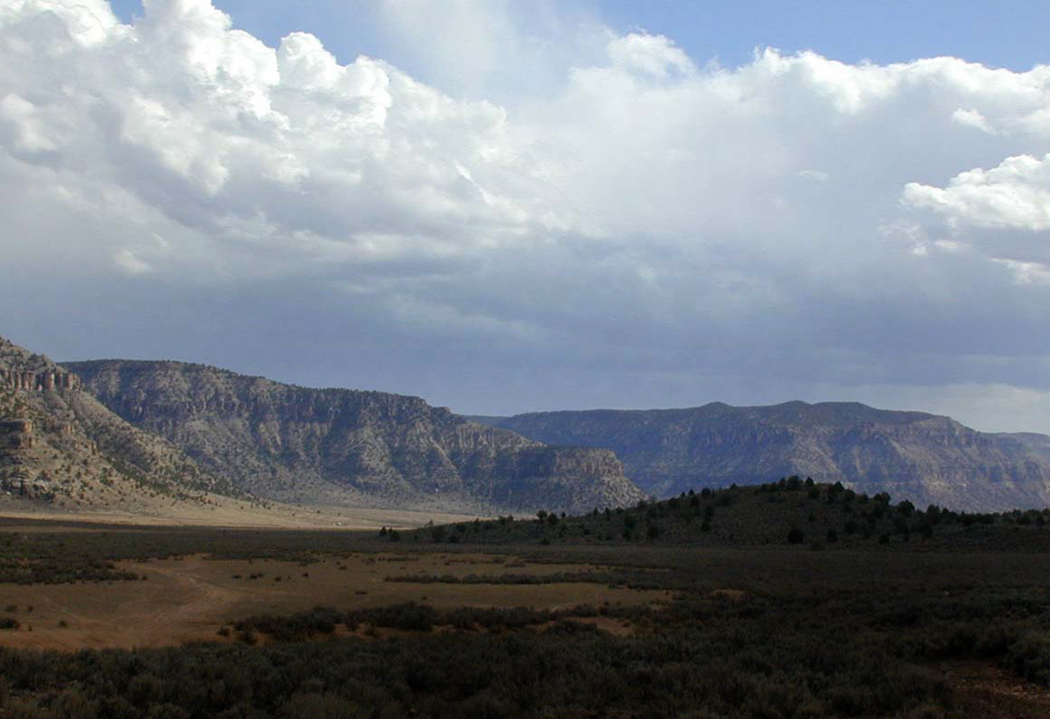
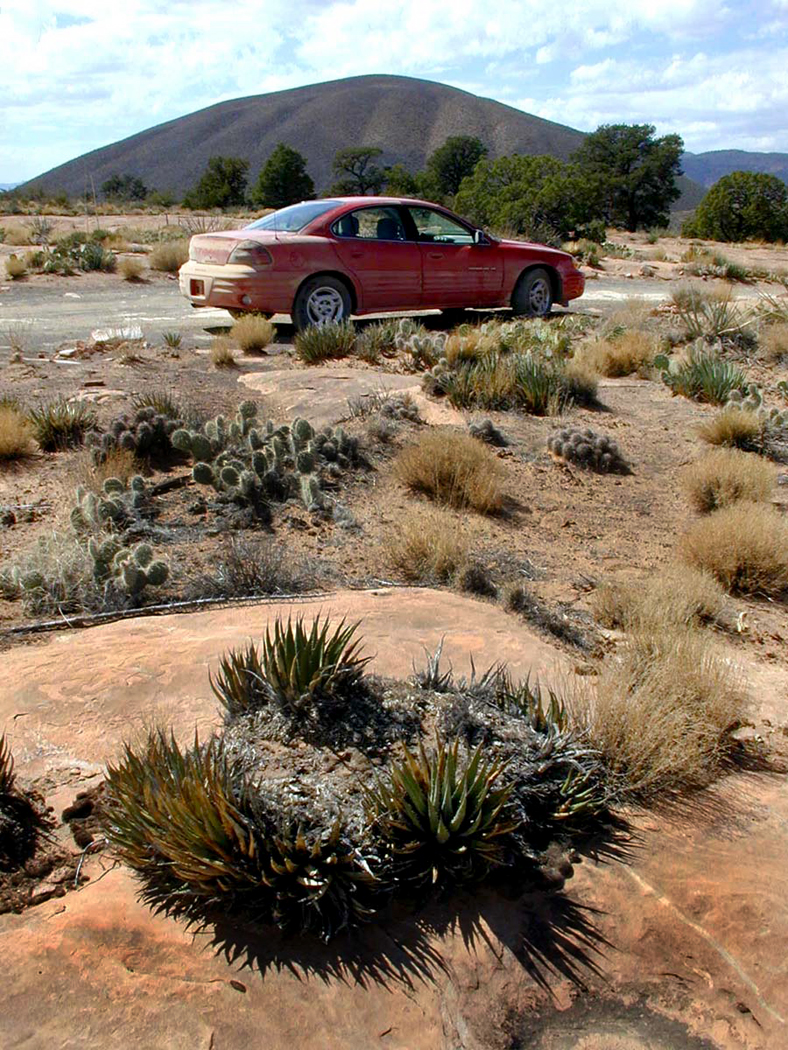
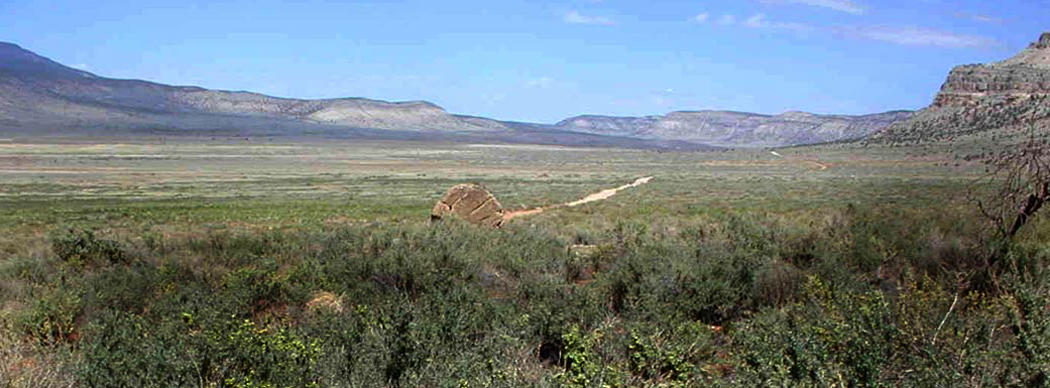
But after the Tuweep Ranger Station, where you enter the national park lands, it started getting tricky. I had had some touchy moments in the sand, but nothing I didn’t think I could handle in my Pontiac Grand Am. But in the final eight miles from there to the overlook, the road gets positively grim. The sand — I call it sand, but it is really a fine, pulverized powder that sits axle-deep in the roadway — had previously been in recognizable pans, small patches of up to 100 feet in extent. But along the Toroweap Valley, there is a stretch of about a quarter mile of unrelieved sand.toroweap 4

As I was driving along — careening, really — I came upon the ranger in a road grader smoothing the roadbed. He should have saved his effort. The grader was smoothing off the top of the sand, but that didn’t make it any easier to plow through. In fact, the ruts provided better traction for the tires, as long as the high sand in between didn’t contain any large rocks waiting to score the bottom metal of the car.

With the sand passed, the road got narrower and rockier. The rocks were bumpy and you had to take them slowly, especially around the tight curves up and down the canyon, but they were negotiable. The final three miles slowed me down to a pace of between 5 and 10 mph, but I didn’t mind so much, since at least I knew the road wouldn’t swallow my tires.

At the end, Toroweap Overlook was a small rocky parking lot with a port-o-let to one side and a giant hole in the ground to the other.toroweap 2

They view was spectacular and the rawness of the experience made the South Rim look positively urban. There are no guard rails, no interpretive signs, no ranger walks, just an edge of rock with a vertical drop down to the river of three-fifths of a mile. The canyon at Toroweap is very narrow — it is about a mile to the southern rim across the gorge, and directly below, you can hear the roar of the rapids.toroweap 11

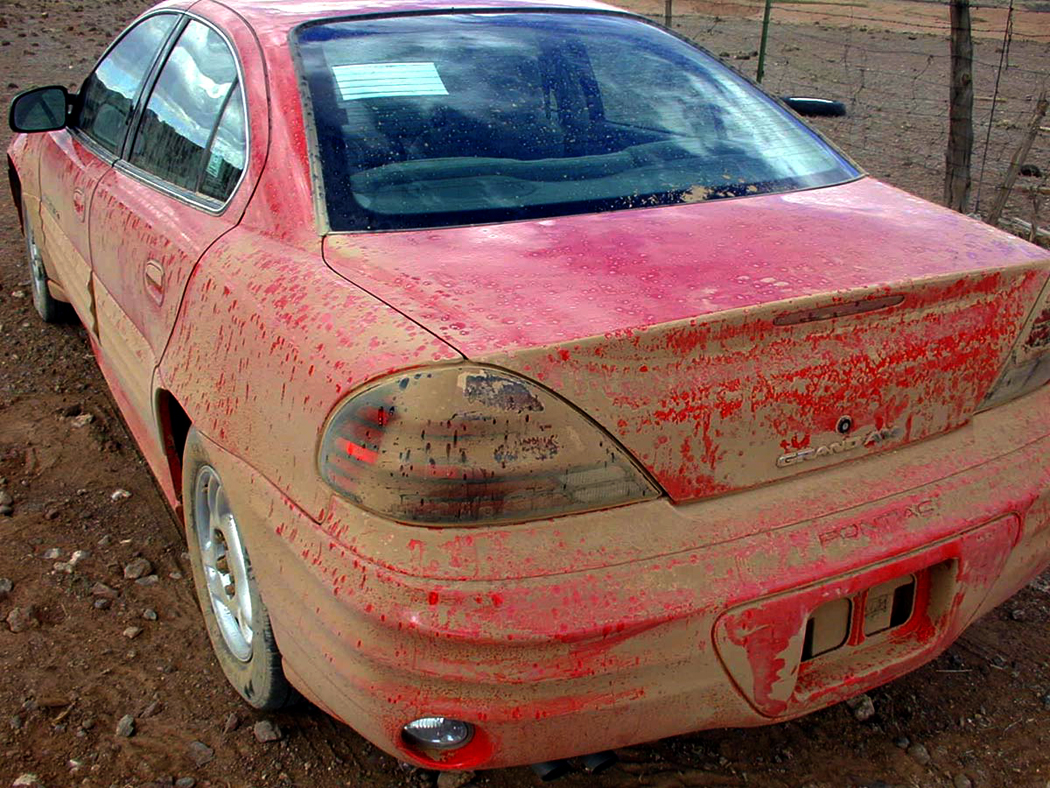
Two German couples were there looking down the hole and taking pictures of each other on the ledge. One of the men, seeing my once-bright red sedan now a uniform dun of dust — and comparing it with their two high-water SUVs, came over to me and asked me which route I had taken. When I told him, the looked at me like I was crazy, laughed and said, “In that car? How did you do it?”toroweap 3

And, you know, I’m not completely sure myself. But I knew that ahead of my was another 61 miles of the same thing just to get out again.toroweap 1

So, this is a warning to you. Don’t believe everything you read in a guidebook.

Yes, it is possible to get to Toroweap in your car, if you have the gumption.

But don’t expect any yellow brick road.toroweap 16


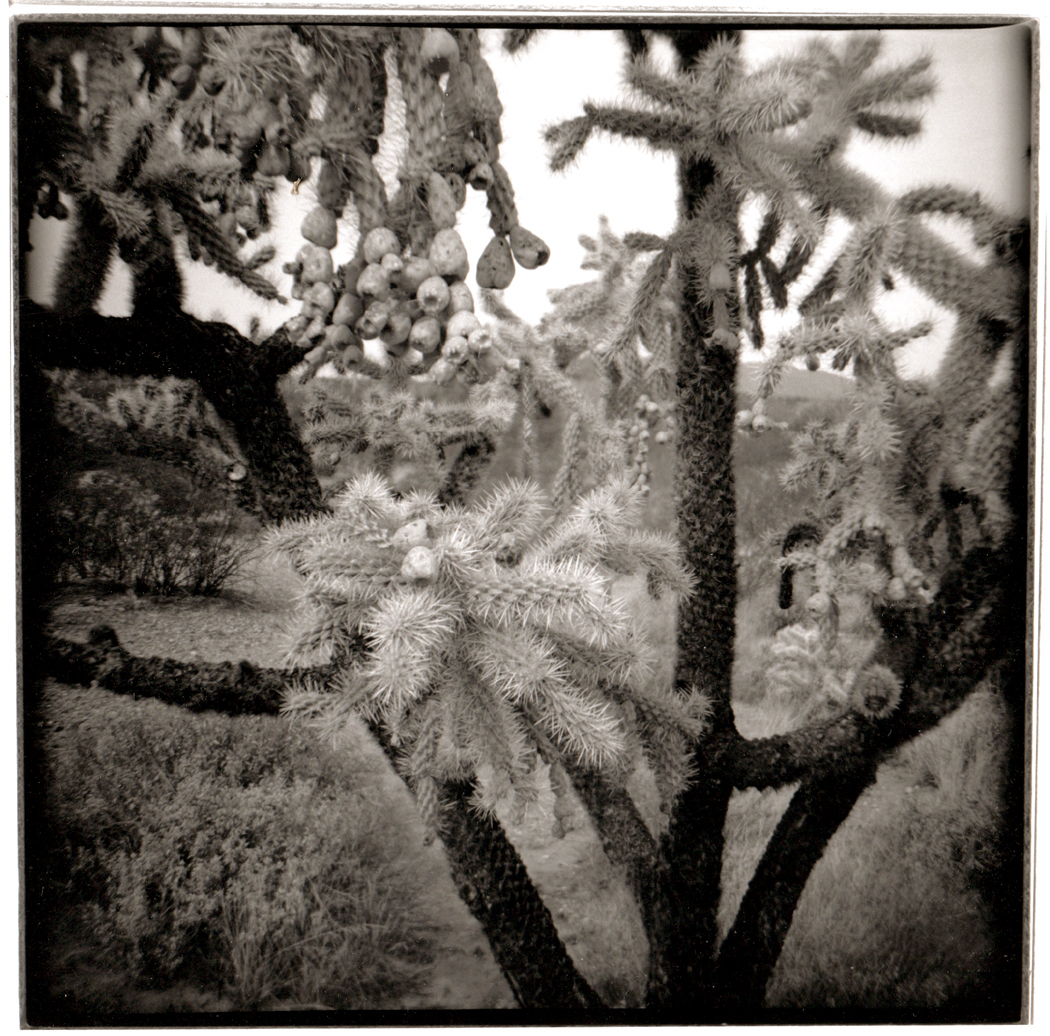
01 Cholla Organ Pipe Cactus NP Ariz
I miss the desert.

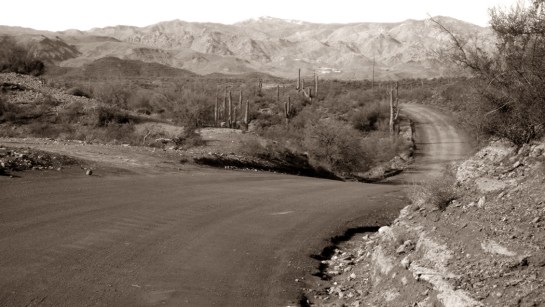
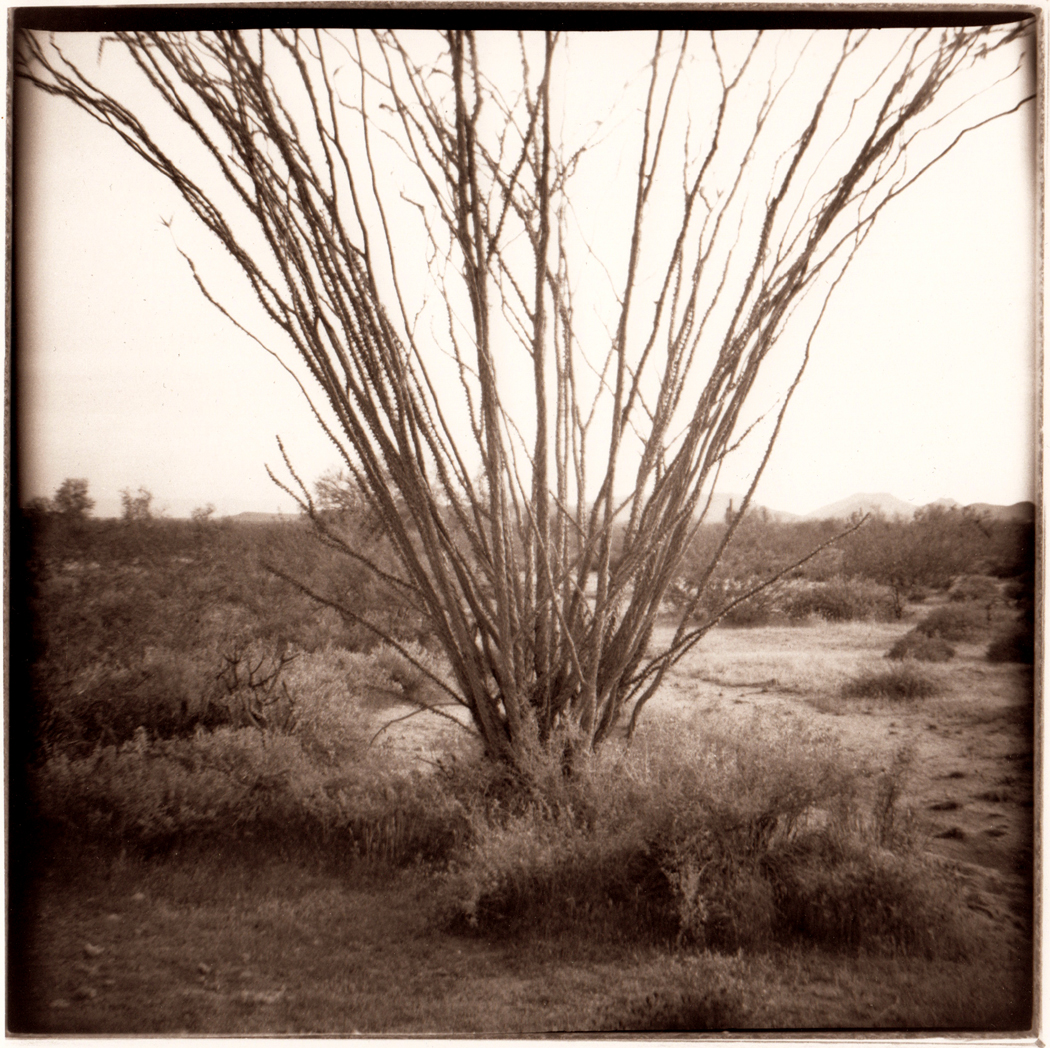
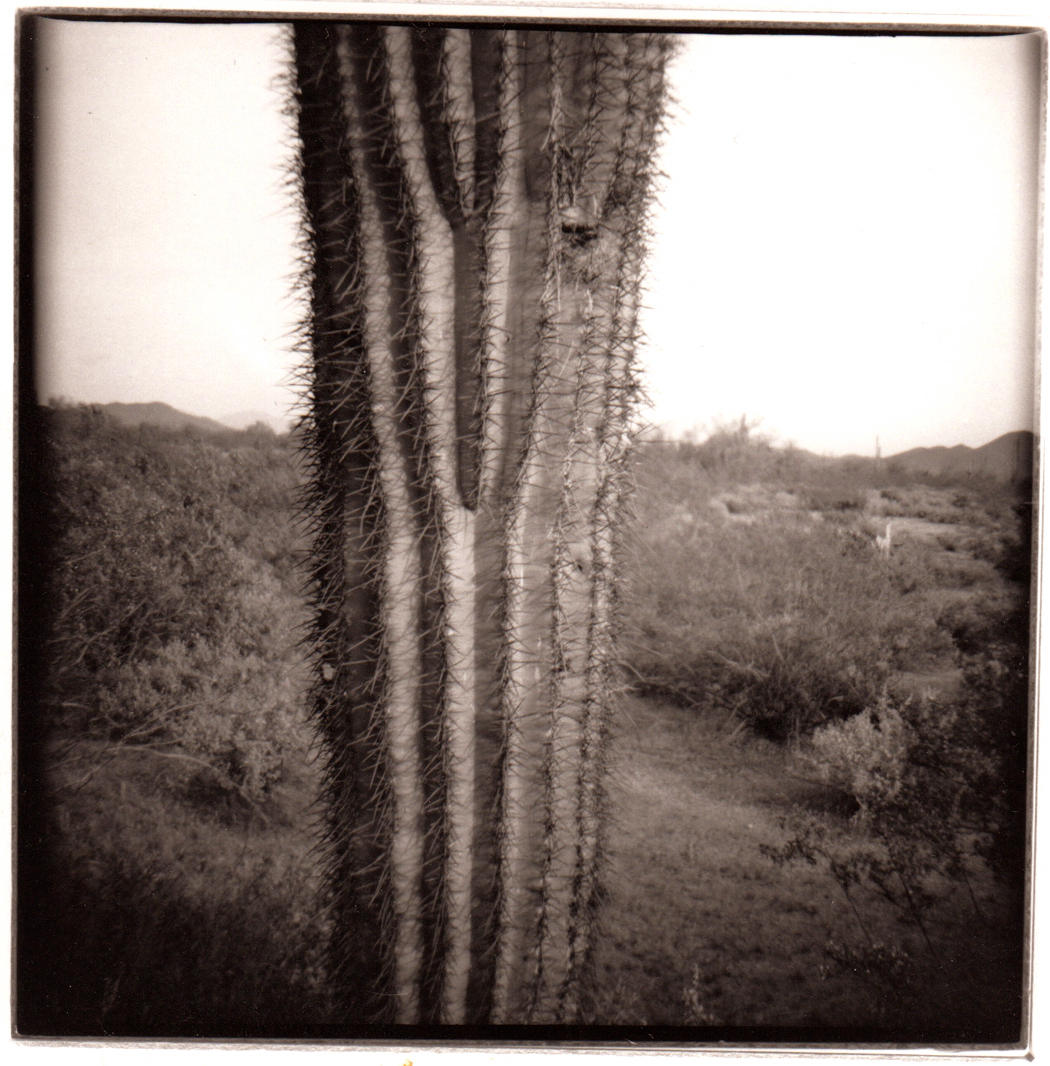
02 Ocotillo Organ Pipe Cactus NP ArizThe gravel, the dust, the prickles, the skin-shriveling heat, the raking shadows, the beige mountains turned pinkish in the afternoon, the buzzards hanging overhead, the greasewood smelling like aftershave in the rain.03 Organ Pipe Cactus Diana pair 3

When I lived in Arizona, I lived in the city; I don’t miss the city. I used to call Phoenix “Cleveland in the desert,” but aside from the scorch and desiccation, the desert doesn’t make itself much known in the cities of Arizona. For that, you have to leave the gridlock of reticulated and decussated streets and get out to where the dust devils spin and the owls burrow. 04 Cholla close Organ Pipe Cactus NP Ariz

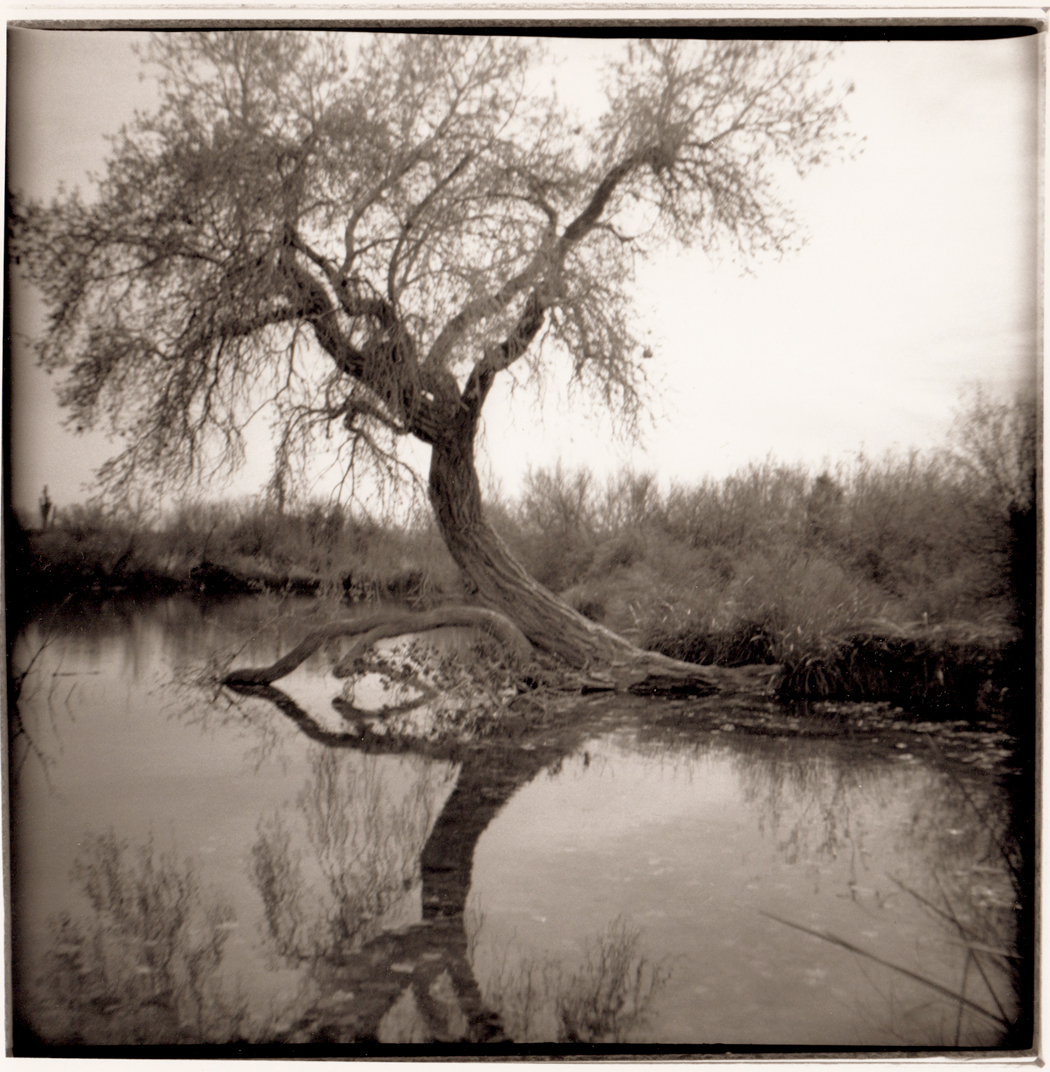
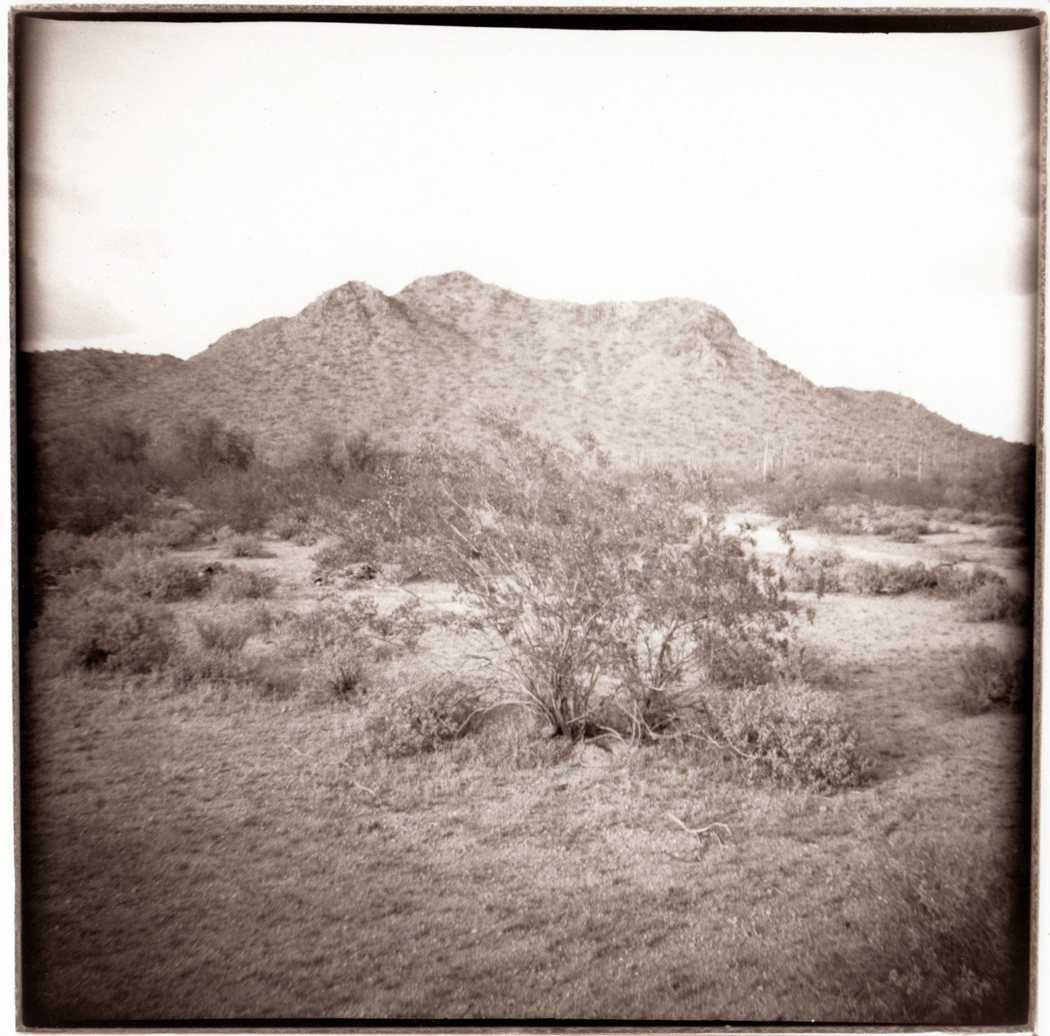
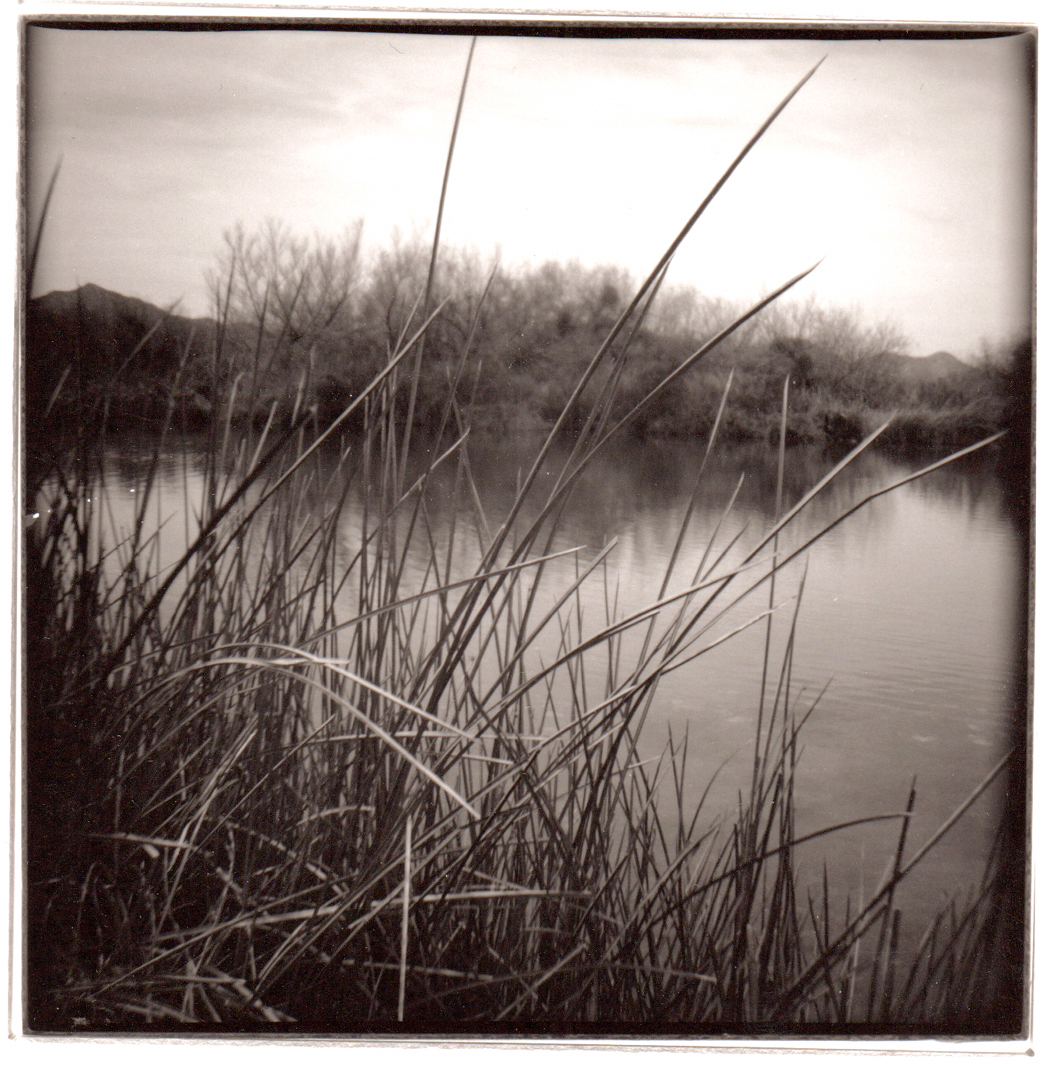
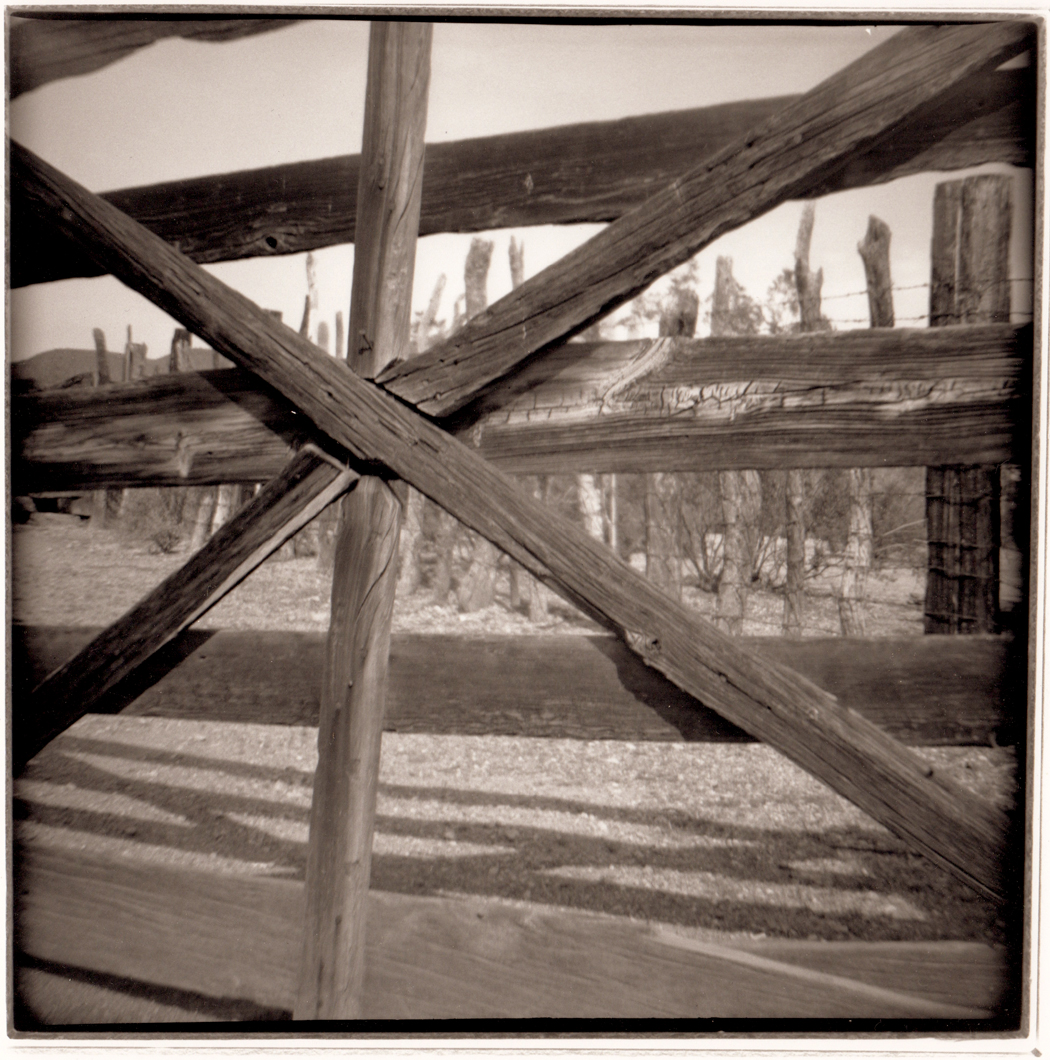
Many years ago, I took a toy camera out to Organ Pipe Cactus National Monument, south of Why, and drove the loop road past Bates Well and Quitobaquito Spring. 07 Pond Organ Pipe Cactus NP ArizThere was no sight of another anthropoid anywhere. The only hint of human occupation was an abandoned ranch, the gravel roads and an occasional descanso commemorating someone’s unfortunate death under the oven dome. The horno cósmico13 nicho trio

Click to enlarge

The Diana camera cost something like $1.99 and had a plastic lens and used old roll film. It had the solid polystyrene worksmanship you might expect from Mattel or Ron Popeil.05 Butte Organ Pipe Cactus NP Ariz After a lifetime of Nikons, Canons and Hasselblads, and having moved up to a 4X5 camera with a Super-Angulon lens, it was a kind of mortification of the flesh to bust out the Diana. A means to get away from the high-resolution, Zone-System rut. 06 Saguaro Organ Pipe Cactus NP Ariz

And now, looking at the results 20 years later, the fuzz and blur of the photos seems more like the nostalgia I feel: less like being there, more like remembering, even half-remembering.16 Organ Pipe Cactus Diana pair 4

08 dark vista Organ Pipe Cactus NP Ariz12 Wire fence Organ Pipe Cactus NP Ariz

10 Ranch fence Organ Pipe Cactus NP Ariz

 
 17 Carole as Flora in the desertCarole as Flora


Linville Falls
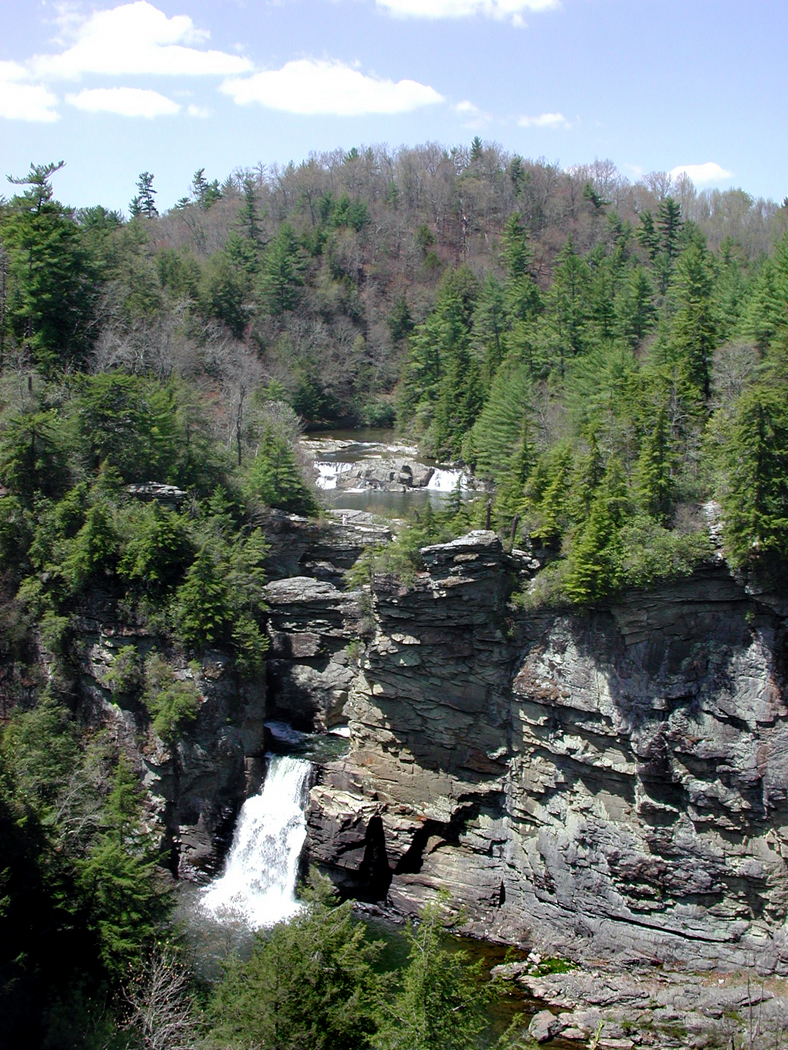
It has been nearly 50 years since I first saw Linville Falls in the Blue Ridge Mountains of North Carolina. Back then, getting there meant finding an unmarked gravel road and an unmarked dirt parking lot — really just a thicker place in the road to pull over into.Linville Falls 03

Then we followed a spongy, loamy footpath under the hickories and oaks toward the distant roar of the waterfall on North Carolina’s Linville River. No one was there but us and we picnicked on the rocks over the crashing water. The upper falls are a broad, shallow drop, but at the lower falls, the quartzite pulls tight, constricting the river and forcing it down a spiraling chute that drops over the edge of the cliff and down 75 feet to the river and Linville Gorge.Linville upper falls

It is an impressive torrent with a basso profundo roar, and nothing will ever change the way it seemed to me that day, as I leaped over rocks, crossing the white water to the other shore so I could climb on the gnarled rock to see down the waterway.

Leaping from rock to rock across the cataract could easily have got me killed, swept over the precipice, but I was young, and therefore, an idiot.

I’ve been back many times over the years. The National Park Service built a paved road from the Blue Ridge Parkway, making it easier to find. Then they paved the parking lot and built a pedestrian bridge over the river upstream from the falls.Linville Falls from above

The last time I went back, there was a visitor’s center and a souvenir shop and a parade of vacationers trotting down the path to the fenced-in overlook. The falls are just as impressive, but the experience isn’t.

If I speed up those five decades in my head like time-lapse photography, I can see time take shape. It builds and it destroys in a constant rise and fall like an ocean tide.

And what comes in, ebbs.

A few years ago, my wife and I visited another familiar site, on Old Route 16, a dirt road that drops down the side of the Blue Ridge from Ashe County towards North Wilkesboro. When we lived in the mountains, we used to visit an abandoned farmsite along the road, halfway down the mountain face.

There was a clearing in the wood and an old wooden house with a broad porch that looked out over the steep valley below. Above us was the spot ominously known as the “Jumpin’-Off Place.”

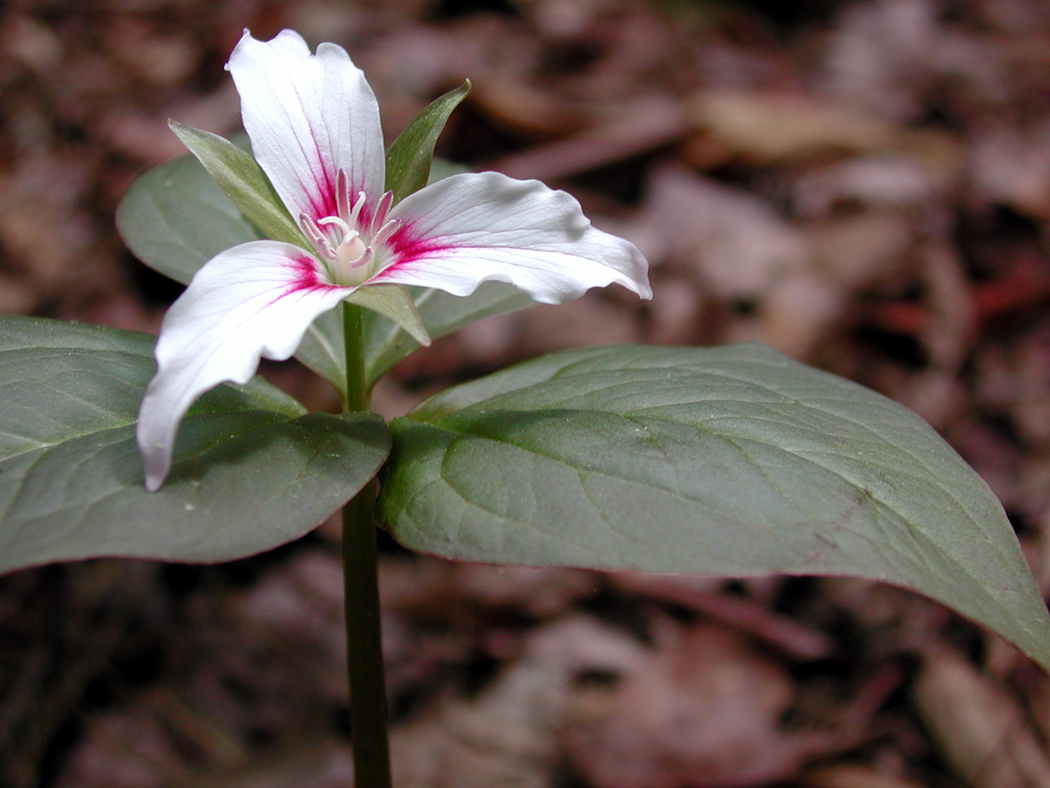
We could picnic on the porch with the bluebird and tanager singing in front of us, the buzz of insects all around and the gentle breeze rattling the grass in the field.Linville trillium

It had been 20 years since we visited that farmhouse and we thought we should see what had become of it.

About three miles down the old dirt road, we passed where it should have been, but there was no break in the forest, no open field. We couldn’t find the house. We kept driving, hoping we’d find something that looked familiar, but we didn’t. Finally we stopped the car where the farm should have been and walked deep into the woods.

Buried a hundred yards into the tangle of maple trees was a naked standing chimney, completely eaten up by brush and undergrowth.

When I climbed down the hill towards it, I discovered the forest floor was spongy with rotten boards, completely collapsed in on themselves, with a few nailheads still showing.

In the years since we last visited, the old house had been completely digested by the woods, leaving only the indigestible brickwork of the twin-sided chimney.OLYMPUS DIGITAL CAMERA

And the once-glorious view of the declivity was now completely obscured by trees and brush. Instead of a vacant field overgrown, the house was survived only by complete woods.

In just those few years.

Nature can reclaim an entire farm in 20 years and leave nothing behind but the masonry. And that won’t last much longer.


vegas pyramidI know my idea of hell: eternity in Las Vegas. Heck, even a weekend.

Now, I am aware that many people love Vegas, and I’m not here to quarrel with them: De gustibus non est disputandum, as they say. You can’t argue about tastes.

However, I have been to Vegas once too often and my skin shrivels at the thought of the place.

There once was a certain Sodom-and-Gomorrah charm to it when it seemed to be run by the Mob, back when Frank Sinatra, Dean Martin and Sammy Davis Jr. turned the city into a glamorous, empty metaphor of high-hat cymbals, scotch on the rocks and gleaming silk tuxedos. Back then, gambling wasn’t something that retirees wearing plaid pants with white belts and matching brogans did on organized bus tours. It actually had the edge of transgression. It was bookies, hookers, cigarette smoke and more incandescent light and neon than in all of France.

However, the city no longer has the Mob feel. It’s much worse: Now it’s run by corporations.

This isn’t just a question of good and bad taste. Bad taste has its appeal, and the old Vegas was a monument to bad taste. Bad taste can be fun.

Certainly, there is a great deal of bad taste in Tijuana, for instance. But it is a wonderful place to visit. In Tijuana, the bad taste is — excuse the term — life affirming. The bad taste comes from poverty and its attempt to enrich life with gaudy colors and garish extravagance.

In Vegas, the bad taste comes not from poverty, but from excess of money, which is deadening. Its spectacle does not enrich life, but gluts our senses so we no longer see, no longer hear. Vegas makes zombies.

On the hotel-room TV, there is a channel that promotes the hotel’s attractions. It features pictures of bubbly families enjoying themselves with the reckless grins of a chewing gum commercial. But when I go down to the casinos, I don’t see those people.

Instead, I see aging women in teardrop eyeglasses and stretched-to-the-limit polyester sitting in front of the electronic slot machines with not a muscle flexed in their flaccid faces and their eyes turned to pig iron, hypnotized by the whirring of the dials.

A constant, mechanical drop of coin, pull of lever, spin of wheel, clang of bells, drop of coin, pull of lever, etc., for hours on end. No expression on the faces and an ash-tipped cigarette hanging on their dry, creased lips. It is just such scenes that make me think of Dante.

Children, of course, are not permitted in the casinos. They have their own computer screens to stare into in the video-game arcades that are hardly more than training wheels for the real thing downstairs.

Adult or offspring, they have put their lives on hold in order to partake of a droning synthetic reality that has no meaningful connection to them.

Everything in that town is synthetic, from the phony castles in Excalibur, to the “hologram” of Celine Dion, singing a duet with herself, to the surgically enhanced hood ornaments of the chorus girls. There is not a genuine experience to be had, with the possible exception of the pleasure one gets at seeing just how seedy and run-down the old parts of town have become. In their dusty storefronts and cheesy wedding chapels, there is a patina of reality that invades the fantasy.

The new Vegas of phony pyramids, skyscrapers and medieval castles has no reality. It lets you kill time without enriching your life. It is to life what Twinkies are to fresh, homemade bread.

In that, it is a concentrated dose of what America is becoming.

And that is why I hate Las Vegas all the more: The real experiences of life are being supplanted by the plastic-fruit version — the difference between going fishing and playing computer fishing games — and we aren’t complaining about it loudly enough. Quite the contrary, we are flocking to this city in the desert to experience ersatz New York and theme-park reality, simplified, repeatable, soulless — dulled down and tarted up at the same time.

You can see the same thing happening in our political campaigns, our publishing industry, our corporate-slogan clothes.

We are presented with a kind of corporate parallel universe, where everything has a brand name and a price. We are seduced into forgetting the messier, chaotic and infinitely more rewarding world we were born into.

It’s the modern version of the Faustian bargain, and we’re losing more than our money.

paris night 01jpgThe first time my wife remembers being aware of the night was when she was a little girl and thought the darkness was a liquid, a flood tide overtaking the world.

“I was afraid I would drown in it,” she says.

If she wasn’t careful, it might seep under the window sash and fill her bedroom while she slept.paris night 02x

My experience was different. I grew up outside New York City, and for me, night was an empty container to fill with light. It wasn’t night that flowed, but rather the lights that were like opened faucets draining into the darkness, to be diluted by it. The view of the Manhattan skyline at night, seen from the New Jersey Palisades, was the most beautiful thing I knew. It glowed like embers. paris night 03x

Either way, night was something poetic, although we would never have used the term. When you are a kid, when everything is new, and everything is poetic, there is no humdrum, no banality, against which the poetic, the beautiful, can be offset. It is just the way things are.

Now, as a grown up, chastened and wary, night is the black velvet on which we place the emerald ring, to show off its brilliance. And night is the time that gives the day its mythic resonance. We do our work during the day, so that night can work on us. paris night 04x

I go walking in Paris at night, because that is when I feel most completely there. Paris becomes itself when the streets are dark, with storefront windows and the streetlamps pour forth their fluid light, diluted on the curbs and parked cars. I am washed in that thin light. paris night 05x

One feels most deeply the difference between Paris and New York. At night, Manhattan seems just as busy as it was earlier. Traffic is dense, pedestrians fill the streets. You can ride the subway at 2 in the morning and still see a car full of faces.paris night 06x

But, Paris at night is oddly empty, and what people you see are clustered around the steamed windows of cafes and bistros, or on the front steps of the opera house as it lets out, or waiting to get into the disco. It is almost as if these were the campfires that draw the bodies turned from the darkness. paris night 07x

You can walk down the streets and peer into the shop windows, with their wares lit and forgotten, as if the Rapture had occurred last week, and left behind the kitchen furnishings, or the bicycles, or books, and behind the glass, there is a humanless simulacrum of the world we know. paris night 08x

Or you follow some old man in a long coat as he turns the corner and walks down a dark street toward the next streetlight.

Paris is made more magical by the night. In October there is the slight bite to the air, and the rain makes pointillist mirrors of the pavement, redoubling all that dissipating light.paris night 09x

You wander into a Turkish souvlaki restaurant, a cheap storefront halfway down the street, and the man behind the counter is on the phone speaking some language you don’t know — it isn’t French — and he smiles at you as you sit on the molded plastic chair with the rocking table between you and your wife. The wall is bright yellow behind the glass counter, with garish purple writing offering the usual fare, lit with a glare. Gyros, souvlaki, pilaf. It is warm inside, and humid and the food is comforting.paris night 10x

Even the sound is different at night. Like the campfire, the sound is huddled, localized. In this restaurant, the sound is held in by the walls and front window. Outside it is silent once again.paris night 11x

There is cheer in the contact, and when you leave, there is an alive aloneness in the night street. paris night 12x

When I think of Paris, I think of it at night. I hear the voices and see the maitre pulling the Stella Artois from the tap. Most of the seat are empty and those filled are on the way home after a night at the cinema or theater. They may stop at the 8 a Huit for a pack of cigarettes. (Say it like “wee-a-wee,” it is the French equivalent of a 7-Eleven, only tighter packed and with one wall covered with wine bottles. The man sitting by the cash register is Algerian and tired after spending 12 hours in his shop.)paris night 13x

Compared to anything American, Paris is small. You can walk almost anywhere inside the Peripherique, and all the familiar signposts of the city are visible — Montmartre lit by floodlights on the hill, the Eiffel Tower turned into a fireworks display, the Palais Garnier pinned down by its own lights in the darkened city. paris night 14x

I love to get out into that night, and walk those streets, nodding to the proprietor of the flower shop as he stands by the door, stopping by the patisserie for the last pain au chocolate of the day, and finally passing the concierge of my hotel as he sits behind the desk, reading an Arab newspaper and drinking a small glass of Kirsch, not noticing me as I go through the lobby. Up the elevator, hardly bigger than a phone booth, and flipping on the timed hall light that busts open the darkness on my way to my room. paris night 17x

Out the window when I draw back the curtain, the city street is black, with highlights drawn by the lamps and the trees beneath my room shimmer in the light. paris night 18x


paris night 20x
paris night 21x
paris night 22x
paris night 23x
paris night 24x
paris night 25x
paris night 27x
paris night 28x
paris night 29x
paris night 30x
paris night 31x
paris night 32x
paris night 33x
paris night 34x

paris night 35x


paris night 36x


paris night 26x

paris night 37x
paris night 38x


paris night 39x

State Line tex-NMTo see the world, you fly around it; to learn about your neighborhood, you walk through it; but to appreciate something about the country you live in, there is nothing better than an automobile.Clouds from plane

A jet flies too high and fast to take in any detail. The country is too big to slog through on foot. A car is the perfect compromise, letting you pass over a significant portion of the nation each day, but allowing you the leisure to stop and sniff the magnolias in Mississippi, the rank ecstatic yellow sunflowers in North Dakota — and the lingering odor of peanut butter at Graceland.

It’s summer again, and once more, I open up another brand-new Rand McNally road atlas and begin planning a drive around the North American continent.Sunflowers North Dakota

In the past 15 years, I’ve made the round-trip across the United States at least a dozen times. I feel like Magellan when I start once more on the circumvehiculation of America.

I’ve done it alone and with my wife. I’ve done it camping and in motels. I’ve done it in summer and in winter. I’ve done it in as long as two months and as short as two weeks. Last year, I made it from Phoenix to North Carolina over a weekend, but I’m not likely to repeat that butt-numbing feat.

Yet I am planning another road trip this spring.

Friends tell me I am nuts, a masochist torturing myself or a sadist torturing my wife, but I keep setting out.

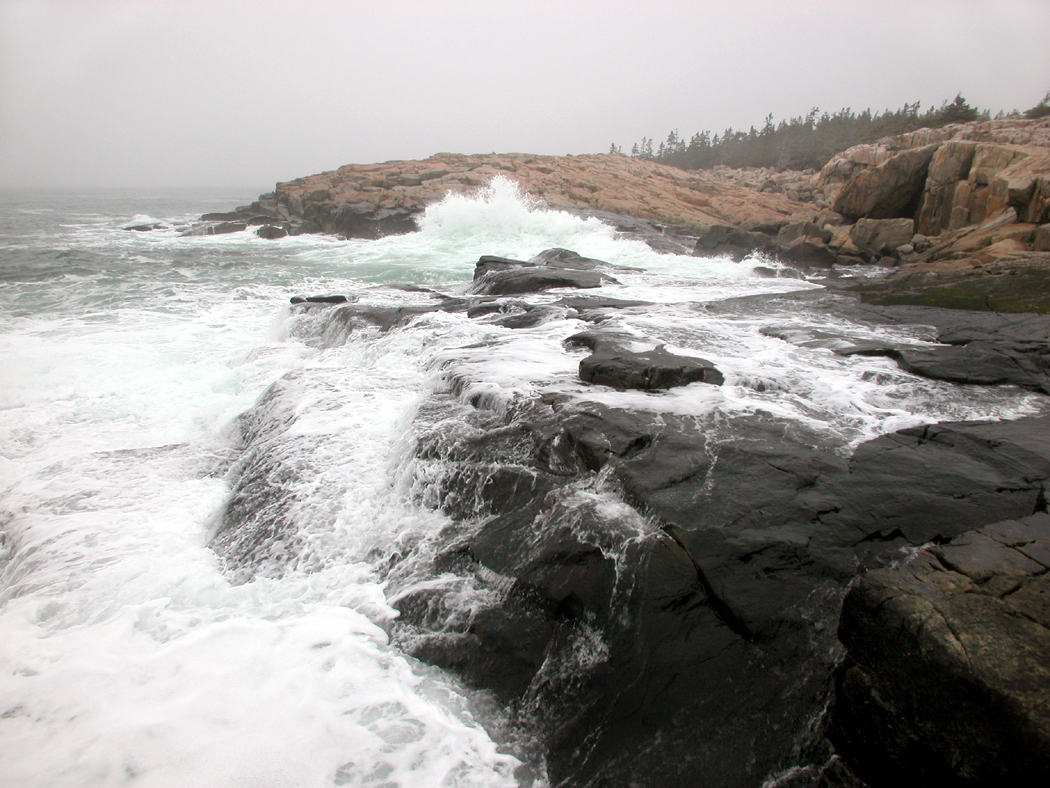
There is always something new to see, or some old friend to revisit: I’ve been to North Carolina’s Outer Banks something like 40 times, and I’m beginning to develop the same relationship with Maine’s Down East. When I have lived in the East, I couldn’t wait to visit New Mexico again.Baldwin Co. Ala. sunset

There are soft-shelled crabs to be eaten in Virginia, salmon in Seattle. There are pirogis in Wisconsin and scrapple in Philadelphia. You can only get pizza in New Jersey, you can only get barbecue in eastern North Carolina, or a real Cuban sandwich in Miami.

Barns in Pennsylvania have stone foundations; in Georgia, they rest lumber right on the ground. In Wisconsin, the barns are red; in North Carolina, it’s the dirt that’s red; the gray, weathered barns aren’t painted at all.

I remember passing through Iowa and being astonished to see a farmfield filled with hogs and each animal had its private home, looking like a Levittown of doghouses.

In southern Arizona, I passed something very similar, but it was for fighting roosters.Bear Mtn Bridge

American regionalism is alive, despite network television and corporate advertising. America hasn’t yet been completely turned into one great food court of McDonald’s and Arby’s.

If you think you have only a choice between Pepsi and Coke, wait till you pop the top of a Double Cola in Reidsville, N.C.

Try one at the Sanitary Cafe, where calf’s brains are the breakfast special.Cadillac Ranch Amarillo Texas

I’ve been to most of those landmark places you’ve heard of: International Falls, Minn.; Walla-Walla, Wash.; Langtry, Texas; Cairo, Ill.; Appomattox, Va.; Intercourse, Pa.; West Point, N.Y.

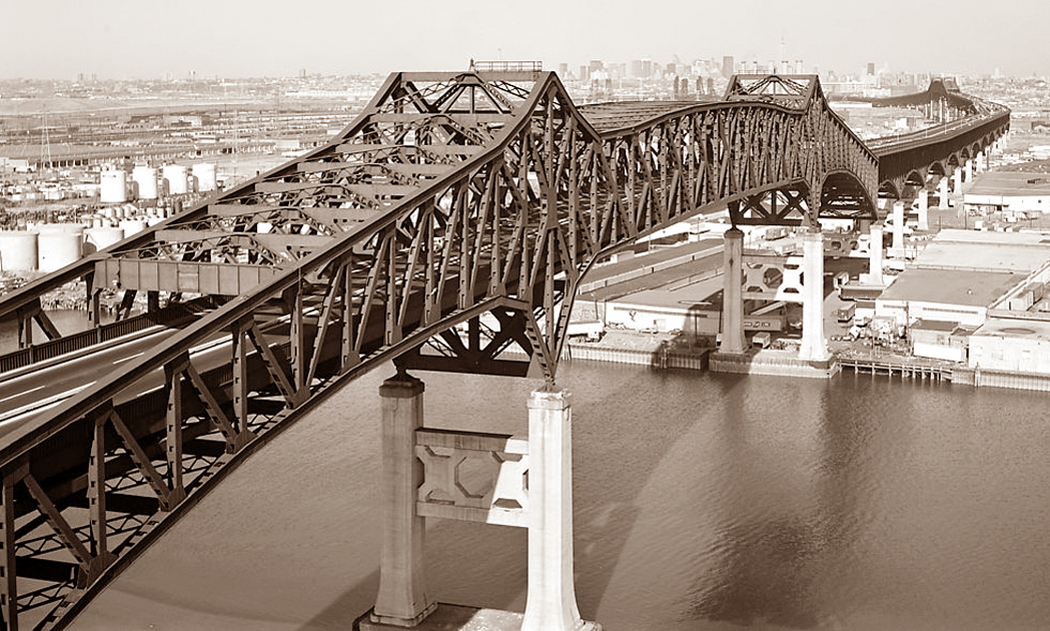
There are some great old iron bridges across the Susquehanna River in Pennsylvania, some great concrete bridges in central New Jersey that speak of the the great age of American highway building in the 1930s.

I’ve been up Pikes Peak in Colorado and up Mt. Washington in New Hampshire.

I’ve been over Lake Ponchartrain in Louisiana and across the floating bridge over the Hood Canal in Puget Sound north of Seattle.Columbia River Gorge Oregon-Washington

It helps if you love to drive, and I know not everyone has that passion. My brother hates driving, for instance. He views an automobile vacation like a two weeks stuck in an elevator. He can’t wait for his floor to arrive so he can get the heck out.

But most elevators don’t have windows.

As I watch the landscape pass across my windshield, like a travelog on a movie screen, I get a sense of the whole elephant, not just his trunk or tail.

Of course, we are talking here about a two-lane blacktop trip, not a bland rush down an interstate highway, where one stretch of concrete pavement can be distinguished from another only by the names on the exit signs.factory, trees, Lowell, Mass

It is a particular kind of travel and has nothing in common with the destination-vacation of the tourism industry. I have no interest in waiting on Disney World lines for thrill rides or Lake Winnibigoshish for a week of trout fishing. You can have your three days lounging on the sands of Bimini or your Love Boat cruise.

Instead, I get to travel an arc of the planet, get to feel in my bones the curvature of the earth and the roughness of its skin. It is through driving across its surface that I get some body-feel for the size of the globe: It is roughly 10 times the distance I drive to get from Phoenix to New York City. New OrleansThat’s not some numbers on some mileage chart, but a distance I know by the seat of my pants.
It’s also a lot smaller than the world seemed before I began driving.

In those years, my wife and I have been to each of the 48 contiguous state at least twice and most more frequently; we have been to all but one of the Canadian provinces; and even skirted into Mexico a little bit.

And each of those trips could have produced a Blue Highways, a book-length summation of what we saw and learned.Frosty dawn Wisconsin

Part 2

Over the past decade and a half, I’ve put enough vacation miles on the cars I’ve owned to equal driving around the world 2 1/2 times. You don’t drive that much without learning a few things.

The first is, of course, to stay off the interstates. You may get there faster, but not by much, and you’ll be bored the whole drowsy way. And in much of the country — and especially in the West — speed limits on smaller highways is not much lower than on the four-lanes, and with less traffic.Golden Gate Bridge SF Calif

Have a rough itinerary and plan how many miles per day you are willing to drive. This is more important for a passenger: Driving will keep you occupied, but your partner may go stir crazy sitting in a seat while going across some of the flatter places in Texas; Don’t overdo it. Marriages hang in the balance.
But never make your itinerary too rigid. You will discover unexpected things along the way; let yourself enjoy them.Gorilla, Am Mus Nat Hist04 copy

We never reserve motel rooms, so we never feel forced to get somewhere by nightfall. There are enough motels along the way. Even national parks, with their crowds, often have last minute cancellations. We’ve pulled into the Grand Canyon and into Yellowstone and gotten a room. But have a contingency plan.

One year, we hit South Dakota the week of the Sturgis Motorcycle Rally and there were no vacancies for 200 miles around. We had to drive into the next state to find a room. But that brings up the next lesson:

Don’t be afraid of mishaps and adventures. They may be uncomfortable during the trip, but they will be the best stories you tell your friends. No matter how bad it gets, it will provide the most vivid memory.Imperial Dunes California

Don’t drive every day; take some time to spend in a single spot. Three days we spent in a cabin on Daicey Pond in Maine’s Baxter State Park were three of the best days we ever spent — hiking, canoeing, watching moose and listening to loons at the base of Mount Katahdin. Not once did we start the car. When we finally left, we were ready for more miles.

There are things you should always have in your car: water, a blanket, Fig Newtons, a road atlas, your address book with phone numbers. Forest Lawn cemetery LAI also carry an entrenching tool — one of those small folding shovels you can buy at army surplus stores — for digging out when I get the car stuck in sand or mud.

Don’t be afraid of dirt roads. There are some amazing rewards at the end of a bit of gravel.

We also always carry a small library of Peterson nature guides, two pairs of binoculars, camera equipment and twice the amount of film I think I can possibly shoot.

And finally, my nomination for the greatest invention of the 20th century: cruise control. It keeps your right foot from cramping up on the gas pedal. I was 45 before I ever tried it and I’ll never be that stupid again.pacific coast highway California

Part 3

What makes for good driving?

I don’t know about others, but for me, optimum driving conditions include:

–Little or no traffic for infinite miles ahead, with no stoplights.

–Interesting and varied weather; I don’t want incessant sunshine any more than I want endless rain. A front moving through gives me a constantly changing cloud show.Greylock Mt from Melville home Mass

–An old road with a history. Route 66 is the most famous, but not the only one. I especially enjoy roads that follow geology: along a mountain range or river, so that the road seems to belong to the earth, rather than denying it.

–Occasional side roads, preferably gravel, for a change of pace.

–Periodic change of landscape, such as when you drive from the Plains to the Rocky Mountains, or from the white sands of the Atlantic Coastal Plain into the hilly interior of the Piedmont.

— A regional food specialty you haven’t tried yet and no chain restaurants.leo carillo st beach california

— A few museums and a few national parks. I gotta have both.

— A used book store in every town.

— A pile of Haydn symphonies on CD to run through the dashboard player.

–A clean windshield. This last must be renewed frequently. Bugs bust on the glass.Mississippi barge

Part 4

The dozen most scenic drives in the 48 states:

1. Beartooth Highway, U.S. 212 from Red Lodge, Mont., to Yellowstone National Park.

2. The Pacific Coast Highway, Calif. 1, from San Luis Obispo to Leggett, Calif..

3. Blue Ridge Parkway, from Waynesboro, Va. to Smoky Mountains National Park, N.C.

4. N.C. 12 from Nags Head to Okracoke, N.C.

5. Ariz. 264 from Ganado to Tuba City, Ariz.

6. U.S. 1 from Miami to Key West, Fla.

7. La. 82 from Perry, La., to Port Arthur, Texas.

8. U.S. 1 from Ellsworth to Calais, Maine.

9. Kancamagus Highway, N.H. 112, from Conway to Lincoln, N.H.

10. Tex. 170 from Presidio, Texas, to Big Bend National Park.

11. Utah 12 from Red Canyon to Torrey, Utah.

12. Wash. 14 though the Columbia River Gorge from Camas to Plymouth, Wash.Niagara Falls

Part 5

It isn’t just the flashy, famous places that draw the true driver. In fact, commercial destinations, such as Disney World or Las Vegas, are probably best gotten to by airplane and shuttle bus, so you can give over all your time to waiting in lines.

No, in a car, some of the best experiences come by rolling through the kind of places that fall through the cracks of marketing. Places “below the radar,” so to speak, of commercial development.mobile bay point clear

The small towns, endless farms, mountain ranges, Indian reservations — these are the places you have the opportunity to discover things for yourself. In the big theme parks, you get a uniform experience, developed through marketing research. The ride you take is the same ride millions of others take.

But when you talk to the harried but chummy waitress in Doumar’s, an original ’50s style drive-in on Monticello Ave. in Norfolk, Va., you are talking to a real person, a one-on-one experience that is particular and individual. You get a flavor of place, of culture, of people, of individuals.Page Dam Arizona

To say nothing of the flavor of ice cream, in a cone as close to identical as possible to the original waffled cone Abe Doumar is credited with inventing in 1904. They still make them on the same old wheezy portable machine. If your lucky, they’ll be making them while you eat.

Likewise, there is nothing predictable about the starfish you find in an Oregon tidepool, or the bears in the Smoky Mountains. You get to experience the infinite variety of real life.Sierra Nevada Mts California

Of course, I have my favorites.

Among the 48 states, I can never find the end of either California or North Carolina. They are both richly varied.

California seems to have everything from the world-navel of pop culture to the most remote wilderness. It has more than any other single state.Thunder hole Acadia NP Maine

But North Carolina is nearly as varied geographically, and it has B&G fried pies, the most soul-satisfying food in the world. North Carolina also has the Blue Ridge Mountains and the Outer Banks.

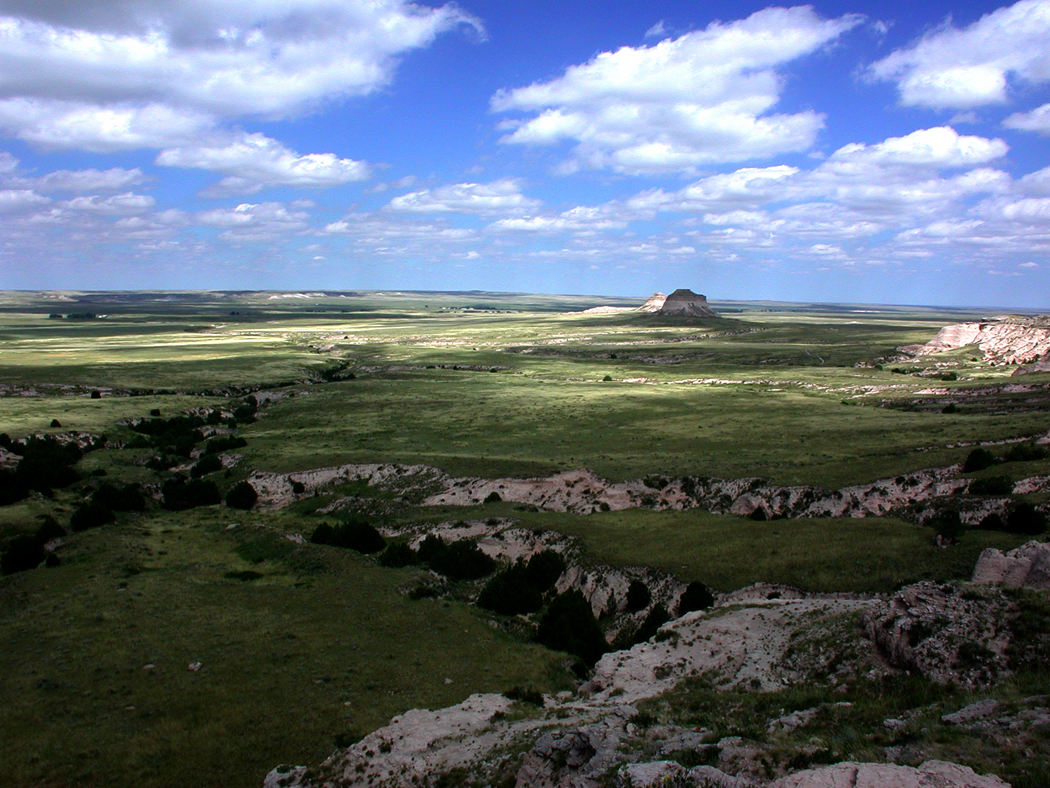
And I cannot get enough of the great, grassy, rolling middle of America. When I tell people I love driving through Nebraska, they look at me like I just said I was born on the Hale-Bopp Comet. But just pull into one of those one-street towns with the grain elevator towering over the single railroad track and have lunch in the cafe where the farmers eat.Yellowstone Nat Park Wyoming

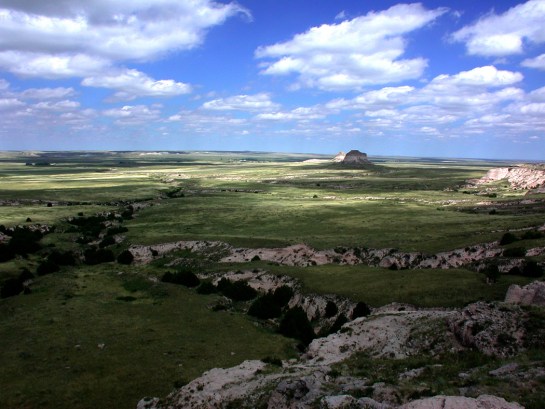
Or imagine the wagonloads of immigrants trudging along the Platte River, with Scotts Bluff on the horizon.

The pace is slower, more humane in Nebraska.

Humankind developed on the grasslands of Africa, and Nebraska, especially, seems to call atavistically to me, reawakening my genetic love of savannas.Monument Valley Arizona

It’s easy to love the broad vistas of the West. Southern Utah doesn’t seem to have a square inch that isn’t photogenic, and the Grand Tetons of Wyoming are mountains right out of central casting: They are to other mountains what Cary Grant is to most men.

But I also love the Mid-Atlantic states. Sometimes, a Western forest is too much of the same thing. You can walk for miles in the Cascades of Washington and see only two kinds of trees: Douglas fir and Western redcedar.Zabriskie Point Death Valley Calif

It’s different in Pennsylvania or Tennessee. In the great Appalachian mountain chain of the East, there are more species of plant life than in all of Europe. The variety is blinding: Redbud in spring, Tulip tree in summer. White pine, pin oak, red maple, sweetgum, sycamore, witch hazel, horse chestnut — and hundreds more.

And there is something humanizing about the landscape. This is land which has been lived in for hundreds of years. It is still wild, but it has made peace with the humans who live there and send smoke up their stony winter chimneys.Zion National Park Utah

In the past, I avoided cities the way I avoid Justin Bieber songs. The noise, nuisance, dirt and traffic were everything I was trying to avoid by getting on the road.

But I have come to terms with them, also. After all, it is in Chicago, Philadelphia, New York and Boston that you find the symphony orchestras, natural history museums, ethnic foods and imposing architecture.Mississippi River Hannibal Missouri

The greatest city for driving is Los Angeles. It may be the home of the cultural antichrist, but it is also a great fermenting, creative pot, with lots of roads that take you past inventively loopy buildings: The Tail ’o the Pup hot dog stand, the downtown Coca-Cola bottling plant in the form of an ocean liner.

In LA, you can’t get anywhere without wheels. It is the perfect American city.mobile bay

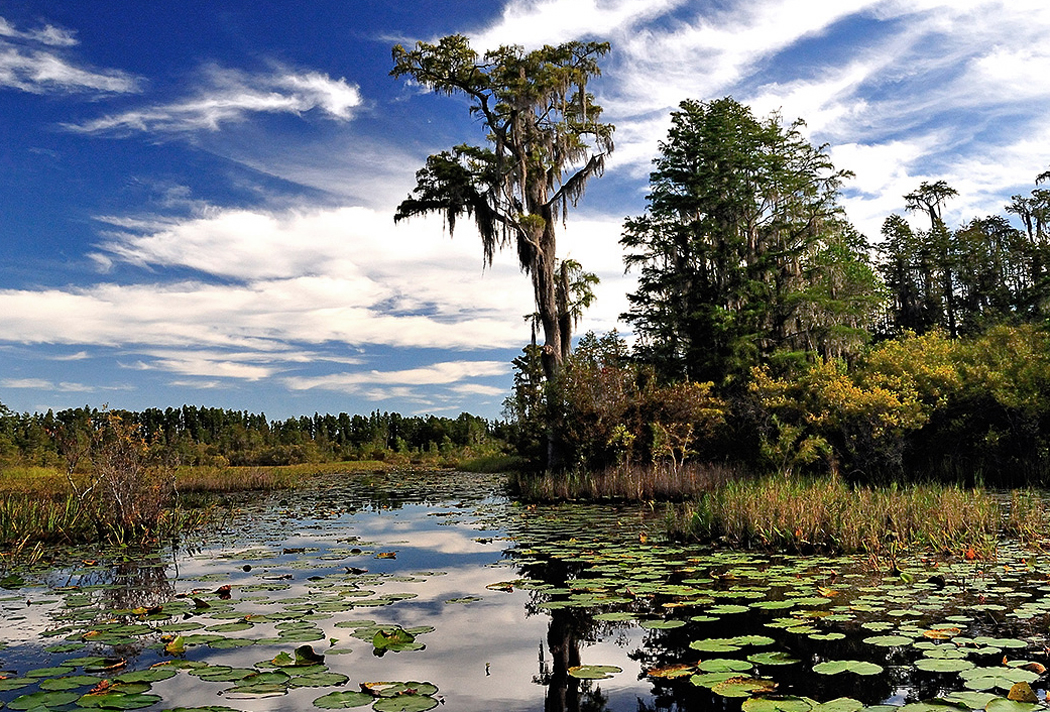
There are two states that I have to admit I don’t particularly enjoy: New Jersey, probably because I grew up there and don’t feel much urge to go back; and Florida, which is supposed to be a Southern state, but it has been given over to graceless Yankees. But even in Florida, I have to admit I love the Cubano culture of Miami and the Everglades, proving that there is always something of worth.

west texas road
Two things about Texas: It’s big and it’s empty.

For most of us, crossing Texas along the interstate, it is two days of tedium, flatness and gravel, waiting to get from the desert West to the humid East.

But there is another way to eliminate the tedium of the unavoidable crossing of the world’s largest vacant lot: Slow down, take your time and enjoy it.

That is what I decided to do when faced with yet another transcontinental automobile trip. I stayed off the interstate and took the back roads from El Paso to Beaumont, passing great views, interesting topography, peculiar history and even more peculiar people.

Mile 0 is the boundary between New Mexico and Texas, entering the state at Anthony. I drove through in the early morning, with the sun just sitting on the horizon, the Franklin Mountains to the east looking the color and texture of gray suede. The dew had raised the smell of the creosote bush.trans mountain expressway franklin mts

The first real chance to get off I-10 comes with the Trans-Mountain Expressway, that lifts you up and over the mountains and into Fort Bliss, just north of El Paso. As you descend, you pass the U.S. Border Patrol Museum and the streets of the military Bomarc missilereservation named for out of date missiles: Minuteman and Bomarc.

The next goal is the Hueco Mountains along U.S. 62. As you get to the top, at mile 56, you can spot the Guadalupe Mountains, highest point in the state, some 75 miles in the future.

The road passes along the dry regions of western Texas, with few people and even fewer gas stations. The first is at Cornudas, a one-time Butterfield State stop, now a dilapidated gas station and cafe, with souvenirs.cornudas texas

The sign outside reads, “Welcome to beautiful downtown Cornudas, pop. 5 or 6.”

Inside, the cafe is covered from head to foot in collectibles: old hubcaps, old postcards, things written on old napkins, old license plates, old photos and newspaper clippings. The ceiling is hung with things, including souvenir ballcaps, each individually wrapped in clear plastic.

The tables, too, are loaded down with writings, some printed, some hand-written, then covered with plastic. The table legs are wrapped in blue-jeans legs and bottomed with cowboy boots.

And on every table, along with menu and salt and pepper shakers, are copies of Lyndon LaRoushe’s wack-o New Federalist newsletters. This is a cafe with a political point of view.

And one table, near the cash register, sit two or three aging, potbellied “cowboys,” dressed in overalls and scratchy with whiskers. They look up at me as I enter, as if I were a spy come to undo their righteous cabal.

Nevertheless, I have a wonderful breakfast, which I recommend to all, a good Spanish omelet, toast and sliced fried potatoes.

When I finish, I ask if I can get gas.

“Sorry, we’re all out,” the waitress tells me. “But you can get some up about 15 miles at Route 1111.”

Paying the bill, I say to the nice woman behind the counter, “You sure are a far piece from civilization,” and she said with a smile that was only slightly ominous, “That just the way we want to keep it.”salt flat texas

Unfortunately, the gas station at the crossroads is closed. But another 15 miles down the way, at Salt Flat, there is another. Actually, it is a pile of corrugated tin and stucco buildings surrounded with cyclone fence. I pull in, amble up to the office and find it is locked, despite the “Open” sign in the window.

A dog barks, then another, then a few more. Behind the fence they are howling. A house sits across the dirt lot from the pump. Its door is closed. No one stirs. The sun is beating down. I honk my horn. I ring the doorbell. Nothing. Silence, except for the dry, angry barking of junkyard dogs.

West Texas is a very empty place. The air is desiccated, the ground is sandy, the mountains are heated stones, even in October.

It is not surprising that this group of shanties in Salt Flat seems like a set for one of those cheap made-for-TV stalker films. The area was also the site of the 1877 El Paso Salt Wars, when private industry bought the land and began charging for the salt that had previously been collected free by Indians and Mexicans. Many lives were lost.road to guadalupe mts

The road curls just south of El Capitan, the prominent peak at the head of the Guadalupe Mountains and one of Texas’ national parks.

To the east at mile 105, the Delaware Mountains are lined with some 65 electricity-generating windmills.

el capitan guadalupe mountains

But it is the Guadalupes that dominate. In their wrinkled canyons are trees and streams. There is birdlife and butterflies. At the visitor center little yellow butterflies wink in the butterfly weed.

“We had fall color here last week,” the ranger tells me. “But we had a 90-mile-an-hour wind come through and we don’t have any fall color anymore.”

They also don’t have any gas. The nearest is in the next state, 35 miles to the north at White City, N.M., near Carlsbad Caverns.

But I take the turn southeast to Orla. At mile 145, I enter the Central Time Zone, but time is certainly meaningless here among the cows and chaparral.Orla Texas

At the Orla Grocery, mile 185, the sign says, “It’s a long way to anywhere from Orla Grocery.”

The town is made up of a few sagging shacks, some tilted all the way over. There is also a yard filled with oil-drilling machinery, marking a change in geography. From here to the Hill Country, there is oil.

Reeves County, which includes both Orla and Pecos, is a flat, arid grassy land. In Pecos, the historical marker tells about the Pecos cantaloupe:

“Nationally famed melon, originated in this city. Residents from 1880s grew melons in gardens, noting sun and soil imparted a distinctive flavor.”

It goes on to say, “Famed lecturer Helen Keller, Presidents Eisenhower and Johnson, and many other distinguished persons have ordered and appreciated Pecos cantaloupes.”iraan roadcut

But it is oil that is most apparent, especially as you enter the rocky hill country near Iraan.

The town is named for Ira G. Yates and his wife, Ann. It was under his ranch that the Marathon Oil Company — then Ohio Oil — discovered the biggest oil field in Texas and one of the biggest in the world.iraan 1Previously, oil experts had agreed, “You won’t find oil west of the Pecos River.” But they did. Within a year of the first well, struck in 1926, the Yates field had 100 wells dug. It now has more than 600.Alley Oop

Iraan is also the birthplace of the comic strip, “Alley Oop.” It was created by V.T. Hamlin while he lived here. Giant statues at the town playground immortalize Oop, his girl friend Ooola and his dinosaur, a 65-foot-long Dinny.

In the middle of town, the school sports a sign that says, “Iraan Braves, 1996 Double-A State Football Champs. 16-0.”

It is a long draw — some 90 miles — to the next town, Eldorado. The road, U.S. 190, passes some of the most beautiful scenery in Texas, with mesas and buttes, trees and scrub.

But at the halfway point through the state, at Brady and mile 507, is the geographical center of Texas. Or so the town claims.Brady texas sign

As the crow flies, it is 437 miles to the state’s westernmost point, 341miles from the most easterly point, 401 miles from the most southerly point and 412 miles from the most northerly.

“Enclosed within the 4,137-mile perimeter of the state are 267,339 square miles or 7.4 percent of the nation’s total area,” says the historical marker. “Fifteen of the 50 states could be readily accommodated within Texas’ borders — with more than 1,000 square miles left over.”Brady texas

It isn’t only the land that changes as I head into the eastern half of the state. The humidity rises, so that when I wake up the next morning after a night in the motel at Brady, the streets are so wet with dew, it looks as if it had rained in the night.

The heavy dew also brings out the smell of the grass and the dirt.

South of Brady, U.S. 87 enters the Texas Hill Country, an bubble of limestone that rises in the center of the state and continues north from the Balcones Escarpment. It is an oasis in the monotony of Texas landscape, with streams, forests, lakes and the former home of former President Lyndon Johnson.lbj state park entry sign

It comes as a shock to me how incredibly beautiful the LBJ Ranch actually is. And it is also a shock to hear Johnson, in old TV footage shown at the visitor center, talk about his love of the land.

I grew up at a time when Johnson was demonized for his policy on the Vietnam War. I never thought of him as anything but a power-mad monomaniac. But the LBJ Ranch, mile 592, humanizes him considerably.lbj ranch house 2

On the TV footage, he talks about watching deer jump the fence on the farm, about watching a yearling fawn, about raising the cattle and sheep. He speaks with genuine affection and without any of the boilerplate rhetoric that was his signature.

And I realized how Southern he must have been, how much the land meant to him, despite anything he did in the “halls of power.”lbj ranch pedernales river

I walk around the property on the edges of the Pedernales River, along Williams Creek that empties into the river.

There is the tannic smell of autumn leaves on the ground; there is hackberry and post oak and Virginia creeper along the fenceposts.

The creek is filled with bluegill sunfish, Texas softshell turtle, minnows, yellow mudturtles, bullfrogs, Rocky Mountain toads, crayfish, Rio Grande leopard frogs and the blotched water snake.

It is nature full of its variety. The river itself has kingfishers, mallards, Texas sliders, coots, largemouth bass, red sunfish and catfish.Pedernales River

As I stand on the bank of the river, under a pecan tree, hundreds of years old, a black anhinga flies up over the small dam that creates a cascade in the river, and four white geese try to cross the dam from the opposite shore. No, it’s five.

A nature trail winds around a fenced in deer enclosure and one of them comes up to nibble some grass I hold out for it.lbj ranch farmstead1

The trail continues into a small demonstration farm, typical of those in the area when Johnson was young. Five sheep and two little lambs are resting and sleeping. One of the lambs is curled up in a ball next to the woodpile. lbj ranch farmstead2Uncounted chickens run around the yard under the shade of post oaks and sumac and one big old live oak.

A few feet on, I spot a newborn lamb, just a few months old, his ears sticking straight out, catching the sun from behind. He is looking right at me.

Over my head, I can’t quite see him in the sunlight, but I hear him tapping: It is a flicker.

And over the very top, there is a hawk flying, soaring over the top of the farm. The little lamb shakes his head and flaps his ears.

The ranch is a paradise, an Eden, and I want to stay here.

From the ranch to the Louisiana boundary, Texas becomes increasingly Southern rather than Western. The landscape becomes more forested, the towns closer together and the traffic thicker. And the humidity becomes intense.dripping springs texas

I pass Dripping Springs at mile 629, Ledbetter at mile 728. At mile 766, I cross the Brazos River. It is still full from last summer’s heavy rains.

At mile 803, I see my first mention of the word “Cajun,” and I know I am near the end of the state.dixie's cajun seafood

At mile 823, I enter Cut and Shoot, a town more memorable in name than substance. It is just another junked up Southern town, filled with pickup trucks and Carol Sue’s Country Kitchen: “Dine in, Carry out, We deliver, Barbecue and fixin’s.”

After the dryness of western Texas, it is frightening to see the Trinity River in flood, swollen way over the woods on each side of its banks. The adjoining farm fields are lakes, with a few old cornstalks sticking up through the surface. The river water is still moving with a swiftness that looks as if it could wash away a town.20120106-OC-AMW-0698

And north of Sour Lake, the many sections of Big Thicket National Preserve looks as if it might as well be Louisiana, with its cypress sloughs and dense forests of beech, magnolia and loblolly pine.sabine river 2

I join I-10 once again in Beaumont, mile 905, and it will be interstate from here on. And I cross the Sabine River into Louisiana at mile 933. The interstate mile marker reads 881, which means I have only added 52 miles by taking the back roads.

But I have seen, heard, smelled and tasted so much more.

house
The Seine  river loops northwest out of Paris into the rich, green French countryside of Normandy. The river is contained by low parallel ridges of hills on either side that form a kind of geologic sluice guiding the flow of the river toward Le Havre  and the ocean.

Some 50  miles from Paris, near the provincial town of Vernon,  the River Epte joins the Seine, although to call the Epte a river is to exaggerate.

It is hardly more than a creek.

Nothing would make one notice this tiny riverine junction, if it were not that Claude Monet chose this area to live, to paint, and to create one of the most celebrated gardens in the world.path

The great Impressionist painter moved to the hamlet of Giverny (Zhee-vair-nee) in 1883, and from then until his death in 1926,  he cultivated the kind of garden that made his home a modern Eden. Even now it is as much pilgrimage destination as tourist attraction.giverny village street

“Once settled, I hope to produce masterpieces,” Monet wrote his dealer when he first came to Giverny, “because I like the countryside very much.”

Monet settled on a two-acre parcel of land that sloped from the center of the village down toward the small branch of the Epte that runs parallel to the road. There he set up house with his second wife, Alice Hoschedé, and their combined brood. It was a bustling bourgeois home, full of bustles and lace, children and cakes.flower 1

The house still exists: an odd old farmhouse, it is only one room wide and long as a barn, made of pink stucco, with forest green shutters and doors.

Each room is painted in its special color – the kitchen is blue and the dining room is brilliant yellow. Monet had little use for beige.clos normande from window

Outside is the “clos Normand,”  or the Norman enclosure, where Monet immediately began planting his garden, “so that there would be flowers to paint on rainy days,” he wrote.

But the garden took over. By the time he set to work on the great waterlily paintings that he gave to the nation as a gift, he had six gardeners on his staff.flower 2

Thousands each year make the pilgrimage to Giverny. They want to see where Monet worked; they want to see the waterlilies that he made into icons of art. But the gardens still retain their independence: There are those who visit not because of the painter, but because of the flowers themselves.

Monet’s property has become one of the greatest gardens in the world.

In the summer, the place is crowded, but in the spring and fall, the tourists fade away and you can have the grounds to yourself, or nearly so.flowers against wall

One would think that in the middle of October, when the rains are already cold on your skin, the flowers would have died away, but it is not true.

Even then, the clos Normand is riot with the yellows of sunflowers, the reds of dahlias, the blues of asters and the pinks of cosmos. The garden paths are choked with flowers.clos normande

It was an effect that Monet sought: that weedy nature should take over the place, luxuriant in growth.

The formal French garden, as you find it in Versailles or the Tuileries, is orderly and tamed. Square and round plots, with a grid of garden path between. Every flower marches in rank and file, as if their gardeners were drill sergeants.clutter

In distinction, the English garden gives us a different vision of nature.

There, the meandering forest paths take us past informally planted shrubbery and flower beds, to provide the illusion that we are not in a garden at all, but rather walking through some especially lush bit of wildness.flower 3

Monet’s garden is a hybrid of these: The paths are rectilinear and formal, but the plants have taken over, spreading out over the footways, up into the air and intertwined with each other. There is a formal layout, but a rich chaos of growth defeating the formality. It creates the illusion of a patch of garden left untended so the flowers grow rampant.

The effect is still overpowering. Instead of looking down at patches of roses or dahlia, they instead grow up to nose-height, so they force their aroma into your nostrils. They rise to eye level as you walk the paths.

They hang overhead and dangle down at you.greenhouse

One cannot help but recall the stanza by Andrew Marvell:

“What wondrous life is this I lead!

Ripe apples drop about my head;

The luscious clusters of the vine

Upon my mouth do crush their wine;

The nectarine and curious peach

Into my hands themselves do reach;

Stumbling on melons as I pass,

Insnared  with flowers, I fall on grass.”flower 4

The present gardens are a miracle. After Monet’s death, his family dispersed and eventually left the old homestead to ruin. The gardens fell untended, the house sprung leaks.

As the great art critic John Rewald  wrote, “Rodents – as undernourished as the local inhabitants (at the end of World War II) – had gnawed away the roots of the plants in and around the pond. The waters had stopped flowing – it was a dried-out, devastated, heartbreaking site. Nothing was left but the memory of past glories and the paintings of Monet, of which quite a few were still in the house and others in the studios, where some of the skylights were broken.”house 2

The artist’s son, Michel,  hadn’t lived there for decades and showed little interest in keeping the place up. When he died, in 1966,  he bequeathed both estate and paintings to the French Academy of Fine Arts.  The grounds were slowly restored and the gardens replanted, taking as their guides the many paintings and photographs that had documented the place.flower 5

And in 1980,  the gardens were opened to the public, nearly 100 years after Monet first started planting bulbs.

Modern visitors find a large parking lot south of the gardens, within easy walking distance. The entrance to the garden takes them first through the large studio Monet had built to paint his large waterlilies in. It is now also the gift shop. Through that and into the clos Normand, you get your first view of the long shotgun house, covered in vines and flowers.red flowers

The clos is gridded with pathways, skied-in with trellises and arches and splattered with the petal-dots of color.bridge 2

As Monet himself wrote of them, “The overall effect is endlessly varied.

Not just from one season to the next, but from one minute to the next, for rather than making up the whole spectacle, the flowers are only the accompaniment to it.”waterlilies

In the water garden across the road, he noted, “the heart of everything is the reflecting mirror of the water, whose appearance fluctuates endlessly according as it catches the teeming life and movement of the every-changing sky. A passing cloud, a freshening breeze, a squall that looms then strikes, the gale that comes without warning, the light that fades then intensifies anew – all these things transform the color and texture.”Bingo

“How could such sweet and wholesome hours/Be reckoned but with herbs and flowers?”

old manse with wallThe Old Manse is one of the most extraordinary houses in America. It saw the birth of two revolutions and was lived in by a string of some of the most exceptional Americans every to grace a town noted for exceptional people.
rw emerson

Concord is that town, a small, suburban Massachussets community, only 15 miles west of Boston. There is a grassy town square with its monument, a hillside cemetery, a single street lined with shops and several venerable old churches with  white, pointy steeples.

Concord was also, for a time in the center of the last century, the intellectual center of the young nation. Among its residents were writers, preachers, lecturers, editors and abolitionists. Some of their names are still current: Ralph Waldo Emerson, Henry David Thoreau, Louisa May Alcott, Daniel Chester French — sometimes it seems you have to have three names to live in Concord — and Nathaniel Hawthorne, who broke the three-name rule. Others were once as eminent, but are now remembered mostly by scholars and readers of history books: Amos Bronson Alcott, William Ellery Channing the younger, and Ezra Ripley among them.old manse 1930s

The Manse sits on a wooded rise on Monument Street north of the town center. It is a two story wood frame, gambrel center-entrance twin chimney Colonial house, now with gable windows in the roof and most of its paint gone, leaving a gray, old weathered building in the arbor of trees and vines. It is notable for its many tiny rooms, unusual for an eminent house of that time.old north bridge from manse

Its back yard slopes off toward the Concord River and the Old North Bridge, where American Minutemen fought British regulars on April 19, 1775 and “fired the shot heard round the world.”

That was the first revolution the house presided over.

Mary Moody Emerson, who was an infant at the time, used to say that she, too was “in arms” that day, because she was held up by her mother to the second-floor window of the Old Manse to witness the battle.

Her father, Reverend William Emerson, built the Manse in 1770.

“It was all mother’s fault that the Manse was cut up into so many small rooms,” she later wrote. “My father built it just according to her ideas and she used to say, ‘she was tired of great barns of rooms’ so he had all the rooms little boxes to please her.”ezra ripley silhouette

When William Emerson died in 1776, from disease contracted at Fort Ticonderoga, his widow tried to carry on by herself, but then, in 1780, she married the formidable Reverend Ezra Ripley. He preached up a thunder for 63 years as minister of Concord.

Ripley’s step-grandson, Ralph Waldo Emerson, remembered him this way: “Dr. Ripley prays for rain with great explicitness on Sunday, and on Monday the showers fell. When I spoke of the speed with which his prayers were answered, the good man looked modest.”

And when he died, he was laid out “Majestic and noble,” recalled Ralph’s older sister, Ellen.

“Waldo, taken to see him, walked round and round the couch and at last asked, ‘Why don’t they keep him for a statue?’ ”

Mary Moody Emerson became an eccentric, herself. She was witty, bright and well-read and was Ralph Waldo’s favorite aunt. “For years,” he wrote, “she had her bed made in the form of a coffin. … She made up her shroud, and death still refusing to come, and she thinking it a pity to let it die idle, wore it as a night-gown, or a day-gown, nay, went out to ride in it, on horseback, in her mountain roads, until it was worn out. Then she had another made up. …. I believe she wore out a great many.”old manse dining room

Ralph Waldo only lived at the Manse for a single year, but it was for him and important year. It was at the Manse that he wrote his first, and most influential essay, “Nature,” which spelled out the tenets of Transcendentalism.

That was the second revolution. It altered the intellectual direction of the country and was the first genuinely American philosophical venture. Its effects can still be seen in American culture, from the photographs of Ansel Adams to the American national park system.sophia peabody 2

In July 1842, Nathaniel Hawthorne and his bride, Sophia Peabody (that’s “So-FYE-uh PEEB-iddy”), became tenants at the Old Manse. They stayed three years “in Eden,” he wrote.

He wrote many of his best known short stories in the Old Manse and also the introductory essay for the volume of stories known as Mosses from an Old Manse.

Ralph Waldo, recently married and removed to his own house, had suggested the Old Manse to Hawthorne. Henry Thoreau became Hawthorne’s gardener. The couple was transcendently happy.nathaniel hawthorne

“We seem to have been translated to the other state of being, without having passed through death,” he wrote.

The house had always before reflected the dour Puritan esthetic of its builder, but the young couple redecorated it, brightening it up and modernizing.

“It required some energy of imagination to conceive the idea of transforming this musty edifice, where the good old minister had been writing sleepy sermons for more than a half-century, into a comfortable modern residence,” he wrote. By the aid of cheerful paint and (wall)paper, a gladsome carpet, pictures and engravings, new furniture, bijouterie and a daily supply of flowers, it has become one of the prettiest and pleasantest rooms in the whole world.”

In the north window of the upstairs study, Hawthorne and his wife scribed sweet nothings into the glass.old manse window

“Man’s accidents are God’s purposes. Sophia A. Hawthorne, 1843.”

“Nathaniel Hawthorne. This is his study, 1843.”

“The smallest twig leans clear against the sky.”

“Composed by my wife and written with her diamond.”

“Inscribed by my husband at sunset, April 3, 1843. On the gold light. S.A.H.”

The scratchings are still there to be seen. We think them immeasurably romantic. Their landlord looked at it something more like vandalism and they were asked to move out.sarah ripley

Samuel Ripley and his wife, Sarah, then moved in.

Sarah was perhaps the brightest light ever to live in the Old Manse. She was exceptional in any age, and a miracle in her own.

With only a year and a half of formal schooling, Sarah went on to teach herself botony, calculus, Greek, Latin, and most modern European languages. When she was in her 60s, she took up Sanskrit.

She apologized to one visitor that she still needed a Sanskrit dictionary to help her, implying that she could read the Odyssey or the Aeneid the way some people read the daily newspaper.

She sighed, “I cannot think in Sanskrit,” recalls her grandson, Edward Simmons.

Another visitor records a trip to the Old Manse and seeing Sarah rock the cradle with one leg while cooking dinner with her hands and tutoring one student in German and another in geometry.

Ralph Waldo wrote of her, “Mrs. Ripley is superior to all she knows. She reminds one of a steam-mill of great activity and power which must be fed, and she grinds German, Italian, Greek, Chemistry, Metaphysics, Theology, with utter indifference which, — something she must have to keep the machine from tearing itself.”old manse kitchen

The Manse remained in the Emerson-Ripley-Ames family until 1939, when the family transferred the property to the Trustees of Reservations, a non-profit organization that maintains historic properties in Massachussets.

“The Concord literati are gone,” wrote Simmons, “the town has completely changed, but the Old Manse is still there, holding many secrets.”

skull heartTen years ago, the Paris police discovered an outlaw movie theater, complete with bar and restaurant, hidden in a sealed-off old quarry tunnel under the 16th Arrondissement, just across the Seine from the Eiffel Tower.

“The whole thing ran off a professionally installed electricity system and there were at least three phone lines down there,” police were reported to say.

Three days later, when they came back to dismantle the illegal theater, it had all been packed up and shipped out, leaving only a single note for the police: “Do not try to find us.”

Every city has an underground.

But in Paris, the underground is literal. Ten percent  of the city is built above underground caves, tunnels and medieval limestone quarries. When building foundations are constructed, the tunnels have to be taken into account, and since no one in Paris has a complete and accurate map of the tunnels, it sometimes becomes a problem.

It is estimated that there are some 180 miles  of tunnel beneath the streets of Paris – and that’s not counting the 1,300 miles of sewers or 125 miles  of subways.old paris tunnel

Access to most of the tunnels has been illegal for civilians since 1955, but hordes of young people have been using them for recreation – of various sorts – since they were constructed. Even now, everything from rock concerts to picnics are held in the limestone tunnels by those called “cataphiles,” after the catacombs of the city. Less innocently, they are also the site of many drug deals and other underworld activity.

During World War II, the tunnels provided shelter for the Resistance. In the 1950s, there were underground jazz clubs. A fascination with the underworld is hardly a new thing.

From Ulysses to Dante, we have been deeply curious about a world that seems mysterious and dark, dangerous and illicit. And even for some tourists, a visit to the sunless portions of a city is an irresistible draw.

Luckily, there are legal ways to visit the subterranean Paris.

catacombs 1

CATACOMBS

When Paris was young and the Romans gave the orders, many of its important buildings were constructed of limestone quarried in the local hills. As the city grew, the quarries dug deeper into the hills, and the beige limestone city overtook its suburbs and their quarries, which now honeycomb the hills of Montparnasse and Montmartre.

By 1786,  Paris had grown to more than a half-million people, and there was need for fresh real estate. The city council decided it could empty out the cemeteries and use the land to build on, and so, from 1786 to 1860, graveyards were dug up and their bones transported to the tunnels under Montparnasse. In all, more than 5 million bodies made the move.

They are an eerie sight in the dark. All that death, all those bones, all that underworld, Avernus, Chiron, Cerberus.

The trip through the catacombs is long and arduous, with stairs going down six stories into the bedrock of Paris, then a good half mile of twisting narrow tunnels before you ever even get to the bones.catacombs halt sign

“Stop!” said the sign above the final door. “You are entering the empire of the dead.”

The tunnel contorts around in the underworld, with niches to right and left piled with the bones torn up from Paris graveyards.catacombs 2 - skulls

Millions of the dead from Paris’s past are piled here, with a wall of tibias and skulls making a kind of bone-dike, holding the remaining body parts behind it. Usually, the bones are assembled almost like masonry, with the knob-ends of the tibia bones left end out, and a line of skulls across them, like strata in rocks, or ornament in brickwork.

The tunnels are never higher than about 6-feet and maybe 2 inches high, and only one person wide. Their floors are often damp or wet with cave-drizzle.

Electric lights are placed on the walls every 10 or 15 feet, but with fairly low wattage bulbs.

catacomb cornerSigns were left with the bones describing what cemetery they were disinterred from, almost like regimental monuments in a battlefield.

After snaking through the underworld for perhaps a mile, you came to an even narrower spiral stone staircase with 84 steps, as the sign says, bringing you those six stories up from Hades, and you open out into a side street from a nondescript stone building-front with no markings to warn anyone this is the exit from Tartarus.

The trip is a genuine experience, an encounter with history.

Going through the tunnels is a completely alimentary experience. The bowels of the earth. Expelled into sunlight.

paris sewer 5

THE SEWERS

The sewer system of Paris is one of the world’s wonders. If straightened out, they could run from Paris to Istanbul.

They have a place in fable and lore far exceeding that of any other sewer system in the world: They are the tunnels through which Jean Valjean carried the wounded Marius in Les Miserables.

“By degrees, we will admit, a certain horror seized upon him. The gloom which enveloped him penetrated his spirit. He walked in an enigma. … How was he to get out? Would he find an exit? Would he find it in time? Would that colossal subterranean sponge with its stone cavities, allow itself to be penetrated and pierced? …Would they end by both getting lost, and by furnishing two skeletons in a nook of that night? He did not know. He put all these questions to himself without replying to them. The intestines of Paris form a precipice. Like the prophet, he was in the belly of the monster.”

The “intestines,” is the right word. They are called in French, Des Egouts — the “guts.”paris sewer 9

The entrance to the portion open to the public is like a tiny lemonade stand beside the bridge over the Seine. You buy tickets and descend into the depths, where a very faint odor of sewage wafts up — so faint that in a few moments, you no longer notice it.

What first hits you in the darkness of the sewer tunnels is the sound, the thunderous sound of water, like a torrent over a waterfall. Part of this is the sound amplification of the tunnels, but most is the enormous quantity of water passing through the system. As you walk down one wide tunnel – more like an extended garage — the water passes underneath you as you walk over a steel mesh walkway.paris sewer 3

There are signs along the way explaining not only the sewers, but the history of the sewers, beginning in Roman times. The current system is a gift of Baron Haussmann from his city rebuilding plan of the mid 1800s.

There is a kind of pulse, or bloodflow, that the system implies, a circulation system for the city.

One looks at a city from above ground and sees the traffic, the shops, the restaurants, the pedestrians, the apartments above the stores, the metro stations, the statuary and monuments, but they are all just the skin of the city.

Under it run the subways, the catacombs, the sewers, the remains of hundreds of years of quarrying, the abandoned tunnels of previous water and sewer lines, abandoned subway tunnels, and millions of miles of cable.

And, of course, the people milling around on the surface, drinking their cafe cremes, could not exist in the city without the subsurface infrastructure.

cimetiere montparnasse

THE CEMETERIES

It says something about Charles Baudelaire that he is buried in a grave listed under his despised step-father’s name. It is odd, that someone as famous and accomplished as the poet was, of course, baudelaire 1someone’s son, and part of a family, and all the wretched dynamics that implies: Charles was Petit Charles  to his mom and step-dad, and even after he grew up, he seemed to remain their little boy, so that, unlike other more pompous and be-medalled Frenchmen, with their giant sepulture, with statues and trumpeting angels, he gets second billing on a plain headstone in the cimetiere Montparnasse, with his mother — who outlived him by two or three years — billed third.

It is her revenge on her wayward child.

There are three large cemeteries in Paris, and they each have their celebrity tombs.

Most famous is the grave of Jim Morrison of The Doors at the cimetiere du Pere-Lachaise near Montmartre.

There, you can also discover Apollinaire, Balzac, Beaumarchais, Sarah Bernhardt and Frederic Chopin.

At the cimetiere de Passy you find Debussy, Manet and Joan of Arc.three graves

Visiting the cimetiere Montparnasse leads one to discover things about personages that one might not have guessed: Henri Langlois, who ran the Cinémathèque Française, has a gravestone filled with publicity photos from scores of movies; Jean-Paul Sartre and Simone de Beauvoir share a headstone with only their names and dates; actress Jean Seberg has a simple flat stone grave with a tiny headstone with her name in a badly written script, as though done by an amateur. Many small stones had been left on the sarcophagus lid.

It is no surprise that composer Camille Saint-Saens has a sepulcher with sculpture carved inside. He was an honored figure from the French intelligentsia, but all his pomp doesn’t say as much as the one grave, with no name, and the only thing written on it, in elegant letters is “Le paradis c’est Paris.”le paradis c'est paris

Paradise, but also the underworld.