According to the news, it is peak season for fall leaves along the Blue Ridge Parkway, and people are driving along it, looking for the fall color.
And if you are looking for pretty, you will find it, but the pretty requires distance. Scan the hillsides and you see reds and yellows. Perfect for a calendar illustration. Warmth and glow on the insides.
But come closer and you are forced to recognize, it is dissolution you are staring at. The leaves are dying, drying out, falling and giving up for the year.
I don’t want to put too fine a point to it all, but now that I am 78, and seeing in my body its own slow dissolution, what I recognize in those sere leaves is the spotting, drying out and wrinkling of my own skin. Feeling at one with nature is all fine and dandy when you keep to the generalities, but now that I see myself in those leaves, I feel at one with nature in a whole new and more sobering sense.
But, the thing is, when I look more closely at the crinkling leaves, they are still beautiful. They aren’t just color; they are texture and shape also, and those reveal themselves in new ways at the change in seasons.
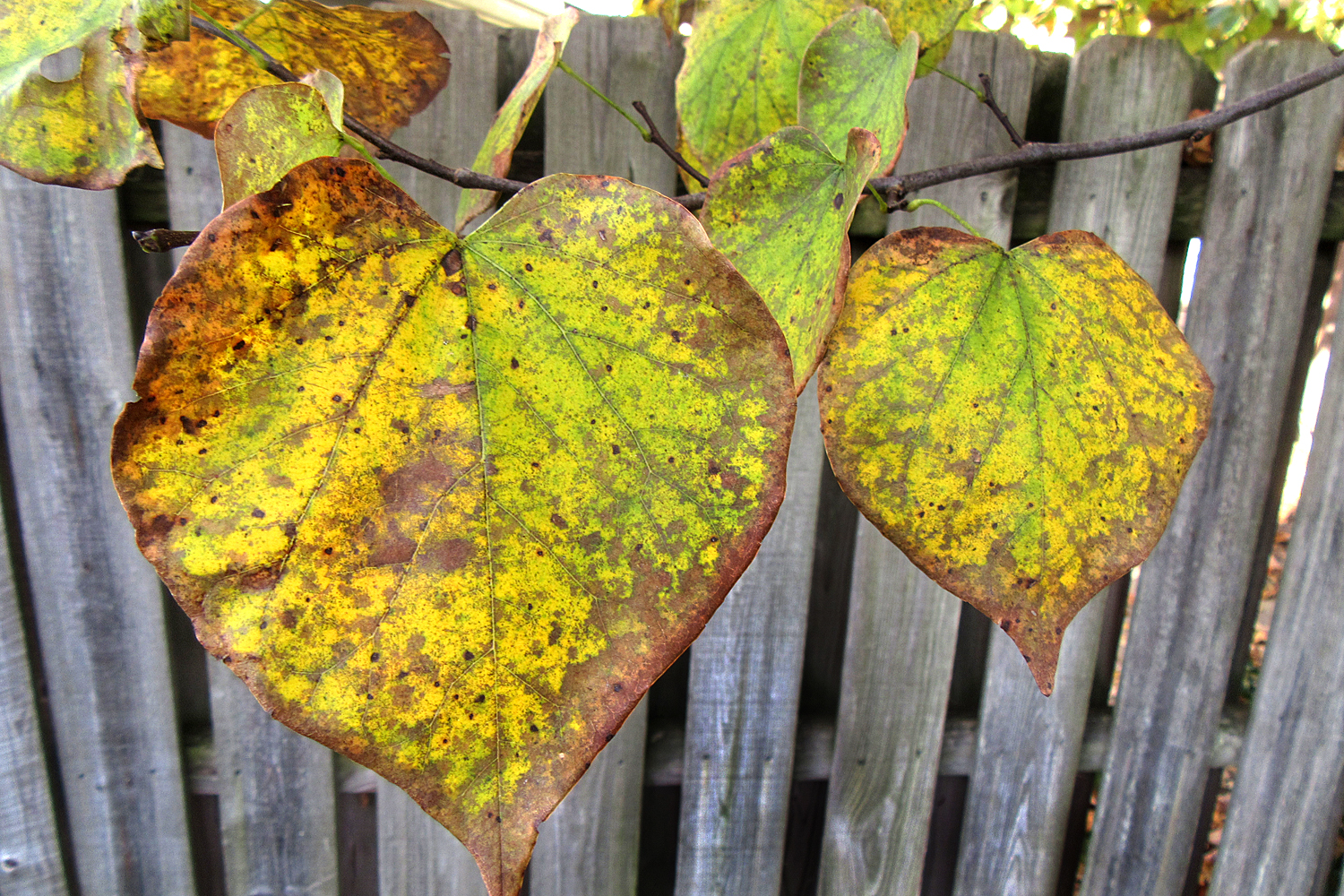
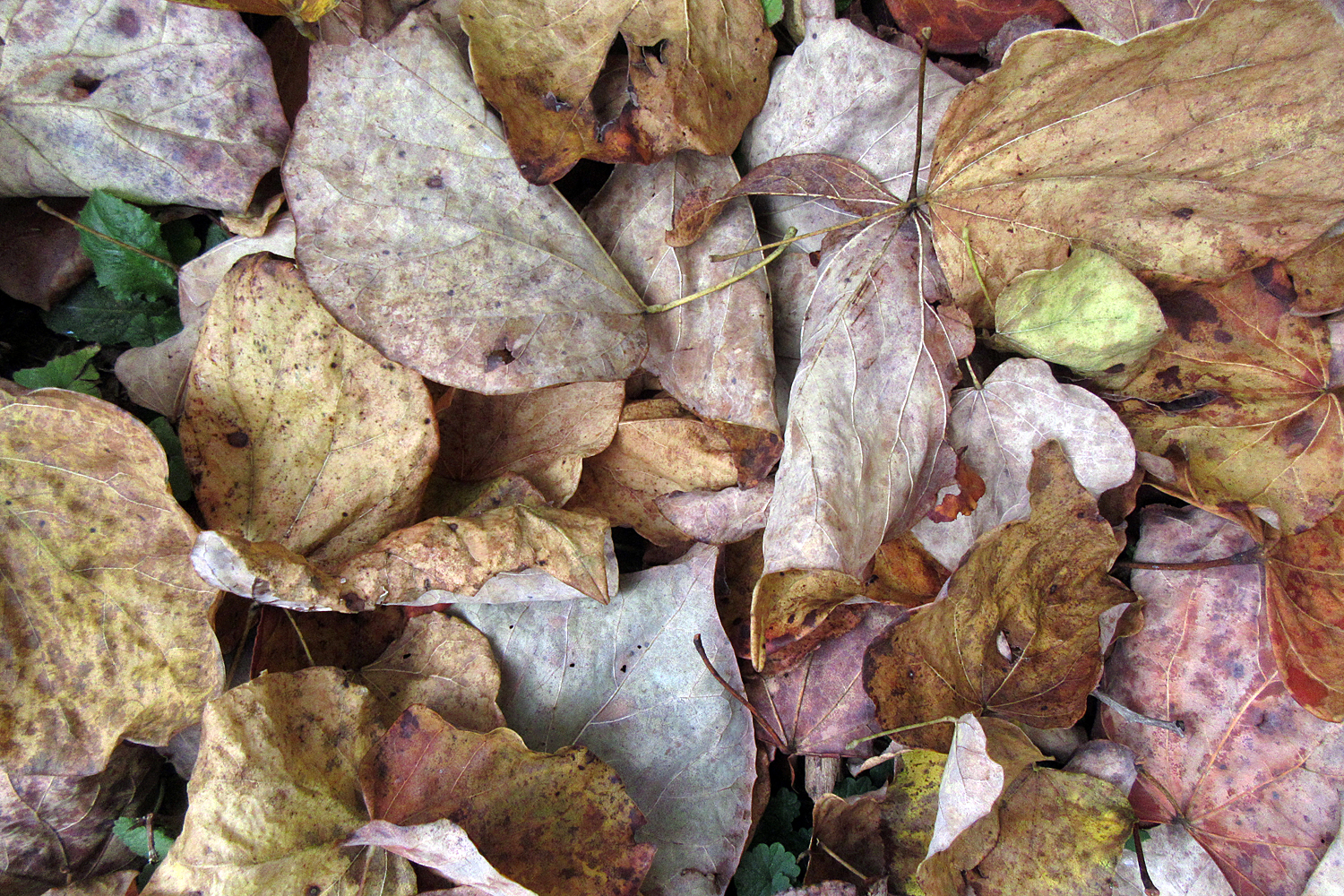
And so, I took my camera out to the side of the house this morning and made a few quick “notes.” This is the reality of fall. In the spring and summer, the leaves are all rather a uniform and boring green. Little difference between one maple leaf and the next on the stalk. But come autumn and each declares an individuality — its own bruises, deformities, torn spots — and its multiplicity of color.
There is a glory to that wastage. A shout out to the universe. A final “Notice me.” The leaf may not be at its most productive, chlorophyll-driven season, making the sustenance for the tree, but it is still announcing itself. Part of the whole. Worth your attention.
And so, here are a few images made this morning, with the temperature in the mid-40s, and scattered clouds in the sky, with fall chugging along toward the cold of winter. A few leaves, single or in crowds, that sing that ambivalent song.
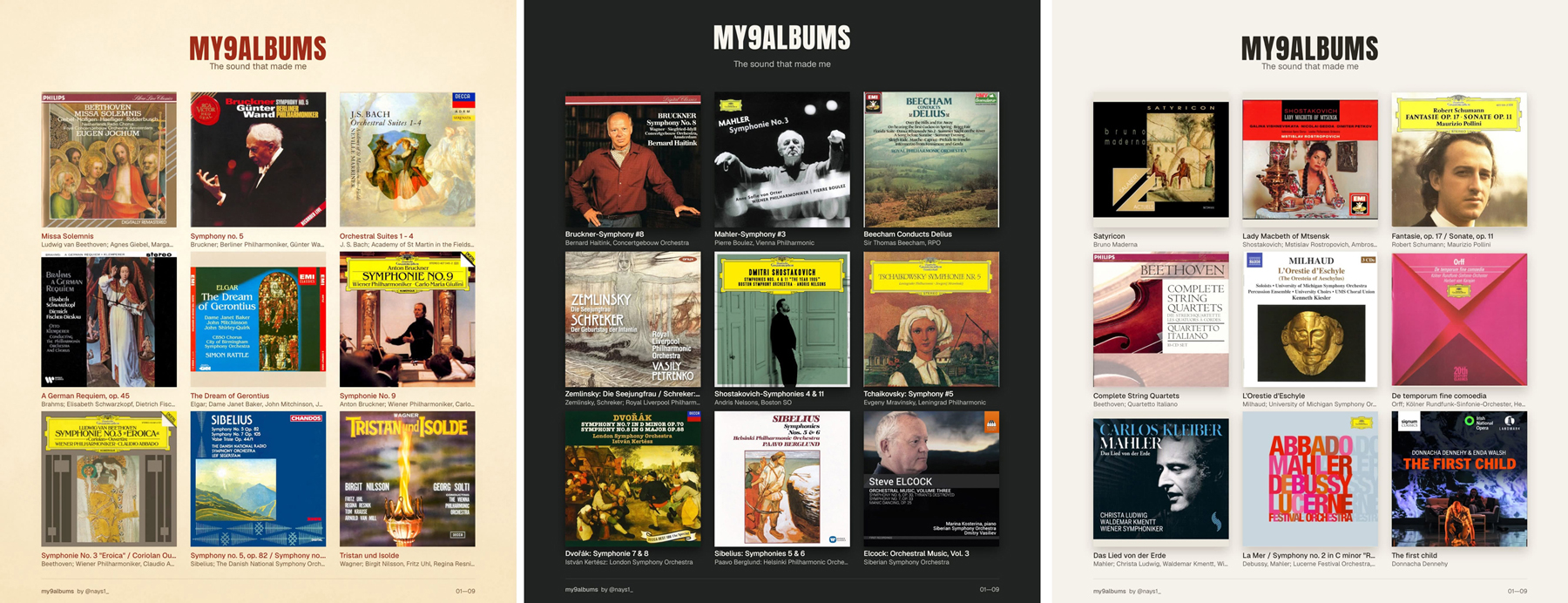
There is a kind of game going around on FaceBook. It is utterly meaningless, but lots of fun — at least for a certain nerdy type of classical music lover. Each poster is offering a selection of nine recordings formatted three-up and three-down, and titled “My9Albums” and subtitled “The sound that made me.”
I like that last bit. The music we heard certainly helped shape who we have become. For many, it was the pop tunes playing on the radio as they grew up. For those of us who veered off into classical music, it was much the same, although with a different program.
I’ve come across more than a score of these posted on FaceBook. There is a website that helps you make one of your own (https://my9albums.org). Making one of these helps you figure out who you are, musically speaking. You have to choose only nine from the dozens, hundreds or thousands of CDs you have in your collection. Which of all of them mean the most to you.
I took it a slightly different way, as if it were a “desert island” collection. What would I take with me to fill the rest of my years, and the thought of only nine CDs is, of course, impossible. So, I cheated.
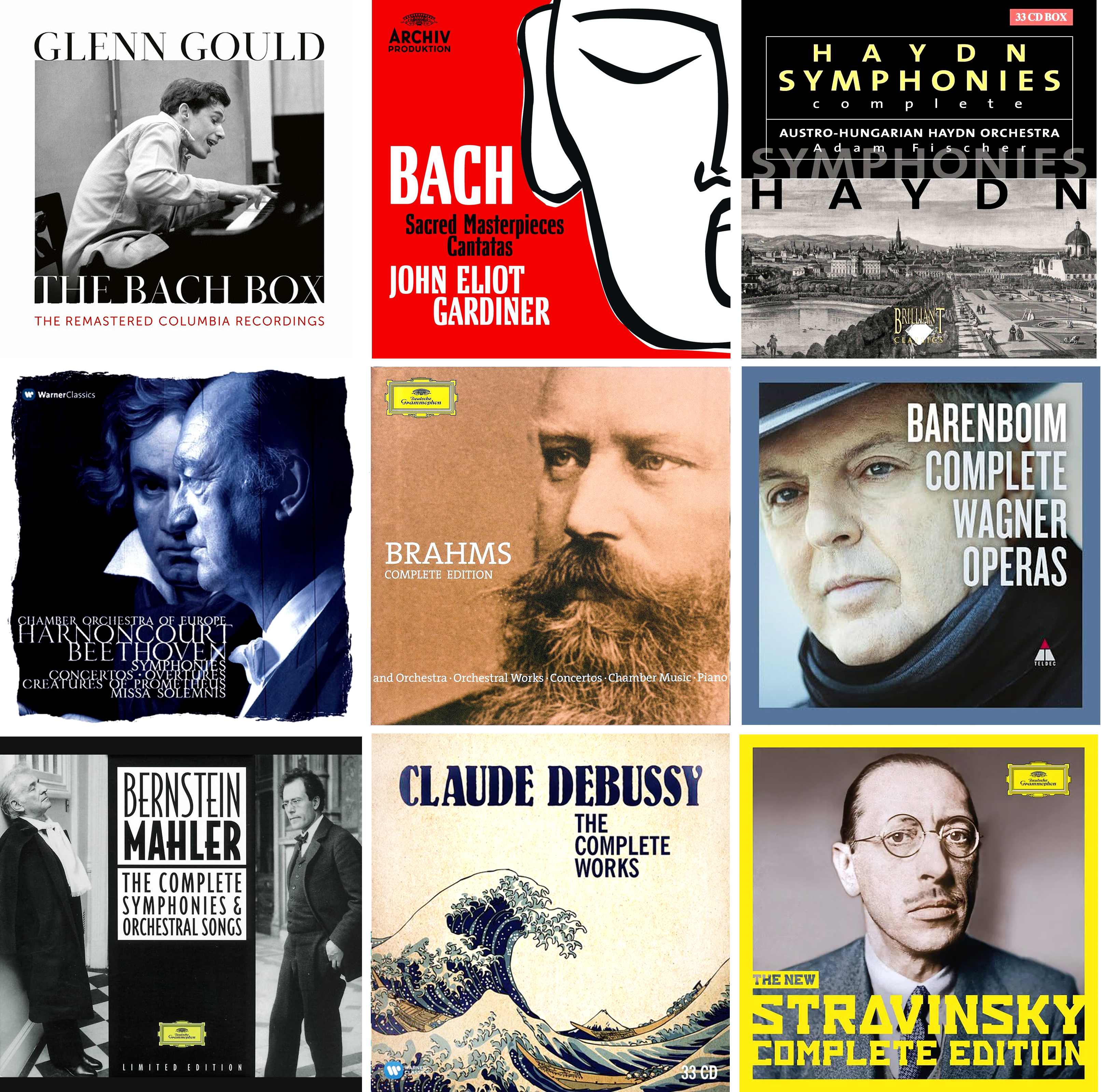
My list is nine boxes of recordings. Still only making nine purchases in all, but giving me enough variety and quality to last out the time on this planet. These are not all my favorite performances, but they are all very good. And in really full boxes.
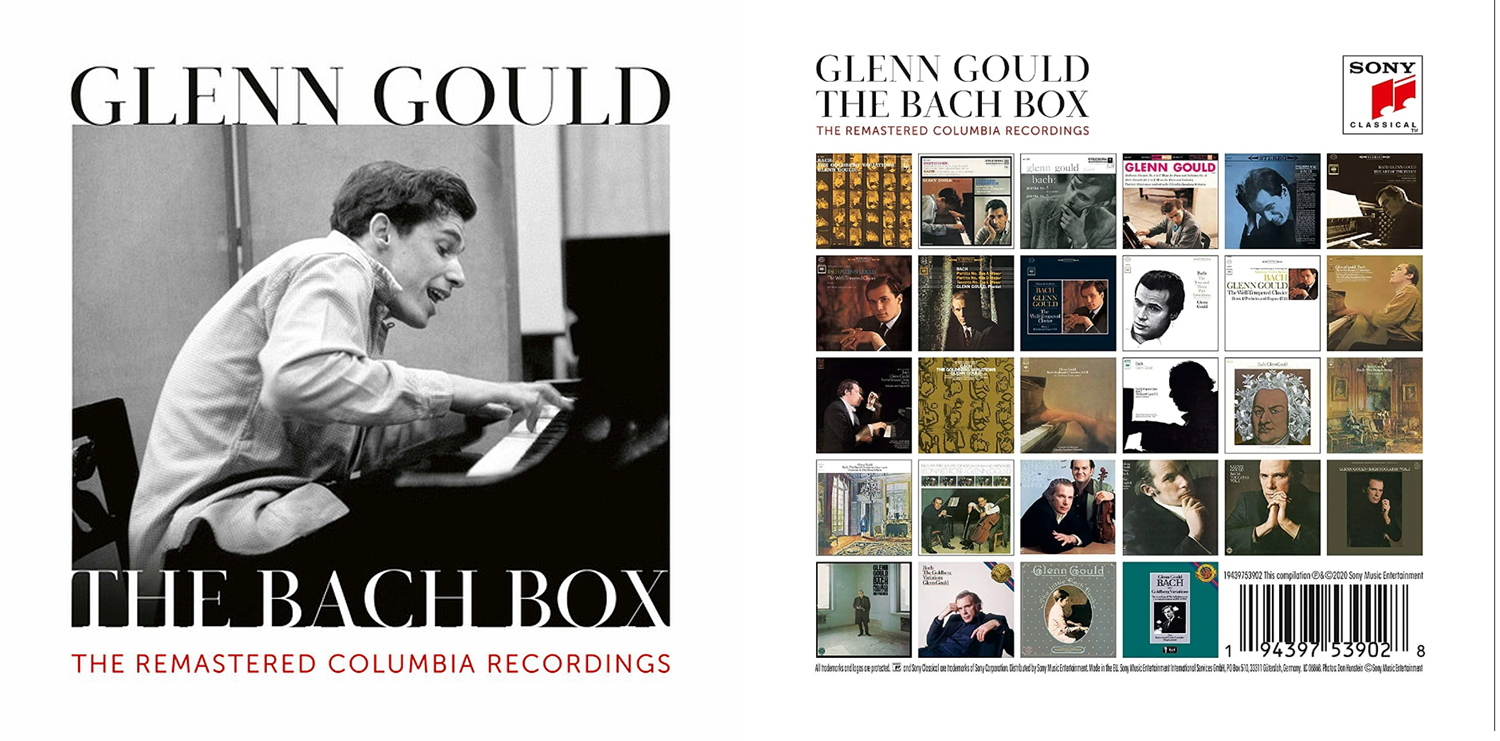
First, the Glenn Gould Box. If I had only one CD, it would be the 1955 Goldberg Variations, but that lasts only a scant three-quarters of an hour (why did you take no repeats, Glenn?) But there is so much more Bach keyboard music that he recorded. Thirty CDs worth.
He is not for all tastes. His particular touch on the keyboard makes a sound world no one else can match (or perhaps want to match). There is a clarity to his counterpoint that is almost magical. On the other hand, there is the matter of his humming along.
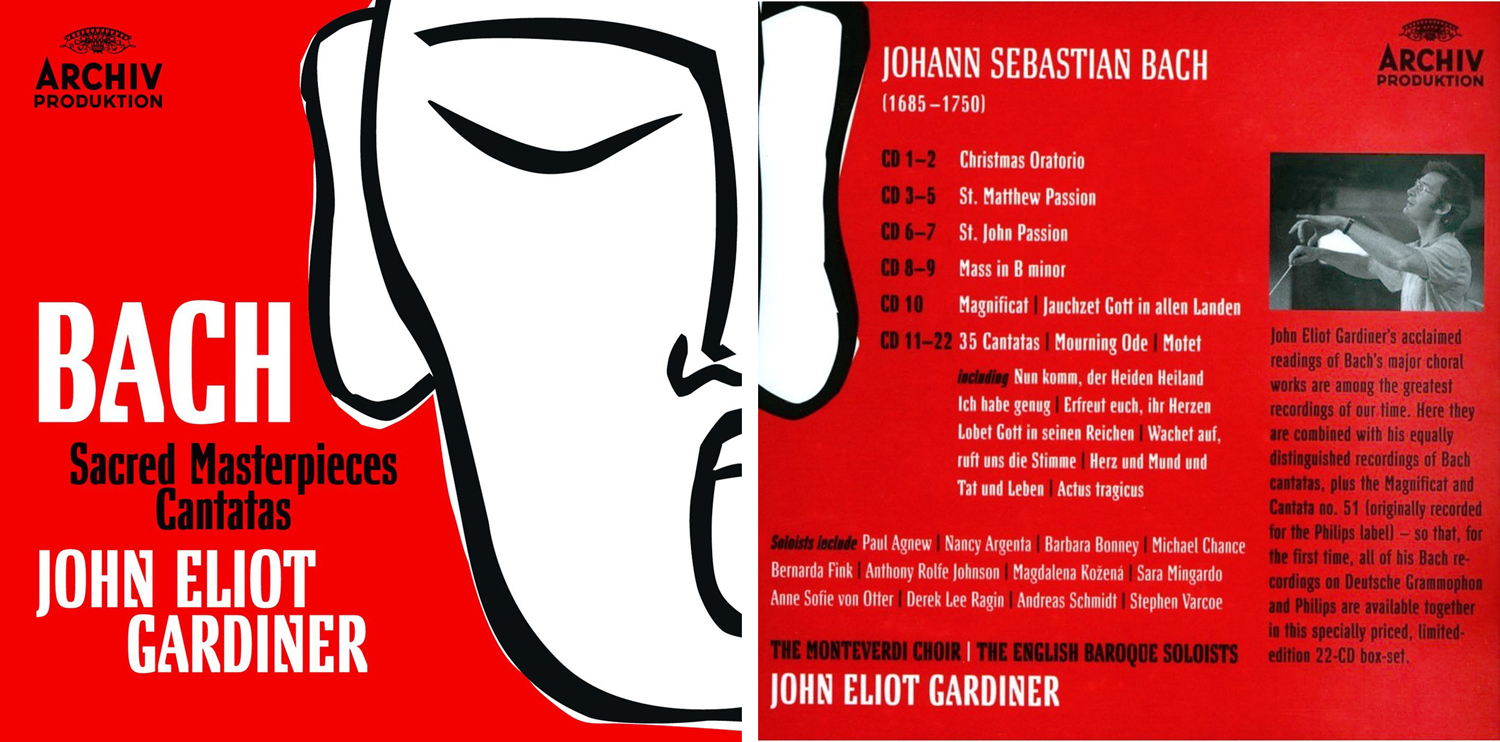
Then, there are the many large choral works that Bach wrote. I almost chose the St. Matthew Passion by itself. It is monumental as little else has managed in music history. But why pass up all the other big works, and with John Eliot Gardiner, you get a decent helping of cantatas, too.
Gardiner is not my ideal interpreter of Bach. He is one of those historical performance practice people, and can feel a little thin on the ear compared with someone like Otto Klemperer, whose St. Matthew Passion is overwhelming, but many of my choices here are not the “best” available, yet, they are all good solid performances and will give you the charge you seek.
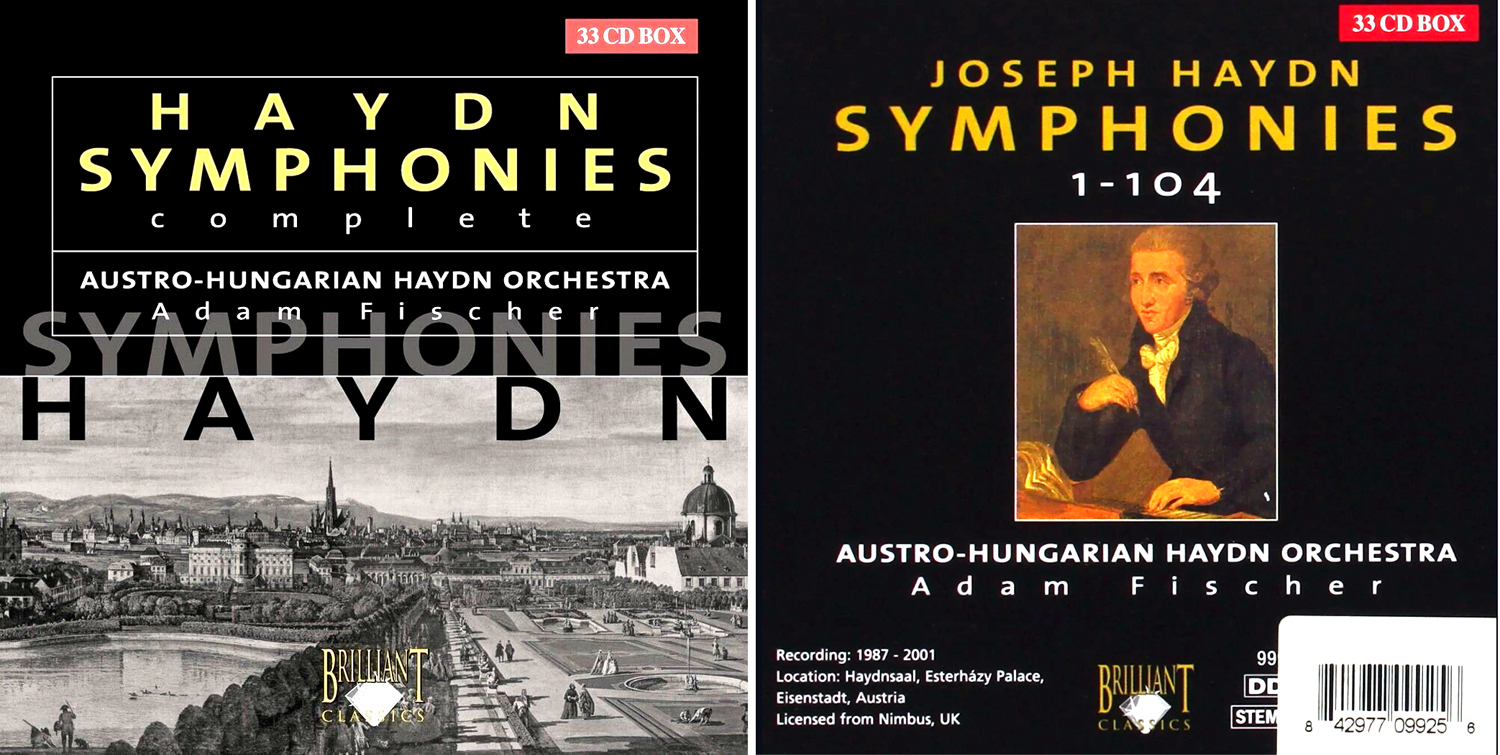
I could never live without a set of Haydn symphonies. There is no perfect set of them. Antal Dorati does decent work in all of them, but sometimes seems a bit pedestrian. Thomas Fey died before finishing and his box was topped off by a substitute conductor. The most consistent and lively set is by Adam Fischer with the Austro-Hungarian Haydn Orchestra. He is a bit weaker in the final London symphonies, perhaps, but he really gets the prime middle-period works that are charged with wit and humor.
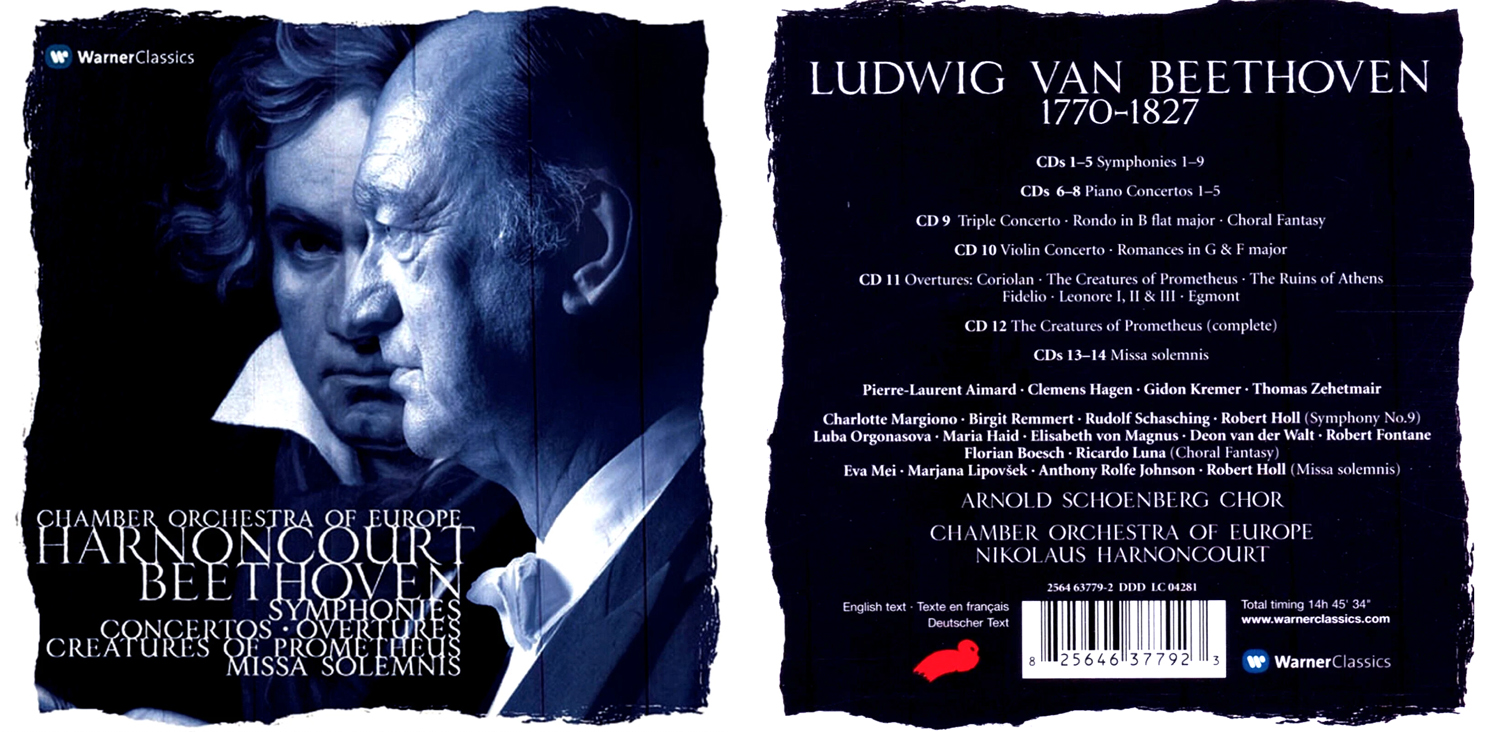
You got to have Beethoven, and while I hate not including his string quartets or piano sonatas, the box by Nikolaus Harnoncourt contains essentially all of Beethoven’s orchestral music. Harnoncourt is an idiosyncratic conductor and can sometime get a touch loony, but he’s on fairly good behavior in this repertoire, and you get all the symphonies and concertos and the overtures and ballet.
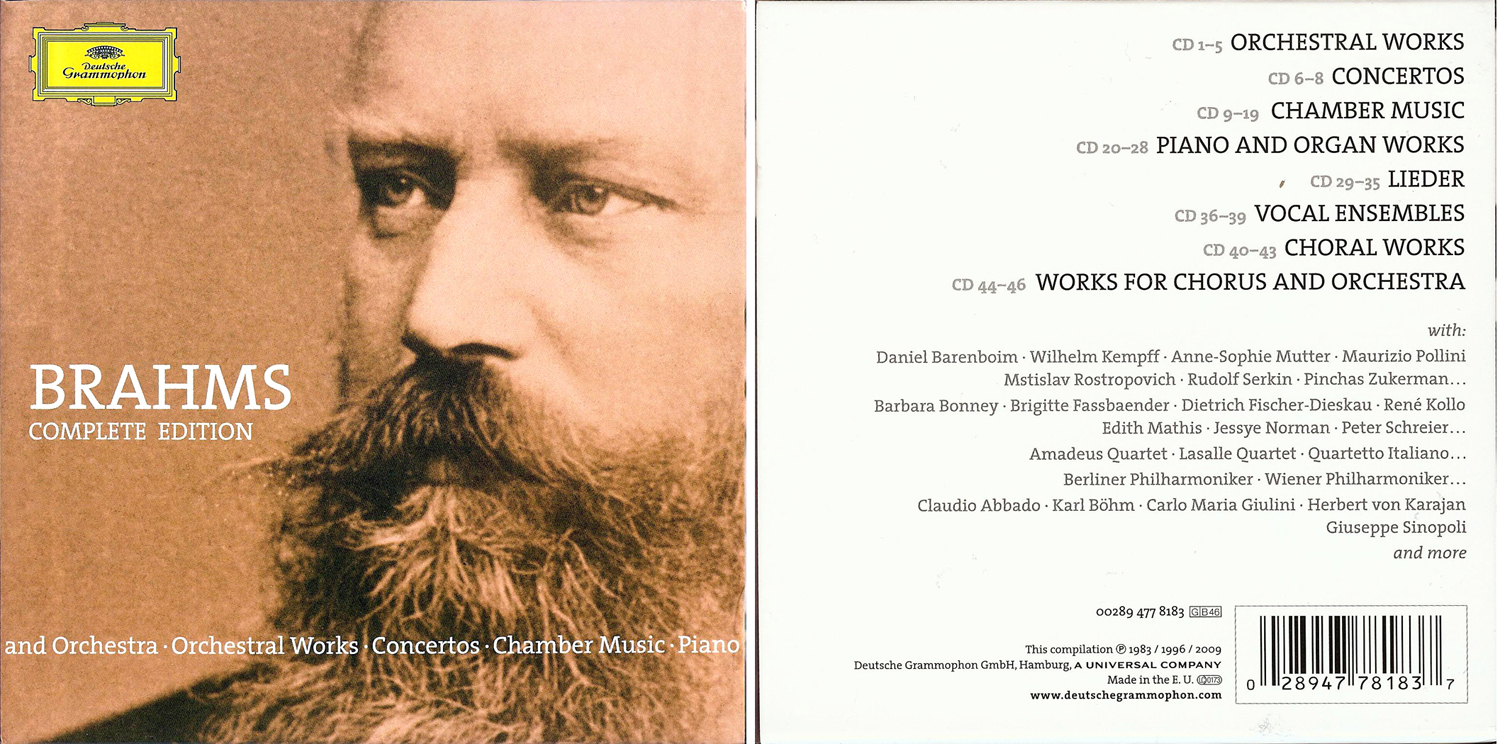
Ah, Brahms. Deutsche Grammophon put all of his music into a single box, with 46 CDs. Lots of Karajan, but that’s the price you have to pay. Actually, he’s pretty good in this music. But there are plenty of other orchestras and baton wavers here, too. But the bulk of the music is the chamber music and the choral songs, of which Johannes wrote a cartload. As with the other selections, I have my favorite performances elsewhere, but with this box, you have all of them together and all in very good, if not always the best, performances.
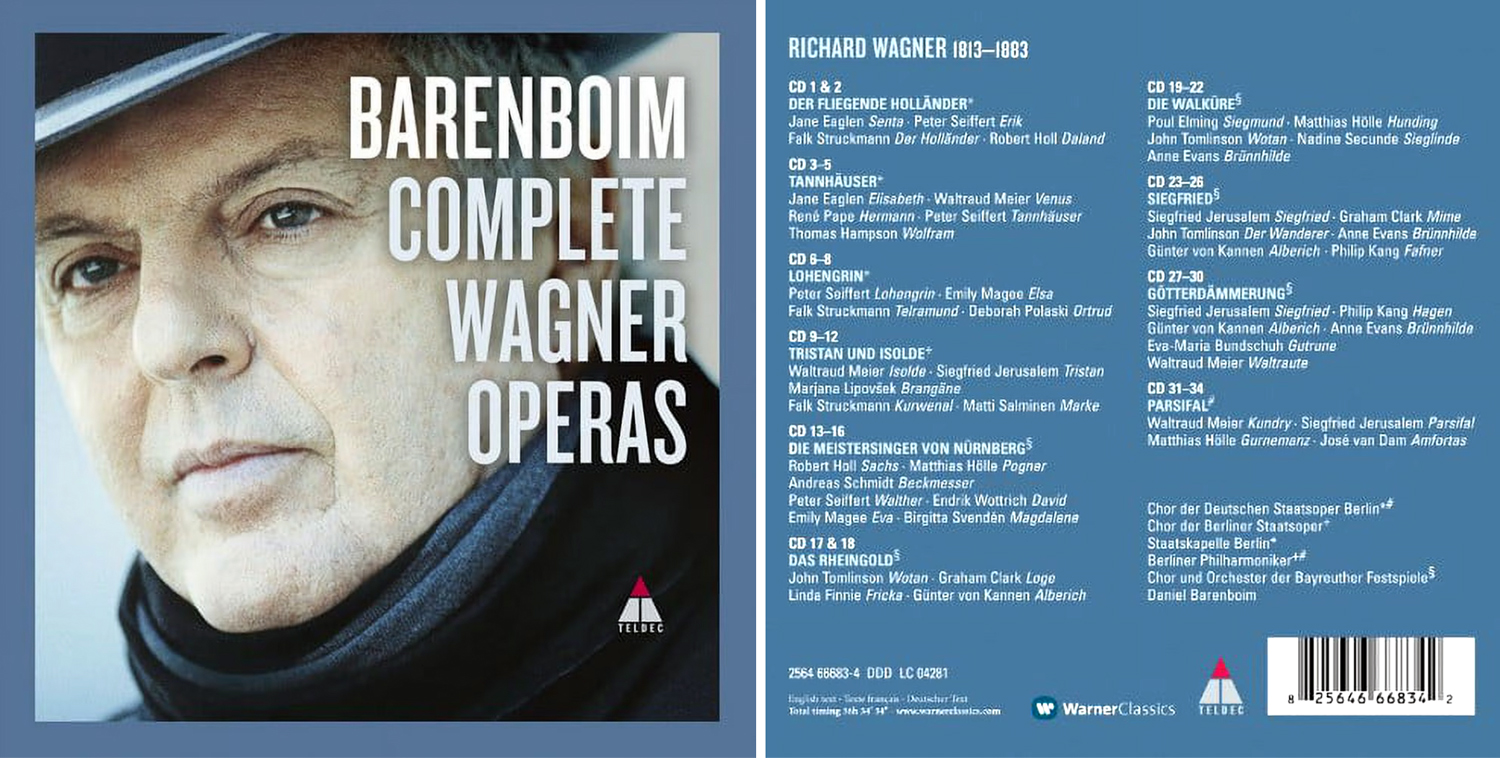
Daniel Barenboim is an excellent Wagner conductor, and a surprisingly inexpensive box from Warner has all of the main music dramas of the monomaniacal composer. Opera mavens may complain that he never had access to the golden age of Wagner voices, but his casts do very well, even if they aren’t Birgit Nilsson or Wolfgang Windgassen. The box is worth it for the Ring Cycle alone.
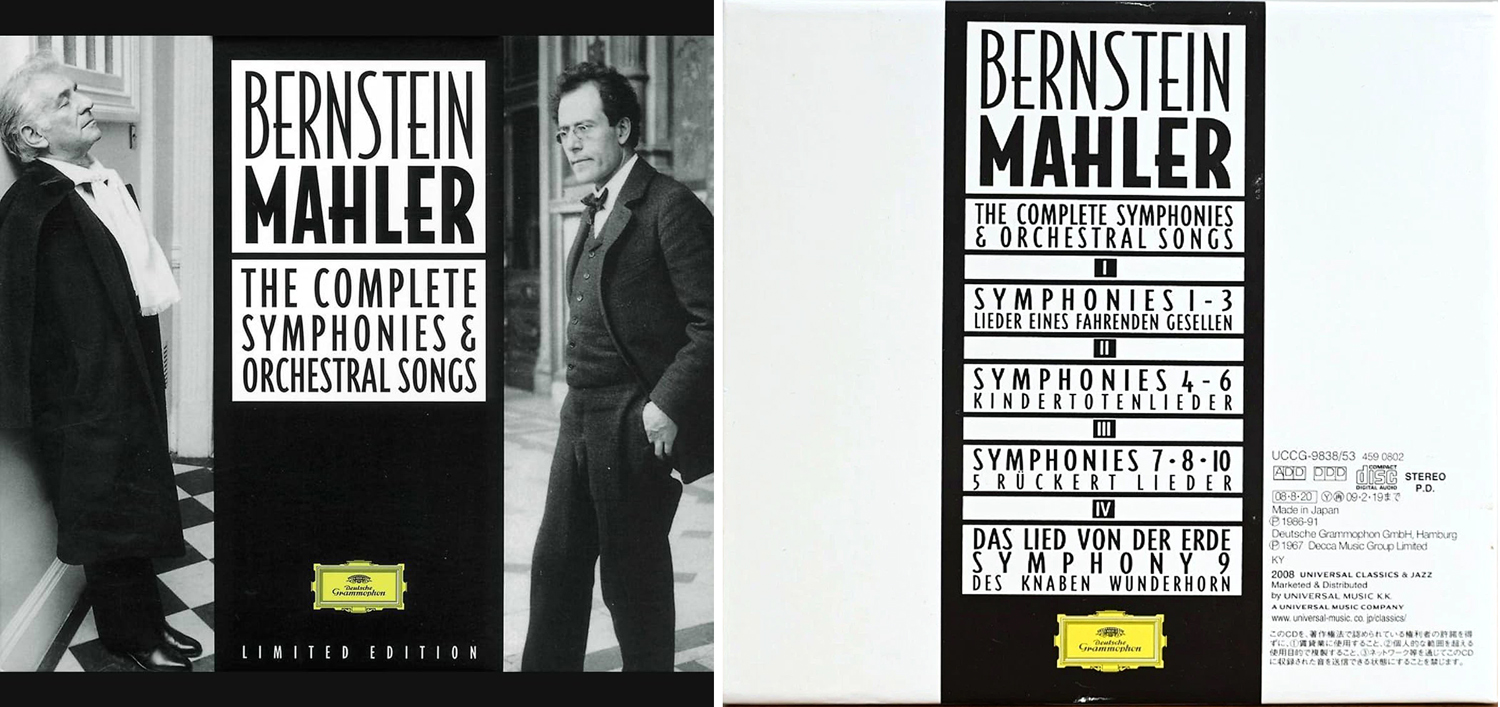
Gustave Mahler didn’t write a lot, numerically speaking, but the size of what he did was prodigious, and no conductor matches his prodigiosity like Lenny. Bernstein recorded two complete sets of symphonies, one for Sony (actually, back then, it was Columbia), and a second set for Deutsche Grammophon. Anyone who cares has both sets. But this box adds Das Lied von der Erde and the orchestral songs, and thus fills out the repertoire. Maybe a few of the Sony versions are marginally better, but then, some of the DG versions improve on the first set. Pays your money and takes your choice. For the desert island, I’m going with this set.
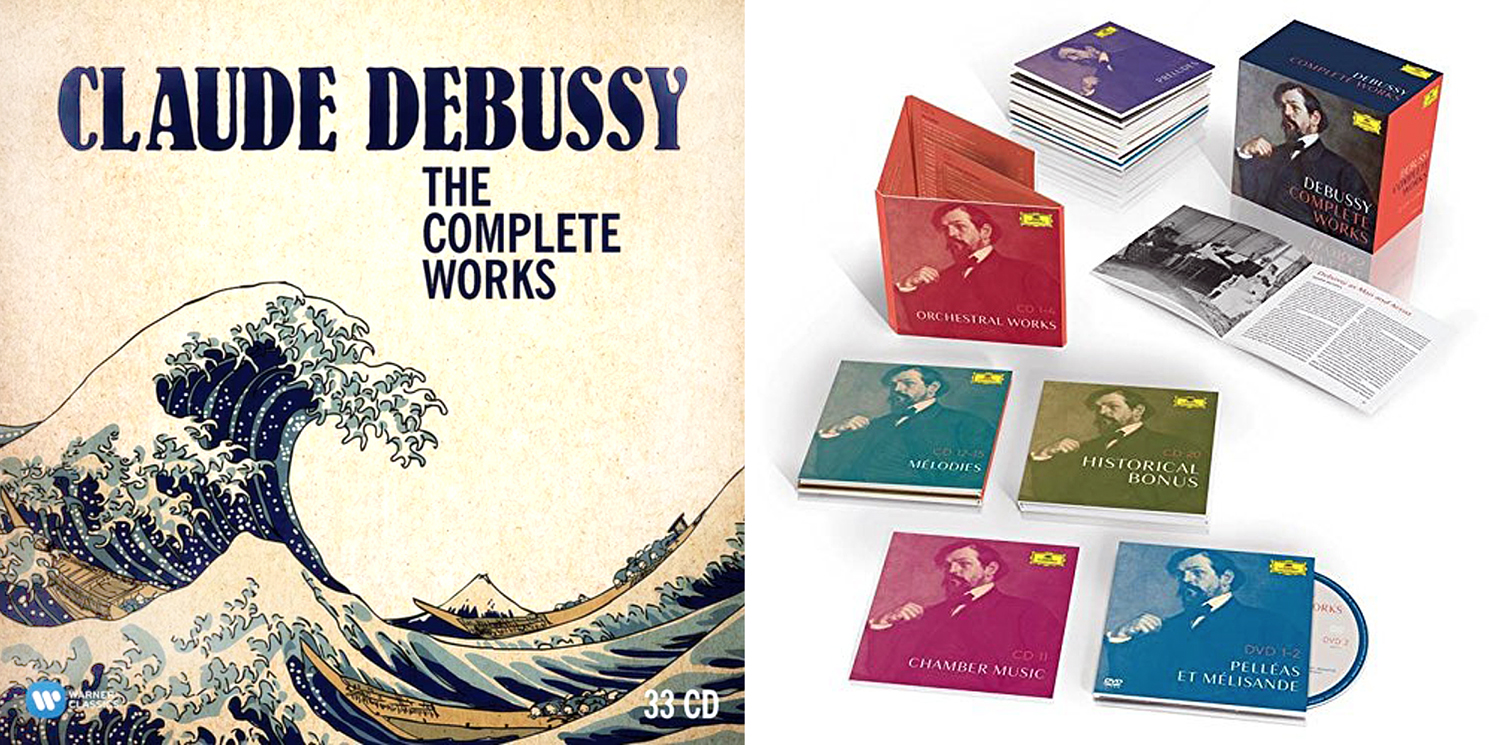
Debussy is more than just the Prelude to the Afternoon of a Faun and Claire de Lune. In fact, he fills up 33 discs in this set. And it’s not all hazy Impressionist fog, either. He could be edgy and avant. Take Jeux, for instance. Please. How many have heard that. And the final three sonatas. Goodness, I love them. Then, there’s all that piano music. It’s endless pleasure.
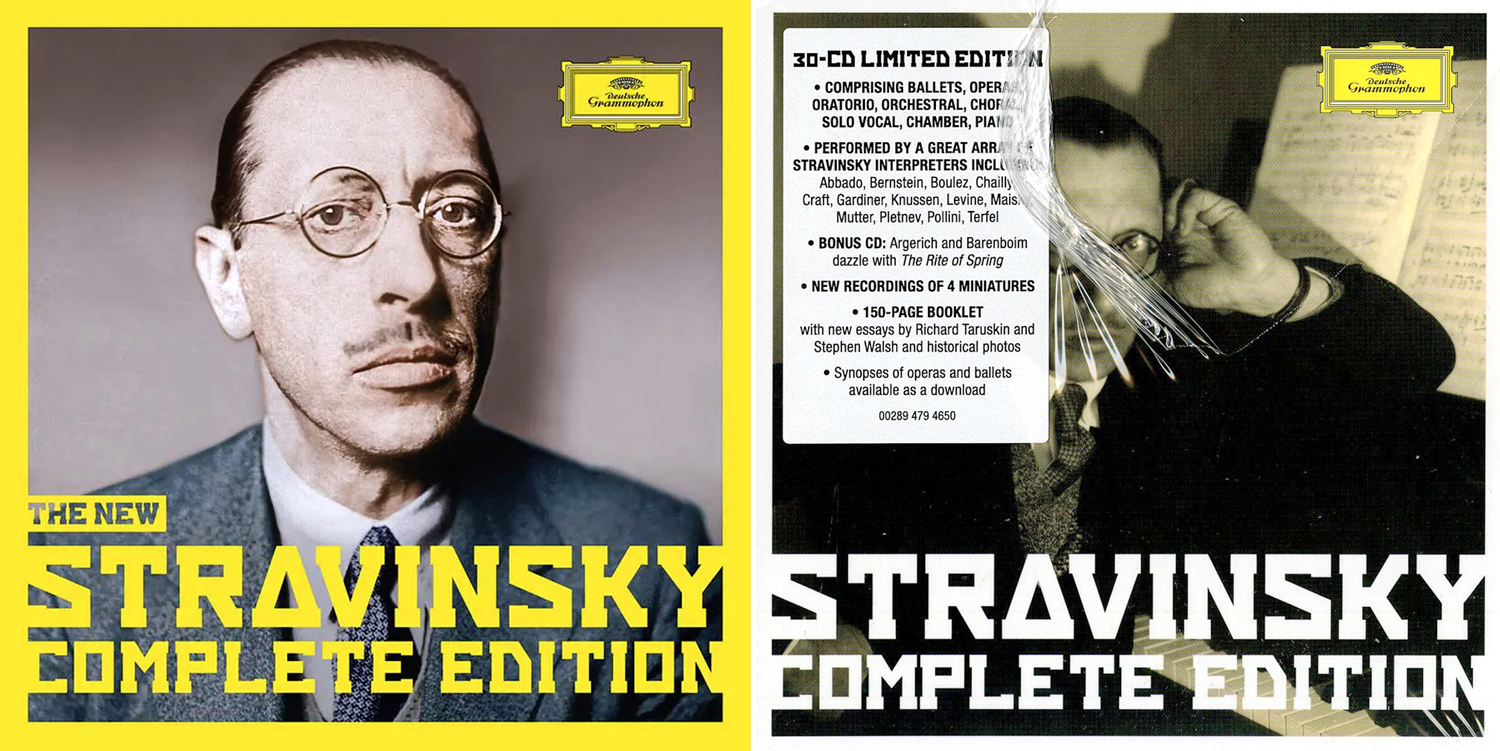
This DG box leans heavily on Pierre Boulez, who is good in this repertoire, but perhaps a bit cool. Stravinsky liked cool. But other conductors find more heat in the scores, and those recordings can be more exciting. Yet, one shouldn’t complain; Boulez has everyone on their toes, playing the best they can. And it’s not all ice. They even include Bernstein leading Les Noces and the two wartime symphonies. There is just so much music. Who would have thought the old man to have had so much music in him?
I am sorely conscious of how much music is left out of my nine boxes. Where’s Mozart? Surely the piano concertos were worthy. Where’s Schubert, or Bartok, or Rachmaninoff? Vivaldi wrote nearly 500 concertos; surely that would have given me boatloads of music to last a long time.
But this list comes with 258 CDs of music that I love, music that I have internalized as part of who I am. That will have to do for now.
The 300-pound soprano stands onstage and sings of her love for the 110-pound tenor while proving that nothing can sustain a louder note longer outside of an air-raid siren.
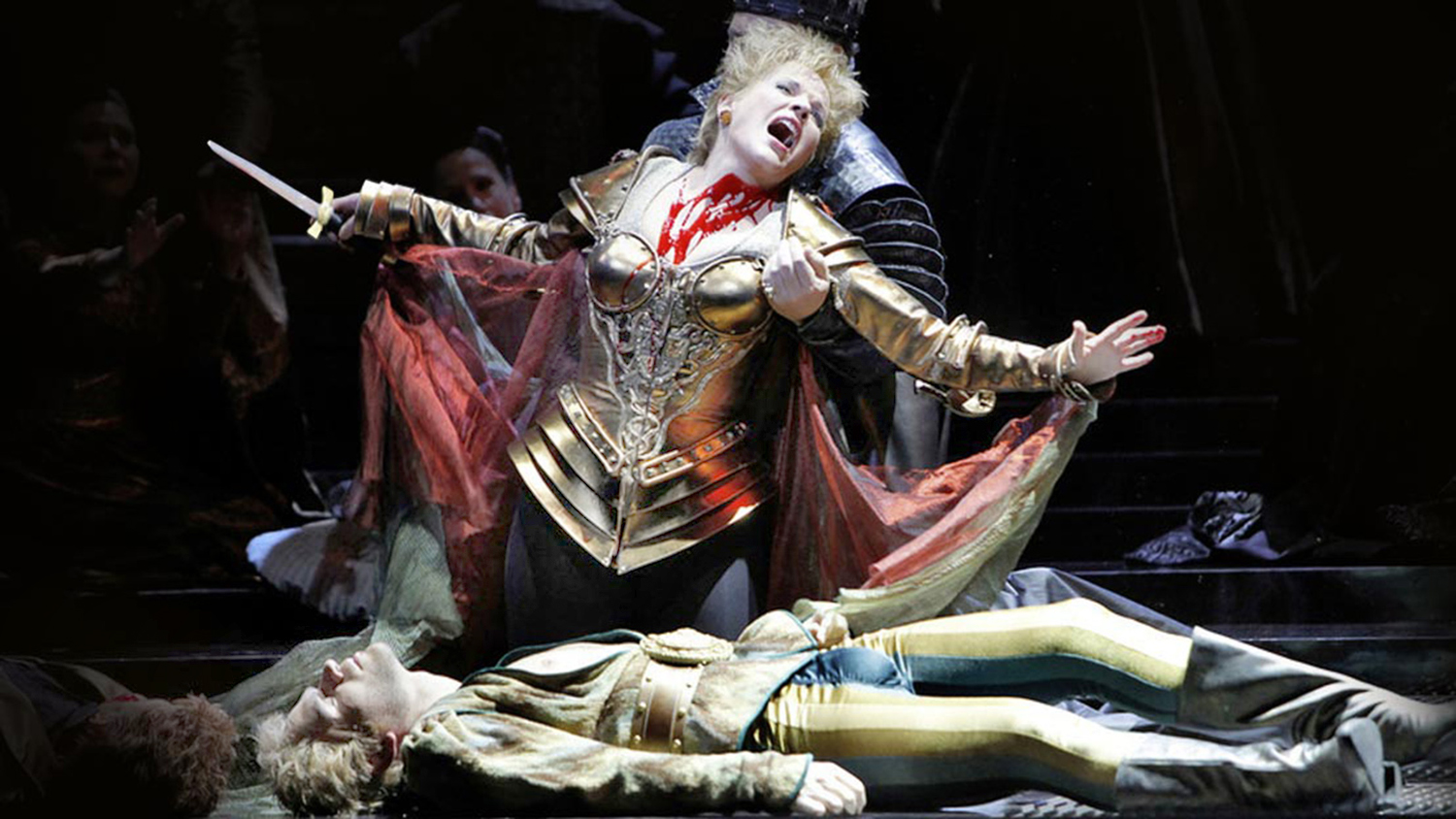
In this art form, when someone is fatally stabbed it can take him 20 minutes to fall over, because he has his big aria to sing. The audience applauds; he expires.
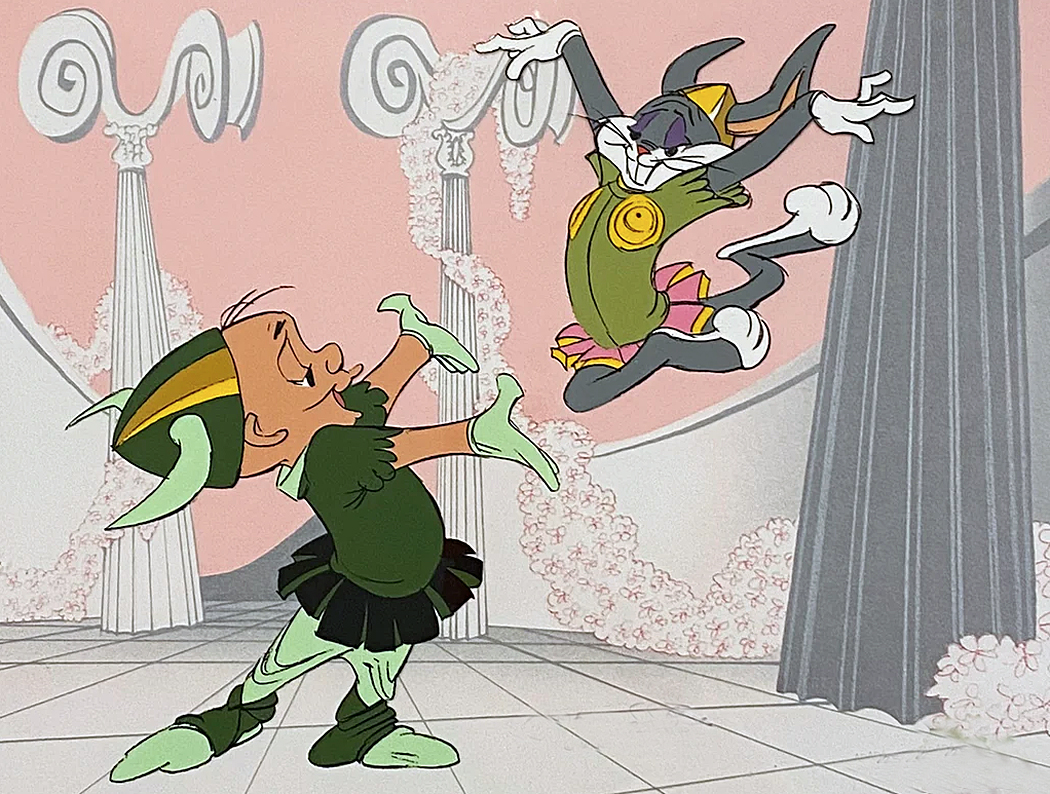
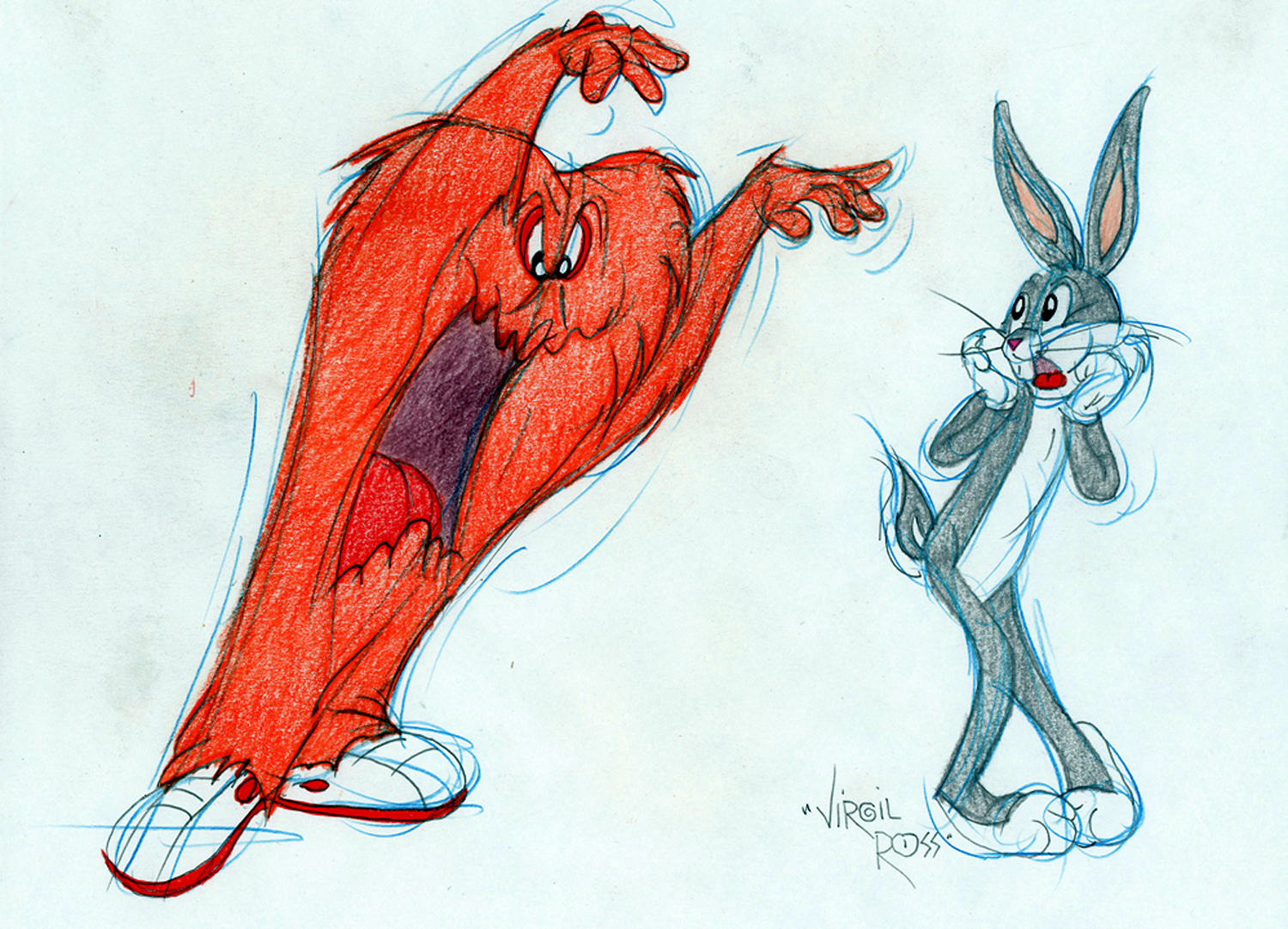
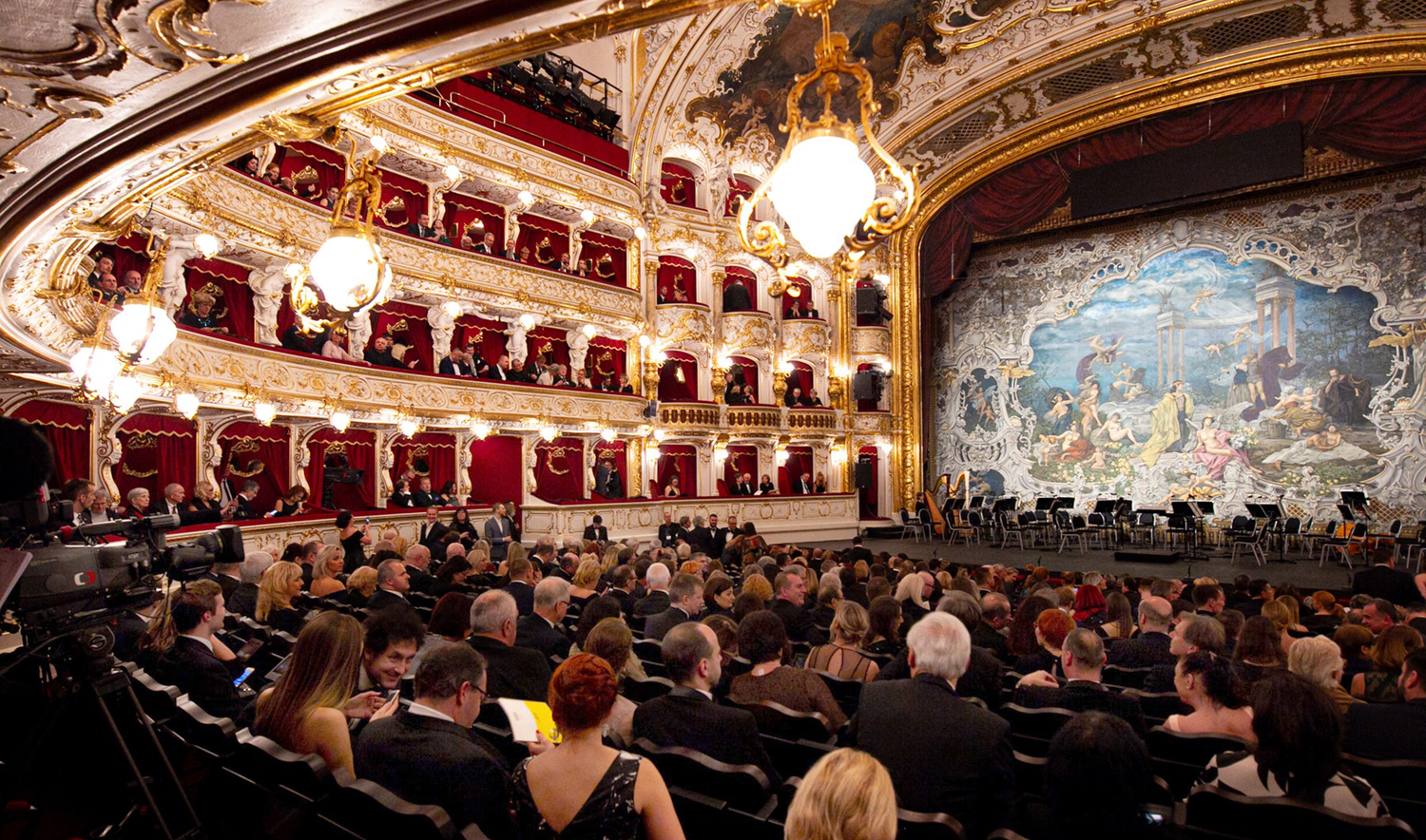
Bugs Bunny, after all, doesn’t spend much time lampooning novelists or painters. No, he saves his best digs for the opera. There is much to laugh at. Opera is a highly artificial artform, with so many traditions and habits.
But it is one that many people love deeply. Some would rather give up food. And that is because opera goes straight to the heart, even as it gives the brain conniptions. It is all about emotions.
We make a mistake when we think that opera is just drama with singing. Unlike most theater, opera isn’t really about the story or about characters caught in a plot. One reason some people feel estranged from opera is that they expect a naturalistic story and they get what seems to them a truckload of silliness. Lots of overwrought screaming about murder, incest, adultery and death.
But opera isn’t about the characters or the story, at least not in the way that The Odd Couple is about Oscar and Felix, or Streetcar Named Desire is about Blanche and Stanley.
No, opera is about raw emotion personified onstage, and the music characterizes those emotions much more successfully than the singers who act out the parts. This is opera’s great power.
There is a wonderful scene from Woody Allen’s Stardust Memories, where his character’s hostility has escaped and terrorizes Central Park, pursued by police and tracker dogs. Like some sort of shaggy Bigfoot, it wanders through the scene killing and maiming; it is a monster on the loose.
Now imagine that instead of his hostility, it is the character’s passion, or his jealousy or ambition, that has escaped. Put that passion onstage in a costume and let it sing its heart out: That’s opera.
The music is a direct conduit to the heart. Mere words only get in the way. Music can convey emotions beyond words. Libretti can sometimes be banal, but the music underneath is very deep and powerful.
Opera, like all the high arts, recognizes that inside each of us, these large things exist, and not only do they exist, but they are the most real parts of us.
Yes, we drive to work each day. Yes, we give the spouse a peck on the cheek when we leave. Yes, we look forward to the ballgame over the weekend.
But even the dullest accountant or shoe salesman has in his or her past or future the great love, the deaths of dear ones, the lost love, the fear for children’s ruin, the sense of growing older and facing the imminence of death, the sense of sharing the good marriage, or of the isolation of a bad one: These emotional states are so much larger than our 9-to-5 jobs, so much more real. They are our true selves, though we orphan them through habit.
Opera reacquaints us with that true self. It reminds us that as humans, we are more than our next promotion, more than our membership in the Kiwanis Club. That is opera’s job; that is its glory.
That is your experience of erotic passion up there singing to Don Jose in Carmen. That is your heroic inner self killing the dragon in Siegfried. With opera, you are asked to recognize yourself.
Listening to opera, you fall into a trancelike state and all the boring parts of life drop away, and you experience only the marrow of it all: The things that, when you come to your deathbed, you regret not having had more time for.
PART 2: A SAMPLING
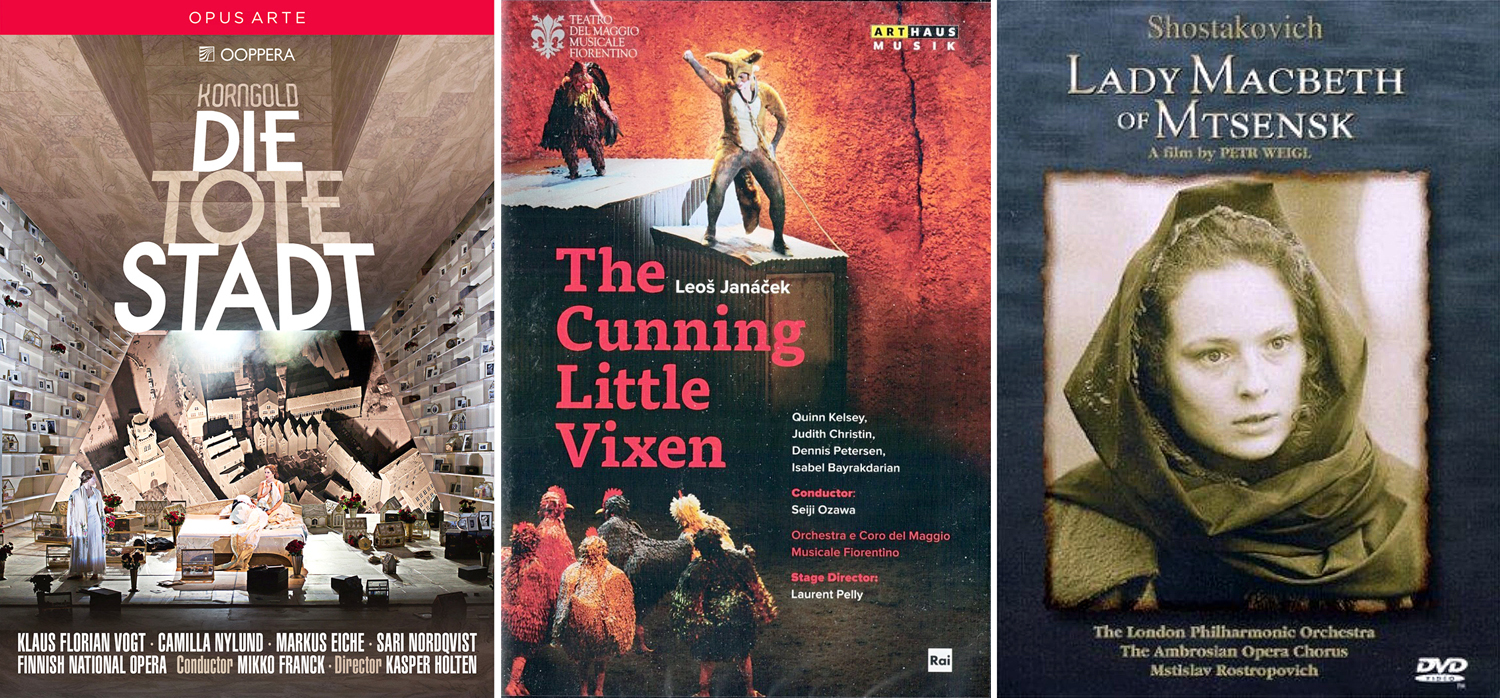
Here are a dozen operas, over the centuries of the form, that all capture the essence of what opera offers. These are all in the repertoire of most opera companies, and those that you cannot see live, are all available of DVD or on streaming services.
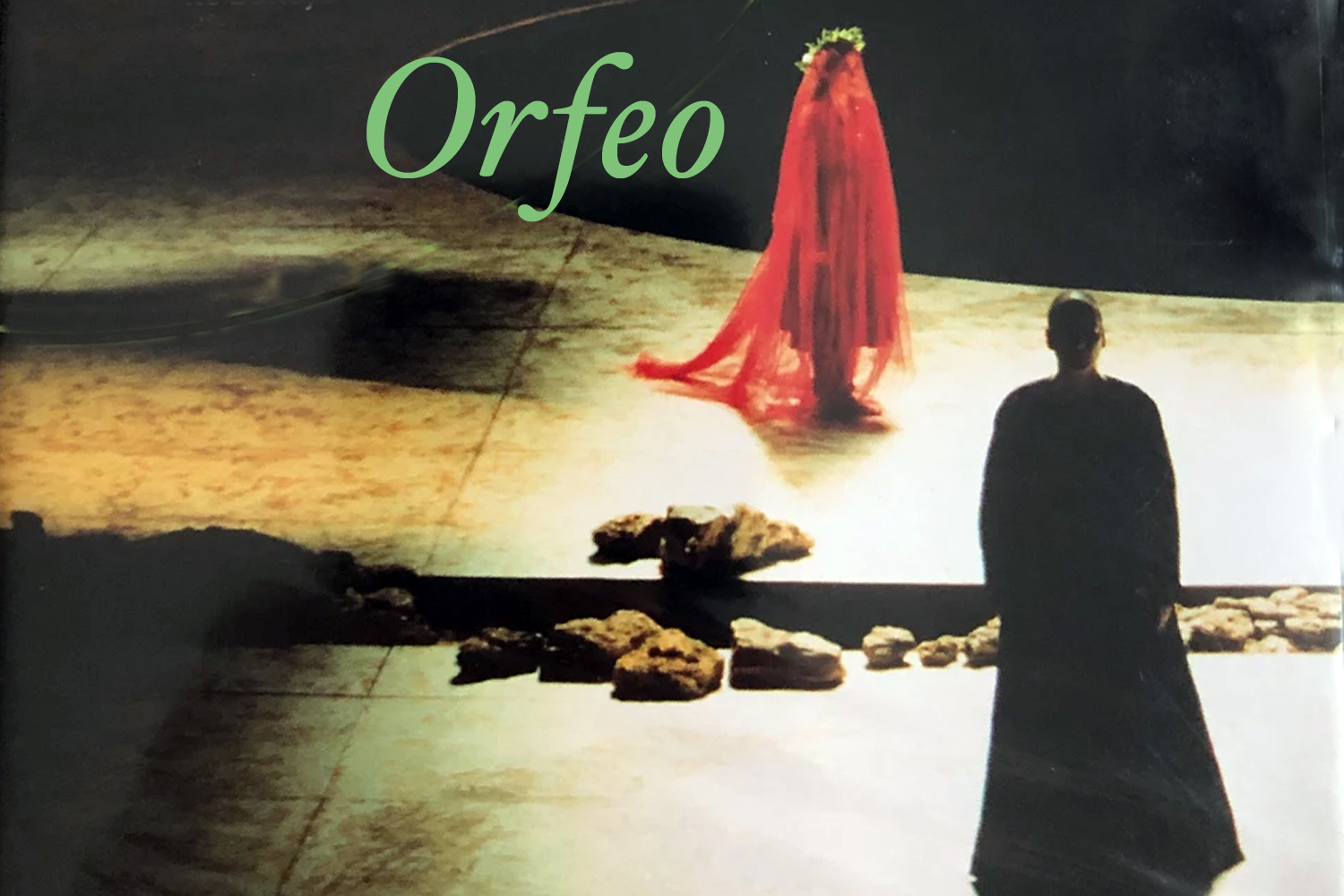
The oldest opera that still gets regular performances, Claudio Monteverdi’s La Favola d’Orfeo was performed at the Mantua court in 1607 and tells the story of Orpheus and his trip to the Underworld to rescue his dead wife, Eurydice, and his failure, and eventual transmogrification to Heaven by the God Apollo. Back then, all the female roles were played in drag by castrato men singing in high register. Today, sopranos and mezzos get the job back.
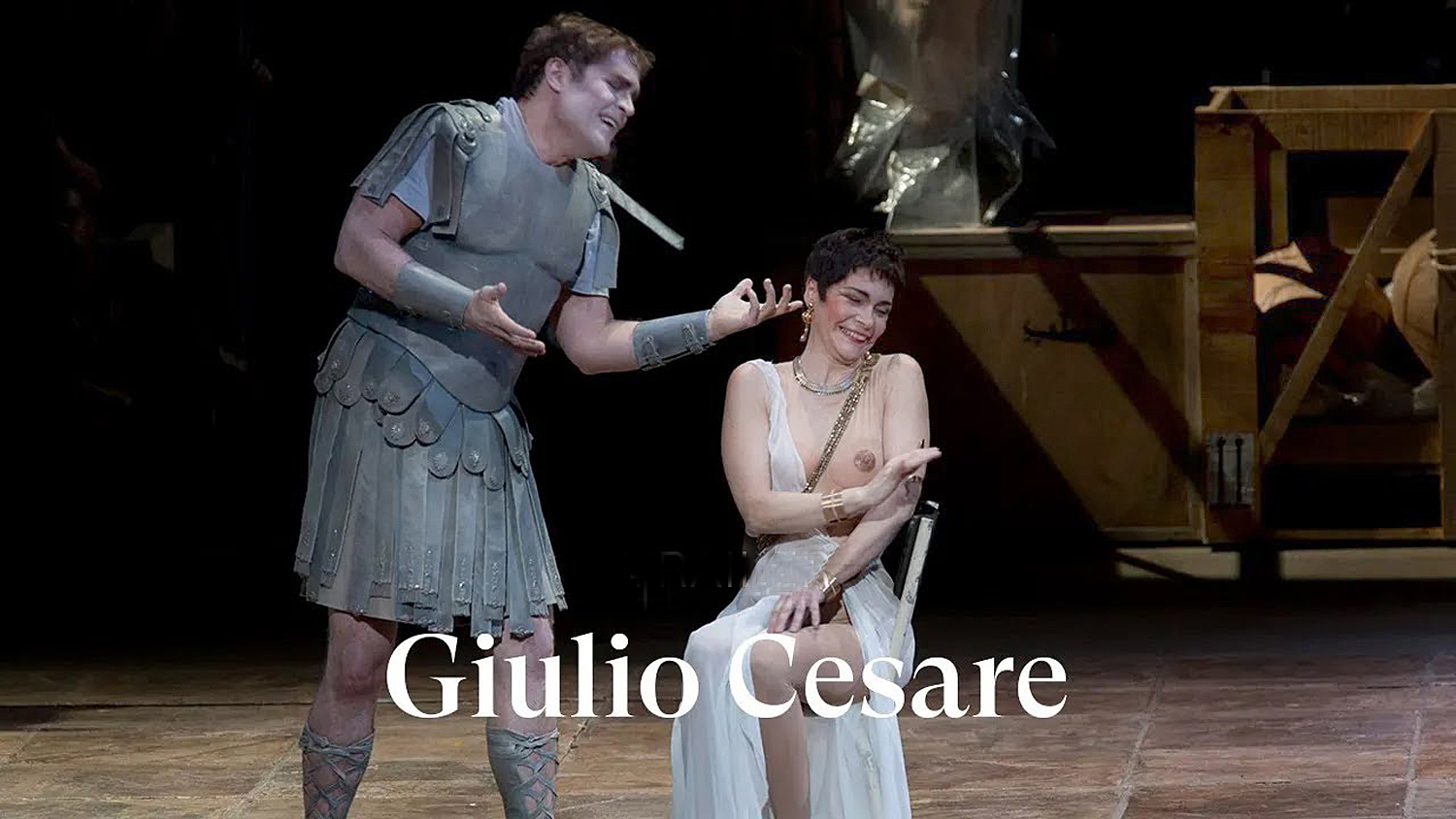
George Frideric Handel wrote 43 operas and another 27 oratorios, some of which have been staged as operas. Giulio Cesare in Egitto (“Julius Caesar in Egypt”) was premiered in 1724 in London and was a big hit. It tells the story of Cleopatra’s rise to the throne of Egypt with Caesar’s help in killing her brother, the villain Tolomeo. There is a love story and 30 arias over three acts (and three-and-a-half hours), with many choruses, duets and ariosos added. And three castrato parts, including that of Caesar.
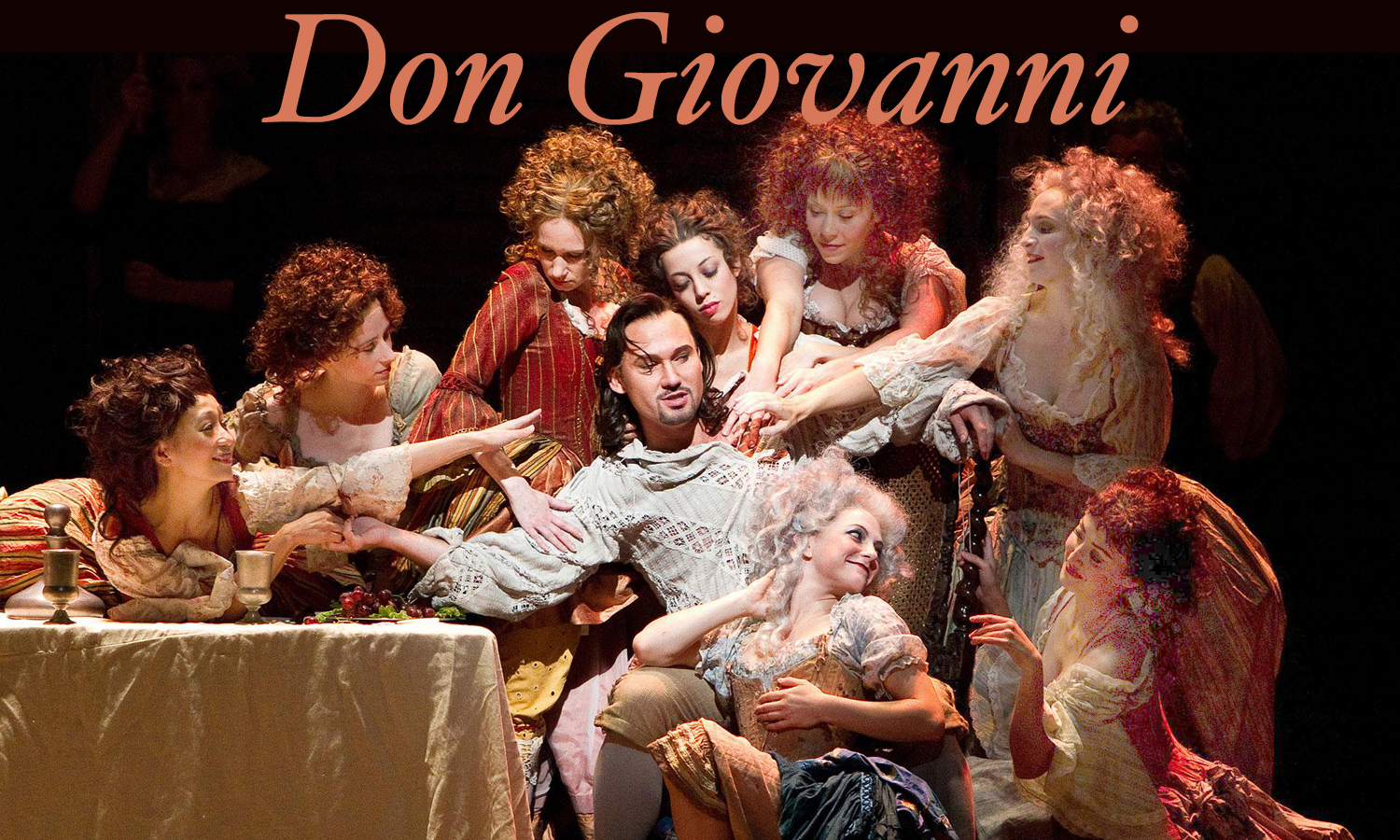
Wolfgang Mozart wrote some of the most popular operas ever, including Il dissoluto punito, ossia il Don Giovanni (“The Rake Punished, or Don Giovanni”), which premiered in Prague in 1787 to rapturous applause. The villain is the seducer, Don Giovanni (Don Juan in Italian), but also the hero, whose irrepressible life force means that as he is dragged down to hell by demons, he still refuses to repent.
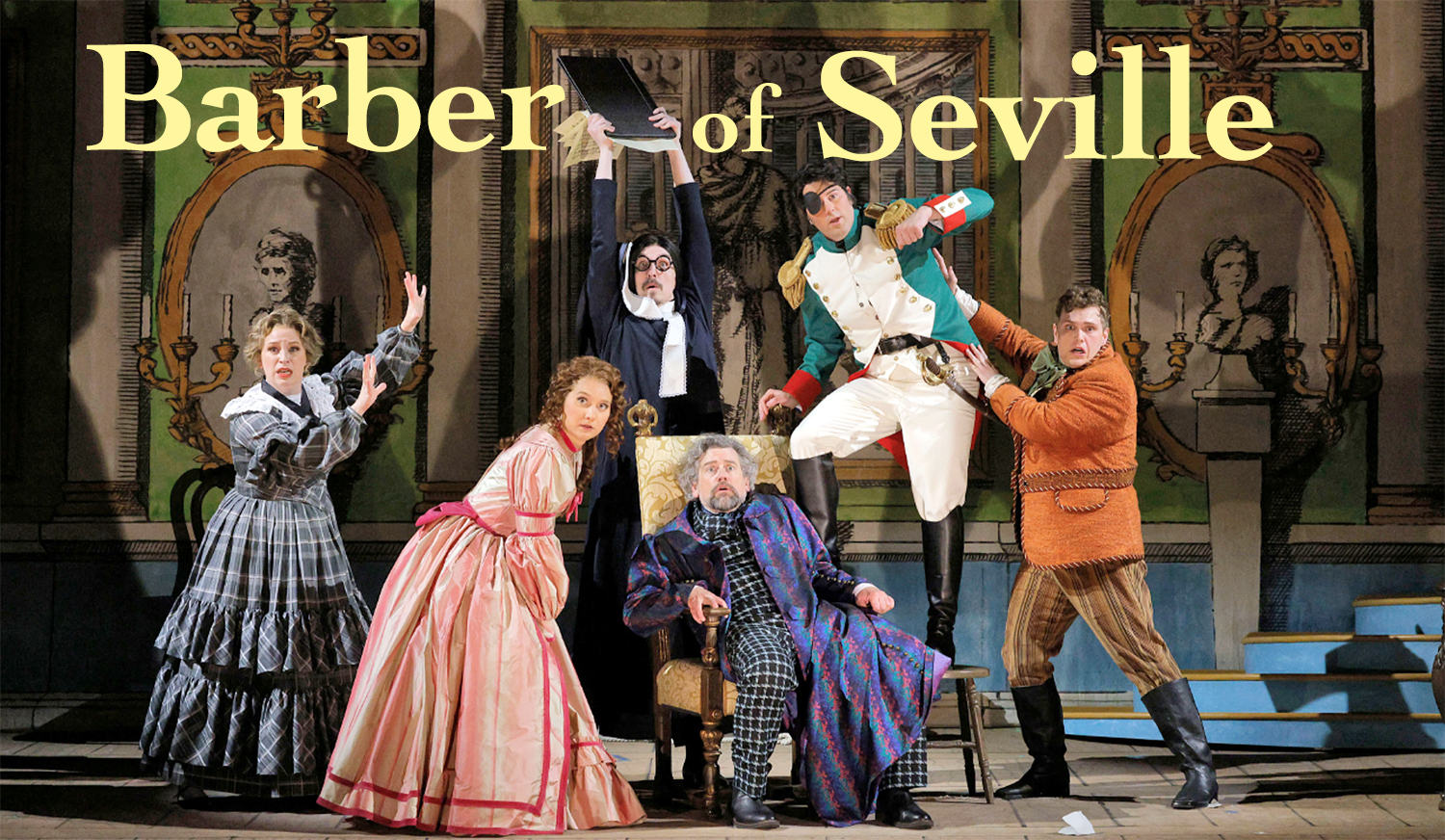
Gioacchino Rossini wrote two operas a year for 19 years and then gave up in exhaustion at the age of 30, spending the rest of retirement living the good life. He wrote Il barbiere di Siviglia, ossia L’inutile precauzione (“The Barber of Seville, or The Useless Precaution”) over three weeks in 1816. In it, the barber, Figaro, plays matchmaker to Count Almaviva and young Rosina. Lots of comic miscalculations and tunes you can’t get out of your head.
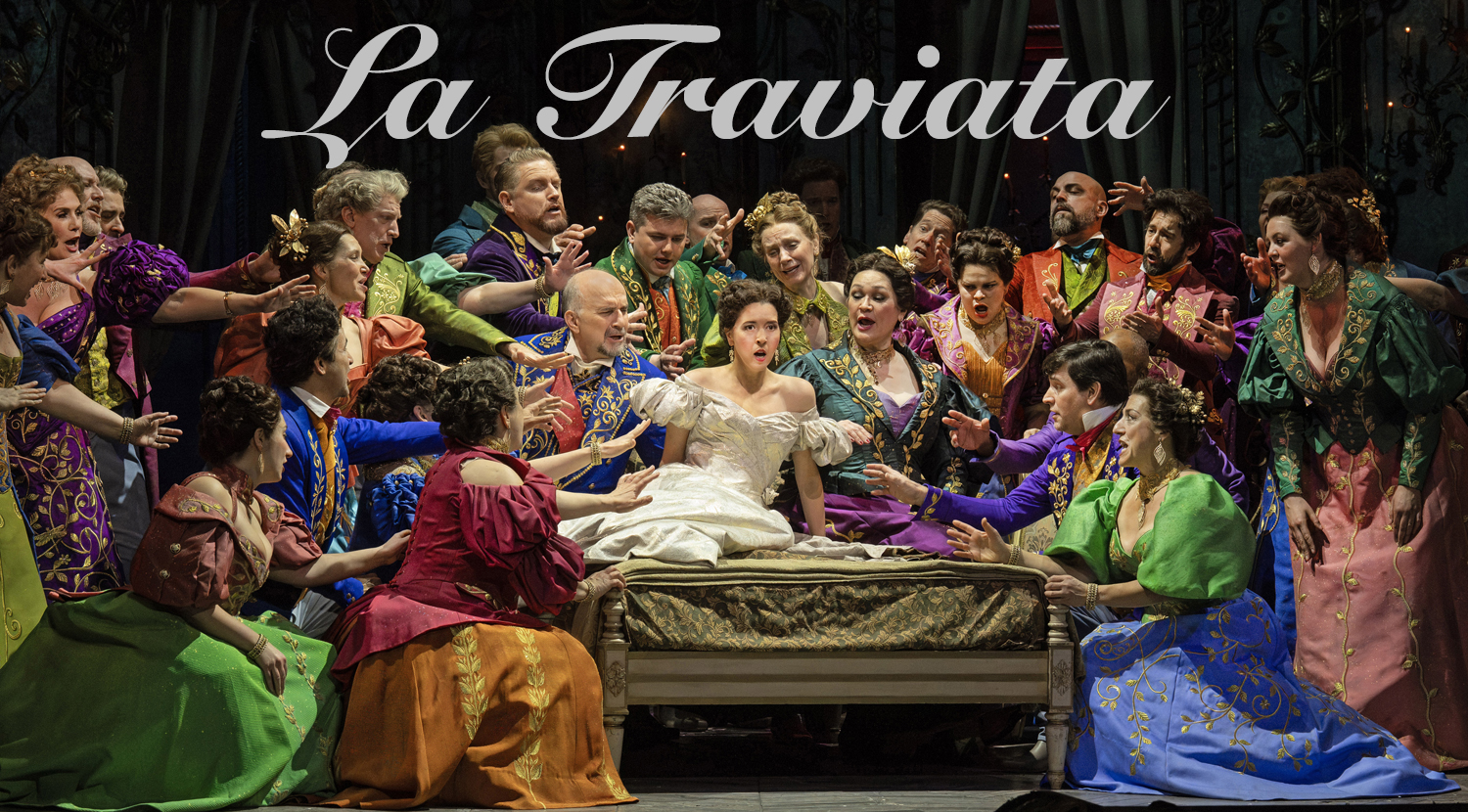
Giuseppe Verdi was the king of 19th century Italian opera. He wrote 37 operas, counting re-write and recastings, including some of the most popular and most familiar. In 1853, he wrote La Traviata (“The Trollop”), which follows Violetta, the mistress of Alfredo over the objections of his father. She coughs. She agrees to give up her love. She dies. Well, it’s a little more complicated than that, but that’s the gist.
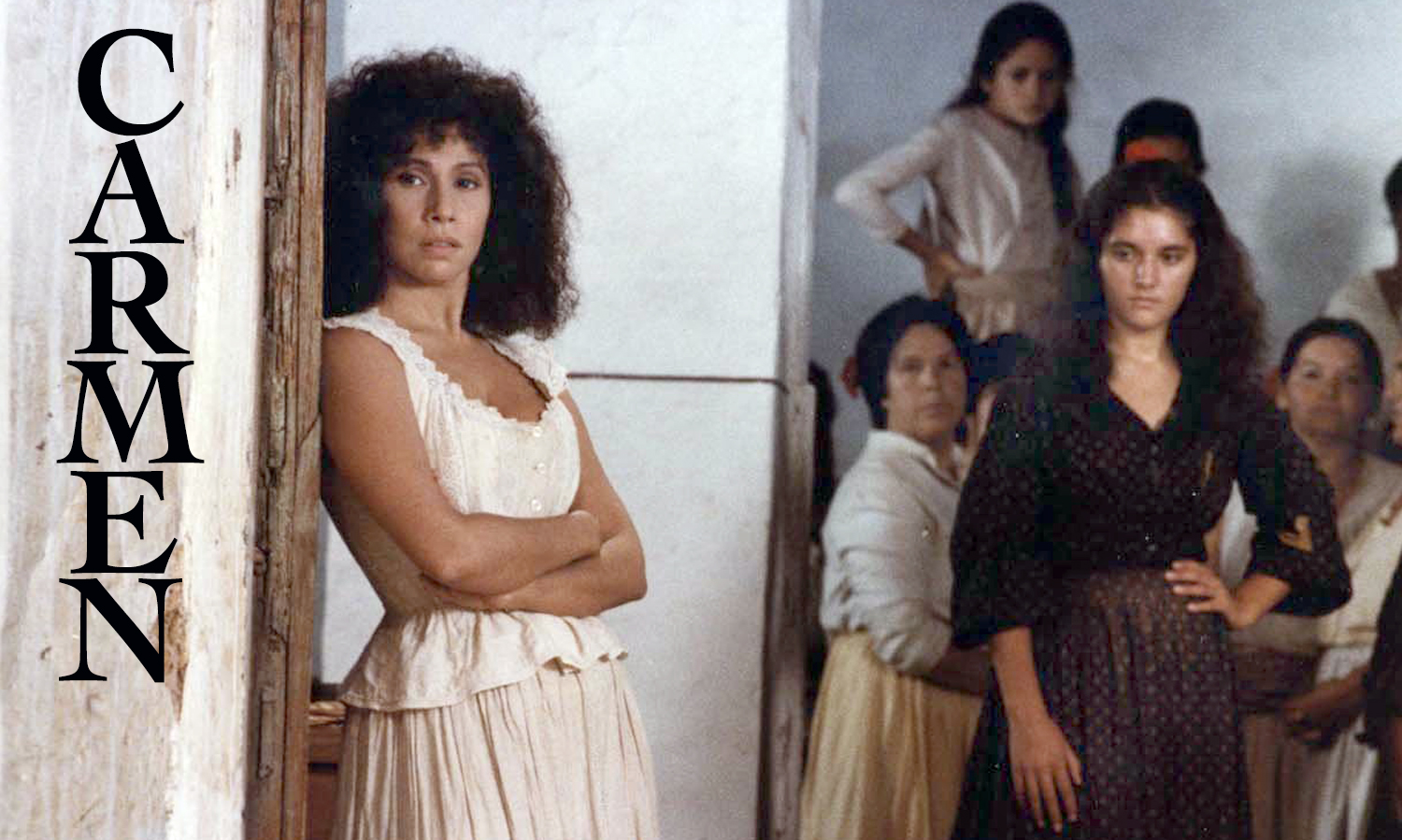
The soldier Don Jose falls for the sultry Gypsy, Carmen. She throws him over for the handsome matador. Don Jose kills Carmen. Simple enough, but what melodies. Georges Bizet wrote it in 1875 and died soon after, never knowing it would become one of the three or four most popular operas ever (the famous “Big Three ABCs” being Aida, Boheme, and Carmen).
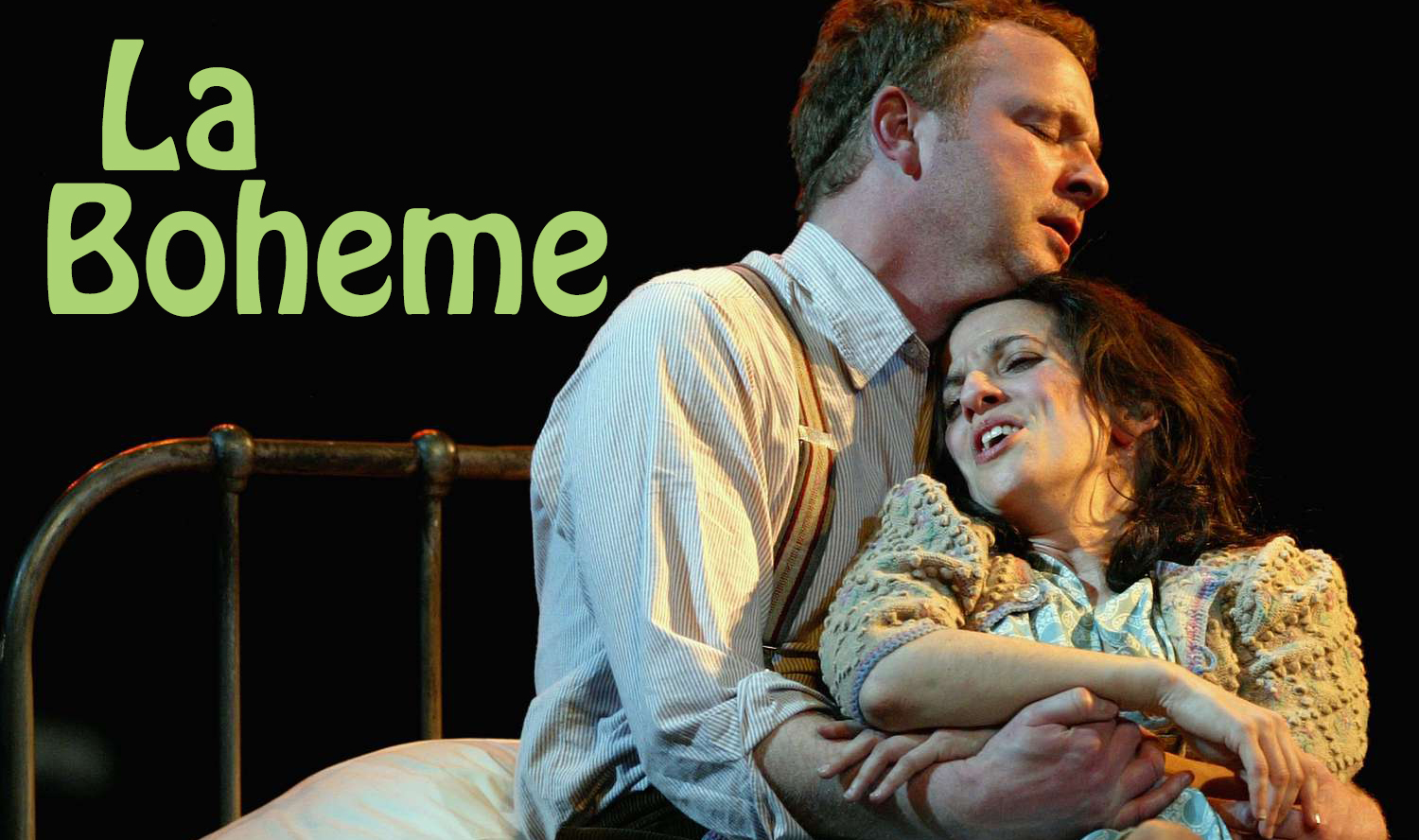
One of the great tearjerkers of all time, La Bohème (“The Bohemian Life”) by Giacomo Puccini, from 1896, follows four impoverished Parisian artists living in a garret, and how one of them falls in love with a sweet young doxie living upstairs, named Mimi. They sing, they party, they fall apart, they lament and then she dies of consumption. This is an opera that even people who hate opera love. How can you not?
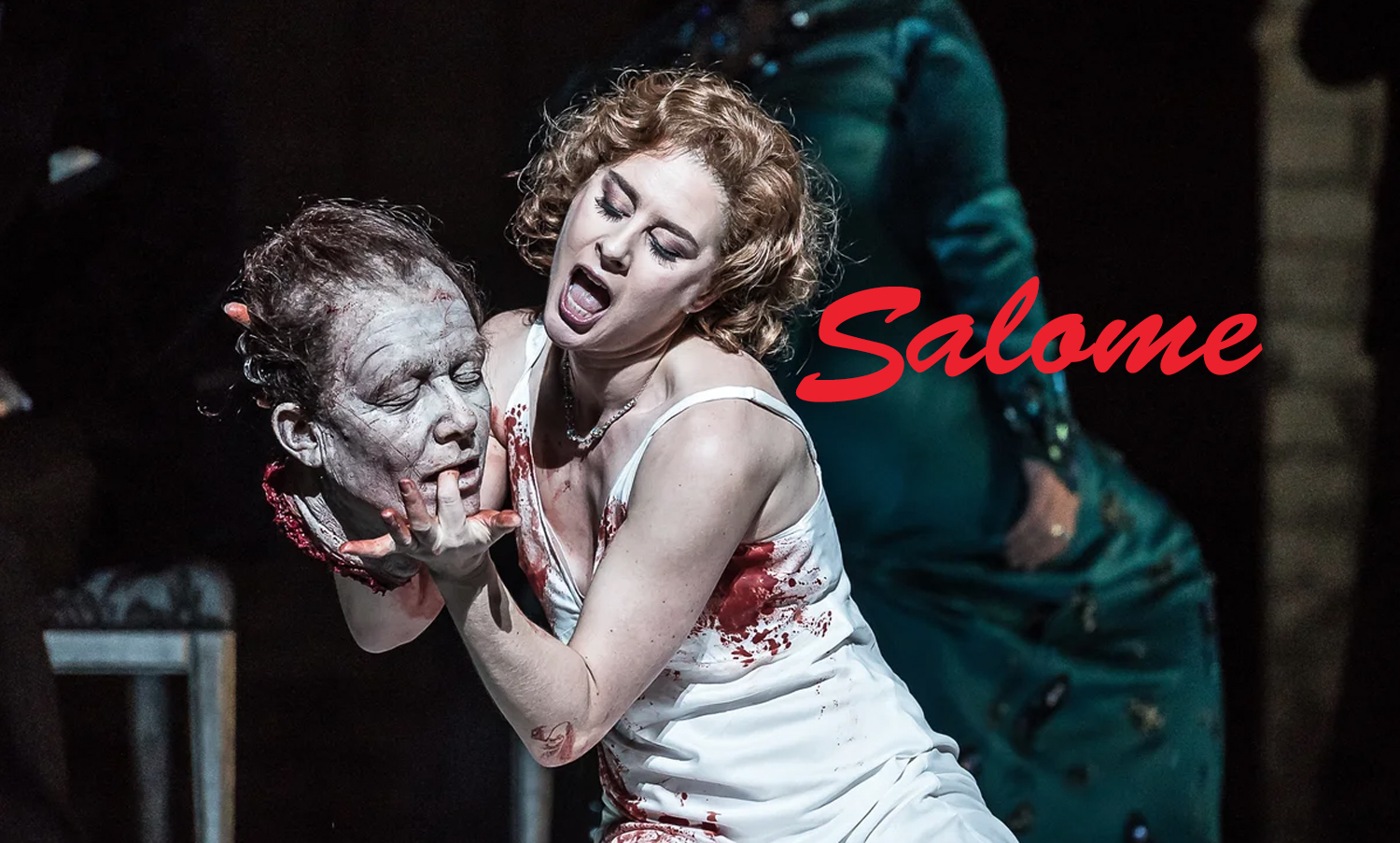
The 20th century took a darker turn. In 1905 Richard Strauss premiered his opera about a dysfunctional family and the prophet John the Baptist, in which the king’s daughter does a kinky strip tease for her father and winds up kissing the decapitated head of the prophet. The opera was banned in many countries, for both blasphemy and obscenity, but it is now always guaranteed to fill seats.
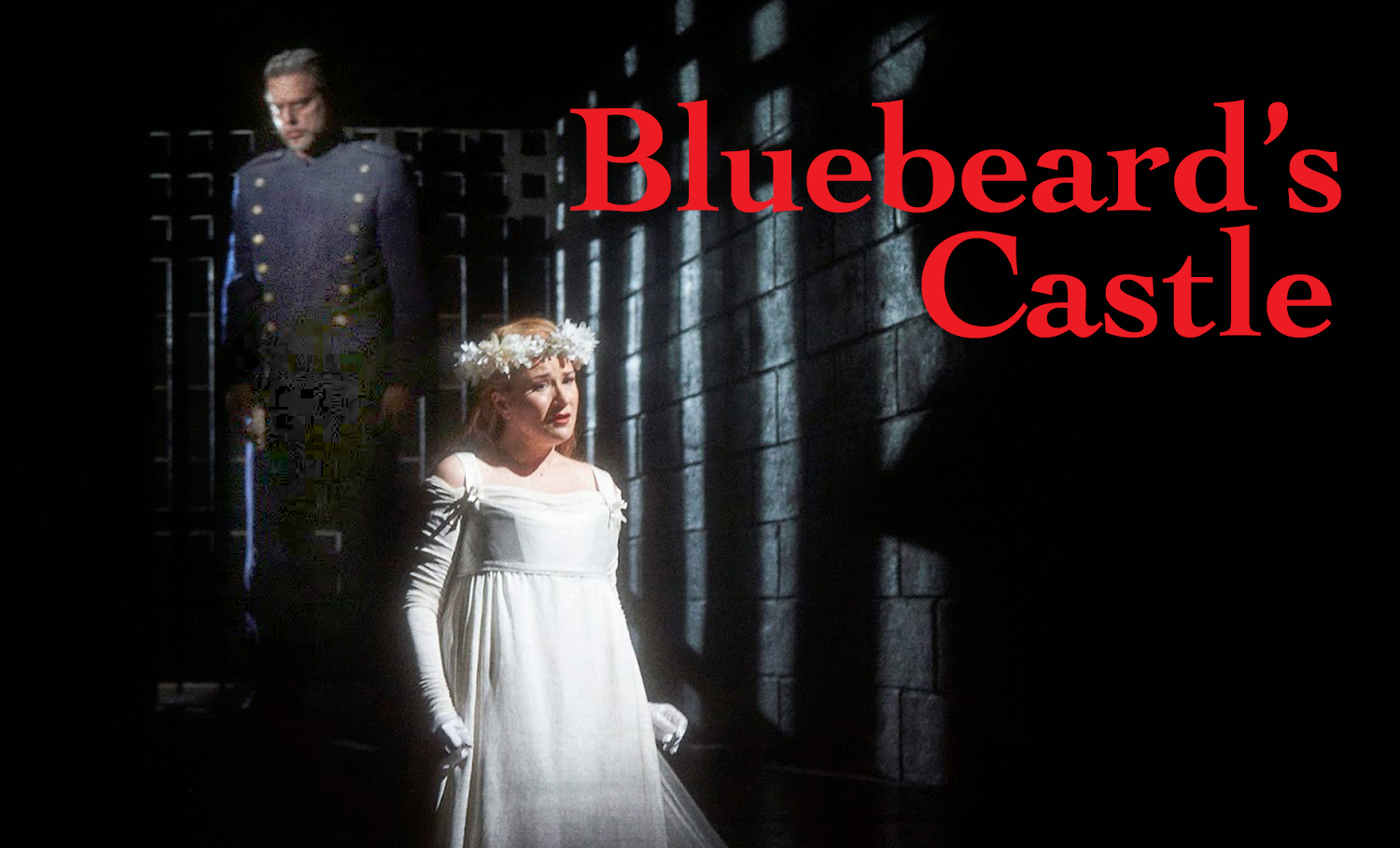
This short, one-act, two-singer Symbolist opera by Bela Bartok was written in 1911. The Duke Bluebeard takes his new wife to his gloomy castle and forbids her to open seven doors, which, as any wife would, she proceeds to open, one by one, discovering dangerous hidden secrets of her spouse. The work was slow to catch on — it’s Austrian premiere wasn’t until 1978 — but it now has over 30 recordings. Beautiful and creepily atmospheric.
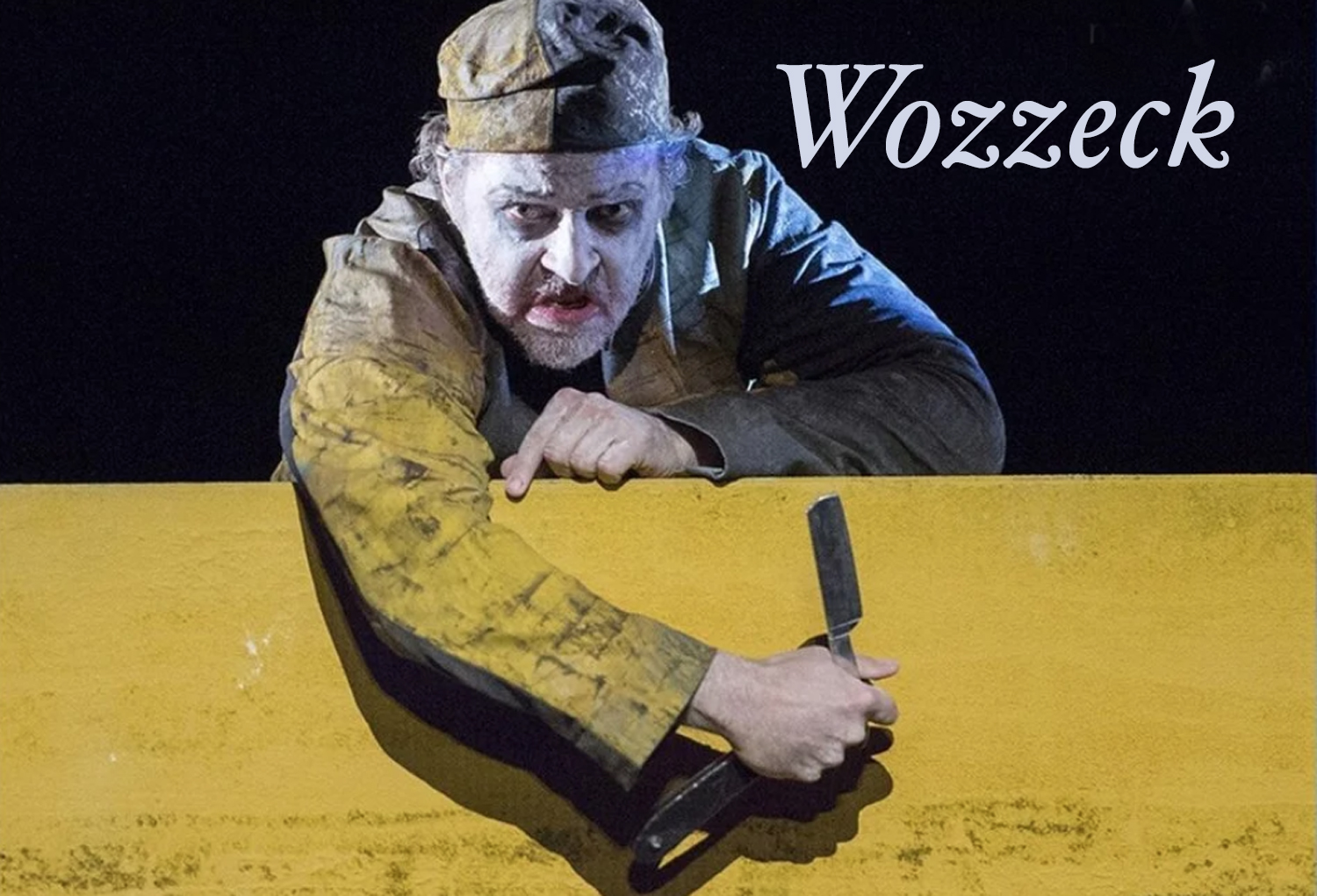
There are few “perfect” operas. Most have a few dull moments, or plots that make no sense, but the deeply disturbing Expressionist Wozzeck is as close to perfect as possible. Alban Berg’s complex work, premiered in 1925, tells a story of a miserable German soldier and his unfaithful wife, and the murders that result. The music matches the story perfectly, and if the final scene — what might be called “pressurized empathy” — doesn’t leave you in horrified tears, you haven’t been paying attention.
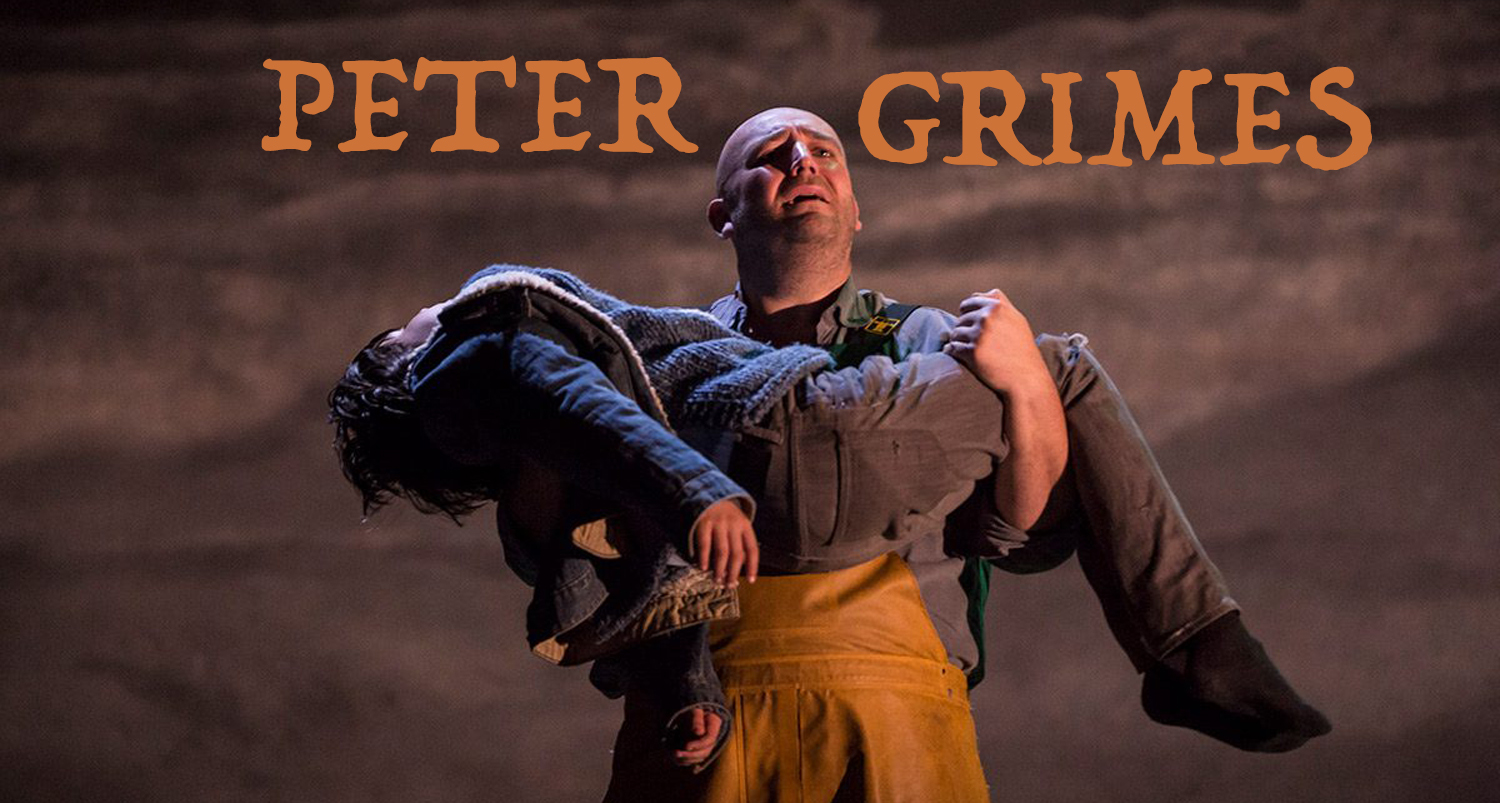
Peter Grimes is an unpleasant English fisherman whose apprentice has died. Many in the village believe Grimes has murdered him. When a second apprentice also dies, apparently by accident in Act Two, Grimes, who has never had a sure grasp of his mind, is hounded by the villagers to his death at sea. Or not. It is implied but not shown. This is an opera of implication and innuendo, of outsider and mob. Different productions take different sides, and so do audiences. In some productions, he is actually a murderer, in others the audience sympathy is all toward the unlucky outsider. The opera, by Benjamin Britten, was premiered in 1945.
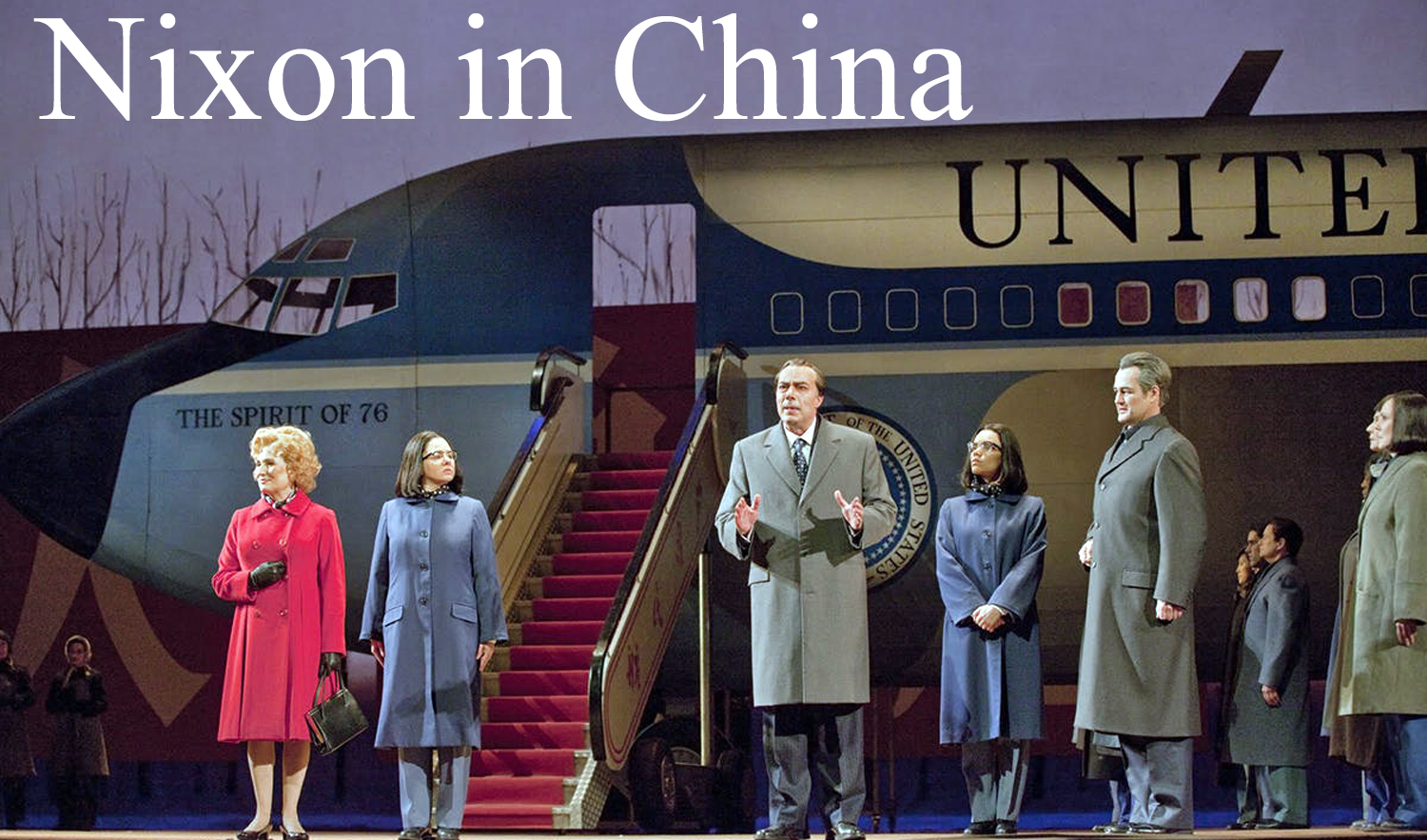
Whatever else you think of Richard Nixon, he is the only recent historical figure that could warrant a Shakespeare play. What he does get is John Adams’ 1987 opera Nixon in China, about the president’s 1972 visit to Beijing. Nixon, his wife, Pat, Chou En-Lai, Mao Zedong, and Madame Mao all have moments that illuminate their inner thoughts, and then there is a Chinese ballet in the second act and a lot of pageantry, and a surprising number of truly memorable arias.
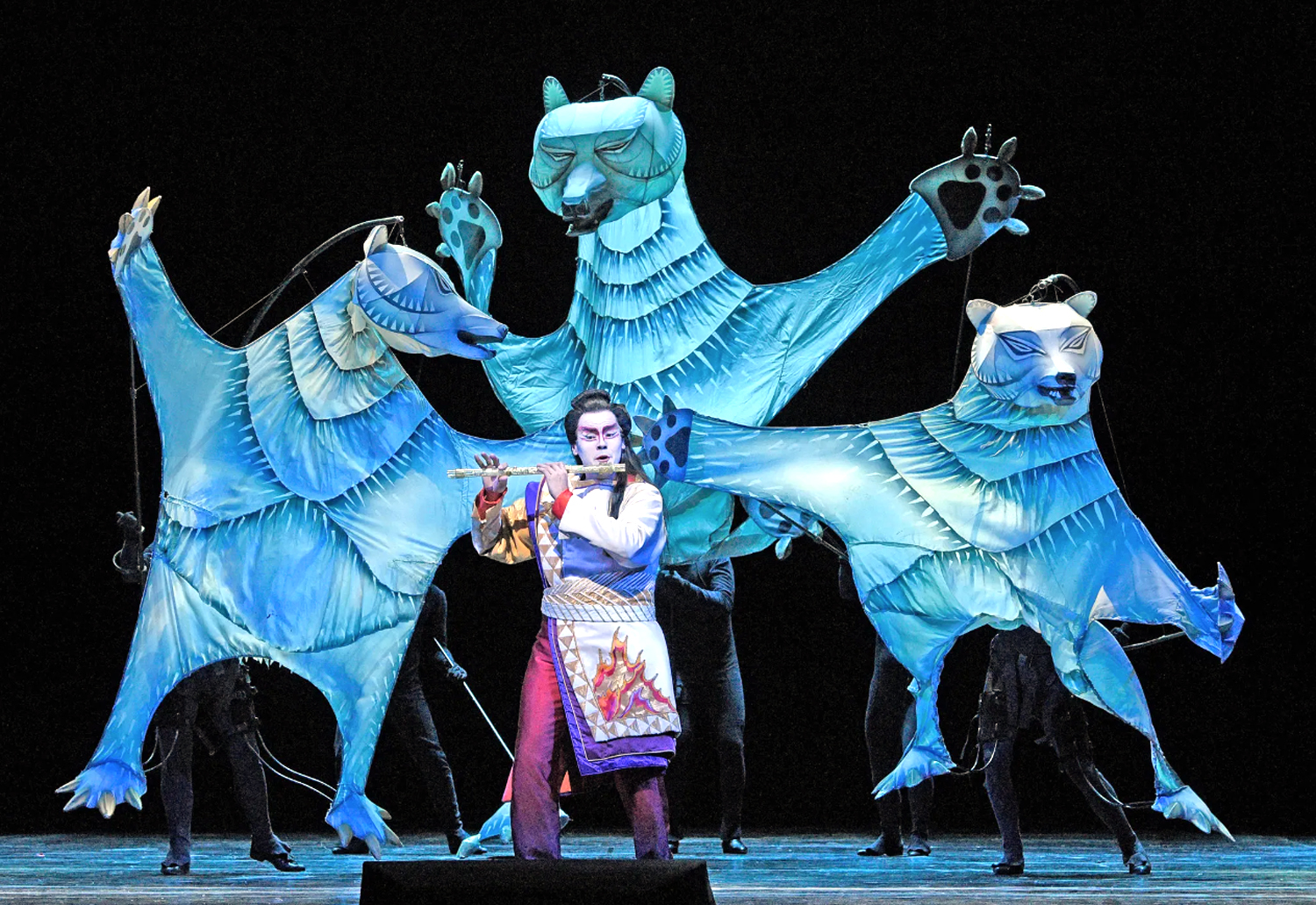
I want to make a special pleading for the Metropolitan Opera’s production of the Julie Taymor Magic Flute. It is a shortened version of Mozart’s most popular opera, with all the stage magic and glitter an opera can offer, and aimed especially at younger audiences. Nobody doesn’t like Taymor’s Magic Flute.
PART 3: OPERA WORDS
A glossary of opera terms
Aria: An opera singer’s solo — a song on steroids.
Baritone: The second lowest male voice, usually a villain.
Basso: The lowest male voice, when not a villain is usually a king. Sometimes both.
Bel Canto: Italian for “showing off.” A type of Italian opera with especially florid vocal writing.
Buffa: Comic.
Castrato: A male soprano, made so by the once popular practice of castrating teenage boys before their voices cracked. A practice now generally frowned upon.
Chamber operas: Works with a small cast and a small orchestra.
Chest voice: The deepest and strongest register of a voice.
Coloratura: A singer specializing in vocal acrobatics.
Comprimario: Sidekick.
Contralto: The lowest female voice, often used for earthier, sexier parts, rather than the “good-girl” parts the soprano gets stuck with.
Counter-tenor: When not enough boys volunteered to be castratos, they settled for tenors who sang falsetto.
Da Capo: (“from the top” in Italian) – a term used to describe an aria in two parts that circles back to the first part before it finishes.
Diva: A celebrated female singer, aka pain in the neck.
Fach: Pronounced as if you are clearing your throat; it is the term for the subcategory of voice types: a light soprano or dramatic soprano; a spinto tenor or a heldentenor (heroic tenor).
Gesamtkunstwerk: Richard Wagner’s word for the “complete art work”; an opera in which the words, music, staging and choreography are all created by the same monomaniac.
Grand Opera
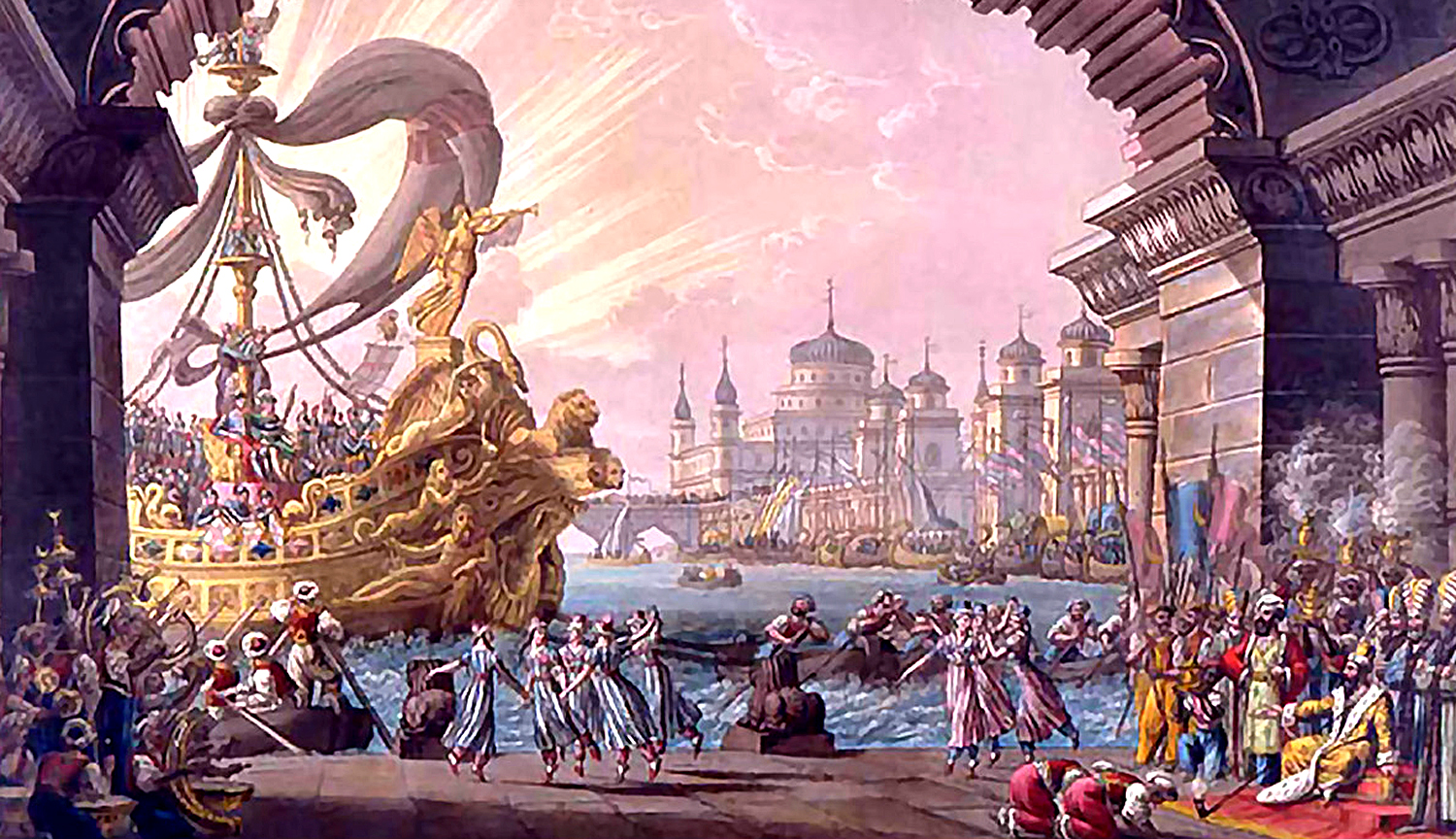
Grand Opéra: Opera with elephants, or lacking that, large ships, and with elaborate scenery and costumes, telling an epic or historic story, with added ballet. Once popular in France.
Habanera: A type of Cuban dance in a swinging rhythm made famous by Carmen.
Head voice: The highest, emptiest register of the human voice. The singer’s ability to switch from chest to head tones without anyone noticing is especially prized by opera connoisseurs. Whole reviews are based on whether this occurs in a performance or not.
Leitmotiv: A tune that keeps coming back, like cucumbers. It signals a character or event. If you know Darth Vader’s tune from Star Wars, you know how a leitmotiv works.
Libretto: The words.
Mezzo-soprano: The midrange of the female voice. Mezzos often play either the heavy or the “trouser role,” i.e., a cross-gender part in which they pretend to be young males. Kin-ky. Hence the saying that mezzos play “witches, bitches and boys.” Carmen is a mezzo. She is not a boy.
Minimalism: a compositional style from the late 20th and early 21st centuries, with a lot of repetitive note patterns, and note patterns that are repeated, and patterns of notes that are repeated, and slightly changed.
Number opera: An opera with discrete arias and ensembles, each of which is numbered in the score.
Opera: One syllable or two? Opp-ruh, or Opp-uh-ruh?
Opera Seria: (“serious opera” in Italian) – an opera based on a serious subject, often historical or mythological, sung in Italian. Someone usually dies.
Opera Buffa: (“funny opera” in Italian) – an Italian opera that tells a humorous story, with roots in early-18th century Naples. Usually, no one dies.
Opéra Comique: (“comic opera” in French) – a style of French opera, often with serious stories, despite its name.
Overture: The music the orchestra plays while the audience reads its programs.
Prima donna: The star.
Recitative: Pronounced “retch-ta-teev” and for a reason. The parts that would be spoken in a musical, but are sung in a quasi-singsong fashion in opera.
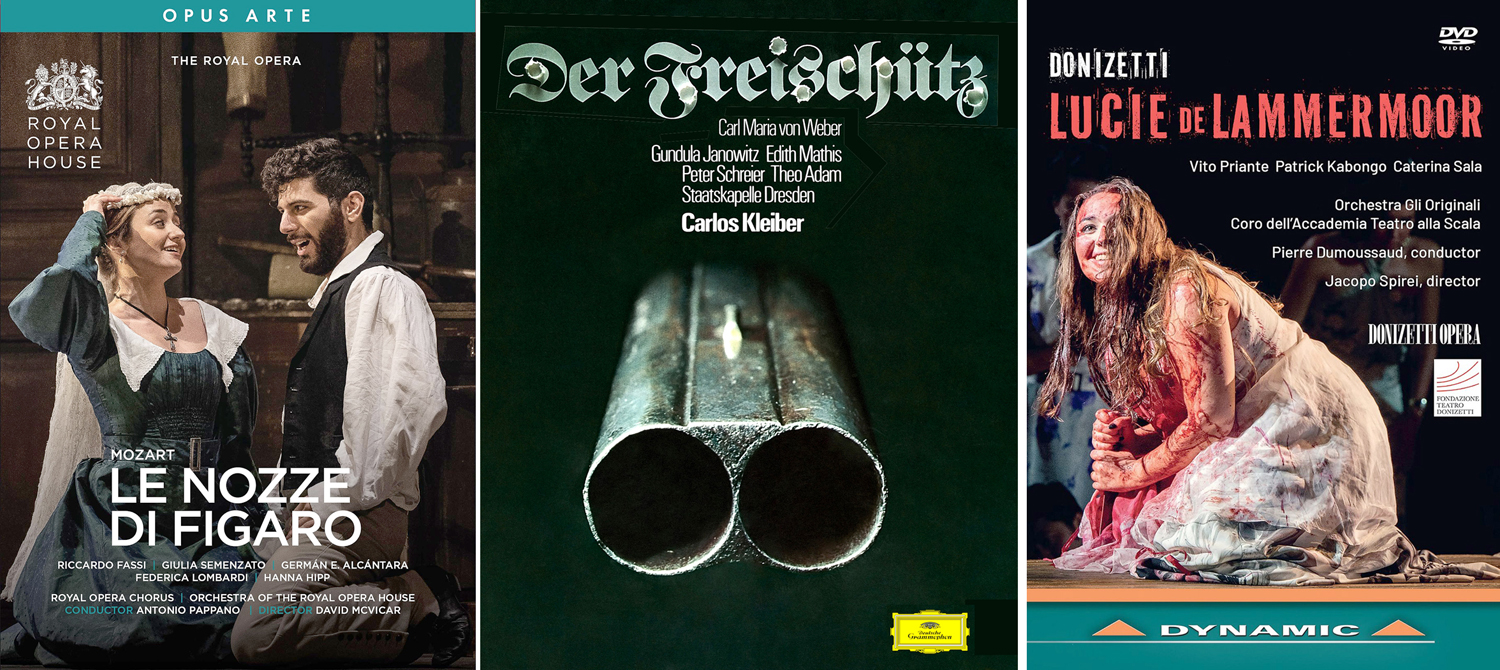
Regie oper: Literally, “Director’s opera.” A recent trend where the person in charge of the production places his ego center stage and leaves the music taking a back seat. It tends to mean placing Figaro in a subway station or Tosca on the moon. It is a fad; it will pass.
Rescue Opera: TV sitcoms are not the only art form with familiar plots reworked to death. Usually the hero rescues the fair maid.
Singspiel: A kind of German opera in which audiences don’t have to endure recitative.
Soprano: The highest female voice, reserved for heroines, because the high voice is best for expressing distress.
Sprechstimme: An early form of rap, when the singer half-sings, half-speaks the words. Especially popular in German Expressionist operas.
Tenor: The high male voice, usually the hero and usually half the size of the heroine.
Verismo: An Italian style of opera that tells stories about regular (i.e. poor) people and their jealousies and betrayals. Usually ends in a murder.