I’m tired of hearing that we live in a visual culture. The fact is, we are generally very bad at seeing. I am constantly reminded of this by bad signage, bad book design, bad photographs, and bad TV. To say nothing of the horror that is TikTok.
It may be true that we like to use images instead of text whenever we can, but we also tend to treat the images as if they were text: That is, we turn them into the equivalent of hieroglyphs or rebuses. Hence the popularity of emojis.
But seeing a picture of a house and thinking “house,” is really just turning a picture into a word. Yes, no alphabetic letters need be used, but the information conveyed is basically the same. That is not seeing; it is translating.
I am reminded of this because of a frequent problem I find on some back-channel TV stations when they broadcast a program in the wrong aspect ratio. It is a visual goof that bothers me no end, and yet, so many people, when I point it out, simply don’t notice it. Faces can be squeezed thin or stretched fat and the visual-verbal translation isn’t affected, and therefore, not noticed.
Believe me, I’ve been laughed at for fussing over aspect ratio. But how can people not SEE? The visual information is distorted even if the verbal information is left unbothered.
Aspect ratio is simply the ratio of the width of an image compared with its height. A square is the same in both measurements, and hence, its ratio — its aspect ratio — is one-to-one — 1:1.
If a rectangle is twice as wide as it is tall, its aspect ratio is 2:1.
When photographs are made, or films or TV is shot, they are created in a particular aspect ratio. For instance, for decades, the standard aspect ratio for Hollywood films was 1.375:1, which was adopted in 1932 for the entire industry. Before that, silent films were mostly shot in a 1.33:1 ratio, which can also be stated as a 4:3 ratio, which corresponded to four sprocket-holes on standard 35mm film. But when sound was added as an extra track alongside the image on the film, the picture had to be made a wee bit smaller to accommodate, and hence, the 1.375:1 ratio.
That all sounds very technical and who cares? Well, what happens, then, when you display an old film on a new TV, which are now standardize at an aspect ratio of 16:9, a “widescreen” ratio? When done right, you get a “letterboxed” image, with black bars on either side of the picture. When done wrong, the squarer image is stretched out to fill the wider screen and you get a lot of fat people.
This used to be a big problem in the early days of digital television, when many stations heard complaints about those letterboxed images. The response was to crop the movies down to fit the screen, losing a good bit of visual information in the process (a process dubbed “pan and scan”), or — too often — just stretch it all out to fit. To anyone sensitive to visuals, this was a nightmare. But again, many people — especially at the TV stations mutilating the images — just didn’t seem to think it important.
The reverse also happens when a real widescreen movie (some films are made in aspect ratios wider than 16:9, such as the 2.4:1 of the most widely used widescreen movies. Then, shown on a standard TV screen, you get everything squished down.
Many of these widescreen movies were shot with anamorphic lenses, which allowed for a wider image to fit onto a narrower piece of film. In essence, they squeezed the picture thin on purpose, and then when it was projected in a theater, a reverse anamorphic projection lens would spread the image back out to its natural dimensions. Tons of films were made (and are made) this way.
The problem shows up with DVDs, too. Some are produced in a natural aspect ratio, usually 16:9, but others, mostly older ones, were created anamorphically, and so you may need to use your remote to find the proper aspect ratio (or “screen size”) for the disc. If not, you watch squeezed people.
I remember when my college film series showed a version of Bad Day at Black Rock but didn’t correct the anamorphic images. We watched the whole movie distorted into a squished frame. It was nauseating, at least to me. The projectionist, when this was pointed out, said he didn’t see what I was talking about. (The same projectionist showed Birth of a Nation with the music track turned off because “it’s a silent film.” There is no accounting for how these people get in charge of things.)
Most all of us have something like this, which bothers us no end. For some it is bad spelling or incorrect grammar. For others, it is making too much noise when eating soup. Others still cannot bear canned laughter on sitcoms, or the superfluous chyrons streaming across the bottoms of cable newscasts, telling us exactly what the speaker is saying. We can hear them, you know. You don’t need to spell it out.
Anyway, one of those irritations that just drives me nuts is the inability of so many to actually notice when the picture has gone bad on their TV. The wider the original, the squishier the mistake. I remember seeing an early broadcast of The Good, The Bad and The Ugly scrunched into an old cathode-ray TV screen, like a closed accordion, and I thought, “How can poor Clint Eastwood even breathe?”
The aspect ratio problem, though, is really just a symptom of a wider issue: that too many of us are just bad at seeing, of not paying attention to what our eyes are telling us. It is the translation problem: We don’t see to see, we see to extract only so much information as we feel we need. If we can follow the plot with skinny people, then good enough.
But seeing isn’t just about keeping track of the story. It is about being alive in the world, of noticing everything around you, of taking in what existence gifts you with. The green of a tree, the roundness of a tire, the texture of denim. To notice is to be alive; failure to notice is deadening.
Art, and I include even popular art, is there to remind us of, and to interpret, the world we live in and the lives we lead. The best art slaps us awake, the way the slap of the doctor makes the newborn take its first breath. We can see what we had taken for granted, we can reinterpret what had become habitual. Failure to use your eyes is to refuse a gift being offered by existence.
I have lived in all four corners of this country: in the Northeast until I was 17; in the South — for the first time — until I was 30; in the Northwest for a bit more than a year; back in the South until I turned 39; moved to the Southwest until I was 64; and back, finally, to the South. I am now 74. And so, I’ve lived in the American South longer than anywhere else, and while that does not give me the right to consider myself a Southerner (you have to be born here for that — maybe even your granddaddy had to have been born there for that), I have come to have a complex and conflicted love for the region. The South has a mythic hold on the psyche that no other region can match.
Oxford, Mississippi
Perhaps the biggest problem in dealing with the American South is that there is no good way to separate the reality of it from its mythic power. Other regions have their myth, too, for sure. There is a Puritan New England, and there is the Wild West, but both of those have an element of legend to them — they are made up of familiar stories, whether of pilgrims debarking at Plymouth Rock, or Wild Bill Hickok playing aces and eights. These are stories that get repeated and we presume they tell us something about the character of the inhabitants of these regions. But the South is not built of stories, but of myth, which another thing entirely.
There is something external about stories and legends; myth is born from that place in the psyche that Carl Jung called “the shadow.” Stories are told; myth is felt. It is something profound but unexamined — it is the sense of significance, of meaning, even if we cannot exactly put our finger on any specific meaning — the way a dream can feel significant, even if we don’t know why.
Windsor Ruins, Mississippi
And there are at least four conflicting myths about the South, which can overlap. There is the “moonlight and magnolias,” which is now and has always been bullhockey; there is the redneck South, riven with poverty, ignorance and superstition; there is the Black South, which has its own subdivisions. And then, of course, there is the “New South,” with its Research Triangles and its civic progress.
Yanceyville, North Carolina
The first is the bearer of the Lost Cause, a self-deluded sense that the Old South was a place of gentility and honor; the second includes both the rural farm South and the Appalachian hillbilly; the third is counterweight to both of the first two, and yet, is also the power-grid on which the first two run — it is there behind all of it.
And lastly, if you have ever watched a new butterfly wriggle slowly, struggling out of its chrysalis, seeming to be stuck halfway, then you have a pretty good image for the New South trying to leave behind the problems of the Old. The Old is unwilling to let go.
Because history is the foundation of Southernness.
Zubulon Vance birthplace, North Carolina
When I first arrived in the South, in 1966, one of the first things I saw on driving into the campus of Guilford College, in Greensboro, N.C., was a giant banner hanging out of the third-story window of my dorm with “Forget? Hell!!” written on it in gigantic hand-scrawled letters written on a bedsheet. It was my introduction to the sense of grievance that has ridden the back of the South since the Civil War. It is a sense of being put upon by others, of having been defeated despite the assumed bravery, honor and courage of the soldiers attempting to protect the South and its heritage. Of course, this is all myth, but myth is a powerful driver.
In Homer’s Iliad, when two soldiers meet on the fields outside Troy and are about to beat each other into bone-snapping pulp, they first stop to tell each other their genealogy.
“And the son of Hippolochus answered, ‘Son of Tydeus, why ask me of my lineage? … If, then, you would learn my descent, it is one that is well known to many. There is a city in the heart of Argos, pasture land of horses, called Ephyra, where Sisyphus lived, who was the craftiest of all mankind. He was the son of Aeolus, and had a son named Glaucus, who was father to Bellerophon, whom heaven endowed with the most surpassing comeliness and beauty’…” And this goes on for another 30 lines, explaining the history of his family from its origin among the gods. No one is merely an individual, but rather the tail-end of a long history, known to both the warrior himself and to his foe.
Bell Family, Mayodan, North Carolina
This sense of history is rife in the American South, too, and the Civil War takes the place of the heights of Ilion.
My late wife, Carole Steele, was born in North Carolina and learned about the war first-hand from her great-grandmother, Nancy Hutcherson Steele, who was 10 when it began. She had plowed the fields during the war while her father and brothers were away fighting. When she died at the age of 98, she did so in my wife’s childhood bed in a small house on the banks of the Dan River. Carole was 8 at the time.
Steele family, just after Civil War
The confluence of childhood and history formed the seed of the poetry she wrote. The blood in her veins was the blood in her father’s veins, in her grandfather’s and great-grandfather’s. History, blood and identity flowed like a river.
“My father’s blood is always a river/ rushing to his mind/ igniting diamonds,” she wrote. She called the sense of history being alive in the genes the “long man,” an identity stretching across centuries.
Carole described the feeling in several of her poems. One describes the feeling of being in the South and reads, in part, “It was for the wasps/ singing in the rotten apples/ under the trees,/ the sweetish smell/ of rabbit guts and/ frozen fur stuck to the bloody/ fingers/ and frost on the stubble,/ the dipper and the well,/ tobacco juice in the privet hedge,/ and liquid night/ the muted rumble/ of old voices/ at the kitchen table/ drifting up the wooden stairs”
I learned from Carole and her family, that there is usually a deep sense of belonging that Southerners feel: The second pillar of Southernness is place, and what is more, place and history are almost the same thing. A genuine love of the patch of ground where they grew up, a love like you feel for a parent. It is a love of where you were born that may not extend beyond the town or county and maybe the state. But for Carole, Rockingham County was where her father and grandfather were buried. Another poem ends: “your Daddy is a fragrance/ gathered in the peach trees/ over there.”
That fact alone meant there was an unseverable umbilical connection to that omphalos, that tiny patch of Piedmont, those trees, those creeks and rivers, those very weeds that crept over the edges of the crumbling pavement on the back roads. It is the feel of the red clay between your fingers, the blackbirds roosting by the hundreds in the oak tree. Home.
And, in the meantime, the blood of countless slaves and freedmen enlarged the tragedy of the South. There were lynchings and later the violence of the civil-rights movement.
Mobile, Alabama
It isn’t only rancor and slaughter that give the South its sense of history, but the land itself. You can stand in a cornfield in rural Sprott, Ala., 25 miles north of Selma, and see the stand of trees at its border, knowing the trees are no more than 60 years old. And that before those trees began filling in the countryside, there were cotton, sharecroppers and poverty. A dilapidated wooden shack sits in the middle of the woods, and you wonder why anyone ever built there.
Then you recognize they didn’t. The sharecroppers’ home — just like those written about by James Agee in his Let Us Now Praise Famous Men of 1941 — was built by a cotton field, but times change and history presses on and the fields are now woods.
Sprott, Alabama
There is history elsewhere in the country, too: Bunker Hill, Mass., Fort Ticonderoga in New York or Tombstone, Ariz. But they are singular places you go to visit — somebody else’s history. The South is so full of history that its land and people seem buried under the sense of it.
The first democratic legislature in the New World was Virginia’s House of Burgesses. The author of the Declaration of Independence was a Virginian. And the Revolutionary War came to a close at Yorktown, Va.
Shiloh battlefield, Tennessee
Each state has its Civil War sites, where thousands of its men are buried. There are the street corners where civil-rights workers were hosed and beaten by police. Cotton fields where slaves were whipped. It is interesting that the one place in the country where Black and White share the most is the South.
For most Americans, history is a story told in a schoolbook. It seems removed from the lives we live. For most Southerners, history is something their grandparents did or was done to them.
And I, of course, have come late to this epic, first in 1966 when segregation was officially illegal but still largely in effect. The local barber shop would not cut a Black man’s hair; “We were not trained how to,” the barber explained, weakly and not very convincingly.
Jim Crow was so unconsciously buried in the White brain that a local ministry could, with no irony, proudly boast that it offered help and aid to “the alcoholic, the prostitute, and the Negro.”
After graduating from college, I eventually found work writing for the Black weekly newspaper in Greensboro, N.C., The Carolina Peacemaker, where I found myself writing editorials for the city’s Black population. It felt strange to do so, but I never felt less than completely welcome. When I visited the African Methodist Episcopal church, I was invited in with a warmth I never felt in New Jersey — and, I might add, magnificently fed in the church basement after the service. Clearly the resistance to change in the South was a one-way thing.
My daughter, Susie, who is also a journalist, worked in daily papers in Jackson, Miss., and Mobile, Ala., also started on a Black weekly — the Jackson Advocate, in Mississippi, where she had the same experience I did of welcome and inclusion.
I did not find that sense in 1967 when I and a few of my college friends attended a Ku Klux Klan rally in Liberty, N.C. There, the sheriff of Forsyth County gave the keynote harangue with tales of Africans feeding their babies to crocodiles, and how Africans still had the “stub of a tail.” The smell of alcohol was pervasive, and the festivities ended with the circling and burning of a 30-foot cross, built of intersecting phone poles set alight with poured kerosene. Meanwhile, a scratchy recording of The Old Rugged Cross played on a miserable loudspeaker system.
Later, I covered the followup to the 1979 Klan shootings in Greensboro. Klan members and American Nazi Party members were acquitted for the killings of five protesters. The city police were claimed to have colluded with the Klan, and 25 years later, the city apologized. So, the recent rash of police violence against people of color comes as neither surprise nor shock to me.
Yet, I love the South and choose to live here. It fills my mythic life also. In the 1970s, it was the Eden from which I was exiled. I was setting roots and rhizomes in the soil of the house I shared with the woman I expected to grow old with. It was the paradise garden: In the front yard was an Yggdrasil of a shaggy, ancient black walnut tree, covered in moss. In the back yard was a pecan tree. There were two fig trees from which we ate fresh figs. There was a vacant lot next door with an old pear tree. A chinaberry grew on the street side. And a proud row of the most brilliant red maple trees along the road, changing reds throughout the year — buds, flowers, leaves, branches, each with their own ruddy glow.
There were lilacs beside the house, wild Cherokee roses along the driveway, random chickory spreading blue along the foundation. Between our yard and the vacant lot, I counted more than a hundred species of weed — or rather, wildflower — with my Peterson Guide. I grew a vegetable garden with beans, peppers, eggplants, okra and tomatoes.
There were mockingbirds that I trained to whistle, pileated woodpeckers that would climb the pecan tree. Crows, owls, cardinals, sparrows, redwing blackbirds, the rare ruby-throated hummingbird. Circling overhead were buzzards and hawks. There were butterflies and beetles. Ants highwayed up and down the walnut tree. A luna moth sat on the screen door.
We lived there for seven years, digging our feet deeper into the soil, until the Archangel Michael came brandishing his sword: My love left me suddenly and I left the house. And I left the South.
When I returned, some years later and bearing with me a numbed depression, I was taken in by my college friend and his wife, and a second, shadow-Eden was set in Summerfield, N.C., in an old house with only a wood stove for heat, and three great ancient oak trees in the back. I walked through the woods behind the house and into a small ravine — the petit canyon — and soaked my loss in the loam and leaf litter.
The thing about depression and myth is that they play into each other. It isn’t so much that depression makes you the center of the universe, but that it wipes away everything else, leaving only yourself and your loss. You are forced to experience your life at a mythic level and for me that meant the land, its history and its people.
New River, Ashe County, North Carolina
I recovered, moved to the Blue Ridge Mountains when I was invited by Carole. The house was on a bluff above the New River, with a dark green patch of pine trees on the hill and an unmowed grassy field on the other side of the house. I could stand at the kitchen sink, doing dishes, and watch the weather shift over the peak of Mt. Jefferson, five miles off to the north.
Ashe County, North Carolina
Together we moved to Virginia, where Carole taught in Norfolk and I taught in Virginia Beach. Six years there, with much travel around the country. When Carole got a job offer in Arizona, we moved, lived in the desert for 25 years and when we both retired, moved back to North Carolina, to be near our daughter.
Swannanoa Mountains, Asheville, North Carolina
It’s been 10 years now, and five since Carole died, and I have hunkered down in Asheville, at the foot of the Swannanoa Mountains, and feel as if I am where I belong. The trees and birds, the weeds and the occasional wandering black bear, the snow on top of the hills, the barbecue joints and auto parts stores.
Age has a way of deflating myth. When I was in my 20s, the world seemed aglow, lit from within by a kind of mythic importance. The South had that glow: its people, its landscape, its history. I have come back to the South after a quarter-century in the desert. It has lost some of its oneiric power, as, indeed, the world has in general. But the South feels comfortable and human and my children and grandchildren all live here and I cannot imagine living anywhere else. I burrow in and pull its blankets around my shoulders.
It’s not easy being an English major. Our ears are constantly battered, our eyes poked by print and bad signage. And what we love is daily assaulted by those who don’t even understand that they are doing violence to their mother tongue.
Yes, I know. We each have our cross to bear. Those talented with numbers watch with sadness America’s poor math scores. Those who can draw are dumbfounded by the lack of visual literacy in our population. Those with the musical gift watch pop stars who require autotune to hit pitch.
But the curse upon English majors is to hear TV newscasters mangle the language, politicians utter pious and meaningless gobbledy-gook, advertisers hollow out their words to imply what isn’t there. Most of these people should know better; they are too often deliberately subverting the language for some personal gain.
And beyond that, there are common solecisms one encounters daily. How many times do e-mail writers confuse “there,” “they’re,” and “their?” Or someone order an “expresso” at Starbucks. Or hear the personal pronoun “I” used in the objective case — as in “Jessica gave her tickets to Tracy and I.”
We English majors cringe.
I am not talking about a simple slip of the tongue, or, in print, a typo. Typos happen. I don’t know how many times, when working for the newspaper, I got phone calls or e-mails asking, “Don’t you people have proof readers?” But you try putting together the printed equivalent of a new novel every day without having the occasional misprint. It happens. A certain forgiveness is essential for living a graceful life.
But I’m not talking about that. Typos happen once and don’t typically get repeated. I’m talking about misusing English habitually.
Please don’t mistake me for the language police. I am a devout descriptivist, not a prescriptivist. Language is governed by usage, not rules. But some distinctions still need to be made for clarity. And while some usages may be changing, others remain a norm and to ignore them is simply illiterate.
Indeed, speakers and writers all cause frequent flinching from those of us attuned to the mother tongue. In our household, we find ourselves yelling at the TV screen every time a talking head says “less people are moving to the cities,” or “the problem centers around …” or “none are …” Often in unison, we will yell at the screen, “None IS!”
There are a bunch of issues that seem widespread in speech but also in print. Rampant apostrophes; excessive exclamation points; typing in ALL-CAPS.
There are words whose meanings are just not understood and used in jarring ways. “Enormity” does not mean “big.” An “epicenter” is not a fancier word for the “center.” To “beg the question” is not to “raise the question.” Yet you hear these constantly. Oy.
There are common mispronunciations: “Mischievious” for “mischievous;” “nucular” for “nuclear;” “ek cetera” for “et cetera.” More flinching for us English majors.
I’ve got four primary categories for these grammar and vocabulary issues. There may be more, but these are the four that constantly grab my attention.
— The first we can dismiss pretty quickly. I’m talking about breaking the pedantic “rules” enforced by grammar Nazis — those who adhere to outdated strictures and feel it is their duty to point out the mistakes to their fellows.
These no-nos have been called “zombie rules,” and were devised mostly in the Victorian era by grammarians in pince-nez who tried to make English behave like Latin. Outdated ideas, such as that a sentence should not end in a preposition. That was never true for English. Just ask Shakespeare, or remember Winston Churchill’s famous “Ending a sentence with a preposition is something up with which I will not put,” to show how silly such an idea is.
The same for split infinitives. Let’s face it, “to go boldly where no man has gone before” does not mean the same thing as “to boldly go.” The first emphasizes the “bold” part, as if that were the important thing. But the true version, with the cloven infinitive, emphasizes the journey. There is a reason it was written the way it was. It was not a mistake or a solecism.
Such zombie rules need to be whacked into an open grave with the backside of a shovel.
We can still see the ghost of a few of these zombies as they dematerialize. The distinction between “who” and “whom” is now largely gone, left only for old schoolmarms to point out. “A lot” remains two words, but so many people write “alot” it may well enter the official language soon.
“Who did you give that to” sounds idiomatic, whilst “to whom did you give that” sounds stilted, even though the first breaks two rules at one go. Oh, and yes, “whilst” is just silly.
There used to be significant differences between “Can I go to the concert?” and “May I go.” But only the pedant points them out. The same between “I might go,” and “I may go.” In the past, you would find schoolteachers parsing the differences between “among” and “between,” and between “common friends” and “mutual friends.” Ask Dickens about that one.
— The second category includes common misuses that have spread virally. Some may eventually become part of proper usage, but as of now are still solecisms. There is a difference between “disinterested” and “uninterested.” Between “ensure” and “insure.” Between “further” and “farther.”
Apostrophes do not create plurals, yet sign painters seem to love to sprinkle them into their work. Holiday cards come with the message, “Greetings from the Connolly’s.” “We did a lot of drugs in the 60’s.” (Just move the danged apostrophe in that last one — “in the ’60s.” And because typing on computers makes it an extra step, try to avoid using a single open-quote in place of the apostrophe — not “in the ‘60s.”)
Words that are similar get confused: “discreet” and “discrete;” “flout” and “flaunt;” “foreward” and “forward,” “loath” and “loathe.” “Hoard” and “horde” (to say nothing of “hord,” used almost exclusively for “wordhord,” meaning “vocabulary.”) I knew a poor medical secretary who fought with a physician when she had dared correct a letter in which he had dictated, “keep you appraised of the situation.” She fixed it to “apprised,” and the doctor scolded her and retyped it “appraised.” Some of these things are stubborn.
I also remember a real estate sign I saw, advertising a “track of land for sale.” And politicians often like to take a different “tact” to a problem.
— The third group concerns idiom. If you want language to be logical and rational, you will have to give up on English — or any other language, for that matter. Idioms are common usages and they laugh in the face of logic.
A good deal of our speech consists of idioms, and if we don’t want to sound like someone for whom English is a second language, we have to let them through the gate. I’ve seen so many corrections yelled at “I could care less” — no, it is not the opposite of “I couldn’t care less,” it is the same, just as “flammable” and “inflammable” mean the same. It is an idiom.
After all, “window shopping” doesn’t mean you are shopping for windows. Idioms are just things that have slipped into our informal language over time, often unnoticed.
If you have “bought the farm,” it doesn’t mean you purchased property upstate to grow sorghum. Elbows don’t have grease. Whistles are not cleaner than anything else. Turkeys are not cold. Thunder cannot be stolen. Teeth have no skin.
It isn’t only English, of course. In Japan, if you “have a wide face,” it means you’ve got lots of friends. Why? Dunno. It’s an idiom. In Spain, to turn someone down is to “give them pumpkins.” In Portugal, if you treat someone especially nice who doesn’t need or deserve it, you are “feeding the donkey sponge cake.” In France, window shopping is “licking the glass.” In Latvia, to “blow little ducks” is to talk nonsense. In Sweden, “There’s no cow on the ice,” means “don’t worry.”
I remember Mrs. Weinstein observing that some glutton “eats like he’s got nine rectums.” A Southerner driving fast for long distances will say he is “busting bugs on my teeth.” A Southern widower is a “granny dodger.” I loves me some idiom.
Idioms are also regional locutions, or cultural markers. Black English is not English with rules broken, but English with its own set of rules. An Englishman might complain that Americans say “different from” and think it is wrong, because he’s been taught to say “different to.” These things happen over time, space and cultures. English is not a monolithic, single thing with a single right and wrong.
Appalachian English has a whole different vocabulary: “That Granny woman has a jag o’ simples in her poke” means the midwife has a small amount of medicinal herbs in her bag.
Variant dialects treat tenses differently, pronouns, even sentence structure differently. They are not wrong. They are just variants.
In the U.S., among younger speakers, you are sure to hear “like” meaning “said.” “An he’s like, ‘Are you going to the show?’ and I’m like, ‘Yeah, of course.’” It sounds illiterate to older listeners, but over time, it may very well become standardized. Still, I wouldn’t want to put that down in a job application.
“Would of,” “should of” and “could of” are just mishearings of “would’ve,” “should’ve” and “could’ve,” and may also eventually become standard English as idiom. Not yet, though, please.
— Finally, there are my personal grievances. Each of us makes a choice on which grammatical or vocabulary usages we find acceptable and which remain ugly in our ears. We each have to draw a line somewhere. My own line is rather forgiving, but there are locutions that give me a bad electrical ping to my spine and I react instantly.
I don’t know where your line may be, but here are a few of the things that are over mine:
Pictures are hung; criminals are hanged. I will yell at the TV screen when I hear them confused.
“Imply” and “infer” are two different and opposite things.
“Less” and “fewer” are clear as a bell to me. Ring the wrong one and I start awake. More screen yelling.
While it doesn’t bother me too much when I hear or read it, in my writing I still make a clear distinction between “convince” and “persuade.”
Certainly, I have been trained to Pavlovian perfection by having worked at a newspaper for so many years and having memorized the Associated Press Stylebook the way John Gielgud memorized Hamlet. And so, even though I have been retired for a decade, I still mostly adhere to AP guidelines.
(Those guidelines are not always right. For years, the Stylebook required us to spell the small hot peppers as “chillies,” although that made us look illiterate to any Southwestern citizen who knows they are “chiles.” Eventually, my newspaper broke with AP and let us spell it in a way that didn’t make us seem like idiots. Many years later, the Associated Press relented and now they also require “chiles.” Change comes dripping slow.)
Probably the biggest, and most common problem that I react badly to is the use of “I” in the objective case. It grates on my ears like a fork on a dinner plate. I cannot stand it. Yet it is becoming pervasive.
No doubt, all those people, who, as schoolkids, were scolded for saying “Me and Tommy went to the store” — “No, that’s ‘Tommy and I,’” said the teacher, maybe with a threatening ruler in her hand — have taken the lesson to where it doesn’t belong and now feel it must be more correct to say, “He gave it to Tommy and I.” However it came about, it is barbarous and should be extirpated.
Related to the “I” problem is the increasing use of “myself” where “me” would do. Perhaps it sounds more correct to some ears, but it is an unneeded prolixity. Much of common writing by those who were not English majors seems to want to sound more important than it is, and longer words, or words that sound as if they should be more “correct,” infects such language. “Roger and myself went to the store” is another barbarism, as is “He gave it to Roger and myself.” Ugly, ugly, ugly. Don’t do it.
Language changes over time and we cannot stop it any more than we can stop aging. Some changes come, sit in the vocabulary for a decade or so and disappear into the phrase graveyard, like “23-skidoo.” Proposals to make gender-fluid pronouns are being tried; perhaps they will stick, most likely they will fade. “Ms.” was once a fad word, but has become so normal, no one even notices anymore. Language changes.
But those with their antennae out are trying these words and phrases out and testing them for durability. Meanwhile, barbarisms are still barbarisms.
Artists have visual talent; musicians have hearing talent; dancers have kinetic talent. English majors have a sensitivity to language and grammar and just like a wrong note causes pain in a pianist, so these solecisms can cause anguish to the poor English major. Have pity on us.
The Houston Astros have won the 2022 World Series, beating the Philadelphia Phillies 3 games to 2. I am conflicted.
I have hated the Astros since their inception, and for several very good reasons. (I admit that any reason for cheering or despising a sports team, unless it’s your home-town team, is totally irrational. But humans are an irrational species, and so, hating the Dallas Cowboys, for instance, is a common impulse. Just like hating the Yankees.)
It’s not that I was rooting for the Phillies. No one who cares about the Atlanta Braves, as I do, has anything but the rawest animosity for the team. But my hatred for the Astros trumps my natural disdain for the rival Phillies.
I was hoping — planning, even — for a World Series with the Braves, but barring that, between the Dodgers (I was willing to accept the Dodgers) and the Yanks, such a face-off being the historical classic. But fate was not kind to me, and I had to watch the last bits of baseball for the year as an uninteresting back-and-forth between teams I don’t care about — even despise.
Why do I hate the Astros? I’m afraid I have to confess that my animosity, like the Southerner’s for General Sherman, has its roots in ancient history.
The marks against them begin with the Astrodome — the first domed all-purpose stadium and the progenitor to a plague of such ballfields across the country (gratefully, they are all now mostly demolished as historical artifacts, good for neither baseball nor football). It was an ugly stadium.
Secondly: AstroTurf. Since grass would not grow without sunlight, the roofed stadium had a problem, and it was solved through chemistry — i.e., Monsanto, the chemical company that brought us glyphosate-based herbicides, now recognized as carcinogens. AstroTurf spread like cancer around Major League ballfields — an ugly uniform green rug, layered on top of concrete, and making a playing surface that injured the players forced to work on it.
Baseball was designed as a pastoral, bucolic game, and played on a field of grass. An industrialized baseball should be a contradiction in terms. Grass is natural, uneven, varied; Astroturf is as uniform as Imperial Troopers in Star Wars.
Thirdly, the early Astros uniforms were the start of another trend in baseball: ugly uniforms. The striped orange uniforms of the early Astros remain, in my mind, among the most despicable. They led to a rash of “re-imagined” uniforms that are now laughed at, such as the Chicago White Sox short pants version, and the San Diego Padres camo.
There are other reasons for me to hate the Astros, although some may be petty. I won’t argue that. But the Astrodome provided the setting for the climax of the Worst Movie Ever Made (or at least the most pretentious), Brewster McCloud. God, I hate that movie.
And after 51 seasons with the National League, they moved to the hated American League in 2013. The country may be divided politically into red states and blue states, but baseball fans have their own tribal affinities: National vs. American leagues. You have to choose one. My family, going back to my father, a die-hard Brooklyn Dodgers fan, has always been National Leaguers.
Then, there is the 2017-2018 sign-stealing scandal, where the Astros used a video camera in center field to steal the opposing teams’ catchers sending pitching signals to their pitchers. Baseball has always allowed for on-field attempt to steal signs, as when a runner is on second base and can see the catcher’s signs, but to do it surreptitiously with hi-tech equipment was a clear violation of traditional fair play. The team and players were sanctioned when caught, but for many fans of the game, it was little more than a wrist-slap.
All those are on one side. Maybe some of them are unimportant — I won’t argue about that — but look at the number of them. And what have we got on the other side?
There are two mitigating factors in my mind that ease the discomfort of the Astros World Series win.
The first is J.R. Richard, who, from 1975-1980 was probably the most unhittable pitcher in the majors and, for me, the most fun to watch. He could be wild, and regularly led the league in walks and wild pitches. Yet, he also struck out huge numbers and once had three consecutive complete game shutouts. I loved watching him.
The other mitigation is Dusty Baker. I loved him when he played for the Dodgers, but even more when he took up managing and moved from team to team, always bringing his quiet, careful demeanor with him. If ever anyone deserved to win a World Series just for character alone, it would be Baker.
And so, there you have it. I hate the Astros; I really liked two Astros on-field staffers. I’m not sure the positives outweigh the negatives. But then, this is only sports, and ultimately, it doesn’t matter.
But that’s how sports works. It doesn’t matter, but we give it all our hearts and minds as if it did. As I said, human beings are irrational.
I am 74 years old and it is fall again. Again. There are a countable number of them left for me, a fact of which I am daily aware. It will soon be winter.
It is the middle of October and the leaves in Rockingham County, N.C., are falling like snow all day and clotting the ground; the woods around the house are turning brilliant colors. It is something I’ve seen 74 times and each cycle around it seems more beautiful and more precious.
Fall color can be reduced to mere postcard cliche. We drive the highway and look for the yellows of oak and the reds of maple and see them gleam in sunlight and think, Oh how pretty.
That is the view from the car window; it is too far away to see the leaves clearly — just broad patches of attractive color. I am not saying that view is a lie. It is beautiful and we should enjoy it if we take a weekend drive into the mountains to see the hues. We enjoy what it is given to our age and awareness to see.
But at 74, I walk out into the grounds behind the house and pick up one of those expired chlorophyll factories, wet and matted from under my feet and what I see is very different. Not less beautiful, but much less pretty.
The dead leaf is ribbed and spotted, with holes eaten through, worn at the edges. Patches of dun yellow, raw red and sometimes so dark in maroon as to be almost black. Few leaves fall in a perfect and whole shape. Most have been damaged, mostly by time, bit by bugs. They are curled and sere.
The highway view of the fall is a generalized one, the close up is individual, almost personal. The highway view is the short story; the individual is the novel — a great Tolstoyian or Dostoevskian epic. It is a constellation of detail. Like a great abstract painting, you can gaze at it and see a palimpsest of accretion, of time having its way, of decay not as the loss, but rather as a build-up of detail, each on top of the other. A Pollock able to reward the look at any detail pulled from the whole.
We are all sitting on the patio in the back yard, with woods acres deep behind and the sweetgum tree has covered the deck. While we talk, I pick up one and feel its roughened surface, its crisp desiccation, but mostly its bruised and patterned color.
And I recognize myself in them, now that I am old. My skin is also sere and crisped. It has its mottling and discoloration. The sheen of youth is rasped away. This is not a lament, but a recognition. Surely there are recompenses for the years’ brutality.
Primary among them is an equanimity. Motes that seemed essential are washed away; acceptance promotes forgiveness; the need to advance in the world vanishes.
And, perhaps most important, I find beauty in things that, when I was younger, I could not recognize, or found ugly. After such long experience on earth, I look for different things — very different from when I was young and ignorant. Now I am aged and ignorant, but have learned to see things with a wider eye.
So those failing leaves speak to me of a profound beauty. A beauty of mortality. Of multiplicity, of profuse accretion — of time as a building up of one thing on top of another, a layering of meaning. A depth.
I don’t know if this will be my last fall season. I could live another 20 years, although no reasonable actuary would advise placing a bet. I do know that it forces me to appreciate the worn leaf and see its innate glory.
Many years ago, my late wife bought me a copy of A Book of Clouds, published in 1925 by author William A. Quayle. It is a hefty clothbound volume, primarily of old black-and-white photographs of clouds, layered with Quayle’s particular garish encomia and reminiscence about the glories of skywatching.
Clouds seem to bring out the gooey and poeticizing cliches in a writer. “I was kinsman of the clouds,” Quayle writes. “And as I grew, the clouds still sailed their crafts of snowy sail across the blue sea of my heart. Clouds, so to say, were indigenous to my soul. I did not begin to notice them: I always noticed them. I did not learn to love them: I always loved them.”
The book is fervid with such expostulations: “When clouds give reports of portentous skies, of prepending tempests, when they are black as pools of midnight water, their eminences wrinkled as if zigzag lightnings had been the shears which cut their patterns, then as the sun lurches behind their darkness, the fine fire that rims them and seizes all their peaks gives a touch of delirium to the soul.”
I love this book, for all its gushy writing, because Carole gave it to me, and because, in an era of irony and unbelief, there is something utterly sincere under the purple prose.
A few years later, she gave me another book, The Cloud Collector’s Handbook by Gavin Pretor-Pinney, a small volume and kind of a field guide to cloud identification — almost a Peterson guide. In it, Pretor-Pinney gives genus and species names of various formations, implying that a taxonomy of anything as gaseous and impermanent as a cloud might be spoken of almost as if it were a wildflower or a bunting.
And so, there are is a list of Latinate names, not just the familiar “cumulus” and “cirrus,” but also “lenticularis,” “castellanus,” “radiatus,” and “undulatus.” Carl von Linné would have been proud. Each page is devoted to another cloud form, or cloud-related or -adjacent subjects: “pileus,” “virga,” “nacreous,” “noctilucent,” etc. It’s lots of fun.
Pretor-Pinney, it turns out, is a veritable cheerleader for cloud watching. His full name is Gavin Edmund Pretor-Pinney, son of Anthony Robert Edmund Pretor-Pinney and Laura Uppercu, daughter of George Winthrop Haight — in other words, he’s British and has the “twitcher’s” enthusiasm, but for clouds rather than finches. And in 2004, he founded the Cloud Appreciation Society and two years later, wrote both The Cloud Collector’s Handbook and The Cloudspotter’s Guide. In 2019, he wrote A Cloud A Day, which features 365 cloud images accompanied with a short piece of cloud science, an inspiring sky quotation or a detail of the sky depicted in a classic painting.
The Society has its website (link here) and features galleries of cloud art by painter-members, collections of cloud poetry, and many, many photographs. The paintings are especially entertaining, and hugely varied in approach.
Artists L-R — Top: Peter Nisbet; Carol McCumber; Elizabeth Busey. Bottom: Judy Friesem; Jethro Buck; Barbara Miller.
And there is a Cloud Appreciation Manifesto (of course, there is):
“We believe that clouds are unjustly maligned and that life would be immeasurably poorer without them. We think that clouds are Nature’s poetry, and the most egalitarian of her displays, since everyone can have a fantastic view of them.
“We pledge to fight ‘blue-sky thinking’ wherever we find it. Life would be dull if we had to look up at cloudless monotony day after day. We seek to remind people that clouds are expressions of the atmosphere’s moods, and can be read like those of a person’s countenance. We believe that clouds are for dreamers and their contemplation benefits the soul. Indeed, all who consider the shapes they see in them will save money on psychoanalysis bills.
“And so we say to all who’ll listen: Look up, marvel at the ephemeral beauty, and always remember to live life with your head in the clouds!”
Of course, Pretor-Pinney isn’t alone.
There are loads of books, including a raft of children’s books, all about clouds.
The sky is a slate upon which we can project our sense of beauty, our sense of meaning, the expanse of creation, and the progress of time. We look up and always, it is new. Always it is moving. To rephrase Heraclitus, you can never look at the same sky twice.
And the sky has been there in painting for centuries, but usually as a background for more important goings-on in the foreground. Then, in the late 18th- and early 19th-centuries several artists began studying the clouds and the sky for its own sake.
Most famously, a series of cloud studies by John Constable and sketches by Alexander Cozens.
Cozens:
Constable:
“Clouds, for Constable, were a source of feeling and perception, an ‘Organ of sentiment’ (heart or lungs) as much as meteorological phenomena,” writes author Mary Jacobus in the book Romantic Things: A Tree, a Rock, a Cloud. “If painting is another name for feeling, and the sky an organ of sentiment, then his cloud sketches are less a notation of changing weather effects than a series of Romantic lyrics: exhalations and exclamations, meditations and reflections, attached to a specific location and moment in time.”
In other words, the clouds, either painted or merely watched, become a subject for contemplation, even meditation. Beginning in the 20th century, paintings became increasingly abstract and the point being not subject matter but the substance of paint — color, shape, line, form, design. To look at a Jackson Pollock painting, or one by Mark Rothko, you are asked not to name a subject matter, but to relate the canvas to human affect, i.e., what does the painting make you feel?
A number of artists and photographers have turned to clouds to make images that are both abstract and descriptive. The clouds themselves provide the abstraction.
At the beginning of the 20th century, Modernist photographer Alfred Stieglitz made a tremendous series of images of clouds, which he titled, “Equivalents,” meaning that the visual was an equivalent of the emotion.
He made more than 200 such images, with the intent that they could express emotions, much as music can, purely by abstraction. They are images of actual clouds, but they are also shapes on a piece of photographic paper. You can see them as photographs of the sky, or as pure abstractions. Either way, for Stieglitz, the important part was that an emotion be evoked.
Another photographer, Edward Weston made pictures of clouds through his lifetime, less consciously manipulated than Stieglitz’s, but cloud abstractions nonetheless.
The German painter Gerhard Richter made a series of cloud paintings in the 1970s. A Sotheby’s catalog said, “the clouds are caught in a moment of confrontation between the painterly and the photographic, the representative and the abstract, the natural and the supernatural.” Much of Richter’s art is political or otherwise Postmodern tricks about the nature of art itself. As for the clouds, Richter himself said, “I felt like painting something beautiful.”
He kept a notebook of images, which he called “Atlas,” in which he kept many sketches, photos and paintings of everyday items, and a whole section on nothing but clouds.
I have made countless photographs of clouds. I step out of the house pretty much every day, just to look up and watch clouds. They keep my eyes fresh and my mind invigorated. I have two books I have made: one of images of landforms and clouds seen from my airplane window; and a second of clouds pictures made all on a single afternoon in Arizona during the rising and waning of a monsoon storm. They can be viewed online here and here.
When we spend as much time indoors as most people have these past two pandemic years, it is a relief to refocus our eyes outward (and upward) to a distance beyond the four walls. The clouds are far enough that our stereoscopic vision interprets the distance as indistinguishable from infinity. That refocus is necessary to keep us in touch with the greater things. Too often our eyes are focused on electronic screens held less than arms distant. Stretch your eyes back out. Look up. Keep watching the skies.
There are two great crossing shadows that have darkened the lives of those of us born near the end of the Second World War.
The first was cast by the mushroom cloud. I was one of those elementary-school boys who was herded down to the basement of my school to lean against the wall over the poor crouching girls huddled underneath to protect them from a potential nuclear blast. We had a siren in our town that went off to alert volunteer firemen they were needed, but the siren was also supposed to let us know that an air raid was immanent. Every time the siren went off, kids my age all feared it would be “the big one.”
And I remember watching film on TV of Nevada atomic bomb tests where we would see houses blown away by the shock waves or crumble in flames. It seemed very real and very soon. We all had dreams with mushroom clouds in them and talked about “the A-bomb.”
And there were maps in newspapers and magazines showing circles of destruction if a nuclear bomb hit New York and I looked anxiously to see whether our town was inside the circumference. And it usually was.
It was a background anxiety for most of my childhood and is still there, somewhere at the margins of my psyche.
But the other shadow was the Holocaust. I recently watched all six-and-a-half hours of the Ken Burns documentary, The U.S. and the Holocaust, and I felt the cheeriness drain from my cheeks. And that second shadow all came back. It was something I knew about way too young to be able to process. Now I am 74 and still can’t adequately grasp it.
I remember, from the age of six or seven, when early television was still struggling to find content, and often filled out Saturday mornings with industrial films or films made by the Army or State Department. Particularly a show called The Big Picture, and on it — at that tender age — I remember seeing film footage of the liberation of the death camps and the piles of skeletonized bodies piled up and the hollow-eyes survivors shaking with cold and hunger, and it is a kind of measuring stick I have, morally, on the depth of human evil. Because of how that footage burned its way into me from childhood, I was sensitized to the horror and outrage. It trips a button in me — this is what humans do to humans.
Such scenes are permanently playing somewhere in the back of my head, never too far submerged, and seeing the Burns documentary brought it all back into the front of my awareness.
It is not merely because of the grim nature of the documentary, but because of its historical ripples, forward and back in time. The series tells two different but parallel stories. The first is about Hitler and Nazism and the results of rabid anti-Semitism; the second is about America’s response to all that.
The first is unsettling because of the many resonant parallels between the National Socialist political plan and the current Republican plan — not merely Trump (or “Moose-a-loony” as I call him) (Or as Stephen Colbert called him, “the Count of Mostly Crisco”) — but the whole of the Republican party, which seems to have cynically chosen transparent lies, xenophobia and racism, not as a belief, so much, but as a strategy. There may be a few true believers, but most of them know what they are doing.
The second, perhaps even more disturbing, is the American public’s willingness to absorb these lies, xenophobia and racism. Before World War II, the isolationist mood of the electorate was quite clear, and the rhetoric used is the same as that used today. “America First” is not a new slogan.
The old news photos of Madison Square Garden “America First” rallies are hard to distinguish from Trump rallies. The same flags, the same slogans. There were Nazi supporters in both crowds. The prefix “Neo-“ doesn’t help. Hitler’s National Socialist party didn’t have more than a third of the vote before he became chancellor — it was a minority party when it took power — and now Republicans (Trump with less than a third of the vote) are figuring out how they can get and keep power without majority support.
I grew up in New Jersey, in a place that has half Protestant, half Catholic and half Jewish, and no distinctions were made, anymore than if someone were Irish, or German, or blond or redheaded — just an interesting bit of fact about your friends. And so, the idea that you would murder a few million people because they were Jewish was not simply horrifying, but made absolutely no sense at all. It was crazy, and perhaps the craziness of it was the scariest part: People don’t act through thoughtfulness or rationality, but are easily led to adopt absolutely insane ideas.
And, of course, we’re seeing it all over again with Trump supporters. And seeing it quite literally, not just a faint echo. Word for word.
So, when I speak of “ripples” both back and forward in time, I remember not just the Holocaust, but also the Holodomor, Babi Yar, Katyn, the Armenian Genocide, the massacres of Native Americans, 250 years of race slavery, the Sichuan Massacres in China in 1645, the 100,000 killed by the Spanish Inquisition, Cambodian genocide, Rwandan genocide, not to mention the pyramids of skulls created by Tamerlane or the biblical command to murder all “the Hittites and the Amorites, the Canaanites and the Perizzites, the Hivites and the Jebusites,” and to “save alive nothing that breathes, but you shall devote them to complete destruction.” God could sound almost human in his viciousness, as in 1 Samuel 15: “Now go and strike Amalek and devote to destruction all that they have. Do not spare them, but kill both man and woman, child and infant, ox and sheep, camel and donkey.”
One of the most important books I have read in the past 10 years is Timothy Snyder’s Bloodlands, about Poland, Ukraine and Belarus and the death and devastation under first Stalin and then Hitler. It seems the book has not ended and we see its sequel in Ukraine right now.
History is an endless tale of woe.
And so, at the end of Burns’ documentary, when he tells, again, the story of Anne Frank, and quotes her famous line, “in spite of everything I still believe that people are really good at heart,” the irony is absolutely unbearable.
I think of the lines by Yeats, written in a much lighter context, but still relevant here:
The thought comes over one that perhaps the planet would be better off without the scab of humans on its surface, that perhaps we should just let it run its course, let Putin set off the back-and-forth of our missiles passing his on the way across the oceans to mutually assured destruction. The earth could get on with being the earth — a new start.
But I have a son and a daughter, and two granddaughters, whose lives are cantilevered into the dark chasm of the future, and I cannot wish that on them. Like every generation before, we have failed them again.
In a 1993 interview on the Charlie Rose show on PBS, author David Cornwell (aka John le Carré) talked about his childhood. “We are creatures of our background and environment,” he said. “We are very quickly made in life. The first few years seem to be determining who we are for years and years afterwards. You look for explanations for yourself and you go further and further back and wonder if you ever changed or ever developed.”
When we look at a life as a story, with a single trajectory, and rather like a novel that we tell ourselves about ourselves, one way to organize the narrative is in chapters, and those chapters are the houses we have lived in.
Each house has its particular memories, its particular emotional resonance and its beginning, middle and end, an end leading to the next chapter, the next home. Some chapters are short, some are long. There are even those among us whose lives are told in a single long chapter — a house they were born in, raised in, married in, inherited from parents and eventually died in. Such continuity is rare; most of us have many chapters.
Until I was about three, I lived with my mother and father in a house in Ridgefield Park, New Jersey, about a block from the New York Central rail line. There were six tracks alongside each other back in 1948. The rails are gone now, chewed up by langoliers but left in memory.
The novel I have internalized begins there, with the sight of sunlight striping the walls in the room where I sat in my playpen. I then added to Chapter One the soot and roar of the steam engines that ran on the tracks a block away. Little else remains; I was two when we moved.
We moved then to the house my grandmother owned in Teaneck, N.J., only a few miles away. It was a tall, old house where we shared the lower floor and my grand-aunt and her husband shared the top floor. I have been back to see that house. It is much changed. The vacant lot next door is now an apartment building. The driveway is seeded over with grass. It’s been repainted many times.
It was in that house that I watched my grandmother make applesauce from apples gathered from the tree in the back yard. It was here that my great-grandmother died in my bed, while I had to move temporarily to a bed in my Nana’s room. I remember my great-grandmother only vaguely, as a very shriveled old woman confined to my bed and then, one day, not there anymore. No one spoke about it much. She just wasn’t there anymore.
I can piece out the floorplan of the house, with the living room stretched across the front of it, the dining room at right angles running back toward the kitchen — the kitchen in most houses almost always at the back — with two swinging doors, one on each side of the room, almost like the kitchen doors of a restaurant. Parallel to the dining room ran a hall that connected three bedrooms, and the bathroom, with a great animal-claw bathtub which fascinated me. The front bedroom was for my parents, the middle for my grandmother, and the back for me, and later also for my baby brother.
Behind the kitchen was a pantry with the house’s back door and the stairs that ran down to the basement.
Houses are said — by fantasists and psychologists — to be metaphors of our selves, and the dark basement, with its golem-like furnace and the thick, insulation-coated pipes and duct-work, was the animating presence in the house. I played with my toy rocket ships down there almost as much as I played outside in the vacant lot.
There was another dark place in the house, an under-stairs closet left unfinished with lathe and plaster walls. The public rooms, that is, the living room, dining room and kitchen, were all light and airy, but I was drawn to the shadowy parts of my universe.
I walked a mile to school to kindergarten and first grade, passing a friendly old policeman who stopped traffic on the main street so I could cross.
Not all of the houses I’ve hunkered down in have left a psychological mark. Maybe only three of about twenty, but the Teaneck house was the first and gave me a profound sense of place, of what architecture means emotionally. Thus ends chapter two.
The summer before entering second grade, we got ready to move to a new house my parents had built. It wasn’t quite finished yet, and so we spent the summer living with my mother’s sister and her husband in New Milford. Where Teaneck had an urban feel, this summer had that suburban, tract housing feel. Mostly what I remember from then is that the tap water smelled very strongly of chlorine. It was a brief residence, but I made close friends with the boys who lived next door and went to Catholic school — something that seemed absolutely exotic to me. “Glory, glory hallelujah, Sister hit me with a ruler.”
Chapter Four was a split level in the then-rural township of Old Tappan, on the border with New York’s Rockland County. It was a house my parents had built on a half-acre lot they bought with a stream running through it and woods on three sides. For a kid it was idyllic. In the years I lived there, I saw the town grow into a suburban bedroom community. Busses to New York City stopped by every hour on the street corner. Bits of woods everywhere were turned into housing developments, but the woods around our house remained wild.
The house zigged and zagged from floor to floor, as if cut down the middle and half raised up between floors. On the bottom was a cellar, next up to the other side, the garage and laundry rooms, zag back to the other side and up the stairs and you get the living room, dining room and — at the back of the house — the kitchen. Back the other way and up a flight were the bedrooms and bathroom. By now I had two brothers and we all shared the same room. But up still another set of steps and you had my grandmother’s apartment, with its own living room, bedroom and bath.
It’s a house plan not much favored today, but a split-level was the height of suburbanocity back then. From second grade through high school, I watched the town fill up, tract housing explode and farms and woodlands disappear. All that happened just as I was becoming rebellious and angry at my middle-class life. It was the Holden Caulfield syndrome, and I despised everything middle class, suburban and bourgeois. I couldn’t wait to get away to college.
Next chapter was Cox Hall, a dorm at Guilford College in Greensboro, N.C. My rude introduction to the American South came on my first day, when I faced my dorm and saw a giant banner hanging from the third floor that said, in crude handwritten letters: “Forget? Hell!!” I didn’t know what those words meant, but I quickly came to understand.
Cox Hall was built before World War I, and was quite seedy, with wobbly wooden floors and thick plaster walls. I was dumped into a room with a proudly redneck bully and an ineffectual milksop, neither of whom had any academic interest. Mostly they were after poontang and Everclear. (Everclear, for the uninitiated, is a brand of pure grain alcohol of especial toxicity. Wikipedia tells us that it “is also used as a household ‘food-grade’ cleaning, disinfecting, or stove fuel alcohol.”)
I got moved to a two-person room, but my roommate quickly dropped out of school, and I had the room to myself. It was heaven, just me and my books and my Sears Silvertone phonograph on which to play my pile of classical music LPs.
For my sophomore year, I was moved to the more modern and quite faceless Milner Hall, which might as well have been designed as a prison — all brick and tile and fluorescent lighting. There was a communal bathroom and showers arrangement that echoed like a cavern.
I hated dorm life; it was riotous, noisy, crowded and cramped. I petitioned the dean to let me live off campus and eventually, because I was such a thorn in his side (over many a social issue, like women’s rights and integration), he let me go.
And I moved with my friend, Hank, into the home of a sociology professor and his wife. They had an addition at the back of the house with its own entrance and two bedrooms and a bath, and it was only a block from campus. It became a meeting place for all the other disaffected “hippie” students of 1969, and one night we threw a grand party when about 80 students showed up, most of them not invited, and the party lasted till dawn and left the back yard covered in beer cans. It did not ingratiate us with our landlords.
But by then, I had become engaged to be married, and my new wife and I moved to our own rental house. It was the second floor of a duplex and our entrance came with an outside staircase, which in winter was a treachery of ice. Rent was $50 a month.
There are three times in life when a home becomes mythic. Obviously, first when you are a child and the entire world has that glow and the house is the axis of the universe. Every corner and cornice has meaning.
The second is when you first consider yourself an adult, have gotten married and must make a life for yourself. The world has a lesser glow, but it is renewed, a decent echo of the magic of your childhood home. And this old house, with its tiny kitchen with enameled metal cabinets, became the projection of my inner state.
It was 1969, and I painted the living room burnt orange, with avocado green trim. It was a testament to the zeitgeist, but so was I.
Like so many houses built in the nineteen-teens and -twenties, it had a central hallway with rooms off each side — what architect Frank Lloyd Wright excoriated as “boxes inside boxes.” When you entered the house from the outside steps, you reached the living room. At the back of the house was the kitchen. On the other side of the hall were two bedrooms and the bathroom.
There was a vacant lot behind the house with a felled apple tree that continued to produce fruit, even while horizontal.
The house had no heat except for a kerosene stove in the living room. In the winter, I would have to walk down the icy stairs to get a gallon of kerosene from a 50-gallon drum of fuel in the back yard, carry it up, pour it into the reservoir at the back of the stove, crumple up some paper, let it soak up some kerosene, throw a match in and slowly let the kerosene heat up and vaporize so it could catch fire. Sometimes the heat would be so intense as to turn the stovepipe cherry red and begin shaking violently, and I would have to swivel the damper to discourage the fire. This too, is a metaphor.
We moved to a new house shortly before we broke up. It was about mile away and was another duplex. It would remain my home for the next seven years and the next “permanent” relationship. It was also an old house, and even more of a mythic Eden than the last. This was Chapter Eight.
There was a front door, but we hardly ever used it. We entered the house from the back, through the kitchen and into living room beyond. There was also a back bedroom — a guest room — and the master bedroom at the front of the house. What made the house such an Eden was the grounds; a great black walnut tree in the front yard, a pecan tree in the back. A vacant lot to our side and a patch of woods behind us. All year long, new weeds would blossom — I called them wildflowers. I counted once and found 190 different species of plant in our yard and the lot next door, including a pear tree. We grew a vegetable garden in the front yard and there were a couple of fig trees that gave us fresh figs to eat. This counts as one of the high water marks of my life. I was happy.
At least until my partner told me one day that she was getting married — to someone else. Eden was gone and so was my Eve. I was in shock. I sold most of what I owned and took the train from North Carolina to Seattle, where I moved in with a friend on Phinney Ridge, sharing a house with two lesbian doctors and the world’s most obscene man.
Chapter Nine was a small house and I made a room for myself in the coal bin in the basement. Upstairs, there was a living room, dining room, two bedrooms, bath, and a kitchen at the back, where we took turns cooking, almost always with hot peppers. I got work at the zoo and spent my days in an iron box selling popcorn, hot dogs and cokes. In the chill gray air of Seattle, the hot dog steamer filled the box with a Dante-esque steam-fog which condensed on every surface. The smell of those dogs and the chemical popcorn butter have put me off both for life.
A short but ecstatic relationship came crashing down and I found myself moving back to North Carolina, where my best friends from college offered me a room in their house in Summerfield, just north of Greensboro. I was a mess; I was not over the heartbreak that had shattered my selfhood. I had no job, no money — if they hadn’t given me a place to stay, I would have been homeless. I spent the next year and a half there, doing the cooking and maintenance work and feeling the comfort of a surrogate family.
The house was an old farmhouse, with a barn, or shed in the back. My room was on the ground floor with the kitchen-dining area, which were combined in one space, with the wood stove, which was the only heat in the house. In the winter, the stove was kept going constantly, and we spent almost all our time in that room. When I woke up in the morning, a glass of water would be frozen solid next to my bed. I chopped a lot of wood during that year and a half. If you have never done so — a more modern life being what it is — you will not know the calming power of splitting logs. This is the third time when life became mythic: I was hyper-aware of being the protagonist in an epic that was my own life. The world had an inner glow and throb and I recognize now that I am old, that I was not quite in my right mind.
It was while trying to regain my balance that I began writing. There was an old tree stump in the back under an ancient oak tree. I put my aqua green portable typewrite on the stump and typed away, writing letters to everyone I knew. One was 50 pages long.
I was saved when the woman I would spend the next 35 years with wrote me and asked me to come and visit her in the mountains. I visited but never left.
And so, Chapter 11 ended my psychic bankruptcy and I moved to a house on a bluff overlooking the New River in Ashe County, North Carolina. It was a new house, with a living-dining area, a bedroom and a kitchen at the back, with a basement and another bedroom for the teenage daughter that I acquired. Off the kitchen was a porch that hung out over the bluff looking down at the river, a hundred feet below us. From the kitchen window, I could watch the shifting weather on Mount Jefferson as I washed dishes. Mt. Jefferson was the central mountain in Ashe County and it changed constantly as the sun and weather shifted.
It was a long drive on a snowy winter day to the schools where my new lady was teaching, and so we moved closer to Boone, in Watauga County and found a small house in the community of Meat Camp. The house sat on a creek just below the hill on which one the schools she taught in sat.
The house had two floors, the first with a living room in front and a dining room and kitchen in the back. Upstairs there were two bedrooms, with angled ceilings under the roof. Both were small and the one we didn’t use became just storage. In the summer heat, I could lie in the creek in the icy water and cool down.
Unfortunately, the Watauga school system shut down several programs, including the art program and we needed to find other jobs. I had taught a class part time at Tidewater Community College in Virginia Beach, Va., and Carole found a job teaching art in the Norfolk School system. And so, we moved everything down to an apartment building on a cul-de-sac about a half mile from the ocean. Our apartment was next door to my brother’s. He was a fulltime teacher at the school.
It was a building with 10 apartments, side-by-side, two stories each. In ours, the kitchen was at the front, with a window that looked out on the street. Behind it was the living-dining area. Upstairs were two bedrooms. The art faculty at the school all became great friends and we held great dinner parties together. We lived there for six years.
Then my wife got a job offer from her old boss, who had moved to Phoenix, Ariz. and we decided it might be fun to live in the desert. We imagined a little adobe house with a white picket fence. Never did get that.
Instead, we had four different houses over a period of 25 years. We had packed everything up into a Ryder truck and drove across the continent, towing our car behind us. We didn’t have a place to move to, but came completely unprepared. We pulled into the street where her new boss lived, and stayed there a few nights. It turned out the house next door was for rent and we moved in.
It was a small place, with its kitchen rightfully in the back again, with two bedrooms and a combined living-dining area. It was on the corner of Seventh Street, which is probably the busiest street in all of Phoenix — probably all of Arizona. It was like living by the ocean, with the constant roar of the surf — i.e., traffic — and, while you sort of get used to it, it also wears on you long term. We had to get out.
We found a flat-roofed faux adobe house on 13th Street, a quiet back street closer to downtown. It was owned by an artist who was covered in tattoos — we called her the “dragon lady,” and who had painted the stucco on the front of the house in a trompe l’oeil imitation of crumbling adobe, revealing its bricks. Across the front of the house was a living room, which led to a hallway kitchen, to another hallway with more than 20 built-in cabinets — more storage than I have ever had or seen in a house — and a glassed-in drop-down family room with a view of a lily pond. At the back of the house was the bedroom and bathroom.
Both of our first homes had no air conditioning. In Phoenix, that is a problem. They had swamp coolers, which work beautifully in the spring and early summer, when the humidity is non-existant, but fail to cool anything in July when the monsoon humidity hits, leaving everything hot and sweaty.
That’s when my wife’s best friend offered us her place. She was moving to Hawaii and needed a tenant for her house, on Cheery Lynn Road (which everyone mistook for “Cherry Lane”). For the first time since living in Greensboro, the yard was an Eden of trees, flowers, plants and roses. Ivy devoured the entire western half of the house and the front was covered by a great tree.
Inside, the living room gave way to a kitchen behind, with a dining room jutting off it, which was actually a converted garage, tutted up with lots of added windows. Three bedrooms under the ivy half of the house, one of which became my office. We lived there for seven years. Then our landlady moved back to Arizona.
And so, we moved into the shadow of Camelback Mountain, the most familiar landmark in the city — a 2700-foot mountain on the border of Phoenix and Scottsdale in the double-hump shape of …
It was the most suburban house I had lived in since my childhood and I felt almost as if I had sold out. It was a sprawling ranch house with a drop-down living room, a huge kitchen with a fireplace and three bedrooms. And there was a swimming pool in the back yard. In Phoenix, the swimming pool usually runs a constant temperature of about 95 degrees in the summer, but feels downright chilly compared with the 110-degree air.
The house was exactly the time of one Haydn symphony to work, and so, I listened to all 104 of them, two a day going and coming, for 52 days. The commute was the highlight of my day.
Ah, but there’s always a worm in the apple and my worm was named Gannett, the newspaper chain that bought The Arizona Republic, where I worked, and everything changed from “our responsibility to our readers” to “our responsibility to our shareholders,” and there were layoffs, management stupidities, a lowering of standards, and a general dumbing down of the paper. Many of the staff were horrified, and when, at age 65, I was offered a buyout, I knew I had to take it. I loved my job, but it was dissolving in front of me. Leaving was the only rational option.
After 25 years in the desert, we moved back to North Carolina, where our daughter was living, in Asheville, up in the Blue Ridge Mountains. Asheville is a blue city in a red state, full of art, music, hippies, restaurants and craft breweries.
We found a house in a quiet neighborhood with the best landlords we’ve ever had. The house sits on a hill, with a kitchen at the back, and three bedrooms, one of which is my office. I have now been here 10 years, which is longer than anywhere else I have lived. My wife of 35 years died five years ago and my daughter moved away.
I am now approaching 75 years old and am writing Chapter 18, and through one of the oddest series of circumstances, I am now reconnected to my first wife, who I had not seen or spoken to in 50 years. She has moved in and we share this house. We are not planning to move anywhere else. Oddly, I am not at all the same person I was, but because through all the chapters, I was me, there is an equally odd continuity.
Cornwell, on that TV show I mentioned at the top of this mountain of words I have written, called life a “dangerous journey of introspection.” I first became aware of that fact as a student in North Carolina. Over the course of that life I have lived in all four corners of this continent and have, in the end, returned to North Carolina. And I wonder at how much I’ve changed and developed.
It has been now perhaps 30 years since what was once called the “original instrument” movement in classical music took solid hold. Now usually referred to as the “historically-informed performance practice” movement (what a bureaucratic sounding phrase; I loathe it; there must be something better to call it), it has permeated not only the small bands of re-enactors (like Civil War re-enactors, really), but the mainstream classical music culture as a whole. Even when playing on modern instruments, performances are likely to be inflected by the historical re-enactor crowd.
And so, you get bouncy Beethoven and manic Mozart, often played with two or three fiddles to a part. It all sound anemic to me.
But I’ve been listening to the perfect antidote. I recommend you listen to the 1968 recording of The Antiphonal Music of Gabrieli, played by the combined brass sections of the Philadelphia, Cleveland and Chicago orchestras. It is absolutely glorious and I cannot imagine anyone coming away from listening to these choirs and not thinking “Wow!” and wishing they instead had heard the music on wheezing sackbutts and cornetts. (Sample here).
Or Glenn Gould in his 1955 recording of Bach’s Goldberg Variations, a disc that can still shock a listener with its energy and life. The re-enactors insist Johann Sebastian should only be played on a harpsichord, but there is no keyboard more prone to monotony of tone and expression than the clangy jangly ear-assault of a harpsichord. Give me Bach on a piano any day, whether Gould or Rosalyn Tureck or Daniel Barenboim or Jeremy Denk. (Sample Gould here).
Just listen to Hélène Grimaud play the Busoni transcription of the chaconne from the Bach second violin partita, listen to it build to a glorious climax, with such brilliant pianism. This is music. (Link here).
Now, before you go away thinking I am a cranky old codger refusing to move with the times, I assure you I recognize the benefit to humankind wrought by the young whippersnappers. As far back as 1978, I got on board when I purchased an LP set of Handel’s Op. 6 concerti grossi led by Franzjosef Maier with the Collegium Aureum. It was bright, energetic, forceful and clean. For me, it was a revelation, compared with those soggy older recordings I had on Nonesuch or Turnabout. Handel was freed from the concrete shoes he had been wearing since the 19th century. It was liberation.
Many a composer has benefited from the historically-informed performance practice and many of the old works have been rediscovered. Vivaldi, Telemann, Geminiani and others have been reborn with new interest in their works. Beyond the Four Seasons, we now have scores of recordings of Vivaldi’s operas and vocal works. And a host of French work by Lully, Couperin, Rameau.
It wasn’t all peaches and roses, however. Under the mistaken idea that “original instruments” would refresh just about anything, I bought another LP, this time of Handel’s Water Music played by La Grande Ecurie and La Chambre du Roy under Jean-Claude Malgoire. What a horrible sound they made, scratchy, whiny, out of tune and struggling with the notes. The horns in the minuet, about 20 minutes in, is enough to make your eyes water. It didn’t just put me off original instruments, it put me off my soup. (Sample the opening of the Royal Fireworks Music here).
Of course, in those prehistoric-instrument days, string players were way ahead of wind players, who had not yet quite figured out how to play the old hautbois and chalumeaux. Things have improved greatly since then and many old-music specialists have become quite virtuosic. Nowadays, you can buy a CD of some obscure Baroque composer and feel sure you’re getting the real goods.
But, of course, while the re-enactors have gotten better, there has been a down side, also. When you find a new plaything, you want to daub it everywhere, and so, we even now have “historically informed” Berlioz, Wagner, even Bruckner. Like mustard on watermelon.
The tenets of the historically informed have become a kind of dogma and doctrine, and it gets applied to everything. A recent recording of a Beethoven symphony had four first and second violins, two violas, two cellos and a single bass. That might work well for Vivaldi, but for Beethoven it is a travesty. When he had the opportunity, Beethoven himself preferred 20 first and second violins. Brahms, who is now offered with chamber orchestras (because he once did that at Meiningen), actually much preferred the Vienna orchestra with 68 string players.
A recent recording of Mahler’s Fourth Symphony was released, conducted by François-Xavier Roth, according to “historical” practice. All the rules were followed. A reviewer lauded the performance, writing, “Thanks to Roth’s fleet interpretation — he seems intent on freeing Mahler from excess romantic baggage — we hear details usually buried under bulbous bellows and portamento-laden strings.” I had a good laugh: Mahler went to great lengths to put that romantic baggage into the work.
I wonder if next we can expect an edition of Mark Twain with all the excess humor taken out, or perhaps a Picasso run through a computer program to rearrange those Cubist faces back into something more like a passport photo. The portamentos are written into the score, after all.
As far as it being performed according to historical principles, well, one has to wonder what principles these might be. Roth could, for instance, have checked with the recordings of at least three conductors who actually knew Mahler, and two who actually conducted with him. Perhaps they might have some insight in the way the Fourth Symphony is supposed to sound and what true historical performance practice was. Check with Bruno Walter, Otto Klemperer, or Willem Mengelberg (who performed the Fourth for Mahler and got his direct approval and appreciation — and there is a recording to check.) Note: They all play with vibrato. Roth’s twin vices of arrogance and ignorance are astonishing.
But, of course, Roth isn’t really interested in the composer’s intent. The movement has given up all pretense that they are recreating the music the way it was first heard. (“We’re trying to show what the symphony would have sounded like when Beethoven first heard it.” “But Beethoven was deaf.”) Because the actual driving force behind the movement isn’t historical accuracy, but rock and roll, popular music, which privileges — as do the HIPP performers — rhythm, beat, and energy over harmony and melody. “Beat me, daddy, eight to the bar.”
Younger musicians have grown up with rock music, with heavy metal, with the drive of rhythm guitars (i.e., the continuo), and the pounding beat of drums. And as with rock music, there creeps into HIPP performances a kind of sameness — the mustard on the melon.
And so, Roth, like the other re-enactors, is interested in making the music sound like all the other HIPP performances — whether Handel, Berlioz or Bruckner. Thin strings, clipped rhythms, rushed tempi.
Modern conductors now too often have ideas where their ears are supposed to be. And so, instead of a performance of music, you get a lecture on how the music is “supposed” to be played.
It reminds me of film director Lars von Trier and his Dogme 95 film movement and its “vow of cinematic chastity,” where a filmmaker was required to adhere to a series of “dogmas:” required to shoot on location, not on a constructed set; to avoid using music unless it was being played onscreen as part of the story; to use no artificial lighting; to make no film not set in the present time, no costumes but what the actors bring with them … and a host of other rules restricting the “artifice” of moviemaking. It was a set of rules so puritanical that even von Trier had to give them up eventually.
The period re-enactors of classical music have their own manifesto: To avoid vibrato; to observe strictly the composers’ metronome markings (even when Beethoven specifically tells them not do to so); to phrase in short, often two- and three-note groups; to hit the rhythms by barline with a sledgehammer; to use small instrumental groups; to employ countertenors when possible (given castrati are no longer available); to employ valveless trumpets and horns; to use old instruments or recreations of old instruments, with fewer keys, and wooden flutes, or recorders. And please, no pianos allowed; harpsichords or vintage fortepianos only.
The result, too often, is music in a strait-jacket. We know that Beethoven complained harshly about the restrictions of instruments available in his day, and that future instruments would be better able to express his intentions. In essence, some of the peculiarities of Beethoven’s orchestration are because of the limitations of instruments in his time.
As Donald Francis Tovey once observed, “Scholarship itself is not obliged to insist on the restoration of conditions that ought never to have existed.”
Which brings me back to Gabrieli and the great brass players of the big American orchestras. This is music as a glory, as joyous, as sheer pleasure. Is it what Gabrieli would have heard in Venice in 1597? No, but I’m sure he would have loved it. It was meant to be music, not a treatise.
The current dogma forgets one important fact: The music doesn’t belong to Gabrieli; it belongs to us. The same with Bach, Beethoven, Chopin, or Mozart. They are dead and the music survives. And it is we who now own it. The sheet music is an artifact that needs musicianship to bring it to the ear and musicianship is now and always has been more important than scholarship.
Imagine if we insisted that Shakespeare be performed only outdoors, with boys dressed up in the women’s parts, and all declaiming their lines loudly enough to be heard in the back rows, and no breaks into acts and scenes. Interesting as an experiment, to understand the theater of Shakespeare’s day, but hardly an ideal way to do Hamlet. Could we now take seriously Romeo making love to a Juliet in drag?
You can now find Mozart, for instance, played by John Eliot Gardiner or Roy Goodman or Frans Brüggen and it zips along almost like a mechanical clock, fleet, crisp and rhythmic. All the notes are there, and the instructions in the score are obeyed. But something vital is missing. Something human.
And so, I turn to hear Mozart played with humanity and and emphasis on songfulness, not metronome markings and I hear Bruno Walter’s Mozart, or Pablo Casals’.
I used to have the complete Mozart symphonies played by Charles Mackerras, in period style, but I gave them away and got Karl Böhm and the Berlin Philharmonic. Böhm understood the style, the music, and what the music meant. There is nothing really wrong with Mackerras — he was a wonderful conductor — but his Mozart imitates the period-re-enactor esthetic and turns what should be warm melody into a patter-song. I have given up on historically-informed Mozart.
(I make a slight exception for the early symphonies performed by Nikolaus Harnoncourt, but then Harnoncourt, aka “the Wild Man of Borneo” was sui generis — not really original instruments as much as the original Harnon-world. He was never afraid of bringing his Harnon-personality to the performance. Harnoncourt is always full of personality, albeit, sometimes you scratch your head.)
One of the seeming goals of period-re-enactors is to erase the musician from the music. They complain, for instance, that Leonard Bernstein’s Mozart is more Bernstein than Mozart. Well, of course — it is meant to be Mozart filtered through the sensibility of a performer. The notes on the page are neutral. The performance should not be. The musician puts the blood back into the notes. The score is only a skeleton.
I’m not making a case here particularly for Bernstein’s Mozart; he was never as trenchant in Mozart as he was, say in Haydn, where he was magnificent. But rather making a case for interpretation. The re-enactors say they don’t want their music “interpreted,” but merely played.
Someone once said that reading a cookbook doesn’t make you a good cook. Period-re-enactors want us to enjoy the raw ingredients — the mise en place — without the actual cooking. Really, more like eating a cookbook.
I don’t wish to proscribe historically-informed performance practice. After all, it revitalized Baroque and earlier music. But I should point out that we can’t actually know what the music sounded like back then. It is guesswork. The sources for period performance practice are not in agreement. Some 18th century writers tell string players not to use vibrato; others instruct the opposite. Which pedagogue do you believe (obviously, the one that makes your music sound more like rock and roll).
Further, the fact that some of the old teachers instruct their students not to use vibrato is actually evidence that they were bucking the system, that, in fact, most fiddlers back then really were using it and needed to be told to give it up.
Even if re-enactors can re-animate the forgotten Baroque composers, and make us understand Handel and Vivaldi in a newer, brighter way, musicianship is still more important than scholarship. I cannot stand the revisionism applied to Bach. The two- and three-note phrasing makes hash of Bach’s long line, and ignores the intricate play of harmonies in order to emphasize the forward drive — the relentless bang-bang-bang.
But most of all, I miss the personality of the performer in the re-enactors. When I listen to Bach by Gould or Tureck or Martha Argerich, I hear the music as the melded expression of both composer and performer — someone making sense of the notes. And that sense changes over time and place. It cannot be fixed in an imaginary historical moment. It is ours to parse out. Mozart has no say in it, and obviously, cannot.
And so, if we get Walter’s Mozart on one night, we get Harnoncourt’s on another. Or the warmth and humanity of Pablo Casals. (Bruno Walter’s Mozart Symphony No. 39 here). Each version is valid, but the music is waiting there for yet another. Of course, HIPP is an interpretation, too. John Eliot Gardiner brings his personality to the Orchestre Révolutionnaire et Romantique. Unfortunately, it is the personality of an accountant.
The story of Galileo isn’t what I thought it was. It usually gets written about as if the enlightened astronomer were persecuted for being right about the sun, earth and planets, while the Catholic Church was the Evil Empire mired in reactionary ignorance.
But we often get history wrong — or at least mixed up. I’ve spent a month or so looking into the Galileo case and it turns out to be rather different from the common understanding. Some of it, of course, we get right.
Galileo di Vincenzo Bonaiuti de’ Galilei was born in Pisa (then part of the Duchy of Florence), Italy, on February 15, 1564, in the same year as Shakespeare and on same day that Michelangelo died. He was the first of six children of Vincenzo Galilei, a lutenist, composer, and music theorist, and Giulia Ammannati, who had married in 1562.
He was a smart kid, went to school, did well, went to university.
By 1580, he was studying medicine at the University of Pisa where he had his first scientific insight. While attending a lecture, which seems to have bored the young man, his attention wandered and he noticed that a chandelier, swaying back and forth in a breeze, would swing wider or lesser depending on the force of the wind. More importantly, he timed the swinging with his pulse and to his surprise, whether the chandelier swung wide or narrow, the rhythm didn’t vary: A long swing took exactly the same time as a short swing.
At home, he made an experiment with a pair of identical pendulums and set them in motion, one in a wide sweep and the other in a short one and discovered that they remained in synch.
Galileo was born at a propitious time. It was the beginning of the Age of Reason, begun in the previous century when the Aristotelian explanations for the natural world had begun to come into question and a range of scientists, such as Francis Bacon, urged that we search for truth empirically.
It was a special age in Italy, which produced not only Galileo, but the philosophy of Giordano Bruno; the sculpture of Bernini; the music of Monteverdi; the poetry of Torquato Tasso and reams of painters.
With the need to make a living, he became an inventor to subsidize his small income as a teacher. In 1586, he invented a hydrostatic balance to measure the relative weights of metals in an alloy, and wrote an essay about the center of gravity in solid bodies. He later developed the thermoscope, an early version of the thermometer.
Later, as chair of mathematics at Pisa, he affirmed the indestructibility of matter, formulated the principles of the lever and the pulley, showed the speed of freely falling bodies increases at a uniform rate, experimented with inclined planes, argued that an object rolling down one plane would rise on a similar plane to a height equal to its fall, outside of friction and concluded the law of inertia — Newton’s first law of motion — that a moving body will continue indefinitely in the same line and rate of motion unless interfered with by some external force. He was on a roll. He proved that a projectile propelled in a horizontal direction would fall to the earth in a parabolic curve. He reduced musical tones to wave lengths of air, and showed that the pitch of note depends upon the number of vibrations made by a struck string in a given time.
And he posited that only those properties of matter belonging to mathematics could be objective, and all other properties sounds, tastes, odors, colors and so on “reside only in consciousness; if the living creature were removed, all these qualities would be wiped away and annihilated.”
There is little question that Galileo was a genius. And he was recognized as one even then. He was someone on the same exulted level as Isaac Newton or Albert Einstein.
And all that was before what he was later most famous for: his astronomy. He didn’t invent the telescope, but he improved it in 1609 (not initially for studying the heavens, but for commercial use on merchant ships). And when he turned its glass eye on the stars, he discovered startling things. And that’s when his troubles began.
In the usual version of the story, Galileo came to realize that Copernicus had been right. Centuries of belief that the Earth was the center of the universe and the sun and planets revolved around the Earth was turned around and Copernicus put the sun in the center and demoted the Earth to a mere planet, like all the others, spinning around the central sun.
The church — and pretty much everyone (although the church pretty much was everyone) — had assumed the obvious: The earth didn’t move under their feet and the sun rose each day in the east and set in the west “and hastens to the place where it arose,” as Ecclesiastes had it in the Bible. It was not at all clear that Copernicus got it right. After all, Aristotle was the smartest man who ever lived, and Aristotle taught the sun spun around the earth. Who can argue with the smartest man who ever lived?
Galileo’s record of Jupiter’s moons in orbit
When Galileo was 45 and playing with his new telescope, he discovered the four large moons of Jupiter. “These new bodies, moved around another very great star, in the same way as Mercury and Venus, and peradventure the other known planets, move around the sun.”
That and other things proved to Galileo what he had long believed, that Copernicus had it right: The earth revolved around the sun, along with the other planets. Other bits of evidence began to turn up.
Critics of Copernicus had argued that if Venus revolved around the sun, it should show phases like the moon. Then, in 1610, Galileo’s telescope revealed such phases. Later, he discovered the rings of Saturn. In 1611, he he showed the existence of sunspots and argued they proved the sun rotates.
Galileo recognized that his opinion varied from church doctrine and knew he needed support from powerful people if he was going to stay out of hot water. He sought the patronage of the powerful Cosimo II, Grand Duke of Tuscany. He moved to Florence and cleverly named the four moons of Jupiter the Sidera Medicea, after Cosimo’s family name, Medici. There he published his astronomical findings in a book he dedicated to Cosimo called the Sidereus nuncius, or “The Starry Messenger.” So far, so good.
Galileo was also friends with several Vatican bigwigs. And this is where the familiar story starts to fray. These powerful men of the cloth were among the brightest and most educated and forward looking of their age. They were not knuckle-dragging troglodytes attempting to destroy the honest astronomer. In fact, they gave him every opportunity to teach his ideas — as long as he didn’t insist he was right and everyone else was wrong.
And the Church was fine with him presenting his case as just that, an alternative interpretation of the facts. Just not OK with him saying it was the absolute truth. He could explain the Copernican theory, since it made celestial navigation easier to compute. And, they said, if ever he could provide actual proof of heliocentrism, then they would be forced to reinterpret the biblical citations. As Cardinal Bellarmine put it, he had asked only that until proof was at hand, astronomers refrain from making strong truth claims and present their results merely hypothetically.
In effect, the Church was willing to bend over backwards to tolerate the haughty astronomer.
We forget that Galileo had no proof for his ideas. He had inferences and metaphors. The fact that he got it essentially right and the Church was wrong was not provable at the time. Galileo had an alternative way of understanding the facts and observations. Proof of the earth’s rotation, for instance, wasn’t available until 1851 and Leon Foucault’s pendulum experiment. So, Galileo was defending a theory that had no direct evidence. We know now he was right; but he had only the weight of his belief. It was belief vs. belief at the time, not simply truth vs. superstition.
We forget also that Galileo ran into trouble with the Church not in one big trial, but twice, and for different reasons.
The first, in 1615, when he was 51, and a group of clergy brought before the Inquisition charges against the astronomer. The charge brought was not that he was teaching heliocentrism, but rather that in defending it, he was re-interpreting several verses from scripture.
Pages from Galileo’s notes
Yes, Galileo originally did not argue with the church over scientific principles, but rather the fact that he attempted to prove that his science did not conflict with the Bible. The Council of Trent in 1563 had forbidden individual interpretations of scripture, saying that “no one relying on his own judgement shall, in matters of faith and morals pertaining to the edification of Christian doctrine, distorting the Scriptures in accordance with his own conceptions, presume to interpret them contrary to that sense which the holy mother Church… has held or holds.” And Galileo was attempting just that. It struck the Inquisition as “dangerously close to Protestantism.”
The Inquisition was a subset of those in the Vatican, and made up of the more reactionary elements. When you were denounced to the Inquisition, you had to defend yourself and Galileo did that, again but disputing the meaning of passages in the Bible. This was not a good tactic with these priests. It was exactly what he was being charged with.
He could have been imprisoned or even executed for his “crime,” but the Inquisition showed deference to his eminence and reputation and merely forbid him from teaching or writing about the Copernican system. The judgement in February, 1616, Galileo was ordered “to abandon completely … the opinion that the sun stands still at the center of the world and the Earth moves, and henceforth not to hold, teach, or defend it in any way whatever, either orally or in writing.”
By 1623, Galileo’s friend and supporter, Cardinal Maffeo Barbarini, had been elected as Pope Urban VIII and Galileo apparently felt the pressure was off and decided it would be OK to write again about heliocentrism. Barberini had opposed the admonition of Galileo in 1616, and later, as pope, had given permission to Galileo to write a book presenting arguments for and against the Copernican system. Galileo’s resulting book, Dialogue Concerning the Two Chief World Systems, was published in 1632, with formal authorization from the Inquisition and papal permission. But then, they read the book.
It was a conversation among three supposed points of view, one in favor of Copernicus, one against it, and a third as disinterested third party to ask questions of the other two. Unfortunately and immoderately, Galileo named the anti-Copernican Simplicio, or “Dunce,” and put into his mouth several ideas and phrases that had previously been uttered by Urban. Not a good idea to insult your primary supporter.
Worse, Urban was facing backlash as pope from more reactionary elements, and so the pope felt political pressure not to forgive his erstwhile friend. The pope had bigger fish to fry and Galileo was a minor irritation in the big picture.
Galileo had a long history of arrogance and Galileo’s very personality made things much worse for him than they needed to be. He was a cussed pig-headed man who unnecessarily insulted the powerful people who had the power over his fate.
He wrote that “philosophy had “gone to sleep in the lap of Aristotle.” In the margin of a book by Jesuit Antonio Rocco defending the Ptolemaic astronomy, Galileo wrote “Ignoramus, elephant, fool dunce … eunuch.”
He wrote a letter to Johannes Kepler in 1596 and said in it that he feared being “ridiculed and condemned by countless people (for very great is the number of the stupid.”)
All of may have been true, but it was surely impolitic of Galileo to point it out when they had power of life and death over him.
One of his supporters, Jesuit Father Grassi, whom Galileo had once made fun of, wrote, “Many resented his arrogant tone, his presumption for speaking on theological matters, and for crossing over from the world of mathematical astronomy into the world of natural philosophy.” And later, “I have always had more love for him than he has for me. And last year at Rome [during the trial] when I was requested to give my opinion on his book on the motion of the earth, I took the utmost care to allay minds harshly disposed toward him and to render them open to conviction of the strength of his arguments, so much so, indeed, that certain people who supposed me to have been offended by Galileo . . . marveled at my solicitude. But he has ruined himself by being so much in love with his own genius, and by having no respect for others. One should not wonder that everybody conspires to damn him.”
And they did. In 1633, Galileo was ordered to stand trial on suspicion of heresy “for holding as true the false doctrine taught by some that the sun is the center of the world” against the 1616 condemnation, since “it was decided at the Holy Congregation … on 25 Feb 1616 that … the Holy Office would give you an injunction to abandon this doctrine, not to teach it to others, not to defend it, and not to treat of it; and that if you did not acquiesce in this injunction, you should be imprisoned.”
He was interrogated and, according to the directives of the Inquisition to be “shown the instruments of torture” to encourage his acquiescence. Galileo was found “vehemently suspected of heresy,” namely of having held the opinions that the Sun lies motionless at the centre of the universe, that the Earth is not at its centre and moves, and that one may hold and defend an opinion as probable after it has been declared contrary to Holy Scripture. He was required to “abjure, curse, and detest” those opinions.
He was sentenced to house arrest, which he remained under for the rest of his life, and his books were banned, including any new works he might write. (His books remained on the Index of Forbidden Books until it was formally removed in 1835.)
Galileo’s drawing of the moon
While under house arrest, he managed to surreptitiously write a new book, Discourses and Mathematical Demonstrations Relating to Two New Sciences, which was published in 1638 in Holland, outside the jurisdiction of the Inquisition. The book concerns mechanics and physics, not astronomy.
The astronomer was 69 when he was sentenced. His health declined, and five years later, in 1638, he went blind. He died in 1642 at the age of 77.
There is a common story that as Galileo was led away after his condemnation for teaching that the earth revolved around the sun, he muttered under his breath, “E pur si muove” — “And yet, it moves.” Unfortunately, he likely never said it. The earliest attestation for the quote comes from 1837, more than 200 years later.
____________________________
“E pur si muove”
—Galileo Galilei, 1633 (maybe)
____________________________
Yogi Berra, source of many notable quotes referred to as “Yogi-isms,” (“When you get to the fork in the road, take it” or “It gets late early out here”) also said, “I never said all the things I said.”
The world is full of famous quotes, and it is appalling how many of them never happened. Marie Antoinette never said, “Let them eat cake.” Gandhi never said, “Be the change you wish to see in the world.” And Sigmund Freud never said, “Sometimes a cigar is just a cigar.”
These misquotes come in several varieties. A lot of historical ones come from later rewritings of less succinct utterances. Some are just wishful thinkings — wouldn’t it have been great if Galileo actually did say, “Yet it still moves.” But it is most likely he never did.
Queen Victoria never said, “We are not amused.” In reality, according to those who knew her, she was quite easily amused.
Niccolo Machiavelli never wrote, “The ends justify the means.” He may have meant that, but the closest thing he actually wrote says, “One must consider the final result.” Not quite so ringing a quote.
George Bernard Shaw never said, “England and America are two countries divided by a common language.” The closest actually comes from Oscar Wilde, who wrote in The Canterville Ghost, “We really have everything in common with America nowadays except, of course, language.”
In their book, They Never Said It : A Book of Fake Quotes, Misquotes, and Misleading Attributions, authors Paul F. Boller Jr. and John George write: “There have always been people who liked to liven up what they were saying with appropriate statements from the writings of others. This was true even in ancient times; Plato used quotations freely, and Cicero’s letters are full of quotations. Today, however, quotations tend to be polemical rather than decorative. People use them to prove points rather than to provide pleasure. … What has been called ‘quotemanship’ (or ‘quotesmanship’) — the use and abuse of quotations for partisan purposes — has during the past few decades become a highly refined art in this country.”
The internet is awash with meme-quotes, almost always attributed to Mark Twain, Albert Einstein or Mohandas Gandhi. But Mark Twain, who said more quotable things than anyone after Shakespeare, never commented on Microsoft Word, despite the quote put in his mouth on FaceBook.
These things come in at least three forms. The first and easiest are the misquotations — close but no cigar.
Leo Durocher never said, “Nice guys finish last.” He did say, “Nice guys finish seventh in the National League.” Near miss.
Financier J.P. Morgan never said, “If you have to ask how much, you can’t afford it.” He actually said, “You have no right to own a yacht if you ask that question.”
Often these are notable sentiments originally expressed in less memorable language and later cleaned up, rewritten and made pithier.
The second source of bad quotations come from crossed, or misappropriation. Sometimes a nobody says something clever and we would pay more attention if we pretend Mark Twain said it. Or Shakespeare.
Winston Churchill did not say, “Americans can always be counted on to do the right thing, after they tried everything else.” In reality, it was said by Frederick Edwin Smith, First Earl of Birkenhead, a British Conservative politician. But I doubt you’ve ever heard of him.
Marilyn Monroe is often quoted for saying, “Well-behaved women rarely make history,” but it wasn’t her; it was Pulitzer-Prize-winning historian Laurel Thatcher Ulrich, who was amused by its spread. “It was a weird escape into popular culture. I got constant e-mails about it, and I thought it was humorous.”
“There’s a sucker born every minute.” is usually put in the mouth of P.T. Barnum, but the real quote, “There’s a sucker born every minute, but none of them ever die” actually came from rival circus owner Adam Forepaugh. And even he probably stole it from famous con-man Joseph (“Paper Collar Joe”) Bessimer. And it likely predates even him. In 1930, novelist John Dos Passos attributed it to Mark Twain, one in a long line of quotes put in the mouth of Twain, who “never said all the things I said.”
The need to find a famous name to give weight to a pithy saying is enormous. It is on one hand a vestige of the Medieval “argument from authority.” If you have a recognized celebrity say it, it must be true.
And so, “Our deepest fear is not that we are inadequate. Our deepest fear is that we are powerful beyond measure” is all over the internet attributed to the incontestable moral authority of Nelson Mandela, but was really said by New Age flake and air-headed inspirational speaker Marianne Williamson.
“Success is not final, Failure is not fatal: It is the courage to continue that counts” shows up as Winston Churchill, but really owes to football coach Don Shula.
And speaking of football coaches, the most famous football quote of all times — “Winning isn’t everything, it’s the only thing” wasn’t coined by Vince Lombardi (he did repeat it, but did not originate it.) It was first said by UCLA coach Red Sanders, who also said about football, “It’s not a matter of life and death; it’s more important than that!”
The final group are those that are completely bogus. At least the source has never been identified. They are usually ascribed to one of the usual suspects, but those suspects never said or wrote the quote. And so:
“Age is an issue of mind over matter. If you don’t mind, it doesn’t matter.” Not said by, but given to Mark Twain, or Jack Benny, or Muhammad Ali.
“Two things are infinite: The universe and human stupidity.” Einstein never said it.
“All that is necessary for the triumph of evil is that good men do nothing.” Not found anywhere in the writing of Edmund Burke.
Mark Twain never said: “The coldest winter I ever spent was a summer in San Francisco.” Nor: “A banker is a fellow who lends you his umbrella when the sun is shining but wants it back the minute it begins to rain.” Nor: “It is better to keep your mouth shut and appear stupid than to open it and remove all doubt.” And he did not say, “History does not repeat itself, but it rhymes.” That last didn’t occur anywhere until 1970, long after Twain’s demise. (And he never said, “Reports of my death have been greatly exaggerated.”)
Einstein never said: “Insanity is doing the same thing over and over again and expecting different results.” And neither did he say: “You do not really understand something unless you can explain it to your grandmother.” And the supposed quote, “Evil is the result of what happens when man does not have God’s love present in his heart” doesn’t appear anywhere until 1999, when it surfaced online.
On the internet, you can make anything up and put someone’s name under it, and within a week, you’ll see it reposted a hundred times — and often with some other name given as its author. It’s a great big mix ’n’ match.
There’s an old saying in journalism. “If you mother says she loves you, check it out.” It has been credited to Chicago editor Arnold A Dornfield. But an enterprising reporter checked it out and discovered it was really said by another Chicago editor, Edward H. Eulenberg, and what he actually said was, “If your mother tells you she loves you, kick her smartly in the shins and make her prove it.” Has a bit more oomph.
And so, to quote Mohandas K. Gandhi, “Trust but verify.”







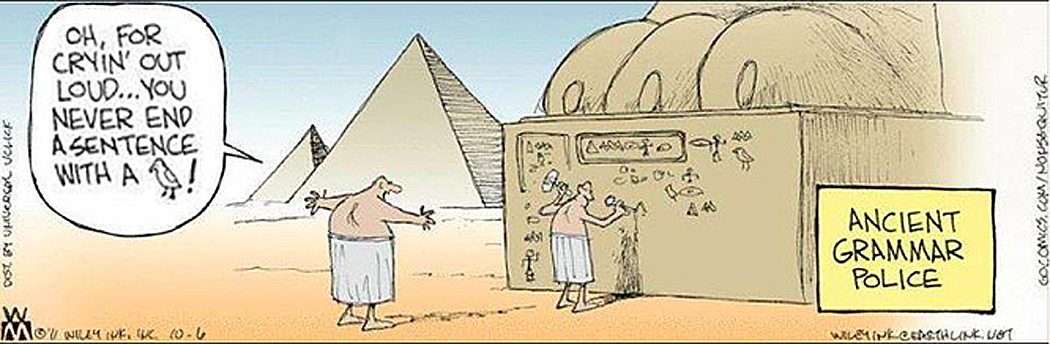

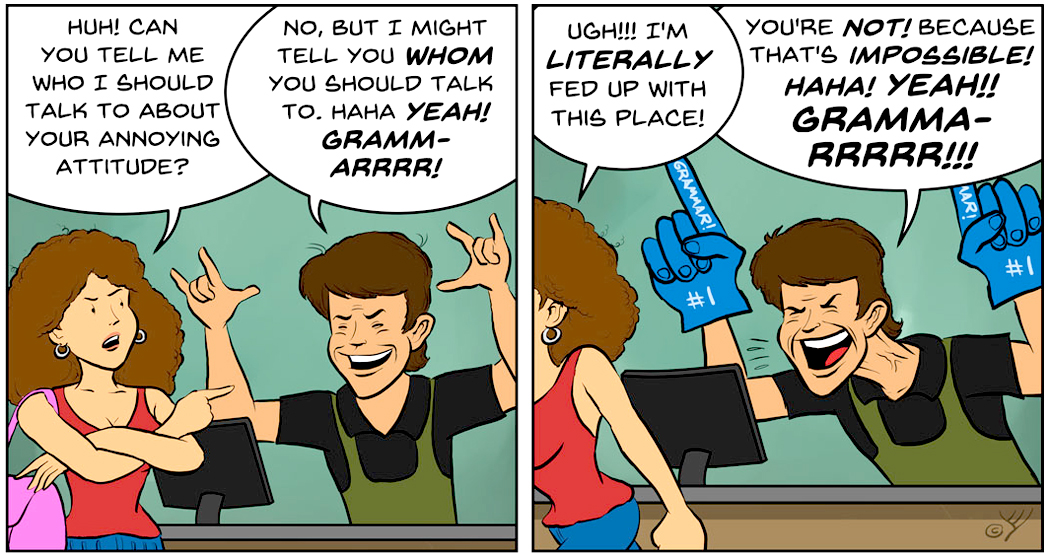






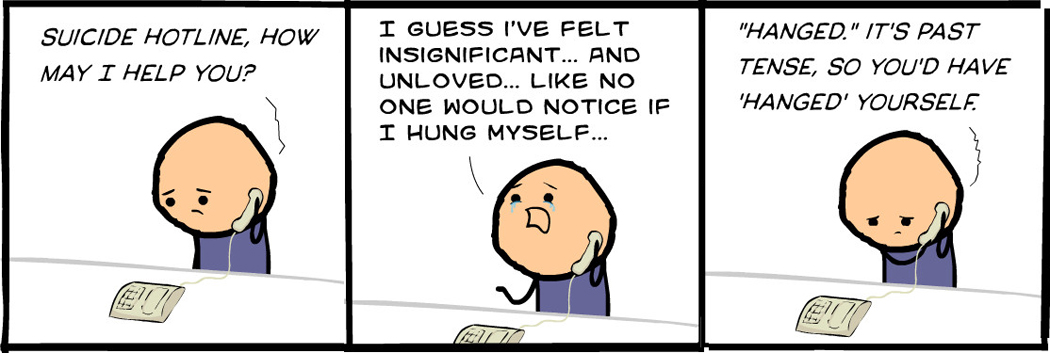
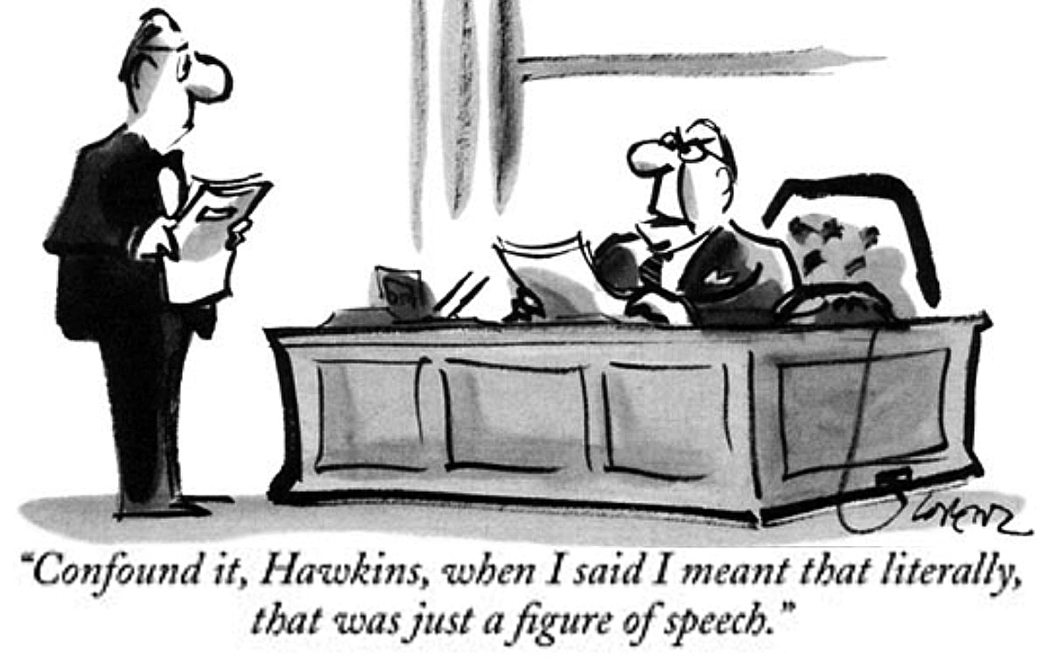

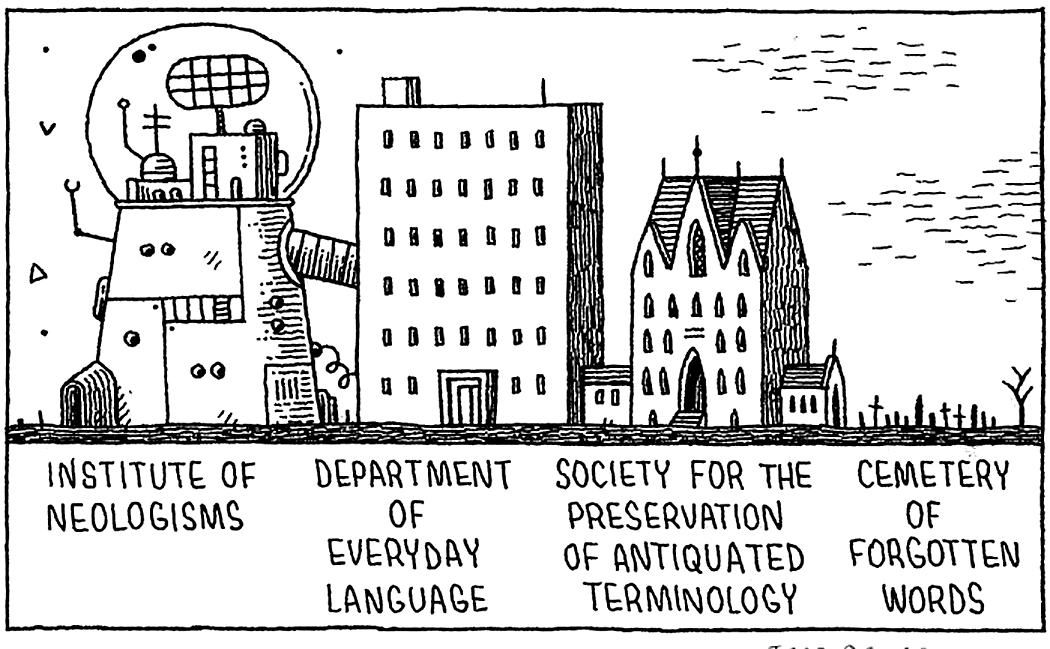




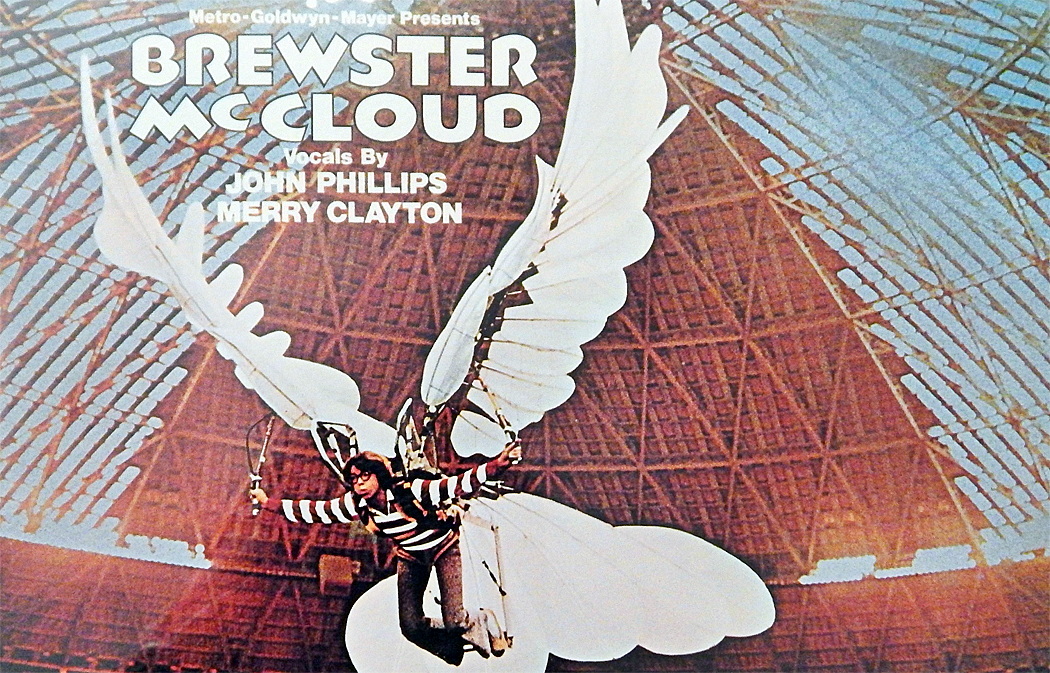










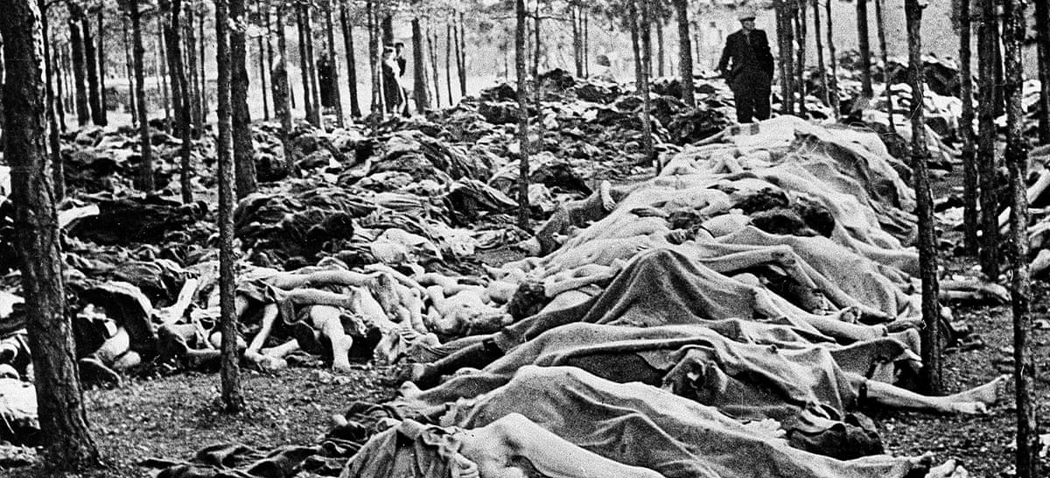

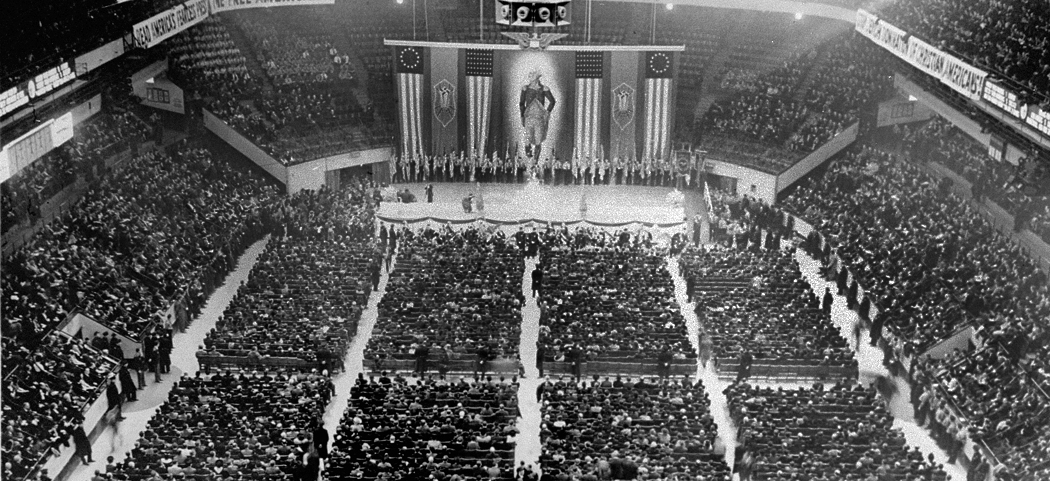



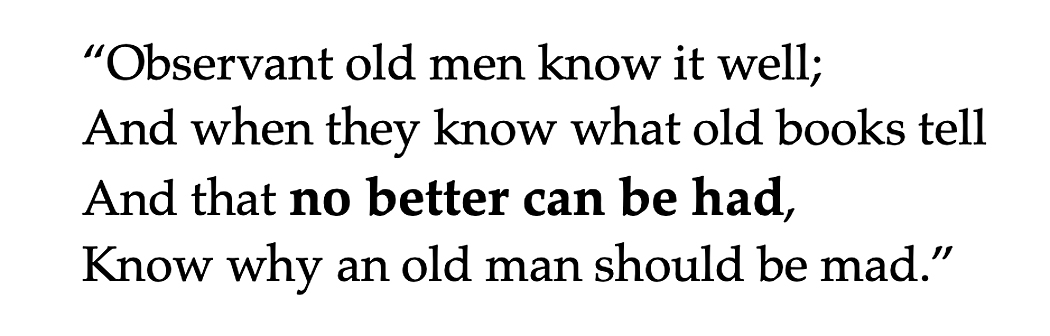

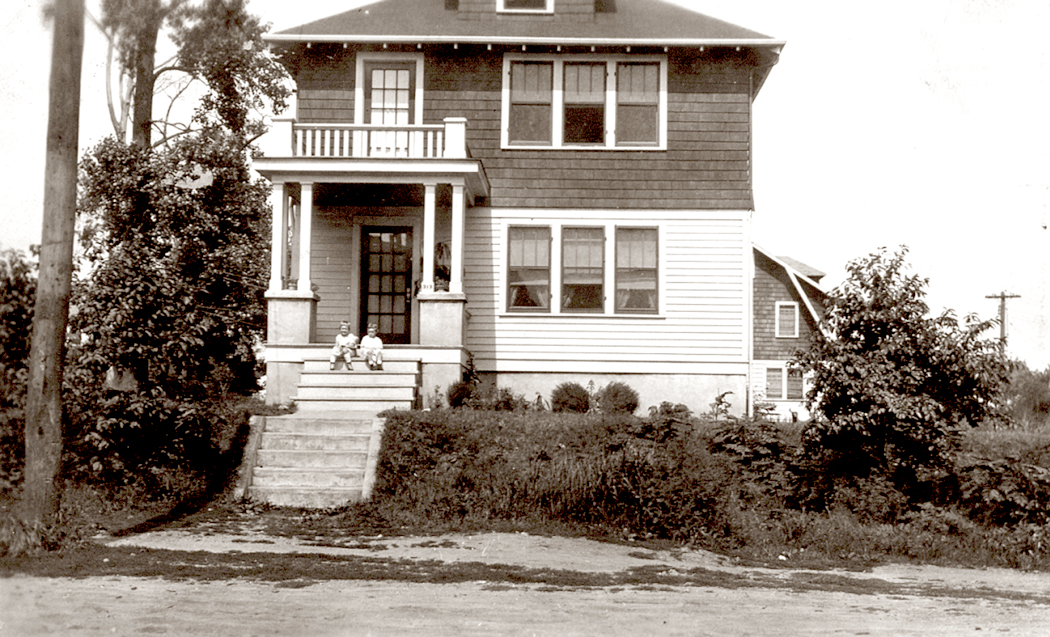
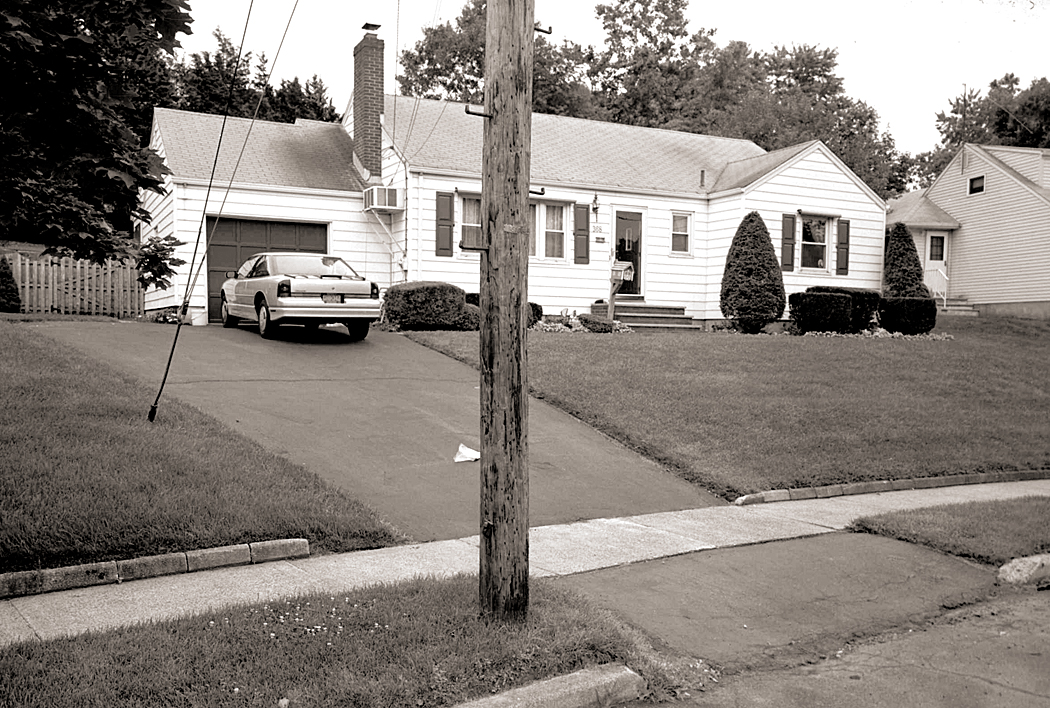
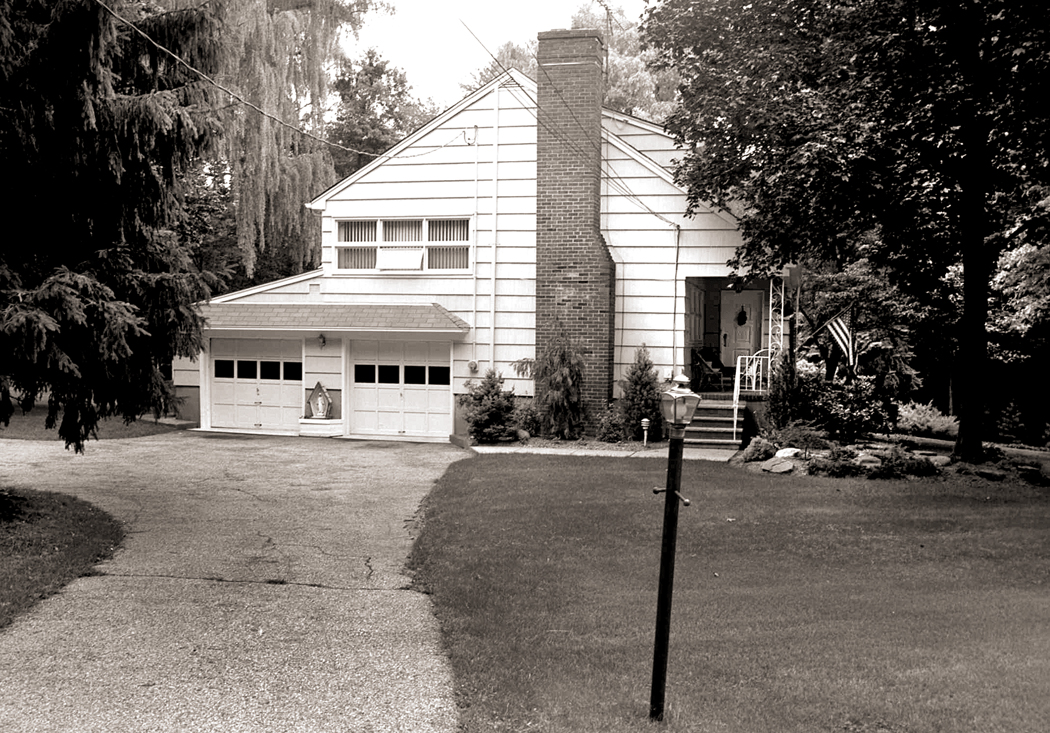
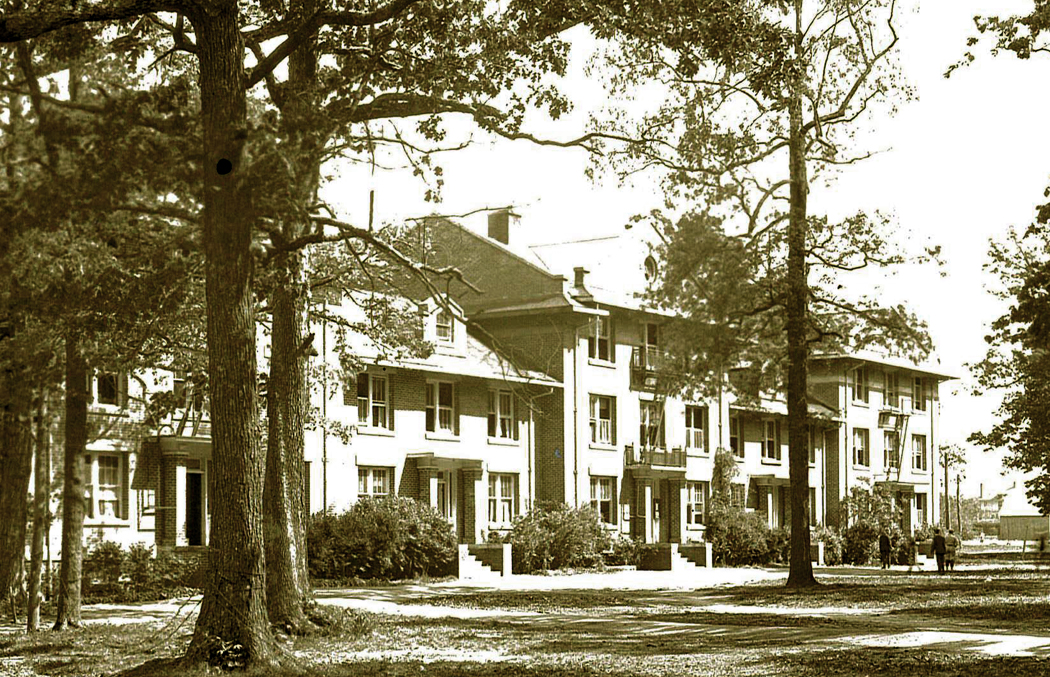


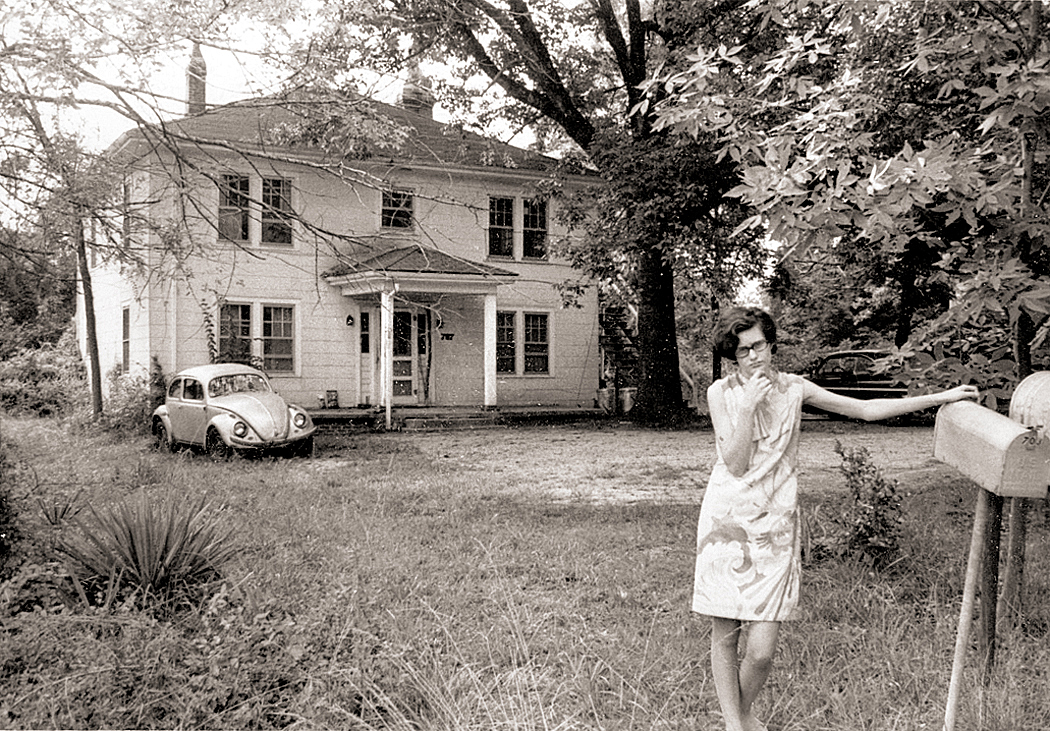
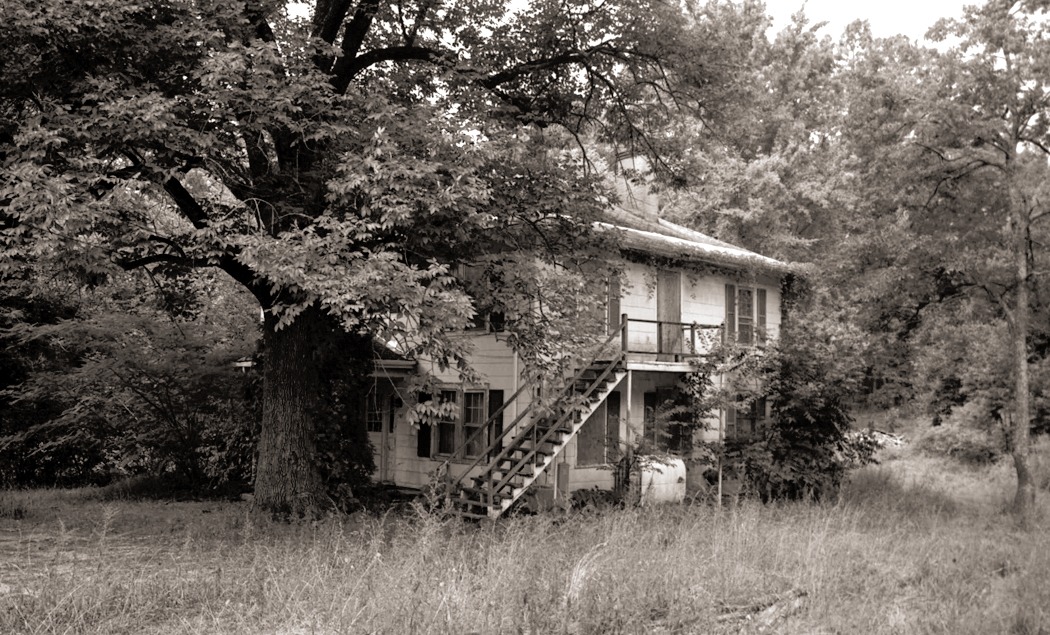

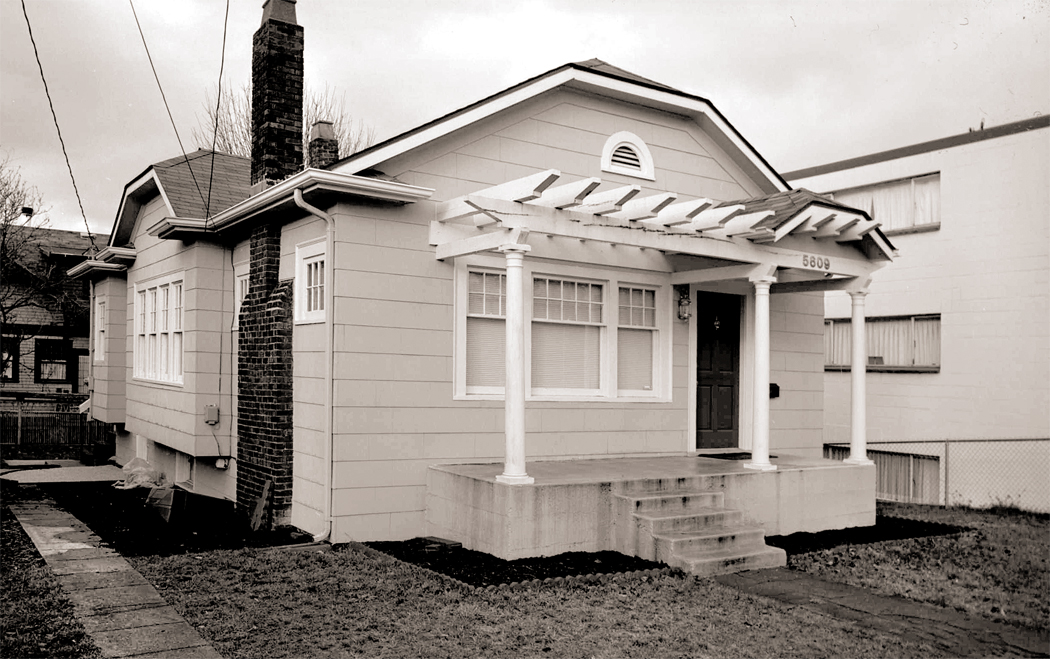

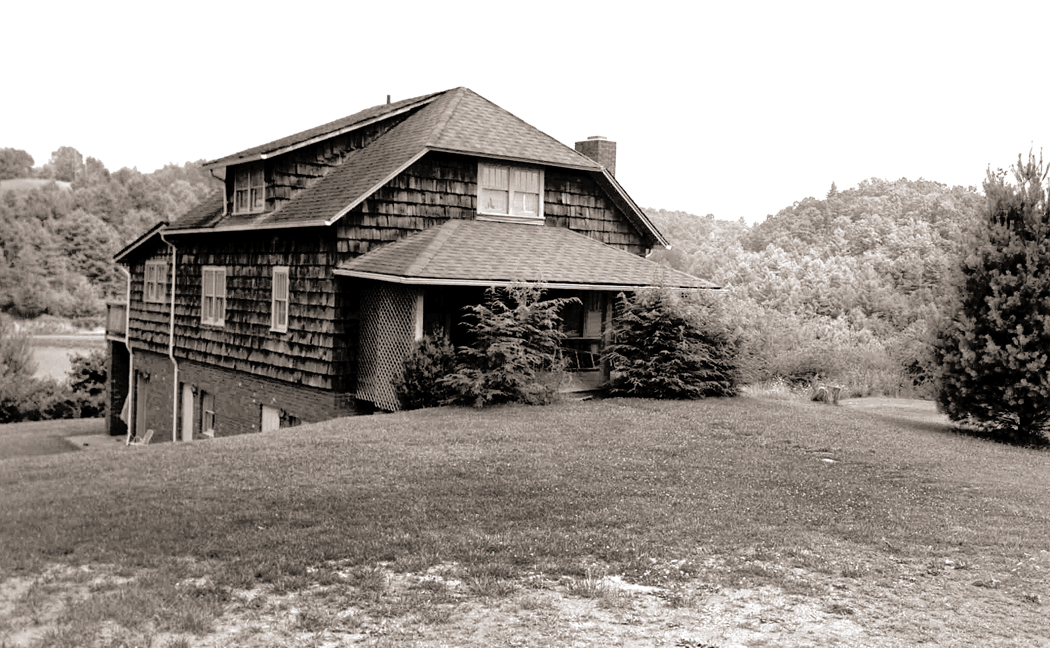

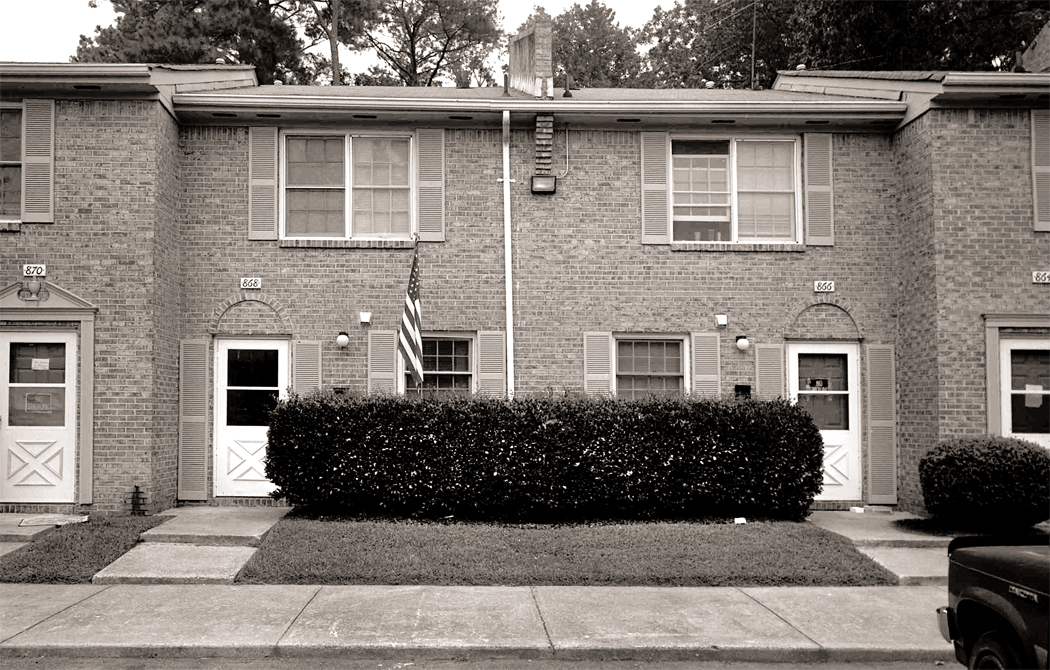
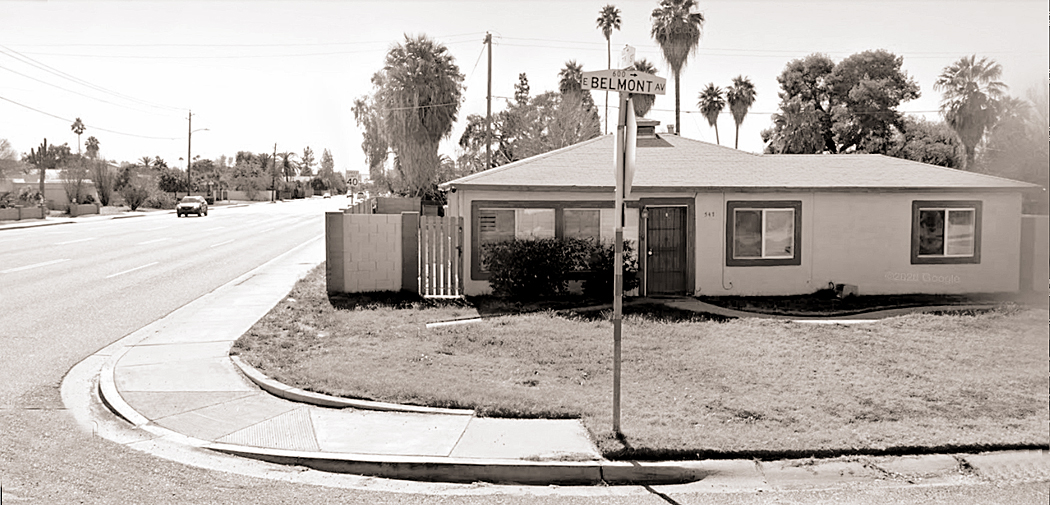
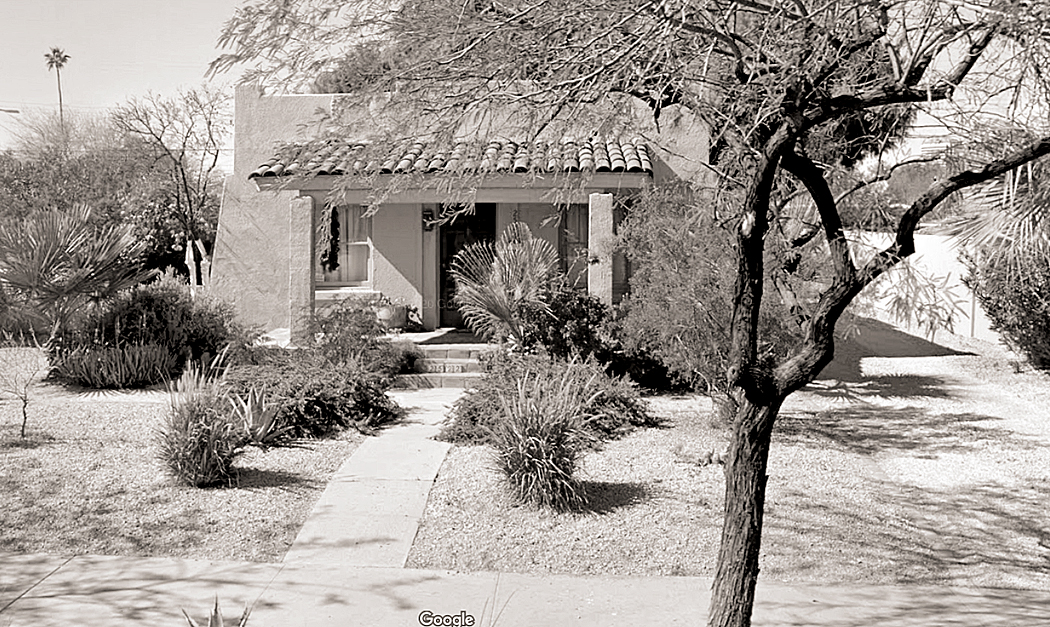
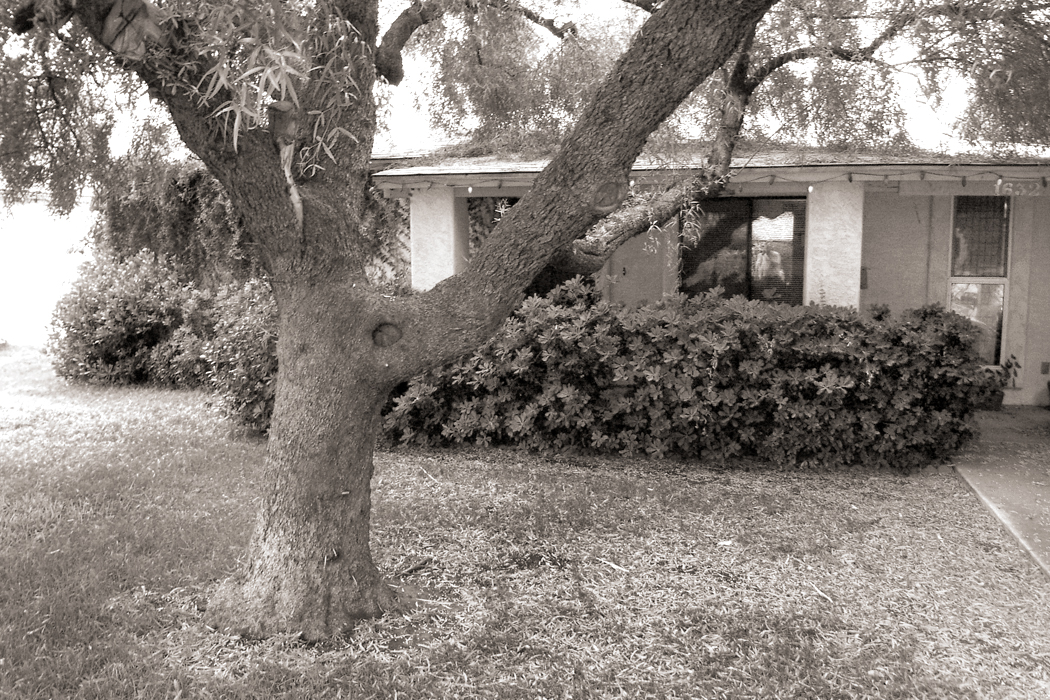
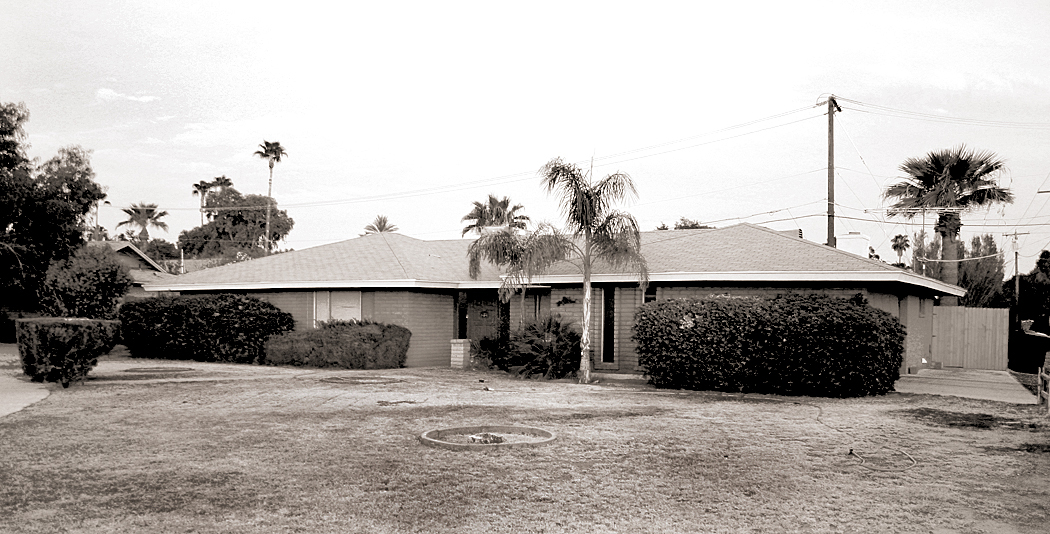
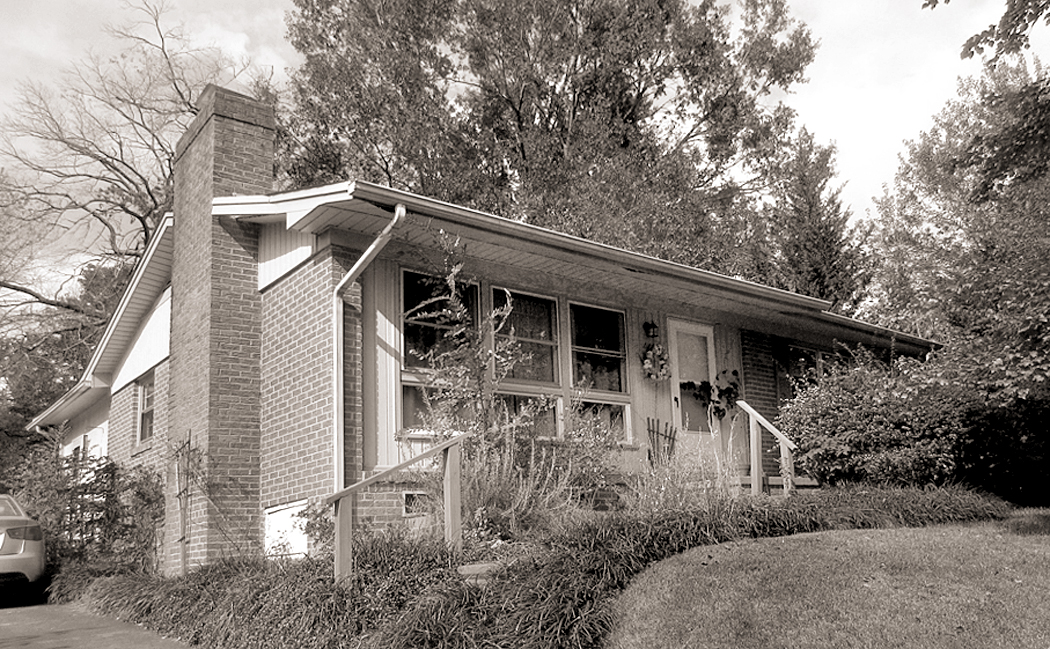

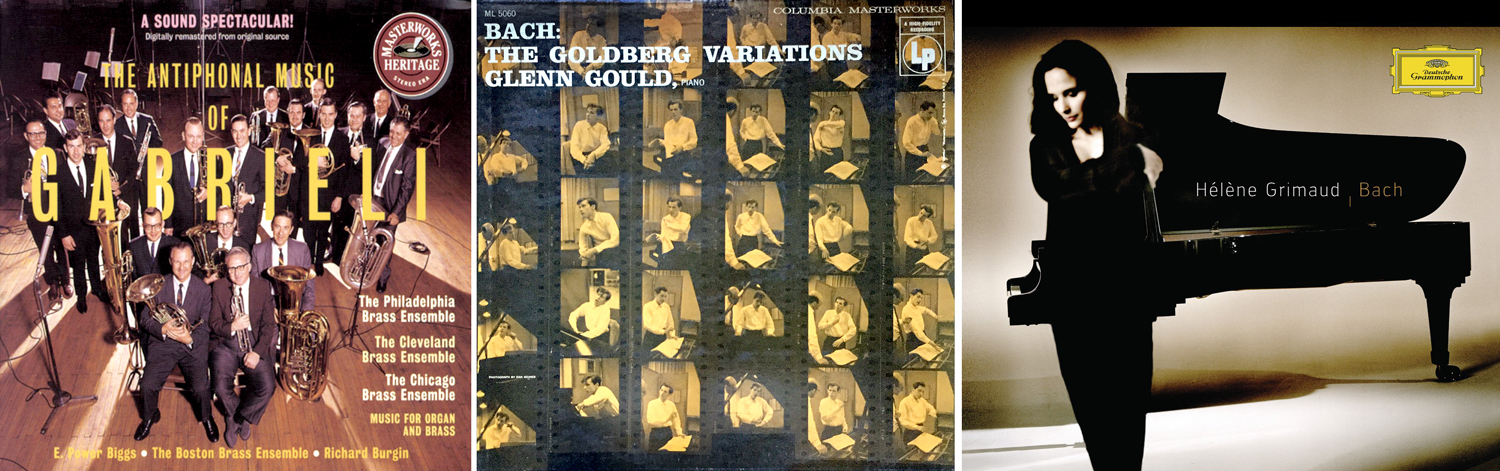
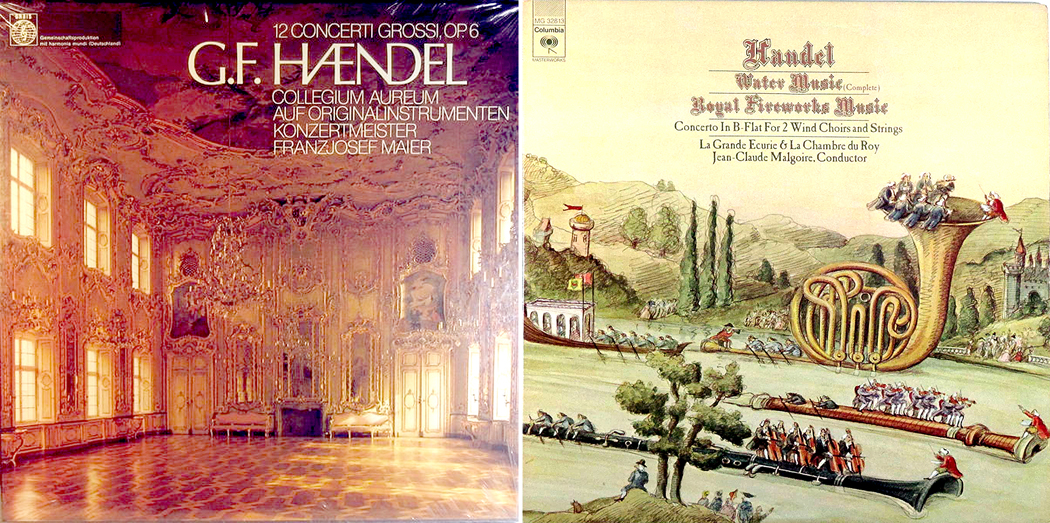

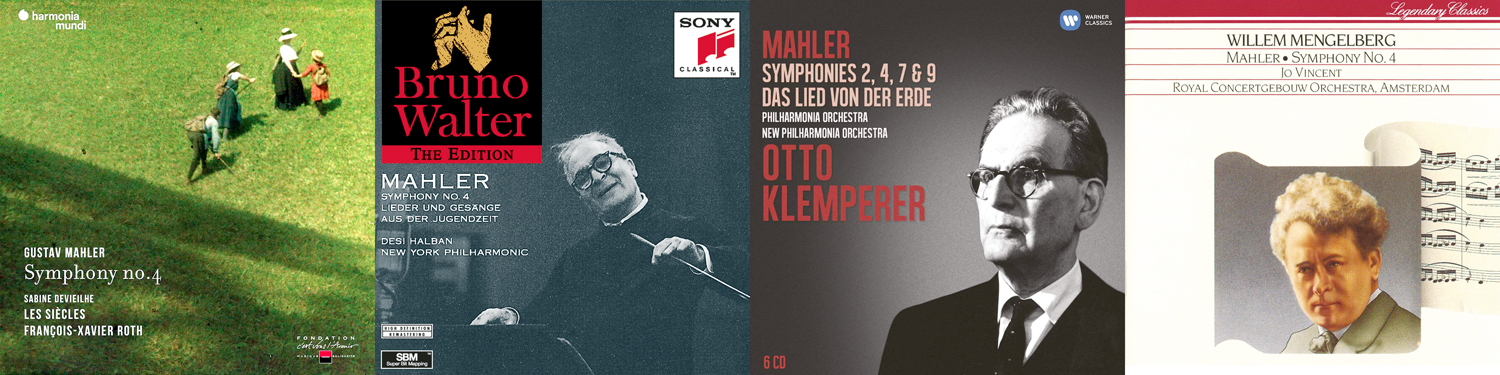






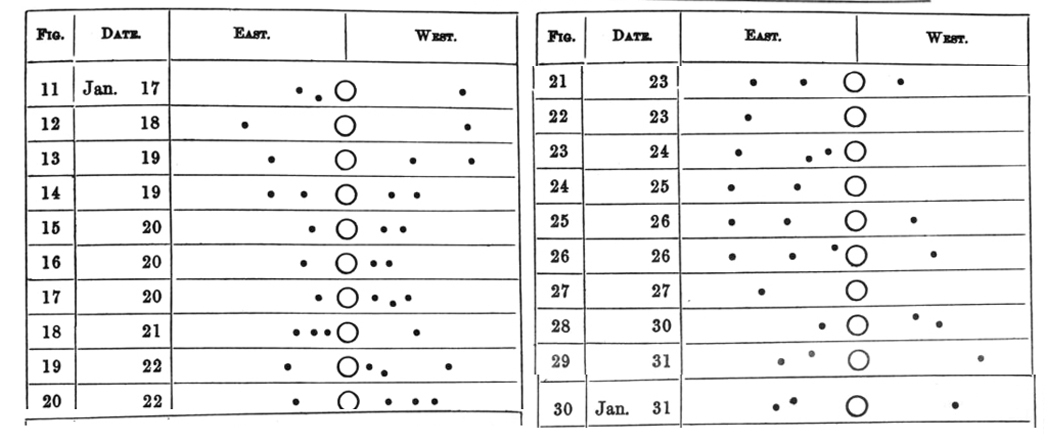


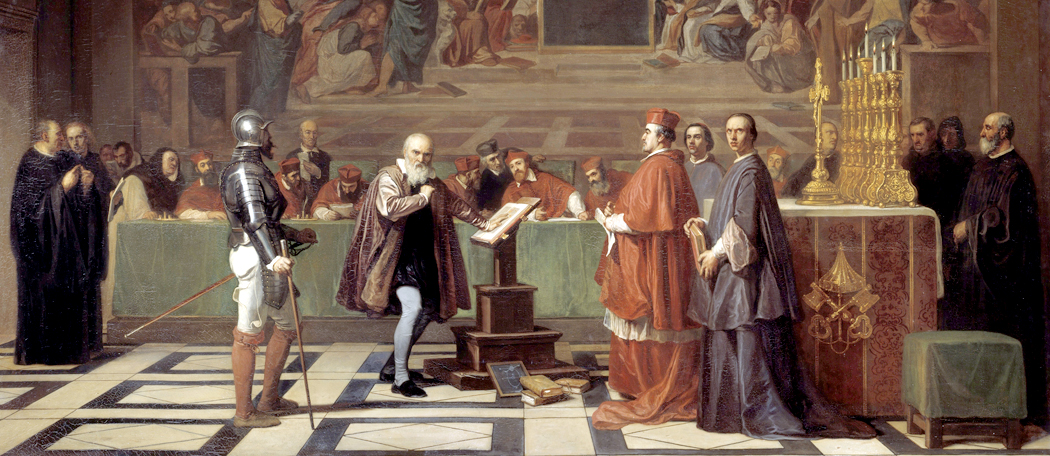
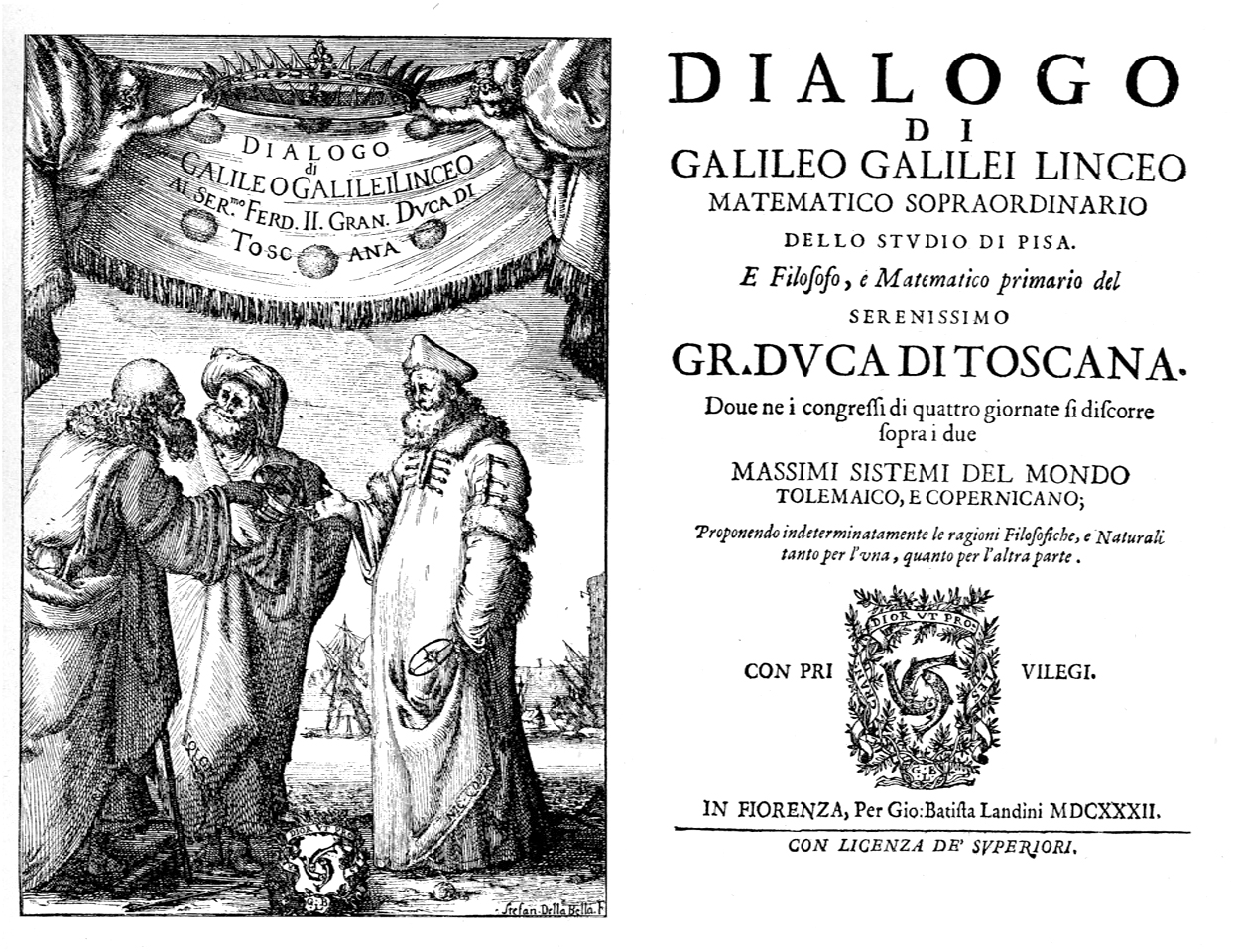




 Richard Nilsen