Weston’s Whitman
At the end of May, 1941, photographer Edward Weston and his wife, Charis, left Los Angeles and drove to Bakersfield, on their way across the country. The planned to camp on the way, and eat as cheaply as they could from canned food, and to visit friends.
Weston had been commissioned by a publisher, the Limited Editions Club, to make photographs to accompany their new edition of Walt Whitman’s Leaves of Grass, in a deluxe printing in two volumes. They offered him $1000 for the work and $500 for expenses. For the next nine months, they drove more than 20,000 miles from California, to New Orleans, up to Maine, and down to Georgia, making more than 800 negatives, from which 49 were chosen for the book.
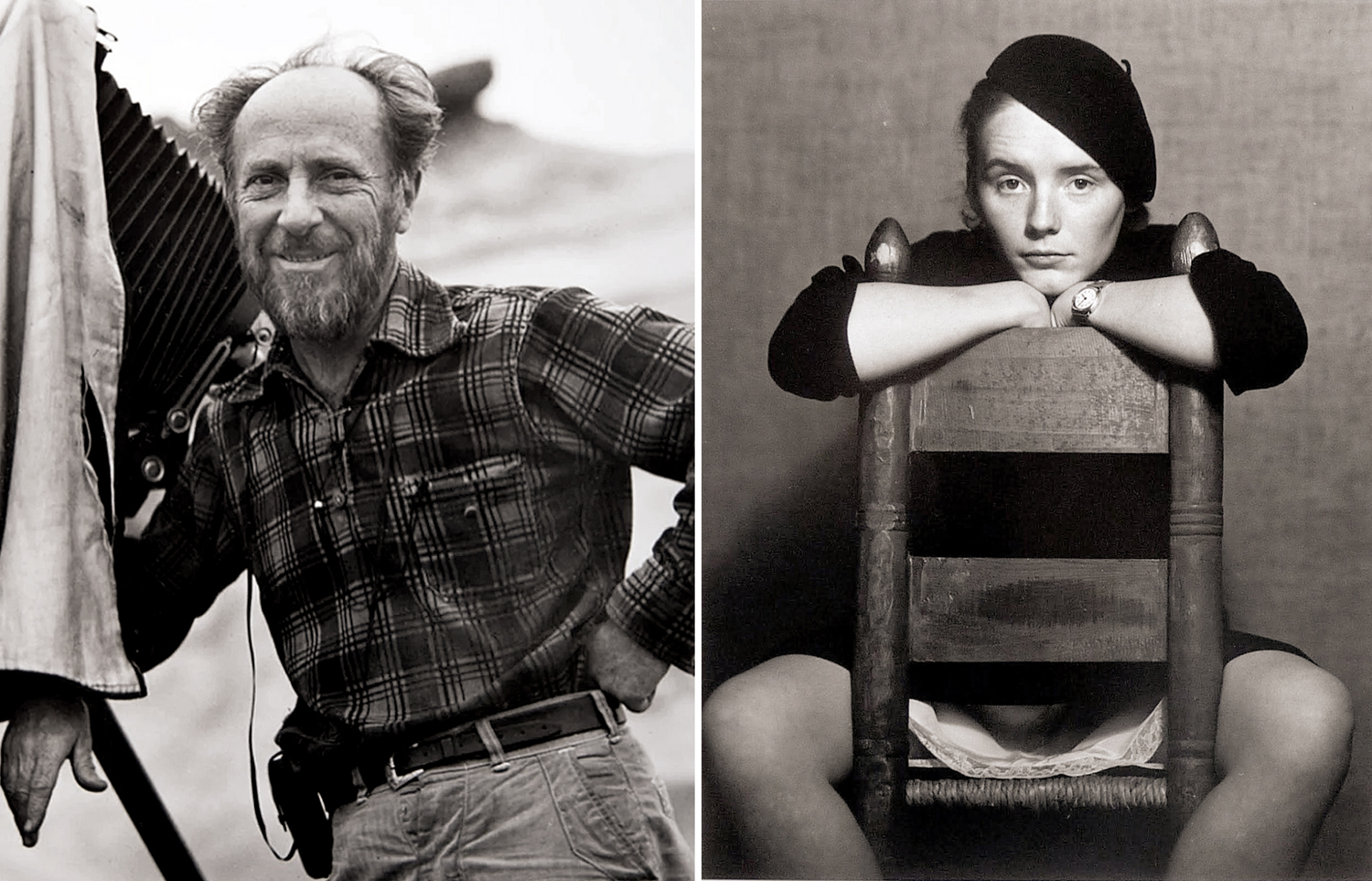
By 1941, Weston was one of the most famous art photographers in the country, having been awarded a Guggenheim grant in 1937, the first photographer to receive the honor. It was renewed the following year, and resulted in the book, California and the West, with images by Weston and text by Charis Wilson. For that book, the two traveled up and down the Pacific coast and across the desert Southwest. They saw this next commission as a chance to replicate their work in the rest of the country.
And so, on May 28, 1941, they set out in their new eight-cylinder Ford, which they named Walt, and a load of camera, film, canned food and sleeping bags to begin making photographs of what the Limited Edition Club publisher George Macy called “the real American faces and the real American places.”
The project was fraught from the start, because Weston and Macy had very different ideas about what the project was to be. Weston thought he had complete freedom to photograph what he wanted to run as an adjunct to Whitman’s poetry. Weston wrote about his plans to friends in New York, “There will be no attempt to ‘illustrate,’ no symbolism except perhaps in a very broad sense, no effort to recapture Whitman’s day. The reproductions, only 54 [the original plan], will have no titles, no captions. This leaves me great freedom — I can use anything from an airplane to a longshoreman.”
However, Macy always thought of the pictures as illustrations of the poems, with lines from them printed with the pictures. To Weston, this was a betrayal: He demanded the photographs be run with no captions and no descriptions, able to speak on their own.
He wrote Macy, “I appear to have fastened onto an idea that you haven’t. [That] the pictures as a whole were to embody the vision of America that Whitman had. … The fact is, illustrating specific lines in the poems would — to my mind — be too easy and get you nowhere.”
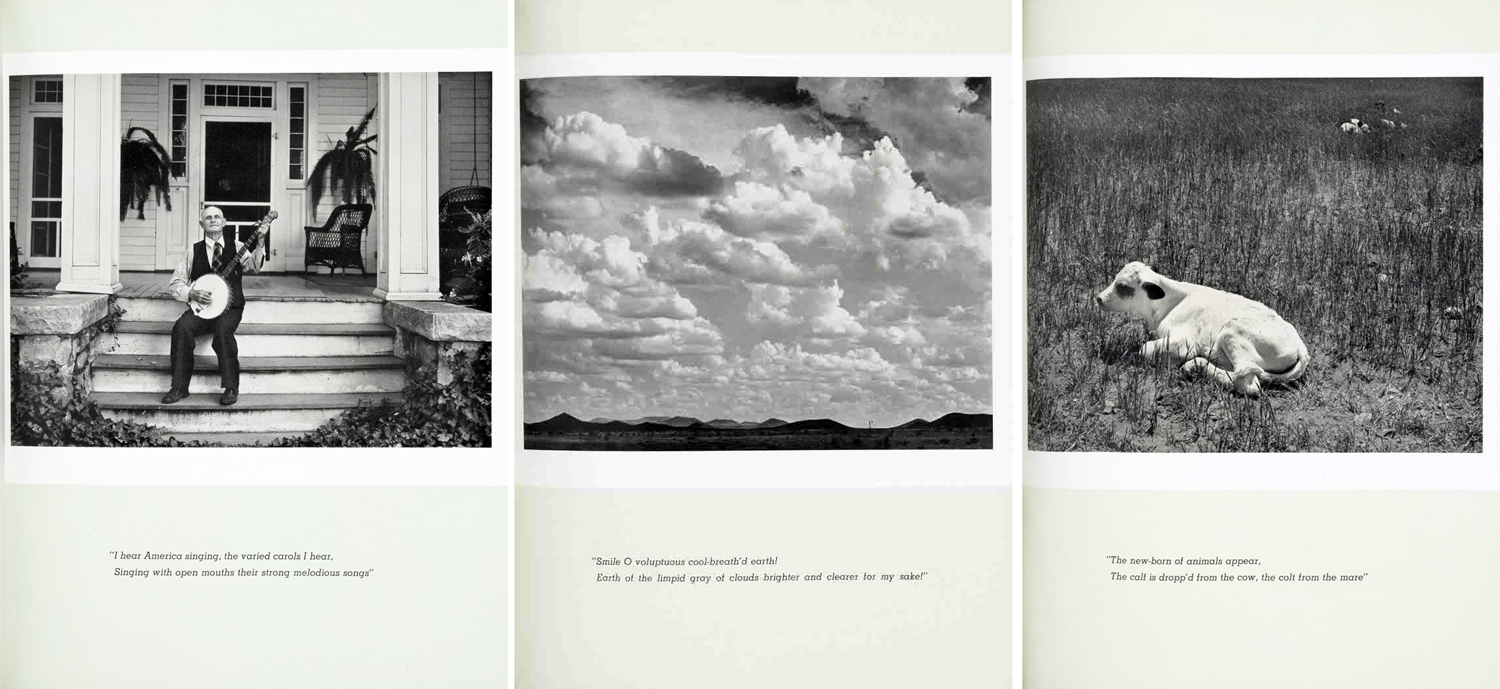
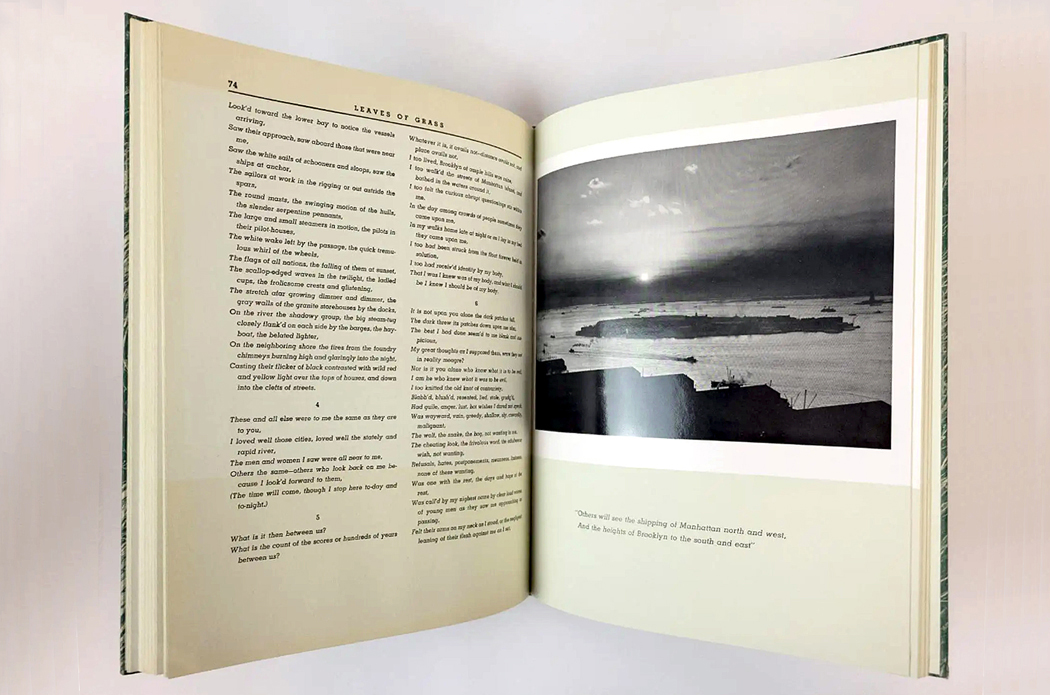
When the book was finally published, in 1942, Weston was appalled. Not only were the pictures printed with lines from the poem, but they appeared on pages with sickly mint-green borders. Weston received 50 copies and sent one to a friend with the note: “No apologies for the illustrations, but for their presentation, my tears.”
Leaves of Grass did not sell well; it was America’s first year in World War II and attention was elsewhere. And the book and the whole project was largely forgotten. Weston’s reputations rested on his earlier work, and so the appearance and disappearance of the Whitman book was hardly noted. (It was reprinted in 1976 by Paddington Press without the quotes under the photos, but in indifferent and grayed-out halftone reproductions. The text is quite beautiful, but the photos hardly do justice to Weston’s work. At least it lets us know which pictures were used for the original).
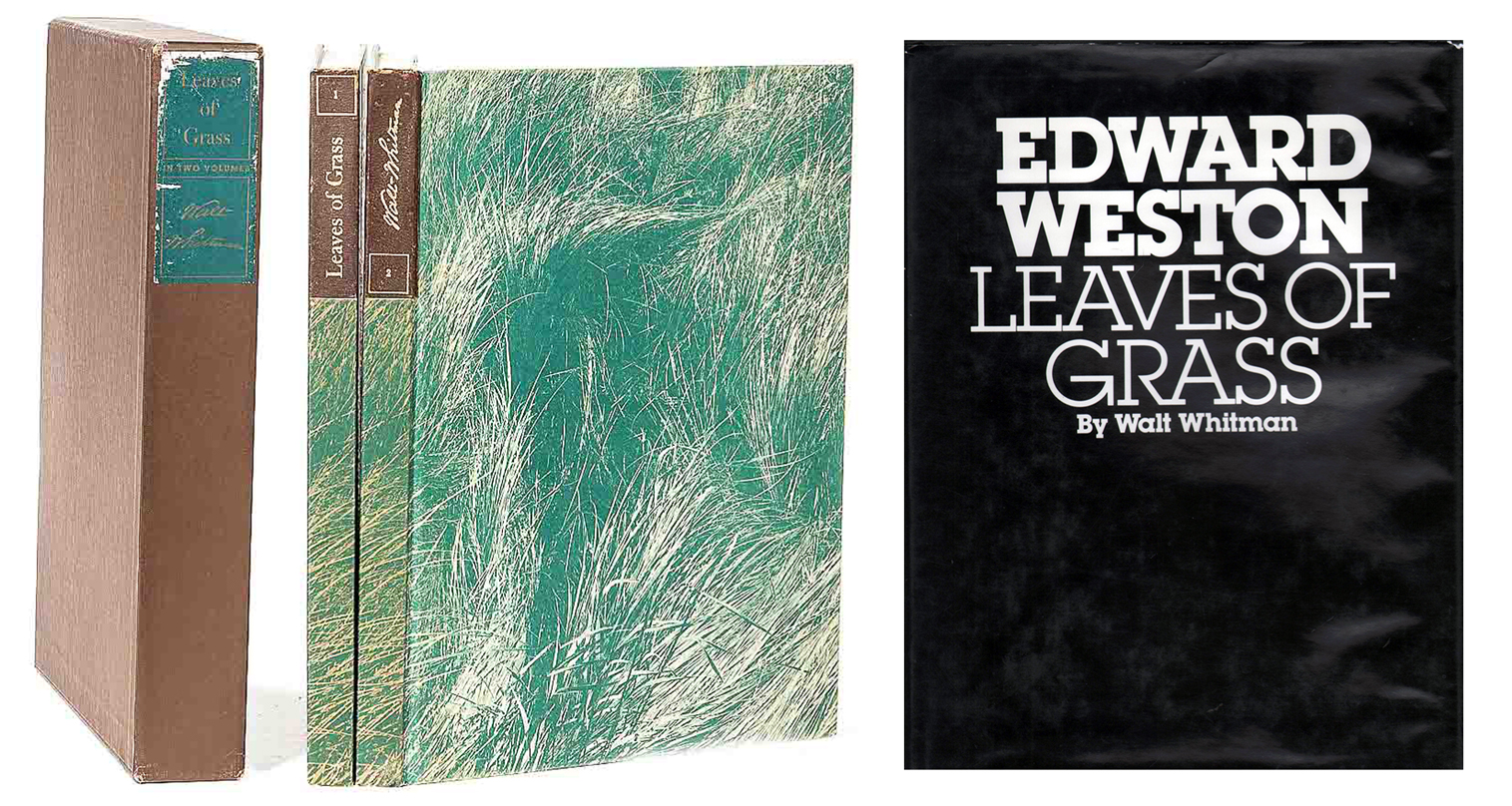
Editions from 1942 and 1976
Since that original two-volume edition came out, Weston books have become an industry. I own at least 20 of them, and most with beautiful duotone reproductions that capture some of the deep-tone detail of Weston’s original silver prints.
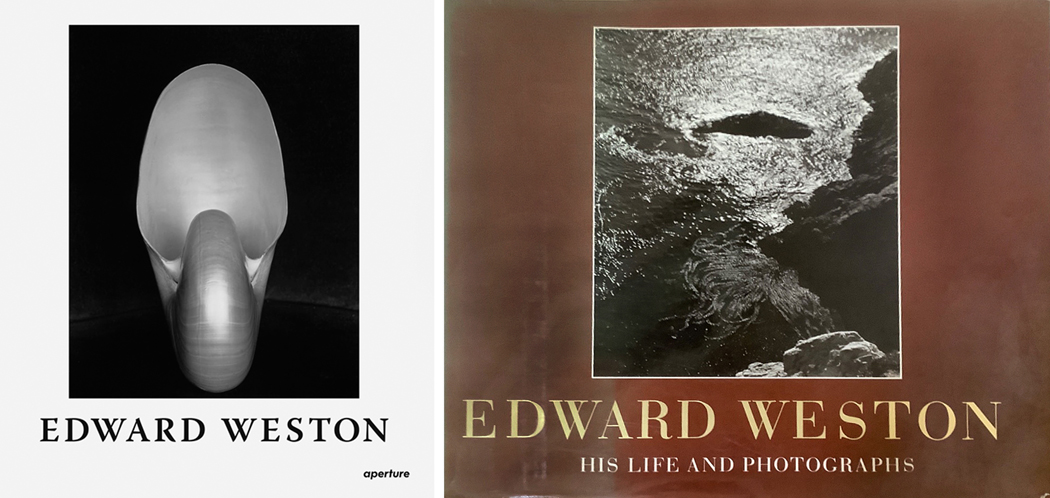
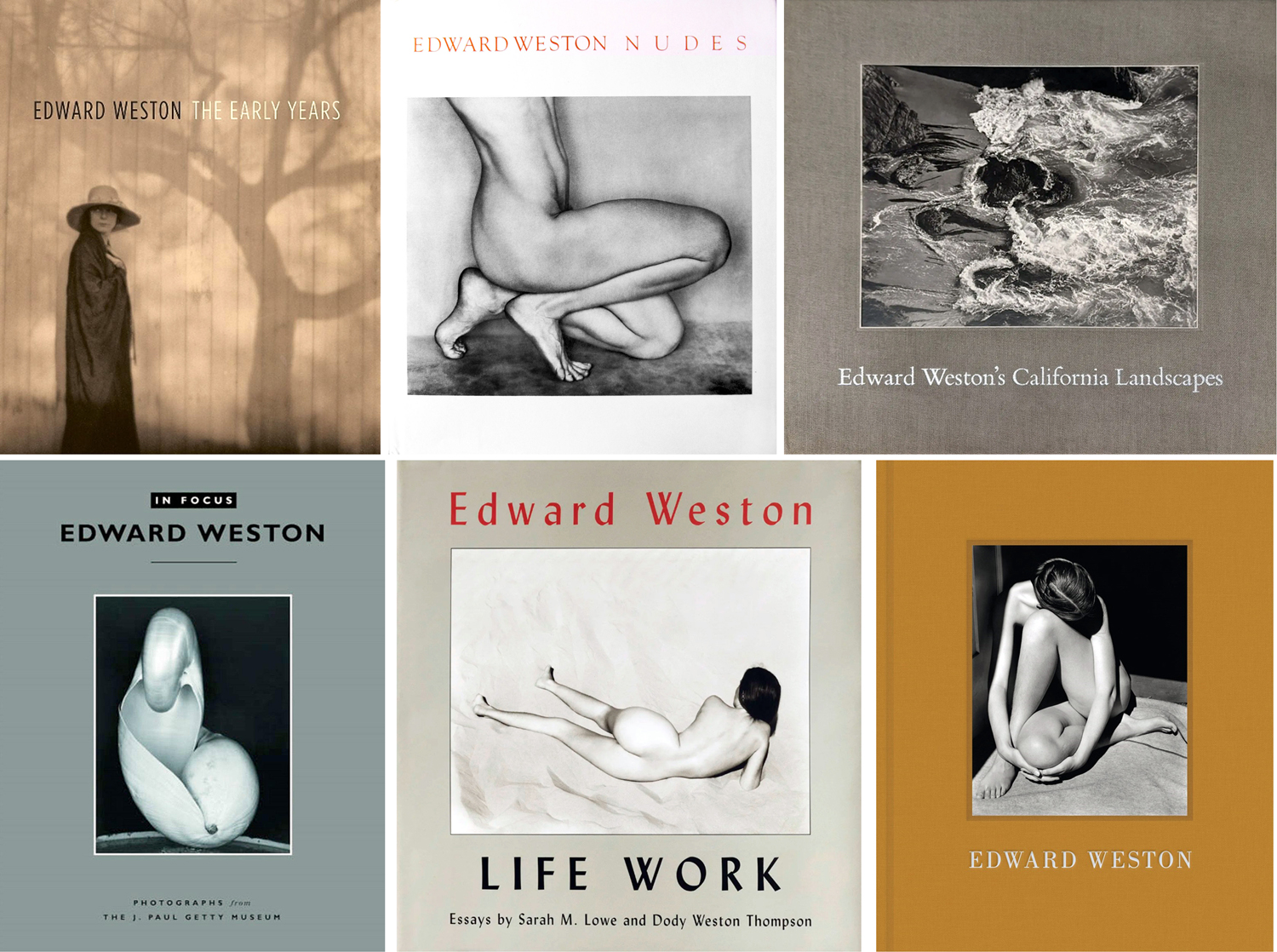
Weston had produced a few earlier books of his work, but the deluge probably began with Nancy Newhall’s monograph The Flame of Recognition, from 1958 and printed in Aperture magazine. It is still available and remains the best short introduction to Weston’s work. Since then we have Ben Maddow’s Edward Weston: His Life and Works, from 1973, and since reedited and republished several times. There are books about his time in Mexico, his early years, his nudes, his portraits, a reprint of his California and the West, and dozens of fancy art books, usually with all the usual suspects, fleshed out with a scattering of surprises.
In all that mass of publication, the photos he took for Leaves of Grass tends to get short shrift. Many editors and curators count his later work as less important and less interesting. There has never been a well-printed reprint of the book, or from the mass of images he took for the book, so we might get a better understanding of what he was about during that trip. A few of the images have become well-known, but most of the 800 photographs he took are forgotten. And since few people have seen them, it became easy to assume they demonstrated a falling off of the artist’s work.
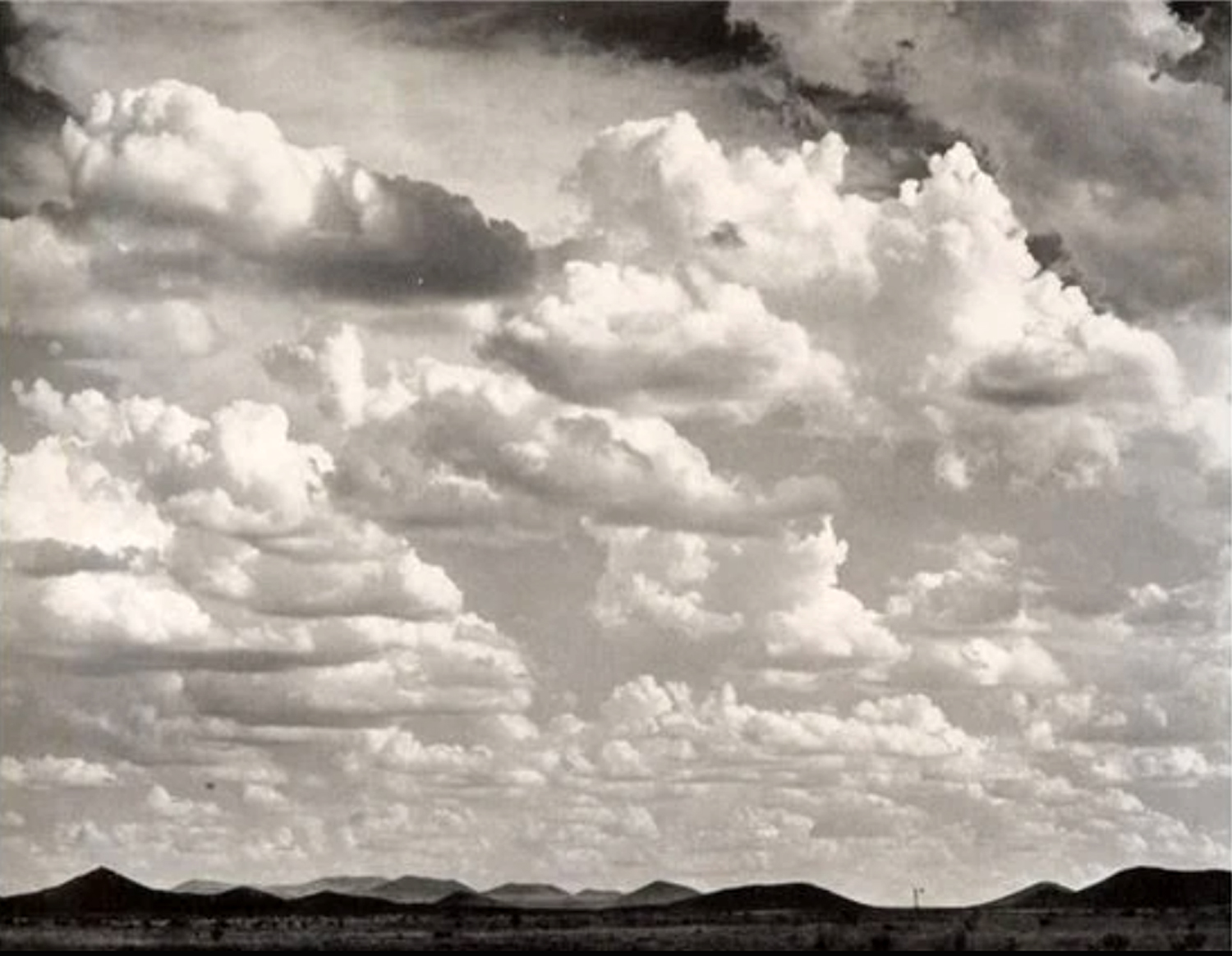
I can’t make a case that all 800 are masterpieces; Weston did seem to make an occasional effort to parallel Whitman’s poetry, and some of the images were frankly pedestrian. But there are many that show off Weston’s incredible technique, his ability to capture an immense range of tone and texture. I wanted to show off some of what he managed during those seven months on the road.
Weston, himself, valued the work highly. In fact, because he knew that the Limited Editions Club would own the copyright for the images published in their edition, he often made variant versions that he could keep as his own and exhibit in shows and sell to collectors. Indeed, most of the pictures he made were never even considered for the book. In 1944, he selected 500 photographs taken over his career to be donated to the Huntington Library in California as a legacy, and some 20 percent of the images were from the Leaves of Grass trip.
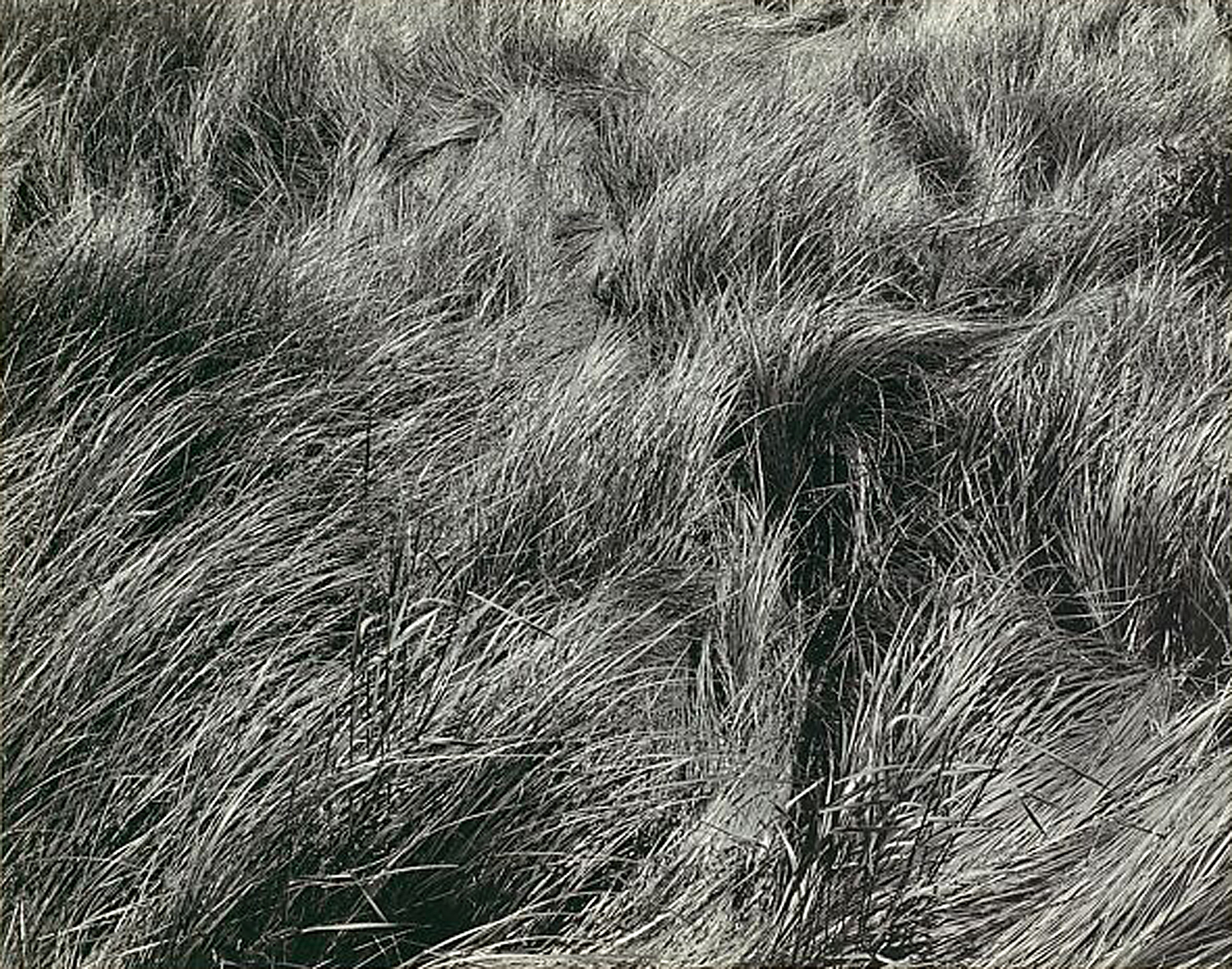
THE TRIP
The pair left their home in Carmel, Calif., on May 9 and spent three weeks visiting friends in Los Angeles and making at least a few images that were meant for the Whitman project including a couple of the business end of a steam locomotive.
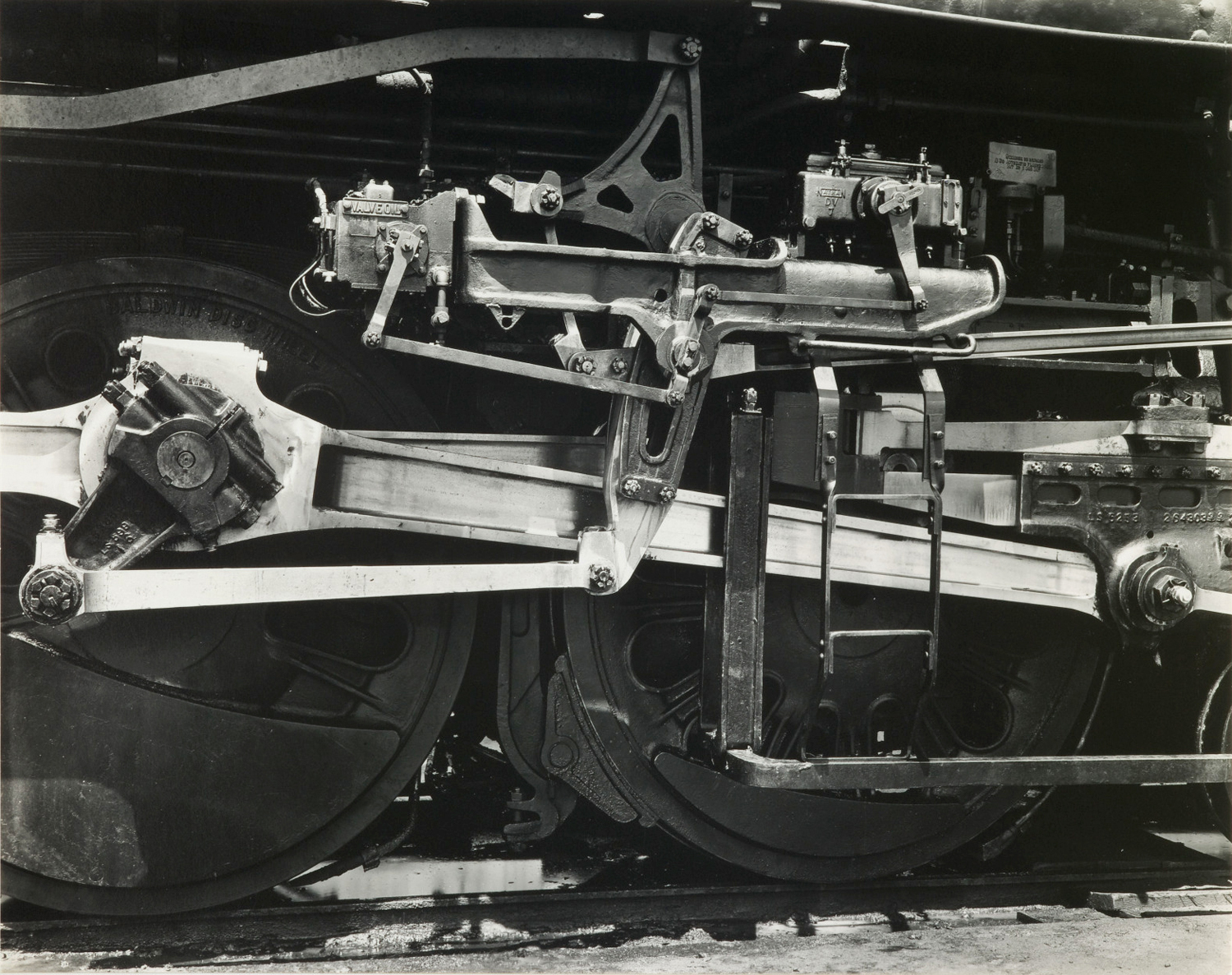
Charis wrote in her journal: “Tuesday May 27th 1941 All our Los Angeles chores finished; tomorrow set for departure. As usual we have not seen all the people we intended to nor done all the things we meant to do, but we have done well enough. Walt, our magnificent new Ford has proved himself in city traffic and on a couple of short trips — the last of the two breeding near-disaster when overheating disposed of his water supply. Luckily no damage done. Walt has fiber seat covers that are as much of a joy to sit on the usual mohair is painful.”
They loaded in their camping supplies, food supply, typewriter and Weston’s huge 8-by-10 inch bellows camera with its long-legged wooden tripod, and a generous supply of film and film holders. It must have been a tight fit.
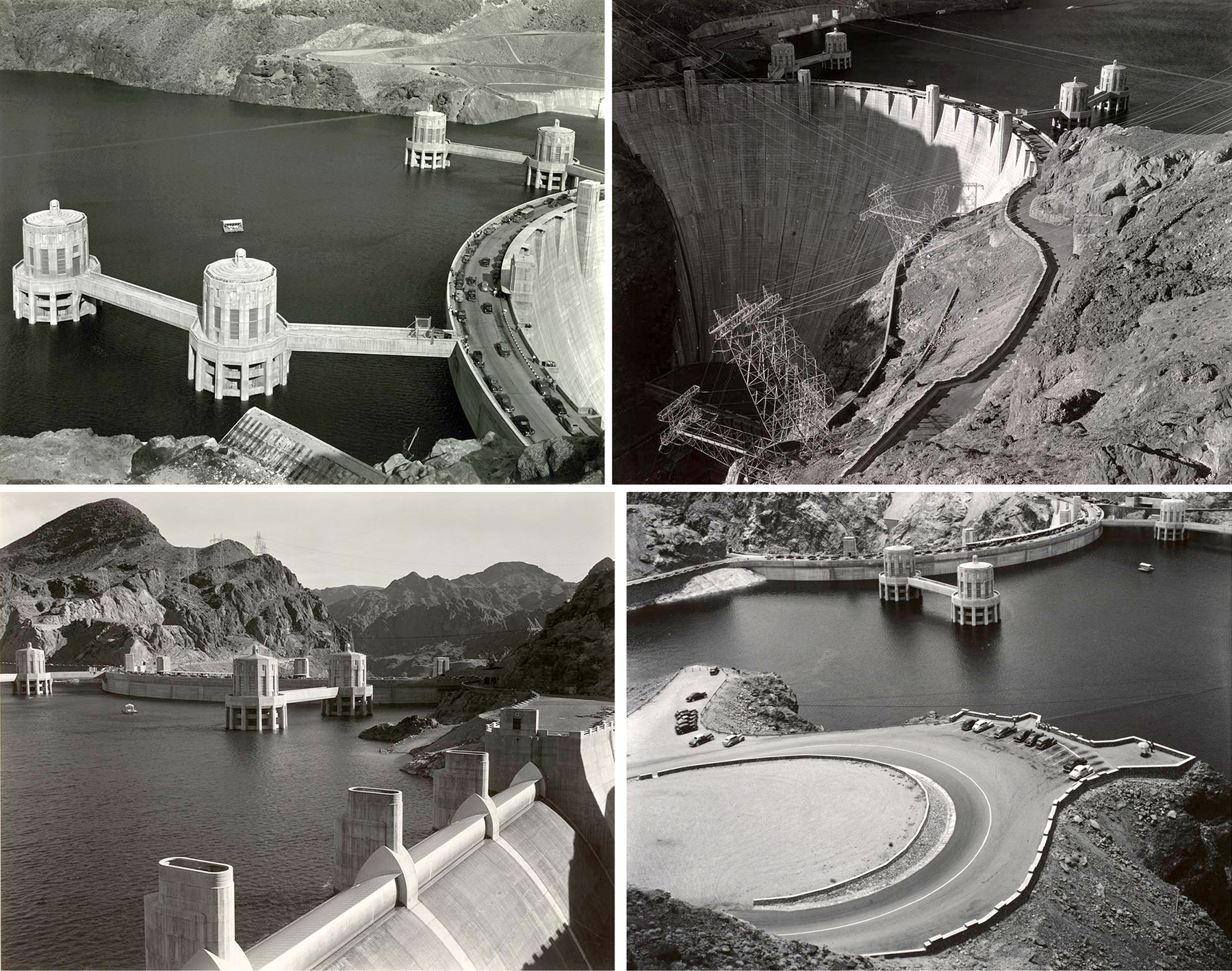
The next day, they took off north and then east with Charis driving (Edward never learned to drive) heading to Boulder Dam (now Hoover Dam), where Edward began his work, making 18 photographs over three days.
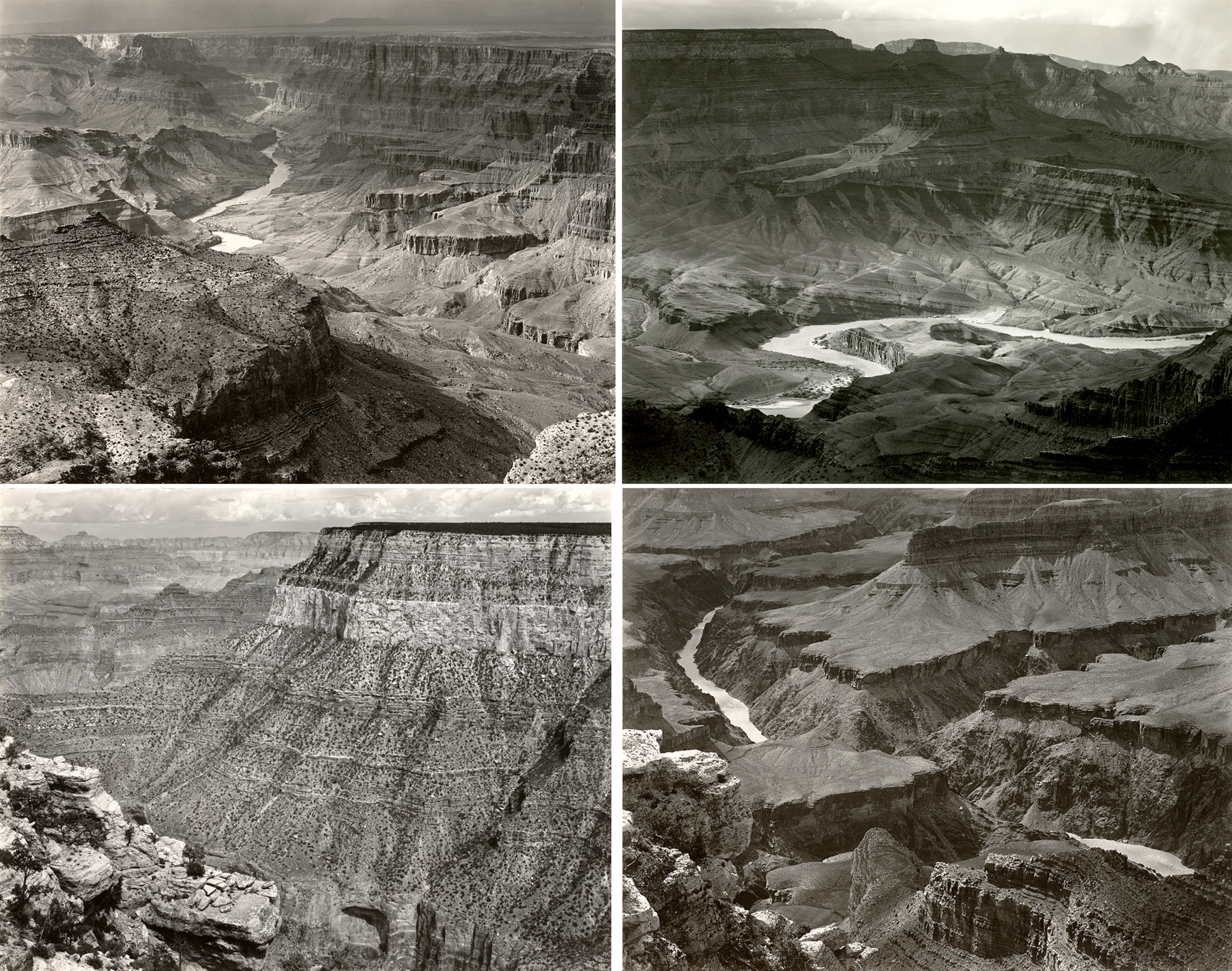
They passed through northern Arizona, and the Grand Canyon …
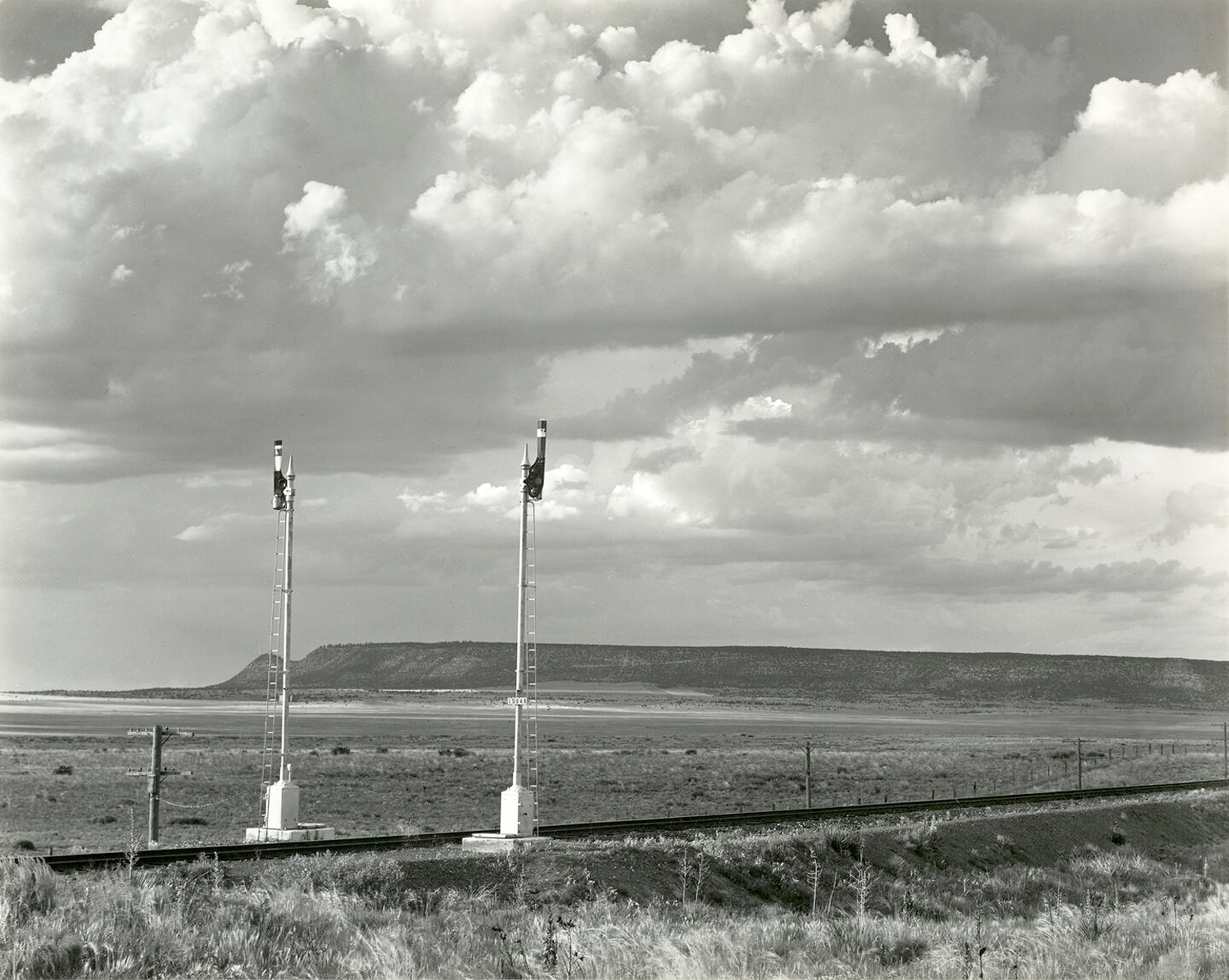
And a couple of my favorites by the Vermilion Cliffs on the Colorado Plateau.
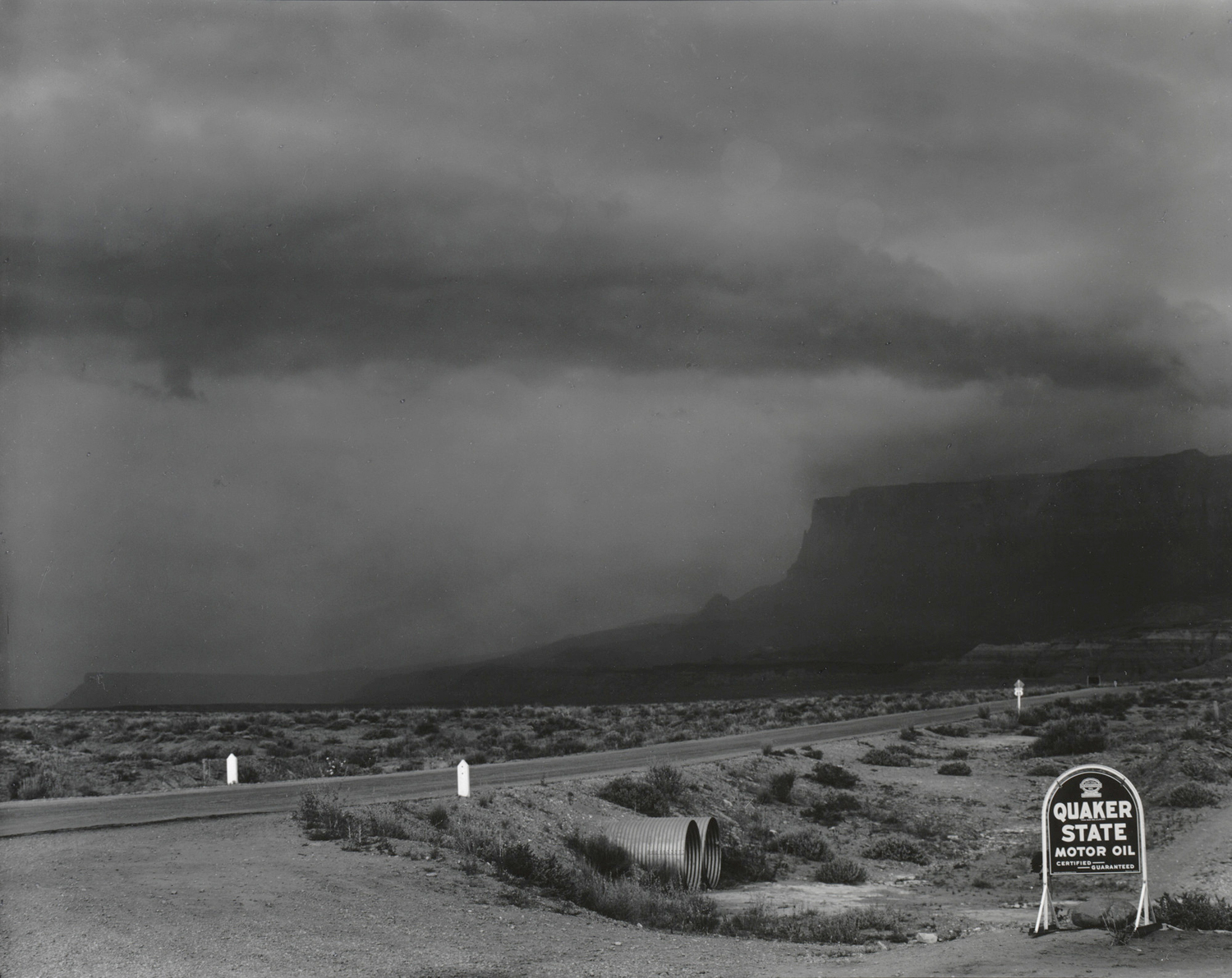
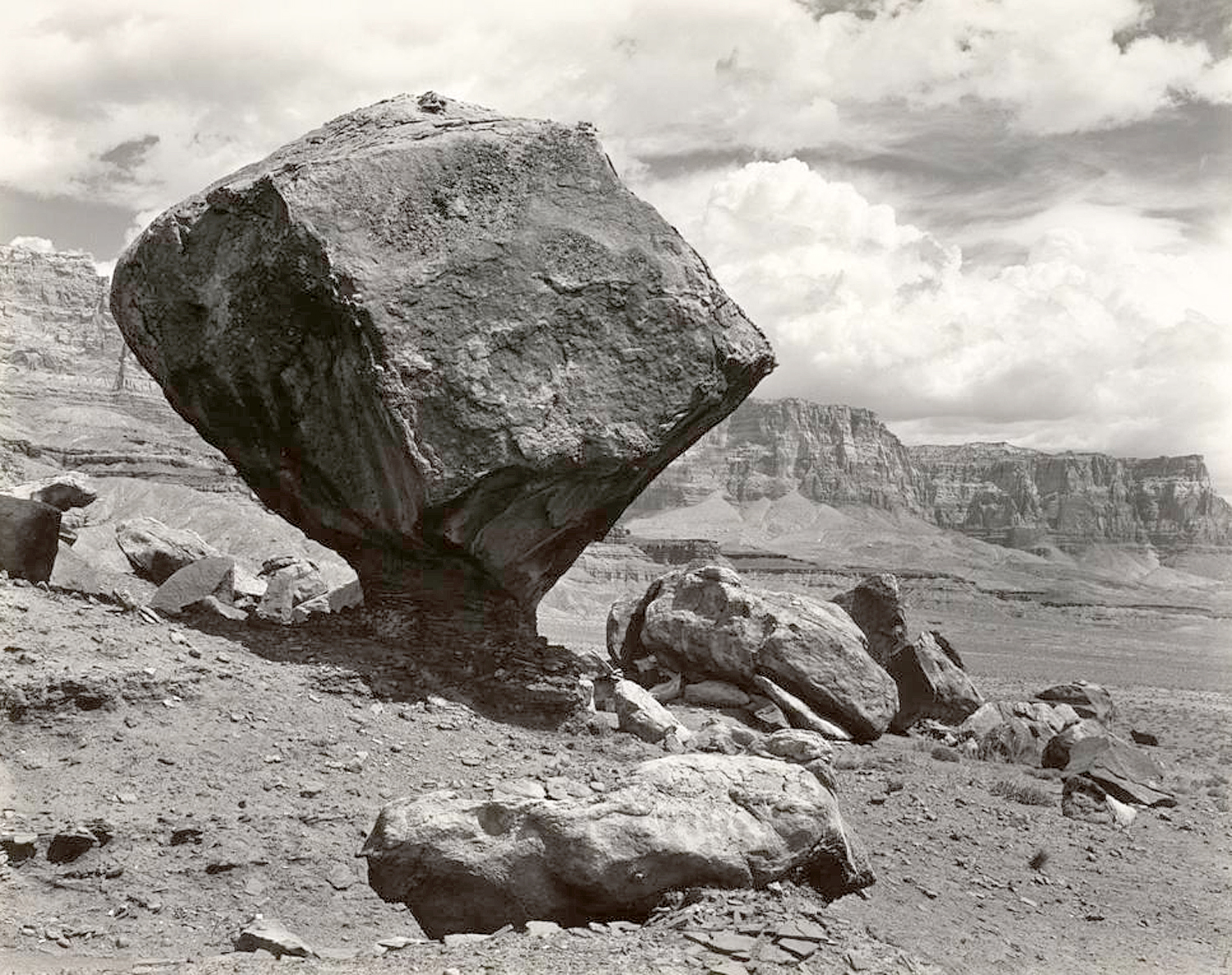
They stopped briefly at architect Frank Lloyd Wright’s Arizona home, Taliesin West, in Scottsdale and headed south to Tucson, where he made portraits of Native Americans and the interior of a Yaqui Indian Church and the grotto of the Virgin at San Xavier del Bac, south of the city.
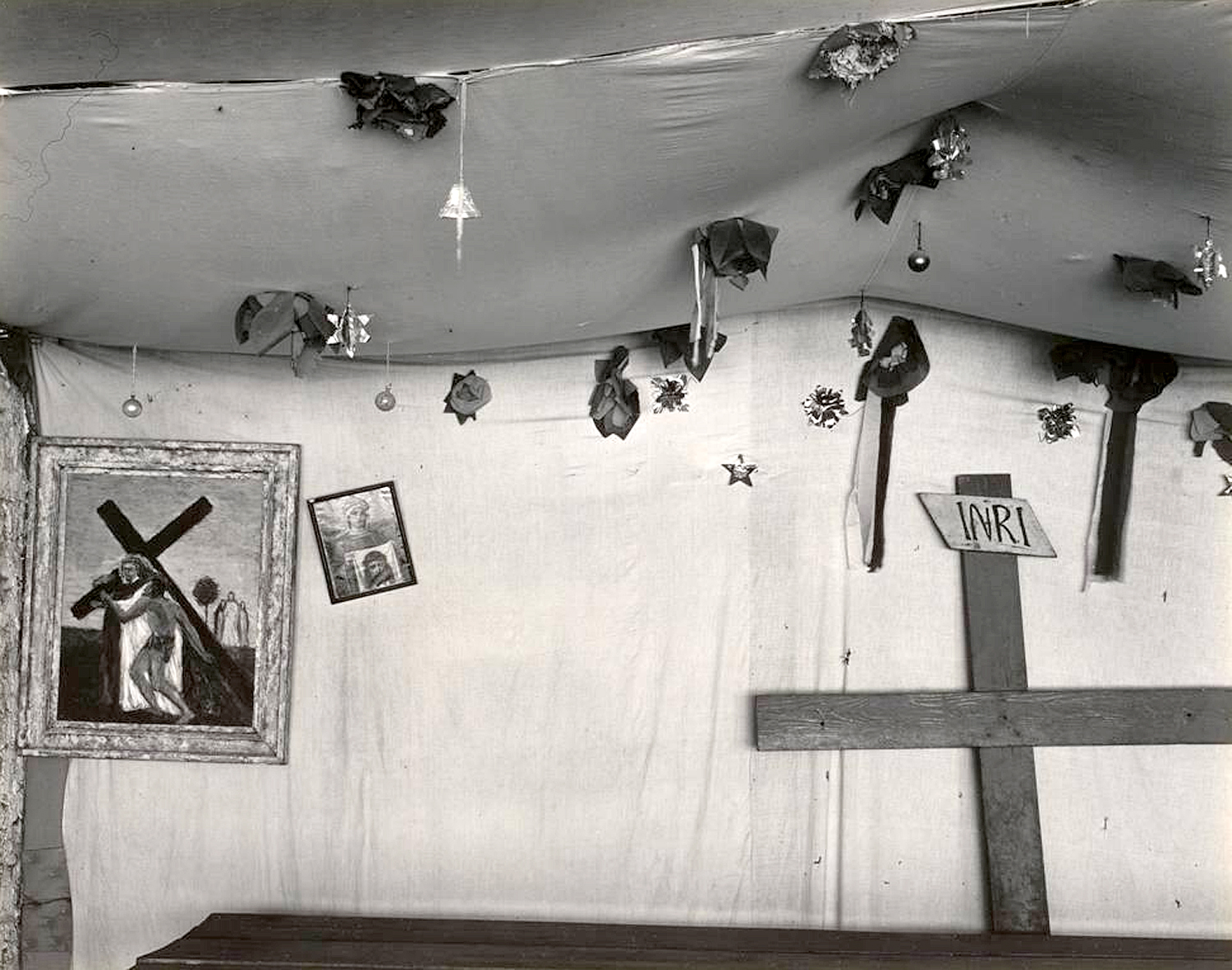
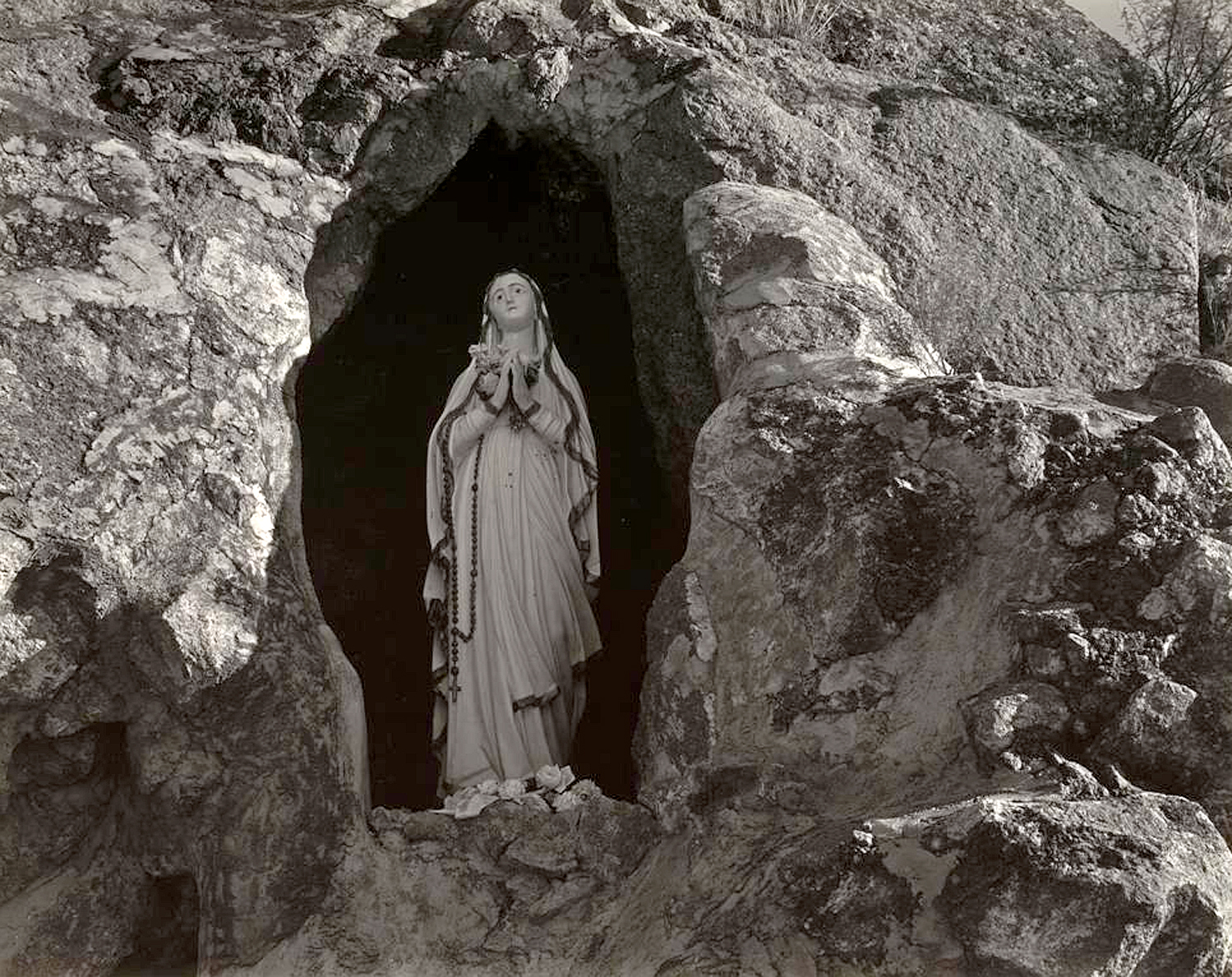
This was all territory he had covered for California and the West, and he seems to have been comfortable with Western scenes, and spent rather a lot of time and film in the Southwest, including southern New Mexico.
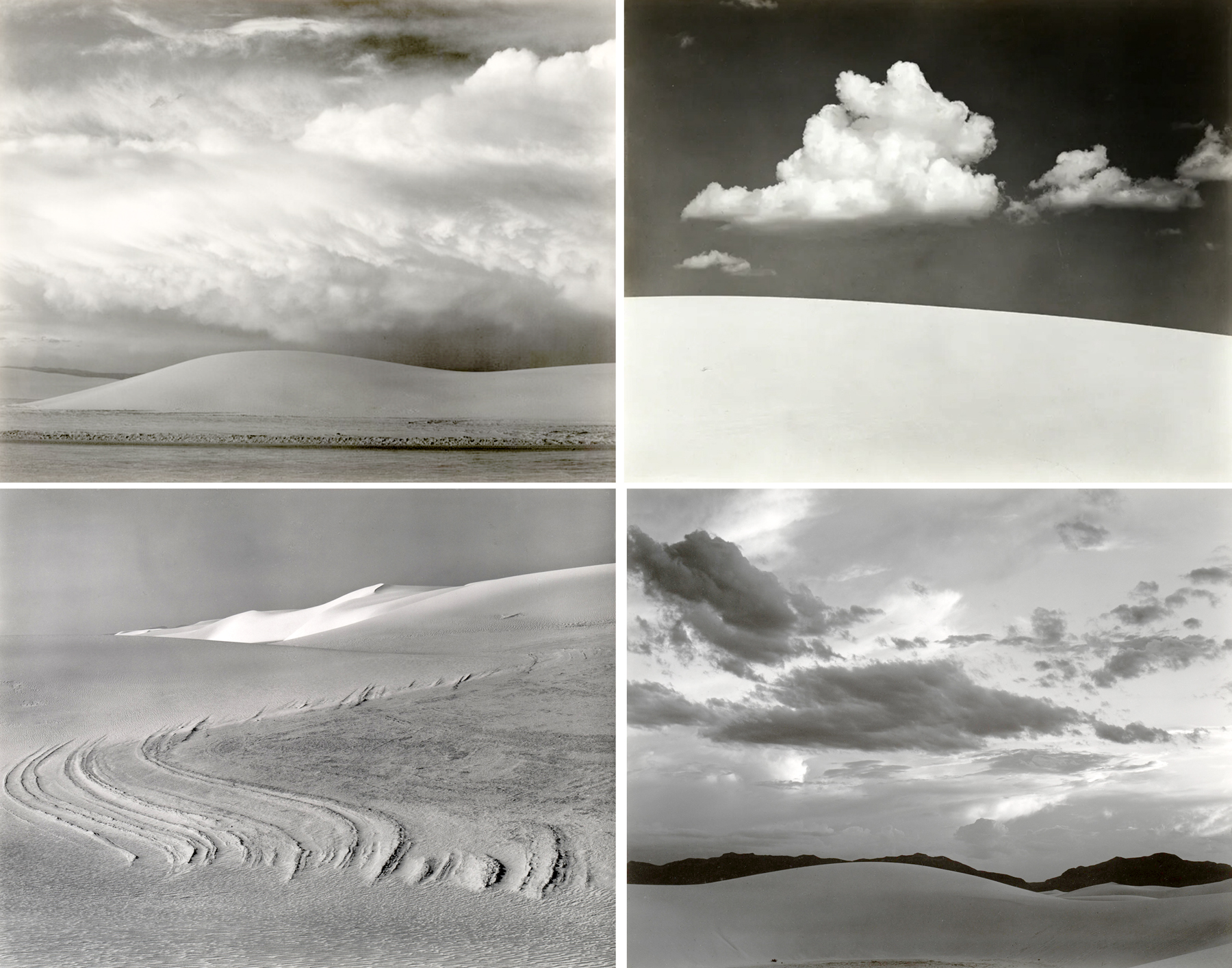
And White Sands, which he had photographed in an earlier trip, and now added more images.
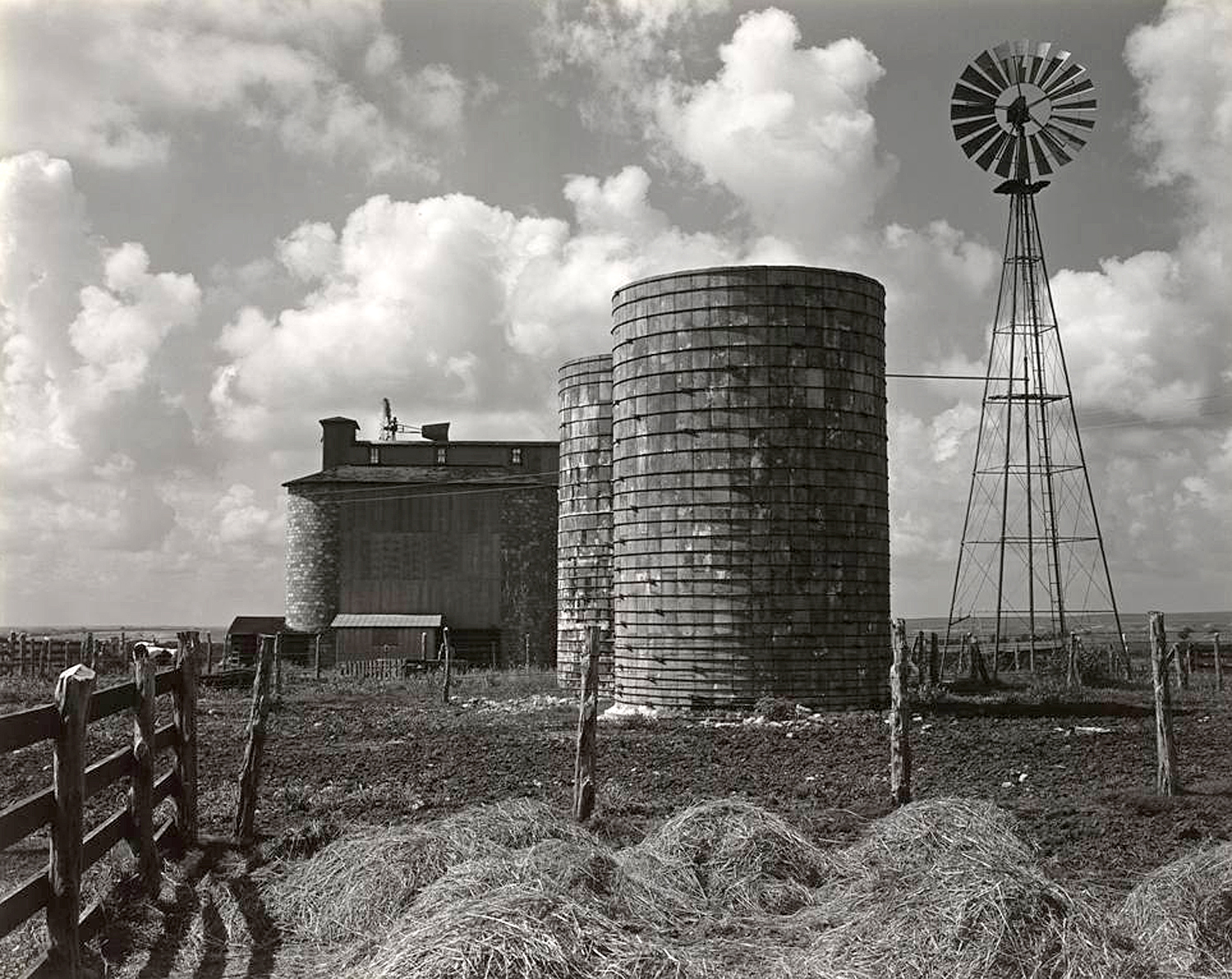
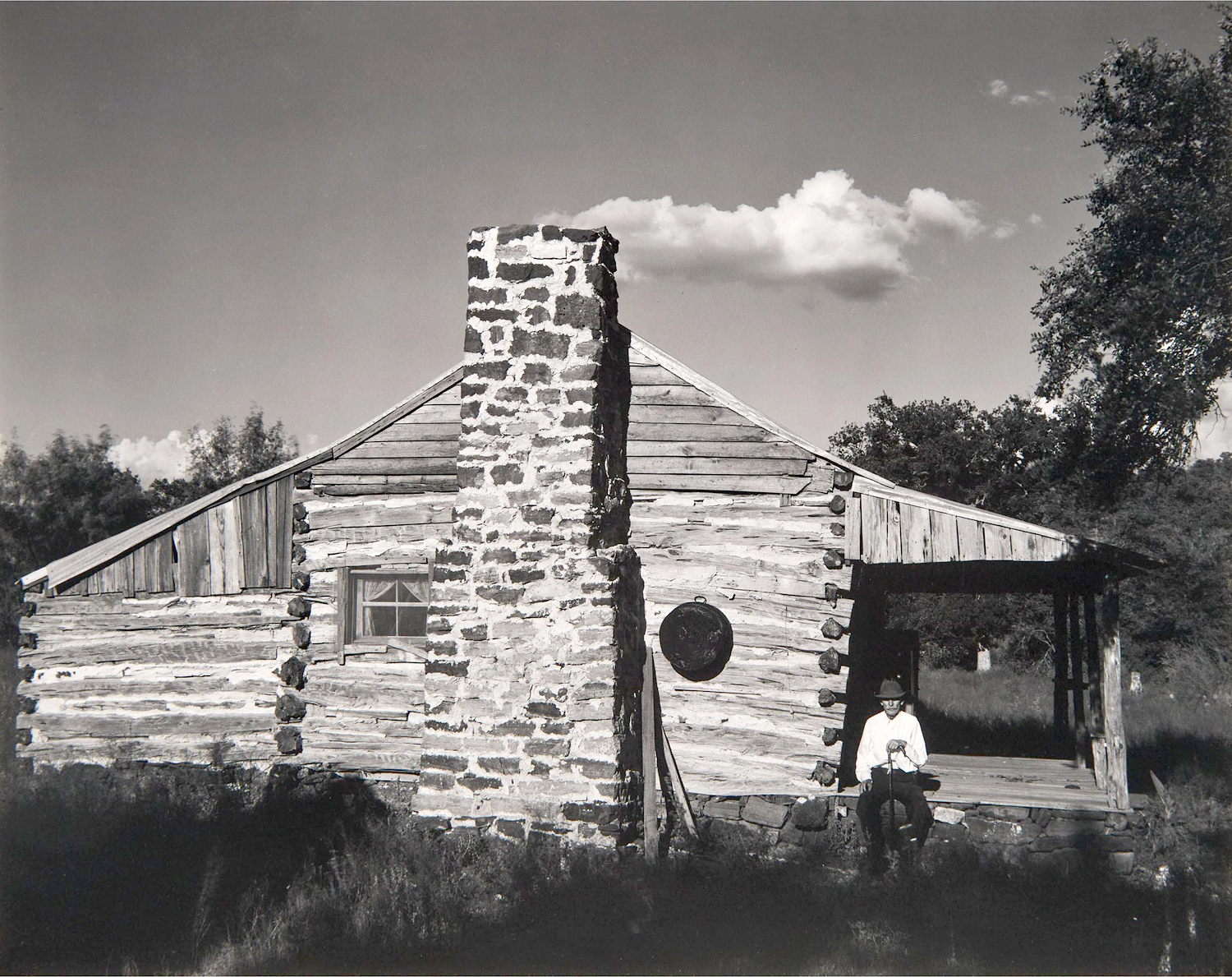
They seem to have skittered across much of Texas till reaching Fort Worth, where they found a barn and silos, and the log cabin of Mr. W.P Fry, in town of Burnet.
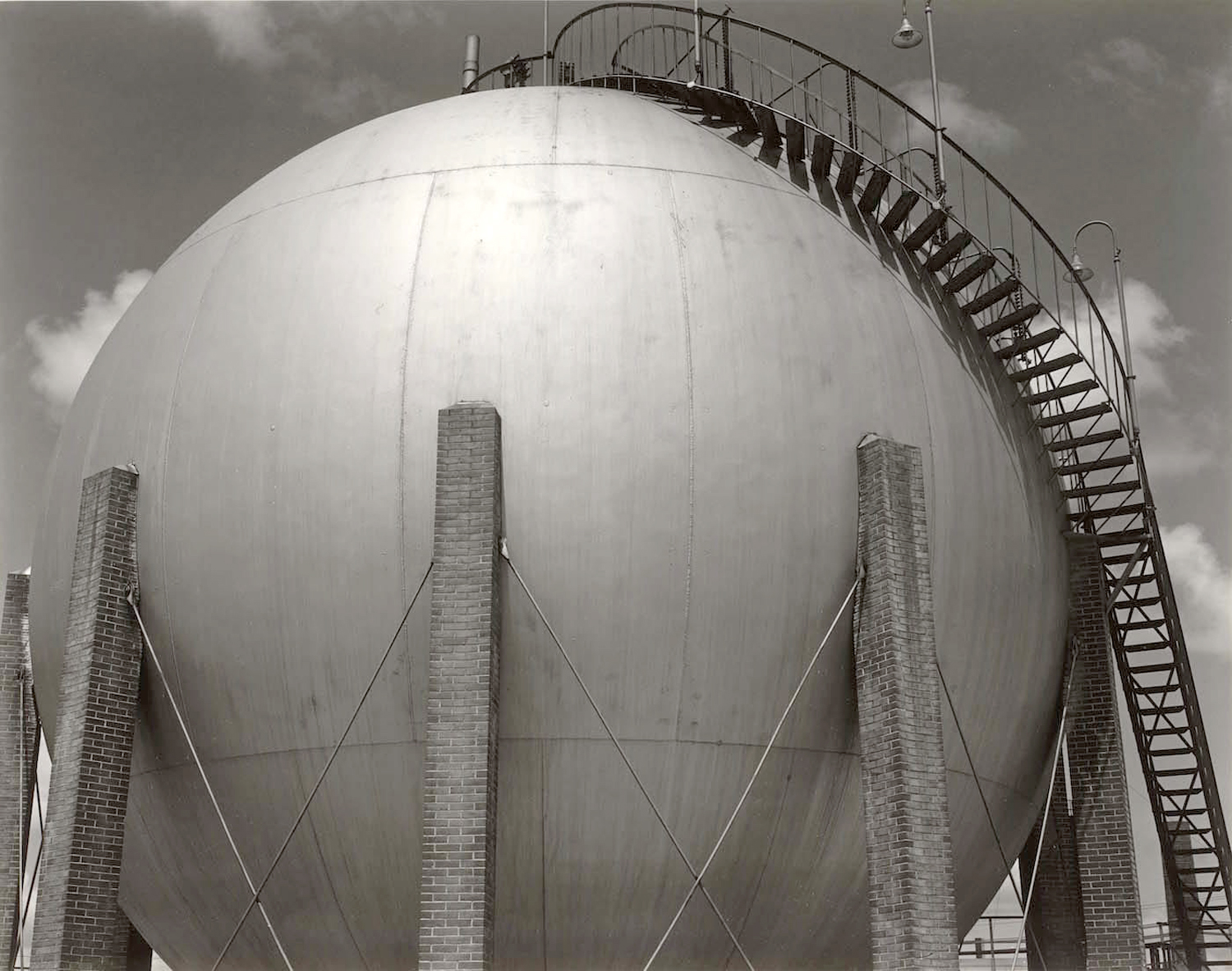
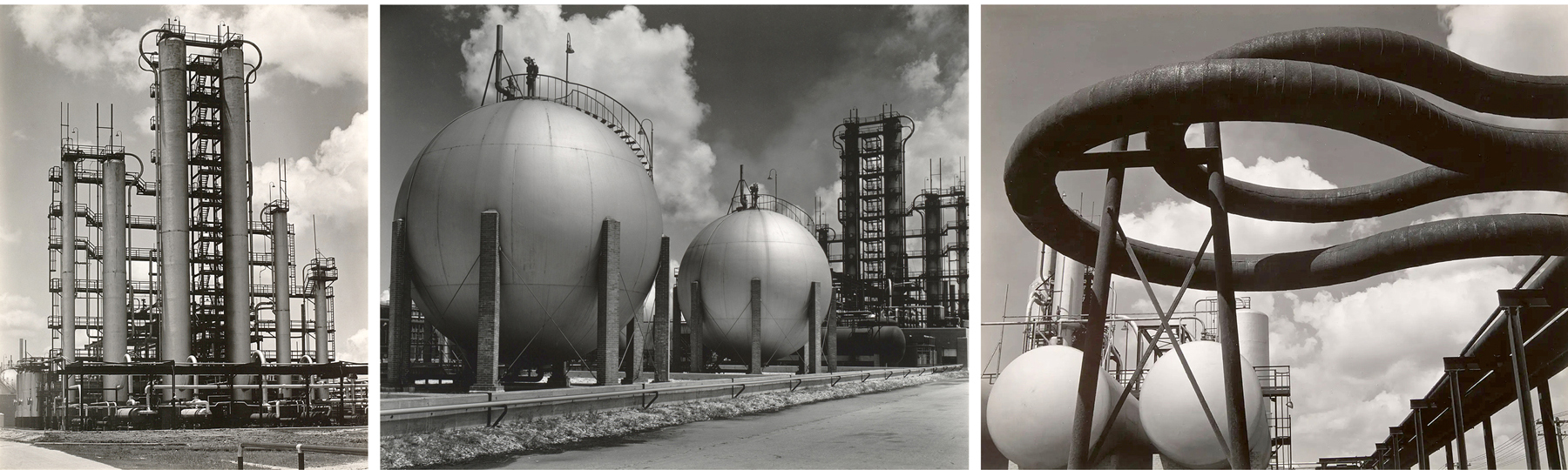
But Edward hit a mother load in Port Arthur, on the border of Louisiana and the Gulf Oil refinery, where he had endless fun with the petroleum tanks, pipelines and general industrial tangle.
Louisiana was brand new to Weston, and as they drove across the southern part of the state, he found bayous, swamps and plantations. The first, at Contraband Bayou, about 60 miles east of Port Arthur, was made the first week of August.
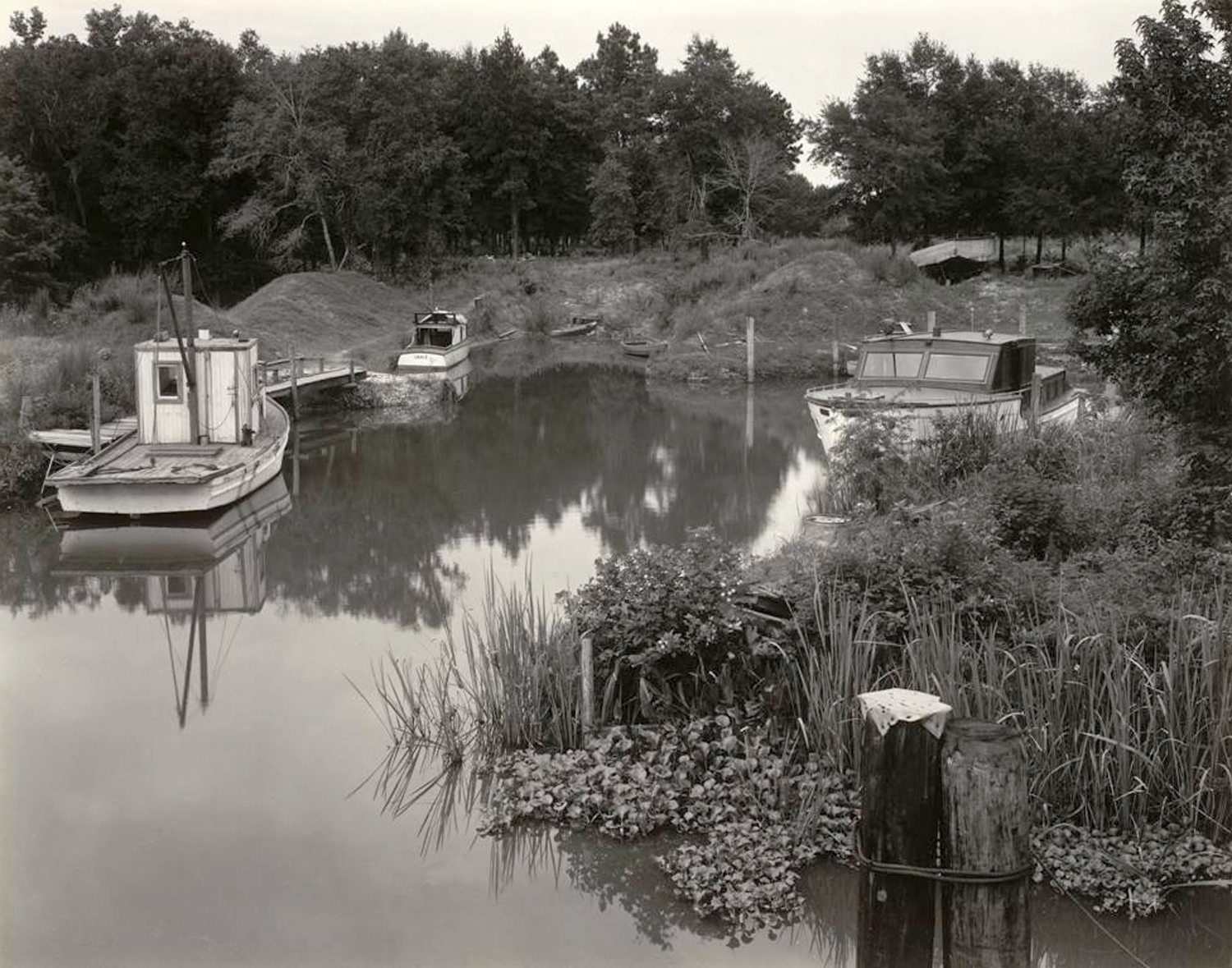
Contraband Bayou
The second, here, was on St. Martinsville Road, near Lafayette on Aug. 7.
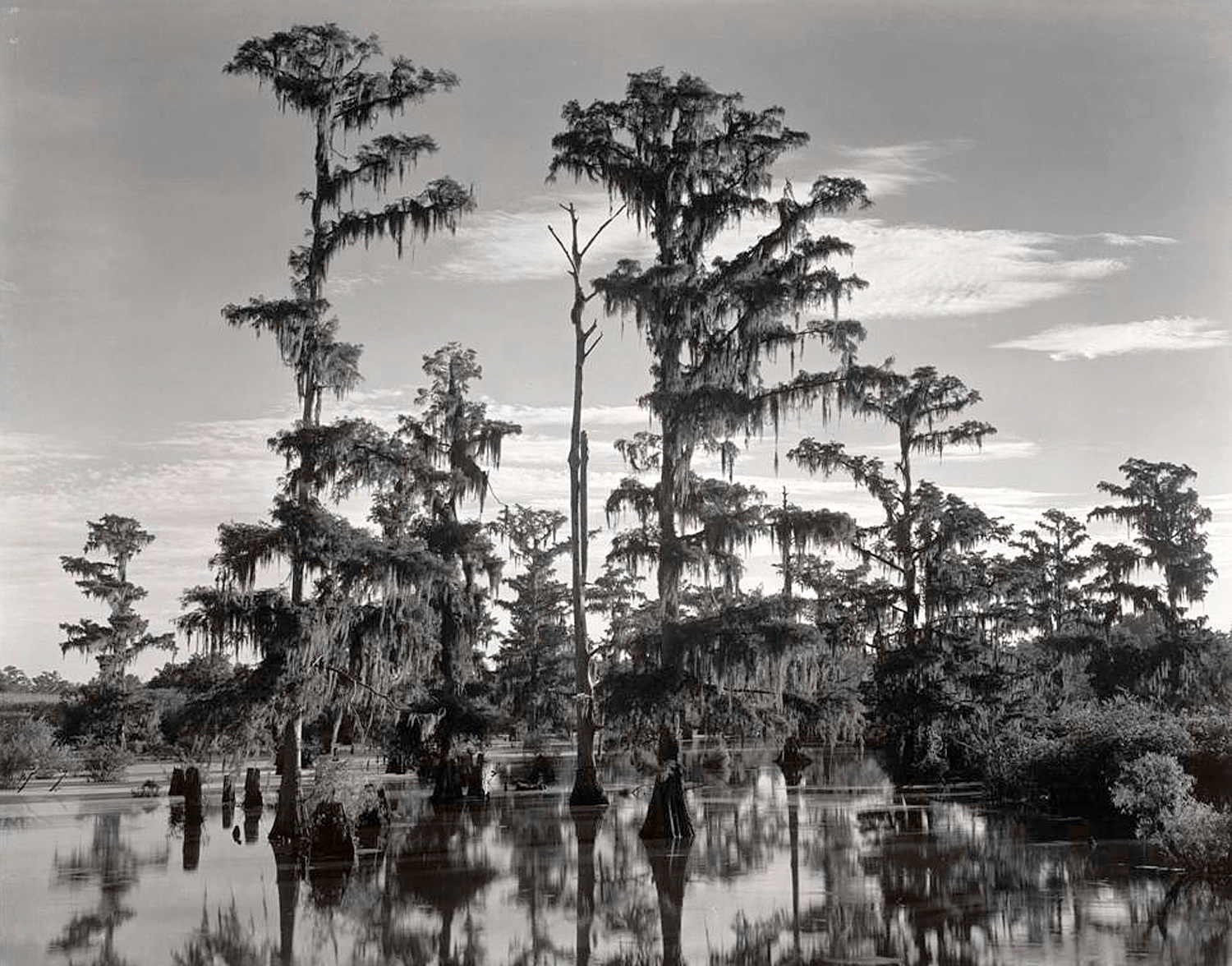
And the third was the Packenham Oaks near the Meraux plantation, named for a British general who died in the Battle of New Orleans in 1815.
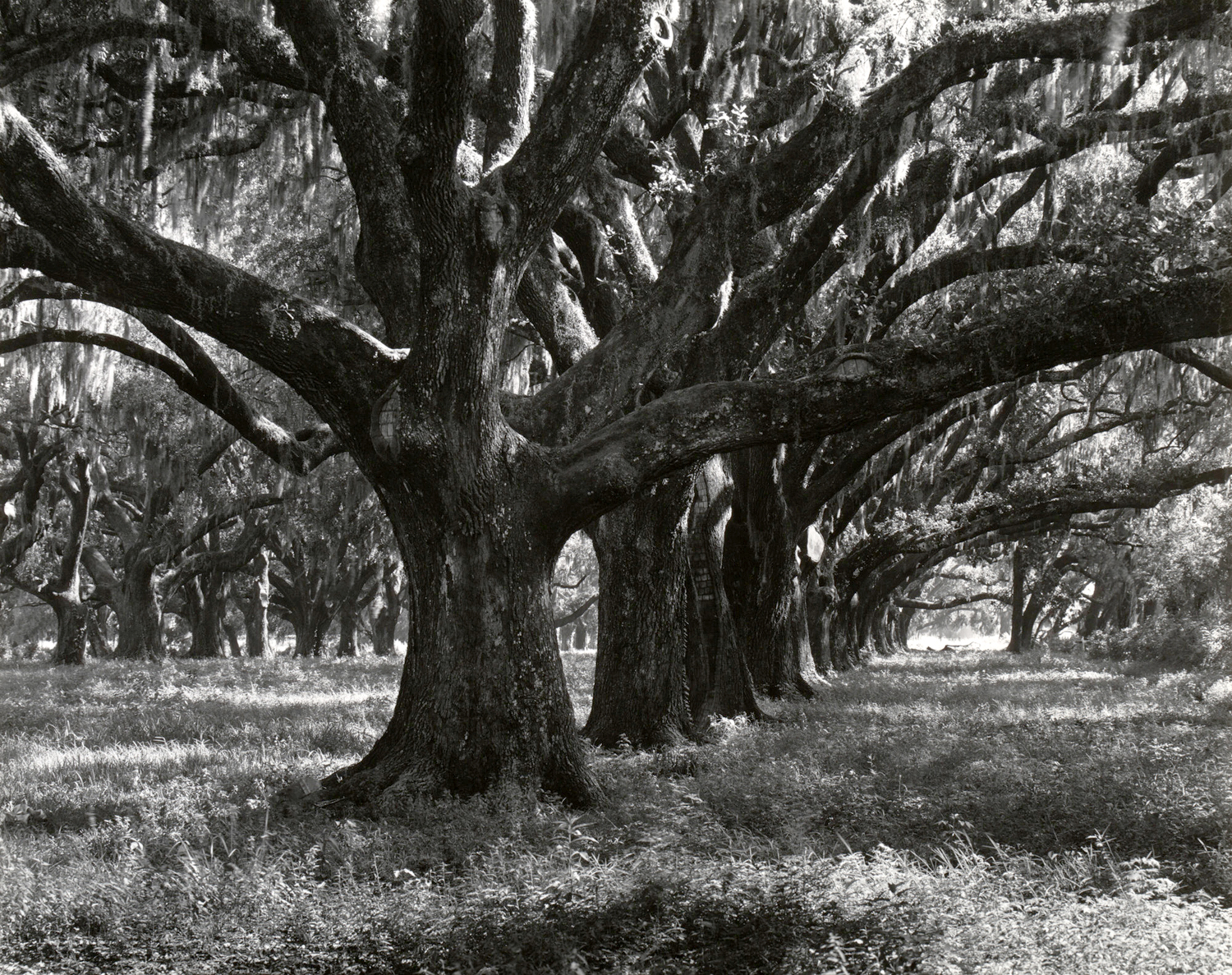
Packenham Oaks
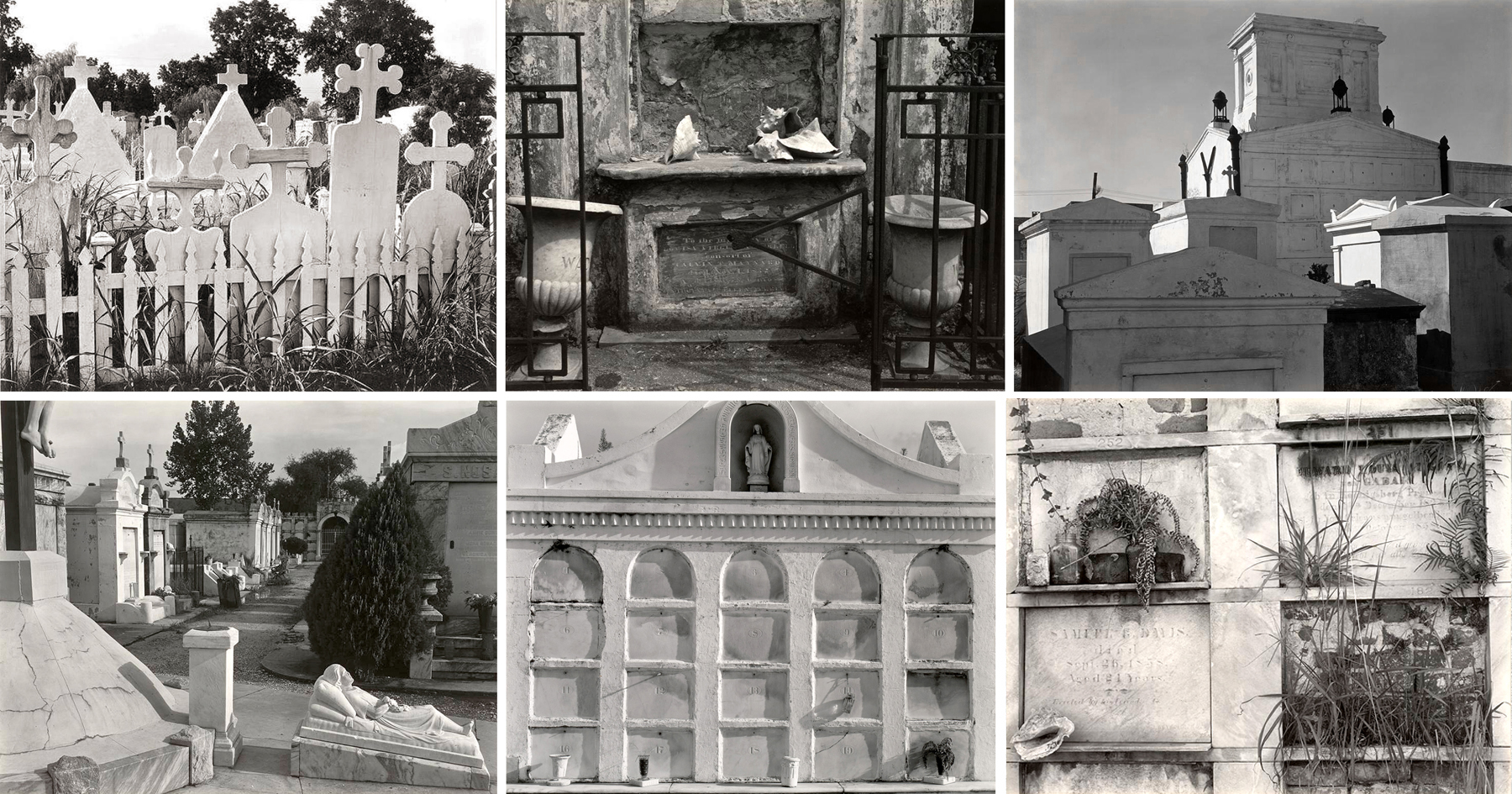
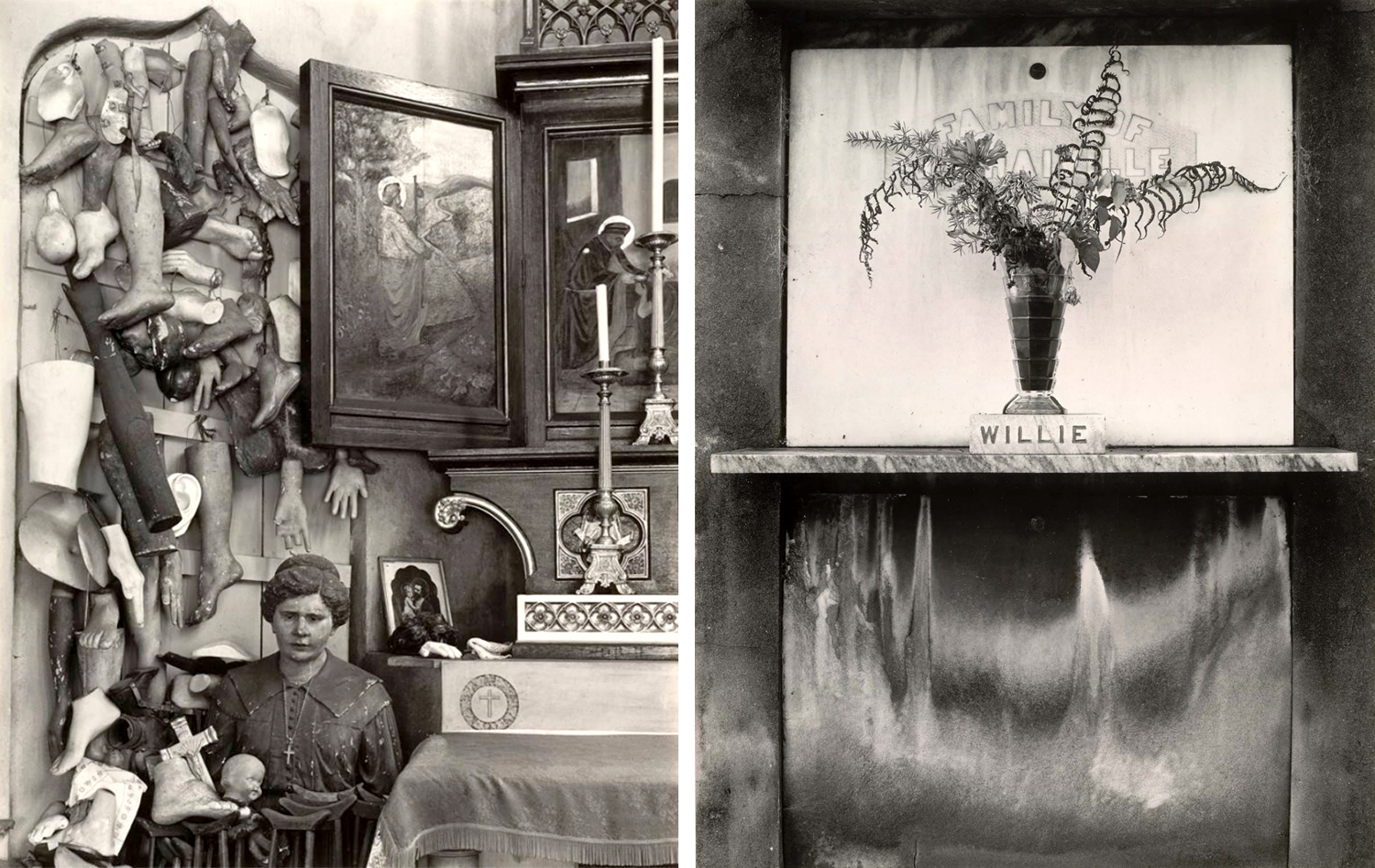
Weston spent about two weeks in southern Louisiana, mostly in New Orleans, and mostly in cemeteries. He visited at least three historic graveyards, with their above-ground monuments, and made dozens of photographs.
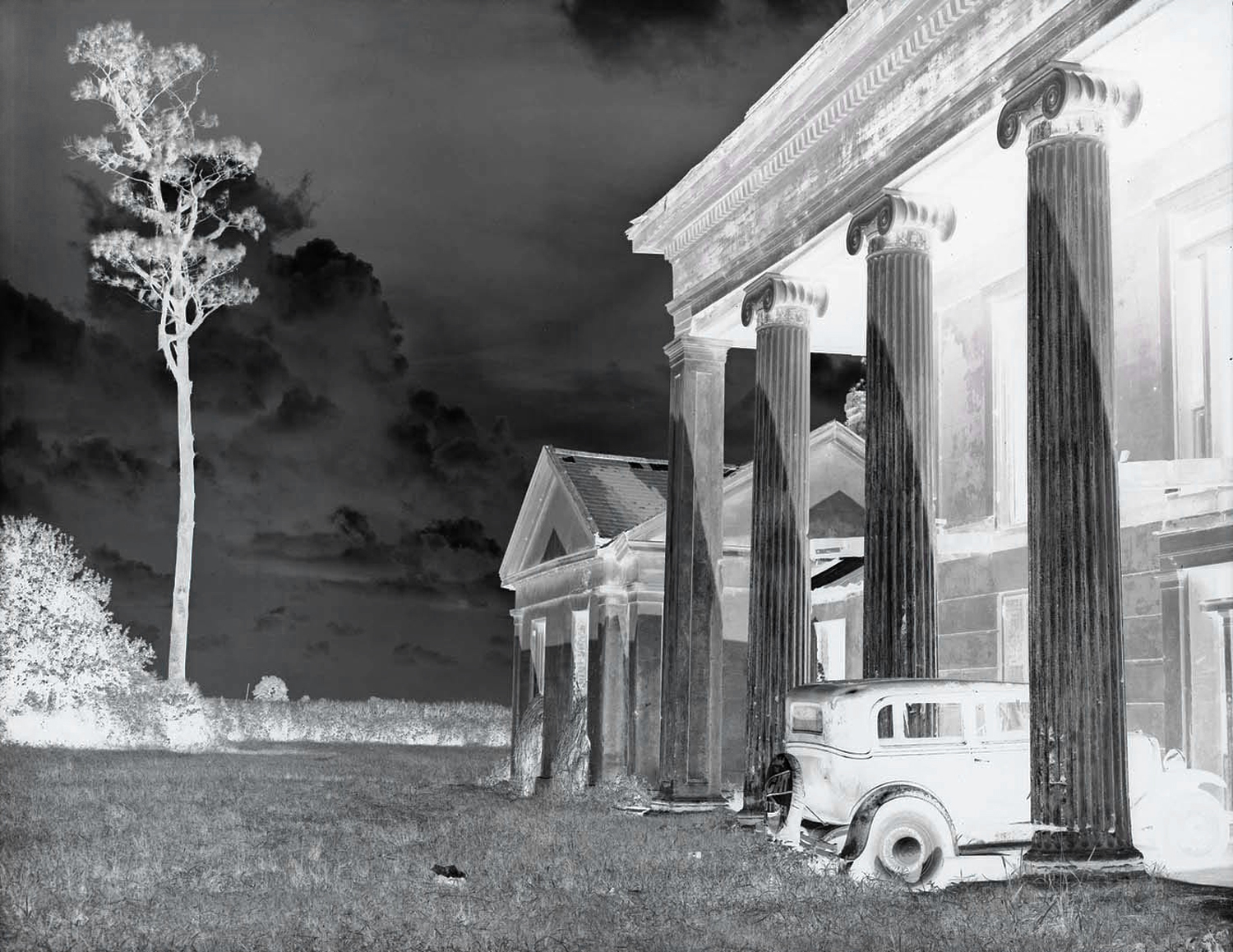
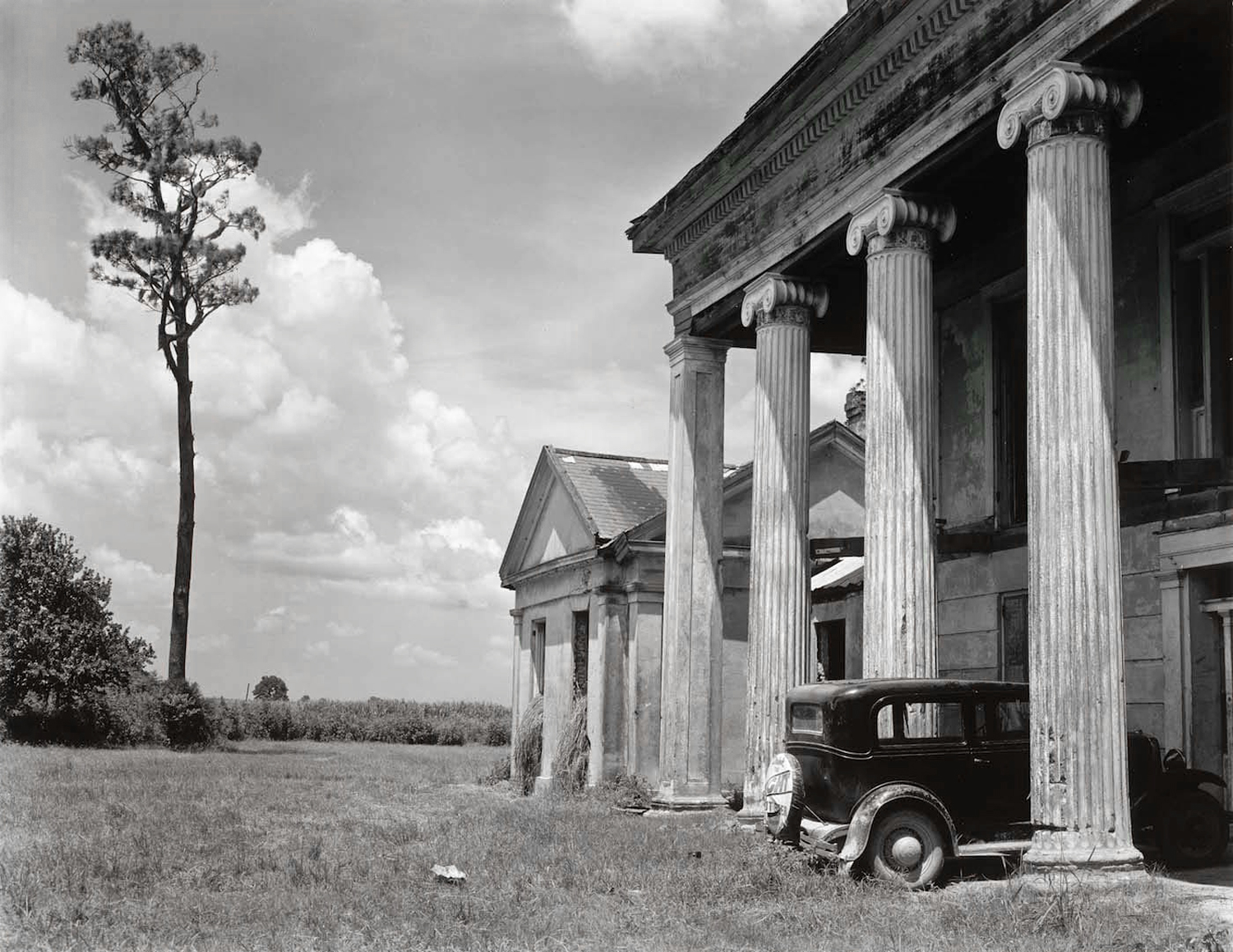
He made one of his best known images from that year in Napoleonville, about 75 miles west of New Orleans, at Woodlawn Plantation, which he visited with fellow photographer and artist, Clarence John Laughlin. Laughlin was drawn to the macabre and the obscure, and shepherded Weston around to many plantation ruins, where they photographed fallen-down mansions, trash-strewn lawns and burnt-out buildings.
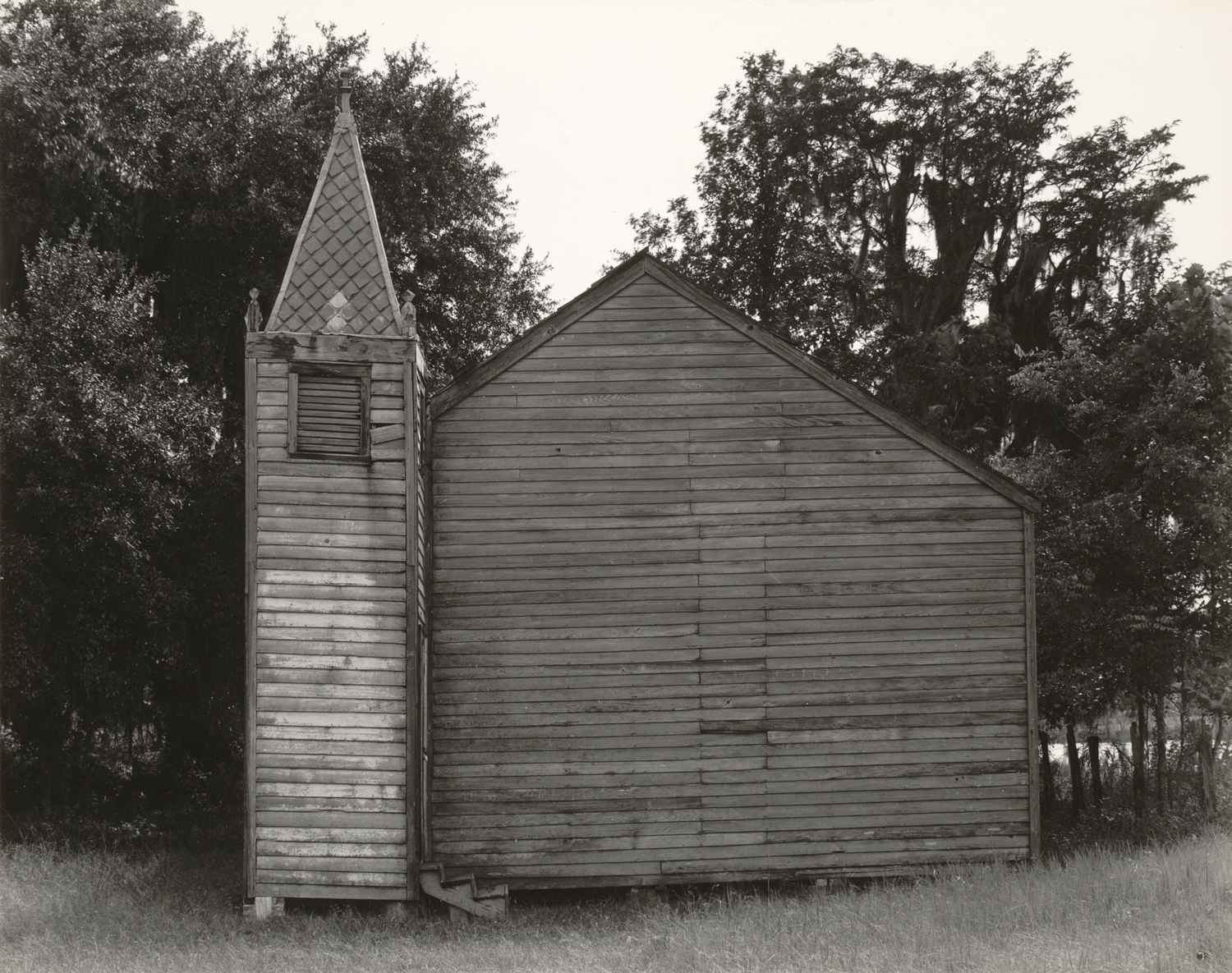
Leaving New Orleans on Aug. 19, and driving north, Edward photographed what he called a “Negro Church” near Baton Rouge. He sent a copy of the picture to Nancy Newhall in 1948 for a book she was writing on Black culture.
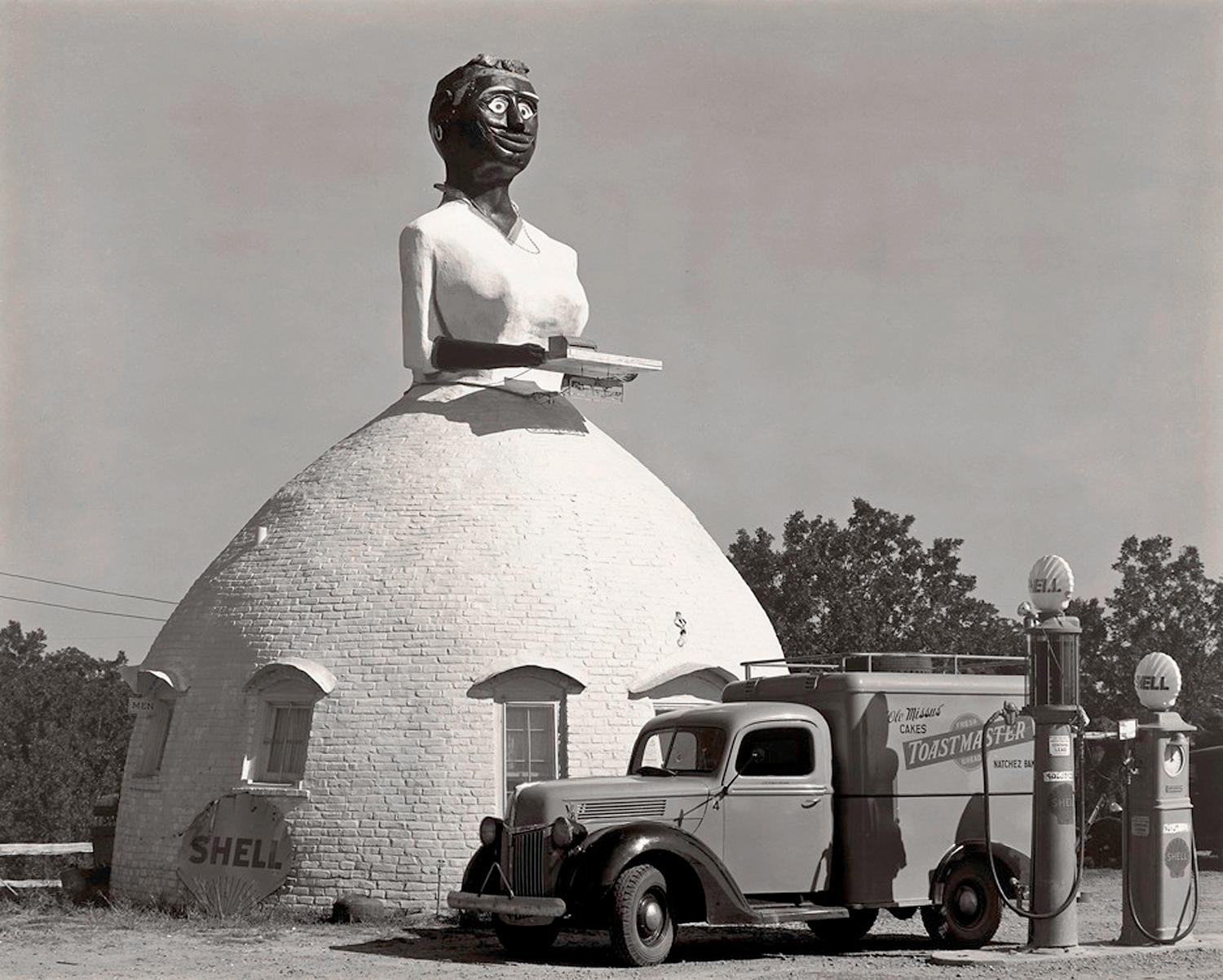
On the way north, near Natchez, Miss., they found Mammy’s Cupboard. When I drove the length of the Mississippi River in the 1990s for my newspaper, I stopped and ate at the small restaurant, whose face, by that time, had been repainted a lighter shade of pale.
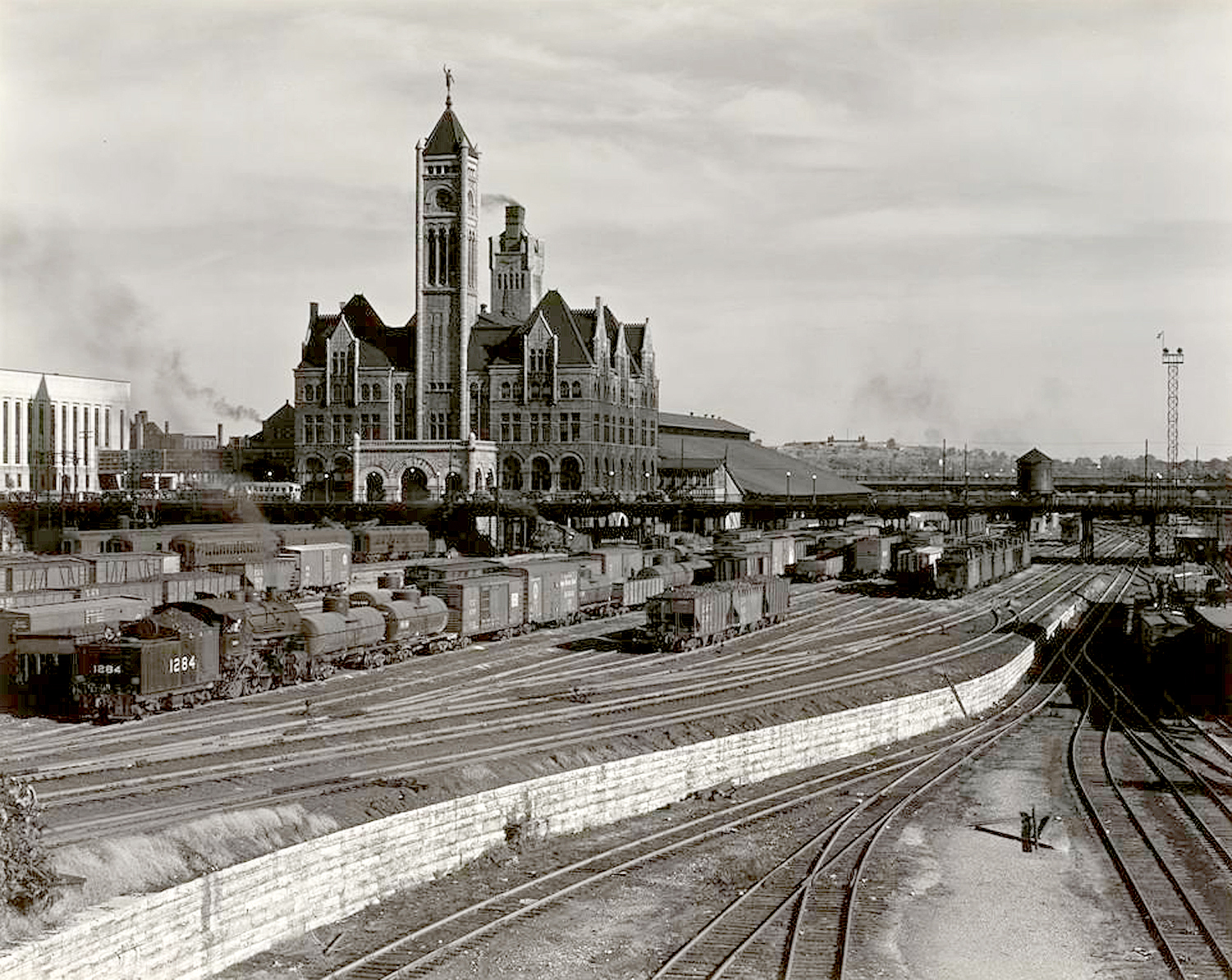
They continued on to Tennessee to stay with Charis’s brother, Leon Wilson, at Monteagle, where they stayed until Sept. 2. For the next week, he worked in Nashville, with a photo of Union Station.
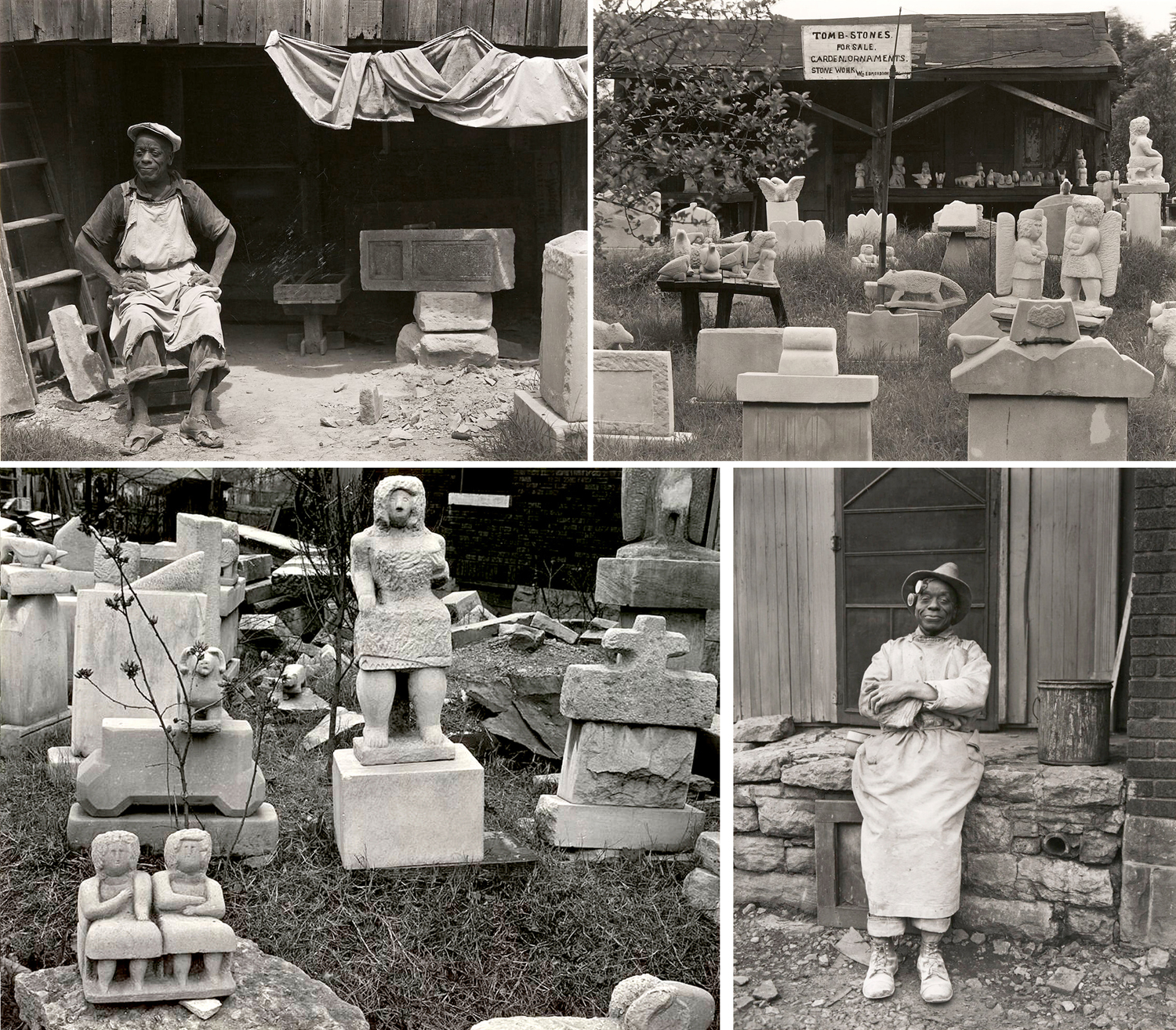
And he spent a good deal of time and many photographic plates on the work of sculptor William Edmondson, who had had a show with the Museum of Modern Art in 1937 and was the first Black artist ever given an exhibition there. Weston made portraits of him, and many of his stone carvings.
By the time they made it to Ohio, some tension between Edward and Charis had begun to show through. Charis, as the writer of his previous books, had thought herself a partner in the Whitman enterprise, but Edward seems to have thought of her simply as his driver. It couldn’t have helped that Charis had just turned 27 on the eve of their departure, and Edward was 55, with almost 30 years separating them. The marriage held together, more or less, for the next several years, but the shine had begun to dull.
On Sept 19, they camped near Cambridge, Ohio and in her notes, she wrote: “7 p.m. Autocamp out of Cambridge, Can, Shower, innerspring mattress, — $1.50. Out of season price most like. Ohio has roadside parks with picnic table — like Texas — and, unlike Texas, with privies. Everything for the traveller. We were sitting in one lunching on triscuits and cheese and lettuce and olives today, just out of Circleville, birthplace of General Sherman, on U.S. 22 I started baiting Edward on his use of the words ‘Typically American.’ His answer to ‘What are you photographing’ is always ‘Anything typically American.’ ‘There,’ said I, pointing across the highway to a group of nondescript casually assembled farm parts, ‘That’s what’s typically American. A farm house that is not one thing or another, a barn like 10,000 other barns, meaningless outbuildings thrown in, cornshocks tossed up into the dooryard and down the rise, a tree here and one there. You don’t photograph the typical; you photograph the exotic. The fancy graveyards of New Orleans aren’t typical; the white sands in New Mexico aren’t; Winter Zero’s place isn’t. This dull, anonymous constantly repeated lack of order, lack of pattern — That’s typical.’ ”
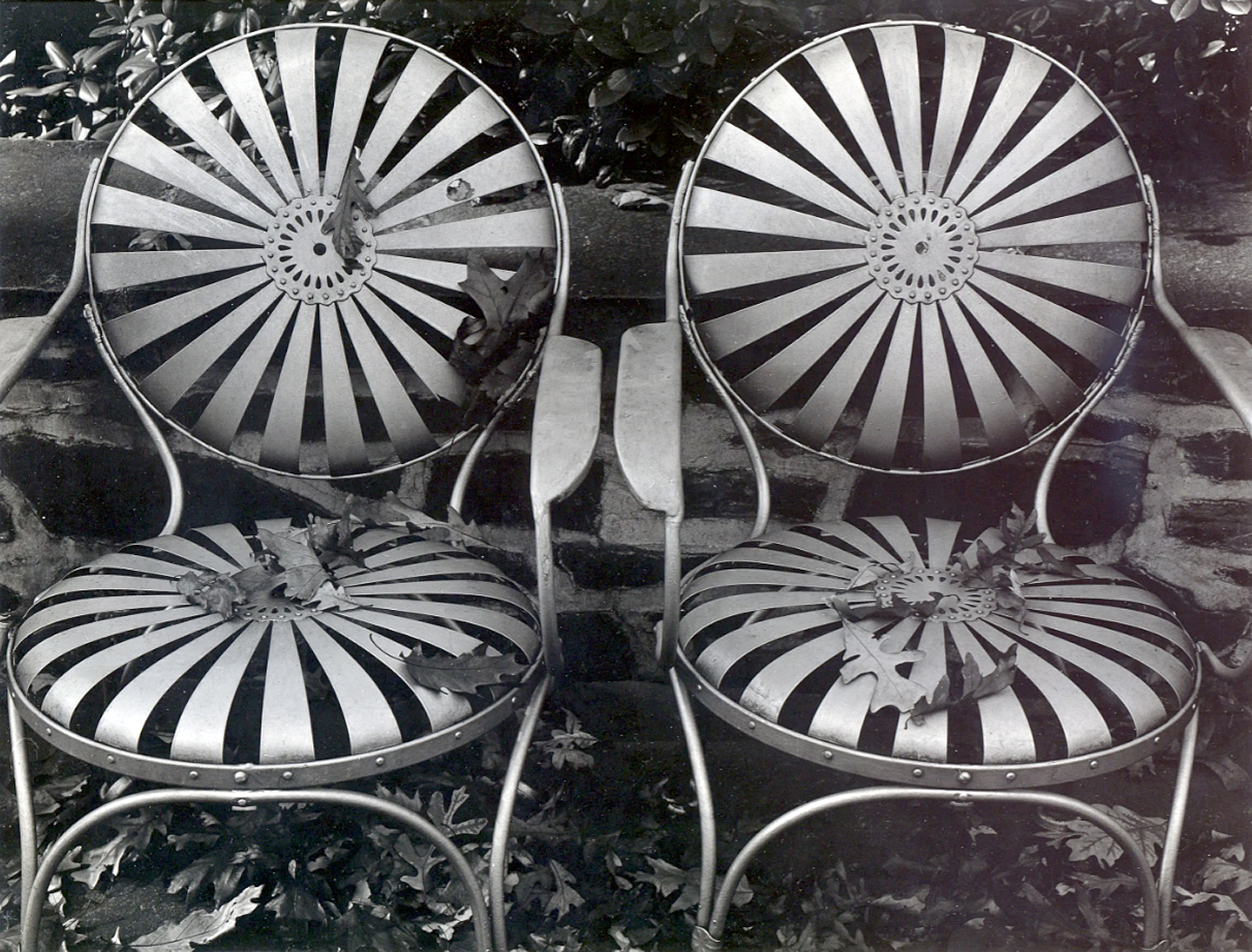
Zero was a man named Winter Zero Swartsel who collected — well, collected pretty much anything — and built a bottle farm near Middleton, Ohio. He periodically opened it to the public, and had so-called “bottle trees” all over the property. Weston found it “typical” and Charis found it bizarre. He made many photos. (The bottle farm is long ago gone, replaced with a city park).
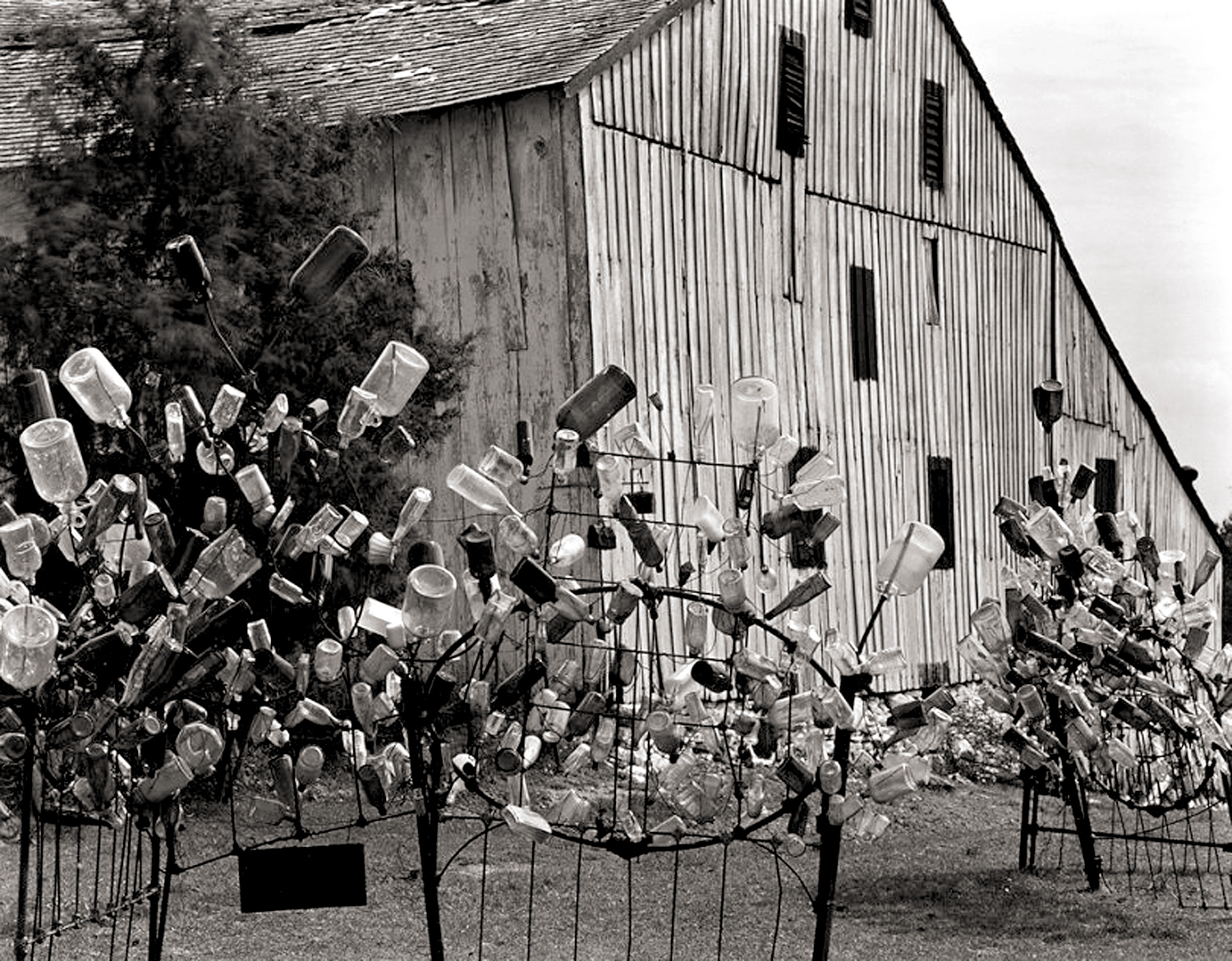
While in Middleton, Weston made a new set of images of the Armco steel works. He had been there before, in 1922, and made an iconic set of industrial pictures. The steel works, officially the American Rolling Mill Company, gave Weston a very modern, even Modernist, subject that had marked an early turning point in his career. This was a rematch.
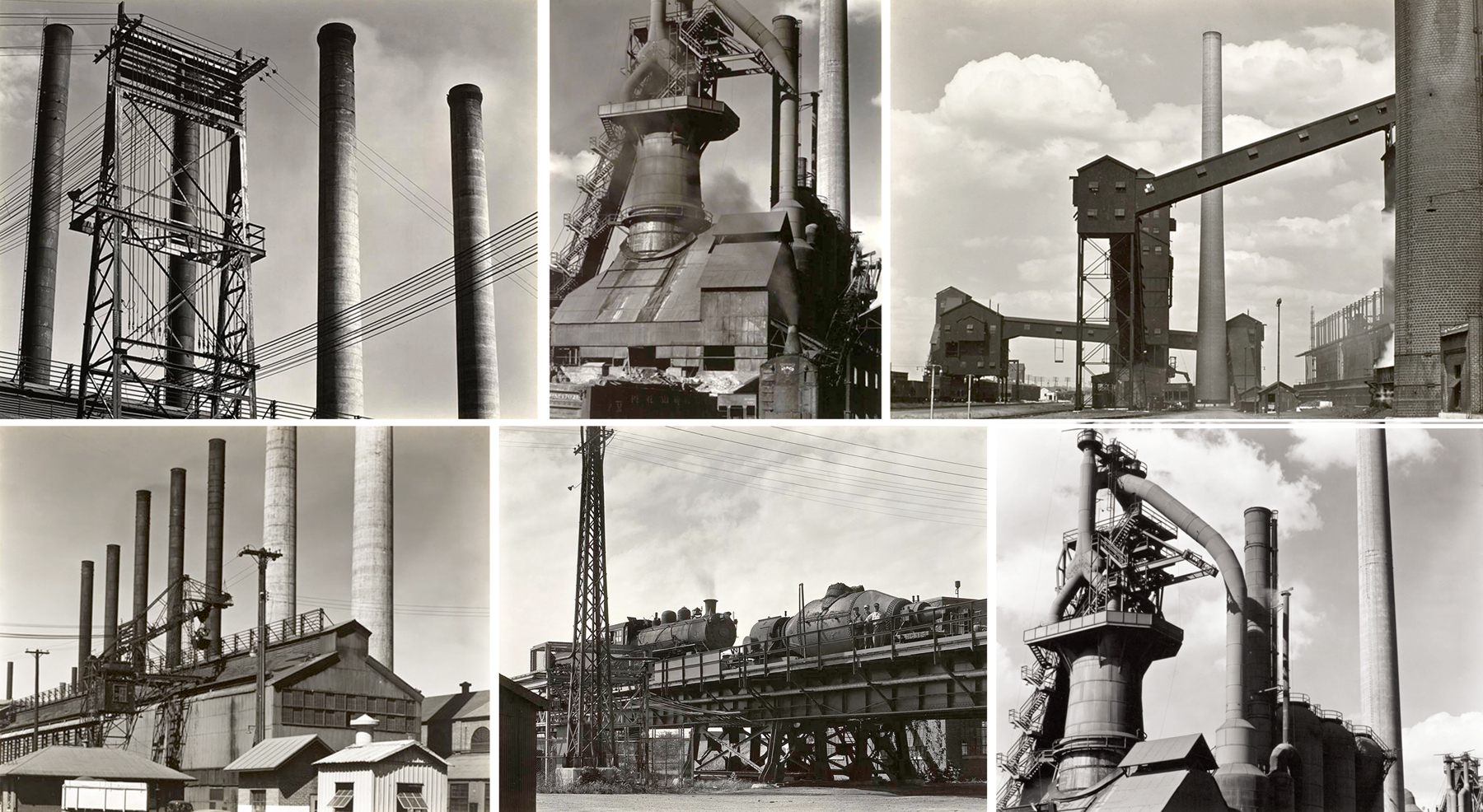
Weston maintained that “the two most typically American things in the whole Miami Valley” were the Armco facilities and the bottle farm. He visited the Swartsel farm twice, and saved 21 negatives he took there. He saved 11 from Armco. Typical or exotic?
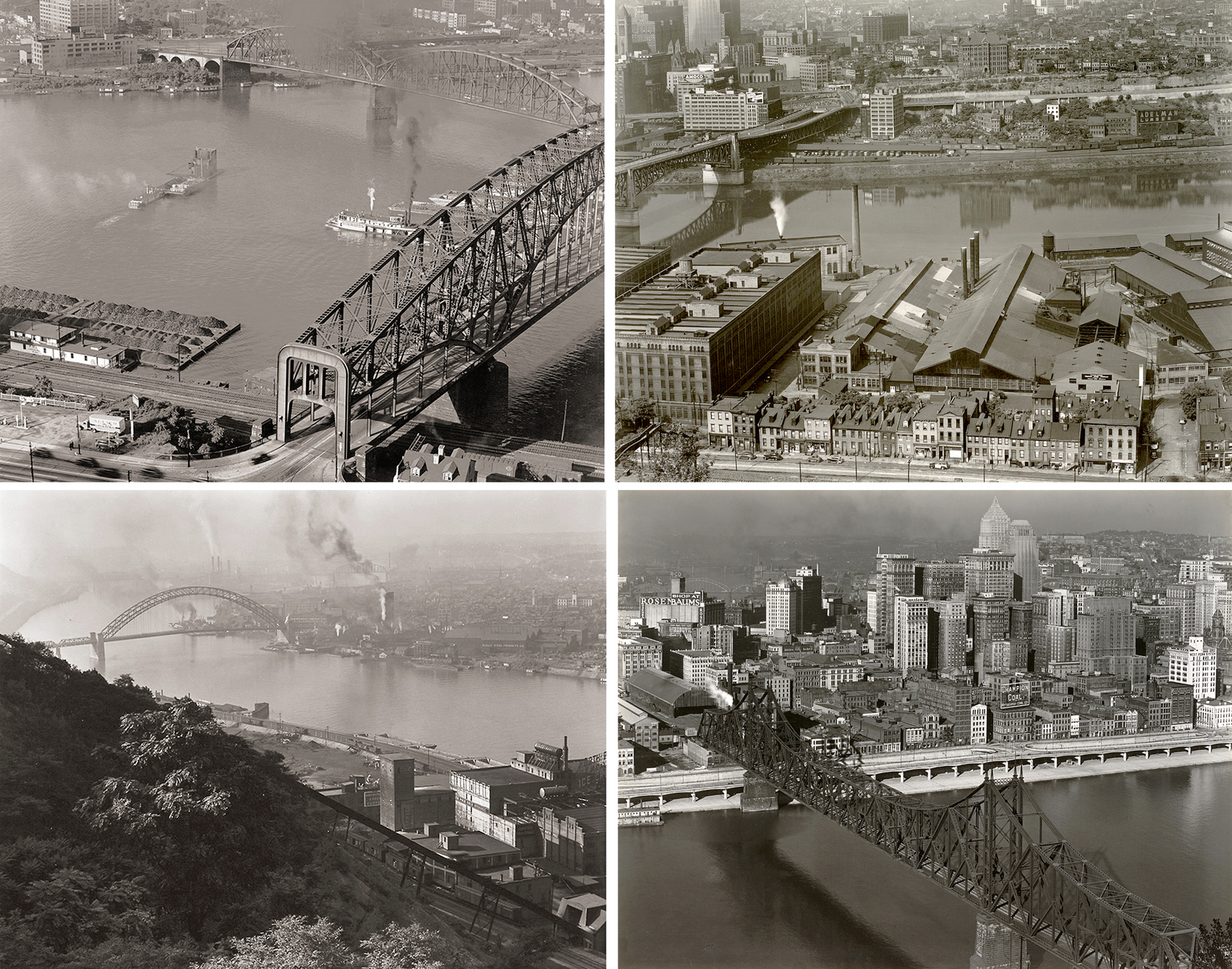
It is difficult to chart the Weston’s route through most of this road trip. If Charis’s notes were public, we could trace it better, but at some point, she stopped keeping her diary. But they drove east from Ohio and passed Pittsburgh, where he again made a passel of pictures.
On Sept. 24, he wrote to the Newhalls in New York saying he had made more than 400 negative so far on the trip. And he had decided to go north first, before getting to Manhattan, to get to Maine before winter weather. In Maine, he made 13 photos that he saved, including these from Kennebunkport.
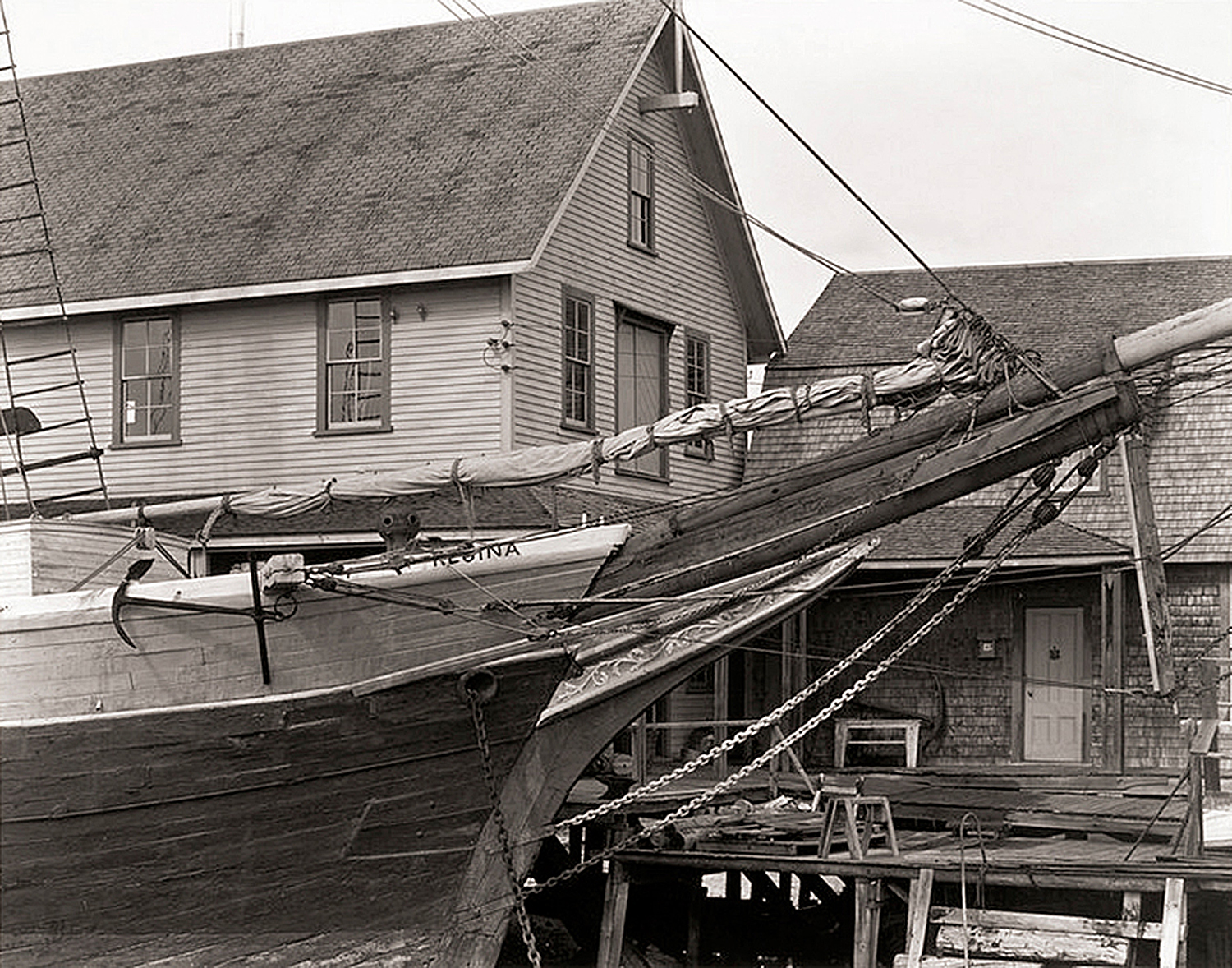
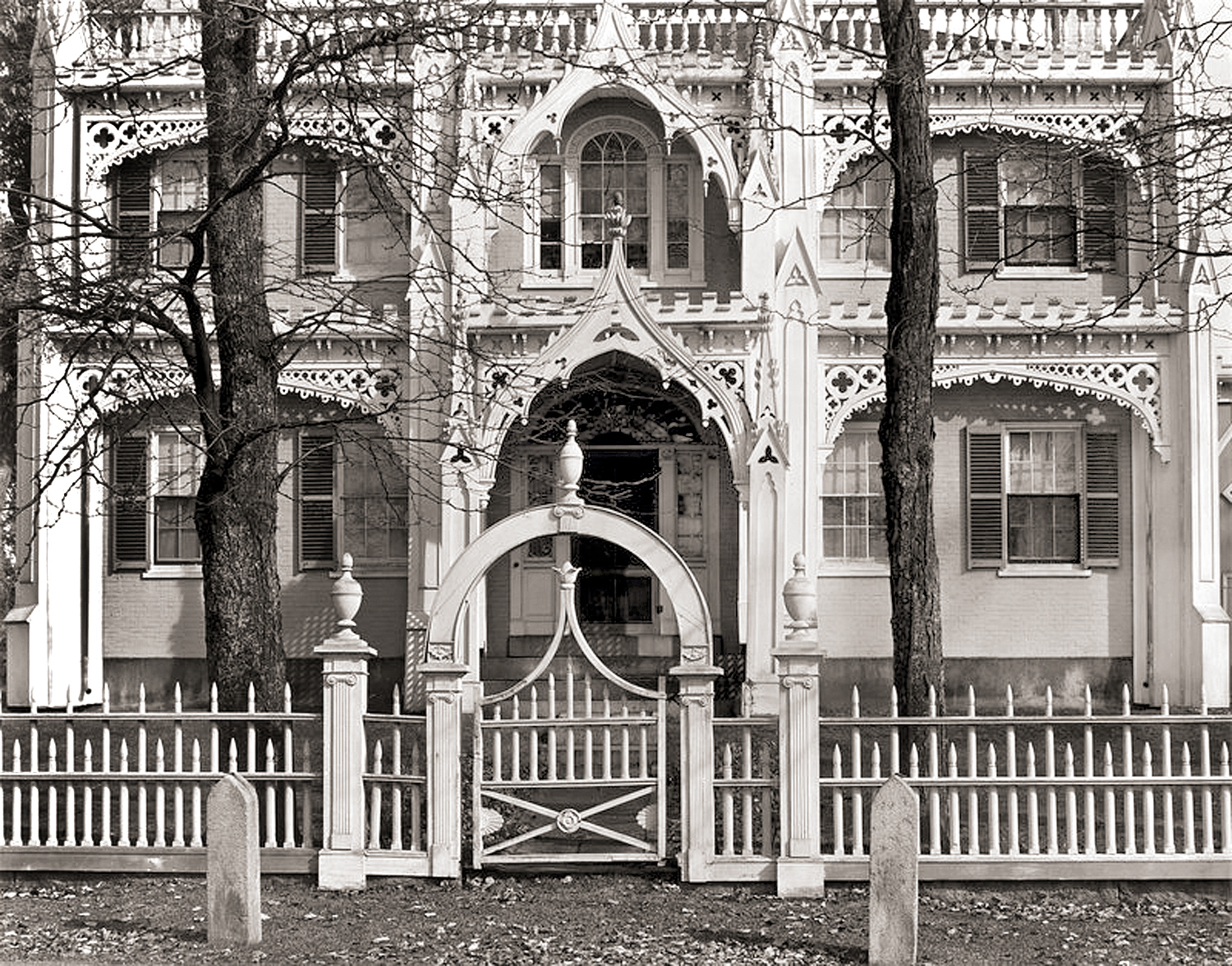
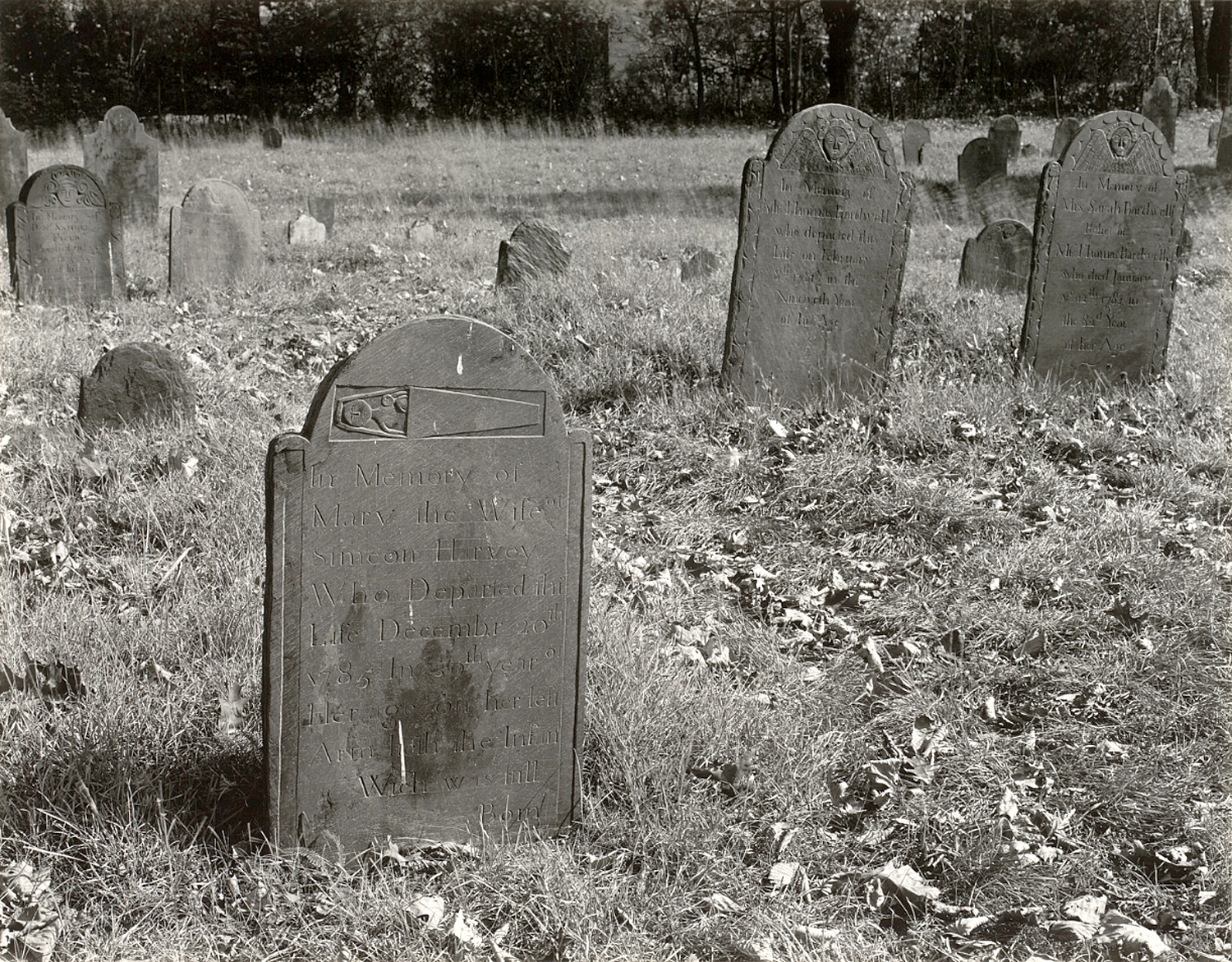
In Deerfield, Mass., he stopped for another cemetery.
And in Connecticut, he visited with artist Charles Sheeler, about Oct 20, and traveled with him around the countryside and found 15 images he decided to keep.
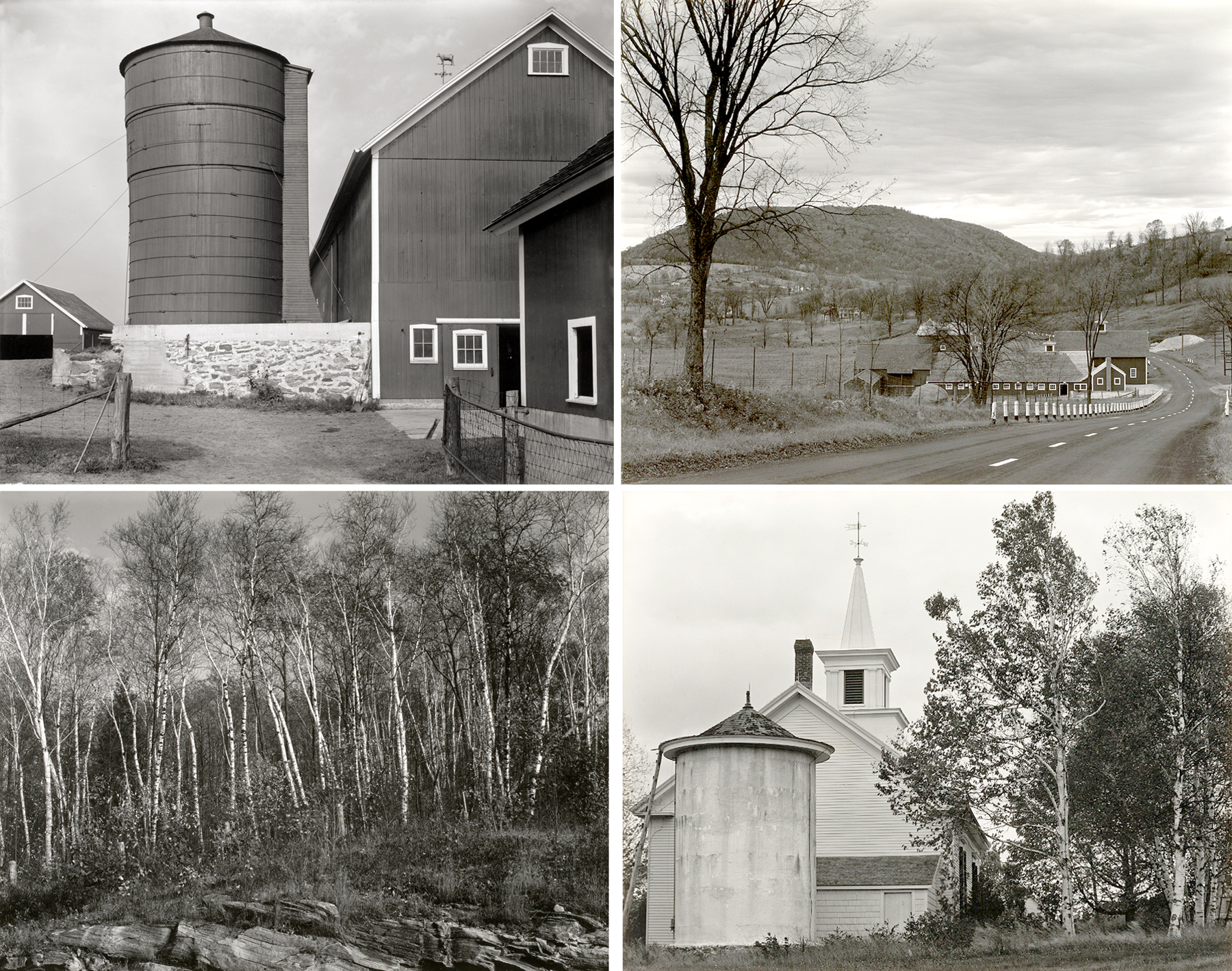
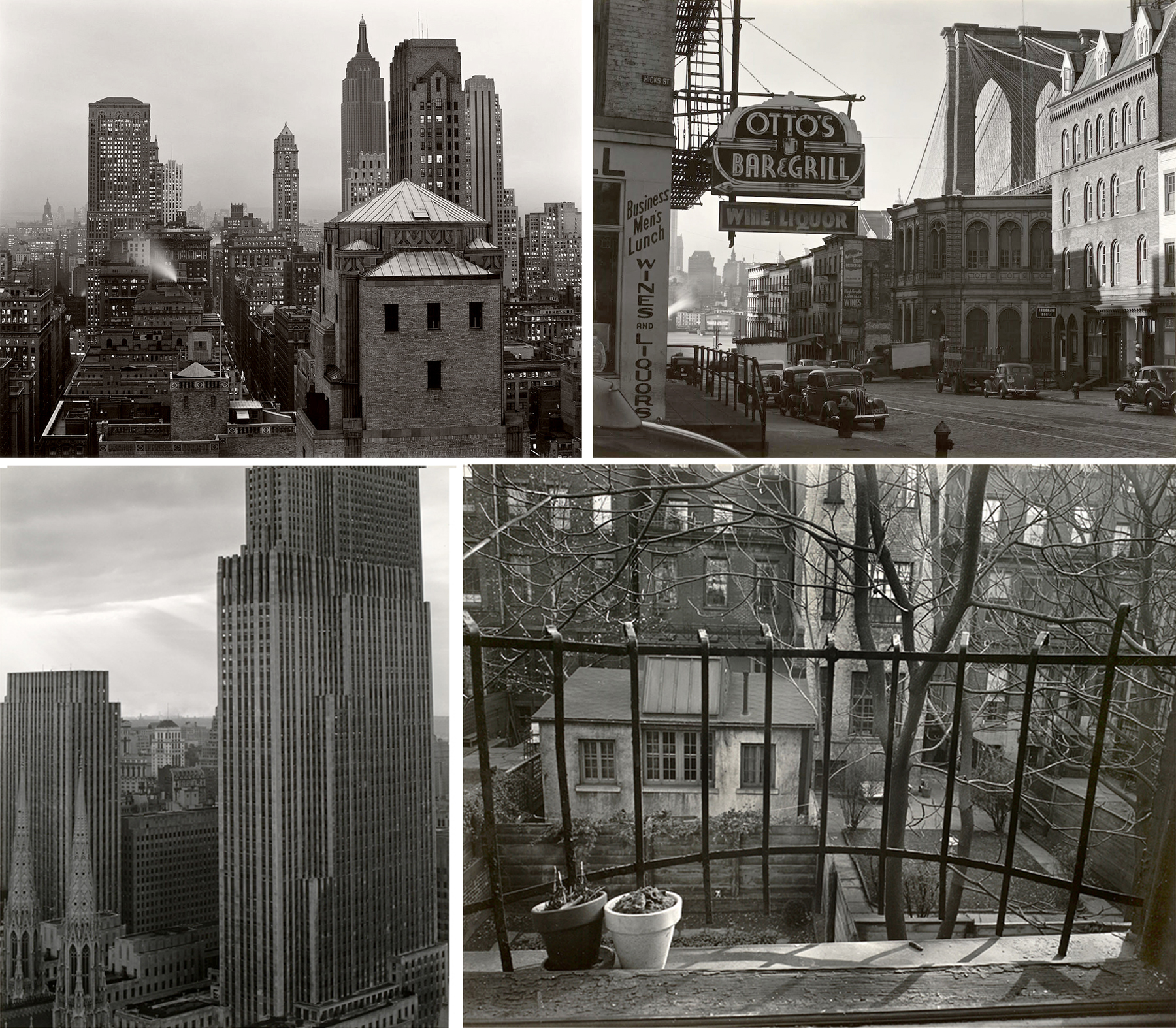
The finally got to New York, where they knew many people in the art world. Edward made some cityscapes, a group of pictures looking out from the Museum of Modern Art, and a few street scenes.
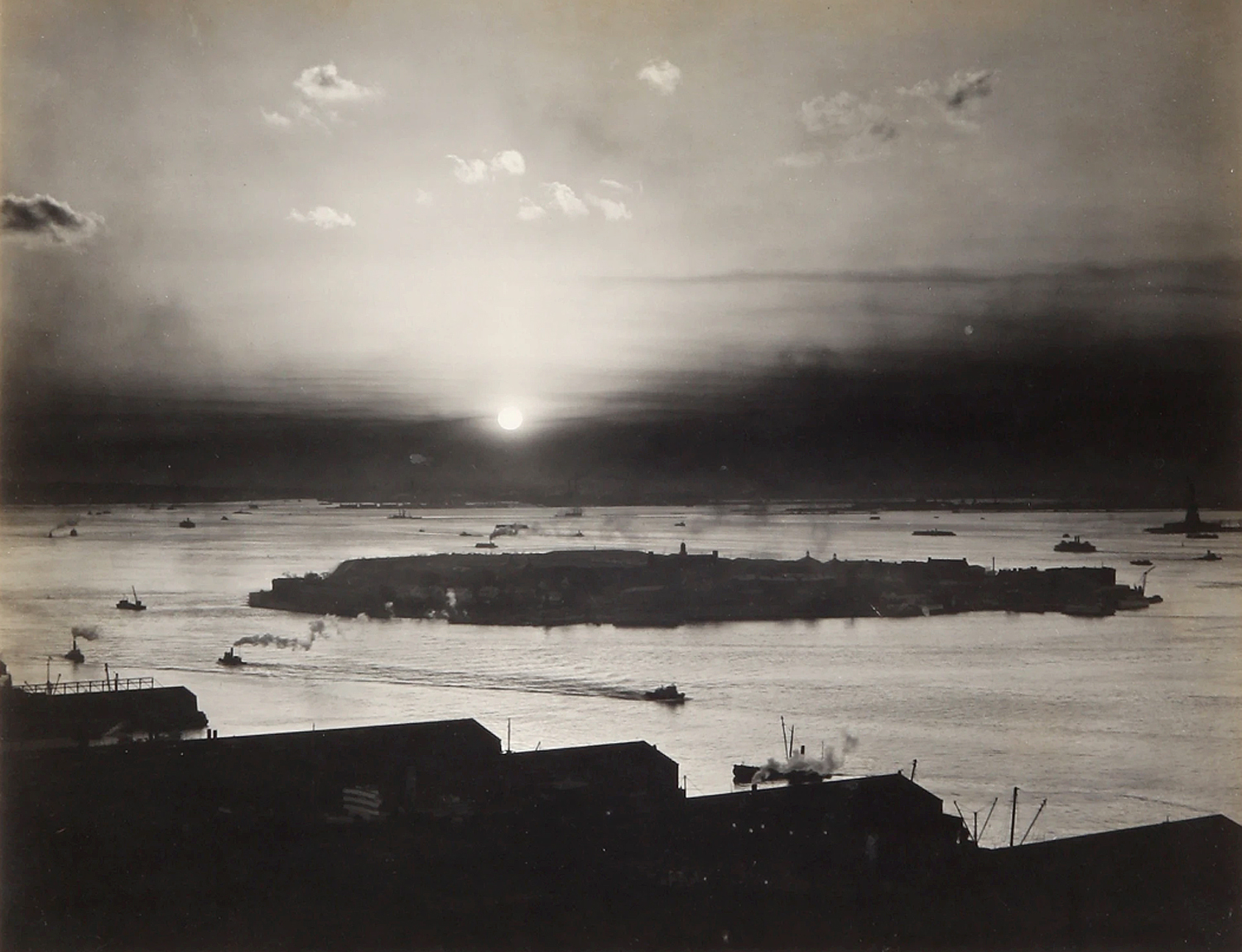
And a striking sunset over Brooklyn.
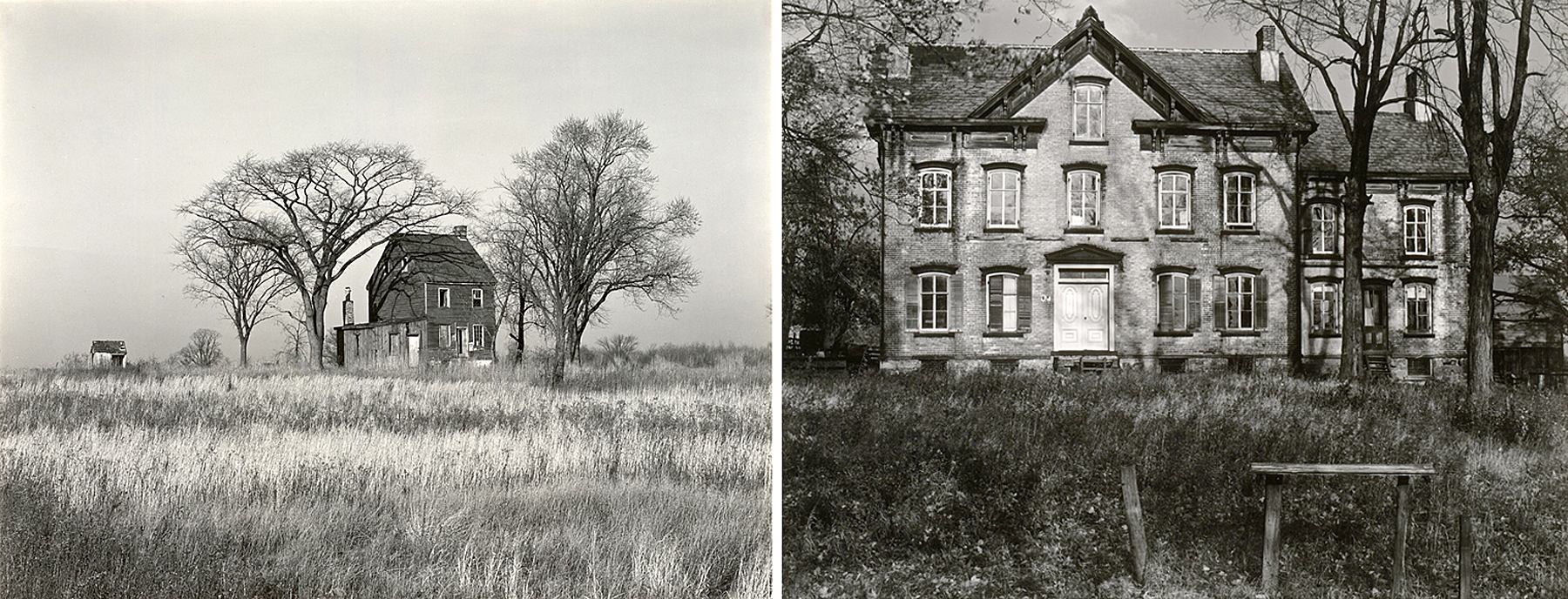
From there, they headed South again, first to New Jersey.
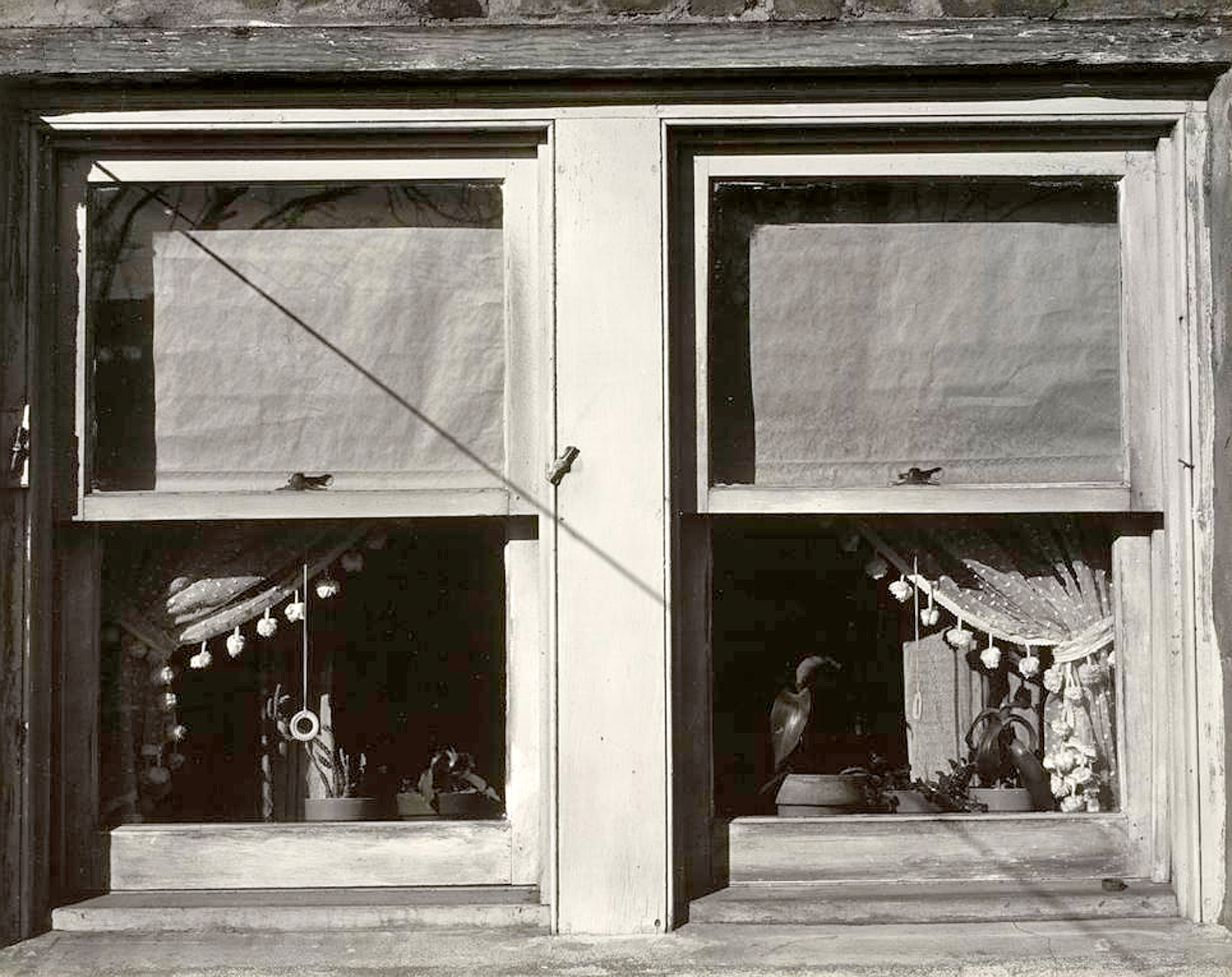
Mrs. Sangi’s windows
They passed through Pennsylvania Dutch country and found a barn with hex signs, and enough vertical and horizontal lines to make a faux Mondrian.
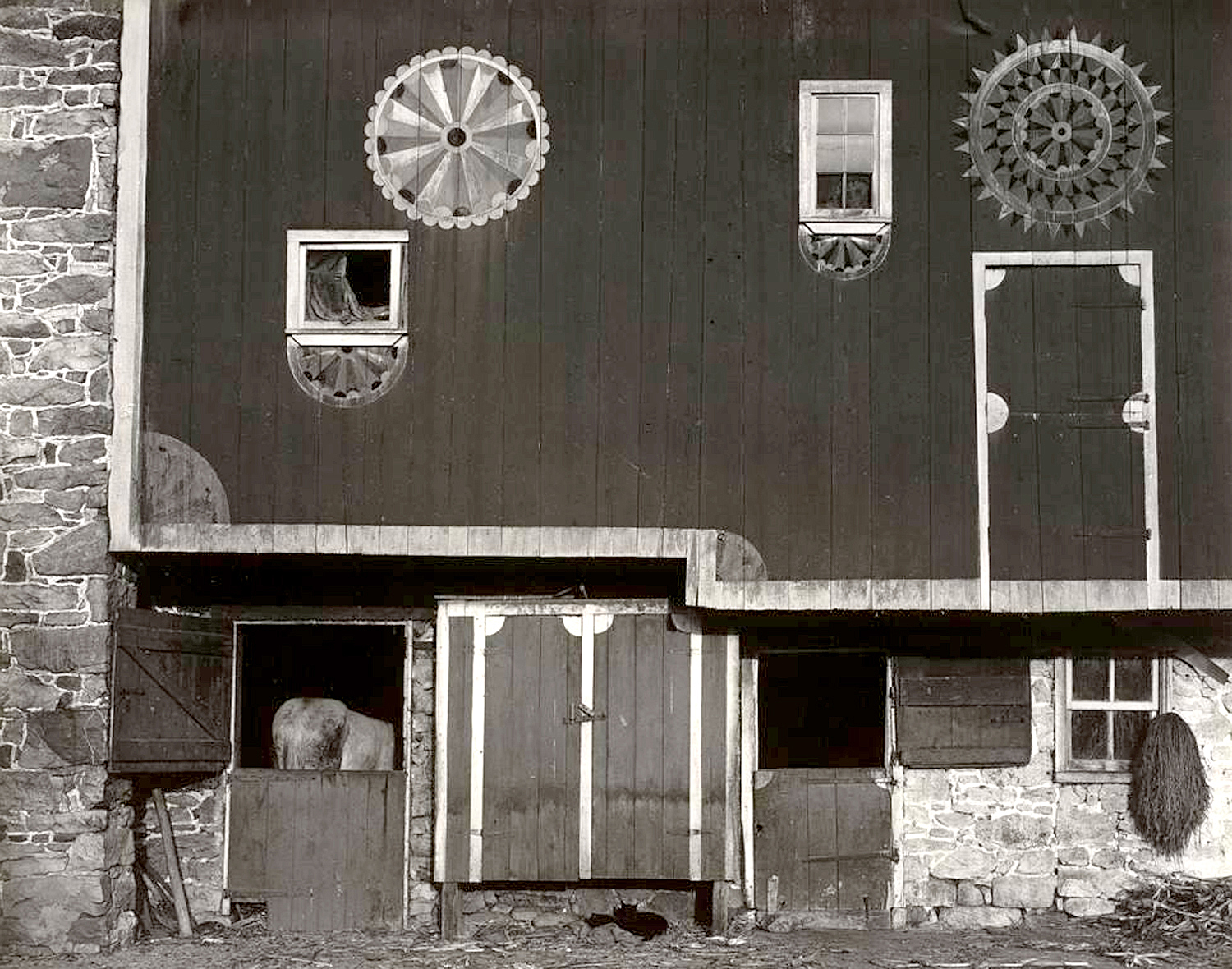
But when they were in Wilmington, Del., on Dec. 7, 1941, they heard of the attack on Pearl Harbor. Charis wanted to finish the trip, but Edward decided to head back to California immediately. One of his reasons was that he had four military-age sons who were likely to be drawn into the war and wanted to get back to them.
They decided to take the southern route, as it was now winter, and managed to take some striking photos on the way, including this one along Skyline Drive and the Shenandoah Valley in Virginia
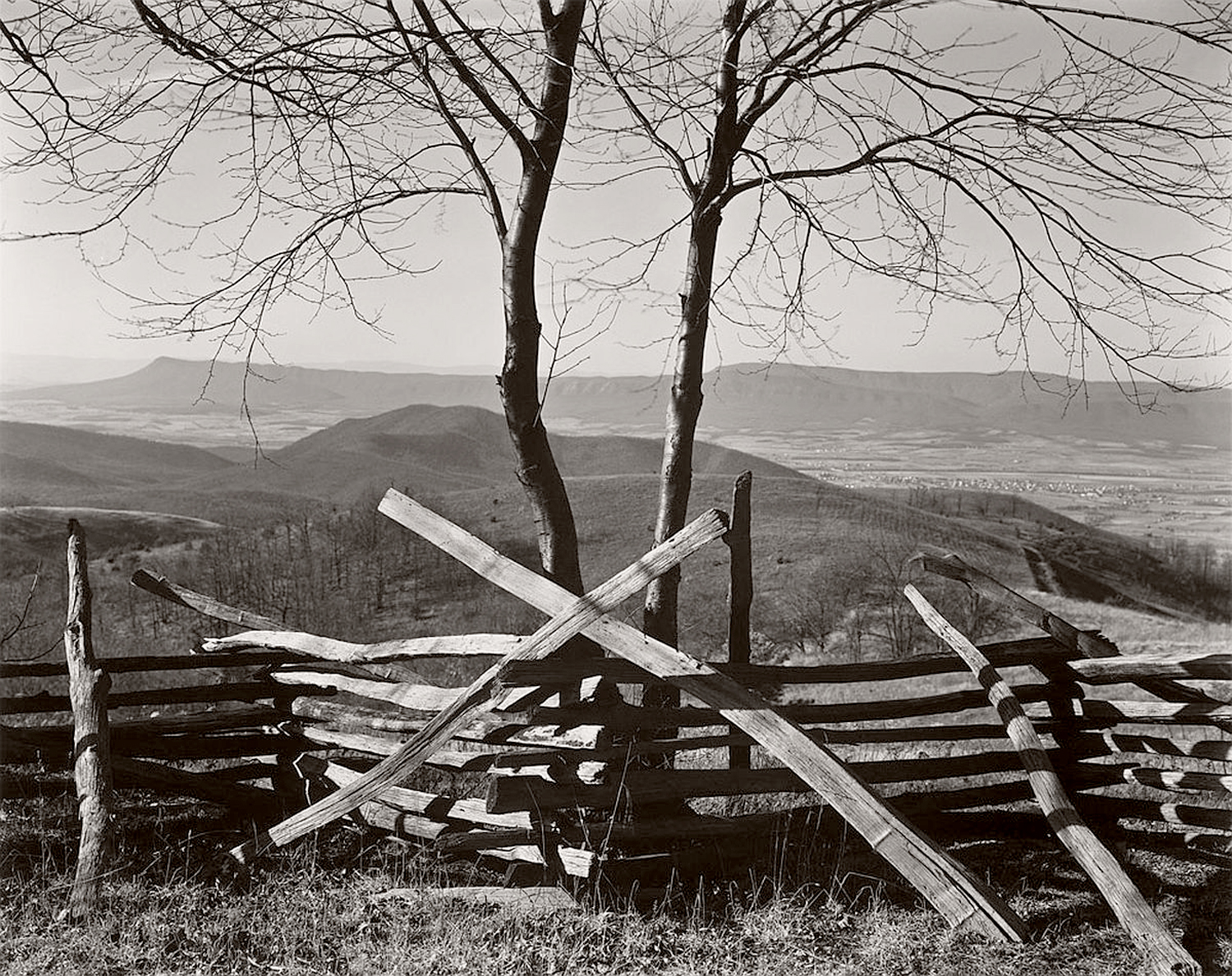
By Dec. 14, they reached Georgia, where Edward photographed the Bonaventura Cemetery in Savannah.
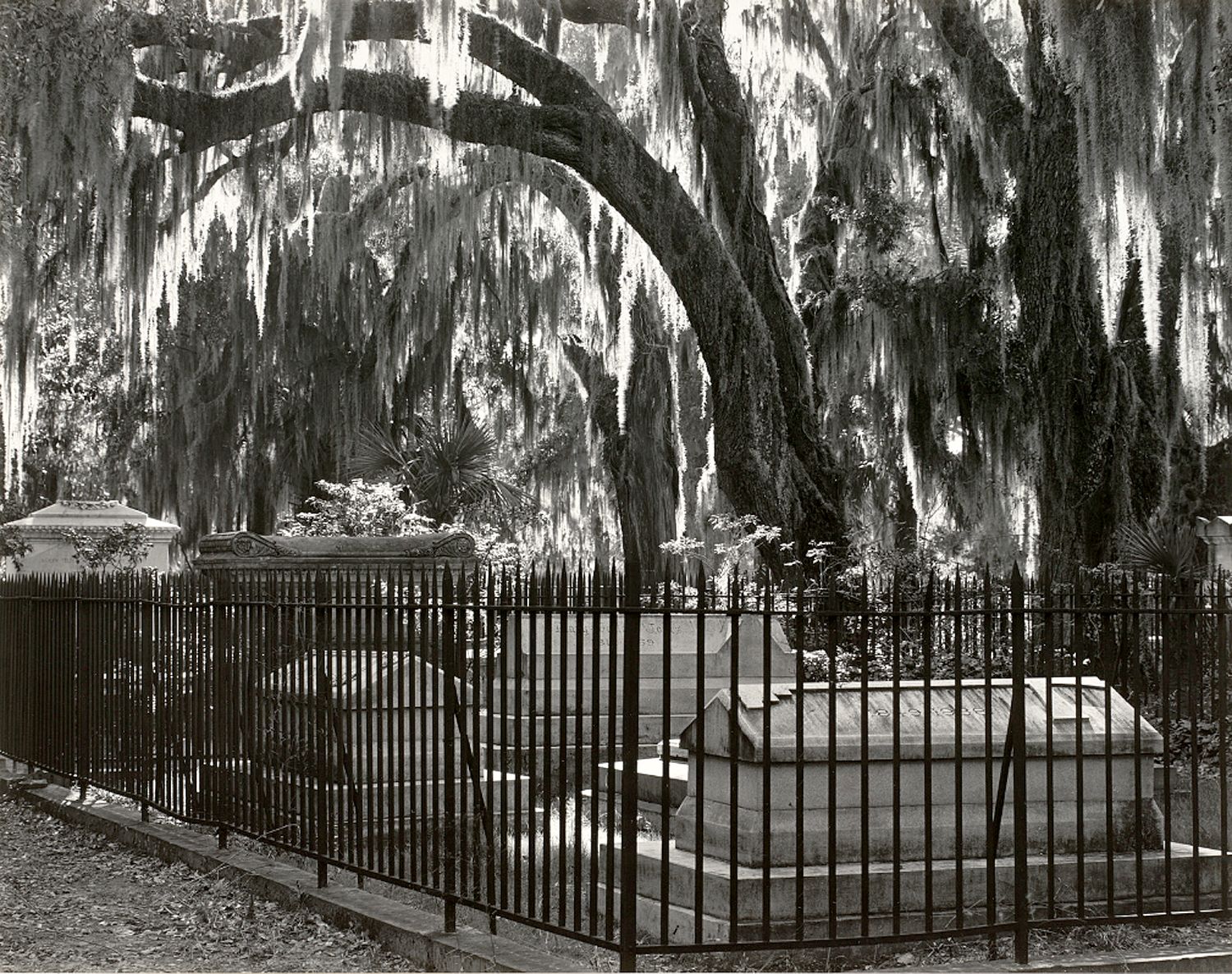
And the Marshes of Glynn, on Georgia’s Sea Island, that inspired the poem by Sydney Lanier in the 1870s and I had to read in eighth grade.
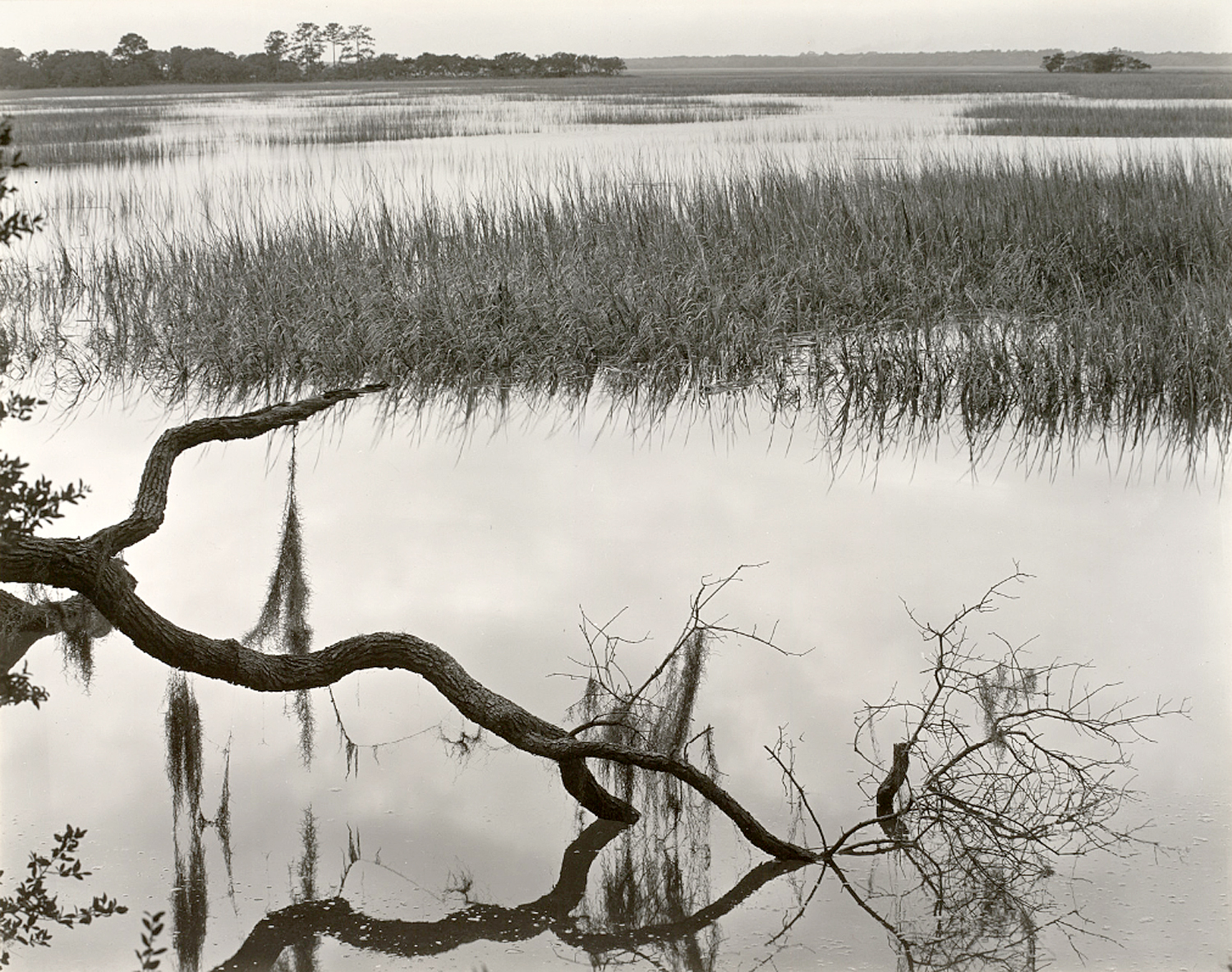
From there, they drove back to Monteagle, Tenn., to spend Christmas with Charis’s brother. On the way, they passed through the ridges and valleys of eastern Tennessee for this landscape of the Sequatchie Valley.
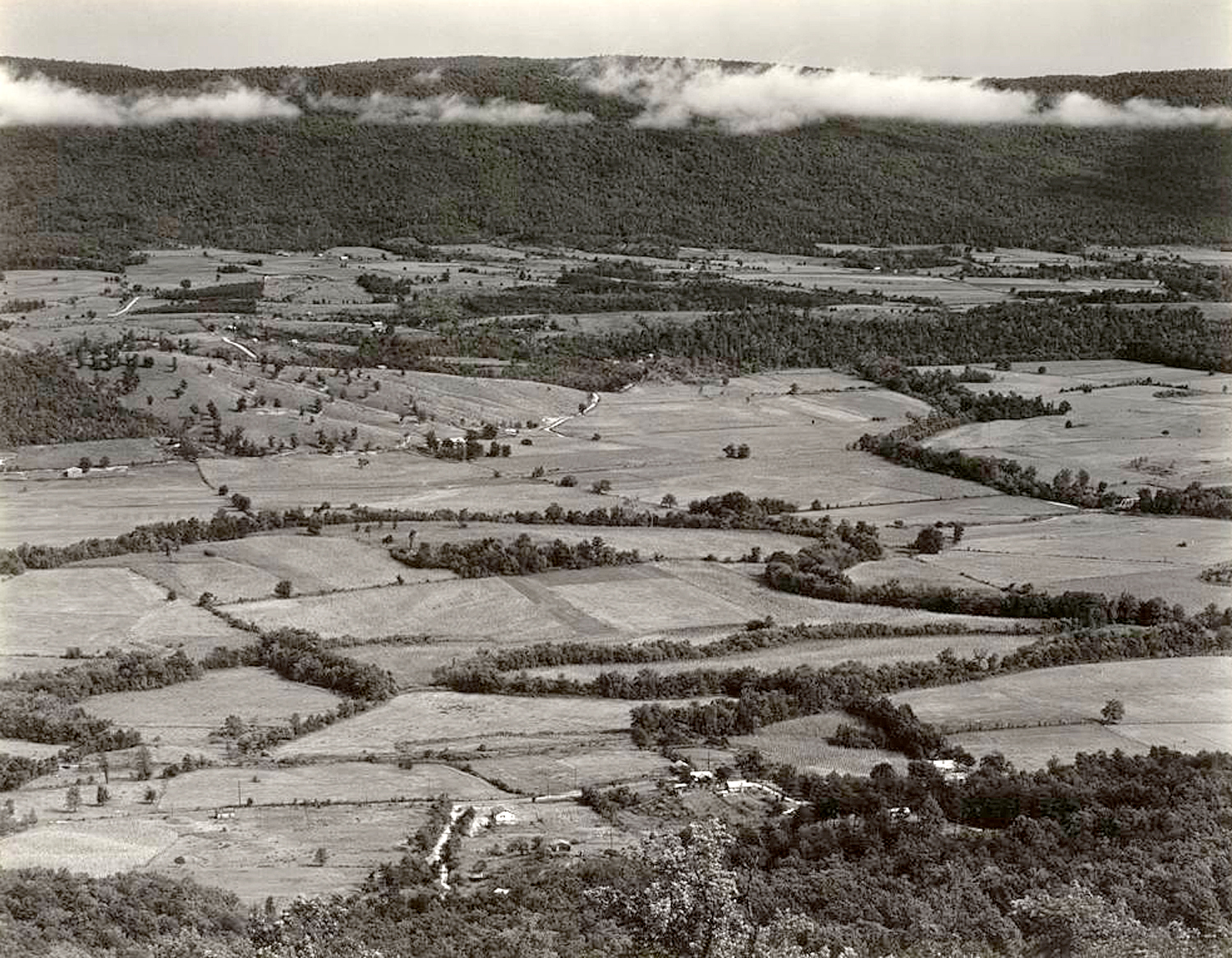
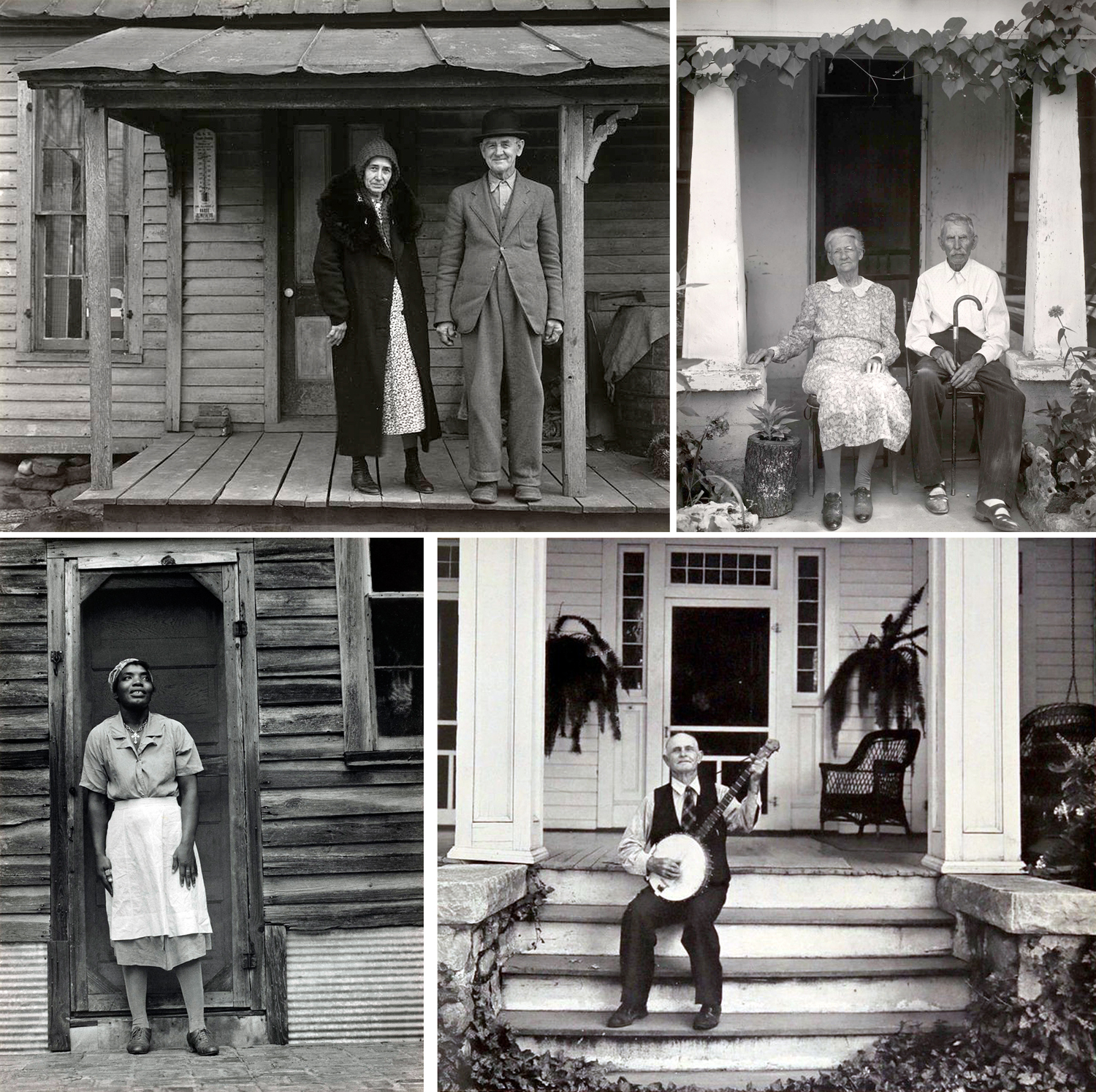
There have been a lot of landscapes, cityscapes, houses, industries and more than anything, graveyards. But Edwards marching orders mentioned “the real American faces and the real American places.” Weston had not forgotten faces.
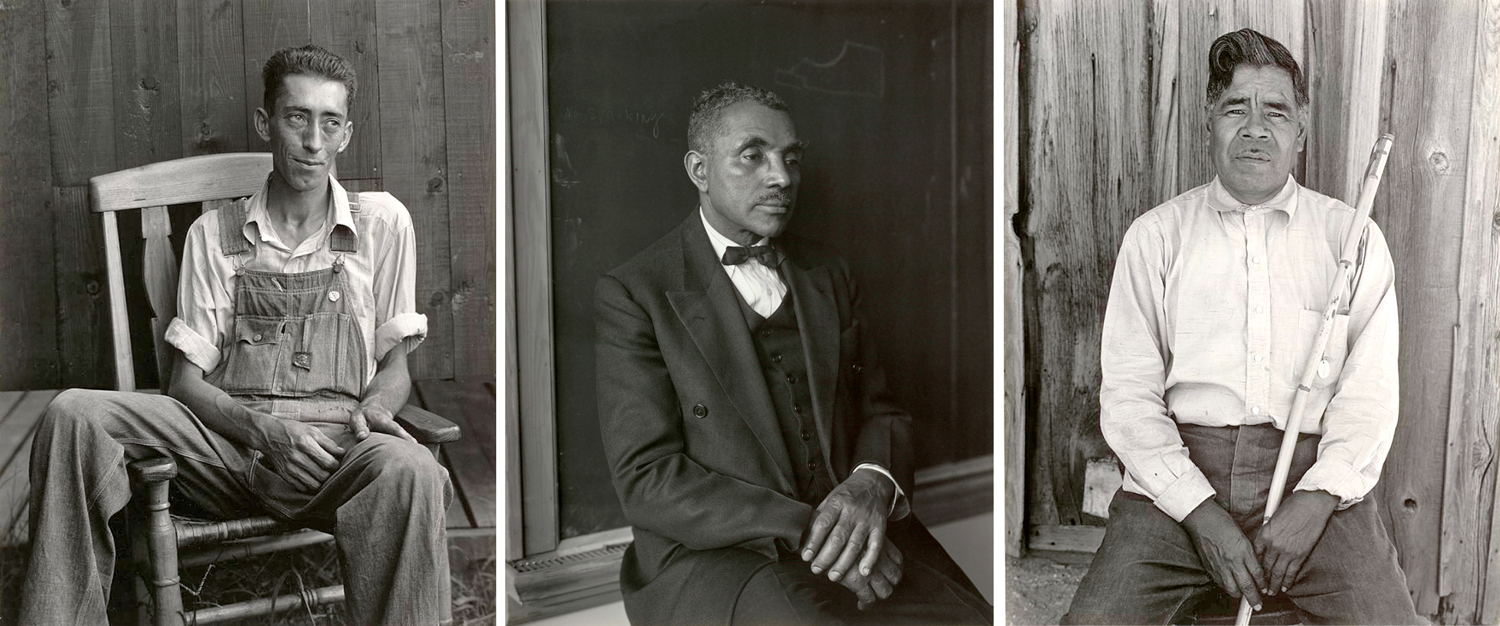
He seems to have made a point of including many types of people, from wealthy David McAlpin in Manhattan to artist Charles Sheeler, to Black and Native American faces. Pointedly, none of the last were selected by Macy to be in the book.
Their route back to Carmel and the Pacific seems to have been pretty direct, although Weston did make a group of photographs in Cordoba and Las Truchas, New Mexico, on the way.
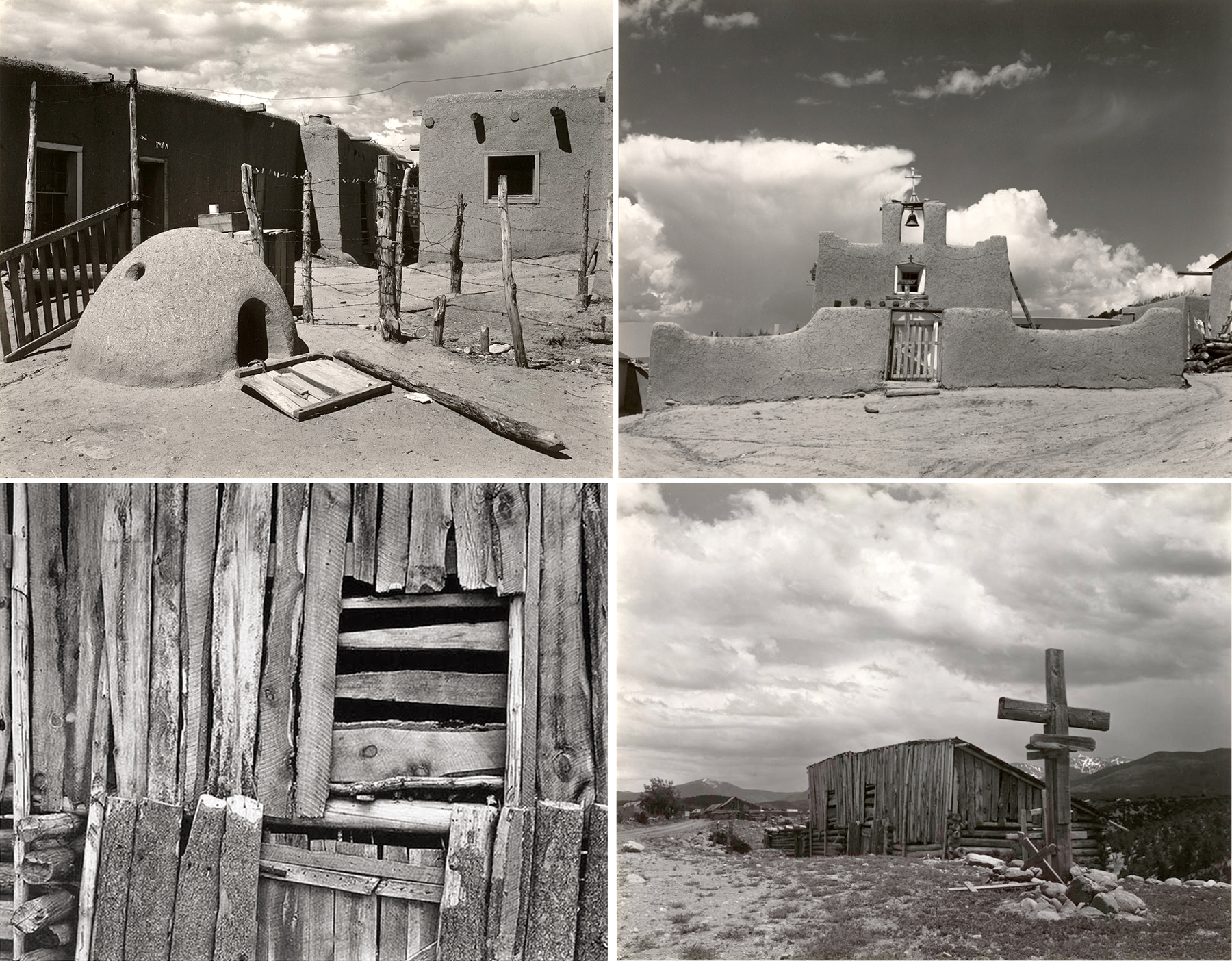
Cordoba (top); Las Truchas (bottom)
And he couldn’t help himself, but capture one last graveyard, in Chimayo, N.M., along with its church.
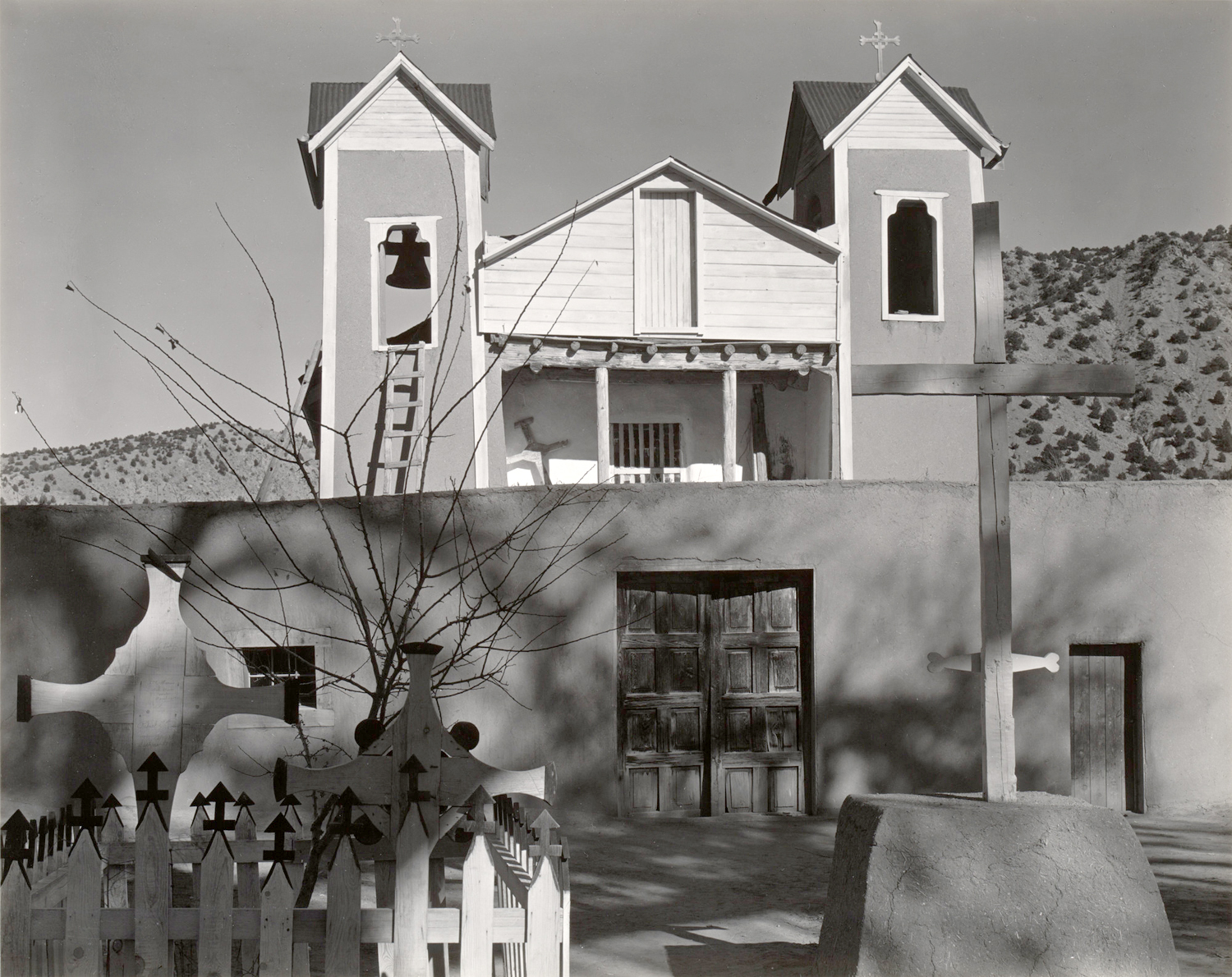
They arrived home on Jan. 27, after nearly eight months on the road. During that time, Weston sent his exposed negatives back to his son, Brett, in Carmel to be developed. There were nearly 800 of them by the end. In March, 1942, Weston submitted 72 prints to Macy, of which 49 were ultimately used. Weston was not consulted in the editorial process.
His reaction to the finished product: “It stinks.”
“I don’t see how, if they had tried, a more undistinguished job could have been achieved. … The green-tinted pages reach a new low in bad taste … this added to the wrong shape book for my work, which is mostly horizonatal.”
His friend, Jean Charlot, wrote to him about the book, mentioning what he called “the Spanish bathroom nile green that adorns the margins of your plates.”
Still, he was happy with the work he did on the trip, and in his last years, when he assembled a final collection of his works that he felt should be preserved, out of 832 prints, he included 77 from the Whitman trip.
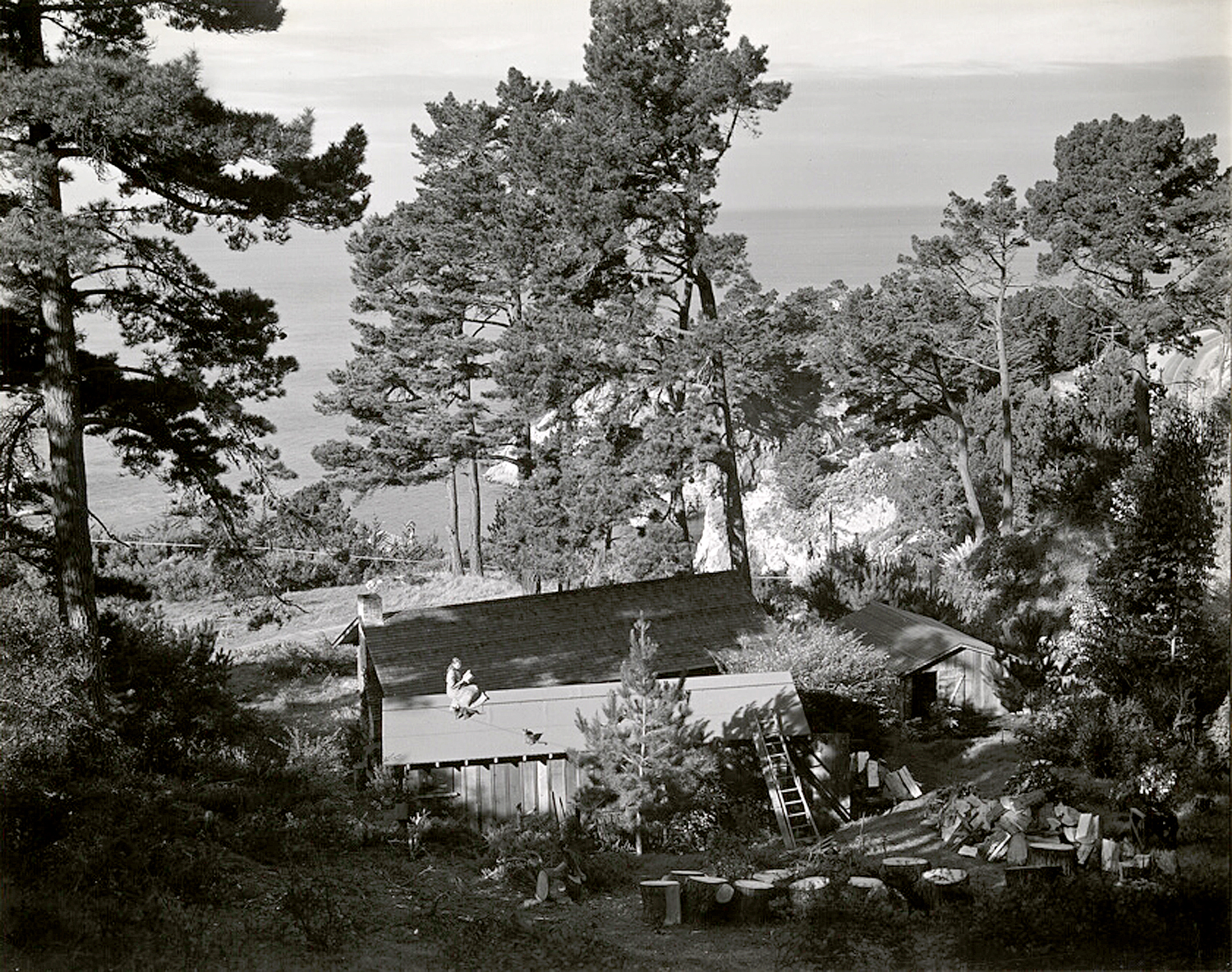
After the trip, Edward and Charis settled back to life on Wildcat Hill in Carmel. Much of the coast, including Weston’s favorite rocky beach at Point Lobos was closed to civilians during the war — fear of Japanese submarines offshore — and Weston made a series of surrealist “joke” images — Charis nude wearing a gas mask — that have not worn well. He and Charis made a book, The Cats of Wildcat Hill, with dozens of photographs of cats.
They drifted apart. “Both our faults,” Weston wrote, and they divorced in 1945. And by the late ’40s it was plain that Edward was suffering from Parkinson’s Disease. He made a series of color photographs for Kodak. He made a last series of images at Point Lobos when the ban was lifted, and the darkness of the images was apparent. It seemed to everyone around him that death was often on his mind.
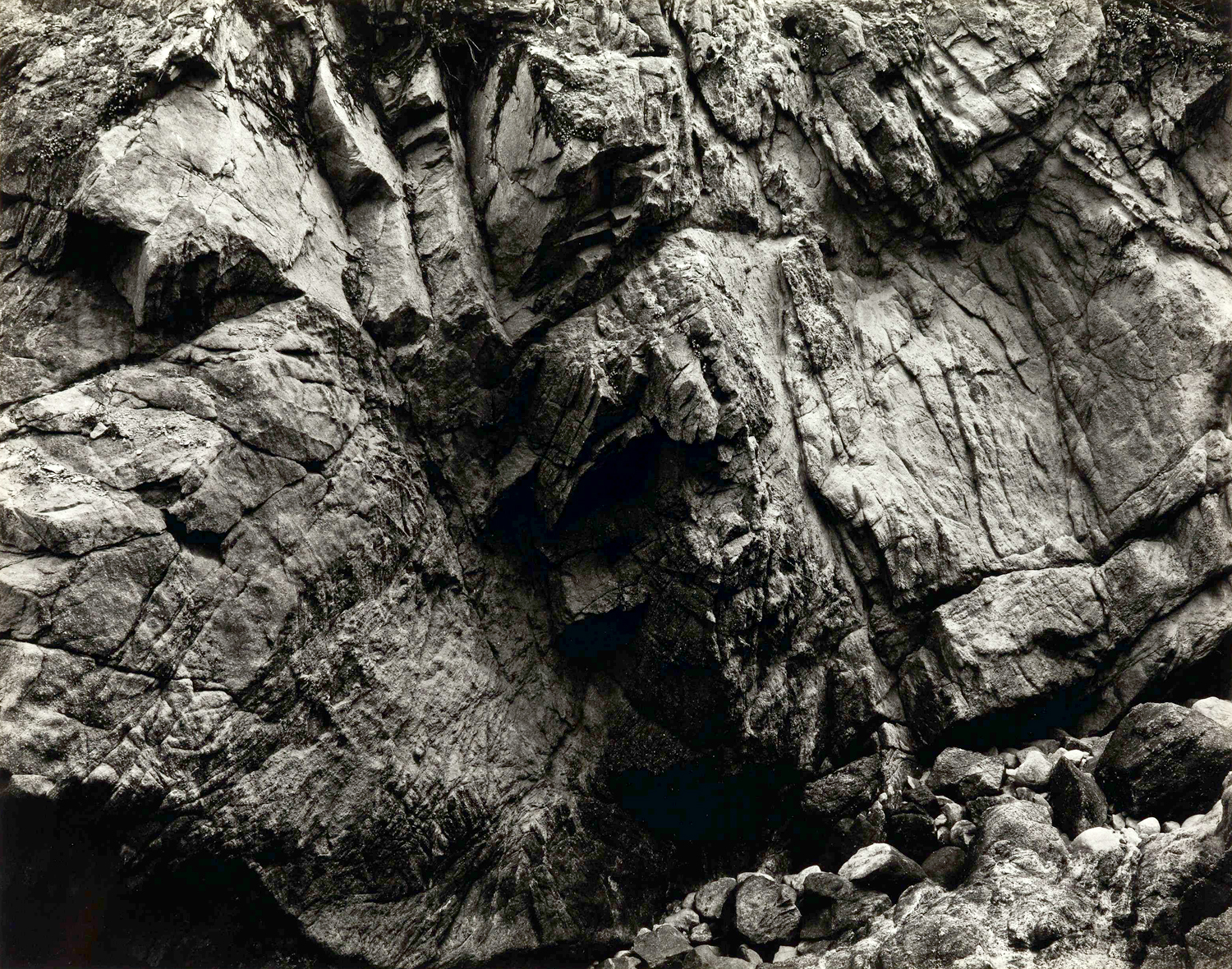
Of those last Point Lobos images, photographer Minor White wrote about them, “These few pictures may parallel in content the last quartets of Beethoven.” He made his last photograph at Point Lobos, in 1948, and died on New Years Day ten years later.
Click on any image to enlarge

