Archive

Tag Archives: blue poles

I first went to the Museum of Modern Art in New York when I was in eighth grade. I took the Public Service bus into Manhattan and the subway down to Columbus Circle, and then on foot to 57th Street. Inside the museum were famous paintings I had only seen as reproductions in books and magazine articles. There, in person, was Van Gogh’s Starry Night and Picasso’s Guernica, the latter an astonishing 25 feet wide along its own wall. I was too young to understand the tragedy behind that work, but old enough to be blown away by the size and imagery. 

Growing up in New Jersey, just on the other side of the George Washington Bridge, I spent as much time as I could in the city, visiting the various museums, theaters and concert halls, to say nothing of the book stores. New Jersey seemed so banal and flavorless, and New York seemed like the center of the universe. I cannot tell the number of times I went to the American Museum of Natural History, which was like a second home to me, or the Hayden Planetarium. And MoMA was the epicenter of art. I came to know every painting and sculpture in the place, and considered it, if not holy, then whatever the secular equivalent is. 
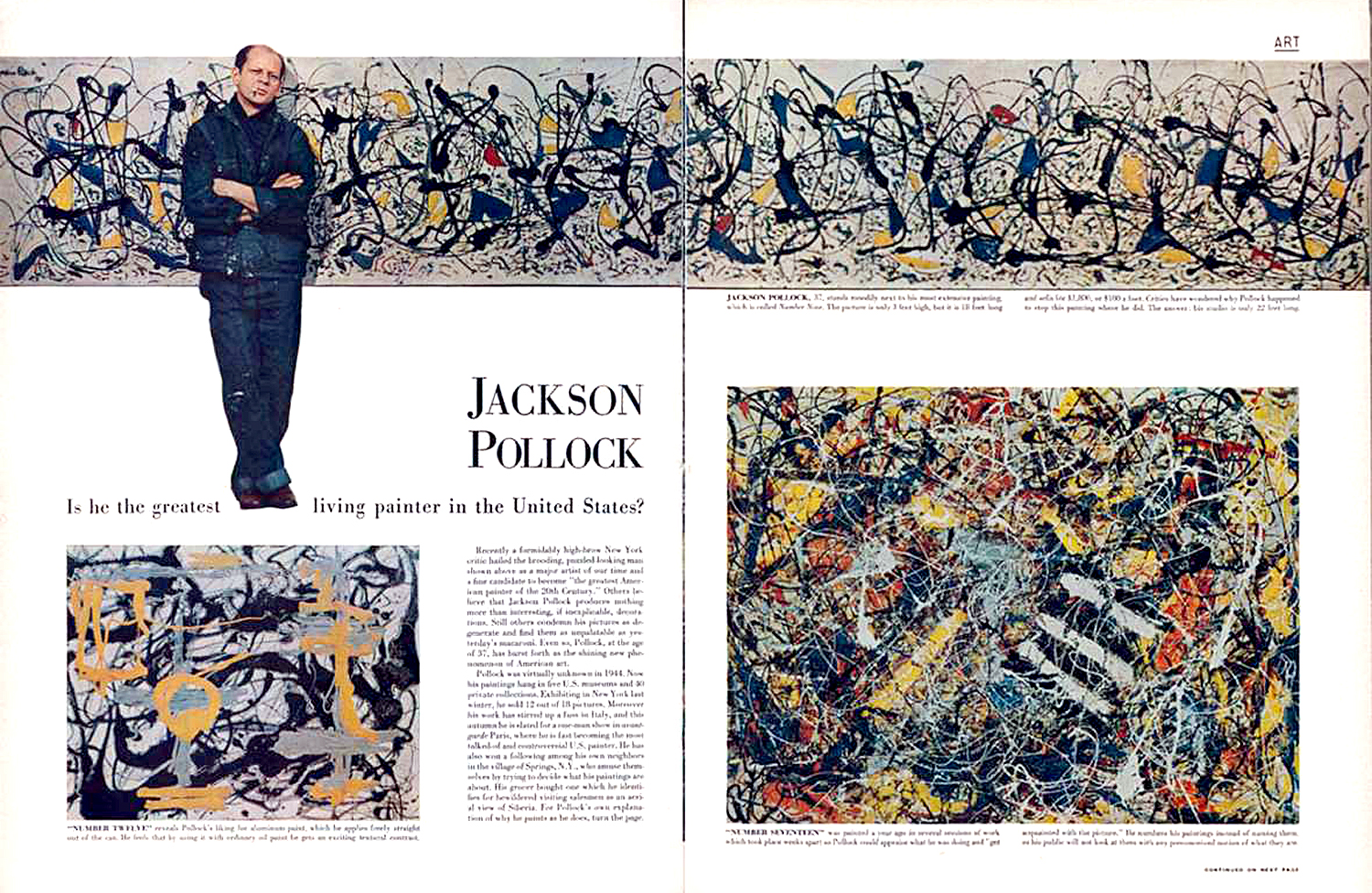
And it is where I first saw my first live Pollock. Jackson Pollock was everywhere in those days, as an escutcheon for Modern Art, or as a whipping boy for those who felt it was all a huge scam. Life magazine had dubbed him in 1949 as possibly “America’s Greatest Living Painter,” while in 1959, a British newspaper wrote, “This is not art — it’s a joke in bad taste.” Even former New Yorker art critic Robert Coates once called his work “mere unorganized explosions of random energy, and therefore meaningless.”
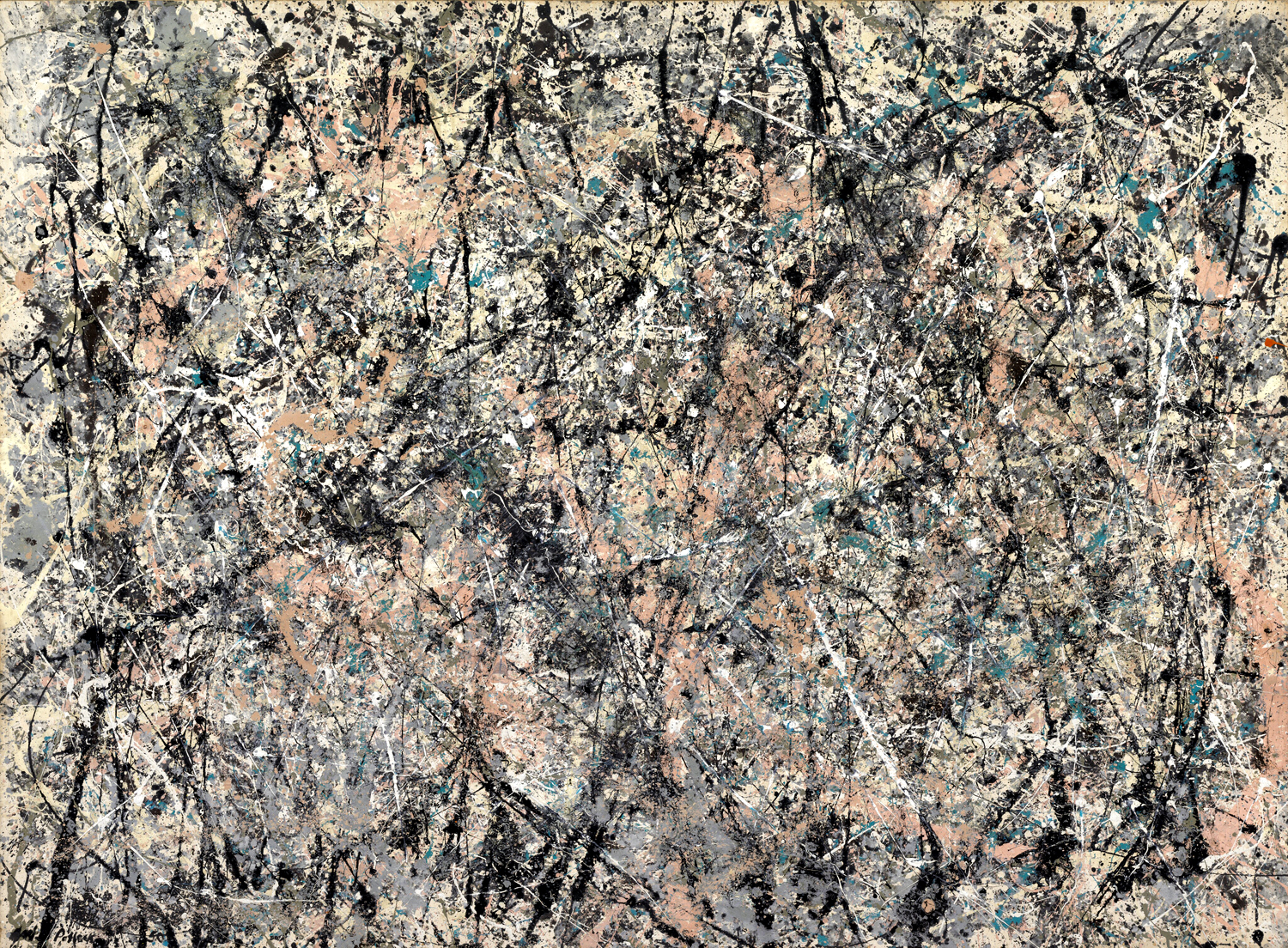
“Number 1, 1950 (Lavender Mist)” National Gallery, D.C. 

The paintings were made by pouring and dripping and flinging paint on a canvas on the floor of his studio, like random scribbles. And to his detractors, that is all it was: scribbles. Many a puzzled civilian looked and complained, “My kid could do that.” 

Author Helen Harrison wrote a book and put it in a box — The Jackson Pollock Box (available from Amazon for $29.95) — that includes canvas and several squirt bottles of paint, so you can make your own drip paintings. “People thought it was arbitrary, that anyone can fling paint around,” Harrison said. “Well, that’s true. Anyone can fling paint around, and this was my point. You can do that, but you don’t necessarily come up with anything.” Pollock did.
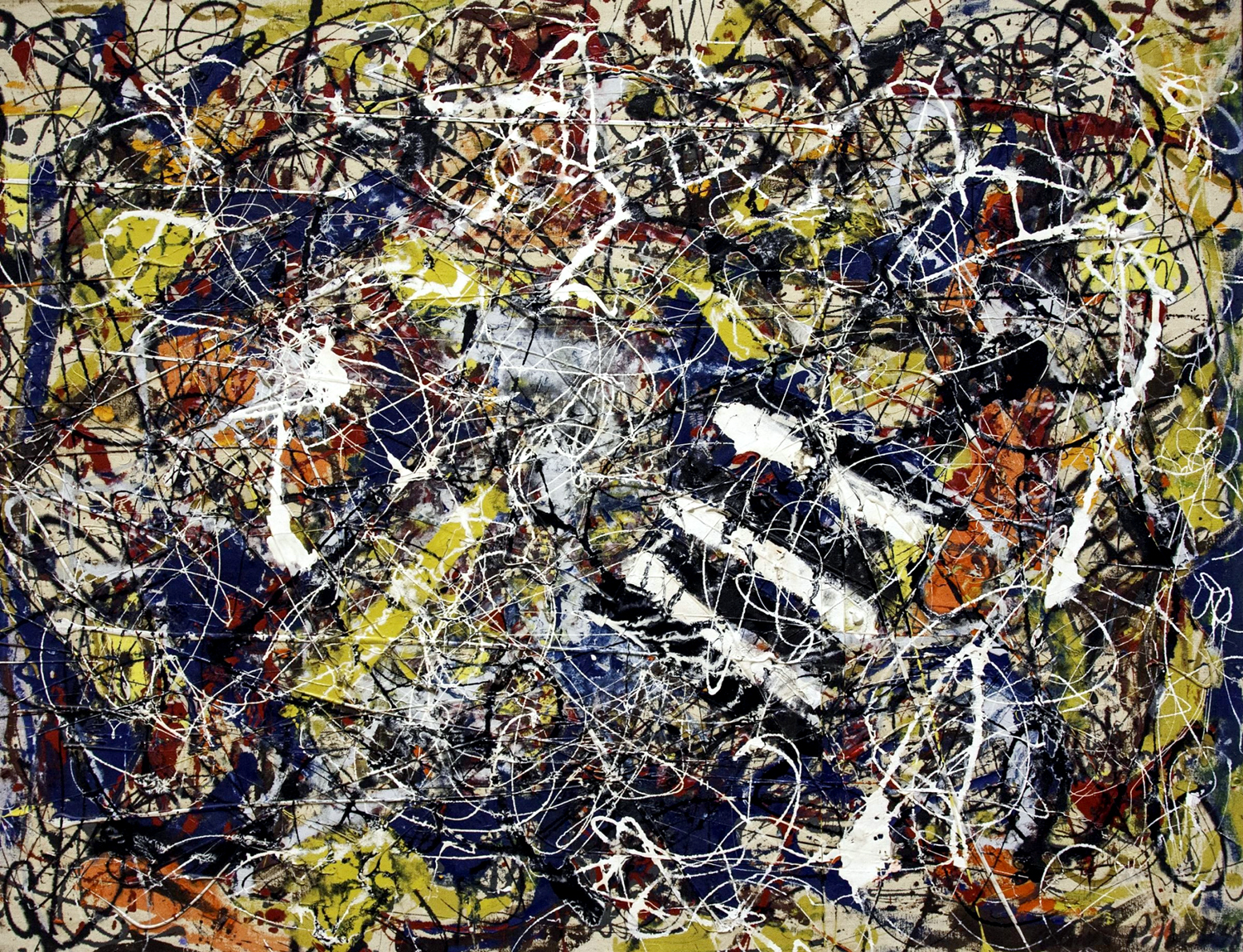
“Number 17A 1948” Private collection

To this day — with Pollock now largely canonized in the art world, and even Modern Art in general having won the battle — he splits his viewership into those who love the work and those who still consider it a fraud committed on a gullible public. 

I am obviously in the first cohort. His art speaks to me more than most post-War art (partly because of my age — as a Boomer, I grew up during a time Modern Art was still hotly debated, and to be courant, required the taking of sides), but I also think Pollock has not been helped by his admirers, who have published a grand catalog of piffle about the work, using it to justify theories that are as empty as their prose is turgid. 
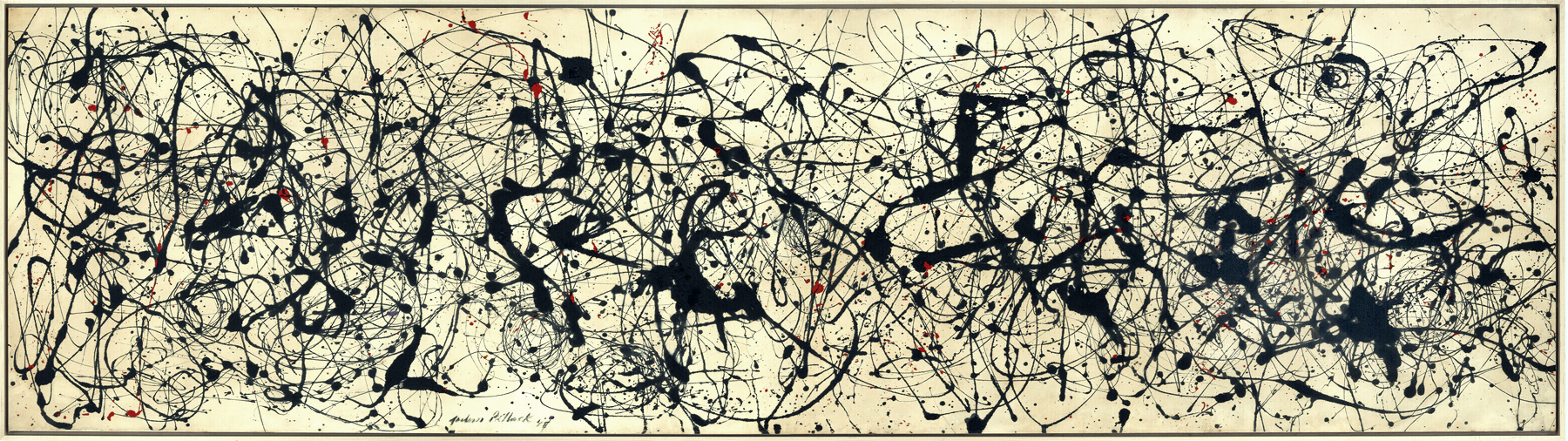
Number 7A 1948” Private collection

The work stands on its own. It has no need of theory propping it up. If you remove the scaffolding, you can see the art. Words only get in the way. 

The two most guilty culprits were the Bergs, the two critics writing in the middle of the last century who told us what art was supposed to be. One, Harold Rosenberg gave us the idea of Action Painting, that is, that the object on the wall was only the record of the actual art, which was its making through performance. According to Rosenberg the canvas was “an arena in which to act.” The other, Clement Greenberg, told us that Modern Art was supposed to be flat. It should not attempt to trivialize itself with attempting illusionary depth. Paint on surface is what it was all about. “Flatness, two-dimensionality, was the only condition painting shared with no other art, and so Modernist painting oriented itself to flatness as it did to nothing else.”
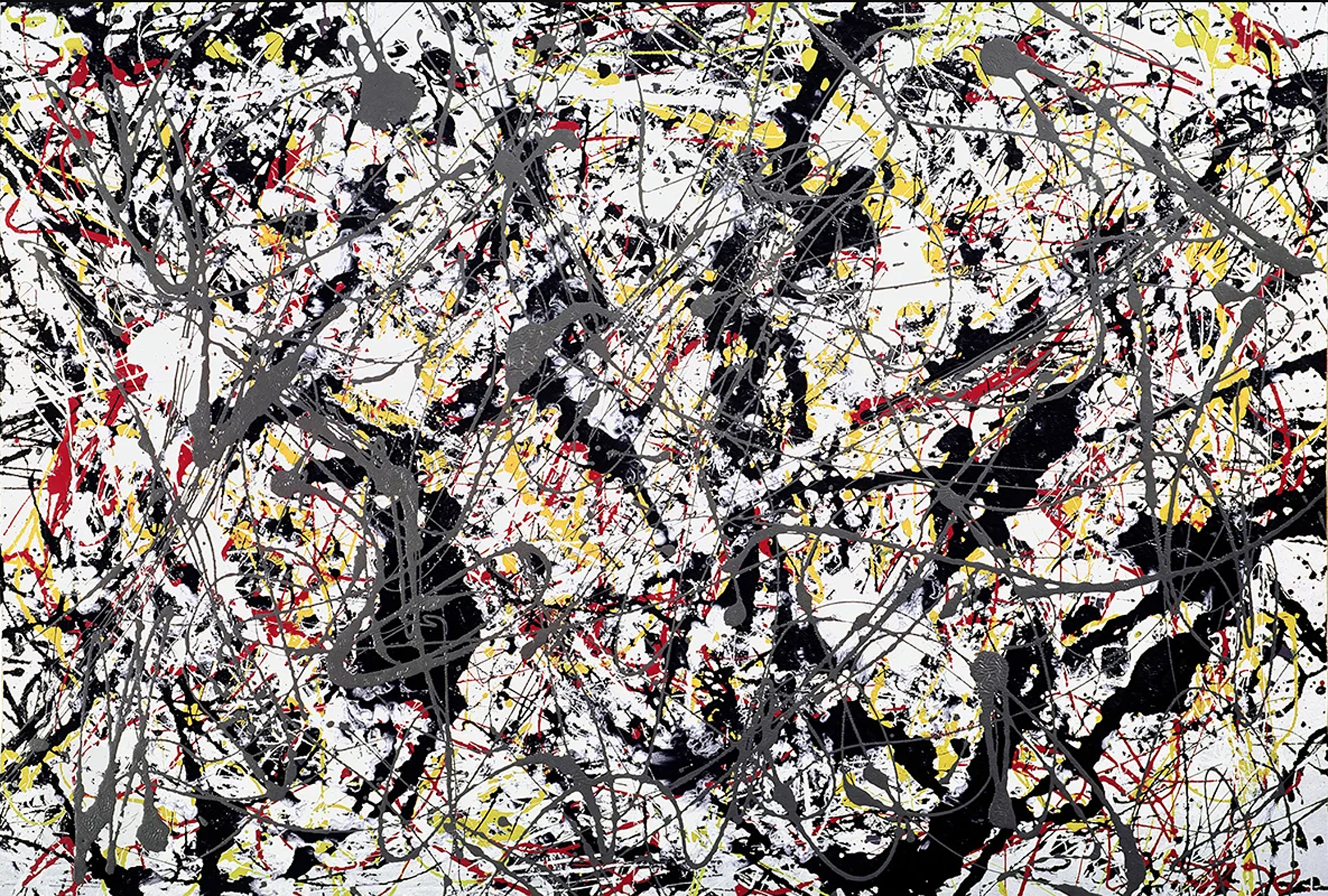
“Silver Over Black White Yellow and Red” Musee National d’Art Moderne, Paris

All this wasn’t about the art; it was ideas about the art. It was interpretation. And interpretation takes us away from the art, away from the visual world and into the verbal world. Ideas about the thing, not the thing itself. 

I learned very early that more important than speaking was looking. As Yogi Berra said, “You can observe a lot just by looking.” Most of us see with our brains and not with our eyes. We are shown a picture and immediately name what we see. “That’s a picture of a house,” we say, or “That’s my brother Barney the day he joined the Army.” Our reflex is to repackage what we see as what we can name. And barring that, we use words to explain why what we see matters, or why it doesn’t, or how something reinforces or questions our assumptions. All words. 

I was taught by a wise professor to look first, describe what I see, and pay attention to everything in a frame. Light, shadow; line, color; aspect ratio and physical size of the work; dynamic range and even pigment type. There is a lot to be seen. It’s why it was painted and not written down. After you have looked and seen (two different things), then you can discuss the subject matter, and attempt to make out why the artist made this particular work. But look first, and look carefully. 
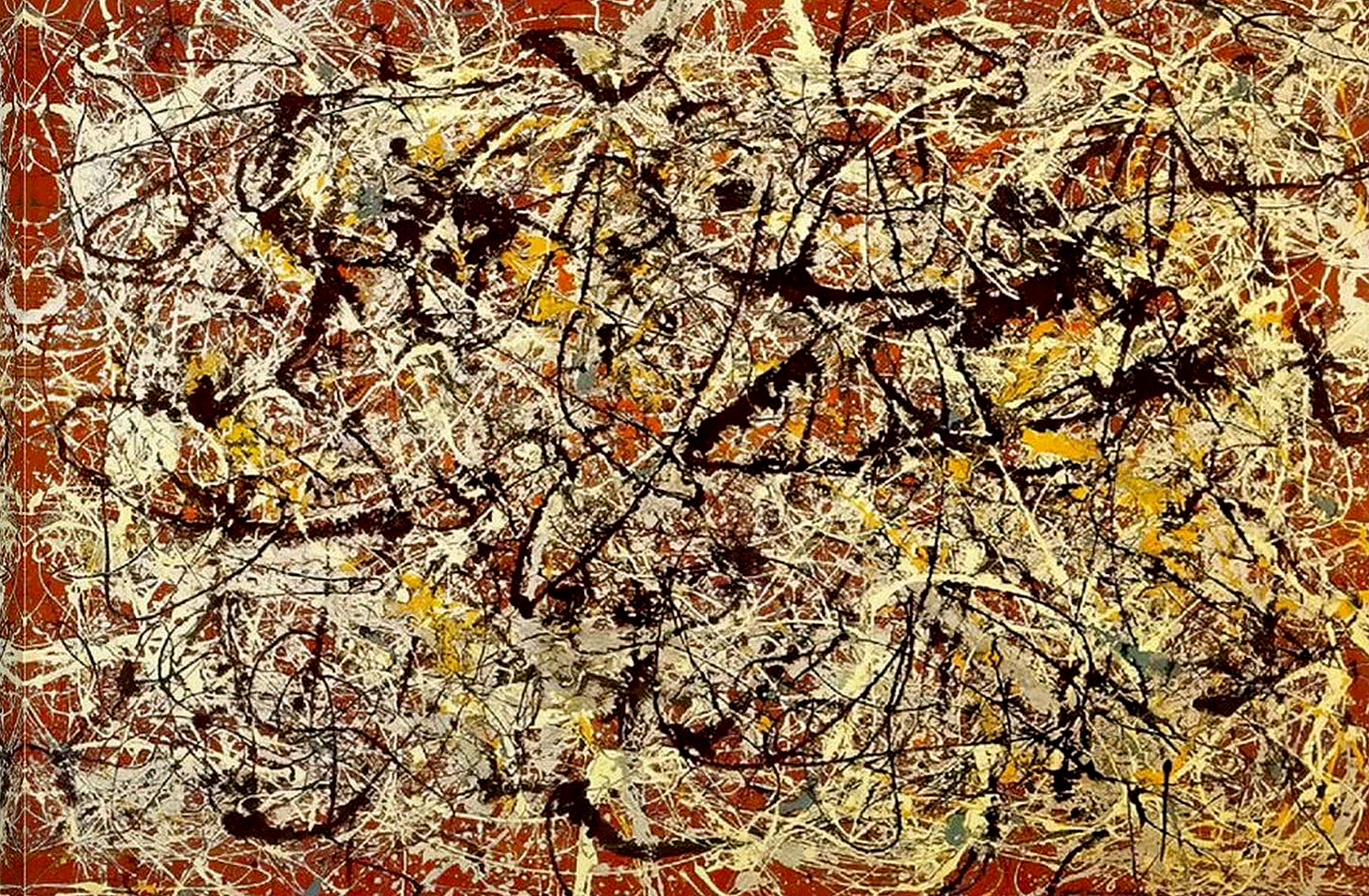
“Mural on Indian Red Ground” Tehran Museum of Contemporary Art

With Pollock, this is especially important, since there is no easy “subject.” There is paint. 

But there is a whole lot going on with the paint, and not just that the artist has sprayed paint around like a lawn sprinkler. In fact, there is little that is random about the spatter. “I can control the flow of paint,” he said.  “There is no accident.”

And to call them drips is not to do them justice. He had a whole repertoire of drips. Some were spread out like ink lines, others were a kind of polka-dot splat. Sometimes the paint would puddle in the middle; sometimes when the puddle began drying, he would yank back its skin as if he were picking a scab. It left a torn, ridged surface. 

It is one of the revelations of the show to see just how many different things Pollock found to do with his basic drip. In some paintings, the paint is thick on the canvas; in others, he dripped thin paint on unprimed canvas, staining them rather than painting them. The line would bleed, like a fountain pen on porous paper.
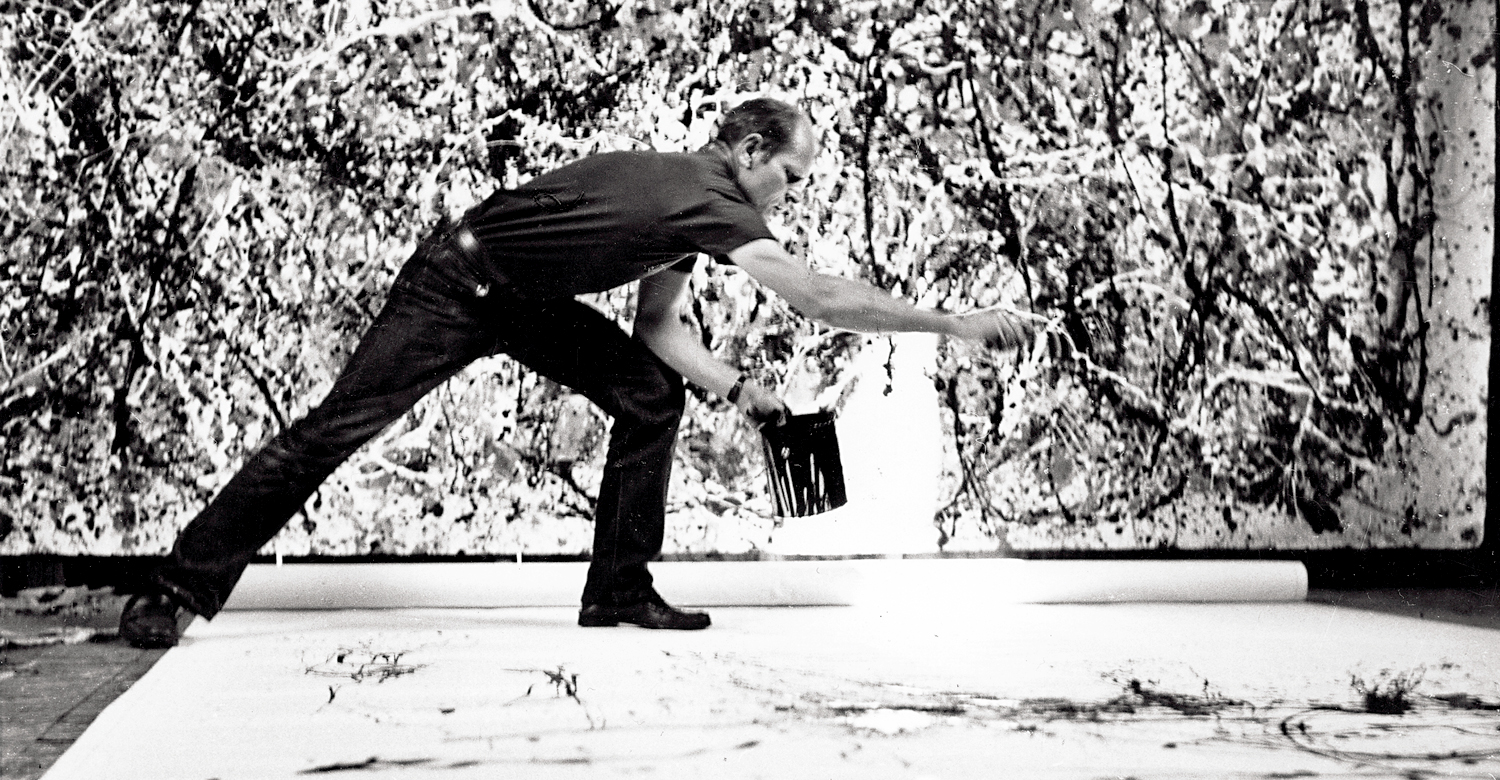
Pollock normally painted with his canvas on the floor. He stood over it, half crouched, with a can of commercial house paint in one hand and a stick or crusty dried brush in the other, dipping it into the can and swirling the brush over the canvas, about 6 inches above the surface. Back and forth he would move, like a caged animal, repeating his arm motions, stepping a half-jig step to the left and repeating, over and over. A change of color or a new kind of wrist-flick would make a different kind of drip. The paintings built up slowly, so that the first drips often were hidden by the later ones. 

For instance, if you are careless, you may not notice that most Pollock drip paintings are not dribbles from edge to edge or top to bottom. The paint makes a shape in the middle of the canvas. And usually, that shape either settles toward the bottom of the canvas, or rises to the top. The first seems weightier, the second more buoyant.
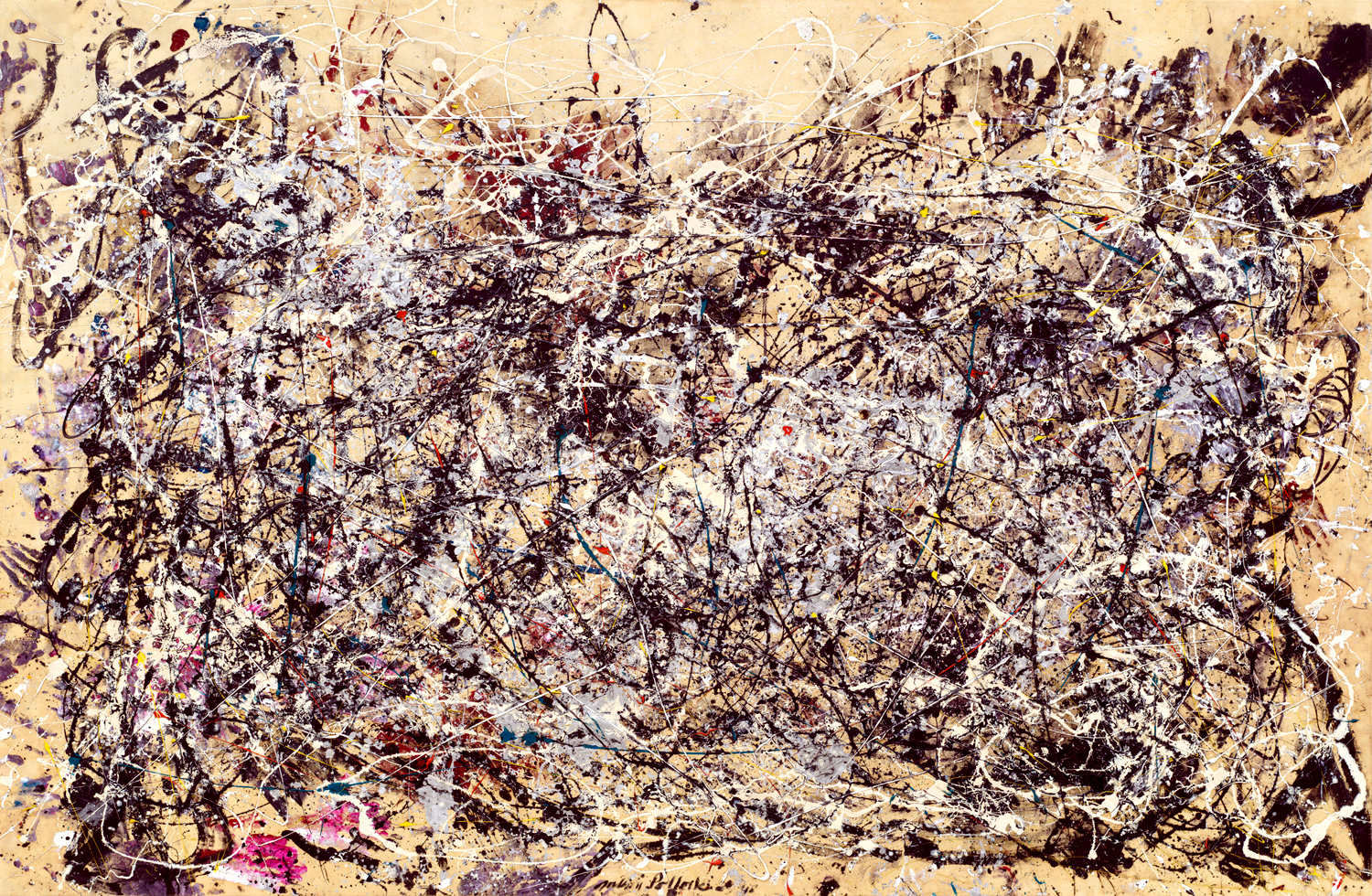
“Number 1A 1948” MoMA

The randomness of the scatter is never completely random. Take his Number 1A from 1948, which is 8 feet, 8 inches side to side and 5.6 feet high. It is an early drip painting and the placing of the bulk of drip is not random, but makes a shape of its own in the center of the canvas, with a margin around the edge. It is placed. If it were not, you could hang it on the wall upside down and it would make no difference. But notice how different it looks that way.
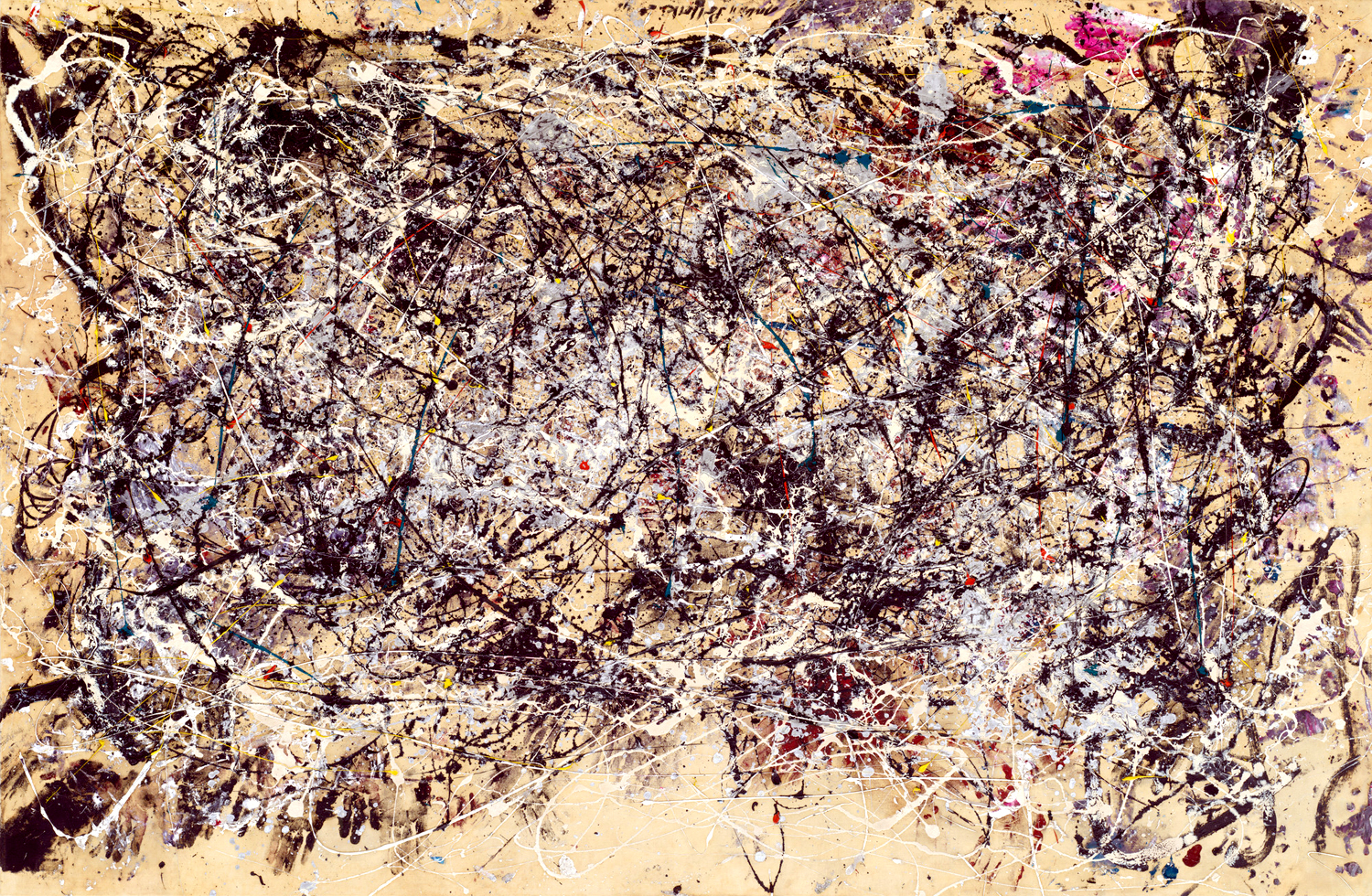
And for that central shape of paint pother, the detail is scrunched in the middle, with a wedge taken out of the top. 
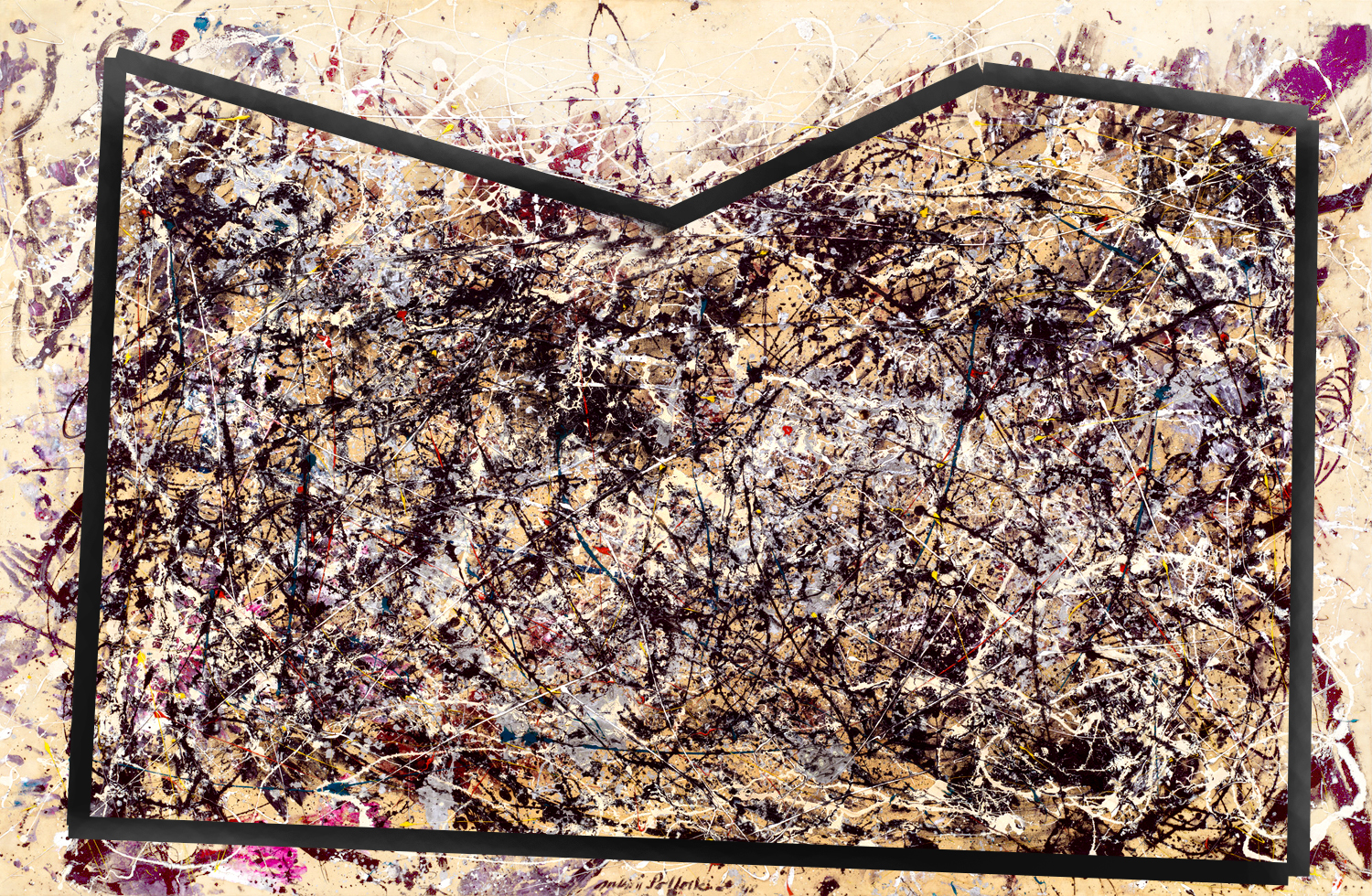
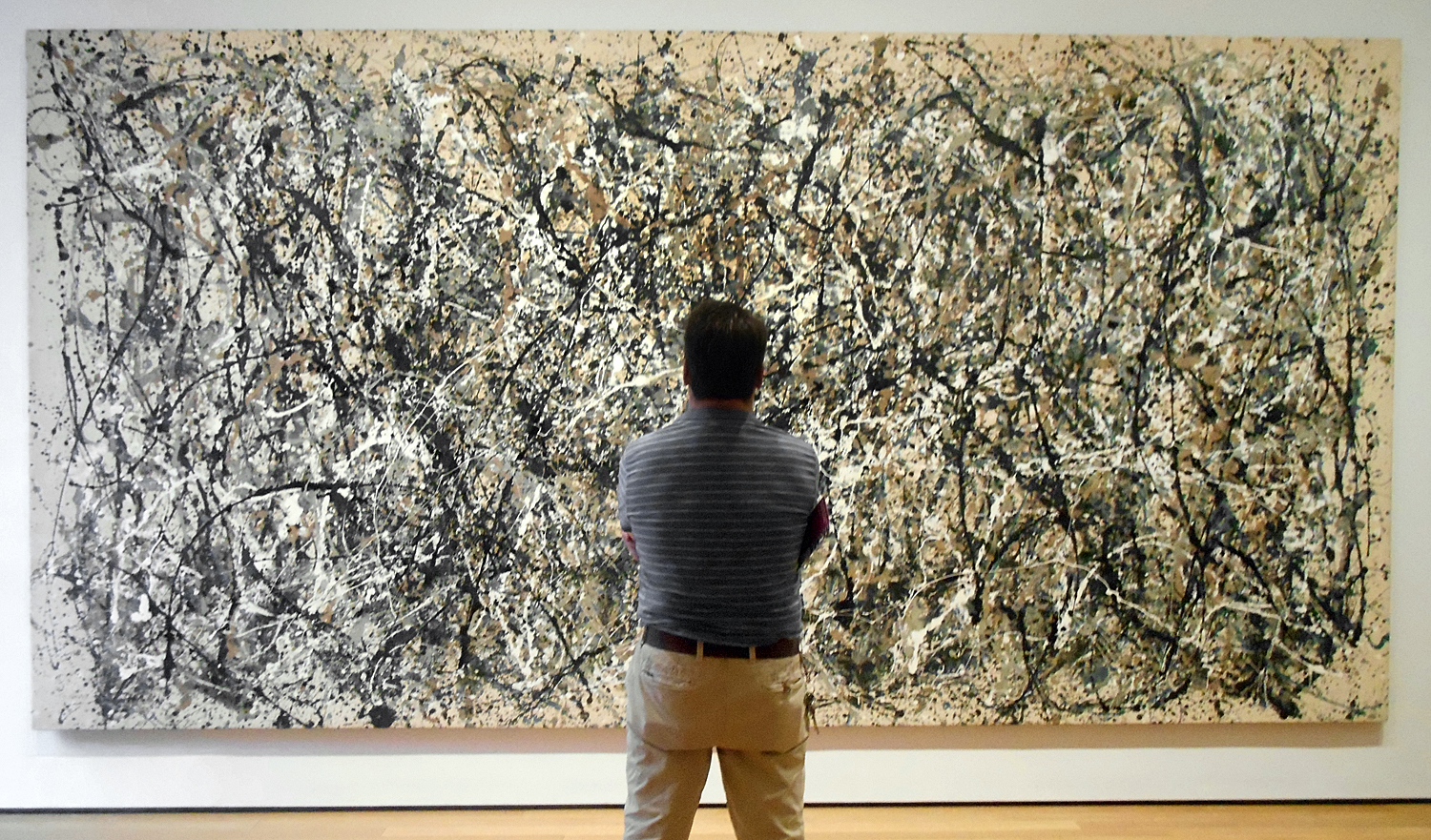
It is not random. This is true of most of his best-known drip paintings, including the one I first saw at MoMA, One, Number 31.
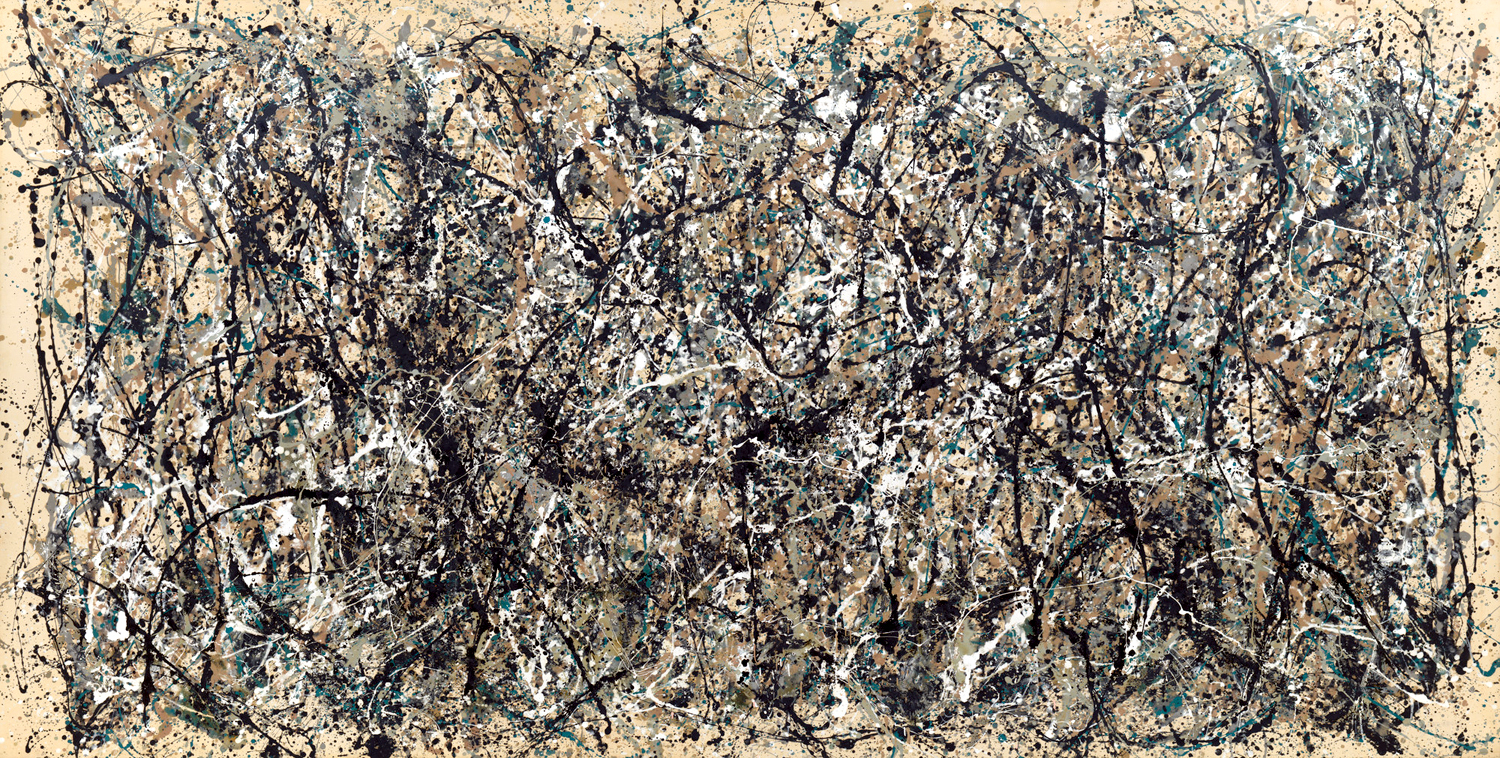
“One: Number 31 1950” MoMA

The second thing you can notice is that the paintings are not flat, but deeply illusionistic. They have depth, and you look into them like a tangled skein of yard in a basket. 

Pollock went out of his way to create that depth. An early image of the painting, after the first few drippings of black paint, show us the base coat, as it were
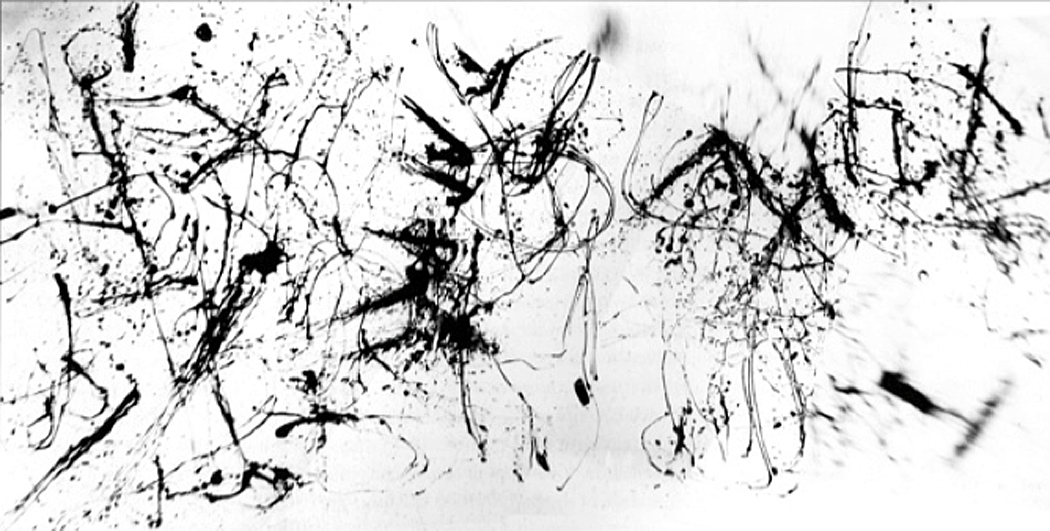
First layer, “Autumn Rhythm”

He then added white, and other colors, partially obscuring the base black lines, but then he added a second coat of black lines on top, partially covering the colors underneath, so that it is never simply each new color blocking the earlier, but rather a welter of lines and puddle. 

“Autumn Rhythm (Number 30)” Metropolitan Museum of Art

You look into them as if they might be a microphotograph of neurons in the brain. 
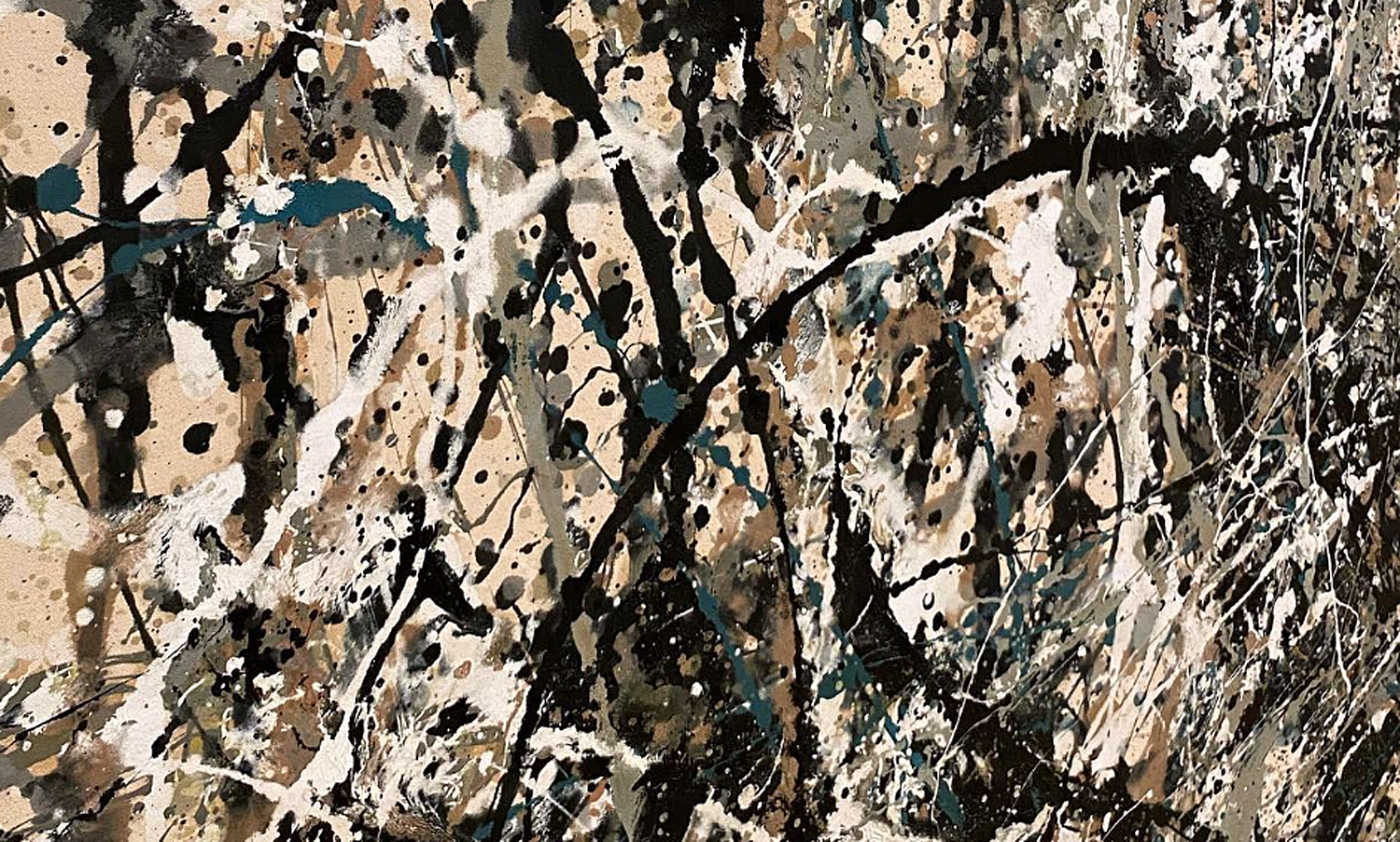
Detail “Autumn Rhythm”

The major problem that Pollock faced, and never completely resolved, is: Where to go to next. His peak drip painting period lasted perhaps three years, but at some point, continuing means just repeating himself. 

“Number 32 1950” Kunstsammlung Nordrhein-Westfalen, Germany

One: Number 31 and Autumn Rhythm were made from the same huge bolt of canvas. Each about 8 feet tall and 17 feet across. A third painting, in black, Number 32, filled out a kind of trilogy of giant paintings. 
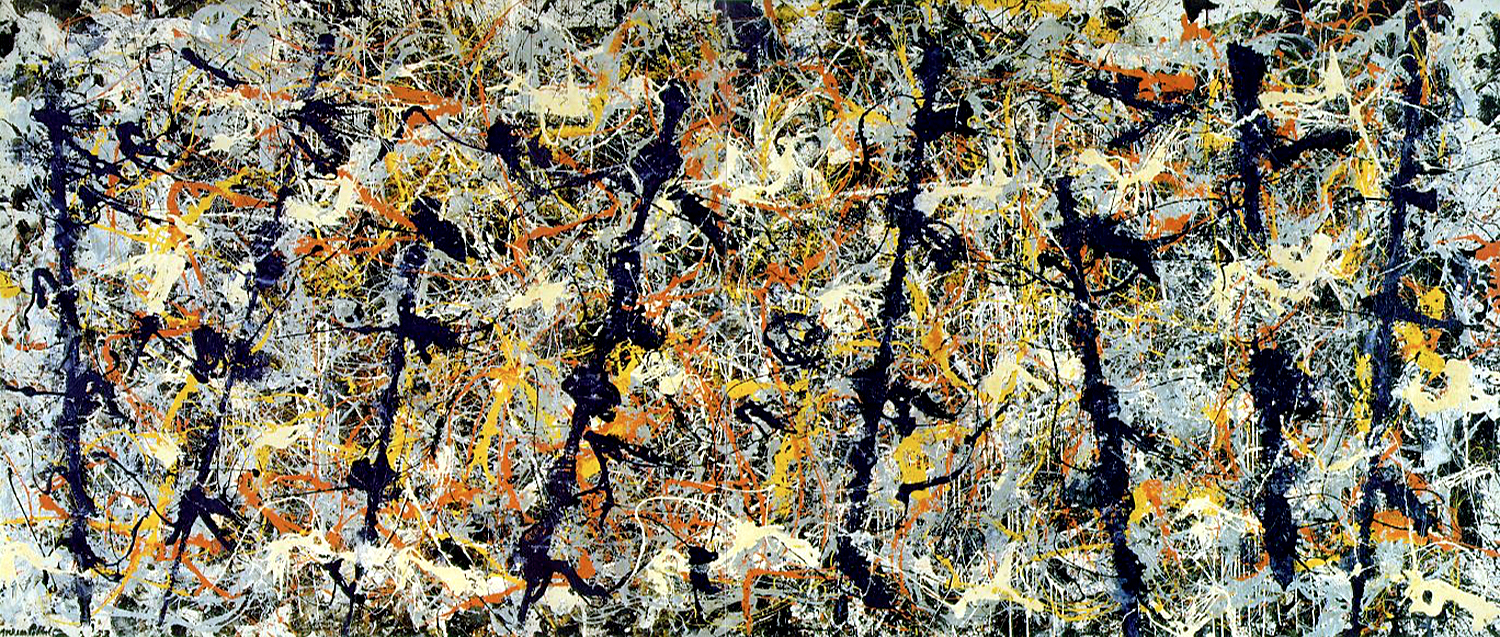
“Blue Poles: Number 11 1952” National Gallery of Australia

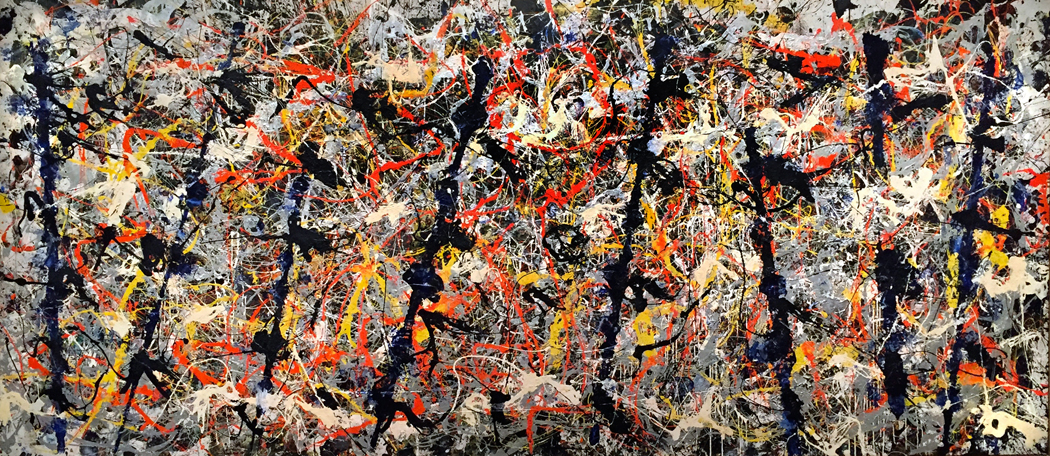
One of his last great drip paintings, from 1952, was Blue Poles, where he tried to solve the issue of how to organize the drips by imposing eight large dark slanted lines across the 16-foot canvas. 

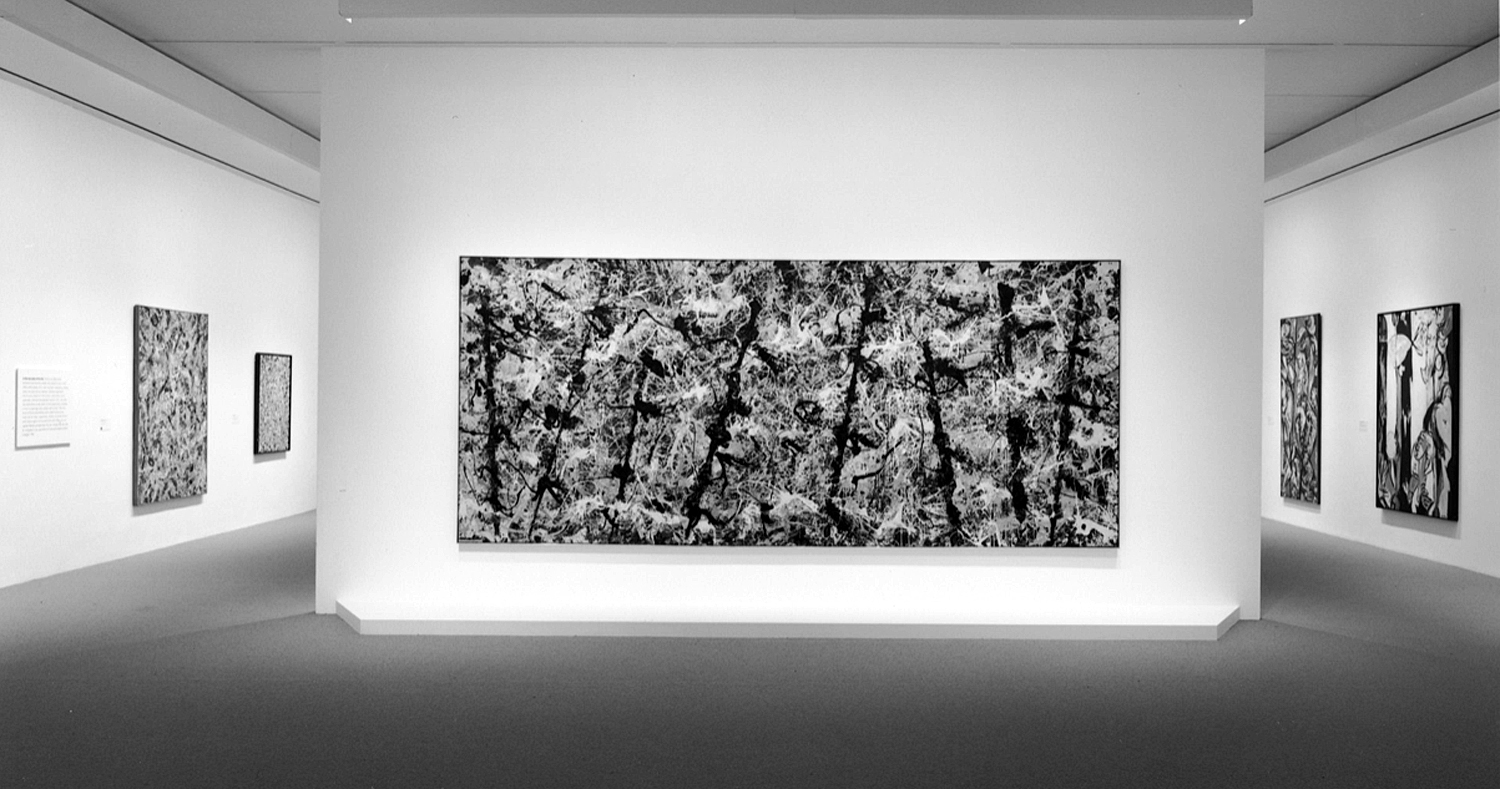
I had longed to see the painting in person, but it had been sold in 1973 to the National Gallery of Australia and shipped off to Canberra. But in 1998, I got to visit the Pollock retrospective at MoMA, where more than a hundred Pollocks were on view, with Blue Poles holding the place of honor in the final gallery.
There wasn’t a breakthrough after the breakthrough. Pollock never discovered where to go next. There are inkings, so to speak, when he began to return to the themes of his earlier paintings, bits of mythology and Jungian psychology. 
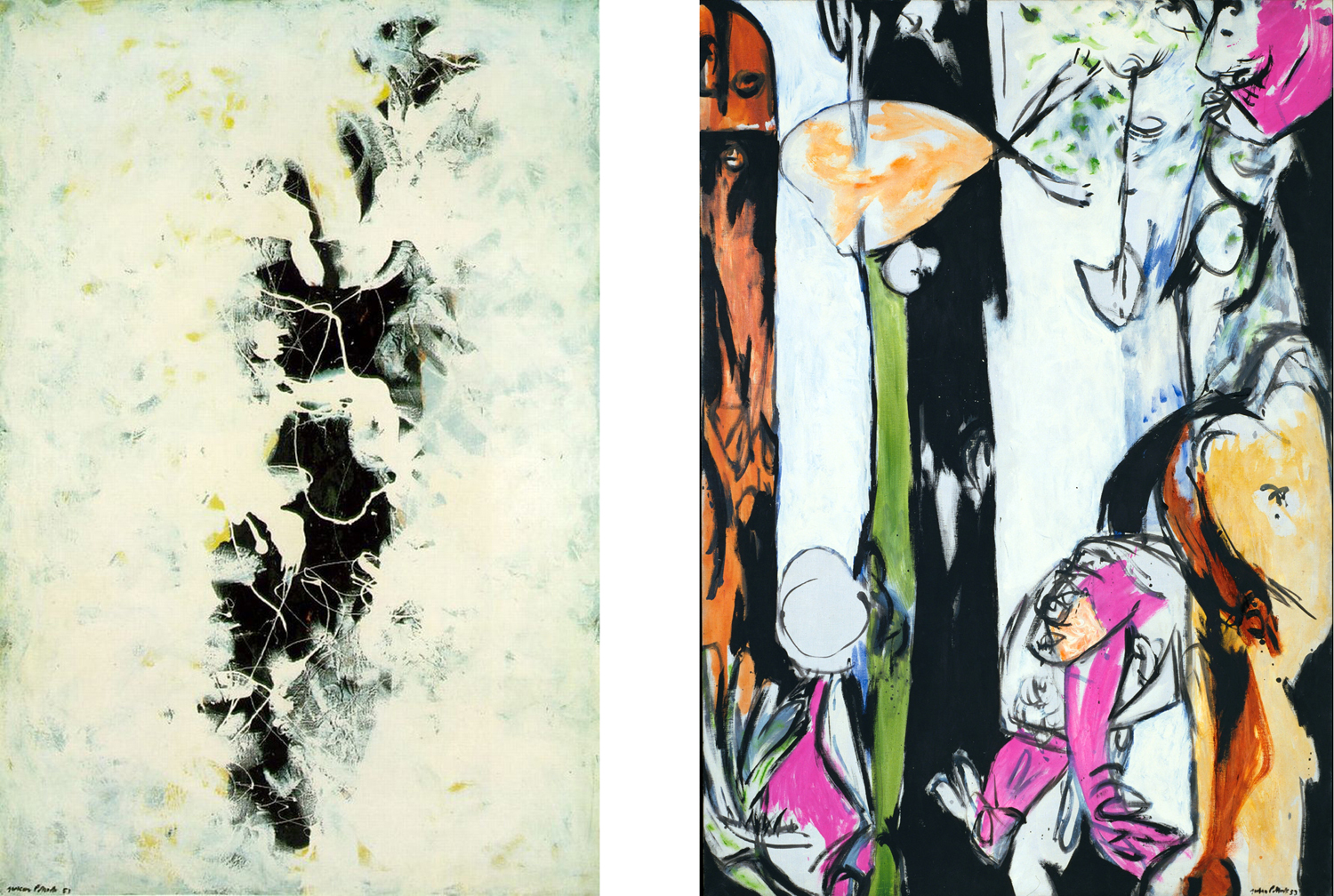
“The Deep” and “Easter and the Totem” 

But seeing the life’s work spread out at MoMA, proved that the drip paintings were the reason for his fame, that before them and following were only lesser works. 

Pollock always seemed like a once-lost soul trying his damnedest to be a great artist, but with very little of what is traditionally called talent. His early paintings are hardly more accomplished than those of a moderately talented high school student. They mimic, first, his mentor, Thomas Hart Benton, with bucolic agrarian landscapes, then they mimic the harder-edged style of the Mexican muralists, especially the more surreal Siqueiros. But his mimickry was never very good. 
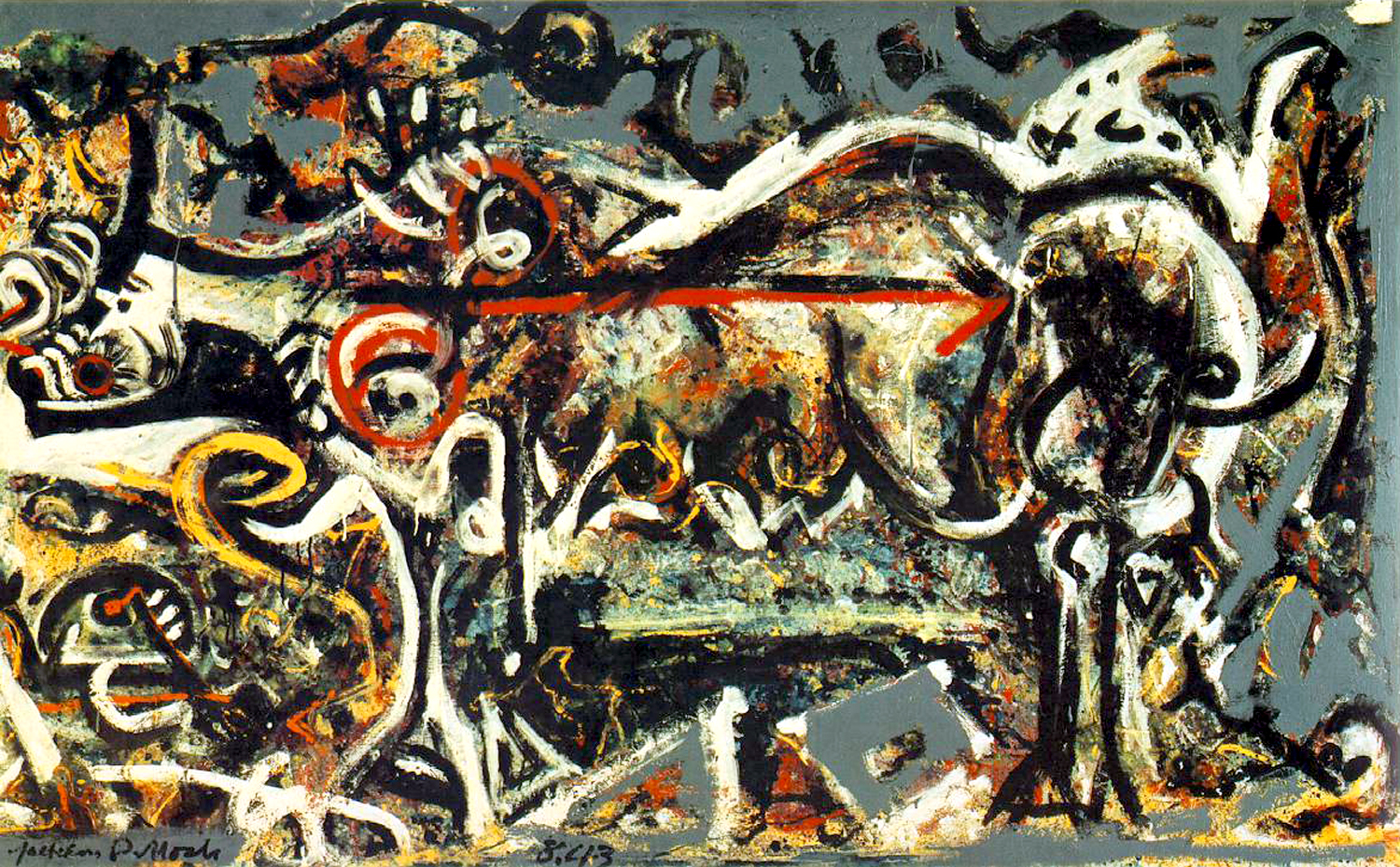
“She-Wolf” 1943 MoMA

In the early 1940s, his paintings became thicker with paint and took on as subject matter a kind of Jungian symbolism, with crusty paintings titled Moon Woman, Guardians of the Secret and She-Wolf. They were the stuff of deeply felt, perhaps, but clumsy efforts at best, lumpy with thickly applied gobs of paint. 

Then, in the late 1940s, he happened upon the idea of dripping paint directly on canvas, allowing the spillage to form images. It was as if Pollock discovered himself. What had been clumsy became elegant. What had been derivative became authentic. He had found his “adequate means of expression.” 

“Every age finds its own technique,” Pollock said.

Even now, Pollock the myth is better known than his paintings. Yes, the paintings are known, but they are recognized rather than seen. Seeing takes effort. But as a well-told story, he filled a cultural role in the 1950s, when rebellious artists, swimming in testosterone, were having their moment. 

As critic Luis Camnitzer wrote in ArtNexus magazine, he fulfilled  “two myths that still seem to have a certain (at least nostalgic) attraction. One is that of the male artist, just as he was conceived in the United States, with motorcycles, women and alcohol. The other is that of the ingenious inventor who creates things from scratch and with minimal resources. … The character conjured up by all this is the product of a strange  blend of Van Gogh, Thomas Alva Edison, and James Dean.” 

So, when a drunk Pollock died in 1956, slamming his convertible and two young women into a tree, it immediately became the story that took over in the public consciousness. 
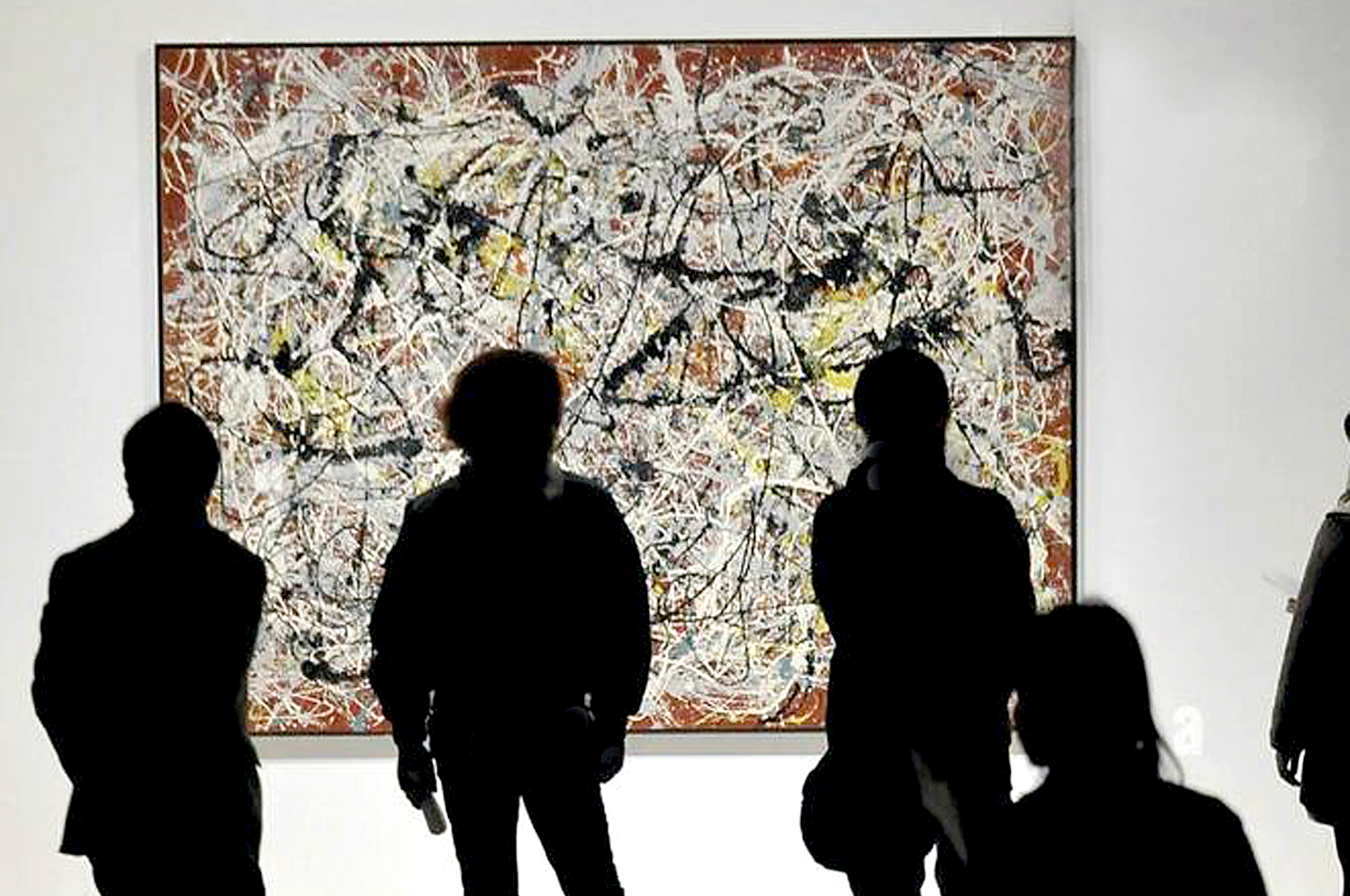
But it is the large canvasses for which he should be remembered. You can look at them and recognize their visual depth, the motion and movement in the spirals of enamel and pools of paint. Because they are so large, you stand close enough, they become a horizon-to-horizon event, and the paint has its own message — a busy energetic universe of pigment, and a modern version of the Sublime. You don’t need to make up stories; just look and absorb. 

Click on any image to enlarge
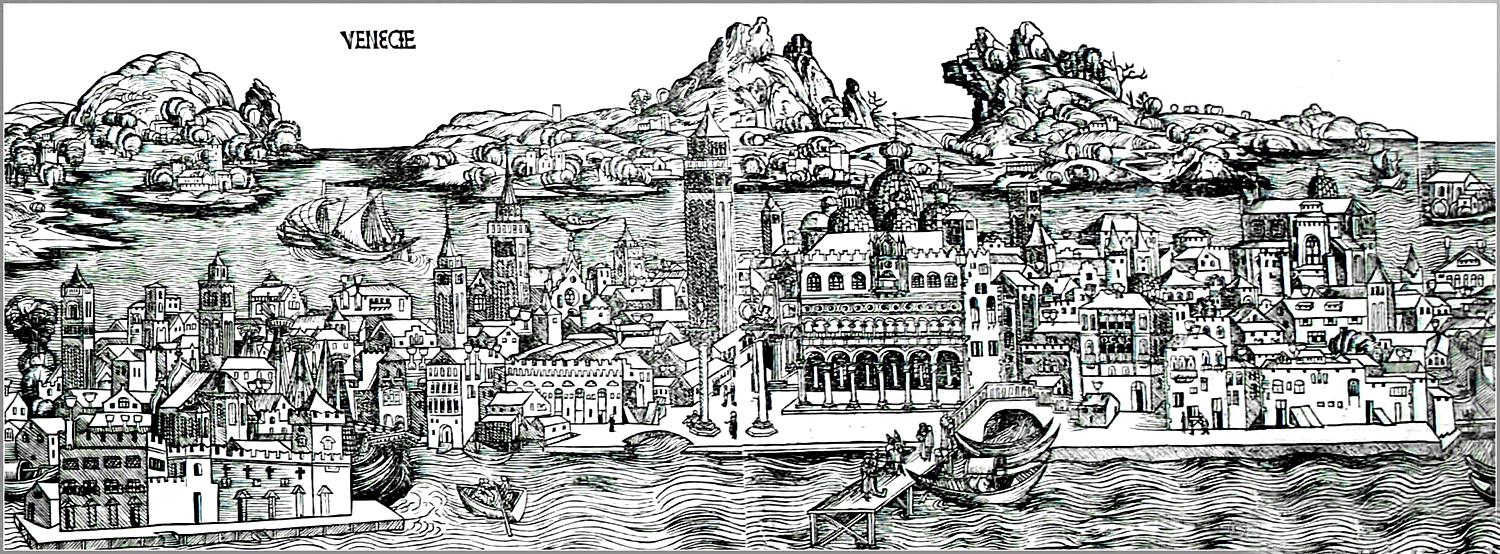
“Venice,” woodcut by Dürer

In 1494, at the age of 23, after years of apprenticeship as an artist in Nuremberg, Albrecht Dürer left Germany to visit Venice and Italy and find out what all the Hoohah was about. He was amazed at what he saw and  when he returned home to Germany, he brought the Italian Renaissance with him. He went back south for seconds in 1505 and stayed for over a year, soaking up the influences. It was what he had to do if he wanted to see what the Big Boys were doing. 

If you wanted to see, you had to travel. There were no full-color coffeetable art books to thumb through. If you wanted to see the work of Bellini, you had to go to Venice; for Raphael, to Rome. 

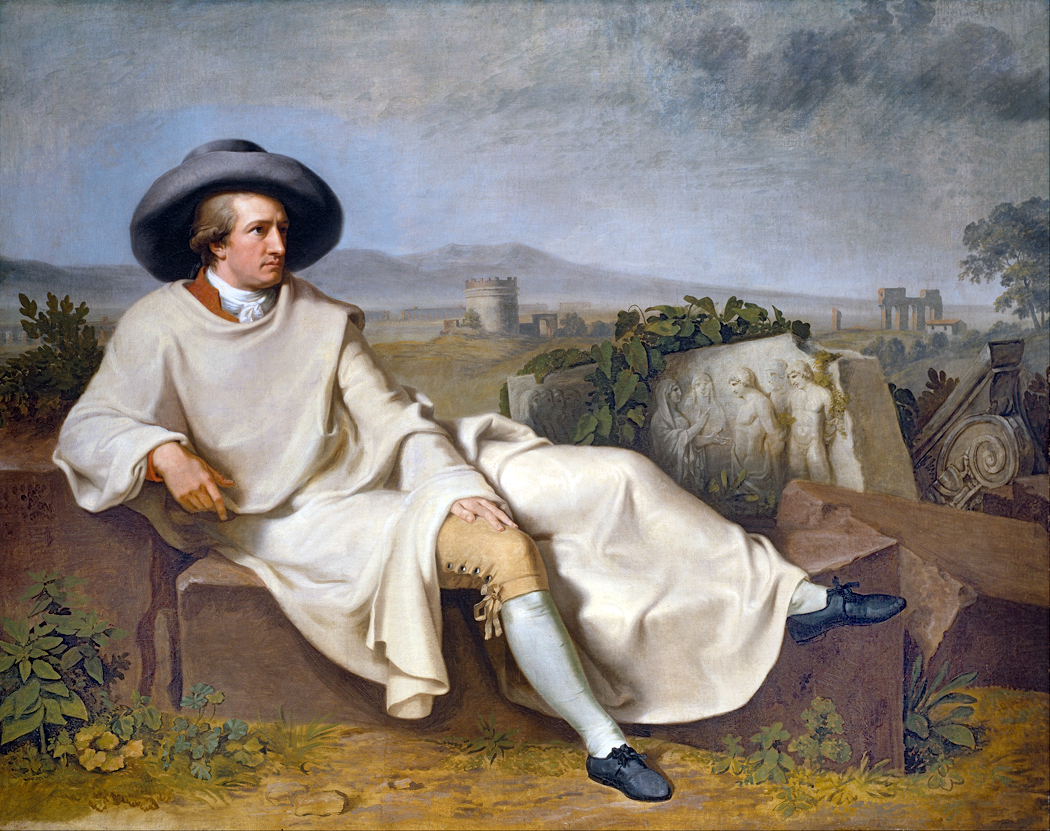
“Goethe in Italy” by Johann Heinrich Wilhelm Tischbein, 1786

In 1786, Johann Wolfgang von Goethe, then age 37, made the trip, this time to see the Roman and Greek sculpture that had been so highly praised in the work of Johann Joachim Winckelmann. He stayed until 1788, studying more than the statues, including many statuesque young women, which he later wrote about in his book of poetry, Roman Elegies. 

For most of history — until improvements in color printing in the middle of the 20th century — the only way to see famous art was to leave home and go there. Yes, there were engraved black and white copies published, and later monochrome halftones, but you could not really get a sense of Rembrandt or Titian without traveling. 

It gave rise in 17th century to the practice of upper-class families sending their sons on the “Grand Tour” to become educated and cultured. From the 1600s to about the middle of the 19th century, it was common for well-off young men to take a “gap year” — or two — to visit the Continent and see the sights and become men of the world before taking up their roles in government or business. Of course, many of these youths were more attracted to the live demoiselles and regazze than to the canvas madonnas. 

“Rose,” Philbert-Louis Debucourt 1788

It wasn’t just visual art. Before recordings, if you wanted to hear a Beethoven symphony, you had to attend a live concert. If you lived outside the city, you had to travel to get to the concert hall. Bach famously walked 280 miles from Arnstadt to Lübeck in order to hear Buxtehude play the organ. Even to hear now-famous symphonies and concertos you likely had to wait years between programmed performances. You might be lucky to have heard Beethoven’s Fifth once or twice in your life. Now, it seems, you can’t get away from it. 

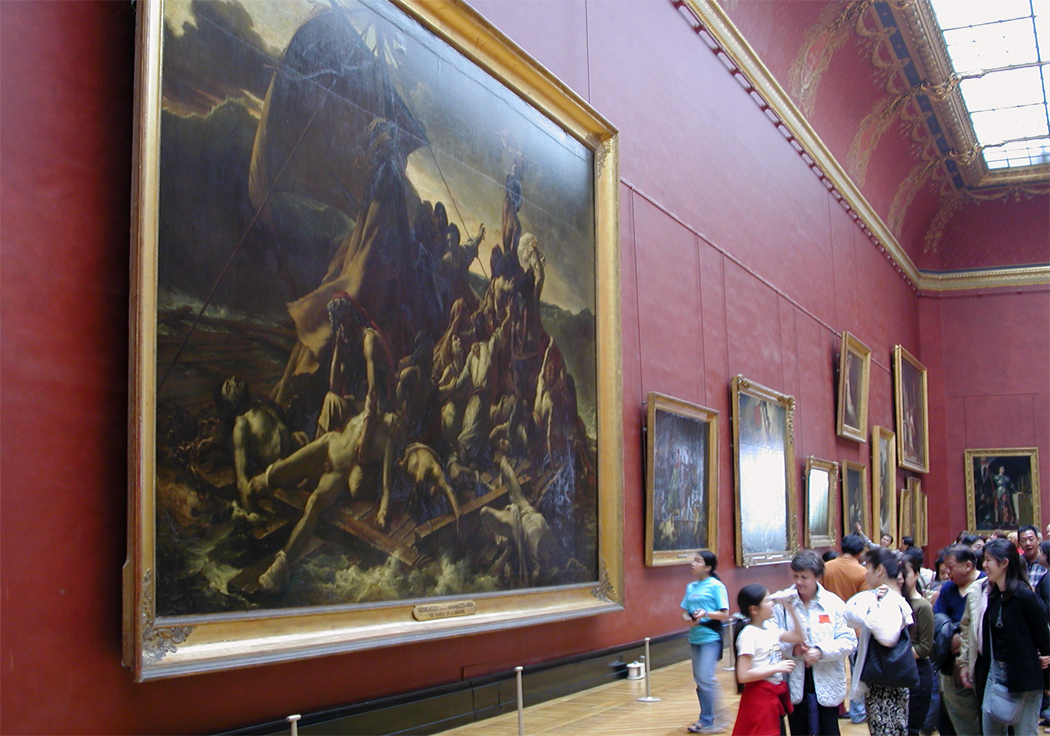
Today, when you can own 30 different CDs of the Beethoven symphonies and have your choice from Furtwangler to Norrington; you can fill your bookshelves with illustrated volumes of any artist you want; and watch endless YouTube videos about the Mona Lisa, it is important to remember that they are not the actual experience of the art in question, but varyingly faithful simulacra. You still need the real thing. A three-inch color plate of Gericault’s Raft of the Medusa cannot replicate the experience of seeing the real thing.

And so, we go to museums and galleries to get to know the art that is our cultural inheritance. Even today people travel across the world to see some of the world’s most famous art. The Grand Tour still exists, if only in ghost form, as a gap year or a summer abroad. My granddaughter had her high school summer in Italy. The traditions continue. Such travel affords an education that books just cannot give. 

In the 1960s, I accompanied my grandmother when she went back to the Old Country for the first time since she was five years old. We went to the village where she was born, Mosby, in southern Norway, and as part of that trip, I was sent on a (literal) Cook’s tour of Western Europe, taking in Germany, the Netherlands, Belgium, Luxembourg and France. I saw the Cologne cathedral, Notre Dame de Paris, Ste. Chapelle and the Louvre, among other things. Mostly, it made suburban New Jersey seem even more banal. 

Met; Guggenheim; Frick; Whitney; Cloisters; MoMA

But then, I tried to escape the Garden State as much as possible. I was lucky: I had my own Grand Tour just a few miles away. During my own high school years, living on the Jersey side of the George Washington Bridge, I spent as much time as I could in Manhattan, going to concerts and visiting all the museums: The Met, the Guggenheim, the Frick, the Whitney, the Cloisters, the Asia Society, even the long-gone Huntington Hartford Gallery of Modern Art on Columbus Circle. 

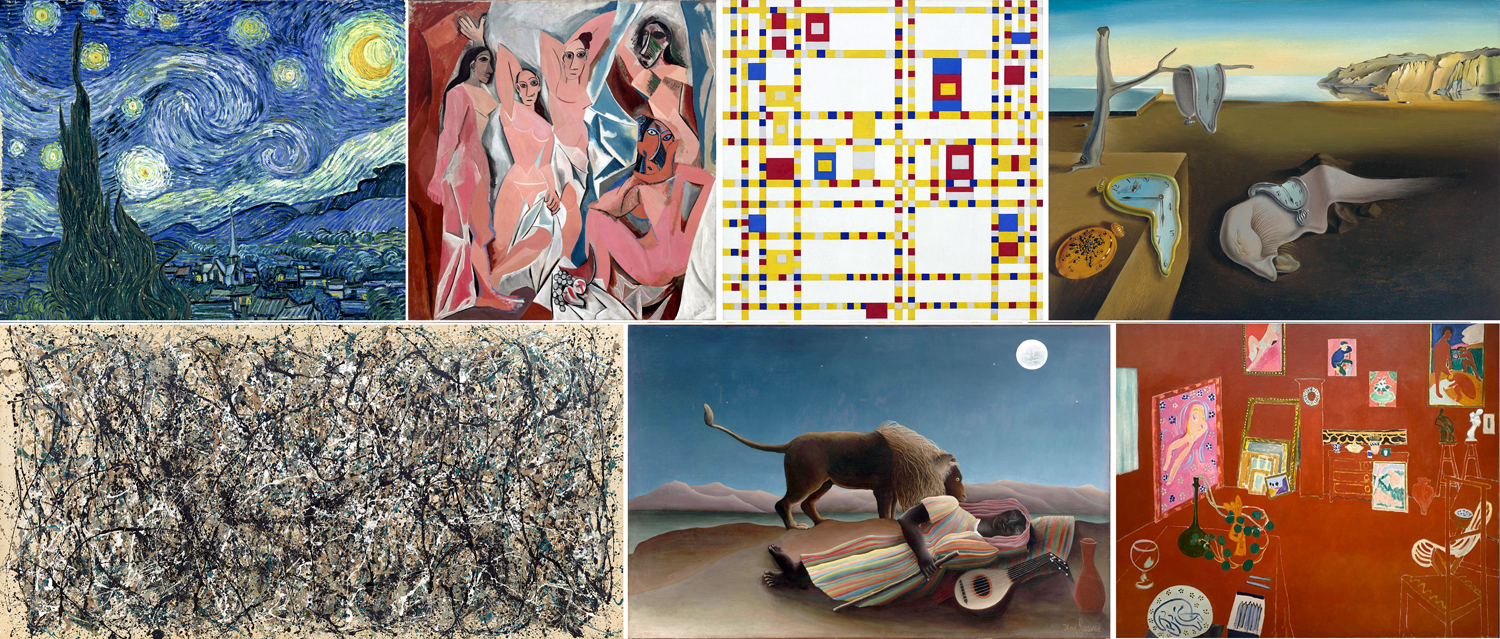
And most of all — the Museum of Modern Art, where I felt most at home. I came to know many famous paintings as old friends. Van Gogh’s Starry Night; Matisse’s L’Atelier Rouge; Picasso’s Demoiselles d’Avignon; Pollock’s One Number 31; Mondrian’s Broadway Boogie-Woogie; Henri Rousseau’s Sleeping Gypsy; Dali’s Persistence of Memory — all proper blue-chip Modern Art landmarks. 

After I went away to college, I frequently made the trip to Washington, D.C., to visit the National Gallery of Art, and later, the Hirschhorn and Corcoran. I ate up art like a starving man. It’s hardly surprising that I later made my career as an art critic. 

And working for the newspaper, I was sent around the country for major exhibits in Boston, New York, Chicago, LA, San Francisco, Seattle, Philadelphia. I was even sent to South Africa in 1989 to study the art scene there. And vacations brought me and my wife to France many times. Seeing as much as possible and finding troves of art in even small corners of the Continent. 

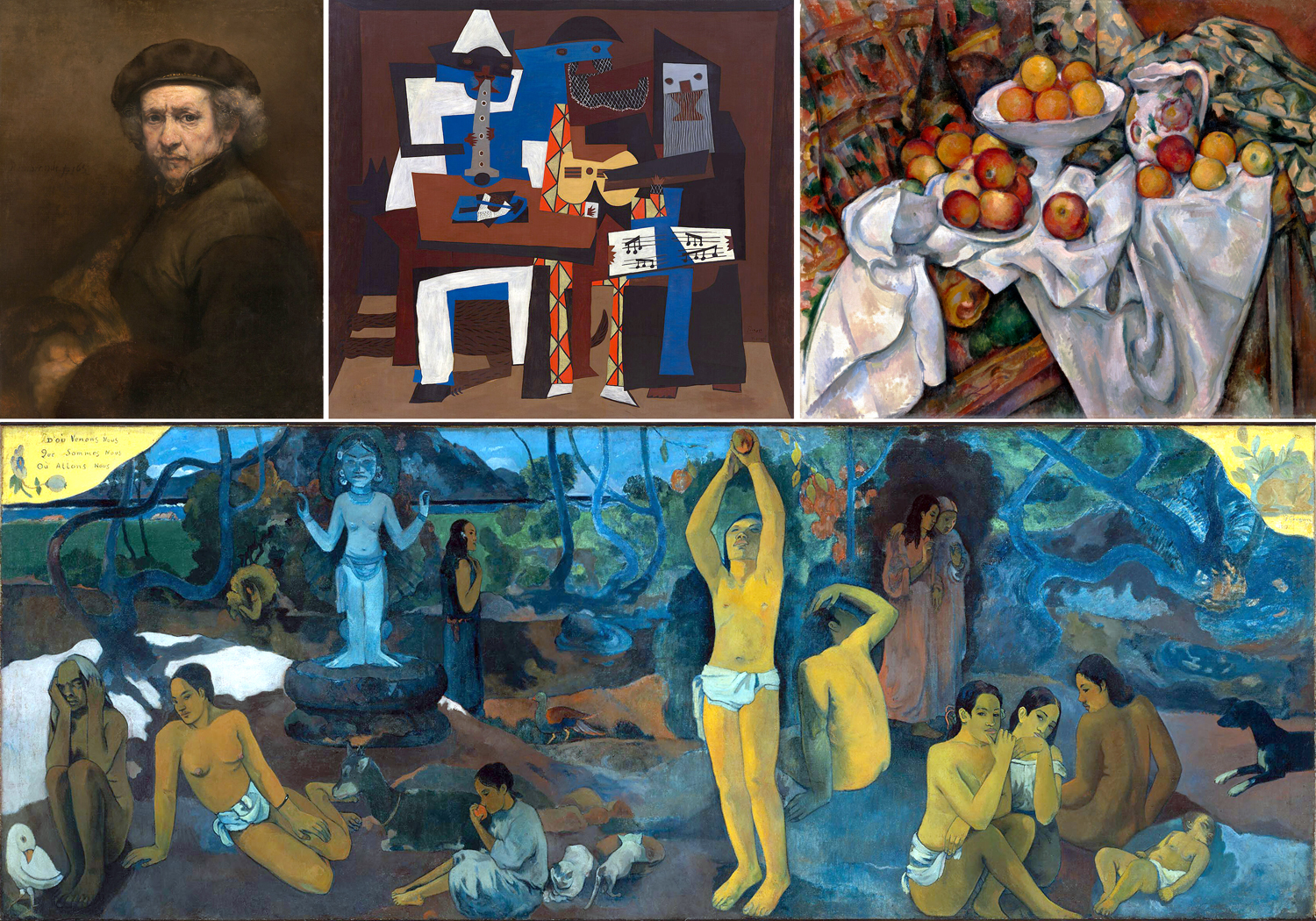
There have been dozens of important artworks I have been grateful to have known, not just in reproduction, but live, in front of my own eyes. My inner life is infinitely enriched by the experiences. There are many I could name, from Rembrandt’s self portrait in DC to Gauguin’s Where Do We Come From? What Art We? Where Are We Going? from Boston, but I need to pick out at least these six as central to my understanding of art, and of life. 

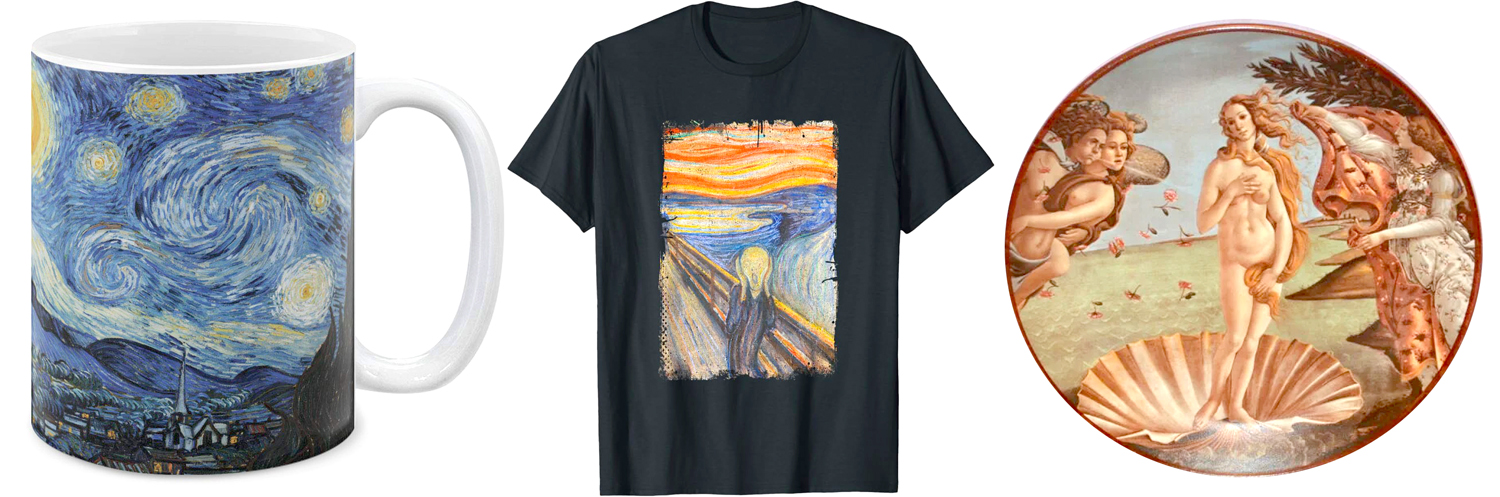
When you know works from reproduction, you cannot feel their size, cannot know the precise colors and pigments used, cannot grasp their tactile surfaces. Some of the most famous art in the world is known to most people by their reproduction on coffee mugs, T-shirts or commemorative plates. What you think is art is really just iconography — the nameable subject matter. The actuality, the physicality of the work is irrelevant in such cases. Seeing the original can then be a revelation. 

So here are the six works that have meant the most to me, that I am most grateful for having been able to know personally.

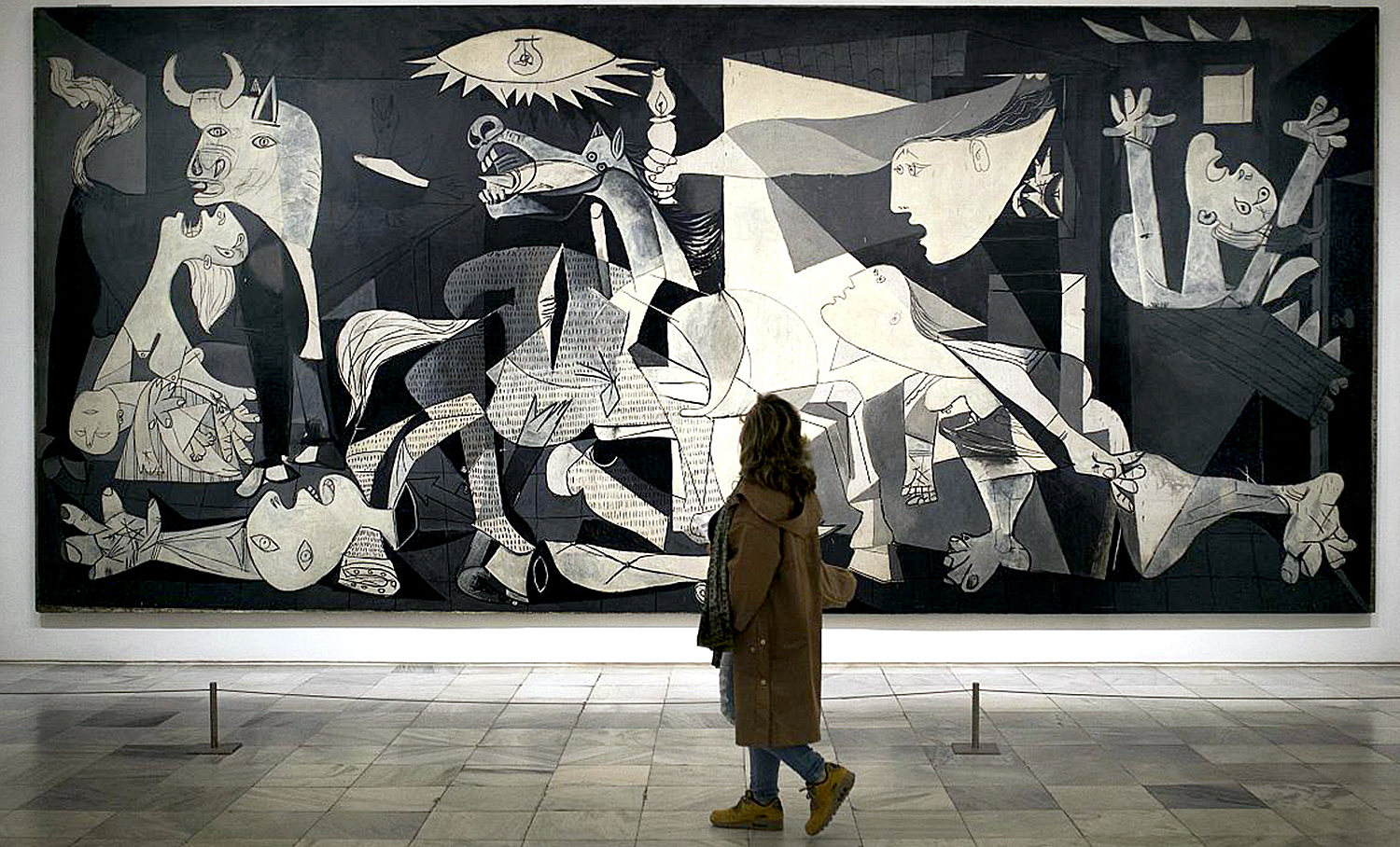
Picasso, Guernica — When I was growing up, this, perhaps the greatest painting of the 20th century, was sitting in the Museum of Modern Art in Manhattan, and I visited it often. As a teenager, I knew it was “important,” because I had seen it in books and magazines. But I thought of it as “mine,” because I knew it would always be there for me. Alas, in 1981, it was repatriated to Spain, where, I have to admit, it belongs. An old friend moved away. It was the first important artwork that I had what felt like a personal relationship with. 

Jackson Pollock, Blue Poles — In reverse, Blue Poles is a painting that came to New York for me. Pollock’s 16-foot drip painting from 1952 was auctioned off from a private collection in 1973 and sent to Australia. I loved many of the great Pollocks from MoMA and the Met, but thought I had lost the chance forever to see perhaps his most famous work. But a retrospective Pollock exhibit in 1998 at MoMA brought it back temporarily to the Big Apple. I got to see it there, where it was the jewel-lit highlight of the last gallery. 

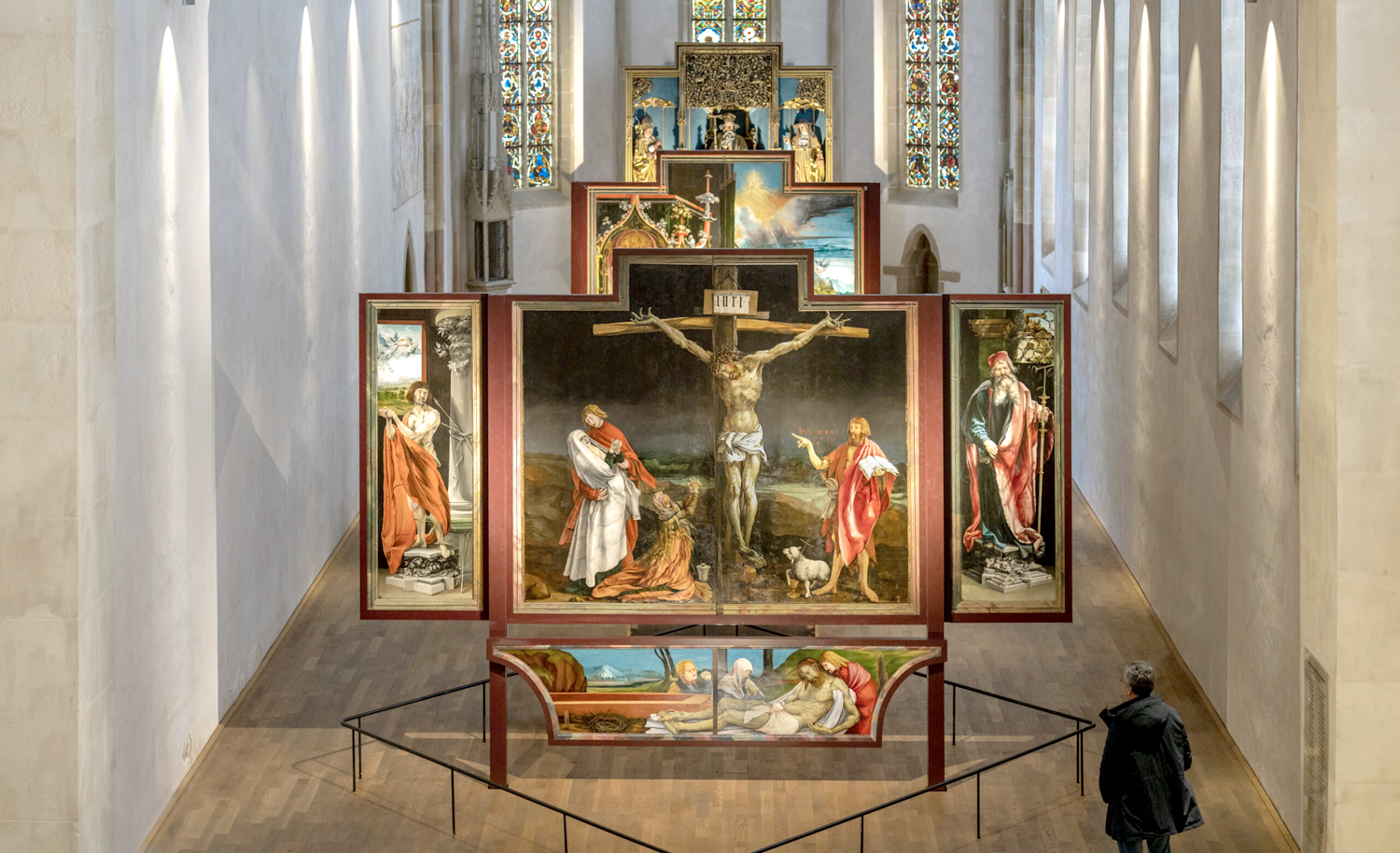
Grünewald, Isenheim Altarpiece —  The giant altarpiece comprises 10 paintings by Matthias Grünewald, including the pathos-laden crucifixion as its centerpiece, and a group of polychrome wood sculptures by Nikolaus Hagenauer, executed between 1512 and 1516. It sits in the Unterlinden Museum in Colmar, Alsace, France. The altarpiece was designed to be either closed or open, with various panels showing at different times in the Catholic calendar. I have no stake in the religious significance, I cannot help but be overwhelmed by the pathos and power of the work. 

Lascaux II — The cave paintings at Lascaux, France, date from about 20,000 years ago. They were discovered in 1963 and include about 600 images of prehistoric animals. The caves have been closed since 1963 to protect them, but a copy has been made and open to the public. I never thought I would get to experience them, but I got to visit both the reproduced experience at Lascaux II, but also the genuine cave art at nearby Font-de-Gaume. Seeing the original art there threw my spine into a buzz of uncanny deep-time — a state not rational but limbic. 

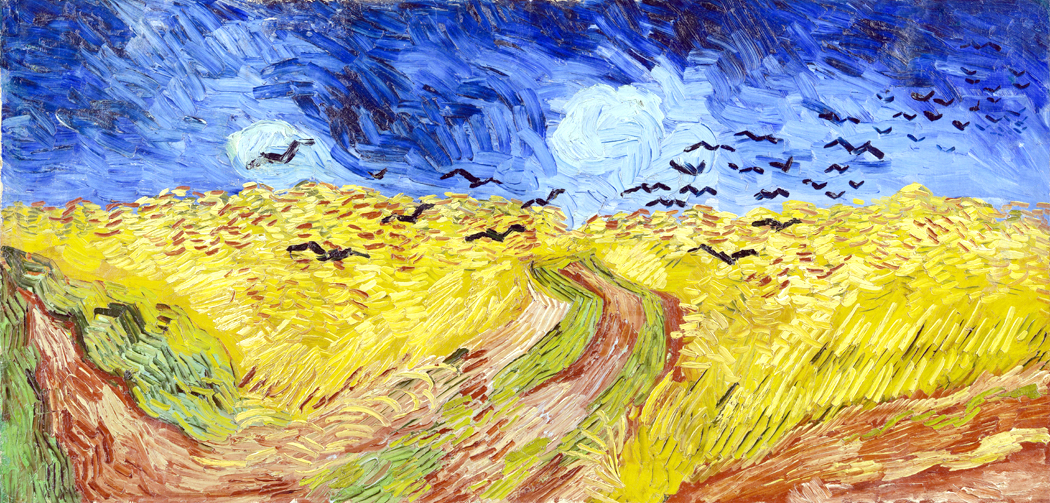
Van Gogh, Wheatfield with Crows — In 1999 the LA County Museum of Art mounted a 70-piece show of the paintings of Van Gogh from the Van Gogh Museum in Amsterdam, including many of his most famous works. My job got me sent to cover the exhibit and I was blown over by the works (also, astonished at how amateurish and awful many of his early works were: It took a while for Van Gogh to become Van Gogh). 

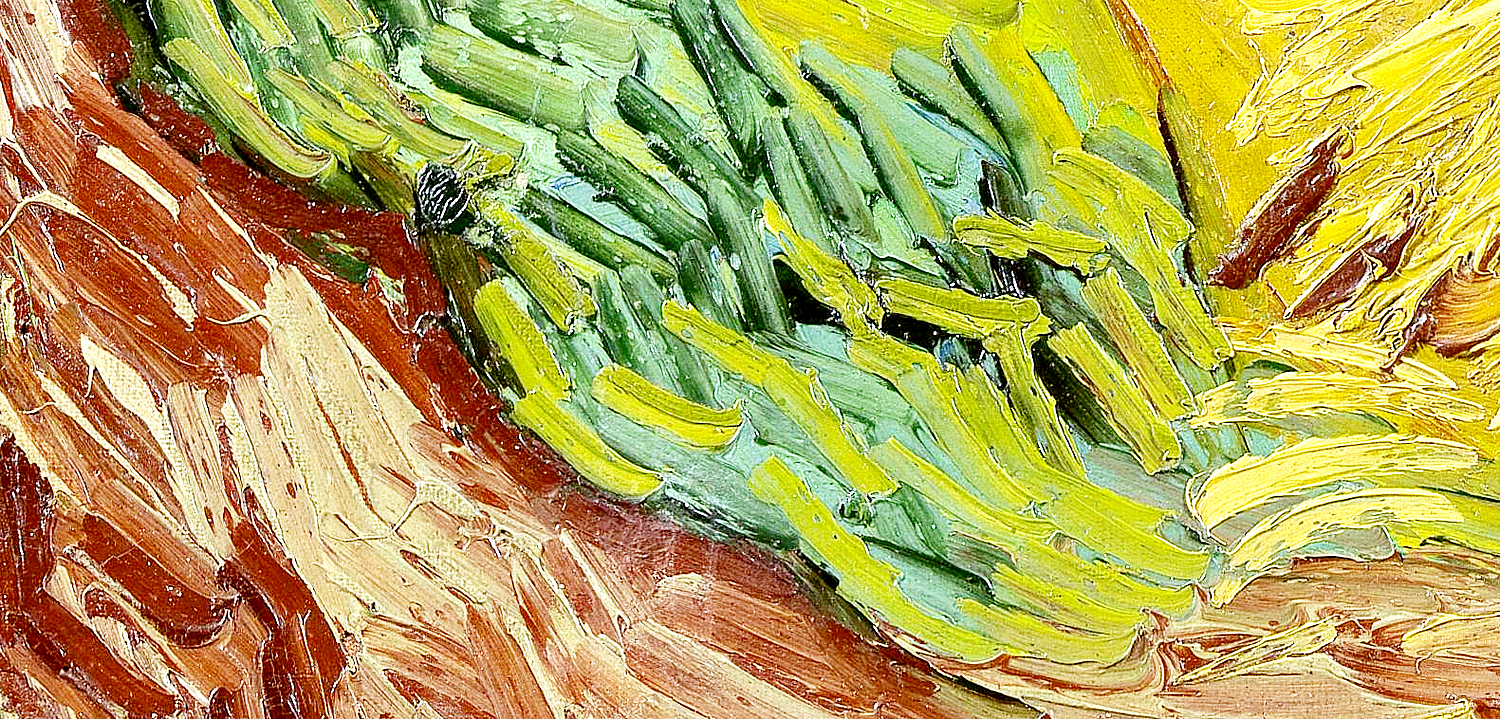
One of the last paintings in the last gallery was Wheatfield with Crows and up close you could see who wild and feverish the artist’s brushstrokes were, and what colors sat on his pallete, left largely unblended on the canvas. 

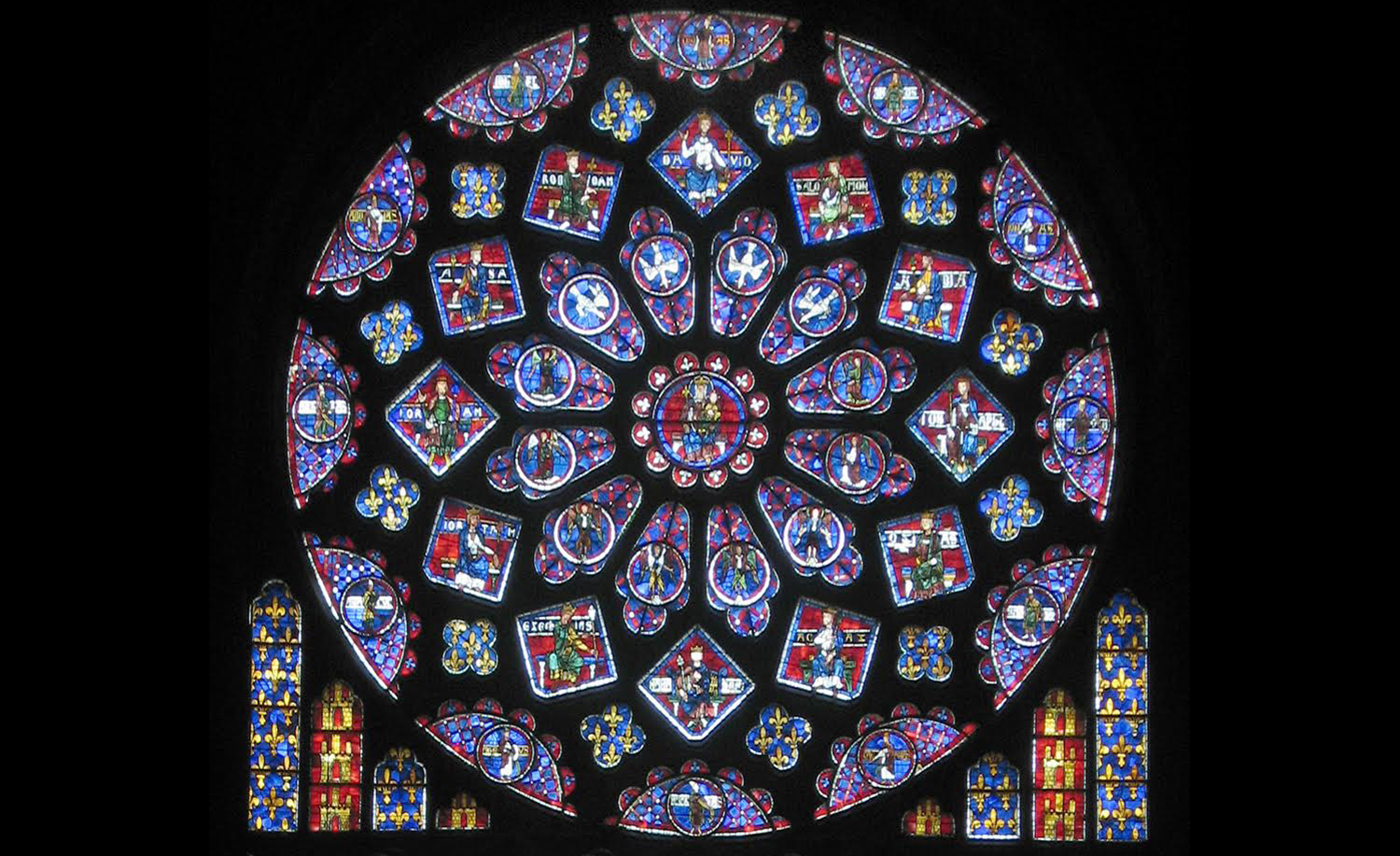
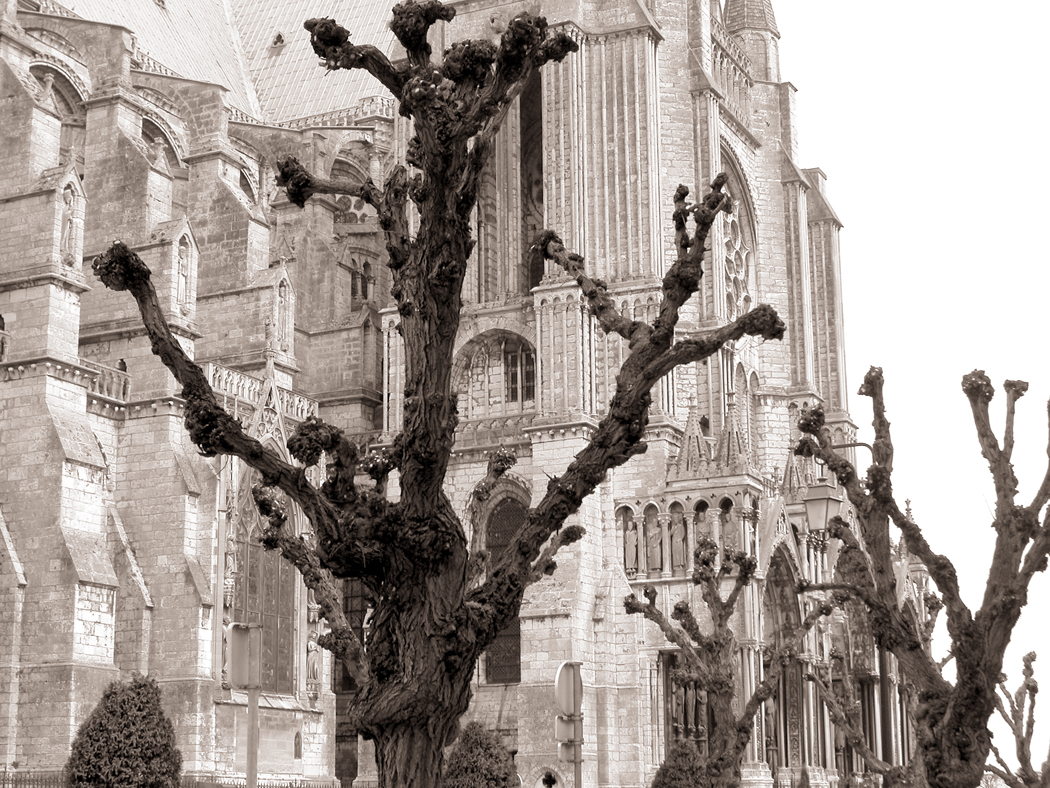
North Rose Window, Chartres Cathedral — I have been back to Chartres many times, and each visit, I spend a half hour, at least, sitting in the transept staring at the North Rose Window. It is, as I have said many times, the single most beautiful man-made creation I have ever seen. It is transcendent, a glowing object of meditation, whose shapes seem to move, to dance around the centerpoint. I am awe blasted. It almost makes up of all the misery, suffering and death human beings cause to each other. 

This is, of course, a limited selection. Before writing, I made a list of paintings, sculptures, plays, operas, architecture, poems, novels — I could just make a list of the types of art that would already be too long to include in a single blog entry. Narrowing down to visual arts still left me with too many things to write about — hence my squeezing it all into only six works. (It tried to make a conventional 5, but I already feel bad about only including six.) 

Seeing all this art and lamenting all that I never had a chance to see, only reinforced my sense that art is not just what makes us human, but how it makes us human. 

I was talking with my very Southern wife about how those brought up down here have a stronger connection to the land than us Yankees. Southerners have often lived on the same patch of land for generations and their sense of identity can course back through great-grandparents and beyond. Your sense of who you are includes the centuries before you were born. New Jersey never gave me that.

But I do have that same sense when looking at the paintings or hearing the music of the past. This all gave birth to me; it is who I am. We too often think of culture in terms of hoity-toity high culture. But really, culture is all the things that have accumulated over time to make the lives we now take for granted. 

When I see or hear the so-called canonical works of Western culture, I have that sense of belonging to a long, continuous line. It speaks to me; it tells me who I am. 

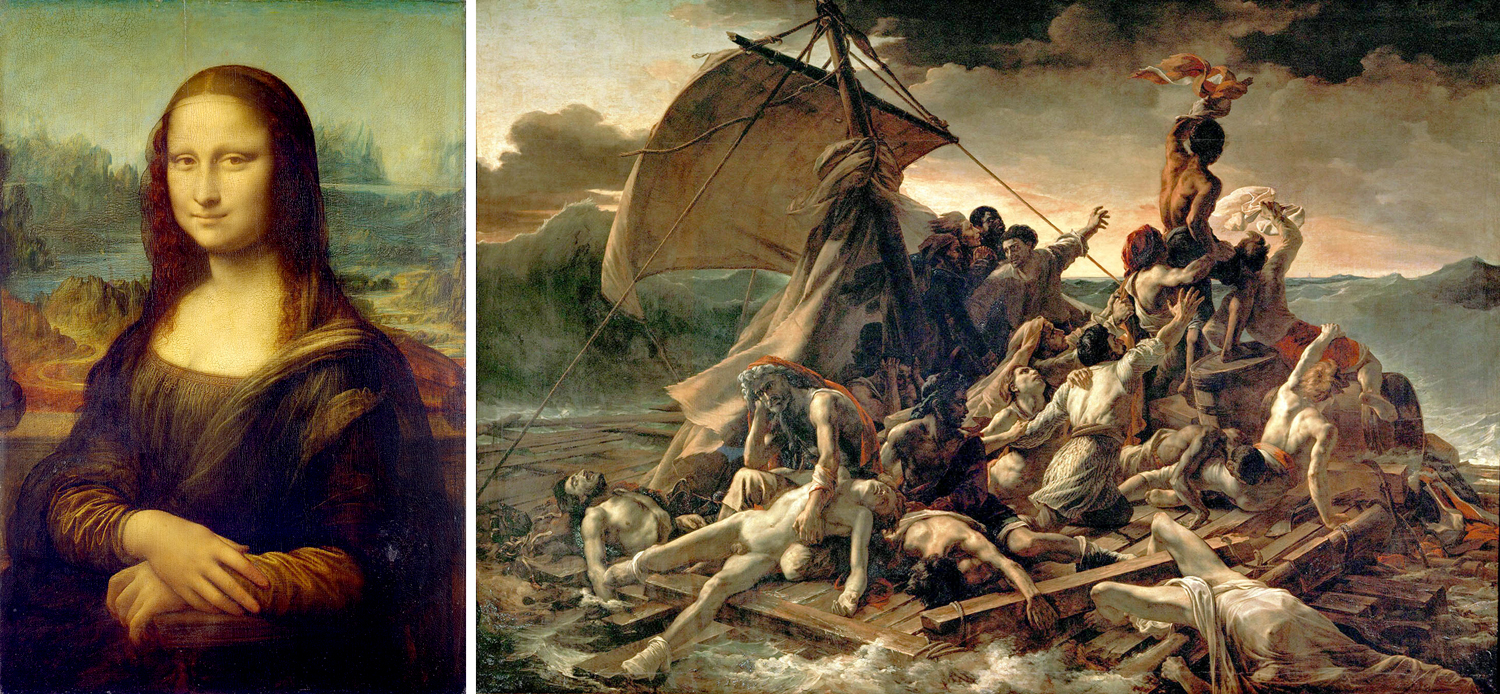
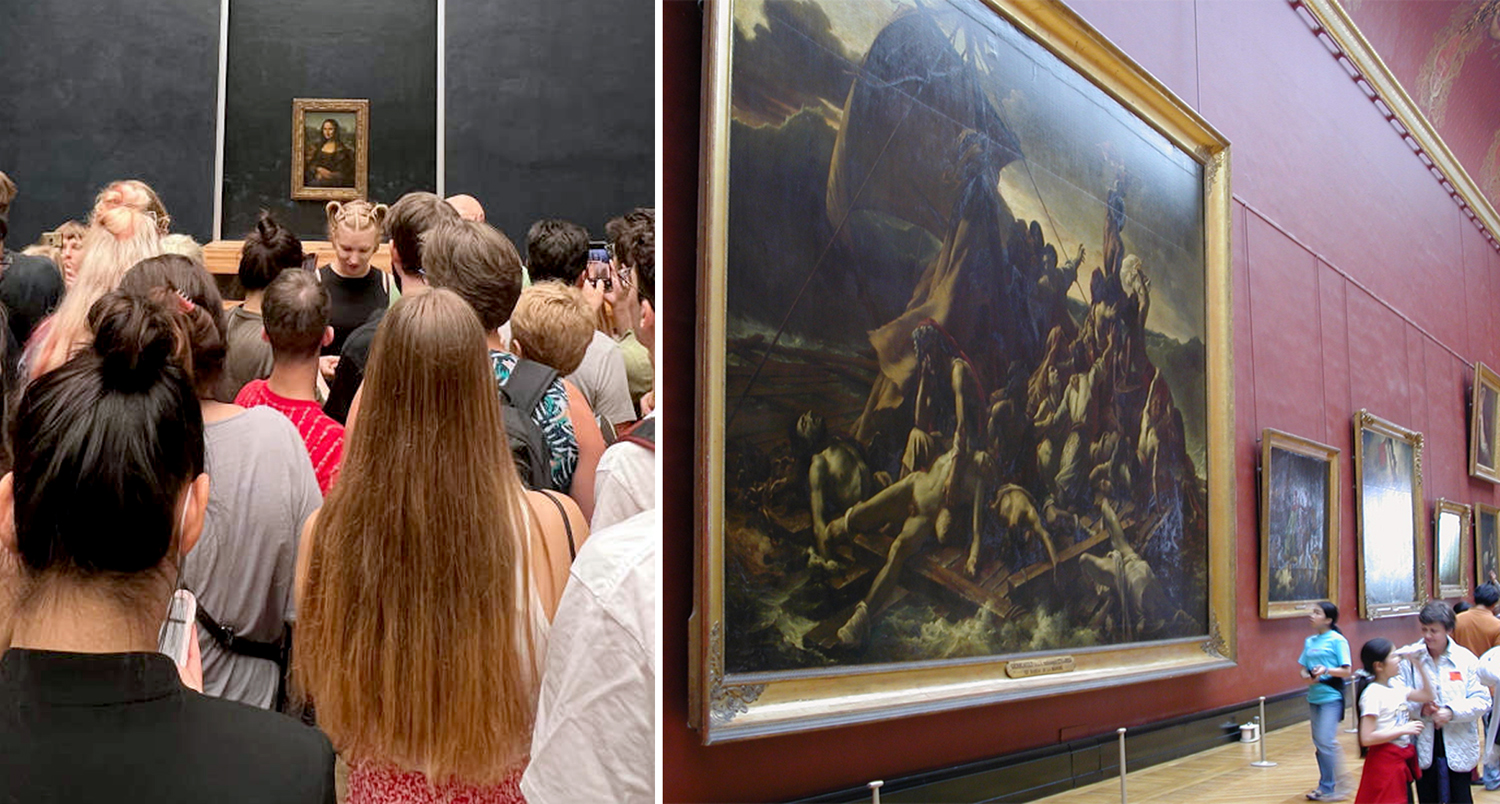
Take two of the most famous paintings in the Louvre. Most of us first experienced them in pictures in a book, perhaps Janson’s History of Art in an art history class. Or, projected onto a screen in the darkened classroom while the teacher pointed out details of the iconography. But these are images, not paintings. 

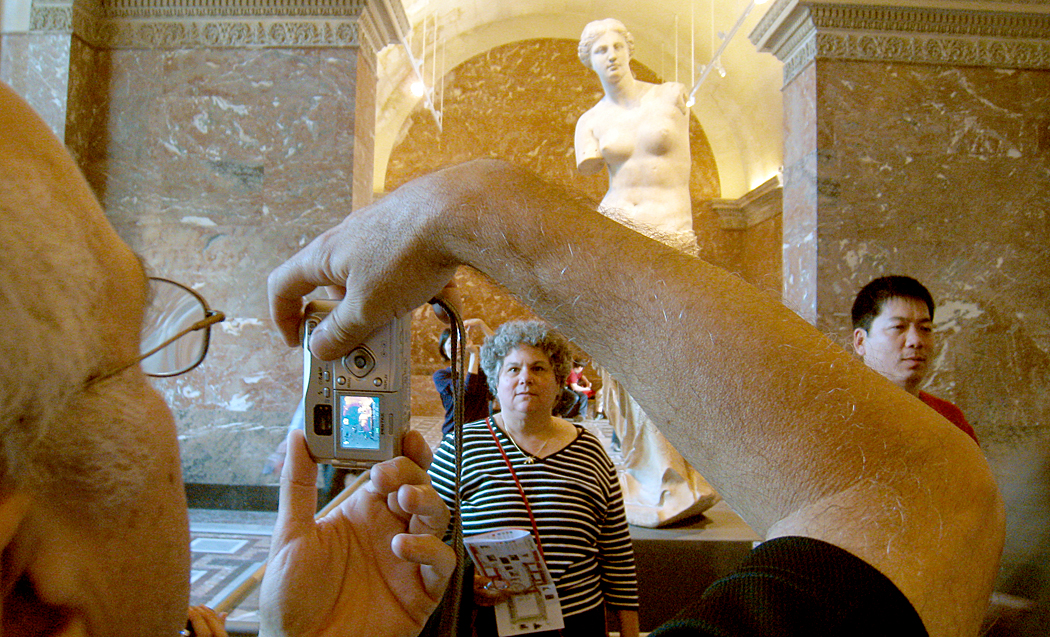
Often, today, we confuse the two, seeing pixels on a cellphone or iPad, and can easily believe we know the art because we can recognize the familiar shapes and colors. That is why so many people remark, on visiting the museum in Paris, about how “small” the Mona Lisa is. 

It’s not that small, of course. It’s a fairly normal size for a Renaissance portrait, but the fact is that separated out, as it is, for display, it takes up precious little wall space. Really, most people hadn’t given any thought to the actual size of the painting when seeing the reproduction in a book. It’s just an image, an icon, familiar not only in its regular shape, but also parodied to death in comic take-offs. 

You could look at the caption next to the printed image in your book, and see that there is a bunch of information in parenthesis beyond the identification of artist and title. It will often give you the date, in which museum collection it resides, and the size of the painting. In the case of the Mona Lisa, 21-by-30 inches. 

But then, perhaps you wander into the gallery with Théodore Géricault’s The Raft of the Medusa. You’ve seen it in your Janson and think you know it. You don’t. It is 16-by-23 feet — the size of a billboard. 

You see them as images, and they are adjusted to the size of the page and you can have no sense of their relative sizes.

But walk through the Louvre and it is quite different.

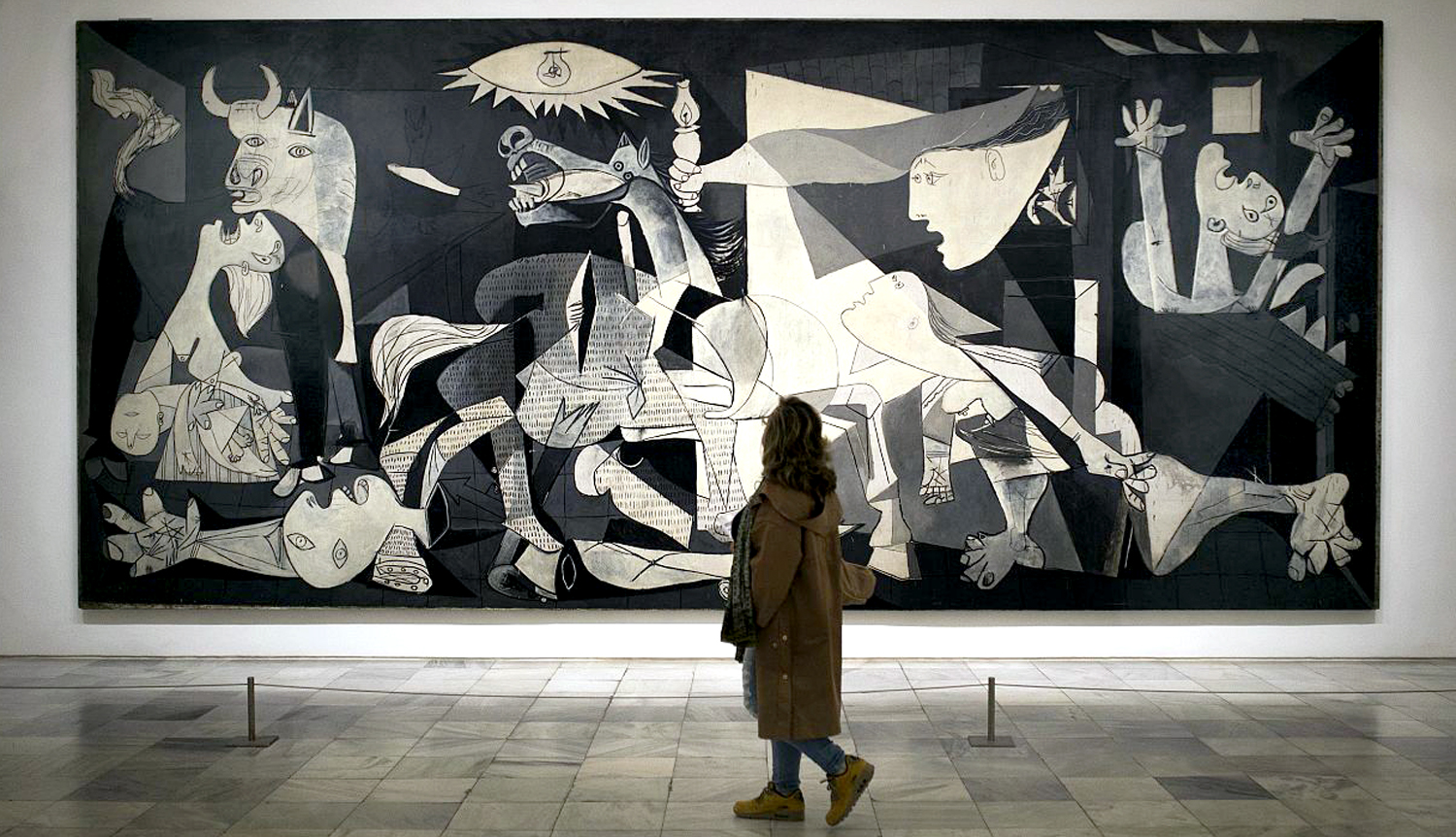
I remember when I was a teenager and going to the Museum of Modern Art in Manhattan and seeing Picasso’s Guernica, which stretched out across its own wall. You could see it from afar, stepping out of the elevator and looking to your right, several galleries away. Just under 12 feet high and 26 feet across, it was more than a painting and more than an image. It was a presence. 

And that was part of its meaning. It was made in outrage over the 1937 German bombing of the Basque down in Spain and if it had been made to display comfortably on a gallery wall, it would have been just another painting for sale. But at size, it forces you to consider the suffering and death. Its size means you cannot just look away. 

The world we live in is increasingly a virtual one. The TV screen, the computer screen, the cellphone screen, the tablet and even the wristwatch screen have become so normal to our daily lives it has become easy to mistake what we see there as real. It is not. 

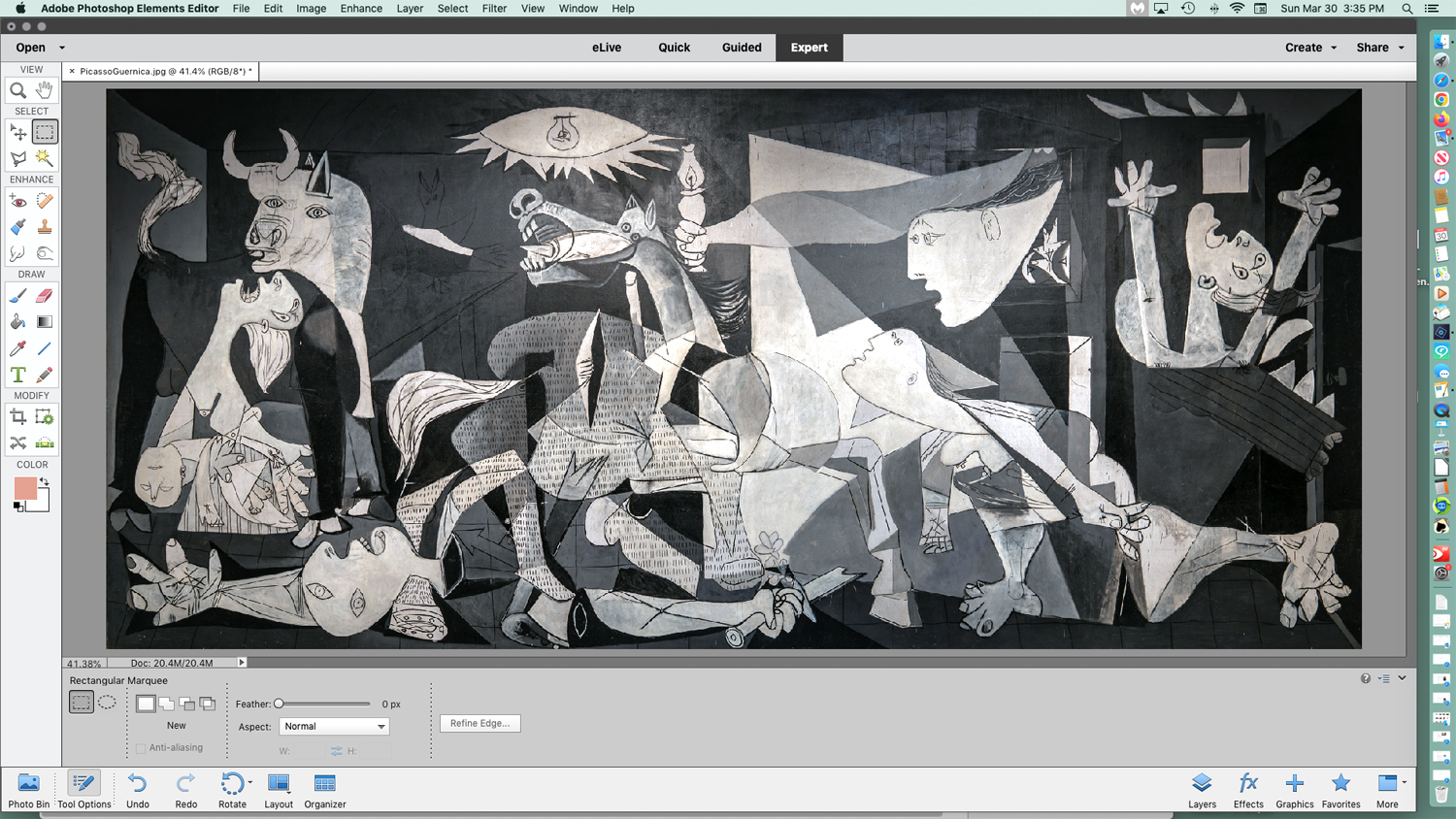
You cannot have the personal experience of Guernica from a photographic reproduction or a pixel image. You can memorize its iconography and discuss its provenance and the biography of its creator, but you will not have the gut-level experience of it I had visiting it at MoMA. 

And it isn’t just the size. Seeing art in person means you can see the pigments used, the brushstrokes, the opacity or transparency of the paint, whether it is on panel or canvas — a whole range of physical properties not apparent in a reproduction, and all of it — in addition to its physical dimensions — are essential to its meaning. 

And by meaning, I don’t refer to its symbology. That is language. I mean the experience of it. Vermilion or ultramarine are experiences not conveyed in ink or pixel, and that experience is meaning. 

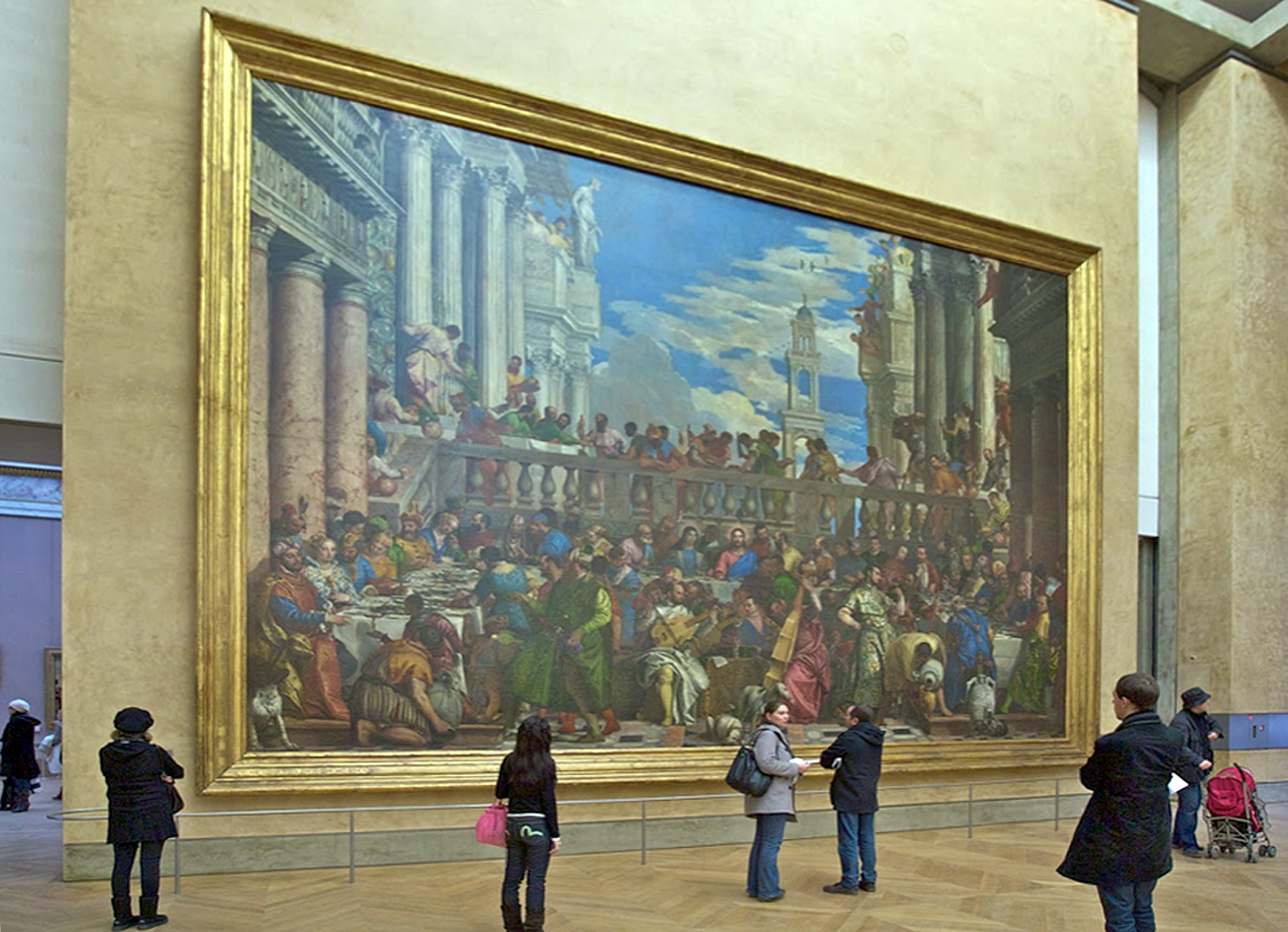
If you walk through the Louvre, another famous art history painting you find will be Veronese’s The Wedding at Cana. Another wallop in the gut. It is 22 feet high and 33 feet from side to side. 

If you think of it as a biblical subject, and believe you are “getting” the painting by naming the people pictured, you have missed the central experience of the work. 

Even more ordinary size paintings depend, in part, on their dimensions and how you relate to them. A life-size portrait can mimic meeting the person himself. In the Renaissance, one ideal was that a painting should be like a window through which you are looking, and so a window-size canvas was part of the experience. 

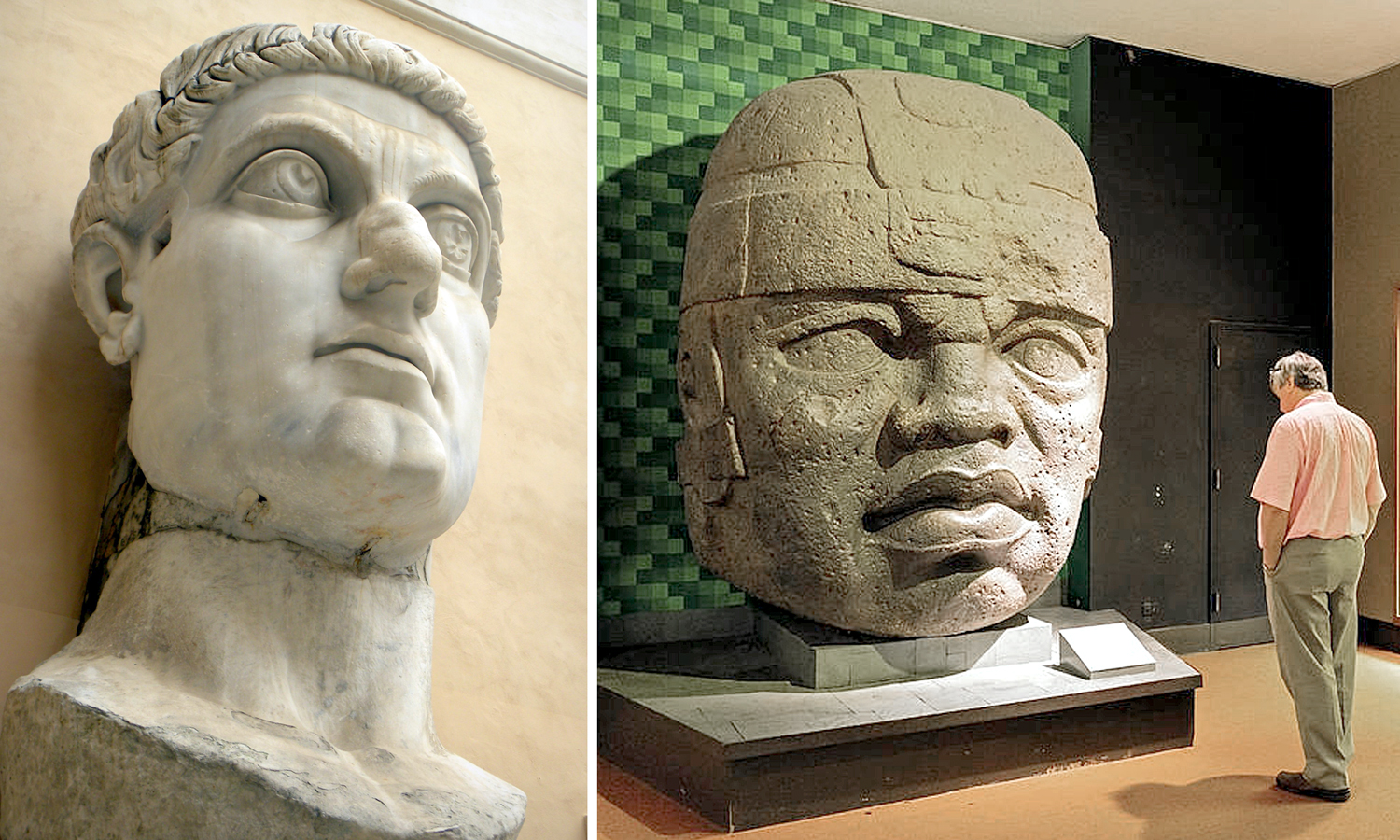
A giant head is another thing altogether, like the famous head of Emperor Constantine or one of the Olmec colossal stone heads from Mexico. Their size makes you take notice. The same shape, but the size of a cantaloupe, would hardly carry the power of these monuments. I remember the first time, as a boy, I saw the Olmec head at the American Museum of Natural History in New York; the memory of it stuck to my psyche for decades after. Still does. 

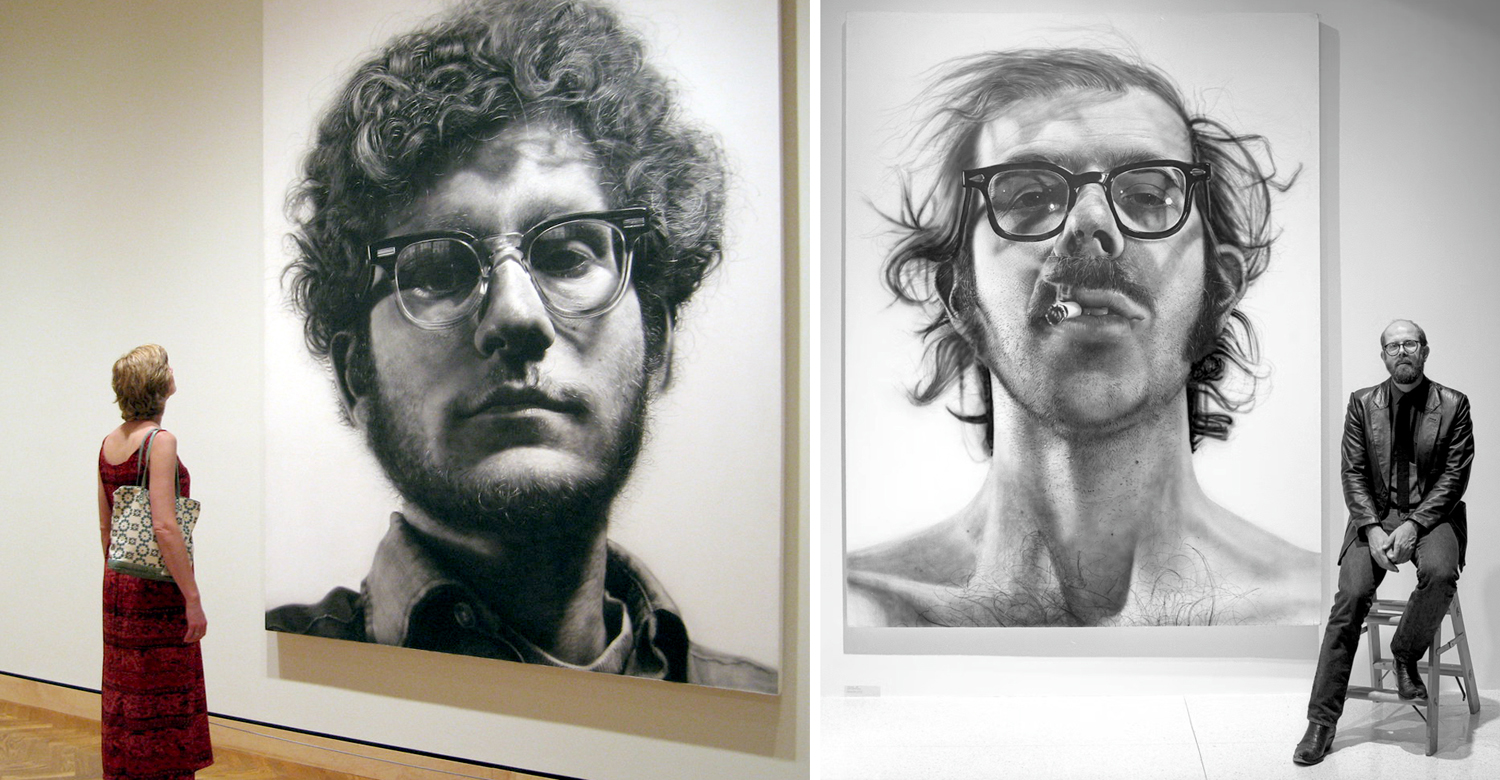
The same for the huge portrait heads of Chuck Close. 

The word often used to describe such larger-than-life art is “heroic.” They have an effect very like that of Achilles in the Iliad or Ahab in Moby Dick. It is a word often used to describe the large paintings of the Abstract Expressionists of the late 1940s and through the 1950s. These were painters of utter seriousness of intent. The last gasp of a non-ironic age, after which came the deluge of meta. 

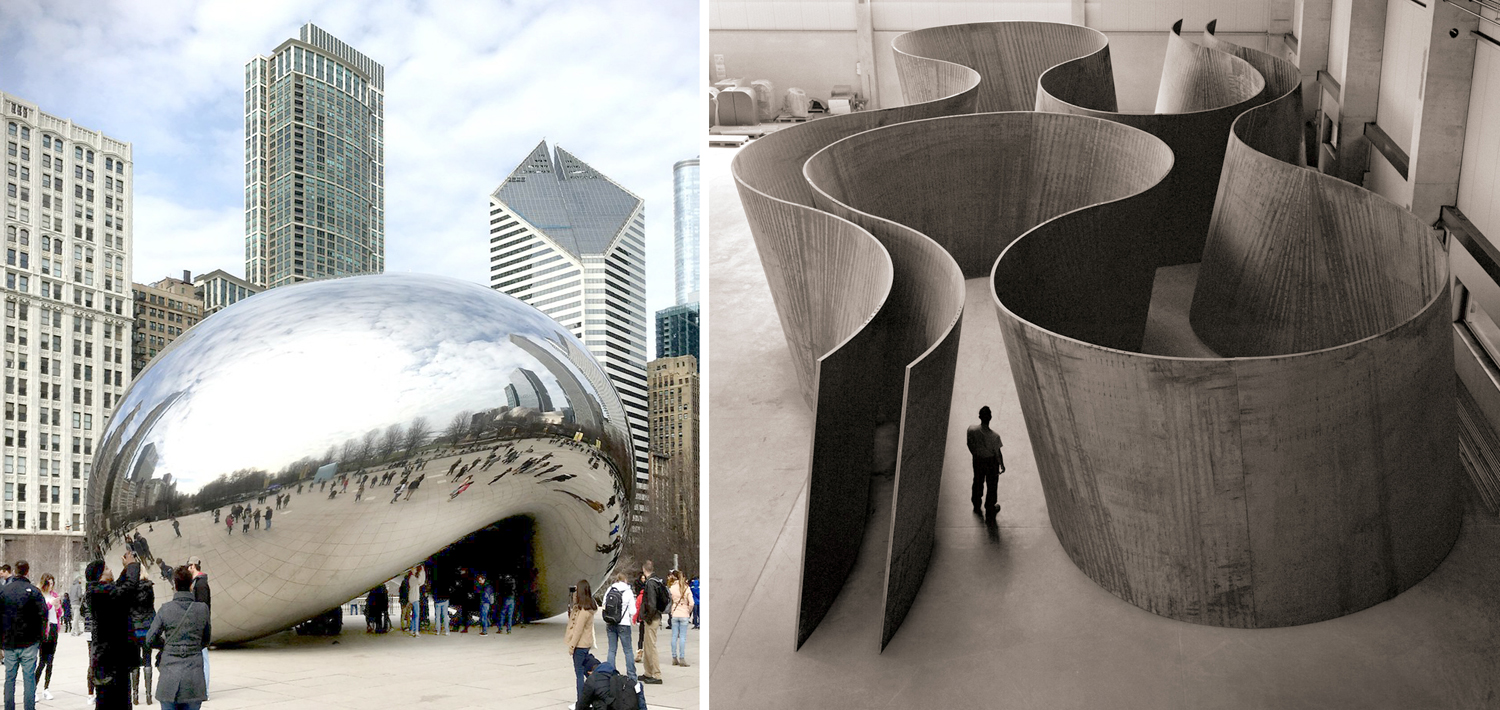
There are artists who use mere size to impart meaning to their work, Anish Kapoor, for instance, in his huge shiny bean called Cloudgate, or the rusted steel curtains by Richard Serra that are best experienced by walking through. But notice that the giant bean is also ironic. It’s a bean, after all, raised to heroic proportions. 

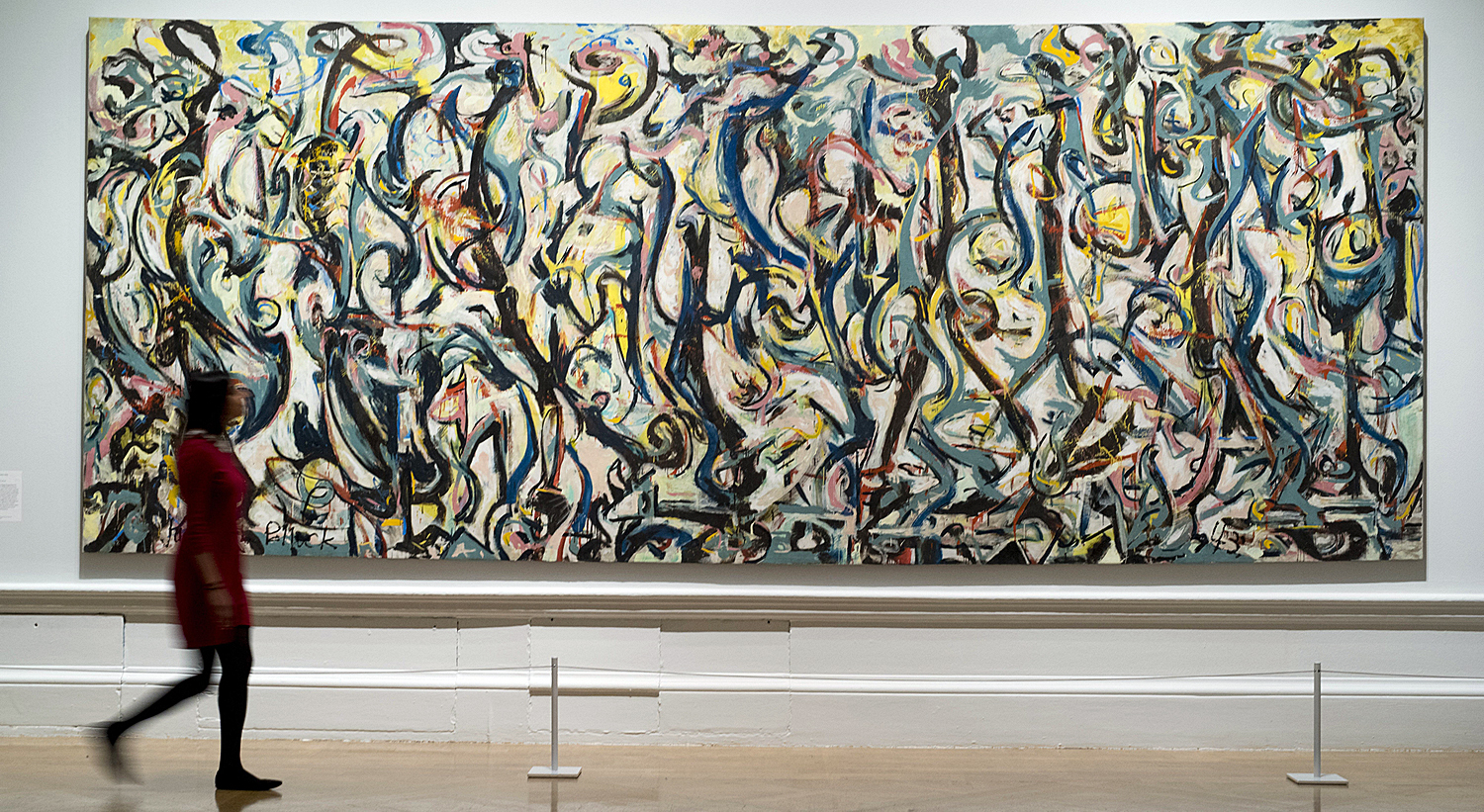
But those cigarette-smoking, heavy-drinking and blue-collar wearing guys at mid-century were dead serious. Jackson Pollock painted his first large painting, called Mural, in the mid-’40s. It is 8 feet by 20 feet and meant to be installed in the apartment of Peggy Guggenheim. It led to the later drip paintings that made Pollock famous — in 1949, Life magazine asked “Is he the greatest living painter in the United States?” 

Pollock made paintings in various sizes, but it is his large canvases that hold the emotional power that still resonates today. I visited the huge Pollock retrospective at MoMA in 1998 and was blown away by the variety of the paintings, and got a chance, finally, to see Blue Poles, a large 1952 canvas sold to a gallery in Australia in 1973 and unavailable to American audiences since then. It was given pride of place in the exhibition and deserved it, in the center of the room, on a wall of its own. It was lit like a jewel, but a jewel 16 feet across. 

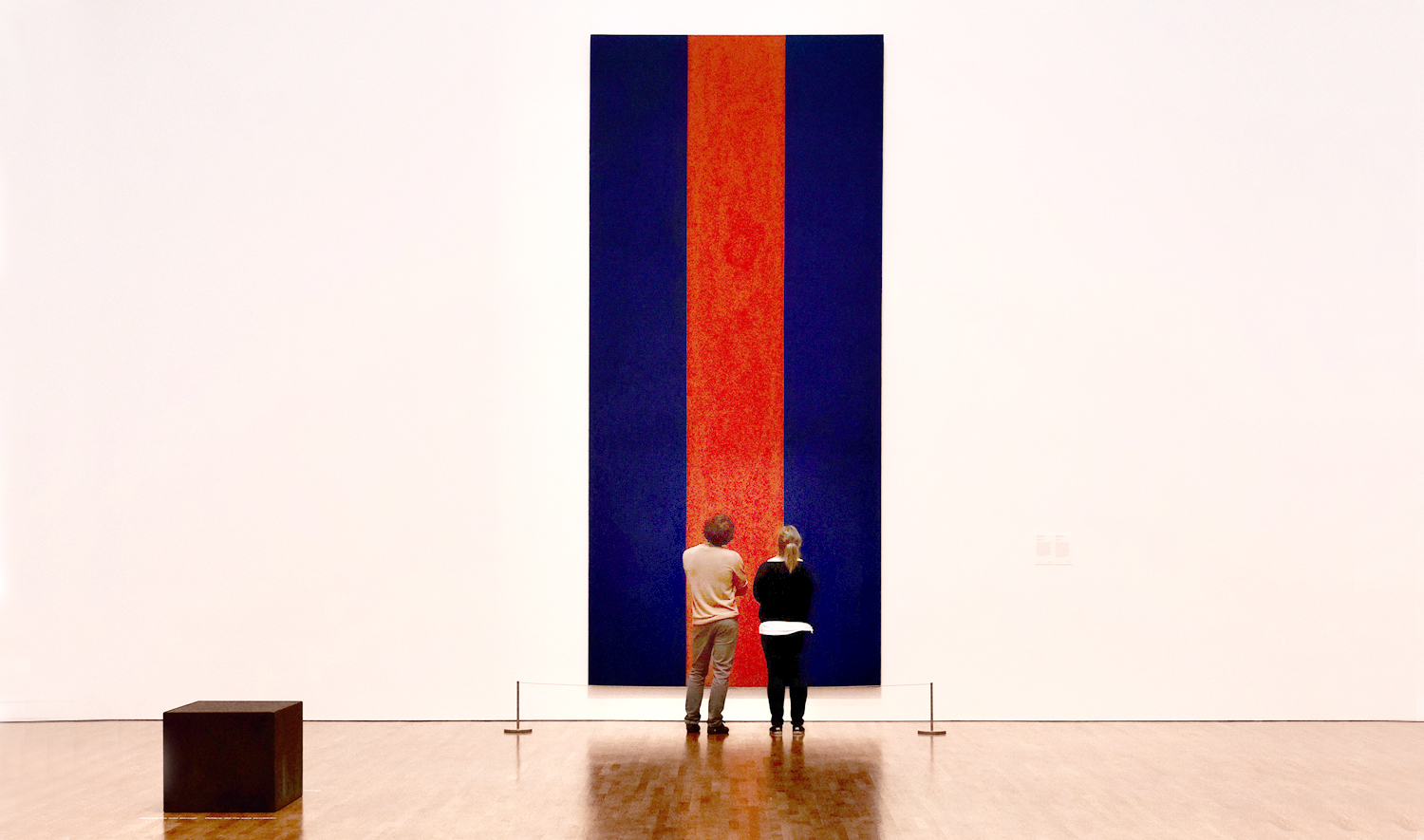
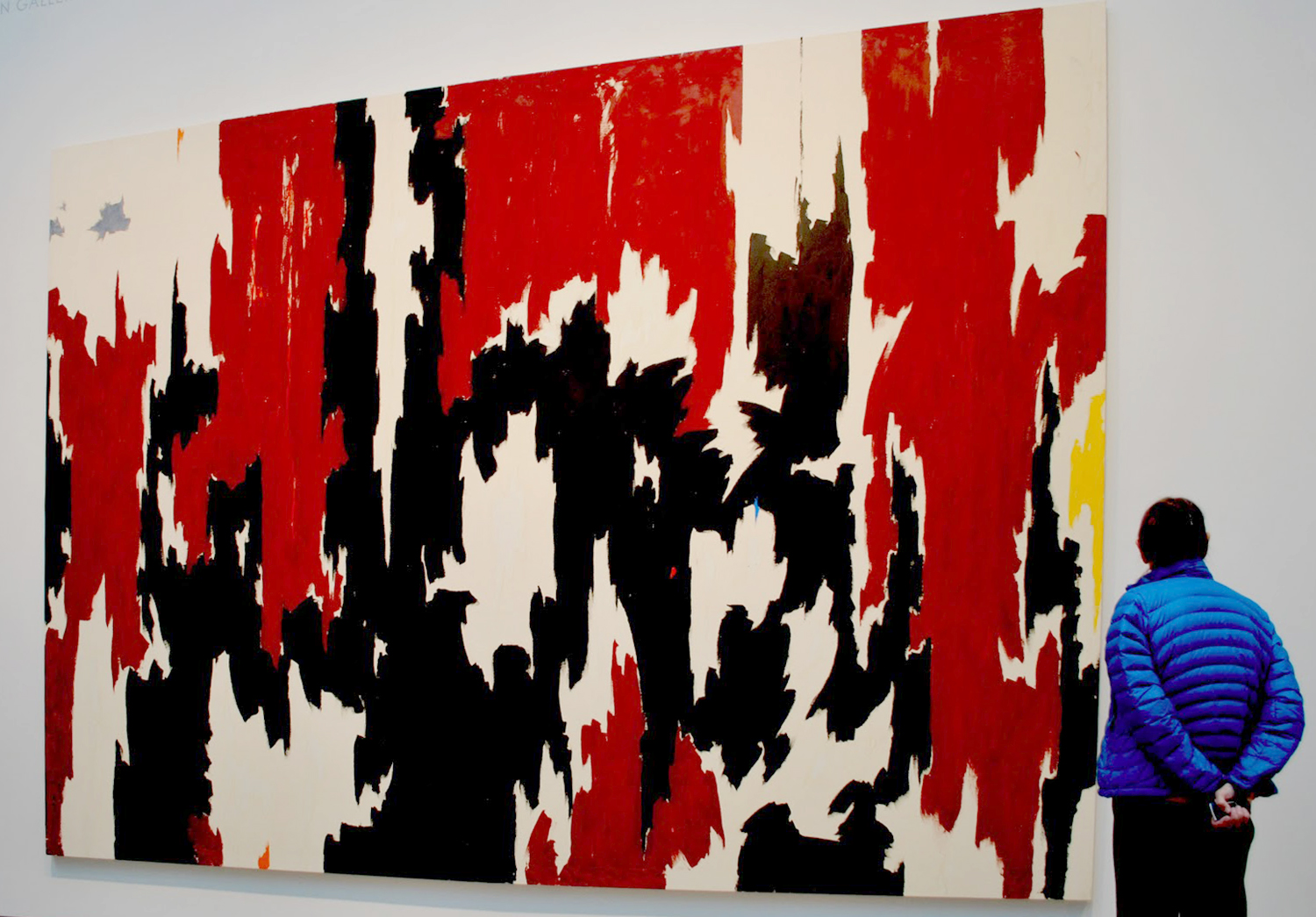
Most of the Abstract Expressionist gang trafficked in scale. Franz Kline, Mark Rothko, Robert Motherwell, Barnett Newman, Willem de Kooning, Clyfford Still — all found now in museums taking up whole walls by themselves. 

In the 1970s, I wandered through commercial galleries in New York and came across a back room storage of Newman paintings, being arranged for a show, and a group of them were almost two stories tall — monumental. These men (and they were almost all men) took their heroic calling seriously. 

After them, the deluge. Even Motherwell turned to irony; the self-importance of the first generation could not be sustained, or even taken seriously anymore. And although Robert Rauschenberg is sometimes classed among the Abstract Expressionists, his work always played with irony. 

All that was left after that was Andy Warhol and Jeff Koons. Art took a different turn.

When the Getty Center opened in Los Angeles in 1997, I was an art critic in Phoenix, Ariz., and given the assignment of covering the event. I met with Robert Irwin, who designed the landscaping for the Getty, and had a concurrent museum show at the Museum of Contemporary Art in LA. In a hallway, away from the main work in the exhibit, were a series of early paintings he made. Irwin was a thoughtful artist and his eyes glistened as he discussed those small, early canvases. 

“I was thinking about the heroic nature of those Abstract Expressionist paintings,” he said. “And I wondered if they could still work if they were small.” And so, he painted a line of tiny canvases, usually no more than a foot square, with similar abstract imagery on them. Did they work? Were they still heroic? Do you have to ask? 

Click on any image to enlarge
Some people have a bucket list — of extraordinary experiences they would like to have before the final extraordinary experience. My bucket, however is already full, in fact, it runneth over. 

It is probably much the same for most people. By the time you reach the age of 70, you can look back on a lifetime of extraordinary and satisfying adventures. Perhaps you have not swum the Hellespont like Leander or Lord Byron, nor circled the globe in 72 days, like Nelly Bly, but there are no doubt things you have done that brought your own life to its full. 
I’ve seen the Rhine at night in Dusseldorf; driven the length of the Mississippi River from Lake Itasca to the Gulf of Mexico; spent a snowy Christmas eating hot homemade cookies at the home of a Hopi friend in Walpi on First Mesa in Arizona; twice circumambulated Walden Pond in Concord, Mass.; and been charged by a bear in the Great Smoky Mountains of North Carolina.

I was an idiot — I took the picture

I see birthday number 71 coming up next week and realize that translates to 852 months, 3702 weeks or nearly  26,000 days. They have gone by very quickly, picking up speed as they progress, like a train leaving the station. They are now barreling along at the speed of an express. 

Cape of Good Hope, South Africa

From the rear of that train, I can look back and say I have seen the Cape of Good Hope in South Africa; the menhirs of Brittany; seen Wagner’s complete Ring Cycle live twice; made love surreptitiously in the North Carolina legislature building. 

Menhirs at Carnac, Brittany

I’ve seen the Atlantic and Pacific, but also the Indian Ocean, the Mediterranean, the North Sea, the Sea of Cortez and Hudson Bay — my personal seven seas. I have crossed the Atlantic on an ocean liner. They don’t really have those anymore.

Mediterranean Sea

I have done other things that now seem quaint and ancient. I have twice crossed the continent on trains, once from North Carolina to New York on the Southern Crescent, from New York to Chicago on the Twentieth Century Limited, and then from Chicago to Seattle on the Empire Builder. Amtrak never had the cache of those earlier routes. 

Years later, under the shrunken Amtrak banner, I took the Sunset Limited from Los Angeles to Miami. 

Each of these things is stamped and notarized in my cerebral cortex.

Given the sum of those years, it is hardly surprising that so many things were seen, done, felt, tasted, smelled, heard. You turn the pages of the book one by one, and sooner than you realize, you are on page 852 and something has happened on every page. 

Chartres cathedral

Been to Chartres four times; and to Notre Dame de Paris half a dozen times; to Mont St. Michel; and to Reims, where French kings were crowned; and climbed the bell tower (illegally) at the National Cathedral in Washington; and descended the kivas at Chaco Canyon and Mesa Verde. 

Kiva, Mesa Verde National Park, Colorado

Been to 14 countries, including Norway and Namibia. Been to all 48 contiguous United States and all Canadian provinces except Prince Edward Island, and to the Yukon Territory. Alaska made 49 states (still haven’t been to Hawaii).

Omaha Beach, Normandy

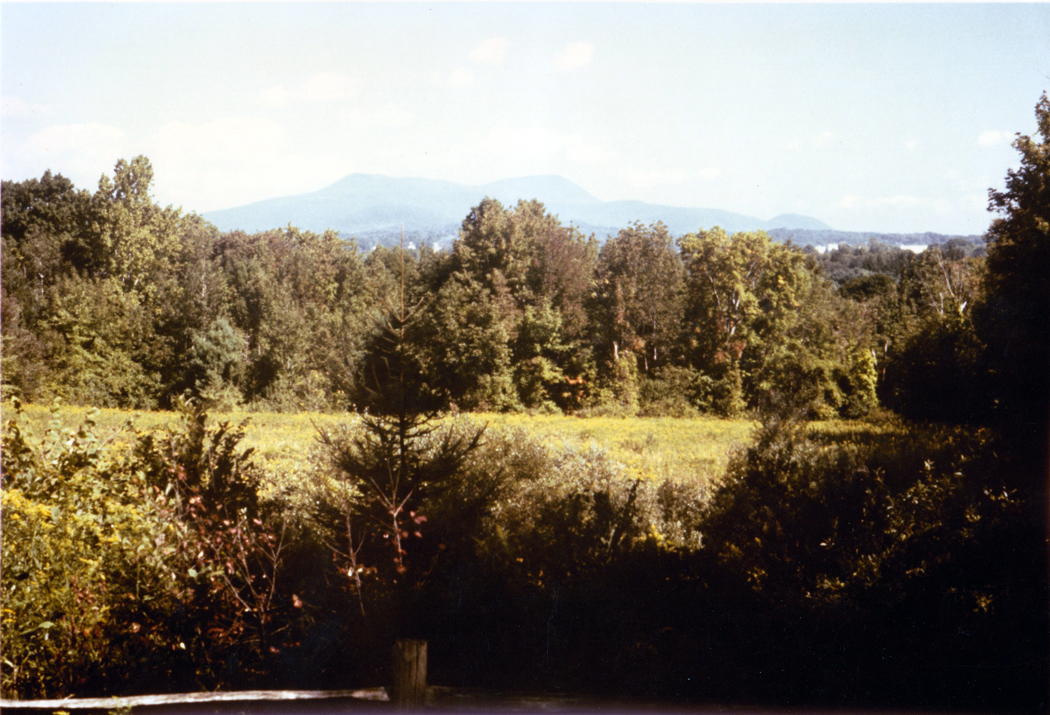
Been to Lascaux and to Font de Gaume to see prehistoric cave paintings; been to the Normandy beaches of D-Day; to the shell craters still visible at Verdun; to all the major Civil War battle sites, and across the Old North Bridge. Stood on the piazza that Herman Melville built at Arrowhead, his home in Pittsfield, Mass. with its view of Mount Greylock (“Charlemagne among his peers”). 

Mt. Greylock, from Melville’s piazza

Three times I have walked Monet’s gardens at Giverny and seen the great waterlily murals at the Orangerie in Paris.

Giverny, France

I have ridden a horse into Canyon de Chelly in Arizona and paddled a canoe down the white water of the Mayo River in North Carolina (admittedly, not a scary rapids). 

Once, I stood at the top of the raging Linville Falls in the Blue Ridge and stupidly jumped across the cataract, rock to rock, to get to the other side of the river. I’ve also climbed to the top of Pilot Mountain in the Sauratown Mountains of Surry County, N.C. (a climb that is now illegal). 

Linville Falls, N.C.

Hiked a fair portion of the Appalachian Trail; camped in the Canadian Rockies; and 65 miles from the nearest paved road on the north rim of the Grand Canyon. Been to the telescopes at Mt. Wilson, Mt. Palomar and the Lowell Observatory in Flagstaff and the Kitt Peak observatories southwest of Tucson. 

 When I hear Hank Snow singing “I been everywhere, man,” I count the place names as they tick off and check them on my own list. “Reno, Chicago, Fargo, Minnesota, Buffalo, Toronto, Winslow, Sarasota…” Yes, yes, yes, check, check, check.

And Bobby Troup singing “Don’t forget Winona,” well, yes, been there many times. 

Glacier Bay, Alaska

But it isn’t just geography. There are cultural touchstones I count, experiences that have breathed oxygen into my soul. Not only Wagner, but also I heard Lenny Bernstein conduct La Mer with the NY Phil; heard Emil Gilels live at the Brooklyn Academy of Music; heard Maurizio Pollini play all the Chopin Preludes, Stravinsky’s Three Movements from Petrushka, and the Prokofiev Seventh Sonata. I heard Jeremy Denk play Ives’ Concord Sonata and Beethoven’s Hammerklavier in the same recital: That is like climbing Everest and Mont Blanc on the same day. Itzhak Perlman play the Strauss violin sonata — and made it seem like one of the most important sonatas ever. That was magic. Heard the Matthew Passion live twice and Haydn’s Creation. And, of course, twice heard Yo-Yo Ma perform all six Bach suites in a single program. 

I’ve seen a dozen Balanchine ballets with live orchestra, including my favorite, Apollo, five times, once by the NY City Ballet at the Palais Garnier in Paris. 

I’ve seen the full Angels in America four times through, including its original Broadway production. 

Remnants of shell craters, Verdun, France

These are all gifts, and made my life ever richer, and informed my growth, emotional and intellectual. I can say, they made me a better human being. 

I can’t count the art shows and museums I’ve visited that gave me rare treasures. The first I can remember was in high school when I went to the Museum of Modern Art in 1966 to see “Turner: Imagination and Reality.” It yanked the rudder of my craft and steered my life in a new direction. 

“Blue Poles,” Jackson Pollock

I also grew up with Picasso’s Guernica. I visited it over and over and never expected it would leave me for a new home in Spain. But in return, I never thought I’d get to see Jackson Pollock’s Blue Poles, which had been sold to Australia; it came to New York in 1998 for the big Pollock retrospective at MoMA. 

I cannot mention everything. The list is already grown tedious and begins to sound like bragging. I don’t mean that: I believe a similar list can be put together for almost everyone, although it will likely be very different from mine. Not everyone has eaten grilled mopane worms or drunk spit-fermented Zulu beer. Or needs to. 

But we can all say, after a long life, full of boons and banes, joys and privations, evils we have done, and those we have suffered, the loves we have failed at and those that stuck and nourished our lives, “We have heard the chimes at midnight, Master Shallow.”