 For the centuries between the conversion of Constantine and the advent of the Enlightenment, the world and the cosmos was held to maintain a strict hierarchical order, which Alexander Pope once called “the great chain of being.”
At the top sat the Deity and all things below him hung pendant in creation. And along this chain, each link had something above it and something below it. It made for a neat organization: plants were higher than stones, but lower than animals. Human beings were above animals, but below angels.
The chain could be divided and subdivided, very like a fractal, and always there was something above and below. So, among humans, a king was above a duke, who was above a yeoman. Below the yeoman was a serf. Each category had its primate: The king in political order, the lion among animals, the rose among plants and incorruptible gold among minerals.
Of course, there was always some disagreement among scholars. For some, the elephant was the head animal. But no one disagreed there was a “king of the beasts.”
Above humans were angels, and they had their own hierarchy: nine ranks from lowest to highest as set down by (Pseudo-) Dionysius the Areopagite — angels, archangels, principalities, powers, virtues, dominations, thrones, cherubim, and seraphim. It was all rather like the army, with first and second lieutenants, majors and colonels.
This hierarchy governed much of the Medieval and Renaissance world in Europe, and gave a sense of divine order to the social happenstance.
And oh, they loved arguing. Arguing whether moss was higher than fungus, or whether an earl or a marquis had priority — different nations shuffled the suits of cards into different patterns, so a French marquis might outrank an English baron. Or vice versa.
And so, a silver fox outranks a red fox. Or a wine merchant with a royal contract outranks one without such a seal. Lawsuits might teeter on such issues.
It was a surprisingly durable schema. We still hold on to bits of it. Whenever you hear someone talk about something being higher on the evolutionary ladder, he is grasping a vestige of the great chain of being. In evolution nothing is “higher” or “lower.” That is the old vocabulary used for the new science. There are no higher life forms, only more complex forms adapted to more complex environments.
Yet, it seems we cannot ever completely give up our sense of hierarchy, even despite our lip service to democracy in America.
Of course, such a micromanaged structure could not possibly avoid ironies and disconnects. The biggest was between church and state. Each had its hierarchy: king, prince, duke, earl on one hand; pope, cardinal, bishop on the other. But the problem of whether a cardinal outranked a prince, or a king outranked the pontiff was never satisfactorily worked out. Wars were fought; people were killed.
I mention all this because one of the cogs in this philosophical machine implied that there was a ranking at mealtime, too. Higher in the chain gave license to ingest lower in the chain. Plants digest the dirt they grow in, cattle eat the plants, and men eat steak. When the order is reversed, it denotes the system in failure — as when a bear eats a man or worms eat corpses. Eating up the chain instead of down is “unnatural,” or was seen that way, despite the naturalness of death.
And the final implication of the system is that angels eat human beings. You cannot get around it: Angels survive on the life form below them in the hierarchy the same way we survive on meat. Obviously, it would be held that angels, whatever their rank, do not dine on the corporality of humankind, but as angels are spiritual beings, they gobble up our souls. It is the best explanation for Alzheimers and for the general and increasing debility of age.
2.
We’ve talked about the death of God for a century, but I don’t think anyone ever expected to find the grave site, least of all E. B. Fischer.
Fischer was a petroleum geologist who had made remarkable discoveries in the Himalayas. he had found petroleum in an area thought, geologically, to be incapable of producing it. Indeed, it was really only a low grade tar he had found: It was nothing to get too excited about. But a number of corporate and governmental powers had found the discoveries interesting enough to put money down on.
And it was in the course of his research on the world’s highest mountain range that he began to turn up unusual patterns in microcrystal structure and magnetic orientation. At first, the information made only an interesting checkering on his geological map, but the more complete his survey became, the more obvious it was that not only a pattern, but a recognizable pattern was emerging.
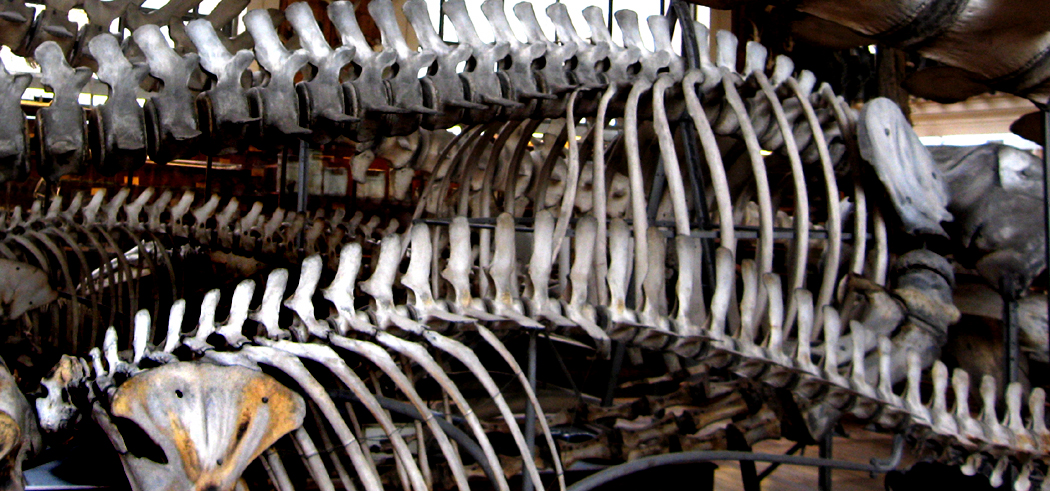
What appeared was a skeleton, or rather, the evidence of a skeleton, for it existed only as a magnetic pattern. And the skeleton was 800 miles long.
It wasn’t exactly a human skeleton that appeared on the map; there were too many ribs by a score, and the fingers seemed branched at the tips and the head was missing. But the overall shape was so distinct as to make the map look like an X-ray.
The missing head caused Fischer not nearly so much consternation as the fact that he wondered where it had gone. He couldn’t, as a scientist, believe there really was an 800-mile skeleton, but he couldn’t, as a human, believe such a shape would occur by coincidence. His instincts demanded a head.
He went back over the area in Nepal where he could expect to find the head, but there were no magnetic anomalies, no crystal changes, not even in unfamiliar patterns.
But even without a skull, this skeleton was a monumental discovery and the publication of its existence caused all the row you might expect. Initial surmise was that it might have been ancient earth art, similar to the effigy mounds in Ohio, where one is a snake a quarter of a mile long, whose substance can only be seen from the air. Of course, objection was immediately made to this theory, since no human technology was known that could recrystalize 800 miles of rock and alter its magnetic structure. The difference in size alone, between a quarter of a mile and 800 miles could eliminate the effigy theory.
Another was that it was a buried prehistoric animal. Such frivolous theories were shot down at once by biologists, who countered that nothing that large would need or could use knees.
Yet a third popular belief was that Fischer had found the remains of an alien life form. Popular though this theory proved, no self-respecting scientist would believe that evolution, anywhere else in the universe, would mimic that on earth in such trivial particulars as the number of fingers or the existence of a patella.
Scientists were no more prepared to accept the fourth theory, though neither were they able to discount it, falling as it did outside their area of expertise. And that was that they had discovered the burial plot of the Almighty.
Fischer himself was quoted as saying, “Ask the theologians, don’t ask me.”
The theologians, of course, were stuck in a dilemma. If God were dead, they had no reason to persist in their jobs, so they unanimously denied the proposition.
“The very thought is ludicrous,” they said. “God made the universe: He preexists it. It is completely illogical to imagine a God that preexists creation but does not survive it.”
That argument didn’t sit too well with many women, who pointed out that for millennia, women have preexisted their children, and usually don’t survive them.
Perhaps, thought Fischer, after all, it really is just a coincidence.
Statisticians worked out the probability at 1 to 47 to the three trillionth power, making it so unlikely as to be less likely than the chance of finding Captain Kidd on Mars in a hot tub with the Queen of Sheba.
For the moment, they were all stumped. The only thing they all agreed on was that it was a mystery. A Great Mystery.
The discovery led to foundation money being given to further research in other locations on the planet. Corporate money dried up as the petroleum deposits were both too small and too remote to be commercially viable. So, nonprofit money took over. Either looking for a mate for the anomaly, or for the missing head.
Some felt that if God had fallen from the sky, perhaps his head had been the asteroid that killed off the dinosaurs. Fischer had a good laugh over that, but came up short when he realized that the vast mountain range had begun its life at just about the same time the dinosaurs ended theirs.
No, it couldn’t be, he thought. But again, he was surprised he was even taking the question seriously.
3.
One of the joys of writing fiction is that you can know unknowable things in this made-up world. As author of it, I can actually give you the answer to E.B. Fischer’s conundrum. I made him up; I made up the world in which he lives; I made up even the Himalaya Mountains where the giant skeleton was found. It is a mountain range identical to the real one, except for the fact that it does not exist. Identical down to the last prayer flag and Tibetan village.
Since at least the middle of the 19th century, we have been talking about the death of God. But hardly anyone asks the question, how did He die? Old age? an assassination by German positivists? Perhaps it was the salmon mousse?
The fact is, history is often misremembered as it is passed down, especially in pre-literate societies. Things get changed, chronologies alter, insignificant events take on mythic importance. The story of Satan’s rebellion in Heaven is one of those things. The version that has come down to us says that a battalion of angels rebelled against the deity; a war was fought; Satan and his conspirators were thrown down into hell. John Milton tells a ripping version of this story, but you can forget it.
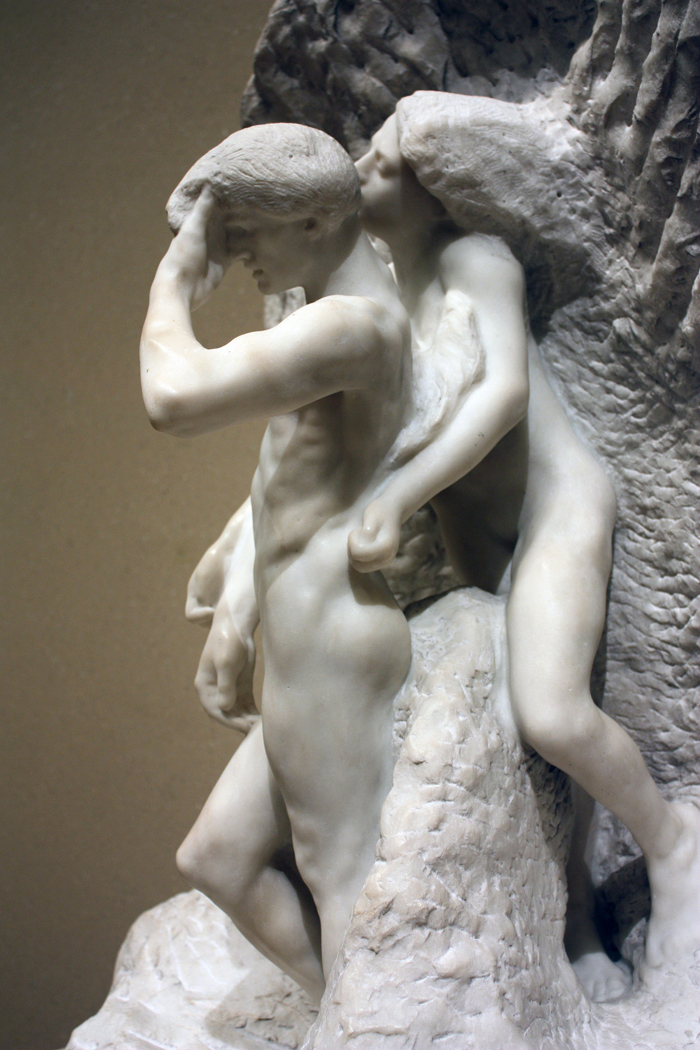
Remember, if you will, that we said that when the great chain of being goes into reverse, bad things happen. Like reverse peristalsis. In this case the bear ate the camper: The angels, wondering if there were any comestibles more delectable than the spiritual effulgencies of humankind, turned their attention to the head of the table and wondered if the radiance of God might not be better eating than the standard diet of cor hominis. In fact, compared with this new idea of eating upwards on the chain, the mere spiritual gristle of the human was as about as appealing as cold haggis.
And so, like a corp of flesh-eating zombies, a band of principalities, supported by a platoon of thrones and a single archangel, walked slowly toward the Lord and began tearing Him to pieces. Others soon joined in and like a turkey after a great Thanksgiving dinner, nothing was left of the carcass but the bones, which the angels soon threw over the gunnels of Heaven, when they drifted down and landed athwart the cordillera we call the Himalayas. Being what they call “subtle substance” — or at least what the Hindus call subtle substance — rather than the gross concrete substance of this sublunary world, they became fossilized not as actual bone or stone, but as a magnetic anomaly in the rock. This is what Fischer had discovered.
But the head, you ask. What about the head? Where did it wind up?
It ended up where such things usually wind up after the barbarians have taken the city: Outside the gate on a pike.
And even now, if you were to approach Heaven, beside the Pearly entrance you will see the grizzly bearded head of Providence, a warning to all who chance to enter.