Archive

Tag Archives: teaching

Garry Winogrand once said, “I photograph to see what the world looks like in photographs.” What? It looks like reality, surely. Isn’t that the whole point of taking pictures — to capture reality? 

But most photographs, historically, and including Winogrand’s are in black and white. The world is not. And even if you used Kodachrome or a digital camera, the colors are exaggerated, more saturated than the colors your eyes see. And then, a photo of your house, for instance, is maybe 8 inches by 10 inches, while the house is immense. The photo is two-dimensional and the world is 3-D. And most of all, your photo has an edge, a frame around a portion of what you see in front of you. It is not reality at all, but a convention of how we picture the world. 
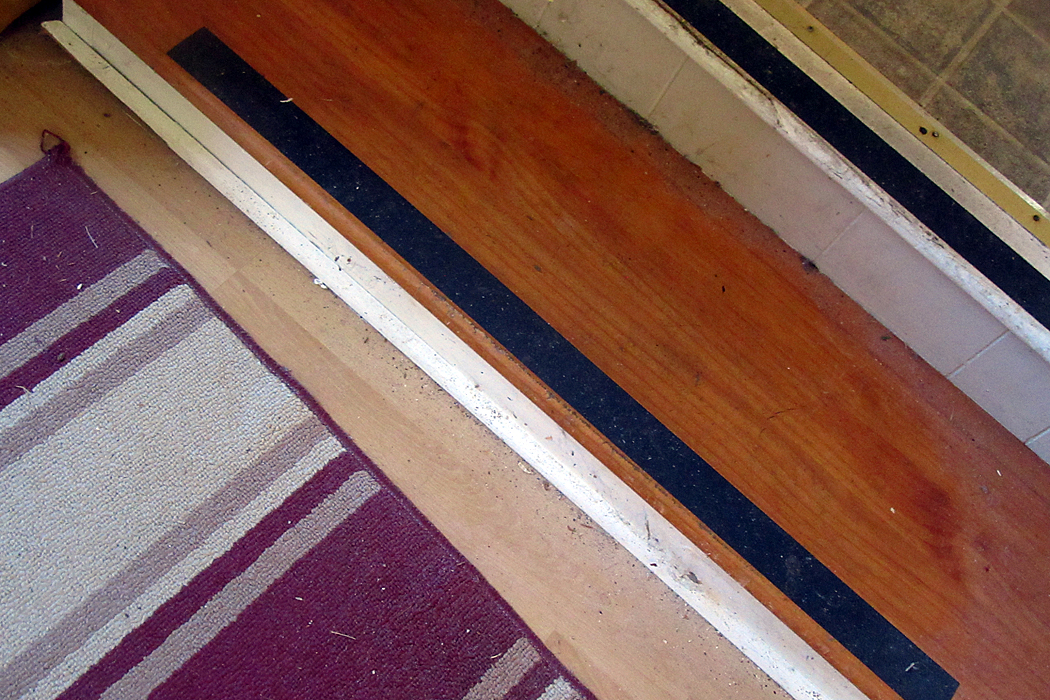
This is one of the hardest lessons for the beginner, or the ordinary person to learn. Seeing photographically is imagining how an image will perform shrunk and separated from context. To see photographically is to see shapes, lines, colors, textures and not to see houses or people. Yes, they may be in there, but you have first to recognize the shapes, lines colors and all that. And be aware of them. 

If you just see a subject, say, Aunt Trish, you may ignore the tree behind her looking like it’s growing out of her head, or you may take a picture of your car and not notice that half of it is blacked in shadow. You’re seeing a car, and not the patches of lights and darks that make the actual shapes your camera records. 

Most people think in words, and so, they name what they see. That’s a horse; that’s a tree; that’s my Grandma Edna. The camera doesn’t understand words or names. It sees shapes, lines, patterns, textures. As artist Robert Irwin put it, “Seeing is forgetting the name of the thing one sees.” 
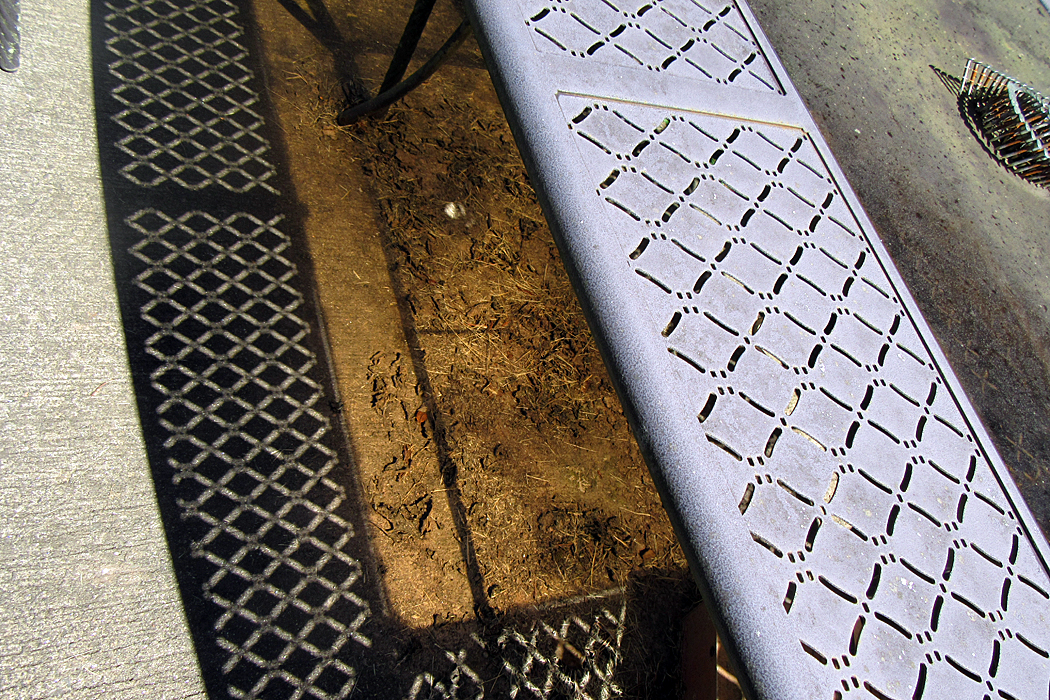
It takes some practice, some eye exercises, to train yourself to see. One online videomaker has suggested that whenever you have a spare moment, say, just sitting in your living room, to look around and see what may make a pattern, to spot contrasts of shape or color, to see abstract designs. You needn’t actually make a picture, but imagine things around you as if they were photographs. Make an imaginary frame. 

I do this regularly. I take my point-and-shoot Canon and take as many photos as I can in a period of time, say an hour, and see how many of them, simple details rather than nameable items, and turn them into visual offerings. 

Another photographer, Lee Friedlander, calls this “pecking,” and uses his camera to find possible images. Out of a roll of film (in the pre-digital days), he might wind up with only a few pictures worth showing the public, but the exercise keeps his eyes awake and noting the possibilities. 

When I was teaching photography in the 1980s, I had an assignment I gave my students. I asked them to photograph something so that I couldn’t tell what it was. I warned them, I was really good at deciphering bits and pieces. They were not to simply make bad photos, out-of-focus or blurred images, but to see the shapes and lines extracted from context to hide their identities. (I can brag that only once in six years of teaching was I stumped. Usually, I spotted immediately the bits of clothesline, or the bottom of a teacup, or the stitching of a sole onto a shoe. To quote Captain Reynaud, “It is a game we play.”)

The world is made up of details. We assemble them into an experience we recognize — the neighborhood street, our children, the Grand Tetons, flowers in a vase — but each of these is constructed of details. Seeing the details vivifies the whole. 
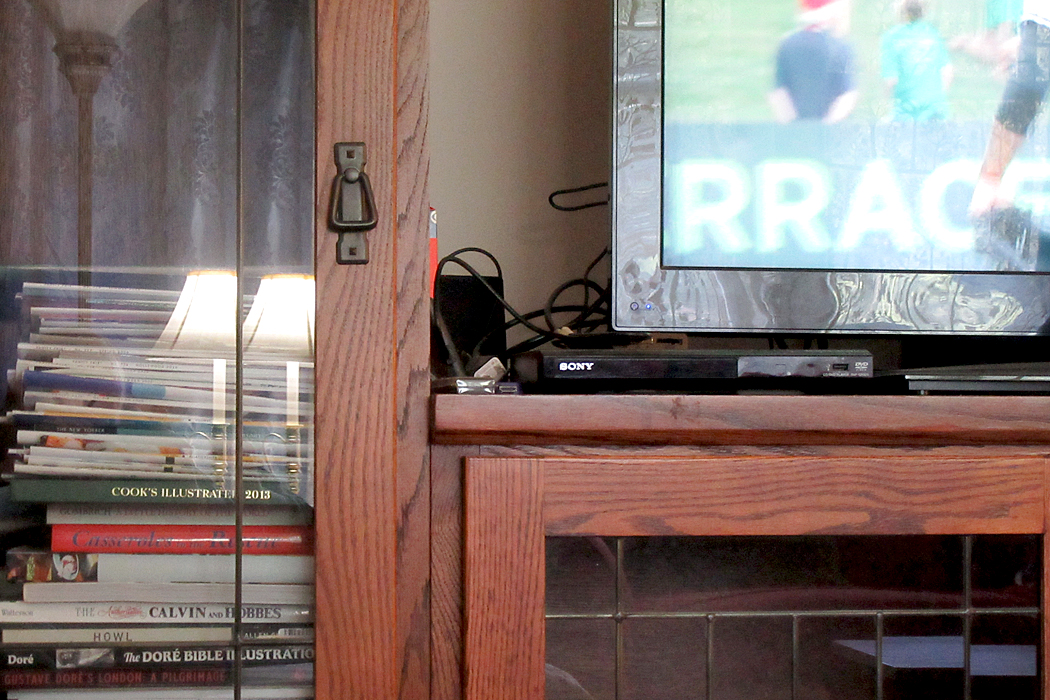
I have played with this exercise before, and even posted some of the images on this blog, when I spent an afternoon photographing all the circles I found. (link here)

I posted another on the patterns I found visiting my brother-in-law and “pecked” at the things in his house and yard. (link here). 
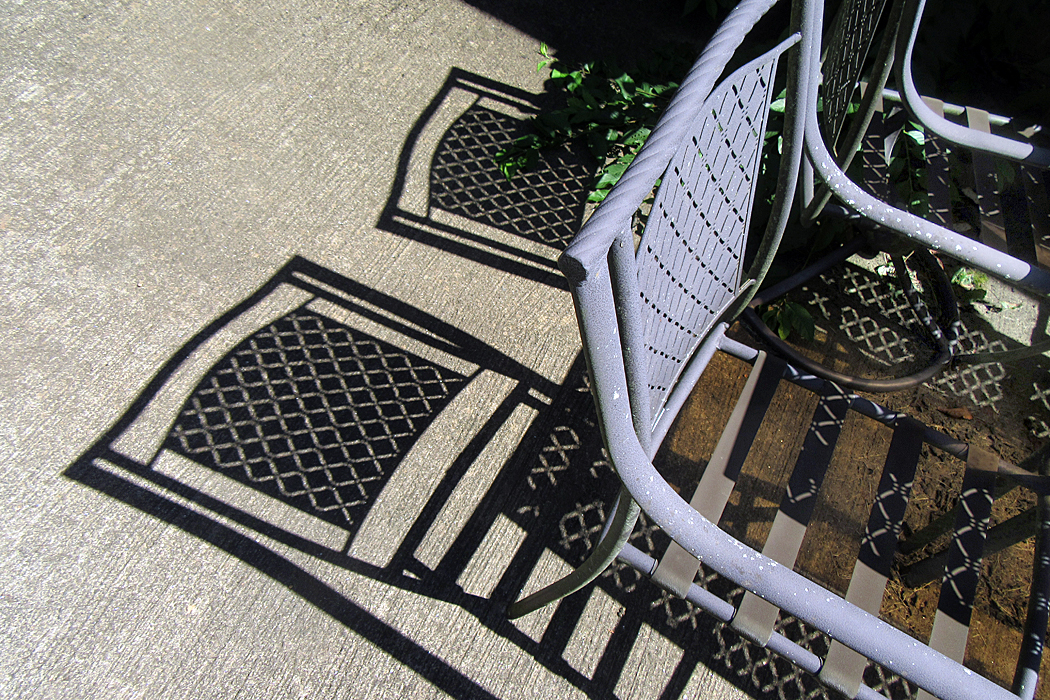
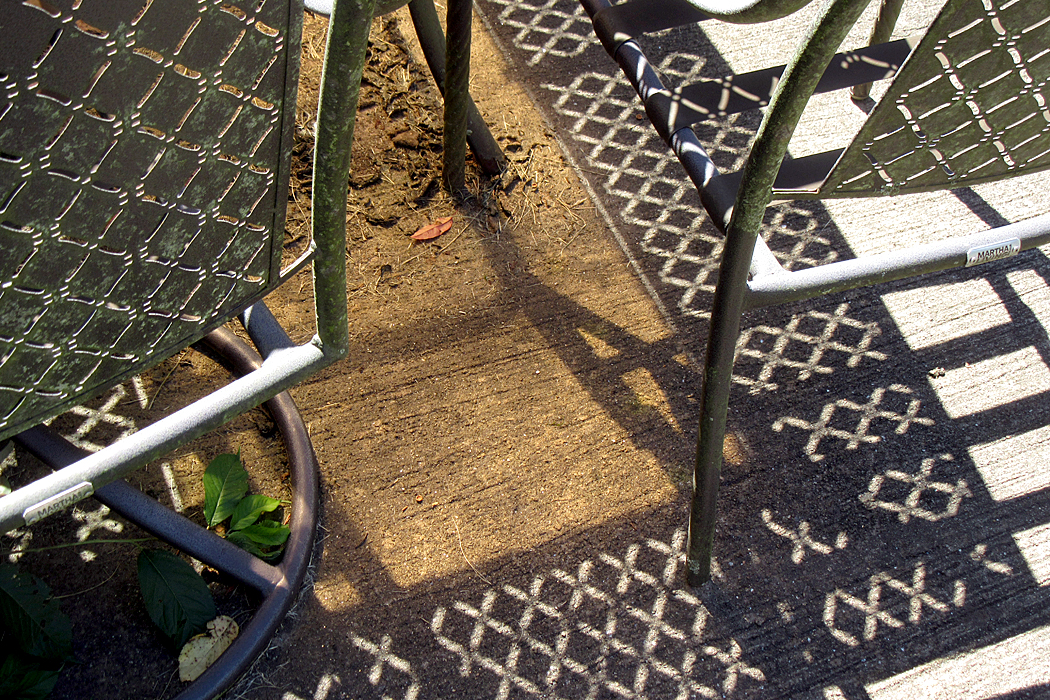
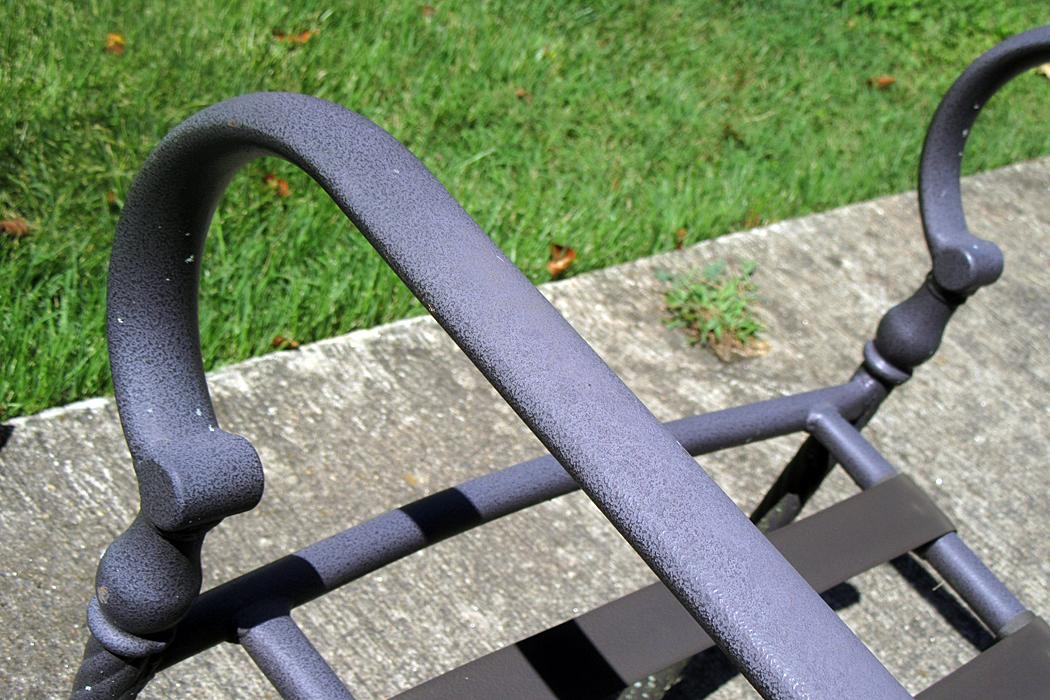
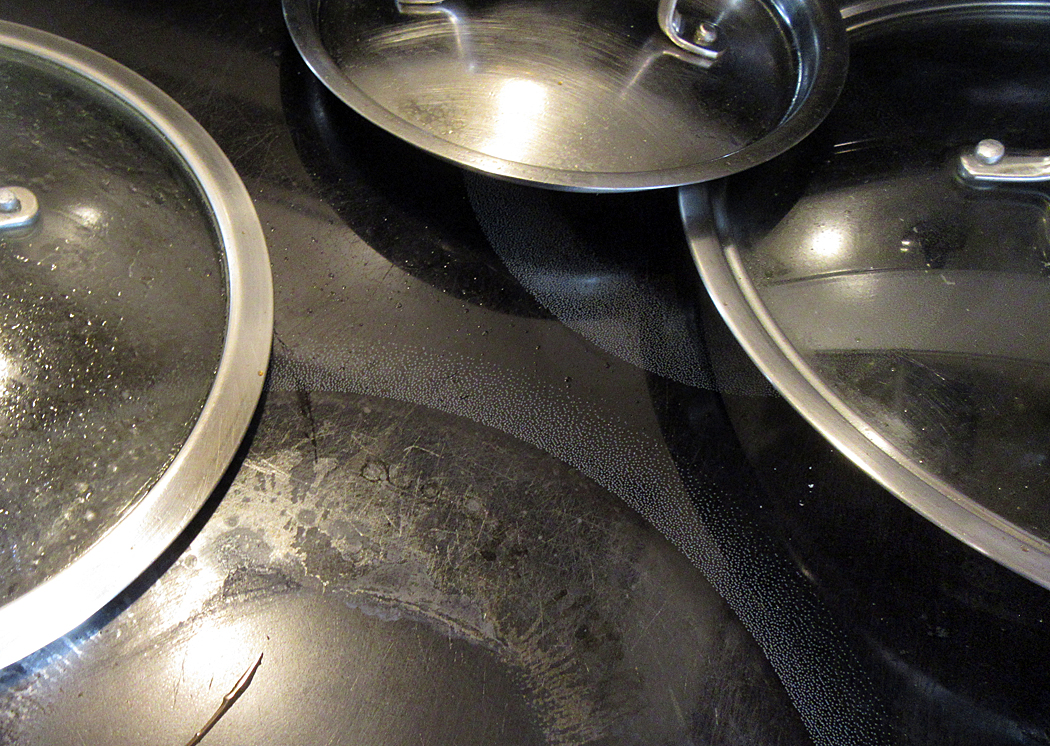
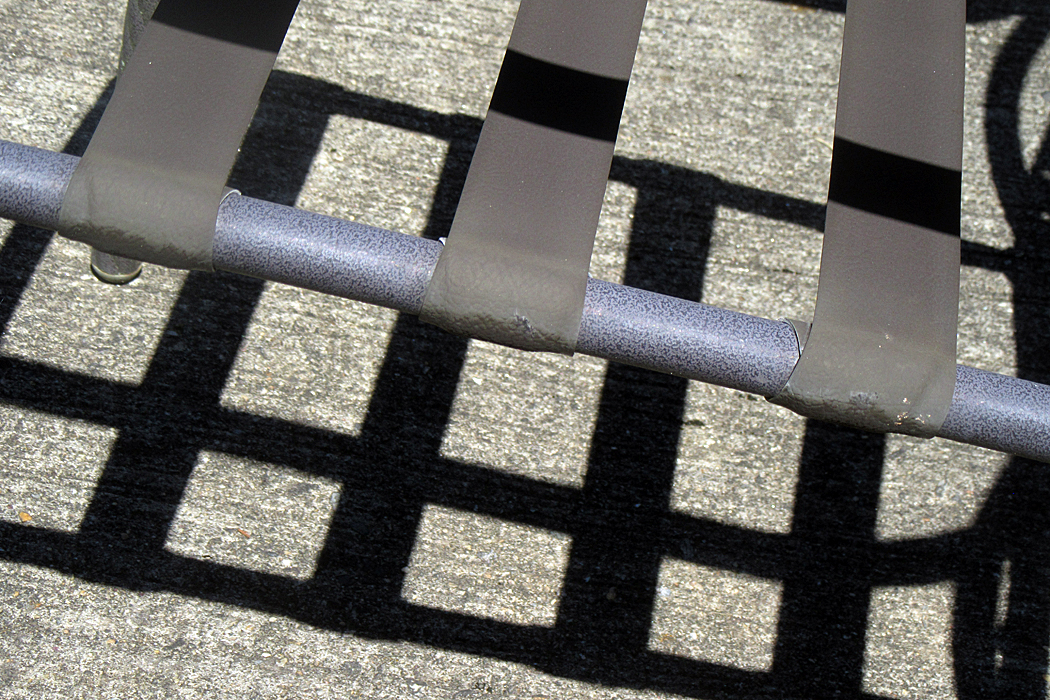
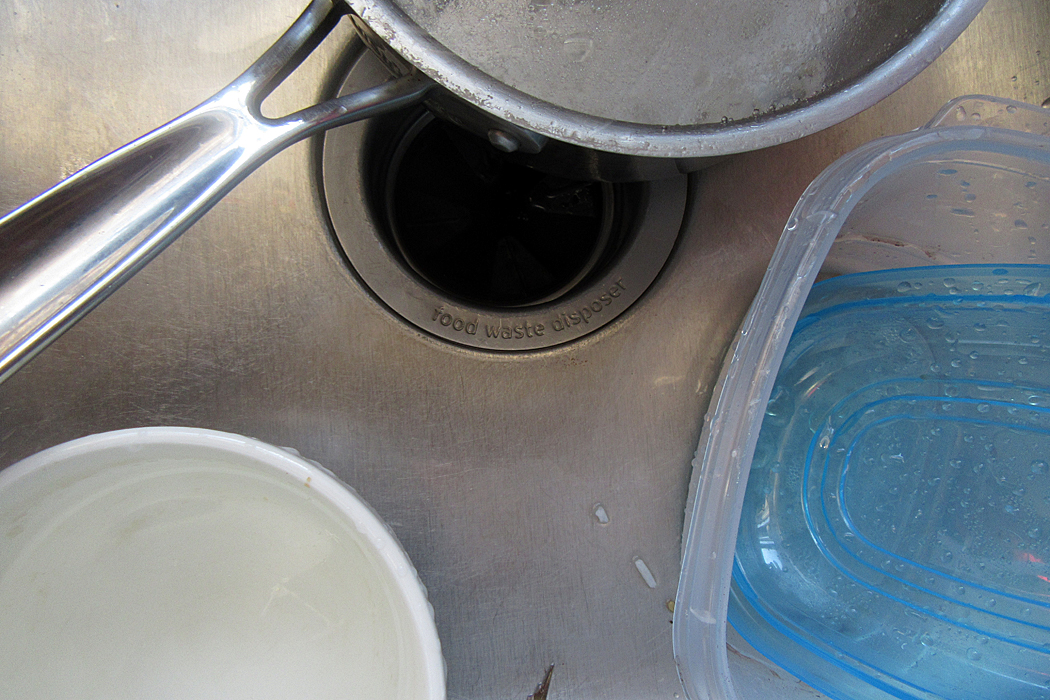
And I did it again yesterday in the back yard and in the house. I’m sure you can guess the identity of the things in the pictures, but it is the abstract patterns I was seeing, ways to use shapes, lines, textures, colors to form an esthetic whole out of parts. I made 50 photographs in the space of about 40 minutes. 
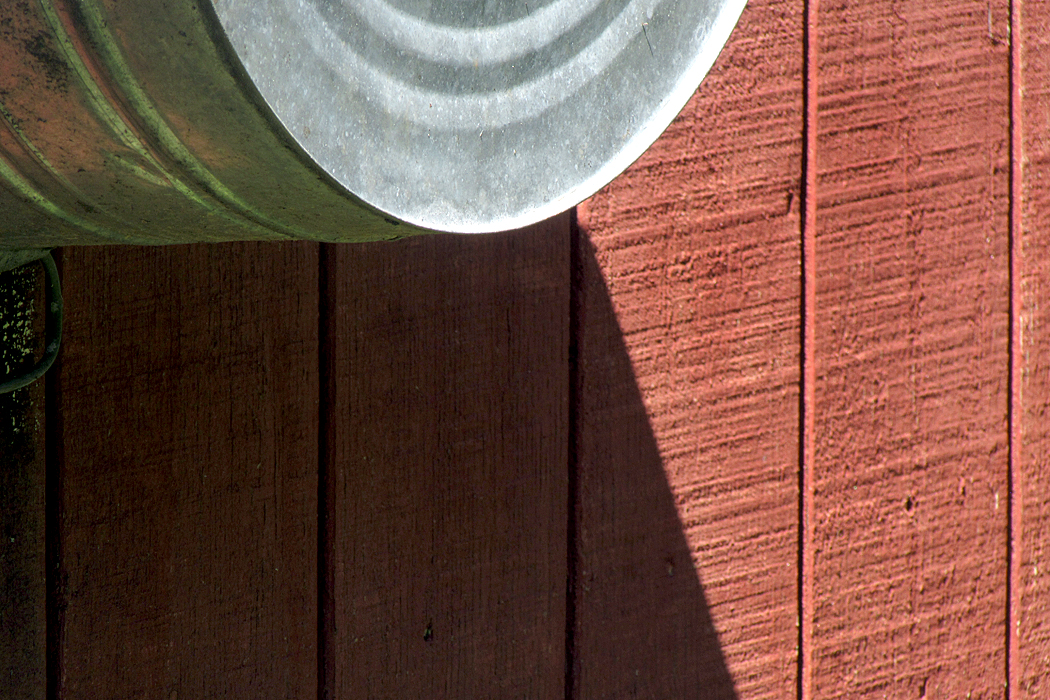
I don’t usually call these images art, although I don’t know what else to call them. They are ocular calisthenics, eye exercises, to help me focus on the seeing behind the naming. 
Back when I was a teacher, and therefore knew nothing, so was able to pass on my knowledge to unsuspecting students, I had to teach a word I now only mention with contempt: composition. We all taught things like the “rule of thirds” and “focal point,” and where to place horizons or how much of a person to include in a portrait. We taught awareness of negative space, and keeping it interesting. 
But long ago, it hit me that all these precepts had nothing to do with taking good photos. The word, “composition” implies a kind of blueprint or set of construction instructions. But I instead used the term “design.” And the secret to good design was never rules. It was awareness. “Design is your awareness of everything in the frame.” Want to chop someone’s head off at the top of the frame? Do it on purpose and it will work. Want to cut your landscape in half with a horizon? If you are aware of what you are doing, go ahead. Make that point. 
Most people, making photographs, or drawings or paintings, focus on their subject, and don’t pay much attention to the backgrounds, or the framing, or the patterns of light and dark. They focus on what is named. 
But if you look at all the great art of the past, and the famous photographs in your books, you see that the upper left corner, or the bit halfway in from the side, still has interest. It has not been ignored. Even a 17th century painting of a Dutch burger with a blank background has the precise color of that emptiness calculated and thought about. What a delicious blue-gray it is. Block out the rest of the picture and you will still get pleasure from the background. 

Awareness is the secret to any art. Paying attention. The more you are aware of, the better your result will be. 

Click on any image to enlarge

World Map 1689Stuart got a job recently. Well, a part-time job — as adjunct faculty teaching a history course. I’m not sure how he got it; he doesn’t have a degree in history. But he said he talked the department head into it by describing his take on world civilizations. He did his Stuart dance for his dinner.

“Well, I said I wanted to teach world history a different way,” he said to me over lunch the other day. “I wanted to look at it through the lens of geography. It explains so much.”

Mostly, he said, he just wanted to try organizing the Big Picture a different way, because looking at something differently opens a subject up for fresh insights. At least, that’s my stuffy way of saying what he was up to.
aegean sea map

“From even prehistoric times,” Stuart explained, “human cultures have organized themselves in two ways — either around a body of water or in the middle of a chunk of land. These two societies tend to approach the rest of the world differently.

“You can see this in the signal conflict of the classical world — the Persian Wars. We may think of Greece as a nation, like France or Argentina, but back then, Greek civilization was a constellation of cities and islands around the Aegean Sea. It was built facing the water, so to speak, and like the ancient Lake People of Switzerland, they looked across the pond and saw trading partners. They built ships and launched out across the water to find their likeness on the far shore.

“Rome was built around the Mare Nostrum, the Mediterranean. In the Middle Ages, the Hanseatic League was all about trade.

Persia satellite view“But Persia was a continental power, built on land, surrounded primarily by land, where other people may have been trading partners, but they were primarily a threat. All through the Middle East, you have one conquering nation after another invading their neighbors. Their gods told them to. Persia, like the standard model continental power, wanted to expand, to push its borders out farther, absorb the neighbors to nullify the threat.

“These are two fundamentally different ways of approaching the outer world, and those two ways govern so much of what happens in history.”

“And this is what you told the department head?” I asked. “And he bought it?”

“She did,” he said — which explained a bit more about Stuart’s persuasiveness. If you know anything about Stuart, you know he approached the world, not so much by riparian or continental cultures, but through the interaction of men and women.

“And so, now you’re teaching world history to students at a two-year school.”

“It’s great, although class is rather early for me: It starts at 10 every Tuesday and Thursday morning. But I can get up for it; it’s been really fun so far.”

“It’s always fun until the grading starts,” I said.

“I haven’t got there yet,” he said. “But I’ve assigned the first paper.”

I remembered my time teaching, and the surprising papers that were turned in. I used to read the really bad ones at dinner parties for fun; we all had a good laugh. Bad grammar, misunderstood concepts, lazy ideas. Once, in an art history class, I had 16 students and 16 different spellings of “Coliseum,” and not one of them correct — despite the fact there were two acceptable spellings: “Coliseum” and “Colosseum.” I knew Stuart was in for a disappointing surprise when those papers were turned in. Indus river map

“Think of all the early civilizations,” Stuart went on. “Egypt on the Nile, the Indus River civilization, the Chinese living along the Huang Ho and Yangtze. Later, you have Vikings around the Baltic Sea and North Atlantic. China is interesting, because it starts as a riparian civilization, but as it grew, it turned continental. It gives a distinct flavor to Chinese history.”

“And the continental?” I asked.

“Think of the Mongolian Hordes,” he said. “Or early American tribes conquering each other. Persia, the Ottomans, Moguls.

“If you look at pre-colonial Africa, you see some cultures are riparian, like Ghana, and some are continental, like the Berbers. The distinctions have been blurred over by the pie-slicing of the continent by its colonial powers into supposed nation-states mimicking those of Europe. Quite unnatural. But they were there: riparian and continental ways of looking at the world.

thirteen colonies“I thought, this explains a lot about us,” he said. “About America. When we were founded, we were an outpost on the other side of the pond. We looked across the Atlantic and saw our compadres there. Europe and the New World were built around the ocean, whether it was England and the 13 colonies, France and Quebec, or Spain and Latin America. It may be a distortion to consider the interrelation between the Old and New Worlds as trade, considering we didn’t really give the native peoples a choice in the matter, but from the point of view of the colonizers, who really didn’t take the original inhabitants seriously, they saw themselves as Europeans trading with their parent nations.

“And for the 13 colonies, when they were still colonies, they were Englishmen trading with England, later making alliance with France. We began, like China, as a riparian society. There were even laws passed to prevent settlers from moving west of the Appalachian Mountains, to keep it a riparian culture.

“But we expanded anyway and became, over time, a continental power. Expansion was seen as not only good, but necessary, even ordained by God. This change explains the current political landscape.”

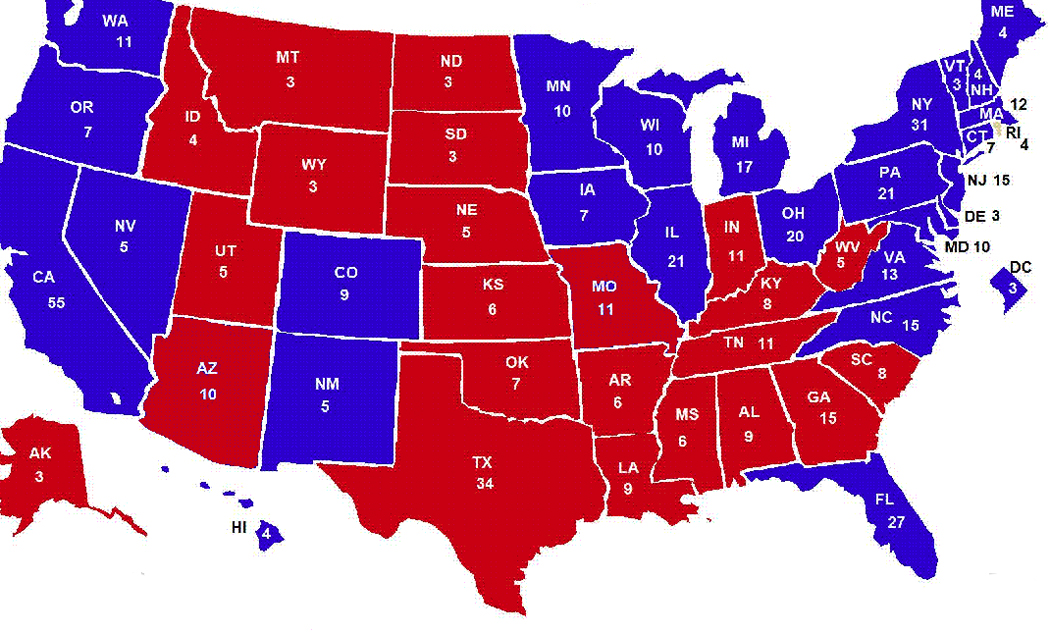
“How so,” I said, innocently, while waiting for the punchline.red and blue

“Think about it. Where are the blue states and where are the red? By and large, the blue states are on the edge of the continent, both on the Atlantic and and on the Pacific, or around the Great Lakes. The red ones are in the center, where they remain continental in outlook, fearful of foreigners and the core of isolationism.”

“I thought the difference was between the agrarian states and the urban states,” I said.

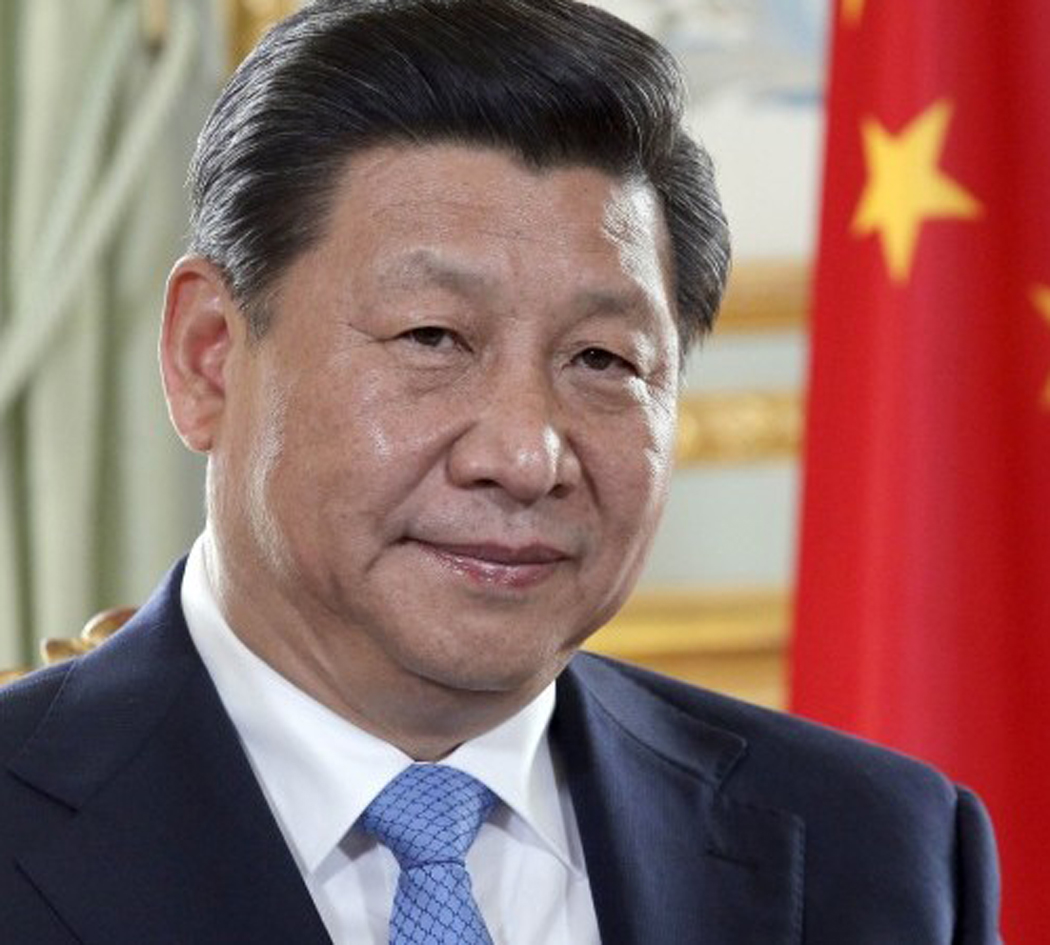
xi jinping 2“Certainly. My outlook isn’t the only factor in this. But it is there, not often mentioned, and is in part also the reason the coastal states built their economies on trade and the interior states on farming and ranching. I’m not making the case that this theory explains everything, or that it is the only thing that made us what we are, but I am saying that it helps explain it, and that you can see the same forces acting out elsewhere in the world. Maoism was continental in China, but the coastal cities of China were built on trade. The new China of Xi Jinping has grown as it has seen its place in the larger world — and as a riparian economy, not a continental one. The burgeoning economy is largely a coastal event. The Chinese poor are largely in the interior.

“And so, blue states look outward to the world, the red states are xenophobic.eurasia

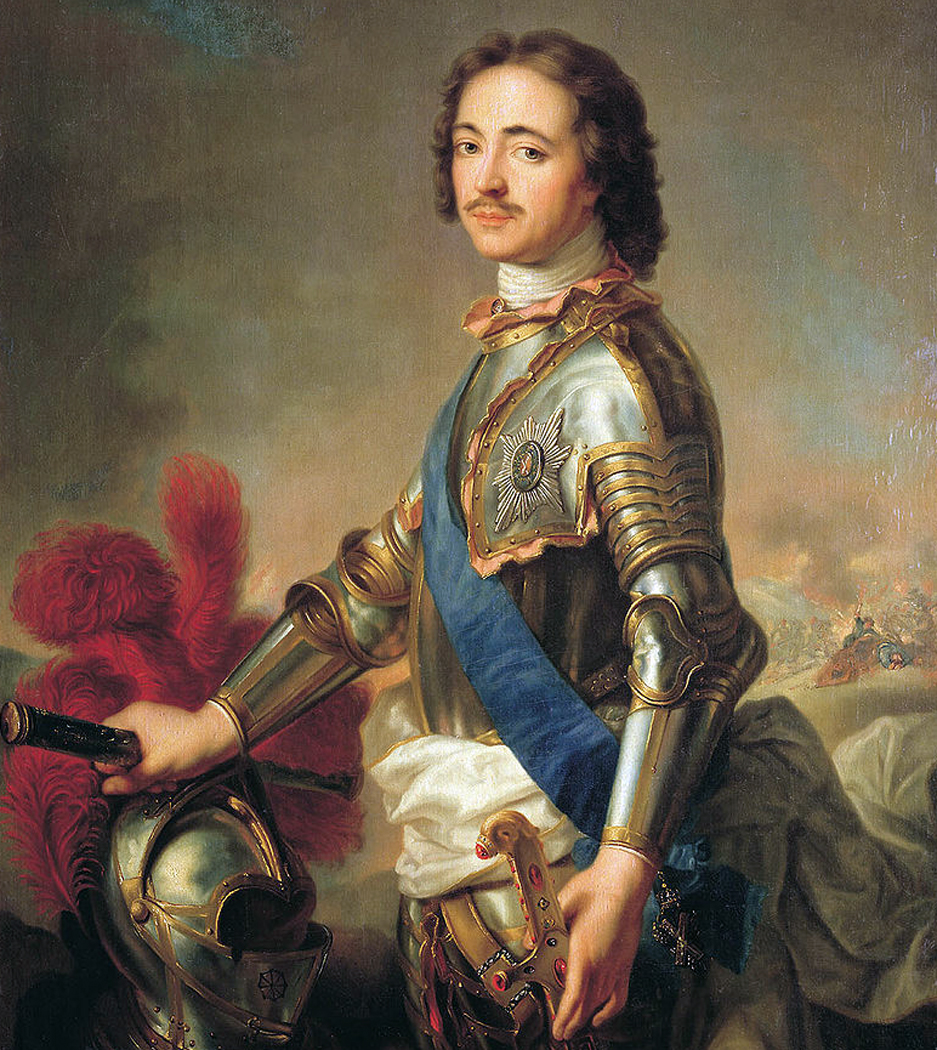
“Look at Russia,” Stuart said. “They are a quintessential continental power, hunkering down in the middle of Eurasia. Invaded by Tatars, Verangians, and Teutonic Knights, they came to fear the outside and built a national identity on creating a fortress mentality, and conquered neighboring lands to make redouts to protect the national core from attack. Peter the GreatPeter the Great attempted to turn Russia into a riparian culture by building his capital on the Baltic, hoping to become part of the European world of trade. But since then, the country has retreated to Moscow and glowered out at the rest of the world. It’s how the Union of Soviet Socialist Republics accrued, and after a brief period of glasnost, why PutinVladimir Putin has resumed the essential Russian inwardness, and his need to expand the borders again to build up those protective buffer nations around the national heartland. Lookout, Ukraine.”

I wondered if Stuart taught any of this chronologically, or was the whole course built around this theory. Were there any parts of history unrelated to his bifurcation of world outlooks.

“Oh, I fit all that other stuff in, too,” he said. “But mainly I wanted to explore this idea for myself. Teaching is the best way to learn.”

I couldn’t argue that.

“And your department head thinks this is OK? To use your class for you to explore your ideas?”

“Oh, didn’t I tell you? I moved in with her last week. We’re good.”