Archive

Uncategorized

leo gorcey

Americans have always had a cultural inferiority complex. In other areas, we may walk with a swagger of a bully, but from our earliest years, when the colonists imported all their music and tea, to the 20th century, when we looked to France for our avant garde, Americans have not had the self-confidence to be who they are.

And so, we often try our hardest to climb the social ladder by imitating others.

Certainly this impulse is behind the current epidemic of saying ”you and I” when we mean ”you and me.” As in, ”He left a message for Harry and I.” The hair twitches on the back of my neck every time I hear it.

I know where this ugly solecism comes from: We have been told not to say, ”Me and Harry are going down to the shop to work on the carburetor,” but rather, ”Harry and I are going.”

”It’s a question of breeding,” our matronly third-grade teachers told us, lorgnette over nose.

Henry Thoreau noticed that when a cat jumps on a hot stove and is burned, it will never jump on a hot stove again. But then, it will never jump on a cold one, either.

And we transfer this delicacy to the wrong place, saying ”you and I” whether as subject or object.

It’s like holding up our pinkie when we pick up our teacup.

In the process, we often make ourselves look foolish, as we attempt to be more French than the French or more English than the queen. Only this attempt to borrow class can explain the success of such monumental bores as Masterpiece Theatre.

But America ain’t Cole Porter; America is Leo Gorcey.

This has been brought back to me hearing local TV news anchors attempt to stuff self-consciously correct Spanish pronunciations into the middle of middle-brow English sentences.

”In the latest news from ‘Nee-hah-RAH-wah’ . . .,” the anchor will say, and I am embarrassed for him. Not because he’s trying to be politically correct, but because he doesn’t seem to know that ”Nicaragua” is an English word. Sure, it is spelled just like the Spanish word, but like so many formerly foreign words, it has become naturalized.

The American pronunciation falls off the tongue better, certainly, than the British pronunciation: Nick-uh-RAG-yoo-wa.

”But we need to show respect for Hispanic culture,” he says.

And I agree. Americans are miserable when it comes to learning second languages. I am all for a bilingual America; we should not be so provincial as we are. But my simple answer is a question:

What is the capital of France?

Are we showing disrespect for the French when we blithely mispronounce ”Paris”? Why should it not be ”Par-ee?”

Well, because it sounds pretentious, that’s why. Pronunciation is guided by usage. We say ”Paris” in English and ”Par-ee” when we speak French.

Which is why the same news anchor isn’t consistent and doesn’t bring us news from ”Meh-hee-ko,” our neighbor to the south. It would sound silly. Long usage in English makes us pronounce the ”X” in Mexico as a ”ks” sound, its habitual sound in English.

Are we dissing Russia when we say ”Moscow” instead of ”Moosk-vah?” And after all, what do the Chinese call their country? Certainly it isn’t ”China.”

Are you suggesting we should say ”Nihon” instead of ”Japan”?

This isn’t really about respect but about communication: Usage allows our hearer to understand our words.

And conversely, is the Puerto Rican immigrant showing disrespect for American when he calls our largest city ”Noo Jork?” Of course not, but certainly respect has to be a two-way street. Those who demand we show respect for other cultures often share the familiar lack of ”cultural self-esteem” for their American roots.

If it is a moral question to give up our American pronunciation of familiar foreign words, why is it not also a moral question for others to give up their accents when they speak English?

Put that way, the silliness of it all becomes clear.

English is a wonderfully rich and adaptable language, and it has borrowed from almost every other language on the planet over the years. But it changes the words it borrows and makes them fit comfortably on the English-speaking tongue.

Certain words and names through long usage have developed idiomatic English pronunciations. We listen to the mazurkas of ”Show-pan” and look at the canvases of ”Van-go.”  It puts people off — and certainly puts me off — when people attempt to be more correct than necessary. In essence, they are merely showing off.

It is that unattractive element of social climbing.

When there is not a habitual English idiomatic usage, I’m all for pronouncing words as accurately as possible in their original language. But some things have become English.

I remember an object lesson listening to classical music radio in North Carolina many years ago.

The station was traditionally run by engineering students who were more interested in radio than in music. They couldn’t pronounce anything right. They mangled composers’ names. Bach was ”Baytch,” Chopin was a phonetical ”Chop-in,” as in ”there’s a pork chop in the freezer.”

We suffered for years, until they went the exact opposite way. One day they got an announcer who was more French than De Gaulle, or thought he was.

All of a sudden, Chopin’s name was ”Fray-der-EEK France-WAH Show-(something swallowed in the back of the throat and simultaneously sneezed out the nose after wrapping around the adenoids).”

It was a pretentious-sounding rectitude.

That same announcer later gave away the game, demonstrating what level of sophistication he’d actually achieved, when he played a Mahler symphony and he called out the name ”Goose-TAHV Mah-LAY.”

a house

You walk through New England and you sense that it is a place that has finished itself. It was once the seed from which America grew, but it is now the seed husk, and the growth is elsewhere.

The Southwest, for instance, where people move around like billiard balls on a break. Or the Northwest, where eyes watch the Pacific Rim for the coming millennium.

But New England has settled like an old house. It has become itself and leaves becoming to others.

I don’t mean to imply that New England is dead. Boston is a busy city, and Hartford or New Haven might as well be a suburb of Manhattan. Nor do I mean that change has left New England behind. They have their satellite dishes and their shopping malls, just like the rest of the country.

Yet, there is a sense, as you walk through the countryside, that New England has become comfortable with what it is, and no longer feels the need to change into something else.

Blueberry heath

New England wasn’t the first part of the New World settled. Not even the first part of the United States. Virginia, Florida and the Southwest can claim that distinction. But the settlers of Massachusetts gave us the first American myth: The hard-driving Yankee industriousness that weathered all kinds of inconvenience to create a government and an independent nation. We remember Plymouth Rock, the Pilgrims, Cotton Mather, Paul Revere, Samuel Adams — the myth of Yankee ingenuity, hardiness and perseverance.

It was a useful myth for our nation’s first 150 years or so. But the United States has left the Novae-Anglo myth behind in a spurt of expansion and immigration. Culturally, New England, outside the big cities, now looks kind of monochrome.

You travel through New England and you see the idea that America used to have of itself. There are paths through woods around lakes, roads through farms built on stony ground, old warping wooden houses with weathered clapboards along the Maine coast.

Fox lake

This is the New England that gave us our first cultural identity, through the writings of Nathaniel Hawthorne, Henry Thoreau, Ralph Waldo Emerson, Herman Melville, William Cullen Bryant, Henry Wadsworth Longfellow, James Russell Lowell, Emily Dickinson.

It was a cultural identity that taught hard work and little play. It taught guilt and redemption, tight lips and stoicism.

That once-ideal American, hard working and suspicious of pleasure, seems to have disappeared, replaced by a softer, fun-addicted American. But the habitat of that earlier American is still there to be seen.

Visit the less-populated portions of Cape Cod, for instance, south of Truro, and feel the salt wind whip over the sandy dunes. It’s a wind that can turn your face into leather.

Or climb Mount Greylock, with its granite and white pines. You get the long view from its summit.

Or watch the white water in the Swift River along the Kancamagus Highway in New Hampshire. You can see the power that New Englanders sought to run their mills.

Or walk along the Boston Common on a warm Sunday morning and see the office buildings that border it, the business that the Common grass provides relief from.

Perhaps you can saunter along the shore of Walden Pond in Concord, Mass., on an oak-orange fall afternoon. You know that the Massachusetts winter is coming soon. You feel, like cold humidity in your joints, that life is short.

You can see the aftermath of that first American in the emptied brick factories of Fall River and Lowell and the white steeples of the churches in every hamlet of Vermont.

Victorian house

Sometimes, New England seems surprisingly unpopulated. It was once the most crowded part of the country, but now, outside its main population centers, you can find a lot of empty space to walk through.

Your boots slog through piles of fallen leaves and stub on the outcropped stones that float in the New England soil.

And finally, you stop on the granite of the Maine coast and watch the surf peck away at the continent, slowly and with great noise.

indiana flatness

Not all of the Midwest is as flat as its reputed to be. Most of it rolls like an ocean. You ride to the top of one hill only to see a thousand others, trailing off into the distance.

However, in a few places, such as northwestern Indiana, the sea is calmed, and you are struck with the stunning horizontality of the place. There is nothing vertical that is not man-made: only the power poles that parallel the road through Remington.

You can stand in a field, and the top half of your world is blue sky and the bottom 40 percent is green farmland. Only a thin ribbon, perhaps 10 percent of the whole, rides around the horizon and holds within it almost everything you can see or name that is not grass or sky.

All the roads, for instance, sit visually just along that rim line, like cording. You can see the trucks running along the horizon and the cars on the interstate.

Houses ring the line, and the tractors pulling across the farm fields sit up high on that horizon, with wheels in the green and exhaust pipe in the blue.

It is not a ”big sky,” like they claim for Montana. The sky is too featureless and bland to seem big. It is pervasive, heavy, low, expansive but not big.

Perhaps it is the humidity in the middle of summer that makes the thick air seem like the bottom edge of the sky, pulling down your sense of it to human size.

But the land, that flatness that edges out away from you on all sides, does seem big. And it seems even bigger at night.

The planet has seemed to shrink dramatically over the course of the century. You can fly from New York to Paris in four hours. Listen to Russian TV news. Take the train at 200 mph in Japan.

But if you want to shake the world out and make it larger again, get up at 3 in the morning and drive across the flatness of Indiana and Illinois. It is dark, and the stars are thick as the July humidity. And the world seems quiet, empty and stretched once more to full size.

The sky grows upward as the stars populate it, light years away. Not only is the Earth big but you can see you are a pebble at the bottom of a very deep universe.

You drive alone for miles and the only thing you see is distant headlights, like fireflies, flitting along the horizon line that shows up as the boundary between two different shades of black.

One set of headlights gets closer. You recognize a kindred spirit, someone else is driving in the lonely, vacant night. You wait a very long time for the lights to draw close. They are still miles away.

As the car gets nearer and dims its headlights — that salute of recognition in the dark — you see it is the God of the Nighttime Highway, whose eyes are headlights and whose halogen gaze keeps the world from disappearing when everyone else is asleep.

And he passes and you drop once more into the large darkness.

god of nitetime hiway

Musicals collage with knife

Musical theater is said to be the backbone of the American theater experience. Certainly, in this century, from the creaky story lines of George M. Cohan to the creaky tunes of Andrew Lloyd Webber, musicals have raked in the big bucks while “legitimate” theater plays to smaller, sober audiences.

Yet, are musicals more than merely feel-good entertainment? Can they claim to be real theater?

Let me begin by stating in the clearest possible terms, I hate musicals. I mean, I really hate musicals. They make my skin crawl. They give me the heebie-jeebies. I reach for my revolver.

And I don’t mean just the recent, cat-screeching extravaganzas with their central ponderous ballad. No thinking person can possible defend Les Miz, which was the single worst experience I have ever had in a theater, and that counts once when I was young and spent a night with Brecht after eating some bad clams.

Less miserable? No! I couldn’t have been more miserable.

Les Miz and Phantom are beneath contempt. Pretention amplified by lack of musical talent.

They’re bad enough, and they have taken over Broadway. But what I am talking about, what really makes my flesh turn livery and my eyes spongy, are the bright-faced, cheery musicals of the past, those dynamos of pop standards, with their boy-gets-girl plots and their sparkly chorus numbers. I despise them. I have hated them since I was a kid and watched their corny production numbers on the Ed Sullivan Show.

a chorus line

My face turned in embarrassment for them. And I still suffer occasional tinnitus from having heard Ethel Merman sing once.

From Oklahoma! and On the Town in the 1940s to Assassins and Rent in the 1990s, I hate them all. With a few notable exceptions, they foist off on the public a distorted, happy-face world view. Even Rent ultimately has a chamber-of-commerce take on misery.

It is at best a miserly and partial vision of existence that musicals afford us, running the gamut of emotions from wistful to plucky.

And the thing I have the hardest time with: their arrogant naivete. They are at rock bottom, unsalvageably corny: “To siiiiiing the unbearable soooooong!”

At least the old Rodgers and Hart or Rodgers and Hammerstein shows had some memorable tunes, and extracted from their treacly context, I can enjoy them. But nowadays, the music is aimless harmonic wandering reaching a high-held note cynically plotted to stop the show. “Memories?” Only memories of the kind of tunes Leonard Bernstein could write for Candide. That musical, one of the few I can bear to touch my skin, is pleasantly acid, whereas most musicals are unpleasantly optimistic. I don’t believe in that optimism. It is a lie.

You can point out a Carousel here or a Candide there. Or a whole canon of work by Sondheim, which fails for another reason — tunes no one can remember.

But the form is inherently sentimental, and the actors who sing the tunes in their breathy, oh-so-earnest manner only accentuate the mawkishness of them.

This is different from opera, where the subject matter is usually tragic, and the music is so much richer, more subtle and wider of emotional range, to say nothing of harmonic complexity and drive.

Give me Wozzeck over Brigadoon any day.

I hate musical theater button


reidmcconnellduo

The world is filled with republicans, that is, republicans with a lowercase “r” — they are the white-bread people. They make none of the art but buy most of it. They are those who never question socks, meatloaf or the existing world order. This has nothing to do with political parties. By my definition, Senate Majority Leader Harry Reid is a republican. For that matter, so is Vladimir Putin.

They are the men in the blue suits who turn the world gray.

Those engaged in party politics cannot understand this. The current fight between “tax-and-spend liberals” and “fiscal conservatives” is only a parochial fight on a narrow issue between two groups that don’t really disagree much. It is like the vicious infighting between certain communist and socialist parties: They had rather kill their own over which end of the egg to crack.

Reid and Mitch McConnell agree on almost everything; they are both the progeny of Plato, Aquinas, Tom Paine, the French Revolution, Horatio Alger and Lucy Ricardo. They both wear suits and ties. To my knowledge, neither has ever worn a fez (with the possible exception of McConnell looking for votes at a Shriners’ convention).

mcconnell in fez

And “convention” may be the operative word here. The horizon of the republican is very narrow, very conventional. Three squares a day, square rooms, square windows, square TV screens. From inside the culture, it can be very hard to see just how similar Reid and McConnell are. We all swim in our culture like fish unaware of the water.

But step outside and look back, and the squabbling becomes risible. Or tragic.

From our position outside, we look at all the factions that turned Beirut into a concrete Swiss cheese and wonder, how could they shoot at each other? Sunni and Shia? We sure can’t tell them all apart, even with the help of David Brooks and Mark Shields. Can’t they see how they are all so much the same?

But to a Maldive Islander, Reid in his suit is the twin of McConnell in his. They are both republicans.

That means they both tend to look at problems in the old ways, come up with old answers, even when dressing them in new words, and pretty much expect that the world they grew up in is the world they will send their grandchildren into. Good luck.

When you are interested only in answers, as politicians are, you tend not to notice that the questions change.

Republicans buy life insurance, sign on for gold cards, think there is a difference between Coke and Pepsi, flee to the suburbs, send their kids to preschool and eat one meat, one starch and one vegetable off round plates on a square table.

So when I hear a politician talking about “imaginative answers,” I break out laughing. He should better search for imaginative questions. The answers usually take care of themselves.

What the republican lacks is what I call a “lively mind,” that is, one that is eager for new experience, new ways of reassembling information, new ways of seeing old sights.

Why is the north on top in a map? Why not Antarctica? There is no reason but convention. The world looks very different upside down. Try it. Dick Cheney never has; you’d be one up on him.

Why are there four cardinal directions? Convention. I count seven: North, east, south, west, up, down and center — that inner direction.

Is there any difference at all between blue eye shadow and Sioux war paint? Between pierced ears and pierced nipples? Why does anyone think one form is acceptable and another barbarism? Convention.

Is the three-meal day a good one? Why are there seven days in a week? Oh, I know how it happened historically, and we can thank Babylon for it, but why not some other way? The French tried to change it once with a 10-hour day, a 10-day week and a 10-month year. Of course, the math didn’t work out for the “metric year,” but what the heck, it was a fun experiment.

The republicans say there is no virtue in being different just to be different. But I say there is. It is a sign of being alive.

Sideways thinking is the only thinking that can move forward. Everything else is a wheel stuck in a rut.

So, what are the men in the blue suits so afraid of?

rackhambookcovervalkyrie

We live two lives. Everyone does, although we seldom acknowledge it.

The first is the life we know daily, the ordinary life filled with people and things. It is the life of work and fast foods, traffic and journalism. It is a loud, swarming stage, with 7 billion competing egos jostling for their air.

In such a life, it is easy to become submerged, easy to lose our way. The demands of survival and success blind us to the larger, more important issues.

Which is why that second life is so very important. That is the life we recognize when we are alone at night under the starry sky. In this second life, the 7 billion disappear, and we are conscious of only two players: ourselves and the universe — the single, moving, conscious point on the infinite ground.

We become aware in a way we cannot during busier times, that the universe we live in is intensely beautiful and awesome and is driven by a power we cannot conceive of — and what is more, we are a part of it and have been given the chance to participate.

In the first life, we are never more than an extra in a crowd scene, but in the second life, we are each the protagonist in our own autobiography.

Or more exactly, we are each the hero of our own existence.

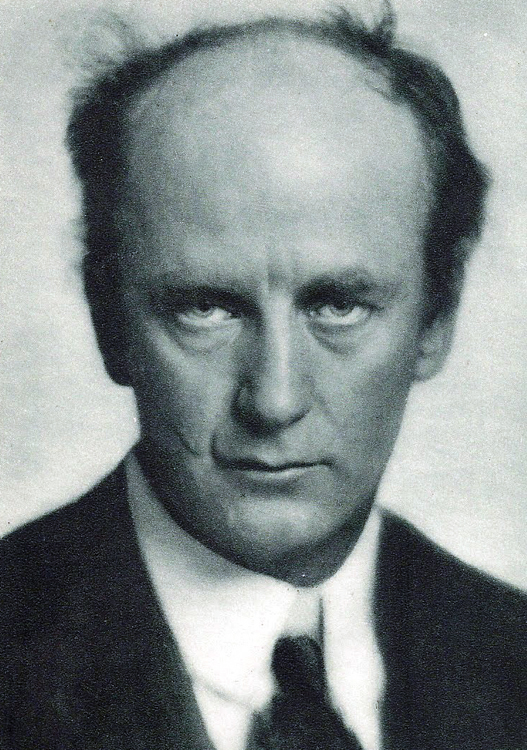
It is this second life that animates one of the most extraordinary works of art ever conceived, one so huge, multifarious, demanding and overwhelming, that only a few people are willing to invest themselves in it. Those who do, tend to become unbearable to those who have not. They become Wagnerites.

In one way of looking at it, the history of art is a vast pendulum that swings back and forth between works created out of the friction between peoples, on a personal, familial, tribal or national level. The individual and his place among human society. The other extreme is art that examines the individual and his place in nature and the universe. We move from Alexander Pope to William Wordsworth, from The Marriage of Figaro to the Symphonie Fantastique. One shouldn’t have to choose, but the fact is, one’s Zeitgeist chooses for you which paradigm will be most valued during your lifetime.

It is this second life that animates Richard Wagner’s 15-hour quartet of music dramas, The Ring of the Nibelungs. The massive theater-and-music work tells the story of the creation and death of the universe, and the human actions that animate it. If you are looking for a concise story with a coherent plot, turn instead to Bizet or Puccini; Wagner focuses directly on that inner life that pivots under the constellations.

That is why so many people love his music, and why just as many hate it. The Ring is populated with gods and heroes. La Boheme is populated with people. La Boheme is — on the surface, at least — about the first life; The Ring is unapologetically about the second.

There is, in some cultures, the idea of ”The Long Man,” that is, the individual seen as the summation of history: ontogeny recapitulates phylogeny — the one life contains all life.

So that Wagner’s retelling of all of history is also the birth and death of each individual consciousness.

Das Rheingold, the first of the four operas, begins with Eden, a perfect paradise in which the creatures who inhabit it are perpetually in touch with the radiance of nature. The beginning of the opera — and of the cycle — is unprecedented in music history.

alberichandrhinemaidens

It begins with the watery creation of the world, and the composer wrote it in the key of E-flat. The opening of the first of the Ring operas is one of the most astonishing stretches of music in all of history. Wagner holds onto a single E-flat major chord for a full four-and-a-half minutes — 136 bars, longer than some Mozart symphony movements. That is an eternity in music without a change.

It begins in the basses with a deep fundamental note, which breaks slowly into a rising arpeggio on the E-flat chord and slowly speeds up to a crescendo of runs and arpeggios — an immense pile of busy-ness, but without any of the forward sense of motion that harmonic progression provides.

In this, Wagner has provided a musical metaphor of the Hindu concept of maya, or illusion. He had been reading Indian philosophy — albeit in the very German version of Schopenhauer — and his illustration of the idea is perhaps the clearest in art.

Before consciousness, it is said, the mind is like a placid lake reflecting the sky perfectly. But such a state is impossible, for a breeze is inevitable, and it breaks up the surface into ripples and waves, and the sky — eternity — is then reflected individually in every wavelet. Such is creation in Hindu philosophy, where we are all fragmented into individuals by the accident of the animating wind. But the fragmentation is an illusion — maya. The busy play of the world is just a trick; eternity itself is unchanged.

So Wagner shows the indestructible and unmoving E-flat spinning out into a busy surge of notes, building the world into existence.

The idea came to Wagner while he was drowsing, dreaming he had fallen into a rushing stream of water.

”The rushing sound formed itself in my brain into a musical sound, the chord of E-flat major, which continually re-echoed in broken forms,” he wrote. ”These broken chords seemed to be melodic passages of increasing motion, yet the pure triad of E-flat never changed, but seemed by its continuance to impart infinite significance to the element in which I was sinking.

”I awoke in sudden terror from my doze, feeling as though the waves were rushing high above my head. I at once recognized that the orchestral overture to the Rheingold, which must long have lain latent within me, though it had been unable to find definite form, had at last been revealed to me. I then quickly realized my own nature; the stream of life was not to flow to me from without, but from within.”

“Within” — That’s the second life.

rackhamvalkyrieglyph

In one of the most prodigious imaginative feats in history, Wagner then managed to create most of the remaining 15 hours of music in his Ring from the initial 4 1/2 minutes of arpeggio — fragmenting it further, turning it upside down and inside out, to generate most of the melodic ideas in his epic.

So that, just as all scales and harmony in Western music are generated through overtones of the fundamental bass note, so all of Wagner’s universe likewise grows from that one, deep vibration.

That “radiance of nature” is also the gold at the bottom of the Rhine river. The three nixies who ”guard” the gold sing its glories.


rackhamrhinemaidens and ring

It is the ”visionary gleam” of childhood that Wordsworth elegized in his Intimations ode.

It is Nature, unsullied by greed and striving, which is the philosophical ground of The Ring. And it is Nature that is disturbed by the theft of the gold by a dwarf, who gives up any hope of love in order to possess the treasure and its power.

rackham rhinegolddwarf

So, love and power are the two poles of the moral universe in The Ring, and they play out against each other for the remaining three operas.

And in the end, the gods die and the world is engulfed in fire and flood. All that survives, at the final notes of the fourth opera, Goetterdaemerung, is the high, hanging violin melody that we have come, in all those hours of music, to associate with the redemptive power of love. It is the final word on life, history and the cosmos, and just as the world is destroyed it provides the hope of the next creation, just as our children provide a hope against our own deaths.

This is more than an entertainment: Wagner is trying to say something genuine about existence and to the extent we are open to his music and ideas, we will value them.

In the second life we all lead, the same two forces play out: career versus family, law versus justice, greed versus generosity, selfishness versus universal love. In each case, the first binds us in pain and frustration and the second redeems us through a connection to the transcendent.

Such an ambitious aim in art is held in great suspicion these days, where too easy a transcendence turns quickly into sentimentality. And a great deal of what followed Wagner is mawkish. We are much more comfortable now with a skeptical irony. After all, Wagner’s grandiosity fed into the rise of Nazism in Germany. Wagner was, after all, Hitler’s favorite composer.

wagnerphoto

(Wagner, himself, was an awful man. A ridiculous anti-Semite, a ruthless user of women and patrons, and more than comfortable living the high life on other peoples’ money. Take my word, you wouldn’t have liked him.)

But Hitler looked for the Germanness in The Ring and ignored the humanness. The narrowness of his ideology is the very thing Wotan, the chief god in the operas, comes slowly to understand is the cause of human misery.

We are all, if we are truly sentient beings, on something like Wotan’s learning curve.

There is a great deal in The Ring. It is the single most compendious work of art in European history. Wagner manages to take on rapacious capitalism, national identity, Schopenhauer, Hinduism, mythology and the role of the artist, among other things. There are as many interpretations of The Ring as there are hearers. And that is as it should be.

There are Freudian interpretations, Jungian ones, Marxist readings and neo-Feminist glosses.

Yet, it all comes down, in the end, to an awakened awareness of our second life.

The Ring has its faults; it is not a perfect work of art. It is sometimes dull for stretches as bits of plot are rehashed. Like Rossini said, there are some great moments and some tedious quarter-hours.

And in some sense, it is quite silly to take all this seriously. With its dragons and horn-helmeted Valkyries, its gods and dwarfs — to say nothing of its 200-pound sopranos — it can be hard to see past the adult fairy tale aspect. To some, it is as tedious as a musical version of Tolkien.

Fritz Feinhals Wotan

Yet, the music itself, underlying and amplifying the experience of The Ring, reawakens in us our awareness of our second life, which is ultimately the source of all that is good in life for ourselves and those we love.

Finally, as the critic Longinus says, all great works of art are flawed and we should always prefer flawed greatness to perfect mediocrity.

And make no mistake, The Ring is truly great.

rackham ring circle

A SHORT RETELLING OF THE RING — SO FAR

Richard Wagner’s Der Ring des Nibelungen is a four-opera monument to myth, history and psychology. First performed in 1876, The Ring was designed to be played on consecutive days as a single, 15-hour unit, broken up into these four operas, or ”music dramas” as Wagner called them:

rheingoldalbum

Das Rheingold — In this prelude to the main story, Wotan, the chief of the Viking gods, gains and loses the gold stolen from the Rhine River. The gold confers power on its possessor; unfortunately, it has been cursed and it also confers death. To retrieve the gold for himself, Wotan concocts an elaborate scheme, which plays out in the subsequent operas.

walkurealbum

Die Walkuere — Because he is bound by his own laws not to get the gold himself, Wotan fathers a hero, Siegmund, to do it for him. Siegmund falls in love with his own sister, Sieglinde, and Wotan, again bound by law, is forced to kill Siegmund, but Wotan’s daughter, Brunnhilde — who is a Valkyrie, or divine warrior maiden — saves Sieglinde and her unborn child. For her disobedience, Wotan puts Brunnhilde to sleep on a mountain surrounded by fire.

siegfriedalbum

Siegfried — Sieglinde’s child, Siegfried, is raised in the forest by a dwarf. The hero kills the dragon that guards the gold and climbs the mountain and awakens Brunnhilde. Wotan’s plan seems to be working, except that Siegfried isn’t really interested in the gold.

gotterdammerungalbum2

Goetterdaemmerung — The title translates as ”The Twilight of the Gods” and shows the sad end of Wotan’s plan. Siegfried is drugged by the evil half-dwarf Hagen — who also wants the gold — so that he forgets Brunnhilde and plans to marry Hagen’s sister. Brunnhilde feels betrayed and joins with Hagen to kill Siegfried. When she realizes that Siegfried had been tricked, she sings one of the most difficult 20 minutes in opera, and in remorse for her part in the murder, rides her horse into the hero’s funeral pyre, igniting the final conflagration that destroys both the world and the gods. Wotan’s plan has failed, but Wotan has achieved something more valuable than the gold: Wisdom. As the opera closes, hints of the redemptive power of love suggest that the world can start over again with a fresh beginning.

leitmotifs

To unify the sprawling story, Wagner used repeated musical phrases — called leitmotivs, or leading musical ideas — and developed them symphonically over the 15 hours. The music expresses the emotions and thoughts of the characters — sometimes hidden — and the music changes as the characters grow and the plot thickens, helping the audience keep track of what is happening.

rackhambookcoverdragon

fibonacci in blue

Too often, we take what we hear at face value. Facts turn out not to be facts. No one changed your family’s name at Ellis Island. Didn’t happen.

These are not just myths, they are just things that sound like they could be true and so become embedded in our midden of common knowledge. No, Eskimos do not have 30 or 43, or 90 words for “snow.” Human beings do not use merely 10 percent of their brains.

This is all stuff for the Cliff Clavins of the world.

Sometimes this stuff gets caught in our mental wheel spokes because we simply don’t look closely enough.

Take the Fibonacci series. We are told that this interesting pattern of numbers governs much of what appears in nature, including the spiral patters we see everywhere from whelk shells to spiral galaxies. The problem is, observation does not support this idea, at least not as it is usually presented.

The series is created by starting with a zero and a 1 and adding them together, and continues by adding each new number with the previous, making the series: 0, 1, 1, 2, 3, 5, 8, 13, 21, 34, 55, etc. The series has many interesting properties, one of which is the generation of the so-called “Golden Section.”

To the Greeks, the golden section was the ratio ”AB is to BC as BC is to AC.” It also generates the Fibonacci series and is said to define how nature makes spirals.

golden overlap

Look at the end of a whelk shell, they say, or the longitudinal section of a nautilus shell, and you will see the Fibonacci series in action.

whelk

Yet it is not actually true. When you look at whelks, you find spirals and the Fibonacci series creates a spiral, but the two spirals are quite different: the mathematical spiral opens up much more rapidly. The shellfish has a tighter coil. The whelk’s spiral makes roughly two turns for every turn the Fibonacci spiral makes. Math is precise, but nature is various.

fibonacci whelk

What I am most interested in here is not just the agon of conflicting beliefs, but rather the faith in mathematics, and the sense that math describes, or rather, underpins the organization of the world.

I cannot help thinking, in contrast, that these patterns are something not so much inherent in Creation, as cast out from our brains like a fishing net over the many fish in the universe.

Take any large string of events, items or tendencies, and the brain will organize them and throw a story around them, creating order even where none exists.

Consider the night sky, for instance, a rattling jostle of burning pinpoints. We find in that chaos the images of bears and serpents, lions and bulls. Even those who no longer can find the shape of a great bear can spot the Big Dipper. The outline seems drawn in the sky with stars, yet the constellations have no actual existence outside the order-creating human mind.

Ursa major

Our own lives — which are a complex tangle of events, conflicting emotions and motives — are too prodigal to fit into a single coherent narrative, even the size of a Russian novel. Yet we do so all the time, creating a sense of self as if we were writing autobiographies and giving our lives a narrative shape that makes them meaningful to us.

We usually believe the narrative version of our lives actually exists. Yet all of us could write an entirely different story by stringing events together with a different emphasis.

The question always arises: Are the patterns actually there in life and nature, or do we create them in our heads and cast them like a net over reality?

The issue is central to a brilliant movie made in 1998 by filmmaker Darren Aronofsky called Pi. In the film, a misfit math genius is searching for the mathematical organizing principle of the cosmos.

His working hypotheses are simple:

”One: Mathematics is the language of nature.

”Two: Everything around us can be represented and understood through numbers.

”Three: If you graph the numbers of any system, patterns emerge.

”Therefore: There are patterns everywhere in nature.”

Pi movie scene 3

The movie’s protagonist nearly drives himself nuts with his search until he cannot bear his own obsession anymore.

But the film also questions in a roundabout way whether the patterns exist or not.

When different number series — each 216 digits long — seem to be important, an older colleague warns our hero that, once you begin looking for a pattern, it seems to be everywhere.

It’s like when you buy a yellow Volkswagen and suddenly every other car on the road is immediately a yellow VW. Nothing has changed but your perception.

Mathematicians find patterns in nature, yet math itself is purely self-referential. It can only describe itself.

As mathematician/philosopher Bertrand Russell put it: ”Mathematics may be defined as the subject in which we never know what we are talking about nor whether what we are saying is true.”

In other words, ”one plus one equals two” is no different from saying ”a whale is not a fish.” You have only spoken within a closed system. ”A whale is not a fish” tells us nothing about whales but a lot about our language.

It is a description of linguistic categories, rather less an observational statement about existence. Biology can be organized as a system of knowledge to make the sentence false — indeed, at other times in history a whale was a fish.

Before Carl Linne, who created the modern biological nomenclatural system, there were many ways of organizing biology. In his popular History of the Earth and Animated Nature, from 1774 and reprinted well into the 19th century, Oliver Goldsmith divided the fish into “spinous fishes,” “cartilaginous fishes,” “testaceous and crustaceous fishes” and “cetaceous fishes.” A mackerel, a sand dollar and Moby Dick were all kinds of fish.

Plate from Goldsmith's "Animated Nature"

Plate from Goldsmith’s “Animated Nature”

Let’s face it, although the Linnaean system is useful, it is kind of arbitrary to organize nature not by its shapes, or where it lives, but rather how it gives birth or breathes.

”One plus one” likewise describes the system in which the equation is true.

It is possible to cast other patterns over reality. For instance, artists understand perfectly well how ”one plus one equals three.”

That is, there is the one thing, the other thing and then the two together: one sock, the other sock, and the pair of socks. That is three things.

Three things

Three things


In art, we constantly put one object up against another object and observe the interaction between them. In that sense, one plus one can equal three.

When mathematicians say that numbers describe the world, they are speaking metaphorically. Numbers do not, in fact, describe the world. The patterns of numbers seem to mimic the patterns we discern in nature and bear an analogical relation to them.

The fact that this seems to happen so often may be little more than the yellow VW effect.

For experience is large and contains multitudes, even infinities. In any very large set, patterns can be found.

That is the trick behind numerology. If the name Ronald Wilson Reagan can be turned numerologically into the symbol for Satan because each of his names has six letters, making the “666” or “mark of the beast” from the book of Revelations, well, looked at another way, it can be turned into a recipe for Cobb salad. All it takes is a system ingenious enough to do it.

Our hero in Pi believes in the Fibonacci spiral: ”My new hypothesis: If we’re built from spirals while living in a giant spiral, then is it possible that everything we put our hands to is infused with the spiral?”

He begins to sound more and more paranoid.

And paranoia has been defined as a belief in an invisible order behind the visible world.

Paranoia and idealism thus are siblings.

There seems to be hard wiring in the human brain that makes us cast patterns over the world. That hard wiring seems to bring forth what Carl Jung called archetypes, that is, the narrative patterns our brains spin out and the shape we then jigger all of actual experience into.

And when forced to choose between the coherent pattern and the incoherent reality, we always choose the pattern.

Perhaps we could not live otherwise. But it makes me mistrust idealism just as I mistrust mathematics.

art critic cap copy

I first recognized that the common baseball cap had taken over the world the second time I drove through eastern Washington, through the vast green and blowing wheat fields of the Palouse. The first time, in the early 1980s, all the farmers and ranchers wore curl-brimmed Western hats, either straw or felt. There was a distinctly cowboy feel to the agricultural workers.

But a few years later, these same wizened, leather-skinned and toothpick-thin men wore the duck-billed “gimme cap” of their local John Deere dealer or seed company.

johndeerecap

The artificial romance of the cowboy was gone for good. The gimme cap became standard.

If we think of Abraham Lincoln in his stovepipe top hat, or Harry Truman in a gray fedora, we are more likely to think of Bill Clinton in a ballcap. Fashions change.

You can still find the gimme cap in rural America, where it gives its wearer an honest day’s labor, but it is in the city that the cap has grown up. A John Deere cap on a farmer means one thing, but the same hat on an advertising company’s art director means quite another.

He is showing off his sense of hipness.

In fact, it is precisely this sense of irony that gives the ballcap — on MTV or on a city lawyer’s weekend head — its cache. We wear the caps to say something other than what the caps seem to say.

I know. I have had a ballcap collection going for something like 20 years, always looking for the corporate logo or bumper-sticker slogan that can be read ambiguously.

My collection is nothing like it used to be: As we get older, our need to express ourselves to strangers weakens and seems less important. Yet, I still have some of my favorites:

There is a DeKalb Seed Company hat with its logo of a flying corn-on-the-cob. I have always taken this as something of a personal totem. Anyone who has read much of my writing will recognize this immediately and have a good laugh.

Dekalblogo

Then there is the red cap with the giant “X” across it. Such hats were the rage when Spike Lee’s film, Malcolm X, came out. But most of its wearers were Black. I wore the hat nonetheless, and when asked about it, I always said it wasn’t about the Black Muslim leader, but was rather a tribute to my favorite chromosome.

O also love the suede gray, elegant cap with the winged “A”  on its front that was sold to advertise the Tony Kushner plays, Angels in America. It is a very butch hat for so subtle a play. It implies a great deal, but its message is only readable to a very few.

My favorite cap recently has been the gray and black Nixon hat. When I wear it to the ballpark, I tell people it honors Otis Nixon, my favorite of all former Atlanta Braves centerfielders — a very large and distinguished group of alumni. Nixon is also a charter member  of my personally selected “All-Ugly” squad. Lord, I enjoyed watching him play.

otis nixon

The perfect gimme cap, though, has the logo of the Shakespeare fishing gear company on it, written in an elegant script as though it were the signature of the Elizabethan playwright. When I wore it, my highbrow friends assumed it was in honor of the author of Hamlet; my more sports-minded friends took it as an endorsement of a rod-and-reel. It was perfectly ambiguous.

I wore that hat out and its replacement is a little less perfect, for added to the signature is the slogan “Since 1897,” which flattens some of the irony.

shakespeare logo

Many gimme caps are promotional items, meant to hawk a new movie or rock band. The most misaimed of these has to be the A&E network cap, with the logo on the backside, so it can be worn bill-back in home-boy style. What used to be the Arts and Entertainment network has given up completely on art, and given over to rednecks making duck calls, or chasing wild pigs across Texas. Artless.

Of course there are people who wear their caps with no sense of irony at all. They don’t mind advertising the Nike swoosh or their favorite baseball team or their brand of cola. They are left hopelessly behind. We read their lives like a book. The irony is meant, instead to hide, while revealing to the initiated.

The non-ironic ballcap is the equivalent of one of those oh-so-earnest bumper stickers that the politically committed paste on their cars. Yes, we care about whirled peas, and our gunless hands will be cold and dead. We should not be so one-dimensional.

But giving out a more complex message, the wealthy Hollywood actor, Tom Selleck can wear the blue-collar Detroit Tigers hat and pretend to be one of the proletariat.

Brooklyn cap

Which is why I choose the Brooklyn Dodgers cap, or the sky blue of the “Oral & Facial Surgical Center of Corinth, Mississippi,” or the plaid Bear Surf Boards cap.

It makes you think twice.

img0151A

I want to acknowledge a debt. It comes as a bit of an ugly confession. And it comes wrenchingly from my throat: I write a great deal about books and poetry. I spout Roman history a little too glibly and am apt to swoon glowingly about Homer’s Iliad.

But I must acknowledge that the high tone of fine art and literature is only a patina. I have been most hewn and polished not by literary sources, but by television. It is the same for most people under the age of 65.

Television is not often enough considered when we talk about intellectual development; it actually hurts to put the words ”intellectual” and ”television” in the same sentence — and I just did it twice. I’m a masochist.

But it is true. My first introduction to classical music was on the Bugs Bunny cartoons I watched on the box. First introduction to jazz from the added soundtrack to the silent Terrytoons I saw on Junior Frolics, an afternoon kiddie show on New Jersey’s Channel 13, hosted by “Uncle” Fred Sayles. Those silent-era animations, with their added jazz scores influenced my youth in a way that Aeschylus would never be able to.

farmer alfalfa

My first theater came in the form of sitcoms; first sculpture was the Rodin Thinker that Dobie Gillis sat under to question why he could never make time with Thalia Menninger.

dobiegillis

Oh, there were a few ”highbrow” things on the tube: Sometimes we watched Omnibus with Alistair Cook or the Young People’s Concerts with Leonard Bernstein.

Nevertheless, the effect of such educational shows was as a single tiny green pea to the overwhelming harvest of corn that poured out of the box.

Bonanza, Ed Sullivan, Jackie Gleason, Ozzie and Harriet, Dave Garroway’s meaty palm held forward to the screen as he intoned the word, ”Peace.”

I learned about animals from Ivan Sanderson and, later, Marlin Perkins. I learned about Eastern Europe from Boris Badinov. It all twirled around in a great pop-culture spin cycle.

It’s frightening to think how much American history was gathered from watching Hugh O’Brian as Wyatt Earp or Guy Madison as Wild Bill Hickok.

It is all still there, like petroleum under the covering layers of rock. If I dig deep enough, the Tacitus recedes and Sky King comes back to the fore.

But it isn’t mere nostalgia that I mean to invoke, but rather a change that has come about as television has come of age.

What distinguishes the generation that came after mine — those called ”X” to my ”boomer” — is the quotes that have now been put around everything that appears on the screen.

Television was new to us. We approached it naively. What we saw on its glowing front we took to be an image of the real world. Those that came after us were enormously more sophisticated about what they saw. Television was for them clearly an ironic ”parallel universe,” which they somehow lived in, used for their cultural reference point, but never took seriously.

The Adventures of Ozzie and Harriet was not exactly the world I inhabited, but it bore a close enough resemblance to it that I could read it as ”real.” Ozzie really was married to Harriet.

By the time The Brady Bunch came on, it so deviated from the reality of its viewers that the only way to enjoy it was as an in-joke.

victory at sea

My generation learned about World War II from Victory at Sea; the following generation learned from Hogan’s Heroes.

There are many a plus and beaucoup minuses to both sides of the generational equation. It is usually better to be sophisticated than naive. I’m mortified that I ever thought that Gene Autry really was a cowboy.

But the downside for the later generation is the disconnect they make between life and art. For them, culture is a web of references they get, the way you either get or don’t get Stephen Colbert. If you suggest to them that art might somehow mirror their daily existence and confront the questions that arise outside the TV world, they look at you like you just suggested Larry the Cable Guy should be the next James Bond.

If we have all become much more knowing about the apparatus of media, we are also in danger of drowning in that world in a kind of cultural schizophrenia, and forgetting that the world that counts is found outside prime time.

Nixon birthplace

”I was born in a house my father built.”

It is one of the great first lines in American literature and says more than perhaps the entire rest of the book toward explaining Richard M. Nixon. It is an expression of the politician’s essentially mythological sense of his own life.

Others might have written, “I was born in Yorba Linda, Calif.,” or “I was born a month before the 16th Amendment was ratified, creating the income tax.” But no, Nixon goes for the archetypes: birth, father, home.

The little white clapboard house that Nixon’s father built, and that opens his memoirs, still can be found, at the Richard Nixon Library and Birthplace in Yorba Linda.

The house, shaded under a grove, is rather dwarfed by the huge, impersonal marble and glass library, with its parking lot and fountains.

Nixon Library and Gardens

But the house is the only real reason to visit. Inside the tiny cottage, which Nixon’s father had ordered from a catalog, is the niche of a bedroom and the bed on which the future president was born.

Richard Nixon's birth bed

Richard Nixon’s birth bed

It makes Nixon feel almost human.

You can get a sense of the small-town bourgeois life that he sprang from, the piano in the parlor and the small bookshelf with the equivalent of the Harvard Classics that must have given Nixon his early sense of education and culture.

I have to admit, I never much liked Nixon — more accurately, I despised him and his politics — until Watergate. My reaction is probably the opposite of most of those who lived through those times: Nixon was elected in a landslide in 1972 and after his resignation, widely denounced. For me, I hated him until his crimes and venality humanized him.

Politics tends to flatten its heroes, to turn them into one-dimensional factional puppets. We don’t like to find out that our presidents are mere people, that they have faults, fudge the truth, create political lists, philander.

It was only after Watergate that the more complicated, vast, conflicted, confusing, contradictory Nixon became widely known and written about. Nixon, the contemporary Richard III, the one candidate who could deal with evil in foreign affairs because he was conversant with it in himself.

He was surely the only 20th-century politician who plausibly can star in his own opera: John Adams’ Nixon in China.

The real Nixon won my respect because he was larger than life, or, more precisely, he was as big as life.

So, it was a huge disappointment to discover that the Nixon Library, and the museum attached, do their best to turn Nixon back into a plaster bust, denying him all the richness that made him so fascinating.

It is a sanitized Richard Nixon that shows up at the library, one who doesn’t use expletives, deleted or otherwise. The old newspaper clippings glorify his career without ever mentioning his pink-paper campaign tactics, his smearing of Helen Gahagan Douglas, his ”enemies” list.

The real Nixon was Shakespearean, the enshrined Nixon is as polyethylene as Reagan.

The real Nixon saw himself mythologically, and like myth, is open to various, equally defensible interpretations. He was not coherent, but multifarious. There is something in his life for everyone, whether they want to hate or admire.

Which is why the Oliver Stone movie seems so true, no matter how loose he plays with fact. Stone recognizes the essentially mythic quality of Nixon’s personality, which is why he built his entire movie as a gloss on Nixon’s farewell speech to his staff, which is concocted of archetype: ”I remember my old man. I think that they would have called him sort of a little man, common man. He didn’t consider himself that way.” And, ”Nobody will ever write a book, probably, about my mother. Well, I guess all of you would say this about your mother: My mother was a saint.”

It was a gloriously bathetic speech, mawkish and sentimental, but it summed up the essential Nixon, not as one man in a planet full of its congested billions, but as the single Shakespearean king, the central player, not only in history, but in his own life story, as in each of our lives, where we are all the king.

One glorious piece of mythologizing snuck in, although the museum staff doesn’t seem to recognize it for the glorious kitsch it is.

There is a large painting of Nixon by the Hungarian-American artist Ferenc Daday. In 1956, Eisenhower sent Vice-President Nixon on a fact-finding tour of Europe. He made an unscheduled late-night visit with refugees of the Hungarian Revolt at the Austrian border town of Andau.

One can imagine Nixon in reality, getting out of his limo, stopping to talk with a few people, as awkward as he was with the anti-war protesters at the Lincoln Memorial. But the painting doesn’t show that; it shows a heroic Nixon in a white trench coat under an anagogic sky — it could be a leftover from Gone With the Wind. The refugees plead with him for succor.

nixon painting

The whole thing is a wild sendup of the great history paintings of art history, populated with suffering masses, a man on crutches, another with a Hungarian flag unfurled in the wind. The vast plains of Hungary spread out in the background like the landscape in an Altdorfer painting.

And standing next to one poor woman, her arm in a sling, is a shaggy Puli hound, its tongue hanging out. It is such a piece of deflating silliness, the artist surely must have put it there satirically. But if so, the Nixon Library staffers are not in on the joke. Apparently, they have since taken the painting down, perhaps embarrassed by its schmaltz. They should reconsider; the painting says more about Nixon than all the official policy papers and bronze statuary.

When I asked about the painting, many years ago, when I first visited, I got only the party-line response, almost as if the staffer were reading off a TelePrompTer.

The only one who got it was the young man at the gift shop.

”What’s the kitschiest thing you have here?” I asked him.

”This is our bestseller,” he told me, and dragged me with a smile over to the shelf with the coffee mug on which is printed a photograph of Nixon and Elvis.

nixon and elvis with mug

Now, that’s mythology.