Archive

Tag Archives: fiction

Mia is grown up, living alone in West Virginia; Stuart has found another woman. She asks his advice. I’m not sure why.

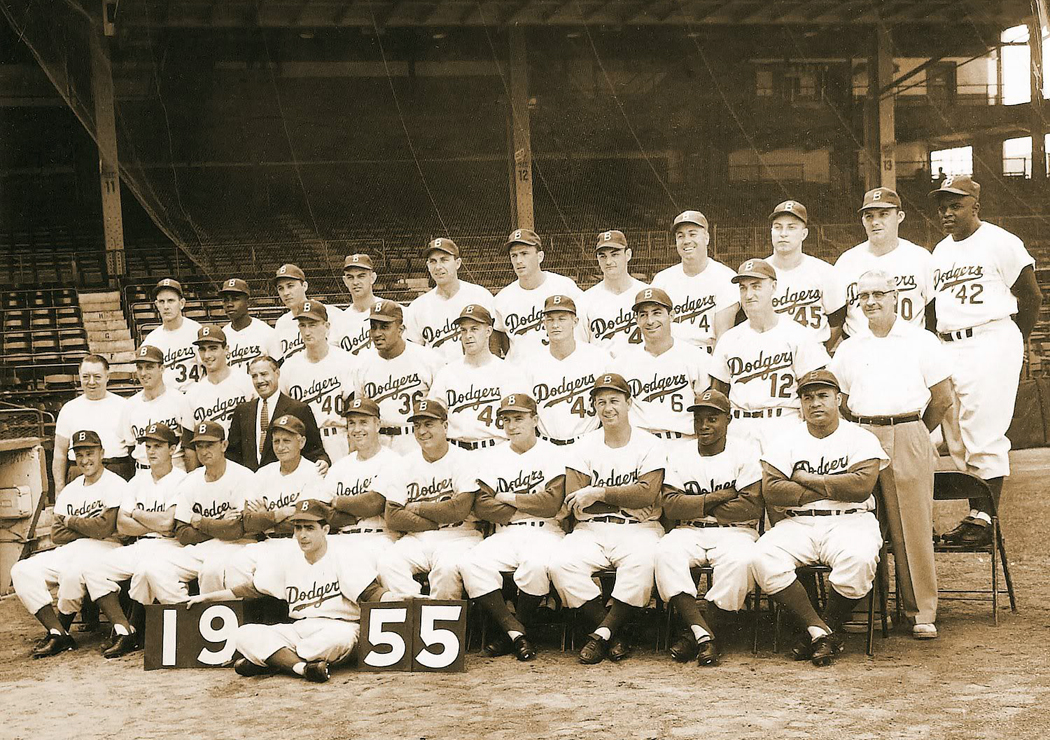
1955 Dodgers

PART THREE: AD HOMINEM

1

“Tell me about men.”

“What?”

She repeated the demand. Stuart didn’t know what she meant.

“I don’t know anything about men,” he said.

“You are one,” she said.

“You think that gives me some special insight? I don’t know anything about myself, and that includes being a man. Why are you so interested?”

“I’m new at this game,” she said, with the same expression she might use to say, “it’s still raining.”

“I’ve never done it.”

Stuart did a double-take inside his head, although he showed nothing on his outside. Why are you telling me this, he wanted to know, but was afraid to ask out loud.

“I consider virginity to be a form of ignorance,” she said.

“A minor form at best,” Stuart said. “Compared to bigotry, patriotism or not being able to name the starting lineup of the ’55 Brooklyn Dodgers, it’s hardly anything.”

“But it is a kind of ignorance, and I think I’m too old now to maintain that ignorance.”

“You have someone in mind?”

“No.”

“So this is theoretical?”

“Not exactly. I intend to lose my ignorance, and I need to know the other camp. You are my spy.”

“I’m not sure I qualify. I haven’t had a successful relationship, or rather never had one that lasted more than a few years.”

“But I can’t talk to anyone else. You’re it. So, tell me about men.”

Stuart did, in fact, have a theory. Like all his theories, it was more about spouting off than about solid sociological, theological or scientific research.

“OK, here goes.

“Men are all fetishists. This is the primary distinction between men and women,” he said.

“I don’t mean all men are into leather or vinyl, but that men localize their interests. It all comes down to a focus on a single issue, and all others can fend for themselves.”

“You mean men can’t multi-task?”

“That’s a good way of putting it.

“Think of porn. Why do women not respond? Why do men? People say it’s because women are not visual and men are, but that’s not the main problem. After all, women don’t respond to verbal porn either. It’s because men localize their sexual interest in one spot on their bodies. And, believe me, it’s always the same spot.

“By the way, if you attend to that spot, it doesn’t matter what else you do, they’ll be happy. It’s really rather simple. Everything about men is really rather simple. I know that’s hard for women to understand, because women are wired for complexity.”

“That seems like a stereotype,” she said. “As in: Women can multitask.”

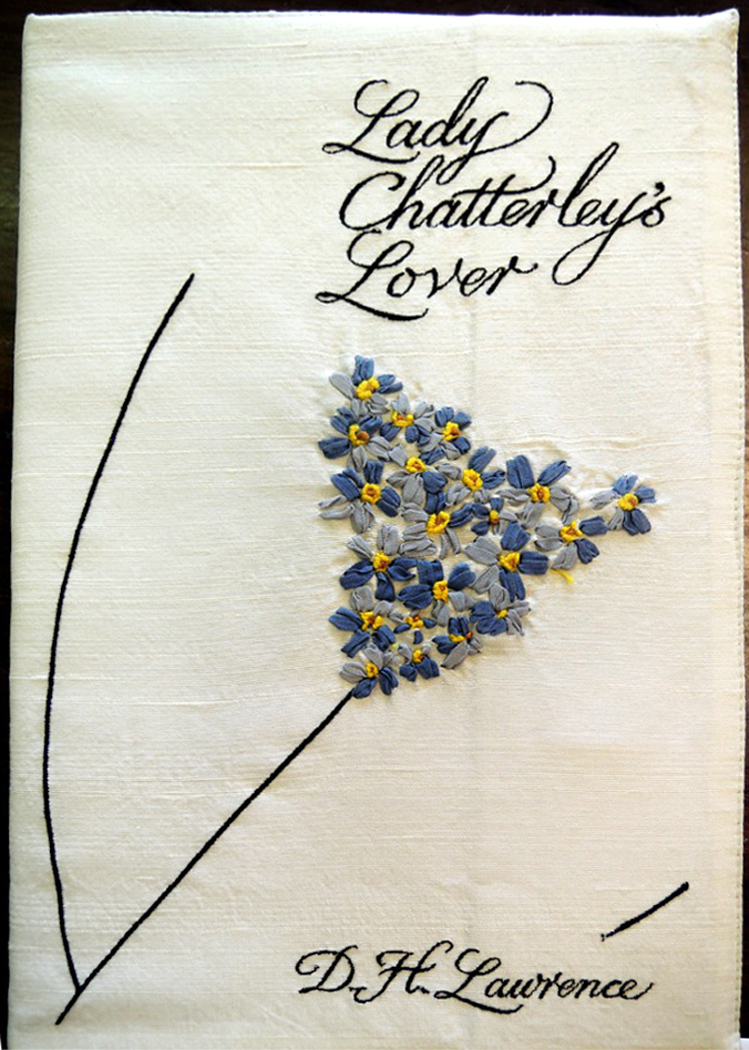
lady chat 3
“But it’s true. Look at D.H. Lawrence. He adds a religious layer to the whole thing, and makes a god of that spot on his body, and believes that both men and women worship that dangling deity. But it’s really only a man’s religion.

“It colors everything in a man’s life. But it especially colors his attraction to women. Not only does he believe that women care about his equipment, he actually believes women go around talking about it in hushed, worshipful tones. Is it big enough? Am I man enough? Very little thought goes into anything else that might be thought manly.”

Mia knitted her eyebrows and shifted in her seat. This wasn’t what she was asking about really, but Stuart was always interesting, so she let him go on.

“So now, when a man looks upon a woman, that same single-mindedness makes him pick out a single attribute of the woman for worship. It is seldom her equipment. Why? I don’t know. Ask Freud. Wait. No, don’t ask Freud.

“So, for a man, it is her boobies he fixates on, or her hair, or her legs. Her big booty or the light down of hair on her arms. It becomes the trigger for his attraction.

“You see it all the time. A man loves a woman because her hair is blond, or because she has a turned-up nose, or pouty lips. She can weigh 200 pounds, but because her hair is curly, he sighs and pines.

“It can be something less tangible, like a sense of humor, but it seldom is. Mostly it is a physical endowment. Some like saggy boobs, some like a high arch on the instep. Some like just the hint of a mustache on her upper lip.”

“Gross!”

“But it’s true.

“When in the act of love, it is usually this one particular that the man is obsessing on. He is wildly in love with her hair, or the mole on her cheek, or the way she cuts her fingernails short.

“It can be perfume. It can be the fact she wears short pants. It can be the one button left undone on her blouse. But it is one thing.

“Women, on the other hand, tend to see the whole man, to see him as a person. When women complain about the objectification of themselves by men, they are right to do so, but they also miss a central truth of existence and the propagation of the species.

“Men simply don’t see the counter-indications: If that blonde in fact does weigh 200 pounds, or is a shrieking harpy, it doesn’t figure into his erotic calculations.

“The woman, however, always takes all the conflicting data into account and makes a profit-loss calculation. Is there enough there to work with? Does the good outweigh the bad.”

Mia objected, the way you do when presented with something you know is true but don’t wish to acknowledge, hoping that denying it will make it go away, at least for the moment.

“It can’t be that simple,” she said.

“It isn’t. Actually, it’s really quite complicated. What’s most interesting is to see it play out in the long run. Then the whole thing reverses.”

“What do you mean?”

“I mean that after living with a woman for 20 years, a man finally learns to see the whole woman, to access all the other parts of her personality and personhood that he was blind to in the first rush of ‘let’s-make-babies.’ She grows in his estimation. What he should have seen from the beginning, he now understands. The fire has spread into a circle, leaving the grass in the middle burnt, but a wider horizon of concern and interest expanding.

“By the way, learning more about the woman isn’t always a good thing. It also may lead to divorce.

“But the reverse is true for the woman. After living with the man for years, she is likely to latch onto the one thing, the one attribute, the one saving grace he has that makes up for all the failings.

“So, his appreciation for his wife grows, her appreciation for him narrows, but deepens.”

“At some point, though, it would seem there should be a crossing of the lines on the graph,” Mia said. “There should be a point when her narrowing and his expanding meet at one perfect moment of mutual understanding.”

“Well thought. I don’t know,” Stuart said. “That’s what you will have to find out. I never got there.”

2

It was a few days later. Mia sat in her room with no lights on. It was getting dark. She just sat. It was the time of day when nothing has any shadows.

3

It’s me again, come out from behind my mask.

You can see I’m not very forthcoming. I’m more than shy; I really don’t like getting personal, but you can see that already, I’m sure. But why write this story if I don’t want to let on?

So, I should tell you that a few weeks after talking to Stuart, I ended my ignorance. The gentleman was very pleasant. We spent a nice evening talking, and when it came down to it, he was more attentive than I expected, caressing me and talking softly. I could have no complaints.bike messenger 2

In fact, he spent rather more time on me than on himself, which surprised me. He didn’t know I was a novice and I didn’t tell him. He seemed interested in me, and my body, and he spent most of his time, even after I had taken off my clothes, looking me in the eye as he talked. At least, up to a point, after which he seemed to be more like a bicycle delivery boy with a deadline, pedaling faster and faster to deliver his parcel, well wrapped and waterproofed, I should add — I said he was a gentleman. Job completed, he began once more to pay attention to me.

I can’t say it wasn’t a pleasurable experience. I’m sure I didn’t know what to expect. And one instance is not a large enough sample from which to make any generalizations. As to whether I felt “release,” I really cannot say. Certainly I had a warm feeling that flowed through my body and ended the experience relaxed in a way that I could not altogether call familiar.

I did not see him again.

As to the question of ignorance and enlightenment, I can only say that the older I get, the more I realize that the end of one ignorance is only the beginning of another. I’m going back to my shell now.

4

“What was your fetish?”

“What do you mean?” asked Stuart. For once, she was visiting him.

He was putting together a model airplane and concentrating on gluing a wing strut without leaving a bead of glue on the fuselage.

“I mean,” said Mia, “what gets your oomph in gear?”

Stuart stopped, cocked his head and tried to figure out what Mia meant.
“Don’t you remember,” she said, “last year you told me that men focus on one thing only?”

“Oh, that,” he said. “I’d forgotten. Well, let me see. I’d say I am very lucky.gatsby eyes 2

“Why is that?”

“Because my thing is eyes. I always notice eyes first. I get turned on by eyes with a slight puffiness in the lower lids. I think it gives a woman’s eyes a slight squint that I take for implied skepticism, and I find skepticism highly attractive. I always notice a woman’s eyes first.”

“Why do you say lucky?”

“Because a woman never has to say to me, ‘I’m up here.’ My particular fetish means that any woman I’m with thinks I’m looking deep into her soul. It gives the illusion I’m interested in her. And that illusion is like the lure an anglerfish dangles in front of his prey. It gets’em every time.

“I don’t mean that I consciously use it as a technique — it comes natural. I really do love eyes and usually, I really am interested in them. But it has made me very lucky, in both of the word’s common senses.”

Then Stuart said something he truly believed, although you don’t have to: “I have never had sex with a woman I wasn’t in love with.”

5

As you have guessed, Mia is rather introverted. She has a hard time making friends and meeting potential mates. When you spend your life parsing the aorist tense in Aeolian Greek, that sort of thing can happen.

Mia now had her masters degree and was obviously headed on for a piled-higher-and-deeper in Greek and Latin, and when she wasn’t dug in with a Loeb Library volume, she was trying to figure out how to keep her apartment from turning into a midden. Everyday life was not her strong suit.

But she had met someone. His name was Michael and they did four things: They went to the movies; they ate dinner in restaurants; they had sex; and they talked about the meaning of life. But, they were both 23, so what did they know?

As for movies, they both loved subtitled films, although he favored the German films and she favored the French ones. The German films always seemed to be about someone having power over someone else, or over some group. The French ones were always about how loves flutters like a flake of soot on a fire grate, not ever knowing quite when to let go.

As for restaurants, in this they agreed. They both loved finding new and more unusual ethnic restaurants. Ethiopian food, or Dravidian food, or some new restaurant featuring food from the Maldive Islands. Not that they weren’t happy with Greek or Thai. But they both loved to spend long hours over that final cup of coffee discussing the meaning of life, and how the latest German/French film meshed with the latest Peruvian/Estonian food in their gut.

You might expect them, therefore, to be adventurous in bed, as well. But there you would be wrong. Neither Michael nor Mia required anything other than an intimacy that reinforced their ties to each other, and gave them each the momentary limbic whoopie.

Mia was happy with her life.

6

“OK, kiddo, tell me about it.”

Stuart had wandered through town. He was writing a book about traveling with no itinerary. It seemed to be a way of turning his natural talents toward monetary good. He actually had a book contract and a deadline. He also had an editor with a whip. Literally. It wasn’t his thing, but he didn’t mind. Yes, they were living together, and no, she didn’t mind when Stuart left for weeks on end.

“What?”

“Michael.”

“It’s nice,” Mia said.

“Nice is for turnips,” he said. Mia didn’t know what that meant, and Stuart probably didn’t either.

7

“Tell me about Liz,” Mia said.

“She keeps me in line. After Helen left me, I knew I needed someone who would provide more structure. Liz is an editor; sometimes, I am a writer. It seemed like a match made in, well, maybe not heaven. Maybe a corporate lawyer’s office.”

He shuddered. The image gave him the willies.

“We have fun,” he said, although it sounded maybe a touch insincere when he said it, and also, beside the point.

“It’s interesting you should say that,” Mia said. “Because, I have a problem.”

8

“My Dear Mia,” the letter began. She was rereading it.

“I’m sorry about having come to see you. I feel I couldn’t say what I wanted to.

“Perhaps it is because when I see you it is like looking into a mirror.”

It was a letter from Dan. The first letter she had received in something like 20 years.

“I have trouble saying what I need to say, and it seems as if you do, too. It must be genetic. It is a trait no doubt handed down from your great grandmother, who everyone remembers said nothing at all when her house in Cincinnati burned down. I was just a kid then, but I remember her face never changed. Grandad fell apart; he was never the same. They lost everything. But Nannie stood there, in front of the fire and pulled her shawl around her shoulders and said nothing.

“What I wanted to say is that as I’ve gotten to be an old man, I’ve come to understand something about family that I never would have guessed. It is why I wanted so much to see you, even if we have almost no shared experience. It is that family matters.

“I don’t mean in the simple way, like your granny and pops used to tell me, when I was a kid, and the aunts and uncles would come back to the house after church on Sundays. I mean something with deeper roots. I mean your German and English forebears, the ‘long man’ of history, the single strand of DNA that has been forwarded from the past and you will pass on to the future.

“If you want to understand yourself, you need to know where that braid of amino acids came from, and why it is stuck in you. I couldn’t say these things to you; it would have sounded silly. But I can write them. Writing is a way of saying things you cannot speak.

“Since your grandmother’s family came from Germany, their past is lost, at least to me. I don’t even know what boat they came over on. But my dad’s family, your grandfather, came from England. I have traced their genealogies back. I have them back to 1621. Pop’s family goes from London back to York, so there’s probably some Scandinavian blood in there, too.Nana "Sam" Gerry Esther

“If you remember seeing the photographs of Granny when she was young, dressed like a flapper in the 1920s, you can see yourself, or at least, your nose and eyes. Your mouth rather favors my father’s side of the family. But there they are, showing up in your face. That gesture you use to express disdain — you used it to me when I visited — that is the same gesture my mother used to use when she was scolding me. It was a shock to see it reflected in your hands and arms.

“This is why I felt I had to see you. I know I haven’t been a father to you, but what I’ve come to realize is you cannot deny family. It is what I wanted to tell you; it’s what I’m trying to tell you now. And now, except for you, I have no family left. I am alone.

“I may have screwed up as a dad, but I have an interest in you. You are, after all, my way of projecting myself into the future, when I will no longer be there. You are also projecting Granny and Nannie, and everyone back to 1621. Each of us, while we are alive, is a pivot, a fulcrum, on which the past and future see-saw. Each of us is a root, growing from the dark past into the dark to come. A seed that becomes a plant that flowers and grows fruit that produce seeds again, over and over, one flower growing out of another, out of another and out of another. You are my flower.”

9

She woke up in the morning. The sheets were all crumpled. Bill was on his side with one arm up over his head, snoring. This is the time to look closely at your partner, to see if you really want him, with a bit of spittle drooling out of a corner of his mouth, the underarm hair bristling in the pit of the distended arm, the little grits of sleepsand in the angle of his eye. If he can stand this test, he might be worth keeping.

But Mia wasn’t sure. It wasn’t the drool she minded, or the stertorous breathing. Perhaps it was the sense she had that Bill made the assumption that he could stay the night without asking. That he presumed on their bed.
She got up, leaving him there, like a beached porpoise, and went to the kitchen, turned on the light, squinted her eyes still used to the dark of early morning, and turned on the kettle and reached for the instant coffee.

In two more days, she would turn 30.

To be continued

Restaurant   I couldn’t take my eyes off her breasts. They wobbled under her shirt like porpoises and, despite the soup I was eating and the woman who sat across from me, the only thought in my head was the heft of those breasts at the next table.


“Stephen, what are you looking at?,” said Sarah. “Stephen?” She knew, but wanted to shame me into stopping. I looked back at her, pretending not to have an answer. But with each comma in the conversation, each semicolon in thought, my eyes sprung back to the table where those breasts were singing to me.


They were not large, and for their size were slung rather low. But they had such a roundness and they were velvety black. I couldn’t help imagining the dark nipples that poked into the cloth of her shirt and embossed such a clear impression. Black breasts, purple nipples.


Sarah was the kind of woman anyone’s parents would approve of, especially if they were members of the country club. Her chest was trussed solid with underwire and stitching. Those breasts wouldn’t sway in a hurricane; you can’t wiggle plaster.


The woman with the black breasts didn’t notice me. She was deeply involved in her dinner, eating as if she hadn’t in a while. Her clothes were elegant enough — not rich, but not poor, either. She couldn’t have been as hungry as she seemed. She gorged on lasagne and French bread. Oh, they wobbled. They wobbled each time she reached over her plate for another pat of butter.


As I lifted a fork of sirloin to my mouth, I flicked my tongue back and forth over the sharp tines of the fork. I did it with closed mouth, so Sarah wouldn’t notice.


The woman with the black breasts finished before we did and as she got up to leave, I stared at how long her torso was, how narrow her hips, how gentle her shoulders and how smooth her black skin was. My eyes followed her past the maitre d’ and I watched the swing of her behind and the syncopation of her long legs.


“You’re drooling,” Sarah said.


After we left the restaurant, we took in a double bill at the rep house. All I saw on the screen were those sooty breasts. A harmless fantasy.


Or so I thought. I never saw Sarah again. I never saw the woman with those breasts, either, though I have been searching now for two years. Any restaurant I enter, I survey from the highest vantage point I can find. On streets, I look, not into the oncoming faces, but at the tide of chests that washes toward me. In movie theaters, I walk to the front row just before the feature starts and search over the crowd. On busses, I walk from front to back; in office buildings, I ride the elevators from bottom to top and back.


My search continues. On bad days, I curse my idealism.

dear carol 2
There was a moment in my life I was unemployed. I received unemployment checks for some weeks before I was handed a job interview with The Carolina Peacemaker, the black weekly newspaper in Greensboro, N.C. The fact that I was white seemed to make no difference. Neither did the fact I had no journalism experience at all.

Initially, the paper was looking for a photojournalist — actually, they just needed someone who could process film. When they hired me, they asked if I could write, too, and within a few months, I was “news director,” a title that sounds a whole lot more impressive than the reality. Reality was a staff of me and one other writer, a secretary, a typist, an ad salesman and Mike Feeney, a cynical Irishman and washed-out New York Times reporter who came in once a week to lay the paper out. He spent his spare time in his office drinking bad coffee and filling out the Times crossword puzzle in ink, without ever needing to use any of the “down” clues. It was like filling in an application blank. His desk was piled with ancient moldy paper coffee cups, with dehydrated grounds in the bottom, along with crushed out cigarettes. There must have been a hundred of them. I don’t know why he chose not to throw them out.

When Feeney quit, I became “managing editor,” although all that meant was that I had more work. I edited all the copy, wrote all the headlines, laid out the paper each week, developed all the photographs, sized them and sent the works out to the printer.

I also wrote many of the stories, and all of the editorials. It may seem strange that a white guy should be writing editorials telling the black population of Greensboro who to vote for, but I have to say that I never felt the slightest sense of resentment or mistrust. The paper never hid the fact that I was not African-American, and I had excellent relations with everyone I met in the black community.

But it wasn’t only editorials and news stories. A few years after I got there, the woman who wrote the advice to the lovelorn column retired, and I inherited the “Dear Carol” spot. I also became the “Kitchen Magician,” and wrote a weekly cooking column.

I have to say I had fun with Dear Carol. I created a distinct personality for her: She was a militant black feminist. I knew her entire biography, where she was born, who her father and mother were, where she went to school — the whole nine yards. I didn’t need to invent her: She was there, inside me waiting to get out.

But the most amazing part of the “Dear Carol” column was that I didn’t only have to write the answers to the letters, I had to write the letters, also.

Week after week, I concocted letters with some of the oddest and most peculiar personal problems I could think of. I had a ball.

Here are a few of them:

LOUD TIES

Dear Carol,

There is this really cute guy in the office where I work. He is a salesman and I am a secretary. But though he is friendly, and I think we could really get together, I worry about him because he wears the most disgustingly loud ties. And his socks never match. In fact, I don’t see how he can be the successful salesman he is when he shows such miserable taste in his clothes.

I know you shouldn’t judge a book by its cover, but a book doesn’t choose its cover. This guy chooses his gold lame neckties.

Should I try to become used to his clothes, or should I forget about him and look for someone else?

— My Clothes Match

Dear My,

Why aren’t you a saleswoman? You have more class than this dodo that’s pulling in the loot, but you type his ungrammatical letters.

There are three ways to be about clothes. One is to be oblivious. Many people just don’t care what they look like. Clothes just aren’t important. If they keep one from being arrested or from catching pneumonia, that’s enough.

Another whole group of people love clothes and they love the way they look in the latest fashions. They know how to dress and they do it. You can see them not only on the neon disco floor, but even in church on Sunday mornings. These people just look classy.

Then there is our salesman. He apparently wants to dress well, but doesn’t know the first thing about style. He should just relapse to the first phase and not care about his clothes. When he tries to look good, he becomes a joke. Plainness is better than gaud.

The choice is yours. Do you want a turkey who looks like a Reynolds Wrap mummy, or do you want some other turkey?

If I were you, I would just bide my time and not worry about men. When you find the right kind of man, it will be soon enough. In the meantime, you just don’t need one.

ON THE MAKE

Dear Carol,

I am a salesman for a small business and my boss is a woman. I can get along with a woman boss just fine, that doesn’t bother me. In fact, she’s real good at what she does. But she has made advances to me that are more than suggestive. They are downright rough. If she had her way, the janitor’s closet in our building would be a mighty busy place.

But she is not my type, and besides, I’m married. My wife is a quiet sort who hasn’t been around much.

My boss has been a round a lot. Especially around my desk, chasing me. Will I have to quit my job?

–Chased, so far

Dear Chased,

Don’t quit  good job merely for personality problems. If you enjoy your career and you are making a good living, don’t blow it just because of one lecherous boss. If she is really good at her job, she will be promoted or will change companies as she rises in management. Then your problems will be gone. Until then, realize that her attentions are only a nuisance. Let her know that you are satisfied in your marriage and tell her she is bothering you.

And when you make it into a management position, remember your lesson and don’t bother the women you supervise. It’s a two-way street. I know.

NOT SINCE HIGH SCHOOL?

Dear Carol,

Boy, do I ever have a problem.

I am getting married next month to the man I’ve been engaged to for two years. We have a good relationship and I love him a whole lot.

We have always had a good sex life and we enjoy each other a lot. But I am pregnant. (That’s no problem since we both want a lot of kids).

But the problem is that several months ago, I decided that if I was going to be married, I should get out and have a last fling. Things got a little out of hand and I made it with 16 different guys in a week period. It was during that time I got pregnant. Now, I don’t know if the baby will be my fiance’s or not.

So far, the notorious week has been a secret, though I don’t know how. I haven’t done anything like that since high school. But should I tell my man or not?

I just don’t know what got into me.

— Monogamous

Dear Monog,

First of all, don’t ever say a thing about it. You will only cause pain for the one you love. It is spilt milk, so forget it.

Second, don’t ever let it happen again. If you’ve been with this guy for two years and having “a good sex life,” you are as good as living together and in my book, that is the same as marriage. And marriage requires trust. If you aim to make it safely through the many years you have left, you will have to give some reason for your hubby to trust you.

Of course, the same thing goes for him. I don’t want to leave the men off the hook.

They probably need to listen to this advice more than most women.

With a child on the way and a marriage upcoming, you will need a whole lot more maturity than you showed several months ago. You will have to be more circumspect as a mother.

But what in the world did you do in high school?

THE RAT COMES HOME

Dear Carol,

I am in a rage. The man I have been seeing for five years is seeing another woman. My man is married and his wife never knew about us. We kept a good secret, but now I find my man has been keeping a secret from me, too.

I got so mad that I told his wife about his affair with the third woman, but I still haven’t told her about us. His wife threw him out of the house for playing around with the other woman and the rat has come to me asking for a place to stay. The whole thing is a mess.

Well, I just want to say that for the first time ever, I understand the wife’s point of view. It hurts. But should I keep the rat, or let him drown?

— Tables Turned

Dear Turned,

You should have learned your lesson by now. The rat won’t drown, he’ll just ask a fourth or fifth girlfriend for a place to stay. He may have already. Did it ever occur to you that he may have been turned out by other girlfriends before he even asked you? Forget him. And clean up your own act.

A STINKER

Dear Carol,

My wife embarrasses me every time we go out. She has a nasty habit of smoking cigars. She likes those imported Italian cigars that are triple-dipped in asphalt and she smokes one with a cup of coffee after dinner. That is not so bad at home, but she does it when we are visiting friends and relatives.

My mother never liked my wife, and now this only seems to confirm, for my mother, the nasty things she has thought all along. But aside from the cigars, my wife is wonderful. I love her very much and don’t want to lose her. What can I do?

— Smoke Gets in Your Eyes

Dear Smokey,

Cigar smoking is unusual in a woman. I dislike all smoking and try to convince everybody to stop. I’d try to convince your wife to stop, too, but I doubt it would work. Best thing is for you to do is talk it over with her. Compromise and let her smoke among certain friends that are used to her, and ask her to forego the stinkers when you visit relatives, especially the worried mother. I know how that can be.

Just remember that several great women smoked cigars, though I doubt George Sand smoked those Italian jobs.

PAINT PAINS

Dear Carol,

My son is in college now, studying art. For Christmas last year, he gave us a huge painting to put over the couch. This canvas in the frame is at least six feet long. But Carol, the painting is terrible! It is six feet of modern abstraction, all bright blue, red and green. It looks like a wreck between a paint truck and a ketchup factory. It has been hanging up there since Christmas and I can’t take it anymore.

I thought that after a few months I could get used to it, but I don’t think several decades would help. I don’t want to hurt my son’s feelings, but I can’t stand the pain in my eyeballs anymore.

What can I do?

–No Whistler’s Mother

Dear No,

I sympathize with you. I once received a hall clock that was a statue of a naked lady with a clock in her belly. It was too big to put in my hall and so I finally put it in a large dumpster.

But your problem is that it is your son who gave you the painting and the only way to handle the problem tactfully is to ask him to paint you a new one. If you flatter him into painting a new one, then it can take the place of the old one. Give yourself several months to get used to whatever he paints. Give the old one to his father and let him worry about where it might fit in his workshop.

HER MAN IS A PICKY EATER

Dear Carol,

My boyfriend is such a picky eater. He won’t touch most anything that normal people eat.

He eats peanutbutter and marshmallow sandwiches and mashed potatoes stirred up with mustard, but practically nothing else.

His mother always let him get away with being picky when he grew up, and now I think he’ll never change.

One the other hand, I enjoy good foods. I go crazy in a Japanese restaurant or around a food processor. I love nice cookware and I own a beautiful set of carbon steel chef knives.

Well, my boyfriend and I are thinking about getting married, and I wonder if our eating habits will cause any trouble. Do you think I have something to worry about?

–Gourmet

Dear Gourmet,

It might cause a problem at first, but as the years go on and on and you fall into a common marriage pattern, you won’t be eating together anyway, so it will make no difference.

You will wind up eating salads or soup alone and hubby will come home late and fix a P-butter and Marshmallow sandwich and sit down in front of the tube.

Mothers — When your children are young, make them eat at least a bit of everything that you serve. If a kid hates mashed rutabaga, make her eat one spoonful every time you make it. In a few years, rutabaga will be among her favorite vegetables.

A kid can’t complain about one spoonful, and almost any food problem can eventually be overcome this way. Start early with your children and they will lead fuller, happier lives.

I know. My mom made me eat rutabaga.Dear Carol 1

I CHEATED, BUT NOW MY WIFE WANTS A TRIAD!

Dear Carol:

I’ve been married for ten years and have no children (by choice) and I have always gotten along with my wife. In those ten years we have never had a fight.

But as I hit my 35th birthday, I began to wonder where my life was going and I began to be afraid that I would be caught in a dull life. So when the opportunity arose to cheat on my wife, I took it.

The other woman was a waitress with huge beautiful brown eyes and a pair of legs that belongs in the Guinness Book of Records. But she was only 19 years old.

Now I knew that a lot of men go through what I did and I know a lot of wives find out about it, like mine did. But most wives either ask for a divorce, or make the big effort to forgive. My wife has a different idea. She wants all three of us to live together.

She went to the restaurant to talk to the other woman and they liked each other. My wife told her that even though she was jealous, she would control it and that she would like to find out what I would do if we all lived together.

What I’m doing is panicking.

Now a lot of guys would get real excited about living with two women and I agree it has its points, but what most men don’t consider is what it would be like to have two women telling him to take out the garbage; two women telling him to mow the lawn; two mothers-in-law.

If I had my choice, I would just go back to my wife and things would like they always were. My life is no longer dull, but I don’t think I can manage this a trois.

–Off The Pace

Dear Off,

Now you know what life is like in the fast lane and you are coughing exhaust fumes.

I think your wife is trying to teach you a lesson and it sounds like it’s a lesson you’ll never forget. Now you know the grass on the other side of the fence will only get you in trouble.

Pardon me while I gloat.

I’m sure that if you explain to your wife how you feel and if you promise to be a good boy and not do it again, she will let you off the hook. Personally, I marvel at the ingenuity of your wife. She must know just how to make you suffer.

Dear Carol,

I lost a part of my thumb in a mill accident several years ago. That is not a problem by itself, but I love bowling and my bowling ball has only two holes drilled into it.

Many years ago, a lot of people had ball with only two holes, but most of the buys in my league don’t remember that and they make fun of my bowling ball.

I know I’m being touchy about it, but they make the same jokes all the time and it gets on my nerves. “Hey, thumbs up, Bill,” they yell at me across the lanes. Last Christmas the guys on my team took up a collection and bought me another hole for my ball.

Am I being too sensitive?

–Spare me

Dear Spare,

Repetitious jokes can get on anyone’s nerves. What you need to do is talk to your team next time you bowl and tell them how you feel.

Don’t make a big thing of it, just say quietly, “I know you fellows mean well, but I’m sensitive about this matter and I wish you wouldn’t make jokes any more about my ball or my thumb.” That’s all there is to it. Most people are mean only for thoughtlessness. If they know the score, they will go ten frames for you.

When she brought in the last bag of groceries, she popped open a diet drink and unbuttoned the top two buttons of her blouse.

“Hot.”

Al pulled his undershirt, nearly transparent with sweat, down over his belly, in deference to decency. The hair on his belly was black in sweatcurls. His trousers were rolled up over his bony knees.

“Yeah, hot.”

They have been married long enough that they had become furniture to each other, like a sofa or bridge table.

“Hot.”

“Yeah.”

“Matthew is visiting this week.”

“Oh yeah? I didn’t know.” He opened up the fridge and yanked back the tab on a cool one.

“Yeah.”

“It’s been what? A year?”

“Two.”

“Yeah.”

He shuffled out of the kitchen and back to the TV to catch the final three innings.

Mary was 52; Al, 59. Matthew was 25, but still in school, working on his second masters degree. The first, in Media, had proved useless.

Now, he was in engineering. “Still avoiding a job,” thought Al.

The Braves were hopeless in the ninth. Philly was leading by seven runs and Atlanta had only the bottom of the order. It was a time Al could be reflective; the game was going nowhere, so his brain wandered.

“Who’s he seeing now?”

“Seeing?”

“Yeah. Who’s he going out with?”

“He’s been living with the same girl for three years. Remember? The little Oriental girl.”

“Oh, yeah. He still with her?”

“Yeah.”

“Quiet, isn’t she?”

“I thought she talked a lot.”

“Oh, yeah. Ran her mouth on about Japan or someplace.”

“She’s from Thailand.”

“Thailand?”

“Yes.”

“He bringing her along?”

“I guess so.”

“Don’t like that.”

Pinch hitter made it to second, but a freak bounce led to a 6-4-3 double play and the post game was a pitcher. Al hated pitchers. They talked too much.

“Damn candy ass,” he yelled.

“Oh.” Mary assumed this was an opinion about the girl. She didn’t quite understand, but let it pass.

In actuality, Elizabeth, the Asian girlfriend, was a graduate student, too. In English literature. Four point Oh. She was small. She did have dark hair. And her almond eyes were brown as basketballs. She was from San Diego.

“They’re coming Saturday.”

“When?”

“Saturday.”

“No, I mean morning or afternoon?”

“Afternoon, I guess. It’s a six hour drive.”

“Wonder why.”

“Traffic mostly.”

“No, I mean why are they coming?”

“Matthew said it was a surprise.”

“I hate surprises.”

“I know. I told Matthew you hate surprises and all he said was, ‘Then, he’ll really love this one.’”

“Atlanta’s gonna play the Mets.” He put down the tube guide and wondered if it would be a good game and whether he’d have to miss it.

2

Saturday came and it rained in Georgia. TBS ran a Rory Calhoun movie and Matthew and Elizabeth didn’t show up till dinnertime.

Their silver VW bug with one orange fender had broken down in Lincoln and they had had to wait several hours for a mechanic to change a fan belt. They looked quite happy. Al was suspicious.

After settling down and having lemonades served by Mary, Al began the inquisition.

“So how’s school?”

“Fine, Dad.”

“You gonna finish this year?”

“Probably. Really all I have left is my thesis.”

“What about Kwan Lee?”

“Elizabeth? She’ll be done in December, if she stays on.”

“You still living together?”

“Yes, Dad.”

“Atlanta rained out.”

“Huh?”

“Ball game. Rained out.”

“Oh.”

“Waited for you instead.”

“Sorry, Dad. It’s an old car.”

“Why don’t you get a new one?”

“We will, when we have to.”

“Does it keep breaking down?”

“It’s been good.”

“So, how’s it go?”

“It goes fine, Dad.”

“No, I mean between you. How’s it go between you two?”

“Real good. That’s one of the things I wanted to talk about this weekend.”

“Oh. Good. Glad to hear it. Things are good between Mom and me, too.”

Mom and Elizabeth were in the kitchen getting supper ready. Pot roast; mashed potatoes; boiled carrots; a jello salad; gravy.

“Can’t afford a roast much anymore, but we thought you and Matthew coming was kind of special.”

“That’s very thoughtful.” Elizabeth and Matthew were vegetarians. A little fish now and then.

Her nose is really quite small, Mary thought.

3

“Really flat chested, isn’t she?”

“She’s just fine, Dad.”

4

“Another evening with the folks.”

“Don’t be sarcastic, Matty.”

“I can’t help it. They’re so narrow minded, you’d never believe Dad used to teach at the university.”

“Your mom was real nice.”

“Especially the pot roast.”

“At least there were plenty of carrots.”

“Warning: Bacon for breakfast.”

“It’s OK, I brought the rice bran.”

“They drive me nuts. Did you notice they never talk about anything?”

“What do you want them to talk about?”

“Anything except the damn roast or the ball game. You know, even when Dad taught history, he never talked about it at home. It was, like, just a day’s work for him.”

“Maybe it was.”

“News says the weather is clearing in Atlanta and tomorrow is a doubleheader. We won’t be able to get much explained between innings.”

“We can talk to your mom and she can tell him.”

“Probably have to do that.”

He looked long at her belly.  A faint stripe of pigment made a line just to the left of her navel and extended down about four inches.

5

Al was out buying a newspaper. Elizabeth was still asleep.

“There are several things we needed to talk about, Mom.”

“Maybe we should wait for your father…”

“The ball game. Besides, he may not take our news too well. We thought it best if you told him.”

“This sounds serious.”

“Elizabeth and I are moving to South Dakota.”

“We’ll miss you, but that doesn’t sound so awful.”

“She’s got a job at the Indian school on a reservation.”

“You mean Indians?”

“Yeah, Mom.”

“What about you?”

“I’ll be raising the kid, mostly.”

“The kid?”

“Yeah. Elizabeth is pregnant.”

“You going to get married?”

“No more than we already are.”

“What about the baby?”

“He’ll do fine.”

Al pulled into the driveway and swung out the big door on the Olds. He didn’t have a paper. He swept into the kitchen like a big drop of sweat steaming down a face.

“All gone. It’s hot out there already.”

“Matthew says he and Elizabeth are going to have a baby.”

“Oh, shit. What are you doing now, kid?”

“We decided to try an experiment, Dad.”

“Since when is having a baby an experiment?”

“I thought it always was.”

“A genetic experiment? You and Kwan Lee?”

“Well, not quite, Dad. I’m not the father; not biologically, anyway.”

“What?”

Al hated knuckleballs. Just pitch’em straight down the plate. Your best stuff. A knuckler is cheating.

“Elizabeth and I have done a lot of heavy thinking…”

“That’s thinking with rocks in your head?”

“…Thinking about the state of the world and all. We wanted to do something or try something.”

“You mean besides being a vegetarian and saving the lives of countless cows?”

“Yes, Dad. Seriously.”

“But what about the child?” Mary asked.

“I don’t understand. What do you mean?”

“What about the poor child? Why are you experimenting on a poor child?”

“It’s no more than you two did with me.”

Al scraped his fingertips over his stubble. “OK, then, who’s the father.”

“He’s a man we both know at school, a doctoral student from Lagos.”

“Lagos? Where’s that?”

A look of recognition brought a ghost of a smile to Al’s face. Then a second look of recognition brought the ghost to its knees.

“Nigeria,” he whispered.

“Nigeria?” Mary had a blank look on her face.

“Africa.”

“Africa?”

“Black.”

“Black?”

“Yeah, Mom. His name is Mbwengwe and he’s black.”

“How? … black?”

“His skin is that sort of purplish black; real deep.”

“Why?”

“All his people are like that.”

“No, I mean, why is he the… I mean… I don’t understand.”

“Elizabeth and I have been thinking, like I said, and we, well, we’re not so sure about the viability of white European culture.”

“Viability?”

“Yeah. We think logic is a dead issue and …”

“What’s that got to do with having a kid? You’re not making sense. I think I need to sit down.”

“OK, Mom. Like European culture is based, we think, on yes/no categories, you know, the basis of logic. A thing is either A or Not A. And what has this thinking led us to? Digital watches and thermonuclear bombs; acid rain and Third World starvation…”

“Third World?…”

“Yeah, you know. Ethiopia and all.”

“Look, son,” Al chimed in, “Europe did OK by itself. I wouldn’t want no juju man shaking a rattle over my pneumonia.”

“Why not? If it worked.”

“Worked? How could it?”

”Well, maybe not for you, but if you believed it, it would.”

“I don’t believe.”

“Yeah, sure. But Elizabeth and I were thinking how about combining the best of all world cultures. She’s mostly Japanese…”

“I thought she was Thai.”

“She was born in Thailand. Her folks were from Osaka. Mbwengwe is African and black. I would be the nurturing father and white and European; and we would live with the Indians where all the kid’s playmates would be Indian.”

Mary’s face never got back its expression. She was trying to take all this in and it was overflowing like a faucet forgotten over a bathtub. Mary’s floor was flooded.

Elizabeth had heard the last of this conversation standing by the kitchen door.

“But you haven’t heard the best part yet,” she said.

Mary wondered what could be better.

“When we get to the reservation, we have it all arranged so that Matty will have another baby with an Indian.”

“Yeah, Mom. We don’t know her name yet, but it’s all planned out.”

“You’ve both gone crackers,” Al chimed in. “Why are  you doing this to yourselves? Why are you doing this to your kids?”

“We’re doing it for the kids. We have it all worked out. It came to Elizabeth in a dream last year…”

“That’s right. I dreamed it on New Year’s Eve and it was so vivid, I knew it would have to come true…”

“And now it’s happening. But this is only the first part of the dream.”

“Maybe you should tell us the rest of it,” said Al. Up to now he had seen a smidgen of surreal truth in what Matthew had been saying. But this last was getting strange again. He wondered if he should tiptoe to the phone.

“According to the dream, my baby will be a boy, and Matthew’s will be a girl. They will both be beautiful.”

“We’re counting on that, with the expanded gene pool and all.”

“Yes, and the boy’s name will be Solar Wings and the girl’s name will be Hilda…”

“Hilda?”

“I know it sounds funny, but that’s what the dream said. Dreams can be funny.”

“Tell me.”

“Solar Wings and Hilda will grow up together on the reservation, learning all the ancient wisdom of the shamans.”

“And what about the wisdom of the Greeks?” asked Al. “Doesn’t he get any logic at all?”

“Yes, Matthew will tutor them in Western Philosophy.”

“Didn’t you get a ‘D’ in philosophy?” asked Mary.

“Yeah. But that was a difficult semester for me, with the drugs and all.”

“If I get the drift of your insanity,” Al said, “you will then marry off Moonbeam and Edna and their kid will be a kind of quadroon extraordinaire. Am I right?”

“Yes, Dad. Our grandchild will embody all the genetic and emotional wisdom of the planet.”

“This is quite a millennial dream you suffered.”

“But that’s not all, yet.”

“What could be next? The end of time?”

“No. The beginning of time, a new Time that will not be like the one we have now. The new one will not be able to be measured by timeclocks. There will be no more punchcards when the new Time begins.”

“And how long do we have to wait for this new Time?”

“A long time.”

“How long?”

“First Solar Wings and Hilda will grow up and get married. Then their child — the daughter of the four worlds — whose name will be Frem, will be made ready and the Star Father will arrive.”

“Star Father?” Al’s skin was beginning to get clammy.

Mary’s eyes were rolling in their orbits.

“According to my dream, an extraterrestrial being will arrive in a giant spacecraft made of a type of plastic unknown on Earth and he will be the product of genetic breeding on his planet.”

“What planet is that? Krypton?”

“I don’t know. The dream didn’t say. But it is a planet of peaceable warriors. The alien will be named Beltenamine and he will mate with Frem. The product of this union will be the new Time. Our greatgrandchild will be the new order of the universe. It’s really exciting, isn’t it?”

Mary was crying.

“No, Elizabeth. It’s nuts.” Al talked in a calm manner, not aggressively, just stating a rather obvious fact. “It’s nuts.”

“No it’s not. It’s real. I dreamed it.”

Matthew eyed his old man. “You had dreams when you were younger, didn’t you? What ever became of them? We intend to live ours out. That’s not nuts.”

6

“What were our dreams, Al?”

Al sat at the kitchen table, looking out at the trees. He cracked open a pecan, salted the meat, snapped his head and hand back and started chewing.

“Owning this house was one.”

“And now we own it.”

“Making full professor was one of mine.”

“But there’s nothing wrong with associate professor.”

“Nah, I guess not.”

“When I was 10, I wanted to be a ballerina.”

“But you’re tone deaf.”

“I said ‘ballerina,’ not ‘musician.’”

“But you gotta hear the music, don’tcha?”

“I can hear the beat just fine.”

“What happened, then?”

“Mama didn’t think it was a good idea and she refused to send me to dancing school.”

“Why?”

“She said I should get married like she did.”

“Did you?”

“I married you, silly.”

“I mean, did you get married like she did?”

“What do you mean?”

“I remember your Mama as kind of bitter. She spent her whole life serving your old man.”

“He was very old fashioned, even for then.”

“So? Has your life been better?”

“Better than Mama’s?”

“Yeah.”

“I guess so. I don’t really know how happy she was. She never said.”

“What were their dreams?”

“I don’t know. Well, I guess Dad always wanted to be a missionary to China. Mama would have none of it. She liked being a minister’s wife; she liked the social role.”

“What was her dream?”

“I guess she just wanted a bigger church, a larger congregation.”

“My folks had a dream that I would go to college and get and education and a good job. I guess I made their dream come true.”

“Some dreams come true and others just never pan out.”

Al cracked another pecan. It was rotten inside.

“Just like these nuts,” he said.

“Yeah, I worry about Matthew and Elizabeth, too.”

“No, I mean the pecans.”

“Oh.”

frim suit

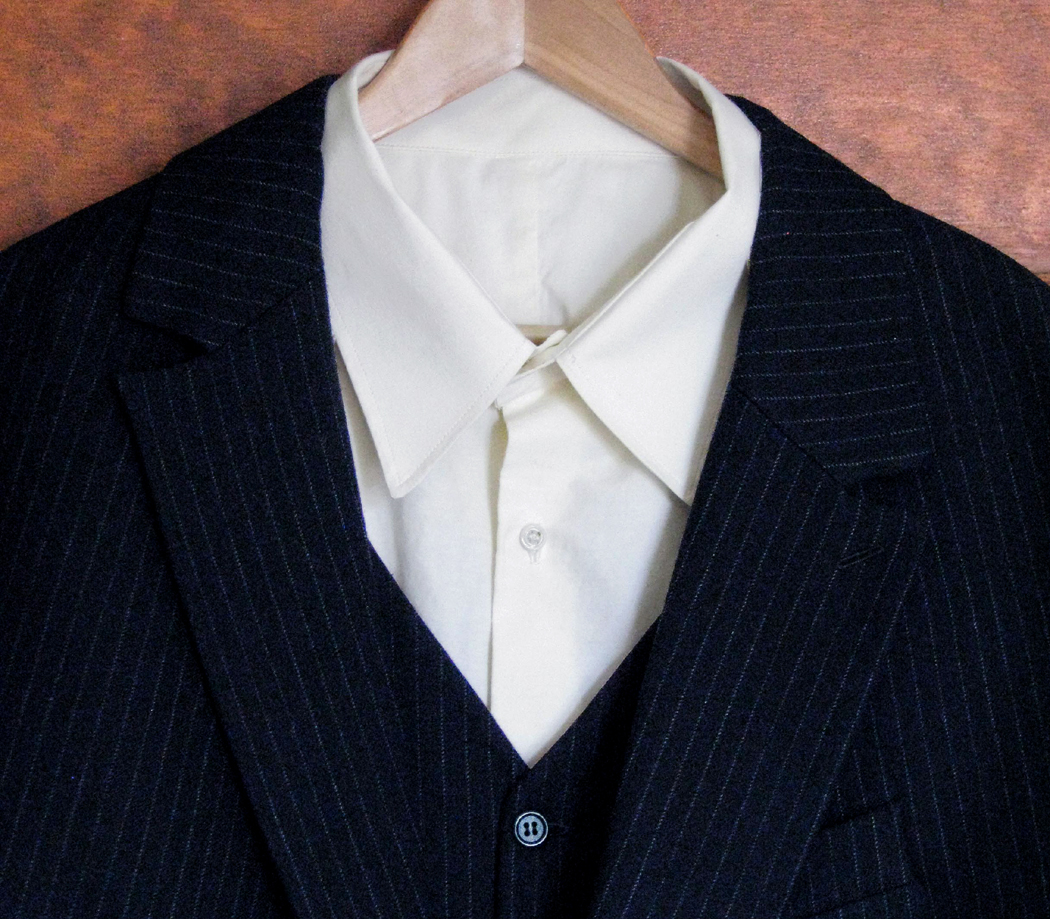
T. Baxter Frim rode to work on the subway each day, wearing a blue suit so dark it might as well have been black.

It was a heavy, wool suit, with stripes barely visible, and a vest with a watch pocket. He did not own a pocket watch; he would have thought it an affectation. The suit smelled in the rain, but he kept it neatly pressed, with  cuffs.

You might think he was reflexively conservative, but along with the suit, he never wore a hat. And this was five years before Kennedy’s hatless inauguration. Frim was ahead of the world on this one issue.

But this is not a story about the suit, but about a man who would choose to wear such a suit.

Born in Quidney, Vermont, he was trained as an accountant, but found his life’s work as an actuary for the New Haven and Manhattan Indemnity Corporation. When he was 45, he started writing poetry.

It was an unusual avocation for an actuary, perhaps, but none of his coworkers knew about it. The only one who did was his wife, Marie, and she didn’t think about it much.

He had a few pieces published, in “Garden Monthly,” the “National P.T.A. Journal,” the “Melville, Alabama, Weekly Star,” “American Steel Smelting News” and his hometown newspaper, the “Quidney, Vermont, Record.”

Other than that, he had a shoebox full of rejection notices. He kept it in the bottom of his bedroom clothes closet, and popped a new slip in every second or third month.

His life, such as it was, was happy enough. He laughed reasonably often, had a ready pun on occasion, and genuinely loved his wife. His coworkers liked him and he rose steadily, but not spectacularly, at the firm. At the age of 52, he had his own office and a secretary, who we’ll call Hazel.

Everyone who knew him called him Ted. His first name was actually Theophrastus, but Ted seemed to work better.

It was a Monday morning and Ted was crumpling paper and throwing it over his shoulder. One after the other, the rubbish collected on the floor behind his chair.

He started writing again, and wadded up the paper once more.

“It reads like it was written by a committee,” he said to himself.

He was writing his resume.

Since he had turned 50, he had felt the intestinal rumblings of hormonal change in his body. He told himself it was nothing, the way one might say, “It’s only the house settling.” Harry wanted to get out of his job, although he wasn’t sure what he wanted.

He also knew that if he ever wrote the resume the way he wanted it, he probably wouldn’t mail it anywhere.

Ted had felt something like this once before, and quashed the feeling by joining the Army. It was just before Pearl Harbor. He thought a tour in the military might show him a wider corner of the world. The recruiting officer had promised that the Army had need of accountants.

But, instead, they made him a quartermaster and sent him to Kansas.

Just before he left Vermont, he married Marie. They had met at a party at school, and he saw her at the edge of the room, with eyes like a cow’s, looking ready to drip tears. He thought she looked ineffably beautiful.

She was, in fact, in the middle of a trauma that tested everything she had been brought up to believe. She had followed her high-school sweetheart to college when he received a football scholarship. He was the star quarterback and he squired Marie around until their second year, when he came out of the closet.

“I’m queer,” he told her.

“Take some Bromo Seltzer,” she replied.

When he made her understand what he meant, she refused to believe it. She followed him around, trying to figure out how to cure him, and at the very moment Ted had spotted her at the edge of the party, she had spotted her man in a dark corner with his arms around the neck of a young sociology instructor. She could taste the metal of electricity in her tongue, and there was a ringing in her ears.

By the end of the year, she had married Ted and one of her first letters to him in Kansas said, “Great news — I’m in the family way.”

In Kansas, Ted discovered something: a 33 percent markup over wholesale made the wholesale a 25 percent discount. There was never any actual difference in the cost, but it could be like looking into opposite ends of a pair of binoculars. And it meant that when he wrote up his reports, he could use whichever figure, higher or lower, made his case sound better.

Ted had few illusions about the Army.

The Army confirmed Ted’s realism by awarding him a medal for his cost-cutting bookkeeping methods. But it didn’t hurt, he knew, that he was able to supply a certain colonel with his favorite scotch.

(Ted really got the medal, though he never knew it, for running one of the less corrupt units in the war. Officially, though, his medal was for bookkeeping.)

When the war was over, Ted was honorably discharged and returned to see his daughter and wife and take a job at NHMI Corp.

By way of footnote, his daughter will have an interesting life, herself. When she is 16, she will move in with an unpublished novelist who will never be published. At 18, she will get religion and become Presbyterian. That will last a year until she decides to go to vocational school and learn library science. By the time she is 24, she will be running the San Diego city library and all its branches. At 40, she will suffer a one-year marriage to an undertaker. At 52, she will move in with an unsellable painter, also 52. They will live happily for several years. There will be no grandchildren for Ted and Marie.

Meanwhile, T. Baxter Frim rode the subway every day down to 59th Street and walk crosstown to the office. During his lunch hour, he would eat a roast beef sandwich on a kaiser roll, drink a pint of milk and scribble verses on the back of bits of waste paper.

There are stories of businessmen making good in the poetry world, men who rose to vice president in charge of new accounts while transforming the course of English-language poetry at the same time. Ted was not one of them. His knowledge of literature, and his abilities were modest. He liked the verse of Eugene Field and Ella Wheeler Willcox. His own work tended to be sentimental and sincere, and nothing made him happier than to come across a clever rhyme.

It isn’t everyone, after all, who needs to be Ezra Pound or T.S. Eliot. Not every artist needs to be Picasso, not every musician needs to be Horowitz. There is pleasure enough in small things, performing the rituals of art and poetry, and partaking, in a tiny way, of the giant river of art. The writing was the most satisfying part of Ted’s life, aside from his love for wife and daughter.

And who is to judge Ted’s talent? Perhaps there is more honor in trying than in succeeding. Certainly, there is more satisfaction in the writing than in the having written. If it was a private pleasure, not shared with the larger reading audience, so be it.

At night, after dinner, while the rest of the family watched Red Skelton or Dinah Shore on the Emerson, Ted would transcribe his lunchtime verse and rewrite it, editing it and honing it to the best of his modest abilities.

Marie knew he wrote, but she never bothered him about it, and had never read any of it. He never offered it.

So, when he died, she was surprised by his will.

He had left a condition.

Ted had followed the normal procedures for a will. He left his estate, such as it was, to his wife, with a nice, honorable portion for his daughter.

But he had left the condition.

To quote the document verbatim, it read, “Before the aforementioned party of the first part may have possession of any of the worldly goods left by the party of the deceased part, she will have to arrange for and complete the process of the publication of all the extant rejection notices received by T. Baxter Frim during his long and industrious reign as the laureate of Quidney.”

Her lawyer told her that it wouldn’t take much to fulfill this codicil. That a small run by a vanity press would easily fulfill the requirements, and then she could take possession of the bequest.

But Marie wanted to do right by her late husband, and took the shoebox around from publisher to publisher. No one would take her seriously. Just when she thought she would have to rely on a vanity press, she got a phone call from Viking. An editor there had thought about the problem and believed he had an idea.

The editor organized the contents of the shoebox and later that year, Viking published a volume titled, “The Poet’s Alienation.” It was subtitled, “The Exploring Years, 1946-1965.”

There wasn’t much hope for the book, but Marie was clear for the money.

Then Tom Wolfe reviewed the slender volume in the “New York Review of Books.” He called it “a reflection of our age,” and sales skyrocketed.

All the college professors were discussing a newly found creative genius. The public demanded T.’s earlier writings.

Then came, “The Rainbow’s Eye,” the complete poetry of T. Baxter Frim. With it, “The Collected Letters of Baxter Frim.” Several biographies, ranging from the cheap paperback, “The Passion and the Poet,” to Dr. Everett Bonamy’s expensive hardcover, “T. Baxter Frim and the Contemporary Poetic Situation.”

Marie had many invitations to interviews for famous magazines. Even Ed Murrow called. But she refused all such requests and accidentally created a legend.

She was headlined in all the articles written about her as “the mysterious devoted martyr to the poet’s art.”

Just before she died, three years ago, Marie Frim stipulated in her will that the manuscript of the biography she had written of her late husband should be  burned. She figured that would ensure its publication. It became an instant success and sat on the “New York Times” bestseller list for 28 weeks.

And T. Baxter Frim’s daughter donated his blue wool suit to the Library of Congress.

O and E movie

I had doubts.

You don’t disturb a smooth-running bureaucracy with impunity. There are reasons for all those regulations.O and E Rodin

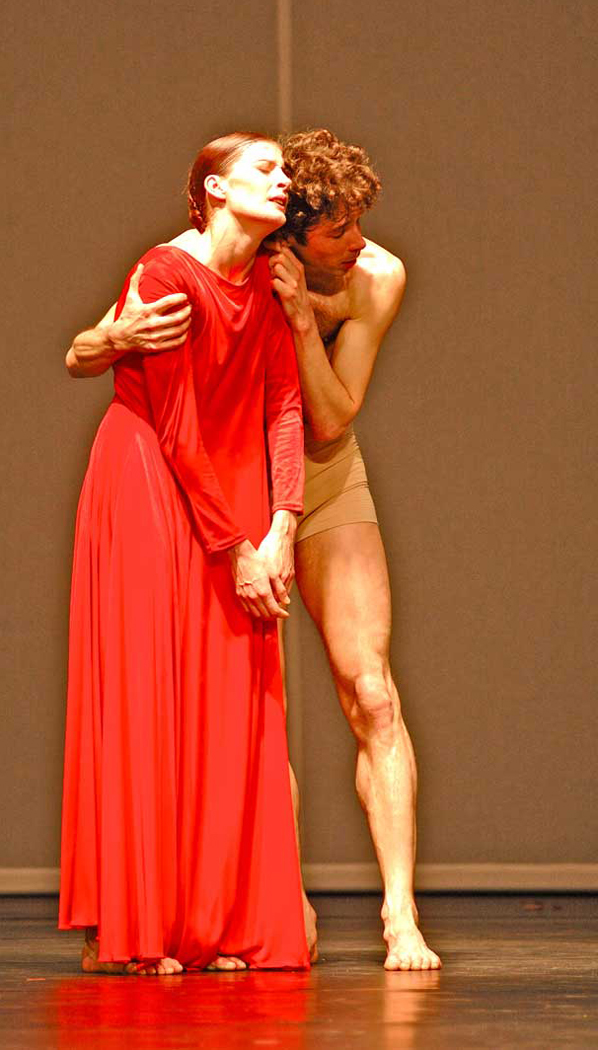
What is more, I was not unhappy down here. I was not happy, either — such words don’t mean anything here, except as memory.  To be roused by his request from the grayness was too much like being awakened on a chilly morning when you just want to stay in bed under the covers.O and E pina bausch

But there it was. He had come down here, asking to take me back.

It wasn’t that I really wanted to go. But he wanted it so much, how could I refuse him. I never could refuse him.

I remember that. Memory here is so precise, so exact, so complete.

I remember him, too, with that same clarity that no one topside can even imagine. We have the talent for memory here, but we never use it. There is no need. It is a steady state. O and E Egyptian textileNeither happy nor unhappy, neither awake nor aware. You can pass eons without ever knowing it, not that it would matter if you did.

But I remember his wide shoulders, the twin sinews behind each knee. I could never refuse him.

So, I was awakened. We did not speak. He was not allowed to look at me. Never mind: It suited the way he loved me. He never really looked at me, even when we were both able to breathe. He is thought a demigod, but he was really just a man. And like all men, he stared, but he never really looked. I know now what I didn’t know then: I know what he saw when he stared at me with such soft eyes. If you think age brings wisdom, wait till you discover death.O and E bas relief

I looked at him, though, when we were above ground, the first time —  alive. I looked at him often. He didn’t know when I watched him sleep, or watched him stringing his lyre, or feeding the horse. I could see him like he was an X-ray, all the bones and joints, but also the fevers and melodies.

You think it was the music that devoured me? No. The music was beautiful, but I could have heard the music without loving him. Anyone could have. The music was played for everyone.

No, it was that he wanted me. How many women have fallen in love because they were simply asked? And now, he wanted me again.

There is a difference between Orpheus and the rest of us. We love the living people, the fickle, feckless people we share life with. One to one. That is what our love is.

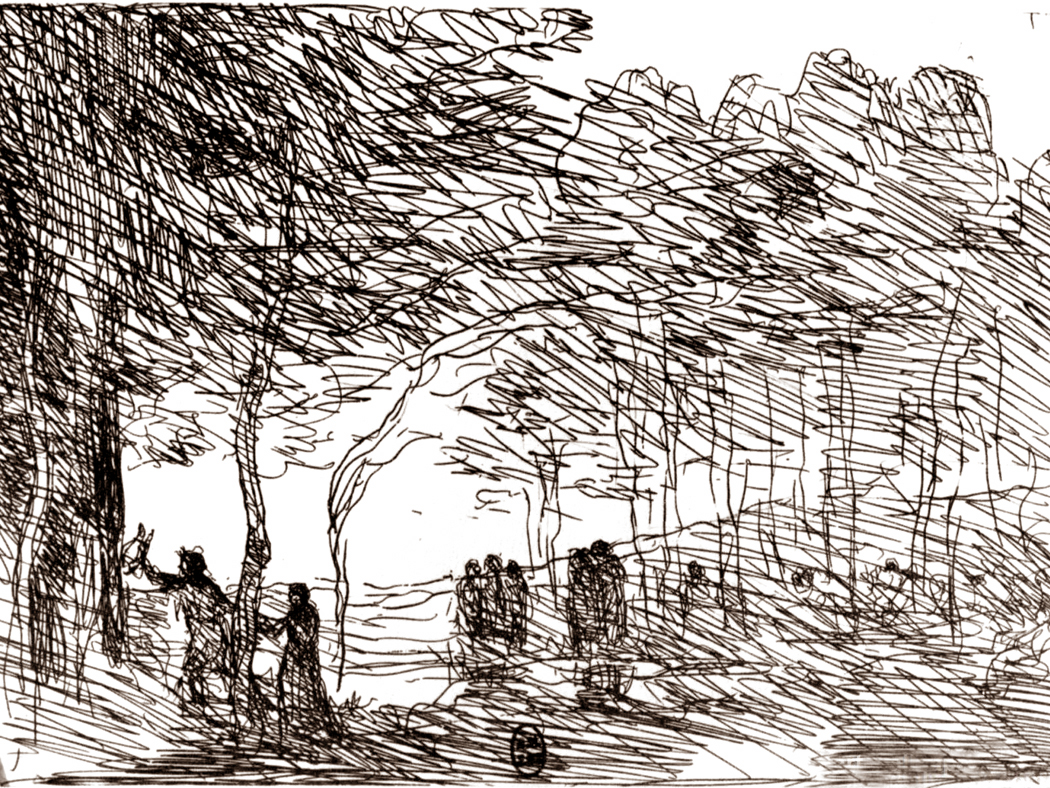
He did not love that way. No. O and E corot

Orpheus had the double vision of a four-eyed fish, half above, half below the surface, and everything he saw came in two images: O and E 35mmthe one he saw above the water, and the second he saw in his imagination. Always, the things he knew came as real and image, and the two were, for him, the same thing.

You overlook a lot in a man. You have to. It’s not forgiveness so much; it is more like learning to ignore that your clock is always running fast. You make allowances.

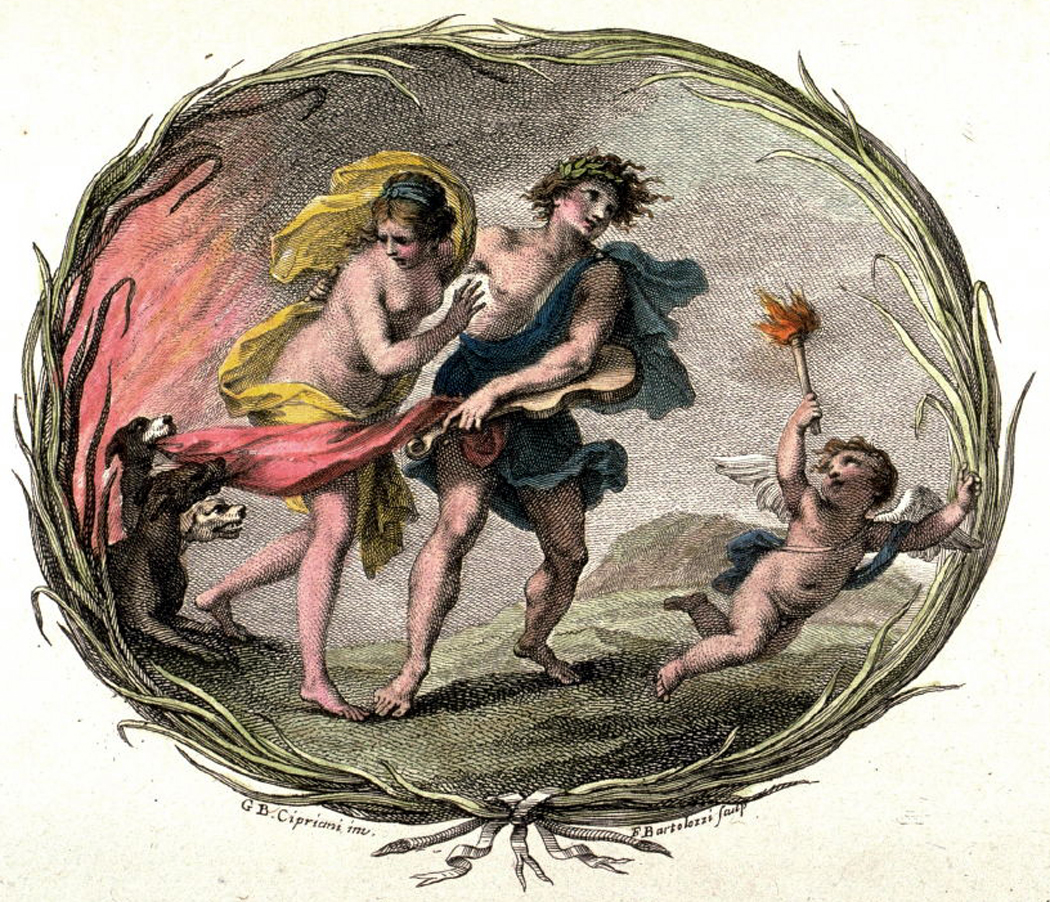
So, he came back for me. We walked up the rocky path. I saw his back, the nape of his neck under his curls. The circles of fleshfold around his elbow points. His head was haloed by the bright light at the cave entrance. When we got near the light, he reached one arm back for me to hold as we picked our way up past the boulders.O and E Bartolozzi

These memories are in focus sharper than any lens can provide, but I don’t remember them anymore.

He turned to look at me.

I could see in his eyes that double vision for the second before he disappeared, or I disappeared. It’s all the same thing.

When he had me, flesh and blood, he saw only an image of me. Now that I no longer breathed, and exist only as image, he wanted the flesh and blood. Perhaps you never really want it until you know you are losing it.O and E etching

In those eyes I could see genuine pain for losing me a second time. But I also saw a glint that told me he knew he now had a good story to tell, a new song to sing.