Archive

Uncategorized

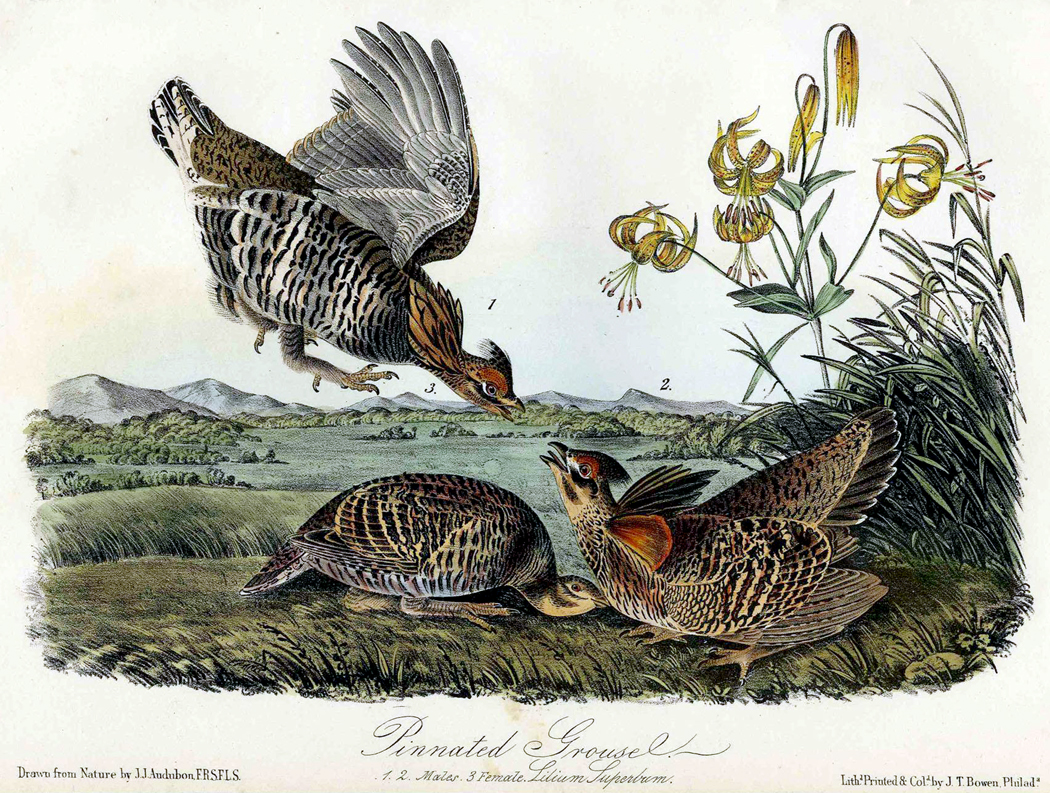
Grouse audubon
We all have lots of things to be thankful for, and a host of other writers and reporters will be checking them off for us during this week, in blogs, on Facebook, in newspaper Op-ed pages and in the closing feel-good segments of the evening news. And over the Thanksgiving turkey on the day that is the starting gun to the professional Alka-Seltzer season.

I’ve got a lot to be thankful for, too.

But I feel the gratitude has been adequately covered by the mainstream sentiments. So, I want to look at the other side: I’m such an unreconstructed contrarian that I like to find those missed opportunities, things we were never given the chance to be thankful for. honey boo boo

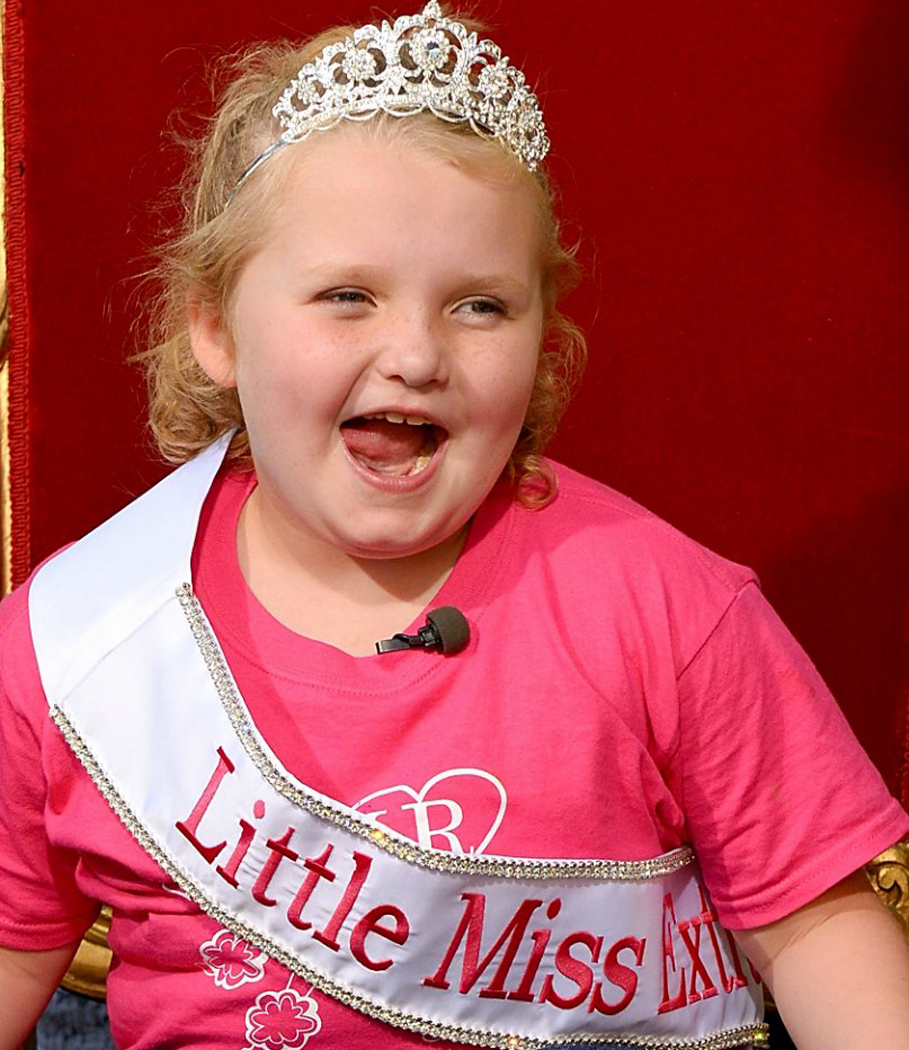
Like a TV-scape that could have been free of Honey Boo Boo, Duck Dynasty and Pawn Stars, if only wiser heads had prevailed.

Or a decision not to make a sequel to Survivor, or to keep American Idol and its clones wheezing along season after tedious season.

So I’ve made a short list of things we cannot, in all honesty, claim to be thankful for.

–Like cell phones brrrrting-out in the adagio movement of symphonies.

–Like junk mail and the tonnage of mail-order catalogs clogging the mailbox — sometimes two or three identical catalogs delivered the same day. Can they afford to be so profligate? At least they keep the recycling bin full and humming.

–Like cable TV bundling, forcing you to buy a dozen useless channels in order to get the BBC news. andrew weil

–Like pledge breaks on PBS, and its endless, insipid Yanni at the Acropolis or Andrea Bocelli “specials,” to say nothing of snake-oil salesmen giving us pep talks on vitamin supplements, nutritional fads or investment advice. Please, just ask for money and spare me the week of unwatchable TV.

–Is there anyone in the country who doesn’t find Flo’s car insurance ads cloying and smarmy?

–All those Linked-In updates from people you never heard of.

–A literal-minded Supreme Court majority
Justice Scalia testifies on Capitol Hill in Washingtoncompletely lacking in common sense. “Ars lexis,” indeed: “The law is an arse.” I can only imagine Antonin Scalia reading T.S. Eliot: “This is a lie. The man who wrote this poem was 23; he was not old and, according to photographs of the time, he did not wear the bottoms of his trousers rolled.”

–Robo-calls from political candidates and police benevolent societies. I don’t talk to machines.

–Chatty, chummy waiters who will be serving me tonight.

DON’T FORGET TOP TEN LISTS

Hmm. This list goes on: Stomach viruses, daytime talk shows; network sweeps weeks; movies based on television shows; Broadway musicals based on movies; movie versions of musicals based on movies. Then there is Sarah Palin, jokes about Palin, jokes about her trailer park progeny.
Technoweenies, Spotify, people who talk out loud during movies, small portions of cold food. brickleberry 2

And more: Twilight and its sequels, movie sequels in general, Jennifer Lawrence rumors, Jennifer Lawrence facts, baby bumps, Kim Kardashian’s steatopygia as ubiquitous as waving flags in a right-wing TV election ads.

For that matter, any election commercials. Cheaply made gross-out animation on Comedy Central. No, it’s not funny just ‘cause it farts.

Promos on local TV news pretending to be actual journalism.

The deluge of so-called news stories that begin “5 things you didn’t know about …” I didn’t need to know.

How about celebrity non-singers who pulverize the national anthem at sporting events?

All that spitting and scratching during the World Series.

Hundreds of cable channels available and still nothing worth watching. prince harry

And there are too many Kardashians. Do they multiply like tribbles?

A short list of other celebrities for whom I am not grateful: Prince Harry and his ginger nethers; Kristin Stewart and her sullen pout; Miley Cyrus and her tattoos; Amanda Bynes and her ilk; Taylor Swift and her break-ups;   Chris Hemsworth and his hair; Le Bron James and his self-esteem.

I’m sure you have your own list, but I’m sure it includes Adam Sandler.

DAY OF DISCONTENT

So for all this — most of which can keep a curmudgeon in fruitful dudgeon for a year — I am suggesting that we create a new national holiday.

We have a national day of thanksgiving the fourth Thursday of November, so why not a national day of remonstrance the fourth Wednesday?

After all, All-Saints Day is preceded by its opposite, Halloween, so why shouldn’t Thanksgiving be ushered in with a day of sour apples and vinegar? Instead of turkey, we could eat grouse.

We could have the bellyaching over with even before we start over-eating turkey and stuffing.

It could be a national day to celebrate all the politicians we’ve elected. I can’t think of a more appropriate day unless it is April 15.lewis black

Lewis Black could be spokesman.

It would be a day we would all eat sauerkraut and wear tight shorts, a day to give the lie to ideas of ”peace on Earth, goodwill toward men.”

The holiday would be called the Day of Discontent, but more informally, we could call it Kvetchmas. And even more than Thanksgiving, it would make the appropriate beginning to the holiday commercial frenzy.

Of course one of the complaints celebrated during Kvetchmas would be the proliferation of spurious holidays.

BSO
It’s odd, considering how old much of it is, that classical music is so recent an invention.

We think of classical music as being longhair music written by dead White guys. But, in fact, Mozart didn’t know he was writing classical music. He was just writing music.

“There’s only two kinds of music: good and bad,” jazz icon Duke Ellington said. (Mozart is in the first group.)

Bu something changed over the centuries: As mass audiences grew to like popular music, the kind of music written by the older composers was relegated to a new category: classical.

“Classical music is the kind we keep thinking will turn into a tune,” humorist Kin Hubbard wrote in the 1920s.bugs plays piano

And, increasingly, audiences diverged; one group went to the dance halls, the other to the concert halls. Classical music became marginalized, especially in American culture. It became a target for the Three Stooges and Bugs Bunny.

Yet a hunger for music that addresses larger and more complex issues has always existed alongside fiddle tunes. Even in the world of rock music, some music is understood to be more important than others. Radiohead has serious fans that would look down their noses at, say, Justin Bieber.

The distinction should be made, not so much between classical and pop musics, but between music created primarily as an entertainment and music that attempts to express more profound human issues.

There’s nothing wrong with entertainment. We all love a good song. But it isn’t the only thing there is. And we should not judge the one by the standards of the other.

Everyone knows what to listen for in popular music. They have a lifetime of dealing with it. The beat, the tune, the words, the instant gratification.

Rock music now has the “wow” factor, the light and spectacle. And now that’s what people expect, to be bowled over emotionally, to get their juices pumping.

Classical music is emotional, too, but it’s more interior and subtle. And it’s dramatic in ways audiences just aren’t familiar with anymore.

Drama is the key word: Like a play or a film, classical music deals with multiple characters (called themes) as they interact over time, and where you start isn’t where you end. Like I’ve written before: Classical music is movies for the ear.

Popular music is a place; classical music is a journey.

Listen to Mahler and one movement may take 45 minutes. But there are so many ideas juxtaposed in so many different ways that your mind starts spinning. You connect A to B and then A to C and then C to F. It’s all interacting in different ways.

You have to come to the concert hall prepared for that journey. You have to come equipped.

There are five important ways classical music differs from pop.

* Its length.

Classical music is almost always longer, In-a-Gadda-Da-Vida notwithstanding. Pop music may be likened to music videos, classical to a full-length feature. The plot takes longer to develop.

* Its dependence on harmony both structurally and expressively.

A sonata is built on D-major or F-minor, and the elaborate and subtle changes in harmony are both the structural and expressive content of classical music. You don’t need to know the name, but you feel the changes of harmony in your chest, physically.

* Its reliance on variety and contrast.

Unlike pop, which sustains a single clear mood, classical moves constantly, now fast, now slow; now loud, now a whisper. It seldom keeps a single mood for long, but asks you to compare and contrast.

* Its multiple simultaneous voices, or counterpoint.
Fugue

Whether it’s a fugue or a quartet, there almost always is more than one thing going on at any given moment. You have to be able to hear two or more things at once.

* And finally, on the importance of “active listening.”

That is, the importance of paying attention and following ideas as they change and develop through the course of the piece.

Memory is the important part. You need to have a musical memory of some kind to distinguish between what happened before and what happens now.

You have to pay attention, the way you would when reading a novel, keeping track of what’s happening to Raskolnikov at any given time and how he changes over time.

Of all these things, harmony is the hardest to discuss in words. There is no non-musical language to express the modulation from D-major to A-flat. You have to hear it.

Or you try to describe it in words that can’t possibly mean anything to a non-musician: An enharmonic shift, followed by a run around the circle of fifths. How about the Neapolitan relationship? Does that mean anything to you? Didn’t think so. But you can hear it without naming it. Like the way you can hear the “changes” in 12-bar blues. You can feel when the phrase starts anew, with each round of chord changes.Brahms Fourth

It’s only more extreme when you follow the same kind of repeating chord changes in the finale of Brahms’ Fourth Symphony: You feel the drive of those harmonies racing to the finish line.

Harmony is the emotional effect created by playing several notes at once as a single idea. It also is the movement from one set of notes to another, and the emotional effect created by that shift.

Western music has the idea of expectation and release in it. Play a dominant-seventh chord and then try to stop. You can’t do it comfortably. You have to have it resolve.

Harmony, more than rhythm, provides the forward motion of classical music.

Of course, pop and classical aren’t mutually exclusive genres. It’s more of a spectrum of intent: There is pop that tackles serious issues and there is classical music meant merely to entertain.

And there are many classical musics from around the world: Indian, Chinese — and for many of us, American jazz — are classical musics. They all tend to be longer and more complex than the popular music from those same cultures.

Classical music isn’t only music with violins and oboes. It can be made with synthesizers or electric guitars, as any fan of Philip Glass or Steve Reich knows. Classical is not a style but an approach; not a sound but a way of thinking about music and what music means.

If all this makes classical music sound like work, well, it is. It requires more from the listener. But there is a reward for all the effort you put in.

It reaches depths of our souls that everyday music just doesn’t.

And it satisfies the hunger that poet William Carlos Williams defined: something that is difficult, but “men die miserably every day for lack of what is found there.”

Popular music deals with thoughts and emotions that are understood and already defined; classical attempts to understand things that we don’t yet fully grasp: the big questions of life and existence that don’t have simple answers.

Like all fine art, it seeks rather than finds, it defines questions rather than provides answers.

It’s a richer experience, and some people gravitate into it with age and maturity. People can graduate from pop to classical music, but it seldom happens the other way round.

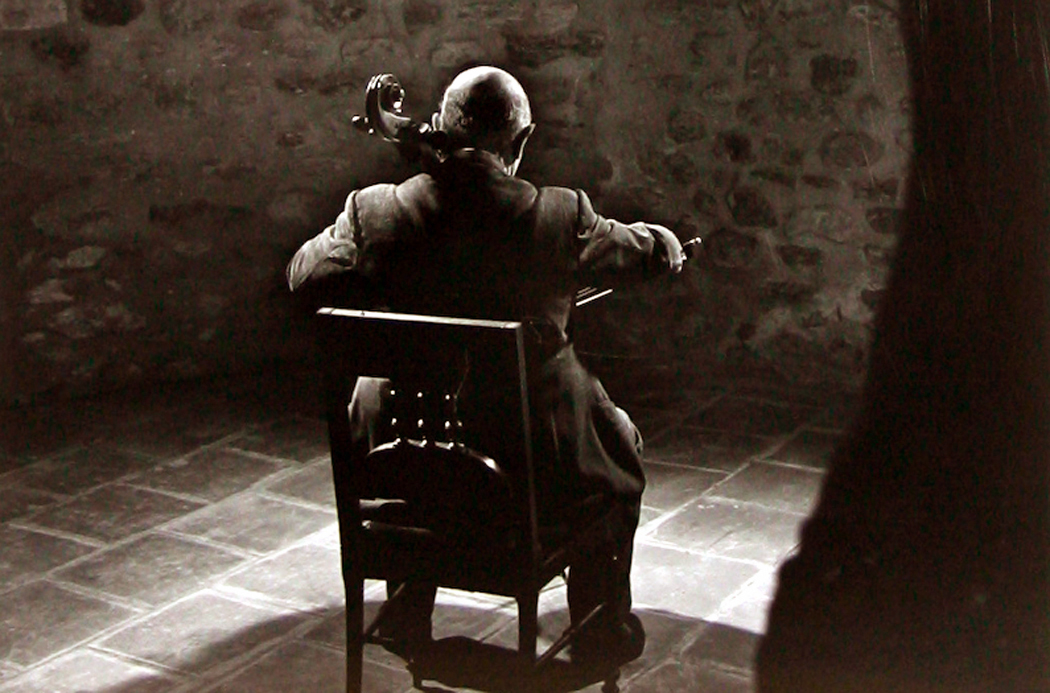
casals
What is classical music?

It can be hard to pin down. Many have tried to define it; certainly, they believe they can know it when they hear it. But the outlines of what we define as classical music are unhelpfully squishy.

Is it merely European aristocratic music from the 18th through the 20th centuries? Certainly the audience for Mozart’s Magic Flute wasn’t aristocratic. And Italy’s appetite for opera is wider than the upper crust.

Is it orchestral music? Not if we count Bach’s suites for unaccompanied cello. Is it instrumental? Not if we count the masses of Palestrina.

It is often called “art music,” as if music in other forms could not aspire to the condition of art. Tell that to Frank Zappa. And frankly, much of the music played in concert halls was never intended to be more than entertainment, albeit of a refined order. Not everything is the St. Matthew Passion; some of it is just Skater’s Waltz.

To look at what we call classical music, we should consider: What is the central question of classical music? That is, what question does classical music answer?

And by that, I mean not only European classical music, but all those around the world, from Indian ragas to Chinese opera.

The question is so banal as almost never to be asked. What is the central question to all classical musics?

It is this:

“How do you make a piece of music last more than three minutes?”

Popular music consists of songs, and, in our culture at least, that means a 32-bar song that you can repeat over and over. But imagine listening to Memories repeated for half an hour and imagine the tedium. It would be my substitute for pistol and ball.

Whether it’s folk songs or rock and roll, the idea is to get in and out quickly, establish a mood and then finish it off.

Yes, there are exceptions in popular music, from In-a-Gadda-Da-Vida to Duke Ellington’s Reminiscing in Tempo, but a case can be made that they are “classical musics,” also.

When we ask the first question, a second question arises immediately:

“Why should a piece of music last more than three minutes?”

And it is here that we come to the difference between popular and classical musics: the difference between simple mood and complex emotional developments. Between a New Yorker cartoon and a Tolstoy novel. cartoonA song gives us a passing mood, seldom offering any narrative complexity (it may offer psychological complexity and even complexities of melody or key structure, and a great song usually has something of this). But a symphony, like a play or a movie, starts in one place and takes us on a journey, leaving us someplace else at the end.

The time spent allows for not just complex emotions, but a sequence of emotions that interact.

You can think of it this way: Classical music is movies for the ear. There are characters, there is development, there is a plot and plot twists. Fight scenes and love scenes, perhaps a mystery, perhaps a road trip.

It presents ideas in time in a way that makes sense to an audience listening for them.cellar 1

Most young filmgoers know the habits of filmmakers so well, for instance, that their expectations become part of the appreciation of the film: They know what to expect when the teenager opens the cellar door and goes down to the dark to investigate that funny noise, and they are delighted if the filmmaker does something fresh and new and upsets their expectation with a surprise.

Classical audiences also know what to expect and are delighted when a composer takes a left turn and expresses a new way to think about it.

It is often thought there is special, arcane knowledge required to enjoy classical music. And, of course, there is a lot of specialized language. There is with films, too — key grip, D.P., fade, dissolve, two-shot — but you don’t need to know any of them to enjoy a film. It is the same with symphonies or sonatas.

It isn’t the words that matter, but the sounds. You don’t need to know the words to enjoy the music.

These are words about wordless things.?????????????????????????????????????????????????????????????????????????????????????

When you see a gun being put in a desk drawer in the first half of a movie, you know instinctively that it will be used in the second half.

When Beethoven’s audience heard C-major sneak into the first three movements of his C-minor symphony, they knew it would come out blazing in the finale: They waited in suspense to hear how he would do it.

This is the appeal of classical music for its audiences.

This isn’t something technical only a musician would know. “Major” and “minor” are simply words: It is the emotional shift that matters, from the tight, constricted, frustrating feel of the opening of the symphony to the ecstatic release of the ending. It is an emotional journey, and one that you could not accomplish in a simple song.

It’s also part of what distinguishes classical music from its popular cousin. Popular music is like a commercial: short, punchy, memorable; classical music is like a novel: long, involved and with many characters and a slowly achieved resolution.

None of this is meant to denigrate popular music or songs. I love a good tune as much as the next person. But popular and classical musics are attempting very different things.

You couldn’t pack all of Indiana Jones into a three-minute trailier.

In the 1970s and early ’80s, pulp writer Mickey Spillane wrote a couple of children’s books. As a fan of his Mike Hammer novels — or rather of their Baroque lowlife verbal stylishness (I once called him a first-rate second-rate writer)– I had a hard time imagining what such a children’s book might be like. Perhaps a one-eyed cat as his hero … 

thunderpaws

THE LONG MEOW

Being the lost manuscript of a children’s story

by Mickey Spillane.

Suitable for grades K-3

His brakes squealed to a hot rubber stop and Thunderpaws let a little curse escape like steam from a pressure cooker.

“Damn hot number waving her arms in the road.”

Paws had been planning on his vacation for nearly a year. He had rented a beach house and planned to sun himself every day and drink himself silly every night. And now this.

It was after midnight, but there in the middle of the road was this silky dame waving her arms and screaming for him to stop. She ran up to his door and as he rolled down the window to bitch at her, she spit out, “Help me! I’m being followed. I’ve got to get out of here. You’re my only hope.”

“What in the dingbat are you doing screaming in the road like that? I almost cashed in my catnip swerving.”

“Will you drive me to LA?”

“Look, Wonderface, I’m going north. If you want to go to LA, why don’t you try to wreck someone going the other way?”

“You’re a good looking cat. Maybe there’s something in it for you. Why don’t you turn around?” she said, stroking the curly whiskers that grew from his face. He hadn’t shaved for a week.

“OK, get in. But I don’t want to know anything about your problem. Keep it sealed between those gorgeous lips, huh?”

Paws slammed the stick into reverse and arced the tires across the pavement, then whammed the shift up and sped off toward the city of sin, sharing the front seat with the best looking pair of pairs of legs he’d ever seen.

Thunderpaws was a round, orange cat, who had grown up on the wrong side of the tracks. He learned the bitter laws of the sidewalk even before he was weaned. By the time he reached his adolescence, he was tough enough to scratch the hide off any boxer or German shepherd that dare cross him. But he also grew up with a strong sense of right and wrong. And he knew, somehow, that it was wrong to pick up this midnight hitchhiker. He felt it in his bones.

“What’s your name?” he asked. “Want a cigarette?”

“Thanks. Tabitha.” Paws reached into his glove compartment and yanked out a pack of Camels. he shook the pack and Tabitha reached for one of the tarsticks.

“Where are you trying to get in LA?” he asked, holding the wheel with his elbows as he struck a match to light her up. The lighter in his old jalopy had gone out the window years ago in a fight with his ex-wife.

“The dog pound.”

“The pound?” He tried not to seem too inquisitive, but he suspected already.

“Yeah, the pound.” She seemed hesitant to let on any more and to change the direction of the conversation, she reached over and stroked his shoulder, sending Richter-scale vibrations up and down his hard-boiled spine.

“Don’t do that, baby, unless you mean business.”

“Business is just what I had in mind.”

2

Paws reached his office early the next day. For him, early was anytime before the bars opened.

“What are you doing here today?” asked Arlene, his secretary. “I thought you left for your vacation yesterday.”

Her fingernails were red and drying in the air in front of her face. She chewed gum.

“I got turned around in the night.”

“She must be a looker. I see the gleam in your eye.”

Thunderpaws had only one eye. His left eye he gave to a collie in a brawl many years before. The one eye that looked out seemed all the more aware for its being singular. And this morning, it did gleam.

“She was all right. Look I’m leaving again this morning, but I want you to keep your ears cocked for any strange news from the city pound. I have a hunch something stinks down there and I want to get my nose in it.”

“But your vacation. You’ve been working so hard. Even a private eye has to unwind his springs now and then.”

“You know the number at the beach. Call if anything comes up.”

3

Two days later, Paws had just come in from the beach when the phone in his one-and-a-half room beach house drilled a message into his ears. He gave his hair one last tussle with the towel and picked up the receiver.

“Paws here … yeah … OK … Tell her not to worry, and, Arlene, doll, try to keep her from freaking. I’ll be back in  a couple of hours.”

He dropped the phone back on its cradle and smiled the smile of the self-satisfied gumshoe. He knew he would hear from Tabitha once more, and he knew he now had a chance to clean things up down at the pound. Stories of corruption had been circling the city like berserk buzzards and now they were coming home to roost.

He packed up everything in a few seconds by stuffing his bottle of bourbon in his pocket and leaped into his rusty Ford. He licked his hand and straightened an eyebrow with it and eased through the gears up the coast and back toward the city.

While he sat at a stoplight in Santa Monica, thinking of ways to get to the commissioner, he noticed a huge purple Cadillac purring in the next lane. In the passenger seat was a tortoise-shell with a cigar between his grinning teeth and dressed in double-breasted pinstripes. The grinner reached under his lapel and yanked something out.  All Paws saw was the flash.

The light changed and the Caddy blasted away; the cars behind him honked, but Paws wasn’t going anywhere, at least not on his own.

4

Arlene waited three hours, then four.  In the inner office, Tabitha was crying her eyes out, muttering phrases that Arlene couldn’t make out. When five hours came and went, she started calling around.

At the 15th call, she heard from Sgt. O’Roarke of the city police that a pudgy orange cat with one eye and a stub tail had been wounded by unknown assailants and was at Mount Cyanide Hospital.

When she got there, Paws looked up from his bed.

“Hell of a vacation,” he said.

“I found out a few choice items,” said Arlene, pulling an evil-looking notebook from under her coat. “Tabitha is mixed up in this deeper than you thought. Do you know who her husband is?”

“Are you Monty Hall? Quit the game show, Arlene. Spill it.”

“Tabitha is married to Commissioner Gramalkin of the dog pound. Before that, she was married to the Fat Man …”

“Fat Man, huh? this is beginning to shape up. She’s a cobra, all right.”

“It’s more than that,” continued Arlene, with an obvious grin of satisfaction. “She has had affairs with at least 15 other men …”

“Sixteen.”

“… and one of them was Deputy Mayor Fido.”

“Fido! Gramalkin’s worst enemy. That could explain the payoff scheme at the rabies center. Arlene, this gets deeper with every sentence. Got any more?”

“This is the clincher. Fido and the Fat Man have opened up a burger stand on the corner of Vine and Alameda. They are business partners and the only thing they have in common is Tabitha.”

“The lowest common denominator.”

5

One week later, out of the hospital, but with his ass in a sling, Thunderwonder cruised down for a bite to eat.  The joint was called Sam ’n’ Ella’s, and the hash was the usual nondescript salty muck. Behind the counter was an ex-Marine with a half-inch butt smoking in the corner of his mouth. His apron could have been the apron of a grocer; his eyes could have been the eyes of a butcher.

“What’ll you have, Bud?”

“What do you recommend?”

“Hey, we got a comedian,” spat the mug to no one in particular.

“I’ve come looking for information,” said Paws, shifting his one eye back and forth.

“We don’t like nosy cats around here. Noses were meant to be snipped short.” He shifted the butt to the other corner of this mouth and made a scissors gesture in front of his schnoz.

“If it’s good information, this is a good sawbuck.”

The counterman’s nostrils flared and the ghost of a smile or a sneer lit over his mouth.

“What I want to know is, where does your meat come from?”

“You the law?”

“Lieutenant Donahue doesn’t think so.”

“What’s your angle, Pal? If I give you the straight poop, I want to know this bill ain’t marked for some copper.”

“I’m Thunderpaws, the detective …”

“Never heard of you.”

“Well, I’m in the Yellow Pages; you can look it up. And I’m working on a divorce case. It’s important to find out where you get your hamburger.”

“Whose divorce?”

“Tabitha Gramalkin.”

The thug look thunderstruck. A tear ran down his cheek.

“Tabitha,” he whispered. “She was good to me.”

“She’s been good to a lot of men,” whipped out Paws, snidely.

“You watch what you say, Buster. She’s my daughter.” A threat assembled on his face. “She was always good to me, sending me money and getting me this job. If she hadn’t married well and sent me a monthly check, I never would have kicked the booze and I’d still be rotting in the Old Sailors’ Home eating cheap labskaus.”

“It’s true then,” said Paws. “The meat you serve comes straight from the city pound. No wonder you burgers are so cheap. Tell me, are we eating poodle or collie today? And Tabitha is mixed up in this to her twitching little ears. I hate to be the one to break the news, but she is going to have to take the fall.”

“Ain’t there some other way? She’s all I got.”

6

Paws had just dozed off that night when he heard a quiet rap on his door. He reached under his pillow and pulled out a blue piece of steel and yanked back the action. He opened the door cautiously and found the feline Lilith.

“Can I come in?” Tabitha winked her eye.

Paws put the pistol down on a pile of laundry resting near the TV and unhooked the chain on the door.

“I know you ain’t here to borrow a cup of sugar, Sweetwhiskers. What are you hatching in that devious skull of yours?”

“The grand jury is after me and I have to get out of town. I know you have a car.”

“I’m not a fool.”

“Maybe not, but this talks loud.” She grabbed the Baretta from the laundry and aimed it at his favorite body parts.

“I’m not a fool, but I get your point. Put that thing away, please.” Paws had never trusted a woman with a gun. They can go off. And the gun can, too. Dangerous.

“Where are we going?” asked Paws.

“Anywhere,” she answered. “You brought down my husband, you put my hash stand out of business, you poisoned me to my father. I have nowhere to go. You decide.”

“If it was up to me, I’d send you for a long vacation in the Big House, but you’ve got the upper hand right now.”

Paws didn’t want to admit how much he was moved by those big, sexy green eyes. He meant for her to take the fall, but he, himself, had fallen.

“Look, Sugar, why don’t we zip on down to Tijuana?”

“Why don’t we go in the morning,” she said, zipping down her skirt.

7

By the next night, they found themselves in a seedy hotel on a sidestreet just outside Tijuana. Paws stretched back in the bed and reached for his tequila.

“This joint has more roaches than a national convention of NORML,” said Paws, unscrewing the cap and pouring the spicy sauce over the dust-filled icecubes the concierge had brought.

“We can stay here tonight, but tomorrow, we’ve got to find someplace else.”

“Don’t worry,” called out Tabitha from the next room. I know a great place to go, but it means more driving.”

“How much?”

“How far is Puerto Penasco from here?”

“Another day’s drive, if there are any roads.”

“There is someone there I know who will meet us.” Tabitha finished brushing her teeth and came towards Thunderpaws with a smile only a cat understands.

8

Paws turned his wheel around the last rocky turn and looked out over the bluff and Puerto Penasco. He saw a small town, a mere pencil line around the bight of the bay. He could see the blue waters of the Sea of Cortez and he smelled the fresh salt air. The white buildings glared in the sun and the few paved streets were the only dark lines through the brightness that was everywhere.

Tabitha had been there before and guided him through the streets to a small restaurant across from an Esso station. On what might have been a sidewalk in front of the eatery were 15 or so round tables, each with a striped umbrella for shade. in the shade of one of them, Paws thought he recognized a smiling face. It was Arlene.

“I hate to be the one to break the news to you this way,” she said as Paws and Tabitha slid their chairs toward the table.

“News? What news?” asked Paws. He saw Tabitha nervously shift her eyes and try to smile. Arlene reached for Tabitha’s slender paw and they held on to each other from across the table.

“It all happened on that one day when you were blasted from the Caddy,” said Arlene. “While you were being driven to the hospital, Tabitha was crying in your office and I went in to comfort her. Don’t blame her. It was me who did the seducing.”

“What are you trying to tell me?” Paws winced. “Are you telling me that  you’re a flaming …?” He couldn’t bring himself to say the word. Paws hadn’t been shocked when his own mother had turned out to be the mastermind of a counterfeiting ring. He turned her in calmly. But he was shocked at this.

“Tabitha?” he mewed in puzzlement and pain. “What about last night? All those things you said.”

“They were true.”

“But you were thinking of Arlene?”

“Not all the time. I’m attracted to you. But I feel a sympathy with Arlene I never felt with a man. Net even with the Fat Man.” She lit up a cigarette and waited for Paws’ reaction.

He gathered up the shards of his self-esteem and tied them in a bundle. “I hope you two will be happy.”

They broke out laughing. The string broke on the bundle.

“Don’t be silly,” said Tabitha. “We want you, too. There’s room for you in our plan. For one thing, we couldn’t live in a country as Catholic as this just by ourselves. People would talk. Won’t you stay?”

“Living French in Mexico, eh?” said Paws. “A great big happy AC/DC family.”

Tabitha flashed her eyes at him. He looked at Arlene and his stomach tightened.

“OK,” he decided, knowing he didn’t know what he was doing.

“Arlene and I have this plan. Can you cook?” asked Tabitha.

“Hell, I ain’t playing housemaid for a couple of dykes.”

“Just listen a minute,” she continued. “I mean can you cook in a restaurant? Arlene and I want to open up a taco stand here. I mean, here we are in Mexico and all they serve is fish and rice. These people have never had real Mexican cooking. A taco stand down by the market is bound to rake in the pesos. Can you cook?”

Paws was beginning to catch on. He remembered the passel of information Arlene had mysteriously turned up when he couldn’t get to first base on the case. He remembered Tabitha’s father wiping his grimy hands on the apron and shifting his cigarette butt from corner to corner in his cynical mouth. He remembered the riptide of corruption that had nearly drowned him when he tried to ferret out the truth about Deputy Mayor Fido. His stomach tightened even further.”

“OK. I’ll go down tomorrow and check out the city pound,” he said.

soulful stars and bars 6

There is a solution to the problem of the Confederate battle flag hanging over various Southern state capitols, a solution so simple and pure that I cannot understand why no one seems to have thought of it before now.

The problem is that the battle flag, which blazons the Mississippi state flag, and until recently was part of the Georgia state flag and was hung atop the South Carolina state house along with its state flag, is seen by a sizable portion of the Southern population as a symbol of slavery and White supremacy. They do not want it hanging over their state houses. They take deep and honestly earned offense at the idea.

Yet another faction declares that they are not honoring slavery or Jim Crow with the flag, but the memory of their dear, departed ancestors, who fought so valiantly for the noble lost cause. Their defense of the flag seems not a little disingenuous, considering that the flag in question wasn’t added to the state flags until the strife-torn Civil Rights era, and then as a symbol of defiant segregation. The Georgia flag dates from 1956, and the South Carolina practice of flying the flag began in 1962.

But let that be: If it is indeed their heritage and not their intransigence that is celebrated with the battle flag, then I propose a compromise sure to make both sides equally happy and unhappy:

Surely the heritage they celebrate has to include the African-American population that was essential to the economy and culture the flag partisans honor.

So, allow the flag to be displayed, but portray it, instead of its normal colors of red, white and blue, the “soulful colors” of green, black and red.

The vexillological problem in the design is that these three colors don’t provide a lot of contrast from light to dark. And since green and red are complimentary colors, if they are placed side by side, they jar the eye, so, my design solution is to spread them out, with white borders between, separating the colors.

The soul of compromise.

Dog and cat battle dan kincaidDrawing by Dan Kincaid


“It’s Je-Ne-Vee-Ev, not Jeneveev,” said Stuart, introducing his live-in, Genevieve, the viola player. She is 50-ish, stylish and thin, with a shock of white in her hair, like Susan Sontag. She was born in Belgium and takes the same offense as Hercule Poirot for being assumed French. She has a throaty voice in the same register as her viola, although her instrument probably didn’t spend a lifetime smoking unfiltered cigarettes.

We were having dinner, the four of us: Stuart and Genevieve and my wife and me. Stuart did the cooking; Genevieve poured the wine. And oh, how a little Beaujolais can get Stuart talking.

“It has been said that there are two kinds of people in the world: those who divide the world into two kinds of people and those who do not. But I’ve never met any of those.”

And Stuart was off to the races.

“Everybody and his brother-in-law splits the world into two categories: male and female; conservative and liberal; Gene Autry fan and Roy Rogers fan; those who get it, and those who don’t.”yeats

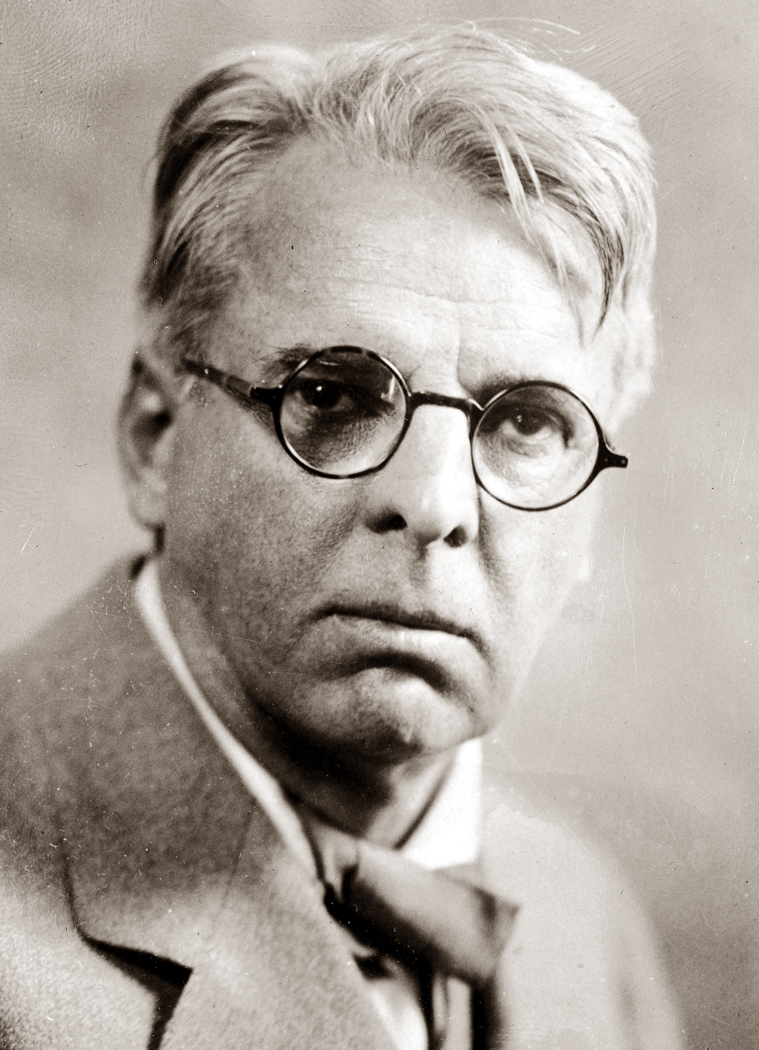
Stuart had just finished reading A Vision by William Butler Yeats. Stuart had an epiphany, he said.

“Yeats divides human personalities up into 28 ‘phases,’ like the phases of the moon. It’s really brilliant, if a little loony. Ideally, there is no Phase 1 or Phase 15 — the first and middle phase of the moon’s monthly round of waxing and waning: The new and full moons; these are too pure and unmixed to exist in the real world. But all the phases are defined by their ‘tinctures’ of two essential personality engines, which Yeats calls the ‘primary’ and the ‘antithetical.’ Simply put, the lumpy and the poetic.

“He gets quite lawyerly in parsing the bits. And I had this vision of my own, although it is somewhat simpler to understand.vision phases

“It is that underlying every other distinction is this basic, fundamental one: between dog and cat. You can have your phases of the moon, but really, but all those personalities are either canine or feline.”

“You mean, like a dog-person or a cat-person?” my wife asked. “I’m a cat person; we gotta have cats around the house.”

“No,” said Stuart, “not a question of which animals you prefer as pets, but rather, which you are in your cor cordium, your self of selves. We are all one or the other. You can see it in the faces of everyone around you.

“But it goes beyond people. As I now see it, every animate being on the planet is one or the other.

“They are opposed personality types. They function in the world differently and see the world differently.

“For the dog, the world is essentially simple. Truth is truth, up is up and down is down. The dog has a direct relationship with the things of the world: They are what they are.

“A cat, on the other hand, sees the world metaphorically. Things may be what they seem, but are never only what they seem. They can mean one thing Monday, and something entirely different on Tuesday.

“When dogs read poetry, they like to read, ‘what oft was thought, but ne’er so well expressed.’ They can be scholars and critics, and they can be quite discerning and bastions of good taste, but their world view is essentially single-tracked. Their vision is clear, if not very imaginative. Their word is their honor and they have 30-year mortgages.woman in the dunes

“Cats love Japanese movies with subtitles and long shots of shifting sands. Dogs like Adam Sandler and Kristin Stewart.

“Cats enjoy the jostle of ideas. Dogs talk about wines.

“You may think I’m tipping the scales in favor of cats, but that is only because I am one. There is downside to either class, and dogs really are important for the continued functioning of the society that makes cats’ lives possible.

“Cats never decide on a college major and fritter away their parents’ money taking courses in Incan pottery and creative writing. Dogs stick to their curriculum and go to Career Days.

“Dogs become Eagle Scouts and join the Rotary Club. Dogs dream of a house in Syosset and a Bill Jr. to take to the zoo. Cats dream of pirates, scoundrels, military heroes and Tamerlane.

“There are many kinds of dogs in the world. Some are bureaucrats and some, the more stylish, wear whatever is touted in Esquire. Hell, the Playboy Advisor was written for them. Some are noble and become doctors or missionaries; others bring my slippers at day’s end.

“It is plain, especially to dogs, that the world functions only because of them. And truly, we couldn’t do without them.

“But cats have eyes that change as the moon changes. They live by their own rules and amend them as their mood shifts. They are filled with prevarication and treachery. Their minds shuffle like a gambler’s deck of cards and we never know what face will show, or what suit. ‘Spades and Diamonds, Courage and Power; Clubs and Hearts, Knowledge and Pleasure.’

“When it comes to poetry, cats often prefer to write their own.”

Stuart noted that my wife writes poetry. He explained that cats don’t only write bad poetry, but rather, all poetry, no matter what the quality.

“Well, there are exceptions,” he admitted. “Edgar A. Guest and Ella Wheeler Wilcox are woof-woofs. But you get the gist.”rust sings

(My wife’s poetry has been published in a book, called Rust Sings. I recommend it.)

“There can be little meaningful dialog between the dog and the cat,” Stuart continued, “because they mean different things when they use the same words.

“This frustrates the dog no end; he cannot pin the cat down, while the cat delights in the ambiguity, and will even do what he can to amplify it.

“Dogs are trustworthy. A dog will be on time; a cat will be late, cancel or forget.

“A dog joins the Rotarians; a cat never does, unless he can use his membership toward the end of world domination, or something else he thinks might be fun.

“Among women, cats can wear too much eye makeup; dogs put too much mousse in their hair, like a TV news anchor. The difference is total and complete.

“For instance, a dog can certainly be selfish, but it takes a cat to be egocentric. A telling difference.

“Dogs have faith in the basic goodness of the world, and although they make a place for evil, they nevertheless believe it is something that can be overcome. A cat may or may not believe in evil, but whatever else, he believes in the relativity of goodness and truth.

“This isn’t just people: All animals are also dogs or cats. Think of a sea otter. Cat or dog? There can be no question. Anything that can sleep floating on the ocean surface so curled up that its head rests comfortably on its own belly, is a cat. Sturgeon are dogs. So are bears, horses, elephants and cows — ungulates as a class are dogs.fox cheetah dyad

“It is interesting to see this play out in nature. Don’t be confused by taxonomy. It is not names that define dogness and catness. Foxes, for instance, are classified as canines by the doggy scientists, but they are nevertheless cats. And cheetahs — you only have to look at those stiff, tensioned legs to recognize their essential dogginess.

“The main physical difference is in their bendability. Pick up a dog by his middle and what do you feel? The beast is stiff as a two-by-four. He is uncomfortable off the ground. He whimpers. Put him back down and his tail wags.

“Pick up a cat, and it drapes over you, form-fitting and at ease. I know a man who used to wear his big orange cat as a kind of living Davy Crockett hat. The cat sagged over his skull and down his neck and never wavered. The cat just purred.

“You can tell the relative caninicity or felinicity of a person when you dance some old-fashioned thing like a waltz. If your partner’s spine is rigid, he or she is a dog. A cat-partner will swing and sway with the rhythm like an willow in a gust.

“Does anyone remember seeing archival TV film of Richard Nixon attempting the Twist? The very definition of a dog.

“That is because a dog is all of a piece; he is one thing, head to tail. A cat is a loose concatenation of impulses, a pile of multiple personalities. When a dog dances, every part of him has to move in the same direction at the same time. A cat is syncopated.

“This pervades their world views. A dog is regimented and feels most comfortable when most conventional. A cat is individual, and often takes little notice of what is expected of him.

“Cats and dogs have been eternally at war. The dogs think the cats are kooks, hippies or commie sympathizers (although most communists are as doggie as the board of directors at General Motors). They have difficulty conceiving of anything not established by precedent. Community standards actually mean something to a dog.

“And when it gets down to battle, the dogs, like the redcoats of the American revolution, fight according to the book, in lines standing and kneeling, firing volley after volley on command.

“The cats, rather than being organized soldiers, find the dogs a nuisance and, like American Minutemen, take potshots from various convenient hiding places.

“Groucho Marx, taking his potshots, is the quintessential cat. If a canine becomes too officious, a cat is always there to flick his cigar and wiggle his eyebrows. Although dogs do not understand cats, cats understand dogs all too well.

“Interestingly, although almost all politicians are dogs, the most effective religious evangelists are cats. They don’t actually believe the piffle they spout, but get a great deal of pleasure from persuading listeners to line up behind them, cheering (and sending money).

“Or rather, the cat believes what he is saying as he says it. It is just that tomorrow, he can say something else. I’m thinking of Marjoe Gortner, for instance, or Lyndon Larouche. ‘A foolish consistency,’ they rejoinder.

“A true cat will really enjoy making one argument now, then switching hats or podiums, proving himself wrong in the next breath. The pleasure is in the arguing, not the results. Strife is the natural order of things.

“This makes dogs very, very uncomfortable. For the dog, arguments are proof that the world is out of balance. Equilibrium must be restored: The two sides in a dispute must work it out, so the truth will prevail and peace — the dog’s natural order of things — will reemerge.

“The dichotomy is at the bottom of some of the most familiar cultural pairings we know. Benjamin Franklin, with his “early to bed, early to rise,” was a dog; Thomas Jefferson, with his house filled with maps and stuffed elk, inventive contraptions and lack of heat, was a cat. It takes a cat to say ‘All men are created equal,’ while owning slaves and fathering children with them.hemingway faulkner dyad

“Tolstoy was a dog; Dostoevsky was a cat. Hemingway went woof woof; Faulkner, meow.

“If you have ever wondered why some old sayings seem to contradict others — ‘Opposites attract’ vs. ‘Birds of a feather flock together’ — it’s because one is true for dogs, the other for cats.

“Even the proverbs that cats repeat, sitting around a cracker-barrel in an old Vermont store, bear this out.

–”The dog sees not the same tree the cat sees.

–”The hours of a dog are measured by the clock; but of a cat, no clock can measure.

–”If a cat would persist in his folly he would become wise; a persistent dog becomes the village idiot.

–”One law for the dog and the cat is oppression.

“Cats have a built-in sense of the ultimate void and how much fun it can be.

“The very earliest organized philosophies broke down along these lines. Plato was a cat. Even now, you can never know for sure when he actually believes some of the hogwash he comes up with. Aristotle, on the other hand was the very model of a dog. ‘Let’s make lecture notes.’

“Of course, just as with Yeats’ A Vision, there are wheels inside wheels, all spinning on their own doggie-cat axis. Yeats expands his vision to include not just personality types, but all of history. Well, my dogs and cats does the same.

“The ancient Greeks were cats, proving with logic, when it amused them, that it was impossible for anything to exist. Romans were dogs: They invented concrete and designed plumbing.

“The Renaissance was a quintessentially dog era, the Baroque that followed it was all cat. Modernism barked, Postmodernism meows. wayne-nicholson dyad

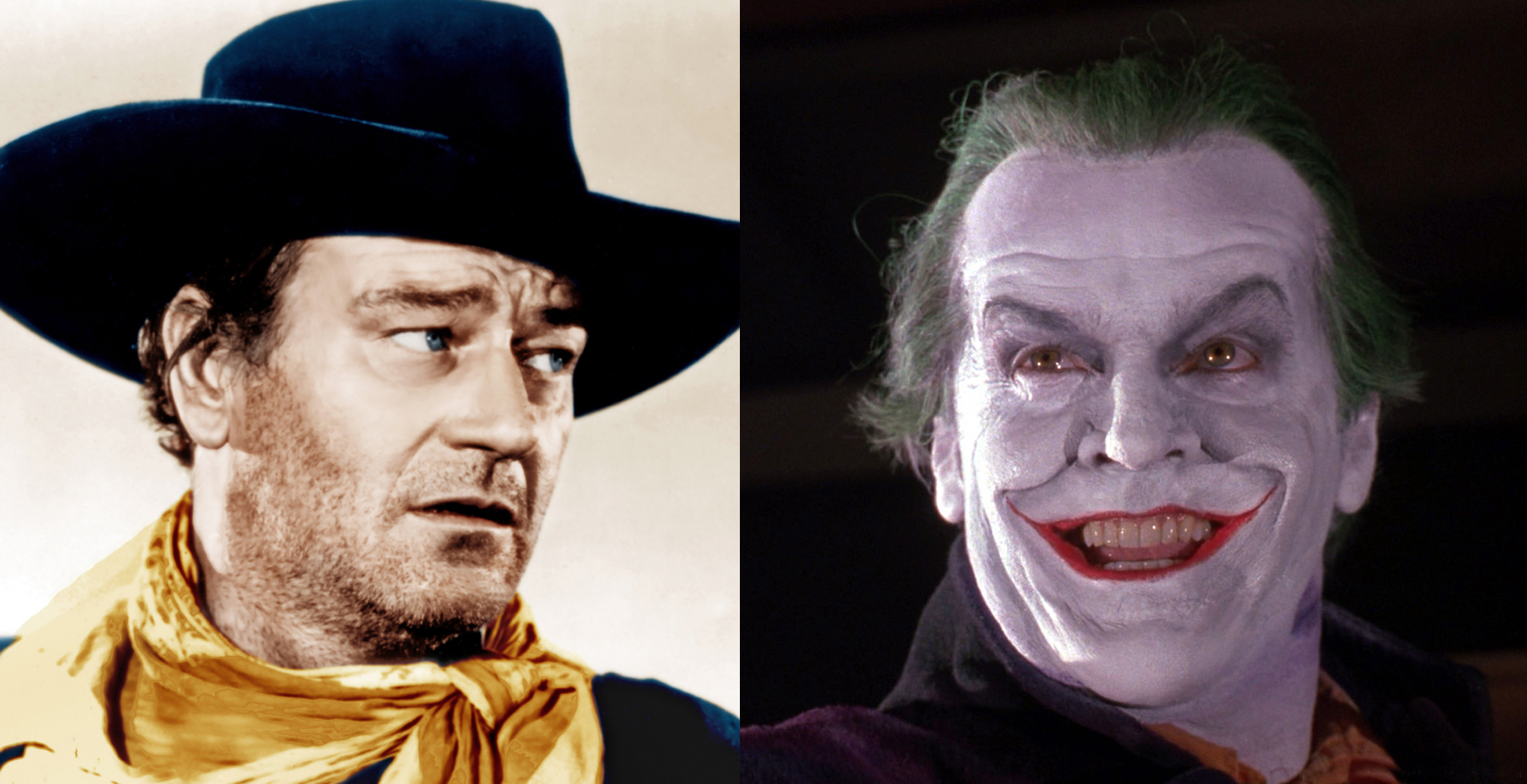
“Nothing makes my case better than concrete examples. Think John Wayne and Jack Nicholson. Both fine actors, each in his way — think of The Searchers — but I think there is little doubt who is the dog in this pair. Your reaction is instantaneous. You don’t need to explain: It just is.”

“Yes,” said Genevieve. “Like Barack Obama and Joe Biden.”

“Of course,” said Stuart, “That’s why Biden will never be president.”

“What do you mean?” asked my wife. “A cat can never be president? What about Bill Clinton?”

“You got me there,” Stuart said. “But that is a reversal of the pairing. Clinton was a cat and Al Gore was pure dog. These pairings make clear the dog-cat dyad, the paradigm.Martin Luther King

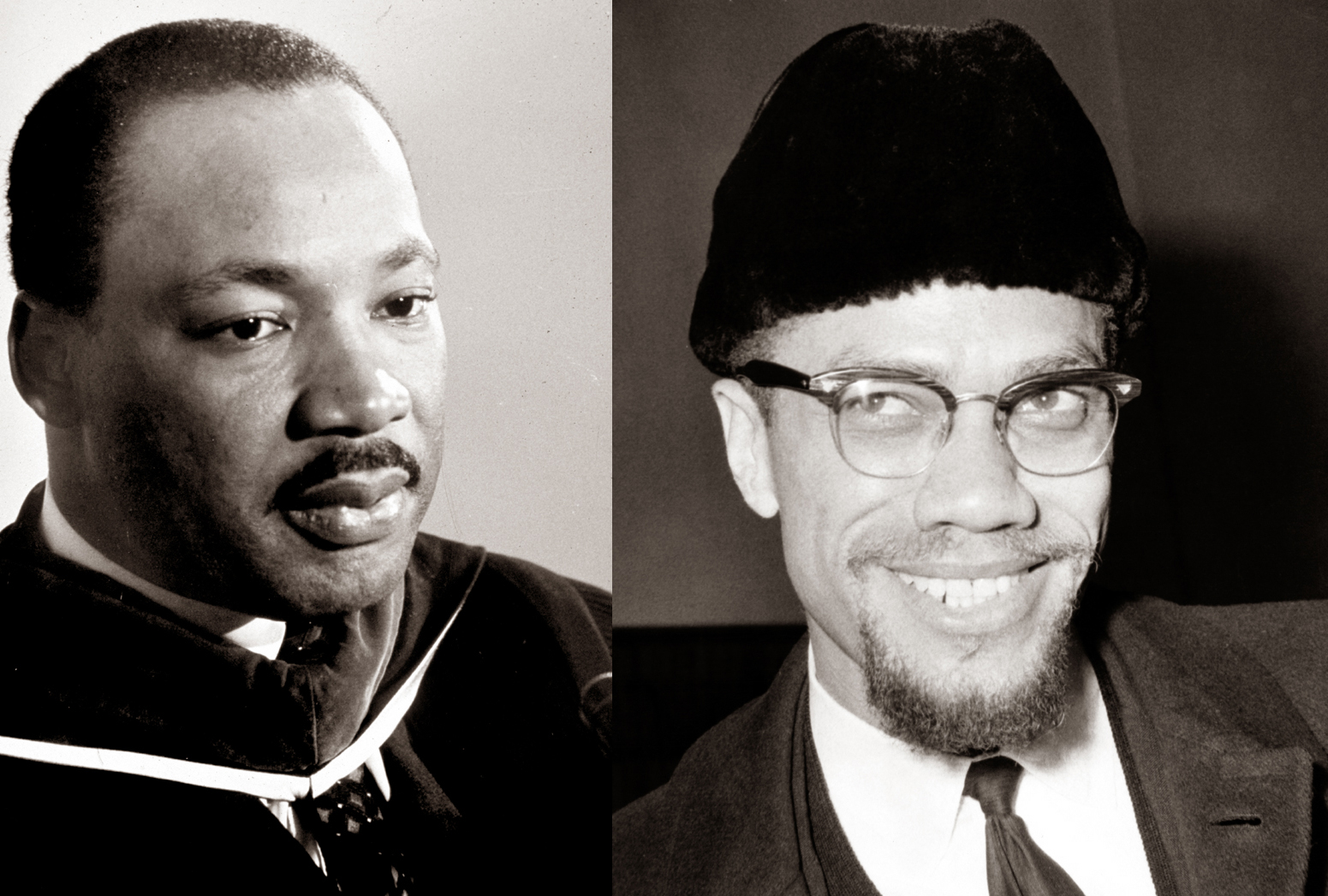
“Martin Luther King, Jr., and Malcolm X. Dog and cat,” I said.

“It can become a party game,” Stuart said. “Tom Hayden and Abbie Hoffman. Big Bird and Oscar the Grouch.”braque picasso dyad

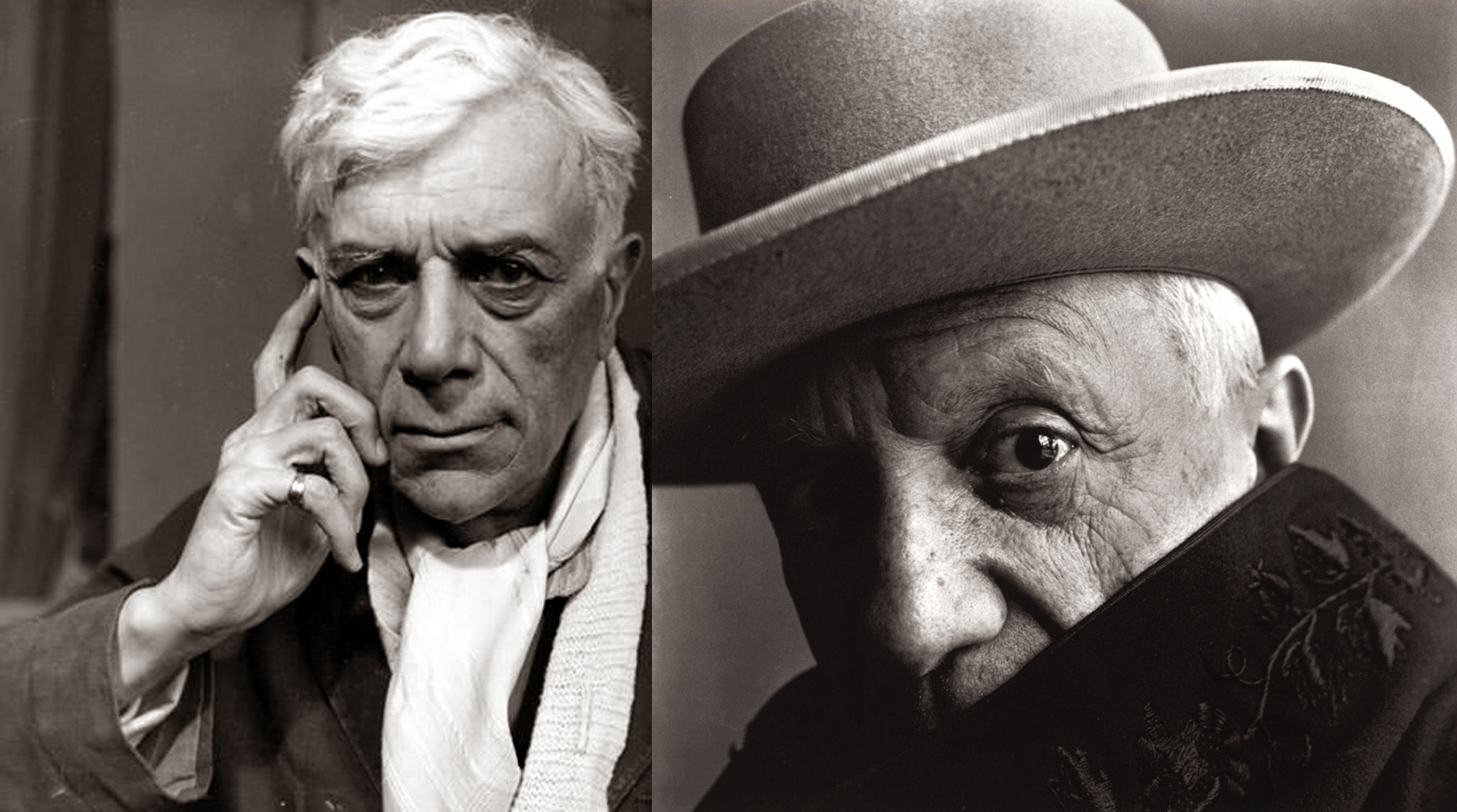
“Georges Braque and Pablo Picasso,” Genevieve said.

“Perfect.”

“Mahler and Bruckner,” she said.

“For years, the nation divided between doggie Jay Leno and cat-man David Letterman,” Stuart said.

“Well, until Letterman lost his cat license,” I said. “He’s gotten kind of doggie in his later years.”

“See, what a profitable lens this is for understanding the world?” Stuart said.

“It explains the difference between Obama and Putin,” Genevieve said.

“And between Andrew Wyeth and Andy Warhol; between George Burns and Gracie Allen…”

“And between Fidel Castro today and Castro 50 years ago,” Genevieve said.

“Between Jane Pauley and Garry Trudeau.”

“When it comes to marriage, a dog can be happy married to a dog,” Stuart said. “But a cat can be happy married to either a cat or a dog. There is fun either way. matalin carville dyadThink Mary Matalin and James Carville. But you see, there is a built-in paradox. How many marriages do you know where one party is happy and the other isn’t? The reason, I tell you, is always the same: One dog, one cat.

“Two cats mated can be happy briefly. But such marriages don’t tend to last. Think of a Hollywood marriage and you pretty much get the picture. Variety is not just an ideal for a cat, but a way of life.

“Of course, the arts are heavy with cats, just as the field of accounting is not. You don’t last long at H.&R. Block if you believe arithmetic is a matter of opinion.

“At bottom, we need both animals in the world. You need the dogs to make life possible; you need cats to make it worth living.”

Stuart brought out a flan and a well-used bottle of amontillado and asked if anyone wanted a cigar. Genevieve was the only taker, but then declined. She said she was giving up smoking again. Ninth time. One more and she got a free sandwich at Subway.

Stephen Spender   The English poet Stephen Spender wrote a poem whose first line I can’t get out of my head: “I think continually of those who were truly great.”
Of course, Spender was writing about political issues, but I can’t help thinking how this line might apply to art.
Because, we use such words rather loosely in the art world. This is “great,” that is “great.” But this devalues the word. I think continually, not of the great writer, painters and musicians who have populated our world, our college curricula and our anthologies — there are many: so many, no one — not even Harold Bloom — can read, see and hear them all — but rather I am thinking of what Spender might call the “truly great.” There are so few of them.
These are those men (and I’ll qualify that soon if you give me a minute) whose works either changed the world significantly or at least changed the culture, or whose works are recognized by a preponderance of humankind to have the deepest insight into the human condition.
It is best understood if we start with science. Who was “truly great?” You could name hundreds of great thinkers, from Watson and Crick to Louis Pasteur to Edwin Hubble. Their contributions have been invaluable. But none of them so completely changed our thinking or ruled it for so long as my three nominees: Aristotle, Newton and Einstein. Each remade the world.three scientists
Who in the arts can have had such effect? These are the people whose works are the core of our culture, the central axis of our understanding of how the world looks, feels, acts, and responds.
The Big Boys.
You may have your own thoughts on the matter: That is not the issue.  We can haggle over the contents of the list. The issue is whether there are some creators whose works are so essential to culture that to be ignorant of their work, is to be ignorant. Period.
In literature, I would say the list begins with Homer and Shakespeare. They are the consensus leaders. If I would add Chaucer, Milton and Dante to the list, so be it. You can add your own. But Homer and Shakespeare are “truly great” in this sense.
What I am suggesting is that in each field, there are probably such consensus choices. In music, you have Johann Sebastian Bach, Wolfgang Amadeus Mozart and Ludwig van Beethoven. Surely others belong on the list. I would include Haydn, Wagner and Stravinsky. You can add your own, but again, if you are not familiar with Bach, Mozart and Beethoven, your education is incomplete.
Among painters, you have Raphael, Rembrandt and Picasso. No one will argue against them. There are many painters that could be included: Titian, Michelangelo, Monet, Turner — the list is expandable depending on your taste, but who has had more influence than Raphael? More depth than Rembrandt? More expanse than Picasso?
(I am purposely narrowing my list to European culture, not because I think that is is the only one that counts, but because I swim in it rather than another, and because I have not enough exposure to everything in other cultures to claim even the slim authority I have discussing Western culture. If I had my way, I’d add Hokusai to this list, but he is ruled out by the operating principles of my system.)
Who are the sculptors? Michelangelo, surely; Bernini and Rodin. Others are great, but these are the standard-bearers.
Try it for yourself. Among novelists, who are our Newton and Einstein? Tolstoy, Dostoevsky and James Joyce.
Again, you may put forth your Fielding, your Trollope or Dickens and I won’t argue. This is only my list and it is surely provisional. It is merely my meager assay. It is my claim that there are the “truly great.” And that they offer something bigger, larger and more powerful than even the best of the rest. They have altered the course of the planet. Or at least the people upon it.
One final caveat: Where are the women? I am not so churlish that I don’t recognize the many great artists who are built with X chromosomes. My argument is with history, not with women: Historically, women have been blocked from the world of art. This is not so anymore, or at least not to the extent it has been true in the past. I was an art critic for a quarter of a century, and I saw the art world shift from a boy’s club to a much more open thing. Most of the best artists I came across were women. Many of our best and most honored writers are now women. In the future, I have no doubt there will be women who shake the world the way Michelangelo did. But I have to look backwards for my list, not guess at the future.
So, does Gertrude Stein belong here? Or Virginia Woolf? This is not to gainsay their genius or the quality of their work. Everyone should read them. But I am not writing about the great: I am comparing them to Shakespeare. The lack of women on this list is a historical artifact, not a prescriptive injunction.
The world is sorely lacking for heroes these days. We don’t even trust the idea of the hero. He surely must be in it for himself; there must be some ulterior motive. It’s all about power, say the deconstructionists. It is all reduced to a steaming pile of rubble and we shout with glee over taking down the idols and smashing them.
But I am suggesting that we actually read Homer, study Rembrandt, listen to Beethoven’s late quartets with the intensity and importance we otherwise give to defusing a bomb.
We should read or listen or look as if our lives depended on it. Because they do.

When she brought in the last bag of groceries, she popped open a diet drink and unbuttoned the top two buttons of her blouse.

“Hot.”

Al pulled his undershirt, nearly transparent with sweat, down over his belly, in deference to decency. The hair on his belly was black in sweatcurls. His trousers were rolled up over his bony knees.

“Yeah, hot.”

They have been married long enough that they had become furniture to each other, like a sofa or bridge table.

“Hot.”

“Yeah.”

“Matthew is visiting this week.”

“Oh yeah? I didn’t know.” He opened up the fridge and yanked back the tab on a cool one.

“Yeah.”

“It’s been what? A year?”

“Two.”

“Yeah.”

He shuffled out of the kitchen and back to the TV to catch the final three innings.

Mary was 52; Al, 59. Matthew was 25, but still in school, working on his second masters degree. The first, in Media, had proved useless.

Now, he was in engineering. “Still avoiding a job,” thought Al.

The Braves were hopeless in the ninth. Philly was leading by seven runs and Atlanta had only the bottom of the order. It was a time Al could be reflective; the game was going nowhere, so his brain wandered.

“Who’s he seeing now?”

“Seeing?”

“Yeah. Who’s he going out with?”

“He’s been living with the same girl for three years. Remember? The little Oriental girl.”

“Oh, yeah. He still with her?”

“Yeah.”

“Quiet, isn’t she?”

“I thought she talked a lot.”

“Oh, yeah. Ran her mouth on about Japan or someplace.”

“She’s from Thailand.”

“Thailand?”

“Yes.”

“He bringing her along?”

“I guess so.”

“Don’t like that.”

Pinch hitter made it to second, but a freak bounce led to a 6-4-3 double play and the post game was a pitcher. Al hated pitchers. They talked too much.

“Damn candy ass,” he yelled.

“Oh.” Mary assumed this was an opinion about the girl. She didn’t quite understand, but let it pass.

In actuality, Elizabeth, the Asian girlfriend, was a graduate student, too. In English literature. Four point Oh. She was small. She did have dark hair. And her almond eyes were brown as basketballs. She was from San Diego.

“They’re coming Saturday.”

“When?”

“Saturday.”

“No, I mean morning or afternoon?”

“Afternoon, I guess. It’s a six hour drive.”

“Wonder why.”

“Traffic mostly.”

“No, I mean why are they coming?”

“Matthew said it was a surprise.”

“I hate surprises.”

“I know. I told Matthew you hate surprises and all he said was, ‘Then, he’ll really love this one.’”

“Atlanta’s gonna play the Mets.” He put down the tube guide and wondered if it would be a good game and whether he’d have to miss it.

2

Saturday came and it rained in Georgia. TBS ran a Rory Calhoun movie and Matthew and Elizabeth didn’t show up till dinnertime.

Their silver VW bug with one orange fender had broken down in Lincoln and they had had to wait several hours for a mechanic to change a fan belt. They looked quite happy. Al was suspicious.

After settling down and having lemonades served by Mary, Al began the inquisition.

“So how’s school?”

“Fine, Dad.”

“You gonna finish this year?”

“Probably. Really all I have left is my thesis.”

“What about Kwan Lee?”

“Elizabeth? She’ll be done in December, if she stays on.”

“You still living together?”

“Yes, Dad.”

“Atlanta rained out.”

“Huh?”

“Ball game. Rained out.”

“Oh.”

“Waited for you instead.”

“Sorry, Dad. It’s an old car.”

“Why don’t you get a new one?”

“We will, when we have to.”

“Does it keep breaking down?”

“It’s been good.”

“So, how’s it go?”

“It goes fine, Dad.”

“No, I mean between you. How’s it go between you two?”

“Real good. That’s one of the things I wanted to talk about this weekend.”

“Oh. Good. Glad to hear it. Things are good between Mom and me, too.”

Mom and Elizabeth were in the kitchen getting supper ready. Pot roast; mashed potatoes; boiled carrots; a jello salad; gravy.

“Can’t afford a roast much anymore, but we thought you and Matthew coming was kind of special.”

“That’s very thoughtful.” Elizabeth and Matthew were vegetarians. A little fish now and then.

Her nose is really quite small, Mary thought.

3

“Really flat chested, isn’t she?”

“She’s just fine, Dad.”

4

“Another evening with the folks.”

“Don’t be sarcastic, Matty.”

“I can’t help it. They’re so narrow minded, you’d never believe Dad used to teach at the university.”

“Your mom was real nice.”

“Especially the pot roast.”

“At least there were plenty of carrots.”

“Warning: Bacon for breakfast.”

“It’s OK, I brought the rice bran.”

“They drive me nuts. Did you notice they never talk about anything?”

“What do you want them to talk about?”

“Anything except the damn roast or the ball game. You know, even when Dad taught history, he never talked about it at home. It was, like, just a day’s work for him.”

“Maybe it was.”

“News says the weather is clearing in Atlanta and tomorrow is a doubleheader. We won’t be able to get much explained between innings.”

“We can talk to your mom and she can tell him.”

“Probably have to do that.”

He looked long at her belly.  A faint stripe of pigment made a line just to the left of her navel and extended down about four inches.

5

Al was out buying a newspaper. Elizabeth was still asleep.

“There are several things we needed to talk about, Mom.”

“Maybe we should wait for your father…”

“The ball game. Besides, he may not take our news too well. We thought it best if you told him.”

“This sounds serious.”

“Elizabeth and I are moving to South Dakota.”

“We’ll miss you, but that doesn’t sound so awful.”

“She’s got a job at the Indian school on a reservation.”

“You mean Indians?”

“Yeah, Mom.”

“What about you?”

“I’ll be raising the kid, mostly.”

“The kid?”

“Yeah. Elizabeth is pregnant.”

“You going to get married?”

“No more than we already are.”

“What about the baby?”

“He’ll do fine.”

Al pulled into the driveway and swung out the big door on the Olds. He didn’t have a paper. He swept into the kitchen like a big drop of sweat steaming down a face.

“All gone. It’s hot out there already.”

“Matthew says he and Elizabeth are going to have a baby.”

“Oh, shit. What are you doing now, kid?”

“We decided to try an experiment, Dad.”

“Since when is having a baby an experiment?”

“I thought it always was.”

“A genetic experiment? You and Kwan Lee?”

“Well, not quite, Dad. I’m not the father; not biologically, anyway.”

“What?”

Al hated knuckleballs. Just pitch’em straight down the plate. Your best stuff. A knuckler is cheating.

“Elizabeth and I have done a lot of heavy thinking…”

“That’s thinking with rocks in your head?”

“…Thinking about the state of the world and all. We wanted to do something or try something.”

“You mean besides being a vegetarian and saving the lives of countless cows?”

“Yes, Dad. Seriously.”

“But what about the child?” Mary asked.

“I don’t understand. What do you mean?”

“What about the poor child? Why are you experimenting on a poor child?”

“It’s no more than you two did with me.”

Al scraped his fingertips over his stubble. “OK, then, who’s the father.”

“He’s a man we both know at school, a doctoral student from Lagos.”

“Lagos? Where’s that?”

A look of recognition brought a ghost of a smile to Al’s face. Then a second look of recognition brought the ghost to its knees.

“Nigeria,” he whispered.

“Nigeria?” Mary had a blank look on her face.

“Africa.”

“Africa?”

“Black.”

“Black?”

“Yeah, Mom. His name is Mbwengwe and he’s black.”

“How? … black?”

“His skin is that sort of purplish black; real deep.”

“Why?”

“All his people are like that.”

“No, I mean, why is he the… I mean… I don’t understand.”

“Elizabeth and I have been thinking, like I said, and we, well, we’re not so sure about the viability of white European culture.”

“Viability?”

“Yeah. We think logic is a dead issue and …”

“What’s that got to do with having a kid? You’re not making sense. I think I need to sit down.”

“OK, Mom. Like European culture is based, we think, on yes/no categories, you know, the basis of logic. A thing is either A or Not A. And what has this thinking led us to? Digital watches and thermonuclear bombs; acid rain and Third World starvation…”

“Third World?…”

“Yeah, you know. Ethiopia and all.”

“Look, son,” Al chimed in, “Europe did OK by itself. I wouldn’t want no juju man shaking a rattle over my pneumonia.”

“Why not? If it worked.”

“Worked? How could it?”

”Well, maybe not for you, but if you believed it, it would.”

“I don’t believe.”

“Yeah, sure. But Elizabeth and I were thinking how about combining the best of all world cultures. She’s mostly Japanese…”

“I thought she was Thai.”

“She was born in Thailand. Her folks were from Osaka. Mbwengwe is African and black. I would be the nurturing father and white and European; and we would live with the Indians where all the kid’s playmates would be Indian.”

Mary’s face never got back its expression. She was trying to take all this in and it was overflowing like a faucet forgotten over a bathtub. Mary’s floor was flooded.

Elizabeth had heard the last of this conversation standing by the kitchen door.

“But you haven’t heard the best part yet,” she said.

Mary wondered what could be better.

“When we get to the reservation, we have it all arranged so that Matty will have another baby with an Indian.”

“Yeah, Mom. We don’t know her name yet, but it’s all planned out.”

“You’ve both gone crackers,” Al chimed in. “Why are  you doing this to yourselves? Why are you doing this to your kids?”

“We’re doing it for the kids. We have it all worked out. It came to Elizabeth in a dream last year…”

“That’s right. I dreamed it on New Year’s Eve and it was so vivid, I knew it would have to come true…”

“And now it’s happening. But this is only the first part of the dream.”

“Maybe you should tell us the rest of it,” said Al. Up to now he had seen a smidgen of surreal truth in what Matthew had been saying. But this last was getting strange again. He wondered if he should tiptoe to the phone.

“According to the dream, my baby will be a boy, and Matthew’s will be a girl. They will both be beautiful.”

“We’re counting on that, with the expanded gene pool and all.”

“Yes, and the boy’s name will be Solar Wings and the girl’s name will be Hilda…”

“Hilda?”

“I know it sounds funny, but that’s what the dream said. Dreams can be funny.”

“Tell me.”

“Solar Wings and Hilda will grow up together on the reservation, learning all the ancient wisdom of the shamans.”

“And what about the wisdom of the Greeks?” asked Al. “Doesn’t he get any logic at all?”

“Yes, Matthew will tutor them in Western Philosophy.”

“Didn’t you get a ‘D’ in philosophy?” asked Mary.

“Yeah. But that was a difficult semester for me, with the drugs and all.”

“If I get the drift of your insanity,” Al said, “you will then marry off Moonbeam and Edna and their kid will be a kind of quadroon extraordinaire. Am I right?”

“Yes, Dad. Our grandchild will embody all the genetic and emotional wisdom of the planet.”

“This is quite a millennial dream you suffered.”

“But that’s not all, yet.”

“What could be next? The end of time?”

“No. The beginning of time, a new Time that will not be like the one we have now. The new one will not be able to be measured by timeclocks. There will be no more punchcards when the new Time begins.”

“And how long do we have to wait for this new Time?”

“A long time.”

“How long?”

“First Solar Wings and Hilda will grow up and get married. Then their child — the daughter of the four worlds — whose name will be Frem, will be made ready and the Star Father will arrive.”

“Star Father?” Al’s skin was beginning to get clammy.

Mary’s eyes were rolling in their orbits.

“According to my dream, an extraterrestrial being will arrive in a giant spacecraft made of a type of plastic unknown on Earth and he will be the product of genetic breeding on his planet.”

“What planet is that? Krypton?”

“I don’t know. The dream didn’t say. But it is a planet of peaceable warriors. The alien will be named Beltenamine and he will mate with Frem. The product of this union will be the new Time. Our greatgrandchild will be the new order of the universe. It’s really exciting, isn’t it?”

Mary was crying.

“No, Elizabeth. It’s nuts.” Al talked in a calm manner, not aggressively, just stating a rather obvious fact. “It’s nuts.”

“No it’s not. It’s real. I dreamed it.”

Matthew eyed his old man. “You had dreams when you were younger, didn’t you? What ever became of them? We intend to live ours out. That’s not nuts.”

6

“What were our dreams, Al?”

Al sat at the kitchen table, looking out at the trees. He cracked open a pecan, salted the meat, snapped his head and hand back and started chewing.

“Owning this house was one.”

“And now we own it.”

“Making full professor was one of mine.”

“But there’s nothing wrong with associate professor.”

“Nah, I guess not.”

“When I was 10, I wanted to be a ballerina.”

“But you’re tone deaf.”

“I said ‘ballerina,’ not ‘musician.’”

“But you gotta hear the music, don’tcha?”

“I can hear the beat just fine.”

“What happened, then?”

“Mama didn’t think it was a good idea and she refused to send me to dancing school.”

“Why?”

“She said I should get married like she did.”

“Did you?”

“I married you, silly.”

“I mean, did you get married like she did?”

“What do you mean?”

“I remember your Mama as kind of bitter. She spent her whole life serving your old man.”

“He was very old fashioned, even for then.”

“So? Has your life been better?”

“Better than Mama’s?”

“Yeah.”

“I guess so. I don’t really know how happy she was. She never said.”

“What were their dreams?”

“I don’t know. Well, I guess Dad always wanted to be a missionary to China. Mama would have none of it. She liked being a minister’s wife; she liked the social role.”

“What was her dream?”

“I guess she just wanted a bigger church, a larger congregation.”

“My folks had a dream that I would go to college and get and education and a good job. I guess I made their dream come true.”

“Some dreams come true and others just never pan out.”

Al cracked another pecan. It was rotten inside.

“Just like these nuts,” he said.

“Yeah, I worry about Matthew and Elizabeth, too.”

“No, I mean the pecans.”

“Oh.”

national gallery front 2
I was in the National Gallery in Washington, D.C., standing in front of one of my oldest friends, Mary, Queen of Heaven, by the Master of the Saint Lucy Legend, Mary Queen of Heaven National Gallerymelting in the presence of the colors and textures that that anonymous artist was able to pour like cake frosting over the surface, when who should show up but my old friend Stuart.

“What a coincidence,” I said, “to find you here today. I didn’t know you were here in D.C.”

“Been here for a few days,” he said. “I’m on my way back to Portland.”

Stuart currently lives in Maine, not Oregon.

“I may be an old hippie, but I’ve aged out of Portlandia,” he told me. “I’m more Whole Earth Catalog than I am fair-trade coffee.”

He said he is now living with a viola player who teaches and plays part-time with the Portland Symphony. “I’m learning to listen to the middle of the music,” he said. “I’m ignoring the tunes and the bass and hearing the filler. It’s hard. Have you ever tried to listen to a viola part in a symphony? It takes great ears.”

Stuart has a long history of serial monogamy, and the prognosis for this relationship is no better than 50-50.

“It’s strange how often you find yourself in a city and meet someone you know,” I said. “You’re the last person I would have thought to run across in the art museum.”

“It’s interesting you should notice the coincidence,” Stuart said. “I’ve been thinking a lot about coincidences lately. I don’t really believe in them.”

We took a moment to bask in the glory of the painting and decided to meet later for lunch.

That’s when Stuart unloaded his latest theory.

“I was reading Tom Jones and couldn’t help notice all the coincidences needed to keep the plot flowing. When I read several essays about the book — which I just loved, by the way — several people held up the coincidences as a flaw, that such coincidences just weren’t believable.

“Of course, several Postmodern critics mention the same coincidences as proof of the author’s knowingness, that he is tipping us off that he knows that we know that he knows, etc., that this is fiction, that this is a piece of art and not reportage. A wink and a nod.

“But I take issue with both groups. I’ve given a lot of thought to coincidences and realized that coincidences are not the rare thing we usually think they are, but rather the most common occurrences in life. Essentially, everything that happens is a coincidence. When I go to the doctor’s office and an old woman comes in the door behind me, that’s a coincidence. When I drive down the road and there is a red car in the next lane, that is a coincidence. After all, what are the chances that that car will be red, or that we both arrive at the same stoplight at the same time. The chances are astronomically against it. When I go the the deli and order a pastrami sandwich and the guy behind the counter tells me that the customer just in front of me got the last one and he is currently out of pastrami: Well, that’s a coincidence, too.

“So, I have no problem with Tom Jones being filled with coincidences. The difference between some coincidences and others — those we pay attention to and those that pass without our notice — is not the coincidence part, but the significance part. When we invest a coincidence with meaning, then it seems to rise to the level of notice, and to the level we give it some sort of magic significance. It is the significance and not the coincidence that is notable.

“And where does that significance come from? Not the event itself, but from our brains. We invest the thing with significance, but understand it as if the event itself possessed the significance we have tagged it with. We’ve got it all backwards.

“And it is the way we build a narrative structure, connecting some coincidences together into a net, that gives us a sense that the world has meaning — and when it’s a work of fiction and we notice the network of significance, we think, that could never happen in the real world, but it does, it happens every day, even every minute.

“It’s like you and me meeting today. My Brownian motion has set me on one course, yours on another; they cross and it seems as if fate has lent a hand, but it isn’t so. Purely accident. But because we know each other, the crossing seems almost miraculous.

“This first hit me, I think, after seeing the Kieslowski ‘Three Colors Trilogy.’ The three films — Red, White and Blue — are loaded with coincidences, too many to mention. But most notably, at the end of the third film, there has been a ship sinking and there are seven survivors, and they turn out to be the three couples, each from one of the three films, and a random seventh person. At first, it seems miraculous that just those three couples, which we have been watching over the three films, should coincidentally be the lone survivors of a disaster. Too much coincidence to be true, you say. Kieslowski is playing with us.

bridge at san luis rey cover“But look at it from the other end: A ship sinks, and Kieslowski takes six of the seven survivors and gives us their prequels. You can do this for any disaster. Take the survivors and write down their stories and miraculously, no matter how random the choice, the fact that they survive at the end seems unbelievable coincidence. But it isn’t: It’s the Bridge of San Luis Rey effect.”

Stuart had been talking so much, he’d barely touched his game hen, while I — providing the accepting ear — had managed to get on to dessert already.

“So, it’s all a question of significance,” he continued after a quick bite of chicken.

“The issue of coincidence is a red herring. They are everywhere all the time. But we cast a net of meaning out over the world and those coincidences we notice, and that fit our narrative, we decide mean something. The rest evaporate in unknowingness and oblivion.

“After all, what is the human mind if not a great machine for pattern recognition? If you take a bowl of marbles and drop them on the floor, when they stop rolling around, you will be able to discover in their distribution a pattern. It’s pure pareidolia, but it feels real.ursa major

“It’s the Big Dipper over and over. The night sky is really just a bowl of marbles spilled into the empyrean, but we have found patterns there. Everyone recognizes the Big Dipper, even if they call it the Plough, or call it the Seven Sages, or the Great Bear — oddly, with a long tail — or Charlemagne’s Wagon, or in Finland, a salmon weir. Same stars, different asterisms.

“Or the Virgin Mary seen in a tortilla. Or the million conspiracy theories that people get arrested by.

“Really, it’s a Rorschach universe. Meaning is cast out upon the waters and it drags in what it will. Meaning is not found, it is generated.

“And that is how we view coincidence: It is something we notice and if it fits a pattern we are projecting out into the world, it seems important, meaningful, significant. But the coincidence itself couldn’t be more pedestrian, quotidian, bland and ordinary.”

At some point, Stuart usually empties the balloon of all its air and there is a sequent quietening of his enthusiasm, as if now that he’s made his point, there is no point left to existence. Enthusiasm is followed by passivity. He’s worn himself out.

We walked out of the Garden Cafe and back into the galleries. Stuart walked out the door, off to his violist, and I went back to my Mary, Queen of Heaven.

And it is no coincidence that I picked up the check. Again.

road into hills BW
In 1997, I took an epic road trip north along the 100th longitudinal meridian from Laredo, Texas, to the Canadian border. The previous blog entries covered Texas and the Central Plains. This final installment brings the Northern Plains and the end of the trip.

wounded knee 2

Mile 1294, Wounded Knee, S.D.

Most of the action by the U.S. against the Indians in the past century was reprehensible at best. The list of atrocities is nothing to be proud of, from Sand Creek to Washita River. But one of these massacres bothers me more than the others.

It is the photographs that make the difference.

On Dec. 29, 1890, a Lakota elder named Big Foot and more than 200 of his band were gunned down by soldiers at Wounded Knee, S.D.

The Indians had obeyed Federal orders to come to the reservation and had obeyed orders to give up their rifles. Big Foot was deathly sick and coughing up blood.

But the soldiers didn’t believe the Sioux had given up all their guns. One remained, and as it was being turned in, a gun somewhere went off and the army went crazy, gunning down not only the Indians, but up to 30 of their own men. The Indians, wearing “ghost shirts” they thought would protect them, fought back as well as they could with knives, hatchets and a few pistols. But most of those killed were women and children.

Of the battle, one is reminded of My Lai in Vietnam. Writer Herbert Welsh, who saw the battle site soon after, wrote, “From the fact that so many women and children were killed, and that their bodies were found far from the scene of action, and as though they were shot down while flying, it would look as though blind rage had been at work.”

It isn’t the stupidity or the injustice that gets to me — there are many examples, not only in the so-called “Indian Wars,” but pretty much in all of history. Humans have not been good to other humans anywhere on the globe.

No, what gets to me are the photographs.

big foot corpse

Taken three days after the massacre, they show the frozen, contorted body of Big Foot, with his hands knotted up arthritically and his body bent up out of the snow in frozen rigor. He is isolated against the blank, white background of the snow, and all the more symbolic for that isolation. A few soldiers stand off in the background talking and a horse puts his nose to the ground for some grass sticking through the snow.

Another shows a line of soldiers standing behind a mass grave. James Mooney, who wrote the first definitive account of the Ghost Dance phenomenon and the Sioux uprising of 1890, wrote:

“A long trench was dug and into it were thrown all the bodies, piled one upon the other like so much cordwood, until the pit was full, when the earth was heaped over them and the funeral was complete. Many of the bodies were stripped by the whites, who went out in order to get the ‘ghost shirts,’ and the frozen bodies were thrown into the trench stiff and naked.

“They were only dead Indians,” he added, with an accusatory dose of irony.

There is another set of photographs that come to mind — the emaciated, contorted bodies being bulldozed into mass graves at Dachau and Buchenwald.

For many, the Indian Wars are just cowboys and Indians stuff from a long ago history. But for me, they sing of a continuity of outrage. The “Final Solution” of one century mirrors that of its predecessor.

So, I have wanted to visit the site at Wounded Knee and when I got there, was surprised to find it barely marked at all. Perhaps both sides feel shame over it. The whites for the evil they don’t like to recognize in themselves, the Indians for the humiliation.Pine Ridge Reservation square

The Pine Ridge Reservation in southern South Dakota is more beautiful than it has been described, with grassy hills and cedar trees dotting the plains. While it is true that poverty is endemic, it is not the fault of the landscape, which is better than some of the grasslands I passed through in Nebraska on my way north.

But the actual massacre site is little more than a spot in the road. There is a hand-lettered wooden sign that describes the event, but there are no official markers, no commemoration, no visitors center, no rangers ripe with interpretation.

wounded knee gulley

The dusty ground at Wounded Knee is a gully with the bridge on one side of the road, and a hill with the Indian graves on the other. During the battle, troops had placed cannons on the hill and lobbed exploding shells down the slope at the Indians.

There are also a few ramadas. In the summer, there are booths selling Indian crafts. In October, most were empty, although there were two young Lakota girls with a clothesline strung with dreamcatchers.

I stopped and asked them if this was the massacre site and they said yes.

“Where did it happen here?” I asked.

“All around.”

The older was about 12, the younger, 8. We talked about being Indian, about the effect of history and about the price of dreamcatchers.

“We need to sell them. Our sister is in the hospital and needs our help,” said the elder, in an ages old play for sympathy. I wondered who had taught her to scam me. If I had any doubts over whether it was a scam or not, they dissipated  when I said: “I’m sorry to hear that. What does she have?”

The girl looked caught out and gave me a distressed look, as if she hadn’t anticipated the conversation getting this far.

“Why is she in the hospital?,” I repeated.

A wait of two beats: “She’s sick.” It was almost a question.

I felt more sorry for her being caught in a lie than I did for her probably imaginary sister, so I bought one.

badlands 1

Mile 1379, Badlands National Park, S.D.

Near Kadoka, S.D., the rolling grass of the plains is cut through by erosion, sculpted into spiky, spooky mazes of canyons and hills. They were called by the early French trappers, “les mauvaises terres a traverser,” or “bads lands to cross.” And they certainly would be, if it were not for the smooth roads of the National Park Service.Kadoka sign

The Badlands National Park is a long, gangly loop of lands lodged in the corners of the Buffalo Gap National Grassland and the Pine Ridge Indian Reservation. In places, the park is less than a mile wide, although if you walked from one extreme to the other along its length, you would hike a semicircle of something like 60 miles.

Most of it is flatland. As you drive along S.D. 44 from Scenic to Interior, the badlands themselves are a whitish line of crenelated hills on the northern horizon.

Only when you get close to them, near the Ben Reifel Visitor Center at its eastern end, can you really appreciate the blasted, washed out, weathered exhaustion of them.

blizzard headlights

Mile 1707, Bismarck, N.D.

A freak October blizzard blew across the Dakotas. One day, I was in Pierre, S.D., and it was 80 degrees; by the time I pulled into Bismarck, N.D., the next day, a front had barreled through and the thermometer had dropped into the 30s. With winds at a steady 50 mph, the wind-chill was more than a TV weatherman’s conceit: It could mean frostbite.

During the overnight, a line of powerful thunderstorms had run from Texas to Manitoba along a cold front that moved east with the speed of a freight train. Tornado warnings were issued for the whole length of the front.

One day the Prairie population was talking about their tomatoes lasting so late into the season, the next day, they are scraping windshields with parkas pulled tight around their cheeks.bismarck night snow downtown

Just before the blizzard moved in, I wandered through the streets of Bismarck, looking up at the sky that was turning ever more slatey and frigid.

To get in out of the cold, I wandered into several downtown stores, including one antiques shop. The woman behind the counter also does home interiors: One side of the shop is given over to fabrics, the rest to consignment antiques.

The proprietor was a bubbly woman of about 50, who praised the plainness of the  Prairie people.

“Even the politicians are ordinary people,” she said. “The governor is a regular customer and his wife says she’d come here more often except that she has to clean the house.”

But there are cosmopolitan Bismarckians and those who are less so.

“I ask my customers if they’ve ever been out of North Dakota,” she said. “If they have, I know they’ll go for the weird things, some of the more tasteful and unusual treatments.” She fingers one of the fabrics that is tightly gathered with pleats.

“If they’ve never been outside North Dakota, well, I bring out the J.C. Penney catalog. They’re really conservative.”

I told her that I take it to be an inborn modesty they seem to have in the Plains Midwest, a desire not to appear more fashionable than they are.

“But it’s not quite modesty, either,” she says, “almost a kind of lowered expectation.”

Like Pierre, S.D., whose tourism brochure proudly claims it is the “tenth best small town in America.”

Or the High Plains Museum in McCook, Neb., whose billboard promises only that it is “interesting and free.”snow tractor bismark

As I begin driving again, the skies have begun flaking and the crystals blow around the pavement like sand blown across the beach in a storm.

What are predicted are snow showers and snow squalls, but by the time I’m 100 miles out of Bismarck, it is a full-scale blizzard.

Luckily, the roads are still warm enough that nothing is sticking to them, although the farm fields are speckled with white, catching in the furrows making a scumble of white and black.

It is a tailwind, so as I drive, I hardly notice it, except to see the grasses bent sideways and vibrating on the shoulders. And the snow dances on the pavement in front of me like some sort of fairy mist, swirling and shifting. I can see the flakes bobbing around in front of the windshield.

But when I stop at a rest area and step out of the car, I can see that the snow is rushing past me horizontally. I can barely put my foot down where I intend as I walk through the gale.

Visibility is reduced at one point to less than a tenth of a mile; the world is whited out and the windbreak trees at the other side of the cornfield are faint ghosts.

Contending with weather like this, I decide, must make you modest. You are not likely to believe the hype of the American media siren when you know a pair of jumper cables can save your life.

By the next morning, the wind has died down, although the snow flurries continued. When I set out again, the landscape is white and astonishing.

snowdrift on highway

Mile 1869, Canadian border, N.D.

It seems as if there is nobody left on earth. The hills are empty of buildings and if it were not for the tractor paths through the fields, you might actually believe that the acres and acres of sunflowers grew there naturally.

In the summertime, the expanse of yellow is astonishing. I have driven through North Dakota when the sunflower crop is as brilliant as trumpet music.

In October, though, the color is gone and all the heavy seedheads, browned and dried, bend over like so many showerheads — and all facing east.

Sunflowers in two seasons

These giant flowers should not be confused with the roadside sunflowers that cover the Great Plains. Those, with their ten or a dozen three-inch flowers per stalk, swaying in the breeze, are delicate and lacy compared with the commercial variety that grows in the fields.

Each of those grows a single giant flower on a woody shoulder-high stalk with a central disk crammed with the sunflower seeds we nibble on at ball games. But it isn’t as snacks these fields are filled, but for their oil, used in food processing.

You can see them in the summer, armies of them, over the rolling hills, cut through only by the two-lane blacktop and, every few miles, a farmhouse surrounded with its outbuildings, fences and a couple of pickup trucks parked in the gravel driveway.

I first came through North Dakota on a train, some 20 years ago, and I was fascinated by the lonesomeness of the land. Neighbors are miles apart; the only way you know you are on an inhabited planet in the winter is to see the smoke from a distant chimney coming over the snowy rise.

It is this country that Gertrude Stein meant when she said that, “In the United States there is more space where nobody is than where anybody is. That is what makes America what it is.”

And it seems to me, as I finish my odyssey up the 100th Meridian, that it is this Heartland that seems the most American to me. It is this country of Thomas Hart Benton paintings and Hamlin Garland books that seems to hold the nugget of Americanism.

New England may have been the intellectual center of the growing nation and the twin coasts may have driven the commercial development. But it is this central axis, furry with grass, that has been and remains the heart of our country.

It is the Plains that spread out in front of the wagonloads of pioneers and gave them the epic sense of continental expansion.

It is the Plains that separated the Atlantic and Pacific, as guts fill the space inside our skin.

It is the Plains that gave the country its defining metaphors, whether cowboy, Indian, sodbuster, religious migrant, long stretching miles of highway or landscape that must be tamed. We learned self-reliance and cooperation, we learned how to adapt when we must and how to maintain tradition when we could.hundredth meridian sign ND

It is the Plains and the Indian Wars that provided us — second only to slavery in the South — with the guilt that gives emotional complexity to our national naiveté and, when we don’t deny the sin, our depth as a people.

In the cities of East and West, we can pretend that society is paramount and that human beings have charge of the world. It is in cities that theories are propounded.

But in the Plains and prairies, we are forced nakedly into the realization that we live on a planet, with the racing sky above and the blackbirds dotting the snow beneath.

It gives us perspective.