I am sitting in my car in the parking garage of the local mall, waiting to chauffeur my granddaughter home after a shift at the food court. It’s one of the perks of being a grandfather; we get to talk on the ride. But I have been misinformed and I’m an hour early. No problem, I sit back in the shade of the parking garage and pop in a CD of Strauss’s Four Last Songs, the heartbreaking beauty of which always leaves me weeping.
Outside, in the sun, the breeze blows the branches and leaves of a tree in eccentric and seemingly random arcs. A whole tree doesn’t blow this way or that, but becomes a symphony of animated parts, very like a dancer. Behind the tree, in the distant sky, brilliant white thunderheads rise against the blue; they are the source of the fresh breeze that moves my tree.
It is a moment of epiphany — a pulling back of the veil. It is one of those instant recognitions of intense beauty, the kind that makes your insides swell and overflow through your eyes. It is the thing about such moments that dozens of shoppers coming out of the mall and finding their cars can see the same thing and not be overwhelmed because seeing the beauty requires being ripe for its discovery. It is available there for anyone to see, but most of the audience — like me most of the time — are preoccupied and so the moment escapes and they are robbed of one of those times that transfigures the mere act of living and gives one a reason to be grateful.
At such times, it is occasionally possible to be misled into believing that the world is truly a beautiful place and that we just don’t take the time to notice. The beauty is overwhelming in its persuasion. I’m not talking here about pretty scenery or colorful flowers, but about a metaphysical insight into the animating spirit of the cosmos. It is the sense one gets if you find yourself in an unpopulated region of the planet and can see at night the bright gash across the sky that we call the Milky Way. You sense something bigger, transcendent, sublime. It is both profoundly beautiful and also more than a bit scary.
One has a memory trove of such moments — and they almost all come in brief flashes; I’m not sure how we could stand it for any length of time. I felt it one dawn at the beach in South Carolina, staring east at the twilight getting brighter. At the moment the sun popped the horizon, when its movement against the stationary line dividing ocean and sky becomes apparent, like a second hand instead of a minute hand on a clock, I got dizzy, almost lost my balance on the sand, because instead of seeing the sun rise above the horizon, I felt as if I were at the top of a planetary ferris wheel, jerked forward toward the sun; I was moving, not the sun. The light played on the waves, dividing the lit from the shadowed water in a shifting network of obsidian black and glowing copper. The effect lasted only a few seconds before the quotidian world reasserted itself into a familiar sunrise, but the memory of that instant is burned into my mind with a fury and insistence that informs now every sunrise, even when I no longer lose my balance.

Many years ago, I went to the Pacific Ocean with a woman I was crazy about. We rented a cottage on the Oregon coast and after a night of playing geography on her body and memorizing it (so that I knew every swell and bulge, every mole and wrinkle on it), when the morning came, we stayed in bed until our consciences ached. We smelled of each other and reveled in it, our muscles were sore. When Robin finally got up, she said, “I’m going to make breakfast this morning.” I stayed in bed with my head propped up on a pillow and I watched her silently going about her business. The world had stopped turning; the fury of machinery, trucking, commerce and struggle had ceased. Robin opened the curtains and the light poured in, but she was herself lit solely from within.
She was more than just Robin at that time — she was transfigured in the light and seemed almost to glow. It was just a beam of sunlight that struck through the window, but the light seemed to come instead from some internal tungsten filament. She became all women. She was Ruth and Naomi, Eve and Rembrandt’s Saskia. She was not performing some minor task, but had hooked into the flow of the world and was living, glowing myth. Pure Archetype.
In a white blouse and black pleated trousers, she began fixing breakfast in a slow, methodical fashion and everything she did was the mimicking of thousands of years of daily living. She slowly cut off a piece of butter and placed it in the sizzling pan; she sliced the onion and cheese and with her arms holding the bowl on her hip close to her belly, she beat the eggs and prepared to dump them in the pan. The light was uncanny and I nearly cried for the beauty of that morning, the quiet intensity of her motions. All I know is that for 15 minutes Robin ceased being Robin and became everyone who ever prepared breakfast.
That moment couldn’t last, and neither could that relationship. Things beyond my ken were involved. They usually are.
 In the late 1960s I went camping at Cape Hatteras with my college buddy, Alexander. It was March, before the tourist season and the beach was empty and the wind was cold and brisk. One night we went out toward the cape point. The only light we had was our Coleman lantern and near the point the surf sounded from both sides. The air was thick with moisture and the lamp cast our shadows up into the sky where our heads touched the constellations. Our forms cast out on the cosmos and looked rather like the Colossus of Goya’s late “Black Paintings.” And I recalled the phrase from the Magnificat — “quia fecit mihi magna,” — and I felt magnified.
There are many instances of such epiphanies, although each will be personal to us, unshared in particulars, but common in outline. I have the climb up Mount Angeles in the Olympic Mountains of Washington to the lake with a pure John Martin waterfall on the opposite shore. There is the moment that slammed me in Port Jervis, at the joint of New York, New Jersey and Pennsylvania, when I saw a vacant lot by the railroad roundhouse that was blasted with fall wildflowers — ironweed, asters, yarrow, goldenrod, queen-anne’s lace, joe pye weed, mullein, cow itch — it was one of the most beautiful things I have ever seen and even now I prefer weeds to domesticated gardens.

Buchenwald
But I said such epiphanies can mislead us. For the religious or the sentimental, such moments speak of a beautiful cosmos. But these epiphanies can carry the opposite. When I was still a boy — probably five or six years old and it was just a few years after World War II — films from the liberated concentration camps were shown on television. I don’t know whether they were George Stevens’ films from Dachau or Army films from Buchenwald or Bergen-Belsen. But these films burned into even my childhood imagination, those spectres, those skeletons, those harrowed, sunken cheeks, those piles of skeletons wrapped in sacks of their own withered leathery skin. Soldiers picked up the stiffened bony puppets and tossed them into the backs of trucks. This too is ephiphany, the drawing back of the veil.

Aleppo, 2016
I see something of the same in the eyes of Syrian refugees, I see revenants of postwar Berlin in the bombed out walls of Aleppo. There is beauty in the world, but there is also horror. Ugliness to balance that transcendence, evil to mock the elation.
One thinks of all the genocides, mass murders, atrocities and pogroms of history, the cities razed to the ground with all their populace put to the sword, of all the gulags, all the dead Cathars, Tutsis and Hutus, all those drowned in the cataclysms of swollen rivers, ravaging earthquakes, the decimation of populations through plague, the millions lost to bizarre insect-born diseases. As soon as you find yourself Panglossing over the glory of a sunrise, you catch yourself short remembering Cain and Abel and the real meaning of the brotherhood of man.
One could make a list of those moments of disillusionment and disaffection. Such a list is a weight around the neck of any afflating joy. One recognizes the moment when you realize someone you have loved no longer loves back, when one is betrayed at work or by a friend, when you see the ravages of illness in those you care most deeply for. The world is not an easy place to love. Suffering is universal; even the rich lose their loved ones.
The truth is that we seldom live in the joy or the pain, but rather spend our days in utter banality. Banality is our salvation: If we lived in the joy we would go mad; if we lived in the pain, we would also go mad. So, we don’t see the dancing tree and we ignore the drowning refugees so that we can get on with our lives. It can hardly be otherwise. The world would come to a halt if we all lived in the beauty, if we all bore the suffering.

 Yet, we cannot ignore our epiphanies, either. They sneak up on us, and for a brisk instant we glimpse eternity and its glorious, horrible uncaring. We recognize our place in this swirling inhuman chaos, both ecstatic and virulent. We ask our artists to memorialize both. They can take the two and bind them together, such as the exquisite beauty of Grunewald’s painting of the torture and gruesome death of a man on the rack of a crucifixion, or the sorrow of a mother grieving over the death of her son.
Certainly not all art addresses this special issue, but a surprising amount of our art, whether painting, sculpture, music or poetry, attempts to remind us of the forgotten intensity of existence, whether on the side of ecstasy or on the side of suffering. Even so simple as a watercolor of a vase of flowers hints at this.
If it is banality that saves us from madness, it is art that saves us from banality.

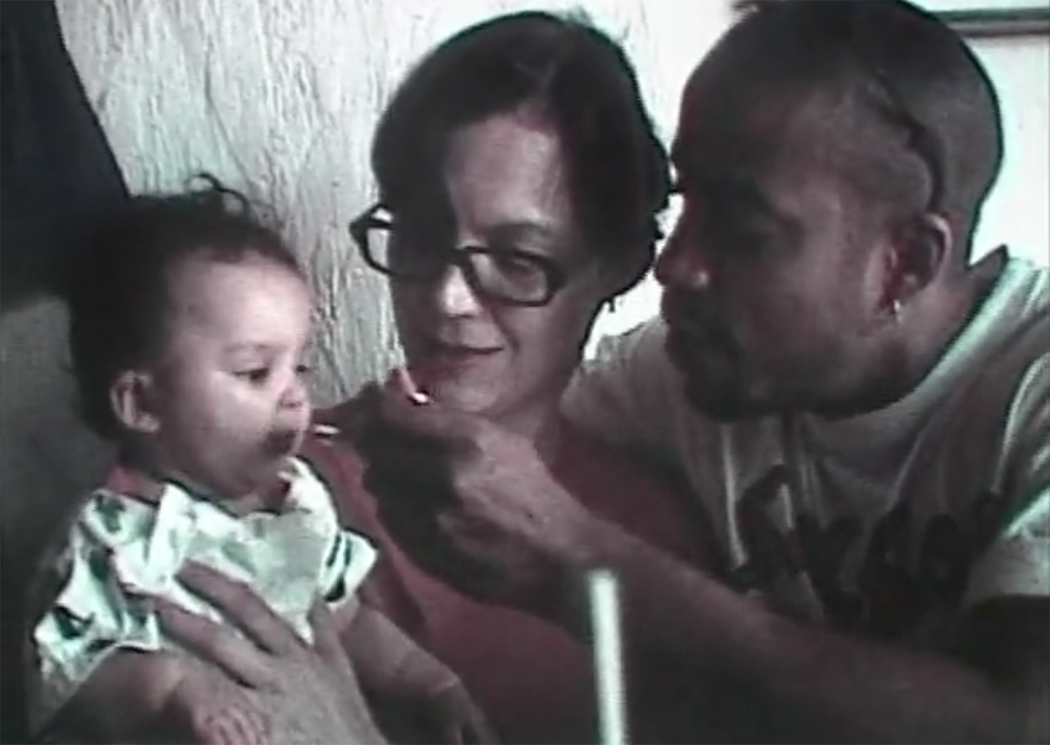
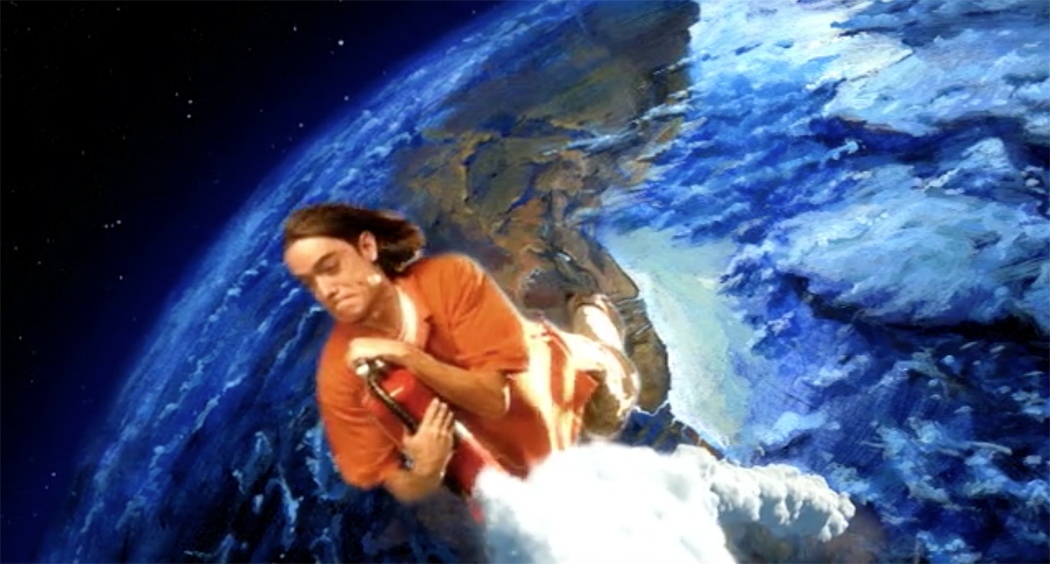










 We had to rush back to the theater for the 8 p.m. showing of Jewish documentaries, mostly involving the holocaust. Scary looking stuff, but the real winner was a film called King of the Jews, which took a very personal look at the image of Jesus as seen by a young Jewish boy who was deathly afraid of Jesus. It was all made up of clips of family films and old movies, set to the music of Bartok and Arvo Part. It made me cry. It gets my vote for best documentary. At least, so far.

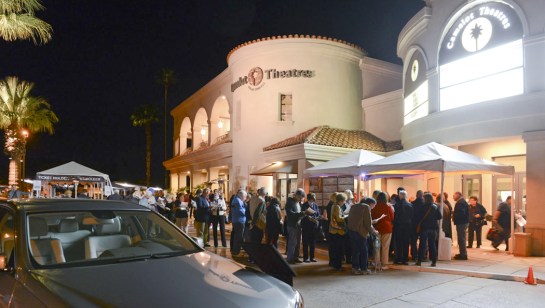


 Take Forrest City, Arkansas. It is now more than 30 years since we came to that benighted place in the flat floodplain farmlands just west of the Mississippi River. We had traveled some 600 miles that day, from western North Carolina and were too exhausted to go further.
 The cracked concrete parking lot, with crabgrass poking through didn’t tip us off. The crazy old crone who was “concierge” didn’t give it away, either. I suppose our first real signal was when we got to our room, that underneath the paper “sanitized-for-your-protection” band on the toilet seat, a cigarette butt and a raft of soggy ashes floated in the water.



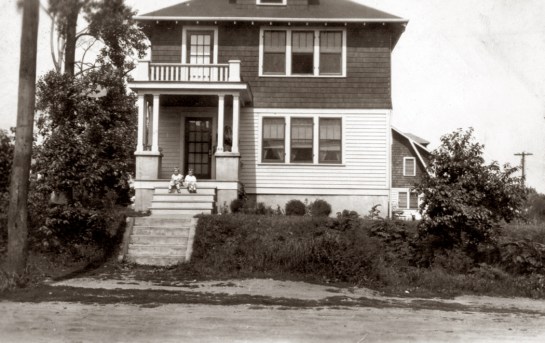
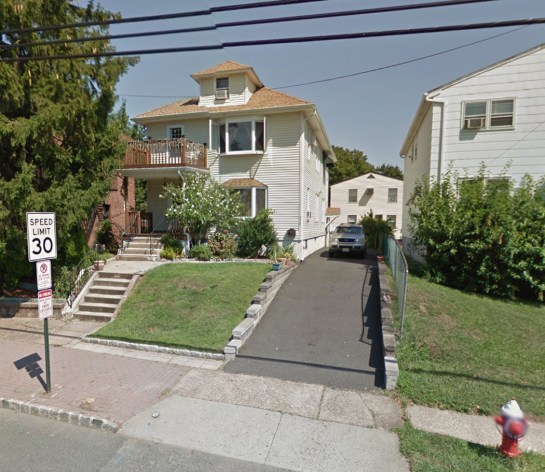
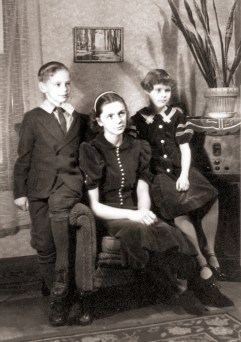 And so, I remember the front room of the house where we lived with my grandmother, Nana, in New Jersey just after the war. It sat directly on the town boundary between Teaneck and Bogota at the point Degraw Avenue began its long westerly descent to the Hackensack River. It was the house where my mother grew up, where her father died when she was seven, where she then had to raise her younger brother and sister while her mother worked in Manhattan. It meant that my mother never really had a free childhood, and perhaps as a result, adulthood always seemed to feel like a burden.
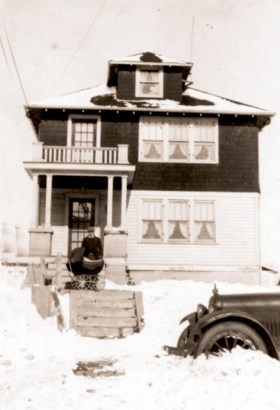 That two-family house divided at the front door. To the right was the front room of our apartment. Straight behind the front door were the stairs to the second floor, where Nana’s sister and her husband lived. Tante Esther and Uncle Gerry. That front room led through a wide arch to the dining room, at the far end of which were two spring-mounted swinging doors — one on either end of the wall — which led to the kitchen. Off the dining room to the left, underneath the staircase to Tante Esther’s, were the bedrooms and the hard-tiled bathroom with its claw-footed bathtub. At the back of the house, tucked behind the kitchen, was an addition my father had built where Nana’s mother came briefly to live and finally to die. She was a formidable woman, born Anne Gurina Kristiansen in Norway, but so old by the time I knew her she seemed almost like death already. The fact she died in what became my bedroom hardly registered on me. I was too young to understand.

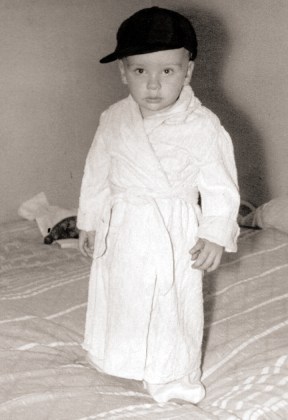 This isn’t about nostalgia, however, but about how a small boy experiences life. As an adult, one has a well of experience to draw on, a series of related moments forming a net, so that each new occurrence has some resonance with its past. But as a child, each thing is new and as yet unconnected to the rest. There are things taken as given: family, the house, the yard; later, the school, the way to the grandparents house. All these things ultimately mesh together, but those early memories are discrete; it is only as I pull them together while trying to doze off, that they begin cohere.
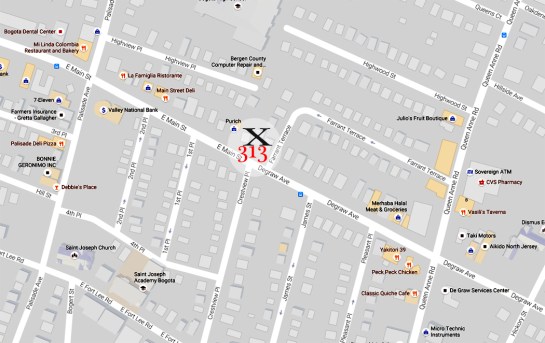
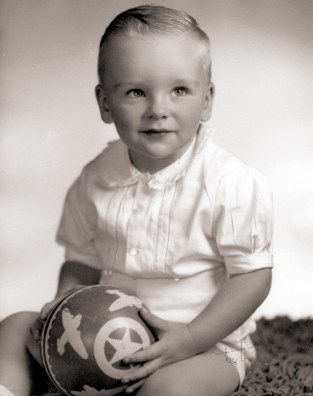 Out the front door of our house and across the street was Crestview Place, which ran uphill steeply to Fourth Place in Bogota, where Nana’s mother-in-law, Aase, lived, upstairs in a house where her sister lived downstairs — Tante Marie. The two were very old, very wrinkled and very powdered. When I was still pre-school, Aase lived with her ancient husband Thorvald, who wore thick black wool suits with a vest and a pocket watch, had wire-brush whiskers and the distinctive smell of old man. He died early on in my life and Aase — whom we called “Bestemor (Norwegian for “grandma”) — lived on into her nineties. I spent many a day at Bestemor’s house, climbing into the attic to play with the toys she still had from the childhood of my mother’s brother, painted lead cars and airplanes.